Apple Music integration is now available on more DJ platforms

Starting today, DJs will have access to Apple Music’s catalog of over 100 million songs through more hardware and software platforms. DJs of all skill levels can build and mix sets on AlphaTheta, Serato, Engine DJ, Denon DJ, Numark and RANE DJ. This news follows the initial debut of Apple Music integration with Algoriddim’s djay Pro software last year. There’s also a new name for the whole initiative: DJ with Apple Music. And yes, a subscription is required.

This isn’t to be confused with Apple Music’s DJ Mixes, a separate program that began in 2021. The idea there was to attract creators of said DJ mixes and sets to the platform by leveraging Shazam’s technology (owned by Apple) to ensure proper royalties were paid out. Now, Apple says, it’s giving DJs access to its music catalog so it can be used as a creative tool and so they can easily tap into their personal libraries. There’s a new DJ with Apple Music category page in the streaming app with curated playlists, and each platform has its own curator page complete with practice material.

Spotify used to allow integration with third-party DJ apps, but the service stopped doing so in 2020. If you’re looking for options, djay Pro works with Tidal and SoundCloud, in addition to Apple Music.

This article originally appeared on Engadget at https://www.engadget.com/entertainment/music/apple-music-integration-is-now-available-on-more-dj-platforms-140009346.html?src=rss

What People Are Getting Wrong This Week: The Great Pyramids

This week, there has been a lot of chatter in the weirder parts of the online world about the supposed discovery of a hidden complex of underground chambers beneath the Great Pyramids of Giza in Egypt. It seems a team of researchers announced they’d used SAR (Synthetic Aperture Radar) to reveal a number of underground buildings beneath the Khafre Pyramid.

This discovery could offer proof the ancient Egyptian civilization was far more advanced than is generally believed, and possessed technology that rivals our own. It could change everything we think we know about humanity itself! In other words, big if true. 

Spoiler: It’s not true though. All signs point to the “discovery” being an especially elaborate example of pyramid-based misinformation, another in a long string of untrue claims about the ancient Egyptian monuments that never seems to end, because cranks just love making up stories about the pyramids.

What was supposedly discovered under the Great Pyramids? 

I gotta give the “researchers” behind this “discovery” an A for effort. The supposed results of the SAR-based research were shared with the world at a press conference held in Bologna, Italy, on March 15, and it all looks very official. Here’s a video of the event:

It’s in Italian, and there are no English translation available yet, so I’m relying on other people’s translation work, but the gist is that the GIZA Project involves a team of “researchers, historians, archaeologists, and technologists” using high tech imaging techniques. They say they’ve discovered five identical structures connected by “geometric pathways,” eight “structures resembling vertical wells, surrounded by descending spiral pathways,” and “two large cubic structures measuring approximately 80 meters per side at a depth of 648 meters” at the site of the Great Pyramids.

The conference featured multimedia detailing the supposed discoveries, charts and graphs, people acting very serious, and all sorts of “this is real science!” frippery, so as you’d expect, the easily fooled were fooled, easily. Alex Jones touted this as “greatest archeological find in HISTORY.” Others wondered if the structures under the pyramids are part of a massive power plant, or maybe an ancient super weapon, or part of the “legendary Amenti,” a subterranean city “linked to ‘universal knowledge of humankind and its ultimate spiritual transformation.’”

Or maybe the entire thing is nonsense and nobody discovered shit.  

Where does this new pyramid research come from?

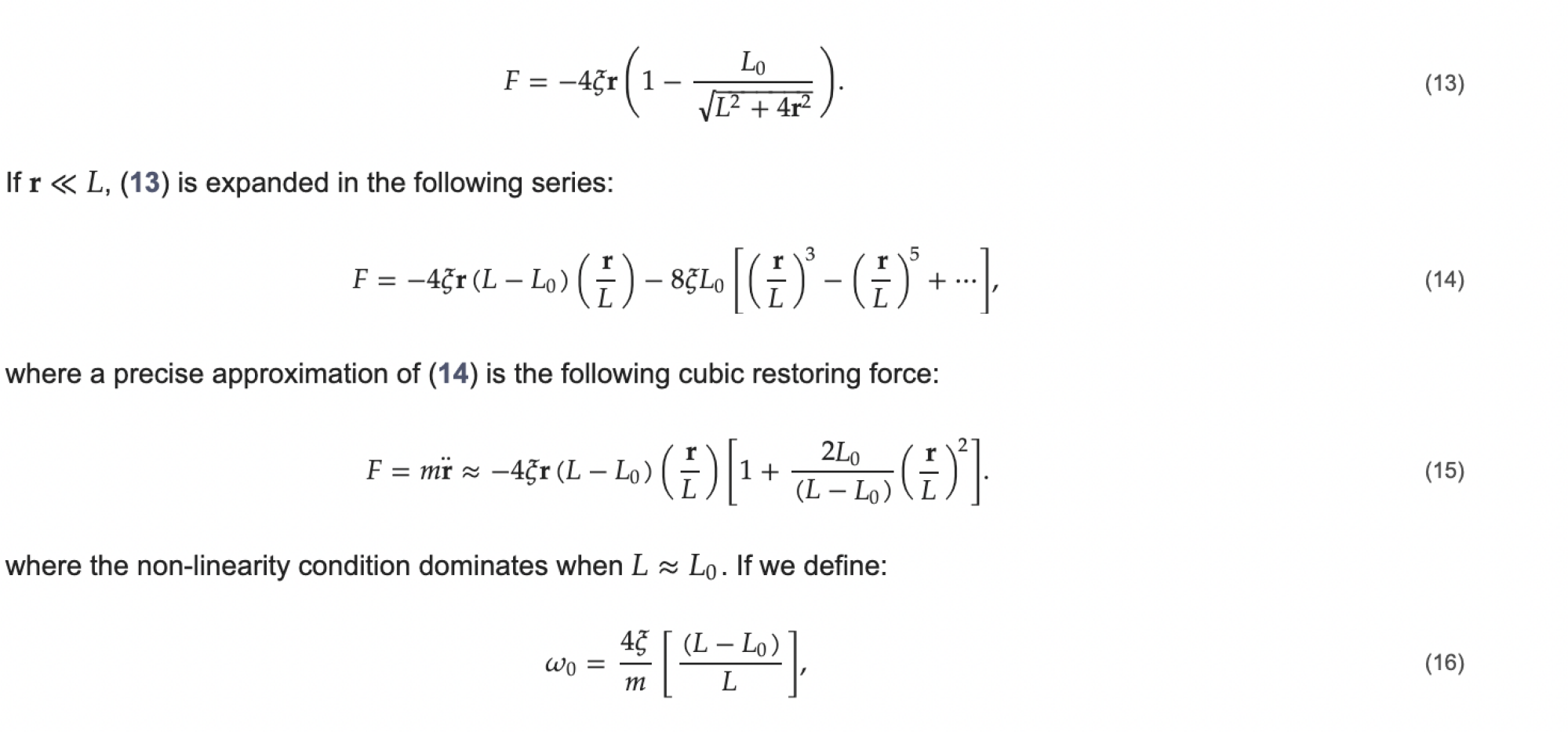
Many of the claims made in the press conference aren’t based on any published research, so it’s just people saying stuff in Italian, but the facts that can be checked are largely based on a research paper published in the journal Remote Sensing in 2022. Corrado Malanga and Filippo Biondi are listed at the top of a paper named “Synthetic Aperture Radar Doppler Tomography Reveals Details of Undiscovered High-Resolution Internal Structure of the Great Pyramid of Giza.” It’s a dense read, full of technical information and equations like this:

Math equations

Credit: Remote Sensing

Don’t bother plowing through it and checking the math: The paper’s most notable feature is that it’s not peer reviewed, so you can safely ignore it for now. No independent expert in imaging has looked at this paper in a serious way to determine if SAR could even work like this, and radar experts doubt you could penetrate 648 meters through limestone bedrock. No archeologists have substantiated these claims. Neither have any historians or sociologists. Bottom line: without peer review, there’s no reason to take this paper more seriously than you’d take wild claims made by a random person on a bus. 

And that’s the generous interpretation. A less generous view is expressed by established Egyptologist Dr. Zahi Hawass, who wrote on his Facebook:

All this information is completely wrong and has absolutely no scientific basis… the claim that a radar was used inside the pyramid is false…These people who announced this wrong information, they used techniques that are not approved nor validated, the details announced would never have been seen by using this technique.

Until actual scientists have a look at this research (and I wouldn’t hold my breath) it’s safe to file it under “pyramid misinformation,” a hearty mind-weed that’s been around forever and seems impossible to kill. But pyramid myths are at least fun, so here are some other common things people get wrong about them.

Myth: The pyramids were built by slaves or aliens

Conspiracy theorists often argue that “mainstream” archeologists and historians shouldn’t be believed because they have a compelling interest in rejecting new ideas to maintain the academic status quo. But until relatively recently, many historians, archeologists, and most of the general public believed the pyramids were built by slave labor—specifically by the Jews. This is probably because Egyptians enslaving Jews is mentioned in the Bible (though the pyramids are not) and because Greek historian Herodotu reported that slaves were building the pyramids when he visited in 450 B.C. 

Even though it challenged the orthodoxy of their field of study, archeologists uncovered new evidence and reexamined existing evidence to change the conventional wisdom. It turns out the pyramids were not built by slave labor, at least not as we understand slavery today. Instead, the archeological evidence suggests the the pyramids were built by around 20,000 Egyptians who were paid, well-fed, had the equivalent of medical care, worked seasonally, and even left graffiti behind bragging about how awesome their work crew was compared to the others. This evidence also helps us cross “aliens” off the list of potential pyramid-makers. (Giants didn’t build the pyramids either.)

Myth: Ancient people could not have moved the pyramids’ heavy stones

We don’t know exactly how the stones they used to build the pyramids were moved into place, but we have evidence that the ancient Egyptians loaded the stones on barges, floated them down the Nile, then dragged them on sledges over pathways they’d made of of slaked lime or tafla, probably using water to reduce friction. No advanced technology or extraterrestrial help was needed, and there’s no evidence at all to suggest they were employed. A lot of people working together can accomplish great things, especially if they have all been given enough beer.

Myth: Pyramids existing independently in different prehistoric societies is evidence of a common culture

From Mayan pyramids in Central America to Angkor Wat in Cambodia, many disparate ancient civilizations built pyramid-shaped monuments, leading some to suggest they had a common culture or there was an ancient means of communication between groups. Some think there’s something inherently “spiritual” in a pyramid’s shape.

While some ancient civilizations did communicate and trade with each other, the main reason pyramids all look similar is the same reason sand castles all have a vaguely pyramidal shape: It’s the most stable way to build anything upwards, no matter where your ancient civilization is located. 

Plot-twist: A real anomaly was discovered near the Great Pyramid

This news was not breathlessly tweeted by Alex Jones, but in 2024, real scientists announced they’d discovered a mysterious structure under the royal graveyard near the Great Pyramid of Giza.

Using ground penetrating RADAR and electrical resistivity tomography, researchers from Higashi Nippon International University and other institutions identified an L-shaped structure that is about 33 feet long and is buried 6.5 feet deep. Maybe that’s not as impressive as a city-sized proto-battery under hundreds of meters of limestone, but beneath that there’s a “highly resistive anomaly!”

It’s totally unknown, so you can pretend it’s an alien spaceship if you want, but scientists think it’s probably a mix of sand and gravel or “an air void.” It’s not an underground city or the remains of an ancient battery, but at least it’s real.  

Music Pioneer Napster Sells For $207 Million

Infinite Reality, a 3D technology company, has acquired Napster for $207 million, the companies announced Tuesday. The deal aims to transform the once-notorious music sharing service into a metaverse platform.

Napster, launched in 1999 by Shawn Fanning and Sean Parker, was the first major peer-to-peer file-sharing application before legal battles forced its closure in 2001. Since 2016, it has operated as a subscription streaming service. Infinite Reality plans to create virtual 3D spaces where music fans can experience concerts together and artists can sell merchandise.


Read more of this story at Slashdot.

China’s Vivo Vision Looks Like A Blatant Apple Vision Pro Clone

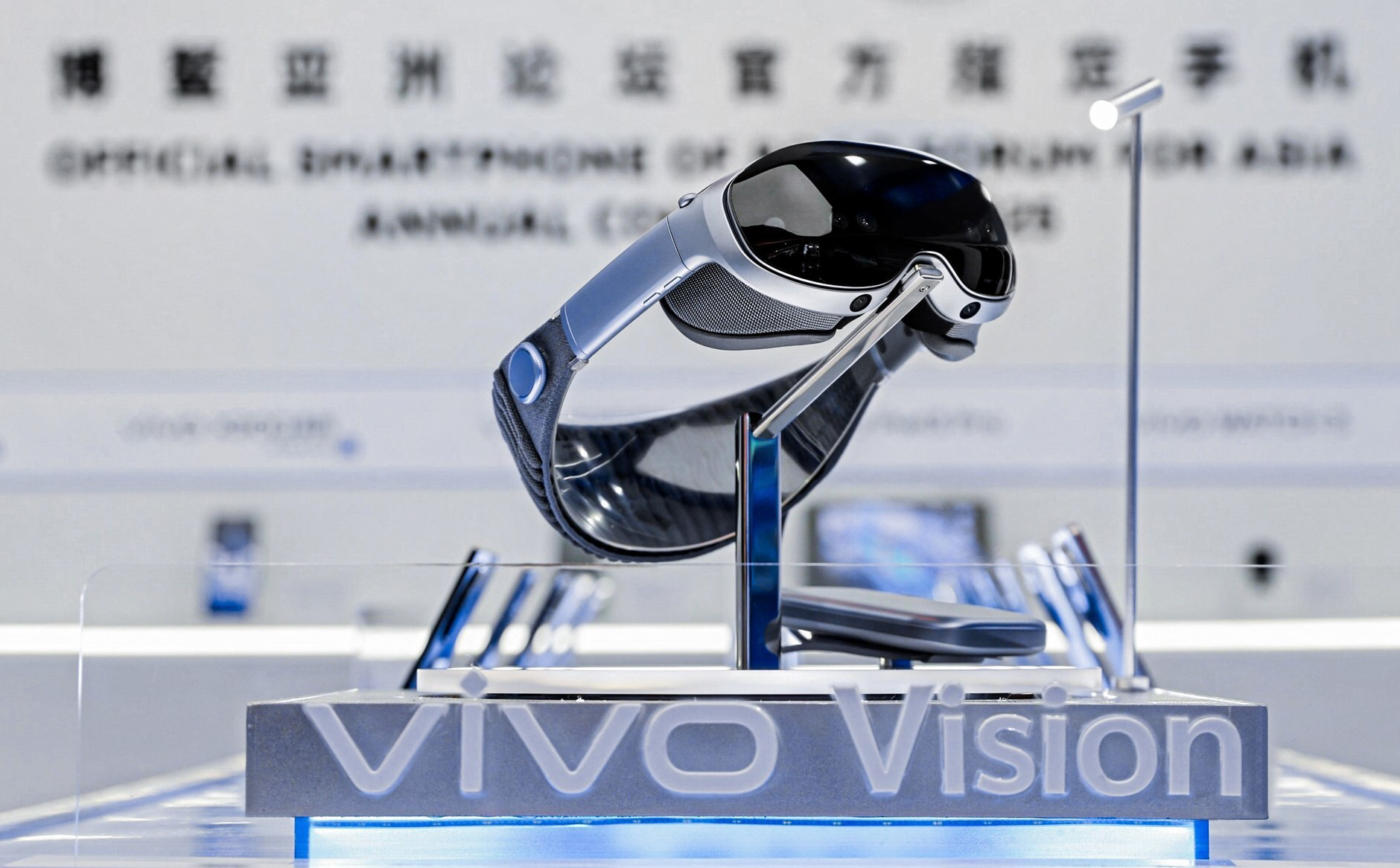
China’s Vivo unveiled its headset today, and it looks like a blatant Apple Vision Pro clone, with even the name being copied.

While some other headsets like Samsung’s and Play For Dream MR are clearly somewhat inspired by Apple Vision Pro, Vivo Vision verges into the realm of looking like an outright clone. Its grey fabric facial interface, rear strap, external battery, and connector look almost identical to Apple’s. The only notable design departure is side arms, which are metallic-looking, compared to Apple Vision Pro’s white plastic.

No specifications or details of Vivo Vision have yet been announced, so all we know so far is the name and external design. Further, no press or influencers have yet been given a demo of the hardware in action, so it’s unclear if a functional prototype yet exists.

The visor of Vivo Vision does look to be sleeker than Apple Vision Pro, suggesting it could be lighter too, but whether this advantage makes it to the final product remains to be seen.

Vivo claims it will launch Vivo Vision in “mid-2025”. It hasn’t yet said whether it will launch outside China. We’ll keep an eye on Vivo for any further details of the headset in the coming weeks and months.

This Kindle Paperwhite Kids Is $40 Off Right Now

We may earn a commission from links on this page. Deal pricing and availability subject to change after time of publication.

Amazon’s Big Spring Sale, running from March 25 to March 31, doesn’t quite hit the same discount highs as Prime Day, but it’s still worth a look—especially if you’ve had your eye on big-ticket items or tech gifts. This is only the second time Amazon’s hosting the event, and unlike Prime Day, you don’t need a Prime membership to shop (that said, Prime members do get better deals). If you think it’s worth it, a Prime membership starts at $14.99 per month, but if you’re still on the fence about that kind of commitment, you can always sign up for a 30-day free trial, use it to shop the sale, and cancel afterward.

If your kid’s been swiping your Kindle and you’ve thought it might be time to get them their own, this PCMag Editor’s Choice-winning Kindle Paperwhite Kids (2024) is worth a look—especially now that it’s at an all-time low price of $139.99 (down from $179.99), according to price-trackers. It’s not just a regular Kindle with a “Kids” sticker slapped on it or some dumbed-down screen with clunky interface. You’re getting the same seven-inch 300ppi display as the adult Paperwhite, but with a kid-friendly twist—a cute, colorful case in either Starfish or Cyber City, a two-year, worry-free guarantee (they break it, Amazon replaces it), and a six-month subscription to Amazon Kids+, which gives gives them access to a curated library of age-appropriate books, including Harry Potter, Percy Jackson, and more. After the six months, the subscription auto-renews at $5.99/month plus tax, but you can cancel anytime.

The screen of the Paperwhite Kids is warm-lit and adjustable, so it’s easy on the eyes, even during bedtime reading. The interface is distraction-free (there are no games or ads here) and designed to help kids build a reading habit without nudging them toward screen time, according to this PCMag review. Battery life stretches into multiple weeks, even with daily use, and there’s 16GB of storage, which is plenty of room for books, comics, and audiobooks (it supports Audible via Bluetooth). Additionally, the Paperwhite Kids comes with an IPX8 waterproof rating, so a juice spill or a poolside accident won’t end in tears. That said, it’s not the cheapest e-reader for kids, and if your child isn’t into reading yet, this might be overkill. But if they’ve already shown a love for books, this is a well-rounded, future-proof option that can grow with them.

Shopping for tech? Lifehacker can help you make the right decision. Browse our tech reviews and head-to-head comparisons for everything from laptops and smartwatches to e-bikes and home gyms. Subscribe to our deals newsletter, Add to Cart, for the best sales sent to your inbox, or browse our best-of lists directly on Amazon, including:

The DJI Osmo Action 5 Pro Camera Is at Its Lowest Price Right Now

We may earn a commission from links on this page. Deal pricing and availability subject to change after time of publication.

Amazon’s Big Spring Sale is back, running from March 25 through March 31. It’s basically Prime Day’s laid-back cousin—longer, with slightly less fanfare, but still a decent time to pick up things you’ve been eyeing for months. And no, you don’t have to be a Prime member, but the better deals go to those who are. Luckily, Amazon still hands out 30-day Prime trials like candy, so you can sign up now, grab the deals, and bail before paying a dime.

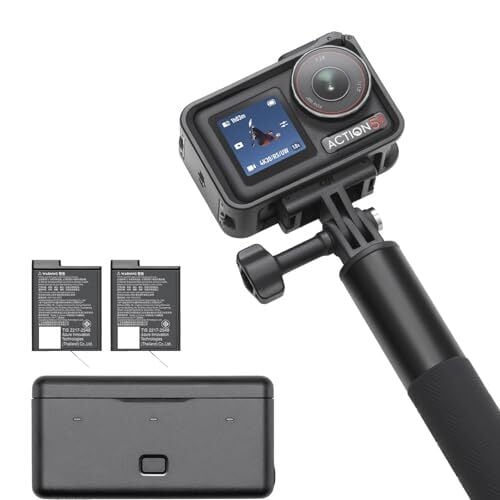
If you’ve been waiting to upgrade your action cam setup, the DJI Osmo Action 5 Pro just dropped to its lowest price yet, according to online price-tracking tools. The Adventure Combo is down to $369 from $449 and comes fully loaded with accessories—three extended-life batteries, a protective frame, multiple mounting options, a lens cover and protector, a battery case that doubles as a charger, and a 1.5-meter extension rod (handy for wide shots or selfie-style vlogging).

It’s a lot, but it makes sense if you’re shooting outdoors for long stretches or need the flexibility of different angles and setups. It was named Best Action Camera of 2024 by PCMag, thanks to features like its 10-bit D-Log M for richer color grading, sharp HDR video, and a front OLED touchscreen that’s bright enough to use in direct sunlight. The sensor size is also a healthy 1/1.3 inch, which reportedly makes a difference when you’re shooting in low light. Plus, it’s waterproof up to 20 meters without a case, and its image stabilization handles chaotic movement surprisingly well—great for someone capturing rough terrain on a mountain bike or filming themselves surfing. Read an in-depth review of the DJI Osmo Action 5 Pro here.

That said, if you’re more of a casual creator or don’t need all the bells and whistles, the Essential Combo is probably enough. It’s $319, down from $339, and includes just one battery and the core mounts, though it lacks the horizontal-vertical protective frame. Same camera, fewer accessories. For day trips, vlogging, or hobby shooting, it’ll do the job without cluttering your bag. Just keep in mind that battery life hovers around two to four hours per charge (depending on usage), so having only one battery might get frustrating fast if you’re planning to shoot all day. Still, it’s hard to argue with the performance packed into such a small body, especially at this price.

Shopping for tech? Lifehacker can help you make the right decision. Browse our tech reviews and head-to-head comparisons for everything from laptops and smartwatches to e-bikes and home gyms. Subscribe to our deals newsletter, Add to Cart, for the best sales sent to your inbox, or browse our best-of lists directly on Amazon, including:

AMD CEO Says Radeon RX 9070 XT Week 1 Sales Smoked All Prior Radeons By 10x

AMD CEO Says Radeon RX 9070 XT Week 1 Sales Smoked All Prior Radeons By 10x
AMD was quick to debunk a recent report claiming it revealed combined Radeon RX 9070 XT and Radeon RX 9070 shipments had topped 200,000 units. Maybe it did, maybe it didn’t. Either way, AMD never shared an actual specific tally. In the days since, however, AMD CEO Dr. Lisa Su did provide an interesting figure regarding AMD’s latest generation

Anker’s Eufy 3-in-1 E20 robot vacuum is $150 off during the Amazon Big Spring Sale

Anker’s Eufy 3-in-1 E20 robot vacuum is $150 off right now, as part of Amazon’s Big Spring Sale. That brings the price down to $450, which is a record low. For those averse to using Amazon, the deal is also available directly from the company.

The E20 made our list of the best robot vacuums, and with good reason. We loved the hybrid functionality, as this robovac quickly transforms into a cordless stick vacuum and a handheld unit. This in no way impedes the overall performance, as we found the automatic cleaning mode to be top-tier.

The self-emptying base also holds a lot, considering its compact size. We praised the proprietary app in our official review, as editing room maps is both quick and easy. All told, it only took the robovac ten minutes to scoot around the house and create an accurate map. 

The suction power of the robotic unit is strong enough for major cleaning tasks, but the same cannot be said of the stick vacuum attachment. The power is on the weaker side. Also, it doesn’t come with a wall mount for the stick vacuum. That costs extra, to the tune of around $30. Today’s savings more than makes up for that.

This article originally appeared on Engadget at https://www.engadget.com/deals/ankers-eufy-3-in-1-e20-robot-vacuum-is-150-off-during-the-amazon-big-spring-sale-140020547.html?src=rss

You Should Delete Your 23andMe Data Right Now

23andMe, the genetic testing company that has collected data from more than 15 million customers, has filed for Chapter 11 bankruptcy and is looking for a buyer. If you’re one of those millions who has used 23andMe’s DNA sequencing process, there are a number of serious privacy implications with a potential sale—and it’s time to delete your data.

How your privacy may be at risk

In a general sense, any time you give your data to a company, you cede some control over what happens to it. As 404 Media points out, in the case of 23andMe, this includes how your genetic information is analyzed, monetized, and secured, as well as whether it will be shared or sold (intentionally) or leaked or hacked (unintentionally).

While 23andMe has stated that its bankruptcy filing “does not change how we store, manage, or protect consumer data,” there’s also no way to know what will happen to millions of users’ genetic information in a potential buyer’s hands.

This presents a number of risks, according to privacy advocates interviewed by The Washington Post. 23andMe already suffered a data breach in 2023 in which hackers accessed the records of around 7 million customers, and users are now trusting a company navigating bankruptcy to keep their information secure going forward.

23andMe’s privacy statement also leaves open the possibility of your data being sold or transferred to a buyer like an asset. If that buyer’s privacy terms and practices differ, you’re responsible for tracking those changes—and when is the last time you actually read a privacy policy?

Organizations similar to 23andMe have shared users’ genetic information with law enforcement, government agencies, and pharmaceutical and insurance companies, which opens a whole host of privacy concerns, from police using the data to identify suspects to insurers denying coverage based on genetic risk factors. Your genetic data is connected to your family members, so any invasions of privacy also extend to other people.

23andMe itself has collaborated with pharma companies like GSK, and other genetic databases have created similar partnerships after being sold to for-profit entities.

How to delete your 23andMe data

According to a consumer alert from the California attorney general, there are a few steps you can take to protect your data from any potential privacy concerns. First, you’ll want to delete your genetic data using the following steps:

  1. Log into your account on the 23andMe website.

  2. Go to Settings > 23andMe Data.

  3. Next to 23andMe Data, click View.

  4. Download your data if you want to keep a copy.

  5. Scroll to Delete Data and click Permanently Delete Data.

  6. Click the link in the confirmation email from 23andMe to finalize your request.

You can also request that your test sample be destroyed under Settings > Preferences and revoke consent for your data to be used in research under Settings > Research and Product Consents.

Pirelli rolls back the years with a new flagship clincher road tyre

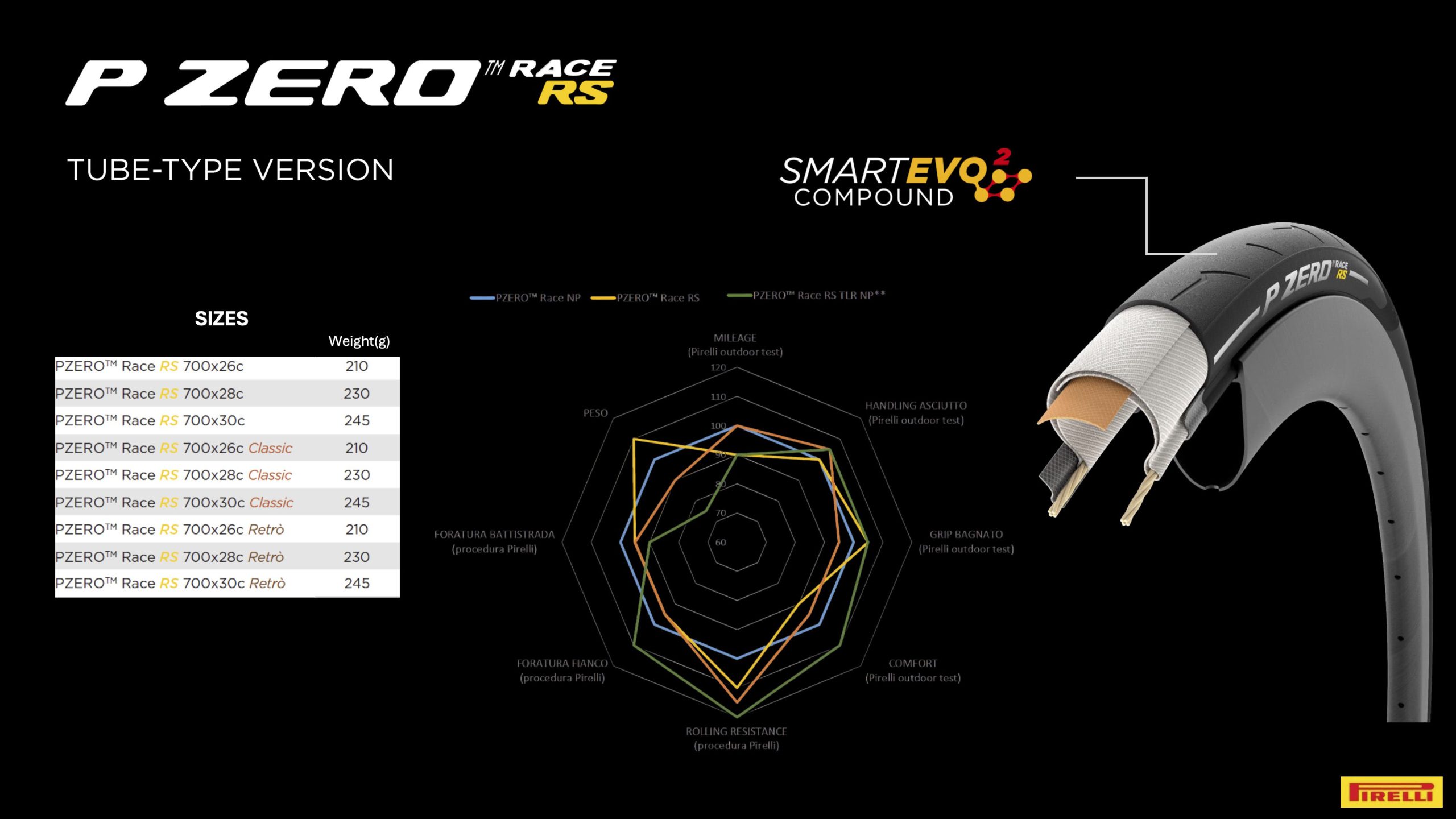
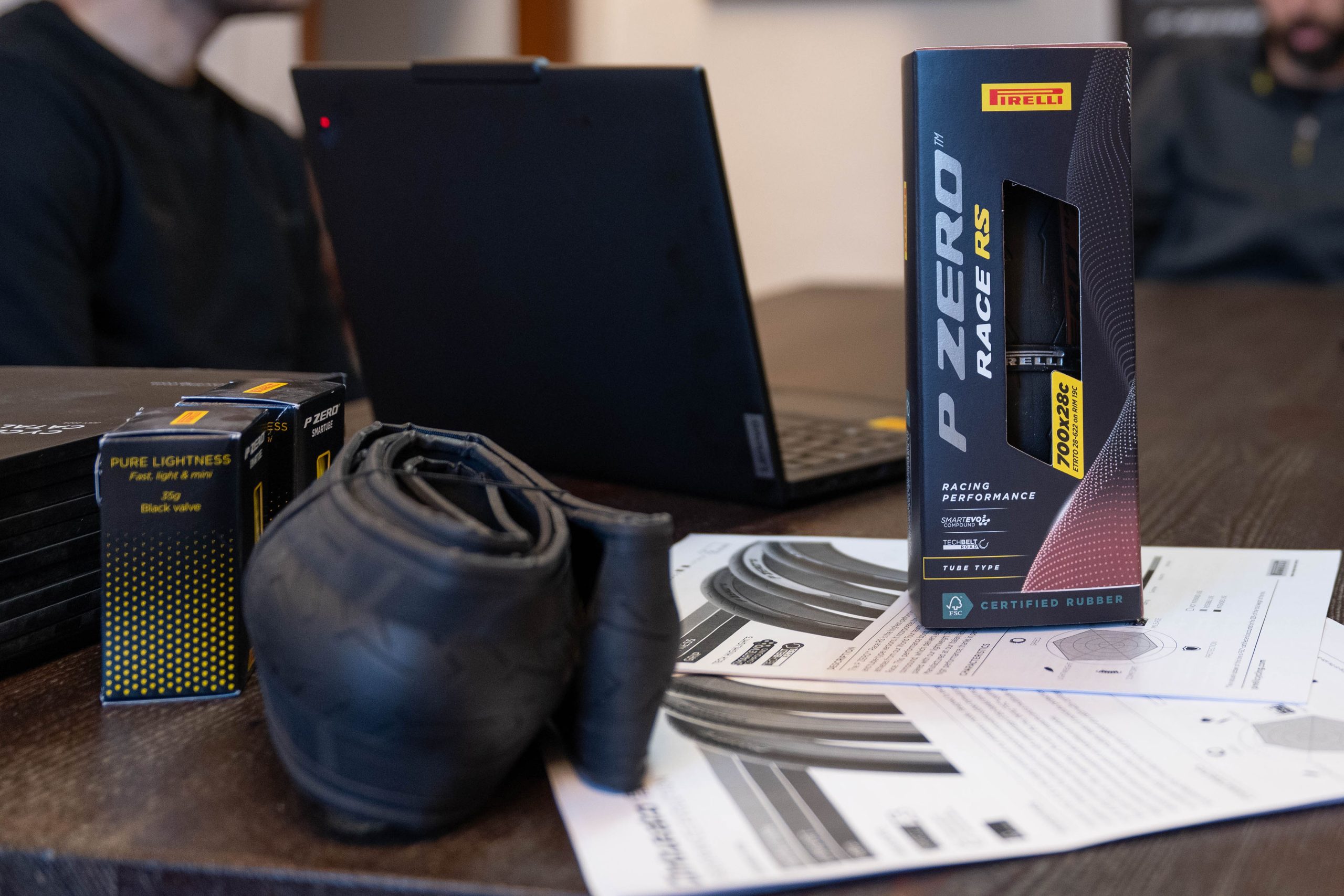
Pirelli has announced a tube-type version of its fastest road bike tyre, the P Zero Race RS.

The new clincher tyre uses the same SmartEvo rubber compound as the P Zero Race TLR RS, but swaps the SpeedCore tubeless casing for a 120 TPI TechBelt Road clincher version.

According to the Italian brand, a 28c P Zero Race RS clincher weighs only 230g per tyre, compared to 290g for an equivalent tubeless version.

This, Pirelli says, enables it to offer a “record system weight” when paired with its SmarTube TPU inner tubes.

Available now in 700×26, 28c and 30c sizes, the Pirelli P Zero Race RS clincher tyre costs €79.99 (US and UK pricing is to be confirmed).

Why is Pirelli launching a high-end clincher tyre in 2025?

Pirelli P Zero Race RS
Pirelli’s new P Zero Race RS ditches the tubeless casing and cuts weight significantly. Pirelli

With tubeless road bike tyres becoming increasingly dominant in recent years, it’s rare to see one of cycling’s biggest tyre brands releasing a new flagship clincher.

With the P Zero Race RS, though, Pirelli says it’s looking to better serve the needs of riders who prefer to stick with inner tubes.

According to Pirelli’s head of global marketing, Samuele Bressan, the pros want tubeless tyres and technology, but around 50 per cent of its Italian customers still prefer clinchers.

As a result, then, it’s convinced there’s still a big enough market for clinchers to warrant making separate tyres.

After all, it’s worth remembering tubeless tyres can be used with inner tubes on both hooked and hookless rims, whereas clincher tyres (including the new P Zero Race RS) can only be used on hooked rims.

The primary gains from ‘tube type’ tyres, then, come from a reduction in weight. In this case, for example, the P Zero Race RS clincher is a little more than 20 per cent lighter than the tubeless version.

This is because clincher tyres can use a lighter bead and casing, because there’s no requirement for them to be airtight without an inner tube and pressure from inside the tube helps retain the tyre on the rim.

Clincher tyres also offer improved compatibility with older clincher rims, which lack the deep central channel designed to offer more slack when installing inflexible tubeless tyre beads.

Different construction, same performance

Pirelli P Zero Race RS clincher
Pirelli says the P Zero Race RS clincher isn’t too delicate for everyday use. Pirelli

Despite the change in construction, Pirelli says the P Zero Race RS offers comparable performance to the tubeless version (when paired with a high-quality inner tube, of course), with a focus on speed and racing.

Despite this and the tyre’s low weight, Bressan insists the P Zero Race RS is “usable in the real world”, because the TechBelt Road casing includes a dedicated puncture protection belt.

Bressan also notes that its pro teams have consistently requested lighter, faster tyres in recent years, even at the cost of some durability, because they experience relatively few punctures.

This Samsung Flagship 4K QLED TV Is at Its Lowest Price Ever

We may earn a commission from links on this page. Deal pricing and availability subject to change after time of publication.

Amazon’s Big Spring Sale is back for its second year, running from March 25 to March 31, and it’s basically a slower, longer version of Prime Day. The deals may not be as flashy, but the price drops are real—and you don’t need to be a Prime member to shop. That said, Amazon says Prime members will get access to better discounts and more options. If you’re not already subscribed, you can grab a free 30-day trial to take full advantage of the week-long event, then cancel before the billing kicks in.

One of the biggest markdowns this week is on the Samsung 50-Inch QN90D 4K QLED TV, which is currently going for $899—almost $500 off its list price of $1397.99. That’s the lowest price it’s ever hit, according to price-trackers. Samsung’s QLED panels have always had a reputation for sharp visuals and punchy brightness, and the QN90D keeps that legacy going, especially with its Neo QLED tech, Quantum HDR+, and mini LED backlighting, which helps with contrast and HDR performance—blacks look deeper, highlights pop more, and you won’t be squinting during those darker movie scenes.

The main trade-off here is the lack of Dolby Vision support—something Samsung has consistently skipped, and that hasn’t changed with the QN90D. If that’s your go-to HDR format, this TV might fall short. Additionally, while it does come with an ATSC 1.0 tuner for live TV, it skips ATSC 3.0, so you won’t get newer over-the-air 1080p or 4K broadcasts. For most people, that’s not a dealbreaker, but if you rely on an antenna instead of streaming, it’s worth keeping in mind.

At 50 inches, this TV is best suited for a living room or bedroom where you’re sitting maybe six to eight feet away. It runs on Samsung’s Tizen OS, which can be a bit cluttered if you’re not used to Samsung’s smart TV interface, but it does support all the major apps out of the box, including Netflix, Prime Video, and Disney+. You can also stream straight from your iPhone, iPad, or Mac using Apple AirPlay, and it also works with Miracast or WiDi if you want to mirror your Windows PC. Amazon Alexa is built in, and thanks to the far-field microphones, you can use voice commands without picking up the solar-powered remote. Gaming-wise, the TV’s 120Hz refresh rate push up to 144Hz with VRR and supports AMD FreeSync Premium Pro. Additionally, with an input lag of just 2.9 milliseconds in game mode, you can expect smooth, responsive gameplay, according to this PCMag review.

Shopping for tech? Lifehacker can help you make the right decision. Browse our tech reviews and head-to-head comparisons for everything from laptops and smartwatches to e-bikes and home gyms. Subscribe to our deals newsletter, Add to Cart, for the best sales sent to your inbox, or browse our best-of lists directly on Amazon, including:

The Sony Playstacean: A Playstation That’s A Crab

Inspired by these illustrations by artist Anh Dang of a Playstation crab, this is the Sony Playstacean constructed by Instagram user GingerOfOz using a Sony PSOne and 3D printed parts to make it look like an orange crab, complete with a controller modded into its arms and claws. It’s delightful. Granted, it’s doesn’t look very practical to use with those controller claws, but I wasn’t born to be practical, I was born to be delighted. Just kidding, I think I was born to test the limits of human regret and disappointment.

Europe is looking for alternatives to US cloud providers

The global backlash against the second Donald Trump administration keeps on growing. Canadians have boycotted US-made products, anti–Elon Musk posters have appeared across London amid widespread Tesla protests, and European officials have drastically increased military spending as US support for Ukraine falters. Dominant US tech services may be the next focus.

There are early signs that some European companies and governments are souring on their use of American cloud services provided by the three so-called hyperscalers. Between them, Google Cloud, Microsoft Azure, and Amazon Web Services (AWS) host vast swathes of the Internet and keep thousands of businesses running. However, some organizations appear to be reconsidering their use of these companies’ cloud services—including servers, storage, and databases—citing uncertainties around privacy and data access fears under the Trump administration.

“There’s a huge appetite in Europe to de-risk or decouple the over-dependence on US tech companies, because there is a concern that they could be weaponized against European interests,” says Marietje Schaake, a nonresident fellow at Stanford’s Cyber Policy Center and a former decadelong member of the European Parliament.

Read full article

Comments

Anker’s latest chargers and power banks are up to 20 percent off in the Amazon Spring Sale

Anker makes some of the best power banks on the market and debuted a few great options earlier this year. That included Anker’s Laptop Power Bank, a 25,000mAh portable charger with triple 100W USB-C ports and one USB port. Well, currently, that charger is on sale for $88, down from $110 — a 20 percent discount — as part of Amazon’s Spring Sale. 

The new power bank, available in Black and Silver, comes with two USB-C cables and can charge four devices simultaneously. It works with laptops, smartphones, cameras, gaming consoles and more. For example, it can charge an MacBook Air with an M3 chip to 50 percent in 33 minutes. It can also get an iPhone 16 to the same level in just 25 minutes. Plus, its display shows the battery’s health and temperature, along with output and input wattage. 

Anker’s 140W four-port wall charger is also discounted for Amazon’s Spring Sale. You can pick it up right now for $77, down from $90. It offers a display that tracks power usage for each port, fast-charge status and temperature. Plus, it has something Anker refers to as an “odometer,” tracking lifetime usage hour by hour. 

This article originally appeared on Engadget at https://www.engadget.com/deals/ankers-latest-chargers-and-power-banks-are-up-to-20-percent-off-in-the-amazon-spring-sale-130131799.html?src=rss

Otter.ai’s Meeting Agent can schedule calls and write emails for you

The next time you join a video call, Otter.ai is hoping its new AI tool will help make things run smoother. On Tuesday, the company introduced the Otter Meeting Agent. It’s part of a suite of three new AI helpers designed to assist a variety of different users. The first of those, the voice-activated Meeting Agent, can schedule follow-up calls and draft emails for you. It can also answer questions based on information it finds in your company’s meeting database.

“This agent goes beyond simple transcription and empowers users to interact with AI meeting data in real-time to increase productivity,” explains Otter.ai. The two other agents the company is releasing today can provide real-time coaching to sales agents during customer calls and live demos to potential customers. Otter.ai says it plans to release more “vertical” agents in the future. They will be designed to assist marketing, recruiting and other job functions.

In the meantime, Otter.ai has begun rolling out the Meeting Agent to all users. As of today, it works with Zoom exclusively, with support for Microsoft Teams and Google Meet arriving in the coming weeks. If you don’t have access right away, it may take a few days before the company rolls out the agent to you.

This article originally appeared on Engadget at https://www.engadget.com/ai/otterais-meeting-agent-can-schedule-calls-and-write-emails-for-you-130048189.html?src=rss

I Tested Boxed Cake Mix Without the Eggs, and It Was Fantastic

There was a time, not so long ago, that I was completely abusing my right to use boxed mixes. I made a crumb cake out of muffin mix, peach dump cake, very convincing black and white cookies, and a super tender boxed cake by adding too much oil and not enough egg. I’ve learned a lot from all this screwing around with boxed mixes (for science, of course). With the recent surge in egg prices and the rate of birthday celebrating as consistent as ever, I began to wonder if there was a way for folks to make boxed cakes without using up all of their precious eggs. Then I remembered, of course there is—you can skip them completely. 

It was when I was trying to manipulate boxed cake mix to make thick, soft black and white cookies that I made this crucial discovery: All boxed cake mix wants to be cake. I used Duncan Hines yellow cake mix and tried everything to change the batter. I took out the oil. I added only egg. I added just a few tablespoons of water. All of my attempts bubbled, spread, and puffed into full-blown cake. I ended up using muffin mix to come up with the right consistency for black and white cookies. 

If you think about it, this basic understanding (that cake mix will always become cake) is why we know dump cake works. For those unfamiliar with this casually named dessert, you simply dump fruit (canned or otherwise) into a casserole dish and sprinkle dry cake mix over the top. Even the scant liquid from simmering fruit is enough to moisten the dry cake mix and activate it. Boxed cake mixes, like those from Duncan Hines, Pillsbury, or Betty Crocker, are all designed to be nearly foolproof. You just need to add liquid—eggy or not—and it will become cake. 

Don’t get me wrong, in a side-by-side comparison (see one below) you’ll notice the difference in puff and color, but the flavor is consistently good. It’s really hard to screw them up to the point that they’re not delicious. I’ve been trying for years and I haven’t managed to make it taste bad. Changing the ratios, especially the oil, might actually give you a cake texture you prefer (more on that later).

Two, one, or zero eggs all result in cake

I wanted to test out how far I could push cake mix so I did a Funfetti test. The batter, prepared with the manufacturer’s suggestions, takes a cup of water, half a cup of oil, and three eggs. I did a few iterations. One test with only a single egg and double the oil, one test with no eggs and double the oil, and one with the proper amount of oil but zero eggs. 

Three layers of funfetti cake on a wire cooling rack.
Left: no eggs and double oil. Center: no eggs and normal oil. Right: One egg and double oil.
Credit: Allie Chanthorn Reinmann

While the mixture properly prepared according to the package’s directions has more of a domed top than the other reduced-egg versions, absolutely all of them became fluffy, soft, delectable cake layers. I think the single egg and double oil cake was my favorite because the single egg was just enough of an emulsifier to support the extra fat. It wasn’t weighed down, but it was decadent and moist. 

Three cakes cut in half next to each other to show the difference in height.
Left: cake prepared according to directions. Center: cake with one egg and double oil. Right, Cake with no eggs and directed amount of oil and water.
Credit: Allie Chanthorn Reinmann

But I digress: The real victory here is that the cake with absolutely no egg was fantastic. It didn’t dome, which is actually preferable if you’re stacking layers for a cake with icing, the texture was fluffy and moist, and the flavor was as Funfetti as could be. There was no need to replace the egg with anything, by the way. No extra water. No banana. Just mix the indicated amounts of water and oil into the dry mix. Pour it into the pans and smooth out the tops. Keep in mind that you can do anything in between too. Add one egg. Maybe you have two leftover egg whites. A stray yolk lurking in your fridge? Toss it in instead of the suggested three whole eggs.

Not all boxed mixes are as forgiving

While boxed cake mix is completely fine without eggs, not all boxed mixes are as forgiving. I tried to skip the egg in boxed Ghirardelli walnut brownie mix and—ho boy. That was absolutely disgusting. I was surprised, honestly; I figured since there was only a single egg in the recipe, what harm could it do to skip it? Lots. I made six brownie bites—three with a no-egg mixture, and three with the batter prepared according to the manufacturer’s directions. You get three guesses which is which.

One greasy and dark brown brownie bite next to a lighter brown and fluffy brownie bite.

Credit: Allie Chanthorn Reinmann

Eggs are an emulsifier after all, and it seems like brownie mix truly needs the help of that single egg to integrate the fats and yield a moist and ungreasy final product. Your brownie mix is not the place to skip eggs. Do that with boxed cake mix instead. 

AlexNet, the AI Model That Started It All, Released In Source Code Form

An anonymous reader quotes a report from ZDNet: There are many stories of how artificial intelligence came to take over the world, but one of the most important developments is the emergence in 2012 of AlexNet, a neural network that, for the first time, demonstrated a huge jump in a computer’s ability to recognize images. Thursday, the Computer History Museum (CHM), in collaboration with Google, released for the first time the AlexNet source code written by University of Toronto graduate student Alex Krizhevsky, placing it on GitHub for all to peruse and download.

“CHM is proud to present the source code to the 2012 version of Alex Krizhevsky, Ilya Sutskever, and Geoffery Hinton’s AlexNet, which transformed the field of artificial intelligence,” write the Museum organizers in the readme file on GitHub. Krizhevsky’s creation would lead to a flood of innovation in the ensuing years, and tons of capital, based on proof that with sufficient data and computing, neural networks could achieve breakthroughs previously viewed as mainly theoretical. The Computer History Museum’s software historian, Hansen Hsu, published an essay describing how he spent five years negotiating with Google to release the code.


Read more of this story at Slashdot.

How Polestar engineers EVs that can handle brutal winters

LULEA, Sweden—Staring out the window of a puddle jumper descending from Stockholm into Lulea, I spy frozen seawater for the first time in my life. Not nearly as much as I expected, though, for the middle of February at the northern end of Sweden. I’ve flown here to drift electric Polestars on an icy lake called Stor-Skabram, near the small outpost of Jokkmokk, fully above the Arctic Circle. Yet the balmy weather serves as a constant reminder of the climate change that inspires much of the narrative around the electric vehicle industry.

EVs on ice

An opportunity to get somebody else’s cars sideways as much as possible on ice and snow is a particularly enjoyable way to spend a day, if you like driving cars. More importantly, automotive manufacturers rely on this kind of winter testing to fine-tune traction and stability-control programming, ensuring their cars can work well in the depths of the deepest winter. For EVs in particular, winter testing presents a more complex range of equations.

First of all, an EV can’t ever turn the electronic nannies off entirely, because electric motors will rev to the moon with instantaneous torque the very instant their tires lose traction. So while software uses wheel speed sensors and regenerative braking, as well as accelerometers that detect yaw rates, each EV needs to then maintain progressive output responses to driver inputs that allow for confident performance and safety simultaneously.

Read full article

Comments

iRobot’s 2-in-1 vacuum and mop drops to $149 for the Amazon Spring Sale

If you’re looking for a budget-friendly robot vacuum that can handle both vacuuming and mopping, iRobot’s Roomba Combo Essential just hit its lowest price ever. Thanks to the Amazon Spring Sale, it’s down to $150 from $275, matching the lowest price we’ve seen. It previously dipped to $149 during the holiday season and earlier this year, but it’s unclear how long this deal will stick around this time.

As you can see in our roundup of the best budget robot vacuums, we’ve consistently rated iRobot’s machines highly for their reliability and ease of use. The Roomba Combo Essential is a simple, no-frills option that both vacuums and mops, making it a solid pick for small apartments, dorm rooms or anyone who wants a cleaner floor without spending a fortune.

The vacuum uses special multi-surface brushes to pick up dirt, dust and pet hair from hard floors and carpets. Unlike some budget models that struggle with transitions, this one automatically adjusts to different surfaces, so you won’t have to worry about it getting stuck. When it’s time to mop, the built-in mopping pad wipes down hard floors, tackling light spills and everyday messes. It’s not as advanced as iRobot’s higher-end models with precision scrubbing, but it’s a convenient way to keep your floors looking fresh with minimal effort.

One of iRobot Roomba Combo Essential’s most convenient features is its auto-adjusting cleaning power — the robot increases suction when it detects extra debris, so it’s more effective on high-traffic areas like entryways or around pet bowls. It also has cliff sensors to prevent it from tumbling down stairs and a low-profile design that helps it slip under some couches and other furniture for a more thorough clean.

Despite it being an entry-level robot vacuum, the iRobot Roomba Combo Essential comes with app control and voice assistant support, so you can set cleaning schedules and initiate cleaning whether you’re at home lounging on the couch or away on vacation. For $150, this is a solid deal for an iRobot machine that can vacuum and mop, especially considering its usual $275 price tag. If you’ve been thinking about automating some of your floor cleaning, this is one of the most affordable ways to do it.

This article originally appeared on Engadget at https://www.engadget.com/deals/irobots-2-in-1-vacuum-and-mop-drops-to-149-for-the-amazon-spring-sale-123058730.html?src=rss