Noble Audio FoKus Apollo review: The high price of pristine audio

I don’t review a lot of $650 headphones. That’s because most audio companies sell their top-of-the-line gear around $300-$400. Noble Audio isn’t like most companies. The FoKus Rex5 earbuds, for example, cram in five separate drivers where much of the competition uses two at the most. Noble was also among the first to employ xMEMS drivers in wireless earbuds in a bid to improve bass performance.

Enter the FoKus Apollo, a $649 pair of active noise canceling (ANC) headphones with a detachable boom mic and up to 80 hours of battery life. The real star of the show is the driver setup, which Noble says is the first time this configuration appears in wireless headphones. The company is once again on a quest for the absolute best sound quality, but it may sacrifice a little too much along the way.

Sound quality is the main attraction

Noble Audio’s proposition is simple: the “world’s first” headphones that offer a hybrid speaker pairing of a 40mm dynamic driver with a 14.5mm planar magnetic driver. A dynamic driver is nothing new for a set of cans, but adding the latter makes the FoKus Apollo’s audio setup unique. For the uninitiated, planar magnetic drivers have a thin, flat diaphragm that typically offers a wider, more immersive soundstage and enhanced detail compared to dynamic drivers. Planar magnetic drivers are typically reserved for audiophile-grade headphones since they’re larger and more fragile.

With the FoKus Apollo, Noble capitalized on the best of both worlds for the stock tuning. You get the bass power of a dynamic driver with the clarity of a planar magnetic driver. Since planar magnetic units can’t move enough air for the robust bass that most of us crave, and as dynamic drivers are limited with mid- and high-range details, the company argues it has created the optimal solution.

From the first second of the first song, I could tell the FoKus Apollo was built differently. The addition of planar magnetic drivers offers the most bass-heavy genres an almost absurd amount of detail. Albums like Spiritbox’s Tsunami Sea that lack clarity on other headphones greatly benefit from the treble boost, serving up more nuance in the guitar riffs and texture in the kick drum blasts. The FoKus Apollo also excels with mellow styles, allowing you to hear every bit of sound coming from the acoustic guitars, banjo, bass and more on Julien Baker & TORRES’ “Sugar in the Tank.” Going from most over-ear headphones to the FoKus Apollo is like going from standard music streaming to vinyl. And I don’t think that’s hyperbole.

FoKus Apollo in-use: ANC, battery life and more

The FoKus Apollo has physical buttons for reliable onboard controls.
Billy Steele for Engadget

A pair of $649 ANC headphones better damn well provide some decent noise cancellation, even if you’re primarily buying them for the audio performance. Noble opted for a hybrid ANC setup with three microphones on each side and a Qualcomm QCC3084 chip. That processor provides the necessary digital signal processing (DSP) and algorithms to reduce background distractions.

Like a lot of ANC headphones, the FoKus Apollo struggles with voices. That means any hopes of silencing a chatty colleague won’t pan out. However, the headphones do a solid job with constant noise sources — fans, appliances, noise machines, etc. — so they do offer some relief. The noise-blocking prowess isn’t as good as the likes of Bose, but I found ample room to focus during my test sessions. While the ANC here isn’t among the best, it’s perfectly serviceable in most environments.

Noble promises a whopping 60 hours of battery life with ANC enabled, with another 20 hours of use if you turn it off. I found that those figures hold true during my time with the FoKus Apollo. After 30 hours of music, podcasts and work calls with noise cancellation active, the headphones still had 57 percent battery remaining — tracking slightly better than the company’s stated numbers.

The Fokus Apollo comes with all the accessories you’d ever need right in the box. Noble includes a detachable boom mic, 3.5mm to 4.4mm adapter, two-prong airline adapter, USB-C cable and 3.5mm aux cable. The headphones can be used with either of those two cords, and the company recommends you do so when employing the microphone for optimal voice quality.

If you’re planning to use the Fokus Apollo for calls, you can expect mixed results. In quiet spaces with little echo, you’ll sound good enough for a professional presentation. When you move to a room with some natural reverb, the mics on these headphones pick that up a little too well. What’s more, they’re not great at blocking background sounds, as fans, white noise machines and raucous appliances were all clearly heard on the other end during my tests.

Design that matches the sound

The FoKus Apollo is really expensive, so Noble couldn’t just give us a set of headphones built mostly out of plastic and call it a day. Thankfully, the company chose a mix of anodized aluminum, premium protein leather and a soft Alcantara headband. The leather-wrapped memory foam ear pads are replaceable, which will extend the life of the headphones under heavy use. There’s also a nice textured cloth pattern on the outside of the ear cups and headband that provide both tactile and visual contrast.

Noble Audio provides physical controls on the FoKus Apollo, so you’ll never have to struggle with tap or touch gestures to make changes. On the right side, there’s a dedicated button for ANC modes (on, off and transparency) with a three-control array just below it. Here, the top and bottom buttons handle the volume and track adjustments while the center one is used for power, Bluetooth pairing, play/pause and to summon Google Assistant, Siri or some other virtual helper. On the left ear cup, a single slider allows you to mute all the microphones, even the boom when it’s attached, without reaching for your phone or keyboard.

The lack of advanced features

The FoKus Apollo's main attraction is its sound quality, powered by a unique driver setup.
Billy Steele for Engadget

The FoKus Apollo is really only focused on the basics, so it doesn’t offer any of today’s advanced features. Heck, there aren’t even tools that have been on other sets for years — like wear detection. Although you’ll get support for Sony’s LDAC codec along with AAC, aptX, aptX HD and SBC, there’s no mention of Dolby Atmos or any form of spatial audio. You don’t find any discussion of adaptive audio or adaptive ANC that makes automatic adjustments to both overall sound and noise cancellation either.

Look, I’m well aware the premise here is pristine sound quality above all else. But at $649, which is $100 more than the AirPods Max by the way, I expect some degree of convenience that allows me to keep these headphones on for most of the day. Automatic pausing or wear detection should be standard at this price and it would be nice to have some additional sound/ANC options. I’m not picky about whether those are the automatic, adaptive type, or whether they’re settings I have to toggle on in the app. Just, please, give me something more than EQ adjustments when your sound out of the box is already incredible.

The competition

Once you hit $500 and above, you’ve surpassed what most companies charge for their flagship-level wireless headphones. You’re also in a price range where I’ve only reviewed a handful of models. If money is no object, the $699 Px8 from Bowers & Wilkins delivers excellent sound quality in a design that might be preferable to some folks (there’s at least multiple color options). Its ANC performance isn’t earth shattering either, and one of my biggest gripes with the company’s products is the lack of advanced features like the FoKus Apollo.

There’s also the AirPods Max and Dyson On-Trac, but neither of those are easy to recommend. Apple’s over-ear headphones have barely been updated since they arrived in 2020, except for an upgrade to USB-C and the upcoming addition of lossless audio. Dyson’s headphones have long battery life and a unique design, but they didn’t impress me sound-wise, have average ANC performance and lack the modern features I expect for $500.

I also need to mention Master & Dynamic’s MW75 in the over-$500 discussion. If you’re after high-end looks, no other company consistently nails its trademark aesthetic like M&D. True to its lineage, the company pairs leather and metal on these headphones, along with tempered glass panels on the outside of the earcups. I’ve always enjoyed the balance of M&D’s stock tuning and the ANC performance is solid. You won’t get any advanced features here either, but like the Px8, there are multiple color options if you’re after something other than Noble’s black and silver paint scheme.

Wrap-up

I have no doubts there are a lot of people that will thoroughly enjoy the FoKus Apollo. If you crave the absolute best sound quality on the market, these headphones are the best I’ve tested in that regard. For me, to pay $649 I expect more in terms of features. The first item would be better ANC performance, but I don’t feel like spatial audio support and wear detection are too much to ask. Even without any of that, you do get a novel driver setup that produces some ridiculously detailed sound across diverse genres.

This article originally appeared on Engadget at https://www.engadget.com/audio/headphones/noble-audio-fokus-apollo-review-the-high-price-of-pristine-audio-141521043.html?src=rss

Infinite Reality Acquires Napster for $200M to Create Social Music Platform & Virtual Concerts

Napster. Now there’s a name you haven’t heard in a few years… or more likely decades. Now, immersive web company Infinite Reality announced it’s acquired the brand for $207 million.

Having just closed a $3 billion investment in January, Infinite Reality says the Napster music streaming service will soon include a “social music platform” that will include branded 3D virtual spaces for virtual concerts and listening parties.

Additionally, the company says Napster will also sell both physical and virtual merchandise, exclusive digital content, and event tickets.

“By acquiring Napster, we’re paving a path to a brighter future for artists, fans, and the music industry at large,” said John Acunto, Infinite Reality co-Founder and CEO. “This strategic move aligns with Infinite Reality’s vision to lead an internet industry shift from a flat 2D clickable web to a 3D conversational one – giving all creators modern tools to better engage, monetize, and measure their audiences.”

CEO Jon Vlassopulos, formerly of Roblox, will continue leading Napster, noting he envisions a next-generation platform where fans can interact with artists in 3D virtual spaces, making music consumption more social and immersive.

Founded in 2019, Infinite Reality’s flagship product is iR Studio, an engine for building immersive websites, replete with social virtual environments and avatars. The company says WebXR is supported by iR Engine, however the hosted iR Studio tool does not have the feature currently turned on. Still, it’s a possibility Napster could support WebXR in the future, which means any VR headset capable of using a WebXR browser, although this is pure speculation at this point.

This isn’t the first time the Napster brand has changed hands since its 2002 bankruptcy, which was due to its platform allowing for unlicensed P2P sharing of music, attracting the ire of rock band Metallica. Over the years, the company has been acquired by a laundry list of companies that hoped to leverage the brand’s wide appeal, most recently turning the one-time music sharing platform into a subscriber-based music streaming platform.

Interestingly, Infinite Reality also isn’t the first XR-focused company to purchase Napster either. In August 2020, London-based virtual concert company MelodyVR acquired Napster for $70 million, which hoped to bring immersive video concerts to VR headset users. Prior to the Infinite Reality acquisition, Napster’s most recent owner was blockchain company Algorand, which hoped to decentralize music.

The post Infinite Reality Acquires Napster for $200M to Create Social Music Platform & Virtual Concerts appeared first on Road to VR.

Apple Barred From Google Antitrust Trial, $20 Billion Search Deal at Risk

A U.S. appeals court has ruled that Apple cannot participate in Google’s upcoming antitrust trial, potentially jeopardizing a $20 billion annual deal between the tech giants. The DC Circuit Court of Appeals affirmed that Apple waited too long to join the proceedings, filing its request 33 days after the government proposed remedies in the case Google lost last August.

“The delay seems difficult to justify,” the judges ruled. While Apple can still submit written testimony and file friend-of-court briefs, it cannot present evidence or cross-examine witnesses as it had sought. At stake is Google’s practice of paying Apple approximately $20 billion annually to remain the default search engine in Safari browsers across Apple devices. The government’s proposed remedies would make such arrangements impermissible.


Read more of this story at Slashdot.

No Man’s Sky: RELICS Lets You Unearth Ancient Aliens In VR

No Man’s Sky: RELICS adds paleontology in today’s update, letting you unearth ancient alien creatures.

Now live on all platforms, the latest No Man Sky update now allows you to dig up the skeletal remains of alien creatures that once inhabited these worlds. Hello Games confirmed RELICS lets you reshape and dig deep into the terrain of each world, digging up prehistoric bones of varying sizes and rarity to excavate. Any missing ones can also be bought from a new specialist at the space station, and these fossils can then be displayed however you’d wish.

0:00

/0:51

RELICS trailer

Some locations are safer than others to excavate, however. Some areas are guarded by dangerous creatures you may have awoken during your efforts, which includes Stone Ghosts and the giant Stone Golems. Other new creatures have also been introduced, like the skeletal Titan Worm. The RELICS update also coincides with a new community expedition that involves competing for the rarest finds.

“We wanted players to feel like true palaeontologists. When new bones are discovered, Travellers can piece them together to their own design. They can even create their own museums, or share their collections with other players,” stated Hello Games in a prepared statement.

Today’s changes mark the second major content update for No Man’s Sky this year, following on from Worlds Part 2 in January. That included expanded solar systems with new gas giants, larger oceans, expanded terrain types and weather conditions, lighting updates for the visuals, and more.

No Man’s Sky: RELICS is available now on SteamVR, PlayStation VR2, and flatscreen platforms.

No Man’s Sky PS VR2 Review: Jumping to Hyperspeed
No Man’s Sky added PS VR2 support to coincide with the headset’s launch last month, but how does the game hold up?
UploadVRSam Harrison

No, Microsoft Isn’t Shutting Down OneNote (Just One Version of It)

You may have seen a headline this week imply that OneNote, the extremely popular note-taking application from Microsoft, is shutting down. That’s not the case—only a specific version of OneNote, named “OneNote for Windows 10,” is shutting down.

What’s this mean? If you don’t use Windows, this news doesn’t affect you. If you do use Windows, and your version of OneNote does not say “OneNote for Windows 10” at the top of the window, this news doesn’t affect you. If your version of OneNote does say “OneNote for Windows 10” at the top of the window, then this news is relevant: The version of OneNote you’re currently using will be discontinued on Oct. 14. You can download the desktop version of OneNote for free, though, and all of your notes will sync over.

It’s worth noting that the desktop version of OneNote offers features that OneNote for Windows 10 never did—it can save your notebooks offline, for example, meaning you don’t need a OneDrive account to use the application. And the shutdown isn’t a surprise by any means—Microsoft announced this transition would happen years ago.

Still, not everyone is happy about this. OneNote for Windows 10 was built to work well on mobile devices and, to this day, some users prefer it for touch screen Windows devices. I tested both versions while writing and regularly updating the OneNote review for PCMag and I personally find the desktop version more complete, but I understand why some might prefer the “for Windows 10” version—it’s clean, fast, and does what most people want.

You can still, as of this writing, download OneNote for Windows 10 at this link. Microsoft advises you not to, and plans to show pop-ups and even intentionally slow down syncing speed in order to persuade people to switch. Support ends completely in October, after which there will be no security updates and, if history is any guide, functionality will likely slowly break.

So, if you’re using OneNote for Windows 10, it’s time to figure out what you want to use for note-taking going forward. I’d recommend downloading and trying the desktop version of OneNote first. If you’re not a fan, there are other note-taking applications out there: Obsidian, which I’ve written about, can even import your notes from OneNote.

No Man’s Sky now lets players dig up planets to look for ancient alien skeletons

No Man’s Sky already lets players dig deep into the terrain of its near-infinite universe of planets, but now there will actually be cool stuff to find. Hello Games just announced general availability of a new update called Relics that brings a bit of Indiana Jones to everyone’s favorite space exploration sim.

The update lets players “feel like true paleontologists” as they dig up the “skeletal remains of alien creatures.” When bones are discovered, folks can piece them together to match their own design aspirations. The game will also allow players to create museums and share collections with other players.

Some dinosaur bones.
Hello Games

Hello Games boasts that there is a “truly huge variety of procedural prehistoric bones, in all shapes and sizes.” There’s a rarity system in place, with the most uncommon finds holding a “huge value.” If digging gets a bit tiresome, the developer has placed a fossil specialist at space stations that can be bartered with.

However, digging up bones comes with a major risk, as “things have been buried for a reason.” Some of the rarest items are guarded by dangerous creatures like Stone Ghosts, the colossal Stone Golem and something called a Titan Worm. Fun times.

This is just the latest gameplay update for No Man’s Sky. Recent updates have added new planets and stars, freighter combat and black holes. Relics is available for PCs, consoles and VR.

This article originally appeared on Engadget at https://www.engadget.com/gaming/no-mans-sky-now-lets-players-dig-up-planets-to-look-for-ancient-alien-skeletons-140002442.html?src=rss

Eight Cheap Gadgets That Will Lower Your Grocery Bills

We may earn a commission from links on this page.

As we appear to be living in an age of perpetually rising grocery prices, we’re all looking for ways to lower our food bills. Considering the average spend on groceriesis over $500 every month, I’m all open to suggestions. Extreme couponing? Tell me more. Intermittent fasting? Sounds doable. Ugly produce? Bring it on!

Spending money to save money? How does that work?

Kitchen tools like bread makers or chest freezers tend to pay for themselves over time, but often come with a hefty upfront cost. Yet there are some inexpensive gadgets that don’t require a big investment but which can trim your grocery bills significantly. Here are eight of them.

Bottle connectors

There’s nothing more frustrating than paying for a bottle of something and leaving a bunch of it in the bottle because physics refuses to release it. But if you throw away bottles of stuff—whether it’s condiments, shampoo, or anything else you pick up at the grocery store—with product still trapped in there, you’re throwing away money. Instead, pick up a bottle connector (which will let you transfer the dregs of an old bottle to a new one), a zero-waste cap (which will use gravity to help you use every drop of something in the bottle), or a bottle scraper of some kind to get every bit out of the bottle. It’s difficult to quantify how much money you can save by doing all these things, but it’s not nothing.

A food vacuum sealer

A food vacuum sealer isn’t the cheapest option; while you can find sealers for about $10, that could definitely be a penny-wise, pound-foolish kind of decision. But an initial investment of anywhere from $40 to $100 will save you money in several ways:

  • Reduce waste. Vacuum-sealing your leftovers and overflow ingredients will keep them fresher far longer.

  • Make bulk buying pay. Buying in bulk usually reduces your per-unit costs—but only if you can actually use what you buy. Vacuum-sealing makes it easier to buy something like meat or fish in bulk and keep it fresh long enough to actually eat. Additionally, if you happen upon a terrific sale on something perishable, you can make an unusually large purchase work economically by sealing and freezing most of it.

Herb keepers

If you cook with a lot of fresh herbs, a herb keeper can help keep them fresh for more than a week longer than if you just stick them in the crisper (or in a plastic bag, where all herbs go to wilt). That means you can actually use them in multiple meals and buy less of them overall.

Produce savers

Buying fresh produce is often an exercise in expensive frustration. You pay for a bunch of apples, and some of them are already rotting seemingly before you even get them home from the store, and the rest don’t fare well no matter where you store them. You might be one of those folks who thrills at turning black bananas into banana bread and soft apples into pies, but it would be better if everything just lasted longer. That’s where products like GreenBags and the BlueApple Produce Saver come in. Both extend the life of fresh produce by days, giving you extra time to use up what you buy and improving the taste and overall experience of the produce you’re eating. Over time they’ll pay for themselves in fresher fruits and veg, and lower grocery bills.

A cheese grater

You might not think of a cheese grater as a gadget, but tell that to the people who lived before its invention. Buying your cheese pre-grated will definitely save you money (and give you a better cheese experience, as pre-grated cheese usually is coated with a bunch of stabilizers and preservatives in it to keep it from clumping). Block cheese will almost always be cheaper than pre-grated cheese, so aside from the better eating and cooking experience, grating your own cheese will pay for the grater over time, and then some.

Silicone stretch lids

If you use foil or plastic wrap on a regular basis to cover bowls, old plastic storage tubs that have lost their lids, or pots straight off the stove (smash cut to your eating directly from the saucepan with a spoon later that night), you’re paying money every time you tear off a sheet. Instead, use these stretchy silicone lids. They’ll fit just about any bowl or tub you’ve got and will keep their contents nice and fresh, with an airtight seal that’s almost certainly better than that mangled lump of aluminum foil you were going to use. One note: You shouldn’t use these to leave extra canned goods in the can. Yes, the lid will cover and seal the can effectively, but once opened, your food will start reacting to the metal of the can, which can degrade the flavor and kickstart bacteria growth.

Reusable paper towels

If you’re using a lot of disposable stuff from the grocery store, a great way to save money is to switch to reusable, washable versions. Makeup removal pads and paper towels (which can also be used as casual napkins) are two easy switches. Rayon paper towels made from bamboo are sustainable and can be used about 50 times. In the meantime, not buying a new supply every week or so will definitely save you some cash—have you seen what Target wants for a thing of paper towels these days?

Dryer balls

If you use dryer sheets when you do laundry, you can probably reduce your shopping bills by switching to wool dryer balls. Dryer sheets range in price from about four cents per sheet on the low end to about ten cents a sheet (mainly for specialty sheets, like the ones intended for homes with a lot of pet fur). Wool dryer balls help reduce drying time, wrinkles, and static cling and are reusable (up to about 1,000 times). So a six-pack of dryer balls will get you at least 6,000 loads of laundry for about $10, as opposed to $240 for dryer sheets. Even if you wash large loads and use 2-3 balls per load, you’ll still seeing significant savings over dryer sheets.

Lawsuits targeting diversity efforts in science are multiplying

On March 5, Do No Harm, an organization that advocates against diversity, equity, and inclusion efforts in medicine, among other issues, sued the American Chemical Society for its Scholars Program, which provides financial support to chemistry students from underrepresented backgrounds. The complaint argues the program is illegal because it is not open to white and Asian students. Around two weeks later, Do No Harm also sued the University of Pennsylvania for its partnership with a database called the Black Doctors Directory, which allows patients to find Black physicians.

The lawsuits join a recent uptick in legal action against universities, departments, and professional societies that host programs intended to increase diversity across academia, including in the sciences. In May 2024, for example, White students at the University of Oklahoma sued their school, alleging the university discriminated against them by factoring in race when determining financial aid. In August, a conservative activist group sued the Department of Education over the Ronald E. McNair Postbaccalaureate Achievement Program, which provides mentoring and research support to underrepresented students pursuing doctoral degrees. Those cases followed the Supreme Court’s 2023 decision against factoring in race when considering college admissions, effectively striking down affirmative action.

“What’s happened here is the organizations bringing these lawsuits, they’re capitalizing on the fact that the US Supreme Court struck down race-conscious admissions,” said Vinay Harpalani, a professor at the University of New Mexico School of Law and an expert on affirmative action policies.

Read full article

Comments

Xbox Games Top PlayStation Store Preorders As Microsoft’s Cross-Platform Play Pays Off

Xbox Games Top PlayStation Store Preorders As Microsoft's Cross-Platform Play Pays Off
It’s no secret that Xbox is expanding its reach beyond just hardware, with a move to platforms such as Sony’s PlayStation console paying off. The latest title to make the move is Indiana Jones and The Great Circle, a well-reviewed game that first made a splash on the Xbox. It is known for having ray tracing as a mandatory aspect of the game,

All by ourselves? The Great Filter and our attempts to find life.

“Where is everybody!?”

It was around 1950. UFO mania had recently ramped up across the world, with dozens of reported sightings of strange flying machines fueling rampant speculation regarding their origins.

The eminent physicist Enrico Fermi was visiting his colleagues at Los Alamos National Laboratory in New Mexico that summer, and the mealtime conversation turned to the subject of UFOs. Very quickly, the assembled physicists realized that if UFOs were alien machines, that meant it was possible to travel faster than the speed of light. Otherwise, those alien craft would have never made it here.

Read full article

Comments

Anthropic might get to use Universal Music Group’s lyrics after all

The last few years have seen an ongoing debate over what rights AI companies have to utilize copyrighted material. The latest development tips the scales in favor of use: A judge has rejected Universal Music Group, ABKCO and other music publishers’ preliminary bid to block Anthropic from using their lyrics to train its AI assistant Claude, Reuters reports. 

US District Judge Eumi Lee ruled that UMG and co had submitted too broad a request and failed to demonstrate that Anthropic’s use of the lyrics caused the companies “irreparable harm.” Lee stated, “Publishers are essentially asking the Court to define the contours of a licensing market for AI training where the threshold question of fair use remains unsettled.”

The case dates back to 2023, when UMG joined some of its fellow music publishers in suing Anthropic for copyright infringement. They claimed that Anthropic used and distributed copyrighted material, including at least 500 songs. “Anthropic’s copyright infringement is not innovation; in layman’s terms, it’s theft,” UMG stated at the time. 

The two sides came to a partial agreement in January of this year. Anthropic confirmed it would maintain current guardrails for reproducing, displaying or distributing copyrighted material. It also agreed to “expeditiously” respond to the music producers’ copyright concerns with a written statement outlining how it plans to or why it won’t do so in an individual case. 

This article originally appeared on Engadget at https://www.engadget.com/ai/anthropic-might-get-to-use-universal-music-groups-lyrics-after-all-133020685.html?src=rss

These Bits, Blades, and Other DIY Accessories Are up to 68% Off Right Now

We may earn a commission from links on this page. Deal pricing and availability subject to change after time of publication.

If you like to do your own home repairs and improvements, you know that a good tool set is a game changer. Having the right bits, blades, and other miscellaneous tools can save you time and effort, not to mention cutting down on the trips to the hardware store you’ll need to make while working on a project. But these smaller things can add up quickly, exhausting your DIY budget. Here are some good deals on bits, blades, measuring tools, and accessories for all your DIY projects.

Bits

With so many different sizes and types of hardware, having the right drill or driver bit can be tricky. If you’re doing more than one specific project, a variety of bits is your best bet in order to handle the broadest possible array of fastener types. But all those bits can add up quickly. Here are some good deals on bits for almost any type of hardware you’ll encounter in your DIY adventures.

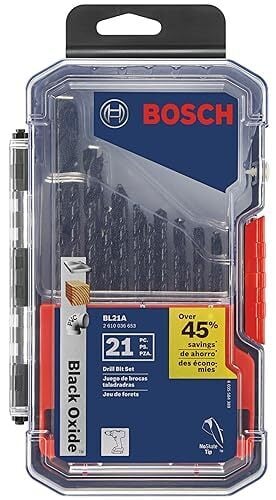
  • A set of 21 Bosch drill bits ranging in size from 1/16 inch to ½ inch is on sale for $26.46, 48% off its regular price. These are multi-material bits that can drill through wood, plastic, and aluminum. They will fit a drill with a standard chuck as well as an impact driver.

  • A 20-piece set of DeWalt bits is on sale for $15.29, 43% off its typical price. This set includes a small range of drill bits, a variety of driver bits, a magnetic bit extension, and a drywall bit holder that are compatible with a drill or an impact driver.

Blades

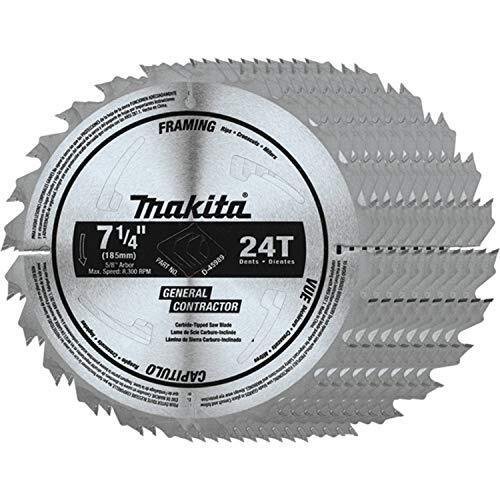
Saw blades can be expensive, but not having a few extras on hand can mean extra trips to the hardware store when you’re working on a project. Here are some deals on saw blades to keep you going on your DIY projects.

Measuring tools

Having the right measuring tools can make or break your DIY project, but these tools can be expensive. Here are some deals on measuring tools to get the right cut the first time.

  • The Crescent Lufkin 25-foot tape measure is on sale for $8.90, 44% off its regular price. This tape has a locking mechanism to keep it extended hands-free and a stiff metal tape to reach longer distances without buckling.

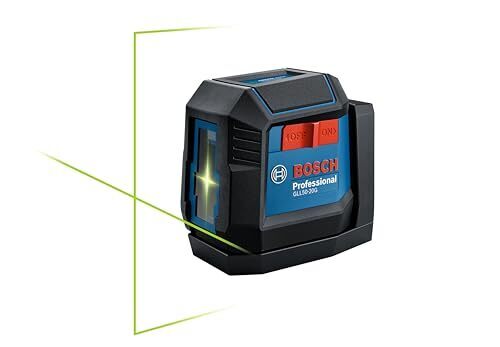
  • The Bosch 50-foot laser level is on sale for $66.44, 44% off its regular price. This tool will project a plumb line as well as a horizontal level line that’s helpful for projects like hanging shelves or cabinets.

  • The Crescent Lufkin 100-foot tape measure is on sale for $16.99, 36% off its typical price. This tape is useful for larger areas, landscaping, and grading.

Accessories

Attachments for your tools can make them more versatile, and setting up a jig to make a repetitive task faster and more precise will simplify your DIY projects.

  • A right-angle drill adapter is on sale for $12.99, 46% off its regular price. This adapter allows you to use your drill in tight spaces, and it comes with nut driver attachments.

  • A Milescraft pocket hole jig is on sale for $20.99, 36% off its usual price. This jig allows you to drive screws at an angle and conceal your fastener for a strong, clean joint on woodworking projects.

A DeWalt magnetic bit guide set is on sale for $12.99, 35% off its regular price. This set includes a magnetic bit sleeve, a bit extension, and three driver bits that will fit an impact driver or standard drill.

Shopping for tech? Lifehacker can help you make the right decision. Browse our tech reviews and head-to-head comparisons for everything from laptops and smartwatches to e-bikes and home gyms. Subscribe to our deals newsletter, Add to Cart, for the best sales sent to your inbox, or browse our best-of lists directly on Amazon, including:

iPad (2025) with A16 review: No Apple Intelligence, no problem

When it debuted in 2022, Apple’s 10th-generation iPad sat in something of a no-man’s land, bringing a long-overdue design revamp at an inflated price. A year and a half later, Apple gave the slate a $100 price cut and immediately turned it into a much more enticing value. Now, the company has quietly released a follow-up. Dubbed the iPad (A16), the new tablet is a far less dramatic update, one with welcome performance improvements that otherwise refuses to rock the boat. It even lacks the Apple Intelligence features Apple has endlessly promoted over the past year.

This isn’t necessarily a bad thing. Compared to the iPad Air, iPad Pro and iPad mini, this might be the easiest Apple tablet to grok — it’s the cheapest, it only comes in one size and it’s clearly designed for the core iPad Things. That doesn’t make it a slam dunk, though.

What hasn’t changed

Almost everything about the latest iPad is identical to the previous entry-level iPad from 2022, which brought many of the iPad Air’s features down to a lower price. The design is unchanged, with the same dimensions, weight, bezels, display and aluminum finish as before. Apple now lists the screen as being 11 inches instead of 10.9 inches, but it’s merely rounding up for marketing purposes — the size is no different.

There are still competent 12-megapixel cameras on the front and back, with the selfie cam conveniently located along the device’s long edge for FaceTime calls. The same reliable Touch ID fingerprint sensor is built into the power button in lieu of Face ID. Two speakers, one on either end, sit behind a (misleading) quartet of grilles, while a lone USB-C port continues to max out at basic USB 2.0 transfer speeds. There’s no difference in accessory support either, and the whole thing is available in the same bold colors: blue, pink, yellow or silver.

Battery life, meanwhile, still checks in at around 10 hours per charge, give or take a few depending on how you push it. I got 11 hours and 19 minutes out of the slate after playing a 1080p movie on loop at roughly 70 percent brightness and volume (and with Wi-Fi and Bluetooth disabled). Gaming and media editing will naturally sap it faster.

Most of this is still perfectly fine for a $349 tablet. The last iPad was a light and comfortable slab, with a substantial aluminum finish and flat sides that made it feel modern. This one is no different. And iPadOS is still a level above Android and Windows tablets when it comes to app and game support, long-term updates and features optimized for large displays. But if the 10th-gen iPad was a “tick” update, the iPad (A16) is clearly a “tock.”

That said, there are some important changes, namely a faster chip, more memory and higher storage options, plus a few minor tweaks like Smart HDR 4 processing for photos and support for Bluetooth 5.3 instead of Bluetooth 5.2. It’s a spec bump through and through, with most of those tweaks being for the better, although I do think that some of the things that haven’t been touched could really use an update next time.

A faster chip and more RAM

As the name implies, the latest iPad’s headline upgrade is its A16 chip. This is a slightly weaker version of the A16 Bionic found in 2022’s iPhone 14 Pro and the regular iPhone 15 from 2023. Compared to that SoC, this A16 has five CPU cores instead of six and four GPU cores instead of five.

But in practice, it’s still more than fast enough for the vast majority of things people do with iPads: browsing the web, streaming video, reading ebooks, viewing and editing photos, playing most games and the like. I tested this iPad against my personal 13-inch iPad Air M2 for much of this review, and the two consistently booted up and loaded popular apps at virtually the same speed. The few times the Air M2 was quicker, the difference wasn’t long enough to be significant.

Geekbench 6 results back this up: The iPad (A16) earned a single-core CPU score of 2,582, while the iPad Air M2 was only marginally better at 2,632. This is a roughly 20 percent jump from the 10th-gen iPad, though the most recent iPad Air M3 still measures about 16-18 percent faster. But for media consumption and common work tasks, it won’t feel slow anytime soon.

These performance gains are helped by the 6GB of RAM, which is 2GB more than the last model and twice as much as the 9th-gen iPad from 2021. While this is still 2GB short of the iPad Air and lower-spec iPad Pros, getting more memory for the same price is always a good thing: It lets the tablet hang onto apps and Safari tabs longer before it has to start refreshing things for new tasks. It will only improve the chances of the device holding up four or five years down the road, too.

Where the iPad (A16) lags behind its higher-end siblings is multi-core and graphics performance. In Geekbench 6, the tablet’s multi-core CPU score was about 40 percent below the iPad Air M2 (6,185 vs. 10,006), while its GPU score was about 55 percent worse (19,448 vs. 42,920). Other graphics benchmarks were largely the same: It scored about 60 percent lower than the Air M2 in 3DMark’s Wild Life Extreme test (with an average of 15.2 fps vs. 37.6 fps) and anywhere between 45 to 55 percent worse on GFXBench’s Aztec Ruins benchmark, depending on the resolution. Of course, the difference will be a little greater with the newer iPad Air M3.

This sounds more dramatic on paper than it does in real life. Many everyday iPad workloads won’t tax the chip’s multi-core abilities all that hard, and the scores above are still a good 15 to 30 percent higher than the last entry-level iPad. I could still play Call of Duty Mobile at its highest settings (120 fps mode aside) without any hitches. Diablo Immortal warned that maxing out its settings would put the device under “high” load — with the Air M2, it only goes up to “medium” load — but I still got through the opening areas totally fine. (It does seem to drain the battery a bit faster, though.) You can still edit RAW photos in Lightroom or create music in GarageBand without major frustration.

The iPad (A16) on top of a 13-inch iPad Air.

Still, the Air is better if you ever want to push things further. This is easiest to see in the newest and most taxing iPadOS games. With Infinity Nikki, for instance, playing at ultra or high settings on the new iPad brought a constant bit of choppiness and some slowdowns during more involved animations. It also warmed up the device’s back and drained the battery faster. The game was still totally playable at medium settings, but there’s less need to knock it down on the iPad Air M2, where it looked sharper and ran smoother at high settings. Likewise, the Air will be noticeably quicker to export higher-res videos in apps like Adobe Premiere Rush.

Arguably, the main benefit of the iPad Air’s M-series chip and extra RAM has less to do with today than it does the future. Features like Apple Intelligence and the Stage Manager multitasking mode aren’t available here, nor are some especially demanding games. Those aren’t essential right now — though omitting Stage Manager does make the device more cumbersome to use with an external display — but there’ll always be some risk that the next great iPadOS feature or power-hungry game won’t work (or work as well) with this entry-level model.

More storage — hallelujah

The best improvement with the iPad (A16) is also the simplest: It now starts with 128GB of storage, which is twice as much as the last model. There’s also a new 512GB option for $649. There isn’t much to say about this besides “good.” It’s a common-sense upgrade that makes the tablet a much safer long-term investment than its predecessor, especially when there’s no hope of Apple ever letting us upgrade storage manually.

A fine display, but it’s time to improve

In his iPad Air M3 review, my colleague Nathan Ingraham argued that it’s time for Apple to update the Air’s display with a higher refresh rate or a mini LED panel, as the OLED tech exclusive to the iPad Pros represents a major upgrade on its own. Since the iPad (A16)’s screen is no different than the last one, I want to make a follow-up case for the entry-level model, albeit on a smaller scale.

It’s much easier to see in person than through photos, but if you look at the bottom corner of the display, near the bezel, you can see the air gap between the iPad’s LCD panel and front glass.

Out of context, the IPS display here is still totally adequate. It’s comfortably sized, it’s sharp enough, it’s not a massive smudge magnet and it doesn’t have any serious color accuracy issues. A tablet is nothing if not a big display, and most of the people Apple is targeting with this one will still enjoy watching and reading stuff on it. I can also live with the 60Hz refresh rate — that’s the minimum in 2025, but it’s a harsher limitation on a $599 (or $799) tablet like the iPad Air than a $349 device.

The other restrictions are more annoying. This screen still isn’t laminated, most notably, which means there’s a visible air gap between the LCD panel and the glass above. This helps the screen’s repairability but makes it look cheaper and feel more distant when you interact with the glass. This is particularly discernible with the Apple Pencil: Writing out notes on the iPad Air is both quieter and more natural. Those who’ve never used a higher-end iPad probably won’t care, but once you notice the difference, you can’t unsee it.

The display also lacks an anti-reflective coating, so it’s worse at fending off glare. It’s certainly not unusable outdoors, but you’ll see your reflection much more clearly on the iPad (A16) than you will on the iPad Air M2 in sunlight. You’re much more likely to have to angle its display to make things out. Unlike the iPad Air and iPad Pro, the base iPad isn’t tuned for the wider P3 color space either. While the difference in color reproduction between the iPad Air and iPad (A16) is nowhere near as dramatic as the one between the Air and the iPad Pro, colors on the Air can still look slightly bolder and less washed-out when you put the two side-by-side.

I appreciate that Apple wants to keep its “good, better, best” hierarchy intact, but at this point the iPad Pro’s display is so far ahead of the rest of the lineup that there’s room to even things out. If the next Air can upgrade to 120Hz, as Nathan suggests, then the next entry-level iPad should at least have a laminated display with better glare protection. Those aren’t premium features anymore.

The USB-C Pencil can attach magnetically but lacks wireless charging and pressure sensitivity, so it’s not a great choice for more involved work.

Continued weirdness with accessories

Apple Pencil and Magic Keyboard support is another ongoing pain point. Like its predecessor, the iPad (A16) isn’t compatible with the Pencil Pro (Apple’s best stylus) or the older, second-gen Pencil. That means the only stylus you can buy with pressure sensitivity — a key feature for digital artists that lets you make darker marks by pressing down harder — is the original Pencil, which is nearly a decade old (!), isn’t as comfortable as the newer models and can’t attach to the tablet magnetically. It also requires a USB-C cable and a USB-C to Lightning adapter to charge. All of this is bad.

You can still get the $79 USB-C Pencil, which is nicer to hold and can attach to the iPad’s side magnetically but isn’t pressure-sensitive and still requires a separate cable to pair and charge. Really, though, most people who want an iPad for drawing should start with the iPad Air. I’ve never been a big fan of this iPad’s Magic Keyboard Folio either, as its Surface-style kickstand is hard to keep stable on your lap and it lacks backlit keys. That’s tough given its exorbitantly high price of $249.

Not built for Apple Intelligence, but that’s OK (for now)

As noted above, the iPad (A16) isn’t compatible with Apple Intelligence, which is Apple’s catch-all term for the suite of generative AI features it’s gradually rolled out since late last year. In fact, it’s the only major device Apple has released without the AI tools since they became available.

Right now, though, you won’t miss much without them. Sure, the “Clean Up” feature that lets you scrub unwanted objects from photos is nice. Some of the writing-assistance tools are fine if you’re completely out of gas, and being able to access ChatGPT through Siri is convenient. But just as many of the tricks are either half-cooked or, let’s say, less than essential. A promised Siri revamp has been significantly delayed. If anything, many people will appreciate that their tablet won’t push AI onto them with every update. There’s always a chance Apple Intelligence becomes more useful down the road, and buying the iPad (A16) means locking yourself out of that potential future. But it’s not there yet, and Apple is reportedly well aware of that, so we can’t call it a major omission today.

Wrap-up

The iPad (A16) isn’t a massive leap forward from the last entry-level iPad, and some of its display and accessory quirks are getting long in the tooth. We still recommend stepping up to the iPad Air if you can swing it: It’s faster and more futureproof, with small but meaningful upgrades to the screen, better accessory support and speakers that sound less compressed. It’s also worth the upgrade if you want to use your iPad as a pseudo laptop replacement without spending top dollar. If you see a great deal on refurbished iPad Air M2, that’s a good buy as well.

But for $250 less than the latest Air, the iPad (A16) does well to meet most iPad users where they live. It’s largely well-built and plenty quick for reading, watching and playing things, with solid battery life and an eternally easy-to-use OS. If you’re upgrading from a 9th-gen iPad or older, buying for a kid or just looking for a competent slate you won’t use for hours every day, it should be plenty of tablet for your needs. It’s not the most delightful iPad, but it’s good enough for the masses.

This article originally appeared on Engadget at https://www.engadget.com/mobile/tablets/ipad-2025-with-a16-review-no-apple-intelligence-no-problem-132641539.html?src=rss

‘Severance’ But With ‘The Office’ Characters

It was only a matter of time, and Luís Azevedo of Little White Lies magazine has done it, editing clips from ‘The Office’ to make the characters appear to be severed employees of Dunder Mifflin Paper Company. Would I watch nine seasons of it? Why stop at nine? I’ll watch anything. My favorite are franchises that get run into the ground and just keep going, plowing up mole people for at least three more seasons than they should have run. I’m also no stranger to counting the kernels in popcorn ceilings.

VR Aerial Sim Aces Of Thunder Teases Combat In New Gameplay Trailer

VR aerial combat sim Aces of Thunder released a new gameplay trailer before this year’s launch.

Developed by War Thunder studio Gaijin Entertainment, Aces of Thunder is an upcoming flight simulation game designed with “physically accurate flight and damage models” focused on realism. Featuring “dozens of legendary planes” from both World War I and II, today’s new gameplay trailer offered a new look at the interactive cockpits, physics, and combat.

0:00

/0:40

Aces of Thunder – Gameplay Trailer

At launch, Aces of Thunder promises over 15 maps set across three key theatres from World War 2; the Eastern Front, Western Europe, and the Pacific. The previously revealed WW1 aircraft, such as the Fokker DR.I of the infamous Red Baron, also feature fuselage-mounted machine guns not present on WW2 aircraft. Soviet, US and other aircraft are also included, and Gaijin Entertainment’s recently began a series of weekly highlights.

Though Aces of Thunder initially targeted a Q4 2024 release, this was later delayed until 2025 as the studio prepared “more content than we initially planned.” While November’s delay saw the studio promise it would “announce the exact release date in a separate news article in the early months of next year,” today’s trailer did not provide an updated release window.

Aces of Thunder targets a 2025 launch on PlayStation VR2 and SteamVR.

ASRock Investigation Hints At User Error For Burned Ryzen 7 9800X3D

ASRock Investigation Hints At User Error For Burned Ryzen 7 9800X3D
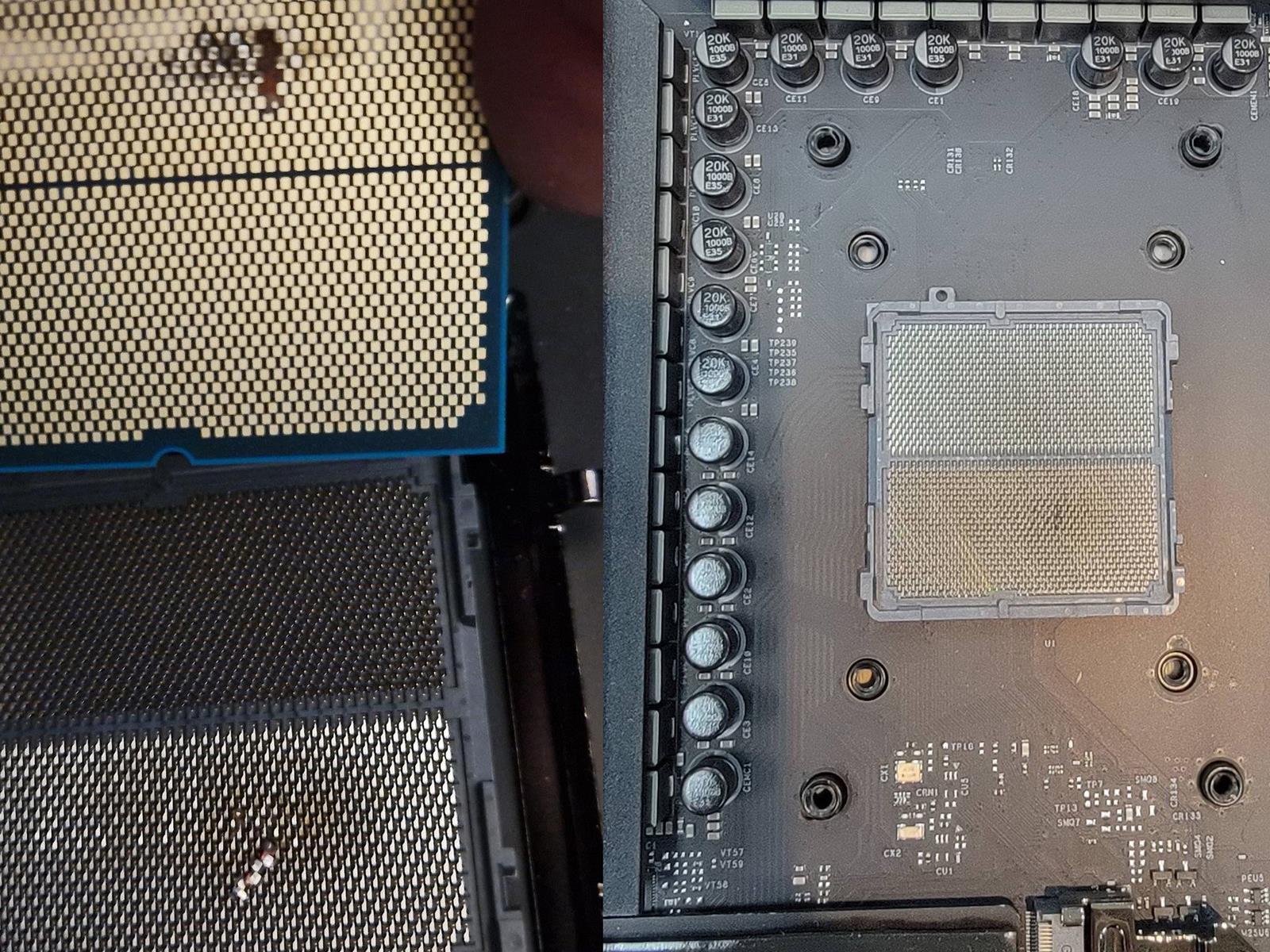
ASRock says it was able to completely restore functionality of a seemingly damaged Phantom Gaming X870E Nova WiFi motherboard (the same model we reviewed in our X870E motherboard mashup) that burned several contact points on a Ryzen 7 9800X3D, simply by removing debris from the AM5 socket area. The insinuation is that user error is ultimately

Block reportedly lays off almost 1,000 employees

Block has laid off 931 workers, which make up around eight percent of its entire staff, according to TechCrunch and The Guardian. The publications have viewed an email, wherein the financial technology company’s co-founder and CEO, Jack Dorsey, has discussed the latest organizational changes. Dorsey said that Block is eliminating roles based on three areas, starting with strategy. The company is letting 391 people go, because it’s reducing “teams that are off strategy.” It’s also parting ways with 460 workers who scored a “below” rating or are trending towards a “below” rating in its internal performance tracking metrics.

Finally, Block is laying off 80 managers, as well as moving 193 to individual contributor roles, to flatten the organization and remove layers of middle management between workers and the high-level bosses they’d now have to report to. In his email, Dorsey denied that the layoffs were made to hit any specific financial target and headcount goal, or because the company was replacing workers with artificial intelligence. He said that it was all about strategy and because flattening its org will allow it to “move faster and with less abstraction.” The CEO admitted, however, that everyone in Block has equity in the company and that the reorganization “will help [it] focus and execute better to do just that.” Block’s stock prices have plummeted by around 30 percent this year. 

Dorsey explained that the company is laying off nearly 1,000 workers all at once instead of over time, because it’s behind in its actions. “We need to move to help us meet and stay ahead of the transformational moment our industry is in,” he wrote. In addition to the layoffs, Block is also closing 748 previously open jobs and is only leaving key leadership and critical roles, along with those that have already progressed to offer stage, open. Block, which owns Square and Cash App, also underwent a reorganization in early 2024. It laid off nearly 1,000 people back then, as well, to make the company leaner and to limit its headcount to around 12,000 workers. As TechCrunch notes, Block had around 11,300 workers around the world by December 2024, which means its headcount is now far below the original goal it set for itself in 2023. 

This article originally appeared on Engadget at https://www.engadget.com/big-tech/block-reportedly-lays-off-almost-1000-employees-130056952.html?src=rss