We may earn a commission from links on this page. Deal pricing and availability subject to change after time of publication.
I test and review a lot of robot vacuums and mops. Usually, they’re premium or flagship models, which makes the Switchbot K10+ an outlier, but it still impresses me every time I use it—so much that it is one of the few vacuums I’ve held onto to use myself. When Switchbot upgraded the K10+ to the K10+ Pro, it got even better (they made the vacuum suction more powerful and dropped the mop attachment). Right now, during Amazon’s Big Spring Sale, it’s $300, which is half off its regular price.
What makes it so special? It’s tiny. About 2/3 the size of normal robot vacuums, it can get between and under spaces no other robot can. The radius it makes around chair legs and furniture is tiny, as well. It’s quiet, and it doesn’t get stuck on larger debris, or trapped in places because it’s so small it can escape any spot most robots get stuck in.
Despite having about half the suction of premium robots, it works spectacularly across carpet, hardwood, tile, or rugs. The tower is petite, and is self-emptying. The Switchbot app is simple and easy to navigate, too. You can still create complicated maps and schedules.
While, generally speaking, I think most people should get a combo vacuum and mop these days, I’ve gifted the K10+ Pro to a number of people for their offices or smaller homes, and they’ve all raved about the machine. The current sale puts it below $300, and at that price, it is the best robot vacuum deal out there.
Light, the company behind a pair of minimalist handsets, just released the Light Phone III. This is the perfect device for those who are tired of modern smartphones, with their easy access to doomscrolling and their abundance of wonky AI tools.
The Light Phone III features a sleek black-and-white OLED display, which is a new design element. The previous models included e-paper screens. The big draw, however, is not what this phone has but what it doesn’t have. There are no third-party apps. There’s no access to social media, the internet or even email. It’s intended to be, first and foremost, a phone.
It’s not completely bare. This model includes an embedded NFC chip for making payments, a bare-bones music player, a podcast player, a messaging app, a flashlight, voice notes, a calendar, a timer and an alarm. It also includes a simple camera system that was inspired by point-and-shoot models. There’s a two-step shutter button with center focus and a fixed focal length. The company calls it “genuinely fun.”
The Light Phone III has a navigation app, which is likely the most useful part of modern smartphones, but with a twist. The company paid for private access to navigational information, so Google won’t get ahold of any tracking data.
Other specs include 6GB of RAM, up from 1GB in the Light Phone II, 128GB of memory and a newer Qualcomm chip. It includes a fingerprint ID on the power button, a USB-C port and some loudspeakers at the bottom. The battery is also user-replaceable, which is a huge bonus. It’s larger than previous generations and I find it to be pretty cute. It’s around the width of a modern iPhone, but much shorter. This was on purpose, the company says, to make it easier to text while holding it vertically.
There is a spot of bad news here. The Light Phone III costs $800, which dwarves the price of the second-gen model. It was available for much cheaper as a pre-order bonus, but those days are gone.
This article originally appeared on Engadget at https://www.engadget.com/mobile/smartphones/the-minimalist-light-phone-iii-is-officially-available-for-purchase-150056138.html?src=rss
The PlayStation Spring Sale is now live with notable PS VR2 discounts that include Resident Evil, Metro, Alien, and more.
Now live until April 23, the Spring Sale 2025 features thousands of PlayStation games with over 60 participating PlayStation VR2 titles, various bundles and an array of DLC. Between heavily discounted launch titles like Jurassic World Aftermath Collection to more recent hits like Arken Age, we’re highlighting a range of choices across various genres.
The full list is available here for more details. Otherwise, here’s our latest sale recommendations.
Last year, Google released a niche feature in its experimental NotebookLM product that turned out to be a sleeper hit. You could upload any document to NotebookLM, and it would use AI to generate a two-person conversational podcast out of it. These aren’t meant to be uploaded online for viewership, but for you to listen to as a learning ad.
The idea is that there are times when it’s easier to understand a concept when two people are just casually conversing about it. If that sounds appealing to you, good news: you no longer need to dive into the unfamiliar NotebookLM interface to try it out. Google’s AI-generated podcasts, called Audio Overviews, are now available for free directly in the Gemini app and website. And now that Audio Overviews are integrated directly into Gemini, you can even use Gemini’s own Deep Research reports as sources for your podcast.
Personally, I’ve found it useful to first prompt Gemini to create a Deep Research report on a topic, then directly generate an Audio Overview from it (skipping past having to read it myself).
Generate and download podcasts on any topic
To get started, use the Gemini website or the Gemini app. To upload your own document or slide show, click the Plus button and add in your desired source file. As soon as the file is processed, you’ll see a button for Generate Audio Overview.
Credit: Khamosh Pathak
Press the button and wait for Gemini to begin its work. It can take anywhere between 3–5 minutes to generate your podcast audio, depending on the depth of the material.
Alternatively, you can prompt Gemini to create a report for you using the Deep Research option below the text box. Here, too, you’ll have to wait a couple of minutes until the research is ready. Then, open the Deep Research document, click the down-arrow button, and then use the Generate Audio Overview button. You can also just enter “Generate Audio Overview” in the text box.
Credit: Khamosh Pathak
When the processing is done, you’ll get a notification from the Gemini website or the app. You’ll now see a player in the chat box. Hit the Play button to start playback, and use the seek bar to jump to any point in the recording. Yes, there’s speed control too, but you can only increase the playback speed up to 1.5x.
Credit: Khamosh Pathak
I got 10 minutes of podcast overview from a 12-page document, so the detail isn’t bad. If you don’t want to listen to your podcast right away, or if you’d like to share it, you can also download the audio for offline payback. Click the three-dot menu button in the audio player and choose the Download option.
Credit: Khamosh Pathak
From here, you can also choose the Share conversation option to share your Gemini chat and recording using a link.
And while you’re in Gemini, you might want to try creating your own custom AI Bots, called Gems, since those are now free for everyone to use.
During today’s Nintendo Direct, the last one before the big Switch 2 Direct next month, the company shared a big change it’s making to digital games next month. While it will allow you to share digital titles with friends and family members, this is still Nintendo we are talking about, so the whole system is a bit…
Paul Ginsparg, a physics professor at Cornell University, created arXiv nearly 35 years ago as a digital repository where researchers could share their findings before peer review. Today, the platform hosts more than 2.6 million papers, receives 20,000 new submissions monthly, and serves 5 million active users, Wired writes in a profile of the platform.
“Just when I thought I was out, they pull me back in!” Ginsparg quotes from The Godfather, reflecting his inability to fully hand over the platform despite numerous attempts. If arXiv stopped functioning, scientists worldwide would face immediate disruption. “Everybody in math and physics uses it,” says Scott Aaronson, a computer scientist at the University of Texas at Austin. “I scan it every night.”
ArXiv revolutionized academic publishing, previously dominated by for-profit giants like Elsevier and Springer, by allowing instant and free access to research. Many significant discoveries, including the “transformers” paper that launched the modern AI boom, first appeared on the platform. Initially a collection of shell scripts on Ginsparg’s NeXT machine in 1991, arXiv followed him from Los Alamos National Laboratory to Cornell, where it found an institutional home despite administrative challenges. Recent funding from the Simons Foundation has enabled a hiring spree and long-needed technical updates.
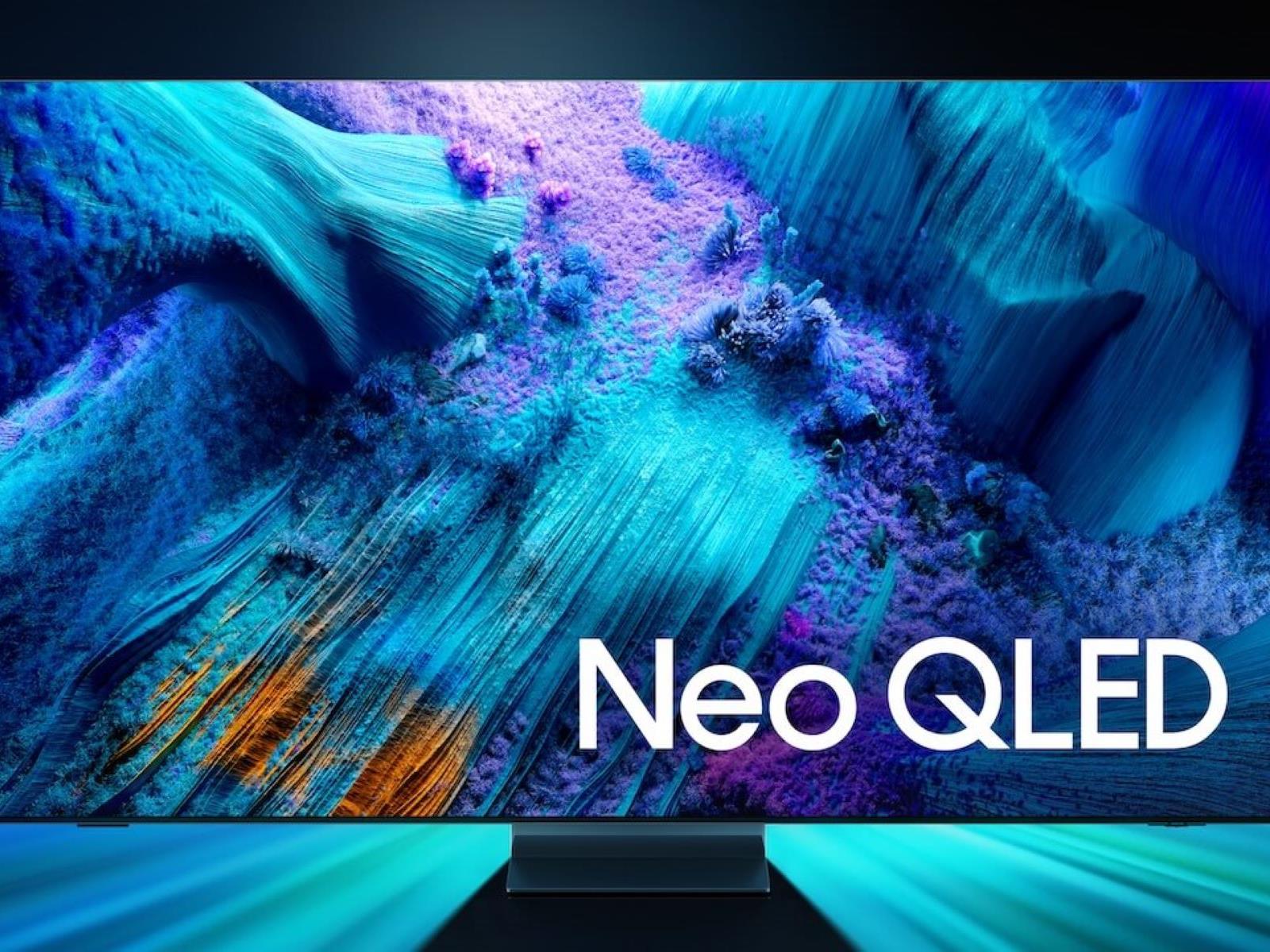
Samsung has just announced a load of new Neo QLED 8K and 4K televisions, all of which promise improved visuals and sound, glare-free screens, plus the introduction of Samsung Vision AI. The latter is touted to enhance A/V processing, real-time translation based on your preferred subtitle language, “Click to Search,” and even gesture control
On Saturday, March 29, a solar eclipse will darken the skies. Unlike the “Great American Eclipse” of 2024, though, this will not be a total eclipse; instead, a partial eclipse will be visible in the early morning hours in parts of the northern hemisphere.
A partial eclipse isn’t as dramatic as a total eclipse, but it’s still worth seeing. While the sun will not be fully obscured, with proper eye protection, you will be able to see the moon take a bite out of the sun. Because the eclipse will occur in many places during sunrise, viewers may get the chance to see the famed “devil horns” — the crescent of solar light emerging from behind the moon.
When can you watch this partial solar eclipse, and those devil horns? Let’s talk about how to safely watch this eclipse.
What areas will experience the partial solar eclipse, and when?
The partial solar eclipse will be visible in areas of the northern hemisphere. It will be visible at sunrise in eastern North America and sunset in Siberia, Russia on Saturday, March 29. In Europe, it can be viewed around mid-morning. But the event’s footprint will be limited: No eclipse will be visible west of Toronto, Canada, and Washington, DC in North America.
NASA
This global map of the partial solar eclipse from NASA is more than a little confusing, but here’s how to read it. The yellow curve is the path of the partial solar eclipse, moving from west to east. The lighter colored yellow curves give the percent obscuration of the sun. (In other words, how much of the sun is covered by the moon depends on where you are and when you’re looking.)
Most of Europe will only see around a 20 percent obscuration (with the exception of Greenland and Iceland), for example, while the extreme northeastern part of the United States will see up to 89 percent of the sun covered. The Nunavik region of Quebec will see maximum obscuration of 94 percent. The green lines on the map show the eclipse’s progress over time. Times are given in UTC, which is four hours ahead of Eastern Daylight Time.
However, sunrise and sunset makes things more complicated. This is depicted on the map by the orange loop. The left side of the loop (over the Great Lakes in the United States) shows where the eclipse ends at sunrise. Therefore, the eclipse is not visible west of that orange line. The right side of the loop is where the eclipse begins at sunrise.
That means to see the maximum partial solar eclipse at sunrise, it’s best to be along that blue line running down the middle of the orange loop. (It’s worth noting that the eclipse will also be visible across a narrow part of Siberia, but at sunset rather than sunrise — that’s what the other half of the orange loop depicts).
If it seems incredibly confusing, that’s because it is indeed incredibly confusing. Some places with maximum obscuration will have a shorter eclipse duration because the partial eclipse will start before sunrise. The sun will also be low to the horizon in North America, so any viewing location will need to be above tall trees with a clear view of sunrise. In Europe, the viewing locations will be easier because the sun will be higher in the sky — but the sun will not be as obscured.
For example, in Bar Harbor, Maine, the sun will rise at 6:19AM, and the maximum eclipse will be at 6:22AM, with 80 percent of the sun obscured. The partial eclipse will end at 7:11 am. Technically though, the eclipse will begin at 5:26 am ET, but because that’s before sunrise, Mainers will be cheated out of about half their potential eclipse viewing time.
Moving south, the best view will be through coastal New England, then down through Boston, New York City and Philadelphia.The path basically ends in Washington, DC, where just 1.2 percent of the sun will be obscured at 6:59AM ET.
NASA
According to Time and Date, only 44,800 people will see a 90 percent partial eclipse, while 3,820,000 will see an 80 percent. That’s a far cry from the 30 million people in the path of totality for the 2024 total solar eclipse.
Will a total solar eclipse be visible in the middle of the Atlantic Ocean?
No, there is nowhere on Earth that a total solar eclipse will be visible for this event. For any solar eclipse to happen, the sun, the moon and the Earth need to line up. However, because the moon doesn’t orbit in the same plane as the sun and the Earth, eclipses are rare.
A partial solar eclipse, like the one occurring on March 29, occurs when the moon passes between the sun and the Earth, but it’s not perfectly lined up. As a result, the sun will have a crescent shape — as if the moon took a bite out of the sun — but it will never be fully obscured as it is during a total eclipse.
How long will the partial eclipse last?
The visible duration of the eclipse depends on where you are, and what time sunrise (or sunset) is at your location. But globally, the eclipse will begin at 4:50 am ET (8:50AM UTC). The maximum eclipse will occur at 6:47AM ET (10:47AM UTC), and the event will end at 8:43AM ET (12:43PM UTC). Keep in mind, though, that this doesn’t mean the entire partial eclipse will be almost four hours long in any given location because this is just for the extreme edges of the event.
What’s the weather forecast along the viewing line?
It’s spring across the Northern Hemisphere, which generally means unfavorable weather for any sky viewing. The Weather Channel’s senior digital meteorologist Chris Dolce said that cloud cover, and even rain and snow, may be likely in the northeastern United States during the eclipse, so it’s not great news there, unfortunately.
If it’s just a partial eclipse, do I need eye protection?
Anything that involves looking at the sun, even just 5 or 10 percent of the sun, requires eye protection. The sun can damage your retinas quickly, painlessly and often irreversibly.
If you have solar viewers left from the 2024 eclipse, and they are undamaged, they’ll work just fine for this one too. According to the American Astronomical Society (AAS), modern eclipse glasses do not expire. It’s worth checking them out thoroughly, though, making sure there are no rips, tears or scratches across the lenses and that the filters and lenses are still attached to the frame.
Solar eclipse glasses can be difficult to purchase at the last minute, so it’s always good to keep them around. However, if you donated or trashed your previous pair (or didn’t buy them in the first place), you can buy them online — with some caution. Make sure any solar viewers conform to the ISO 12312-2:2015(E) international safety standard, and check the manufacturer against this list of brands from the AAS. Counterfeit eclipse glasses were rampant leading up the 2024 eclipse.
Celestron is a reliable manufacturer of solar viewer equipment, and the company’s eclipse glasses are readily available on Amazon for a low price, though you’ll need fast shipping at this late date
What are some cool things to look out for during this eclipse?
A unique feature of solar eclipses during sunrise is you may be able to see the famed “devil horns,” depending on where you are. When the sun rises during an eclipse (and therefore the sun is low on the horizon), as the crescent sun rises, it can look like devil horns coming up out of the ground.
An earlier sunrise partial eclipse over Rice Lake, Ontario shows the “devil horns” phenomenon.
John Fader via Getty Images
It’s best to target Maine, New Brunswick, and Quebec (along the blue line in the NASA map) to see this phenomenon.
Additionally, the sun is currently at or near solar maximum, which means that our star is basically at the peak of its 11-year solar cycle. Scientists determined that the sun hit the highest level of solar activity in October 2024, and this will continue for a year or so. This means that there may be sunspots visible on the surface of the sun when the eclipse hits. (For context, here’s what the sun looks like right now, courtesy of NASA’s Solar Dynamics Observatory.) If you have solar binoculars or a solar telescope, this will make them much easier to see.
Can I just point a telescope or camera at the sun?
If you’re asking yourself this question, you probably already know the answer: Nope! Not without a solar filter. Whether it’s a phone camera, binoculars, a telescope or a mirrorless camera, the sun can do extreme damage to this kind of equipment. (On Apollo 12, astronaut Alan Bean accidentally pointed a television camera at the sun, irreparably damaging it. Don’t do this!)
You can pick up solar filters at a camera store or online, or in a pinch, you can just use an extra pair of solar viewers. Simply remove the film and tape it over your smartphone camera, but don’t look at the sun when aiming the camera unless you’re wearing solar viewers as well. If you are interested in looking at the sun regularly, a pair of solar binoculars with a permanently attached filter is a great idea.
This article originally appeared on Engadget at https://www.engadget.com/science/space/partial-solar-eclipse-where-and-when-to-see-the-sunrise-event-on-march-29-144238528.html?src=rss
It only took some 417 years since the invention (if going by patent filings) of the telescope to finally see Neptune’s auroras, and it’s thanks to NASA’s James Webb Space Telescope, or JWST (the same telescope that provided a crystal clear view of Neptune’s rings in 2022). Webb is much more powerful than the handheld refracting telescope patented
A pair of cult classics from Sony’s PlayStation Portable library are heading to the Switch. On Thursday, Nintendo announced Patapon 1 + 2 Replay, a package that brings together brand new remasters of 2007’s Patapon and 2008’s Patapon 2. Originally developed by Pyramid and Sony Japan Studio, which shuttered in 2021, the two games combine elements from strategy and rhythm games.
As the player, you must guide a tribe of anthropomorphic eyeballs to victory over their foes through a combination of drum beats. Patapon and Patapon 2 were well-received on release and went on to define the PSP’s library of quirky but fun games. In addition to HD graphics, Patapon 1 + 2 Replay includes quality of life changes that should hopefully make this the best way to play these two gems.
No word yet if the remaster is also making its way to PlayStation consoles. We’ll update this article once we know more.
This article originally appeared on Engadget at https://www.engadget.com/gaming/nintendo/patapon-1–2-replay-brings-two-psp-classics-to-nintendo-switch-on-july-11-143627695.html?src=rss
After years of delays and at least one complete reboot, Metroid Prime 4: Beyond is coming in the near future. During a Nintendo Direct presentation on Thursday, Nintendo offered a closer look at gameplay.
The trailer shows Samus exploring a jungle planet called Viewros that “she was unexpectedly transported to.” She’ll battle malevolent alien creatures and scan relics to learn information that may help her escape. Not only that, Samus will receive new psychic abilities she can use to open doors and manipulate mechanisms, as well as control the direction of beams that she fires. There’s a bit of a mystery as to why she receives these powers, but we’ll probably learn that through the course of the story.
There’s still no specific release date as yet. However, Nintendo reaffirmed that the game is coming to the Switch in 2025. It will presumably run on the Switch 2 as well thanks to that system’s backwards compatibility.
This article originally appeared on Engadget at https://www.engadget.com/gaming/nintendo/metroid-prime-4-beyond-gameplay-trailer-shows-off-samus-new-psychic-abilities-143326681.html?src=rss
No Metroid game is complete without new abilities and a cool altered space suit. Metroid Prime 4: Beyond has both, with the Switch game’s latest trailer showing off psychic powers and red and black space armor that almost makes Samus Aran look like a Geth trooper from Mass Effect (complimentary).
Amazon’s Spring Sale is bringing a lot of tempting deals on everything from robot vacuums to AirPods. The latest discount is also an Apple markdown, with the new 128GB iPad Air with M3 chip dropping to $549 from $599.
Apple only released the 11-inch iPad Air M3 at the beginning of this month and it’s already our pick for best iPad for most people in 2025. We gave it an 89 in our recent review thanks, in part, to the M3 chip’s power. Geekbench 6 scores showed the iPad Air M3’s single- and multi-core scores as about 16 percent more powerful than its predecessor. We also didn’t notice any dip in battery life in exchange for the boost.
You can pick up the discounted iPad in Starlight, Blue, Purple or Space Gray. Other perks of the new iPad include a better screen and multitasking capabilities than you’ll get with Apple’s baseline model. It also offers a separately available and much improved Magic Keyboard that’s similar to the one you’ll find in Apple’s iPad Pro M4.
This article originally appeared on Engadget at https://www.engadget.com/deals/amazon-spring-sale-apple-deals-include-a-50-discount-on-the-new-ipad-air-m3-141441087.html?src=rss
China’s ambitious AI infrastructure push has resulted in hundreds of idle data centers with local media reporting up to 80% of newly built computing resources remaining unused. The country announced over 500 data center projects during 2023-2024, with at least 150 completed facilities now struggling to secure customers in a rapidly changing market.
The rise of DeepSeek’s open-source reasoning model R1, which matches ChatGPT o1’s performance at a fraction of the cost, has fundamentally altered hardware demand. Computing needs now prioritize low-latency infrastructure for real-time reasoning rather than facilities optimized for large-scale training workloads.
Technical misalignment compounds the problem, as many centers were constructed by companies with little AI expertise, MIT Technology Review reports. The facilities, often built in remote regions to capitalize on cheaper electricity and land, now face obsolescence as AI companies require proximity to tech hubs to minimize transmission delays. GPU rental prices have collapsed, with eight-GPU Nvidia H100 server clusters now leasing for 75,000 yuan ($10,333) monthly, down from peaks of 180,000 yuan, making operations financially unsustainable for many data center operators.
Yesterday afternoon, once the markets were closed and could no longer react immediately, US President Donald Trump announced that starting on April 2, all imported automobiles and many imported car parts will now be subject to an extra 25 percent tariff. Despite Trump’s rhetoric during his election campaign and since taking office, tariffs are paid for by those importing the goods, not the exporters, so we can look forward to most new cars and trucks—and their maintenance costs—getting a lot more expensive.
During his first term in office, Trump started trade wars with key US trading partners like Canada, the European Union, and China. Upon his return in 2025, more trade wars have been the name of the game. A 25 percent tariff on all imports from Canada and Mexico was threatened and then implemented at the beginning of March, before being partially reversed just two days later. Additionally, a 10 percent tariff on Chinese exports was also levied.
Less than two weeks later, a new 25 percent tariff on all steel and aluminum imports also joined the club.
We may earn a commission from links on this page. Deal pricing and availability subject to change after time of publication.
If you have big DIY plans for spring, or if you just enjoy adding to your tool collection, you might have noticed that tools can be pretty expensive. Whether you’re doing yard work or woodworking, having the right tools can make the job easier—so it’s worth waiting for good deals. Here are a few of the best tool deals to check out during Amazon’s Big Spring Sale.
Deals on power tools
Power tools are an essential part of a DIY kit. You’ll need a decent-quality cordless drill for most projects, and other tools for cutting and finishing will make your DIY projects faster and more professional-looking.
The DeWalt 20-volt drill and driver set comes with a drill, an impact driver, two 1.5-amp batteries, a charger, and a tool bag. It’s on sale for $124.00, 48% off its regular price. This is a good beginner kit because it comes with everything you need to get started with your DeWalt tools.
The Bosch 2.25 horsepower router is on sale for $128.75, 35% off its regular price. It comes with a quarter-inch and a half-inch chuck to accept most standard-sized router bits. This is a good tool for finish work as it allows you to round corners, cut detail into the edges of your work, and even fabricate moulding. This is a corded tool, so you’ll need a power source to use it.
The DeWalt 12-inch, double bevel sliding miter saw is on sale for $499.00, 25% off its typical price. This saw can cut compound angles like the ones you need to make for crown molding or some styles of bench legs. This is also a corded tool, and you’ll need a power source to use it.
It’s time to get your outdoor spaces set up for success as the weather warms up. Keeping weeds at bay and making sure all your plants are properly trimmed requires tools like these.
The EGO 56-volt cordless leaf blower is on sale for $329.99, 35% off its usual price. This leaf blower comes with a 5-amp-hour battery, a 2.5-amp-hour battery, and a charger. It can run for about 90 minutes before needing a fresh battery.
The Greenworks 40-watt cordless 16-inch lawnmower is on sale for $209.99, 30% off its typical price. It comes with one 4-amp-hour battery and a charger. You can mow for about 45 minutes before you need to recharge the battery.
Keeping your home shop running requires more than just power tools. You’ll need other tools and accessories to make all your DIY dreams come true.
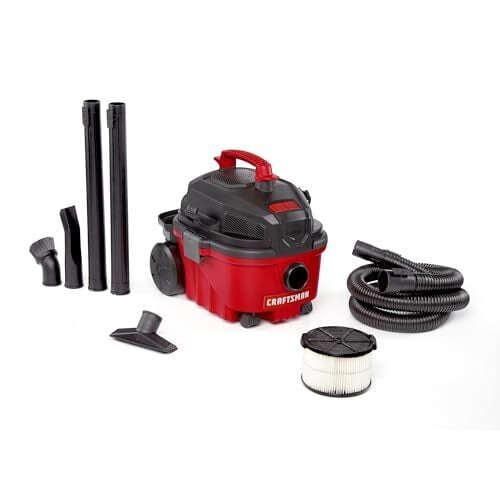
The Craftsman four-gallon wet/dry shop vac is on sale for $103.38, 30% off its regular price. It comes with a variety of hoses and attachments and one air filter to get you started.
A Goodyear triple-tap 40-foot extension cord and reel is on sale for $77.99, 48% off its usual price. This reeled extension cord is good for running shop power overhead to keep your floor free of trip hazards. The cord has an LED indicator light in the connector to show when it has power.
Protecting your ears and eyes while you’re working on DIY projects is essential, so the best deals are always on safety equipment. Saving yourself a trip to the emergency room is priceless.
A pair of Walker protective earmuffs have electronic noise-canceling technology that allows you to hear what’s going on around you while protecting your ears from damaging levels of noise. They’re on sale for $40.87, 49% off their regular price.
A pair of No-Cry anti-fog safety glasses are on sale for $12.59, 26% off their regular price. These glasses provide UV protection, making them good for outdoor projects, and they are scratch resistant to avoid impaired vision while you’re wearing them.
Shopping for tech? Lifehacker can help you make the right decision. Browse our tech reviews and head-to-head comparisons for everything from laptops and smartwatches to e-bikes and home gyms. Subscribe to our deals newsletter, Add to Cart, for the best sales sent to your inbox, or browse our best-of lists directly on Amazon, including:
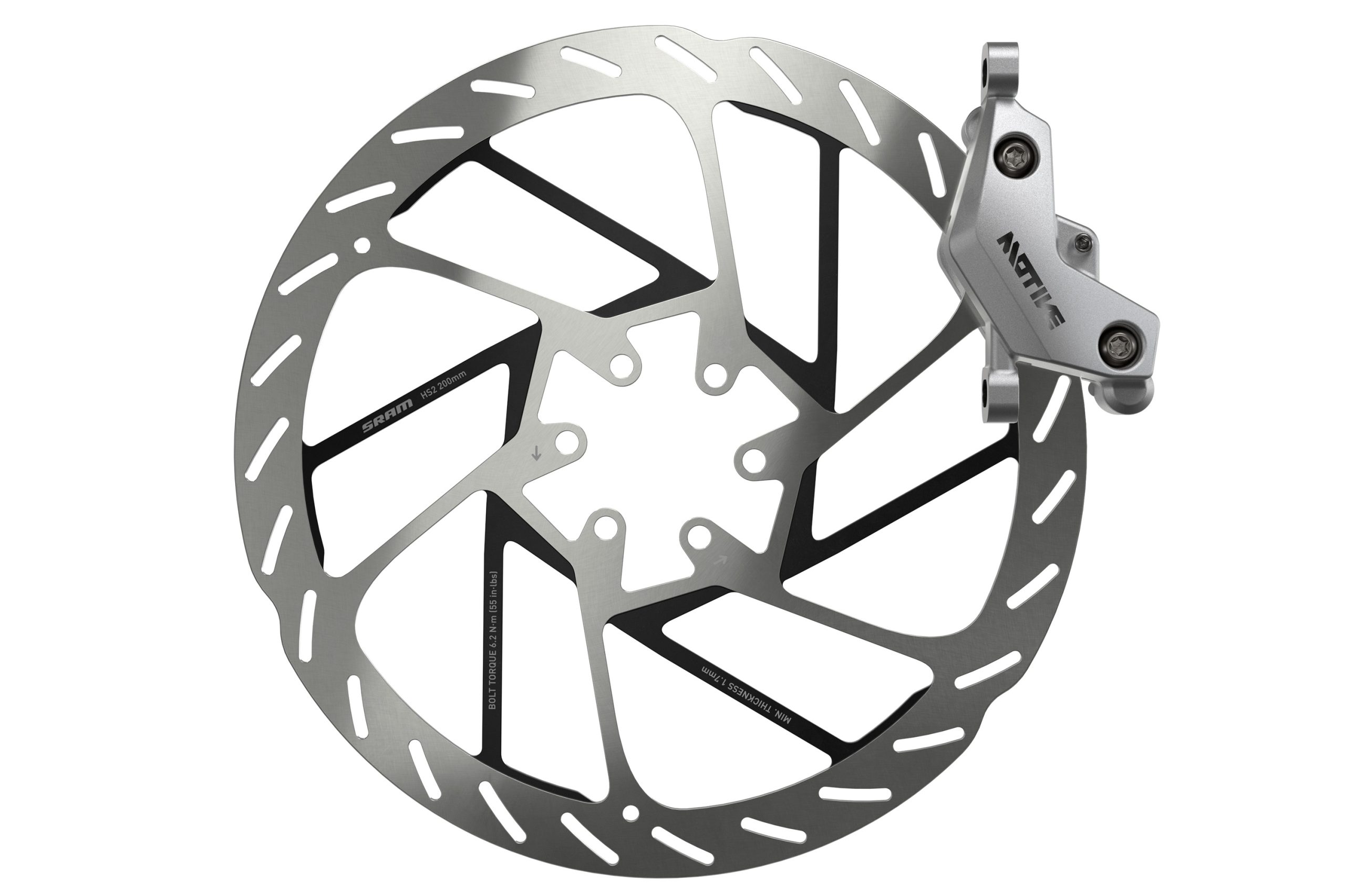
SRAM has announced it is simplifying its line-up of brakes, switching to mineral oil throughout and only using four-piston calipers in its mountain bike brake range.
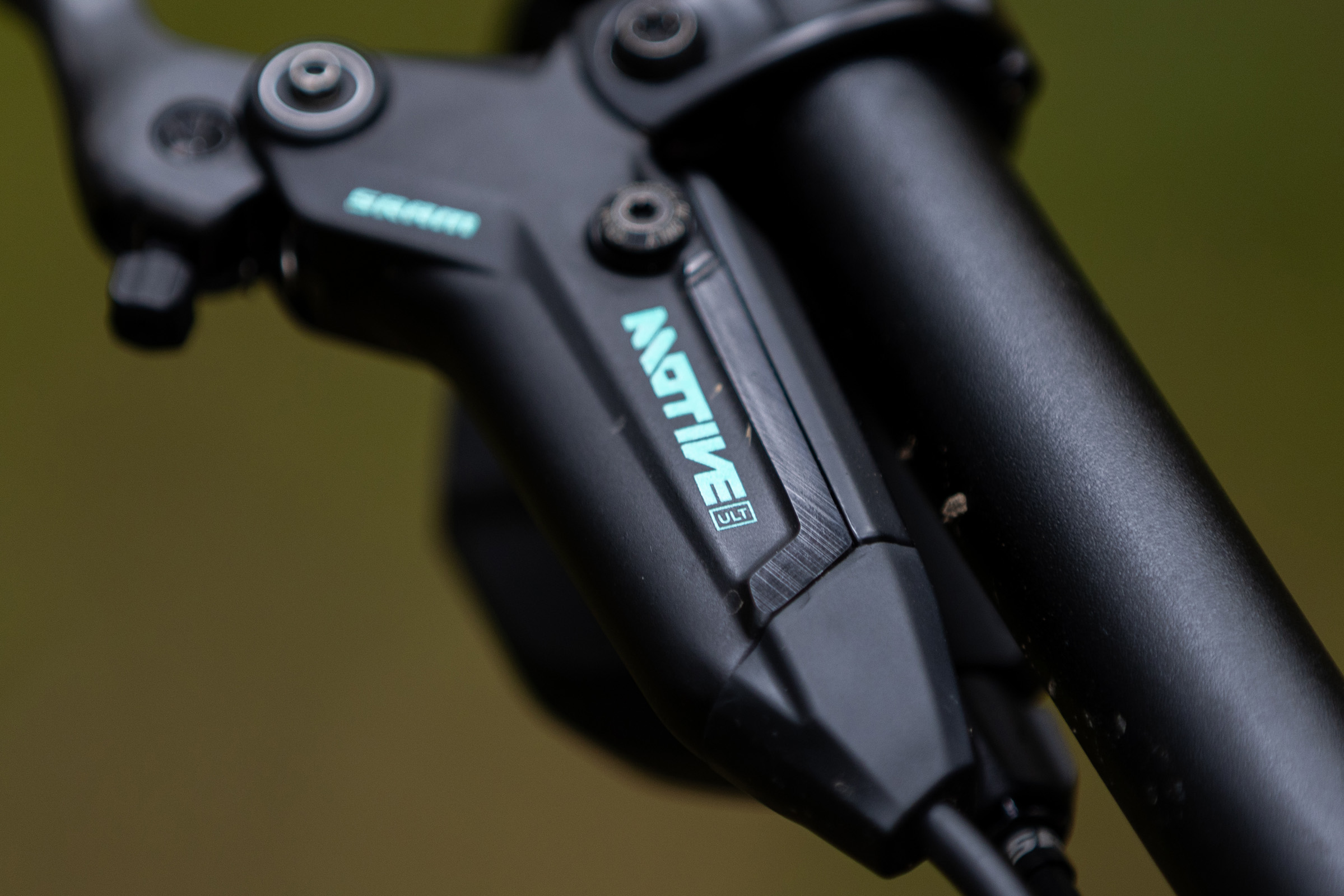
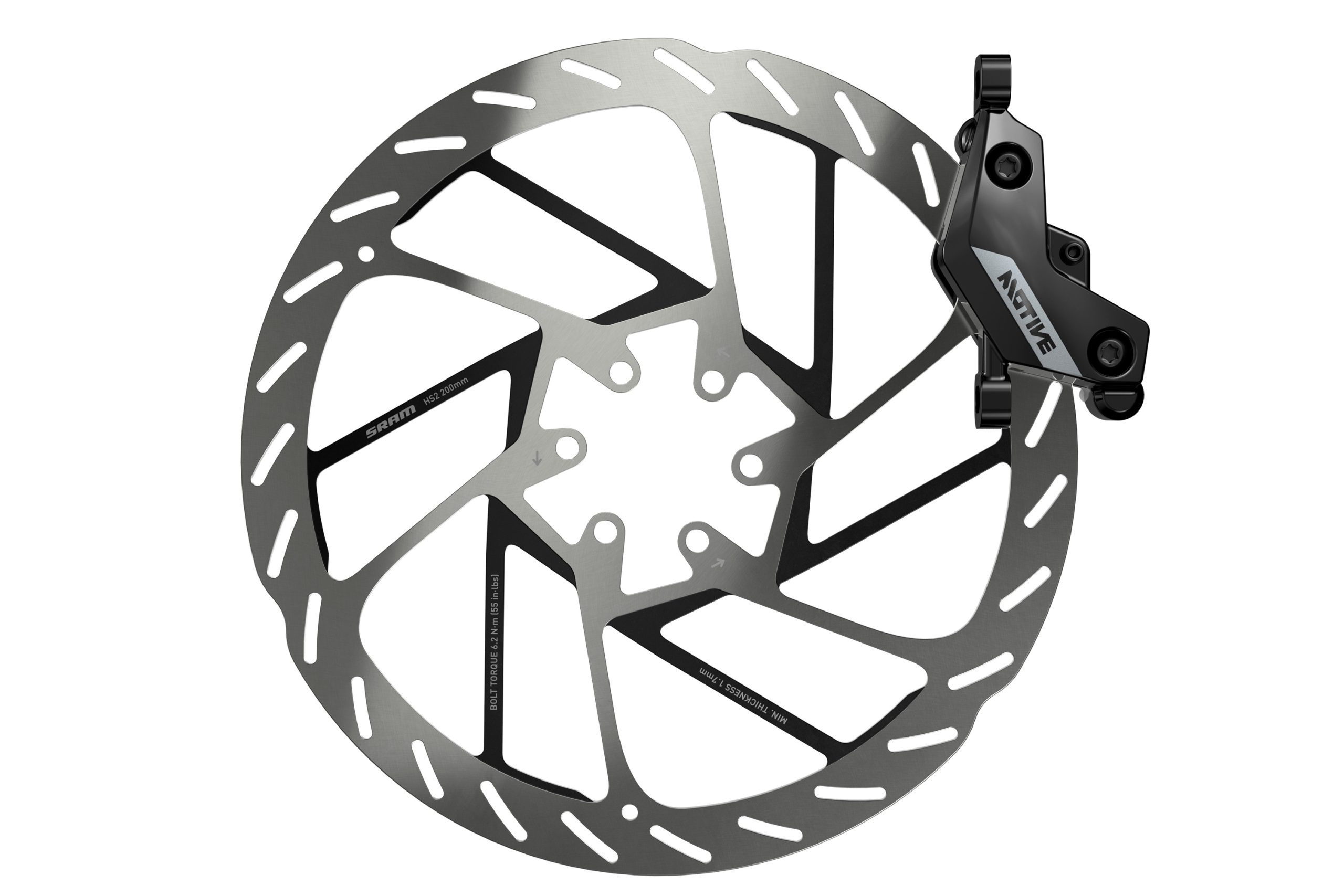
While we wave goodbye to the likes of the Level and Code ranges, SRAM’s new Motive line-up should help fill the gap, and is said to offer Code-like power with Level-like weight. Pricing for the Motive Bronze starts at £170 per end.
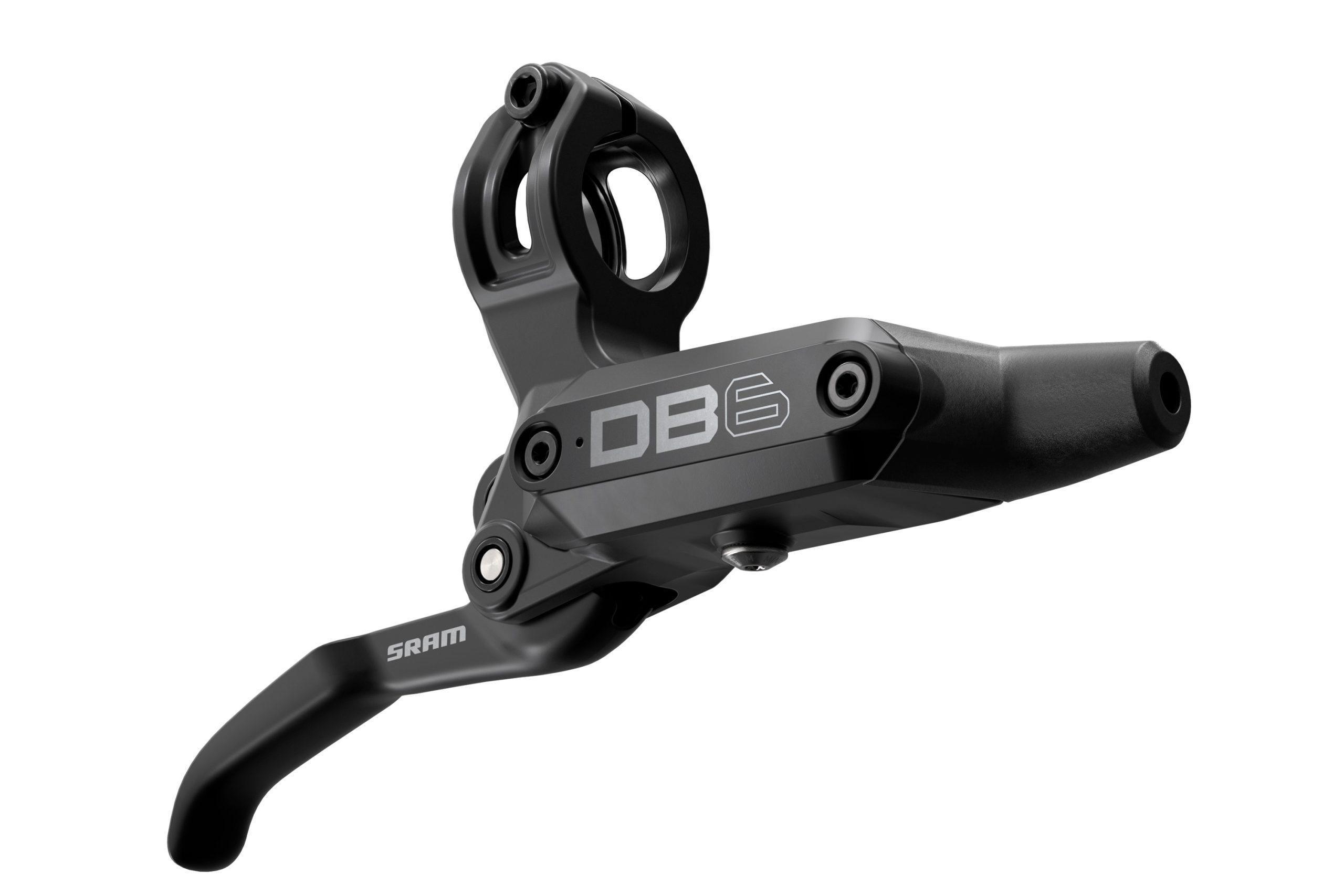
At the lower end of the pricing spectrum, SRAM has bolstered the DB range, adding the £95 DB6 and £75 DB4 brakes to the catalogue.
The heavy-hitting Maven remains, although SRAM has added a more affordable ‘Base’ model, which will set you back £180.
While we’ve spent plenty of time on the Maven and DB8 brakes already, the Motives are entirely new.
SRAM is also offering its Ultimate Expert kits for the Maven and the Motive.
We got our hands on the Motive Ultimate Expert kit and bolted the brakes to a bike to see how they held up.
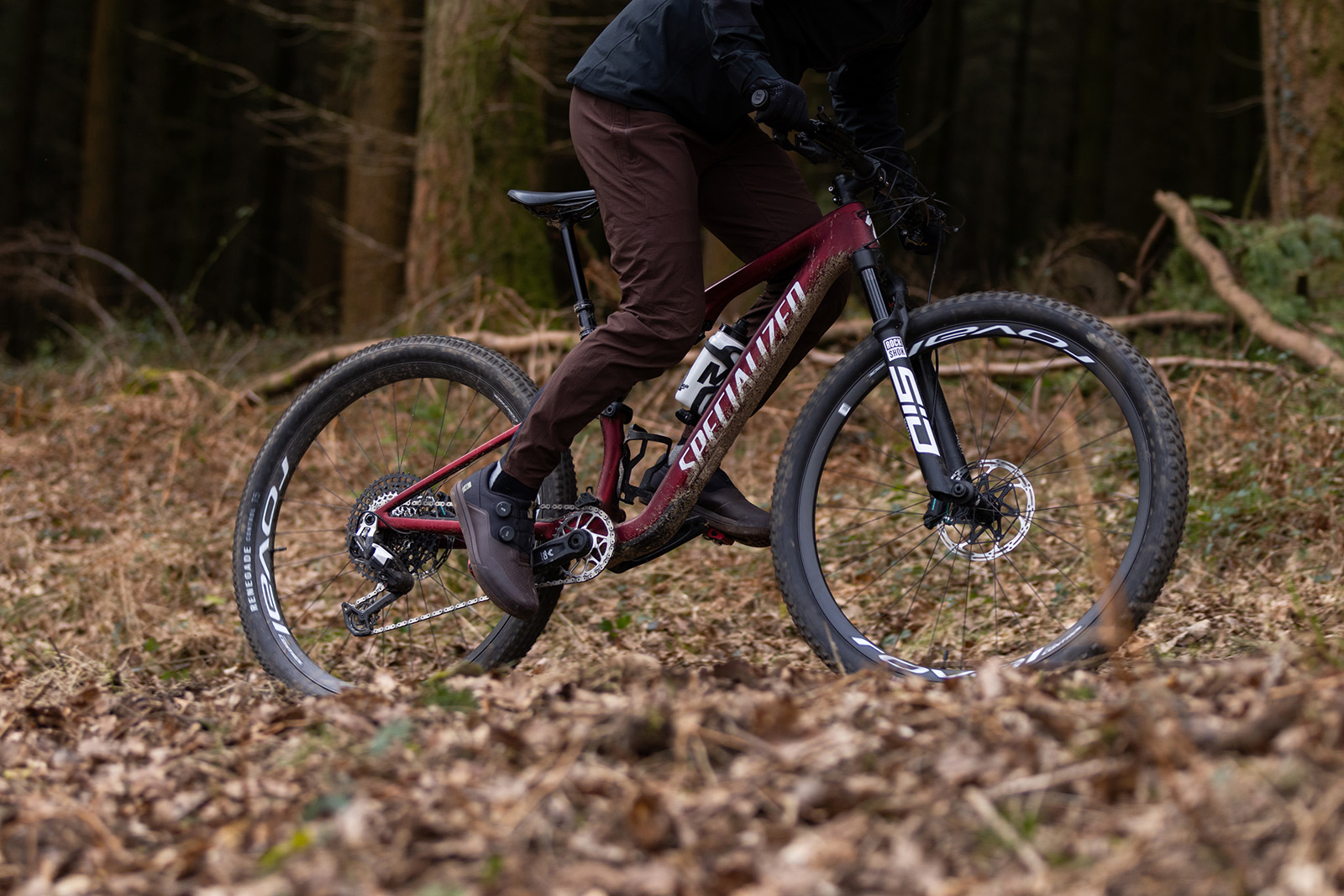
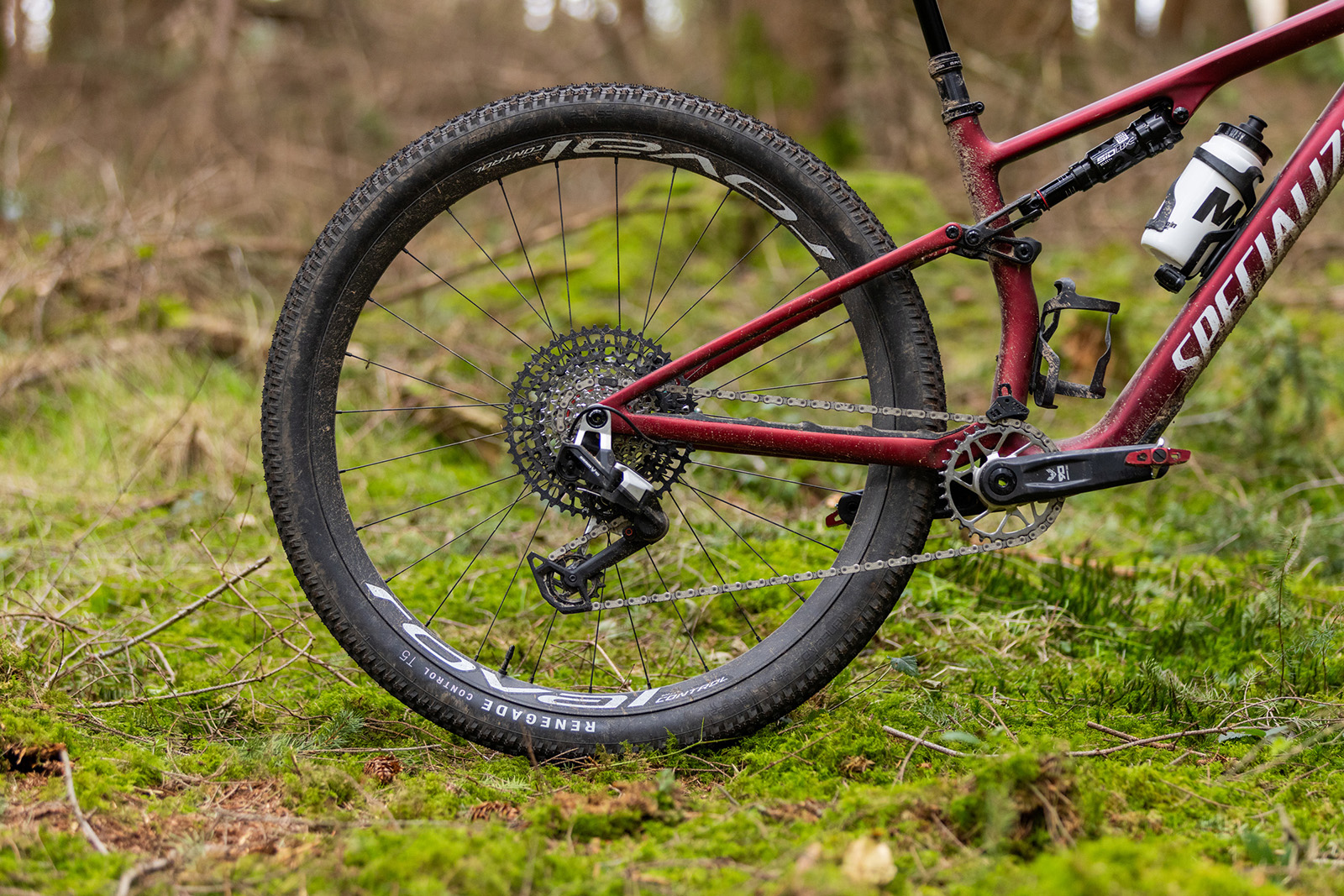
After a little over a month on the trail, the Motives remain powerful, with more than enough punch to slow down the Specialized Epic 8 Expert we had them bolted to.
Lever feel is light and they’ve proven to be decently predictable, solid performers to date.
SRAM Motive ride impressions – Rob Weaver
We’ve been initially impressed by SRAM’s new anchors. Scott Windsor / Our Media
I’ve now had just over a month on the new Motive Ultimate brakes and have managed to ride with them in a multitude of conditions aboard a Specialized Epic 8 Expert.
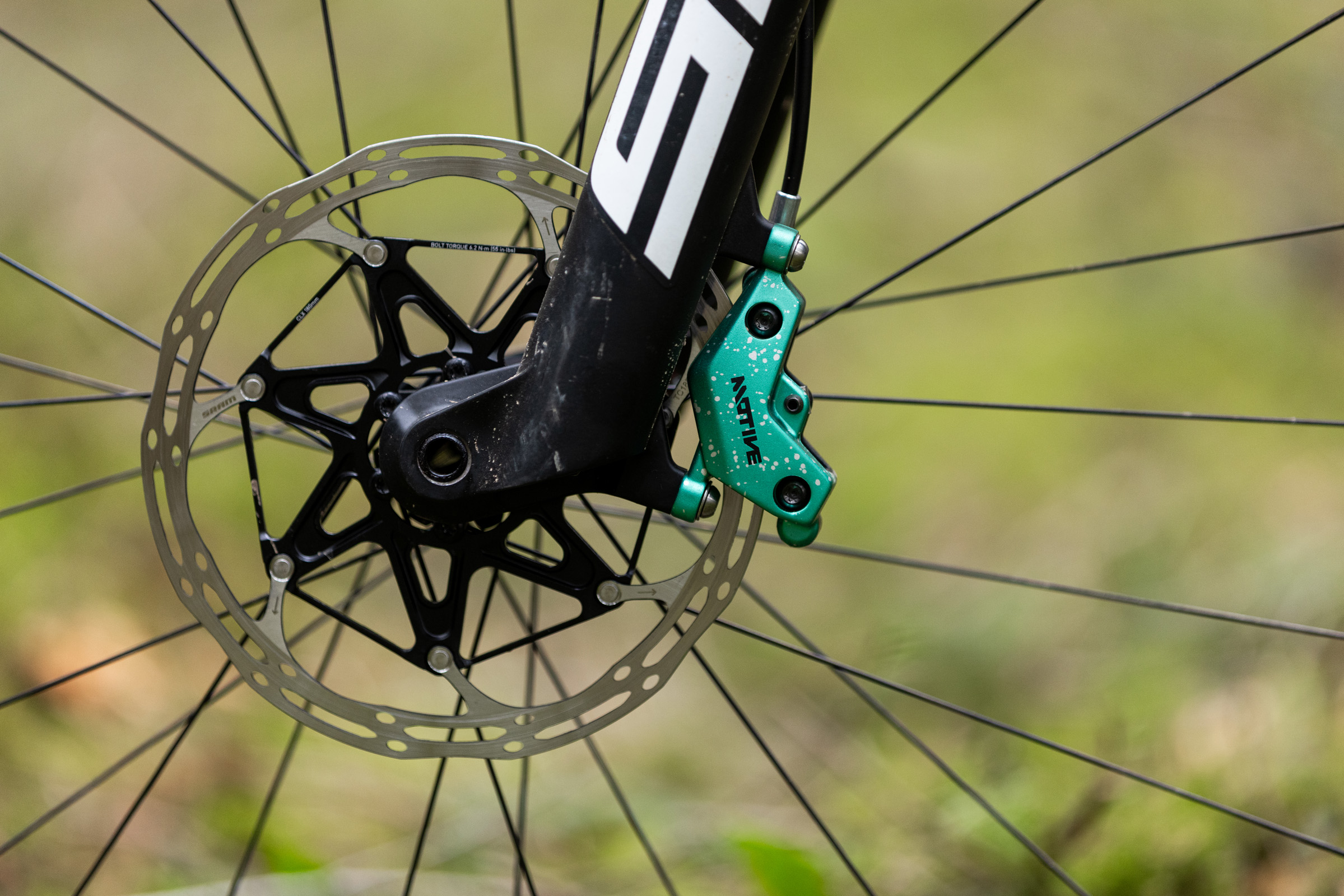
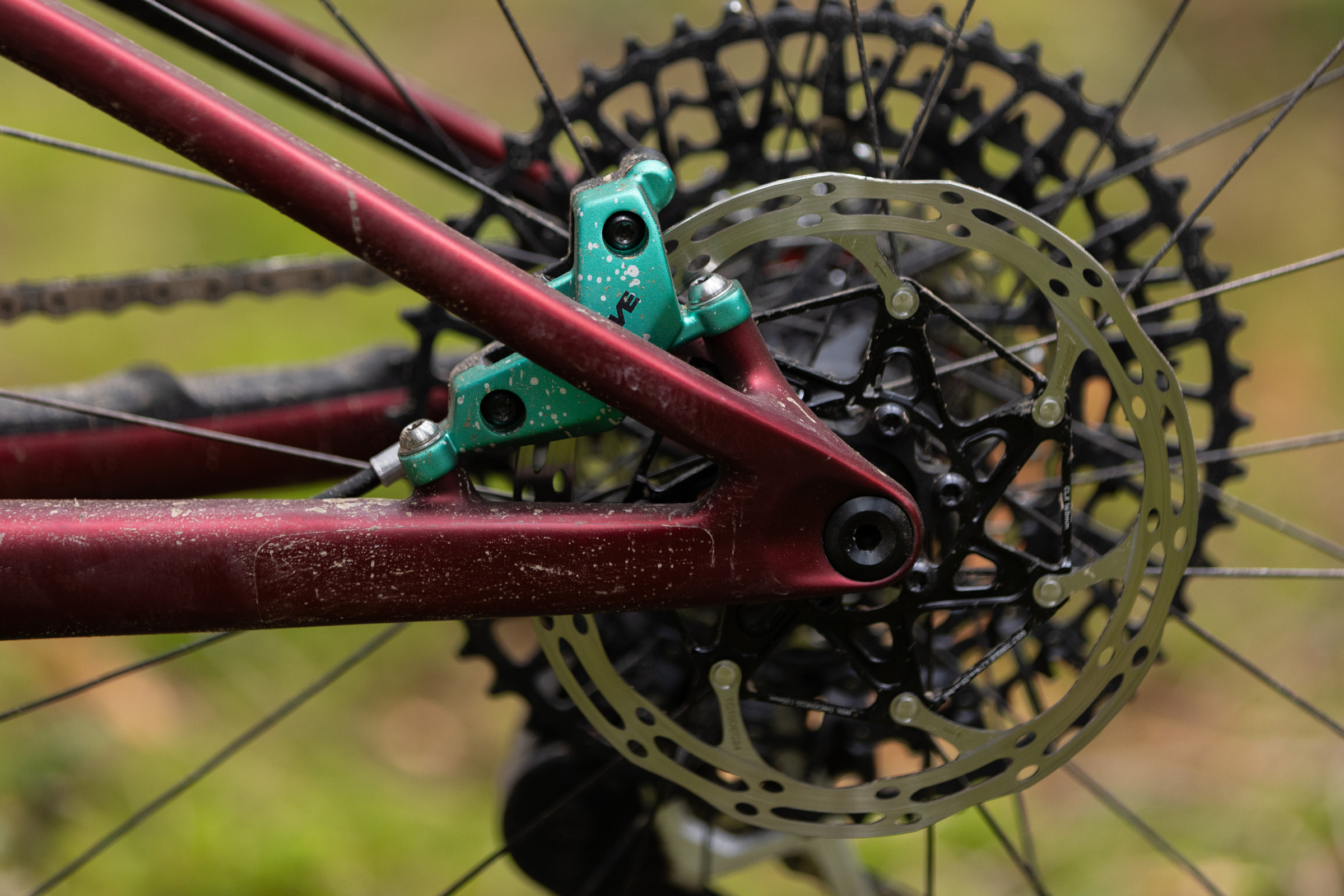
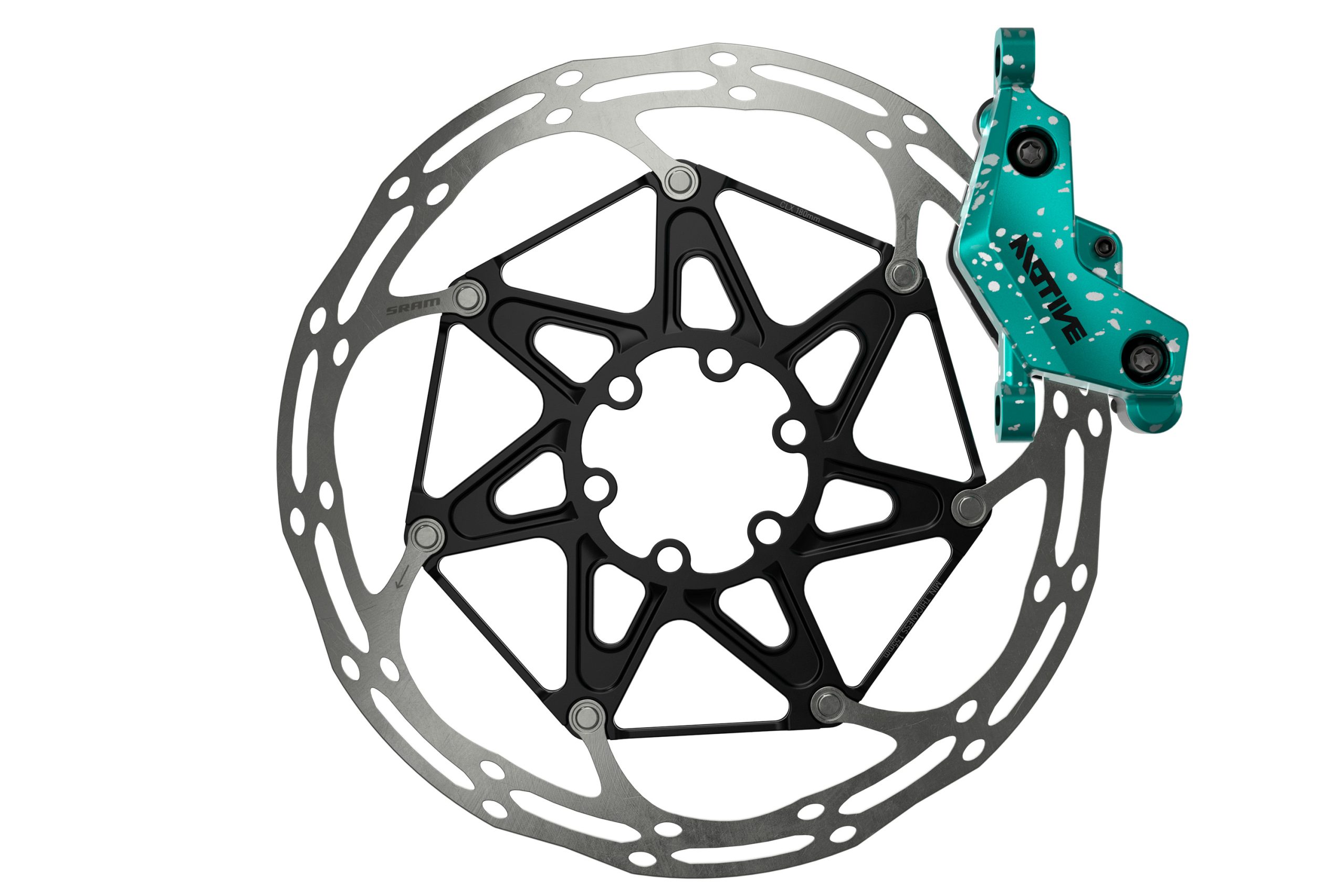
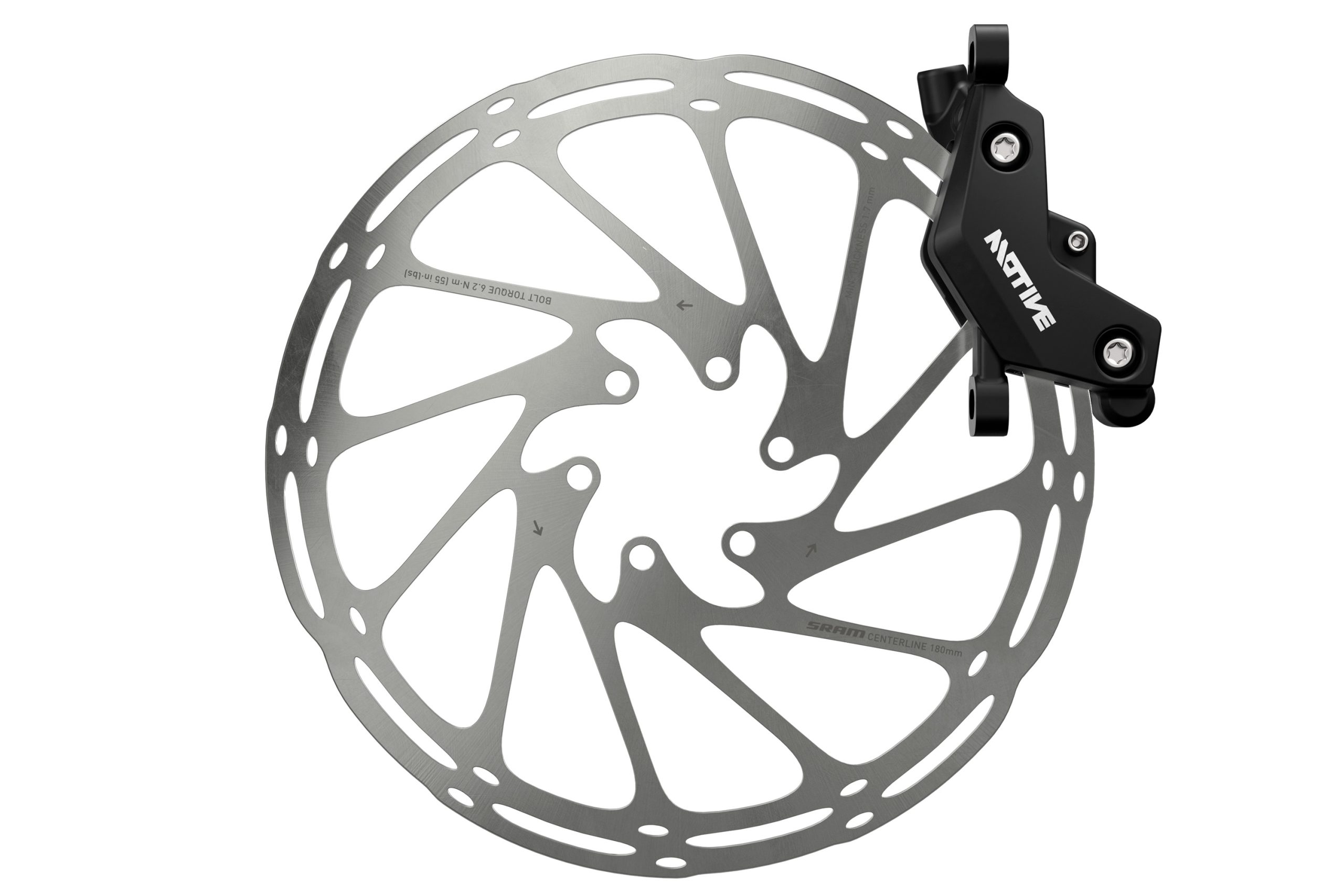
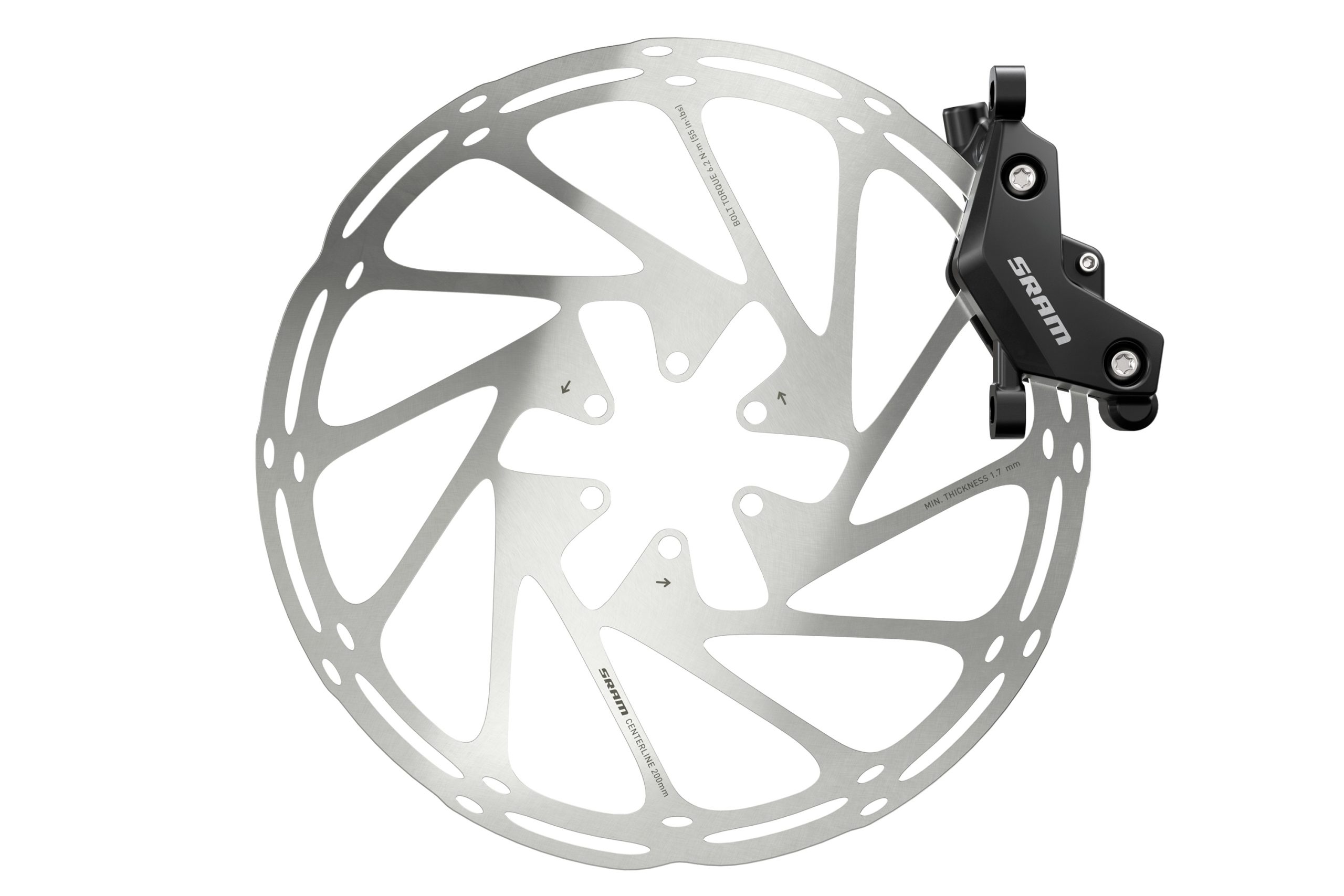
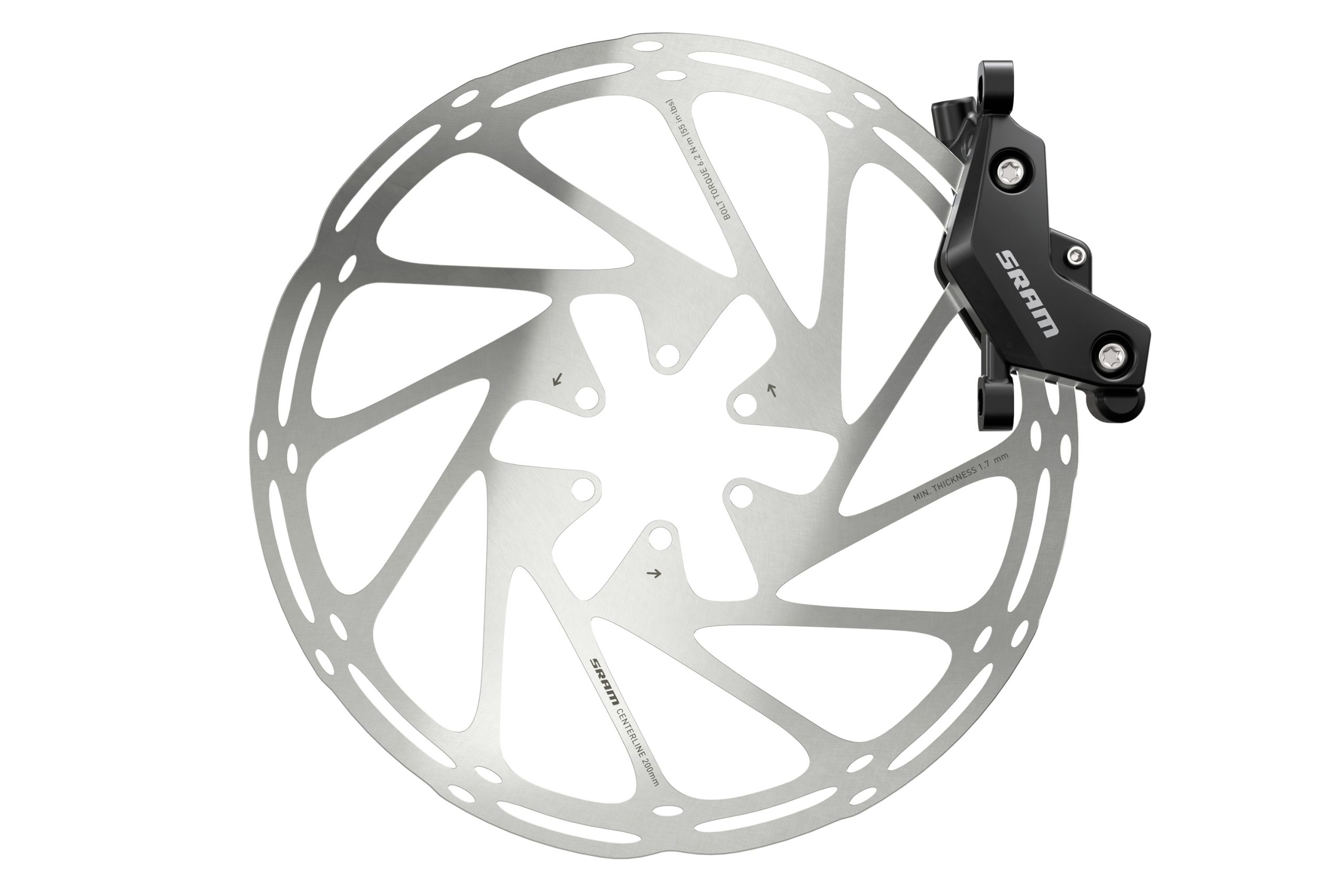
The four-piston calipers were paired with 180mm (front) and 160mm (rear) CentreLine X rotors.
For a cross-country bike such as this, it’s impressive that I haven’t once been left wanting more braking power. Even when slithering down wet, muddy trails usually reserved for enduro bikes, the lever feel was consistent and power levels always impressive.
The modulation feels better than previous SRAM brakes. Scott Windsor / Our Media
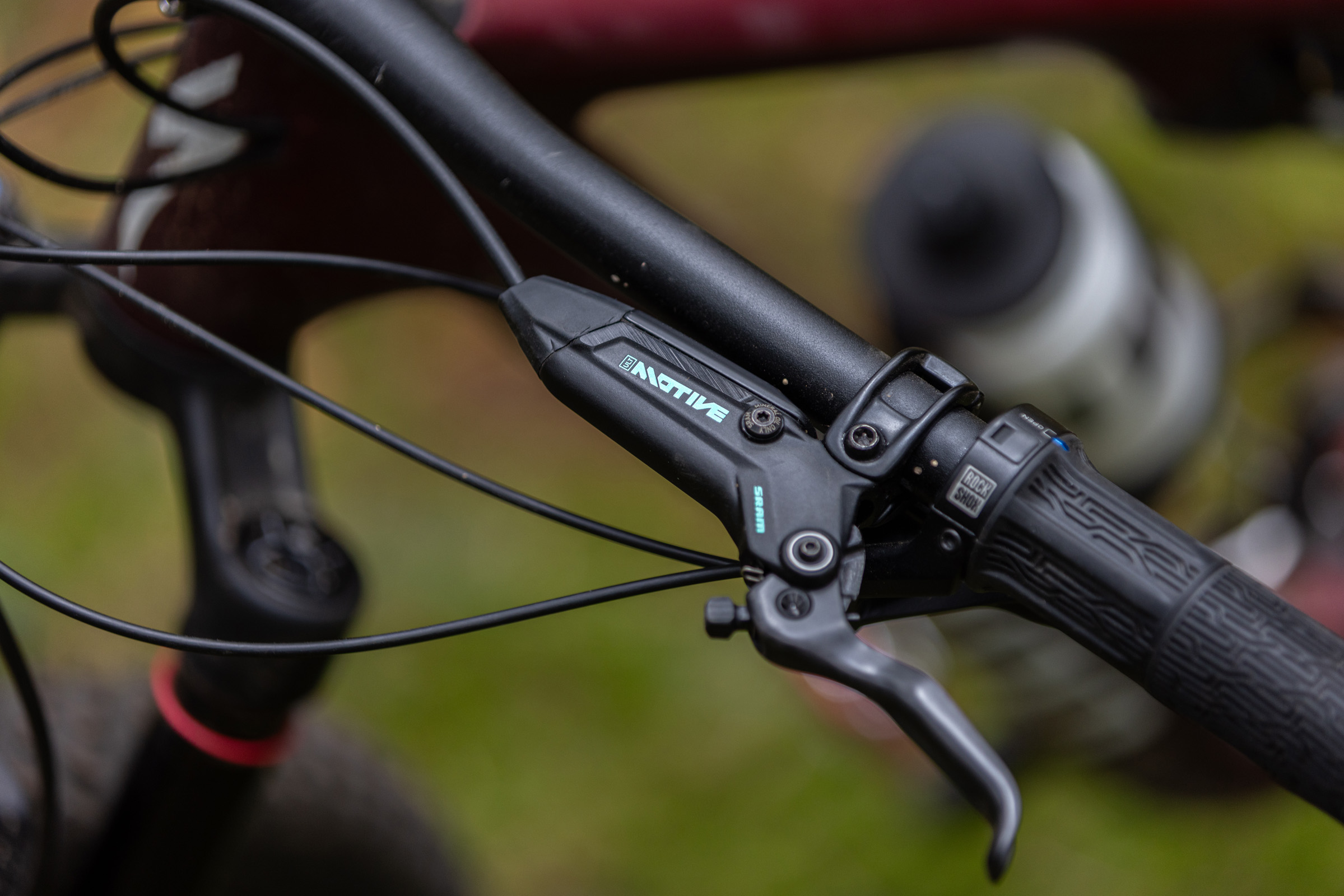
The carbon lever blades feel light and easy to pull with little in the way of resistance when hauling on the anchors.
Modulation is good, too, creating a very predictable, easy way in which to control your speed.
I’d argue this wasn’t always the case with older Level brakes, which didn’t feel quite as punchy.
The Motive Ultimate Expert felt relatively consistent in early testing. Scott Windsor / Our Media
After around 250km on the new Motive Ultimate brakes, only once have I experienced a slight shift in the bite point of the front brake, with the lever coming back closer to the bar than expected.
I’ve continued to ride, tweaking only the lever reach, and it seems to have now settled down, returning to its old consistent self.
The rear-brake bleed has been spot-on from the off, with zero bite-point wander and nothing but a consistent feel no matter how much I drag it.
I’ll keep testing the Motives and follow up with a full review soon.
XC weight with DH power
Disc-rotor sizes will impact how much power is on tap. Scott Windsor / Our Media
The new Motive brakes are designed for hard-charging XC, with the performance powerful enough for aggressive trail riding.
Weighing in at claimed 264g for the Ultimate rear brake, the Motives are slightly heavier than the 250g Level Ultimate 4 piston they replace, but SRAM says this is a worthwhile trade-off for increased control and power.
How much power do they have? Well, SRAM claims the Motive has similar power to its Code range of brakes, which were the brand’s downhill-focused mountain bike brakes before the launch of the Mavens.
If the power is too much for your intended use, SRAM says the brakes can be tuned by using different rotor sizes and pad compounds.
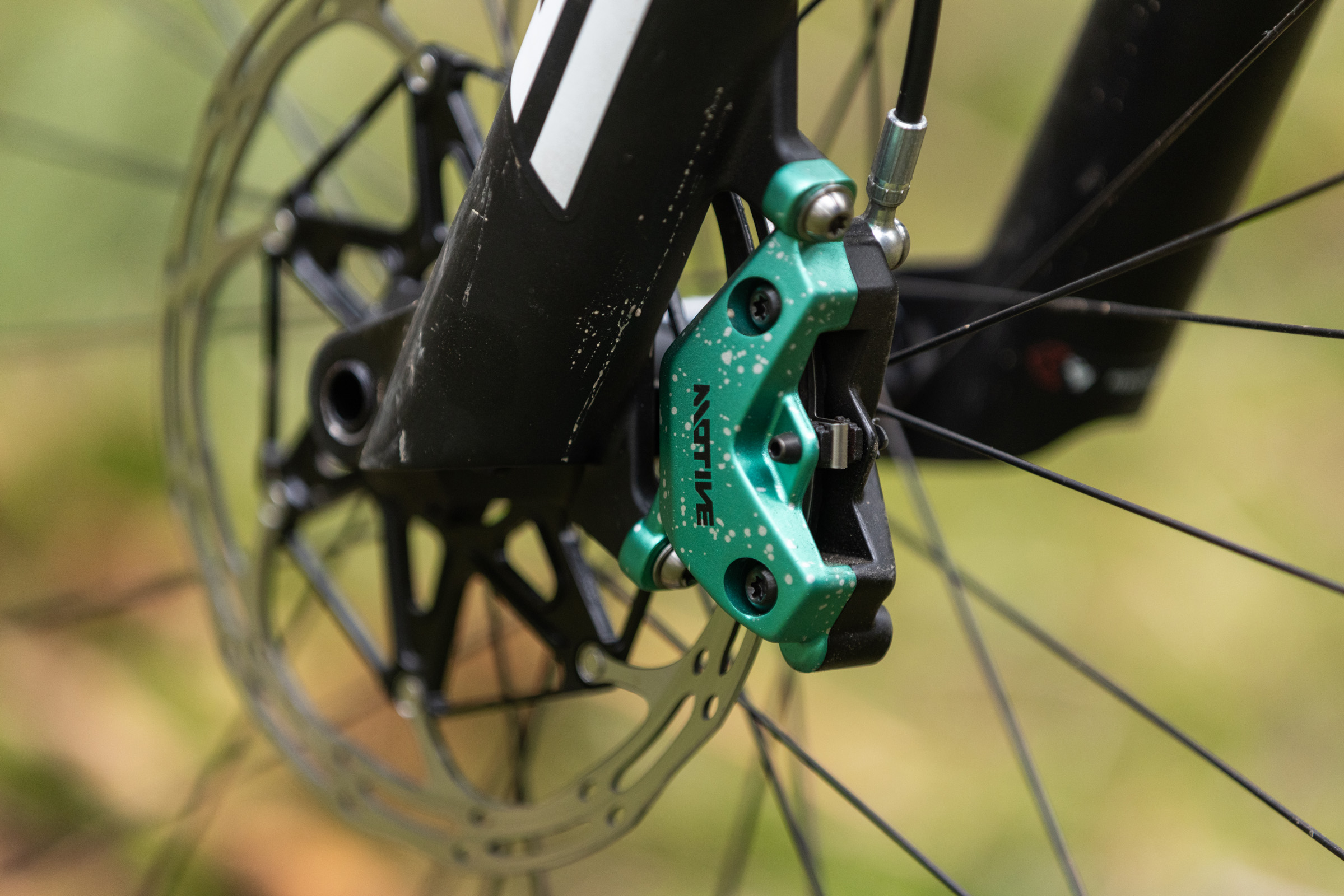
The Motive Ultimate Expert brakes come in an unusual teal colour. Scott Windsor / Our Media
The brand says a 20mm change in rotor size should result in an increase or decrease in power of 14 per cent.
Its HS2 rotors offer 7% more stopping power and heat management per rotor size than CenterLine.
SRAM offers both sintered and organic pads, with the latter preferred for their greater stopping power.
The Motives features DirectLink, which SRAM says offers lightweight power delivery for an incredibly solid, linear feel.
In a departure from DOT, the brand says its seal design eliminates the downsides of mineral oil while leveraging its advantages.
It says that due to mineral oil’s hydrophobic properties, unlike DOT, it won’t take on water over time, reducing the need for maintenance and bleeding.
The brand says the brake is only compatible with its Mineral Oil Bleed Kit, eliminating one factor when trying to bleed the brakes.
DB6 and DB4
Only the lever design has changed on the DB6 and DB4. SRAM
Alongside the new Motive, SRAM has updated its DB6 and DB4 brakes.
Both of the new brakes have adopted the brand’s Stealth lever design, seen on other models in the range, which run the cables closer to the bars.
SRAM says this also offers greater ergonomics, allowing for an inward hand position on the bar.
The new levers also offer better compatibility with the brand’s Eagle Transmission shifters, with the split ring clamp compatible with SRAM MMX-compatible shifters and dropper levers.
The brand also says power is on par with its Code brakes.
SRAM Motive spec and pricing
The new Motive brakes will be available in four build levels, including an Ultimate Expert kit featuring a split-caliper finish.
The Motive Ultimate Expert will be released in limited numbers. SRAM
Blade material: Carbon fibre
Caliper hardware: Titanium
Adjustments: Reach
Pad type: Organic and sintered
Claimed weight: 264g (rear brake)
What’s included: MMX Clamp, Two 20P-1 mounting brackets, two 180mm CL-X rotors, two 160mm CL-X rotors, rotor belts, rotor carrying case, Pro mineral bleeding kit, four barbs, four olives, two pairs of steel-backed metal sintered pads
Price: £585 / $599 / €655
SRAM Motive Silver
SRAM Motive Silver features stainless steel caliper hardware. SRAM
SRAM’s new derailleur-hanger-free Eagle 70 and 90 Transmission gearing is operated by a cable, offering a number of the same benefits as its electronic brethren at a fraction of the cost.
Shifting under power feels very well managed, and once cable tension has settled down, quick shifts between cogs feel accurate and punchy.
However, the feel through the shifter is something of a mixed experience.
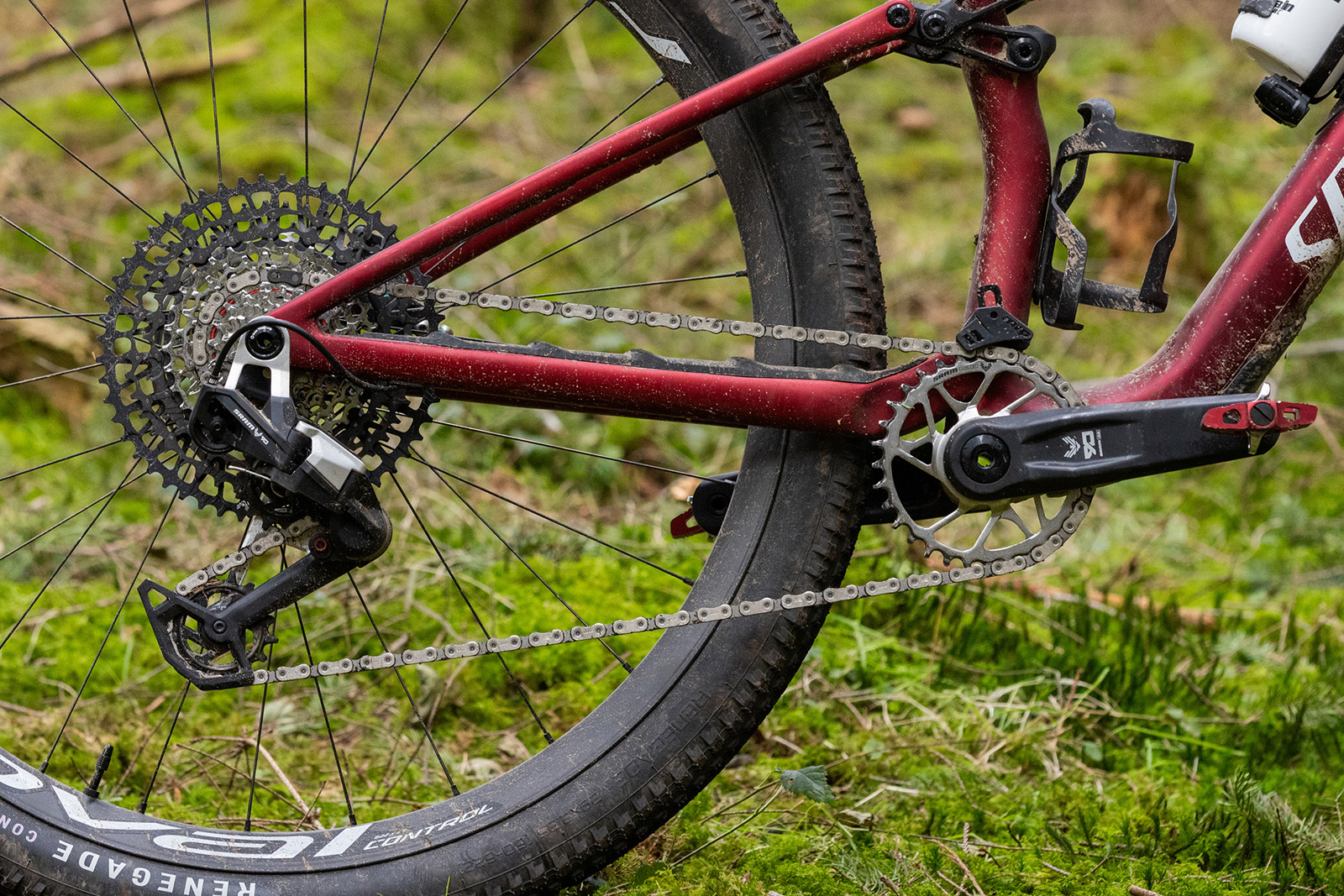
Just like its wireless counterpart, there are no B-tension or limit screws to worry about, which should make setup swift, plus it’s claimed to be just as tough as the electronic derailleur – and to be the toughest mechanical derailleur ever made.
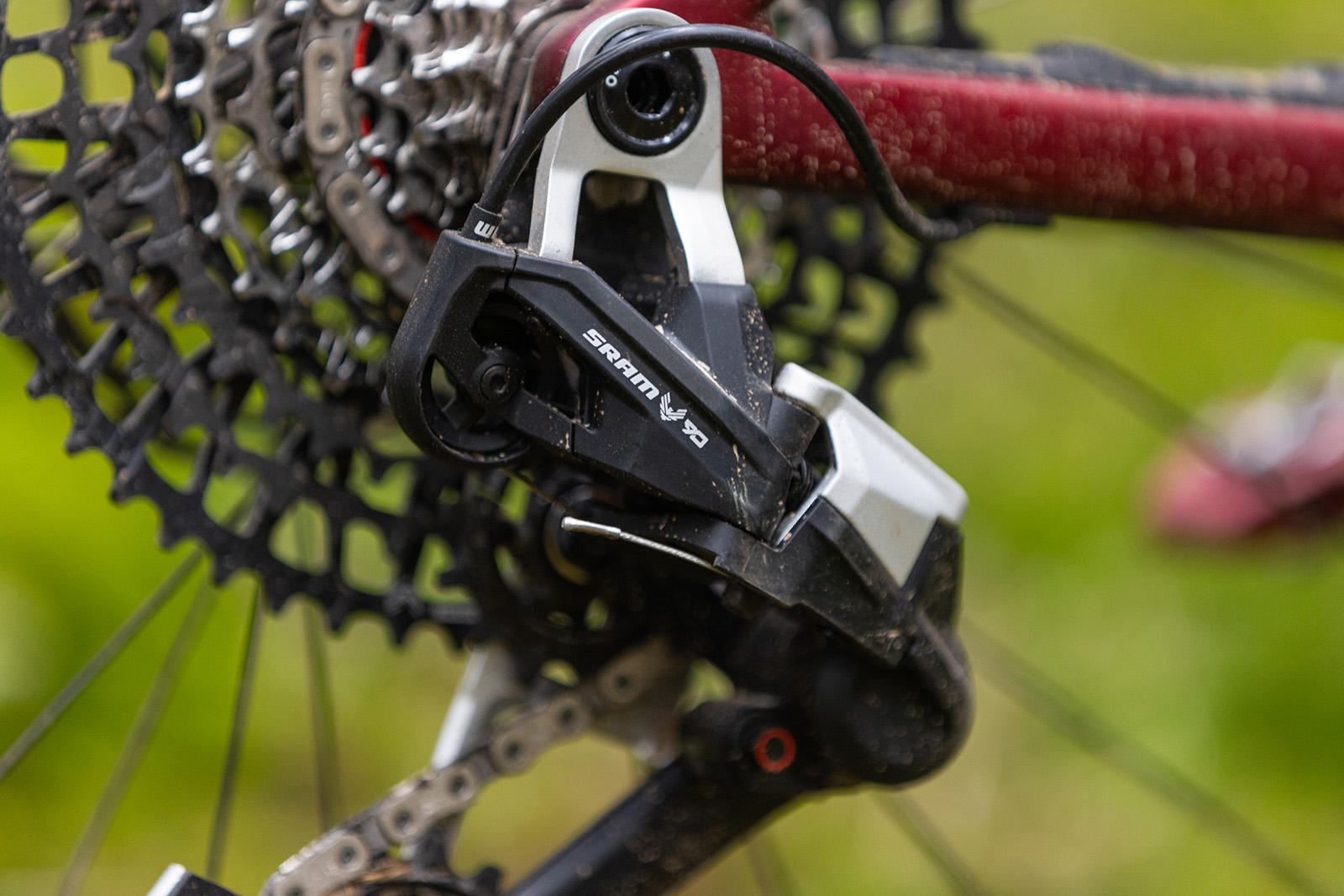
SRAM’s Eagle 90 Transmission is cable-operated but uses the Full Mount design of the latest-generation AXS derailleurs. Scott Windsor / Our Media
Yes, that’s right, you can, apparently, stand on the derailleur without killing it, although we wouldn’t recommend doing so.
Most important of all, it’s far cheaper than the top-tier XX, X0 and GX Eagle AXS Transmission gearing, with the Eagle 70 derailleur costing £120 and the complete Eagle 90 group £655.
Should you total part of the derailleur, spares are available to rebuild it, which is a nice touch and bolsters the value.
SRAM Eagle 90 ride impressions – Rob Weaver
Gear changes are crisp, but the shifter feel could be improved. Scott Windsor / Our Media
I’ve had the Eagle 90 Transmission on a Specialized Epic 8 Expert for a little over a month and clocked up around 250km while testing it.
While I’m a long way from being able to deliver a definitive verdict, I can at least give you some insight as to how Eagle 90 has performed so far.
When it comes to performance, the first thing worth commenting on is the shifter feel and performance.
Push the larger of the two paddles to access an easier gear and you can feel the cable progressively tensioning as you increase thumb pressure.
The paddle travels a little way until you hit an indexed click and the gear shifts from one sprocket to the next.
The feel of this push is somewhat softer than that of a Shimano equivalent, which seems to travel less and offers a more solid, positive click when the shift is initiated.
We’ve put 250km in on the new drivetrain. Scott Windsor / Our Media
On the flipside, shifting into a harder gear feels quicker and easier, thanks to the limited travel that the smaller of the two paddles has, with a positive click that feels as though it’s reached more rapidly than that of a Shimano shifter.
In terms of accuracy at the cassette, my first couple of rides in muddy conditions left me twiddling the barrel adjuster at the shifter to tweak the indexing.
While 11 of the 12 gears seemed to shift perfectly, I had some issues when selecting the third sprocket, where the derailleur seemed to jump around when I was really putting the power down.
I put this down to cable stretch, added some tension at the barrel adjuster and have since had no other issues.
While I’m on the subject of accuracy, it’s worth noting that despite the lack of limit screws, I’ve had zero issues with the derailleur over-shifting at either end of the cassette.
Like Eagle AXS Transmission, shifting on power is impressive. Scott Windsor / Our Media
Where I’ve been really impressed with the Eagle AXS Transmission is just how reckless you can be when shifting under power.
Thankfully, this carries over to the mechanical version. I’ve shifted countless times while sprinting – both up and down the cassette – and found the gear I’m after each and every time without any skipping or crunching. It’s really impressive in that regard.
Only time will tell how it all holds up over time. I’ll keep putting the miles in and report back when I’ve put it thoroughly through the wringer.
Ditching the derailleur hanger… again
Full Mount and Hangerless Interface remove the need for a traditional derailleur hanger. Scott Windsor / Our Media
As if we’re stuck on Groundhog Day, SRAM has once again re-written the rulebook and ditched the derailleur hanger on its latest product.
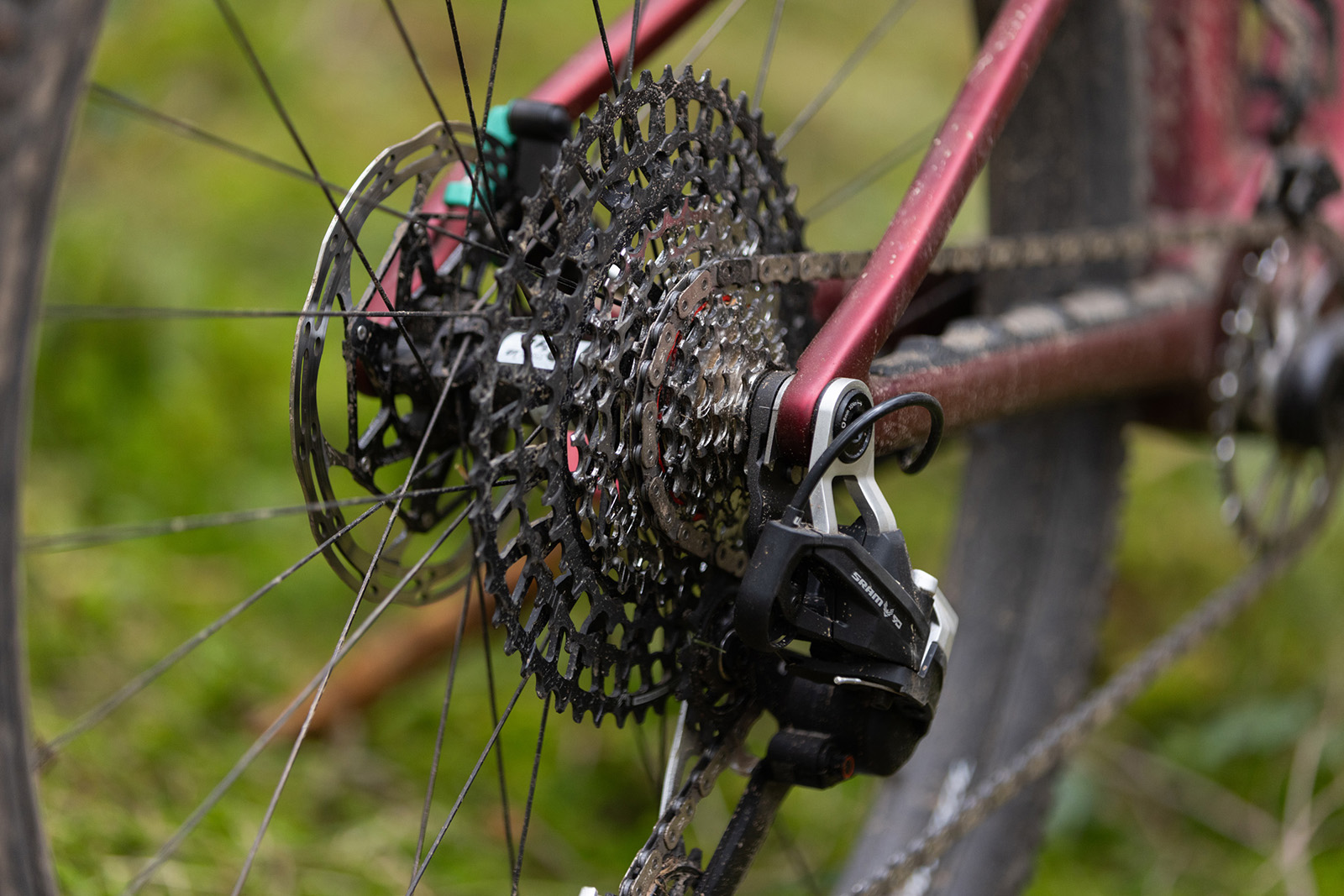
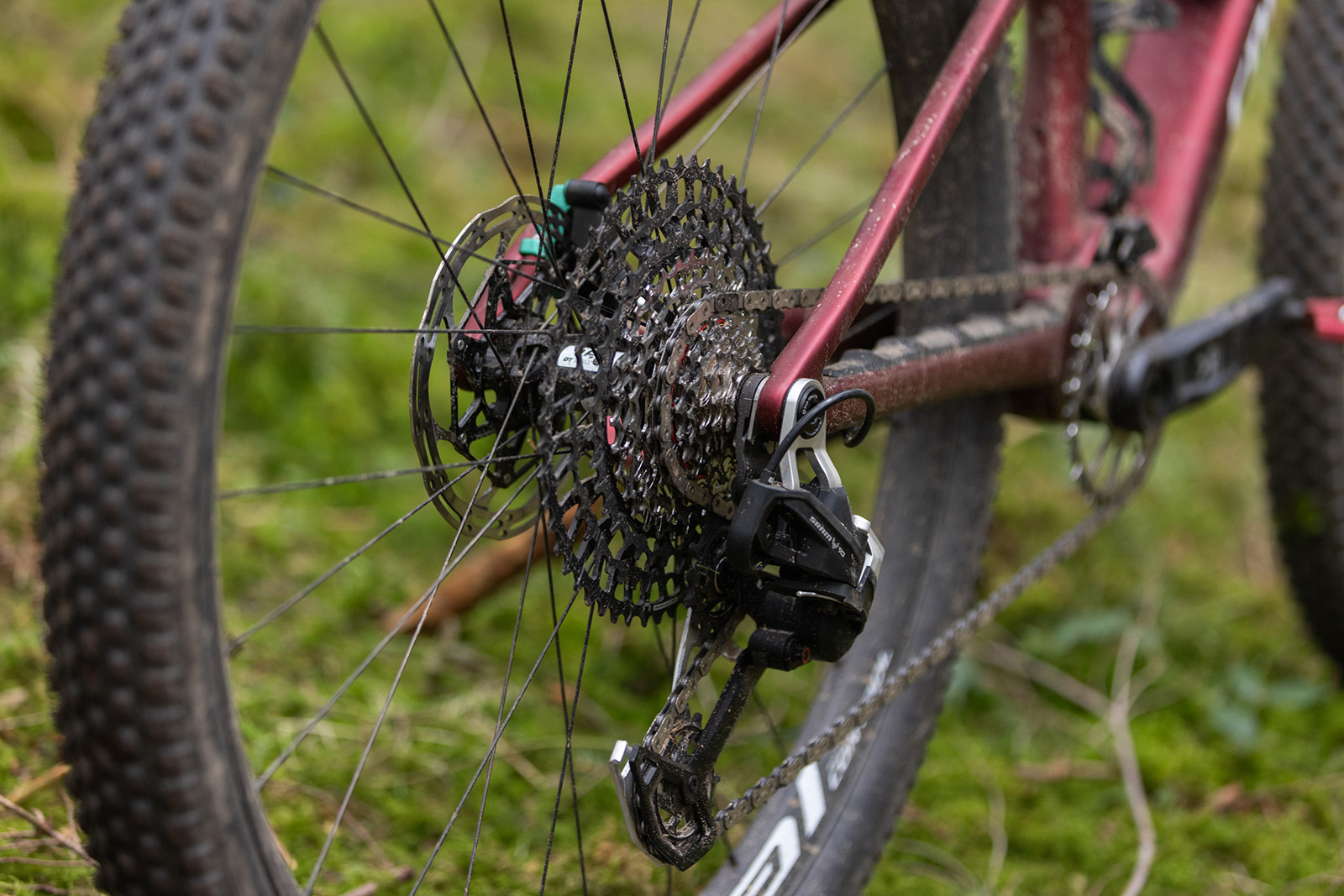
Moving to the brand’s Full Mount design – pioneered on the electronic AXS derailleurs – means SRAM has also done away with high and low limit screws, the B-tension screw and the fiddly chain-gap tool used on Eagle drivetrains.
As before, the move to a Full Mount design means the derailleur bolts through the frame’s Hangerless Interface, which is claimed to be much sturdier than a traditional design.
This interface – which is simply a hole at the dropout – is in the same place on all bikes, dictated by SRAM’s open-source UDH patent.
And because it’s in the same place on all bikes, and all Eagle Transmission – AXS or mechanical – cassettes are the same, SRAM has ported the installation and setup process to Eagle 90 and 70 Transmission.
Still simple to set up
Thanks to SRAM’s nifty design, the high, low and B-tension screws are removed, simplifying setup. Scott Windsor / Our Media
Adding cables usually increases complexity – or at least requires the mechanical nous needed to fine-tune tension – but according to SRAM, that’s not the case with Eagle 90 and 70.
As with the AXS equivalent, SRAM’s setup method for the cable-operated version relies on frame data collated on SRAM’s chain-length guide web page to determine several factors.
These include chain length, setup key position, which gear the derailleur needs to be fixed in and, in turn, which cog on the cassette is required to determine the derailleur-to-cassette chain gap.
The final step involves setting cable tension, which is very similar to all other cable-operated systems, from all manufacturers, that preceded Eagle 90 and 70 Transmission.
Crisp-click shifting
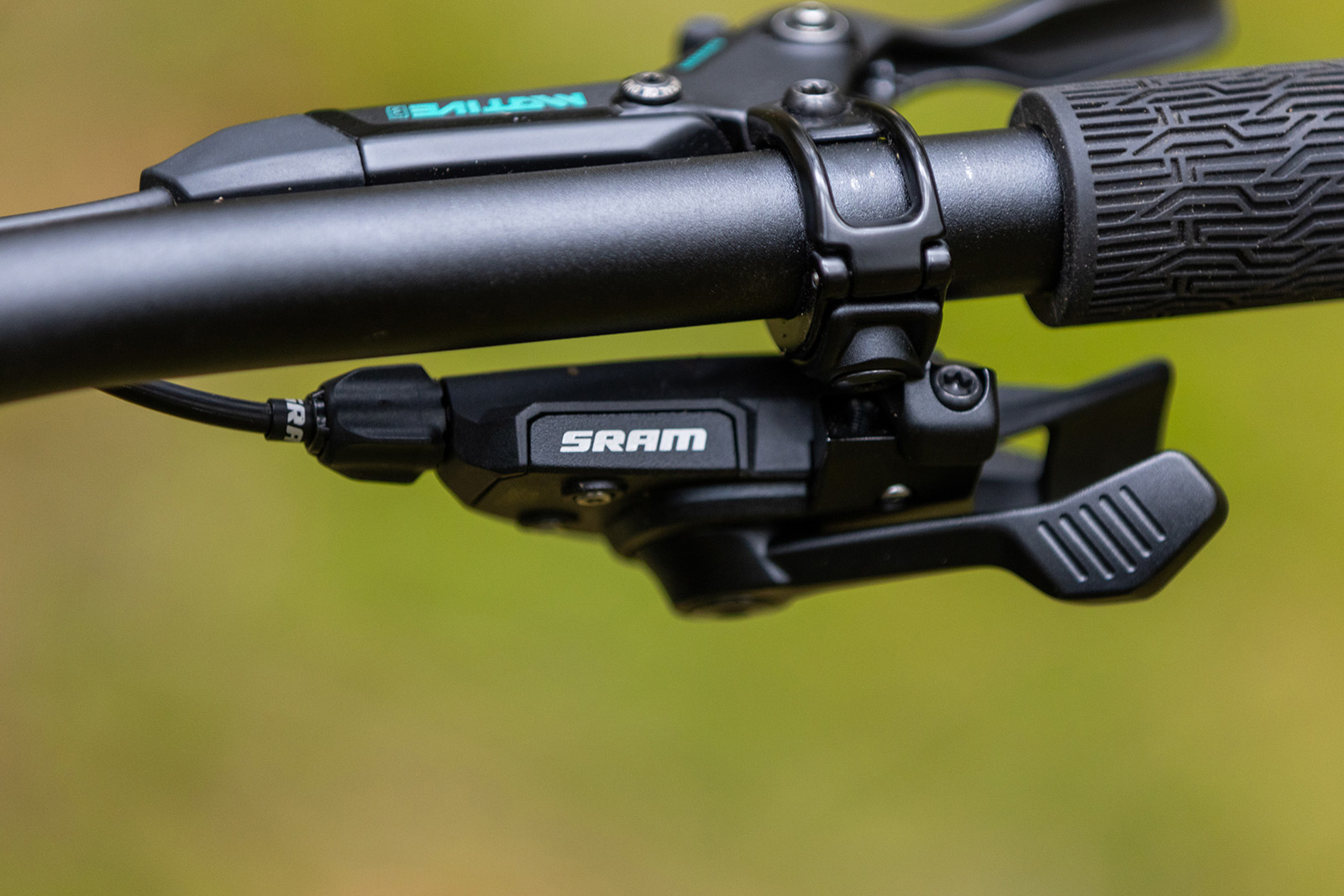
The shifter comes in single or double-click variants. Scott Windsor / Our Media
Because Eagle 90 and 70 Transmission use the same cassettes as Eagle Transmission AXS, in theory they’ll share the electronic system’s crisp, high-quality on-power shifting it has become famed for.
Here, 44 shift lanes and the X-Sync tooth profile combine to create what the brand claims is the “best mechanical shift performance under load there is”.
While the cassette and derailleur deal with the dirty end of shifting, the shifter – as your only point of contact – is where it really counts.
Eagle 90 Transmission shares its cassette and chain with GX AXS Transmission. Scott Windsor / Our Media
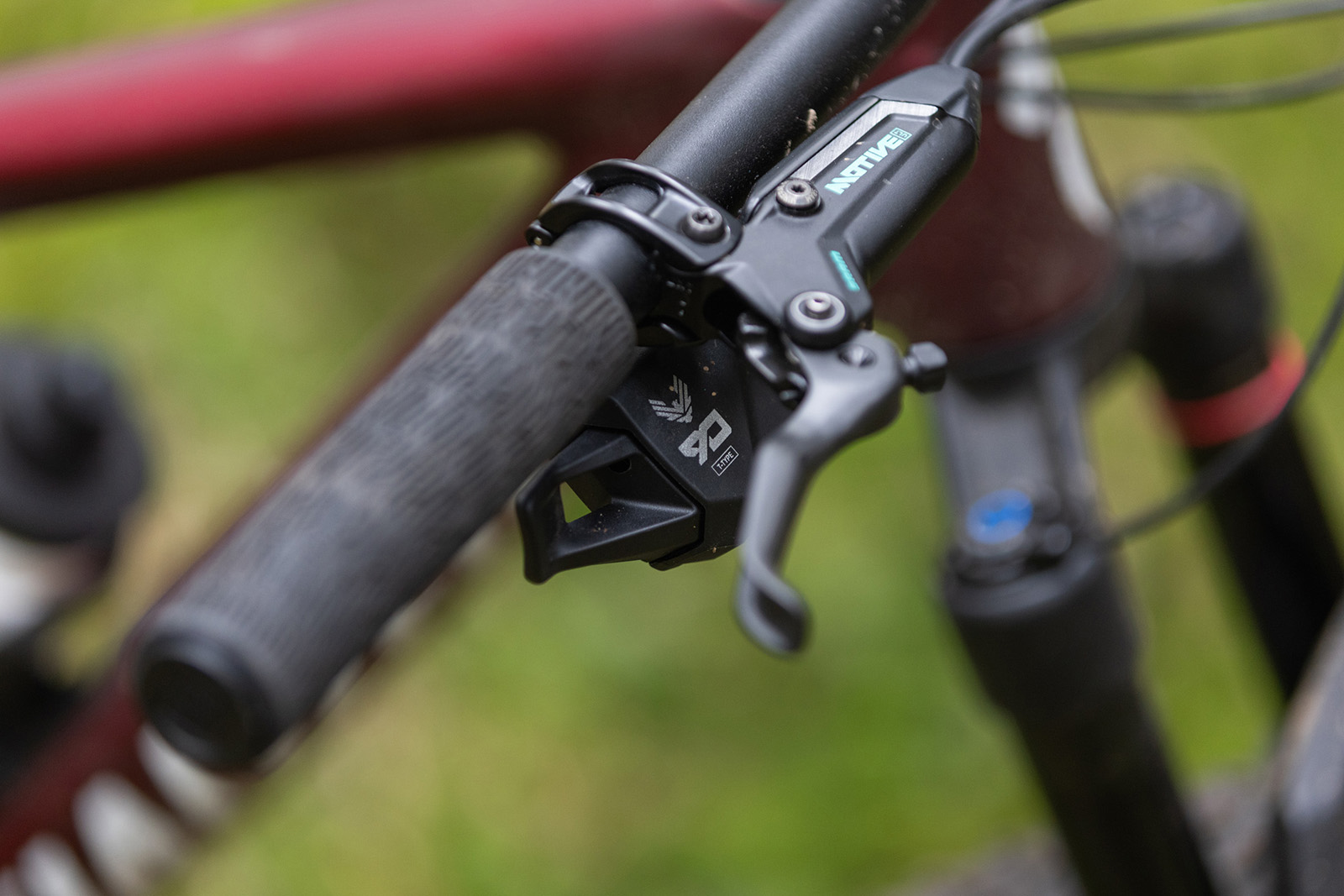
The new shifter – which is visually very different from Eagle drivetrain shifters – is slim and sleek, hiding beneath the handlebar and under the brake lever.
Its cables, like SRAM’s Stealth brake lines, are routed parallel to the bar for a clean look.
However, there are only two variants of Eagle 90 and 70 shifter; one with a single click that’s mandatory for ebikes and another with two clicks for non-assisted bikes.
While Eagle drivetrain single-click ebike shifters have existed all along, the ‘normal’ version previously enabled up to five clicks or gear changes with one actuation.
Whether you see that as a positive, neutral or negative will depend on your shifting habits.
Smashed up the derailleur? Rebuild it entirely
Each of the derailleur’s parts is replaceable, and available to buy should you need them. Scott Windsor / Our Media
Taking a large number of steps further than the impressively rebuildable AXS Transmission derailleurs, all of Eagle 90’s derailleur parts can be replaced.
The brand’s claim that this is “the most rebuildable derailleur ever” might, in fact, be true.
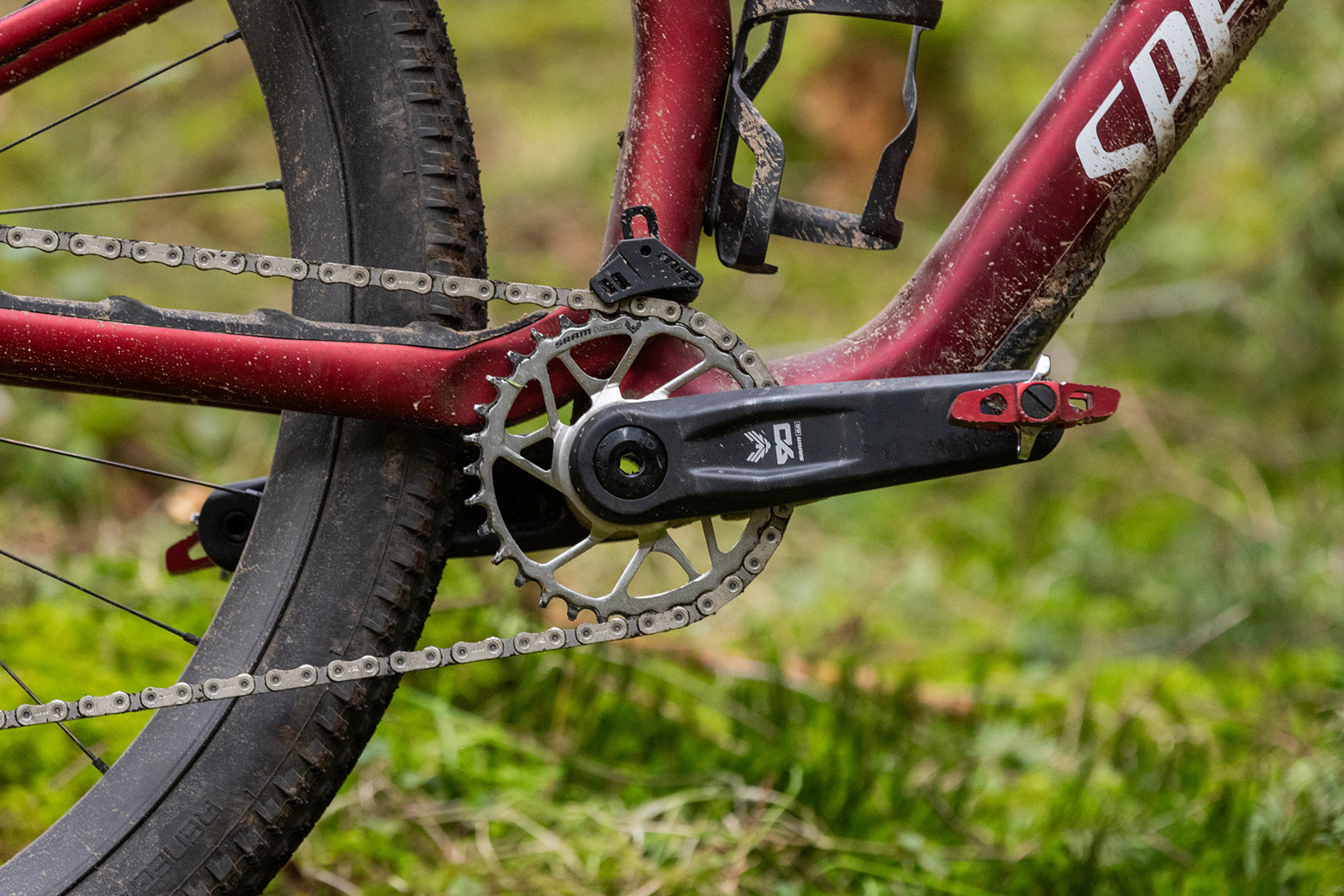
While the Eagle 90 cranks are available in 155, 160, 165, 170 and 175mm lengths (plus 150mm on the ebike version), the Eagle 70 arms come only in 165, 170 and 175mm options.
The two new Transmissions use different direct-mount chainring standards – eight-bolt for Eagle 90 and three-bolt for Eagle 70.
While Eagle 90’s silver-coloured rings are available in stamped steel or aluminium, Eagle 70’s black ones are steel-only.
Only three sizes are available – 30, 32 and 34t – but both Transmissions are also compatible with AXS chainrings of the same mounting standard.
Eagle 90 or 70 Transmission?
SRAM Eagle 90 Transmission is the aftermarket version, while Eagle 70 Transmission is the OE drivetrain. Scott Windsor / Our Media
SRAM says Eagle 90 Transmission components and upgrade kits are fully available aftermarket, while Eagle 70 Transmission is original equipment on full bikes.
However, individual replacement Eagle 70 Transmission components will be on sale, to ensure riders can replace broken or used parts like-for-like.
A dropper lever not for Reverbs
The dropper post lever (not pictured) looks very similar to the slimline shifter. Scott Windsor / Our Media
Also in SRAM’s new line-up is a cable-operated dropper post lever that’s not compatible with any of SRAM’s own electronic or hydraulic dropper posts.
Mimicking the design of the new Eagle 90 and 70 Transmission shifter, it runs the cable close to the bar.
It’s compatible with most cable-operated droppers – according to SRAM – and should round out your newest cable SRAM cockpit.
SRAM Eagle 90 and 70 Transmission prices
A full Eagle 90 Transmission drivetrain costs £655 / $670 / €730. Scott Windsor / Our Media
A full Eagle 90 Transmission drivetrain (derailleur, shifter, cranks, chainring, chain, cassette) costs £655 / $670 / €730.
Compared to SRAM’s most affordable AXS Transmission – GX – an equivalent groupset costs £1,180 / $1,099 / €1,300.
Removing the electronics slashes the price almost in half.
Other highlights include a £185 / $190 / €205 Eagle 90 Transmission rear derailleur price and a £50 / $50 / €55 shifter cost.
What look to be genuine marketing images of Samsung’s upcoming Galaxy S25 Edge have emerged. They show off at least three colorways of the skinny phone’s Titanium variant, namely Jet Black, Icy Blue, and Silver. Samsung has yet to confirm or deny the authenticity of these images, but—at least with the Silver model—they mirror what’s been seen
The 2024 Linux Storage, Filesystem, Memory-Management, and BPF Summit
included a tense session on the use of Rust
code in the kernel’s filesystem layer. The Rust topic returned in 2025 in
a session run by Andreas Hindborg, with a scope that also covered the
storage and memory-management layers. A lot of progress has been made, and
the discussion was less adversarial this year, but there are still process
issues that need to be worked out.