Lenovo gave its latest 16-inch ThinkBook a bevy of funky concept screen accessories

The ThinkBook line has sort of become Lenovo’s de facto testing ground for far-out ideas and ambitious concepts. See the ThinkBook Plus Gen 6 Rollable we saw just a couple months ago at CES. But at MWC 2025, the company is pushing things further than ever through the new ThinkBook 16p Gen 6 and four of its display accessories — which range from practical add-ons to something that’s more like a Tamagotchi.

The ThinkBook 16P powering all of Lenovo’s crazy concept accessories isn’t all that different from the company’s previous 16-inch workstations. It sports up to an Intel Core Ultra 9 2785HX chip with as much as 64GB of RAM, 2TB of PCIe storage and an NVIDIA RTX 5070 GPU. You get the choice of either a 3.2K IPS display with a 165Hz refresh rate or a slightly lower-res 2.5K IPS panel with a faster 240Hz refresh. There’s also plenty of connectivity including dual Thunderbolt 4 ports, three USB-A jacks, a full-size HDMI 2.1 and a card reader.

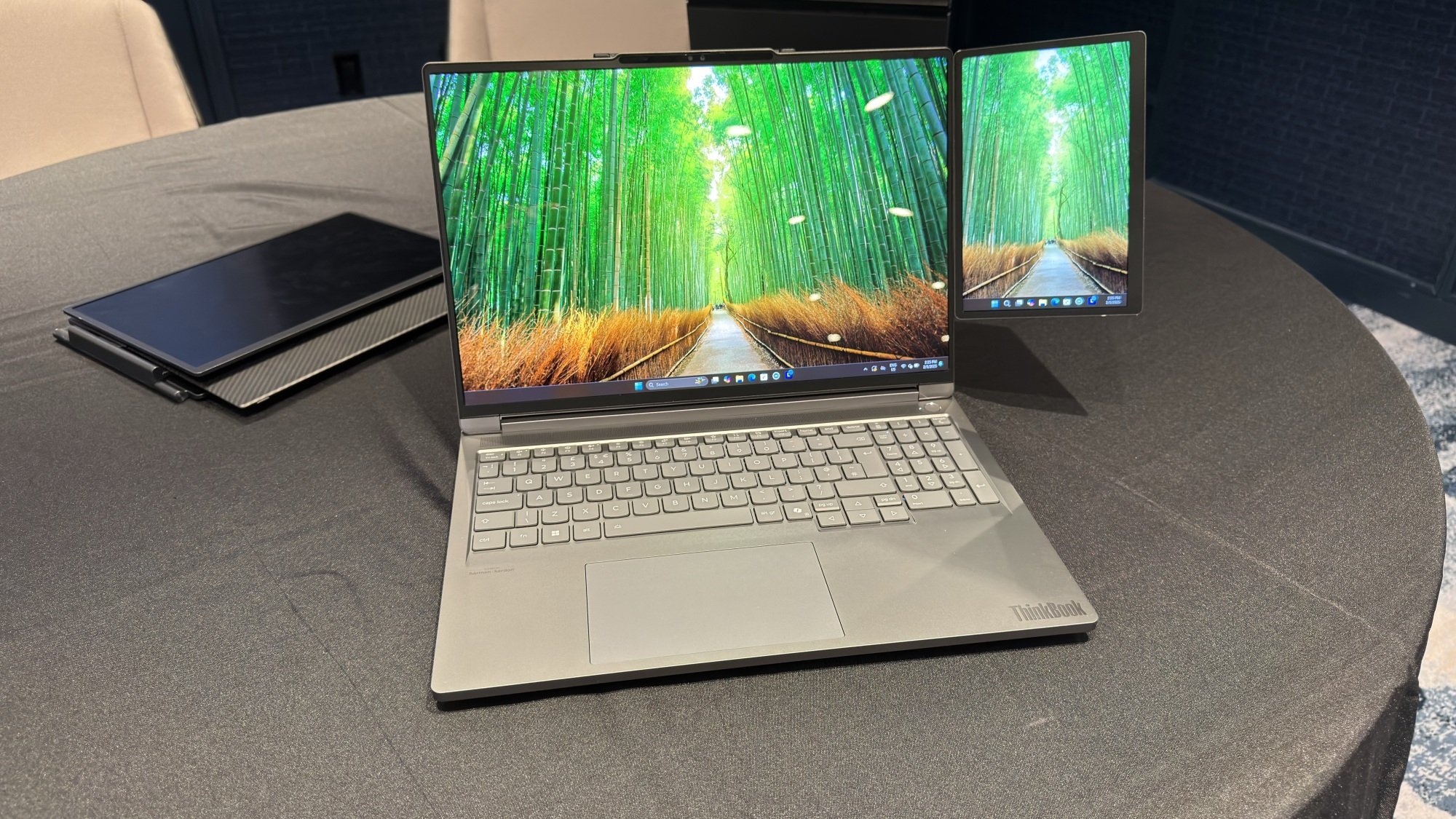
Lenovo's Magic Bay 2nd Display Concept attached to the ThinkBook 16p Gen 6.
Lenovo’s Magic Bay 2nd Display Concept attached to the ThinkBook 16p Gen 6. 
Sam Rutherford for Engadget

One interesting addition is that Lenovo included a discrete NPU (separate from its main chip) that offers up to 32 TOPS of additional performance. This should provide a nice boost, particularly for anyone who needs to run demanding AI tasks locally. That said, for the rest of us lay folk, it’s largely unnecessary.

However, the real spectacle is Lenovo’s assortment of accessories. They all connect to the ThinkBook 16P using the company’s Magic Bay docking system, which was first introduced to this product family a couple generations ago. For people who constantly yearn for extra space to multitask while traveling, Lenovo has two add-ons to choose from. The Magic Bay 2nd Display Concept is a small 8-inch screen that attaches magnetically to the ThinkBook 16P. It can be used simply as an external monitor or as an AI dashboard that displays widgets, messaging apps and other tools.

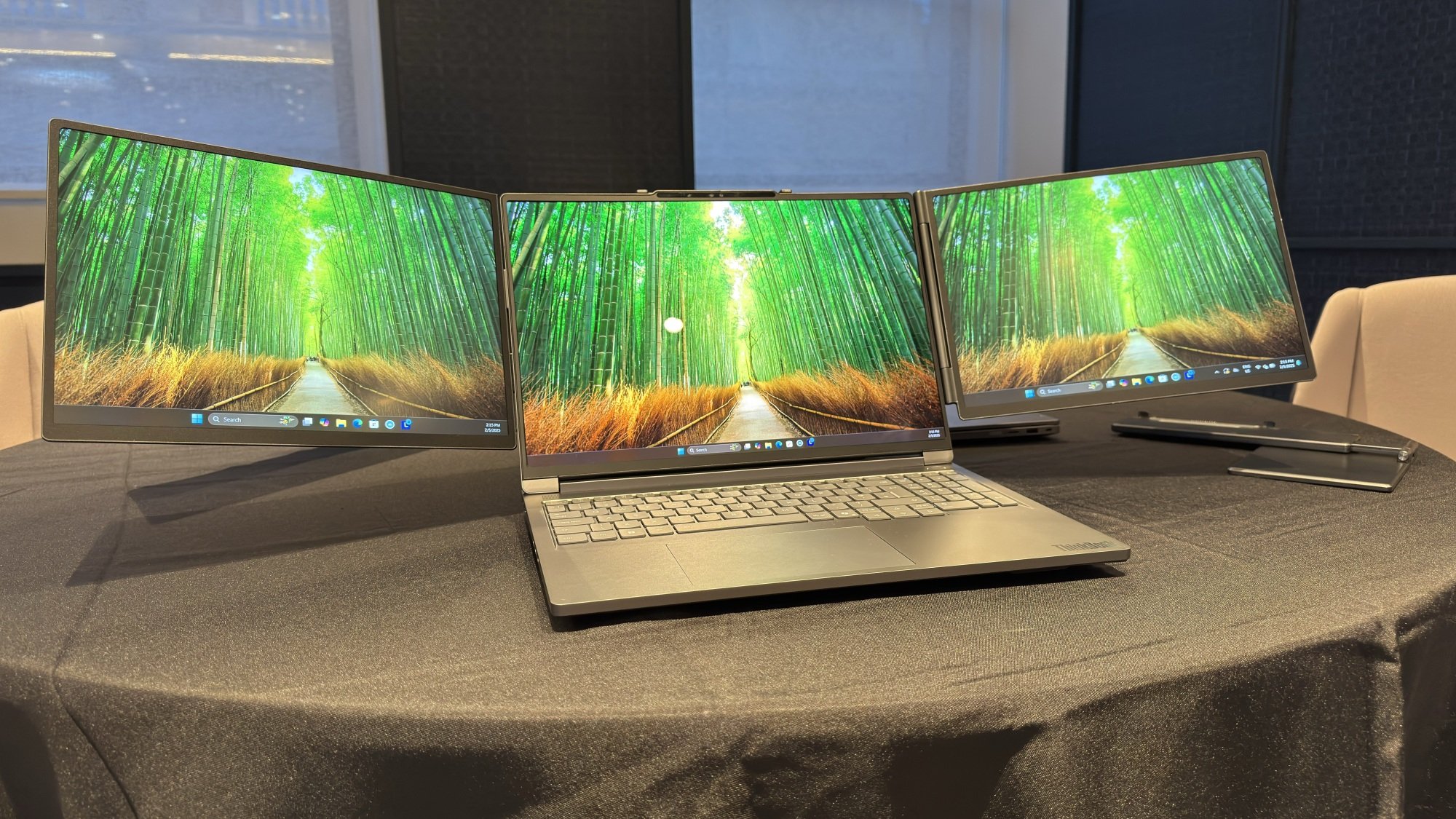
On the flipside, the Magic Bay Dual Display Concept adds not one but two additional 13.3-inch panels that flank the notebook’s primary screen, giving you a huge amount of real estate for pretty much anything. In addition to using the laptop’s mounting system, this prototype also features a built-in kickstand to help keep the whole contraption stable. This is important because while it is rather complicated compared to most accessories, once you get everything set up, it really does a good job of recreating the multi-monitor workstations people have at home or in their office.

Lenovo Magic Bay Tiko Pro Concept display
Lenovo

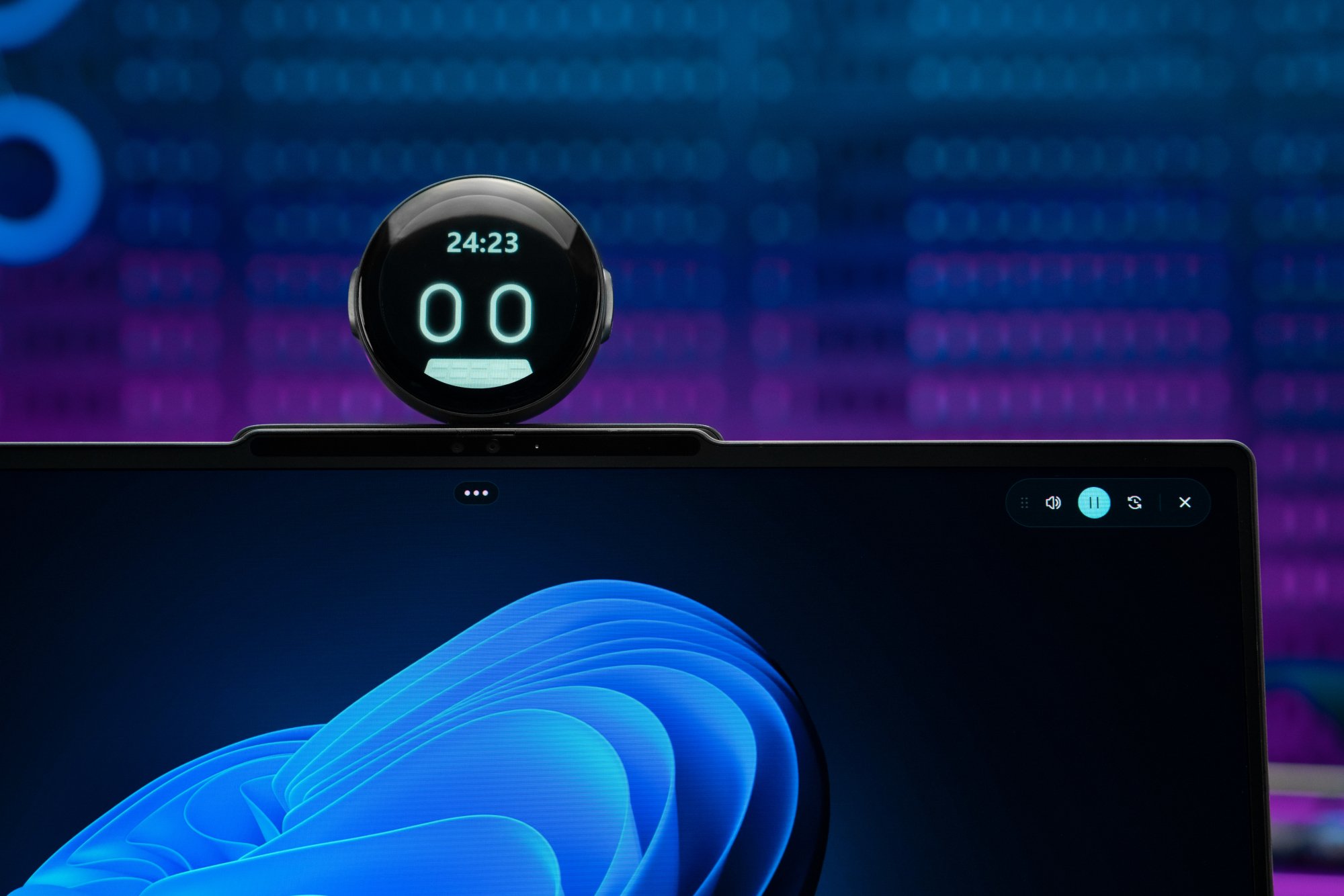
As for Lenovo’s remaining two concepts, they are so new the company wasn’t able to show them off during my preview session. The Tiko Pro Concept looks like an even more streamlined take on 2nd Display, as it’s a slim panel with an extra-wide aspect ratio that’s meant to sit across the top of the laptop’s display, sort of like an external notification shade. Meanwhile, the non-pro Tiko Concept is a circular screen that houses an AI companion with its own set of emoji-based faces, gesture-based responses and more. 

In case that’s not enough, Lenovo even teased a cat-themed headband that adds little ears to your robotic friend. At this point, you may be asking how the Tiko is supposed to increase your productivity? And for that, I can only guess that having a friendly face around might boost your mood and thus improve your productivity. Or at the very least, it could be a more charming way of seeing stuff like Slack reactions. Honestly, I have no idea, and I’m not sure Lenovo does either.

Now I have to stress again that all of these accessories are concepts, so there’s no guarantee that they’ll ever officially go on sale. Lenovo says they are merely prototypes meant to help expand and explore how its Magic Bay docking system could be used in the future. But in a time when so many PC makers seem to be having trouble thinking up ways to innovate, it’s clear Lenovo isn’t being shy about thinking outside the box.

Sadly, the ThinkBook 16P Gen 6 is not slated to be available in North America, but for those in Europe and Asia, keep an eye out for it to go on sale sometime this spring or summer.

This article originally appeared on Engadget at https://www.engadget.com/computing/laptops/lenovo-gave-its-latest-16-inch-thinkbook-a-bevy-of-funky-concept-screen-accessories-230008238.html?src=rss


Lenovo Is Showing off a Bunch of Quirky Laptop Prototypes

Journalists love a good tech prototype. These exciting experiments break up the monotony of covering the same incremental refreshes day-in and day-out.They also come with a downside: As attention grabbing as they are, there’s no guarantee that they’ll ever actually come to market.

That’s why covering them can be a bit tricky, as it can be difficult to decide how much attention to give a product consumers might never actually see. Luckily, Lenovo actually made good on one of its earlier promises at CES this year, showing off a rollable laptop that’s set to launch sometime in 2025. Now, the company has three additional concepts it’s showing off for Mobile World Congress, all of them arguably as cool.

A foldable spin on that CES’ rollable screen

Lenovo ThinkBook Flip AI PC

Credit: Michelle Ehrhardt

First, there’s the ThinkBook Flip AI PC, which you can think of as a more affordable take on that rolling laptop from CES. Rather than having some of the screen hidden inside the laptop and unfurling like a scroll, this laptop’s screen folds over the top-half of the device, stretching across both the sides of the lid. Using your hands, you can unfold it to get an especially tall vertical display, or, alternately, mirror the front of your screen to the backside for presentations. Or, you could use the laptop in a sort of tablet mode while it’s closed. It’s similar to existing devices like the Yoga Book 9i, sure, but unlike on those, the screen is continuous and the keyboard is built into the device.

Lenovo ThinkBook Flip AI PC tent mode

Credit: Michelle Ehrhardt

There are upsides and downsides to this approach. Because there’s no need to house a rolling mechanism, the Flip AI PC is actually able to get a little taller than a rollable laptop, but at the same time, it’s also a bit more top heavy, so you can’t use the fully extended screen at a steep angle without extra support.

Snap-on laptop monitors

Lenovo Magic Bay Dual Display

Credit: Michelle Ehrhardt

Also in the realm of extended laptop displays are the Magic Bay Dual Display and 2nd Display laptop accessories. Technically, this isn’t the first time Lenovo’s shown off concepts for Magic Bay, existing technology that allows certain accessories to snap onto pogo pins on the back of some ThinkBook laptops. Those have even included secondary displays before, but this year’s ideas definitely are a bit more involved.

Starting smaller, the Magic Bay 2nd Display is an 8-inch vertical screen that complements a laptop with a (non-touch) tablet-like companion. It’s similar to the 10-inch horizontal panel that sits above your laptop screen that Lenovo showed off at last year’s CES, and coincidentally recalls my husband’s own desktop setup. As handy as it seems—it’s even on a hinge for a customizable angle— it’s nonetheless overshadowed by Lenovo’s other Magic Bay display concept.

Lenovo Magic Bay 2nd Display

Credit: Michelle Ehrhardt

The Magic Bay Dual Display turns your laptop into a three-monitor workstation, with additional 13.3-inch screens on either side of your device, complete with a 120Hz refresh rate across both. At 2.6 pounds, it’s rather heavy, so it comes with a built-in kickstand. This isn’t the first time I’ve seen an idea like this, but when I saw this in person, I was impressed by how much more intuitive the connection process seems compared to current third-party alternatives.

A solar-powered laptop

Yoga Solar Power

Credit: Michelle Ehrhardt

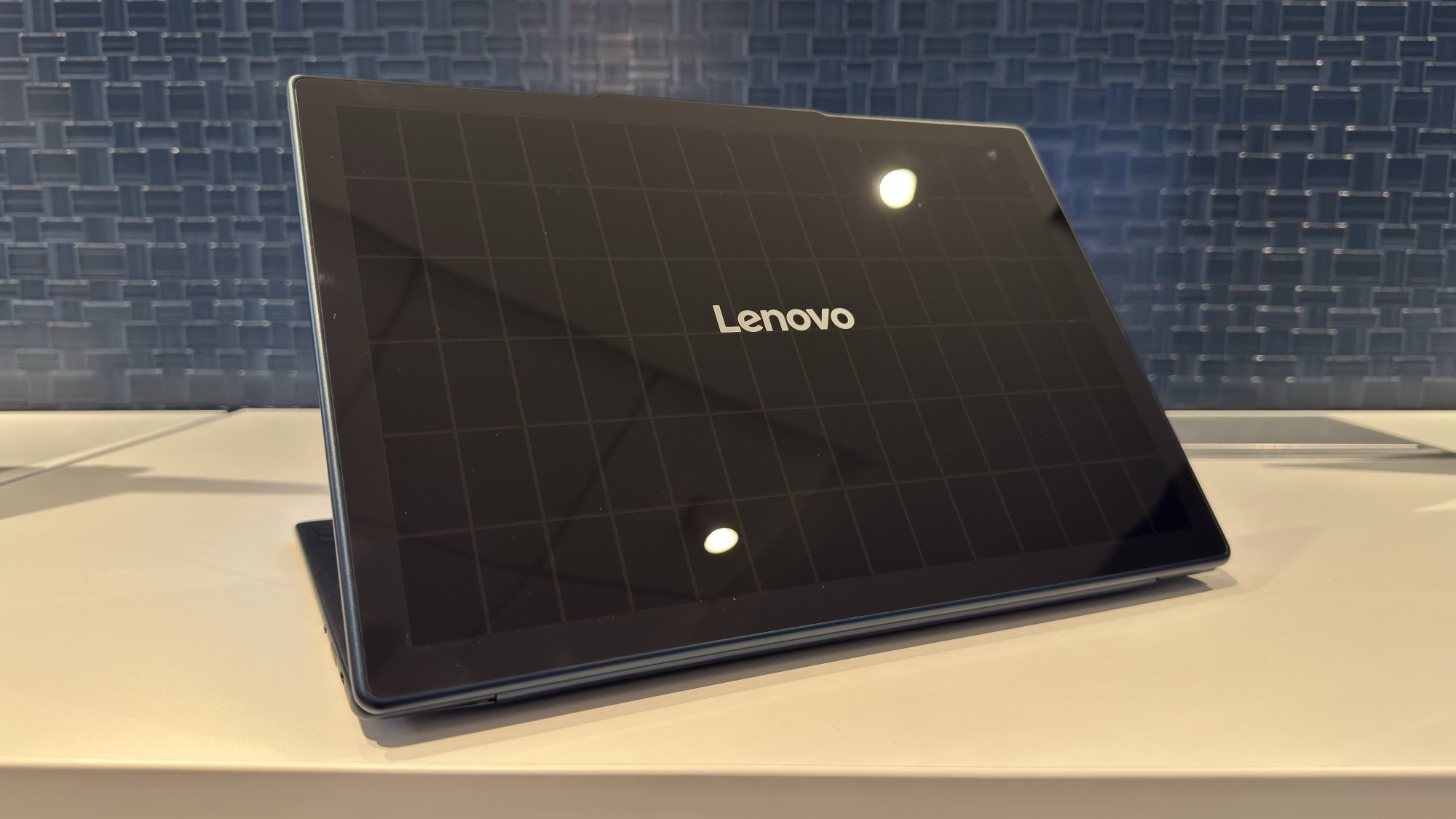
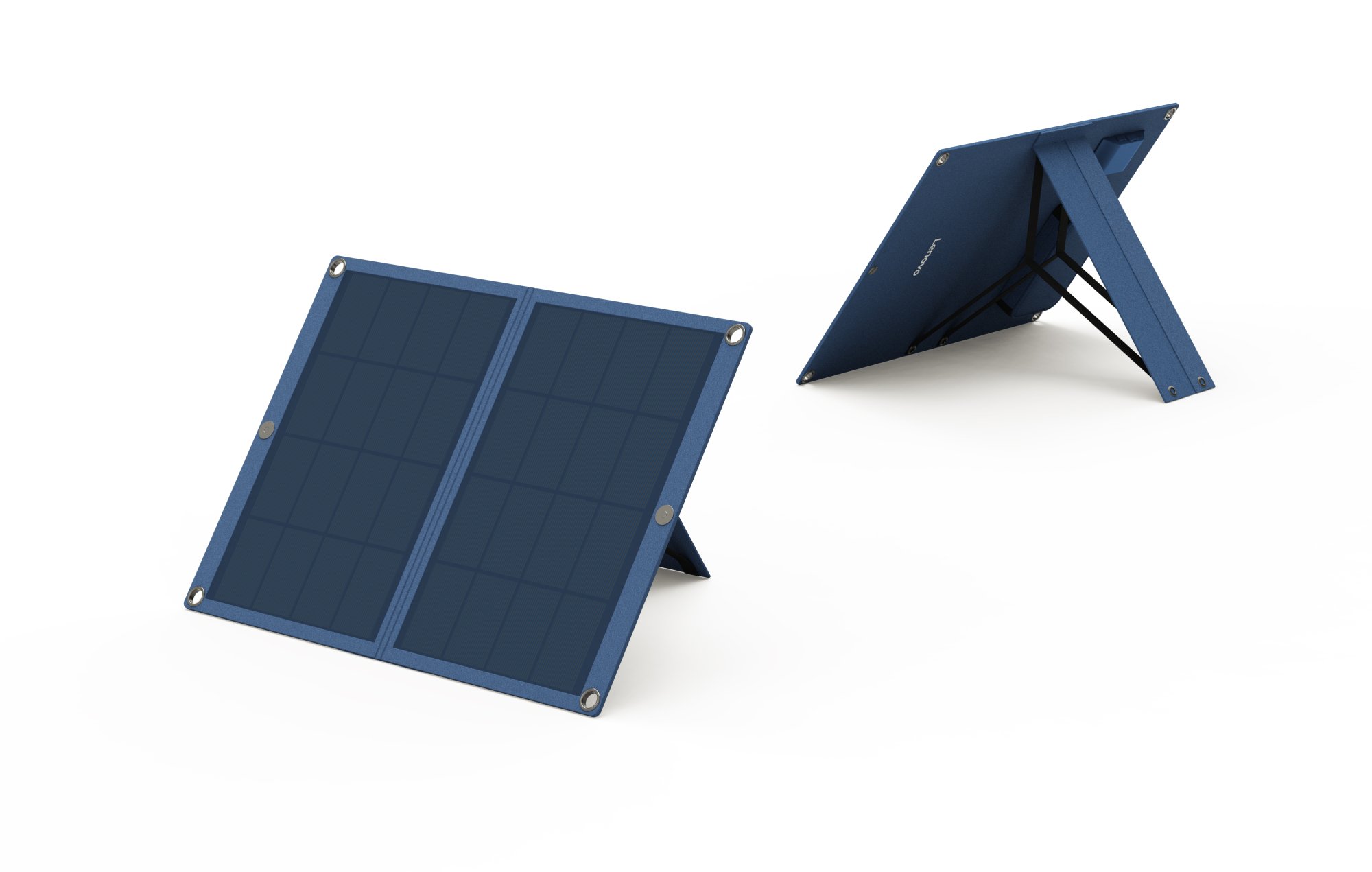
Outside of the realm of screens, there’s also an experimental solar-powered laptop that can charge off sunlight, called the Yoga Solar PC. It works through a solar cell built into the back of the laptop’s lid, which Lenovo says has “an over 24% solar energy conversion rate” and can charge up enough to play one hour of video within about 20 minutes of direct sunlight. I didn’t get to see it in action, seeing as I was in a dark room while Lenovo was showing it off, but I can say the solar technology doesn’t seem like it’s impacting the form factor too much. It was plenty thin looking to my naked eye, and the company says it’s 0.6-inches thin and 2.69 pounds. If that’s still too big for you, Lenovo did also show off the Solar Power Kit for Yoga concept, which is a standard battery bank that connects to a detachable USB-C solar panel (I didn’t see this one in person).

Solar power kit for Yoga

Credit: Lenovo

Evolutions on earlier concepts

Lenovo codename Tiko

Credit: Lenovo

While I got to see (most of) the above concepts in person, the company also has a few iterative changes on earlier ideas, and showed that it’s prototyping out its own version of competing devices. These include a glasses-less 3D ThinkBook, similar to devices that Asus and Acer already have on the market, as well as an AI-powered robotic companion named Tiko that would attach to laptops via Magic Bay.

For more functionality, there’s also a Tiko Pro in the works, a small horizontal Magic Bay display that combines the advantages of the 2nd Display with AI-powered widgets. Again, we’ve seen versions of these either from competitors or at previous Lenovo concept announcements, but they’re still worth keeping an eye on.

A bit more exciting is the Hybrid Dimensional 24-Inch Curved Monitor, which can supposedly display 3D visuals while simultaneously showing 2D assets without any loss in resolution, although this needs to be seen with your own eye to really be judged, and I have yet to get hands-on time with it.

Bringing AI to non-AI PCs

Lenovo AI Stick

Credit: Lenovo

Finally, there are tools to bring AI to non-AI PCs. Lenovo says it’s experimenting with two dedicated neural processing units, or NPUs, that can connect to existing PCs either through a USB stick or a monitor. Working like an external graphics card, the Lenovo AI Stick contains a 32TOPS NPU that can plug into a computer without an NPU over Thunderbolt to allow it to run LLMs and AI graphics tools locally. It can work off just the laptop’s own power, but Lenovo says you can also plug it into a wall at the same time for increased performance.

Meanwhile, the AI Display with NPU Inside does much the same thing, but rather than including the NPU in a hub-like structure, builds it right into your monitor. This comes with the added benefit of allowing the screen to physically rotate, elevate and tilt to follow your movements, but like most monitors, it’s much bulkier and does need to be plugged into a wall at all times. Lenovo also says it’s working on an “AI Ring” that would provide gesture-based control while in spatial computing apps, although the company didn’t go into much detail beyond that.

And that’s it on Lenovo’s MWC concepts. It’s a pretty wide array. Again, none of these are guaranteed to come to market, but that does mean they get to be a bit wackier than the typical product announcement. Personally, I’d love to get my hands on the Magic Bay Dual Display, and I could see the AI Stick being useful to developers. In the meantime, the company also announced a number of chip upgrades for its existing ThinkPad, ThinkBook, IdeaPad, and Yoga laptops that will start hitting the market with the new Yoga 7 2-in-1 and IdeaPad Slim 3x this month.

XTRIS is a fast-paced arcade-style Playdate game you won’t be able to put down

I love a game that screams things like “neato!” and “godlike!” while I’m feverishly pressing buttons and darting my eyes around the screen, trying to make my fingers work as fast as my brain. My skills in the Playdate game XTRIS are definitely not godlike, but there’s just something about that classic arcade announcer voice that makes me think each time, “this is the one where I’ll finally crack the leaderboard.” (It never is).

XTRIS is a $3 game by Fletch Makes Stuff that’ll have you chasing a moving X around a board made up of either four, five or six tiles. The timer’s set to 60 seconds, and in that time you have to land on the X as many times as possible. Each X you collect will go tumbling dramatically off the grid and be added to your score, which is faintly displayed in the background.

If it sounds easy, it’s not. The X moves fast, and as you race after your target using the D-pad to control the movement of a black square, things become increasingly intense. The music builds like an alarm that’s telling you time is almost up, and flames start shooting up from the bottom of the screen. All the while, the announcer (voiced by Jordan Carroll) is shouting words of encouragement that start to feel a little ominous by the end. It’s wonderfully chaotic. Despite the relatively simple presentation, XTRIS really lives up to its promise of being a “juicy arcade action directly into the palm of your hand.”

For each of the three levels — Tetromino, Bridge and Squiggle — you’ll be able to see how other players scored, and how you stack up against them. And once you’ve played a certain level a few times, you’ll be shown your own score trends to see how you’re improving (or plateauing). I keep telling myself, “just one more try” when I finish a round, and we all know how that goes.

There’s a Zen Mode for each level as well, so you can work on your dexterity without the time crunch and with a chiller track playing. If you poke around in the menu, you can also find some unlockable characters and symbols to switch up the appearance of the game, swapping the X for something like a frog or a slice of pizza. XTRIS is available on the Playdate Catalog now for $3.

This article originally appeared on Engadget at https://www.engadget.com/gaming/xtris-is-a-fast-paced-arcade-style-playdate-game-you-wont-be-able-to-put-down-224738429.html?src=rss

‘Exponential Spin-up’ In Geothermal Energy Projects Brings Hope for Green Power

Earth’s core “burns with an estimated forty-four trillion watts of power,” the New Yorker reminds us — enough to “satisfy the entire world’s energy needs” with a power source that’s carbon-free, ubiquitous — and unlimited. (Besides running 24 hours a day, one of geothermal energy’s key advantages is “it can be used for both electricity and heating, which collectively account for around 38% of global climate emissions…”)
And one drilling expert tells them there’s been an “exponential spin-up of activity in geothermal” energy projects over the last two years. (Ironically it was the fracking boom also brought an “explosion of new drilling practices — such as horizontal drilling and magnetic sensing — that inspired a geothermal resurgence.”) In 2005 one research team calculated that just 2% of the heat just four miles underground in America “could meet the entire country’s energy needs — two thousand times over,” according to the article.

So their new article checks in on the progress of geothermal energy projects around the world, including a Utah company using a diamond-bit drill to dig nearly a mile into the earth to install a 150-ton steel tube surrounded by special heat-resistant cement — all to create “a massive straw” for transporting hot water (and steam).

The biggest problem is drilling miles through hot rock, safely. If scientists can do that, however, next-generation geothermal power could supply clean energy for eons… At 6:15 P.M. on May 3rd, cement had started flowing into the hole. Four hours later, part of the cement folded in on itself. The next morning, the cement supply ran out; the men had miscalculated how much they needed. This brought the three-hundred-million-dollar operation to a maddening halt… The cement truck from Bakersfield arrived around 8:30 P.M. By ten-thirty, the men were pouring cement again, gluing the enormous metal straw in place. Next, the team scanned the borehole with gamma rays…

Read more of this story at Slashdot.

FAA reportedly ordered staff to find millions of dollars to fund Starlink deal

According to Rolling Stone, employees with the Federal Aviation Administration were told on Friday to “begin finding tens of millions of dollars for a Starlink deal,” after The Washington Post reported that the FAA may cancel its $2.4 billion contract with Verizon to overhaul the US’s airspace management systems and go with Elon Musk’s company instead. Whether the FAA has actually dropped its Verizon deal in favor of Starlink has yet to be confirmed publicly. In a statement posted on X in response to the initial report last week, the FAA claimed it’s “been considering the use of Starlink since the prior administration.”

Anonymous sources told Rolling Stone that the orders from FAA officials on Friday were “delivered verbally” to staff, in an “unusual” move. It comes a few days after Musk claimed on X that the situation around air traffic control communications is “extremely dire,” saying the existing system (which he wrongly attributed to Verizon before later adding a correction) is “breaking down very rapidly.” He went on to say that “Starlink terminals are being sent at NO COST to the taxpayer on an emergency basis to restore air traffic control connectivity.”

Bloomberg, citing sources close to the matter, previously reported that 4,000 Starlink terminals were being sent to help upgrade the FAA’s networks, which the FAA confirmed. As recently as Wednesday, though, the FAA said in statements to The Washington Post and other publications that it had not made a decision about its Verizon deal. The agency is one of many that has been hit by layoffs led by Musk’s DOGE over the last few weeks, with hundreds of FAA employees fired in February.

This article originally appeared on Engadget at https://www.engadget.com/transportation/faa-reportedly-ordered-staff-to-find-millions-of-dollars-to-fund-starlink-deal-205236985.html?src=rss

How Buildings Are Staying Cool and Saving Money – with Batteries Made of Ice

“Thousands of buildings across the United States are staying cool with the help of cutting-edge batteries made from one of the world’s simplest materials,” reports the Washington Post — ice.

When electricity is cheap, the batteries freeze water. When energy costs go up, building managers turn off their pricey chillers and use the ice to keep things cool. A typical building uses about a fifth of its electricity for cooling, according to the International Energy Agency. By shifting their energy use to cheaper times of day, the biggest buildings can save hundreds of thousands of dollars a year on their power bills. They can also avoid using electricity from the dirtiest fossil fuel plants. In places where the weather is hot and energy prices swing widely throughout the day — for instance, Texas, Southern California and most of the American Southwest — buildings could cut their power bills and carbon emissions by as much as a third, experts say…

When every building is blasting its air conditioner at the same moment on a hot day, power companies often fire up backup generators, known as peaker plants, which are generally extra pricey and polluting. If utilities avoid using peaker plants, they’ll pollute less and save money. Last year, the Energy Department struck a tentative $306 million loan deal with the ice-battery-maker Nostromo Energy to install its systems in 193 California buildings to make energy cheaper and cleaner while lowering the state’s blackout risk.
“The batteries themselves are huge…” the article acknowledges, citing one in New York City that uses 100 parking spot-sized tanks “which collectively make 3 million margaritas’ worth of ice each night… But that’s starting to change.” (And they believe new smaller designs “could bring the batteries into smaller buildings and even houses.”)

Wherever they can squeeze into the market, ice batteries could be a cheaper and longer-lasting option than the lithium-ion batteries that power phones, cars and some buildings because their main ingredient is water, experts say. The pricey chemicals in a lithium-ion cell might degrade after 10 years, but water never wears out.

And according to the article, one company has already installed ice batteries in over 4,000 buildings…

Read more of this story at Slashdot.

Alarming Vo1d Malware Botnet Infects Millions Of Android TVs: Update ASAP

Alarming Vo1d Malware Botnet Infects Millions Of Android TVs: Update ASAP
Imagine you’re having a good time enjoying your favorite TV show, and suddenly an adult video takes over your screen, your remote stops working and harmful content is being forced on viewers. While you might dismiss this as mere fantasy, there are reports that incidents just like this have occurred as a result of the new Vo1d botnet malware.

What Happened When Conspiracy Theorists Talked to OpenAI’s GPT-4 Turbo?

A “decision science partner” at a seed-stage venture fund (who is also a cognitive-behavioral decision science author and professional poker player) explored what happens when GPT-4 Turbo converses with conspiracy theorists:

Researchers have struggled for decades to develop techniques to weaken the grip of conspiracy theories and cult ideology on adherents. This is why a new paper in the journal Science by Thomas Costello of MIT’s Sloan School of Management, Gordon Pennycook of Cornell University and David Rand, also of Sloan, is so exciting… In a pair of studies involving more than 2,000 participants, the researchers found a 20 percent reduction in belief in conspiracy theories after participants interacted with a powerful, flexible, personalized GPT-4 Turbo conversation partner. The researchers trained the AI to try to persuade the participants to reduce their belief in conspiracies by refuting the specific evidence the participants provided to support their favored conspiracy theory.

The reduction in belief held across a range of topics… Even more encouraging, participants demonstrated increased intentions to ignore or unfollow social media accounts promoting the conspiracies, and significantly increased willingness to ignore or argue against other believers in the conspiracy. And the results appear to be durable, holding up in evaluations 10 days and two months later… Why was AI able to persuade people to change their minds? The authors posit that it “simply takes the right evidence,” tailored to the individual, to effect belief change, noting: “From a theoretical perspective, this paints a surprisingly optimistic picture of human reasoning: Conspiratorial rabbit holes may indeed have an exit. Psychological needs and motivations do not inherently blind conspiracists to evidence….”

It is hard to walk away from who you are, whether you are a QAnon believer, a flat-Earther, a truther of any kind or just a stock analyst who has taken a position that makes you stand out from the crowd. And that’s why the AI approach might work so well. The participants were not interacting with a human, which, I suspect, didn’t trigger identity in the same way, allowing the participants to be more open-minded. Identity is such a huge part of these conspiracy theories in terms of distinctiveness, putting distance between you and other people. When you’re interacting with AI, you’re not arguing with a human being whom you might be standing in opposition to, which could cause you to be less open-minded.

Answering questions from Slashdot readers in 2005, Wil Wheaton described playing poker against the cognitive-behavioral decision science author who wrote this article…

Read more of this story at Slashdot.

Ask Slashdot: Would You Accept a Free Ride Into Space?

How confident are we about the safety of commercial space tourism? Long-time Slashdot reader theodp writes:
It’s one thing for Microsoft to boast that they dare to use Outlook instead of Gmail. But it took a whole other level of commitment for Jeff Bezos to join his brother Mark aboard Blue Origin’s first passenger-carrying mission in July 2021.

So, while Bezos is unhesitant about sending himself and other celebrities and loved ones into space aboard Blue Origin, how confident are you about the current state of space travel safety?

If offered a free ride into space from Bezos’s Blue Origin, or one of the other options like Virgin Galactic, Axiom Space, or Boeing’s Starliner, would you accept or decline it?

Share your own thoughts and answers in the comments.

Would you accept a free ride into space?

Read more of this story at Slashdot.