
In addition to mapping the Direct3D graphics API to Vulkan, Wine developers are working on mapping the Direct3D video acceleration APIs to work atop the Vulkan Video API…
Monthly Archives: March 2025
Here’s Why There Are So Many Linux Distros
Anyone who has stepped into the world of Linux knows it’s not a singular operating system like Windows or Mac. There are literally hundreds of Linux distributions (distros), from Ubuntu to Void Linux. So, what’s the reason behind this overwhelming variety?
Intel Revises DRM Sharpness Property For Use With Lunar Lake Sharpening Capabilities
Going back nearly one year Intel has been working on Linux driver support for a new adaptive sharpening filter with Lunar Lake graphics. That’s culminated into working on a common DRM sharpness property for communicating sharpness preferences and this week the latest patch series for that property was posted…
Rockstar acquires GTA San Andreas VR developer – but don’t get your hopes up

Rockstar Games has acquired the Australian studio Video Games Deluxe, which previously worked on GTA San Andreas VR.
The post Rockstar acquires GTA San Andreas VR developer – but don’t get your hopes up appeared first on MIXED Reality News.
Nothing’s Phone 3a Pro is a stylish, almost-flagship experience for $459
Nothing doesn’t have a Phone 3 yet, instead choosing to make a lateral move to not one, but two new mid-range devices, the Nothing Phone 3a and, intriguingly, the 3a Pro. Reassuringly, Nothing continues to design phones unlike anything else out there. Its retro-future design aesthetic for the exposed-but-not hardware on the rear of the phones, as well as the dot-matrix fonts, animations and software, are all back.
Hardware design remains Nothing’s biggest strength. I get asked about the Nothing phone more than I do when I’m using the latest iPhone, Samsung’s foldables or anything else. It’s just different. The Phone 3a series now has a glass backing (upgraded from polycarbonate) and you can still see screw fittings, electronics and a return of Nothing’s Glyph lighting system. The Phone 3a is rated IP64, adding better protection this year against rogue water sprays and liquid incidents.
Image by Mat Smith for Engadget
Nothing has once again rejigged the exposed hardware, and the Glyph lighting details are all at the top of the phone, circling the camera unit. On the Phone 3a Pro, courtesy of a new periscope sensor capable of 3X optical zoom, a substantial circular camera unit protrudes from the back.
If you think the 3a Pro’s camera module looks chunky, it also adds roughly 10 grams to its weight compared to the base Nothing Phone 3a. But for camera obsessives, only one of these phones will hold your attention. (Although the blue iteration of the Nothing Phone 3a is gorgeous.)
The Nothing Phone 3a Pro’s 50-megapixel telephoto sensor can stretch to 3x optical zoom, but it also includes a rather useable, in my early testing, lossless cropped 6x zoom. There’s also a 50MP primary sensor with f/1.88 lens, and dual-pixel phase detection auto-focus (PDAF). Nothing has crammed in an ultrawide 8MP sensor with a 120-degree field of view.
The 3a Pro also has a telemacro mode and can combine focus as close as 15cm (5.9 inches) away with the zoom of the telephoto. It’s a feature that makes macro photography far more useful – and still rare on phones outside of China.
The base model Phone 3a’s main 50MP camera has single-pixel PDAF, but otherwise keeps the same primary camera specs. Its telephoto stretches to 2x optical zoom, and a third ultrawide 8MP camera.
While we’ll explore the camera more deeply in our review, my early impressions are positive. Images are crisp and Nothing has a knack for curated filters that look good. I especially like the frosted glass effect, which Nothing also offers for wallpaper customization.
Image by Mat Smith for Engadget
Nothing says its TrueLens Engine 3.0 combines AI-powered tone mapping with Ultra XDR, which it co-developed with Google, to tune photos. It involves a burst of 8 RAW images, which are all processed together to adjust the brightness of each pixel up to five times. Nothing’s image processing seems to lean towards punchy, high-contrast photos and video.
The Phone 3a and Phone 3a Pro are otherwise identical in specs. Compared to the Nothing Phone 2a, both new devices have a bigger 6.77-inch AMOLED LTPS display, now using Panda Glass rather than Corning’s Gorilla Glass. As you might expect from most (but not all) phones, the 3a has an always-on display, can reach 120Hz refresh rates and it now hits 1,300 nits, making it brighter than the company’s last phone, too.
Once again, the phones both have a big 5,000mAh battery and fast charging at up to 50W. According to Nothing, this means it should take less than an hour to charge the device entirely, while you should be able to get halfway there in 19 minutes. One of the only parts of the Nothing Phone 3a series that hints that they aren’t quite at a flagship level is their processor: a Snapdragon 7s Gen 3. We’ll put that chip through its paces in our review, but it is supposed to help with Nothing’s own custom software pecadillos, like the TrueLens Engine. The company says that chip makes the 3a series 92 percent better at AI processing than its predecessor.
In a nod to both its OnePlus history and the recent trend for adding buttons, Nothing added its Essential Key to the Phone 3a, on the right edge below the power button. Oddly, it has a different finish to the rest of the machined buttons on the 3a and feels a bit cheaper. It works like an AI assistant launcher on other smartphones, like Samsung’s Gemini AI launcher, although the AI hooks come later. One press will capture and send content a screenshot to Nothing’s Essential Space app, while a longer press will start recording a voice note. You can also double-press to launch straight into the Essential Space app, which is a storage space for all those collections.
Image by Mat Smith for Engadget
Nothing uses the same AI tricks we’ve seen elsewhere; it just simplifies them. The Phone 3a will transcribe your voice notes, automate reminders, and even describe your photos and screenshots if needed. As I juggle work commitments, other writing projects, life and everything else, this is an intriguing soup of AI tools, storage and automation, all in a single place.
This also seems to be Nothing’s equivalent of Android’s Labs setting. The company is teasing further functionality, such as focused search, flip-to-record, Camera Capture (using the Essential key while in the camera app), Smart Collections of all your notes and more. It seems to be the Notes equivalent of how Google Photos gives you quick and easy access to the images and videos you’re looking for.
With the Phone 3a Pro’s software more broadly, Nothing OS is fun. Despite a learning curve in places, it’s playful. The icons, fonts, and animations across Nothing’s take on Android 15 add a refreshing touch of personality in a sea of smartphone sameness.
Perhaps there are a few too many creative cooks, as Nothing’s decorative touches jostle with what I assume are Google’s baked-in fonts and menus. Some of the icons are hard to discern, too. After powering up the Phone 3a for the first time, a pixelated smiley face appeared on the home screen. I’d tap it and realize it does nothing. It turns out this is Nothing’s attempt at showing your screen time – but it doesn’t need to be a 2×2 widget.
Image by Mat Smith for Engadget
Other nice touches include a monochrome theme (on these monochrome phones), app label removal and a smart app drawer that corrals similar apps together for more straightforward navigation.
Availability in the US will come through a Beta Program, like in previous years. The Phone 3a ($379) is available to preorder now in grey, black and blue, with devices landing March 11, while the Phone 3a Pro ($459) in black and grey, goes on preorder March 11 and launches March 25. In the UK, the company’s Nothing Store in London will be one of the first places to offer the phone directly, from 11AM GMT on March 8.
This article originally appeared on Engadget at https://www.engadget.com/mobile/smartphones/nothings-phone-3a-pro-is-a-stylish-almost-flagship-experience-for-459-103058974.html?src=rss
Software progress and source code release for CIX P1 Armv9 SoC and Orion O6 motherboard
When the Orion O6 mini-ITX motherboard with a CIX P1 12-core Armv9 SoC was announced in December 2024, we were told binary releases would start on January 15, 2025, and the source code would be released later in Q1 2025. Tom Cubie further explained that upstreaming of the CIX kernel would start in Q2 of 2025, and Linux 6.1 with Device Tree plus Linux 6.6 with ACPI would be supported in the meantime.
Meta Quest’s new passthrough API appears on support page
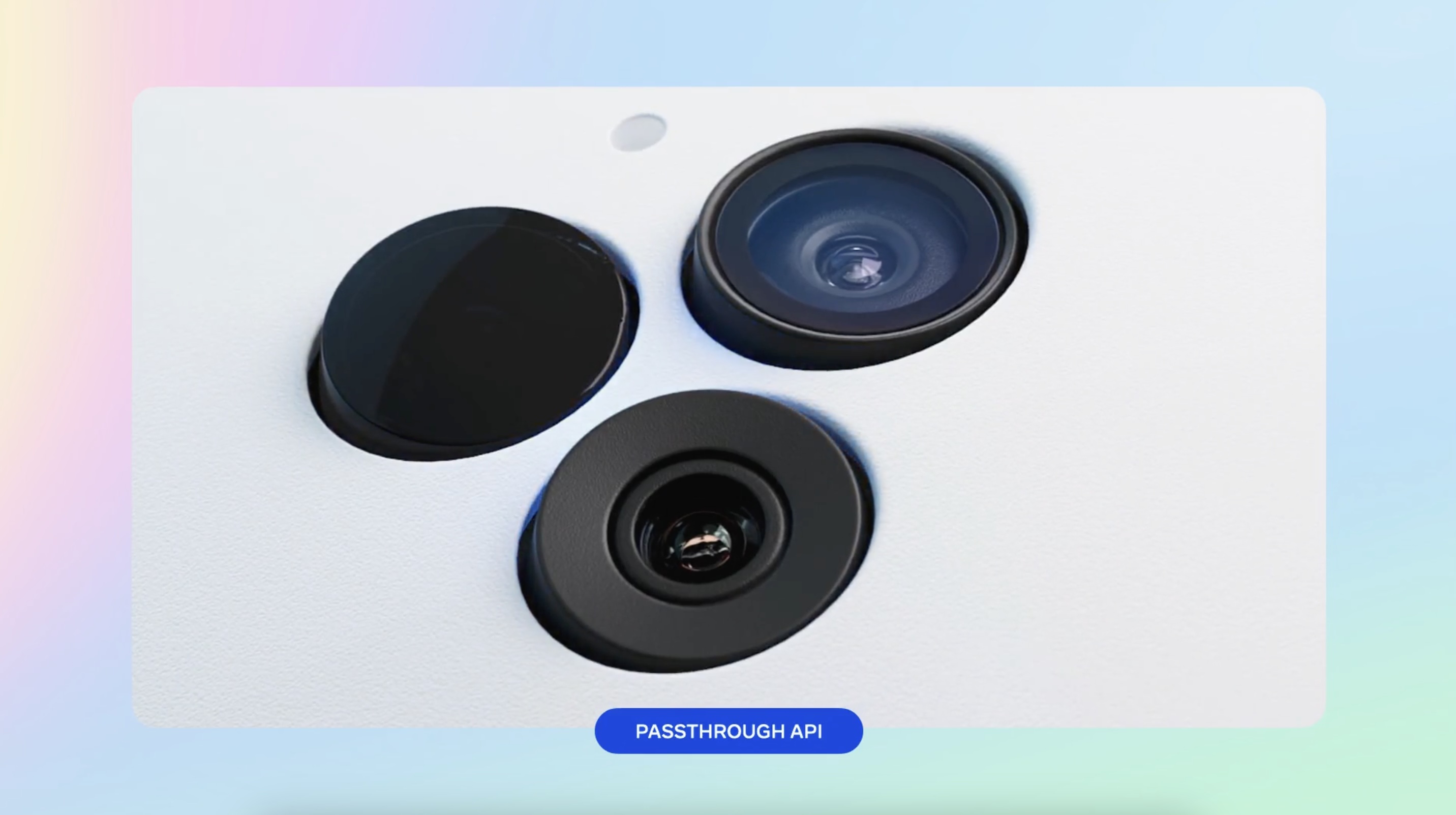
The published support documents for Meta Quest headsets indicate an imminent release of Meta’s new Passthrough API.
The post Meta Quest’s new passthrough API appears on support page appeared first on MIXED Reality News.
The best mesh Wi-Fi systems of 2025
Let’s be honest, your home Wi-Fi probably sucks, with regular drop-outs, buffering or even the dreaded data dead zone. It’s because traditional Wi-Fi routers are a single unit, pumping out data only as far as the laws of physics will allow. So if you’ve got thick walls, plumbing or any other quirky internal design, your overall connectivity is going to suffer. It’s these issues mesh Wi-Fi systems are designed to solve, using multiple nodes (or satellites) scattered around your home to create a broader, more reliable and consistent connection.
Meshes work as a team to create a seamless Wi-Fi network around your home, keeping you and your gear connected as you move. If you’ve got plenty of smart home gear, then you’ll also get the benefit of being able to connect more devices to the same network. They also often look a lot nicer than whatever your internet provider shipped to you when you signed up, too.
These systems also have plenty of useful features, like automatic firmware updates to keep you safe and secure, fast speeds and ethernet ports for wired connections. It doesn’t matter if you’re streaming, gaming, working or simply need reliable connectivity for your smart gadgets: A mesh system can be the solution for keeping every corner of your home online and happy.
Table of contents
Best mesh Wi-Fi systems for 2025
What to look for in a mesh Wi-Fi system
Linksys’ CEO Jonathan Bettino told Engadget why mesh systems are an “advancement in Wi-Fi technology” over buying a single point router. With one transmitter, the signal can degrade the further away from the router you go, or the local environment isn’t ideal. “You can have a small [home], but there’s thick walls […] or things in the way that just interfere with your wireless signal,” he said.
Historically, the solution to a home’s Wi-Fi dead zone was to buy a Wi-Fi range extender but Bettino said the hardware has both a “terrible user experience” and one of the highest return rates of any consumer electronics product. Mesh Wi-Fi, by comparison, offers “multiple nodes that can be placed anywhere in your home,” says Bettino, resulting in “ubiquitous Wi-Fi” that feels as if you have a “router in every room.”
Rather than having one main router in your home, having a “router in every room” is the biggest selling point for mesh Wi-Fi given how reliant we all are on the internet. Each node is in constant contact with each other, broadcasting a single, seamless network to all of your connected devices. There’s no separate network for the 2.4GHz and 5GHz bands, just a single name that you connect to.
It’s a good time to buy a mesh Wi-Fi system since the latest standard, Wi-Fi 6E, represents a big leap in the technology. Matt MacPherson, Cisco’s Chief Technology Officer for Wireless, said Wi-Fi 6E is a big “inflection point,” using much more of the wireless spectrum than its predecessors. “If you’re using that spectrum with a Wi-Fi 6 [device],” he said, “you’re going to get significant gains [in speed.]”
MacPherson added Wi-Fi 6E will likely “carry you for a long time” thanks to the fact its “top throughputs now typically exceed what people can actually connect their home to.” In short, with a top theoretical per-stream speed of 1.2 Gbps, Wi-Fi 6E is fast enough to outrun all but the fastest internet connection.
What do all these Wi-Fi numbers and letters mean?
I’m sorry folks, we need to get boringly technical for one paragraph, but I promise you it’s worth it.
Wi-Fi is governed by International Standard IEEE 802.11, and every few years a letter gets added onto that name when the technology evolves and improves. Until 2019, routers were sold under their IEEE name, leaving users to pick through the word soup of a product labeled 802.11 b/g/a/n/ac and so on.
Mercifully, wiser heads opted to rebrand the letters as numbers, so rather than 802.11 b/g/a/n/ac, we have Wi-Fi 1, 2, 3 4 and 5. Right now, we’re in the middle of one of those Wi-Fi generations, with most of the gear on sale right now supporting either Wi-Fi 6 or Wi-Fi 6E.
What’s the difference between Wi-Fi 6 and Wi-Fi 6E?
Wi-Fi uses chunks of the radio frequency spectrum, with Wi-Fi 6 using the 2.4GHz and 5GHz bands to pump data around. In fact, back in the old days, it was likely your home router would offer you the choice of the 2.4GHz or the 5GHz network, as separate bands to access. These days, all of the spectrums are tied together as one thing, and Wi-Fi 6E has the added ability to use the 6GHz band as well. That’s a big chunk of extra wireless real estate that isn’t as cluttered up as the 2.4 and 5GHz bands.
You’re going to talk about wireless frequencies now, aren’t you.
Each Wi-Fi band had tradeoffs, because the slower radio frequencies have greater range but less speed. 2.4GHz signals will travel a long way in your home but aren’t quick, while 6GHz is blisteringly fast but can be defeated by a sturdy brick wall. A lot of Wi-Fi-enabled gear you own, like smart home products, only use the 2.4GHz band because the range is better and it’s a lot cheaper. But it means that the band is also overcrowded and slow, making it great for your doorbell and robovac, but lackluster for Twitch streaming.
So, what am I looking for?
Right now, the market is full of mature Wi-Fi 6 and 6E devices, and most new systems available to buy are capable of taking advantage of the faster speeds they offer. This guide focuses on Wi-Fi 6E gear since it’s what we think it’s more than enough to satisfy almost everyone’s at-home Wi-Fi needs.
What about Wi-Fi 7?
We’re now seeing the first generation of Wi-Fi 7 devices available to buy, but we don’t recommend you do so immediately. The Wi-Fi 7 standard is still so new that there’s little to no reason for you to rush out and buy one for your home. The hardware is tremendously expensive and while Wi-Fi 7 will, eventually, offer some great benefits over 6E, it’s not as transformative an upgrade as 6E. Not to mention, Wi-Fi 7 is so new that almost none of your home’s devices will be able to take advantage of its big-ticket features. I’d estimate you won’t need to worry about upgrading to Wi-Fi 7 for at least five years, if not longer.
Range and speed
All Wi-Fi routers boast a theoretical broadcast range and a theoretical top speed, but these figures don’t mean much. After all, manufacturers can’t control your ISP’s real speed, the materials and layout of your home or where you put your Wi-Fi gear. Raw speed isn’t everything, either, and you likely need a lot less internet than you’re actually paying for right now. After all, Netflix needs just 15 Mbps to push a single 4K video stream to your home. As cool as it is to say you’ve got all these hundreds of Mbps, factors like latency and reliability are far more crucial to a happy internet life. And unless you have Gigabit internet that can reach speeds of up to 1 Gbps, you won’t need a mesh router that offers that spec.
Backhaul
Mesh Wi-Fi systems work by connecting every hardware node to a single wireless network, letting them all communicate with each other. Imagine four people in a busy, noisy restaurant all trying to order their dinner from a weary staff member, all at once. Now imagine, while this is going on, that four more people at that same table are also trying to tell a funny anecdote. It’s no surprise that it might take a long time for the right information to reach its intended destination.
To combat this, higher-end mesh routers offer dedicated wireless backhaul; a slice of the spectrum for node-to-node communication. So rather than everyone talking at once in the same space, the conversations are essentially separated, reducing the invisible clutter in the air. Because there’s less confusing cross-chatter, everything moves faster, offering a significant performance boost to those systems.
Connectivity
These days, even your washing machine can have a wireless connection, but that doesn’t mean you should ignore the joys of wired internet. No matter how fast Wi-Fi is, a hard line will always be faster, and some gear, like Philips’ Hue bridge, still needs an ethernet connection. Plenty of routers can also use these hard connections as backhaul, eliminating further wireless clutter.
It’s convenient for spread-out systems and power users, but it will mean running more wires through your home. The most common standard is Cat 5e, or gigabit ethernet which, unsurprisingly, has a top speed of 1 Gigabit per second (Gbps). Since Ethernet cables are backward compatible, you should be able to easily find one that works with your system. However, to get the most out of your mesh routers, it’s worth investing in an Ethernet cable that meets the standard your router uses — if it’s Cat 5e, use a Cat 5e cable. You can check your router’s specs via the manufacturer’s website to be sure.
Flexibility and scalability
Mesh routers enable you to add (or subtract) modules from your home network to suit your needs. D-Link’s Alan Jones said users should “check how scalable the prospective product is” before you buy. This sense of scale doesn’t just apply to the number of nodes on the network, but how many simultaneous connections it can handle.
It’s also worth looking at ASUS’ AiMesh products, which can combine mesh Wi-Fi gear and its standard “spider” Wi-Fi routers. If you’ve got a tricky part of your home, you can bolt on an ultra-power standalone Wi-Fi router to a compatible mesh.
Placement
Mesh networks replace one big piece of hardware with a series of identical nodes that you scatter around your home. You connect one to your modem (usually over ethernet), and then scatter the rest around the place for the best coverage. A good rule of thumb is to place each node no more than two rooms away from the last one, rather than sticking them at the far ends of your home.
Bear in mind, every physical obstacle between a Wi-Fi node, its siblings and your devices will hurt your overall performance. You should aim to place them, at the very least, at waist height on furniture in open air, without too many obstructions. The reason many mesh Wi-Fi products are designed to look like an inoffensive white doodad is so you don’t feel compelled to hide them behind your TV.
How we test Wi-Fi routers
My home covers around 2,200 square feet across three stories with the office on the third floor. It’s relatively long and thin, with the living room at the front of the house, the kitchen at the back and the three bedrooms on the first floor. Its age means there are a lot of solid brick walls, old-school lathe and plaster as well as aluminum foil-backed insulation boards to help with energy efficiency. There are two major Wi-Fi dead zones in the house: The bathroom and the third bedroom behind it, since there’s lots of old and new pipework in the walls and floors.
For mesh routers with two nodes, I place the first in my living room, connected via ethernet to my cable modem with the second on the first floor landing in the (ostensible) center of the house. For three-node sets, the third goes in my kitchen, which I’ve found is the optimal layout to get the bulk of my house covered in Wi-Fi. Fundamentally, my home poses enough challenges that if it succeeds here, it stands a very good chance of succeeding in your place.
Each mesh is judged on ease of setup, Wi-Fi coverage, reliability, speed and any additional features that it advertises. I look at how user-friendly each companion app is from the perspective of a novice rather than an expert given you shouldn’t need to be a network engineer to do this sort of thing. Tests I do include checking for dead zones, moving from room to room to measure consistency of connectivity and streaming multiple videos at once to replicate common usage patterns.
Other mesh Wi-Fi router systems we tested
Amazon Eero 6E
Eero Pro 6E is an “easy” device, the sort a total novice can set up on their own and thrive with for years on end. There’s little brainwork required to get things set up, and the app has a clean UI with plenty of hand-holding. But, and it’s a big but, the fact that so many basic management tools are paywalled irks me, especially since you can get plenty of them for free with Google’s rival offering.
Netgear Orbi 960
The Orbi 96T0 (RBKE963) is Netgear’s flagship mesh Wi-Fi product, which the company calls the “world’s most powerful Wi-Fi 6E system.” It’s also one of the most expensive consumer-level kits on the market, setting you back $1,499.99 for a three pack. It’s a fantastic piece of gear, but it’s worth saying that the subset of people who could, would or should buy it remains far smaller than you might expect. Ultimately, I feel that if you’re paying luxury prices, you should expect a luxury product. There were plenty of times during testing that I went looking for a feature that was either only available via the web client, or behind a paywall. While, yes, much of your cash is going to the superlative hardware, but for this sort of money, the fact you have to pay extra for some table-stakes features is insulting. If you’re looking for a new Wi-Fi system and aren’t prepared to spend almost $1,500, it’s worth considering our other top picks for the best Wi-Fi routers and mesh systems.
This article originally appeared on Engadget at https://www.engadget.com/home/smart-home/best-mesh-wifi-system-130028701.html?src=rss
CISA Tags Windows, Cisco Vulnerabilities As Actively Exploited
CISA has warned U.S. federal agencies about active exploitation of vulnerabilities in Cisco VPN routers and Windows systems. “While the cybersecurity agency has tagged these flaws as actively exploited in the wild, it has yet to provide specific details regarding this malicious activity and who is behind it,” adds Bleeping Computer. From the report: The first flaw (tracked as CVE-2023-20118) enables attackers to execute arbitrary commands on RV016, RV042, RV042G, RV082, RV320, and RV325 VPN routers. While it requires valid administrative credentials, this can still be achieved by chaining the CVE-2023-20025 authentication bypass, which provides root privileges. Cisco says in an advisory published in January 2023 and updated one year later that its Product Security Incident Response Team (PSIRT) is aware of CVE-2023-20025 publicly available proof-of-concept exploit code.


The second security bug (CVE-2018-8639) is a Win32k elevation of privilege flaw that local attackers logged into the target system can exploit to run arbitrary code in kernel mode. Successful exploitation also allows them to alter data or create rogue accounts with full user rights to take over vulnerable Windows devices. According to a security advisory issued by Microsoft in December 2018, this vulnerability impacts client (Windows 7 or later) and server (Windows Server 2008 and up) platforms.
Today, CISA added the two vulnerabilities to its Known Exploited Vulnerabilities catalog, which lists security bugs the agency has tagged as exploited in attacks. As mandated by the Binding Operational Directive (BOD) 22-01 issued in November 2021, Federal Civilian Executive Branch (FCEB) agencies now have three weeks, until March 23, to secure their networks against ongoing exploitation.
Read more of this story at Slashdot.
Apple Vision Pro gets Spatial Gallery with visionOS 2.4 Beta 2

Apple’s new Spatial Gallery for Vision Pro offers spatial experiences and photographs from well-known artists and brands.
The post Apple Vision Pro gets Spatial Gallery with visionOS 2.4 Beta 2 appeared first on MIXED Reality News.
Ubuntu Touch OTA-8 Released with VoLTE Support for Volla Phone Users
The UBports Foundation announced today the release and general availability of Ubuntu Touch OTA-8 as the eighth stable update to the Ubuntu Touch mobile operating system based on Ubuntu 20.04 LTS (Focal Fossa).
Meta and TU Munich turn smartphone pics into lifelike 3D avatars in minutes

Researchers have developed a new method to create an animatable 3D avatar from just four smartphone photos.
The post Meta and TU Munich turn smartphone pics into lifelike 3D avatars in minutes appeared first on MIXED Reality News.
Meta and Internet Society team up to expand internet access around the world
Meta and the Internet Society have established the Connectivity Co-Funding Initiative, which aims to expand affordable internet connection around the world. They announced the new project at Mobile World Congress in Barcelona, Spain. The partners are committing a $30 million investment through 2030 that will go to funding infrastructure development in various communities, specifically those overlooked or intentionally ignored by commercial providers. In addition, the initiative’s money will go towards training programs that improve the technical know-how of marginalized grounds, to community-centered solutions for underserved areas, as well as to locally owned networks that create jobs.
This an expansion of the non-profit organization’s partnership with Meta, which started years ago when they worked together to improve internet connectivity in Africa, Asia-Pacific and Latin America by developing Internet exchange points. These points, or IXPs, are physical locations where internet providers can exchange traffic.
Meta is only the Internet Society’s first partner for the Co-Funding Initiative, and the non-profit org is putting out a call for more partners who can help grow that fund. “This new Connectivity Co-Funding initiative, supported by Meta, is a prime example of collective action that will help provide meaningful access to more than 2 billion people across the world with insufficient or no Internet,” said Sally Wentworth, President and CEO of the Internet Society. “It is our hope that this fund plays a pivotal role in reducing this gap and creating a more equitable digital society.”
This article originally appeared on Engadget at https://www.engadget.com/big-tech/meta-and-internet-society-team-up-to-expand-internet-access-around-the-world-080034114.html?src=rss
Private Lunar Lander Blue Ghost Aces Moon Touchdown
Firefly Aerospace’s Blue Ghost lander successfully touched down on the moon, making it the first private company to achieve a stable lunar landing without crashing. The craft is carrying various NASA-funded experiments, including a “vacuum to suck up moon dirt for analysis and a drill to measure temperature as deep as 10 feet (3 meters) below the surface,” reports the Associated Press. There’s also “a device for eliminating abrasive lunar dust — a scourge for NASA’s long-ago Apollo moonwalkers, who got it caked all over their spacesuits and equipment.” From the report: A half hour after landing, Blue Ghost started to send back pictures from the surface, the first one a selfie somewhat obscured by the sun’s glare. The second shot included the home planet, a blue dot glimmering in the blackness of space. Blue Ghost — named after a rare U.S. species of fireflies — had its size and shape going for it. The squat four-legged lander stands 6-foot-6 (2 meters) tall and 11 feet (3.5 meters) wide, providing extra stability, according to the company.


Launched in mid-January from Florida, the lander carried 10 experiments to the moon for NASA. The space agency paid $101 million for the delivery, plus $44 million for the science and tech on board. It’s the third mission under NASA’s commercial lunar delivery program, intended to ignite a lunar economy of competing private businesses while scouting around before astronauts show up later this decade.
Firefly’s Ray Allensworth said the lander skipped over hazards including boulders to land safely. Allensworth said the team continued to analyze the data to figure out the lander’s exact position, but all indications suggest it landed within the 328-foot (100-meter) target zone in Mare Crisium. The demos should get two weeks of run time, before lunar daytime ends and the lander shuts down.
Read more of this story at Slashdot.
ADLINK and LIPS Introduce 3D Perception DevKit for Autonomous Mobile Robots
ADLINK Technology and LIPS have introduced a perception solution for autonomous mobile robots. The LIPSAMR Perception DevKit integrates ADLINK’s DLAP-411-Orin platform with LIPSedge AE Active Stereo 3D cameras, providing enhanced 3D vision with a wider field of view and higher resolution than LiDAR.
Scientists Sound the Alarm Over Plastics in Our Brains After Shocking Study

A new commentary highlights the potential health risks of microplastics in our bodies and brains.
New GnuCash PPA for Ubuntu 20.04, Ubuntu 22.04 & Ubuntu 24.04
For GnuCash users who prefer the native .deb package format, here I made a new unofficial PPA for all current Ubuntu releases.
Qualcomm Launches Dragonwing Brand: Doing Branding Right
I have several degrees in marketing and worked in marketing for years as a marketing director and as a member of IBM marketing during the time IBM was led by a marketing-oriented CEO, Louis Gerstner. I generally comment on someone doing something stupid with branding, like changing the font or icon related to the brand for no material reason.
But Qualcomm just launched Dragonwing, which consists of a lot of things that have nothing to do with Cell phones but a lot to do with AI and IoT, and surprisingly, the effort makes a lot of sense and appears well executed. This isn’t a subtle jab at Qualcomm but at the lack of branding competence in the industry in general which tends to be a mess of names that are unpronounceable, unrememberable, and mostly forgettable. Dragonwing is a breath of fresh air.
Let’s talk about branding this week.
What Is a Brand?
Basically, a brand represents a product or business’s identity broadly. The audience for a brand includes customers, investors, partners and employees. All must be considered when launching or changing a brand. This typically makes the job of the poor marketing person extremely difficult. I did brand work at IBM for a short time and came up with the rule “the only thing everyone will agree on when it comes to a new brand is that the person that came up with it is an idiot.” The group of people that has to like the brand is very diverse, making it nearly impossible to get a new brand approved. Then you have the problem of copyrights. Brands can be copyrighted, and if you don’t clear the copyright, you open yourself up to litigation.
Getting Through Approvals
Apple ran into this with the iPhone because Cisco already had a product in market with that name. That created what appeared to be a huge problem for the launch that Steve Jobs addressed by cutting a favorable deal with Cisco which really didn’t care that much about its iPhone line. But this problem is likely why the Apple Watch wasn’t the iWatch. Someone with resources likely had the rights to the iWatch name and Apple was unwilling to incur the cost of acquiring that name. This problem has even created problems for code names. Microsoft code-named its Windows 8 interface (that it later killed) Metro but got sued by a retailer out of Germany with that same name, forcing Microsoft to change it.
Then you have a problem with languages. Names can have different meanings in different countries. While the typical example of the Chevy Nova (no va supposedly meant no-go in Spanish) turned out to be false, you still have to make sure your new brand doesn’t mean something else in another country. Back in the 1990s, Microsoft and Intel used a huge ad company to launch the “Digital Joy,” a term used for on-line pornography in France and on a prominent porn website there. Microsoft ended up having to buy that website, which added insult to injury as the campaign was very poorly executed.
And finally, the key decision makers in the company need to sign off on the brand. If any of these people were part of coming up with it in the first place, they typically hate anything they didn’t think of themselves. IBM had a contest to name a new product, making the job of the poor sap (me) that had to name it a nightmare because none of the names that came out of the contest could get legal approvals (someone else owned them). Getting the final name approved was a nightmare.
Dragonwing
Dragonwing picks up on the Dragon side of Snapdragon which was an interesting play made possible because of earlier Qualcomm marketing efforts that changed the perception of the Snapdragon name from a flower to a cute, overpowered mini dragon.
A dragon wing is what helps a dragon fly. It’s a part of a thing, not the thing by itself, which makes it very appropriate for a line of products that include connectivity products, IoT components and services. I’d argue it is even a better brand than Snapdragon since the meaning of that name is generally a flower, not a part of something larger.
And finally, Dragonwing emphasizes Snapdragon as a dragon, not a flower, strengthening the image that was created years ago with the old Snapdragon campaign. The elements Qualcomm will endeavor to attach to the Dragonwing brand are appropriate to the name and include ascension, power and acceleration, and the color of the related logo will use purple which fuses Qualcomm blue with Snapdragon red (disclosure: purple is my favorite color).
Wrapping Up: Nicely Done!
It is rare that I see a branding effort that is well done even by companies that do a lot of it. Dragonwing is an exception. It has thought-out connections back to parent (Qualcomm) and peer (Snapdragon) brands. It conveys elements of the messaging Qualcomm intends to use with it, and builds rather than distracts from Snapdragon, making that brand potentially stronger. While I wish this effort were less of an exception, it was well done to the credit of the Qualcomm marketing team.
C++ creator calls for help to defend programming language from ‘serious attacks’
Bjarne Stroustrup says standards committee needs to show it can respond to memory safety push. Bjarne Stroustrup, creator of C++, has issued a call for the C++ community to defend the programming language, which has been shunned by cybersecurity agencies and technical experts in recent years for its memory safety shortcomings.
Researchers Find Less-Educated Areas Adopting AI Writing Tools Faster
An anonymous reader quotes a report from Ars Technica: Since the launch of ChatGPT in late 2022, experts have debated how widely AI language models would impact the world. A few years later, the picture is getting clear. According to new Stanford University-led research examining over 300 million text samples across multiple sectors, AI language models now assist in writing up to a quarter of professional communications across sectors. It’s having a large impact, especially in less-educated parts of the United States. “Our study shows the emergence of a new reality in which firms, consumers and even international organizations substantially rely on generative AI for communications,” wrote the researchers.


The researchers tracked large language model (LLM) adoption across industries from January 2022 to September 2024 using a dataset that included 687,241 consumer complaints submitted to the US Consumer Financial Protection Bureau (CFPB), 537,413 corporate press releases, 304.3 million job postings, and 15,919 United Nations press releases. By using a statistical detection system that tracked word usage patterns, the researchers found that roughly 18 percent of financial consumer complaints (including 30 percent of all complaints from Arkansas), 24 percent of corporate press releases, up to 15 percent of job postings, and 14 percent of UN press releases showed signs of AI assistance during that period of time.
The study also found that while urban areas showed higher adoption overall (18.2 percent versus 10.9 percent in rural areas), regions with lower educational attainment used AI writing tools more frequently (19.9 percent compared to 17.4 percent in higher-education areas). The researchers note that this contradicts typical technology adoption patterns where more educated populations adopt new tools fastest. “In the consumer complaint domain, the geographic and demographic patterns in LLM adoption present an intriguing departure from historical technology diffusion trends where technology adoption has generally been concentrated in urban areas, among higher-income groups, and populations with higher levels of educational attainment.” “Arkansas showed the highest adoption rate at 29.2 percent (based on 7,376 complaints), followed by Missouri at 26.9 percent (16,807 complaints) and North Dakota at 24.8 percent (1,025 complaints),” notes Ars. “In contrast, states like West Virginia (2.6 percent), Idaho (3.8 percent), and Vermont (4.8 percent) showed minimal AI writing adoption. Major population centers demonstrated moderate adoption, with California at 17.4 percent (157,056 complaints) and New York at 16.6 percent (104,862 complaints).”
The study was listed on the arXiv preprint server in mid-February.
Read more of this story at Slashdot.