Utah has once again passed a bill that attempts to place new limits on children’s ability to access social media and other apps. The state legislature passed a bill that requires app store makers to verify the ages of users and get parental consent for the downloading of apps. Should the governor sign the bill into law, it would be (as The Vergepoints out) the first such measure in the country.
The Beehive State has previously attempted to restrict how children can use social media. The state passed two laws in 2023 that imposed age verification and parental permission requirements onto social media companies. Those laws were later revised amid legal challenges, and a Utah judge blocked them from taking effect last fall.
The “App Store Accountability Act” takes a different approach. It puts the burden on app stores (namely, Apple and Google) to conduct age verification and parental permission rather than individual social media platforms. Unsurprisingly, Meta and other social media companies have long preferred the app store-centric approach to age verification.
On Wednesday, Meta, Snap and X issued a rare joint statement praising the Utah measure. “Parents want a one-stop shop to verify their child’s age and grant permission for them to download apps in a privacy-preserving way,” the companies said. “The app store is the best place for it, and more than a quarter of states have introduced bills recognizing the central role app stores play. We applaud Utah for putting parents in charge with its landmark legislation and urge Congress to follow suit.”
Apple and Google so far haven’t publicly weighed in on Utah’s bill, though we’ve reached out to both for comment.
Given the controversy surrounding previous attempts to impose age verification requirements on platforms, the Utah bill will likely face legal challenges if and when it’s signed into law. Even so, other states are likely to follow Utah’s lead on this issue. At least eight more states are considering similar measures.
This article originally appeared on Engadget at https://www.engadget.com/big-tech/utah-is-poised-to-pass-an-age-verification-law-for-app-stores-000542476.html?src=rss
For many people, coding is about telling a computer what to do and having the computer perform those precise actions repeatedly. With the rise of AI tools like ChatGPT, it’s now possible for someone to describe a program in English and have the AI model translate it into working code without ever understanding how the code works. Former OpenAI researcher Andrej Karpathy recently gave this practice a name—”vibe coding”—and it’s gaining traction in tech circles.
The technique, enabled by large language models (LLMs) from companies like OpenAI and Anthropic, has attracted attention for potentially lowering the barrier to entry for software creation. But questions remain about whether the approach can reliably produce code suitable for real-world applications, even as tools like Cursor Composer, GitHub Copilot, and Replit Agent make the process increasingly accessible to non-programmers.
Instead of being about control and precision, vibe coding is all about surrendering to the flow. On February 2, Karpathy introduced the term in a post on X, writing, “There’s a new kind of coding I call ‘vibe coding,’ where you fully give in to the vibes, embrace exponentials, and forget that the code even exists.” He described the process in deliberately casual terms: “I just see stuff, say stuff, run stuff, and copy paste stuff, and it mostly works.”
Well, it’s officially done; Microsoft has done away with Skype, marking May 5, 2025, as the day of its demise. They say that they have done this to streamline their consumer communications offerings so that they can “more easily adapt to customer needs”.
Google announced Wednesday it is expanding its AI Overviews to more query types and users worldwide, including those not logged into Google accounts, while introducing a new “AI Mode” chatbot feature. AI Mode, which resembles competitors like Perplexity or ChatGPT Search, will initially be limited to Google One AI Premium subscribers who enable it through the Labs section of Search.
The feature delivers AI-generated answers with supporting links interspersed throughout, powered by Google’s search index. “What we’re finding from people who are using AI Overviews is that they’re really bringing different kinds of questions to Google,” said Robby Stein, VP of product on the Search team. “They’re more complex questions, that may have been a little bit harder before.” Google is also upgrading AI Overviews with its Gemini 2.0 model, which Stein says will improve responses for math, coding and reasoning-based queries.
Apple used to treat every public-facing announcement like an event. Even its keynotes — ostensibly for investors and press — were well-orchestrated circuses. If there’s any conclusion to be drawn from the sheer number of new products the company’s launched without any kind of event since the iPhone 16 series was introduced six months ago, the time for hanging on Apple’s every word has passed.
Some of it can be chalked up to the company’s new preference for recorded, highly-edited video presentations rather than live shows. Some of it might also have to do with the fact that since Apple started making the chips that power its smartphones, tablets and computers, most of the “new” things it introduces amount to spec bumps. Apple’s managed to announce eight new products since the iPhone 16, nine if you count a new chip that debuted in one of the company’s updated desktop computers. Here’s a look at all of that new hardware, from Apple’s most recent releases to the new computers it used to close out 2024.
M4 MacBook Air
Apple
The MacBook Air is one of Apple’s most popular laptops, so it’s only natural it should get the latest M4 chip. Luckily, that extra power didn’t come at the cost of a more expensive computer. A 13-inch MacBook Air now starts at $999, with the 15-inch model coming in at $1,199, down from the $1,099 you used to have to pay to get an M3 MacBook Air. The new laptops also come with an improved 12MP Center Stage webcam, and a new metallic color option Apple’s dubbed “Sky Blue.” It’s not the most exciting announcement, but a new laptop that’s twice as powerful as Apple’s M1 computers for a lower price is welcome all the same.
Mac Studio
Apple
Apple’s update to the Mac Studio, announced alongside the MacBook Air, is even more of a pure spec bump. No cosmetic changes were made to the Studio: The short and stout computer still has USB ports and an SD card reader on the front, with even more I/O options available on the back. What’s different are the chips powering the Mac Studio on the inside. Apple offers either an M4 Max with a 16-core CPU and 40-core GPU or new M3 Ultra chip, which gives the Studio enough wiggle room to handle most professional creative workloads. With the M4 Max you can get up to 128GB of unified memory but if you opt for the M3 Ultra, that can go all the way up to 512GB. All of that power will cost you, though. The Mac Studio with the M4 Max starts at $1,999, while the M3 Ultra version starts at $3,999.
M3 Ultra
Apple
The M3 Ultra is the truly novel part of the Mac Studio update. The late-arriving chip fills the top spot in Apple’s M3 lineup, with a 32-core CPU (24 of which are performance cores), up to a 80-core GPU and a 32-core Neural Engine. Apple claims the M3 Ultra is over two times as powerful as the M1 Ultra, likely because it’s technically two M3 Max chips connected together with the company’s “Ultrafusion” architecture. The new chip also supports Thunderbolt 5 for faster connectivity and specced with up to 512GB of unified memory. Currently, the M3 Ultra is only available on the Mac Studio, which oddly leaves the Mac Pro out of the loop. It’s possible Apple’s most expensive Mac will be updated soon, or maybe there’s an even more powerful chip waiting in the wings.
M3 iPad Air
Apple
The same week Apple updated the MacBook Air and Mac Studio, it also tweaked the iPad Air, giving the 11- or 13-inch tablet a new M3 chip, and an updated version of the Magic Keyboard with a function row and a slightly larger trackpad. The iPad Air was already capable of Apple Intelligence and plenty fast with the M2 chip it received in 2024, so Apple’s announcement mainly keeps it competitive, unless you’re interested in ray-tracing, which admittedly is offered in some console games that have been ported to the iPad. The new iPad Air starts at $599, while the new Magic Keyboard starts at $260, and strangely, only comes in white.
iPad
Apple
Apple’s changes to the entry-level iPad are even smaller. It’s been upgraded from an A14 Bionic chip to an A16, which means the tablet is faster, but still not capable of Apple Intelligence. The new tablet also starts with a larger amount of storage. Rather than the frankly dismal 64GB Apple used to offer at the low-end, you now can’t get an iPad without at least 128GB of storage. That’s not bad, even for Apple’s slightly expensive $349 starting price. Still, besides acting as the go-to option for families looking to buy a tablet for their kids or grandparents, Apple’s basic iPad mainly seems like a way to drive people to a more expensive option.
iPhone 16e
Brian Oh for Engadget
The wait for a replacement to the 2022 iPhone SE was long, and as it turns out, the direction Apple wants to take the idea is a little unexpected. The company started the year by turning the SE into the iPhone 16e, a new low-end for the company’s smartphone lineup. The iPhone 16e is an odd mixture of iPhones old and new. It features the A18 chip, which means it can handle the little Apple Intelligence currently has to offer, it looks like an iPhone 14, but with a singular camera. And for some reason it doesn’t have MagSafe. For $549, the iPhone 16e doesn’t exactly feel like a deal, but is cheaper, and more importantly, interesting, as the first of Apple’s phones to feature its custom C1 modem.
M4 Mac mini
Devindra Hardawar for Engadget
Small computers are always crowd-pleasers and the even more compact M4 Mac mini Apple released at the end of 2024 is no different. The updated Mac mini looks much more like a tall Apple TV than the flat DVD player shape of Apple’s older models and it has front-facing ports, too. For as little as $599, the Mac mini gets you access to the latest M4 chip and up to 64GB of unified memory, a pretty powerful little machine. With the option to slot in an M4 Pro, it can even be your workhorse, too. The Mac mini represents the other side of Apple’s recent focus on specs. A new chip isn’t the most exciting thing in the world, but if it can lead to a radically smaller computer, it’s worth it.
M4 iMac
Steve Dent for Engadget
The iMac’s move to M4 was far less of an overhaul than the Mac mini. Apple changed some of the color options, added a 12MP webcam and introduced an optional nano-texture finish to the display, but it’s otherwise the same old 24-inch all-in-one computer. Funnily, the bigger news out of the iMac refresh might have been its accessories. After switching to USB-C ports on basically all of its devices, Apple finally got rid of the Lightning port on the Magic Mouse and Magic Keyboard. The mouse still charges upside down, but at least you can use the same cable for everything. That’s maybe representative of the new iMac as a whole: It has the same quirks, but it’s definitely better than before.
M4 MacBook Pro
Devindra Hardawar for Engadget
The M4 MacBook Pros were released not long after Apple introduced the iPhone 16 and the new laptops were mainly a vehicle for the introduction of the M4 family of chips as a whole. Apple didn’t really change the design of the MacBook Pro, just gave it more RAM, more Thunderbolt ports and a slightly brighter screen. The MacBook Pro comes in both 14-inch and 16-inch varieties, with either an M4, M4 Pro or M4 Max chip. The cheaper side of things, the M4 chip has a 10-core CPU and 8-core GPU, while the high-end M4 Max has a 16-core CPU and 40-core GPU. The M4 MacBook Pros started the cascading wave of spec bumps Apple’s introduced over the last few months, and also the company’s AI focus: The M4 chip has a larger NPU, or Neural Engine, for completing AI tasks, regardless of which version you get.
This article originally appeared on Engadget at https://www.engadget.com/computing/everything-apple-announced-since-its-last-event-224536253.html?src=rss
The planet Chandrila is as inscrutable in Star Wars continuity as its onetime Senator at her most rebellious—but with Andor set to actually take us to the world for the first time on-screen, the history of its role in the Alliance is worth revisiting.
Torizon and Texas Instruments have announced a collaboration aimed at simplifying cybersecurity compliance and development for industrial and medical embedded systems. The partnership integrates Torizon’s software platform with TI’s Arm-based, Linux-capable processors, addressing increasing security requirements such as those outlined in the EU Cyber Resilience Act.
The Google Bug Hunters blog has a
detailed description of how a vulnerability in AMD’s microcode-patching
functionality was discovered and exploited; the authors have also released
a set of tools to assist with this kind of research in the future.
Secure hash functions are designed in such a way that there is no
secret key, and there is no way to use knowledge of the
intermediate state in order to generate a collision. However, CMAC
was not designed as a hash function, and therefore it is a weak
hash function against an adversary who has the key. Remember that
every AMD Zen CPU has to have the same AES-CMAC key in order to
successfully calculate the hash of the AMD public key and the
microcode patch contents. Therefore, the key only needs to be
revealed from a single CPU in order to compromise all other CPUs
using the same key. This opens up the potential for hardware
attacks (e.g., reading the key from ROM with a scanning electron
microscope), side-channel attacks (e.g., using Correlation Power
Analysis to leak the key during validation), or other software or
hardware attacks that can somehow reveal the key. In summary, it is
a safe assumption that such a key will not remain secret forever.
European nations have heightened security after a series of suspected sabotage attacks on submarine infrastructure in the Baltic Sea, with officials increasingly pointing to Russia as the likely culprit.
Finnish authorities detained the tanker Eagle S in December after it allegedly damaged three undersea fiber-optic connections with Estonia and one with Germany. The vessel, carrying Russian oil as part of a “shadow fleet” evading sanctions, made suspicious course changes while crossing cable routes.
In November, two more submarine cables in the Baltic were damaged, with investigations focusing on Chinese-owned cargo ship Yi Peng 3, which reduced speed near the cables and turned off its transponder. NATO launched Baltic Sentry in January to enhance surveillance, deploying ships and naval drones off Estonia’s coast. The alliance also established a coordination cell following the 2022 Nord Stream pipeline sabotage.
Russia has denied involvement, accusing NATO of using “myths” to increase its Baltic presence.
This month, Google is continuing its work of adding AI to Search—whether you want it or not. First, it’s rolling out a new version of AI Overviews that’s powered by Gemini 2.0, the company’s latest AI model. Google says this update will help with “harder questions,” like coding, math, and multimodal (prompts using different types of media) requests. In addition, teens can now see AI Overviews, as can users without a Google Account. Yippee.
Introducing AI Mode
But the larger AI announcement from Google is something the company is currently testing: AI Mode. See, Google says that they’ve heard from “power users” that they are looking for AI responses from more of their Google searches. In response, AI Mode lets you ask the AI multi-part questions, that offers more advanced reasoning, thinking, and multimodal functions.
On paper, it sounds like a more complex AI Overview, but it’s a bit more nuanced than that. AI Mode is its own tab in Search, that turns the UI into more of what you’d expect from ChatGPT or Gemini. Google says this experience is supposed to combine what would’ve taken multiple searches into one: You ask the AI something complicated, it reasons through it (showing its thinking along the way) and delivers a full answer with multiple results, claims, and summaries—citing its sources for each of its generations.
Credit: Google
Google says AI Mode uses a “query fan-out” technique to generate its results. Essentially, it searches for multiple related things at the same time, combining those results together into the response you see at the end. AI Mode pulls from many different data points for its results, including web results, Google’s Knowledge Graph, and shopping data.
Google uses the following query to demonstrate this approach: “What’s the difference in sleep tracking features between a smart ring, smartwatch and tracking mat?” AI Mode supposedly takes that multi-part question, develops a multistep “plan” to conduct a number of searches to find the information, and changes that plan according to the results it returns.
This is still obviously a work in progress (as AI search is across the board) so Google says AI Mode won’t get it right all the time. In fact, you may simply see a result of just web links, if the program thinks the AI result isn’t good enough.
I’m not sure how useful AI Mode actually is, especially when compared to either searching with Gemini, or a traditional Google Search (especially one without the AI). I’ll need to wait until Google lets me try the feature out for myself before making any judgement calls. My guess, though, based on my current experience with AI, is that I’ll prefer the usual Search method.
How to try Google’s AI Mode
If you have any interest in trying Google’s new AI Mode, there are a couple ways to get in. First, if you are a Google One AI Premium subscriber, you’ll be among the first to be invited to try out AI Mode in Labs.
If you aren’t a subscriber, however, you’ll need to jump on the waitlist. Sign into your Google Account, then head to Google Labs. Under “Introducing the AI Mode Experiment,” choose “Join waitlist.” Google will then bring you to a page advertising the feature, where you can confirm you are on the waitlist.
Yesterday, during his address to the US Congress, President Trump called for the revocation of the CHIPS Act, arguing that it is a waste of money and not an effective way of securing investment into the country.
The CHIPS Act sought to promote domestic research and semiconductor manufacturing through a program that gave subsidies of $52
We may earn a commission from links on this page. Deal pricing and availability subject to change after time of publication.
Bone conduction headphones are ideal for activities where it is vital to your safety to hear your surroundings. That’s because they use a technology that sends audio vibrations through to the inner ear while leaving your ear canals open. Shokz is one of, if not the best, brand making bone conduction headphones right now; at the high end of Shokz’s offerings is the OpenRun Pro 2, which I got to review and put to the test. But the OpenRun Pro are also quality headphones and are currently discounted on Best Buy for $99.99 (originally $179.95), the lowest price they’ve been, according to price-tracking tools.
If you’ve never used bone conduction headphones, they’re worth a try, and the Shokz OpenPro are a great introduction. The technology has come a long way since their early days. The major downside of the way they work has been that the bass doesn’t sound as good as their in-ear counterparts. The OpenRun Pro is designed to compensate for some of that—you won’t get the same thumpy bass you’d get from regular headphones, but it’ll be the best you can get from any other bone conduction headphones.
As the name implies, these are meant to be used on runs outdoors. They have an IP55 rating for dust- and water-resistance, are lightweight and comfortable, and, because of their design, can be worn with bicycle helmets and sunglasses.
You can use these as everyday headphones around the house as well since they can take calls; just be mindful that they don’t block any sound. If you plan to use these in a location with a loud music or has a lot of ambient noise, you’ll hear everything, so you might prefer taking regular headphones—but that will defeat the purpose of the “open ear” headphones.
The team behind Linux Mint has made several interesting announcements about the popular Linux distribution and what’s going on behind the scenes. Aside from previewing a fresh coat of paint, they’re also warning you to update Firefox.
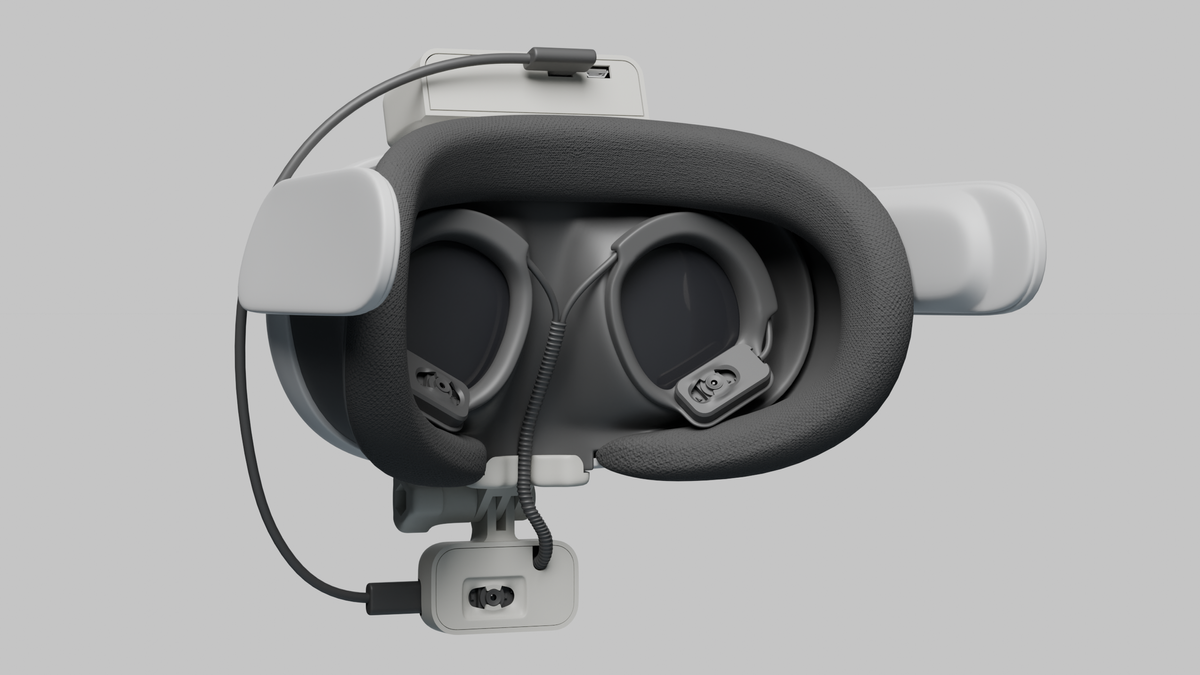
Inseye has “paused” Lumi, the Quest 2 & 3 eye tracking addon it planned to sell, to focus on bringing the technology to smart glasses instead.
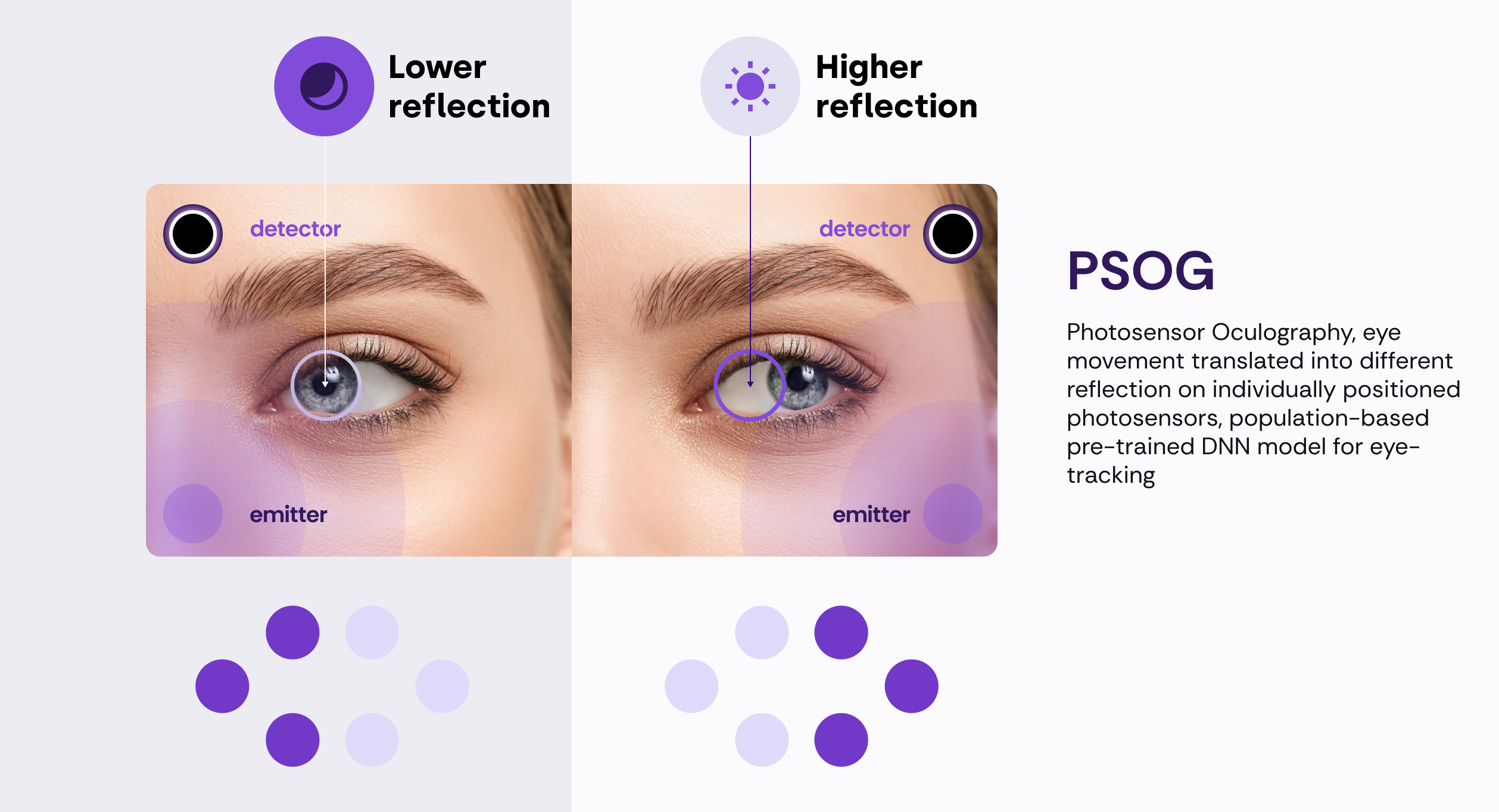
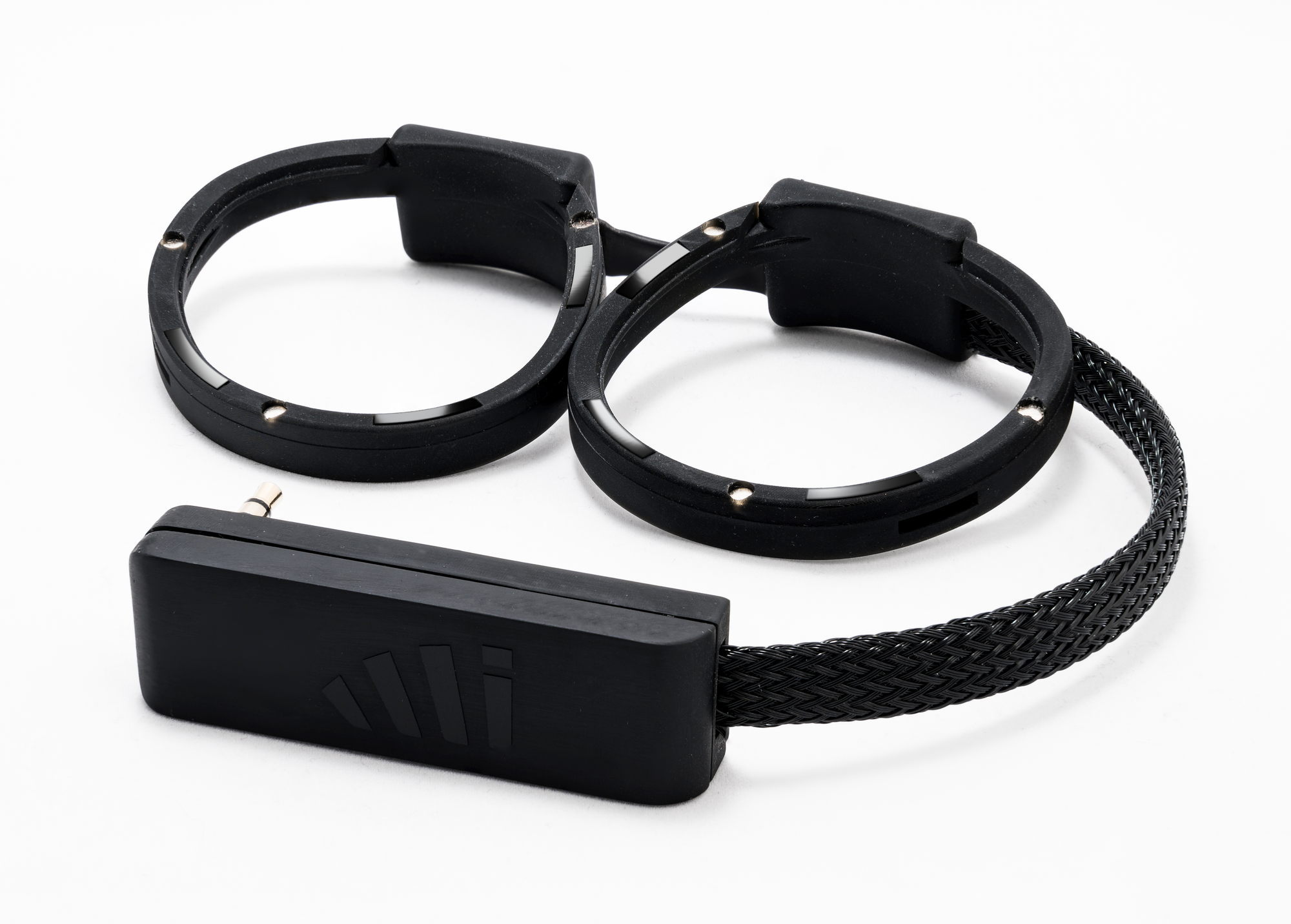
Unlike camera-based eye tracking systems of the kind you’d see in headsets like Apple Vision Pro or PlayStation VR2, the $160 Lumi promised to use an array of simple and inexpensive photosensors to measure the intensity of the reflection of infrared light off your eye. Each part of your eye reflects infrared light with a slightly different intensity, and Inseye says its neural network uses the intensities reported by the photosensors to determine the exact position of your pupil at 1000Hz, while using five times less battery than cameras.
How Inseye’s technology works.
The startup announced the device back in June, and took $1 “refundable deposits” to get it for a discounted price of $100 whenever it eventually shipped.
But now, Inseye says it has “paused Inseye Lumi project for the time being”. The startup says it’s doing so because it’s shifting its focus to integrating its technology into smart glasses and AR glasses, rather than VR/MR headsets, and as a “startup with limited resources” it can’t do both – at least not at the same time.
The startup says it’s now “working closely with clients who are preparing to bring next-generation smart eyewear to the market”.
“Please know this doesn’t mean we’re giving up on VR. We remain convinced VR has massive potential, and we plan to revisit our VR projects when the time and resources are right,” Inseye told backers.
Inseye Lumi, now “paused”.
Inseye claims it will refund the $1 deposit of any backer who reaches out via email.
Meanwhile, in January a Japanese engineer said he’s making his own face & eye tracking addon for Quest 3, but significant concerns were raised about the project.