
The 230th installment of the 9to5Linux Weekly Roundup is here for the week ending on March 9th, 2025, keeping you updated with the most important things happening in the Linux world.
Monthly Archives: March 2025
Why You Shouldn’t ‘Fix’ Your Older Chromecast With a Factory Reset, According to Google
A mysterious bug is affecting numerous older Chromecast devices, as per a lengthy thread on Reddit—specifically, the second-generation Chromecast and the Chromecast Audio, which both launched in September 2015. If you’ve been affected, hold off on trying a factory reset of your device.
The bug has started appearing over the last 24 hours, rendering affected devices pretty much unusable. One of the error messages reported reads as follows: “Untrusted device: [name] couldn’t be verified. This could be caused by outdated device firmware.”
Further investigation from users suggests that this is a server-side problem—so the issue is at Google’s end. It looks as though there have been complications with expired security certifications, so the Chromecast dongles that have been hit are being incorrectly identified as unsafe to connect to.
That means there’s nothing Chromecast owners can do for the time being, other than to sit tight and wait it out, without any streaming audio or video to entertain them in the meantime. Various troubleshooting steps have been taken, including reconnecting to wifi and running a factory reset, but no easy workaround has been found.
In fact, as per the latest information from Google, factory resetting your device is something you shouldn’t do—even if it’s the obvious first fix to try with a problem like this. We’re still not sure exactly what’s happened, but an official Google account has now responded on the original Reddit thread.
What Google says
As per the latest information from Google: “We’re aware of an emerging issue impacting Chromecast 2nd-gen and Chromecast Audio devices and are working on a fix. Do not factory reset your device – we will keep you all updated when the fix rolls out. If you have already factory reset your device, we will provide instructions to set your device back up as soon as possible. Thank you for your patience.”
It’s a bit light on details, but at least the acknowledgement is there. It sounds as though the restoration process is going to be more complicated for those users who have already (and understandably) tried a factory reset, but apparently Google is going to be able to get all of these devices back online eventually.
There is a rather complicated workaround you can try that’s detailed on Reddit, but unless it’s especially urgent for you to get back up and running, I’d recommend sitting tight for now and waiting for Google to issue a fix. While no timeline has been specified for when the issue might be resolved, at least we know this is being worked on.
Given that the bug hasn’t hit more recent Chromecasts, including the Chromecast Ultra, there was some concern that Google might have quietly killed off its older devices, now they’re approaching their 10th birthdays—but that no longer seems to be the case.
The Chromecast device line as a whole has now been discontinued, so we won’t get any more streaming dongles in the future, but Google hasn’t said anything yet about pulling support for existing hardware. Chromecast functionality continues to be available in televisions running Google TV, as well as the Google TV Streamer.
Lego’s New Mario Set Is The Best One Yet

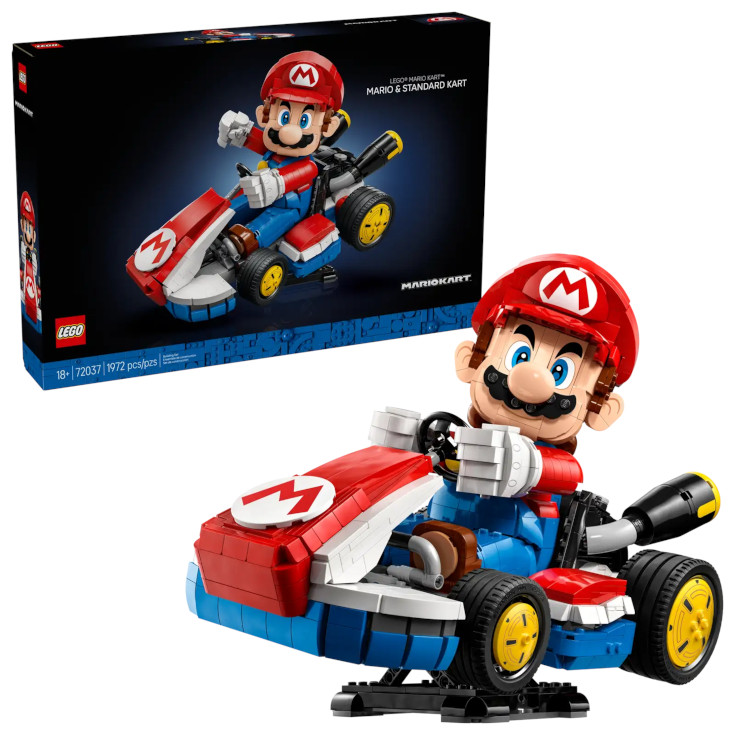
Mamma mia, Mario, your new Mario Kart Lego set looks wonderful! And the large set, which was just officially revealed by Lego after a few leaks, might just be the best Nintendo-themed build yet!
Quest 3: Whitewater VR features the most realistic water simulation yet

Meta Quest 3 gets its first full-fledged kayaking game with an impressively realistic water simulation. We tried it out.
The post Quest 3: Whitewater VR features the most realistic water simulation yet appeared first on MIXED Reality News.
What You Need To Know About Suikoden I & II HD Remaster

The Suikoden series may not have the mainstream appeal of a franchise like Final Fantasy, but its first two entries have long been considered some of the best RPG games of all time by genre aficionados. Now, with the release of Suikoden I & II HD Remaster, both returning fans and first-time players can finally…
Lawmakers Demand Answers From Rubio Over the $400 Million Armored Tesla Contract

A Senator and a Congressman have sent letters to the Secretary of State demanding he answer questions about a scandal that probably doesn’t exist.
A Surprising Factor Helped Supercharge Florida’s Catastrophic 2023 Hurricane Idalia

The hurricane jumped three Safford-Simpson hurricane categories in less than a day, and scientists now propose a new factor that contributed to the storm’s evolution.
LEGO Unveils 1,972 Piece Mario Kart Set For Mario Day (MAR10)
To celebrate Mario Day (MAR10) and take all my money in the process, LEGO has just unveiled a 1,972-piece build set of Mario in his Mario Kart. The $170 set is available now for pre-order, and will be on regular sale starting on what is presumably Maris Day (MAR15). Am I going to dust off my N64 and fire up some Mario Kart 64 in honor of Mario Day today? Trick question: no dusting required, I’m already on the player select screen waiting for someone to join me. Just to be clear though I only play battle mode because I suck at racing and always end going backwards.




Pokearth: David Attenborough Style Nature Documentaries About Pokemon
This is Pokearth, a series of nature documentaries created by animator EnlargedKai (and narrated by Paul Warren) about Pokemon (Doduo, Wailord, Clodsire, Magikarp, and Spheal) in the style of David Attenborough’s ‘Planet Earth’ on BBC. They were a fun watch — I especially liked the Doduo and Magikarp ones, and the cameos of all the other Pokemon in them. Now they just need to make a 24-hour documentary of a day in the life of a Snorlax in real time. Did you know Snorlax only wake up to eat, and consume between 880 – 900 pounds of food a day? Add a hundred gallons of piña colada and that’s my dream life.
Feds Link $150M Cyberheist To 2022 LastPass Hacks
AmiMoJo writes: In September 2023, KrebsOnSecurity published findings from security researchers who concluded that a series of six-figure cyberheists across dozens of victims resulted from thieves cracking master passwords stolen from the password manager service LastPass in 2022. In a court filing last week, U.S. federal agents investigating a spectacular $150 million cryptocurrency heist said they had reached the same conclusion.


On March 6, federal prosecutors in northern California said they seized approximately $24 million worth of cryptocurrencies that were clawed back following a $150 million cyberheist on Jan. 30, 2024. The complaint refers to the person robbed only as ‘Victim-1,’ but according to blockchain security researcher ZachXBT the theft was perpetrated against Chris Larsen, the co-founder of the cryptocurrency platform Ripple.
ZachXBT was the first to report on the heist, of which approximately $24 million was frozen by the feds before it could be withdrawn. This week’s action by the government merely allows investigators to officially seize the frozen funds. But there is an important conclusion in this seizure document: It basically says the U.S. Secret Service and the FBI agree with the findings of the LastPass breach story published here in September 2023.
Read more of this story at Slashdot.
My Favorite Budget-Friendly QLED TV Is $320 Off Right Now
We may earn a commission from links on this page. Deal pricing and availability subject to change after time of publication.
Midrange TVs have been getting so good over the last few years that it’s getting hard to justify spending two to three times the price for an OLED TV. That has been TCL’s goal, since their business model is essentially to kill off OLED TVs by mastering the QLED tech at a relatively low price. TCL’s QM7 is the best and latest example of that, which I got to review and put to the test. The 55-inch model is just $479.99 (it was $799.99 during its release), an amazing value for its current price. The 65- and 75-inch are also much cheaper than their launch pricees, according to price-tracking tools.
Size: 55-inches, TV OS: Google TV, HDR: Dolby Vision IQ and Dolby Atmos, Refresh Rate: 120Hz.
TCL 55-Inch QM7 QLED 4K Smart QD-Mini LED TV
$479.99
at Amazon


$479.99
at Amazon
Size: 65-inches, TV OS: Google TV, HDR: Dolby Vision IQ and Dolby Atmos, Refresh Rate: 120Hz.
TCL 65-Inch QM7 QLED 4K Smart QD-Mini LED TV
$686.64
at Amazon

$686.64
at Amazon
Size: 75-inches, TV OS: Google TV, HDR: Dolby Vision IQ and Dolby Atmos, Refresh Rate: 120Hz.
TCL 75-Inch QM7 QLED 4K Smart QD-Mini LED TV
$897.99
at Amazon

$897.99
at Amazon
When it comes to midrange TVs right now, QLED technology is the best before crossing over to the much more expensive OLED side. QLED might never reach the picture quality that OLEDs can get to, but for most people, it can get pretty close and be much cheaper. Right now, the Hisense U7N and TCL’s QM7 are the best QLED TVs you can buy right now, and you can’t really go wrong with either.
The keyword most QLED shoppers are looking for is “dimming zones”—the more you have, the better deep blacks will look next to bright highlights. The QM7 has up to 1,240 local dimming zones, which is much more than Hisense U7N’s 384 local dimming zones. It can also get very bright, with up to 2,400 nits at peak brightness. Of course, you get 4K resolution and HDR support (HDR ULTRA with Dolby Vision IQ, HDR10+, HDR10, and HLG). As a gamer, I enjoyed the 120Hz refresh rate and 6 millisecond input lag with Auto Low Latency Mode (ALLM) and AMD FreeSync Premium Pro, making my Halo matches go smoothly.
The Google TV OS is icing on the cake, since I love casting to the TV seamlessly from my phone. The QM7 has been my favorite non-OLED TV I’ve ever tried, and for its current price, it’s the best non-OLED TV you can get.
Tony Gilroy Looks Back on Taking Shit Seriously in Andor

Ahead of Andor‘s return, showrunner Tony Gilroy talks political ideology and playing in the spaces of Star Wars‘ familiar iconography.
DRM User-Space API For Apple Silicon Graphics Posted For Review
While the Asahi AGX Gallium3D and Honeykrisp Vulkan drivers continue to be developed within mainline Mesa for supporting OpenGL and Vulkan with Apple Silicon M1/M2 SoCs, the necessary Direct Rendering Manager (DRM) kernel driver has yet to be upstreamed. But hitting the mailing list today is a patch getting the user-space API (UAPI) with more eyes on as the precursor to the actual kernel driver that is currently held up by waiting on Rust kernel abstractions to be upstreamed…
Samsung Galaxy Watch Ultra Is Hundreds Cheaper Than Apple Watch Ultra, Just $250 With Trade-In

Samsung’s offering up to $400 in instant trade-in credit on their elite smartwatch to make it an absolute steal for just $250.
Meta Details Path to ‘Significantly Reduced Costs’ of Next-gen AR’s Most Critical Component
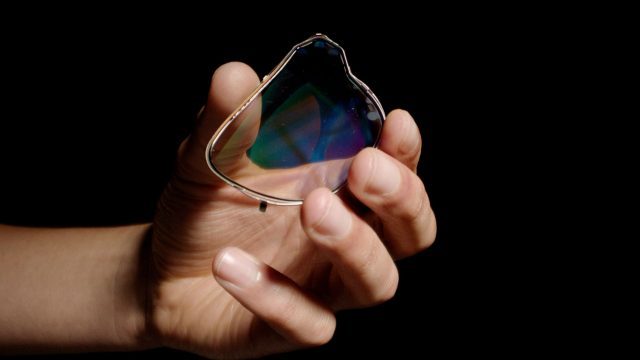
Meta’s Orion AR glasses prototype is expensive to make—like $10,000 per pair, expensive. Orion’s most pricey component is undoubtedly its custom silicon carbide waveguide lenses, although Meta says it sees a pathway to “significantly reduce the cost” of that key component in the future.
Silicon carbide has been around for a while, having mostly been used as a substrate for high-power chips, owing to its better power efficiently and lower heat output. Unlike silicon, silicon carbide is much more difficult to manufacture though, with challenges stemming from its material properties, crystal growth process, and fabrication complexity.
Electric vehicles are leading the way in decreasing costs, however it’s still far from reaching price-parity with the cheap and plentiful silicon-based equivalents. Another use case could involve quantum computing, although that comes with its own unique challenges separate from what Meta hopes to do with the next-gen material.
It’s not silicon carbide’s better power efficiency and lower heat output that Meta is after though. It’s the material’s high refractive index, making it ideal to provide clear, wide field-of-view (FOV) waveguides suitable for AR glasses, like the class-leading 70-degree FOV seen in Orion. And the difference between conventional multi-layered glass waveguides and Orion’s silicon carbide-base waveguides is—for the few that have tried it—night and day.
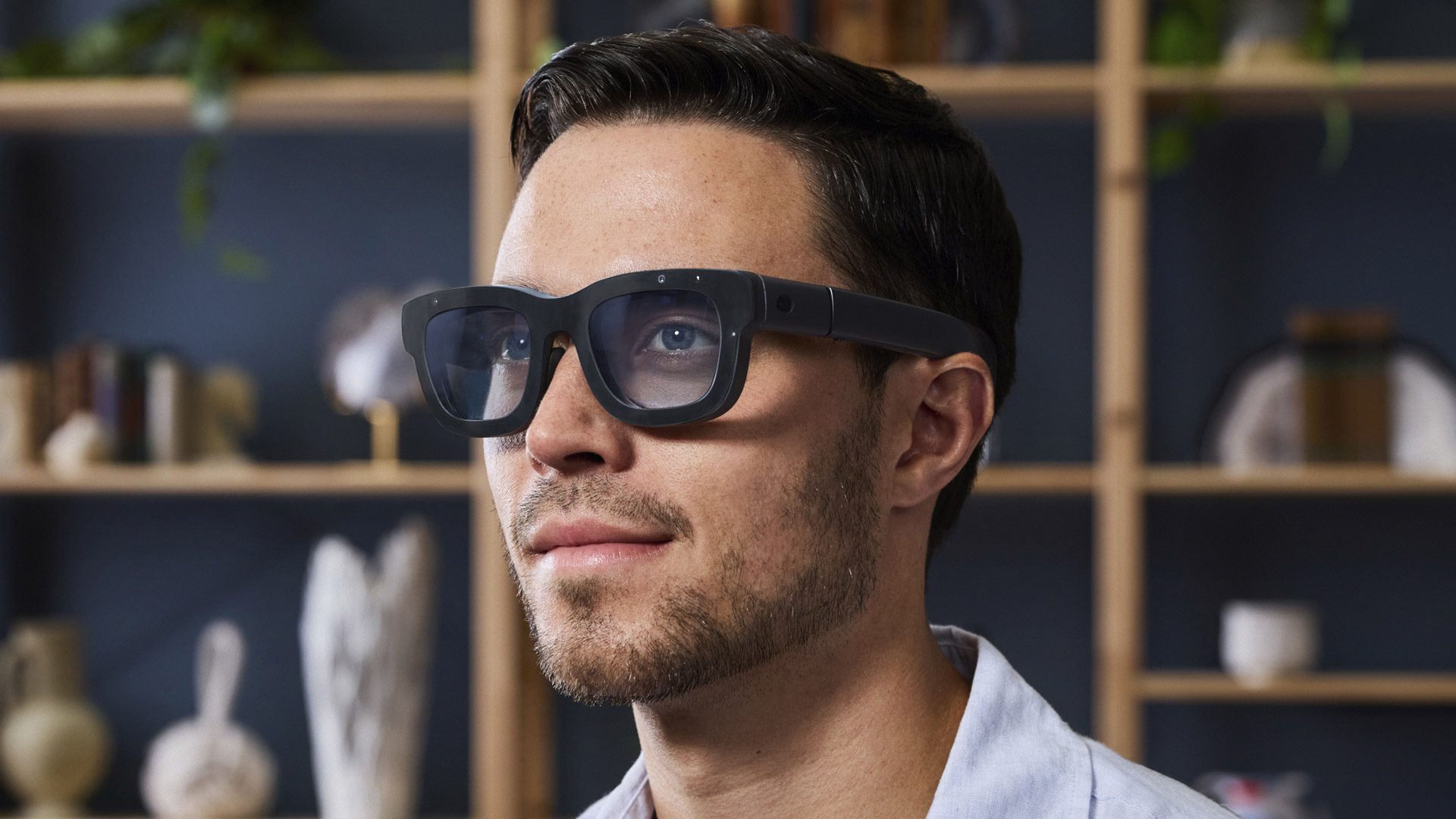
“Wearing the glasses with glass-based waveguides and multiple plates, it felt like you were in a disco,” says Optical Scientist Pasqual Rivera in a blog post. “There were rainbows everywhere, and it was so distracting—you weren’t even looking at the AR content. Then, you put on the glasses with silicon carbide waveguides, and it was like you were at the symphony listening to a quiet, classical piece. You could actually pay attention to the full experience of what we were building. It was a total game changer.”
Many of the world’s top electric vehicle manufactures have adopted chips based on silicon carbide in recent years, which has helped drive the price down. Giuseppe Calafiore, Reality Lab’s AR Waveguides Tech Lead, notes “there’s an overcapacity [thanks to EVs] that didn’t exist when we were building Orion. So now, because supply is high and demand is low, the cost of the substrate has started to come down.”
Notably, silicon carbide wafers used in EVs aren’t optical-grade, as they prioritize electrical performance over optical clarity, so coopting any EV chip surplus is out of the question. Still, Reality Labs’ Director of Research Science Barry Silverstein sees a path forward:
“Suppliers are very excited by the new opportunity of manufacturing optical-grade silicon carbide—after all, each waveguide lens represents a large amount of material relative to an electronic chip, and all of their existing capabilities apply to this new space. Filling your factory is essential, and scaling your factory is the dream. The size of the wafer matters, too: The bigger the wafer, the lower the cost—but the complexity of the process also goes up. That said, we’ve seen suppliers move from four-inch to eight-inch wafers, and some are working on precursors to 12-inch wafers, which would yield exponentially more pairs of AR glasses.”
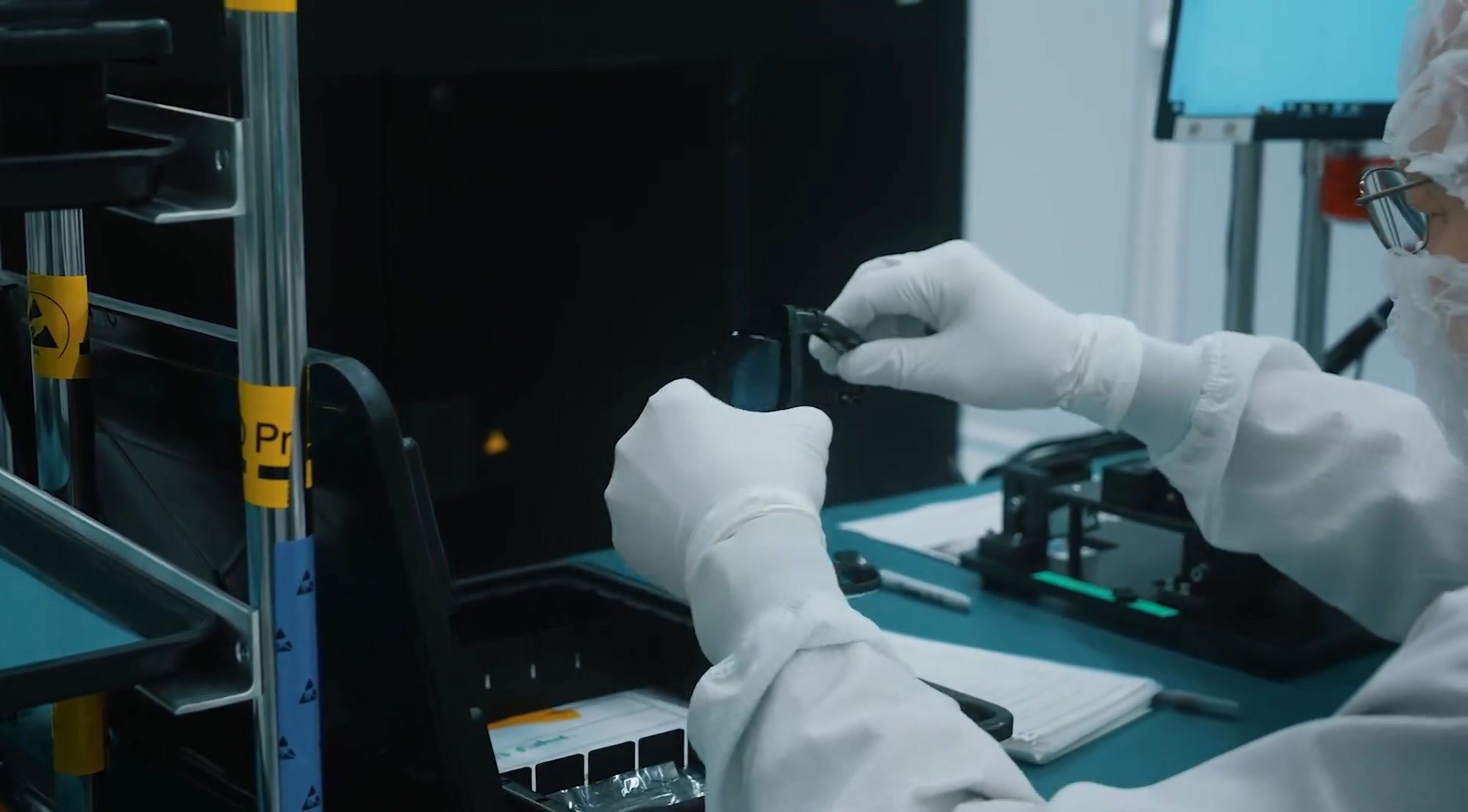
“The world is awake now,” adds Silverstein. “We’ve successfully shown that silicon carbide can flex across electronics and photonics. It’s a material that could have future applications in quantum computing. And we’re seeing signs that it’s possible to significantly reduce the cost. There’s a lot of work left to be done, but the potential upside here is huge.”
This wouldn’t be the first time XR headsets have directly benefitted from larger, more consumer-oriented industries taking the lead. In the early 2010s, small, low-cost displays developed for smartphones were a key driver in kickstarting the consumer VR headset revolution. For example, if you’ve ever cracked open an Oculus Rift DK2, released in 2014, you’ll find a Galaxy Note 3 display panel at its core—Samsung branding and all.
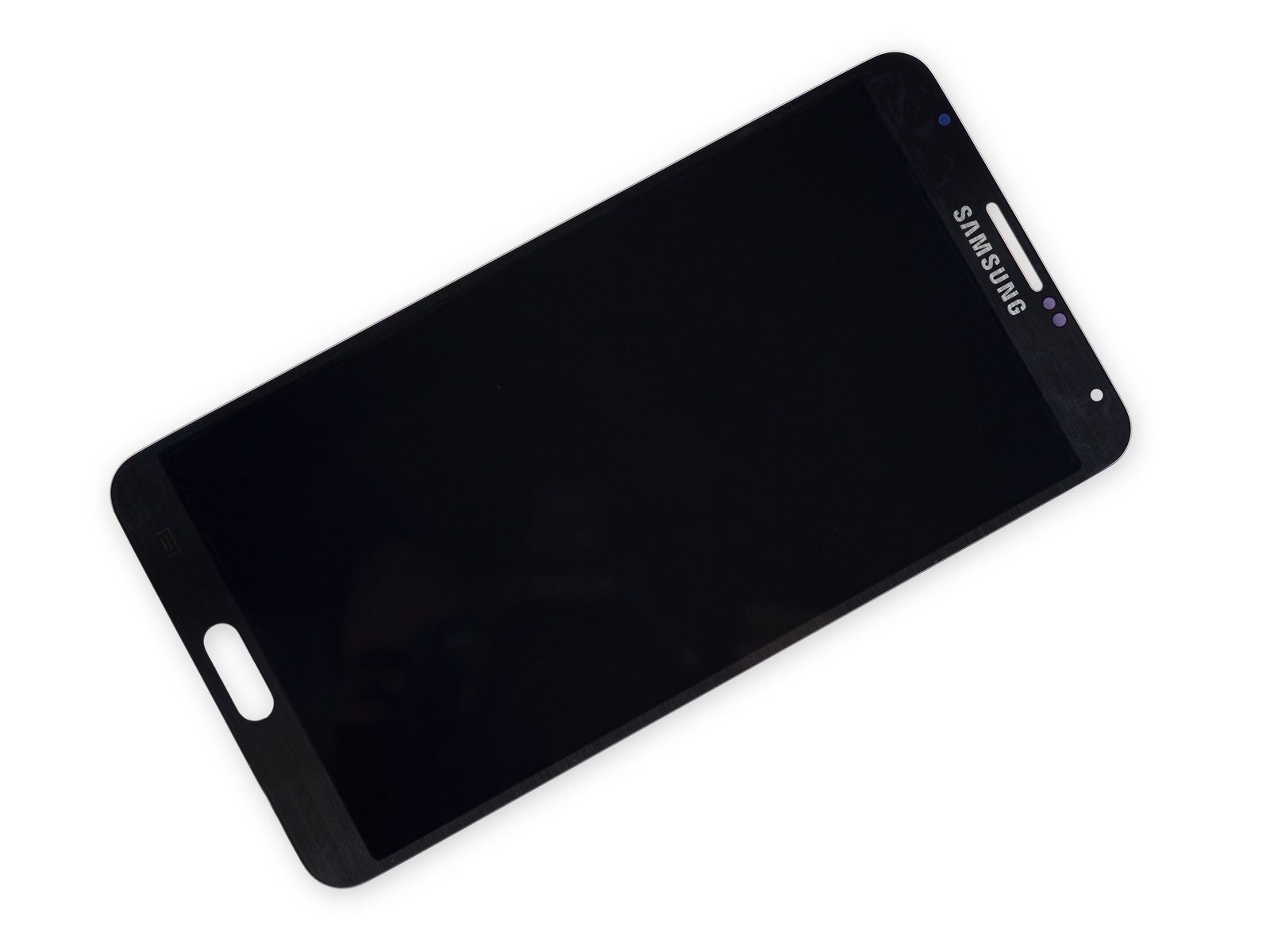
That’s not to mention a host of other components that have been lifted from the smartphone parts bin over the years, including inertial measurement units (IMUs), camera sensors, and battery technology. The parallels are there, although it seems leveraging the silicon carbide wins spurred by the EV boom still won’t be nearly as straight forward in AR glasses.
While suppliers are eyeballing photonics-grade silicon carbide, it’s still a niche within a niche that will take years to scale up. It’s effectively one of the main reasons Meta can’t productize Orion today. That said, Meta is using Orion as an “internal developer kit” of sorts as its hopes to produce a pair of consumer AR glasses sometime before 2030, priced somewhere near “phone, laptop territory,” Meta CTO Andrew Bosworth revealed in September.
Still, with such massive potential for consumer appeal, these puzzle pieces will fit together somehow. Companies like Meta, Apple, Google, Microsoft, and Qualcomm all hope to own their own slices of the next dominant mobile computing platform, which aims to replace smartphones entirely.
The post Meta Details Path to ‘Significantly Reduced Costs’ of Next-gen AR’s Most Critical Component appeared first on Road to VR.
X Is Down
While many X-pats have flocked to alternatives like Bluesky and Threads, there are still plenty of users checking Elon Musk’s infamous platform. If you’re one of them, you might have noticed something odd today: X is down.
Depending on when you see this article, X may be back up and running. But multiple times Monday morning, the platform was unreachable. According to Downdetector, most of the complaints funneled in at three peaks: The first came around 5:41 a.m., the second at 10:11 a.m., and the third around 11:11 a.m., which is when I initially noticed the issues.
There are a large number of reports associated with event, as well. Scanning through the Downdetector graph, it appears as though users have issued over 150,000 reports at the time of this article.
When I tried to access twitter.com (muscle memory and pettiness refuse to let me type x.com into my browser’s address bar) the site tried loading for quite a while, before returning the following error screen:
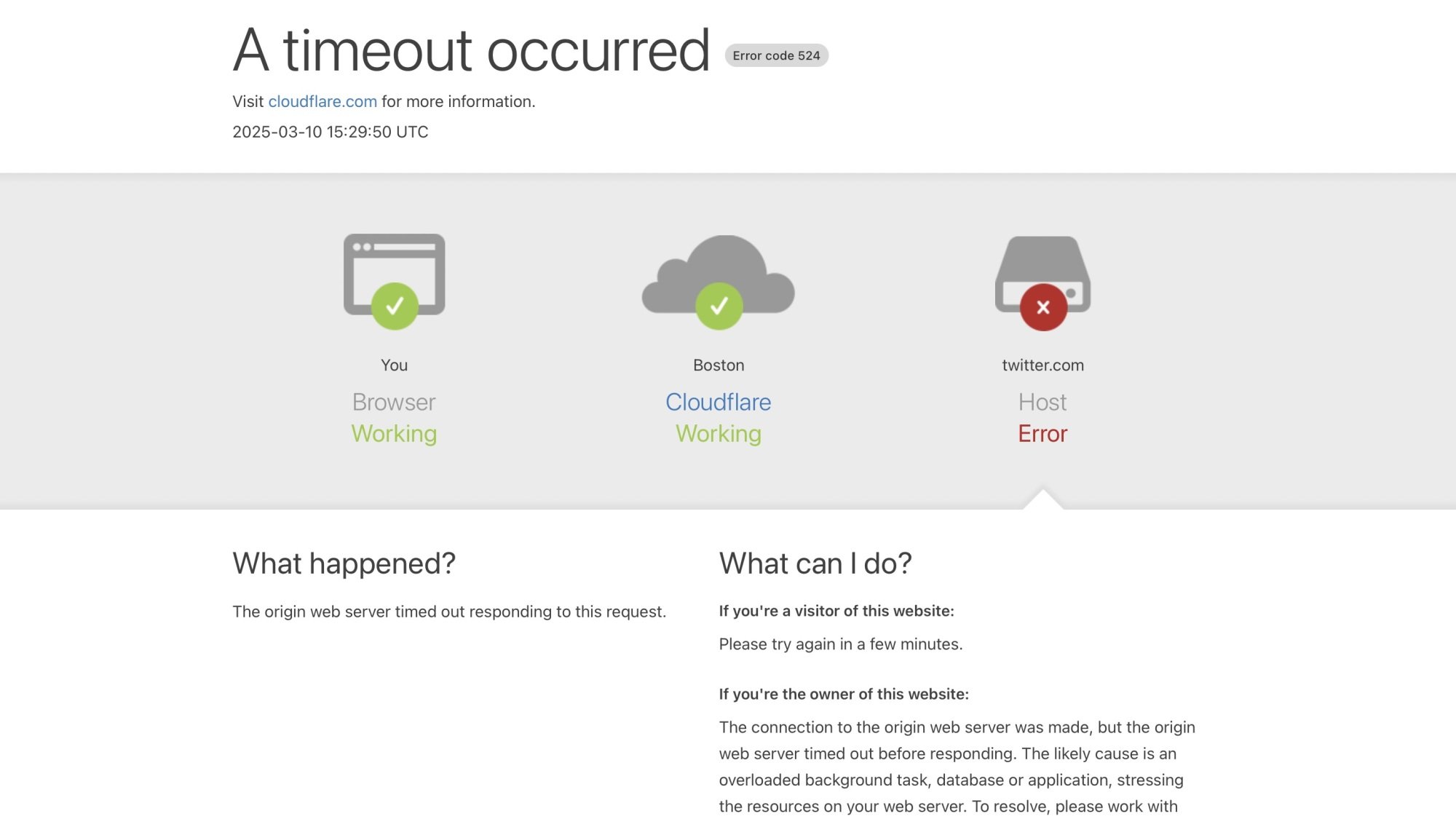
Credit: Lifehacker
There’s no telling why the site has been having so many technical issues this morning—other than the fact it’s run by a fraction of the staff it used to have—but it’s not the first time the site has gone down under Musk’s watch. Last May, the site had similar issues staying afloat, which the X team resolved in due time. The same will likely occur today, though in the meantime, enjoy your much-deserved break from X.
Volkswagen Bringing Back Physical Buttons, Says Removing Them Was a Mistake
smooth wombat writes: In what can only be described as a no-brainer, Volkswagen has announced it will have once again have physical buttons in all its vehicles. As Andreas Mindt, design chief at the company said, removing buttons was “a mistake”.


“From the ID 2all onwards, we will have physical buttons for the five most important functions — the volume, the heating on each side of the car, the fans and the hazard light — below the screen,” he explained, adding: “It’s not a phone: it’s a car.”
This doesn’t mean touch screens are set to disappear on new Volkswagens, just that drivers will now have the option of physical controls for their most used day-to-day tasks. The new controls are set to make their debut in the ID.2all, a small, budget EV set to debut in Europe.
Read more of this story at Slashdot.
Google Pixel 4a’s painful “update” was due to battery overheating risk
Google didn’t explain exactly why it shipped a mandatory software update to the Pixel 4a, an Android phone from 2020, earlier this year. The nature of that update, which gave some models all but unusable battery life, provided some clues, as did later software analysis. But now, Australian authorities have provided a more concrete answer: battery overheating and fire risk.
The Australian Competition and Consumer Commission’s (ACCC) Product Safety arm issued a recall for the Pixel 4a late last week. The reason, the commission said, is that Google’s firmware update and battery changes served to “mitigate the risk of overheating” because “an overheating battery could pose a risk of fire and/or burns to a user.”
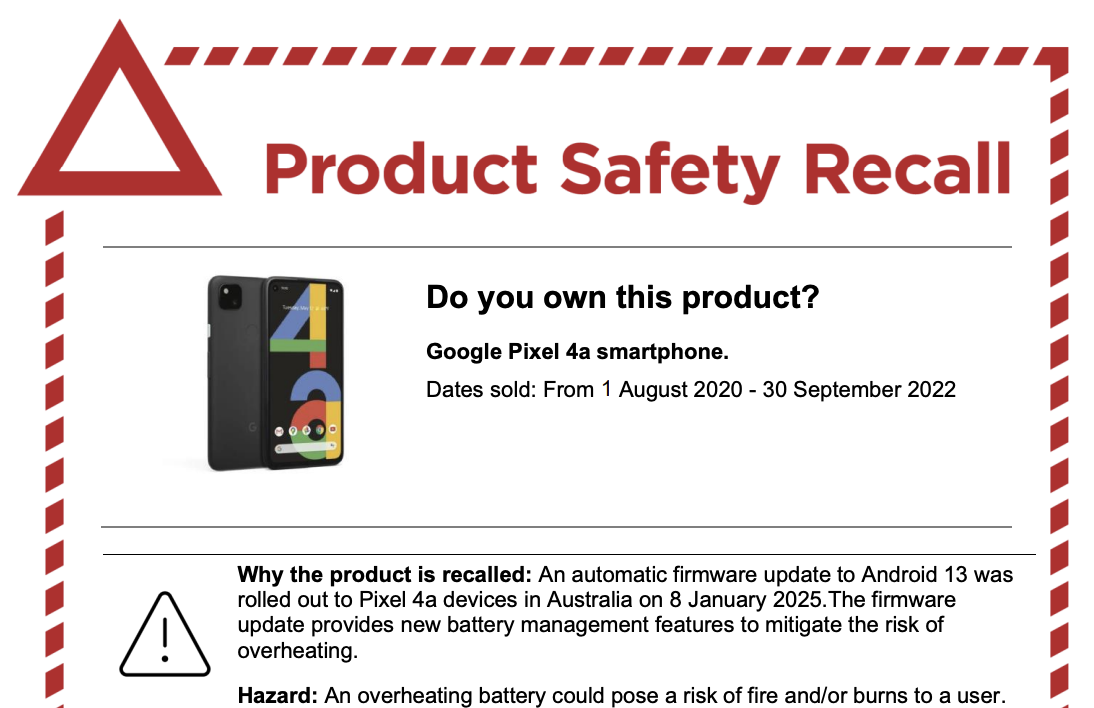
Do you own this product?
Credit:
ACCC Product Safety
In the US and elsewhere, Google’s messaging did not use the term “recall.” Google stated on its “Pixel 4a Battery Performance Program” page that “certain” Pixel 4a models “require a software update to improve the stability of their battery’s performance,” which also “reduces available battery capacity and impacts charging performance.” Google said it is still safe to charge a Pixel 4a.
Shark FlexStyle Styling System Hits a Record Low of $250, the Dyson Airwrap Alternative You Need

Why wait? Shark FlexStyle is at its best price ever, $350 cheaper than Dyson.
Where To Find Avowed’s Best Sets Of Armor For Every Class

Armor is a vital part of both your defensive and offensive capabilities in Avowed, providing powerful passive boons that help you stay in the fight against your foes. The best armor for you depends entirely on your build, so we’ve compiled a list of what we consider the best choices for the average player of each…