Meta mocked for raising “Bob Dylan defense” of torrenting in AI copyright fight

Authors think that Meta’s admitted torrenting of a pirated books data set used to train its AI models is evidence enough to win their copyright fight—which previously hinged on a court ruling that AI training on copyrighted works isn’t fair use.

Moving for summary judgment on a direct copyright infringement claim on Monday in a US district court in California, the authors alleged that “whatever the merits of generative artificial intelligence, or GenAI, stealing copyrighted works off the Internet for one’s own benefit has always been unlawful.”

In their filing, the authors accused Meta of brazenly deciding to torrent terabytes of pirated book data after attempts to download pirated books one by one “posed an immense strain on Meta’s networks and proceeded very slowly.”

Read full article

Comments

This Beta iPhone Feature Uses AI to Sort Your Notifications

Priority Notifications is a new Apple Intelligence feature that’s rolling out with the iOS 18.4 update, which is currently in beta. It’s one of the last AI features that we will see with the iOS 18 update cycle, and it goes hand-in-hand with Apple’s Notifications Summary feature, though they are distinct. Perhaps because of the backlash Apple got to Notification Summaries, this feature isn’t even enabled by default. You have to enable it instead.

How Priority Notifications Work

Like many new Apple Intelligence features, Priority Notifications uses on-device AI processing to figure out what your most important notification is at any given point. Then, it surfaces those notifications (sometimes bundling up two or three and providing a summary) right to the top.

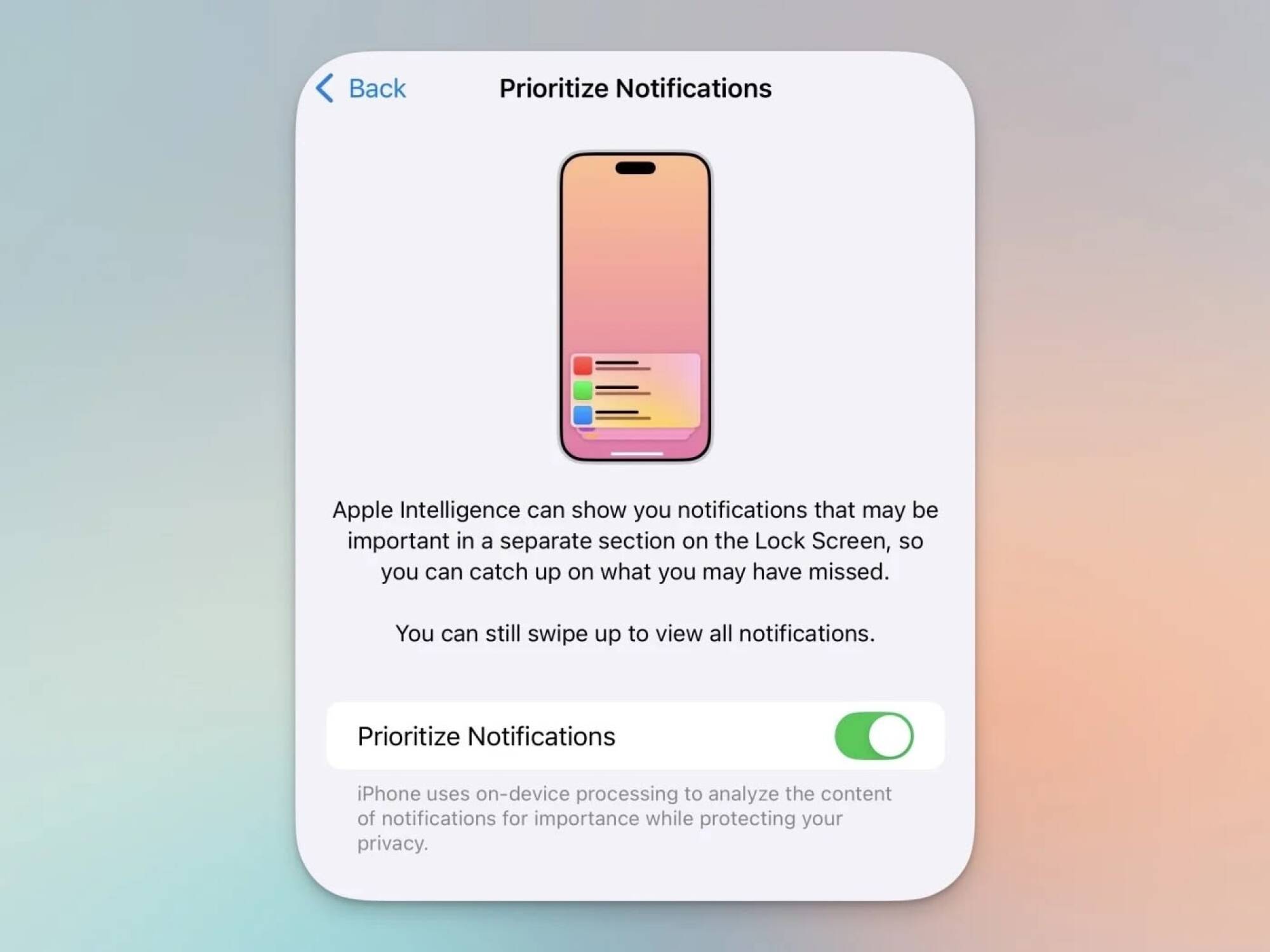
When the feature is enabled and an important notification comes in, you’ll see it a new Priority Notifications box above the rest of your pings. Like with many Apple Intelligence features, this box has that same multicolor glow all around it, so you can know it was made by AI.

What exactly is important and not, is deemed by Apple’s processing algorithms. In my testing, I found that things like missed calls, one-time codes for deliveries or logins, messages from my bank about transactions and emails from my work account always came up top. These will depend on the person and the use case, but overall, this feature is designed to help people who don’t manually manage their notifications well. So, if you’re always swimming in dozens of notifications from food delivery apps, shopping apps, or news apps, having a dedicated section up top to tell you when you’ve missed an important message or a call might be genuinely useful.

How to enable and customize Priority Notifications

Apple isn’t enabling this feature by default, even if you’ve already enabled Apple Intelligence. To find it, go to Settings > Notifications > Prioritize Notifications and toggle it on.

Enable Prioritize Notifcations on iPhone.

Credit: Khamosh Pathak

Now, you can let Apple do its thing, and it’ll try to figure out which of your notifications are truly important.

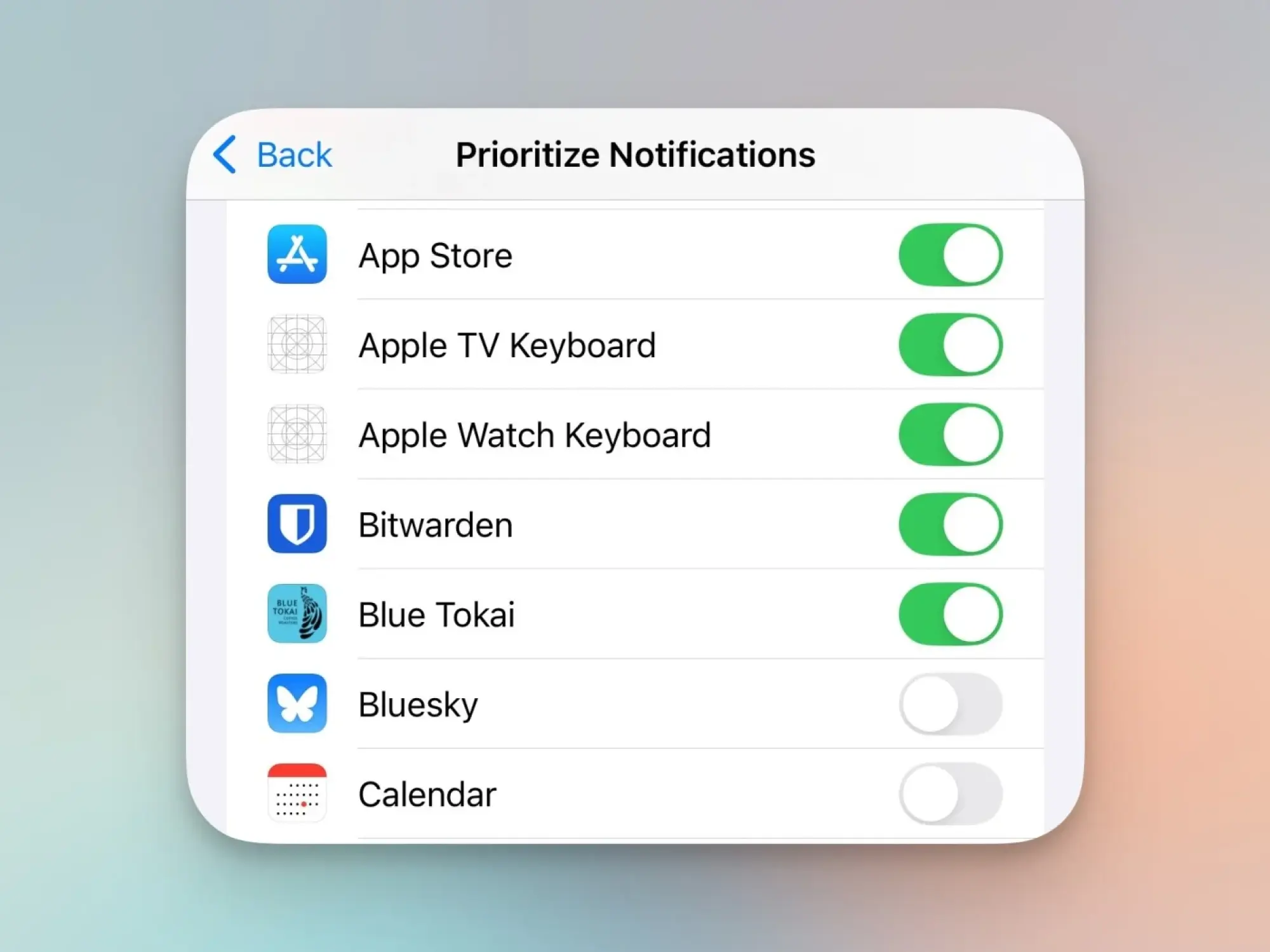
But to improve things, you can go one step further. If you scroll down, you will see a list of all the apps that can feed into the Priority Notifications system. If you don’t want to see any false positives, you can apps you don’t want to see in the Priority Notifications box, like food delivery apps, news apps, and so on.

Disable apps for Prioritize Notifications feature.

Credit: Khamosh Pathak

If you find that Priority Notifications isn’t for you, you can come back to Settings > Notifications > Prioritize Notifications to disable it altogether. If you’re feeling the notifications overload, you can also take some time to customize the rest of the iPhone notifications system so that it works for you, instead of against you.

Niantic Sells Pokémon Go To Saudi Arabia To Fund Spatial AI Transition

Everyone’s Pokédex in Pokémon Go is now effectively owned by the king of Saudi Arabia.

A $3.5 billion deal formally announced today splits the maker of Pokémon Go into two pieces, one called Niantic Spatial that’s pursuing core AI technology based on a “proprietary database of 30 billion posed images” that’s owned by exiting investors and led by John Hanke with $250 million in startup funds. That includes a $50 million investment from Scopely, which became the new owner of Pokémon Go and the development teams behind it as well as Pikmin Bloom, and Monster Hunter Now.

For Pokémon Go, game developer and publisher Scopely issued a blog post welcoming the communities playing the game under their umbrella, with no mention of its parent company, Savvy Games Group. Savvy is wholly owned by Saudi Arabia’s Public Investment Fund and they bought Scopely for $4.9 billion in 2023, adding it to a global portfolio that’s included the likes of Magic Leap over the years.

Niantic Spatial aims to build on its world map and the tools it offers to others including a robust visual positioning system that can enhance GPS or other localization systems. The tools are described as providing an “unparalleled foundation for geospatial AI, enabling a deeper contextual understanding of the real world.”

Historically, hardware manufacturer Magic Leap was dismissed by some after it took Saudi Arabia’s investment. When the COVID-19 pandemic happened, the startup failed to secure another major funding round and began laying off staff in multiple rounds. As Palmer Luckey’s Anduril is ready to test its own headset technology with the U.S. military as a trade war unfolds, amid the race to develop smarter AI technologies, we’ll be curious if Scopely is able to continue harnessing the goodwill of players and making Pokémon Go a leading experience as international relations continue to shift.

“We are incredibly lucky to be able to do deals of this scale with Savvy at our side. Since our acquisition in 2023, when we became an independently-operated company under the Savvy umbrella, we have spent a good amount of time aligning on what we want to accomplish together,”reads a note from Scopely co-CEOs Javier Ferreira and Walter Driver. “Savvy enables us to go after our long-term ambitions by supporting transactions of this magnitude.”

US Schools Deploy AI Surveillance Amid Security Lapses, Privacy Concerns

Schools across the United States are increasingly using artificial intelligence to monitor students’ online activities, raising significant privacy concerns after Vancouver Public Schools inadvertently released nearly 3,500 unredacted, sensitive student documents to reporters.

The surveillance software, developed by companies like Gaggle Safety Management, scans school-issued devices 24/7 for signs of bullying, self-harm, or violence, alerting staff when potential issues are detected. Approximately 1,500 school districts nationwide use Gaggle’s technology to track six million students, with Vancouver schools paying $328,036 for three years of service.

While school officials maintain the technology has helped counselors intervene with at-risk students, documents revealed LGBTQ+ students were potentially outed to administrators through the monitoring.


Read more of this story at Slashdot.

Canyon is working on a new gravel bike with a suspension fork: everything we know so far

A video on social media platform Threads shows Canyon-sponsored athlete Mateu Cavallé riding a new gravel bike, complete with a matching Canyon-branded suspension fork.

Until now, only the Grizl – Canyon’s adventure-focused bike – was available with a suspension fork. The Grail – the brand’s gravel race bike – hasn’t been available with a suspension fork, with geometry that wasn’t corrected for a longer fork.

The new bike looks closer to a Grail – in fact, it doesn’t appear to be a radical departure from the existing bike. 

Up-front, the new bike appears to have fully internal routing compared to the current Grail’s design, where it runs under the stem and into the head tube. That suggests Canyon may have tweaked the aerodynamics of the Unbound-winning bike.

Big tyre clearances?

The new bike is using Zipp’s super-wide 303 XPLR wheels with what looks like a 45mm tyre.

It also looks likely that Canyon has upped the tyre clearances on the new bike. Cavallé’s bike is set up with Zipp’s super-wide 303 XPLR wheelset, with what looks to be the Goodyear/Zipp collaboration tyre in its Inter version.

This is a 45mm-wide tyre, but the current Grail has a more modest clearance of 42mm.

Exclusive suspension

Close up of gravel suspension forks for the best gravel suspension forks list.
Gravel bike suspension forks are becoming more common. Russell Burton / Our Media

Rumours were abound last year that DT Swiss was working on a gravel suspension fork. 

Given that most of the major suspension players – including Fox, RockShox, Cane Creek, Cannondale, Suntour, MRP, KS and Lauf – have something in this space, it wouldn’t be a surprise to see DT Swiss join them. 

Further rumours suggested DT’s as-yet-unseen fork was, in fact, a collaboration with Canyon and would be a Canyon-exclusive component. 

Whether the fork is indeed fully exclusive or will be exclusive for a set period of time, remains to be seen.

The fork appears to have a reverse arch brace, reminiscent of DT Swiss’ lightweight XC Race fork from 2015. 

The arch brace is on the rear of the fork.

DT’s modern F-series mountain bike forks all have a conventional forward-facing arch brace. The reverse design is something we’ve seen in the gravel space with Fox’s impressive 32 Taper-Cast fork.

The images don’t appear to show any crown adjusters, but we wouldn’t be surprised to see some sort of lock-out – either remote or a simple button lock-out like that found on the Cane Creek Invert CS.

A report from September last year on the Bikerumor site also suggested a DT and Canyon team-up. 

The design shown then, on the bike of German gravel rider Peter Scherman looked a little different from the much slimmer-looking all-black unit of Cavallé’s bike. 

An earlier sighting of Canyon’s new fork.

However, that fork could well have been a mule prototype using one of DT’s older lightweight XC designs as a basis, like the OPM ODL fork from 2015.

Why design your own?

The question remains – why would Canyon want to develop its own suspension fork?

Perhaps because of the brand’s successes on the gravel racing scene, it wanted a lighter option than those currently available. 

If that’s the case, working with DT Swiss would make sense because, historically, DT Swiss has made some of the lightest racing suspension forks.

If Canyon’s new race fork sets a new standard for light weight, could we see a response from the other major players? Perhaps an SL version of the RockShox Rudy Ultimate in the vein of the classic SID World Cups. Or an even lighter iteration of Fox’s 32 Taper-Cast?

With no official word yet from Canyon on a new gravel race bike, this bike looks somewhat complete. We wouldn’t be surprised to see an all-new bike line-up to help Rosa Klöser defend her Unbound title now she’s a Canyon-sponsored rider.

If Starlink is turned off in Ukraine, are there any good alternatives?

Lately, SpaceX founder Elon Musk has taken an aggressive posture toward Europe. He has called for the United States to exit NATO, a strategic alliance that has been the bedrock of trans-Atlantic cooperation since the end of World War II. Musk has also championed right-wing populism that seeks to topple existing governments on the continent.

And then there’s Musk’s increasingly antagonistic attitude toward Ukraine, a country viewed by many Europeans as a bulwark against further Russian aggression. This threatens the availability of a vital link in Ukraine’s military, Starlink.

Musk’s world-class satellite technology has provided life-saving connectivity to citizens and soldiers in Ukraine. It has increased that country’s offensive capabilities. And yet Musk could shut off his Starlink service anywhere in the world with an email.

Read full article

Comments

Five Tax Deductions You Shouldn’t Miss Out On

With the April 15 deadline right around the corner, you want to ensure you’re taking advantage of all the deductions you can. Andy Phillips, Vice President of H&R Block’s Tax Institute, says his tax experts are getting plenty of questions from filers looking to maximize every deduction available to them. I wrote about some wacky and unexpected tax deductions last week, but what about the most common ones that filers just don’t fully understand? From gig worker perks to retirement contributions, here are the tax deductions every filer needs to know.

Retirement contributions and traditional IRA deductions 

Phillips says that if you contribute to a tax-advantaged traditional retirement account (IRA, 401(k), etc.), you may owe less tax than if you didn’t contribute. With a 401(k), you might not even realize you’re receiving an exclusion if you have your contribution automatically made in conjunction with your paycheck. The money comes out before the taxes do, resulting in a reduction of your taxable income. 

With a traditional IRA, you can still get a tax deduction without requiring access to an employer plan. However, your tax break may be limited if you also participate in an employer plan. For self-employed taxpayers, SEP IRA and SIMPLE (Savings Incentive Match Plan for Employees) IRA contributions are “above the line” tax deductions. See the other self-employed deductions below.  

Self-employment expenses 

As side hustles become ever more popular, it’s no surprise that self-employment expenses are more common. For example, if you pay for your own qualified health insurance, that may count as an “above the line” deduction. Also, you can deduct half of your self-employment tax above-the-line. 

On top of that, Phillips reminds filers you can deduct business expenses like internet costs, office supplies, advertising, and business travel from your business income. And, for qualifying individuals, you can take the home office deduction.

Student loan interest

Phillips reminds filers with student loan debt that you can deduct some or all of the interest you paid that year for a qualified student loan. In fact, federal student loan borrowers could qualify to deduct up to $2,500 of student loan interest per tax return per tax year. You can claim the student loan interest tax deduction as an adjustment to income—you don’t need to itemize deductions to claim it. 

Charitable contributions

You will need to itemize your deductions if you want to deduct your charitable donations. “Many people find it worth itemizing these deductions,” says Phillips, “particularly if you give regularly to a church or other charity.”

It’s also possible to deduct the current fair market value of goods you donate to charity. Make sure you get a receipt for your donations, whether they are cash or goods. And don’t forget to keep track of your mileage if you drive on behalf of a charity; that’s tax-deductible, too. 

Your kids—even newborns?

You can claim all qualifying children that were born or adopted within the tax year you are filing. Even if your child was born on Dec. 31, your child may be able to be claimed as a dependent on your taxes. However, Phillips clarifies that if your child is born after Dec. 31, even though your pregnancy lasted most of the tax year, you’ll have to wait until you file the next year’s return to claim them.

To be your qualifying child, the child must:

  • Be related to you as your child, foster child, sibling, half-sibling, step-sibling, or descendant of any of them;

  • Be under age 19, a full-time student under age 24, or permanently and totally disabled;

  • Not provide more than half of the child’s own total support; and

  • Live with you for more than half of the year they were alive.

  • Not be filing a joint return with a spouse unless it’s to claim a refund of income tax withheld or estimated payments

If you are a dependent who’s earning income, good news—your parents can still claim you as a dependent so long as other dependent rules still apply. Your earned income doesn’t go on their return. Filing tax returns for children is easy in that respect. However, you may need to report it on your own tax return. 

What can’t you deduct from your taxes?

While you’re searching for all the possible deductions out there, you’re going to hit a few roadblocks.

Commuting costs

Unfortunately, commuting costs are not tax deductible. Commuting expenses incurred between your home and your main place of work, no matter how far, are not an allowable deduction. Costs of driving a car from home to work and back, again, are personal commuting expenses. This is also true for fares you pay to ride any sort of public transportation to and from work.                           

Phillips points out, though, that if you are a member of a reserve component of the Armed Forces and travel more than 100 miles away from home in connection with the performance of services as a member of the reserves, you can deduct your qualified travel expenses. 

Your cat’s vet bills

Unfortunately, deducting medical expenses for pets is not allowed as a medical expense on your tax return. Phillips says the only exception would be when an animal is a certified service animal, like a guide dog, to assist you. Service animals generally aren’t considered pets, though. If you have a physical disability or are hearing or visually impaired, you can deduct medical expenses for your pets if they are certified service animals. Expenses that may be covered include purchasing, training, and maintenance of the animal which includes food, grooming, and medical care. 

Remember to keep accurate records and consult with a tax professional if you have any questions or concerns. By taking advantage of these deductions, you can potentially lower your tax liability and keep more of your hard-earned money.

Apple Vision Pro users can check out a short, immersive Metallica concert film this week

Apple and Metallica have teamed up to bring a free, immersive experience from one of the band’s concerts to Apple Vision Pro. Starting on March 14, owners of the headset will be able to watch live performances of “Whiplash,” “One” and, of course, “Enter Sandman” filmed at a stop on Metallica’s M72 World Tour last year. An EP recorded at the show, titled M72 World Tour: Mexico City, will hit Apple Music this Friday and be available with spatial audio.

To capture the set in 180-degree video and spatial audio, Apple constructed a custom stage setup with 14 Apple Immersive Video cameras. Some cameras were suspended on cables and on remote-controlled dolly systems.

The immersive set will likely be a fun experience for those in the Venn diagram overlap of Metallica enjoyers and those who have splashed out $3,500 on an Apple Vision Pro (you’ll be able to check it out by booking a free demo at an Apple Store too). But will it be as cool as the time lightning struck the skies while Metallica played “Master of Puppets” at an outdoor show last year? Probably not.

This article originally appeared on Engadget at https://www.engadget.com/entertainment/music/apple-vision-pro-users-can-check-out-a-short-immersive-metallica-concert-film-this-week-162611039.html?src=rss

Pokémon Go maker Niantic sells its game division to Saudi-owned Scopely

Niantic Labs just announced that it has found a buyer for its game division after putting out feelers back in February. The Saudi Arabia-owned company Scopely has agreed to purchase the division for $3.5 billion. Scopely was founded in Los Angeles but was purchased using money from Saudi Arabia’s sovereign wealth fund, otherwise called the Saudi Public Investment Fund (PIF).

The agreement includes most of Niantic’s portfolio of AR games, including Pokémon Go, Monster Hunter Now and Pikmin Bloom, among several others. It also includes the company’s social companion apps for Pokémon Go, Campfire and Wayfarer. The deal is still subject to regulatory approval and other closing conditions.

Scopely says it will receive “Niantic’s entire team of exceptional gamemakers and category-leading games.” There are a couple of titles, however, missing from this purchase. Niantic Labs will retain the AR gaming titles Peridot and Ingress.

Scopely is a major player in the mobile games industry. It’s the company behind games like Star Trek Fleet Command, Marvel Strike Force and Monopoly Go!, to name a few.

As for Niantic’s games division, it’s a shadow of its former self. Pokémon Go engaged more than 500 million players in its first year, but the game’s staying power has waned in recent times. At its peak, the mobile monster battler attracted over 230 million players each month. Nowadays, that number has shrunk to around 80 million.

The company has also struggled to replicate the Pikachu-shaped lightning in a bottle with other titles. It tried to reskin the Pokémon Go formula onto other franchises like Harry Potter and NBA basketball, but nothing stuck. The Monster Hunter and Pikmin projects, however, are still active.

This led Niantic to cancel multiple games and lay off hundreds of employees. Niantic’s valuation has taken several hits and the company’s long-promised “real-world metaverse” has yet to materialize. If the sale goes through, the company will focus on building out its standalone entity Niantic Spatial. This group builds real-world 3D maps and is led by company CEO John Hanke.

The Saudi PIF has become a major player in the games industry in recent years. It not only owns Scopely and its parent company Savvy Games Group, but has financial stakes in organizations like Nintendo, EA and Activision Blizzard.

This article originally appeared on Engadget at https://www.engadget.com/mobile/pokemon-go-maker-niantic-sells-its-game-division-to-saudi-owned-scopely-160905447.html?src=rss

‘Pokémon Go’ Maker Niantic Sells Off Gaming Division, Doubling Down on Geospatial AI & AR Tech

Niantic, the company behind hit mobile game Pokémon Go (2016), announced the sale of its gaming division to Scopely for $3.85 billion, confirming a previous Bloomberg report. Furthermore, the company now says it’s focusing on advancing its AI-powered geospatial technology and AR tech.

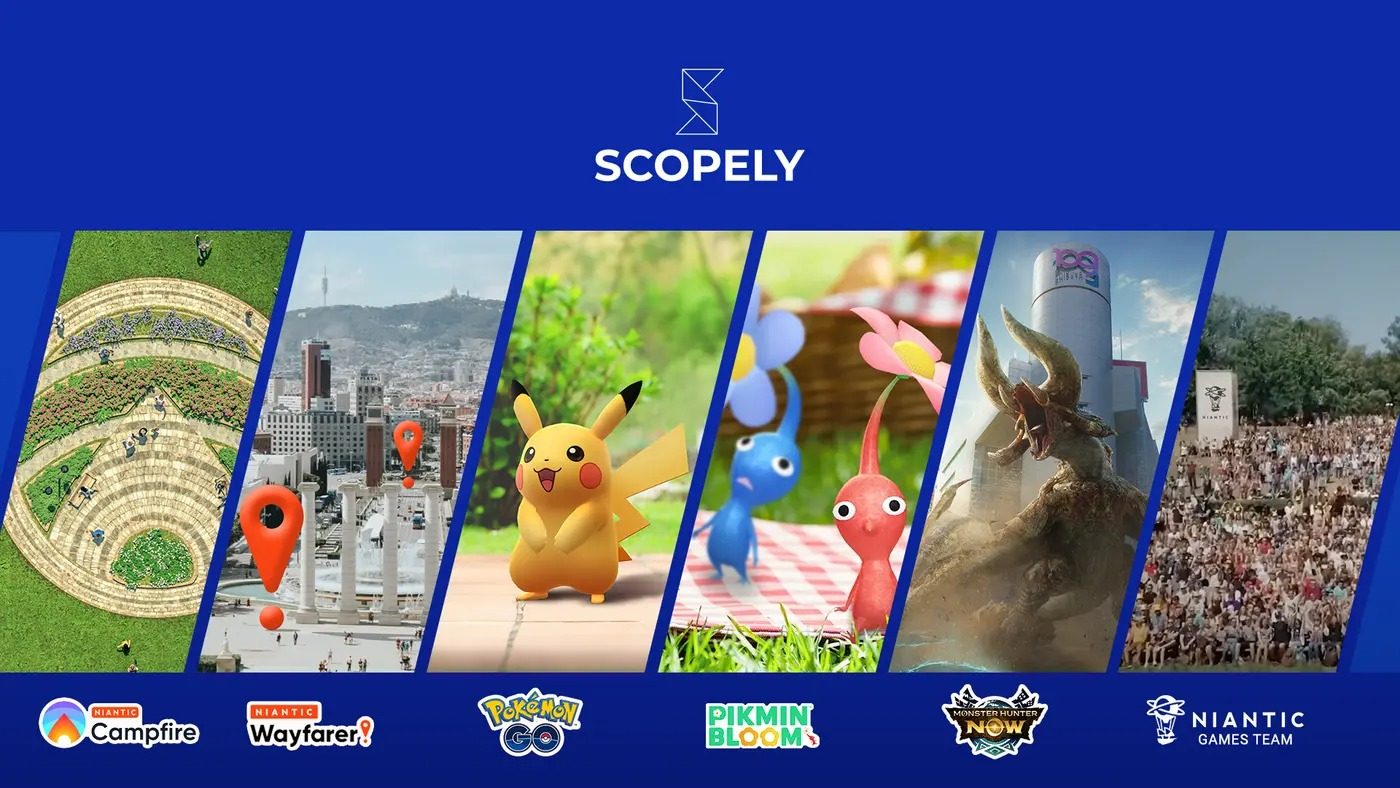
As a part of the deal, the Saudi Arabia-owned mobile game developer Scopely is taking over many of Niantic’s most well-known titles, including Pokémon GO, Pikmin Bloom, and Monster Hunter Now. Original development teams attached to those games will also transition to Scopely, the companies say in a statement.

The sale of its gaming division has also prompted Niantic to spin off a new company, called Niantic Spatial, which will be focused on developing its stack of geospatial AI tech, which combines location-based info with machine learning and AI.

Niantic Spatial aims to build “spatial intelligence that helps people better understand, navigate, and engage with the physical world,” the company says, noting it hopes to leverage its geospatial AI and AR tech in enterprise applications.

Image courtesy Scopley

The spin-off, which will be led by John Hanke, is being funded with $250 million, including $200 million from Niantic and $50 million from Scopely.

The company says Niantic Spatial will develop AI-driven solutions for industries like logistics, construction, and entertainment, as it continues development on its existing Scaniverse and Visual Positioning System (VPS) technology.

Acquired from Toolbox AI in 2021, Scaniverse is a 3D scanning tool that uses Gaussian splatting to create highly detailed digital models of real-world objects and environments. To showcase Scaniverse, the company recently released Into the Scaniverse (2025) for Quest, which allows users to scan environments with their phones and view them in-headset.

Released in 2022, the company’s Visual Positioning System is a geospatial AI system that enables precise real-world location tracking and AR navigation, touted for its centimeter-level accuracy. It’s since been integrated into a host of the company’s location-based games, such as Pokémon GO, Ingress, and Peridot.

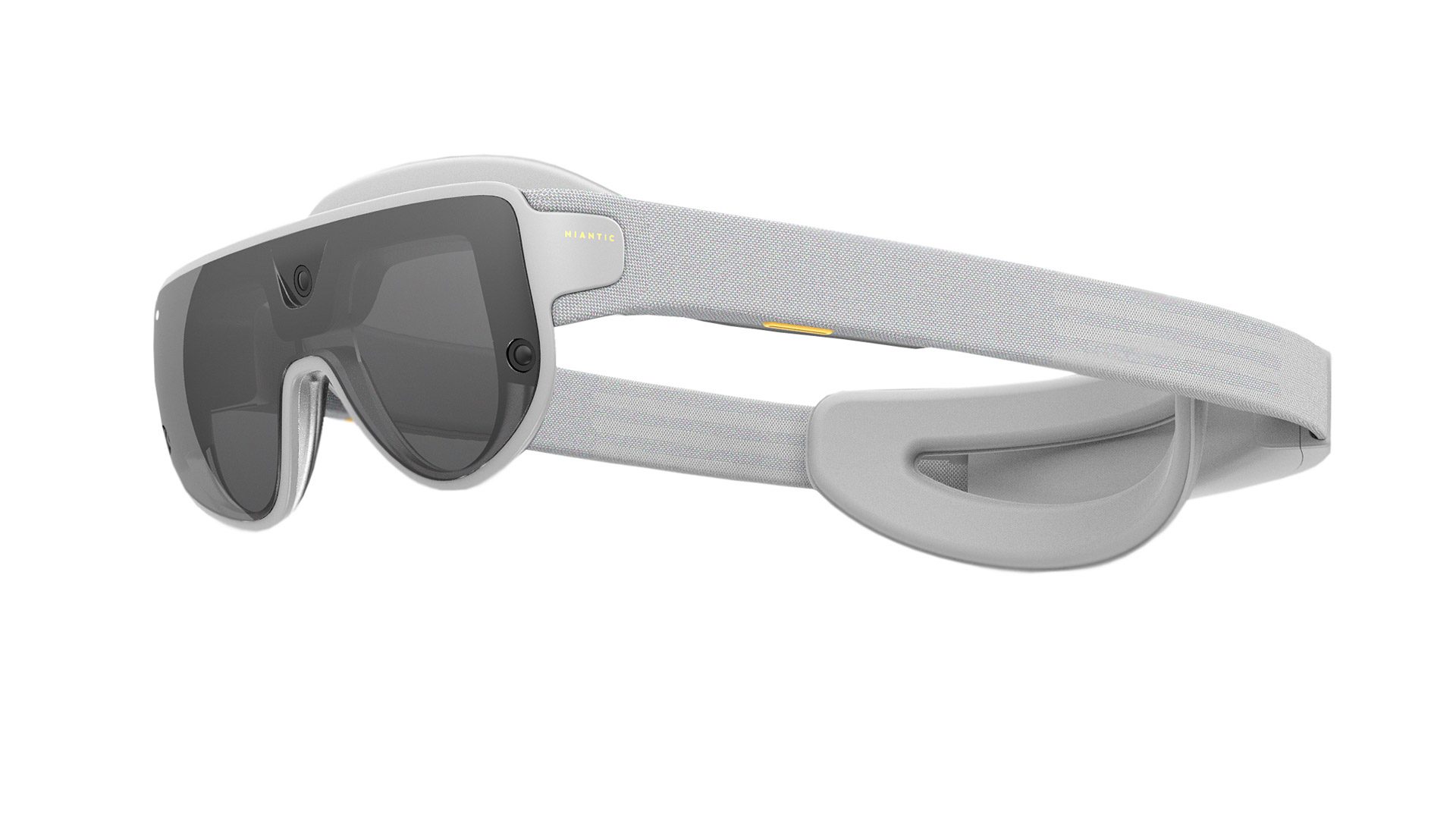
What’s missing in the shakeup however is any insight into the state of its AR hardware efforts. In late 2022, the company revealed it was working with Qualcomm on a reference AR headset based on the Snapdragon AR2 platform.

Image courtesy Niantic

Granted, we haven’t heard anything about the reference design since then, which was created to spur manufacturers and other companies to create AR headsets meant for outdoor environments.

Still, the acquisition signals a major shift for Niantic from gaming to geospatial AI and enterprise AR. Instead of focusing on game development, Niantic is doubling down on its Visual Positioning System, 3D mapping, and AI-powered AR platforms, which it hopes to use to build a foundation for the next generation of AR experiences.

The post ‘Pokémon Go’ Maker Niantic Sells Off Gaming Division, Doubling Down on Geospatial AI & AR Tech appeared first on Road to VR.

You Can Now Remove Your Pictures From a Google Photos Backup Without Deleting Them Entirely

Backups are always a smart move. If your data is only stored in one location, it’s not safe, as it only takes one device failure to lose all that information for good. While there are plenty of ways to back up your data, companies like Google make it easy with built-in cloud backups. Once you set it up, all of the photos and videos you take are synced to the cloud, so you never need to worry about losing everything if your phone goes belly-up.

While cloud backups are convenient, they’re far from the only option you have, as you could routinely save copies of your photos and videos to an external drive. If you move platforms—say, from Android to iPhone—and you’d prefer to use Apple’s services over Google’s, it doesn’t make much sense to keep all that data on Google’s servers, either. Speaking of which: Perhaps you simply don’t want to trust Google with all of the media you’ve taken over the years, and would like to take back the data you’ve already shared.

The trouble is, it’s been difficult to decouple photos and videos from a Google Photos backup without also deleting those items from the device you’re using as well—defeating the purpose entirely. The “best” workaround has been to use a separate device or browser than the one you’re using, which is more of a pain than it should be.

That’s what Google’s “Undo device backup” feature is all about. The company first announced it back in December, as a way for users to remove any photos and videos from the cloud, if those photos and videos are already on the device in question. The feature has been available on iOS first (perhaps as a solution for iPhone users who inadvertently uploaded their media to Google Photos), but Google is now rolling out the feature to Android users too. Now, no matter which platform you use Google Photos on, you can undo your backup while keeping all your photos and videos safe.

How to undo your Google Photos backup

If you want to delete your photos and videos from a Google Photos backup without deleting those photos and videos locally from your device, here’s how: First, open Google Photos on your iPhone or Android. Next, tap your profile picture or initial, then head to Photos settings > Backup.

Scroll down, then choose Undo backup for this device. Here, tap the box next to “I understand my photos and videos from this device will be deleted from Google Photos,” then tap Delete Google Photos backup.

Google says that once you make this decision, Backup will automatically turn off for the device you’re using. As such, make sure you have a plan for how to back up those items going forward. Let’s say you have a Pixel phone, and you choose to undo your backup: Now, those photos and videos only exist on this Pixel. If you break your phone, or it simply spontaneously dies (which does happen), you’ll lose those memories forever.

IBM CEO Doesn’t Think AI Will Replace Programmers Anytime Soon

IBM CEO Arvind Krishna has publicly disagreed with Anthropic CEO Dario Amodei’s prediction that AI will write 90% of code within 3-6 months, estimating instead that only “20-30% of code could get written by AI.”

“Are there some really simple use cases? Yes, but there’s an equally complicated number of ones where it’s going to be zero,” Krishna said during an onstage interview at SXSW. He argued AI will boost programmer productivity rather than eliminate jobs. “If you can do 30% more code with the same number of people, are you going to get more code written or less?” he asked. “History has shown that the most productive company gains market share, and then you can produce more products.”


Read more of this story at Slashdot.