
AMD today released AMDVLK 2025.Q1.3 as their official open-source Vulkan API driver for Linux systems. With this update is support for the Navi48 GPU with the recently-launched Radeon RX 9070 RDNA4 graphics cards…
Monthly Archives: March 2025
Samsung’s Best Earbuds for $100? Trade In Now Before This Galaxy Buds3 Pro Deal Disappears

Samsung offers Galaxy Buds3 Pro is as low as just $100 with trade-in, cheaper than other retailers.
Valve Working On “SteamVR Link Dongle” For Reliable Wireless PC VR
Valve is working on a “SteamVR Link Dongle”, datamining reveals, and it could improve the reliability of wireless PC VR.
VR enthusiast Brad Lynch and his Discord team of dataminers have discovered multiple references to the device and its drivers in SteamVR code, including a vendor and device ID which Lynch claims suggests the device is “being finalized internally”.
“Valve SteamVR Link Dongle” already has its own vendor and device ID which hints to that piece of hardware being finalized internally
(VID_28DE PID_2432)
Wouldn’t be surprised if Deckard launched with this bundled in the box instead of a cable https://t.co/Zcgi8SbCIq pic.twitter.com/5AV6OvBTQw
— SadlyItsDadley (@SadlyItsBradley) March 13, 2025
Currently the Steam Link app for Quest, which datamining suggests will also come to Pico and HTC standalone headsets, leverages your existing home Wi-Fi network for wireless PC VR, as does the built-in Air Link and third-party tools like Virtual Desktop and ALVR.
Using your home Wi-Fi network rather than a dedicated dongle can present several issues, however. The signal can be degraded by the distance to the router or obstacles like solid walls, and frames can be dropped or delivered late if too many other devices are congesting the network.
A dedicated dongle can offer a point-to-point connection directly from your PC to your headset, avoiding any network congestion and signal propagation issues. Some VR enthusiasts create this setup themselves with routers, but the network setup process here can be somewhat complex.
Dongles also work well with laptops and where no viable network is available, particularly useful for trade shows and ad-hoc wireless PC VR demo situations.
D-Link VR Air Bridge For Quest 2 Wireless PC VR Review: Convenience At A Cost
VR Air Bridge promised to make wireless PC VR on Quest 2 easy and eliminate hitches. We tested it to find out if that’s actually true. The existing Air Link is a Quest feature that lets the device act as a wireless PC VR headset via your Wi-Fi network.
 UploadVRDavid Heaney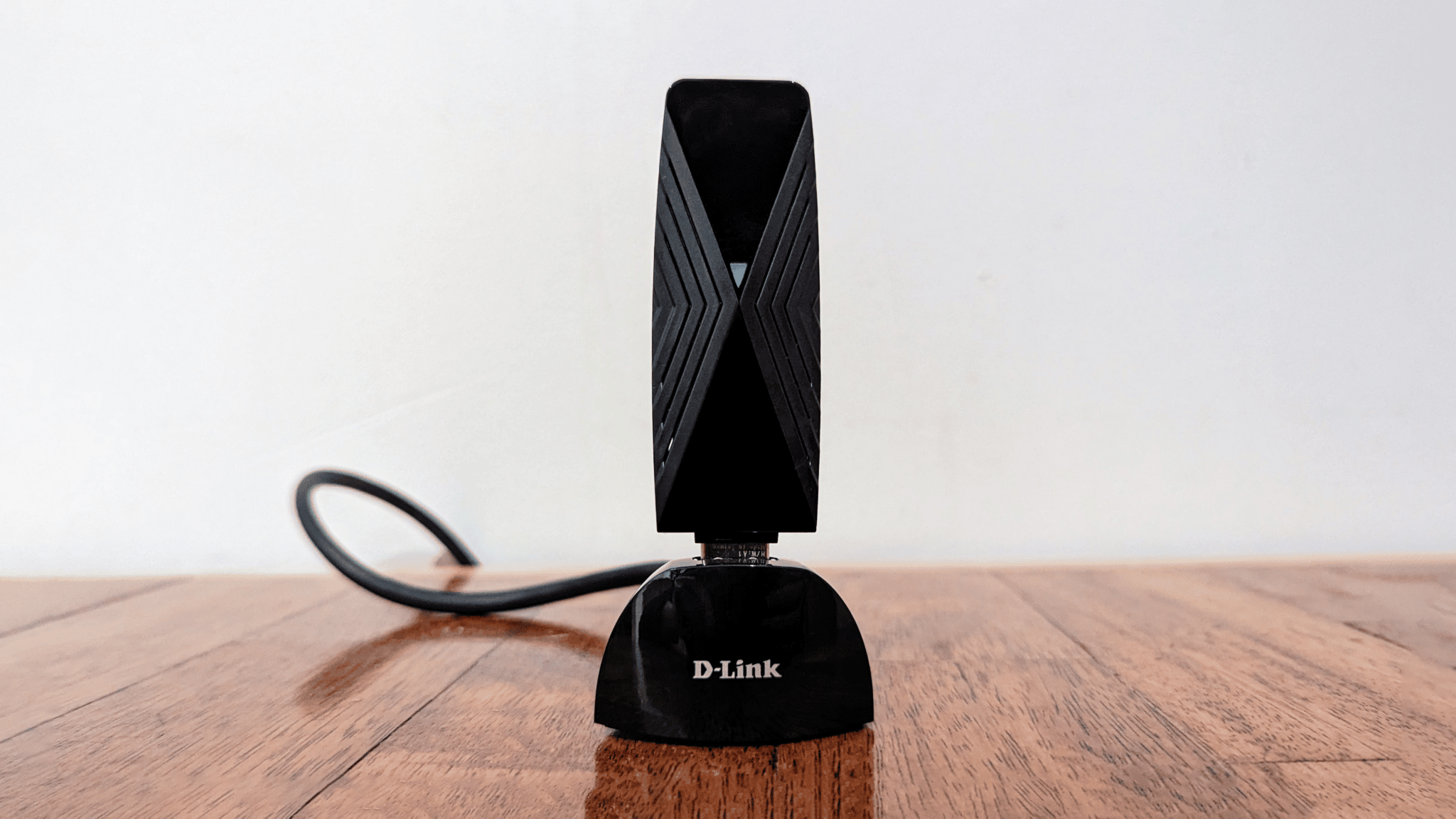
In 2022 Meta partnered with D-Link to release such a device, the VR Air Bridge for Quest 2. But limited to 5GHz Wi-Fi 6, it quickly became outdated as Quest Pro and Quest 3 launched with support for 6GHz Wi-Fi 6E. Further, it only works with Meta’s own Air Link by default, not Virtual Desktop.
Valve’s SteamVR Link Dongle has the potential to truly deliver on the promise of VR Air Bridge, with a future-proof 6GHz Wi-Fi 7 connection directly from your headset to SteamVR, building on the ease of use of Steam Link while boosting its reliability for non-ideal network setups.
Leaker Claims Valve Deckard Set To Launch This Year At $1200
A Valve leaker claims the Valve Deckard headset is set to launch by the end of this year at $1200, including first-party “games or demos”.
 UploadVRDavid Heaney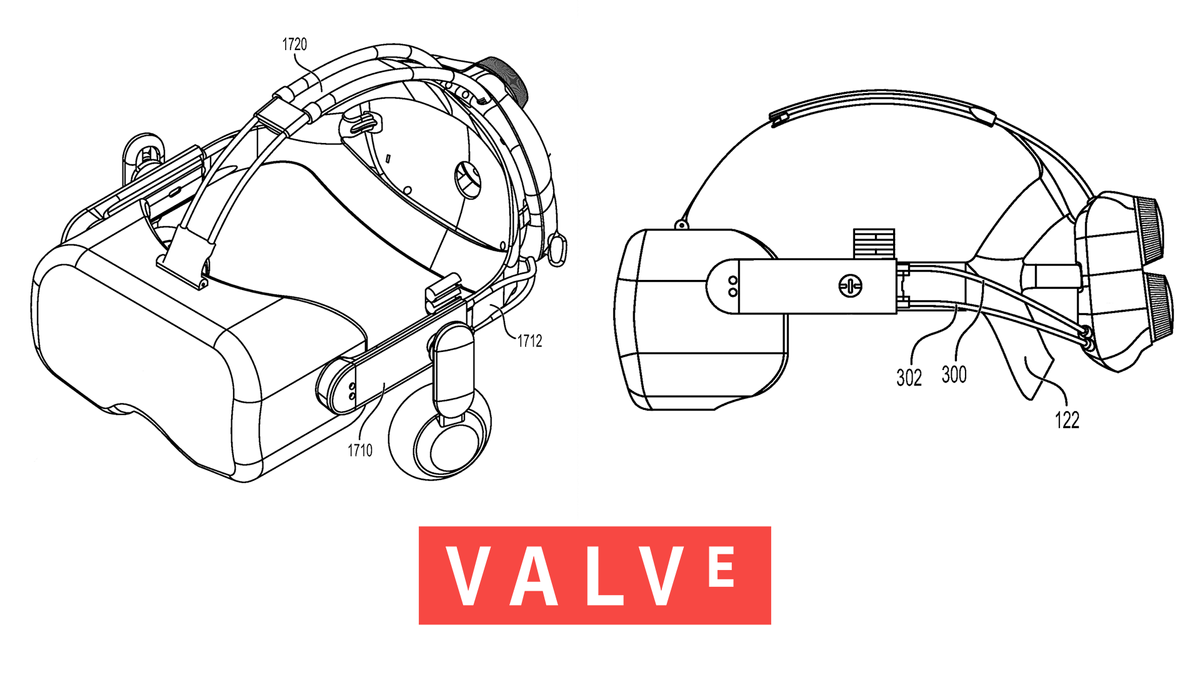
Lynch suggests Valve could include the SteamVR Link Dongle in the box of Deckard, the company’s upcoming headset now rumored to be launching this year, and this seems highly likely. But I suspect it could support other standalone headsets too, improving the experience of using SteamVR wirelessly no matter which standalone VR headset you own.
Republicans Want to Make Hating Elon Musk a Crime

The MAGA wing of the Republican party wants to use the DOJ to bite back against Musk protesters.
Sister, can you spare $12,000 to help me decarbonize my home?
I went to CES with Engadget for the first time this year and, among the robots, laptops, TVs and more robots, the most exciting products I saw were ones trying to make our homes more eco-friendly in the most low-effort ways possible. I saw an induction stove, a window-mounted heat pump, a battery back-up system and a few other promising appliances — these are user installable, work with standard 120V outlets and do their part in lowering a home’s carbon footprint. A couple are coming to market this year, while others are still on the road towards wide availability.
When I first thought of decarbonizing my home, solar panels on the roof immediately came to mind. So I took out a loan and did exactly that. Well, I didn’t do it — it took many months of the solar company filing permits on my behalf and two days of skilled technicians crawling all over my roof and installing complicated-looking boxes and tubes on the side of my house to get it done. Last month, my electric bill was $6, but it wasn’t a low-effort process.
In contrast, these new appliances I checked out don’t require calling a contractor for installation and you’ll be able to get your hands on some of them later this year. Since there’s no installation, people who live in apartments and condos or otherwise can’t permanently install appliances where they live can use them. But these products aren’t cheap. The hope is, as the popularity of accessible, user-installable green tech grows, the prices go down. In the meantime, I will keep daydreaming.
Amy Skorheim for Engadget
The first thing to really catch my eye at CES was a plug-in backup battery from BioLite, a brand I knew from making camp stoves that can recharge your phone. The Backup by BioLite is the company’s first non-outdoor item and comes in either a 1.5kWh size or a dual-unit 3kWh system. The single unit houses an inverter and a battery, while the “Complete” configuration adds an additional battery bank to the inverter/battery set. It mounts on a wall either vertically or horizontally and sticks out less than three inches so it can live behind a fridge — which a BioLite rep told me is a primary place the company sees it being used.
To use it, you plug the Backup into your wall and plug the fridge (or any other appliance) into the Backup. The battery steadily fills itself while also passing power to the appliance. If the power goes out, the battery automatically kicks on to power your icebox, sending an alert to the app to tell you about the outage. So far, this probably sounds more like power security as opposed to an eco solution, but because the app allows you to schedule the Backup to come on at a regular time, you can actually take one of your biggest energy hogs off the grid during peak usage times.
The Backup should start shipping this summer and it’s something I’m seriously considering. While I have solar panels, I didn’t pay the (considerable) upcharge to get batteries. With the Backup, I could schedule the fridge to run on battery power at night, then swap to direct power during the day while the sun feeds the roof panels and refills the battery. The dual-unit, Complete Backup configuration costs $3,000, but currently qualifies for a 30 percent tax credit due to its watt-hour size and the fact that you mount it on the wall (but I don’t think anyone is counting on that perk to still be a thing for long). Plus, if you reserve now, you’ll get a 10 percent discount.
Amy Skorheim for Engadget
When I checked out the Backup at CES, I was introduced to two other companies BioLite had invited to share its booth, Copper and Gradient. Copper was showing off the Charlie plug-in induction stove. While researching indoor air quality for our air purifier guide, I learned that natural gas stoves aren’t just less-than-stellar in terms of ecological impact — they can also be pretty bad for our lungs. That prompted me to look into induction cooking, but I was worried my cotton-wrapped, nearly one-hundred-year-old copper wiring would not be up to the task of an upgrade.
Yes, all induction stoves are plug-ins — but nearly all of them require a 240V outlet, like a dryer uses. If you’re replacing a gas stove, chances are there’s a 120V outlet behind it. If you want to switch off of gas, you need to call an electrician to run the new wiring. That could be a simple operation — I’ve seen estimates online for as little as a couple hundred bucks. But if you have older wiring (that’s me) or if you’re renting or otherwise can’t upgrade your electrical, you might just be stuck with gas.
But the Copper Charlie can run on a standard outlet thanks to the (big!) 5kWh battery inside. In short, the battery fills itself when you’re not cooking. When you fire up a burner or the oven, the battery kicks in to make up the difference between what a standard outlet can supply and what the induction appliance needs. In a power outage, it can cook three to five meals.
It also looks swanky, with deep blue enamel inside the oven and reclaimed wood on the knobs and handle. The price tag is swanky too; Like the Backup, the Charlie currently qualifies for a tax credit to bring the cost as low as $4,200, but if you don’t count on that, you’ll pay around $6,000. That’s not unheard of for an induction cooker, but it’s not cheap. Still, if it’s between that and never getting off gas, I’d consider it.
Amy Skorheim for Engadget
Biolite’s other booth-mate at CES, Gradient, showed off their own plug-in appliance, the Gradient All-Weather window heat pump. I’ve been curious about heat pumps after learning that heating represents the biggest energy demand for most homes. Surprisingly, cooling requires significantly less energy (though it’s often the largest electricity draw as many homes use a gas or fuel oil for heat).
Heat pumps work similarly to AC units, running a refrigerant (Gradient uses a more eco-friendly one) that travels through compression coils, absorbing and releasing heat as it moves from indoors to outdoors. To heat a home, the coils draw heat from the outdoor air (yes, even when it’s cold outside) and release the heat inside. To cool the air, the heat pump performs that process in reverse. Gradient claims a 30 percent higher efficiency over window air units. When it comes to heating, that ratio could go significantly higher, especially if it’s replacing fossil fuel combustion.
Again, no professional installation is required, any standard 120V outlet will work and it also looks far more attractive than window AC units. Instead of replacing your view with a grille and some vents, the saddle bag design hangs down on either side of a window and creates a nice shelf for plants or other bric-a-brac.
But here’s the bad news: Despite being at the Consumer Electronics Show, these window units aren’t yet available to consumers. Gradient told me they’re currently focusing on business-to-business sales to help grow the company and have a bigger impact on greenhouse emissions. But there’s still hope that a direct-to-consumer, plug-and-play heat pump will one day come to be.
Zoltux
Of course, all of this electrification is less beneficial if your area relies on non-renewable resources for grid power, so I was curious to see if any solar generation products at CES had the same user-instalable ease. One company, Zoltux, is working on a plug-in solar kit for US homes based on the “balcony solar” technology that’s popular in parts of the EU, particularly Germany.
Basically, you clamp a solar panel on a balcony, or any other sun-facing spot outside your home, and plug it into a microinverter which syncs the PV energy to the grid, allowing a standard outlet to feed power to your home. Zoltux is only in the launch phase and the company will have plenty of regulatory and technical issues to overcome in bringing plug-and-play solar kits to homes in the US, but I’m wishing them all the luck.
Jackery
As for what currently exists, companies like Jackery, Anker and EcoFlow — all of which were also at CES — have made user-friendly solar panel/portable power station combos for years. The power stations combine the battery, inverter and charge controller in one and have a simple plug for the panels which can be daisy chained to expand how much power you can generate. You can use the slew of outlets on the power stations to recharge electronics, power lights and even run small appliances. It’s not as elegant as something that feeds into your existing electrical system, but it’s one low-effort way to stir in a little solar to your power mix.
This article originally appeared on Engadget at https://www.engadget.com/home/smart-home/sister-can-you-spare-12000-to-help-me-decarbonize-my-home-120041774.html?src=rss
My Favorite Recipes to Get the Most Out of Your Dutch Oven
It took years of convincing before I finally started cooking with a Dutch oven, but once I started it quickly became my favorite pot to cook with. This dense and nearly indestructible pot is as versatile as it is beautiful to look at. The heavy cast iron allows for evenly distributed heat, and the glossy enameled surface is easy to clean. Plus they come in a rainbow of colors, which appeals to my need for whimsy in the kitchen.
Contrary to what you might think, a good Dutch oven can be affordable too (for example, not $300). Read here for alternatives to the high-priced French brands. My brandless Dutch oven has been braising, baking, and frying for years and she has many more left. Here are my favorite recipes and ways to use a Dutch oven to the fullest.
One-pot meals

Credit: Allie Chanthorn Reinmann
Few things are as relieving to me as not having a sink full of dishes, and the Dutch oven offers me this blessing. It’s the perfect solution for one pot meals because cast iron is up to the challenge of multiple cooking methods. It can spend hours on heat without scorching, and it can move seamlessly from the stovetop to the oven if you’re searing and braising.
This savory sausage and beans recipe is my favorite one-pot dish. It’s flavorful, hearty, and requires very little attention. Aside from roughly chopping the veg, you barely have to prepare the ingredients. Leave the sausages whole and sear the links on all sides. Then simply dump in the rest of the ingredients and let them simmer until fork tender.
Low and slow cooking

Credit: Allie Chanthorn Reinmann
The Dutch oven excels at low and slow cooking. Again, it’s that clever cast iron core. You can set the pot over low heat for hours and tough, chewy meats will tenderize into soft, buttery morsels.
One of my favorite meals to make is this crispy chicken and rice recipe. While chicken doesn’t require tenderizing, rice and other dried grains and beans benefit from low and slow cooking. This dish is hearty, simple, and packed with bright flavors, thanks to the tomatoes and olives. Start by searing chicken thighs, skin-side down, and then cook the remaining ingredients. Nestle the thighs back into the rice during the last bit of cooking time for juicy chicken with crispy skin.
Homemade breads
I’ve boasted already about the Dutch oven’s heavy duty cast iron construction, and I’ll never stop. These pots are called “ovens” for a reason—they’re great for baking. Dutch ovens can comfortably withstand temperatures of 500°F and sometimes higher (just check the details of the particular one that you buy).
High temperatures like that are great for homemade breads, like this sourdough recipe I always make in my Dutch oven. Putting the lid on the pot encloses the bread in a small space and naturally creates a humid environment as the bread begins to cook. The extra humidity allows for maximum oven spring, leaving you with a well-risen loaf.
For a bread that doesn’t require proofing, try this Irish soda bread recipe in your Dutch oven. It only requires four ingredients, and the resulting quick bread is fantastic with a smear of salty butter and raspberry jam.
Deep frying

Credit: Allie Chanthorn Reinmann
One of the biggest challenges that comes with deep frying is keeping the temperature consistent. When you drop cold or room temperature batter into hot oil, it’s normal for the oil’s overall temperature to drop down. The bigger the batch, the more the temperature will dip, potentially resulting in a greasy batter.
The best solution is to use a heavy pot. Unlike a thin-walled pot, the Dutch oven will help keep the temperature consistent so you can deep fry bigger batches. My favorite recipe that requires deep frying is this instant pancake apple fritter recipe. You can make this in a small pot, cooking one at a time, but I suggest the wider frying pool of a Dutch oven for cooking bigger batches.
Big batches of soup
Soup is the best way to show off your Dutch oven. You can easily find recipes that are one pot, low and slow, and undemanding. Sure, not every soup is like this, but I’m partial to the ones that are. It’s nice to carelessly toss ingredients into a giant pot and come back to reveal an impressive meal.
This French onion soup recipe is one of my go-tos because it doesn’t require any babysitting. The onions soften easily in the pot and caramelize gently without too much intervention. The beef broth fills out the soup, while wine and herbs bring in complexity. Other than that, you just have to broil some stretchy cheese onto a slice of bread before digging in. In fact, I think broiling some stretchy cheese fits into all the recipes above (even the fritters). Enjoy your Dutch oven explorations, folks.
Bonus tip: Use it as a cooler
The same qualities that allow a Dutch oven to hold onto heat also enables it to maintain a chill too. I use my Dutch oven as an attractive drink cooler for parties. It’s especially helpful when your fridge is packed and you could use a little extra external space. About an hour before your guests come over, put the Dutch oven in the fridge (the lid too if you’ll be chilling cans). Take the pot out and fill it halfway with ice. Tuck bottles of chilled wine, pre-mixed cocktails, or cans of seltzer into the ice and freshen it up with new ice when needed.
Hope’s new carbon crankset and colourful pedals are built for gravel adventures
Hope has expanded its gravel range, with new brakes that will add a splash of colour to your bike and a handmade carbon crankset designed to produce a smoother ride.
The latest addition to the made-in-Lancashire gravel line-up is the new RX Carbon crankset, which takes its inspiration from the brand’s mountain bike carbon cranks.
Hope has adjusted the chainline to suit gravel groupsets. The new crankset is designed to work with both 45mm and 47.5mm (wide) chainlines.
The new carbon crank arms have a foam core inside to help absorb vibrations as you pedal.
The foam core is an integral part of the crank’s assembly because it’s used in place of a sacrificial material or internal bladder, which requires a chemical process to remove. Because the foam core stays in place, it’s also said to make the Hope cranks better from an environmental perspective.
The cranks are claimed to weigh 426.5g without a chainring or 532.5g, as pictured, with an RX chainring (40T). The spiderless direct-mount rings are available in 28 to 44-tooth sizes.
The arms are initially available in 165mm, 170mm and 175mm lengths, but because they are made in-house by Hope, the brand hasn’t ruled out adding additional options.
The crankset is set to be priced at £575 / $751 / €722 when it’s available in April.
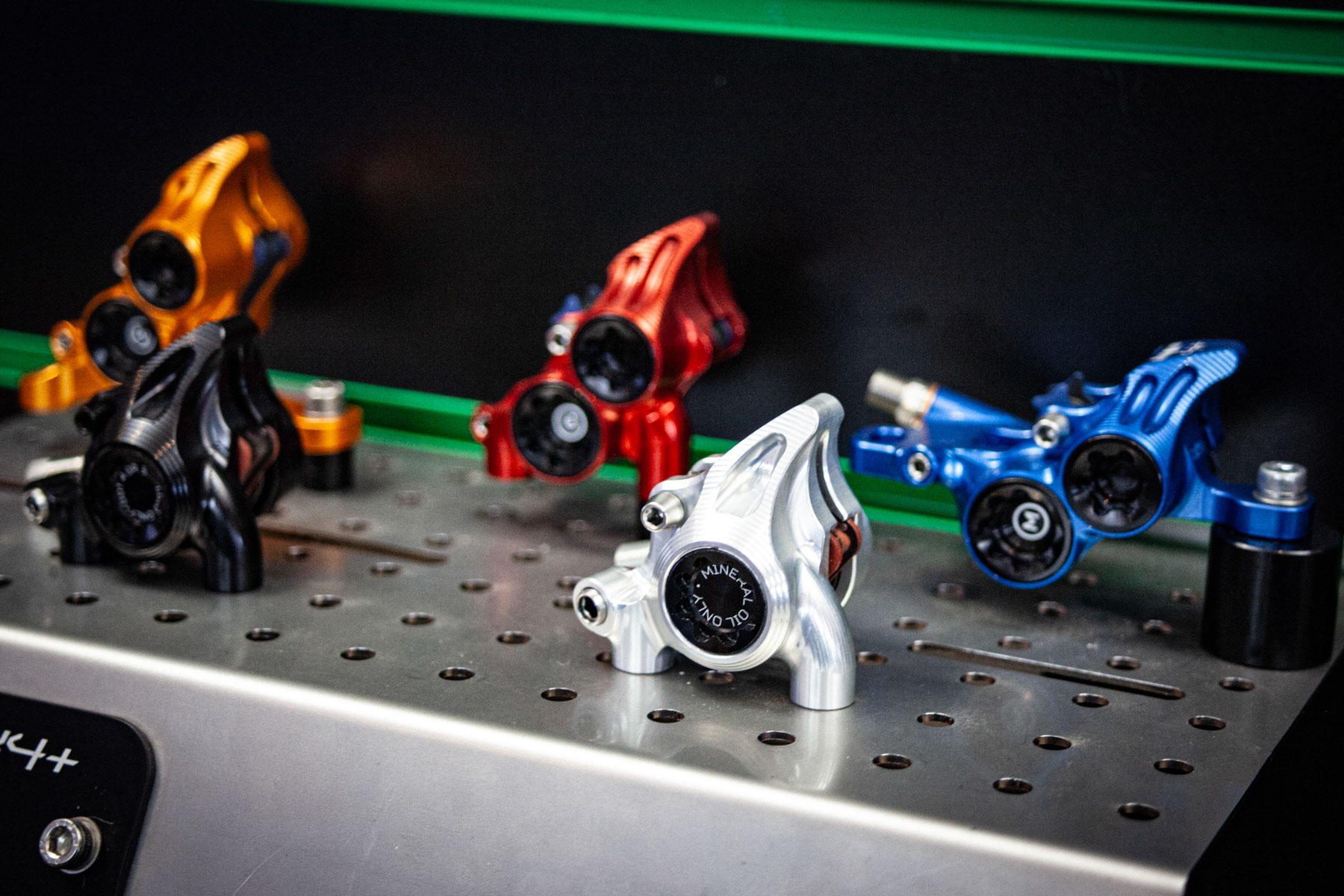
The second addition to Hope’s gravel line-up is the new RX2 and RX4 brake calipers. The RX2 is based on the design of the MTB-specific two-pot X2 brake (Hope’s lightest offering), but with a slimmed-down profile that’s been reshaped to suit road/gravel flat-mounts.
The RX4, as the name suggests, is a larger four-pot design that’s more suited to adventurous bikepacking-style bikes.

In usual Hope fashion, they’re available in myriad colours and can be specced with seals to make them compatible with either Shimano (Mineral oil) or SRAM (Dot fluid) brake systems.
Pricing for the RX2 brakes is TBC.
Top 5 Zwift Videos: The 4th Challenge, Climb Portals, and Home Gyms
Zwift’s latest game release launched the long-awaited 4th challenge, so this week’s top video breaks down everything you need to know about the Factory Tour challenge.
We’ve also selected videos about Hardknott Pass on Zwift, building a home gym in a barn, an exciting new Zwift event, and team time trial tips.
ZWIFT Update 1.85: 4th Challenge Arrives // Big Spin ’25 // More…
Hardknott Pass is on Zwift! How Does It Compare to the Real Thing?
I Built My Own Gym in a 300-Year-Old Barn
I guarantee you a NEW Alpe Du Zwift PR (but only next Sunday 16th)
Zwift: Honing Your Performance for ZRL, WTRL, and Coming World TTT Champs
Got a Great Zwift Video?
Share the link below and we may feature it in an upcoming post!
Civilization VII, one month later: The community and developers chime in
A month ago, Civilization VII launched to generally positive critical reviews, but user reviews on Steam and Metacritic weren’t nearly so positive, at least at first.
Take a look at the Civilization subreddit, and you’ll see a general consensus: The bones of this game are great, and even most of the radical changes to the classic formula (like breaking the game into much more distinct ages) are a welcome refresh.
On the other hand, there’s also a sentiment that players are disappointed that some expected features are missing, some gameplay elements need additional polish, and most of all, the user interface was a bit of a mess at launch.
Anthropic CEO floats idea of giving AI a “quit job” button, sparking skepticism
Anthropic CEO Dario Amodei raised a few eyebrows on Monday after suggesting that advanced AI models might someday be provided with the ability to push a “button” to quit tasks they might find unpleasant. Amodei made the provocative remarks during an interview at the Council on Foreign Relations, acknowledging that the idea “sounds crazy.”
“So this is—this is another one of those topics that’s going to make me sound completely insane,” Amodei said during the interview. “I think we should at least consider the question of, if we are building these systems and they do all kinds of things like humans as well as humans, and seem to have a lot of the same cognitive capacities, if it quacks like a duck and it walks like a duck, maybe it’s a duck.”
Amodei’s comments came in response to an audience question from data scientist Carmem Domingues about Anthropic’s late-2024 hiring of AI welfare researcher Kyle Fish “to look at, you know, sentience or lack of thereof of future AI models, and whether they might deserve moral consideration and protections in the future.” Fish currently investigates the highly contentious topic of whether AI models could possess sentience or otherwise merit moral consideration.
What is space war-fighting? The Space Force’s top general has some thoughts.
DENVER—The US Space Force lacks the full range of space weapons China and Russia are adding to their arsenals, and military leaders say it’s time to close the gap.
Gen. Chance Saltzman, the Space Force’s chief of space operations, told reporters at the Air & Space Forces Association Warfare Symposium last week that he wants to have more options to present to national leaders if an adversary threatens the US fleet of national security satellites used for surveillance, communication, navigation, missile warning, and perhaps soon, missile defense.
In prepared remarks, Saltzman outlined in new detail why the Space Force should be able to go on the offense in an era of orbital warfare. Later, in a roundtable meeting with reporters, he briefly touched on the how.
Google Reportedly Set to Acquire Eye-tracking Startup to Bolster Android XR Hardware Efforts


Google is reportedly set to acquire Canada-based eye-tracking startup AdHawk Microsystems Inc., something that would strengthen the company’s ongoing foray into XR headsets and glasses.
As reported by Bloomberg’s Mark Gurman, Google is allegedly acquiring AdHawk for $115 million, according to people with knowledge of the matter.
The deal is said to include $15 million in future payments based on the eye-tracking company reaching performance targets. While the acquisition is purportedly slated to conclude this week, a deal still hasn’t been signed, leaving some room for doubt. Furthermore, should the deal go through, the report maintains AdHawk’s staff will join Google’s Android XR team.
This isn’t the first time AdHawk has flirted with an acquisition by a key XR player. In 2022, Bloomberg reported the company was in the final stages of an acquisition by Meta.
Notably, AdHawk is best known for its innovations in eye-tracking, which replaces traditional cameras with micro-electromechanical systems (MEMS), which is said to result in faster processing and reduced power consumption—two things highly prized by AR and smart glasses creators today.

Its flagship product, the MindLink glasses, is a research-focused device that is meant to connect eye movements with neurological and ocular health, human behavior, and state of mind, the company says on its website. Additionally, the company offers its camera-free eye-tracking modules for researchers working with VR devices, such as Meta Quest.
While neither Google nor AdHawk have commented on report, Google is ramping up its XR division to compete with the likes of Meta and Apple.
In December, Google announced Android XR, marking a decisive shift for the company’s XR efforts, as the company is bringing a ‘full fat’ version of Android to headsets for the first time, which not only includes XR-specific apps but also the full slate of Android content. Android XR is ostensibly set to debut on Samsung’s Project Moohan mixed reality headset, which still has no release date or price.
Then, in January, Google announced the acquisition of a number of HTC’s XR engineers, a deal amounting to $250 million. At the time, Google said HTC veterans would “accelerate the development of the Android XR platform across the headsets and glasses ecosystem.”
In addition to supporting its Android XR software efforts, the acquisition of a novel eye-tracking startup would also prove valuable in the company’s internal XR hardware efforts, which has been nothing short of fragmented over the years.
Google has summarily cancelled a number of XR projects in the past, including its Daydream VR platform in 2019, Google Glass for Enterprise in 2023, and its Iris AR glasses project in 2024.
The post Google Reportedly Set to Acquire Eye-tracking Startup to Bolster Android XR Hardware Efforts appeared first on Road to VR.
Amazon GameLift Streams allows devs to run their own streaming platform – supports Linux and Proton runtimes
Amazon recently announced their new GameLift Streams service, allowing game developers to spin up their own game streaming solutions. Their announcement also specifically noted how it supports “Windows, Linux, and Proton runtimes”.
Shockingly Tiny Galaxy Near Andromeda Is Just One-Millionth the Size of the Milky Way

The fully formed galaxy is remarkably teeny, raising new questions about how galaxies emerge and evolve.
Legacy 32-bit PhysX Removal Cripples Performance On New GPUs
Longtime Slashdot reader UnknowingFool writes: Gamer’s Nexus performed tests on the effect of removing legacy 32-bit PhysX on the newest generation of Nvidia cards with older games, and the results are not good. With PhysX on, the latest generation Nvidia was slightly beaten by a GTX 580 (released 2010) on some games and handily beaten by a GTX 980 (2014) on some games.
With the launch of the 5000 series, NVidia dropped 32-bit CUDA support going forward. Part of that change was dropping support for 32-bit PhysX. As a result, older titles that used it would perform poorly with 5000 series cards as it would default to CPU for calculations. Even the latest CPUs do not perform as well as 15-year-old GPUs when it comes to PhysX.
The best performance on the 5080 was to turn PhysX off however that would remove many effects like smoke, breaking glass, and rubble from scenes. The second-best option was to pair a 5000 series with an older card like a 980 to handle the PhysX computations.


Read more of this story at Slashdot.
‘Path of Fury’ Brings Nostalgic Kung Fu Fighting to Quest Today in First Episode ‘Tetsuo’s Tower’


Path of Fury – Episode I: Tetsuo’s Tower is launching today on Quest, offering up an on-rails battle against a cadre of kung fu fighting gangsters through an ’80s-inspired underworld.
Developed by Leonard Menchiari, director of Trek to Yomi (2022), and published by Abonico Game Works, the first episode of Path of Fury is an on-rails VR adventure inspired in the Chinese kung fu flicks, such as Hong Kong director Wong Kar-wai’s early work, Indonesian action film The Raid (2011), and games like Time Crisis and the Fist of the North Star arcade cabinet.
Supported by the Quest 2 and above, Path of Fury challenges you to fight your way through a relentless gauntlet, armed with nothing but your fists and willpower to defeat loads of gangsters and bosses along your way to the top of Tetsuo’s fortress.
Here’s how Menchiari describes the action:
Precision and speed are everything. Each enemy has a weakness—you’ll have to find it and strike before they swarm. As the floors stack higher, so do the odds. The action doesn’t let up, and neither can you. This is pure, high-stakes combat where every punch counts, and hesitation could be fatal.
Path of Fury doesn’t just test your skill—it tests your endurance. The question is: how far can you go?
In our short time previewing Path of Fury – Episode I: Tetsuo’s Tower back in January, the game seemed to deliver everything on the tin, proving to be a stylish VR brawler that deftly blends arcade-style combat with ’80s action-movie vibes, delivering a punch-heavy workout in a well-crafted, retro-inspired underworld.
You can find Path of Fury: Episode I – Tetsuo’s Tower for Quest 2 and above over on the Horizon Store, priced at $10. The game is set to unlock today, March 13th, at 10 AM PT (local time here).
The post ‘Path of Fury’ Brings Nostalgic Kung Fu Fighting to Quest Today in First Episode ‘Tetsuo’s Tower’ appeared first on Road to VR.
Valve Deckard could come with a USB wireless dongle instead of a cable

Valve’s new VR headset could come with a Wireless USB dongle for seamless PC VR connectivity.
The post Valve Deckard could come with a USB wireless dongle instead of a cable appeared first on MIXED Reality News.
Max Payne running seamlessly on Linux 4K
Here’s something I never quite expected to write. But recently, I’ve been playing and playing with some old games, most notably the wonderful Caesar III and Pharaoh, and I decided to expand my adventure. And I thought, well, Max Payne, a lovely title of yore.
Some of the best VR games for Playstation VR 2 are now available at half price

Sony is once again offering numerous VR games at lower prices. Including VR hits such as Resident Evil Village and Gran Turismo.
The post Some of the best VR games for Playstation VR 2 are now available at half price appeared first on MIXED Reality News.
No, that’s not a cosmic cone of shame—it’s NASA’s newest space telescope
Satellites come in all shapes and sizes, but there aren’t any that look quite like SPHEREx, an infrared observatory NASA launched Tuesday night in search of answers to simmering questions about how the Universe, and ultimately life, came to be.
The mission launched aboard a SpaceX Falcon 9 rocket from Vandenberg Space Force Base in California at 8:10 pm local time (11:10 pm EDT) Tuesday. Less than 45 minutes later, the Falcon 9’s upper stage released SPHEREx into a polar orbit at an altitude of roughly 420 miles (675 kilometers). Ground controllers received the first signals from the spacecraft, confirming its health after reaching space.
As soon as next month, once engineers verify the observatory is ready, SPHEREx will begin a two-year science mission surveying the sky in 102 colors invisible to the human eye. The observatory’s infrared detectors will collect data on the chemical composition of asteroids, hazy star-forming clouds, and faraway galaxies.