Warhammer 40K: Space Marine 2 is unsurprisingly getting a sequel

The Emperor protects! Warhammer 40K fans, it appears you won’t have to wait nearly as long for a new Space Marine game as you did for a sequel to the 2011 original. Games Workshop announced today that Saber Interactive and Focus Entertainment are working on a new installment in the series. 

“Specific details on gameplay, setting and factions are tightly under wraps, but we can confirm Warhammer 40,000: Space Marine 3 will boast an all-new immersive campaign and multiplayer modes,” Games Workshop said. 

The fact the miniature maker has been so quick to green light a sequel is not surprising. As of last fall, the game had sold more than 4.5 million copies across PlayStation 5, Xbox Series X/S and PC, and I made sure to include it in Engadget’s list of the best games of 2024. More broadly, Warhammer 40,000 is enjoying greater popularity than probably at any other point in its nearly 40-year history. The 40K episode of Amazon’s Secret Level anthology, which follows directly after the events of Space Marine 2, was a highlight of the series and did a lot to bring the franchise to a broader audience.      

Games Workshop did not share a release date or trailer for the new game, so enjoy this teaser for Astartes II, another 40K project fans are excited about, instead.       

This article originally appeared on Engadget at https://www.engadget.com/gaming/warhammer-40k-space-marine-2-is-unsurprisingly-getting-a-sequel-200055031.html?src=rss

Disco Elysium is coming to Android mobile this summer

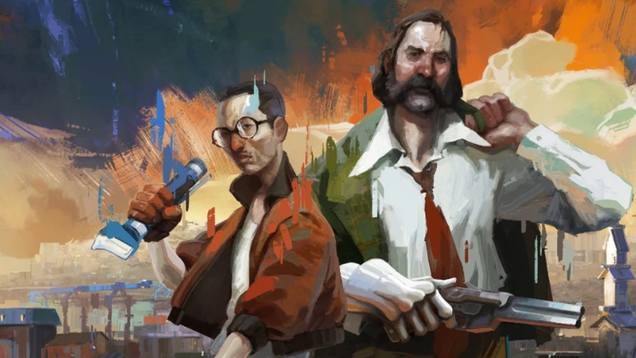
Disco Elysium is a critically acclaimed RPG from 2019 that won many accolades for its smart storytelling and writing. Later this year, the game is getting reimagined exclusively for Android devices. This mobile version is slated for a summer 2025 launch.

The new format looks akin to what you’d find in a visual novel app rather than to a traditional RPG, based on the trailer and screenshots shared today. ZA/UM, the company behind the game, said that the first two chapters can be played for free, then the full, ad-free game will be a one-time paid unlock.

“We intend to captivate the TikTok user with quick hits of compelling story, art, and audio, ultimately creating an all new, deeply engaging form of entertainment,” ZA/UM studio head Denis Havel said.

Many of the original Disco Elysium creators have left ZA/UM. Creator Robert Kurvitz, art director Aleksander Rostov and writer Helen Hindpere were all fired in 2022 by the company’s new leaders, and all parties have been mired in lawsuits since the game’s international success. Several new studios have sprung up from various former team members, and ZA/UM has announced work on a new game of its own.

This article originally appeared on Engadget at https://www.engadget.com/gaming/disco-elysium-is-coming-to-android-mobile-this-summer-194536643.html?src=rss

Why Google Gemini Wants Your Search History (and Why I Won’t Be Sharing Mine)

On Thursday, Google rolled out a number of previously-paywalled Gemini features to free users. You can now use Gemini custom chatbots, which the company calls “Gems”; Deep Research, which runs AI models that “think” through each step of a problem; and upload files to Gemini 2.0 Flash Thinking, whether you pay for Google’s AI services or not.

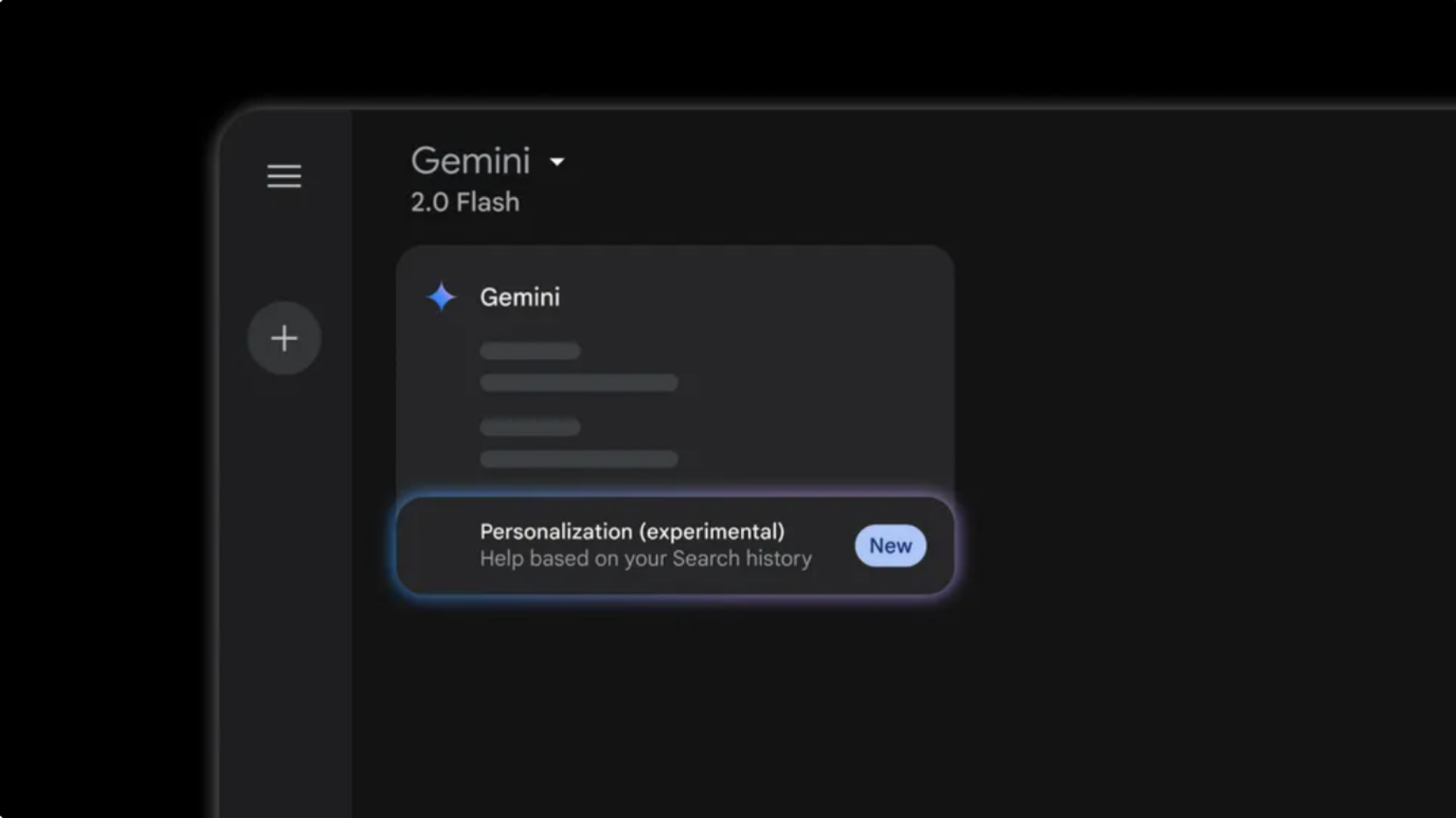
But that’s not all: The company also introduced new experimental feature for Gemini—Gemini with personalization. This feature, which runs on Google’s Gemini 2.0 Flash Thinking model, connects Gemini to your Google apps and services, with the goal of offering you a more personal AI assistant. The idea is, by connecting your Google Account’s information to Gemini, it’ll know more about you and will be able to deliver more informed results tailored to your personal tastes.

It’s certainly a step in the direction that big tech companies are advertising AI to be. But in order to work, you need to connect your search history to Gemini. That’s a lot of trust to put into Google’s AI service, and I imagine a tricky decision for anyone who is concerned about the amount of data we’re feeding these AI tools.

What can Gemini’s Personalization model do?

Google offers a few examples of how this new service might improve your experience with Gemini. You might ask the bot where you should go on vacation, and rather than pull from a series of sources about where other people like to go on vacation, the bot could, theoretically, use your past search queries to focus on a trip it thinks you would like. Maybe you’ve put together a bit of a vision board about heading to the Bahamas or Saint Lucia, and the bot would gather searches related to tropical vacations. Or maybe you’d ask the bot for suggestions for a new hobby and see results based on the types of things you searched for in the past.

I understand the vision Google’s going for here: Rather than have a bot that answers queries the same for everyone, why not have each user’s bot provide answers tailored to their likes and dislikes? That said, it does make me wonder: If the user is already searching for things like vacation spots and new hobbies, wouldn’t they be able to choose for themselves where they’d like to go, or what activity they’d like to take up? If I’m searching a lot about jogging, and I ask the bot what hobbies I should take up, I’m not going to be surprised when Gemini returns results for On sneakers and a local running club.

For Google’s part, this isn’t necessarily some sneaky tactic. In order for you to use the feature, you’ll need to opt in to connecting your search history to Gemini. That’s actually surprising to me, and mildly refreshing. At least Google isn’t making opt-out the default here.

Because the model is a “thinking” model, you’ll see the entire train of thought as part of the results. As such, Google says you’ll be able to see the personal information Gemini used to generate its answer, including saved info, past conversations, or your search history. In addition, Gemini won’t look at your search history unless you’re specifically using this experimental personalization feature. (You also need to have Google’s Web & App Activity setting turned on.) All that to say, it’s not like using this feature means Gemini will scan your search history every time you use it. If you use the standard Gemini 2.0 Flash model, it won’t pull from this personal data with its answer—only if you switch back to “Personalization.”

Should you connect your search history to Gemini?

Here’s what I’ll say: I’m not connecting my search history to Gemini—not yet, anyway. At this time, the feature is experimental, so it isn’t the complete vision that Google has in store for it. (The company has plans to connect Photos and YouTube data in the future, for example.) But even if the feature was fully realized, I’m just not comfortable with connecting my personal search history to Google’s AI.

Don’t get me wrong: I know Google already has access to my search history (though disabling Web & App Activity should mitigate some of that data leaking). It’s not really about that. To me, I don’t feel the need to train Google’s AI on my search history, which is what is happening here. It’s a neat idea to give users more personalized results from AI bots, but by opting into this feature, I’m providing Google free training for Gemini using my personal information. In fact, by requiring Web & App Activity to be enabled, Google is asking for you to share this data with both Gemini and Google as a whole.

Google might have the best of privacy intentions here for all we know, but even still, I’m living by another AI tenant with this decision: don’t share private information with AI. If you wouldn’t want a human reviewer at Google seeing what you’re sharing with Gemini, you probably shouldn’t share it in the first place. Traditionally, I’ve referenced this rule for things like proprietary company information or deeply personal information, but search history can also be deeply private. Do you really need Gemini (or a human reviewer) seeing everything you searched for, just to attempt to make your Gemini results a bit more personal? Those results might be totally inaccurate, anyway.

How to use Gemini’s Personalization model

If you think those tradeoffs are worth the potential benefits of Gemini’s Personalization model, here’s how to give it a try. Open up Gemini, then choose “Personalization (Experimental)” from the drop down. Here, Google will present you with a pop-up, where you’ll need to connect your search history to Gemini. If you’re good with that, choose Connect now.

Google's Personalization model for Gemini

Credit: Google

Black Mirror is playing the hits in its season 7 trailer

The seventh season of Black Mirror is headed to Netflix on April 10, and based on its first trailer, happily returning to concepts and episodes that have come to define the series.

You’ll see plenty of the stars that were already announced to be in the new episodes in the trailer, like Paul Giamatti, Issa Rae and Peter Capaldi, along with clear evidence that Season 7 continues storylines showrunner Charlie Brooker has already promised to revisit — namely the episode “USS Callister,” about a group of startup employees trapped in a Star Trek-inspired simulation by their boss. 

There’s some surprises too — one of the six new episodes appears to return to the world of Black Mirror: Bandersnatch, the interactive Black Mirror episode Netflix released in 2018, before abandoning interactive movies in 2024. If that doesn’t pique your interest, rest assured, load-bearing Black Mirror concepts like “thinking of the human brain as a computer” definitely seem to be present, too.

Brooker describes this season as “a little bit OG Black Mirror” and “back to basics in many ways,” which could be reassuring, depending on your belief that he can recapture the novelty and meanness of the show’s UK run. The series last aired on Netflix in 2023, with a set of episodes that were all over the place in terms of quality. Season 7 could be different, but we’ll have to wait until Black Mirror returns on April 10 to find out for sure.

This article originally appeared on Engadget at https://www.engadget.com/entertainment/streaming/black-mirror-is-playing-the-hits-in-its-season-7-trailer-193015633.html?src=rss

German Spy Agency Concluded COVID Virus Likely Leaked From Lab

An anonymous reader shares a report: Germany’s foreign intelligence service in 2020 put at 80%-90% the likelihood that the coronavirus behind the COVID-19 pandemic was accidentally released from China’s Wuhan Institute of Virology, two German newspapers reported on Wednesday.

According to a joint report by publications Die Zeit and Sueddeutscher Zeitung, Germany’s spying agency BND had indications that the institute had conducted gain-of-function experiments, whereby viruses are modified to become more transmissible to humans for research purposes.

It also had indications that numerous violations of safety regulations had occurred at the lab, the papers said. The spy agency assessment’s was based on an unspecified intelligence operation code-named “Saaremaa” as well as on publicly-available data. It had been commissioned by the office of Germany’s chancellor at the time, Angela Merkel, but never published, the report said.


Read more of this story at Slashdot.

What happens when DEI becomes DOA in the aerospace industry?

Last month a nonprofit that recognizes exceptional undergraduate women and gender minorities with space and aviation internships, the Brooke Owens Fellowship, announced its latest class of “Brookies.”

This ninth class of 45 students was selected from more than 400 applications, and they will fan out to aerospace companies across the country, from large firms such as SpaceX and Blue Origin to smaller startups like Vast and Stoke. There they will be paired with executive-level mentors who will help launch their careers.

However there was a cloud hanging over this latest group of exceptional students: They may be the last class of Brookies to receive aerospace internships.

Read full article

Comments

Teenage Mutant Ninja Turtles: Tactical Takedown comes out on May 22

Teenage Mutant Ninja Turtles: Tactical Takedown will be released on May 22 for PC via Steam. As the name indicates, this is a turn-based strategy RPG. It also happens to be the first turn-based game in franchise history.

It’s being developed by Strange Scaffold, who made the fantastic El Paso, Elsewhere. There’s a new trailer with plenty of gameplay, which is always nice. One thing that sets this tactical RPG apart from rivals like Unicorn Overlord is that the battles take just a few minutes to complete. As a matter of fact, they look even zippier than the streamlined fights found in the Mario + Rabbids series.

The story sounds downright depressing for a TMNT game. “Splinter and Shredder are dead, and as the Turtles approach adulthood, they’re not just growing up… they’re growing apart,” a description reads. To that end, most of the levels are played solo with just a single turtle. Come on guys. Hash things out over a large pizza pie!

There’s no price yet, but preorders are open. Publisher Paramount Game Studios has yet to say anything about a potential console release.

This article originally appeared on Engadget at https://www.engadget.com/gaming/pc/teenage-mutant-ninja-turtles-tactical-takedown-comes-out-on-may-22-191533579.html?src=rss

My Favorite Amazon Deal of the Day: These Bose QuietComfort Ultra Earbuds

We may earn a commission from links on this page. Deal pricing and availability subject to change after time of publication.

There have been many earbuds with great active noise canceling (ANC) over the years, but none have reached the standard set in 2023 by the Bose QuietComfort Ultra. They are still the best ANC earbuds you can get in 2025. Right now, you can get them for $219 (originally $299) on Amazon, the lowest price they’ve ever been, according to price-tracking tools.

The Bose QuietComfort Ultra Bluetooth earbuds received an “outstanding” review from PCMag, not just for their best-in-class ANC, but also for their great audio, Active Aware feature, Spatial audio support, and diverse codec Bluetooth support with AAC and AptX, which makes it great for Android and Apple users alike. However, they’re not perfect. They lack multipoint connectivity, which other high-end earbuds at this price point offer, and there is no wireless charging for the case (if you care about that).

The features are what sets these earbuds apart. They have a CustomTune feature that measures your ear’s canal’s shape to tune the sound and establishes your best ANC profile. You can adapt changes in the companion app as well. Bose calls its spatial audio feature “Immersive Audio,” which is a feature that mimics hearing your surroundings similarly to what it would feel to wear open-ear headphones. You can also mess around with the settings to mix and match outside noise and ANC within the Immersive Audio setting on the app.

You’ll get about four to six hours of battery life and another 12 to 18 with the battery case. The earbuds aren’t waterproof, but they are water resistant with an IPX4 rating, so you can wear them in the gym.

Microsoft is making a Copilot AI assistant for gamers, but it’s not clear what it does

Microsoft just announced the pending availability of Copilot for Gaming, an AI-powered assistant that’s being advertised as a novel way to help players get better at their favorite titles. The company says it will accompany people through games, offering tips, guides and useful information along the way.

Microsoft boasts it can also help folks download and launch games, solving the eternal problem of, uh, pressing a button. Copilot for Gaming will be available as part of the Xbox mobile app, so it’s being positioned as a second screen type of thing.

Copilot for Gaming � Soon you’ll be able to turn to it for everything from game setup, to tips for finally beating a tough level, wherever you play on Xbox. There when you need it, out of the way when you don’t. Can’t wait to try it! https://t.co/cxZG7R6cxc pic.twitter.com/21Zg0yob4A

— Mustafa Suleyman (@mustafasuleyman) March 13, 2025

We aren’t entirely sure how it works. There are demo videos but they are just proof of concept designs. One shows Copilot recommending a hero for Overwatch 2 that complements the rest of the team. Another video found the AI assistant answering questions about Minecraft building techniques. The demo also showed Copilot enabling cheats in Minecraft, with the bot telling a player where crafting materials could be found. Hopefully, this tech will be ready the next time Elon Musk wants to show off his Path of Exile 2 “skills.” 

Microsoft says that Copilot will be able to see your game screen, via app integration, to offer real-time guidance. Again, we don’t know how that will work or what kind of information it will be able to cook up. None of the aforementioned tasks will be available during the initial launch, so we don’t even know what, if anything, players will be able to do with this thing. That’s modern AI for ya!

In any event, Copilot for Gaming will be available to Xbox Insider members in April. Microsoft says it will iterate according to user feedback. Once the company has ironed out some kinks, it should become available to more players.

Microsoft also shared today that the Xbox Play Anywhere program now allows access to more than 1,000 games. This is a cross-platform service that lets people enjoy a game on both Xbox consoles and PC. The platform even keeps track of saves, progress and achievements.

This article originally appeared on Engadget at https://www.engadget.com/gaming/xbox/microsoft-is-making-a-copilot-ai-assistant-for-gamers-but-its-not-clear-what-it-does-185603482.html?src=rss

Microsoft: Recent Windows Updates Make USB Printers Print Random Text

Microsoft says that some USB printers will start printing random text after installing Windows updates released since late January 2025. From a report: The known issue affects Windows 10 (version 22H2) and Windows 11 (versions 22H2 and 23H2), but according to an update to the Windows release health dashboard, the latest Windows 11 24H2 is not impacted.

“After installing the January 2025 Windows preview update (KB5050092), released January 29, 2025, or later updates, you might observe issues with USB connected dual-mode printers that support both USB Print and IPP Over USB protocols,” Redmond explains. “You might observe that the printer unexpectedly prints random text and data, including network commands and unusual characters.”

On affected systems, users will often see erroneously printed text that begins with the header “POST /ipp/print HTTP/1.1,” followed by other IPP (Internet Printing Protocol) related issues headers. These printing issues are more frequent when the printer is turned on or reconnected after being disconnected. Affected users will observe the printer unexpectedly printing when the print spooler sends IPP protocol messages to the printer and the printer driver is installed on the Windows device.


Read more of this story at Slashdot.