God of War’s 20th anniversary celebration gives you Kratos’ most badass throwback skin

Sony is celebrating God of War’s 20th anniversary with goodies found in digital Norse mythological worlds, an LA art studio and your dusty old record player. The highlight is Kratos’ positively badass Dark Odyssey skin (above). In God of War II, acquiring that game’s version required hours of punishing gameplay on the most brutal mode of the 2007 sequel; all you have to do in 2025 is own a measly copy of God of War: Ragnarök.

The Dark Odyssey collection will be a free update on March 20 for all God of War: Ragnarök players on PlayStation and PC. You get Kratos’ shadowy black and gold look (above) that once required beating God of War II on God Mode difficulty (that would be the really hard one), as well as Dark Odyssey-themed armor, weapons, shields and more for the Ghost of Sparta, Atreus and Freya.

If you haven’t sunk enough hours into the game to max out your weapons, you may be disappointed to learn that the Dark Odyssey weapon skins are only available for the fully upgraded version of each. But at least Santa Monica Studio is adding the ability to edit the appearance of the weapon attachments and shield rönd.

A God of War art print inspired by Ragnarok.
Sony / Santa Monica Studio / Ollie Hoff

Also part of the 20th-anniversary celebration is a boatload of merch. These include a new set of art prints (like the one above by Ollie Hoff), a two-volume retrospective book set that chronicles the franchise’s development since 2005 and a 13-LP soundtrack set of Kratos’ two decades of immortal skull-bashing. (You’ll also be able to order double LP soundtracks for the Greek trilogy games for the first time.)

But no God of War collection would be complete without the 67-inch Jörmungandr pictured below. In a nice detail, it includes a magnetized tongue to grip a removable Leviathan Axe. (Given that there’s no companion Kratos plush, we’ll assume he met a slithery demise in this timeline.)

A plush of the serpent Jörmungandr from God of War Ragnarok.
Sony / Santa Monica Studio

If you live in Southern California, you can check out a God of War exhibit at Gallery Nucleus in LA, showcasing new artwork inspired by the franchise, concept art and “unique memorabilia.” It runs from March 15 to 23.

Finally, for those who are curious about the franchise but don’t own all the games, you can check them out for less. PlayStation Plus Premium and Extra members can claim his last three journeys — God of War Ragnarök, God of War (2018) and God of War III Remastered — from the game catalog. And PC gamers can buy a discounted God of War (2018) and God of War Ragnarök — $20 and $48, respectively — on Steam.

You can read about the full list of anniversary goodies on the PlayStation blog.

This article originally appeared on Engadget at https://www.engadget.com/gaming/playstation/god-of-wars-20th-anniversary-celebration-gives-you-kratos-most-badass-throwback-skin-185354289.html?src=rss
I threw away Audible’s app, and now I self-host my audiobooks

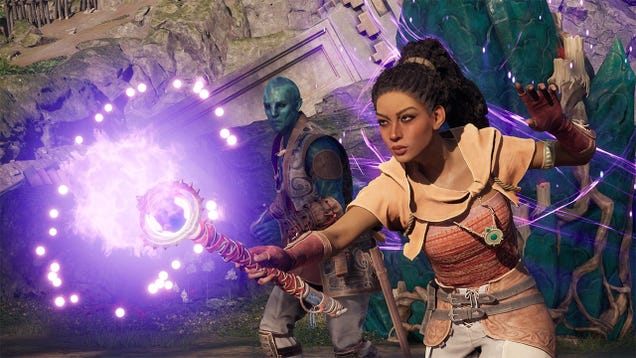
We’re an audiobook family at House Hutchinson, and at any given moment my wife or I are probably listening to one while puttering around. We’ve collected a bit over 300 of the things—mostly titles from web sources (including Amazon’s Audible) and from older physical “books on tape” (most of which are actually on CDs). I don’t mind doing the extra legwork of getting everything into files and then dragging-n-dropping those files into the Books app on my Mac, but my wife prefers to simply use Audible’s app to play things directly—it’s (sometimes) quick, it’s (generally) easy, and it (occasionally) works.

But a while back, the Audible app stopped working for her. Tapping the app’s “Library” button would just show a spinning loading icon, forever. All the usual troubleshooting (logging in and out in various ways, removing and reinstalling the app, other familiar rituals) yielded no results; some searching around on Google and DuckDuckGo led me to nothing except a lot of other people having the same problem and a whole lot of silence from Audible and Amazon.

So, having put in the effort to do things the “right” way and having that way fail, I changed tacks and fixed the problem, permanently, with Audiobookshelf.

Read full article

Comments

RCS texting updates will bring end-to-end encryption to green bubble chats

One of the best mostly invisible updates in iOS 18 was Apple’s decision to finally implement the Rich Communications Services (RCS) communication protocol, something that is slowly helping to fix the generally miserable experience of texting non-iPhone users with an iPhone. The initial iOS 18 update brought RCS support to most major carriers in the US, and the upcoming iOS 18.4 update is turning it on for a bunch of smaller prepaid carriers like Google Fi and Mint Mobile.

Now that Apple is on board, iPhones and their users can also benefit from continued improvements to the RCS standard. And one major update was announced today: RCS will now support end-to-end encryption using the Messaging Layer Security (MLS) protocol, a standard finalized by the Internet Engineering Task Force in 2023.

“RCS will be the first large-scale messaging service to support interoperable E2EE between client implementations from different providers,” writes GSMA Technical Director Tom Van Pelt in the post announcing the updates. “Together with other unique security features such as SIM-based authentication, E2EE will provide RCS users with the highest level of privacy and security for stronger protection from scams, fraud and other security and privacy threats. ”

Read full article

Comments

VAR Technology Faces Backlash Following Champions League Controversy

A controversial VAR (Video Assistant Referee) decision helped eliminate Atletico Madrid from the Champions League after Julian Alvarez’s penalty was disallowed for a near-microscopic double touch. Despite referee Szymon Marciniak standing just feet away and missing the infraction, VAR officials intervened without the typically required “clear and obvious error” standard.

This incident has exemplified the paradox of video review technology in football: introduced to reduce controversies, VAR has instead multiplied them. Technical implementation varies significantly across competitions — some MLS stadiums have fewer cameras available for review than others — creating inconsistent application. The Premier League claims VAR increased correct decisions from 82% to 96%, yet the remaining errors dominate match-day discourse. The Guardian adds: VAR incidents are now so endemic that Norway’s clubs were compelled to vote on whether use of the technology should be scrapped two weeks ago. Ultimately, they decided to stick with VAR, even though most of the country’s professional clubs want rid of it.

In the Norwegian league, the use of VAR has become so unpopular that fans felt they had no choice but to pelt the field with fishcakes in protest, which may or may not be A Norwegian Thing. Ultimately, the decision on whether to keep or scrap VAR devolved into a power struggle of a sort between Norway’s 32 top professional clubs and the federation. Whereas the vote to introduce VAR — which Norway didn’t adopt until 2023, years later than most European countries — was conducted by those pro teams alone, the decision to scrap it was voted on by every club in the country.

Several amateur clubs told the Guardian they felt conflicted about being dragged into a fight about a technology not in use at their level. Had it been left up to the pros, VAR would have been scrapped, by a 19-13 margin. Instead, the federation orchestrated a vote among all the country’s clubs to force the retention of VAR — and avoid becoming the first nation to scrap it — prevailing by 321 votes to 129.


Read more of this story at Slashdot.

Small charges in water spray can trigger the formation of key biochemicals

We know Earth formed roughly 4.54 billion years ago and that the first single cell lifeforms were present roughly 1 billion years after that. What we don’t know is what triggered the process that turned our planet from a barren ball of rock into a world hosting amazing abundance of lifeforms. “We’re trying to understand how do you go from non-life to life. Now I think we have made a real contribution to solving this mystery,” says Richard Zare, a Stanford University chemistry professor. Zare is the senior author of the recent study into a previously unknown electrochemical process that might have helped supply the raw materials needed for life.

Zare’s team demonstrated the existence of micro-lightning, very small electricity discharges that occur between tiny droplets of water spray. When triggered in a mixture of gases made to replicate the atmosphere on early Earth, these micro-lightnings produced chemical compounds used by present-day life, like glycine, uracil, and urea, along with chemical precursors like cyanoacetylene, and hydrogen cyanide. “I’m not saying it’s the only way this could happen—I wasn’t there,” Zare acknowledged. “But it’s a new plausible mechanism that gives us building blocks of life.”

Lightning in the bulb

Scientific research into the beginnings of life on Earth started in the 1920s with Aleksander Oparin and J.B.S. Haldane, scientists who independently proposed that life on Earth could have arisen through a process of gradual chemical evolution. In their view, inorganic molecules might have reacted due to energy from the Sun or lightning strikes to form life’s building blocks, like amino acids. Those building blocks, Oparin and Haldane argued, could have accumulated in the oceans, making a “primordial soup.”

Read full article

Comments

This Massive LG Smart TV Is Over $500 Off

We may earn a commission from links on this page. Deal pricing and availability subject to change after time of publication.

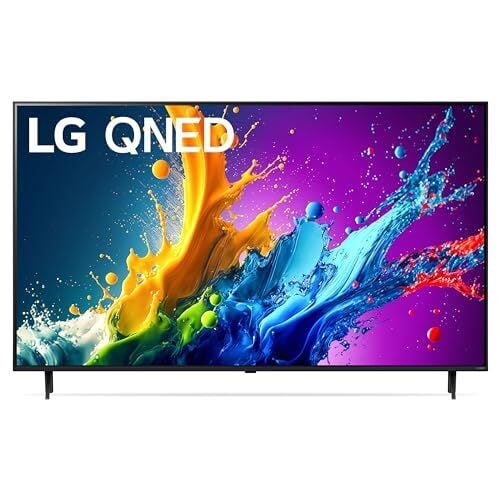
It’s a good time to be shopping for TVs, with many options available right now. The TCL QM7 is a great budget TV currently on sale and its main competitor, Hisense’s U7, is also down to its lowest price. If you want a better-quality TV, though, LG’s 75-inch QNED80T is $896.99 (originally $1,399.99), is also at the lowest price it has ever been, according to price-tracking tools.

The QNED80T’s operating system, WebOS 24, comes with five years of guaranteed updates, which will keep your TV up-to-date until you’re ready to upgrade again. WebOS 24 is great for cloud gaming, with GeForce NOW and Amazon Luna (among other services) easily accessible on the TV menu. If you’re into sports, you can also customize the sports card to show your team’s schedules and scores. Because this is an LG, you also get LG Channels, which consists of over 300 free live channels.

The picture is an edge-lit 60Hz panel, which isn’t great compared to the QM7 or U7, but because it is a QNED instead of a QLED, you get better colors and black levels than the QM7 and U7. So really, it comes down to what you value. The QNED80T has a wider viewing angle, which is great if you plan to use it in a living room and watch TV with many people sitting around.

On the LG, games will look smooth with FreeSync and VRR. It also has a game optimizer setting so you can set the picture depending on the type of game easily to your liking. You also get four HDMI 2.1 ports if you like to have multiple consoles at once.

Google is removing Assistant from most phones this year

Google Assistant’s days are numbered. Google announced Friday that all Android devices are switching to Gemini as their default assistant and “the classic Google Assistant will no longer be accessible on most mobile devices.”

The company says it’s working to convert more mobile devices from Google Assistant to Gemini in 2025, and plans on “upgrading tablets, cars and devices that connect to your phone, such as headphones and watches” to the new AI assistant. That presumably includes other platforms like iOS, as well. While smart home devices don’t seem to be a focus at Google as of late, the company also reaffirmed plans to use Gemini to power a new experience on speakers, displays, and streaming boxes.

The only way to really avoid Google Assistant’s retirement is to have a device that doesn’t meet Gemini’s minimum system requirements: Running at least Android 10 and having at least 2GB of RAM. If you’ve got both, say goodbye to your old assistant.

For those willing to look, the writing has been on the wall for Google Assistant for a while now. Google launched its Pixel 9 line with Gemini as the default instead of Google Assistant, a pretty bad sign considering Pixels function as one big Google lifestyle ad. The company has also deliberately tried to give Gemini basic capabilities of Assistant over time, presumably to make this transition possible. 

It’s not clear when the switch will happen, but it would make sense for any Android 16 device to use Gemini rather than last years model.

This article originally appeared on Engadget at https://www.engadget.com/ai/google-is-removing-assistant-from-most-phones-this-year-182700104.html?src=rss

The same day Trump bought a Tesla, automaker moved to disrupt trade war

Elon Musk’s Tesla is waving a red flag, warning that Donald Trump’s trade war risks dooming US electric vehicle makers, triggering job losses, and hurting the economy.

In an unsigned letter to the US Trade Representative (USTR), Tesla cautioned that Trump’s tariffs could increase costs of manufacturing EVs in the US and forecast that any retaliatory tariffs from other nations could spike costs of exports.

“Tesla supports a robust and thorough process” to “address unfair trade practices,” but only those “which, in the process, do not inadvertently harm US companies,” the letter said.

Read full article

Comments

Firefly’s Blue Ghost lander snapped an incredible pic of a solar eclipse from the Moon

Firefly’s Blue Ghost lunar lander has snapped a gorgeous photo of a solar eclipse from the Moon in which Earth covers up most of the Sun, leaving only the so-called diamond ring effect. It also looks nearly identical to the logo of the early 2000s genre show Heroes.

The lander snapped the photo at around 1:30AM ET on Friday morning, as the Earth slowly blocked a view of the Sun. The solar eclipse on the Moon occurred at the same time as a total lunar eclipse here on Earth. Terrestrial viewers saw the lunar surface turn a red hue.

guys the moon is red go outside pic.twitter.com/b7SftQh1Oy

— Kevin (@K3V1N) March 14, 2025

The eclipse lasted for around five hours at the lunar landing site in Mare Crisium. Firefly released another image from the earlier part of the eclipse that shows the lander’s solar panel as the Sun starts to hide behind Earth’s shadow. Cool stuff, right?

The beginning of the eclipse.
Firefly Aerospace

Firefly’s Blue Ghost lander successfully touched down on the Moon on Sunday, March 2 at around 3:30AM ET. It landed upright, with no issues. This is something that cannot be said about rival company Intuitive Machines’ landers.

This is Firefly’s first mission to the Moon, so Blue Ghost is packed with ten NASA instruments designed to probe the lunar surface and gather data to (hopefully) support upcoming human missions to the natural satellite. This is all part of NASA’s Commercial Lunar Payload Services (CLPS) initiative. The lander is set to operate on the lunar surface until March 16.

Firefly says it will try to downlink more images from the eclipse once Blue Ghost’s X-band antenna has warmed up after being stuck in the cold throughout the event. The company has already shown off some nifty POV footage of the landing.

This article originally appeared on Engadget at https://www.engadget.com/science/space/fireflys-blue-ghost-lander-snapped-an-incredible-pic-of-a-solar-eclipse-from-the-moon-180231560.html?src=rss

China Announces Generative AI Labeling To Cull Disinformation

China has introduced regulations requiring service providers to label AI-generated content, joining similar efforts by the European Union and United States to combat disinformation. The Cyberspace Administration of China and three other agencies announced Friday that AI-generated material must be labeled explicitly or via metadata, with implementation beginning September 1.

“The Labeling Law will help users identify disinformation and hold service suppliers responsible for labeling their content,” the CAC said. App store operators must verify whether applications provide AI-generated content and review their labeling mechanisms. Platforms can still offer unlabeled AI content if they comply with relevant regulations and respond to user demand.


Read more of this story at Slashdot.