We may earn a commission from links on this page. Deal pricing and availability subject to change after time of publication.
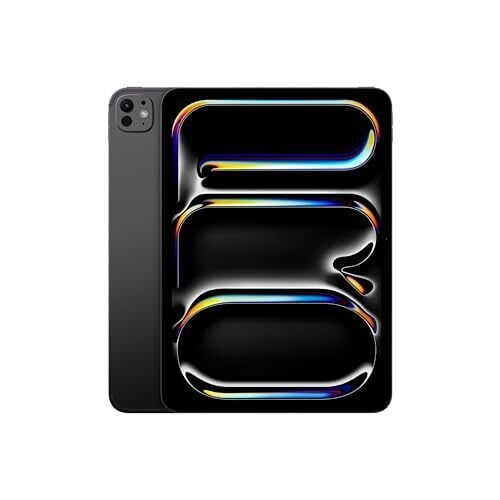
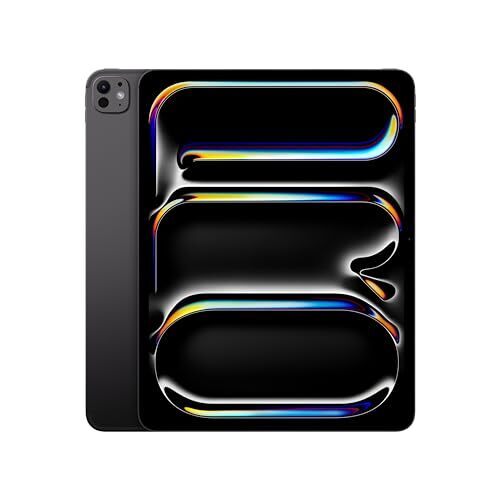
Apple has been top dog in the premium tablet space for years, and the iPad Pro with an M4 chip released last year solidified their dominance. If you’ve been waiting for a discount on the best-performing tablet you can get, take your pick from the available options: the 11-inch iPad Pro wifi and celular version is $1,099 (originally $1,199), the 13-inch iPad Pro wifi version is also $1,099 (originally $1,299), and the 13-inch wifi and cellular version is $1,299 (originally $1,499). These deals bring all versions down to the lowest prices these iPad models have been since their release, according to price-tracking tools.
The M4 is about 1.5 times faster than the M2, the chip used in the previous generation of iPads. That’s a big difference for anyone looking to use their iPad for more than just navigating the web and streaming media apps. The 11-inch screen is an OLED display with a maximum brightness of 1,600 nits and a contrast ratio of 2,000,000:1, making it ideal for creators who need to see accurate colors for pictures or videos. The processing power can easily handle heavy-duty apps like Final Cut Pro, Logic Pro, or Photoshop. A 120Hz refresh rate also means games will look smooth.
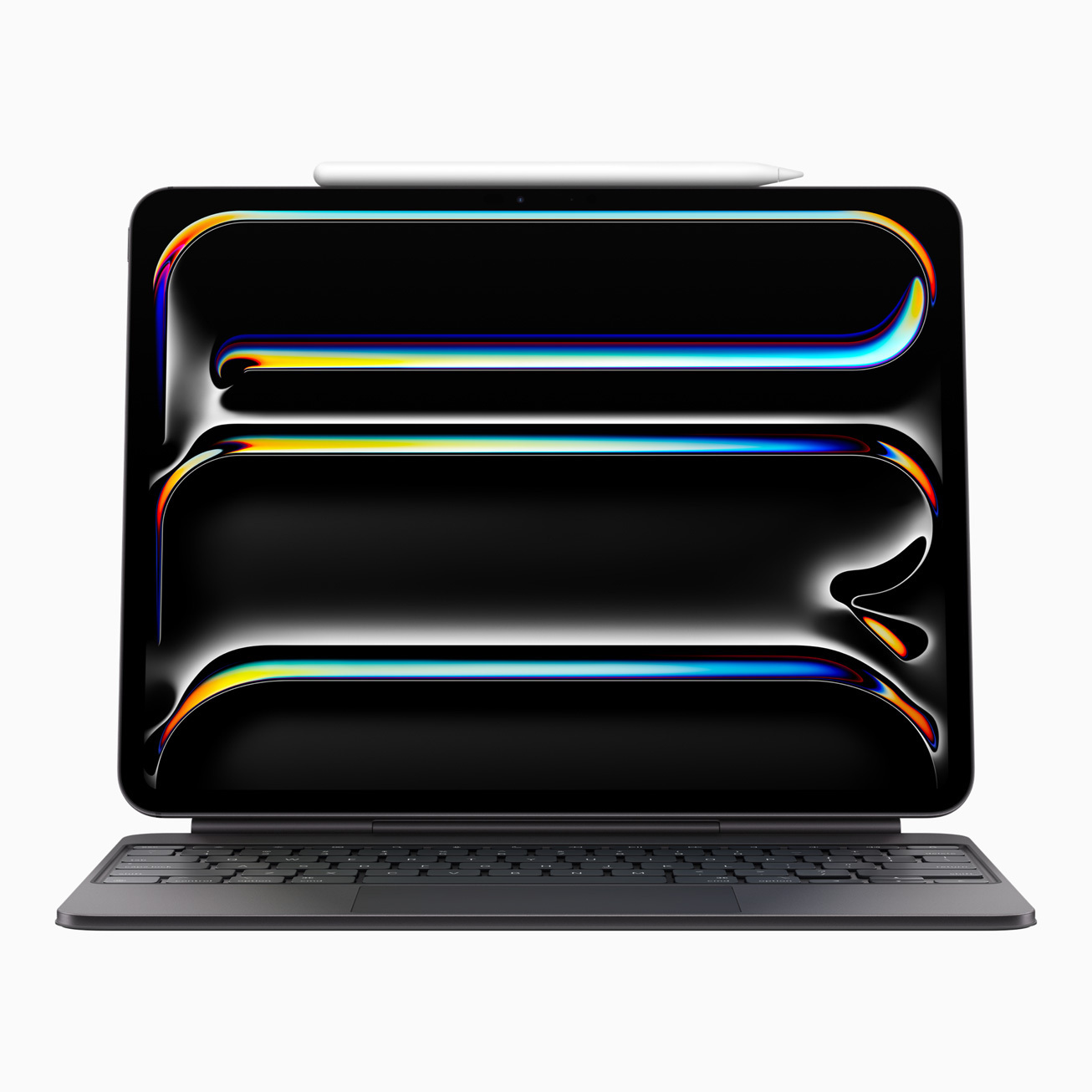
As far as battery life, you can expect about 10 hours depending on your use, and a charge that takes about two hours to get to full. Keep in mind Apple switched to USB-C charging, and this iPad does not support wireless charging. If you don’t get the cellular version, you’ll be limited to wifi signal. You can get the Apple Pencil Pro and the Magic Keyboard if you want to complete the set, but of course, they’re not necessary.
If you’re not going to be doing heavy work, the iPad Air will do just fine. But if you’re looking for the best tablet to perform professional tasks, the iPad Pro M4 is at a great price right now.
When I played Hazelight’s last game, It Takes Two, back in 2021, it was with an ex who’d had different ideas about where our relationship should go than I did. This made playing as a squabbling, estranged couple in a co-op platformer more fitting for that moment in my life than I could have anticipated. So it’s funny…
In his opening speech as HHS Secretary, Kennedy announced his commission will investigate the childhood vaccine schedule as a culprit of chronic disease.
France has upped the ante in the quest for fusion power by maintaining a plasma reaction for over 22 minutes — a new record. From a report: The milestone was reached on February 12 at the Commissariat a lenergie atomique et aux energies alternatives (CEA) WEST Tokamak reactor.
Achieving the dream of commercial fusion power is the Holy Grail of engineering and has been for 80 years. With a single gram of hydrogen isotopes yielding the energy equivalent of 11 tonnes of coal, a practical fusion reactor would hold the promise of unlimited, clean energy for humanity until the end of time.
Small wonder that billions have been invested by both government and industry in the quest to make fusion power a reality. However, while fusion is relatively easy to achieve in the heart of the sun or in a hydrogen bomb, creating a practical reactor that produces more energy than is put into it is another matter entirely.
Over the past few years, Google has embarked on a quest to jam generative AI into every product and initiative possible. Google has robots summarizing search results, interacting with your apps, and analyzing the data on your phone. And sometimes, the output of generative AI systems can be surprisingly good despite lacking any real knowledge. But can they do science?
Google Research is now angling to turn AI into a scientist—well, a “co-scientist.” The company has a new multi-agent AI system based on Gemini 2.0 aimed at biomedical researchers that can supposedly point the way toward new hypotheses and areas of biomedical research. However, Google’s AI co-scientist boils down to a fancy chatbot.
A flesh-and-blood scientist using Google’s co-scientist would input their research goals, ideas, and references to past research, allowing the robot to generate possible avenues of research. The AI co-scientist contains multiple interconnected models that churn through the input data and access Internet resources to refine the output. Inside the tool, the different agents challenge each other to create a “self-improving loop,” which is similar to the new raft of reasoning AI models like Gemini Flash Thinking and OpenAI o3.
The Humane AI Pin had an impressive debut, promising to be an intuitive way to interact with AI. However, once the device actually rolled out, it became clear that it was far from actually delivering on that promise. Its poor performance led to scathing reviews, which in turn quickly sank the AI Pin in the eyes of potential buyers. Humane
President Trump yesterday issued an executive order declaring sweeping power over agencies that were created to operate independently from the White House. The order declares that “officials who wield vast executive power must be supervised and controlled by the people’s elected President,” and that “it shall be the policy of the executive branch to ensure Presidential supervision and control of the entire executive branch.”
An accompanying fact sheet issued by the White House said the order applies to “so-called independent agencies like the Federal Trade Commission (FTC), Federal Communications Commission (FCC), and Securities and Exchange Commission (SEC).” The Federal Election Commission is also expected to be affected by the order.
The White House said it will require independent agencies to submit draft regulations for review, except for the monetary policy functions of the Federal Reserve. Independent agencies are also ordered to “consult with the White House on their priorities and strategic plans.” The order claims more White House control over how agencies spend their budgets.
The demise of Humane is perhaps the most predictable tech story of 2025. The company tried to build some buzz around its AI Pin in late 2023, marketing the device as a tiny replacement for smartphones and playing up the fact that Humane’s co-founders were former Apple employees. The problem was that it wasn’t really clear what the AI Pin would do to justify its $700 asking price (plus a $24/month subscription).
It didn’t take long for things to spiral out of control. The AI Pin was released in April of 2024 to some of the worst reviews I’ve ever seen for a consumer tech product. Just a month after launch, reports surfaced that the company was already trying to be acquired — for the positively ludicrous sum of $750 million to $1 billion dollars. At the same time, it was rumored that Humane sold only 10,000 Pins, a far cry from the 100,000 they had planned for. HP was named as a potential suitor last May, and the company smartly waited until they could pluck Humane for a comparatively paltry $116 million.
As it turned out, waving your hands and shouting about the promise of AI doesn’t make it any easier to build compelling hardware — we slammed its high price, terrible battery life, slow performance, excessive heat and hard-to-use projected display. (And Engadget was far from the only publication toevisceratethisdevice.)
Hayato Huseman for Engadget
For a device whose main interface was conversational, the challenges the AI Pin had answering questions or executing commands made it a non-starter. Even when it did what was asked, it did it in some strange ways, like sending generic texts instead of letting you dictate what exactly you wanted to say. Its camera rarely worked as intended; after taking photos and viewing them on the projector, the Pin would get extremely warm and sometimes just shut down entirely. Speaking of that projection screen, it was nearly impossible to actually see it outdoors, even on a cloudy day. And interacting with it made our reviewer Cherlynn Low want to “rip [her] eyes out.”
The whole debacle is an illustrative example of how most consumer-grade AI isn’t ready for prime time. Google and Apple may be trying to shove Gemini and Apple Intelligence down our throats on nearly every product they make, but those tools are additive, built on top of the strong foundations of each company’s existing platforms. In Humane’s case, there was nothing to fall back on. And the combo of terrible voice responses and recognition paired with a projector display that was not at all ready for prime time (not to mention the other hardware failings) was far too much to overcome.
There was simply no intelligence to be found here, artificial or otherwise.
To be fair to Humane, building hardware is notoriously difficult; first-generation products often have glaring flaws, even when you’re talking about massive companies like Apple. The first iPhone, iPad and Apple Watch may have shown huge promise, but they also had strange omissions and performance issues that made them hard to recommend to everyone.
Some companies manage to figure that out; Pebble is a great example of a hardware startup that survived some early issues to find some success. It beat Apple, Samsung and Google to the smartwatch market, and did it in a way that has yet to be imitated (maybe that’s why the company is being resurrected). The Pebble wasn’t exactly the most elegant piece of hardware, but both the watch and its software worked well enough that it paved the way for the more advanced smartwatches we have today. Of course, that wasn’t enough to keep Pebble alive, as the company eventually filed for insolvency and had its assets picked up by Fitbit (which was later purchased by Google, if you’re keeping track).
Humane’s situation at launch wasn’t entirely different — it was trying to build a new type of hardware altogether, and history tells us that the first products in a new space are going to be far from perfect. But, if there had at least been a glimmer of useful software, Humane might have survived to improve on those hardware problems with a future version. But its assistant was so bad that it killed any potential that the AI Pin had. There was simply no intelligence to be found here, artificial or otherwise.
My takeaway from the Humane disaster is that it’s too soon to spend your hard-earned money on the promise of AI — the marketplace isn’t solidified at this point, and trusting a brand-new company like Humane to get this sort of thing right is several bridges too far. (If you’re not convinced, look at the similarly flawed Rabbit R1.) Apple Intelligence is still half-baked at best, but at least you can turn it off and ignore it. But the AI Pin, well, relied completely on AI, and it wasn’t just “not ready” — it was one of the worst devices we’ve ever tried in our nearly 21 years as a publication. For some thousands of early adopters, that means their Pin will be a brick in just a few days, with no financial compensation coming their way. But hey, at least it will still be able to tell you its battery level.
This article originally appeared on Engadget at https://www.engadget.com/ai/the-humane-ai-pin-debacle-is-a-reminder-that-ai-alone-doesnt-make-a-compelling-product-190119112.html?src=rss
The Fedora Project is rolling out expanded coverage of RISC-V hardware moving forward and making it easier for those with RISC-V developer boards to run Fedora Linux…
Your eyes are fragile, complex, and important to your well-being, but taking care of them can be expensive. First of all, it’s not easy to get glasses without a recent prescription, and the average cost of an eye exam without insurance coverage is close to $200. The average cost of the glasses themselves is about $230—and that’s before you add on the coatings you need. This can be a real challenge for the estimated 63% of Americans who don’t have vision insurance, meaning they’re paying out of pocket.
There are resources that can offer low-cost or even free eye exams and glasses, however, if you meet certain requirements (like income level and lack of insurance). If you or someone in your family desperately needs new glasses, here’s where you can look for those services.
Free exams
Whether you’re shopping at a cheap online store for glasses or trying to get a free pair, you’ll need a relatively recent prescription (generally within the last two years). If you don’t have one, you can find cheap or free examinations using the following resources:
EyeCare Americaoffers eye exams and ongoing vision care at no cost to people over the age of 65 and people who are at a higher risk of glaucoma. These services are provided by volunteer ophthalmologists around the country. They don’t provide eyeglasses.
All Children See offers vision care for children under the age of 18 who have failed a vision screening, have some other vision problem, and who are uninsured or unable to afford care.
InfantSEEis administered by the American Optometric Association (AOA) and offers free eye assessments for babies ages 6 to 12 months, regardless of income or insurance status.
Eyes of Hopeoffers no-cost eye exams to adults and children who have no insurance coverage and meet their income requirements.
Many community health centers offer eye clinics with free or low-cost exams and eyeglasses. You can locate a CHC near you at this site.
Free glasses
Once you have your prescription, you need to fill it. The following programs offer free or super-cheap eyeglasses once you have a prescription in hand:
New Eyes provides a “basic” pair of eyeglasses for a $10 non-refundable application fee. You have to apply online (do it here).
Eyes of Hope also provides free eyeglasses to adults and children who meet their income requirements.
Lions Club International clubs collect and distribute donated eyeglasses. You can find a local club here and contact them directly to find out if they participate in the recycling program and how to start the process.
Promotions. Many online stores offer a free first pair of glasses when you shop with them. While there’s no guarantee that these programs will be offered when you need them, sites like GlassesShop and Abbe offer a free pair of basic glasses (shipping and handling is extra) if you have a recent prescription.
Lions juggling chainsaws are fun to watch, but you wouldn’t want them trimming your trees. Nobody likes The Man. When a traffic cop tells you to straighten up and slow down or else, profound thanks are rarely the first words on your lips. Then you drive past a car embedded in a tree, surrounded by blue lights and cutting equipment. Perhaps Officer Dibble had a point.
After launching its AI Pin in April 2024 and reportedly seeking a buyout by May 2024, Humane is shutting down. Most of the people who bought an AI Pin will not get refunds for the devices, which debuted at $700, dropped to $500, and will be bricked on February 28 at noon PT.
At that time, AI Pins, which are lapel pins with an integrated AI voice assistant, camera, speaker, and laser projector, “will no longer connect to Humane’s servers,” and “all customer data, including personal identifiable information… will be permanently deleted from Humane’s servers,” according to Humane’s FAQ page. Humane also stopped selling AI pins as of yesterday and canceled any orders that had been made but not yet fulfilled. Humane said it is discontinuing the AI Pin because it’s “moving onto new endeavors.”
Those new endeavors include selling off key assets, including the AI Pin’s CosmOS operating system and intellectual property, including over 300 patents and patent applications, to HP for $116 million, HP announced on Tuesday. HP expects the acquisition to close this month.
The new iPhone 16e is designed to get Apple Intelligence into as many hands as possible. The company recently began activating its AI features by default during iOS setup, suggesting a harder push to spur adoption and establish iOS as an AI-first platform. But since Apple Intelligence has up till today only been available on the iPhone 16 series (and just the iPhone 15 Pro and Pro Max before that), there hasn’t been a sub-$600 iPhone that can run the latest suite of tools. So the addition of the $599 iPhone 16e to Apple’s lineup isn’t surprising.
What was slightly unexpected was the framing. The iPhone 16e’s arrival was heralded by feverish speculation about a new iPhone SE, which was last released three years ago for a starting price of $429. Though the iPhone 16e is cheaper than the rest of the iPhone 16 family, its price certainly isn’t what we might consider “budget” or “entry-level.”
Apple Intelligence’s arrival on a lower-cost iPhone is thanks to one of its biggest upgrades from the SE: the A18 chip (the same processor from the iPhone 16 and 16 Plus). That makes it Apple’s cheapest AI-equipped model by $300. However, that’s quite a bump up from the (now-retired) iPhone SE’s $429.
The phone has a much bigger display than its predecessor: 6.1 inches, up from the 2022 iPhone SE’s mere 4.7 inches. It’s also the first entry-level model to adopt modern iPhones’ full-screen design with Face ID. (Pour one out for the now-retired home button.) However, it doesn’t have the Dynamic Island found on recent higher-end models.
It also gets the Action button, the customizable physical shortcut on the phone’s side. It debuted in the iPhone 15 Pro series and is found in all iPhone 16 models.
The iPhone 16e also complies with EU standards by switching from Lightning to USB-C, which is probably the least surprising thing about it. It also lacks MagSafe charging, sticking with standard Qi wireless charging at up to 7.5W.
A list of geeky tech specs doesn’t tell the whole story but can still serve as a starting point. Here’s how the new entry-level iPhone compares to Apple’s previous model and its two biggest Android-running rivals: the Google Pixel 8a and Samsung Galaxy A35 5G. (Although the A35 isn’t quite in the same price range, it serves a similar niche in Samsung’s lineup.)
iPhone 16e
iPhone SE (2022)
Google Pixel 8a
Samsung Galaxy A35 5G
Price
$599 / $699 / $899
$429 / $479 / $579
$499 / $559
$400
Dimensions
146.7 x 71.5 x 7.8 mm (5.78 x 2.82 x 0.31 inches)
138.4 x 67.3 x 7.3 mm (5.45 x 2.65 x 0.29 inches)
152.1 x 72.7 x 8.9mm (6 x 2.9 x 0.4 inches)
161.7 x 78 x 8.2 mm (6.37 x 3.07 x 0.32 inches)
Weight
167g (5.88 ounces)
144g (5.09 ounces)
188 g (6.7 oz)
209 g (7.37 oz)
Screen size
6.1 inches
4.7 inches
6.1 inches
6.6 inches
Screen resolution
2,532 x 1,170 (460 ppi)
1,334 x 750 (326 ppi)
1,080 x 2,400 (430 ppi)
2,340 x 1,080 (389 ppi)
Screen type
OLED
Retina HD LCD
60Hz
Super AMOLED
up to 120Hz
SoC
Apple A18
Apple A15 Bionic
Tensor G3
Exynos 1380
RAM
N/A
4 GB
8 GB
6 / 8* GB
* Non-US only
Battery
“up to 26 hrs video playback”
2,018mAh
4,492 mAh
5,000 mAh
Storage
128 / 256 / 512GB
64 / 128 / 256 GB
128 / 256 GB
128 / 256* GB
MicroSD up to 1TB
* Non-US only
Rear camera(s)
48MP, f/1.6
Wide: 12 MP, f/1.8
Wide: 64 MP, f/1.89
Ultrawide: 13MP, f/2.2
Wide: 50MP, f/1.8
Ultrawide: 8MP, f/2.2
Macro: 5MP, f/2.4
Front camera
12MP, f/1.9
7 MP, f/2.2
13MP, f/2.2
13MP, f/2.2
Water / dust rating
IP68
IP67
IP67
IP67
Wi-Fi
Wi‑Fi 6 (802.11ax)
802.11ax
Wi-Fi 6E
Wi-Fi 6 (802.11ax)
Bluetooth
v5.3
v5.0
v5.3
v5.3
OS
iOS 18
iOS 18
Android 15
Android 14
One UI 6.1
Colors / finish
Black / White
Aluminum
Midnight / Starlight / (Product)Red
Aluminum
Obsidian / Porcelain / Aloe / Bay
Navy / Lilac
Update, February 19 2025, 1:46PM ET: This story has been updated to add more context about the iPhone 16e in the intro, covering the speculation that Apple was planning to launch a new model of the iPhone SE.
This article originally appeared on Engadget at https://www.engadget.com/mobile/smartphones/apple-just-unveiled-the-iphone-16e-heres-how-it-compares-to-the-competition-171306637.html?src=rss
Instagram is rolling out an update for its messaging system that adds several new tools. These features could allow Instagram to better compete with direct-messaging rivals like Apple iMessage and various third-party platforms.
First up, there’s music-sharing. The update lets users share tunes in both one-on-one messages and group chats. Just open up the sticker tray and tap on the “Music” option. This will open up a search bar of Instagram’s audio library. There are a couple of caveats here. The song has to be available via Instagram and clips are maxed out at 30 seconds.
Direct messages will also now have a translation tool that works with 99 languages. The functionality here looks incredibly simple. Users just have to hold down a message and tap “Translate.” The translated message should appear directly below the original one. Easy peasy.
Meta
There’s a new way to pin messages, images or even Reels to the top of chats. Hold down the message and tap “Pin.” Instagram says folks can pin up to three messages per conversation. I could see this being handy to keep oft-requested information at the ready, though it’ll likely be used primarily for memes (not that there’s anything wrong with that.)
Instagram will also let people schedule messages by long-pressing the send button. This can be used to plan messages up to 29 days in advance. Finally, the platform has introduced a way to invite people to a group chat via a QR code. All of these tools begin rolling out today to iOS and Android users worldwide. A web update is in the works but isn’t available just yet.
This article originally appeared on Engadget at https://www.engadget.com/social-media/instagram-adds-a-whole-slew-of-new-dm-features-in-latest-update-184535399.html?src=rss
For a while now, many AI researchers have been working to integrate a so-called “world model” into their systems. Ideally, these models could infer a simulated understanding of how in-game objects and characters should behave based on video footage alone, then create fully interactive video that instantly simulates new playable worlds based on that understanding.
Microsoft Research’s new World and Human Action Model (WHAM), revealed today in a paper published in the journal Nature, shows how quickly those models have advanced in a short time. But it also shows how much further we have to go before the dream of AI crafting complete, playable gameplay footage from just some basic prompts and sample video footage becomes a reality.
More consistent, more persistent
Much like Google’s Genie model before it, WHAM starts by training on “ground truth” gameplay video and input data provided by actual players. In this case, that data comes from Bleeding Edge, a four-on-four online brawler released in 2020 by Microsoft subsidiary Ninja Theory. By collecting actual player footage since launch (as allowed under the game’s user agreement), Microsoft gathered the equivalent of seven player-years’ worth of gameplay video paired with real player inputs.
Nikola, the hydrogen-truck maker that briefly sported a market value comparable to Ford Motor, has filed for bankruptcy with plans to wind down its business. From a report: Nikola on Wednesday said that it made the chapter 11 filing with the U.S. Bankruptcy Court in Delaware and that it plans to conduct a court-supervised auction of its assets.
The Phoenix company said it worked for months with its financial and legal advisers to find a way to sustain its operations before determining that a structured sale process was the best way to maximize the value of its assets.
Valve is handing Team Fortress 2 modders the keys to the kingdom, as long as they don’t try to make any money from it. The company has added the client and server game code to the Source software development kit (SDK), allowing fans to create new games and experiences based on TF2.
“Unlike the Steam Workshop or local content mods, this SDK gives mod makers the ability to change, extend or rewrite TF2, making anything from small tweaks to complete conversions possible,” Valve explained. Modders will be able to publish their creations as new games on Steam if they wish.
The main catch is that Valve is offering the TF2 source code on a non-commercial basis, so any mods or content therein that are based on the SDK have to be available for free. The company also notes that much of the content that’s in players’ inventories — most of the in-game items, in fact — were created by the Steam Workshop community. “To respect that, we’re asking TF2 mod makers continue to respect that connection, and to not make mods that have the purpose of trying to profit off Workshop contributors’ efforts,” Valve said. “We’re hoping that many mods will continue to allow players access their TF2 inventory, if this makes sense for the mod.”
On top of adding the TF2 source code to the SDK, Valve is making other updates to its other multiplayer games that run on Source, its old game engine. Those include 64-bit binary support, a scalable heads-up display/user interface and prediction fixes for the likes of Day of Defeat: Source, Half-Life 2: Deathmatch, Half-Life Deathmatch: Source and Counter-Strike: Source.
It’s not too surprising that Valve is handing over the TF2 source code at this point. The game has largely been in maintenance mode for a long time as the company focused on otherprojects. It took the company years to remedy a major botinvasion, indicating just how low TF2 is on its list of priorities. Giving fans the client and server code could be a sign that Valve is ready to wind down official support for the game.
This article originally appeared on Engadget at https://www.engadget.com/gaming/pc/valve-hands-the-team-fortress-2-source-code-to-modders-183223667.html?src=rss
As much as Apple would like it, iMessage is not the only messaging platform in the world. Yes, RCS is nice, but a lot of people prefer using WhatsApp and Telegram instead. And given the divisive state of world politics right now, secure apps like Signal have their own appeal.
The reality is that, instead of just sticking to your default texting program, you’re probably juggling between multiple messaging apps right now. Unfortunately, the iPhone doesn’t really make this process easy. Now, there’s a new app called DefaultSMS that’s trying to bridge this gap.
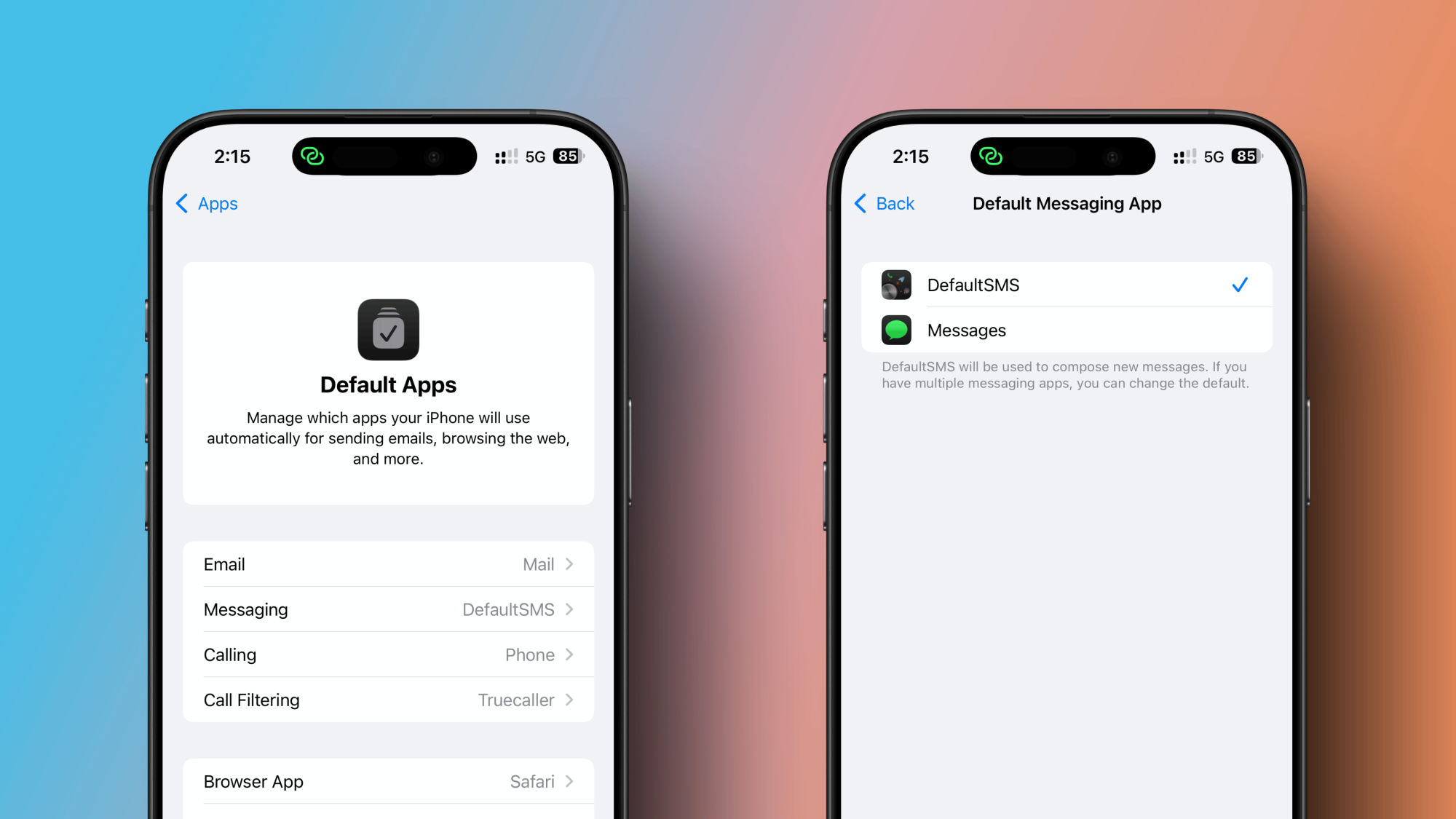
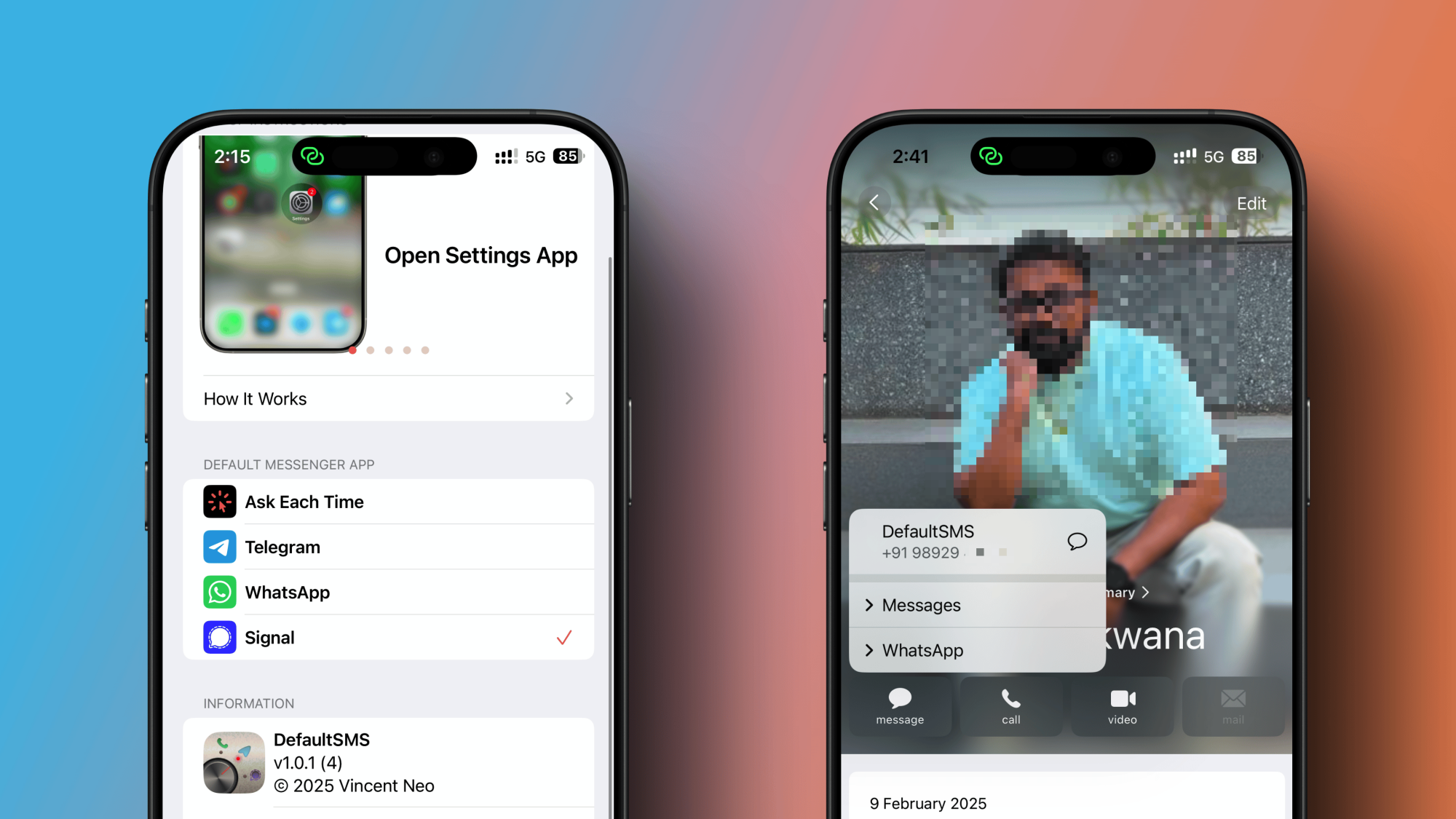
DefaultSMS uses a new, obscure iPhone setting to change your default messaging app for you. It’ll kick in whenever you start up a new message, whether from a link, a preview page, or a contact page. This lets you automatically text using whatever app you want, even if that app doesn’t yet officially support Apple’s new setting.
DefaultSMS works with WhatsApp, Telegram, or Signal, but conveniently, it also comes with the option to bring up a menu to instead choose between all of your messaging apps every time you go to text, so you can more easily navigate between them on a case-by-case basis. No matter your preference, there’s a lot to like here.
How to set up DefaultSMS on iPhone
After downloading the app from the App Store (it costs $0.99), make a trip to the Settings app. Scroll down to the Apps section, choose Default Apps, tap Messaging, and switch to the DefaultSMS app.
Credit: Khamosh Pathak
Now, open the DefaultSMS app to choose your preferred default messaging app. You can choose between Signal, Telegram, and WhatsApp. Or, if you frequently jump between Signal and WhatsApp, you can choose the Ask Each Time option instead. Again, when you use this feature, the app will prompt you to choose a messaging app each time you go to text, including the default Messages app.
Now that setup is done, it’s time to test it out.
Credit: Khamosh Pathak
Go to the Phone app, open a contact page, tap the Message button, and the DefaultSMS app will take over, opening a message to your contact in the app of your choice. I, personally, use this with WhatsApp, but regardless of your app of choice, it’s nice not to have to hunt for each of my messaging apps on my home screen every time I want to use them.
DefaultSMS still has some limitations. You’ll still continue to receive SMS texts and iMessages in the default Messages app, and of course, this method only works if the person you’re messaging has the app you’re messaging them with installed. If they don’t use Telegram, for instance, DefaultSMS won’t magically let you them send them a Telegram message.