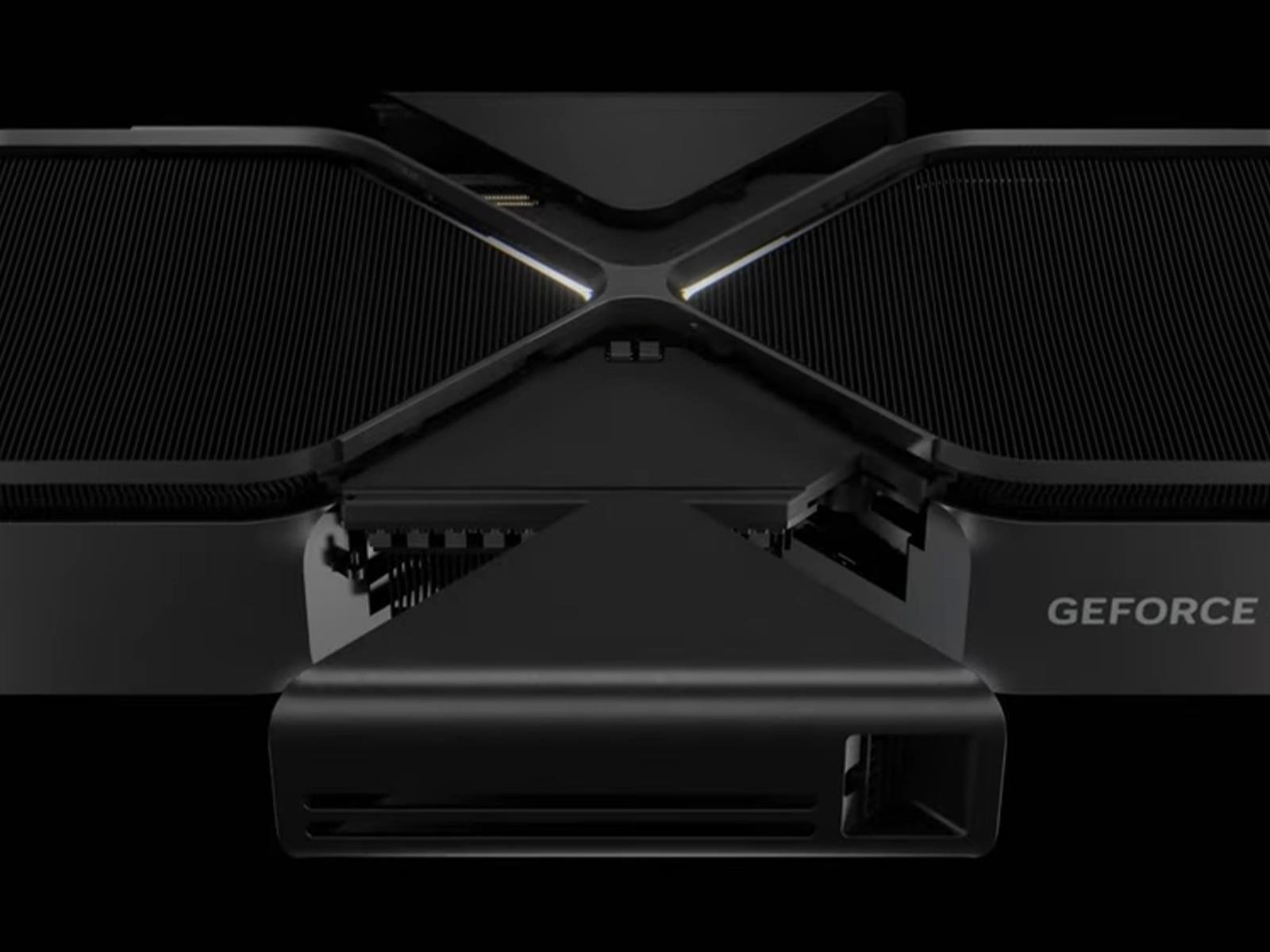
It turns out that a spattering of reports about some GeForce RTX 5090 graphics cards shipping with missing render output unit (or raster operations pipeline) hardware were the result of a “production anomaly” and not an issue with the BIOS. NVIDIA said as much in a statement confirming a “rare issue” with some cards, which also includes the
Alyssa Rosenzweig has carried out a fresh sync of the Asahi Linux AGX Gallium3D and Honeykrisp Vulkan driver changes of the work that was being carried by the Asahi Linux development tree and now upstreamed to Mesa proper…
Bethesda’s Spacefaring RPG Starfield Now Has A 6DOF PC VR Mod
Starfield, Bethesda’s 2023 spacefaring RPG, now has a VR mod available to download. Created by a modder called Mutar, this adds full 6DOF head tracking and stereoscopic rendering, though motion controls aren’t yet implemented and movement needs a gamepad. You can watch early footage of that above, and mod access requires subscribing to Mutar’s Patreon.
VR Space Dogfighter Rogue Stargun Is Now Available On Pico
Previously launched on Quest and Steam, VR space combat sim Rogue Stargun is now available on Pico headsets. Created by DuGames, this features a story-driven solo campaign across 24 missions where you can pilot five starfighters with an interactive VR cockpit, using virtual hands to interact with your controls.
New UNDERDOGS Update Added A VR Camera Toolbox
VR mech roguelike UNDERDOGS introduced a new VR camera toolbox for setting up cameras to capture footage in game using LIV’s creator kit. Available on Quest 3/3S and PC VR, you can now record landscape or portrait from several angles and pause the game to adjust. However, One Hamsa says this toolbox “has some performance costs” that may emerge during heavier fights or on weaker hardware.
Downtown Club 1.1.0 Core Update Is Now Live On Quest
Launched in early access last year on Quest, VR racing game Downtown Club has just released its ‘1.1.0 Core Update.’ While this update resets the game’s local and online records due to the new car physics, promised changes include better car handling, improved AI for your opponents, and more.
COLD VR Plans To Address Launch Criticism With Major Update
Having released to mixed reception following this month’s launch, COLD VR developer Allware confirmed it’s planning a big update to address key criticisms. This includes replacing the Backrooms with new levels in the main campaign, the ability to grab enemy weapons, and improvements to the art.
Other Updates
Here’s everything else we’ve spotted across this week.
Assetto Corsa EVO introduced the Fuji Speedway track and two new cars in update 0.16: the Lancia Delta HF Integrale “Evoluzione 2” and Lamborghini Huracán STO.
The latest Breachers update introduces custom reticles, a favoriting system for skins, and a brand-new roadmap.
Upcoming action-adventure game Of Lies and Rain provided a new developer update about the game on Steam.
The latest VRChat patch brings updates to the main menu, age verification and more.
Intergalactic action game Space Drop will reach PlayStation VR2 this July.
If you’d like to inform us about a VR game we should know about for this article or future updates, you can use our contact page or email tips@uploadvr.com with details.
This week saw many of the people behind smash hit Marvel Rivals, including the game’s director, get laid off by developer NetEase in a move the company says was made “for organizational reasons and to optimize development efficiency for the game.” Meanwhile Humane, the company behind a $700 AI pin, announced that next…
Nobody wants memory bugs. Penguinistas continue debate on how to squish ’em. Some Linux kernel maintainers remain unconvinced that adding Rust code to the open source project is a good idea, but its VIPs are coming out in support of the language’s integration.
The mantis shrimp comes equipped with its own weapons. It has claws that look like permanently clenched fists that are known as dactyl clubs. But when it smashes the shells of its prey, these fists come out of it undamaged.
When throwing punches, mantis shrimp can strike at the speed of a .22 caliber bullet (about 1,316 kmph or 818 mph)—one of the fastest movements in the animal kingdom. That generates a force over a thousand times their body weight. However, unleashing that much energy can backfire because the shockwaves it produces could seriously damage an animal’s soft tissue. None of that seems to affect the mantis shrimp. Now we finally know why.
When a team of researchers from Northwestern University studied the dactyl clubs of one mantis shrimp species, they found that they have layered structures that selectively block sound waves, acting as protective gear against vibrations that could otherwise harm the shrimp. These types of structures, known as phononic mechanisms, filter out sound waves that could otherwise cause nerve and soft tissue trauma.
Nvidia dropping 32-bit PhysX from the RTX 50-series’ CUDA infrastructure is another sign that game preservation can’t depend on those making gaming hardware.
Microsoft’s newly announced Muse AI model for game development has triggered immediate backlash from industry professionals. “Fuck this shit,” responded David Goldfarb, founder of The Outsiders, arguing that such AI tools primarily serve to “reduce capital expenditure” while devaluing developers’ collective artistic contributions.
Multiple developers told Wired that the tool is aimed at shareholders rather than actual developers. “Nobody will want this. They don’t CARE that nobody will want this,” one AAA developer said, noting that internal criticism remains muted due to job security concerns amid industry-wide layoffs.
The resistance comes as developers increasingly view AI initiatives as threats to job security rather than helpful tools. One anonymous developer called it “gross” that they needed to remain unnamed while criticizing Muse, as their studio still depends on potential Game Pass deals with Microsoft. Even in prototyping, where Microsoft sees AI potential, Creative Assembly’s Marc Burrage warns that automated shortcuts could undermine crucial learning experiences in game development.
The SystemV file-system that implements Xenix FS, SystemV/386 FS, and Coherent FS is set to be removed from the Linux kernel. The SystemV file-system was orphaned back in 2023 while now is set to be removed entirely after developers realized the code was fundamentally broken…
FreeBSD 13.5 Beta 3 is out this weekend in being the newest weekly development version leading towards next month’s stable release to cap off the FreeBSD 13 series…
In addition to this week’s release of Plasma 6.3.1, KDE developers have been busy preparing more bug fixes for what will become Plasma 6.3.2 next month. Additionally, more feature code for Plasma 6.4 continues to bake…
GARDEN GROVE, Calif.—There’s no shortage of companies looking to reinvent the delivery experience using everything from sidewalk drones to electric vans. Some are succeeding, but many more have failed by trying to radically rethink the simple, age-old task of getting stuff from one place to another.
Harbinger likewise wants to shake up part of that industry but in a decidedly understated way. If you found yourself stuck in traffic behind one of the company’s all-electric vehicles, there’s a good chance you wouldn’t even notice. The only difference? The lack of diesel smoke and clatter.
From the outside, Harbinger’s pre-production machine looks identical to the standard flat-sided, vinyl-wrapped delivery vehicles that seemingly haven’t changed in decades. That’s because they really haven’t. Those familiar UPS and FedEx machines are built on common chassis like Ford’s F-59 or Freightliner’s MT45, with ladder chassis and leaf spring designs dating back to the earliest days of trucking.
Scientists have discovered evidence of ancient, shallow lakes on Mars that once had liquid water exposed to the atmosphere, challenging previous theories that all Martian water was covered in ice. Live Science reports: The patterns, which were photographed by NASA’s Curiosity rover, are known as wave ripples — minute ridge-like structures that form along the shores of lakebeds. This means that exposed liquid water must have flowed across Mars’ surface at some point in its history. The ripples were present in two separate lakebeds in Gale Crater, which Curiosity has been exploring since Aug. 2012. “The shape of the ripples could only have been formed under water that was open to the atmosphere and acted upon by wind,” study first author Claire Mondro, a sedimentologist at CalTech, said in a statement.
The researchers also analyzed the height and spacing of the ripple waves to determine the size of the lake that formed them. The structures are approximately 0.2 inches (6 millimeters) tall and about 1.6 to 2 inches (4 to 5 centimeters) apart, indicating they were left by small waves. Based on these dimensions, the researchers believe the Martian lake must have been less than 2 meters (6.5 feet) deep. Both dry lakebeds appear to have formed around 3.7 billion years ago, indicating that Mars had an atmosphere dense and warm enough to support liquid water for longer than previously thought — which could have intriguing implications. “Extending the length of time that liquid water was present extends the possibilities for microbial habitability later into Mars’s history,” Mondro said. In other words: living organisms may have had a longer window in which they could have evolved on the Red Planet. The findings have been published in the journal Science Advances.