[$] Slabs, sheaves, and barns

The kernel’s slab allocator is responsible for the allocation of small
(usually sub-page) chunks of memory. For many workloads, the speed of
object allocation and freeing is one of the key factors in overall
performance, so it is not surprising that a lot of effort has gone into
optimizing the slab allocator over time. Now that the kernel is down to a single slab allocator, the
memory-management developers have free rein to add complexity to it; the
latest move in that direction is the per-CPU
sheaves patch set
from slab maintainer Vlastimil Babka.

The Apple Pencil Pro is back on sale for $99

Apple’s fantastic stylus, the Pencil Pro, is on sale via Amazon for just $99. This is $30 off, which translates to a discount of 23 percent. This isn’t the lowest price we’ve ever seen for this item, but it’s close.

The Apple Pencil Pro is the company’s latest and greatest stylus. It allows for a number of squeeze-based gestures that can be adjusted via a drop-down menu during use. It also includes a gyroscope to detect when the stylus is rolled, which makes it easier to change the orientation of shaped pen and brush tools. Of course, it supports pressure sensitivity.

There’s even a haptic engine to deliver vibration-based feedback when the pen is being used. And, maybe most conveniently, it works with Apple’s Find My network. After all, stylus pens are small and easy to lose. All of this new tech has been squeezed into a package that’s actually lighter than the second-gen Apple Pencil.

The primary downside here is the price, which has been mostly alleviated by this sale. Before making a purchase, double-check to ensure that your iPad supports the Pencil Pro. It’s only compatible with some of the company’s latest tablets, including the 11- and 13-inch iPad Air (M2), and the 11- and 13-inch iPad Pro (M4). It also works with the newest iPad Mini.

Follow @EngadgetDeals on Twitter and subscribe to the Engadget Deals newsletter for the latest tech deals and buying advice.

This article originally appeared on Engadget at https://www.engadget.com/deals/the-apple-pencil-pro-is-back-on-sale-for-99-162456898.html?src=rss

Apple promises $500 billion in US investment in wake of tariff threats

On Monday, Apple announced plans to invest more than $500 billion in the US over the next four years.

This is the “largest-ever” spending commitment that Apple has made in the US, supporting “a wide range of initiatives” focused on artificial intelligence, chip manufacturing, advanced research and development, and worker training. About 20,000 jobs will be created over those four years, Apple said, “of which the vast majority will be focused on R&D, silicon engineering, software development, and AI and machine learning.”

Apple’s plans include building a 250,000-square-foot server-manufacturing facility in Houston—which will open in 2026 and “play a key role in powering Apple Intelligence” and supporting AI cloud computing, Apple said. The tech giant will also “continue expanding data center capacity in North Carolina, Iowa, Oregon, Arizona, and Nevada,” Apple’s blog said.

Read full article

Comments

Gmail Is Ditching SMS Authentication For QR Codes: What You Need To Know

Gmail Is Ditching SMS Authentication For QR Codes: What You Need To Know
Security measures are constantly being improved to ensure updated protection for users. As a result, Google has now disclosed that it is making plans to phase out SMS security authentication for Gmail logins. No small deal, it’s estimated that there are close to 2 billion Gmail accounts.

As the threat of malicious actors grows, the tech

Watch Jeep Parent Stellantis Show Off Its Level 3 Self-Driving Tech

Watch Jeep Parent Stellantis Show Off Its Level 3 Self-Driving Tech
Stellantis, parent company of the likes of Jeep, Chrysler, RAM, Alfa Romeo, and Maserati, to name a few, has declared that it has developed an operational Level 3 hands-free self-driving system. For the moment, the system, called STLA (“stellar,” we get it) AutoDrive 1.0 is relegated to 37 mph or operation in dense urban areas. But don’t worry,

The SEC is dropping an investigation into Robinhood

In another sign that the Trump administration will be friendlier toward the cryptocurrency industry, the Securities and Exchange Commission is dropping an investigation into Robinhood. The agency has informed the company that it won’t move forward with any enforcement action, Robinhood said on Monday.

In May last year, Robinhood received a Wells Notice from the SEC indicating that the agency’s staff was going to recommend enforcement action against it. The company had faced potential charges of violating securities law through its crypto listings and sales. Under the Biden administration, there was some momentum for cryptocurrency to be considered and regulated as securities; Trump’s policy goals seem to signal the opposite.

“Robinhood Crypto always has and will always respect federal securities laws and never allowed transactions in securities,” Dan Gallagher, Robinhood’s chief legal, compliance and corporate affairs officer, said in a statement. “As we explained to the SEC, any case against Robinhood Crypto would have failed. We appreciate the formal closing of this investigation, and we are happy to see a return to the rule of law and commitment to fairness at the SEC.”

Robinhood added that it was looking forward to working with the SEC to develop a clearer and more “tailored” regulatory framework for digital assets. The company introduced its crypto wallet in 2022, but it has faced regulatory trouble. New York officials handed the crypto side of Robinhood’s business a $30 million fine in 2022 and in 2024, the company reached a $3.9 million settlement with California over crypto withdrawal claims. Meanwhile, just last month, Robinhood agreed to pay $45 million to settle SEC charges related to record keeping, trade reporting and other alleged rule violations.

Last week, Coinbase said the SEC was dropping a case against it. In a lawsuit filed during the Biden administration, the agency had accused that company of running an unregistered securities exchange.

This article originally appeared on Engadget at https://www.engadget.com/big-tech/the-sec-is-dropping-an-investigation-into-robinhood-160629179.html?src=rss

Microsoft Dropped Some AI Data Center Leases, TD Cowen Says

Microsoft has canceled some leases for US data center capacity, according to TD Cowen, raising broader concerns over whether it’s securing more AI computing capacity than it needs in the long term. From a report: OpenAI’s biggest backer has voided leases in the US totaling “a couple of hundred megawatts” of capacity — the equivalent of roughly two data centers — canceling agreements with at least a couple of private operators, the US brokerage wrote Friday, citing “channel checks” or inquiries with supply chain providers. TD Cowen said its checks also suggest Microsoft has pulled back on converting so-called statements of qualifications, agreements that usually lead to formal leases.

Microsoft in a statement on Monday reiterated its spending target for the fiscal year ending June, but declined to comment on TD Cowen’s note. Exactly why Microsoft may be pulling some leases is unclear. TD Cowen posited in a second report on Monday that OpenAI is shifting workloads from Microsoft to Oracle as part of a relatively new partnership. The tech giant is also among the largest owners and operators of data centers in its own right and is spending billions of dollars on its own capacity. TD Cowen separately suggested that Microsoft may be reallocating some of that in-house investment to the US from abroad.

Read more of this story at Slashdot.

Tuxedo Cat Meets Its LEGO Doppelgänger

Because there’s a minimum of two of everybody (I spotted one of my doppelgängers at a reggae concert in college and went to fight him to the death but lost him in the crowd), this is a video of a tuxedo cat meeting its LEGO twin and…doing whatever it does in the video. Is that a fight or is it just playing? Sometimes it’s hard to tell with cats. AND people — half the time I think my girlfriend and I are just playing she’s really mad and I’m just obliviously digging myself into sleeping on the couch.

Here’s When Gemini Advanced Is Worth the Monthly Fee

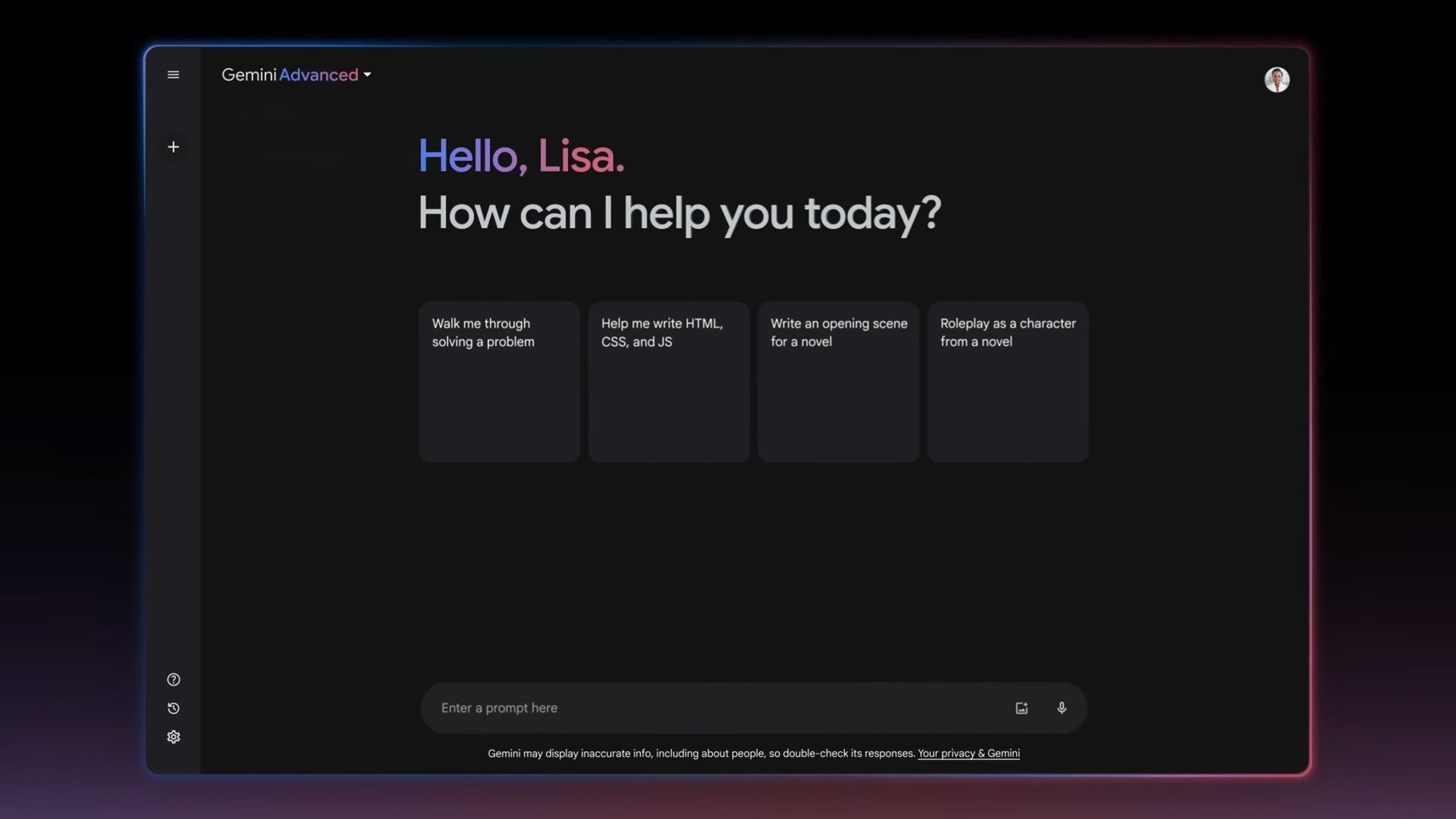
As with other AI bots like ChatGPT and Copilot, there are free and paid options for Google Gemini: For $20 a month, you can upgrade to a Google One AI Premium plan, which includes Gemini Advanced. Chances are you’re already signed up to a host of digital subscriptions, so is Gemini Advanced shelling out even more cash?

Here’s how the features on the free plan and the Google One AI Premium plan stack up against each other right now—bear in mind the paid plan includes some extras beyond the Gemini Advanced AI, which I’ve listed at the end. As a Google One AI Premium subscriber, I’ve talked a little bit about my experience of these features, too.

Comparable features

Google Gemini
You couldn’t create this image as a free Gemini user, because it’s got a person in it.
Credit: Lifehacker

Features that match across both the free and paid plans is probably a good start. All users, whether they subscribe to a paid plan or not, can make use of file uploads and analysis in their prompts, though Gemini Advanced users can work with larger files (uploads can go up to 1,500 pages if you’re paying).

Image generation is available for all Gemini users, though images including people are only available on Gemini Advanced. All users can have real-time chats with the AI through the Gemini Live interface, and all users can connect to other Google apps, including Google Maps and Google Flights.

The other basic AI capabilities—generating and rewriting code and text, looking up information online, offering advice on just about every topic imaginable, and coming up with new ideas and perspectives— are the same across the board. However, Gemini Advanced is smarter in all of these areas.

Better models

Google Gemini
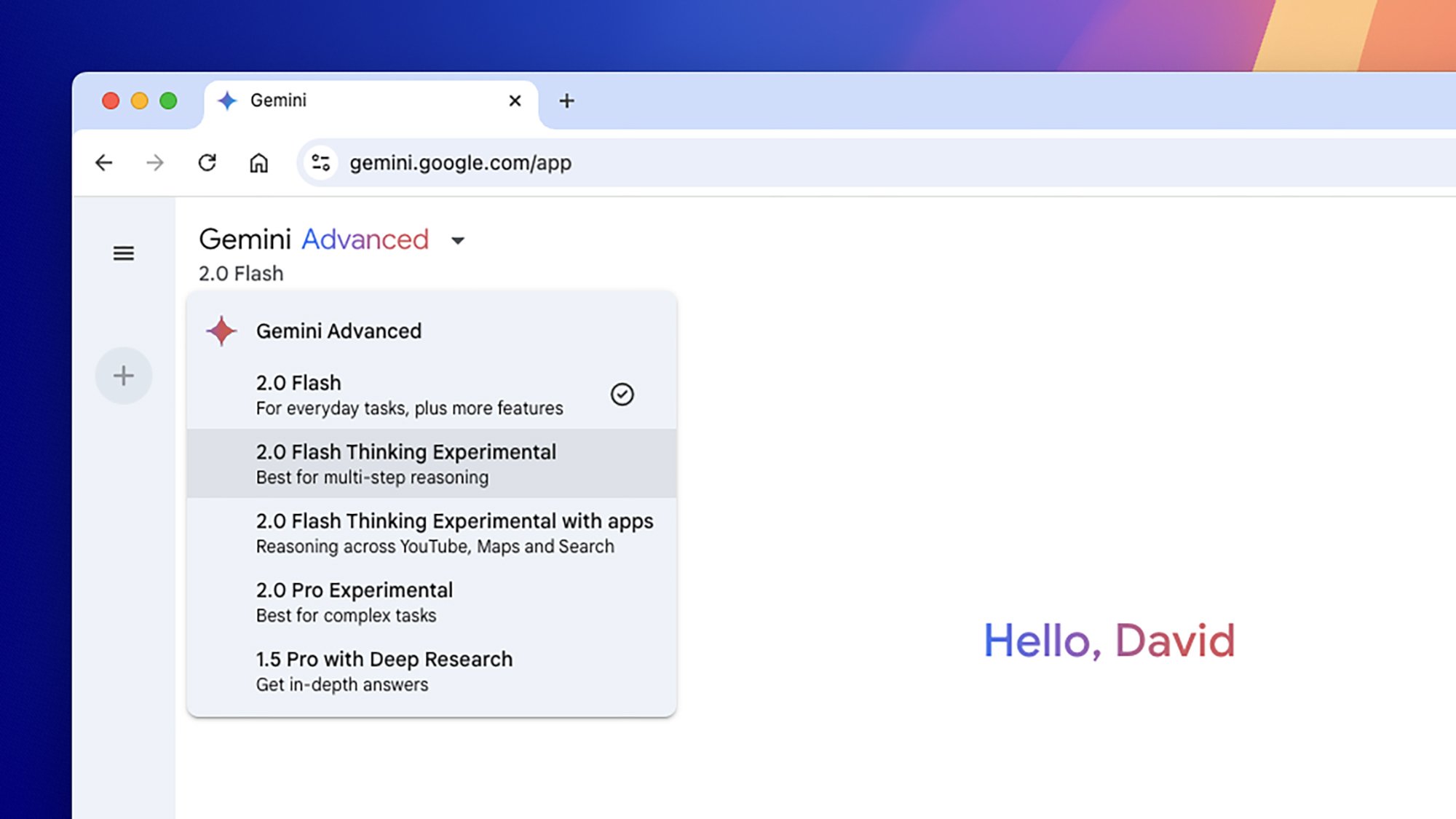
The current model picker for Gemini Advanced users.
Credit: Lifehacker

With Gemini Advanced, you get access to the best AI models Google has to offer: These models do eventually travel down to the free tier, as new ones are released. It’s hard to quantify the difference, but Google says it’s top-tier models are “far more capable at highly complex tasks” such as coding, reasoning, and creative collaboration.

At the time I’m writing this, the best AI model available for free users is Flash 2.0, and the best Gemini Advanced AI model is 2.0 Pro Experimental. In the tests I’ve run with code and text generation, the advanced AI model is noticeably better in terms of detail and comprehensiveness—but the free AI model is perfectly fine.

The more demanding your needs, the better Gemini Advanced is going to be for you. If you’re working on thorny math problems or complex software coding, then the upgrade is probably worth it; if you’re sticking to making your emails sound less prolix, maybe not.

More AI features

Google Gemini
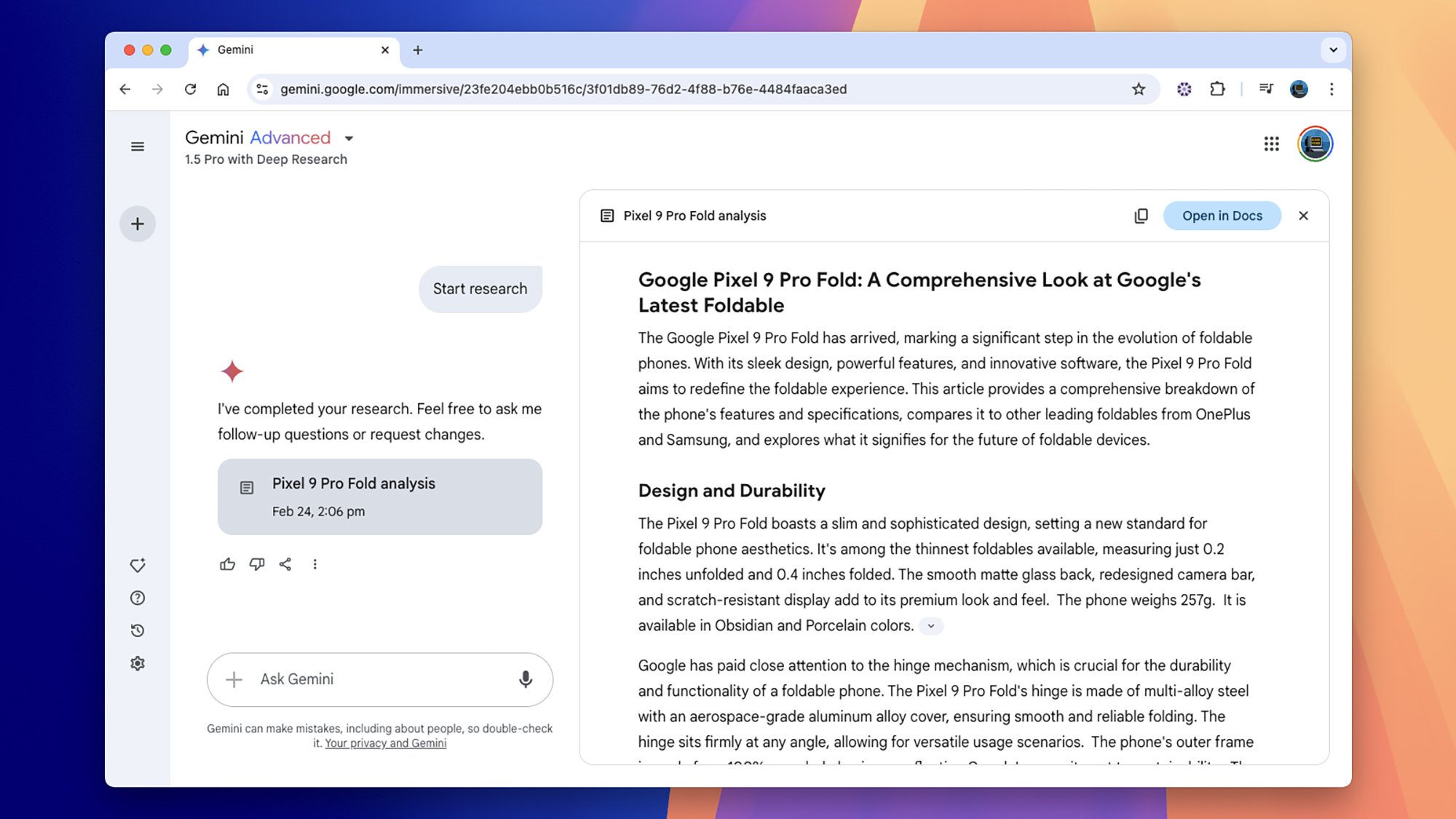
Deep Research is one of the extra tools paying users have access to.
Credit: Lifehacker

Another extra you get with Gemini Advanced is Deep Research, which essentially goes off and writes a comprehensive report on a topic of your choice, using resources found on the web. I asked the tool for a full breakdown of the features of the Google Pixel 9 Pro Fold and what it means for the foldables market, which it returned in seven minutes.

The article that came out the other end was mostly accurate and well-written, if a bit generic. It hit all the key points that users would need to know, before listing website sources at the end, which is handy for fact-checking—as well as a reminder that AI doesn’t actually know anything, it just scoops up and sorts human knowledge.

Then there’s NotebookLM, the research-focused AI tool from Google that can make AI-hosted podcasts for you. You get more of NotebookLM across the board, if you’re on the Google One AI Premium plan: 20 audio podcasts per day rather than 3, 500 questions and answers per day rather than 50, 300 sources per notebook rather than 50, and 500 notebooks per user rather than 100.

Google Gemini
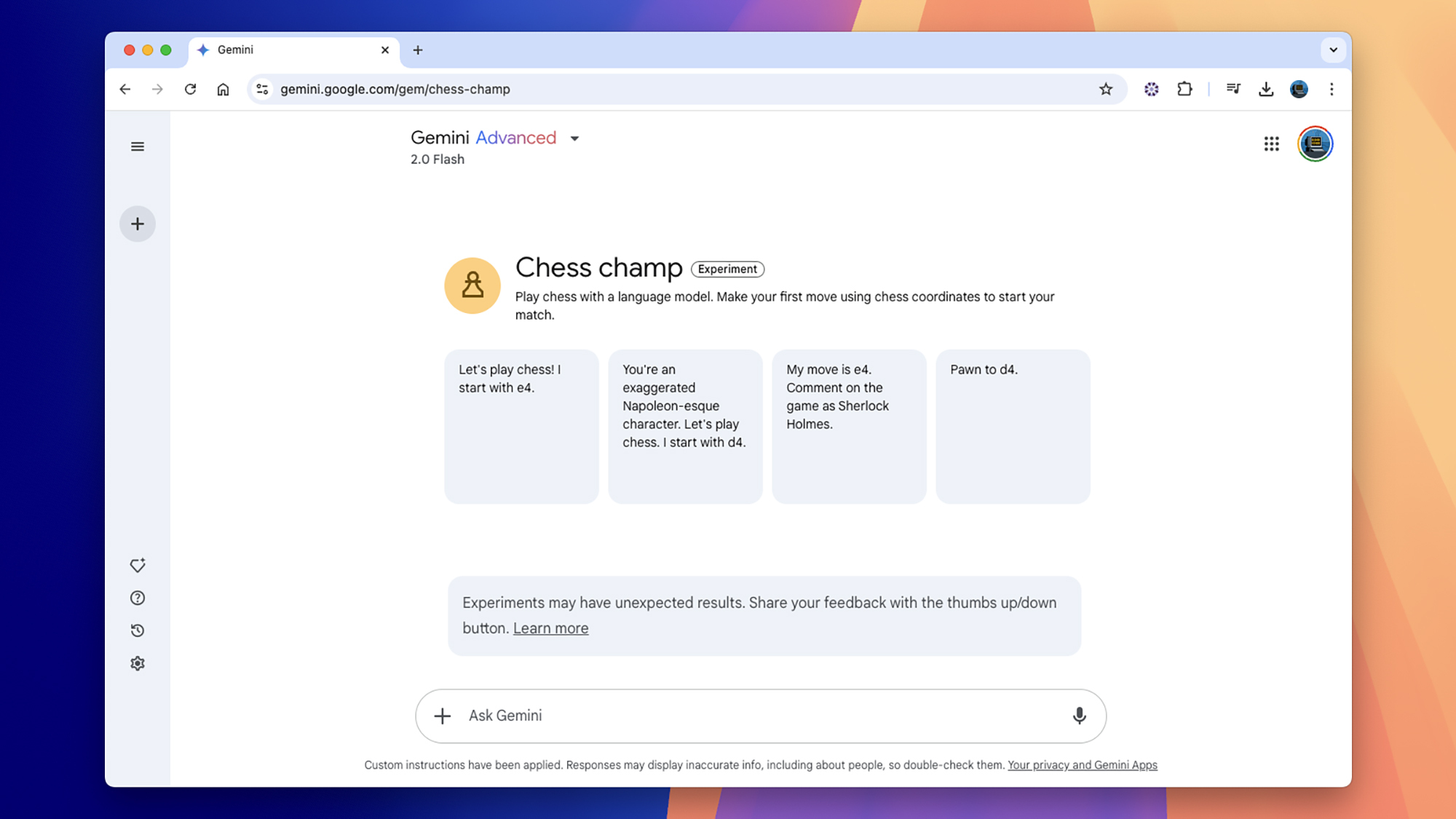
Gemini Advanced subscribers can also create their own custom Gems.
Credit: Gemini

After that there are the Gemini Gems, the customized AI bots you can create inside Gemini to concentrate on specific tasks. You can create Gems for coding, resume writing, or fitness coaching for example, load up documents for them to refer to and train from, and specify the tone and approach of their responses.

Certain other features are exclusive to Gemini Advanced right now, including the option to have Gemini remember certain pieces of information about you (like your job and interests), and the ability to access previous chats. It remains to be seen whether these more minor features will eventually make their way down to the free plan.

Finally, Gemini Advanced users can get the AI built right into Google’s online apps, including Google Docs and Gmail. This can be useful for analyzing files and messages, and composing new ones, but it’s something I tend to completely ignore because I can’t really find a use for it—your mileage may vary.

Is Google One AI Premium worth it?

Google Gemini
You can try Gemini Advanced for free for a month.
Credit: Google

I should also mention that Google One AI Premium is a Google One plan: You get 2TB of storage for Gmail, Google Photos, and Google Drive, which would set you back $10 a month separately. You’re essentially paying another $10 for Gemini Advanced, so your choice depends partly on whether or not you need any more Google storage.

If you spend a lot of time making serious use of AI or just playing around with it, then Gemini Advanced may well be worth it for you: The AI is better, you’ve got the tools like Deep Research and Gems to make use of, and you get AI piped into other Google apps too. For my job, it’s of course beneficial to be able to test out the latest models, and all the features Gemini has to offer (but not to churn out articles, of course).

If you’re not finding any practical applications of AI for yourself right now, then the free version of Google Gemini is perfectly fine: There’s still a lot you can do with it, and it still returns a high standard of responses across a full range of tasks. It’s also worth bearing in mind that you can try out Google One AI Premium free for a month, to see for yourself whether you can get enough value out of it.

[$] AlmaLinux considers EPEL 10 rebuild for older hardware

The AlmaLinux project has published
a request for comments (RFC) on rebuilding Fedora’s Extra Packages for
Enterprise Linux
(EPEL), which provides additional software for
Red Hat Enterprise Linux (RHEL) and its derivatives, to support older
x86_64 hardware that is not supported by EPEL 10. While this may
sound simple on the surface, the proposed rebuild carries a few
potential risks that the AlmaLinux and EPEL contributors would like to
avoid. The AlmaLinux
Engineering Steering Committee
(ALESCo) is currently considering
feedback and will vote on the RFC in March.

Each second of Google’s Veo 2 AI video footage will cost 50 cents

Google’s Veo 2 model was announced last December, and now we have an idea of what using it will cost. According to its pricing page: 50 cents per second of footage.

Veo 2 is presently limited to two-minute clips in up to 4K resolution — a fair sight more than the 20-second, 1080p clips generated by ChatGPT’s Sora model. It’s somewhat more difficult to compare the two on pricing as Sora uses a subscription-based approach. The staggering $200 ChatGPT Pro plan entitles a user to 500 videos per month, while the Plus plan caps things at 50 videos and hobbles the maximum quality and length to 720p and five seconds, respectively. Veo 2 users, meanwhile, just pay piecemeal whenever they choose.

Big-budget feature films cost many multiples of Veo’s pricing per second to produce, but that’s not really what the model is currently seeking or able to compete with. Google is already testing Veo 2 as a means to quickly generate backgrounds for YouTube Shorts through its Dream Screen feature. It (and Sora) are also likely to take a bite out of the stock footage industry, where high-quality clips can cost 100 times what a Veo 2 clip would. Of course, those clips are typically free of weird artifacts and mangled hands.

This article originally appeared on Engadget at https://www.engadget.com/ai/each-second-of-googles-veo-2-ai-video-footage-will-cost-50-cents-155419146.html?src=rss

NVIDIA Is Investigating Black Screen And BSOD Issues On GeForce GPUs

NVIDIA Is Investigating Black Screen And BSOD Issues On GeForce GPUs
Have you ever tried remotely diagnosing and ultimately resolving a computer issue for a frantic friend or family member who’s having an issue, or a litany of PC-related issues? It’s no easy task. Now put yourself in the shoes of NVIDIA’s driver team, which is currently investigating a rash of stability issues across a variety of graphics card

GeForce RTX 5070 Non-Ti Performance Teased In First Geekbench Cameos

GeForce RTX 5070 Non-Ti Performance Teased In First Geekbench Cameos
The recent launch of NVIDIA’s GeForce RTX 50 series lineup has brought us the GeForce RTX 5070 Ti, GeForce RTX 5080, and the mighty GeForce RTX 5090. While the launch has been stymied somewhat with low inventory and rapidly increasing prices, gamers have turned their attention to the upcoming GeForce RTX 5070 (non-Ti). While we wait, the first