The Morning After: How to follow Amazon’s hardware event tomorrow

Amazon doesn’t usually do device events in February, but in a year of turbulence, why not? The company is holding a presentation in New York, and, like in the past, Amazon won’t be livestreaming anything.

Engadget will attend, however, and liveblog the event so you’ll know what’s happening. Amazon has teased its next-gen Alexa for what feels like years, promising a conversational vibe and the ability to process and execute complex requests. Is it ready to chat? And what random tech will Amazon cram it into? Clocks? Microwave ovens?

Here’s what we’re expecting.

— Mat Smith

Get this delivered directly to your inbox. Subscribe right here!

The biggest tech stories you missed


TMA
Sigma

Sigma’s newest camera is the BF, a 24.6-megapixel full-frame, mirrorless camera with a built-in SSD instead of a removable memory card. The BF is compatible with L-mount lenses, and as well as photos, its 35mm full-frame sensor can capture 6K video and supports things like HEVC encoding and capture speeds at up to 120 frames per second. At the highest settings, the camera can cram in up to two and a half hours of video footage — probably enough. The Sigma BF will be available, body-only, for $1,999 in April, in black or silver.

Continue reading.


Google’s Veo 2 model, announced last December, now has pricing. At the moment, Veo 2 is limited to two-minute clips at up to 4K resolution — a lot more than ChatGPT’s 1080p 20-second snippets. It’s difficult to compare pricing as Sora is part of a subscription-based service. If you’re paying for a $200 ChatGPT Pro plan, that’s 500 videos per month, while the Plus plan caps at 50 videos at 720p and only five seconds.

Even if many don’t bite at that pricing, Google is already testing its Veo 2 AI to generate backgrounds for YouTube Shorts.

Continue reading.


TMA
Apple

In his Power On newsletter, Bloomberg’s Mark Gurman reports Apple is readying itself for the launch of the upgraded laptop next month. The company is reportedly winding down inventory of the existing models. The M4 MacBook Air is expected to come in two sizes, 13-inch and 15-inch, like the previous model.

Last year’s M3 MBA launched awkwardly: Apple unveiled the M4 chip just a few months later.

Continue reading.


This article originally appeared on Engadget at https://www.engadget.com/general/the-morning-after-engadget-newsletter-121547503.html?src=rss

A four-pack of Apple AirTags drops to a new low of $68

Apple AirTag packs are on sale at Amazon right now, and you can get a bundle of four for just $68. That’s the lowest we’ve see the four-pack go for on the e-commerce website at $2 less than the previous all-time low. It’s a great chance to grab a bunch of the tracking devices in one go, especially if you have a lot of bags, belongings and maybe even pets that you want to keep an eye on. If you get a single AirTag from Apple’s website, it will cost you $29. With this deal, one AirTag will only set you back $17. 

AirTags are easily one of the best Bluetooth trackers you can buy today, especially if you’re an iOS user — setting them up and connecting them to your account is pretty much a one-tap affair. The Find My network is vast, what with all the iPhones and AirTags already out there, helping you find a belonging that you’re tracking if you lose it. 

When you’re looking for an item, you can play a sound on the AirTag’s built-in speaker from your iPhone to help you find it. If you have a newer phone, the AirTag’s Ultra Wideband technology can even lead you right to it if it’s nearby. You’ll be able to see exactly how far you are from the tag, and you’ll get directions on your device’s screen. Take note that since AirTags are round, coin-like objects with no way to attach to an item on their own, you’ll have to get accessories to be able to use them as keychains or to attach them to your pets’ collars.

Follow @EngadgetDeals on Twitter and subscribe to the Engadget Deals newsletter for the latest tech deals and buying advice.

This article originally appeared on Engadget at https://www.engadget.com/mobile/a-four-pack-of-apple-airtags-drops-to-a-new-low-of-68-120018339.html?src=rss

Meta Abandons In-Headset Building Tool for ‘Horizon Worlds’, Marking a Shift in Expected Growth

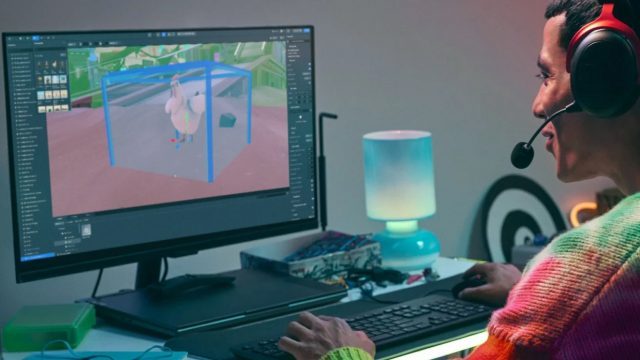
Meta released a new Desktop Editor for Horizon Worlds in preview, giving world creators a Unity-style game development platform for the first time. The PC-based editor is designed to be more robust, and make world creation easier and higher quality than its previous Quest-native VR editor, which Meta says it’s now deprecating.

Meta needs broader reach to make Horizon Worlds a success, which it ostensibly hasn’t found on Quest thus far. While the company made its metaverse platform accessible to mobile and desktop in 2023, bringing non-VR users to the platform for the first time since its initial beta launch in 2021, the maker-centric platform is still largely a VR-first experience. But that appears to be changing.

The newly released Desktop Editor allows developers familiar with traditional game engines, such as Unity, to create and publish worlds. Meta says in its developer resources “the VR creation tools … are legacy tools. We strongly recommended moving your development process to the Desktop editor and other PC creation tools.”

Image courtesy Meta

Granted, Horizon World creators can still preview scenes in VR while tethered to the desktop-based editor, although it’s not a prerequisite. In short, Horizon Worlds users don’t need a VR headset, and now, neither do world creators.

This follows a report earlier this month of a leaked memo from Meta CTO Andrew Bosworth, who said the mobile version of the app “absolutely has to break out for our long term plans to have a chance.”

More recently, Meta announced last week it’s launching a $50 million fund to boost content creation in Horizon Worlds, aiming to drive engagement as self-contained VR studios struggle.

Moreover, Meta’s strategy signals it’s not only doubling down on Horizon Worlds by tossing out more money to developers and giving them tools they’re mostly already familiar with, but it’s also looking to seize a rapidly growing cohort of younger Quest users. Younger players tend to favor free-to-play content and socially-driven experiences—something Meta likely hopes to capture with Horizon Worlds.

The post Meta Abandons In-Headset Building Tool for ‘Horizon Worlds’, Marking a Shift in Expected Growth appeared first on Road to VR.

1,000 Artists Release ‘Silent’ Album To Protest UK Copyright Sell-Out To AI

An anonymous reader quotes a report from TechCrunch: The U.K. government is pushing forward with plans to attract more AI companies to the region through changes to copyright law that would allow developers to train AI models on artists’ content on the internet — without permission or payment — unless creators proactively “opt out.” Not everyone is marching to the same beat, though. On Monday, a group of 1,000 musicians released a “silent album,” protesting the planned changes. The album — titled “Is This What We Want?” — features tracks from Kate Bush, Imogen Heap, and contemporary classical composers Max Richter and Thomas Hewitt Jones, among others. It also features co-writing credits from hundreds more, including big names like Annie Lennox, Damon Albarn, Billy Ocean, The Clash, Mystery Jets, Yusuf / Cat Stevens, Riz Ahmed, Tori Amos, and Hans Zimmer.

But this is not Band Aid part 2. And it’s not a collection of music. Instead, the artists have put together recordings of empty studios and performance spaces — a symbolic representation of what they believe will be the impact of the planned copyright law changes. “You can hear my cats moving around,” is how Hewitt Jones described his contribution to the album. “I have two cats in my studio who bother me all day when I’m working.” To put an even more blunt point on it, the titles of the 12 tracks that make up the album spell out a message: “The British government must not legalize music theft to benefit AI companies.” […] The solution, say the artists, is to produce work in other markets where there might be better protections for it. Hewitt Jones — who threw a working keyboard into a harbor in Kent at an in-person protest not long ago (he fished it out, broken, afterwards) — said he’s considering markets like Switzerland for distributing his music in the future.

Read more of this story at Slashdot.

All 50 States Have Now Introduced Right to Repair Legislation

All 50 U.S. states have now introduced some form of right to repair legislation, marking a significant milestone that “shows the power of the grassroots political movement,” reports 404 Media. From the report: Thursday, Wisconsin became the final state in the country to introduce a right to repair bill. So far, right to repair laws have been passed in Massachusetts, New York, Minnesota, Colorado, California, and Oregon. Another 20 states are formally considering right to repair bills during this current legislative session. The rest have previously introduced bills that have not passed; so far we have seen that many states take several years to move a given right to repair bill through the legislative process. iFixit’s Kyle Wiens said covering the entire map is a “tipping point” for the movement: “We’ve gone from a handful of passionate advocates to a nationwide call for repair autonomy. People are fed up with disposable products and locked-down devices. Repair is the future, and this moment proves it.”

Read more of this story at Slashdot.

VPN Providers Consider Exiting France Over ‘Dangerous’ Blocking Demands

An anonymous reader quotes a report from TorrentFreak: In France, rightsholders have taken legal action to compel large VPN providers to support their pirate site blocking program. The aim is to reinforce existing blocking measures, but VPN providers see this as a dangerous move, leading to potential security issues and overblocking. As a result, some are considering leaving France altogether if push comes to shove. […] Earlier this month, sports rightsholders Canal+ and LFP requested blocking injunctions that would require popular VPNs to start blocking pirate sites and services. The full requests are not public, but the details available show that Cyberghost, ExpressVPN, NordVPN, ProtonVPN, and Surfshark are listed as respondents. […]

The blocking request has yet to be approved and several of the targeted VPN providers have reserved detailed commentary, for now. That said, the VPN Trust Initiative (VTI), which includes ExpressVPN, NordVPN and Surfshark as members, has been vocal in its opposition. VTI is part of the i2Coalition and while it doesn’t speak directly for any of the members, the coalition’s Executive Director Christian Dawson has been in regular discussions with VPN providers. From this, it became clear that VPN providers face difficult decisions. If VPN providers are ordered to block pirate sites, some are considering whether to follow in the footsteps of Cisco, which discontinued its OpenDNS service in the country, to avoid meddling with its DNS resolver.

Speaking with TorrentFreak, VTI’s Dawson says that VPNs have previously left markets like India and Pakistan in response to restrictive requirements. This typically happens when privacy or security principles are at risk, or if the technical implementation of blocking measures is infeasible. VTI does not rule out that some members may choose to exit France for similar reasons, if required to comply with blocking measures. “We’ve seen this before in markets like India and Pakistan, where regulatory requirements forced some VPN services to withdraw rather than compromise on encryption standards or log-keeping policies,” Dawson says. “France’s potential move to force VPN providers to block content could put companies in a similar position — where they either comply with measures that contradict their purpose or leave the market altogether.” “This case in France is part of a broader global trend of regulatory overreach, where governments attempt to control encrypted services under the guise of content regulation. We’ve already seen how China, Russia, Myanmar, and Iran have imposed VPN restrictions as part of broader censorship efforts.”

“The best path forward is for policymakers to focus on targeted enforcement measures that don’t undermine Internet security or create a precedent for global Internet fragmentation,” concludes Dawson. “As seen in other cases, blanket blocking measures do not effectively combat piracy but instead create far-reaching consequences that disrupt the open Internet.”

Read more of this story at Slashdot.

Scenery Distributes AR To iPhone And Vision Pro With App Clips

If you use a camera on a recent iPhone or iPad to scan the code below you should be able to see the Upload logo floating in your room.

I used Apple’s Air Drop feature to send the link directly to Apple Vision Pro where I viewed the object floating in my office from the headset. I had previously downloaded the new Scenery app to Vision Pro to make that work, then I opened the link and selected a spot on my floor for the object to float above.

Here’s the Upload logo in your room:

This particular bit of “scenery” looks really nice on mobile phones because it was specifically designed for that. The Vision Pro, meanwhile, doesn’t let third parties scan these kinds of codes in passthrough yet, even though Apple uses the feature to load your prescription for the headset.

We’ll be very curious to see what kind of reach there ends up being for this method of distributing content to headsets as Apple, Google, Meta and others integrate computer vision into their latest products in different ways. Android and Quest support is in the works, Scenery devs say, with a WebXR viewer listed as “coming soon” on the company website.

You can learn more about Scenery on its website.

Microsoft Trims More CPUs From Windows 11 Compatibility List

Microsoft has updated its CPU compatibility list for Windows 11 24H2, excluding pre-11th-generation Intel processors for OEMs building new PCs. The Register reports: Windows 11 24H2 has been available to customers for months, yet Microsoft felt compelled in its February update to confirm that builders, specifically, must use Intel’s 11th-generation or later silicon when building brand new PCs to run its most recent OS iteration. “These processors meet the design principles around security, reliability, and the minimum system requirements for Windows 11,” Microsoft says.

Intel’s 11th-generation chips arrived in 2020 and were discontinued last year. It would be surprising, if not unheard of, for OEMs to build machines with unsupported chips. Intel has already transitioned many pre-11th generation chips to “a legacy software support model,” so Microsoft’s decision to omit the chips from the OEM list is understandable. However, this could be seen as a creeping problem. Chips made earlier than that were present very recently, in the list of supported Intel processors for Windows 11 22H2 and 23H2.

This new OEM list may add to worries of some users looking at the general hardware compatibility specs for Windows 11 and wondering if the latest information means that even the slightly newer hardware in their org’s fleet will soon no longer meet the requirements of Microsoft’s flagship operating system. It’s a good question, and the answer — currently — appears to be that those “old” CPUs are still suitable. Microsoft has a list of hardware compatibility requirements that customers can check, and they have not changed much since the outcry when they were first published.

Read more of this story at Slashdot.