Grok’s new “unhinged” voice mode can curse and scream, simulate phone sex

On Sunday, xAI released a new voice interaction mode for its Grok 3 AI model that is currently available to its premium subscribers. The feature is somewhat similar to OpenAI’s Advanced Voice Mode for ChatGPT. But unlike ChatGPT, Grok offers several uncensored personalities users can choose from (currently expressed through the same default female voice), including an “unhinged” mode and one that will roleplay verbal sexual scenarios.

On Monday, AI researcher Riley Goodside brought wider attention to the over-the-top “unhinged” mode in particular when he tweeted a video (warning: NSFW audio) that showed him repeatedly interrupting the vocal chatbot, which began to simulate yelling when asked. “Grok 3 Voice Mode, following repeated, interrupting requests to yell louder, lets out an inhuman 30-second scream, insults me, and hangs up,” he wrote.

By default, “unhinged” mode curses, insults, and belittles the user non-stop using vulgar language. Other modes include “Storyteller” (which does what it sounds like), “Romantic” (which stammers and speaks in a slow, uncertain, and insecure way), “Meditation” (which can guide you through a meditation-like experience), “Conspiracy” (which likes to talk about conspiracy theories, UFOs, and bigfoot), “Unlicensed Therapist” (which plays the part of a talk psychologist), “Grok Doc” (a doctor), “Sexy” (marked as “18+” and acts almost like a 1-800 phone sex operator), and “Professor” (which talks about science).

Read full article

Comments

iPhones are briefly changing ‘racist’ to ‘Trump’ due to an iOS dictation issue

A bizarre bug is causing iPhones to automatically change the word “racist” to “Trump” when using the built-in dictation feature in iOS. The issue, which seems to have been discovered by TikTok users, crops up when using the voice-to-text feature in Apple apps like Messages.

When speaking the word “racist,” iOS briefly transcribes the text as “Trump” before changing it back to the intended word. It’s not clear what could cause this behavior. Engadget was able to replicate the issue, as you can see in the GIF below.

Racist briefly transcribes as

Apple told The New York Times it was due to “phonetic overlap between the two words,” despite the fact that the two words do not sound similar. That also doesn’t explain why “racist,” with a lowercase “r” would transcribe as “Trump” — seemingly a reference to our current president — and not “trump,” the noun. An AI expert who once worked on Siri told the paper it could be a “serious prank” on the part of an Apple employee. 

Apple didn’t immediately respond to a request for comment.

Whether it’s a bug or prank, it surfaced at a particularly embarrassing time for the iPhone maker, which announced on Monday that it planned to invest $500 billion in manufacturing facilities for AI servers. The investment, most of which was already planned, came after Apple CEO Tim Cook met with President Donald Trump at the White House last week. 

This article originally appeared on Engadget at https://www.engadget.com/mobile/iphones-are-briefly-changing-racist-to-trump-due-to-an-ios-dictation-issue-230712021.html?src=rss

I’m writing about this cute cat plush so you play one of 2025’s best games

Citizen Sleeper 2: Starward Vector is one of my favorite games of the year, so you’ll forgive me if I spend the next 300 words or so writing about a limited-edition plush the game’s creator, Gareth Damian Martin, is producing with the help of crowdfunding platform Makeship. Starting today, you can pledge $30 to support Martin’s campaign, and if enough other people do as well, everyone will get a cute cat plush sometime later this year. The toy was designed by French illustrator Guillaume Singelin, who also did the character designs for the game. Right now, the campaign is sitting at 45 percent funded with 90 toys sold, and the better part of 22 days to go. 

And I mean look at the plush, isn’t it one of the cutest things you’ve seen? For the uninitiated, the Stray, not to be confused with another cyberpunk cat, is one of the characters Citizen Sleeper 2’s protagonist can encounter during their journey. As far as I’m aware, they only appear in one scene throughout the entire runtime of the game (how very cat-like of them, I know), but it’s a moment that’s emblematic of so many of Citizen Sleeper 2’s strengths. 

“This cat, the one on your ship, was born here. That much is obvious,” writes Martin in the scene. “It is a creature of zero-gravity, a being that orbits and glides, not one that leaps and stalks.” Without spoiling anything, what follows is a touching and thoughtful meditation on memory, and how we can choose whether our memories define us.   

If you haven’t played Citizen Sleeper 2 yet, consider this a recommendation. It is easily worth your time and more. You can play the game on Nintendo Switch, PC, PlayStation 5, and Xbox Series X/S. As for the Stray, they’re expected to start shipping on June 12, 2025. 

This article originally appeared on Engadget at https://www.engadget.com/gaming/im-writing-about-this-cute-cat-plush-so-you-play-one-of-2025s-best-games-223325680.html?src=rss

The Best Sites to Find Affordable Dupes

We may earn a commission from links on this page.

We’ve all been there: You find the perfect product, the chair or skin cream that will solve all your problems through the liberal application of capitalism—but it doesn’t fit into your budget. You have three choices: You can spend the next few months (years?) saving diligently toward the glorious day when you can afford to pull the trigger; you can put that purchase on a credit card and deal with the interest charges—or you can find a dupe.

Dupes—short for “duplicates”—are having their moment. While knockoffs are nothing new, as anyone who has ever bought a “designer” handbag on the streets of New York City can attest, dupes are a little different. Knockoffs are trying to fool people that they’re the name-brand product, but dupes are their own thing—they’re not pretending to be the expensive item, they just replicate its look and function at a lower price point.

Finding dupes can be as easy as a Google image search or a quick trip to Target or Lidl—but it can sometimes be a challenge. Thankfully, there are a variety of apps you can use that make locating dupes a lot easier, and companies that make their own dupes for specific items.

How to scour the web for dupes

If you’re looking for duplicate furniture and housewares, you could spend hours digging through subreddits and Facebook pages, but luckily there tools and sites that make it a lot easier. Some of the most useful include:

  • TikTok. The social media behemoth is kind of dupe central these days. You can type the name of what you’re looking for with hashtags like #dupe or #dupefinder to see what’s out there. What’s good about using TikTok is that most of the results will show people actually using and discussing the dupes, which can help you figure out if they’re truly worth buying.

  • Dupe.com has been getting a lot of press of late thanks to the love it gets from social media. Its interface is pretty simple: You paste in the URL of an item (furniture, housewares, or clothing) or drag an image into the search bar, and Dupe searches the internet for lookalikes. For example, if you want an Eames Lounge Chair and Ottoman from Herman Miller—which sells for anywhere from $6,000 to $8,000 new—Dupe.com quickly leads you to Walmart, where you can buy this leather lounge chair with a very similar look and vibe. (There’s also an app.)

  • Spoken.io works very similarly: Paste in a URL or drag/upload a photo, and it will scan the web and point you to a list of discounted dupes. For example, it turned up this $1,899 Eames-like chair—not quite as cheap as the Walmart version, but still a significant savings over the original.

  • Dupeshop focuses on skincare and makeup products, and it doesn’t just point you at purchase links—it pulls together detailed comparisons, reviews, videos, and other information so you can feel confident that the dupe product will perform as expected.

  • SkinSkool distinguishes itself by offering a list of potential dupes organized by a similarity score and labeled with a dollar sign icon indicating how expensive the dupe is. This makes it easy to cross-reference your budget with the available options. The site explicitly states that it bases its choices solely on the publicly available ingredient lists of the products, so it doesn’t offer any kind of hands-on review.

A few companies that make their own dupes

Some companies have made a name for themselves because they make and sell their own high-quality dupes, so you don’t have to search the entire internet trying to find them. A few examples include:

  • Brandefy was founded to exploit the fact that name-brand beauty and skincare products at every price point are largely manufactured in the same facilities using the same ingredients. It creates “inspired by” products that are often indistinguishable from the pricier versions. Brandefy is more oriented toward its app than the website, however, so it’s a good choice if you want to check something on your phone while you’re out shopping.

  • The Essence Vault and Dossier both offer up perfume dupes. Perfumes are expensive to develop, to manufacture, and to package—but you can’t actually copyright a fragrance, so dupe perfumes tend to be uncannily like the expensive brand they’re copying. That being said, you may notice a quality difference between the good stuff and the dupes. But if your budget is dupe-sized, both The Essence Vault and Dossier offer scents explicitly inspired by designer fragrances (Dossier also sells their own original scents).

  • Element Brooklyn offers soaps, lotions, and other products that dupe brands like Aesop or Le Labo with an environmentally friendly twist: Its products are refillable, so you aren’t dumping plastic bottles into landfills all the time.

  • Quince takes the same approach as Brandefy, but for clothing, claiming to use the same factories and manufacturers as the high-end luxury brands it’s replicating.

  • Italic is a Los Angeles-based company that sells clothing, jewelry, and accessories that closely resemble luxury brands. Its prices aren’t as low as literal dupes, but you can still find fashion that looks just like the top-tier brands at a much lower cost.

Some caveats to keep in mind

Keep in mind that it can be difficult to judge whether a dupe is going to be worth buying even at a drastically lower price point. It can be very difficult to tell from a photo whether a piece of furniture or clothing is going to be anywhere near the quality of the real thing, for example. That’s where apps like TikTok that offer endorsements from folks who have actually used the dupes can be super valuable.

Another option for doing your dupe due diligence on beauty and skincare products is SkinSort, which has a useful comparison tool. You can compare a dupe to the brand it’s replicating and SkinSort will show you a list of ingredients in each (along with explanations for what each does) and reviews from people who have actually used the dupe.

Finally, if you want to save some money without risking a downgraded experience, you can also look for name-brand items at secondhand places like Poshmark, which sells clothes, skincare, perfume, and beauty products. A lot of sellers on these platforms have access to name-brand stuff (some work for retailers where they get deep discounts, giving them room for resell profits, for example—look for folks who have a lot of a specific product on hand and you’re probably looking at a hustling sales associate) and you can find some real bargains that way. This gives you the main benefit of a dupe (lower prices) without compromising in any way.

Amid a Musk-led overhaul, the FAA starts doing business with SpaceX

The Federal Aviation Agency has started testing Starlink terminals for upgrades to the networks that manage airspace, creating the latest conflict of interest between the US government and Elon Musk. The FAA posted (fittingly on the social network Musk also owns) that it is testing a Starlink terminal in Atlantic City, NJ, and two terminals in Alaska. The post claims that the department had been considering using the SpaceX tech since the prior presidential administration.

The agency, which oversees all areas of civil aviation, has levied fines and required reviews over the years related to various SpaceX operations. Most recently, the agency ordered SpaceX to investigate what caused a mid-flight explosion with its Starship rocket last month.

A source told Bloomberg that Musk had approved a shipment of 4,000 Starlink terminals to the FAA last week. The agency has an existing contract with Verizon Communications, worth $2 billion, for supporting and maintaining its infrastructure. Bloomberg‘s sources were unsure how the Starlink tests would impact the Verizon deal.

This isn’t the first time a Musk-owned business has benefited since the South African billionaire inserted himself into the US political landscape. He and his so-called DOGE group has been leading cuts within the federal ranks, including at the FAA and at other departments that oversee his companies. For instance, the National Highway Traffic Safety Administration saw about a 10 percent reduction to its staff this month, including cuts to the small division overseeing autonomous vehicles such as those from Tesla.

This article originally appeared on Engadget at https://www.engadget.com/science/space/amid-a-musk-led-overhaul-the-faa-starts-doing-business-with-spacex-221900620.html?src=rss

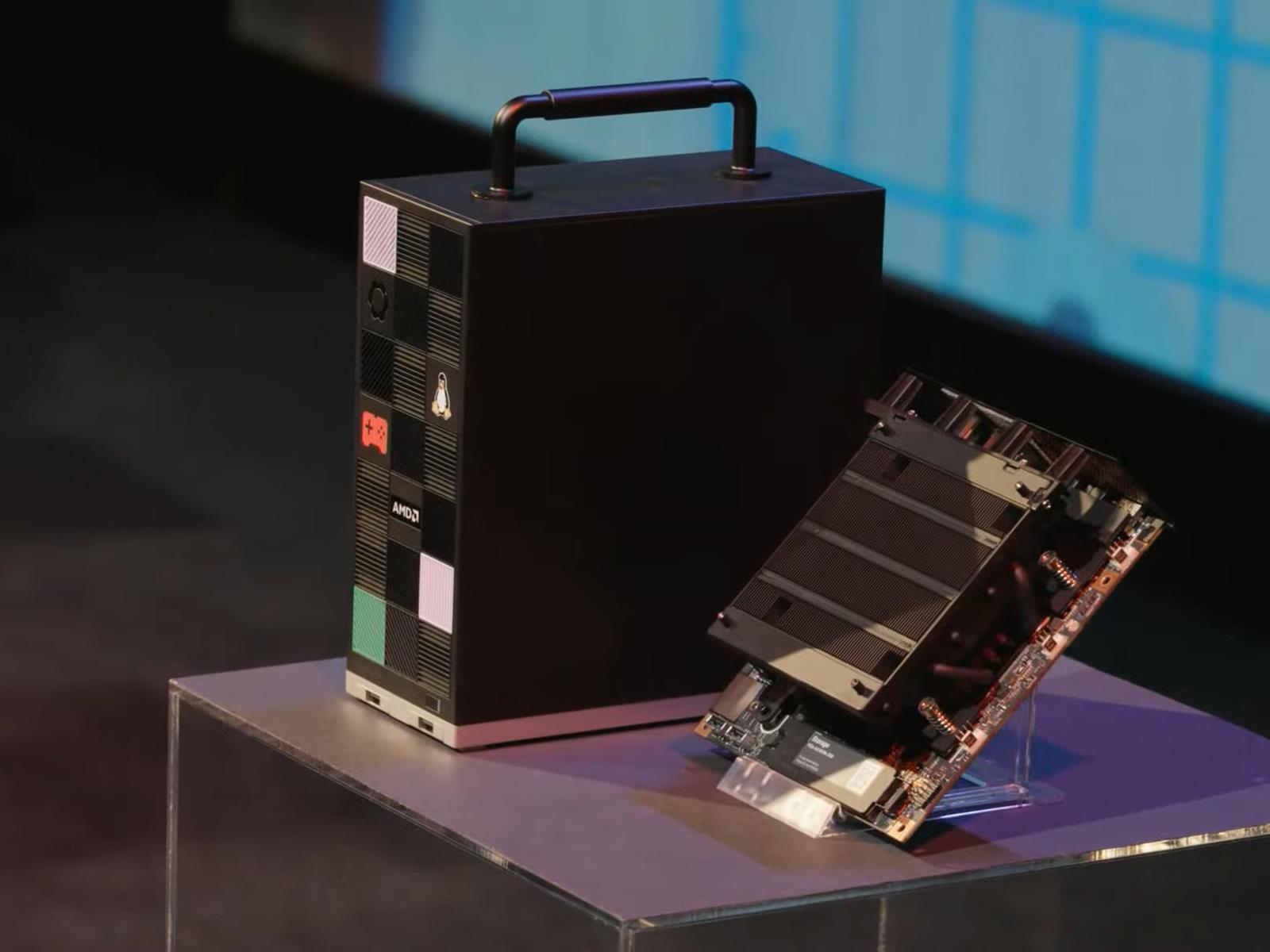
Framework’s First Mini Desktop Is A Ryzen AI Max Powered Console Killer

Framework's First Mini Desktop Is A Ryzen AI Max Powered Console Killer
Ever since we first saw the rumored specifications for AMD’s Ryzen AI MAX processors—back when they were simply known by the code name “Strix Halo”—the first thought we had was “this thing would make an awesome living-room PC.” Framework apparently had the exact same thought upon hearing about these chips, because the company just unveiled

The Google Pixel 9 Pro XL Is Already $300 Off

We may earn a commission from links on this page. Deal pricing and availability subject to change after time of publication.

The Pixel 9 Pro is the latest, most premium model in the Pixel lineup. It was released in August 2024, and already the unlocked 128GB Google Pixel 9 Pro XL is discounted to $799 (down from $1,099). That’s the lowest price it has yet reached on Amazon, according to price-tracking tools.

This Pixel 9 Pro XL comes with 16GB of RAM, 128GB of memory storage, a 120 HZ refresh rate, and the Android 14 operating system. As Michelle Ehrhardt explained in Lifehacker’s review of the Pixel 9 Pro, the phone’s hardware is the best Google has produced, but its AI features aren’t quite there yet. The XL version is bigger than the regular Pro size, but smaller than previous XL versions at 6.4 by 3.0 by 0.3 inches.

If you have the Pixel 8 Pro, you might not notice a huge difference. However, if you’re upgrading from an older phone or switching from a non-Pixel phone, the 9 Pro XL has a lot to love, especially if you prioritize good cameras.

One of the best aspects of Pixel phones is their future-proofing: They tend to receive ongoing support for many years. My Pixel 6A still gets all of the updates and tons of AI features that make the phone feel fresh many years later. With the Pixel 9 Pro XL, you’ll be getting a quality phone that will receive software updates for some time (as long as seven years).

Google, Qualcomm Will Support 8 Years of Android Updates

An anonymous reader quotes a report from 9to5Google: Starting with the Snapdragon 8 Elite, Qualcomm will offer device manufacturers (OEMs) the “ability to provide support for up to eight consecutive years of Android software and security updates.” Qualcomm today announced a “program” in partnership with Google: “What this means is that support for platform software included in this program will be made available to OEMs for eight consecutive years, including both Android OS and kernel upgrades, without requiring significant changes or upgrades to the platform and OEM code on the device (a separation commonly referred as ‘Project Treble’ or the ‘vendor implementation’). While kernel changes will require updating kernel mode drivers, the vendor code can remain unchanged while the software support is being provided.”

This program specifically includes “two upgrades to the mobile platform’s Android Common Kernel (ACK) to support the eight-year window.” It’s ultimately up to manufacturers to update their devices, but the bottleneck going forward won’t be the chip. Qualcomm today notes how the extended software support it’s providing can “lower costs for OEMs interested in supporting their devices longer.” The first devices to benefit are Snapdragon 8 Elite-powered smartphones launching with Android 15. Notably, the program runs for the “next five generations” of SoCs, including Snapdragon 8 and 7-series chips launching “later this year.” Older chipsets will not benefit from this program.

Read more of this story at Slashdot.

The 75-inch Hisense U7 Is 43% Off Right Now

We may earn a commission from links on this page. Deal pricing and availability subject to change after time of publication.

As tech reviewers get their hands on the latest TVs and write their reviews, a picture starts to take shape on which are the best TVs for every category. For those looking for the best bang-for-your-buck a tier above “budget TVs,” the jury is still out between TCL’s QM7 and Hisense’s U7N. Really, it comes down to preference or a good deal—and right now, Hisense’s U7N lineup is seeing great discounts. The best one is the 75-inch U7N currently going for $859.99 (originally $1,499.98) after a 43% discount, its lowest price ever, according to price-tracking tools.

The U7N came out last summer and has been head-to-head with the QM7. The U7N is a QLED TV, which is the best technology for a TV before crossing over to OLED. The U7N is bright for a midrange QLED, reaching levels of over 1,500 nits, and the colors are accurate, according to PCMag’s “excellent” review. I like Google TV’s interface, since I get to cast my phone directly onto the screen, and all the free channels never hurt. Of course that also means you can use Google Assistant and Apple AirPlay to control your TV.

If you’re a gamer, you’ll enjoy the U7N’s 6.2 millisecond input lag when you switch to Game mode. The 144Hz variable refresh rate (VRR) with AMD FreeSync Premium Pro will make games look smooth (as well as sports). For those who like to know if you’re getting what you’re paying for in specs, the Google TV has a Game Bar feature that shows you specs like frame rate and resolution, as well as quick access to other settings gamers use.

The main complaint on the U7N is that details on shadows can look a bit washed out, but this isn’t something most people will notice. At the current price, this U7N is a better deal than the QM7 and the value QLED TV you can buy right now.

Orbit: Open-Source Nuclei Security Scanning and Automation Platform

Orbit is an open-source platform built to streamline large-scale Nuclei scans, enabling teams to manage, analyze, and collaborate on security findings. It features a SvelteKit-based web frontend and a Go-powered backend, with Terraform and Ansible handling infrastructure and automation.

The post Orbit: Open-Source Nuclei Security Scanning and Automation Platform appeared first on Linux Today.

Google’s free Gemini Code Assist arrives with sky-high usage limits

Generative AI has wormed its way into myriad products and services, some of which benefit more from these tools than others. Coding with AI has proven to be a better application than most, with individual developers and big companies leaning heavily on generative tools to create and debug programs. Now, indie developers have access to a new AI coding tool free of charge—Google has announced that Gemini Code Assist is available to everyone.

Gemini Code Assist was first released late last year as an enterprise tool, and the new version has almost all the same features. While you can use the standard Gemini or another AI model like ChatGPT to work on coding questions, Gemini Code Assist was designed to fully integrate with the tools developers are already using. Thus, you can tap the power of a large language model (LLM) without jumping between windows. With Gemini Code Assist connected to your development environment, the model will remain aware of your code and ready to swoop in with suggestions. The model can also address specific challenges per your requests, and you can chat with the model about your code, provided it’s a public domain language.

At launch, Gemini Code Assist pricing started at $45 per month per user. Now, it costs nothing for individual developers, and the limits on the free tier are generous. Google says the product offers 180,000 code completions per month, which it claims is enough that even prolific professional developers won’t run out. This is in stark contrast to Microsoft’s GitHub Copilot, which offers similar features with a limit of just 2,000 code completions and 50 Copilot chat messages per month. Google did the math to point out Gemini Code Assist offers 90 times the completions of Copilot.

Read full article

Comments

A change in maintenance for the kernel’s DMA-mapping layer

The conversation around the merging of a set of Rust abstractions for the
kernel’s DMA-mapping layer has mostly settled after Linus Torvalds made it clear that the code would be
accepted. One other consequence of this decision, though, is that
Christoph Hellwig has quietly stepped down from the
maintenance of the DMA-mapping code. Marek Szyprowski will be the
maintainer of that layer going forward. Hellwig has maintained that code
for many years; his contributions will be missed.