
Set to be merged for the Linux 6.15 kernel is the very initial NOVA driver core code that will be incrementally built up over time in succeeding kernel versions. For Linux 6.15, this open-source NVIDIA kernel driver isn’t of any use for end-users as it’s just the very preliminary pieces to begin crafting the foundation for the driver that is leveraging the NVIDIA GSP found with Turing and newer hardware. In preparation for future kernel cycles, the NOVA skeleton driver pieces were posted for review yesterday to begin fleshing out more of the driver’s design…
Category Archives: Linux
Akamai Now Providing The Hosting Infrastructure For Kernel.org
It’s not only FreeDesktop.org that has been transitioning to new infrastructure this month but separately, Kernel.org is now receiving hosting and CDN needs provided by Akamai…
LibreOffice 25.2.2 Office Suite Is Now Available for Download with 83 Bug Fixes
The Document Foundation announced today the general availability of LibreOffice 25.2.2 as the second maintenance update to the latest LibreOffice 25.2 office suite series with various bug fixes.
LILYGO T-Deck Pro Offers E-Paper Display with Configurable 4G and Voice Options
LILYGO has introduced the T-Deck Pro, an open-source development board with a built-in keyboard and a 3.1-inch e-paper touchscreen. Combining sensor integration with touchscreen functionality, it can be applied to various projects in areas like IoT and portable devices. The board features the ESP32-S3FN16R8 dual-core LX7 microprocessor, similar to the T-Deck Plus released in December. […]
First Look at Ubuntu 25.04 (Plucky Puffin) Beta
Ubuntu 25.04 Beta arrives with Linux kernel 6.14, GNOME 48, systemd v257, updated toolchains, and enhanced desktop features.
Bypassing Ubuntu’s user-namespace restrictions
Ubuntu 23.10 and 24.04 LTS introduced a feature using AppArmor to
restrict access to user namespaces. Qualys has reported
three ways to bypass AppArmor’s restrictions and enable local users to
gain full administrative capabilities within a user namespace. Ubuntu
has followed up with a post
that explains the namespace-restriction feature in detail, and says
these bypasses do not constitute security vulnerabilities.
While a superficial observation of the application of user namespaces may indicate privileged (root level) access, this is a fictitious state that is operating as expected, with access control still mapped to the real (root namespace) user’s permissions. As such, these bypasses do not enable more access than what the default Linux kernel
unprivileged user namespace feature allows in most Linux
distributions. They do, however, demonstrate limitations that we are
looking to address in order to strengthen existing protections against
as-of-yet-unknown Linux kernel vulnerabilities.
LWN covered Ubuntu 24.04 LTS last May.
Linux 6.15 SoC/DT Additions: Arm Morello, Versal NET, Apple T2, MNT Reform 2 & More
The many SoC and DeviceTree updates have now been merged for the Linux 6.15 kernel merge window. There’s a lot on the ARM hardware side plus some additions for RISC-V and various interesting new device/board additions…
Rust adopting Ferrocene Language Specification
One recurring criticism of Rust has been that the language has no official specification. This is a barrier to adoption in some safety-conscious organizations, as well as to writing alternate language implementations. Now, the Rust project has
announced
that it will be adopting the
Ferrocene Language Specification (FLS) developed by
Ferrous Systems and maintaining it as part of the core project. While this may not satisfy die-hard standardization-process enthusiasts, it’s a step toward removing another barrier to using Rust in safety-critical systems.
It’s in that light that we’re pleased to announce that we’ll be adopting the FLS into the Rust Project as part of our ongoing specification efforts. This adoption is being made possible by the gracious donation of the FLS by Ferrous Systems. We’re grateful to them for the work they’ve done in assembling the FLS, in making it fit for qualification purposes, in promoting its use and the use of Rust generally in safety-critical industries, and now, for working with us to take the next step and to bring the FLS into the Project.
Fwupd 2.0.7 Linux Firmware Updater Adds Support for More Lenovo and HP Devices
Fwupd 2.0.7 is out today as the seventh maintenance update to the latest fwupd 2.0 release of this open-source Linux firmware update utility with support for more devices, new features, and bug fixes.
Ubuntu 25.04 Beta Officially Released
The Ubuntu 25.04 “Plucky Puffin” beta is now available for testing ahead of the official release set for 17 April…
18 Useful Free Books to Learn about Machine Learning
Machine Learning is the practice of using algorithms to parse data, learn insights from that data, and then make a determination or prediction.
EXT4 Better Hardened Against Maliciously-Fuzzed File-Systems
Ted Ts’o at Google has sent out the EXT4 file-system updates for the in-development Linux 6.15 kernel…
Experience CS: a new way to teach computer science
I am delighted to announce Experience CS, a free, integrated computer science curriculum for elementary and middle school students (8–14 years old) that will be available in June 2025.
Experience CS enables educators to teach computer science through a standards-aligned curriculum that integrates computer science concepts and knowledge into core subjects like maths, science, languages, and the arts.
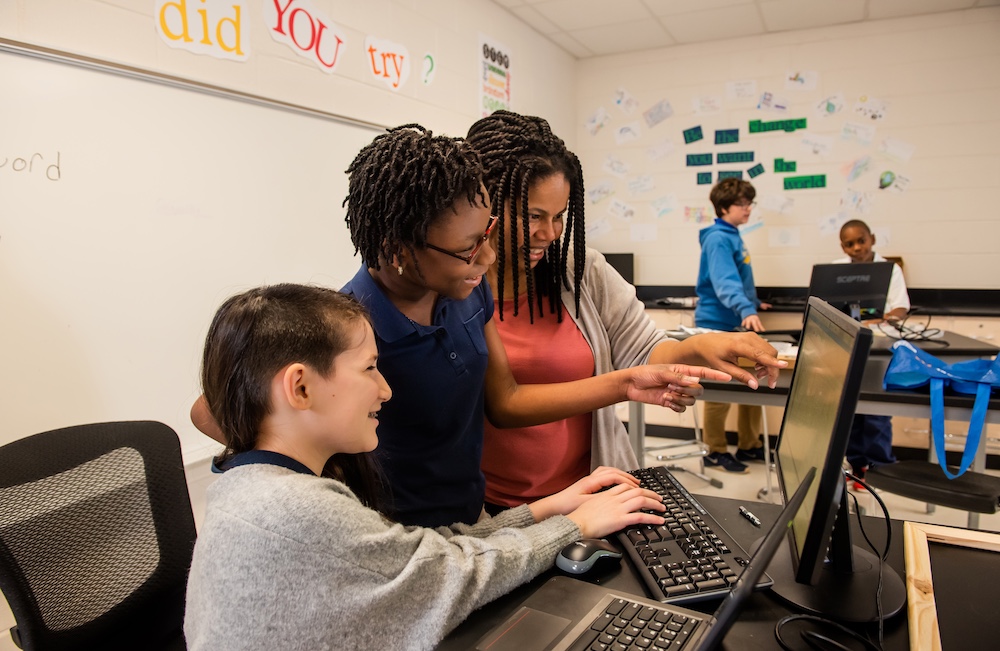
This cross-curricular and integrated approach is one of the most effective ways to provide younger students with an introduction to computer science and is increasingly important as the impact of digital technology reaches every corner of our lives. We also know that embedding CS in real-world contexts helps make it meaningful and relevant for students, which is essential if we are going to inspire kids from different backgrounds to want to learn more about computer science and technology.
Built by educators, for educators
The team behind Experience CS includes educators with significant experience of teaching CS in elementary and middle school settings and everything we do is being informed by the world’s leading research into effective pedagogy as well as extensive testing and research in classrooms. This won’t stop when we launch. We will continue to develop and improve the curriculum and resources in response to feedback from teachers and students.

One of the most important design principles for Experience CS is that it can be used by any educator. You don’t need a CS qualification or any previous experience in teaching CS classes to deliver engaging and creative learning experiences for your students.
We will provide lesson plans, classroom resources, and an online platform that is designed to be easy and safe to use. We will also provide educators with professional development to help build their confidence, knowledge, and skills. You don’t need to adapt or amend the resources to use them, but you will be able to if you want to. We trust teachers to know what is best for their classrooms.
A creative and safe learning experience
Crucially, Experience CS will be a creative learning experience. We’ve all seen those apps and platforms that purport to teach computer science by having young people direct their favourite pop culture character around a maze. While those types of games can be fun, we think that they fail to convey the creative potential of computer science and leave more students feeling “why bother” rather than being inspired to learn more.
That’s why Experience CS includes self-directed creative projects using the popular programming platform Scratch, with clear instructions and endless opportunities for young people to express themselves creatively.
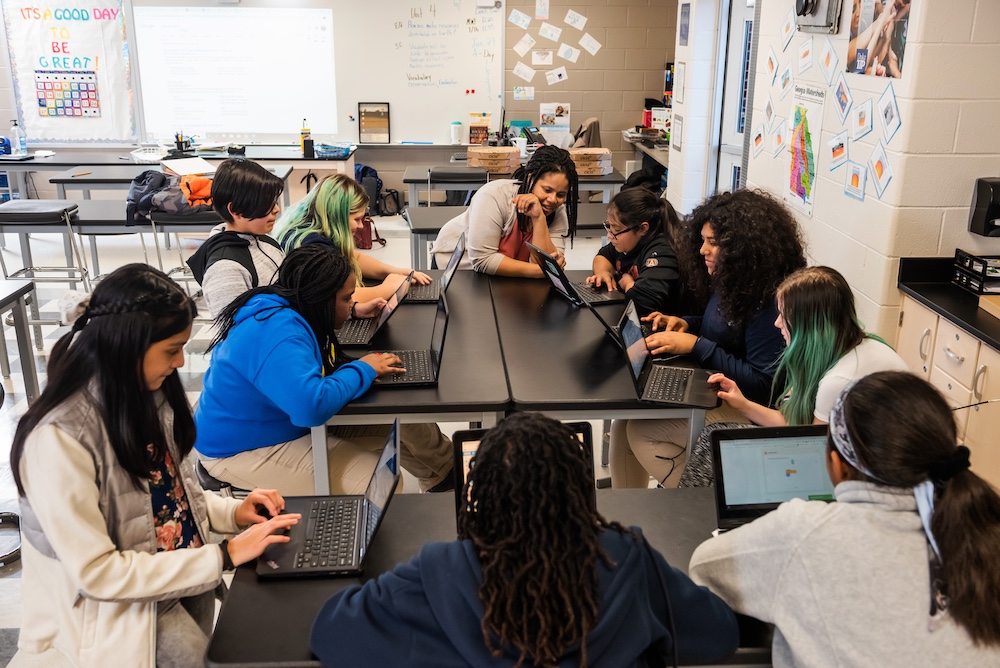
We know that online safety is the most important consideration for schools, teachers, and parents, which is why we have built a version of Scratch that is safe for schools. That means it won’t have the community and sharing features that are so central to the full Scratch platform. It will come with simple and intuitive classroom management features that enable teachers to create accounts, set assignments, review progress, and provide feedback to students.
Free forever, for everyone
Our promise is that Experience CS will be available for teachers and students anywhere in the world to use for free, for as long as you need it.
Initially, we are developing the curriculum and resources for the US and Canadian education systems and we will be mapping the lessons to national and local standards in both countries. The materials will all be available in English, French, and Spanish. We will also be focusing our professional development and support for schools in the US and Canada, including working with a fantastic network of educational partners.
Building on the legacy of CS First
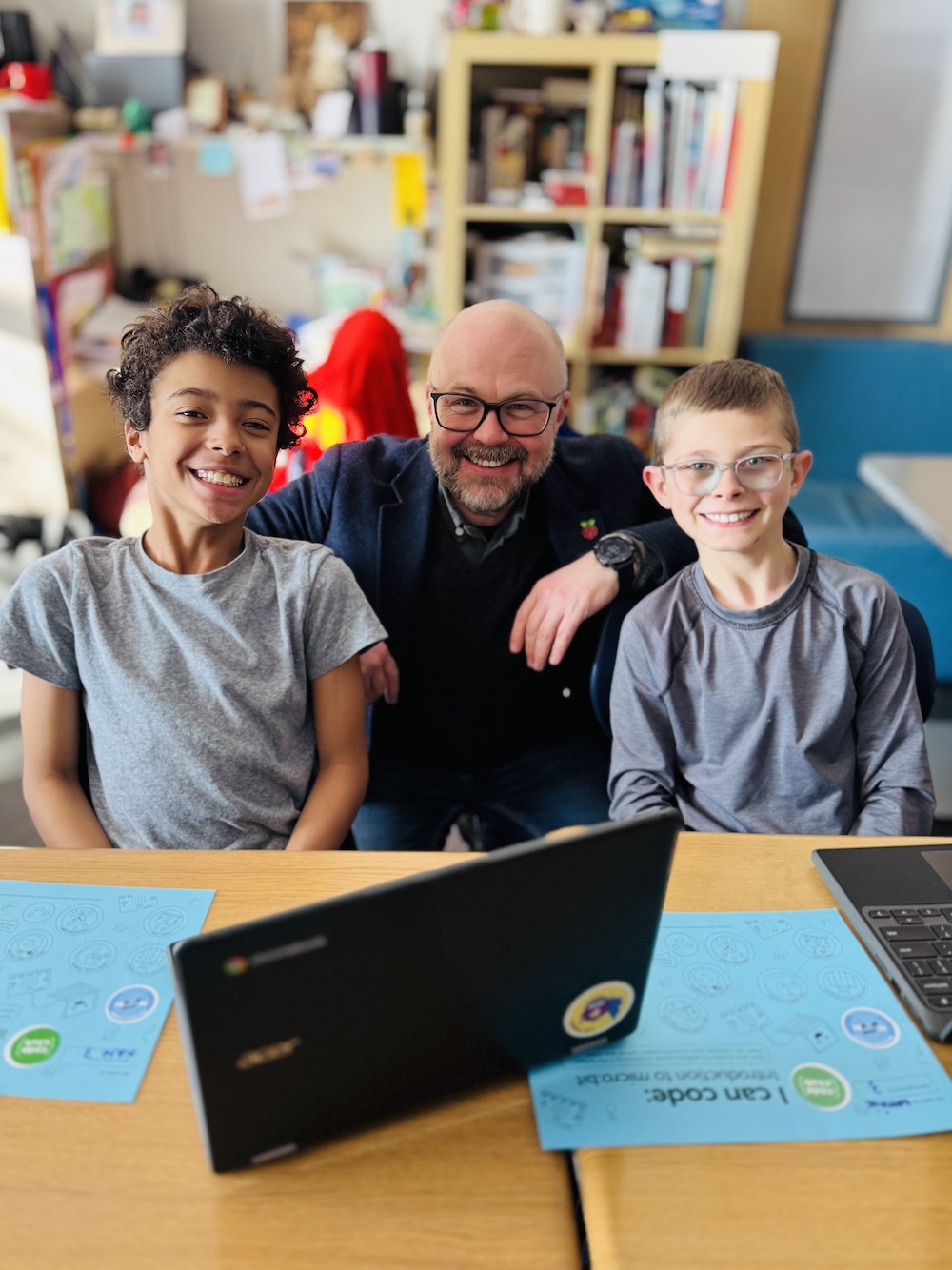
We are delighted that Experience CS is supported by Google and that we are able to build on the fantastic work that they have done over many years to support educators and students through CS First.
Google has today announced that CS First will no longer be available from June 30, 2025 and that they are recommending that their users should move over to Experience CS for the next school year. That is a huge vote of confidence from a team that really knows what they are talking about. I want to pay tribute to everyone at Google who has worked so hard over the years to support teachers and inspire students through CS First.
We are looking forward to working with all of the CS First community to make sure that you are supported through the transition and set up ready to go for the start of the new school year. You can find out more about the support we will be offering by registering here.
The post Experience CS: a new way to teach computer science appeared first on Raspberry Pi Foundation.
Xojo 2025r1: Big Updates for Developers with Linux ARM Support, Web Drag and Drop, and Direct App Store Publishing
Xojo has just rolled out its latest release, Xojo 2025 Release 1, and it’s packed with features that developers have been eagerly waiting for. This major update introduces support for running Xojo on Linux ARM, including Raspberry Pi, brings drag-and-drop functionality to the Web framework, and simplifies app deployment with the ability to directly submit apps to the macOS and iOS App Stores. Here’s a quick overview of what’s new in Xojo 2025r1.
A burst of progress on the GCC Rust front end
Arthur Cohen has posted a massive series of patches in four parts
(part 1,
part 2,
part 3,
part 4)
upstreaming all of the recent work on the GCC Rust front end. These
changes include the Polonius borrow checker, the foreign-function
interface, inline assembly support, if-let statement handling,
multiple built-in derive macros, for loops, and more.
[$] A process for handling Rust code in the core kernel
The 2024 Linux Storage, Filesystem, Memory-Management, and BPF Summit
included a tense session on the use of Rust
code in the kernel’s filesystem layer. The Rust topic returned in 2025 in
a session run by Andreas Hindborg, with a scope that also covered the
storage and memory-management layers. A lot of progress has been made, and
the discussion was less adversarial this year, but there are still process
issues that need to be worked out.
Docker Run With Logs – Capturing and Debugging Output
Logs are an invaluable aspect of troubleshooting and debugging Docker containers. When running applications within Docker, capturing logs efficiently allows developers to diagnose issues quicker and remediate them effectively. In this article, we will explore various methods to capture and analyze logs from Docker containers to gain insights into their behavior and resolve any arising issues.
Zstd 1.5.7 Lands In Linux 6.15 For Better Performance & APIs For Intel QAT Acceleration
Linux 6.15 keeps getting more exciting… The big Zstd update has landed! The in-kernel Zstandard compression code is finally re-based against the newer upstream state that brings better performance as well as new APIs for allowing Intel QAT acceleration by Intel hardware offering QuickAssist Technology. This Zstd code is relied upon by Btrfs transparent file-system compression and other in-kernel users for compression/decompression…
Linux 6.15 To Gain New Option For Those Building The Kernel Without Virtual Terminal
The printk changes submitted for the Linux 6.15 kernel introduce a new “NULL_TTY_DEFAULT_CONSOLE” Kconfig build-time option for allowing the null TTY to be the default for those building the Linux kernel without virtual terminal (VT) support…
GRUB Gets a Taste of Rust with New Prototype
Rust lands in GRUB as an experiment—initial i386-pc support and dynamic modules, promising safer system code.