
From the AMD keynote at Computex today the Raeon AI PRO R9700 Graphics were announced in delivering RDNA4 graphics for professionals…
Category Archives: Linux
More “Nova” Open-Source NVIDIA Driver Code To Be Upstreamed For Linux 6.16
In addition to the Nouveau driver set to see NVIDIA Blackwell and Hopper GPU support with the upcoming Linux 6.16 cycle, the modern, Rust-based Nova driver for future open-source NVIDIA GPU support is set to become a bit more full with this next kernel release…
AMD Announces ROCm-DS
AMD this evening announced ROCm-DS as a new toolkit for their ROCm compute stack to accelerate data processing workloads on Instinct accelerators…
LastOS slaps neon paint on Linux Mint and dares you to run Photoshop
Another distro for Windows users – presumably ones who love blingLastOS is a tricked-out version of Linux Mint 22.1 with the Cinnamon desktop and some additional tools to make life easier for Windows folks.…
RHEL 10 Released at AI-Focused Red Hat Summit
Although we attended the event virtually, FOSS Force was able to get Red Hat CEO Matt Hicks to weigh-in on the open source AI controversy.
The post RHEL 10 Released at AI-Focused Red Hat Summit appeared first on FOSS Force.
Torvalds’ typing taste test touches tactile tragedy
There’s something wrong with keyboard design, but we can’t put our finger on itOpinion Linus Torvalds is the global hero most of the world doesn’t even know exists. There are no big movies about him, no best-selling biographies, no ardent Torvaldian cultists with home altars and gilded icons. At least, we hope not.…
Linux Scheduler Patches Aim To Address Performance Regression Since Last Year
A set of Linux kernel scheduler patches posted today are trying to address some performance regressions observed since the Linux 6.11 kernel that was released back in September 2025. These performance-fixing patches are flying under a “request for comments” flag and some of the regressions are tricky and perhaps not completely resolved, but it looks to be a step in the right direction…
Fedora 43 Cleared To Ship With Wayland-Only GNOME
The Fedora Engineering and Steering Committee (FESCo) today signed off on the planned change for Fedora 43 that the GNOME desktop will be Wayland-only: the GNOME X11 packages will be removed in this next Fedora Linux release…
United States Federal Government’s Digital Analytics Program (DAP): GNU/Linux Users Represent Close to 6% of Visitors This Year
The first occurrence of GNU/Linux was owing to my older colleague and it happened here in Manchester, not in Finland or in Portland (Oregon). That’s just the real history!
[$] An update on continuous testing of BPF kernel patches
Ihor Solodrai has been working on the BPF subsystem’s continuous-integration
(CI) testing for the last six months. At the 2025 Linux Storage, Filesystem,
Memory-Management, and BPF Summit, he remotely shared
an update on his work, and solicited feedback on how the tests could be further
improved. Much of the work he’s done has been specific to the BPF subsystem, but
some is more generic and could potentially be of use to other subsystems. He
also shared some general lessons learned from working on the BPF CI tests.
[$] Debian AI General Resolution withdrawn
Despite careful planning and months of warning, Debian developer Mo
Zhou has acknowledged that the project needs more time to grapple with
the questions around AI models and the Debian Free Software Guidelines
(DFSG). For now, he has withdrawn his proposed General Resolution (GR)
that would have required the original training data for AI models to
be released in order to be considered DFSG-compliant—though the
debates on the topic continue.
Red Hat Enterprise Linux 10 Released, This Is What’s New
RHEL 10 debuts with built-in AI guidance, post-quantum cryptography, and streamlined OS-container management for modern hybrid infrastructure.
Red Hat & AMD Collaborating To Further Enhance Open-Source GPU Stack For AI
In addition to AMD being involved with Red Hat on the new llm-d open-source project for Gen AI, AMD and Red Hat also announced today further collaboration around open-source GPU/accelerator support for AI workloads…
Big News for Linux on Windows: Windows Subsystem for Linux (WSL) is Now Officially Open Source!
After years of work, Microsoft has made the WSL code publicly available. Yes, Windows Subsystem for Linux is now officially Open Source!
Red Hat Enterprise Linux 10 released
Red Hat has announced
the release of Red Hat Enterprise Linux (RHEL) 10. A blog post
accompanying the release provides details on some of the more notable
features, such as encrypted DNS, a developer preview of RHEL 10
for RISC-V,
and image
mode for RHEL using bootc.
Image mode for RHEL lets you deploy your OS as a bootc image to your
hardware, virtual machine or cloud, and then layer your app on top of
it. That’s a far less complex operation than traditional packaged
deployments, and it gives developers and image maintainers a common
experience and total control over their environment.
RHEL 10 includes the 6.12.0 kernel, GCC 14.2, GNU
Binutils 2.41, GNU C Library (glibc) 2.39, Python 3.12,
Perl 5.40, and more. See the release
notes for a full list of changes. LWN covered
CentOS Stream 10 in December, which provided an early look
at what would be in the RHEL 10 release.
Red Hat Announces The llm-d Open-Source Project For Gen AI
In addition to rolling out Red Hat Enterprise Linux 10, Red Hat used their annual developer summit today for introducing llm-d as their newest open-source project…
Experience CS: A safe, creative way to teach computing
Experience CS is our new free curriculum that helps elementary and middle school educators (working with students aged 8 to 14) teach computer science with confidence through creative, cross-curricular lessons and projects. Designed for teachers, by teachers, Experience CS is built to be easy to use in classrooms, with everything you need integrated into one safe, school-friendly platform.

In this blog post, we will share more about the safety features of Experience CS, and the steps we’ve taken to make the platform a great fit for your school.
A safe, teacher-managed environment
Experience CS supports young people to develop their understanding of computer science through engaging, interactive projects using the programming language Scratch. Scratch is a popular block-based language that helps young people get started with coding, and Experience CS includes a version of Scratch that we have built especially for schools. With our version, which is fully integrated into the Experience CS platform, students can explore coding in a teacher-managed, closed environment that aligns with schools’ safeguarding policies and gives you full control over what your students see and do.
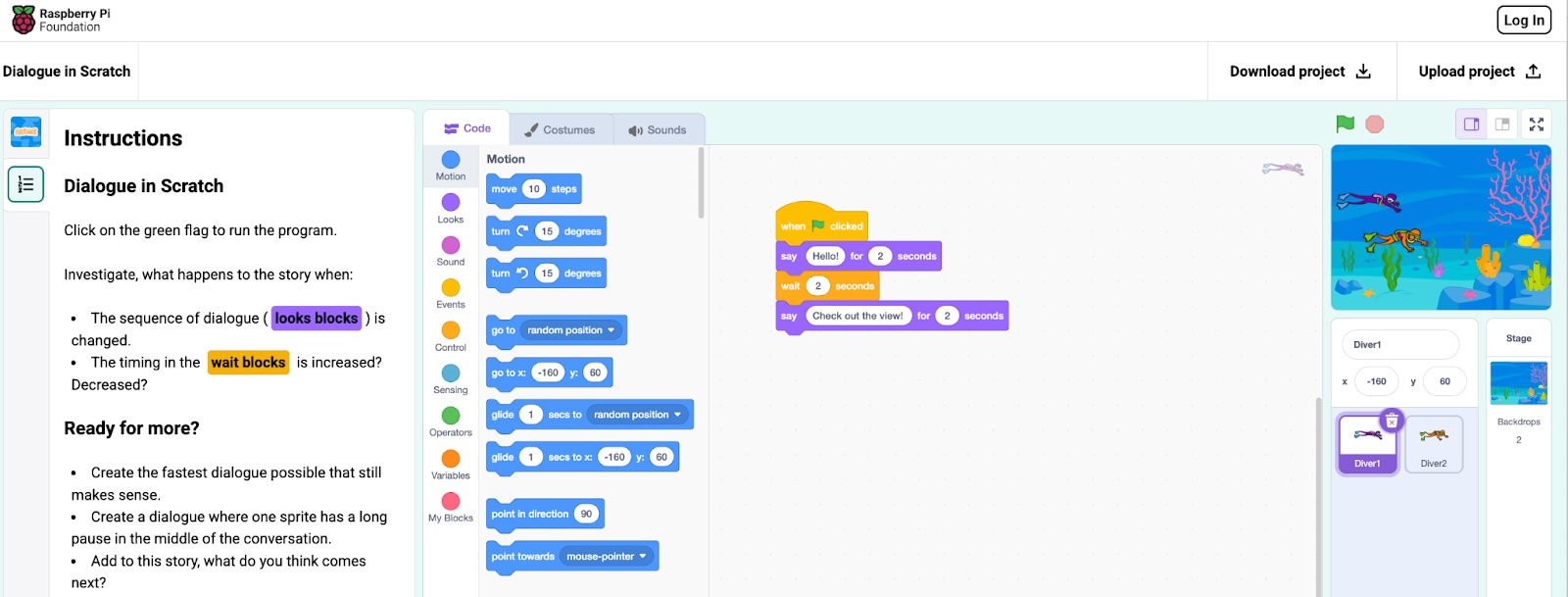
Student safety and privacy are at the forefront in Experience CS, which means:
- A private, closed environment. Projects are kept within the classroom and cannot be published to a public gallery.
- Teacher-controlled access. Students don’t need to create or manage their own accounts. Teachers manage their students’ access, with no student email addresses required.
- No social features. Students don’t create public profiles or follow other users, and there are no chat or comment features for young people.
- Curated content. Students can only access the projects and materials you share with them, not content from other users.
Tailor-made for schools
We have designed every part of the Experience CS platform with school environments in mind, making it easier for teachers to manage and for students to use.
Here’s how:
- Fully integrated platform. Everything students need is built into the Experience CS platform, including Scratch, lesson resources, student materials, and project templates. There is no need to visit other websites.
- Simple access. Teachers generate class codes so learners can jump straight into activities, with no student email address required.
- Automatic progress saving. Students’ projects are saved in the platform and linked to their class. Teachers can see students’ progress at a glance.
- Teacher control. Teachers have full visibility of students’ activity, and what students see and do stays within the classroom environment.
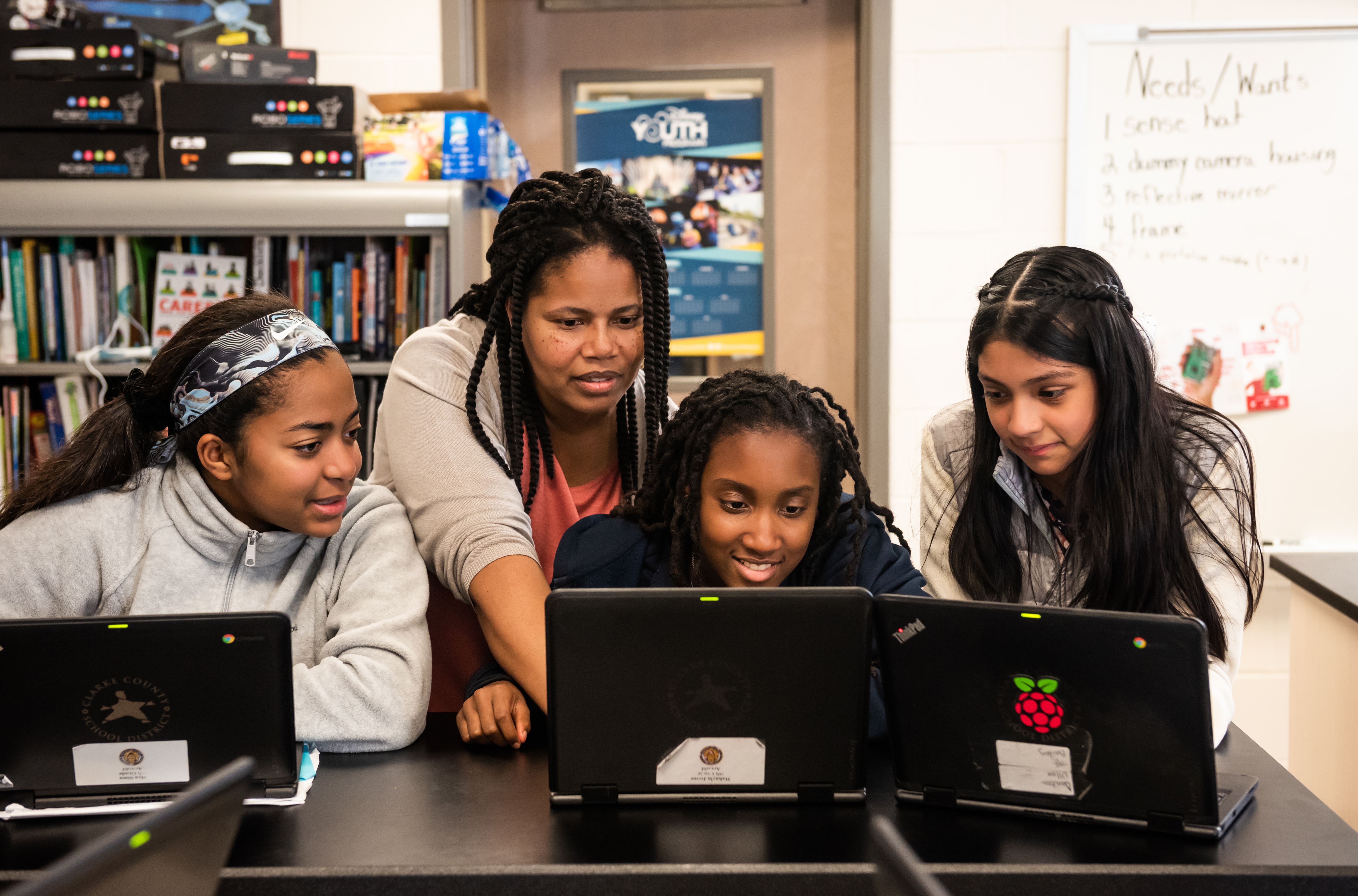
Experience CS gives you the tools and peace of mind to deliver creative, engaging computer science lessons and activities in a way that works for your school. You will be able to effortlessly manage students’ work, with everything you and your students need provided within a simple, intuitive interface.
Be the first to try Experience CS
Experience CS is launching soon, and we can’t wait to see what you and your students create with it.
If you would like early access, want to stay up to date, or are interested in trying Experience CS out in your classroom, sign up for updates and we’ll keep you in the loop.
We’re also planning ahead: in the coming months, we’ll make our version of Scratch available to all schools and clubs via our Code Editor. That means whether or not you use the Experience CS curriculum, you’ll be able to run safe, creative coding sessions using Scratch in a school-friendly environment.
The post Experience CS: A safe, creative way to teach computing appeared first on Raspberry Pi Foundation.
LibreOffice 25.8 Alpha 1 Released With Performance Optimizations
The first alpha release of LibreOffice 25.8 is now available for testing of this cross-platform, free software office suite…
Red Hat Enterprise Linux 10.0 Formally Announced, Joined By RISC-V Developer Preview
While Red Hat Enterprise Linux 10.0 GA images have been available for download since last week, Red Hat used the Red Hat Summit this week in Boston to formally announce the Red Hat Enterprise Linux 10 availability…
VKD3D 1.16 Released With DXIL Shader Support
VKD3D 1.16 was released today by Wine/CodeWeavers developers as this upstream Direct3D 12 over Vulkan API implementation used by Wine for running D3D12 Windows games/applications on Linux…