
Rhino Linux debuts its first official UBXI KDE 6 Desktop port and starts testing RPK2, a complete rewrite of its package manager.
Category Archives: Linux
Sublime Text Code Editor Update 4200 Add Sidebar Flexibility
Sublime Text 4 Code Editor build 4200 adds right-side sidebar support, plugin host settings, TOML and Zsh syntax, and more.
How Java changed the development landscape entirely as code turns 30
The coffee shows no signs of coolingFeature It was 30 years ago when the first public release of the Java programming language introduced the world to Write Once, Run Anywhere – and showed devs something cuddlier than C and C++.…
More Intel Panther Lake Graphics PCI IDs Added To Linux 6.15
Ahead of the Linux 6.15 kernel release expected on Sunday, a final round of Direct Rendering Manager (DRM) kernel graphics driver fixes were merged today to the kernel. Notable with these updates on the Intel side is squeezing in some additional PCI device IDs for upcoming Panther Lake integrated graphics…
Linux 6.15 Brings Many Features For Intel & AMD Hardware
With the Linux 6.15 kernel expected to be released as stable on Sunday unless Linus Torvalds has last-minute reservations, here’s a look back at some of the most interesting Linux 6.15 changes…
Banana Pi BPI-Forge1 Is a Low-Cost RK3506J-Based SBC Compatible with RT-Thread
Banana Pi’s BPI-Forge1 is a compact single-board computer based on the Rockchip RK3506J SoC, designed for digital multimedia processing, intelligent voice interaction, and real-time audio applications. The board supports a range of embedded use cases through its integrated audio and display subsystems, peripheral connectivity, and small form factor. The RK3506J features a triple-core Arm Cortex-A7 […]
10 Advanced Linux Commands You’ve Probably Never Used (Part 3)
Continuing our exploration of lesser-known but powerful Linux commands, let’s dive into a new batch of hidden gems. These commands can streamline your workflow, automate tasks, and help you squeeze more control and efficiency out of your command-line experience.
The post 10 Advanced Linux Commands You’ve Probably Never Used (Part 3) appeared first on Linux Today.
22 Best Free and Open Source Linux Chemistry Tools
Unlock your potential in chemistry with our curated list of 22 free and open source Linux tools. Perfect for students and professionals alike!
The post 22 Best Free and Open Source Linux Chemistry Tools appeared first on Linux Today.
How to Install MariaDB on AlmaLinux 10
This tutorial will explain how to install MariaDB on AlmaLinux 10. MariaDB is an open-source relational database management system used for storing data. MariaDB is written in C, C++, Perl, an57d Bash and is highly compatible with MySQL, with exact matching with MySQL APIs and commands. It was developed by the original developers of MySQL and designed as a drop-in replacement for MySQL. MariaDB is used because it is fast, scalable, and robust, with a rich system of storage engines and plugins. The following paragraphs will teach you how to install MariaDB, manage the service, and use some basic commands for login, creating a database, and users in the MariaDB console.
Installing the MariaDB database system is straightforward and may take up to 15 minutes. Let’s get started!
The post How to Install MariaDB on AlmaLinux 10 appeared first on Linux Today.
[$] Formally verifying the BPF verifier
The BPF verifier is an increasingly complex and security-critical piece of code.
When the kinds of people who are apt to work on BPF see a situation like that,
they naturally question whether it’s possible to use formal verification to
ensure that the implementation of the code in question is correct. Santosh
Nagarakatte led the first of two extra-long sessions in the BPF track
of the 2025 Linux Storage, Filesystem, Memory Management, and BPF Summit
about his team’s work formally verifying the BPF verifier with a
custom tool called
Agni.
A Personal Homecoming to BunsenLabs Boron
This week’s episode of Distro Fever finds our hero revisiting BunsenLabs, where he discovers that this blast from his past is more than good enough for his present.
What would a Microsoft engineer do to Ubuntu? AnduinOS is the answer
It’s not radical, but it is slim and pretty – usually a winning combinationAnduinOS, a one-man project from a Chinese Microsoft engineer, is quite a new Ubuntu remix that reshapes GNOME in the image of Windows 11.…
Teaching digital literacy without devices
Lack of access to devices presents teachers with challenges in any setting. In schools, money is often limited and digital technology may not be the priority when buildings need maintenance or libraries need replenishing. This issue is particularly important when the very subject you teach relies on and relates to devices that you may have limited or no access to.
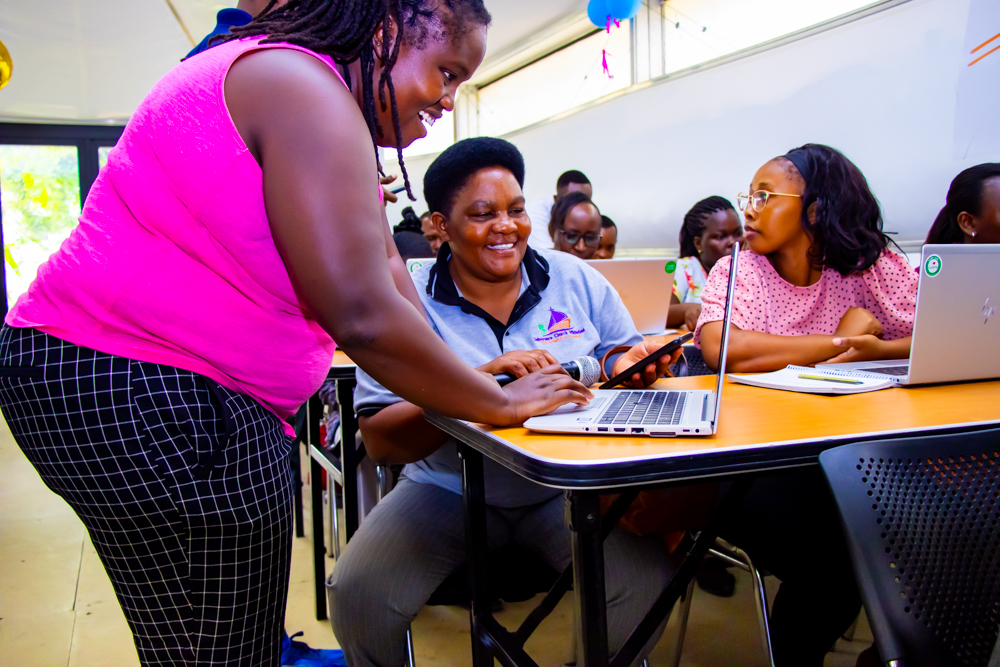
It must be frustrating for teachers in this situation to see marketing campaigns from companies showing how their curriculum offering will use the very latest in robotics, AI, or media production, when the teachers’ reality is that they don’t have anything like the means or resources to deliver this.
Fortunately there are approaches that can help. Below I outline some of the ways we are working with teachers to make the teaching of computing and digital literacy less resource-heavy and more accessible and equitable.
Schools in Kenya: A case study
Our work with Kenyan teachers has brought the access issue into sharp focus for us. We are currently developing free resources to deliver the Kenyan curriculum to schools in Mombasa and the Frontier Counties. There are big contrasts both between and within these two areas of the country. Some schools are well equipped with digital technology, while others have very little access to any computing devices; in these schools, smartphones play a crucial role.
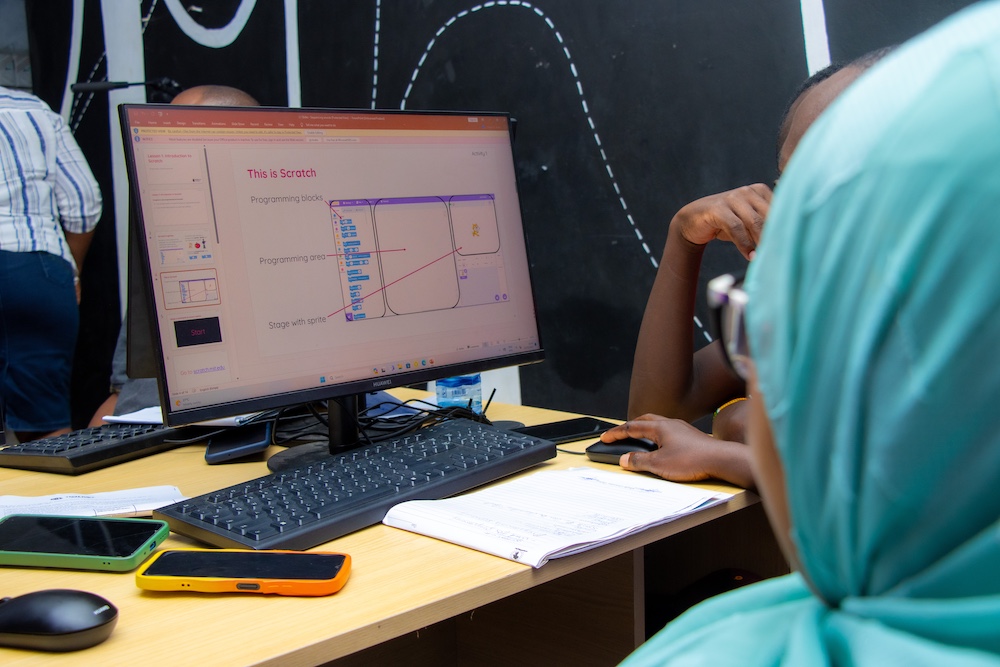
With that in mind, the curriculum resources we develop suggest class activities that make the most of limited devices, such as the use of projected demonstrations. We also provide a step-by-step guide to computing tasks, with screenshots, to guide learners through the tasks conceptually. This ensures learners understand the process and can apply their new knowledge once they gain access to the necessary devices.
We make these resources available online and in downloadable documents. This means the resources can be taken offline and taught in places without stable internet connection. We are also careful to limit file sizes, to make downloads more accessible. Wherever possible, our resources are device-agnostic, so that they can be accessed on a wide range of devices, including personal devices such as mobile phones.

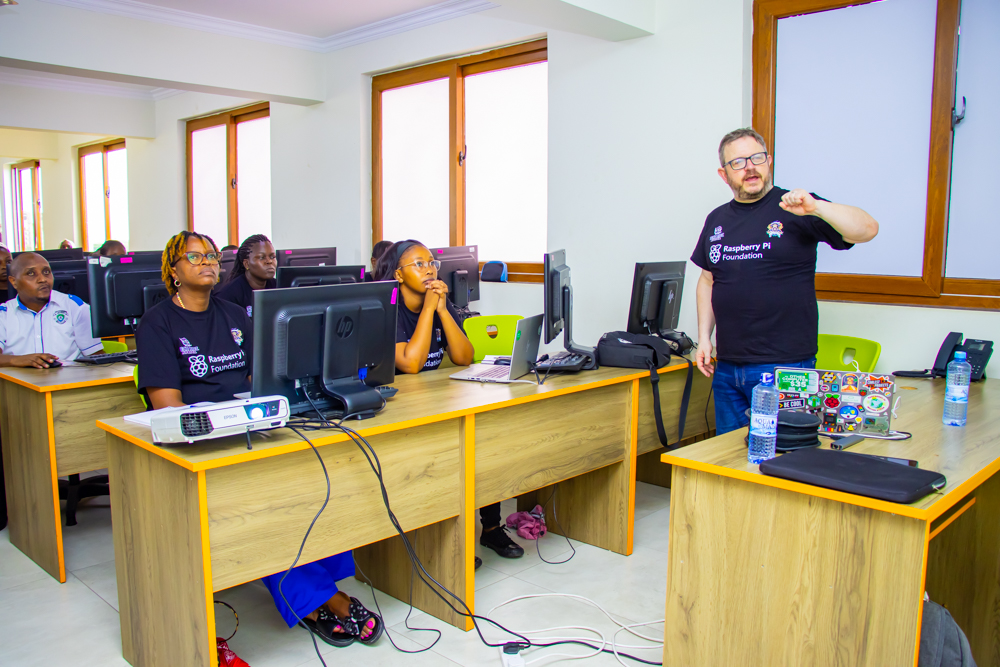
As well as tailoring curriculum resources, we have also adapted our teacher training to make it more accessible for people with less experience of using computing devices. For example, during a recent project coaching community trainers in Mombasa, we emphasised activities that improve digital skills on various devices. This meant that when passing the training on to other teachers, the community trainers had a broader set of skills across a wider range of devices.
Unplugged activities
Even computing-specific concepts such as a programming construct can, to a degree, be taught with very limited access to devices. Unplugged activities, where no digital technology is required, can be used to introduce fundamental concepts such as sequencing and repetition.
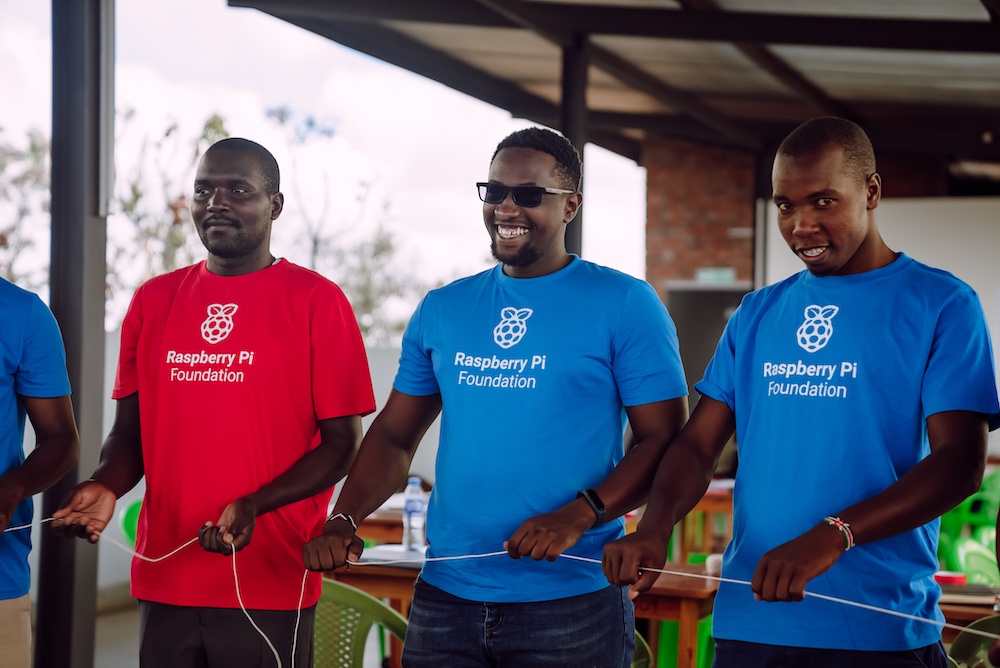
For example, you can ask learners to recognise patterns in repeating sequences of colours and identify how to describe the sequences without repeating the colours many times. While it is good practice to link the learning from an unplugged activity back to a plugged activity, students will still benefit when that is not possible.
Emulators
There are also a significant number of devices which offer online emulator apps that mirror the functions of the physical device. Consider Bee-Bot floor robots, which can be relatively expensive to purchase and may get damaged in a classroom. If you don’t have the physical device, its emulator app provides a similar experience.

Similarly, the micro:bit, a versatile microcontroller for young people, can be emulated in the MakeCode programming environment, including all its buttons and sensors. There are also numerous emulators which enable you to make and test your own circuits using a variety of hardware platforms.
What do you actually need?
Sometimes it can be helpful to look up what devices you actually need — they might not be as expensive as you think. General-purpose, single-board computers such as Raspberry Pi can be bought new for less than £25, and more powerful models still under £50.
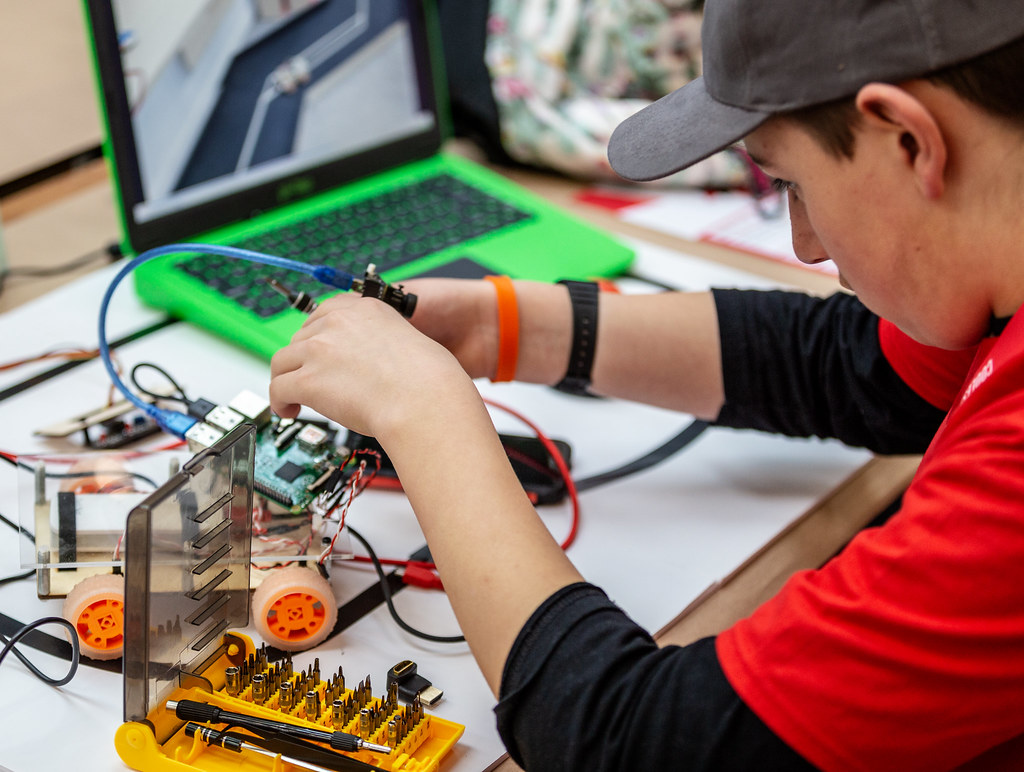
Similarly, microcontrollers such as Raspberry Pi Pico, micro:bit, or Crumble, range from about £5 to £20 per device. Accessories such as LEDs, jumper leads, motors, and buzzers are also reasonably priced. They can be a relatively low-cost entry into physical computing and robotics, especially if you pair them with craft materials or share devices between students.
Make the most of it
However limited your access to devices is, I encourage you to:
- Look out for partners or solution providers that prioritise inclusivity and accessibility in their resources
- Consider whether you can make activities accessible on a wider range of devices and use what students may already have (check out the OctoStudio app for smartphones for example)
- Use unplugged activities, and relate them back to plugged devices when possible
- Look up devices which might be more affordable than you realised
If you have your own tips to share with fellow teachers, please comment below.
More on digital literacy
You can discover our free teacher training and classroom resources, and read about how we’ve integrated digital literacy in The Computing Curriculum.
A version of this article appears in the newest issue of Hello World magazine, which is all about digital literacy. Explore issue 26 and download your free PDF copy today.
You can also listen to our recent Hello World podcast episode exploring three teachers’ digital literacy tips for the classroom.
The post Teaching digital literacy without devices appeared first on Raspberry Pi Foundation.
GCC 14.3 Compiler Released With 200+ Bug Fixes
For those not yet on the newest GCC 15 compiler that debuted as stable one month ago, GCC 14.3 is out today in delivering the latest fixes for the GCC 14 stable series…
AAEON EPIC-RPS7 Targets Compact Industrial Control with 14th Gen Intel Core Support
AAEON has introduced the EPIC-RPS7, a 4? industrial SBC aimed at cost-sensitive applications like industrial control, PLC automation, and remote monitoring. It supports 12th to 14th Gen Intel Core processors (up to 65W TDP), bringing high performance to space-limited deployments. The EPIC-RPS7 supports up to 64GB of DDR5 memory across two SODIMM slots and is […]
Mozilla Shuts Down Pocket and Fakespot Services
Mozilla is sunsetting the Pocket and Fakespot services to focus on building a faster, smarter, and more independent Firefox browser.
Neptune OS is Debian made easy but, boy, does it need some housekeeping
A media-ready remix with KDE, codecs, and clutter from its BeOS-flavored pastNeptune is a moderately tweaked Debian remix with KDE Plasma 5, a few alternative app choices, and a longer history than we anticipated.…
Signal shuts the blinds on Microsoft Recall with the power of DRM
Chat app blocks Windows’ screenshot-happy feature from peeking at private convosChat app biz Signal is unhappy with the current version of Microsoft Recall and has invoked some Digital Rights Management (DRM) functionality in Windows to stop the tool from snapshotting private conversations.…
Terminator Linux Terminal App Updated After Prolonged Hiatus
After a long break, the Terminator 2.1.5 Linux terminal app brings new features like split-session SSH cloning, reverse search, and UI fixes.
RISC-V’s Big Week Includes RHEL, CentOS Stream, and Rocky Linux
The open source ISA RISC-V has long been making inroads into Linux distributions, but this week Enterprise Linux distros got on board en masse.