
Cong Wang and Daniel Borkmann each led session at the 2025 Linux Storage,
Filesystem, Memory Management, and BPF Summit about their respective
plans to speed up networking in the Linux kernel. Both sessions described ways
to remove unnecessary operations in the networking stack, but they focused on
different areas. Wang spoke about using BPF to speed up socket operations,
while Borkmann spoke about eliminating the overhead of networking
operations on virtual machines.
Category Archives: Linux
[$] The importance of free software to science
Free software plays a critical role in science, both in research and in
disseminating it. Aspects of software freedom are directly relevant to
simulation, analysis, document preparation and preservation, security,
reproducibility, and usability. Free software brings practical and specific
advantages, beyond just its ideological roots, to science, while
proprietary software comes with equally specific risks. As a practicing
scientist, I would like to help others—scientists or not—see the benefits
from free software in science.
AMD Makes Another Software Acquisition To Bolster Their AI & Compiler Talent
In addition to the excitement this morning of the Radeon RX 9060 XT review embargo lift, today also serves as another special day at AMD as they announced they have acquired software firm Brium…
Hardware Monitoring For More ASUS Motherboards & Additional Zen 5 CPUs In Linux 6.16
The numerous hardware monitoring “HWMON” subsystem updates were merged to Linux 6.16 on Tuesday for further enhancing the desktop hardware reporting capabilities and more with this next kernel release…
Eight stable kernels released
AMD Radeon RX 9060 XT Linux Performance
Ahead of the AMD Radeon RX 9060 XT graphics card hitting retailers tomorrow, today the review embargo lifts on this latest addition to the RDNA4 family. Here are the initial Linux graphics performance benchmarks for this new $349 graphics card compared to other AMD Radeon graphics cards as well as the NVIDIA GeForce and Intel Arc competition.
Fwupd 2.0.11 Brings Support For The Lenovo Thunderbolt 5 Smart Dock
Fwupd 2.0.11 is now available as the latest update to this open-source firmware updating tool for Linux systems…
Raspberry Pi Imager 1.9.4 Arrives with UI Polish, Major Fixes
Raspberry Pi Imager 1.9.4, an easy-to-use SD card preparation tool by Raspberry Pi, lands as the first official 1.9.x release, bringing a refined UI, more translations, bug fixes, and updated dependencies across platforms.
WHIP Muxer Merged To FFmpeg For Sub-Second Latency Streaming
A big project was merged into FFmpeg overnight in providing a WHIP muxer for sub-second latency streaming…
5 Reasons Why Your Company Needs a Password Manager
In today’s digital workplace, the number of accounts and services a company relies on is constantly growing — and so is the risk of password-related breaches. Whether you run a startup or a large enterprise, securing your credentials should be a top priority. That’s why more and more businesses are turning to dedicated password managers.
Here are five compelling reasons why your company should implement a password manager today:
The post 5 Reasons Why Your Company Needs a Password Manager appeared first on Linux Today.
New CXL RAS Features Upstreamed For Linux 6.16
Linux kernel developers continue building out the support around the Compute Express Link (CXL) specification for benefiting modern high performance servers. With the in-development Linux 6.16 kernel there are more CXL features now in place…
TikTok “ClickFix” Videos Are Spreading Malware — And Now Targeting Linux
A new social engineering tactic known as “ClickFix” is gaining momentum on TikTok, where seemingly harmless tech tip videos are being used to lure users into downloading malware. These short clips pretend to offer simple fixes for browser issues or system errors, but in reality, they redirect viewers to download malicious files that install infostealers. Even more concerning is that attackers are now starting to experiment with this technique on Linux systems as well — a development covered in detail here: Hackers now testing ClickFix attacks on Linux systems.
The post TikTok “ClickFix” Videos Are Spreading Malware — And Now Targeting Linux appeared first on Linux Today.
DietPi released a new version 9.13
DietPi is a lightweight Debian based Linux distribution for SBCs and server systems, with the option to install desktop environments, too. It ships as minimal image but allows to install complete and ready-to-use software stacks with a set of console based shell dialogs and scripts.
The source code is hosted on GitHub: https://github.com/MichaIng/DietPi
The main website can be found at: https://dietpi.com/
Wikipedia: https://de.wikipedia.org/wiki/DietPi
The project released the new version DietPi v9.13 on May 25th, 2025.
The highlights of this version are:
- DietPi default passwords: Default password ‘dietpi’ must not be used any more for security reasons and has to be changed
- Orange Pi 3B: Added support for the PWM fan
- Radxa ZERO 3: Upgrade to Linux 6.1 based vendor kernel
- Virtual Machines: Future VM images will use initramfs-tools instead of tiny-initramfs
- DietPi-Config: Simplified keyboard layout dialog
- Gitea: Now enabled also for RISC-V systems
- Google AIY, Mycroft AI: Removed deprecated software packages
- Fixes for ASUS Tinker Board 2, Orange Pi 3B v1.1, Orange Pi Zero 3/2W, DietPi-Imager, DietPi-Display, RPi.GPIO, fish, Home Assistant, Redis
The full release notes can be found at: https://dietpi.com/docs/releases/v9_13/
The post DietPi released a new version 9.13 appeared first on Linux Today.
LXD 6.4 Lands with UI Enhancements, Smarter Shutdown Logic
LXD 6.4 system container manager introduces new CLI options, updated UI features, and better shutdowns, clusters, and storage handling.
The post LXD 6.4 Lands with UI Enhancements, Smarter Shutdown Logic appeared first on Linux Today.
SMT Proves Very Advantageous For AMD Ryzen AI MAX Strix Halo Performance
While Intel opted against implementing Hyper Threading for their latest Arrow Lake and Lunar Lake processors, Simultaneous Multi-Threading (SMT) still proves very effective on the AMD side. Even though the top-end AMD Ryzen AI MAX “Strix Halo” SoCs provide 16 Zen 5 cores, the presence of SMT for 32 threads still proves worthwhile from both a performance and power efficiency perspective. Here is an on/off comparison for SMT with the flagship AMD Ryzen AI MAX+ PRO 395 within the HP ZBook Ultra G1a.
Why kids still need to learn to code in the age of AI
Today we’re publishing a position paper setting out five arguments for why we think that kids still need to learn to code in the age of artificial intelligence.
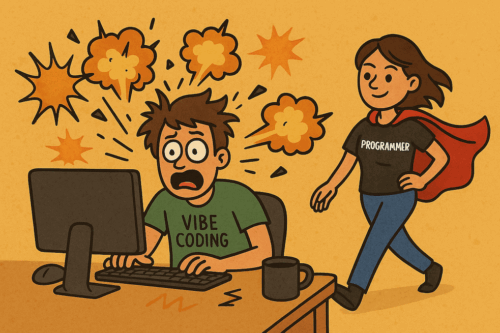
Just like every wave of technological innovation that has come before, the advances in artificial intelligence (AI) are raising profound questions about the future of human work. History teaches us that technology has the potential to both automate and augment human effort, destroying some jobs and creating new ones. The only thing we know for sure is that it is impossible to predict the precise nature and pace of the changes that are coming.
One of the fastest-moving applications of generative AI technologies are the systems that can generate code. What started as the coding equivalent of autocomplete has quickly progressed to tools that can generate increasingly complex code from natural language prompts.
This has given birth to the notion of “vibe-coding” and led some commentators to predict the end of the software development industry as we know it. It shouldn’t be a surprise then that there is a vigorous debate about whether kids still need to learn to code.
In the position paper we put forward five arguments for why we think the answer is an unequivocal yes.
We need humans who are skilled programmers
First, we argue that even in a world where AI can generate code, we need skilled human programmers who can think critically, solve problems, and make ethical decisions. The large language models that underpin these tools are probabilistic systems designed to provide statistically acceptable outputs and, as any skilled software engineer will tell you, simply writing more code faster isn’t necessarily a good thing.
Learning to code is an essential part of learning to program
Learning to code is the most effective way we know for a young person to develop the mental models and fluency to become a skilled human programmer. The hard cognitive work of reading, modifying, writing, explaining, and testing code is precisely how young people develop a deep understanding of programming and computational thinking.
Learning to code will open up even more opportunities in the age of AI
While there’s no doubt that AI is going to reshape the labour market, the evidence from history suggests that it will increase the reach of programming and computational approaches across the economy and into new domains, creating demand for humans who are skilled programmers. We also argue that coding is no longer just for software engineers, it’s becoming a core skill that enables people to work effectively and think critically in a world shaped by intelligent machines. From healthcare to agriculture, we are already seeing demand for people who can combine programming with domain-specific skills and craft knowledge.
Coding is a literacy that helps young people have agency in a digital world
Alongside the arguments for coding as a route to opening up economic opportunities, we argue that coding and programming gives young people a way to express themselves, to learn, and to make sense of the world.
And perhaps most importantly, that learning to code is about power. Providing young people with a solid grounding in computational literacy, developed through coding, helps ensure that they have agency. Without it, they risk being manipulated by systems they don’t understand. As Rushkoff said: “Program, or be programmed”.
The kids who learn to code will shape the future
Finally, we argue that the power to create with technology is already concentrated in too small and homogenous a group of people. We need to open up the opportunity to learn to code to all young people because it will help us mobilise the full potential of human talent, will lead to more inclusive and effective digital solutions to the big global challenges we face, and will help ensure that everyone can share in the societal and economic benefits of technological progress.
The work we need to do
We end the paper with a call to action for all of us working in education. We need to challenge the false narrative that AI is removing the need for kids to learn to code, and redouble our efforts to ensure that all young people are equipped to take advantage of the opportunities in a world where AI is ubiquitous.
You can read the full paper here:
The cartoon image for this blog was created using ChatGPT-4o, which was prompted to produce a “whimsical cartoon that expresses some of the key ideas in the position paper”. It took several iterations.
The post Why kids still need to learn to code in the age of AI appeared first on Raspberry Pi Foundation.
Ubuntu Touch OTA-9 Released with VoLTE and Waydroid Improvements
The UBports Foundation released Ubuntu Touch OTA-9 today as the ninth stable update to their Ubuntu Touch mobile operating system based on Ubuntu 20.04 LTS (Focal Fossa) for supported Linux devices.
Slopwatch: Linux FUD From Slopfarms, Blaming Linux for Microsoft Issues; Even WebProNews Has Become a Slopfarm (Googlebombing “Linux” With Slop Images and Fake/Plagiarised Text)
The Web is drowning in LLM slop and Google isn’t keeping up or is simply participating in that.
RawTherapee 5.12 Enhances Color Tools and Camera Compatibility
RawTherapee 5.12 raw image processing program introduces powerful new color tools, tone mappers, and better support for Canon, Sony, and Fujifilm RAW formats.
SquashFS Tools 4.7 Released: “20% To More Than Ten Times Faster”
SquashFS-Tools 4.7 is out today as a big feature update to the user-space utilities for creating/modifying/extracting SquashFS read-only file-system images. SquashFS 4.7 delivers some big performance improvements and other nice enhancements…