
DragonFlyBSD has updated its Direct Rendering Manager (DRM) kernel graphics/display driver code that it ports over from what’s available in the upstream Linux kernel. The latest revision to the DragonFlyBSD kernel graphics driver code enables support for some new hardware platforms but remains woefully behind the latest generation dGPUs/iGPUs and what is found in the upstream Linux kernel…
Category Archives: Linux
DXVK 2.6.2 Improves Support for Rocketbirds 2, Red Orchestra: Ostfront, and More
DXVK 2.6.2 Vulkan-based implementation of D3D9, D3D10, and D3D11 for Linux / Wine is now available for download with improvements for several games and various bug fixes.
Astro Pi 2024/25: Another stellar year of space education concludes
We’re thrilled to celebrate yet another incredible year of young people reaching for the stars, as the European Astro Pi Challenge 2024/25 draws to a close. Teams from across Europe and ESA Member States are now receiving their well-deserved certificates and data from the International Space Station (ISS). It’s been a truly inspiring year, showcasing the phenomenal talent and dedication of young coders and scientists.
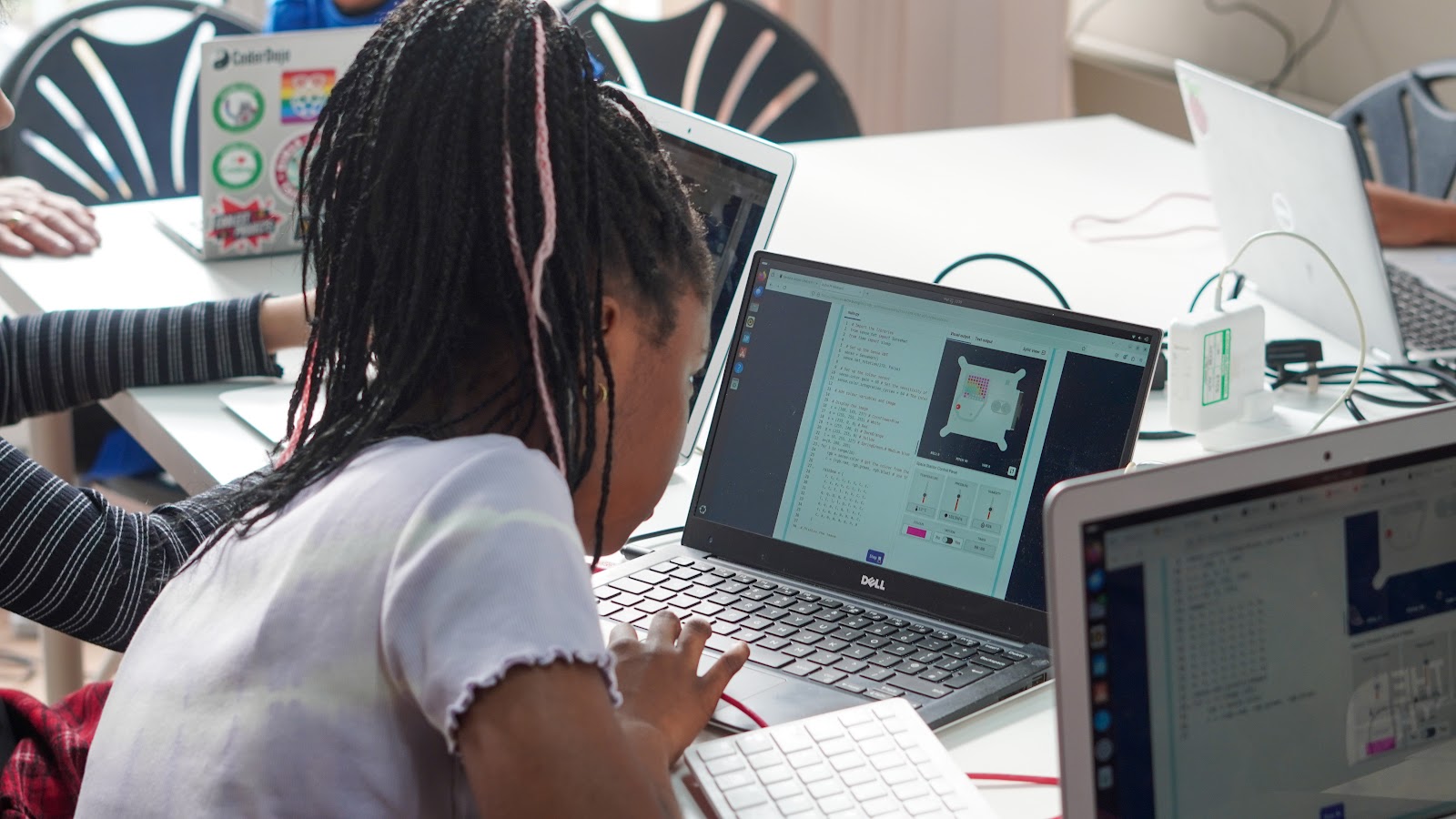
The European Astro Pi Challenge is an ESA Education project run in collaboration with us here at the Raspberry Pi Foundation. It offers young people the amazing opportunity to conduct scientific investigations in space by writing computer programs that run on Raspberry Pi computers on board the ISS, called Astro Pis.
There‘s a lot to celebrate from this year’s Astro Pi, so let’s take a look at some of the highlights for each of our inspiring Missions: Mission Zero and Mission Space Lab.
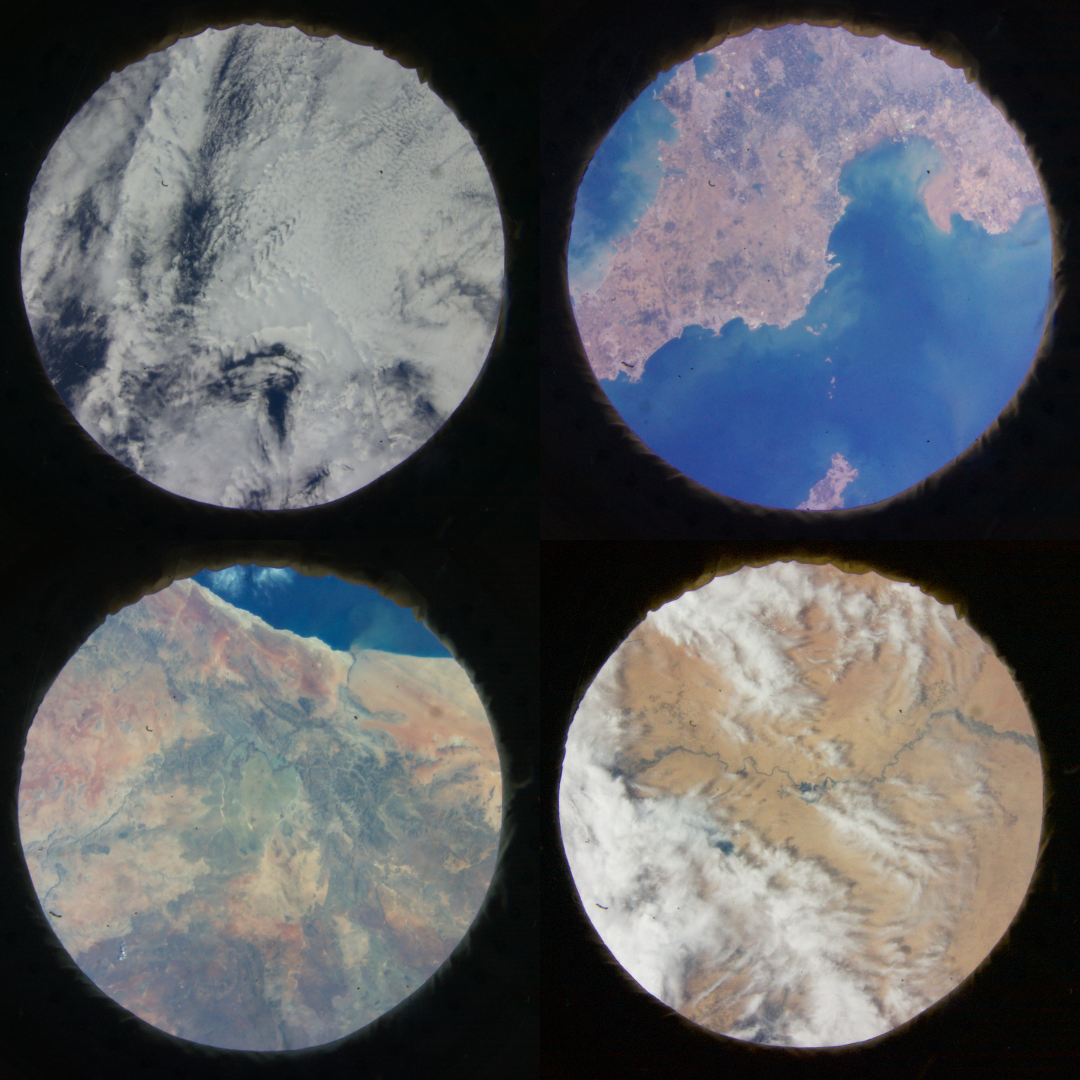
Mission Zero: Inspiring coding, creativity, and inclusion
Mission Zero reached more young people than ever before in 2024/25, with 25,405 young people participating in 17,285 teams. After passing the rigorous testing and moderation processes, an amazing 17,109 teams (25,210 young people) were successful in getting their programs to run on the ISS.
One of the great things about Mission Zero is that we see a good gender balance in participation. This year, 44% of participants identified as “female” and 4% as “prefer to self-describe”, “prefer not to say”, or “other”. This means that Mission Zero has achieved a more balanced gender representation than is typically seen in computing subjects, where the ratio is around 20:80 girls to boys.
Mission Space Lab: More teams have their programs run in space
Mission Space Lab gives young people the opportunity to calculate the speed of the ISS in orbit using sensor and camera data collected from the Astro Pis on board the ISS. This year, 1859 young people in 552 teams participated in Mission Space Lab. Notably, 309 Mission Space Lab teams, or 95% of submissions, ran their programs on the ISS and are now analysing the data they collected. That’s 73 more teams achieving flight status than in 2023/24, and a total of 1084 young people receiving unique data sets from space and certificates.
Running a program in space is very different from testing it on the ground. It’s always interesting to see how well your program has performed and how accurate the final output is. Below, you can see a scatter graph of the team estimates produced by their programs. The actual speed of the ISS is no secret: it’s travelling about 7.67 kilometres per second. How have teams performed with the ISS speed task?

Inspiring and impactful
Another highlight from this year has been seeing how impactful participation can be for young people and mentors facilitating the activity. We receive lots of valuable feedback from the Astro Pi community each year, and it’s always heartwarming to hear what your experience has been and how we can improve the challenge. Here are a couple of quotes from the community who took part this year:
Mission Zero mentor: “Having their programs run in space really motivated them to take part because it was an exciting reward and something they wanted to talk about with their friends.”
Parent of a Mission Zero participant: “I was completely inexperienced in Python, but easily managed to help my 7-year-old.”
More Code Clubs participating in 2024/25
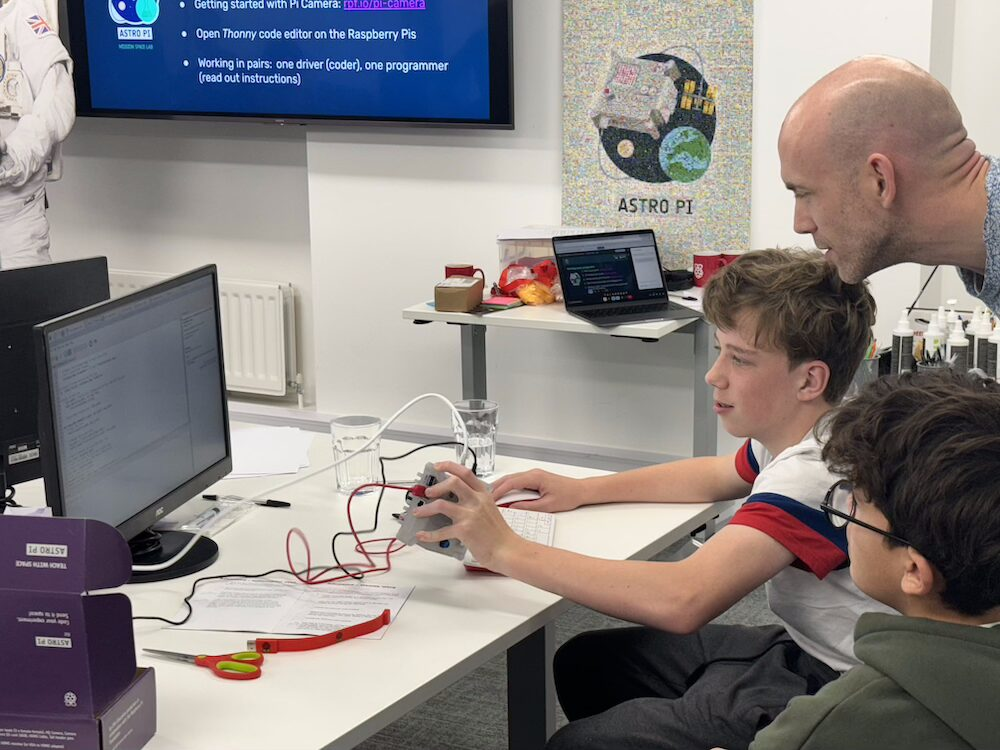
It has been great to see lots of Code Clubs taking part in Astro Pi this year, both for Mission Zero and Mission Space Lab. This year, 986 young people from 700 teams did Mission Zero at their Code Club: that’s double the number from 2023/24. Plus, 43 Mission Space Lab teams from Code Clubs took part. That’s 143 young people, or almost double the number compared to the year before.
We ran two code-alongs for the Code Club community this year, and it is encouraging to see increases for both missions. We will continue to support young people from all settings who want to take part in Astro Pi next year, whether it’s at school, Code Club, or other venues.
Conclusion
In summary, it’s been a great year for Astro Pi. We’ve reached lots of young people through the challenge, met many inspiring mentors, and seen some really positive trends. Plus, all the operations on the space station that make Astro Pi possible went smoothly: when you are running programs in space, that isn’t always the case!
None of it would have been possible without the tireless efforts of the teachers, mentors, and educators who help run Astro Pi in your communities. From everyone here at Mission Control, thank you.
If you’d like to tell us how we can provide more support to help you run Astro Pi, please email contact@astro-pi.org.
We’ll be back for more stellar space adventures in coding in September 2025.
The post Astro Pi 2024/25: Another stellar year of space education concludes appeared first on Raspberry Pi Foundation.
What is Strip Command and How to Use it?
In this article, you will learn how to use the strip command to remove unnecessary information from your compiled object file with examples.
Taking AMD Ryzen AI Max Performance To The Max With Clear Linux & CachyOS
With the HP ZBook Ultra G1a Strix Halo laptop sporting the AMD Ryzen AI Max+ PRO 395 with Radeon 8060S Graphics it offers incredible performance potential as shown in my many benchmarks over the past month on Ubuntu Linux. But if wanting to push the Ryzen AI Max even further, with performance-optimized Linux distributions like CachyOS and Intel’s Clear Linux it’s possible to tap some additional performance out of this 16-core Zen 5 laptop.
Intel Iris Linux Driver Lands Shared Virtual Memory Support
In late May the Rust-written “Rusticl” OpenCL driver within Mesa landed support for Shared Virtual Memory (SVM). Following that, the Intel Iris Gallium3D driver has now seen its support merged for SVM…
Linux Kernel 6.14 Reaches End of Life, It’s Time to Upgrade to Linux Kernel 6.15
This is your friendly reminder that the Linux 6.14 kernel series has reached the end of its supported life and that you should consider upgrading to Linux kernel 6.15 as soon as possible.
Ubuntu Server Weighing Tmus vs. Screen, Wget vs. Curl
With less than one year to go until the Ubuntu 26.04 LTS release and trying to get any major changes into Ubuntu 25.10 for extra baking, Ubuntu engineers have been evaluating some Ubuntu Server seed changes…
End of Windows 10: Don’t Worry Be Happy
As Windows 10 nears end-of-life, should you upgrade or switch? Here’s a practical look at life after support—and how Linux compares.
Ubuntu 25.10 “Questing Quokka” to Remove the GNOME on Xorg (X11) Session
Canonical announced today that they plan to remove the GNOME on Xorg (X11) session from the upcoming Ubuntu 25.10 “Questing Quokka” release, defaulting only to Wayland.
Easy Ways To Insert The Last Argument Of The Previous Command In Bash, Fish and Zsh
Learn how to insert the last command argument in Bash, Fish, and Zsh shells. Save time and avoid typing mistakes using these tips.
Audacity 3.7.4 Improves Effect Preview, Studio Fade Out, and Waveform Rendering
Audacity 3.7.4 has been released today as the latest stable version of this open-source digital audio editor and recording software to improve the stability and reliability of the software.
Docker Desktop 4.42 Ships with Native IPv6, MCP Toolkit Integration
Docker Desktop 4.42 adds native IPv6 support, debuts built-in MCP Toolkit, and expanded AI tooling.
Experimental Patch Brings Very Primitive AMD Instinct MI300 Support To GCC Compiler
With AMD continuing to be focused on their AMDGPU LLVM compiler back-end for their GPU compiler needs from compute to graphics shaders, the AMD GPU/accelerator hardware support within the GNU Compiler Collection “GCC” has long taken a backseat and left to third-party firms to implement. Posted today was an experimental patch providing very early support for the AMD Instinct MI300 series hardware with the GCC compiler…
Ubuntu 25.10 to drop support for X11 in GNOME
Jean Baptiste Lallement, a member of Canonical’s desktop team, has
announced
that Ubuntu will drop support for GNOME on X11 in the 25.10
(“Questing Quokka”) release set for October. GNOME plans to remove
X11 support in GNOME 49, which is scheduled for September, so
Ubuntu is looking to be proactive:
Ubuntu 25.10 is the last interim release before our next LTS (Ubuntu
26.04). By moving now, we give developers and users a full cycle to
adapt before the next LTS, align with GNOME 49 and reduce
fragmentation while simplifying our support matrix heading into the
LTS.
Fedora decided in
early May to drop X11 support for GNOME in Fedora 43, which
is also due in October.
Warp Takes Your Terminal to Light Speed and Beyond
You’ll think you’re cruising through hyperspace — Warp brings speed, insight, and next-level productivity to the command line.
The post Warp Takes Your Terminal to Light Speed and Beyond appeared first on FOSS Force.
Linux 6.15 Delivering Some Performance Gains On AMD EPYC For AI, HPC & Databases
The Linux 6.15 kernel cycle started off a bit rough with a heavy hitting performance regression spotted and then fixed but to only then discover another Linux 6.15 performance regression affecting modern AMD CPUs. Fortunately those issues were cleared out in time for the recent Linux 6.15 stable release. Linux 6.15 stable is looking good especially on 5th Gen AMD EPYC “Turin” servers with some recent benchmarks showing some modest gains over the Linux 6.14 kernel.
Radxa UFS/eMMC Module Reader and Storage Solution Enables Fast Flashing and Scalable Embedded Storage
Radxa’s UFS/eMMC Module Reader is a compact USB 3.0 adapter for flashing OS images, accessing firmware, and transferring large files. It supports both eMMC v5.0 and UFS 2.1 modules with speeds up to 5?Gbps The adapter is compatible with eMMC and UFS modules from Radxa, and also works with modules from platforms like PINE64 and […]
Amazon/AWS Is Now Sponsoring & Powering All Of GNOME’s Web Infrastructure
On the GNOME Foundation blog today is an interesting post how Amazon Web Services (AWS) has ended up sponsoring and powering all of the GNOME web infrastructure…
[$] Improving iov_iter
The iov_iter interface is used to
describe and iterate through buffers in the kernel. David Howells led a combined storage and
filesystem session at
the 2025 Linux Storage,
Filesystem, Memory Management, and BPF Summit (LSFMM+BPF) to discuss ways
to improve iov_iter. His topic
proposal listed a few different ideas including replacing some
iov_iter types and possibly allowing mixed types in chains of iov_iter
entries; he would like to make the interface itself and the uses of iov_iter in
the kernel better.