
SUSE’s Hardware Enablement team adds long-awaited U-Boot support for the Raspberry Pi 5, unlocking easier openSUSE and MicroOS installs.
Category Archives: Linux
Linux 6.19 Will Finally Support Intel’s Adaptive Sharpness Filter “CASF” With Lunar Lake
Going all the way back to early 2024, Intel Linux engineers have been working on supporting an Adaptive Sharpening Filter new to Lunar Lake. While Lunar Lake later launched in September 2024, the Linux patches for this feature remained under review and discussion. Besides the Intel driver implementation itself for Lunar Lake and newer, it also ushers in a new DRM sharpness property to help standardize such functionality for user-space that could be used by other kernel graphics drivers. Finally with the upcoming Linux 6.19 kernel, this Intel Content Adaptive Sharpness Filter “CASF” feature is being introduced to the mainline kernel…
Announcing Flock to Fedora 2026 (14-16 June): Join Us in Prague!
The official dates and location are set for Flock to Fedora 2026, the premier annual conference for Fedora Project contributors. The event will take place from 14-16 June 2026, in Prague, Czechia. For Flock 2026, we are returning to the Vienna House by Wyndham Andel’s Prague, located at: Stroupeznickeho 21Prague, 150 00Czech Republic While all […]
Nodepass: Open-source TCP/UDP Tunneling Solution
When you think of network tunneling, “lightweight” and “enterprise-grade” rarely appear in the same sentence. NodePass, an open-source project, wants to change that. It’s a compact but powerful TCP/UDP tunneling solution built for DevOps teams and system administrators who need to manage complex network environments without wading through configuration files or rigid infrastructure setups.
The post Nodepass: Open-source TCP/UDP Tunneling Solution appeared first on Linux Today.
[$] Julia 1.12 brings progress on standalone binaries and more
Julia is a modern programming
language that is of particular interest to scientists due to its high
performance combined with language features such as Lisp-style macros, an
advanced type system, and multiple dispatch. We last looked at Julia in January on the occasion of
its 1.11 release. Early in October Julia 1.12
appeared, bringing a handful of quality-of-life improvements for Julia
programmers, most notably support, though still experimental and limited,
for the creation of binaries.
language that is of particular interest to scientists due to its high
performance combined with language features such as Lisp-style macros, an
advanced type system, and multiple dispatch. We last looked at Julia in January on the occasion of
its 1.11 release. Early in October Julia 1.12
appeared, bringing a handful of quality-of-life improvements for Julia
programmers, most notably support, though still experimental and limited,
for the creation of binaries.
MIPS64EL & ARMEL Architectures Dropped In Debian Unstable/Experimental
The ARMEL and MIPS64EL architectures have been dropped from Debian unstable and experimental. This is the end of the road for these aging ARM and MIPS targets in the Debian world…
CHERIoT 1.0 released
Version
1.0 of the Capability Hardware Extension to RISC-V for IoT
(CHERIoT) specification has been released. CHERIoT is a
hardware-software system for secure embedded devices, and the
specification provides a full description of the ISA and its intended
use by CHERIoT
RTOS. David Chisnall has written a blog
post about the release that explains its significance as well as plans
for CHERIoT 2.0 and beyond:
The last change that we made to the ISA was in December 2024, so we
are confident that this is a stable release that we can support in
hardware for a long time. This specification was implemented by the
1.0 release of CHERIoT Ibex and by CHERIoT Kudu (which has not yet had
an official release). These two implementations demonstrate that the
ISA scales from three-stage single-issue pipelines to six-stage
dual-issue pipelines, roughly the same range of microarchitectures
supported by Arm’s M profile.We at SCI have the first of our ICENI chips, which use the CHERIoT
Ibex core, on the way back from the fab now and will be scaling up to
mass production in the new year. I am not allowed to speak for other
folks building CHERIoT silicon, but I expect 2026 to be an exciting
year for the CHERIoT project!
AMD’s Zen 5 RDSEED Issue Is Causing Headaches For Optimized CachyOS Builds
AMD’s RDSEED issue with Zen 5 processors that is in the process of being addressed with microcode/BIOS updates is in the interim causing headaches for Arch Linux powered CachyOS that provides optimized binaries for these latest Ryzen processors…
Debian demands Rust or rust in peace for legacy ports
Memory safety trumps retro computing: Alpha, PA-RISC, m68k, SH4 face the chop in 2026Debian’s APT package manager will have a “hard requirement” on Rust from May 2026. This move may make some rather big waves.…
Wild 0.7 Released For This Very Fast Linker Written In Rust
Wild 0.7 released on Monday as the newest feature release for this very fast linker for Linux systems competing with Mold on x86_64 / ARM64 / RISC-V devices…
Intel’s LLM-Scaler Updated With OpenAI’s GPT-OSS Model Support
Back in August was the announcement of LLM-Scaler as part of Project Battlematrix. LLM-Scaler is a new Intel software project to provide optimized AI inference capabilities on Intel graphics hardware. A new beta release of LLM-Scaler “llm-scaler-vllm” is now available with expanded LLM model coverage…
SUSE Provides U-Boot Support For The Raspberry Pi 5
SUSE’s hardware enablement team has worked through proper U-Boot support for the Raspberry Pi 5 single board computer…
libinput 1.30-rc1 Released With Lua Plugin Support
The libinput input handling library for the Linux desktop on both Wayland and X.Org based systems is rolling out Lua plug-in support. Out today is libinput 1.30-rc1 with the initial infrastructure for supporting plug-ins written in the Lua scripting language…
Celebrating young tech creators: Coolest Projects 2025 and what’s next in 2026
Coolest Projects is all about celebrating young digital creators and the brilliant things they make with technology. This year, we’ve seen just how much taking part can boost young people’s confidence, creativity, and sense of belonging. Today, we’re sharing the impact of Coolest Projects 2025 and looking ahead to what’s next for 2026.
Highlights from Coolest Projects 2025
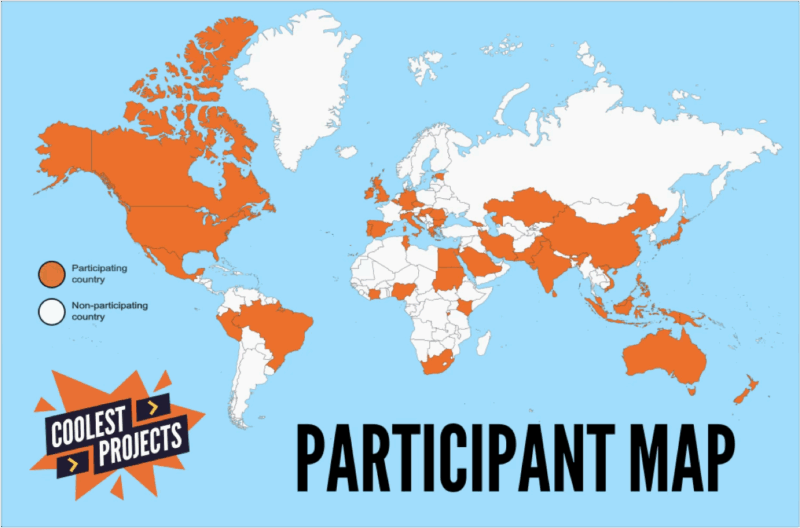
More young people than ever took part in 2025, with 11,980 young people from 41 countries joining the Coolest Projects global online showcase, a 57% increase from last year. We also hosted a livestream celebrating all participants and announcing the judges’ favourites, which has been watched by over 2,000 people. Plus, we expanded our in-person events, including bringing Coolest Projects back to the USA and running our very first in-person event in India.
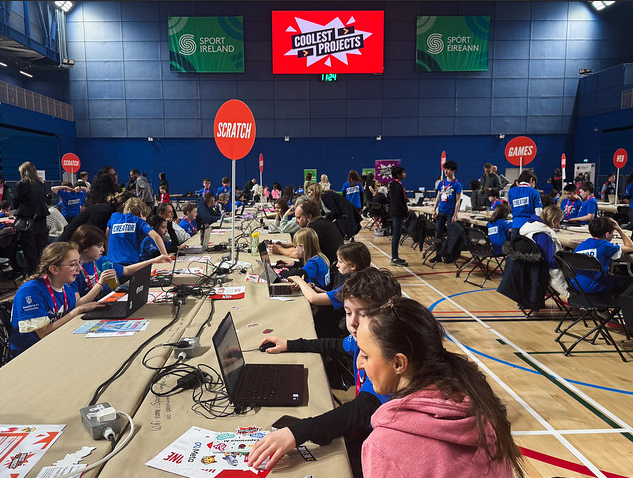
This year saw significant growth in in-person events, with a record number of young people sharing their creations face-to-face. Across the UK and Ireland, more than 200 young people showcased their projects to judges, families, and peers. Attendance at the UK event grew significantly compared to 2024, reflecting the strong enthusiasm for digital making, while the Ireland event continued to attract a dedicated community of young creators. This enthusiasm shows how much young people value being part of a creative, supportive community that helps them share ideas and develop their skills.
We were equally delighted to run Coolest Projects USA again, where young people embraced the chance to connect, share their work, and draw inspiration from one another. We also saw strong interest in the new AI category, with notable uptake at the UK and US events.
Participation by girls in the online showcase kept growing in 2025: 51% of entrants identified as female, up from 47% last year. We’re excited to build on this momentum and inspire even more girls to share their creations in 2026. We’ll continue encouraging participation by girls across all categories and broaden local promotion, especially where new in-person events are launching, to help maintain gender balance.
Online showcase: Confidence, skills, and inspiration
To understand Coolest Projects’ impact, we gathered survey and interview feedback from young creators, mentors, and event attendees across both the online showcase and in-person events.
This year’s online surveys and interviews indicate that Coolest Projects continues to be a powerful driver of confidence and skills:
- 72% of young people and 100% of mentors agreed that participating increased confidence in coding and digital making
- 89% of young people reported improved coding and digital making skills
- 83% of young people (and 100% of mentors) said they felt inspired to continue with computing and digital making after taking part
Young people and mentors told us that the online gallery plays a crucial role in sparking ideas and motivation:
“Kids definitely were excited in knowing their project might be seen by other kids around the world and displayed publicly online, so it’s truly a way for them to feel recognised. It definitely motivated them too.” – Mentor, South Africa
Coolest Projects truly offers a global setting like no other, giving young people the chance to see ideas from across the world and feel part of an inspiring international community.
In-person events: community and belonging
Creators told us how special it felt to be surrounded by peers who love making with technology. They valued sharing their projects, meeting like-minded people, and getting ideas from others:
“I think it’s really interesting seeing a lot of other children that understand programming and want to get better at it.” – Young creator, Coolest Projects USA
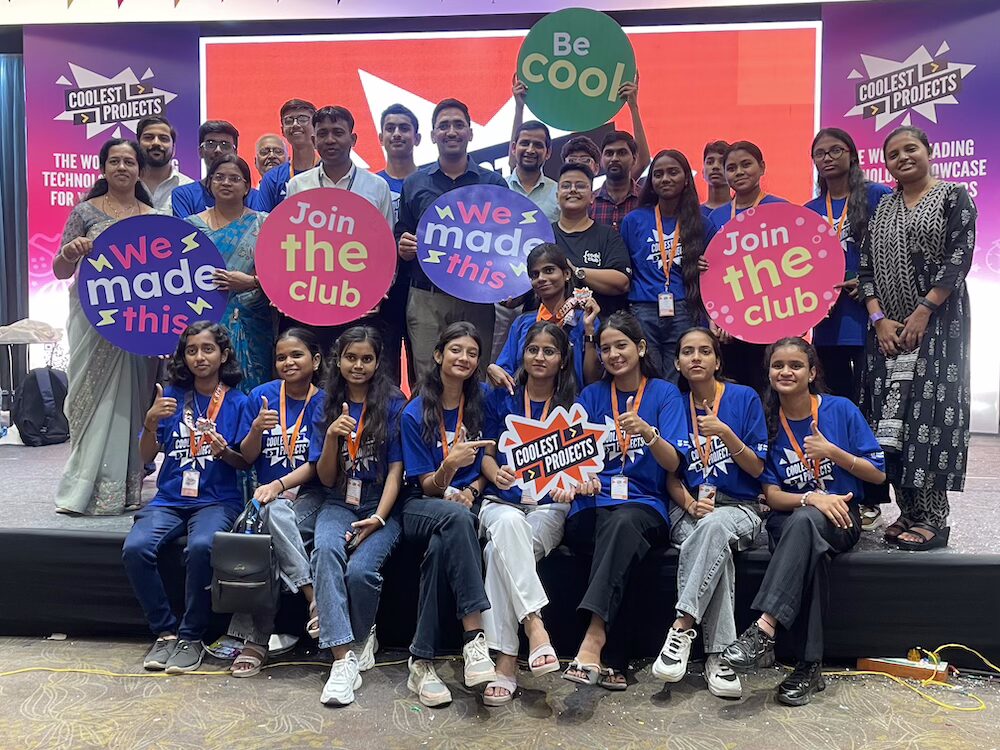
Survey data echoes this: 74% of young people said Coolest Projects helped them feel they belong in computing. Many also highlighted the wider skills they developed, from problem solving and creativity to communication and teamwork:
“We [my friends and I] thought it was a really great opportunity and idea to make a project that we could all work on together and it’s been really awesome getting to know these girls and working together, fixing whatever code that we made wrong, debugging, you know…. We’d come together once a week to work on this project. So, I honestly got to learn a lot from them, watching them and how they code because they’re a little more advanced than I am. But, you know, that just means I get to learn more. So, you get to learn skills and support each other. It’s been awesome…” – Young creator, Coolest Projects USA
Young people returning for another year described how they stretched themselves, from advanced Scratch techniques to experimenting with AI and robotics. They also said hands-on project work is better than passive learning every time.
“…It’s the journey on which I go through to create the robot. And through that journey, I seem to learn much more than say if I were to watch a YouTube video and not do anything practical with it. I learn much more if I physically get hands-on with robotics encoding.” – Young creator, Coolest Projects UK
Alongside the projects on show, young people loved the interactive activities at events (with shout outs for VR and our escape room in the UK), and appreciated the friendly, approachable judges and smooth event setup. A new group registration system also made it much easier for mentors to enter multiple projects.
Dates for Coolest Projects 2026
We’re thrilled that so many young people around the world took part this year, and we can’t wait to welcome even more creators in 2026.
“Make it [the event] bigger so more people can come.” – Young creator, Coolest Projects USA
The Coolest Projects online showcase is open to any young person up to age 18, anywhere in the world. Registration will open on 14 January 2026. We’ll host a celebratory livestream on 24 June 2026.
Coolest Projects in-person events will also be popping up around the world. In-person events are open to everyone up to age 18 in the host country. Family and friends are very welcome to come along too.
Save the date for:
- Coolest Projects Belgium, 14 March
- Coolest Projects Japan, 28 March
- Coolest Projects USA Minnesota, 11 April
- Coolest Projects USA Georgia, 2 May
- Coolest Projects UK, 16 May
- Coolest Projects Sudan (held in Egypt), 12 August
- Coolest Projects Nigeria, 29 August
More dates coming soon for:
- Coolest Projects Canada
- Coolest Projects India
- Coolest Projects Indonesia
- Coolest Projects Ireland
- Coolest Projects Malaysia
- Coolest Projects South Africa
- Coolest Projects Sri Lanka
Want to be first to know when more dates are confirmed? Sign up to our newsletter and keep an eye on the Coolest Projects website for announcements.
Get involved
It’s never too early to start making and saving your digital projects for next year’s showcase. Whether you’re into AI, games, web, hardware, or Scratch, there’s a place for your ideas at Coolest Projects.
Start by:
- Checking out the judges’ favourites in the online gallery to spark ideas
- Starting a project with a friend, your family, or a club, and sharing your progress
We can’t wait to see what the world’s young tech creators will make next!
The post Celebrating young tech creators: Coolest Projects 2025 and what’s next in 2026 appeared first on Raspberry Pi Foundation.
Systemd-Free Devuan GNU/Linux 6.0 Distro Is Out Based on Debian 13 “Trixie”
The Devuan developers announced the release of Devuan GNU/Linux 6.0 “Daedalus” distribution as a 100% derivative of the Debian GNU/Linux operating system without systemd and related components.
LibreELEC 12.2.1 Media Center Arrives with Kodi 21.3 Omega
LibreELEC 12.2.1 open-source media center brings Kodi 21.3 Omega and Linux kernel 6.16, dropping old NVIDIA 340.xx driver support.
Beginners Guide for Grep Command in Linux
The grep command is used to perform regular expressions to find out strings and patterns from the file that match a regular expression.
Snap out of it: Canonical on Flatpak friction, Core Desktop, and the future of Ubuntu
Jon Seager, VP of Engineering, talks exclusively to The RegUbuntu Summit The Register FOSS desk sat down with Canonical’s vice-president for engineering, Jon Seager, during Ubuntu Summit earlier this month. This is a heavily condensed version of our conversation.…
Intel Preparing Linux Graphics Driver For Xe3P DisplayPort 2.1 ALPM Support
Last month Intel’s open-source Linux software engineers began sending out Xe3P_LPD display support in preparation for display capabilities with Nova Lake. Now being built out atop that is further functionality with the most recent talking point being DisplayPort 2.1 Advanced Link Power Management (ALPM)…
Devuan 6 “Excalibur” Released with Debian 13 “Trixie” Base
Devuan 6 “Excalibur,” based on Debian 13 “Trixie,” is now out with a mandatory /usr merge and PipeWire audio support.