
Valve and CodeWeavers today released Proton 10.0-3 as the newest stable update to this Wine-based software that powers Steam Play for enabling countless Windows games to run often extremely well under Linux…
Category Archives: Linux
Rust in Android: move fast and fix things (Google Security Blog)
The Google Security Blog has a
new post on just how well the use of Rust is working out for the
Android project.
We adopted Rust for its security and are seeing a 1000x reduction
in memory safety vulnerability density compared to Android’s C and
C++ code. But the biggest surprise was Rust’s impact on software
delivery. With Rust changes having a 4x lower rollback rate and
spending 25% less time in code review, the safer path is now also
the faster one.
Thunderbird 145 Brings Microsoft Exchange Support
Thunderbird 145 introduces DNS-over-HTTPS and native Exchange Web Services support, along with enhancements to the Account Hub and bug fixes.
And Now for Something Completely Different: Kicking the Tires and Test Driving a BSD
What happens when a seasoned Linux user returns to BSD for a hands-on review? GhostBSD delivers unexpected surprises.
The post And Now for Something Completely Different: Kicking the Tires and Test Driving a BSD appeared first on FOSS Force.
New Patch Moves AMD GCN 1.0 GPUs Over To AMDGPU Driver By Default
Following the recent patch proposal for moving AMD GCN 1.1 generation GPUs over to the AMDGPU Linux driver by default in place of the legacy Radeon driver, a similar patch has now been proposed for the GCN 1.0 graphics processors. AMD GCN 1.0/1.1 GPUs are at parity with the AMDGPU driver to the Radeon driver while needing this newer kernel driver for enjoying RADV Vulkan support, better performance, and overall a better experience…
Arduino Nesso N1 Debuts as a Compact RISC-V IoT Controller with Wi-Fi 6, Thread, and LoRa Connectivity
Arduino has released the Nesso N1, a compact IoT controller developed with M5Stack and built around the ESP32-C6. The device integrates a touch display, onboard sensors, and multiple wireless protocols inside a small enclosure aimed at rapid prototyping and portable embedded applications. The system is built around Espressif’s ESP32-C6 microcontroller, a single-core 32-bit RISC-V processor […]
Privilege escalation in LightDM Greeter by KDE (SUSE Security Team Blog)
The SUSE Security Team has published an in-depth
article on its findings after reviewing a D-Bus service contained
in LightDM
Greeter by KDE (the lightdm-kde-greeter package)
for addition to openSUSE Tumbleweed. The team found a privilege
escalation from the lightdm service user to root, as
well as other attack vectors in the service:
In agreement with upstream, we assigned CVE-2025-62876 to track the
lightdm service user to root privilege escalation aspect described in
this report. The severity of the issue is low, since it only affects
defense-in-depth (if the lightdm service user were compromised) and
the problematic logic can only be reached and exploited if triggered
interactively by a privileged user.
The fixes are contained in the 6.0.4
release of the project.
Thunderbird 145 released
Version
145 of the Thunderbird email client has been released. Notable
changes in this release include enabling DNS over HTTPS, support for
Microsoft Exchange via Exchange Web Services, and quite a few bug
fixes. As of 145, the project is no longer shipping 32-bit binaries
for Linux on x86.
Bcachefs Rolls Out Metadata Version Reconcile “rebalance_v2” Feature
For those making use of the out-of-tree Bcachefs file-system driver, rolling out to the snapshot/nightly testing channel is the long-in-development “rebalance_v2” functionality now known as the “bcachefs_metadata_version_reconcile” feature…
Tails 7.2 Released with Tor Browser 15.0 and Linux Kernel 6.12 LTS
Tails 7.2, a privacy-focused Linux distro, updates Tor Browser to 15.0, bringing vertical tabs, tab groups, and a redesigned address bar, plus Linux kernel 6.12 LTS.
Possible Setback For Linux x86_64 Laptops: Prominent Developer Joins Qualcomm
Back in early September we reported on a Linux hardware enablement leader planning to leave Red Hat. Hans de Goede has been a longtime contributor to improving Intel/AMD Linux desktop/laptop hardware support and in fact an x86 platform drivers subsystem maintainer. We now found out where this lead Linux x86 driver developer ended up: Qualcomm…
The Incredible Evolution Of AMD EPYC HPC Performance Shown In The Azure Cloud
Last week the Microsoft Azure HBv5 instances reached general availability as powered by the custom EPYC 9V64H CPUs with HBM3 memory. These very interesting EPYC processors for memory bandwidth intensive workloads were announced last year while have finally reached GA with jaw-dropping results for software able to take advantage of the 6.7 TB/s memory bandwidth thanks to the HBM memory. The Azure HBv5 benchmarks last week showed how they compare to prior generation HBv4 instances while this article is taking things further and putting the performance into perspective against the older HBv2 and HBv3 instances.
How To Migrate Python Packages Between Virtual Environments In Linux
Moving your Python packages from one virtual environment to another is super easy. This guide will show you exactly how to migrate Python packages between virtual environments in Linux.
Debunking myths about space science with Astro Pi impact evidence
The European Astro Pi Challenge is a collaboration between ESA, the national European Space Education Resource Offices, and the Raspberry Pi Foundation. The 2025/26 challenge, which is currently open for registration, marks 10 years of incredible opportunities for young people to send their code into space.
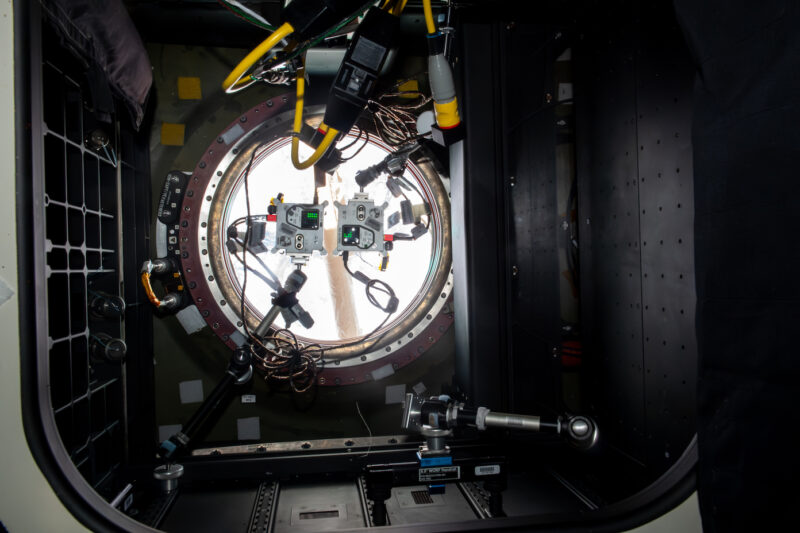
In this blog post, we are pleased to share the Astro Pi 2024/25 impact report, where we look at ways in which the Astro Pi Challenge is bringing value to the lives of many young people and mentors, based on survey responses and interviews. Along the way, we’ll debunk some myths about space science.
How Astro Pi makes space science accessible
Here at the Raspberry Pi Foundation, we’ve heard a few myths about space science and coding, and how daunting it can be to write a computer program, let alone one that can run in space. We can’t let these myths stand — instead we’re going to debunk them, equipped with evidence we’ve collected about the 2024/25 Astro Pi Challenge and previous challenge rounds.
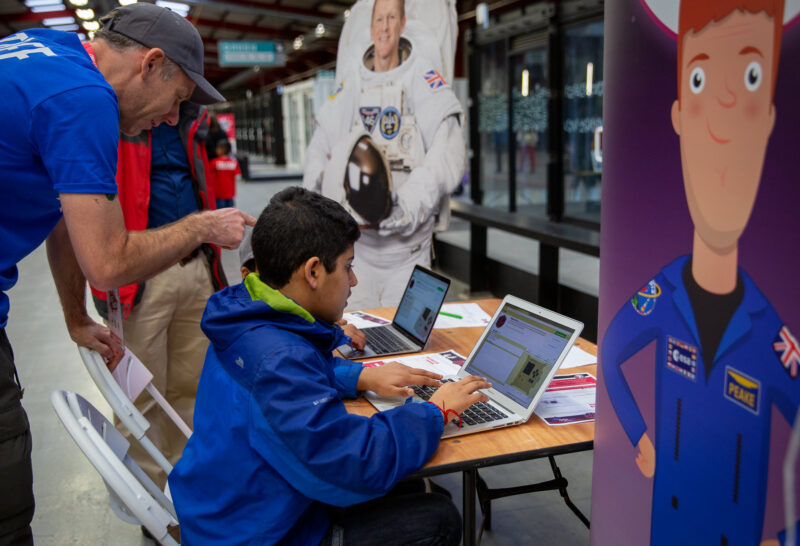
Read on for some astronomical facts from our latest impact report, and get ready to help young people in your community send their code into space.
Myth 1: You have to be a rocket scientist to send things into space
Not true! In the Astro Pi Challenge 2024/25, young people created over 17,800 computer programs that ran on board the International Space Station (ISS). Teams of young people aged between 8 and 19 took part in the challenge in a range of settings, including schools, Code Clubs, libraries, and community youth groups. They wrote short programs in Python, which were then sent to run on special Raspberry Pi computers, called Astro Pis, in the Columbus module of the ISS.
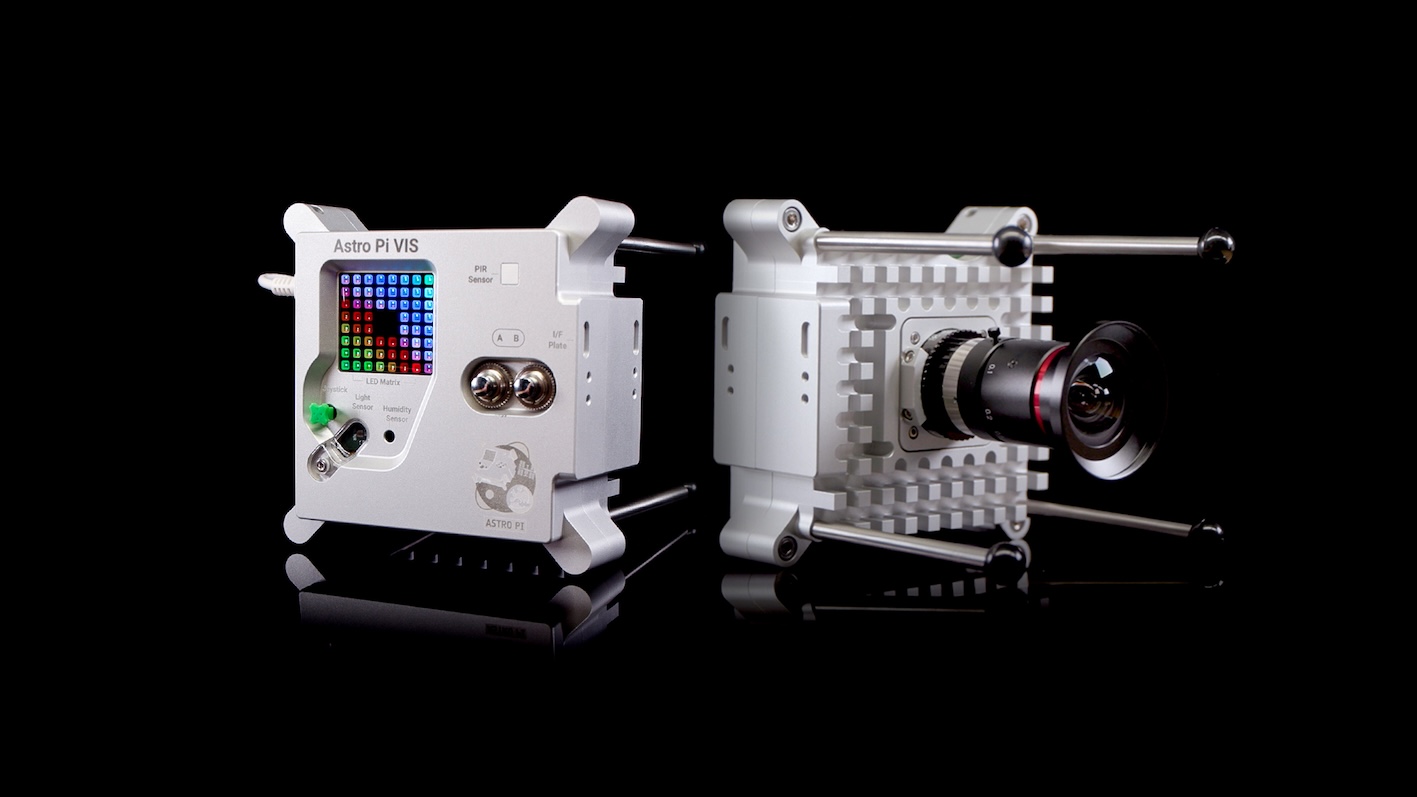
Since the first Astro Pis arrived on the ISS in 2015, over 160,000 young people have had their code run in space. To celebrate their achievements, they each received certificates with the exact time and location of the ISS when their programs ran.
“We want our code to run in space! We are fascinated by discovery and the opportunity to contribute to a real science experiment on the ISS.” – Mission Space Lab mentor
Myth 2: Only experienced programmers can write code for the International Space Station
Not true! The Astro Pi Challenge is made up of two missions, Mission Zero and Mission Space Lab, and Mission Zero is perfect for young people who are new to text-based coding. With the help of step-by-step project instructions, young people write a short Python program to display personalised pixel art on board the ISS, using data from a sensor on one of the Astro Pi computers in their image.
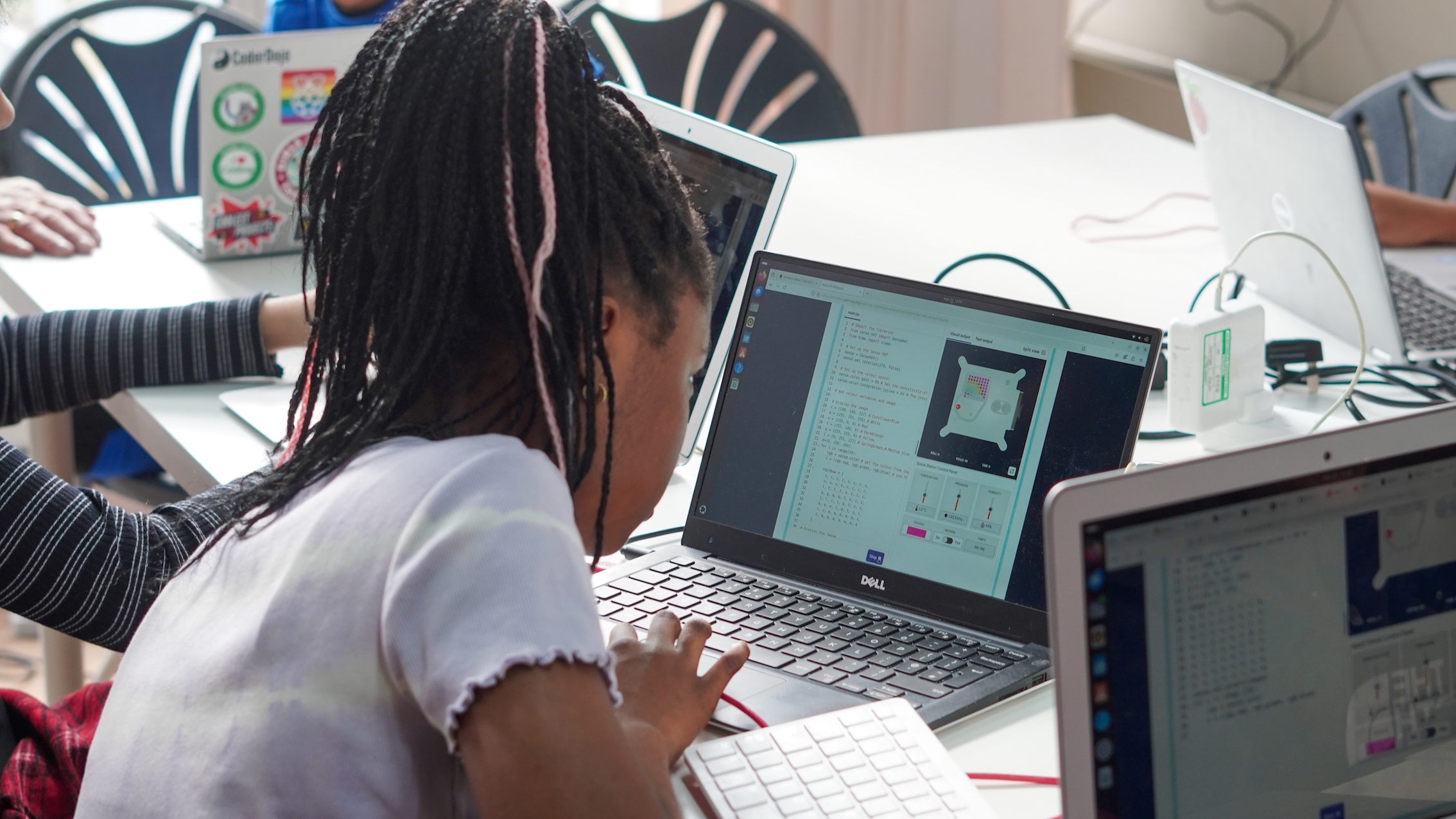
In fact, Mission Zero mentors find that the low-stakes nature of the activity coupled with the real-world connection to space create an ideal learning environment. 83% of Mission Zero 2024/25 mentors told us that participation increased young people’s skills and confidence in computing and digital making, and 78% believed that young people were likely to participate in other computing or digital making challenges in the future.
“They [young people] come from complicated environments and sometimes their confidence is very low. They don’t believe in themselves and this [Mission Zero] really empowers them.” – Mission Zero mentor
Myth 3: Learning to write code for the ISS only involves technical skills
Not true! Mission Zero engages young people in thinking creatively as they plan their artwork, and Mission Space Lab involves working in teams to write a computer program to solve a scientific task in space, combining teamwork, problem-solving, and knowledge from other scientific domains. While 100% of mentors whose teams successfully completed Mission Space Lab in 2024/25 agreed that participation improved young people’s skills in computing and digital making, 91% also confirmed that it increased young people’s confidence in these areas, and 91% told us that it increased young people’s understanding of STEM concepts.
The impact likely goes beyond building skills. Mentors from both Astro Pi 2024/25 missions told us that the challenge made young people feel connected to a wider community of learners around the world, and the excitement of the challenge also extended to the mentors themselves, as well as other adults in their community.
“Mission Zero is a way of connecting not only to a worldwide group of learners, but also to explorers, future scientists, and future astronauts. To see them as part of a larger community and not just an activity or assignment that they have to do in class.” – Mission Zero mentor

Thank you to everyone who continues to make the Astro Pi Challenge a success. To find out more about the ways in which the challenge impacts young people, read the full Astro Pi 2024/25 impact report:
If you would like to find out more about how you and your creators can participate in this year’s European Astro Pi Challenge, read our launch blog post.
The post Debunking myths about space science with Astro Pi impact evidence appeared first on Raspberry Pi Foundation.
[$] Another Fedora Flatpak discussion
Many distributions provide support out of the proverbial box for
Flatpak packages, but Fedora is unusual in that it also provides, and
defaults, to its own repository of Fedora-built Flatpaks. This has been
a source of confusion for Fedora users, who expect to get the Flatpak
built by the original developers and hosted on Flathub. It has also been a source
of conflict with upstream projects, because users complain of bugs in
Flatpak packages they are not responsible for. The situation has also frustrated some
Fedora developers, who would prefer to offer put Flathub’s offerings
first. A new complaint that Fedora has apparently used manifests
from Flathub to build the packages for Fedora—without giving credit to
the original authors—has spurred discussions about Fedora’s
Flatpaks once again. While no concrete changes are on the table, yet,
there may be some movement toward addressing persistent complaints.
Linux Looks To Remove SHA1 Support For Signing Kernel Modules
Patches posted to the Linux kernel mailing list this week are seeking to remove SHA1 support for signing of kernel modules. This is part of the larger effort in the industry for moving away from SHA1 given its vulnerabilities to hash collisions and superior hashing algorithms being available…
Red Hat Releases RHEL 10.1 with Offline AI Guidance
RHEL 10.1 debuts an offline AI command-line assistant for secure, disconnected environments, bringing powerful guidance without cloud access.
NVIDIA CUDA 13.0 U2 Brings DGX Spark Performance Improvements
CUDA 13.0 Update 2 is now available as the latest incremental improvement to NVIDIA’s compute stack…
How to Install GCC on Ubuntu 25.04: A Step-By-Step Guide
In this article, you’ll learn how to install GCC on Ubuntu, followed by writing and compiling basic C/C++ programs.
RadeonSI OpenGL Mesh Shader Support Is Now Completed For Mesa 26.0
For next quarter’s Mesa 26.0 release, the AMD RadeonSI Gallium3D driver will present OpenGL mesh shaders support. It’s been a long journey from the GL_EXT_mesh_shader extension being crafted and merged to wiring up the Mesa driver support while now it’s in place for the AMD Radeon Linux graphics driver…