Discord is planning an IPO this year, and big changes could be on the horizon

As previously rumored, Discord, a popular communications platform, is working with Goldman Sachs and JP Morgan Chase to plan an IPO as soon as this year, according to a recent report by Bloomberg. The report cites people familiar with the matter and notes that more advisors may come on board as the talks progress.

This isn’t the first we’ve heard about plans for an IPO; an article in The New York Times claimed that Discord had begun exploratory meetings with bankers earlier this month. Even way back in 2022, Discord was exploring the option of a direct listing, but it now seems the company plans to go with a traditional IPO.

Launched in 2015, Discord was initially conceived as an improved way to facilitate communication while playing video games—and gaming-related uses still account for more than 90 percent of its activity. While some previous tools focused mainly on in-game voice chat, Discord supports text, voice, and video, as well as game streaming. It also has robust features for managing communities outside the game and has developer APIs for developing bots, tools, and games that can be used within its channels.

Read full article

Comments

New Windows Scheduled Task Will Launch Office Apps Faster

Microsoft plans to roll out a new Windows scheduled task in May that launches automatically to help Microsoft Office apps load faster. From a report: The company says the “Startup Boost” task will launch in the background on logon, with the roll-out to start in mid-May and worldwide general availability to be reached by late May 2025. On systems where it’s toggled on, users will see new Office Startup Boost and Office Startup Boost Logon tasks in the Windows Task Scheduler, which will ensure that Office apps can preload “performance enhancements.”

“We are introducing a new Startup Boost task from the Microsoft Office installer to optimize performance and load-time of experiences within Office applications,” Microsoft says on the Microsoft 365 message center. “After the system performs the task, the app remains in a paused state until the app launches and the sequence resumes, or the system removes the app from memory to reclaim resources. The system can perform this task for an app after a device reboot and periodically as system conditions allow.”


Read more of this story at Slashdot.

This Is the Air Fryer I Use Every Day, and It’s 40% Off Right Now

We may earn a commission from links on this page. Deal pricing and availability subject to change after time of publication.

A good air fryer doesn’t need to have a ton of bells and whistles. For the most part, the convection heating function is highly effective in both cheap and pricey models. So if you have few demands like I do—just make the food hot and crispy—then you’ll enjoy a reliable basket-style air fryer that consistently churns out crunchy snacks and roasts meats without asking for too much from you. The Instant Vortex is a great pick for that, and it’s on sale right now during Amazon’s Big Spring Sale. 

While I’ve reviewed a few different air fryers (read here for my best overall air fryer suggestion), the Instant Vortex is actually my go-to air fryer for daily use and it’s 40% off right now. This particular model of the Instant Vortex has a 5.75-quart capacity which has allowed me—someone who’s constantly testing out bizarre recipes in the air fryer—to flourish. I’ve made cheesecakes in this air fryer, a number of pies and even blind baked some crusts, not to mention normal dinner stuff, like roasting whole pork tenderloin, and game day snacks like biscuit cheese balls. 

You can (and should) check out my full review of the Instant Vortex here, but what makes this air fryer so versatile is that even with the unit’s overall compact size, you still have plenty of depth to work with in the basket. Not only does this allow for plenty of air flow to help food cook more evenly, but you have the head room to roast and bake taller items too. The control panel is easy to navigate with a twist knob so you can increase and decrease time and temperature, and the Vortex gives you a helpful nudge to flip your food halfway through the cooking time. 

This handy air fryer is also lighter and more compact than the toaster oven variety, which makes it ideal for those in smaller kitchens or situations where you don’t want the air fryer living on the counter top. For $83.99, down from its usual $139.99, you’re looking at a great bargain for an air fryer that won’t let you down, day in and day out. 

The Best Amazon Spring Sale Deals You Can Get Now


Apple AirPods Pro 2 Wireless Earbuds


—
$169.99

(List Price $249.00)


Ecobee Smart Thermostat Enhanced


—
$169.00

(List Price $189.99)


Blink Mini 2 (White, 2-Pack)


—
$37.99

(List Price $69.99)


Sonos Era 100 Wireless Speaker – White


—
$199.00

(List Price $249.00)

Deals are selected by our commerce team

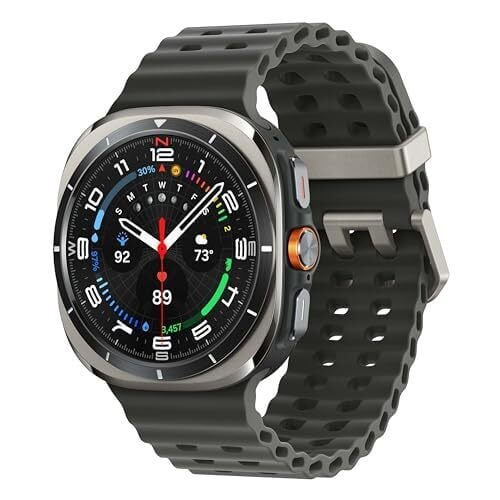
The Samsung Galaxy Watch Ultra Is $253 Off Right Now

We may earn a commission from links on this page. Deal pricing and availability subject to change after time of publication.

If you need a sturdy watch to meet all your athletic and adventurous needs, good news: You can save big right now on the LTE Samsung Galaxy Watch Ultra. The watch is currently 39% off during Amazon’s Big Spring Sale. Normally priced at $649.99, the current discount brings the smartwatch down to $396.94. This is as low a price as this watch ever gets, according to price-tracking tools.

Samsung announced the Galaxy Watch Ultra last summer, marketing it as competition for the Apple Watch Ultra—with an emphasis on outdoor and exercise features. And as Lifehacker’s deals expert Daniel Oropeza explains, the Galaxy Watch Ultra does in fact excel in those areas above other watches.

The watch is built to weather tough conditions. It’s made out of Grade 4 titanium, and has an IP68 water- and dust-resistant rating. You can also take it up high altitudes (up to 9,000 meters), and it can withstand up to 10ATM of pressure (about 330 feet underwater). There’s also a built-in siren option, which you can set to go off in case of emergencies. And since this watch uses LTE, you don’t rely on wifi or Bluetooth for a satellite signal. And yes, you can take calls on it. Another huge perk: battery power. If you don’t use any power-saving modes, it’ll last 60 hours, but it can go up to 100 hours if you’re conservative.

However, if you’re not looking for a rugged (read: big) smartwatch, then the biggest downside is that the Galaxy Ultra only comes in one size, 47mm. The 1.47-inch Super AMOLED display is brighter than previous Samsung AMOLED smartwatches.


Shopping for tech? Lifehacker can help you make the right decision. Browse our tech reviews and head-to-head comparisons for everything from laptops and smartwatches to e-bikes and home gyms. Subscribe to our deals newsletter, Add to Cart, for the best sales sent to your inbox, or browse our best-of lists directly on Amazon, including:

Mark Zuckerberg decides content from your actual friends is an ‘OG’ Facebook feature

Meta has spent the last few years remaking Facebook’s main feed into a “discovery engine” that primarily serves up recommended content from pages, groups and accounts users don’t already follow. But while the company has said the change is necessary to compete with TikTok, it’s also frustrated Facebook users who miss seeing posts from people they actually know.

Now, Meta is trying to remedy this with a revamped “Friends” section of the app that will only show posts and content related to your Facebook friends. The company says the update is the first of many meant to bring “OG” features back into the 21-year-old social network.

With the update, the “Friends” tab of the Facebook app that used to only be for friend requests will now be home to a feed exclusively made up of content related to your friends. This includes feed and Story posts, as well as Reels, birthdays, friend requests and “people you may know suggestions.”

While Meta is spinning the change as a part of a larger push to make Facebook feel more “social,” it’s not the first time the company has offered dedicated feeds for “friend only” content. In fact, Mark Zuckerberg showed off dedicated “friends” feed in 2022 amid the company’s push to bring more recommendations to users’ “home” feeds. That feed, which surfaces posts from friends in reverse chronological order, is still available, though it’s somewhat buried in the app.

It’s not clear what else Meta has in store for other “OG” Facebook features that could play on nostalgia for the 21-year-old social network. (Facebook’s once infamous “poke” feature already had a brief resurgence last year.) But it’s apparently a priority for Zuckerberg.

“I actually think that there’s this whole opportunity that I think is going to be pretty fun to to go after and build which is just to kind of go one-by-one and build up a a bunch of these things that used to be these joyful experiences that people had as part of Facebook that just kind of don’t exist on the internet today,” Zuckerberg said in a podcast appearance promoting the change.

This article originally appeared on Engadget at https://www.engadget.com/social-media/mark-zuckerberg-decides-content-from-your-actual-friends-is-an-og-facebook-feature-180803853.html?src=rss

Here’s Everything You Get With Garmin’s New Connect+ Subscription

We may earn a commission from links on this page.

Garmin is now offering a $6.99/month subscription called Connect+ that provides “premium features,” including AI, on top of what you already get for free with the Garmin Connect app. So far, nothing is being paywalled, but it feels like the end of an era. Garmin watches were some of the last few wearables where you pay for a device and then all of its features are free to use forever. (The hardware has impressively long lifespans, too.) I signed up for Connect+ to see what’s inside, so let’s take a look. 

Subscription details

The new Connect+ subscription costs $6.99/month or $69.99/year. It only adds features on top of what you already get with the Garmin Connect app; no existing features are being paywalled. 

Garmin did tease that “premium enhancements may be made to existing features,” leading users to speculate that any new features that come down the line may be limited to paid members. Garmin is in the habit of adding new features pretty frequently, and often enables them even on older watches. In the past year alone, we’ve gotten strength coaching, a new type of run coaching, and the ability to detect your lactate threshold heart rate without a chest strap—all things that just appeared on my watch or in my app one day. I wouldn’t expect watch firmware updates to be affected—this is a premium subscription for the phone app—but I have to wonder if there will be fewer of those new app feature rollouts for free users going forward. 

Connect+ is not Garmin’s first subscription offering, by the way. They have long offered a slate of services for various special purposes, including hiking and hunting maps, marine charts, search and rescue insurance, dog tracking, kids’ smartwatch tracking, and more. But this is definitely Garmin’s first foray into a premium subscription for health and fitness features, in the same vein as, say, Fitbit.

Garmin says the Connect+ subscription will come with: 

  • Active Intelligence (an AI analysis of your activities; this requires opt-in)

  • Enhanced LiveTrack (also available with an Outdoor Maps+ subscription), allowing you to text contacts when you start an activity, or set up a public tracking page

  • Live Activity, which lets you follow a workout from your phone and not just your watch

  • A new Performance Dashboard on the web with new charts and comparison features

  • Social features, including double points on badges and the ability to earn badges from anywhere in the world (some badges are only available in certain locations). Immediately upon signing up for Connect+, I noticed a little yellow star on the corner of my profile pic on the app. 

  • Extra training guidance if you’re following a Garmin Coach program

What you get with Live Activity

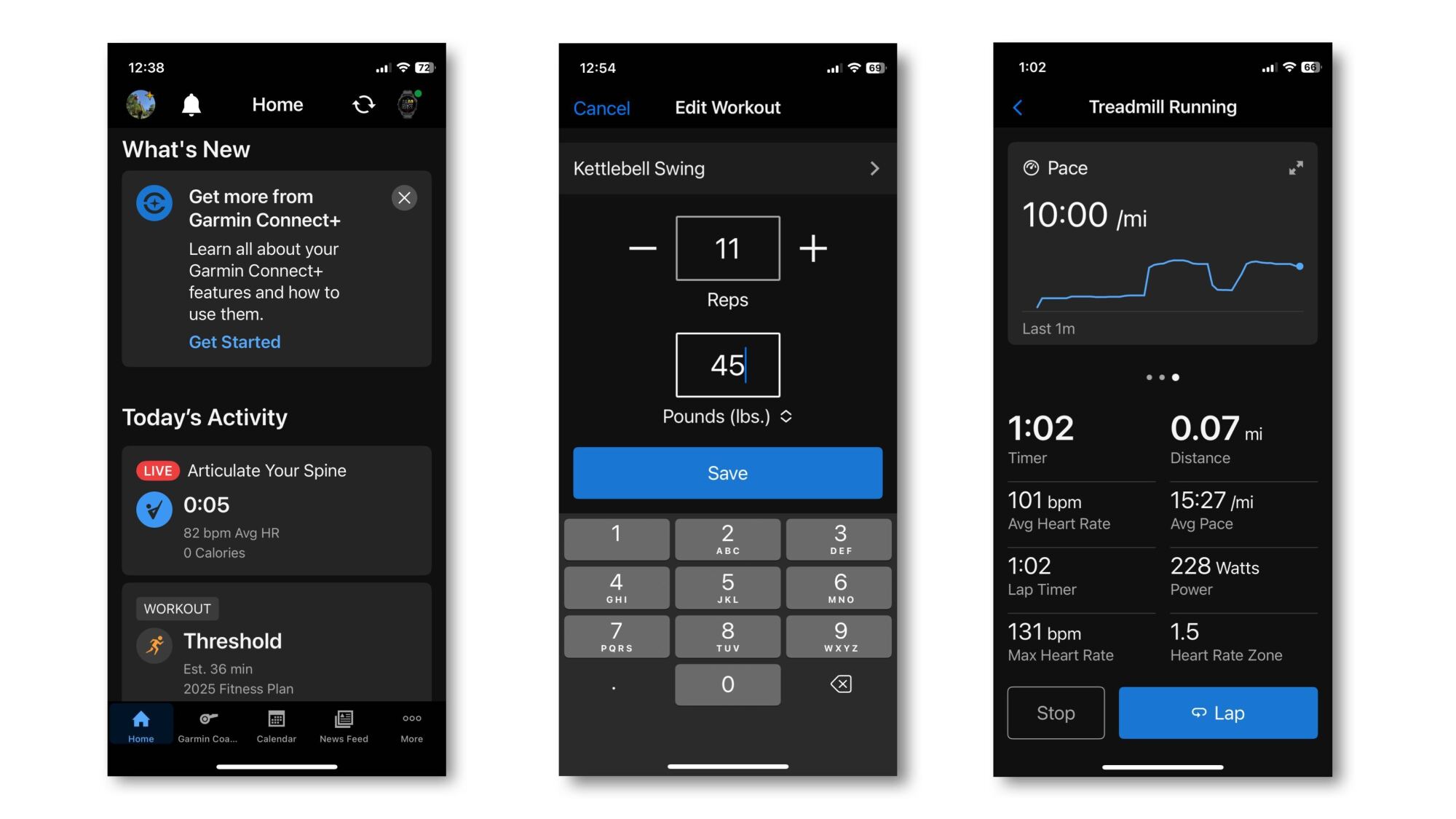
Screenshots of a live activity on the home screen, editing sets and reps, and what you see when you do a treadmill workout.
Credit: Beth Skwarecki

Until now, a workout you do on your Garmin watch stays on your Garmin watch, at least until you finish the activity. At that point, it syncs to your phone, where you can view and edit the details. 

But with Live Activity, you can now use the Garmin Connect app while you’re doing an activity on your watch. That’s especially useful for strength workouts, which previously required you to edit weights and reps through an awkward interface on the watch after each set. 

To test this out, I did a few quick workouts on my Garmin Forerunner 265S. One was a mini workout of kettlebell swings and sit-ups that I created on the app, and sent to the watch. 

I started the workout on my watch. Nothing happened on the phone—I might have expected a notification—but when I opened the Garmin Connect app on my phone, there was a tile on the home screen for a Live Activity. I tapped it, and there was the same workout I was doing on the watch. I could see my heart rate, the time elapsed, and which exercise I was supposed to be doing. 

I didn’t see the promised exercise videos right away, but it turns out you need to swipe left on the heart rate graph. There you can see an exercise video (or a rest timer, if appropriate). Swipe again, and you’ll see your heart rate zone. The bottom half of the screen shows your stats in progress, including your reps, sets, heart rate, and a timer. 

Importantly, if you’ve turned off rep counting or weight editing on your phone (because they’re so annoying in normal use), you’ll want to turn them back on for this. The watch counted my kettlebell swings, and at the end of each set prompted me to edit my reps and weight. This editing screen came up on both the watch and my phone, and of course it was easier to edit that information from the phone. 

With Live Activity, you can do the following from the watch or phone:

  • Pause or unpause the workout

  • Edit reps or weight in a strength workout

  • Advance to the next set (strength), or start a new lap (in activities like running)

  • View stats like your heart rate, time elapsed, reps, pace, and so on

But only the watch can do the following: 

  • Start the workout

  • Finish and save the workout

  • Create custom data screens

Live Activity definitely improves the usability of the watch for strength workouts. I don’t entirely see the point for running workouts, but maybe there’s a use case I haven’t thought of yet.

What’s in the Performance Dashboard

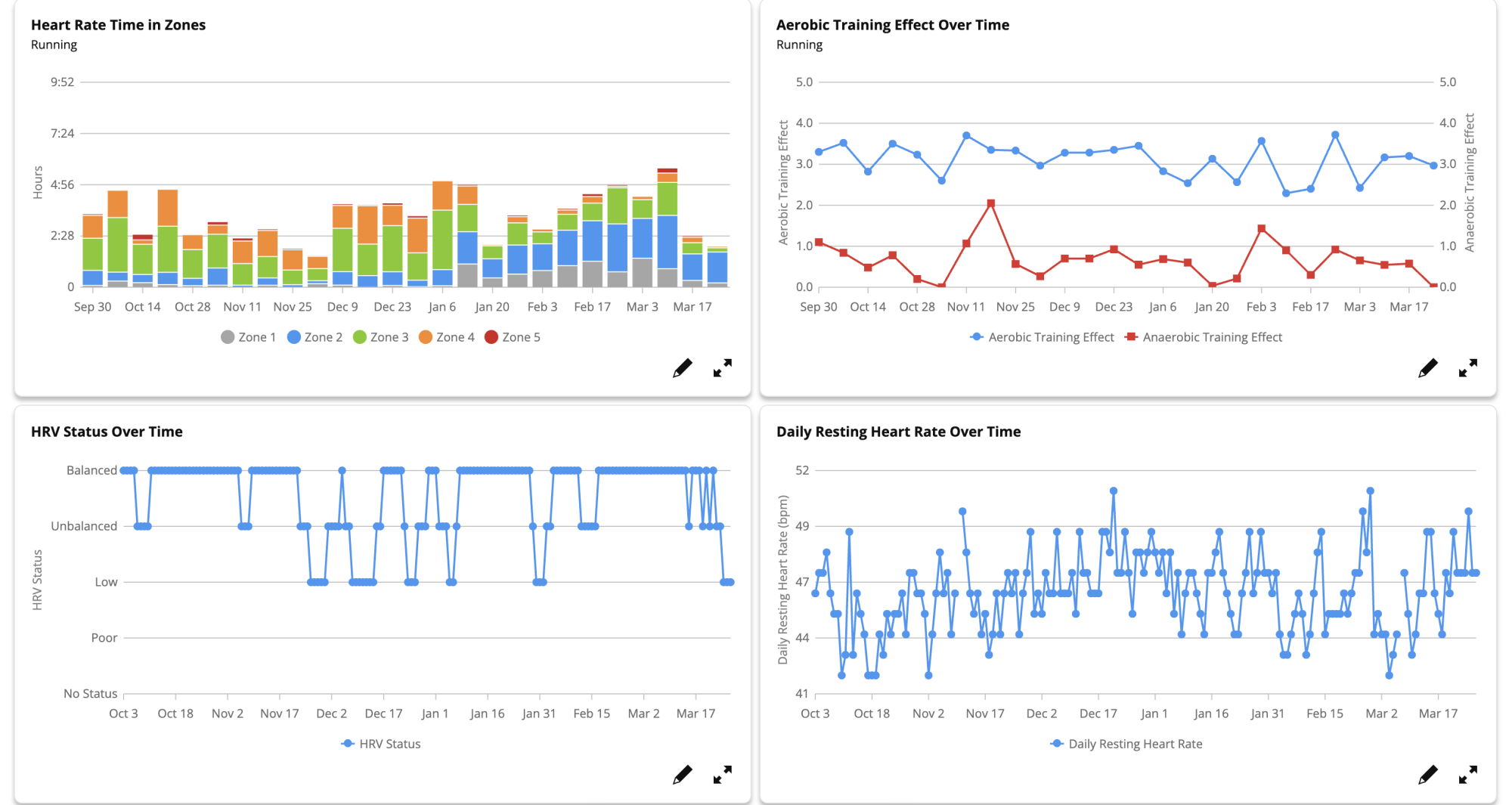
Four charts from the Performance dashboard: HR time in zones, aerobic training effect over time, HRV status over time, daily resting HR over time.
Four of the charts I can view in my Performance Dashboard
Credit: Beth Skwarecki/Garmin

One of Garmin’s better-kept secrets is its web dashboard. You can log in here and view all your activities and data—essentially a web view of everything that’s in the app. 

The Performance Dashboard is a new item in the sidebar of the web dashboard. To set it up: 

  1. Mouse over the black sidebar at the left side of the screen. 

  2. Select Performance Dashboard, which I see as the last blue item, just under Reports.

  3. Click Add dashboard, and choose whether you want a running, cycling, multisport, or custom dashboard. (You can have more than one.) 

Some of the charts on the performance dashboard are also available from the free Reports tool, although Reports will only show you one chart at a time. The Performance Dashboard is definitely a better tool if you’re looking to really nerd out about your data. 

For example, I can get a simple report from the Reports tool that shows my running mileage over the past six months. It gives me a bar chart with one bar per month. The Performance Dashboard, on the other hand, can give me a bar for each week, and I can select a custom timeframe instead of just selecting one of a few options. There are also more options for types of data you can view. Do you know how your watch will ask you at the end of each run how hard it felt? You can now see that on a graph called “perceived effort over time.”

What you get with Active Intelligence

There’s good news here for people who want AI in everything, and for those of us whose reaction is “oh god, not here too” (this meme sums up my personal stance). The AI (“active intelligence”) is the one feature of Connect+ that requires you to opt in, even after you have subscribed to the whole package. 

But I did it, dear readers. I opted in for you, so I could let you know what the AI can actually tell you about your training—and whether it’s any better than Strava’s notoriously clueless AI. 

Unfortunately, there’s not much to say at the moment. My home screen “insight” (which you can turn off, by the way, even with AI enabled) at first just told me to check back later. My recent runs don’t have any AI commentary attached. Garmin says that “As customers use Garmin Connect+ more, the insights will become more tailored to them and their goals.” 

As I was finishing up this article, I noticed that I now have a home screen insight. It tells me that I achieved 255 intensity minutes this week, exceeding my goal of 150. (I guess I set a goal for that at some point? OK.) Then it tells me consistency is good (not wrong) and gives a few sentences of encouragement. 

The AI feature is labeled as a “beta,” with a thumbs up/thumbs down icon that lets me rate the insight I just read. I can say that it’s interesting, not interesting, or “report a concern” if it’s inaccurate, discouraging, or poorly written. (You can also give a custom response.) I’ll keep an eye on these notes and report back as the AI gets to know me better.

Garmin asks your permission to train its AI on your data

To turn on the AI features, you need to click through an agreement where you allow the AI to access your training and health data (so that it can run its analyses). This also allows your data to be used as training data for the AI. 

I asked Garmin if this means that the AI is only trained on people who opt-in. A spokesperson confirmed: “We only train with data from users who have consented.” The existing model was trained on users who previously granted permission for their data to be used for product improvements. Garmin has a brief AI transparency policy here. 

You can revoke permission at any time in your Connect+ settings, which will also turn off your access to AI features. 

Elon Musk and Trump win fight to keep DOGE’s work secret

Elon Musk and the Department of Government Efficiency (DOGE) don’t have to turn over information related to their government cost-cutting operations, at least for now, a federal appeals court ruled yesterday.

A federal judge previously ruled that 14 states suing the federal government can serve written discovery requests on Musk and DOGE. Musk, DOGE, and President Trump turned to the US Court of Appeals for the District of Columbia Circuit in an attempt to block that order.

A three-judge panel at the appeals court granted an emergency motion for a stay in an order issued yesterday, putting the lower-court ruling on hold pending further orders from the appeals court. “Petitioners have satisfied the stringent requirements for a stay,” the panel ruling said. “In particular, petitioners have shown a likelihood of success on their argument that the district court was required to decide their motion to dismiss before allowing discovery.”

Read full article

Comments

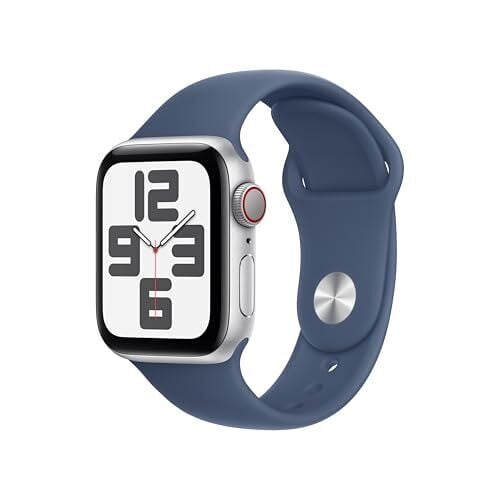
The Apple Watch SE (2nd Gen) Is 27% Off Right Now

We may earn a commission from links on this page. Deal pricing and availability subject to change after time of publication.

If you’re in the market for a budget-friendly Apple Watch, the SE 2nd Gen is currently $80 off during Amazon’s Big Spring Sale. Normally priced at $299, the current discount brings the smartwatch down 27% to $219. This is as low a price as this watch ever gets, according to price-tracking tools.

Apple currently sells three Apple Watch models: the Series 10, Ultra 2, and second-generation SE. The SE line comes with the smallest size option and bare minimum specs, making it the go-to budget option for most smartwatch wearers. Its aluminum body packs a 1,000 nit display, a battery that’s advertised to hold up to an 18-hour charge, the S8 chip (powering features like Siri and Find my iPhone), and an optical heart rate monitor. You’ll get water resistance up to a 164 feet depth, and for a $50 up-charge, you can add in the ability to connect a cellular plan. For more details, check Apple’s site.

Lifehacker’s associate tech editor Michelle Ehrhardt confirms that the SE line has all the essentials you need. So, if you prefer a small, lightweight device with a minimal interface, now is the time to snag yourself the 2nd Gen SE.

If you’re looking for the something with a few more bells and whistles, but without sacrificing comfort and convenience, the Series 10 is 25% right now and is the best option for most people.


Shopping for tech? Lifehacker can help you make the right decision. Browse our tech reviews and head-to-head comparisons for everything from laptops and smartwatches to e-bikes and home gyms. Subscribe to our deals newsletter, Add to Cart, for the best sales sent to your inbox, or browse our best-of lists directly on Amazon, including:

Seven Ways to Make Your Home’s Entryway More Secure

We may earn a commission from links on this page.

While you might assume that thieves would prefer to find less visible, less public ways of breaking into your house, your front door and entryway are actually prime targets for anyone who wants inside without your permission—more than a third of burglars use the front door when gaining entry to a home.

If you want to sleep a little better at night, securing your home’s entryway is a good first step. Even if you have a security system in place, stopping a home invasion from taking place at all is a much better outcome. Doing just a few of these things will make it a lot harder for anyone to break into your home and compromise your property and your safety.

Select a front door made of a secure material

Your first step towards securing your entryway is the door itself. A solid-core wood door provides decent security, but an upgrade to a steel door will make it even more difficult for a would-be home invader to cut, kick, or break the door itself. Aluminum or fiberglass are also solid choices to increase the security of your door, though they’re also generally more expensive.

Whatever material your front door is made of, you can enhance its security by installing a metal security door, which is like a storm door that adds an extra lockable barrier over your front door, making it even less likely that someone can gain access without your permission.

Reinforce the door’s frame

If you can’t install a security door, you can still add some security to your existing door by reinforcing the frame. The locks on your door (and the door itself) will only be as good as the frame the door is attached to—the best lock in the world will be useless if one well-placed kick will crack the frame.

You can purchase simple kits like this one that will reinforce your door frame and make it a lot more difficult to kick or pry the weak points on your door—the hinges and jamb. Typically made from steel, these plates stiffen the existing frame material and deflect tools away from weak spots.

Reconsider those decorative glass windows

Entryways with a lot of glass are popular because they let in natural light, but if your front door has a lot of glass inserts or sidelights (the narrow areas on either side), that’s a huge security risk because glass is so easily broken (see any film or TV show depicting a burglary, ever). Reducing or eliminating glass in your entryway is an easy way to increase security simply because it removes the weak point.

If you can’t remove the glass (or simply don’t want to sacrifice the light), you can replace it with security glass. If that’s too expensive, you can also install a security window film. Security films won’t necessarily stop a determined thief from smashing their way into your home, but they can slow them down and make the job more challenging, increasing the chances they’ll give up before gaining entry.

Upgrade your locks

Just as your door locks will only be optimally effective if your door frame is hardened, your door will only be secure if you use a high-quality lock with an appropriate security grade. The American National Standards Institute (ANSI) applies a grade of 1 to 3 to all locks that describes their security level—Grade 1 is the best. Installing Grade 1 locks (make sure they actually have the official ANSI seal on them) will give you the best security for your front door.

Adding a deadbolt to the door is an easy way to make it more difficult for someone to break in. A single-cylinder deadbolt (with keyed entry on the outside and a thumbturn on the inside) are best for residential doors, because needing to use a key on the interior will make it a lot harder to get out in an emergency.

Upgrade hardware

Another way to make your entryway more secure is to do some small upgrades to the door’s other hardware—the hinges and strike plate:

  • Deeper screws. Most screws supplied with door hinges will be about 1 to 2.25 inches long. That’s certainly sufficient, but a deeper screw will be more difficult to tear out, increasing the overall strength of the door. Replacing your hinge screws with 3-inch (or deeper) is a cheap, simple way to make the entryway more secure. Just be sure to check that there’s enough depth to handle the longer screws, and that the screws won’t interfere with nearby windows or wiring in the walls.

  • Hinge bolts. Hinge bolts install between the door hinges (see them in action here) and make it difficult for someone to lift the door off the frame even if they manage to push the pins out of the hinges. These are mainly useful if your door swings outward (most residential doors swing inward) but certainly can’t hurt, especially as they’re cheap and easy to install.

  • Strike box. The strike plate is the strip of metal where the bolt and latch from the door connects with the frame. It’s typically just a flat piece that doesn’t provide much by way of reinforcement, so installing a strike box instead is a good idea. A strike box inserts into the hole drilled for the latch or bolt and helps absorb and spread any impact from an attempt to break the door frame.

Rework your landscaping for maximum visibility

A simple way to enhance the security of your entryway is to clear away landscaping that hides your front door from the street. While privacy is always nice, if you have a lot of lush landscaping around your front door it could be an opportunity for someone to work on your door unobserved. This combined with plenty of light at night will make even the most determined thief think twice about assaulting your door.

Get rid of that spare key in the front yard

Even if you make your front door a marvel of strength and security, it means nothing if you leave a spare key under the doormat—or hidden in one of those obvious fake rocks. Everyone needs some spare keys seeded around their lives to prevent being locked out of their own home, but be thoughtful about where those keys are. A trusted neighbor or nearby friend (or relative) or tucked in a desk at your job are good ideas. Don’t hide the key anywhere near the door, however, as it’s too easy for a cursory check to turn it up.

Of course, going keyless with a smart lock is another option that removes the possibility of losing your key—though it still might be a good idea for someone you trust who lives nearby to have the code in case you ever need someone to get into your house.

Satya Nadella Says DeepSeek Is the New Bar For Microsoft’s AI Success

Microsoft CEO Satya Nadella has told employees that DeepSeek’s R1 AI model has set “the new bar” for his company’s AI ambitions, citing the startup’s ability to reach the top of app store rankings. “What’s most impressive about DeepSeek is that it’s a great reminder of what 200 people can do when they come together with one thought and one play,” The Verge cited Nadella as saying.

“Most importantly, not just leaving it there as a research project or an open source project, but to turn it into a product that was number one in the App Store. That’s the new bar to me,” he added. Microsoft quickly deployed DeepSeek’s R1 on its Azure platform in January. The AI model gained recognition for its optimization below Nvidia’s CUDA layer, enabling greater efficiency.


Read more of this story at Slashdot.

Pillars of Eternity is getting turn-based combat, all but demanding replays

I played a lot of Obsidian’s Avowed after it came out. I appreciate that the game offers both a whole lot of world-building lore if you want it, but also the ability to skip it all if you want to get back to grimoires, guns, and scarfing food while dodging attacks. But all those gods and races and islands must have sunk in. As I neared the end of Avowed‘s journey, I find myself wondering about the earlier games in Obsidian’s world of Eora in its Pillars of Eternity series, which passed me by entirely.

The same thing happened with Baldur’s Gate 3, which pulled me in deep and left me wondering if I’d dig the earlier titles. But after an hour or two in the first entry, I was done, for much the same reason as with the first Pillars: I just can’t hack it (pun intended) in real-time-with-pause combat.

“Real-time-with-pause” has never been a perfect descriptor; technically, Avowed plays out in real time, as do most games, which also offer pausing. But look at a couple videos and you’ll get the gist: Your party hacks, slashes, and casts largely on its own, but you can interject to redirect, re-equip, or force a potion on one of your crew. If you have control issues, or don’t have the clicking speed you had as a younger gamer, real-time-with-pause can be a humbling experience.

Read full article

Comments

The Monument Valley games are finally coming to the Switch

More than a decade after debuting on the iPhone in 2014, the Monument Valley series is making its way to Switch consoles. On Thursday, Nintendo announced Monument Valley and Monument Valley 2 would hit the eShop on April 15, with Monument Valley 3, the most recent entry in the series, arriving sometime this summer.  

This isn’t the first time Monument Valley and Monument Valley 2 have been available outside of mobile devices. In 2022, series creator Ustwo Games released the two games on PC. The work the studio did then likely made the job of porting the games to Switch a lot easier; there was likely no need to rework the art assets for the console’s widescreen display. Both games will come with all the additional chapters, add-ons and DLC Ustwo released over the years.  

For most people, this will probably be their first chance to play Monument Valley 3. Although the game has been available on mobile devices since the end of last year, it requires a Netflix subscription to access, and with the cost of the Standard plan increasing at the start of the year to $18 per month, it’s understandable if you decided to skip it.   

This article originally appeared on Engadget at https://www.engadget.com/gaming/nintendo/the-monument-valley-games-are-finally-coming-to-the-switch-171801177.html?src=rss

As NASA faces cuts, China reveals ambitious plans for planetary exploration

China created a new entity called the “Deep Space Exploration Laboratory” three years ago to strengthen the country’s approach to exploring the Solar System. Located in eastern China, not far from Shanghai, the new laboratory represented a partnership between China’s national space agency and a local public college, the University of Science and Technology of China.

Not much is known outside of China about the laboratory, but it has recently revealed some very ambitious plans to explore the Solar System, including the outer planets. This week, as part of a presentation, Chinese officials shared some public dates about future missions.

Space journalist Andrew Jones, who tracks China’s space program, shared some images with a few details. Among the planned missions are:

Read full article

Comments

Google can save locations you screenshot in Maps to help with travel planning

It might be around that time of year when you’re starting to figure out your summer vacation plans. Google has revealed some new features that can help with that, including a handy AI-powered one for Maps.

If you turn on the new screenshot list, Gemini can automatically recognize locations that are mentioned in screenshots you take in the app. You can then save the places you’re interested in to a list. These saved spots will appear on the map, and you can share the list with your travel companions. This feature will be available on iOS in English in the US starting this week. It’s coming to Android soon.

ever forget about screenshots of places in your camera roll? this new feature was made for you �

Google Maps turns your screenshots into a list of saved places so you can easily find them for later �

rolling out this week in the U.S. in English on iOS and coming soon to… pic.twitter.com/z8RafkIWcS

— Google Maps (@googlemaps) March 27, 2025

Google has long offered flight price tracking features, and now the company is expanding that to hotel pricing via its dedicated search tool. If you have your eyes on a destination for particular dates, you can track prices for hotels and get alerts when they drop. Just tap or click the price tracker toggle underneath the search filters. If prices for any of the hotels in the results drop dramatically, you’ll get a notification via email. This feature will be available globally this week.

In a blog post announcing these updates, Google also suggests that you could use AI Overviews in Search to help with travel planning. Starting this week with English queries in the US, the tool will offer trip planning for certain regions or whole countries. So if you enter something like “create a foodie itinerary for Japan,” AI Overviews should offer some ideas you can export as a list of recommendations in Docs or Gmail. You can save these suggestions in Google Maps as a custom list as well. I’m not sure I’d trust a tool that doesn’t know how many days there are in a month to come up with travel ideas for me, but, hey, the option’s there.

On that subject, Google is expanding AI Overviews in Lens and Circle to Search. They’ll soon be available in Hindi, Indonesian, Japanese, Korean, Portuguese and Spanish, in most of the countries where AI Overviews are accessible.

This article originally appeared on Engadget at https://www.engadget.com/gaming/nintendo/google-can-save-locations-you-screenshot-in-maps-to-help-with-travel-planning-170144012.html?src=rss

“This will be a painful period”: RFK Jr. slashes 24% of US health dept.

Health Secretary and anti-vaccine advocate Robert F. Kennedy Jr. is slashing a total of 20,000 jobs across the Department of Health and Human Services—or about 24 percent of the workforce—in a sweeping overhaul said to improve efficiency and save money, Kennedy and the HHS announced Thursday.

Combining workforce losses from early retirement, the “Fork in the Road” deferred resignation deal, and 10,000 positions axed in the reductions and restructuring announced today, HHS will shrink from 82,000 full-time employees to 62,000 under Kennedy and the Trump administration. The HHS’s 28 divisions will be cut down to 15, while five of the department’s 10 regional offices will close.

“This will be a painful period,” Kennedy said in a video announcement posted on social media. Calling the HHS a “sprawling bureaucracy,” Kennedy claimed that the cuts would be aimed at “excess administrators.”

Read full article

Comments

iPhone Users Can Now Set WhatsApp as Their Default Calling and Texting App

An anonymous reader shares a report: You can now choose WhatsApp as your iPhone’s default app for calls and text messages, as noted by WABetaInfo. After updating WhatsApp to version 25.8.74, you’ll see the app appear as an option in your Messaging and Calling default app settings.

Apple first announced that it would let iPhone users in the European Union change their default phone and messaging apps, but it later said that everyone would be able to do the same in iOS 18.2.


Read more of this story at Slashdot.

A gorgeous remake of the first two Dragon Quest games hits Switch this year

Today’s Nintendo Direct gave us our first real look at the forthcoming Dragon Quest 1 & 2 HD-2D Remake, and it sure is easy on the eyes. It uses Square Enix’s HD-2D engine, just like last year’s Dragon Quest 3 HD-2D Remake.

We knew this JRPG was coming, but now we have some actual in-game footage. As the name suggests, this title will include remakes of the first two Dragon Quest titles that were originally released all the way back in the 1980s. This is a very good thing, as the first game is pretty short.

Technically, Dragon Quest 3 is a prequel to the first two titles in the franchise, so this release schedule makes a certain sort of sense. Once this game comes out, the entire Erdrick trilogy will be available to modern players.

We’re glad to see so many of you enjoying #DragonQuest III HD-2D Remake! � pic.twitter.com/zgDdEWSXPp

— DRAGON QUEST (@DragonQuest) December 6, 2024

We still don’t have a release date, other than later this year. We do know that it’s coming out for the Switch, PC, PS5 and Xbox Series X/S. These are the same platforms that Dragon Quest 3 HD-2D Remake released for, which ended up being a surprise hit for the company. Square Enix said it sold over two million units globally, as of December. It was also the best-selling game in Japan throughout 2024.

This article originally appeared on Engadget at https://www.engadget.com/gaming/a-gorgeous-remake-of-the-first-two-dragon-quest-games-hits-switch-this-year-165757991.html?src=rss

This PS5 Slim and ‘Astro Bot’ Bundle Is Cheaper Than a Standalone PS5

We may earn a commission from links on this page. Deal pricing and availability subject to change after time of publication.

We might be living in the era of the PS5 Pro, but speaking from personal experience, the base PS5 is still plenty good enough for most people. There are no exclusive games for the upgrade yet (and there likely never will be), but one nice thing about its existence is that the original PS5 is now more likely to go on sale.

Consider this week’s discounts on both models of the PS5 Slim (sorry, that’s what everyone calls it, Sony), which you can snag with a free copy of Astro Bot thrown in. They aren’t technically a part of Amazon’s Big Spring Sale, but the deals are undeniable.

The PS5 Slim, despite being a little thinner and a little different looking than the launch model, has all the same capabilities as a non-Pro PS5, but in a sleeker format. There are two versions—one that only plays digital games and one that accepts physical discs—but for the most part, these models have replaced the launch version of the PS5 in stores, with the digital version usually going for $450 and the disc version most often priced at $500.

During this sale, you can instead get a digital PS5 Slim for $399 and disc-based one for $449, and both models come with last year’s The Game Awards-winning Astro Bot as an added bonus. Basically, these system deals would be great even without the free game. Add that in, and you’re saving $110.

The only caveat? Slim PS5 models require a special stand if you want to mount them vertically, although that stand is on sale right now as well.


Shopping for tech? Lifehacker can help you make the right decision. Browse our tech reviews and head-to-head comparisons for everything from laptops and smartwatches to e-bikes and home gyms. Subscribe to our deals newsletter, Add to Cart, for the best sales sent to your inbox, or browse our best-of lists directly on Amazon, including:

The customizable Vivaldi browser adds built-in ProtonVPN

The highly customizable Vivaldi web browser now has built-in ProtonVPN integration. CEO Jon von Tetzchner described the collaboration as part of a broader shift toward “privacy over profiling, sovereignty over surveillance, independence over inertia,” noting Vivaldi and Proton’s headquarters are in Europe (a region with significantly better privacy regulations than the US). “We don’t believe your personal data should be a bargaining chip.”

Built-in ProtonVPN is only available on Vivaldi’s desktop app, which is available for Windows, macOS and Linux. You can use Proton integration by clicking a new “VPN” icon at the top right of the toolbar. Doing so will prompt you to sign in with your Vivaldi account.

It connects with ProtonVPN’s free plan by default, which offers solid speeds but only automatic server locations from (via The Verge) five randomly selected countries. Or, you can log into a paid Proton account for the fastest speeds and manual server selection. (Proton’s service is Engadget’s pick for the best VPN app.)

In a blog post announcing the collab, Tetzchner framed it as a people-focused deal. “With this partnership, we’re uniting two forces in tech that build for people, not investors,” he wrote. “It’s not about growth hacks or shareholder slides. It’s about protecting the web for the people who use it.”

You can install ProtonVPN’s extension for Chrome, Firefox and Chromium-based alternatives like Edge, Brave and Opera, so this is far from the only way to use it in your browser. Vivaldi’s new button essentially automates the installation process.

This article originally appeared on Engadget at https://www.engadget.com/cybersecurity/vpn/the-customizable-vivaldi-browser-adds-built-in-protonvpn-163824848.html?src=rss

UK’s First Permanent Facial Recognition Cameras Installed

The Metropolitan Police has confirmed its first permanent installation of live facial recognition (LFR) cameras is coming this summer and the location will be the South London suburb of Croydon. From a report: The two cameras will be installed in the city center in an effort to combat crime and will be attached to buildings and lamp posts on North End and London Road. According to the police they will only be turned on when officers are in the area and in a position to make an arrest if a criminal is spotted. The installation follows a two-year trial in the area where police vans fitted with the camera have been patrolling the streets matching passersby to its database of suspects or criminals, leading to hundreds of arrests. The Met claims the system can alert them in seconds if a wanted wrong’un is spotted, and if the person gets the all-clear, the image of their face will be deleted.


Read more of this story at Slashdot.