When BMW introduced the original M5 to the European motoring public in 1984, the automaker effectively established a new vehicle segment. By combining the practical and understatedly rakish E28 5-Series with the motorsport-derived six-cylinder engine from the M1 supercar, the automaker had created a “do-it-all” performance machine, a vehicle that could serve as a tasteful and luxurious sedan one moment and a charismatic sports car the next.
It’s a concept that has guided the development of not only subsequent generations of the M5 but also all of the other sports sedans that have dared to go toe to toe with it over the past forty years. For decades, it’s been the benchmark by which all big, fast four-doors have been judged, but after spending a week with the all-new $125,275 G99-generation M5 Touring, I can’t help but wonder if that era is coming to a close.
A range of factors have contributed to this seismic shift. While other automakers have been chasing the M5’s ghost around the Nürburgring, BMW has purposely started to reposition its M Division vehicles as the pinnacle representation of the brand rather than the pinnacle representation of BMW performance. It’s a move that has yielded models like the XM, a vehicle that certainly has plenty of firepower under the hood but ultimately prioritizes style over substance.
The Looney Tunes film Coyote vs. Acme won’t be rotting away in David Zaslav’s basement for the next 50 years. Warner Bros. Discovery has sold the rights to the movie to Ketchup Entertainment, the same company that just released The Day the Earth Blew Up: A Looney Tunes Movie.
Ketchup ponied up around $50 million for the film and it’ll hit theaters in 2026, according to reporting by Deadline. Warner Bros. funded the creation of the movie but then shelved it for a tax write-off. You know the drill. It’s pretty much the same thing it did with the Batgirl movie and Scoob! Holiday Haunt. Nobody loves scrapping finished projects more than WB.
This one, at least, has a happy ending. Coyote vs. Acme always seemed like a pretty nifty concept. It stars Will Forte and John Cena and follows Wile E. Coyote as he sues notorious manufacturer Acme after he repeatedly fails to catch his arch-nemesis, the roadrunner. Directing duties fell to Dave Green, who made Teenage Mutant Ninja Turtles: Out of the Shadows. It was produced by Chris deFaria and James Gunn, with a screenplay by May December scribe Samy Burch.
This article originally appeared on Engadget at https://www.engadget.com/entertainment/tv-movies/warner-bros-has-officially-sold-the-looney-tunes-film-coyote-vs-acme-170346994.html?src=rss
Even if you don’t use a PC, you probably know about the Blue Screen of Death (or BSOD). This iconic error screen has been a core component of Windows since the OS’ first version (though it looked a bit more like something out of The Matrix back then). The BSOD isn’t something you necessarily want to see—especially if you’re Bill Gates showing off a new version of Windows—as it means some factor has crashed your system, and now your PC needs to restart. However, soon enough, when you do see it, you might not actually recognize it.
As it happens, Microsoft is changing the look of the BSOD. The company announced the redesign in a Friday post on the Windows Insider blog. (The Windows Insider program allows software testers to try out new Windows features early before Microsoft launches them to the public.) In addition to a number of other new features and changes testers can try, there’s the new BSOD, which Microsoft says is “more streamlined” and “better aligns with Windows 11 design principles,” while maintaining the same technical information you’d expect from the traditional blue screen.
The thing is, this new Blue Screen of Death isn’t even blue. During testing, it appears green, but the screen will eventually be black when it rolls out to the public. (At least the BSOD acronym still holds up.) Further, the text you’ll see is different. Gone is the emoticon of a frowny-face, which has defined the BSOD look since Windows 8. Now, the screen presents a simple message: “Your device ran into a problem, and needs to restart,” followed by the current progress of the restart represented by a percentage. At the very bottom of the screen, you can see the stop code, as well as what failed.
Credit: Microsoft
This is far from the first time Microsoft has changed the BSOD for Windows. Martin Nobel has a great timeline of the changes, starting with that very first “Matrix-esque” screen back in Windows 1.0, to the warning Windows users of the 90s and 2000s are likely acutely acquainted with, all the way to the present design scheme kicked off with 2012’s Windows 8. The color, too, has flip-flopped over the years. Microsoft experimented with a black BSOD for Windows NT, Windows 8, Windows 10, and even an earlier version of Windows 11. If you hate change, there’s a chance Microsoft could flip back to blue down the line.
How to try out Windows’ new Blue Screen of Death
I hope you don’t run into a BSOD often. However, if you’d like your next encounter with a system crash to be with the new error screen, you’ll need to enroll your PC in the Windows Insider program. Since the Insider program lets you test out new versions of Windows before the general public, there is a risk for bugs and other issues following the install. Make sure any important data is backed up before enrolling. If you’re OK with those risks, you can follow our guide here to enroll your PC.
This particular change is rolling out to the Canary, Dev, and Beta Channels, not the Release Preview Channel, so you’ll need to enroll in one of these three channels in order to see the new BSOD. If you’re looking to minimize your risk, I’d recommend the Beta channel here. This channel features builds that Microsoft has already tested, which means some of the issues have likely already been discovered and patched. It’s not risk-free, but it offers a better balance than Dev, which throws the newest Windows features your way that haven’t necessarily been tested yet.
Google released its latest and greatest Gemini AI model last week, but it was only made available to paying subscribers. Google has moved with uncharacteristic speed to release Gemini 2.5 Pro (Experimental) for free users, too. The next time you check in with Gemini, you can access most of the new AI’s features without a Gemini Advanced subscription.
The Gemini 2.5 branch will eventually replace 2.0, which was only released in late 2024. It supports simulated reasoning, as all Google’s models will in the future. This approach to producing an output can avoid some of the common mistakes that AI models have made in the past. We’ve also been impressed with Gemini 2.5’s vibe, which has landed it at the top of the LMSYS Chatbot arena leaderboard.
Google says Gemini 2.5 Pro (Experimental) is ready and waiting for free users to try on the web. Simply select the model from the drop-down menu and enter your prompt to watch the “thinking” happen. The model will roll out to the mobile app for free users soon.
Learning to code has become sort of become pointless as AI increasingly dominates programming tasks, said Replit founder and chief executive Amjad Masad. “I no longer think you should learn to code,” Masad wrote on X.
The statement comes as major tech executives report significant AI inroads into software development. Google CEO Sundar Pichai recently revealed that 25% of new code at the tech giant is AI-generated, though still reviewed by engineers. Furthermore, Anthropic CEO Dario Amodei predicted AI could generate up to 90% of all code within six months.
Masad called this shift a “bittersweet realization” after spending years popularizing coding through open-source work, Codecademy, and Replit — a platform that now uses AI to help users build apps and websites. Instead of syntax-focused programming skills, Masad recommends learning “how to think, how to break down problems… how to communicate clearly, with humans and with machines.”
Oh, ExoMars, what a long, strange trip it has been. Are you ever going to go to space?
The ExoMars mission represents Europe’s third attempt to land successfully on Mars, and at a cost of more than $1.3 billion. there is a lot riding on its success. But success is far from assured for a mission that has been whipsawed by geopolitical tensions, budget cuts, and an ever-changing architecture over the last 20 years.
The latest news, announced Sunday, is that Airbus will design and build the lander that will carry the ExoMars down to the surface of Mars. The mission is scheduled to launch no earlier than 2028 on a US rocket. But there have been so many twists and turns in the ExoMars story that it’s very difficult to know what will ultimately happen.
Constructed by Joseph of Joseph’s Machines in partnership with LEGO (heck yeah, get that LEGO money!), this is a video of a Rube Goldberg machine featuring a LEGO Mario Kart race. Who wins in the end? We do, because that was delightful. But also Mario, because Mario always wins. Unless you picked him in Versus mode for Mario Kart 64 and I’m Toad, because I’ll pop all your balloons almost as fast as you can say no fair you unplugged my controller.
If you’re a gamer, beware a new malware that’s pretending to be an ASUS utility. CoffeeLoader impersonates Armoury Crate, which manages ASUS and ROG software and peripherals, and infects your Windows machine with an infostealer that’s nearly impossible to detect.
How CoffeeLoader malware works
According to an analysis by ZScaler, once on your system, the CoffeeLoader malware delivers the Rhadamanthys infostealer, which can extract credentials from applications like web browsers, email clients, crypto wallets, and even the password manager KeePass.
CoffeeLoader then manages to evade most security tools on your device, including antivirus software and malware detectors, making it especially dangerous and difficult to catch. It does this in part by running on the graphics card (GPU), which security tools aren’t as likely to scan, rather than your computer’s CPU.
It also uses techniques like Call Stack Spoofing, which changes its trail of function calls to appear harmless, and Sleep Obfuscation, through which it encrypts and locks itself in your computer’s memory so it’s unreadable to security scanners. CoffeeLoader will also use pathways like Windows Fibers that are less likely to be monitored by security software.
How to protect your machine from CoffeeLoader malware
Malware like CoffeeLoader spreads successfully in part because it often looks like something trustworthy. Hackers may impersonate a brand like ASUS, leading you to believe you’re downloading real software, whether from an ad, an online forum, a fake website found in search results, or a phishing attack via email or messenger app.
To prevent a malware infection, use caution when downloading utilities or any type of software to your machine. Always go directly to the official site—rather than clicking through search results or a forum link—to ensure you’re getting the real thing. You should also follow basic cybersecurity best practices, like avoiding clicking links or opening attachments in messages that could be malicious.
If you believe your device is infected, there are a few steps you can take to remove malware from your machine. Start by disconnecting your PC from the internet and rebooting in safe mode. Search for and delete temporary files (Settings > System > Storage > Local Disk > Temporary files) and check Task Manager for suspicious activity or processes running on your device. In general, you can use a malware scanner to identify and remove infections.
The first flight of Isar Aerospace’s Spectrum rocket didn’t last long on Sunday. The booster’s nine engines switched off as the rocket cartwheeled upside-down and fell a short distance from its Arctic launch pad in Norway, punctuating the abbreviated test flight with a spectacular fiery crash into the sea.
If officials at Isar Aerospace were able to pick the outcome of their first test flight, it wouldn’t be this. However, the result has precedent. The first launch of SpaceX’s Falcon 1 rocket in 2006 ended in similar fashion.
“Today, we know twice as much about our launch system as yesterday before launch,” Daniel Metzler, Isar’s co-founder and CEO, wrote on X early Monday. “Can’t beat flight testing. Ploughing through lots of data now.”
Regular YouTube users have likely noticed an abundance of AI-generated fake movie trailers this past year or so. This annoying AI slop is all over the platform. As it turns out, major movie studios have actually been making money from the videos, according to reporting by Deadline.
The scheme worked sort of like a mob shakedown. Hollywood studios would not enforce copyright on these videos. Instead, they struck a deal with YouTube to ensure they got the ad revenue instead of the people that typed in a couple of prompts and did some light editing.
One of the most famous of these videos is a bogus trailer for the upcoming Superman reboot. This one actually tricked French national television, leading director James Gunn to post three puking emojis on X. He likely didn’t know that Warner Bros. Discovery was one of the companies racking up cash for these pale imitations.
There’s a question here as to why major film studios would allow their brands to be diluted by AI-generated nonsense. After all, these fake trailers exist right next to the actual teasers and it’s been proven that they can confuse people. We don’t have any actual monetary figures, but the videos have racked up billions of views. Maybe that’s enough for short-sighted companies. The actors union SAG-AFTRA has called the whole thing a “race to the bottom.”
In any event, the gravy train has run out of steam. YouTube has turned off ad revenue for these kinds of videos, which was likely done because of Deadline’s reporting. Popular channels that distribute this content, like Screen Culture, have been removed from the partner program. Now nobody will make money from a slightly-off Leonardo DiCaprio making his way through a season of Squid Game.
The channels can appeal YouTube’s decision. The founder of a channel called KH Studio, which has amassed hundreds of millions of views, has said that they never intended to mislead viewers. They just wanted to create “what if” scenarios.
“I’ve been running KH Studio full-time for over three years now, putting everything into it. It’s tough to see it grouped under ‘misleading content’ in the demonetization decision, when my goal has always been to explore creative possibilities – not to misrepresent real releases,” they added.
We contacted Screen Culture for comment and will update this post if we hear back. That channel has over 1.4 million subscribers and has posted a whopping 1,800 videos. If something exists, Screen Culture has likely made a fake trailer for it. For instance, the channel has posted over 20 AI-generated trailers for the upcoming Marvel film Fantastic Four: First Steps.
This article originally appeared on Engadget at https://www.engadget.com/ai/movie-studios-have-been-making-serious-money-from-ai-slop-on-youtube-160434252.html?src=rss
Two scientific journals that experimented with paying peer reviewers found the practice sped up the review process without compromising quality, according to findings published this month.
Critical Care Medicine offered $250 to half of 715 invited reviewers, with 53% accepting compared to 48% of unpaid reviewers. Paid reviews were completed one day faster on average. In a more dramatic result, Biology Open saw reviews completed in 4.6 business days when paying reviewers $284 per review, versus 38 days for unpaid reviews. “For the editors it has been extremely helpful because, prior to this, in some areas it was very difficult to secure reviewers,” said Alejandra Clark, managing editor of Biology Open.
There may come a point where you want to break ties with Amazon — maybe you’re cutting down on impulse buys, trying to escape the subscription rabbit hole or just rethinking where your money goes. Whatever the reason, Amazon gives you two main options: you can cancel your Prime membership to stop the monthly (or yearly) payments, or you can go all in and delete your entire Amazon account including your order history, personal data and access to services like Kindle and Prime Video. This guide will walk you through both processes step by step so you can take control of your Amazon presence.
How to cancel your Amazon Prime membership
Canceling Amazon Prime is a lot easier than you might think — especially if you’re looking to save money or you’re not using the perks much anymore. Prime comes with benefits like free shipping, access to Prime Video, Prime Reading and more, but if you’re not using those, you may want to let it go.
Go to Amazon’s “End Your Amazon Prime Membership” help page, or sign into your Amazon account and select Account & Lists then Prime Membership.
Select “End Membership.”
Amazon may prompt you with offers to stay (like reminders of what you’ll lose or a discounted rate). If you’re sure, keep clicking “Continue to Cancel.”
Confirm your cancellation.
Once canceled, your membership will run until the end of your current billing period. If you cancel during a free trial, your Prime benefits will end immediately and you won’t be charged.
How to delete your Amazon account entirely
If you want to take things a step further and permanently delete your Amazon account — along with all your personal data, order history and any associated services — you can request full account closure. While this will irreversibly delete account details like your order history, you can always sign up again from scratch if you change your mind. Once your account is gone, you won’t be able to access anything tied to it again. This includes your:
Order history and invoices
Access to digital content (like Kindle books, Prime Video purchases or Amazon Music)
Saved payment methods and shipping addresses
Amazon Photos, Amazon Drive and Alexa voice history
Any remaining Amazon gift card balances or promotional credit
So, before you go through with it, make sure you download anything you want to keep, spend any remaining credit and cancel open orders or subscriptions.
Head to the Close Your Amazon Account help page, or sign into your Amazon account and select Account & Lists then Account, and navigate to the Manage your data section then Close Your Amazon Account.
Review the list of services associated with your account. This helps you see what you’ll lose access to, such as Audible, Alexa devices, Kindle purchases or Amazon-owned services in other countries.
If you’re sure you want to continue, select a reason for leaving from the drop-down menu.
Check the box confirming: “Yes, I want to permanently close my Amazon account and delete my data.”
Click Close My Account.
Georgie Peru for Engadget
After submitting the request, Amazon will send a confirmation message to your email or phone number. You’ll need to reply within five days to verify the deletion request. If you don’t, the request expires and your account stays active.
If you have multiple Amazon accounts, you’ll need to go through this process for each one individually. Once your account is deleted, you can’t get it back. If you want to use Amazon again in the future, you’ll have to create a brand-new account. Also, your account will be deleted across all Amazon sites globally — so if you also use amazon.co.uk, amazon.de or amazon.co.jp with the same login, those will be gone too.
FAQs
Can you get a refund on your Prime membership?
Yes, in some cases. If you haven’t used any Prime benefits during the current period — for example, if you haven’t placed an order with free Prime shipping or streamed anything on Prime Video — Amazon will typically give you a full refund. It usually takes three to five business days to process.
What happens to your Prime add-ons?
If you’ve signed up for Prime Video Channels like Paramount+ or Showtime, those will also end when you cancel your Prime membership. These subscriptions won’t renew once Prime is canceled.
Also, if you subscribed to Prime through Google Play on an Android device, you’ll need to cancel through Google Subscriptions instead. Similarly, if your Prime came bundled with a third-party service like Metro by T-Mobile, you’ll need to contact that provider directly to cancel.
If you’re having trouble accessing the account you want to close, Amazon has a help page that walks you through password recovery, identity verification and other troubleshooting steps.
And if you’re helping someone else delete their account — for example, if you’re an authorized agent — Amazon recommends contacting it via email with legal proof of authorization under your state’s privacy laws.
This article originally appeared on Engadget at https://www.engadget.com/big-tech/how-to-cancel-your-amazon-account-160046999.html?src=rss
Aston Martin’s Valhalla is inching closer to production; we’ve already seen the supercar in final production form, but now Aston Martin is showing off the mid-engined plug-in hybrid vehicle undergoing road- and track-testing in the United Kingdom and Spain. These tests are meant to button down final details in steering setup, damper calibration,
We may earn a commission from links on this page. Deal pricing and availability subject to change after time of publication.
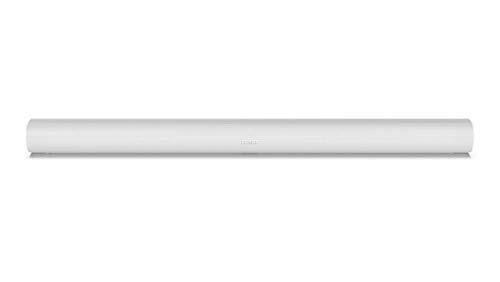
The Sonos brand is well known in the smart speaker and surround sound space. And very much like Apple, people will pay a premium price for their minimalistic, premium quality, and discounts are often hard to come by. But today, the Sonos Arc, which was Sonos’ flagship soundbar prior to the launch of the Sonos Arc Ultra, is $599, $300 off its usual $899 price. It’s also a record low price for this model, according to price-tracking tools.
Sonos speakers are not for everyone, if only because you’ll have to justify paying around two grand for a complete surround sound system when you can get a setup like the Samsung Q990C for about half the price. But audiophiles swear they can hear the difference, so the cost might be worth it to you.
If you pick up this soundbar, you’ll want to consider the Sonos 300 rear speakers and the Gen 4 subwoofer to go with it—they’re the latest Sonos has to offer, though you can choose Eras 100 or an older or smaller subwoofer to lower the price tag.
As for the Arc, it offers Dolby Atmos, providing immersive three-dimensional sound with height channels that simulate audio coming from above you (you can read the details in PCMag’s “excellent” review). It offers enough of a low-end kick that you don’t really need a subwoofer if you have a small space. If you already own other Sonos speakers, you can seamlessly connect them through the Sonos app to create a surround sound setup or a multi-room system.
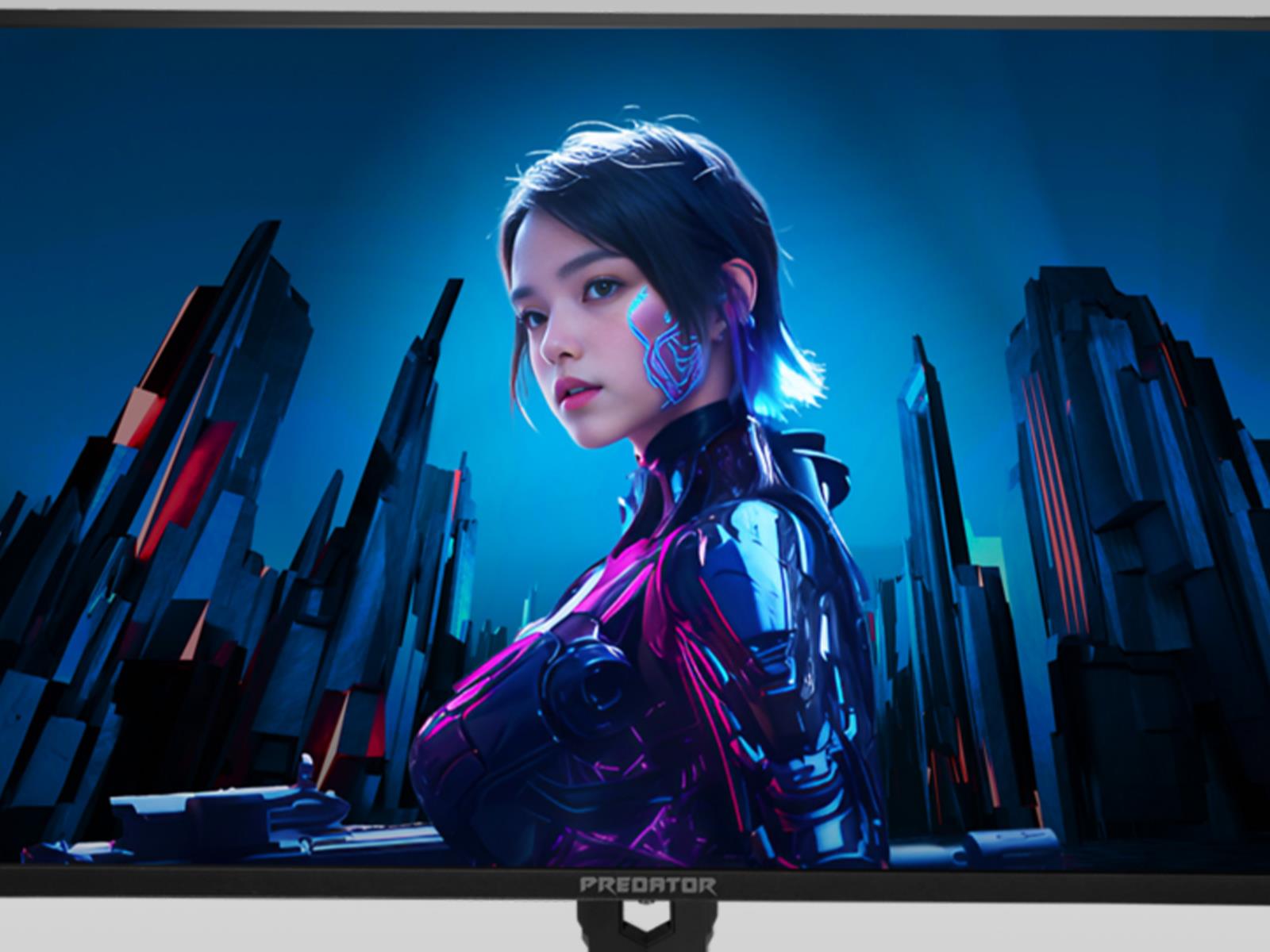
Slowly but surely, your options for buying a gaming monitor equipped with a cutting-edge quantum dot organic light-emitting diode (QD-OLED) panel are expanding.The latest models to enter the fray are a couple of Acer Predator SKUs, those being the Predator X32 X2 and Predator X27U X1. We bet you can guess the screen sizes of each, based on
France’s competition authority has fined Apple 150 million euros ($162 million) for abusing its market dominance through its App Tracking Transparency system, ruling the privacy initiative unfairly disadvantages app developers. The watchdog determined that requiring third-party developers to use two pop-ups for tracking permissions while Apple’s own apps need just one tap creates an “excessively complex” process that particularly harms smaller publishers lacking sufficient proprietary data for alternative targeting.
The authority acknowledged the system’s privacy benefits, but concluded the framework is “neither necessary nor proportionate” with data protection goals. The regulator is not requiring Apple to modify the system, only imposing the fine for past practices. Apple must display a summary of the decision on its website for seven days.
How can we push CPUs forward? That’s the question the computing industry has been asking since the Intel 4004 processor launched in 1971. Chipmakers have tried cranking up clock speeds, adding multiple cores and miniaturizing chip architectures to make them faster and more efficient. The conflict between RISC and CISC chip instruction sets (ISAs) — “reduced” designs versus “complex” ones — rages on to this day with RISC-V.
For the past few years, AMD has been exploring a unique approach to speeding up some of its processors with 3D V-Cache, a technology that stacks more L3 cache on top of Ryzen cores. By doing so, the company avoids crowding the 2D plane of its chips, and it’s able to cram in more memory without making its CPUs larger. With the Ryzen 9 9950X3D, AMD has now evolved 3D V-Cache to the point where every hardcore gamer will want one — even if few people actually need a $700 CPU.
3D V-Cache first appeared in the Ryzen 5800X3D in 2022, and AMD brought it to laptops in 2023. While there were some obvious downsides initially — the 5800X3D had slower clock speeds than the standard Ryzen 5800 — AMD has steadily improved the technology. The Ryzen 7 7800X3D and Ryzen 9 7900X3D were both notable for reaching the same maximum clock speeds as their 2D counterparts. While AMD’s second-generation 3D V-Cache technology isn’t as big of a leap in the 9950X3D (and other recent chips like the 9900X3D and 9800X3D), the company has managed to overcome the few compromises it’s had to make so far. Simply put, the Ryzen 9 9950X3D is a beast of a CPU for gaming and productivity work alike.
What’s new in the Ryzen 9 9950X3D?
The 9950X3D is a 16-core processor with a 4.3GHz base clock speed and a boost speed of 5.7GHz, just like its 2D sibling the 9950X. The big difference between the two is in their total L2 and L3 cache: the 9950X has 80MB, while the 3D V-Cache technology crams 144MB in the 9950X3D. By having more cache, the 9950X3D is able to tackle more processing loads without hitting RAM, which could take eight to 10 times as long, according to Robert Hallock, AMD’s director of technical marketing.
The major upgrade in the Ryzen 9 9950X3D, in addition to being powered by AMD’s new Zen 5 cores, lies in the positioning of its 3D V-Cache layer. Previously, it sat on top of Zen 3 and Zen 4 cores, which slightly hindered cooling and overall performance. Now, the 3D V-Cache layer sits below the 9950X3D’s Zen 5 cores, which gives those hotter elements direct access to your CPU fan’s heatsink. The 9950X3D has the same 170 Watt TDP (Thermal Design Profile) as its 2D variant, so cooling shouldn’t be a huge problem, and unlike most other 3D V-Cache chips, it’s also fully overclockable.
Devindra Hardawar for Engadget
In-use: An absolute powerhouse
I expected the Ryzen 9 9950X3D to wallop every other PC CPU I’ve tested, but I didn’t expect the leap to be so dramatic. In the Geekbench 6 single-threaded CPU benchmark, it was 20 percent faster than the Ryzen 9 7900X I was previously using. The 9950X3D was also 33 percent faster in the same benchmark’s multi-threaded test. (I didn’t have a 7950X3D for direct comparison, but based on a median of scores from 3DMark users, it hits 14,290 points. The 9950X3D reached 17,025, or 19 percent faster, in my testing)
CPU
GeekBench 6 CPU
3DMark CPU Profile
Cinebench 2024
AMD Ryzen 9 9950X3D
3,366/18,950
17,025 Max
134/2,124
AMD Ryzen 9 7900X
2,822/14,216
12,553 Max
113/1,103
Apple M4 Max
4,090/26,394
N/A
190/2066
Apple M2 Ultra
2,776/21,403
N/A
N/A
I’ve only seen better scores from Apple’s hardware. The M4 chip is slightly faster for single-threaded tasks, while the M4 Max and M2 Ultra chips in the Mac Studio trounce AMD’s multi-threaded Geekbench 6 scores. Still, you could build a solid Ryzen 9 system for far less than the Mac Studio M4 Max’s $2,000 starting cost, even while accounting for the 9950X3D’s $700 price tag.
Apple doesn’t always come out ahead. In the Cinebench 2024 multi-threaded benchmark, the 9950X3D slightly surpassed the M4 Max chip. That result is also a sign that AMD’s flagship chip will be a big help for Windows-based content creators. The 9950X3D and the M4 Max both took 14 seconds to transcode a 4K clip into 1080p, which is the fastest result we’ve ever seen.
The major appeal of the 9950X3D is that it’ll also be able to handle demanding games over the next few years without bottlenecking high-end GPUs like NVIDIA’s RTX 5080 and 5090. On my system, which is using an RTX 5090 and 64GB of RAM, the 9950X3D reached 195 fps in Cyberpunk 2077 while playing in 1080p with high graphics settings. The Ryzen 9 7900X, on the other hand, hit 166 fps with the same GPU and RAM. You’ll see less of an immediate uplift at higher resolutions, where your video card is doing more of the work. Cyberpunk hit 64 fps in 4K without DLSS upscaling on the 9950X3D, while it struggled to reach 56 fps on the 7900X with the same settings.
For 4K, in particular, the 9950X3D could be useful for scaling performance for monitors with faster refresh rates. On the 7900X, Dragon Age: The Veilguard ran at a smooth 250 fps in 4K with graphics settings and frame generation cranked up, but with the newer chip I saw 270 fps. If you’re running a 4K 240Hz monitor with a less powerful GPU, you’ll likely have a better shot of edging close to 240 fps thanks to 3D V-Cache.
Given all of its power, I was surprised to find that the 9950X3D ran at a relatively cool 81.5 Celsius at 100 percent load. It also idles between 30C and 35C, depending on what you’re doing. Those results are pretty impressive for a CPU that can push up to 170 Watts.
Devindra Hardawar for Engadget
Should you buy the Ryzen 9 9950X3D?
Much like NVIDIA’s $2,000 RTX 5090, I can’t easily recommend the $700 Ryzen 9 9950X3D to most people. Most gamers would likely be better off with the Ryzen 7 9800X3D, which sells for a more reasonable $479. Sure, it has half as many cores, but the majority of titles don’t tap into many of those to begin with. There’s also the $600 12-core 9900X3D, which could be more useful for people who actually need a healthy amount of CPU cores.
You could of course consider AMD’s current chips without 3D V-Cache, like the Ryzen 7 9700X, which has an MSRP of $359 but is currently selling for under $300. But if you’re already in the market for an expensive video card, it’s likely worth paying a bit extra to get more L3 cache. When AMD first debuted the 5800X3D, the company claimed 3D V-Cache alone boosted 1080p performance by 15 percent. As games get more complex and demanding, having more available cache could be even more useful. (And it’s also easier to pay more for a better chip now than buying a new one in a few years.)
As for Intel, it only has plans to bring its version of the technology, dubbed Local Cache, to next-generation Xeon server chips, according to der8auer and Bens Hardware (via Tom’s Hardware). Intel’s current high-end desktop chip, the 24-core i9-14900K, is no gaming slouch, but it’s saddled with just 36MB of L3 cache.
Wrap-up
If anything, the Ryzen 9 9950X3D is yet another sign that AMD is on a hot streak. After releasing a pair of excellent midrange GPUs, which showed that the company can genuinely go toe-to-toe with NVIDIA, this CPU and its accompanying 3D V-Cache technology is a reminder of how AMD is far ahead of Intel in many ways. And let’s not forget that it was also the first x86 chipmaker to include NPUs in laptop and desktop CPUs. While it’s certainly not the best deal around, if you can afford it, the 9950X3D is the best desktop CPU you can buy today.
This article originally appeared on Engadget at https://www.engadget.com/computing/amd-ryzen-9-9950x3d-review-a-no-compromise-cpu-for-demanding-gamers-152452811.html?src=rss
Guaranteed to be this summer’s must-have snack table accessory, pickle fountains are party drink fountains filled with pickles and pickle juice. Partygoers can either stab a solid pickle with a fork (I’ll just bare finger them when nobody’s looking), or place their glass under the bottom fountain for juice. Obviously, if you’re a friend of mine getting married this year and there isn’t a pickle fountain at the reception, I will build a time machine just to travel back in time to the ceremony and object.
A new UK study is claiming that your phone isn’t the source of distraction, or at least it’s not that black and white. The research found that when smartphones were taken out of reach in a simulated work environment, people continued to distract themselves on their laptops instead. Ultimately, this not only spotlights the importance of educating
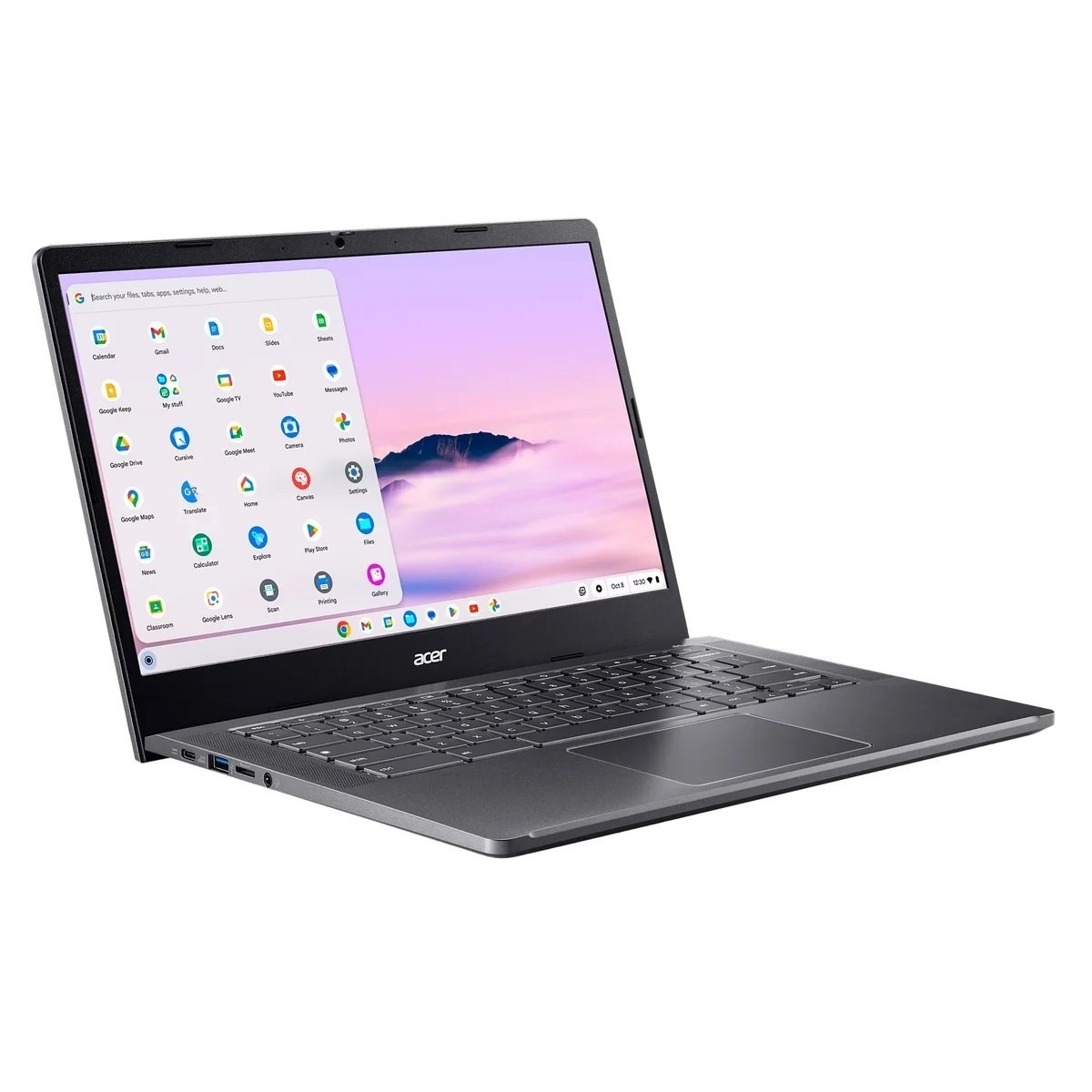
According to price trackers, this is the lowest it’s been, and if you’re looking for a backup laptop or something for really light tasks, it might be worth a look. But let’s set expectations upfront—this isn’t a high-performance machine. It’s running on an AMD Ryzen 3 7320C processor with 8GB RAM and 128GB of eMMC storage, which puts it squarely in the “basic use only” category. You’ll get by fine with web browsing, emails, video calls, or streaming, but anything heavier than that—editing video, gaming, or multitasking with lots of tabs—is probably going to be a stretch.
What it does have going for it is a 14-inch WUXGA display that has a 1920 x 1200 resolution and supports touch, so navigation feels a little smoother, especially when you’re scrolling through articles or zooming in on images. Additionally, it’s got Wi-Fi 6E and Bluetooth 5.1, which makes it more future-proof on the connectivity front. And even though it’s plastic, it’s rated MIL-STD-810H for durability (according to this PCMag review) and has a spill-resistant keyboard—handy if you’re clumsy with coffee. It also runs on ChromeOS, which means faster boot times and built-in security, plus support for Android apps through the Google Play Store.
The battery life isn’t record-breaking, but it’ll give you a decent chunk of the workday—around 10 hours, depending on what you’re doing. It’s also got two USB-C ports, one USB-A, and a headphone jack, which covers most needs. That said, this is still a budget machine. The Ryzen 3 chip is entry-level, and the eMMC storage is slower than SSDs. You can’t upgrade the storage later either, so you’re stuck with what you get—unless you lean heavily on cloud storage.