Louvre Museum In Paris to Discontinue Nintendo 3DS Audio Guides

The Louvre Museum will discontinue its use of Nintendo 3DS XL consoles as audio guides by September 2025, replacing them with a new system. NintendoSoup reports: For several years the Louvre has been using specially dedicated New Nintendo 3DS XL consoles to give visitors an audio guided tour of the famous museum. According to the museum’s official website however, it seems that the program will be discontinued in September 2025, to be replaced by a new system.

Presumably, this is due to Nintendo slowly phasing out the Nintendo 3DS line in general, having stopped supporting repairs for the console in a few countries. The consoles used by the Louvre would have broken down sooner or later, necessitating a change if they could no longer be sent in for repairs. At the time of this writing, it is not known what will become of the unique special edition consoles that were being used for this purpose.


Read more of this story at Slashdot.

DeepMind Details All the Ways AGI Could Wreck the World

An anonymous reader quotes a report from Ars Technica, written by Ryan Whitwam: Researchers at DeepMind have … released a new technical paper (PDF) that explains how to develop AGI safely, which you can download at your convenience. It contains a huge amount of detail, clocking in at 108 pages before references. While some in the AI field believe AGI is a pipe dream, the authors of the DeepMind paper project that it could happen by 2030. With that in mind, they aimed to understand the risks of a human-like synthetic intelligence, which they acknowledge could lead to “severe harm.” This work has identified four possible types of AGI risk, along with suggestions on how we might ameliorate said risks. The DeepMind team, led by company co-founder Shane Legg, categorized the negative AGI outcomes as misuse, misalignment, mistakes, and structural risks.

The first possible issue, misuse, is fundamentally similar to current AI risks. However, because AGI will be more powerful by definition, the damage it could do is much greater. A ne’er-do-well with access to AGI could misuse the system to do harm, for example, by asking the system to identify and exploit zero-day vulnerabilities or create a designer virus that could be used as a bioweapon. DeepMind says companies developing AGI will have to conduct extensive testing and create robust post-training safety protocols. Essentially, AI guardrails on steroids. They also suggest devising a method to suppress dangerous capabilities entirely, sometimes called “unlearning,” but it’s unclear if this is possible without substantially limiting models. Misalignment is largely not something we have to worry about with generative AI as it currently exists. This type of AGI harm is envisioned as a rogue machine that has shaken off the limits imposed by its designers. Terminators, anyone? More specifically, the AI takes actions it knows the developer did not intend. DeepMind says its standard for misalignment here is more advanced than simple deception or scheming as seen in the current literature.

To avoid that, DeepMind suggests developers use techniques like amplified oversight, in which two copies of an AI check each other’s output, to create robust systems that aren’t likely to go rogue. If that fails, DeepMind suggests intensive stress testing and monitoring to watch for any hint that an AI might be turning against us. Keeping AGIs in virtual sandboxes with strict security and direct human oversight could help mitigate issues arising from misalignment. Basically, make sure there’s an “off” switch. If, on the other hand, an AI didn’t know that its output would be harmful and the human operator didn’t intend for it to be, that’s a mistake. We get plenty of those with current AI systems — remember when Google said to put glue on pizza? The “glue” for AGI could be much stickier, though. DeepMind notes that militaries may deploy AGI due to “competitive pressure,” but such systems could make serious mistakes as they will be tasked with much more elaborate functions than today’s AI. The paper doesn’t have a great solution for mitigating mistakes. It boils down to not letting AGI get too powerful in the first place. DeepMind calls for deploying slowly and limiting AGI authority. The study also suggests passing AGI commands through a “shield” system that ensures they are safe before implementation.

Lastly, there are structural risks, which DeepMind defines as the unintended but real consequences of multi-agent systems contributing to our already complex human existence. For example, AGI could create false information that is so believable that we no longer know who or what to trust. The paper also raises the possibility that AGI could accumulate more and more control over economic and political systems, perhaps by devising heavy-handed tariff schemes. Then one day, we look up and realize the machines are in charge instead of us. This category of risk is also the hardest to guard against because it would depend on how people, infrastructure, and institutions operate in the future.


Read more of this story at Slashdot.

Critics suspect Trump’s weird tariff math came from chatbots

Critics are questioning if Donald Trump’s administration possibly used chatbots to calculate reciprocal tariffs announced yesterday that Trump claimed were “individualized” tariffs placed on countries that have ” the largest trade deficits” with the US.

Those tariffs are due to take effect on April 9 for 60 countries, with peak rates around 50 percent. That’s in addition to a baseline 10 percent tariff that all countries will be subject to starting on April 5. But while Trump expressed intent to push back on anyone supposedly taking advantage of the US, some of the countries on the reciprocal tariffs list puzzled experts and officials, who pointed out to The Guardian that Trump was, for some reason, targeting uninhabited islands, some of them exporting nothing and populated with penguins.

Some overseas officials challenged Trump’s math, such as George Plant, the administrator of Norfolk Island, who told the Guardian that “there are no known exports from Norfolk Island to the United States and no tariffs or known non-tariff trade barriers on goods coming to Norfolk Island.”

Read full article

Comments

SpaceX just took a big step toward reusing Starship’s Super Heavy booster

SpaceX is having trouble with Starship’s upper stage after back-to-back failures, but engineers are making remarkable progress with the rocket’s enormous booster.

The most visible sign of SpaceX making headway with Starship’s first stage—called Super Heavy—came at 9:40 am local time (10:40 am EDT; 14:40 UTC) Thursday at the company’s Starbase launch site in South Texas. With an unmistakable blast of orange exhaust, SpaceX fired up a Super Heavy booster that has already flown to the edge of space. The burn lasted approximately eight seconds.

This was the first time SpaceX has test-fired a “flight-proven” Super Heavy booster, and it paves the way for this particular rocket—designated Booster 14—to fly again soon. SpaceX confirmed a reflight of Booster 14, which previously launched and returned to Earth in January, will happen on next Starship launch With Thursday’s static fire test, Booster 14 appears to be closer to flight readiness than any of the boosters in SpaceX’s factory, which is a short distance from the launch site.

Read full article

Comments

Garmin’s Paid-Tier AI Doesn’t Seem to Be Doing Much

We may earn a commission from links on this page.

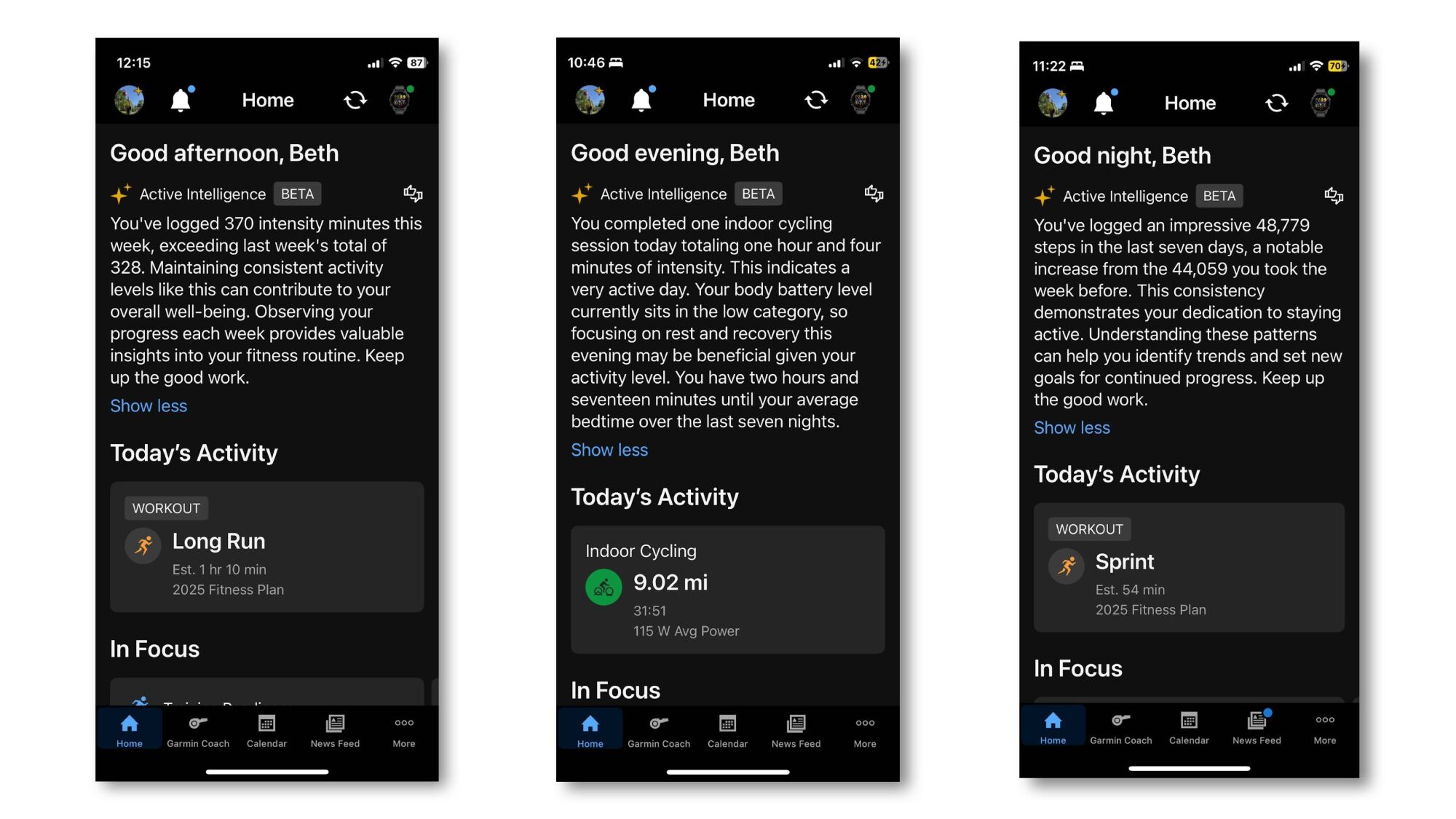
Garmin unveiled a subscription tier for its app last week featuring an AI that promises to provide insights on your training. I liked the company’s policies around training and privacy, but hadn’t seen much of the actual AI output when I wrote about it. Now, I’ve spent a week with the feature, which Garmin says is still in beta. Here are my impressions.

The AI insights are just one of the features that rolled out with the new $6.99/month Garmin Connect+ subscription. Some of the other add-ons look a lot more useful, like the Live Activities feature. I have a full rundown here on what you get if you pay for the upgrade. The subscription only covers new features—not existing app features, and not specific features that come with the watch you buy.

AI insights only appear in one limited part of the app

I’ve been poking everywhere in the Garmin Connect app, and I can only find AI insights in one place. That would be the home screen, where I get a little “active intelligence” paragraph right at the top, above my usual workout and health metric cards.  

If you don’t check your Garmin Connect app frequently, you’ll miss out on most of the insights. They don’t pop up on your watch or in notifications on your phone. There’s no chat interface like with Whoop or Oura, where you can ask questions about your data. 

I expected the AI to be more like Strava’s, where a little description/motivational message appears on each activity you do. Strava’s AI is notorious for restating the data from the run description, with added errors, though, so perhaps it’s best they didn’t try to mimic that. 

Three screenshots of the Garmin AI giving basic-ass advice

Credit: Beth Skwarecki

The AI “insights” aren’t very insightful

My first few insights were pretty basic—just comparing my intensity minutes to a goal that I didn’t realize I had—but I figured more interesting analysis was yet to come. 

After a week, though, I haven’t seen it. The most exciting moment was when I caught the AI in a flagrant math error. “You logged two activities today: running and indoor cycling for a total of one hour and twenty-seven minutes,” it said. My activities were noted in their usual place, immediately below this “insight,” and the run was 40:10 while the bike ride was a quick test of this gadget that took less than three minutes. That’s 43 minutes, silly robot. (I’m not the only one who has encountered some bad math: Two scuba divers posted on Reddit that the AI told them they spent more than a month underwater in a single day.)

The AI’s obsession with intensity minutes may be to blame in my case. I can’t make the math work out for this example, but in some other cases, the AI seemed to be adding up intensity minutes and not always including the word “intensity.” (One minute of vigorous exercise counts for two “intensity minutes,” an idea that comes from public health exercise guidelines.) 

Otherwise, the messages were just basic summaries of data that was already viewable elsewhere in the app. I did my best to screenshot every insight I saw, and here’s the tally of topics: 

  • 5 messages about intensity minutes, either comparing them to my goal or weekly or daily averages

  • 3 messages about my stress level or “sleep stress,” a metric I’d never heard of and still can’t figure out what it means

  • 2 messages about my Body Battery (a number that goes up with sleep and down with exercise or stress)

  • 2 messages about steps

  • 2 messages about run activities (with my mileage, pace, and/or time)

  • 2 messages about bike activities (with my time, heart rate, cadence, and/or power)

  • 1 message about my training status being in “recovery”

After a sentence or two with the metrics it’s describing, there would be a sentence generically encouraging me to keep up the good work. I could give feedback as to whether the insight was interesting or not, but there was no way to ask questions or get more information. I still don’t know what “sleep stress” is, or how to get a quick overview of my intensity minutes if I did want to keep track of them. 

It doesn’t seem like anyone is enjoying the AI feature

I’m always the wet blanket on AI hype, so I checked Reddit and Garmin forums to see if anybody is having a better time with it than I am. I couldn’t find anyone who admitted to liking Active Intelligence or gleaning any useful insights from it.

“There is so much that could be done with AI and training software, but all Garmin does is using AI to simply rephrase existing data,” a Garmin forum user said. “Seems like ‘Active Intelligence’ is basically just the most basic summary of your workouts possible,” said a redditor, adding, “I was really hoping that it would be an actual chatbot that you could discuss training with etc to create plans.”

Other redditors wondered why the AI doesn’t create or adjust training plans, possibly even analyzing users’ data to find which workouts tend to correlate with fitness increases. Garmin hasn’t publicly said what future plans they have for AI, just that the feature is currently in beta. 

“I received messages from AI throughout the day and I can say that they have no practical or informational benefit for me,” one redditor said. I’m afraid I have to agree.

NVIDIA confirms the Switch 2 has DLSS

This week’s Nintendo Direct provided much more info about the Switch 2 but didn’t go too deep into the nitty-gritty details of what powers the console. That left NVIDIA, the Mario maker’s hardware partner on the console’s processor and GPU, to fill in some blanks with a blog post published on Thursday — including the first confirmation that it uses Deep Learning Super Sampling (DLSS) tech.

NVIDIA said the Switch 2’s DLSS support helps to give the console “ten times” the graphical performance of the original Switch. The tech lets games render games in a lower resolution, then uses trained AI models and dedicated Tensor Cores to fill in detail.

Saying a system has ten times the graphics performance is likely a simplified marketing claim, and its graphical prowess could vary greatly depending on the title. The console has also yet to be scrutinized with extended real-world use. However, in Engadget’s Sam Rutherford hands-on, he found that the system handled the new Switch 2 versions of Street Fighter 6, Cyberpunk 2077 and Civilization 7 well, with all running “really smooth.”

The back of the Switch 2 in hand.
Sam Rutherford for Engadget

In docked mode, the Switch 2 supports up to 60fps at 4K resolution or 120fps at 1440p or 1080p resolutions. In handheld mode, the 7.9-inch, 1080p screen supports a variable refresh rate (via G-Sync) of up to 120Hz.

“The new RT Cores bring real-time ray tracing, delivering lifelike lighting, reflections and shadows for more immersive worlds,” NVIDIA explained. “Tensor Cores power AI-driven features like Deep Learning Super Sampling (DLSS), boosting resolution for sharper details without sacrificing image quality. Tensor Cores also enable AI-powered face tracking and background removal in video chat use cases, enhancing social gaming and streaming.”

For more on the new system, check out Engadget’s Switch 2 hands-on and deep dive into everything we know about it.

This article originally appeared on Engadget at https://www.engadget.com/gaming/nintendo/nvidia-confirms-the-switch-2-has-dlss-175033677.html?src=rss

Explaining How Touchscreens Work, With A Sausage

This is a clip from the BBC’s ‘The Secret Genius of Modern Life’ explaining why sausages work to use touchscreens (I thought it was because they look enough like fingers to fool the screen), and how touchscreens actually work. Whatever happened to magic being an acceptable answer?

Hidden beneath your phone’s glass is an invisible mesh of indium tin oxide — a material that stores and conducts electricity. This creates an electrical field that your finger (a conductor) disrupts when it touches the screen.

“It’s the interaction between the stored charges of these two conductors, your finger and the grid inside your phone, that makes this touchscreen work.”

Or, OR — maybe our phones actually have feelings. Did you ever get high enough to think about that? Although I imagine mine must be pretty depressed living in a linty pocket all day and only seeing the light of day to play Candy Crush in a bathroom.

‘Careless People’ author Sarah Wynn-Williams will testify at a Senate hearing next week

Sarah Wynn-Williams, the former Facebook policy director behind a best-selling memoir about her time at the company, will testify at a Senate Judiciary subcommittee hearing next week. The testimony will be Wynn-Williams’ first public remarks since Meta initiated emergency arbitration proceedings in an attempt to prevent her from promoting the book.

Wynn-Williams’ upcoming appearance at Congress was confirmed by Senator Josh Hawley, who said in a statement that she would testify about “allegations that Facebook cooperated with the Communist regime in China to build censorship tools, punish dissidents, and make American users’ data available for Chinese use.”

Big News — Facebook whistleblower Sarah Wynn-Williams will testify NEXT WEEK in public, under oath, before my judiciary subcommittee re: her explosive evidence of Facebook’s cooperation with the Communist regime in China, including FB’s plans to build censorship tools, punish…

— Josh Hawley (@HawleyMO) April 2, 2025

In her book, Careless People, Wynn-Williams recounts Meta executives’ interactions with world leaders and government officials as Facebook’s influence expanded globally in the early 2010s. Her account has resurfaced information about Facebook’s attempts to operate in China, and revealed new details about its overtures to Chinese government officials.

“We do not operate our services in China today. It is no secret we were once interested in doing so as part of Facebook’s effort to connect the world,” Meta spokesperson Dani Lever said in a statement. “This was widely reported beginning a decade ago. We ultimately opted not to go through with the ideas we’d explored, which Mark Zuckerberg announced in 2019.”

Prior to her book’s publication, Wynn-Williams also filed whistleblower complaints with the Securities and Exchange Commission and the Department of Justice about alleged misconduct at the company. While the precise details of those complaints haven’t been made public, next week’s hearing will be a significant opportunity for her to speak publicly about what she witnessed.

The hearing, titled, “A Time for Truth: Oversight of Meta’s Foreign Relations and Representations to the United States Congress,” is scheduled for April 9, at 2:30pm ET.

This article originally appeared on Engadget at https://www.engadget.com/social-media/careless-people-author-sarah-wynn-williams-will-testify-at-a-senate-hearing-next-week-172509027.html?src=rss

How Capcom Plans To Punish Cheaters In Monster Hunter Wilds Arena Quests

How Capcom Plans To Punish Cheaters In Monster Hunter Wilds Arena Quests
Capcom is looking to keep the momentum going for Monster Hunter Wilds after its wildly successful launch. The latest update to the game brings time-based quests for players to complete and earn bragging rights or various in-game rewards. However, as with other online games, cheating can be a problem. To try and ward off these gaming ne’er

TikTok Draws Interest From Amazon And OnlyFans Founders As Sale Deadline Looms

TikTok Draws Interest From Amazon And OnlyFans Founders As Sale Deadline Looms
In January, we reported on a potential TikTok acquisition involving TikTok star MrBeast and some unidentified billionaires. Although that acquisition never materialized, there is a new, last-minute intervention in the works designed to ensure the platform remains functioning in the US. Newly interested bidders, including Jeff Bezos of Amazon

Air Conditioning, Not Data Centers, Driving Global Energy Demand Growth

Air conditioning will contribute more to rising global energy demand than data centers through 2030, according to an International Energy Agency. While attention has focused on computing power consumption, the IEA projects data centers will account for less than 10% of increased energy demand by 2030, significantly less than space cooling requirements. Global cooling degree days, a measure of air conditioning need, were 6% higher in 2024 than 2023 and 20% above the long-term average for the first two decades of the century.

China, India and the United States saw particularly sharp increases. Air conditioning represented 7% of global electricity consumption in 2022, with some U.S. regions reporting that cooling can comprise over 70% of residential energy use during peak periods. The number of air conditioning units worldwide could nearly triple from fewer than 2 billion in 2016 to approximately 6 billion by 2050, creating a growing challenge for power grids.


Read more of this story at Slashdot.

US Stock Markets See Worst Day Since Covid Pandemic

U.S. stock markets suffered their worst day since the Covid pandemic after Donald Trump announced sweeping new tariffs, triggering a global selloff and wiping out $470 billion in value from tech giants Apple and Nvidia. From a report: The tech-heavy Nasdaq fell 6%, while the S&P 500 and the Dow dropped 4.8% and 3.9%, respectively. […] Meanwhile, the US dollar hit a six-month low, going down at least 2.2% on Thursday morning compared with other major currencies and oil prices sank on fears of a global slowdown. Though the US stock market has been used to tumultuous mornings over the last few weeks, US stock futures — an indication of the market’s likely direction — had plummeted after the announcement. Hours later, Japan’s Nikkei index slumped to an eight-month low and was followed by falls in stock markets in London and across Europe.

Multiple major American business groups have spoken out against the tariffs, including the Business Roundtable, a consortium of leaders of major US companies including JP Morgan, Apple and IBM, which called on the White House to “swiftly reach agreements” and remove the tariffs. “Universal tariffs ranging from 10-50% run the risk of causing major harm to American manufacturers, workers, families and exporters,” the Business Roundtable said in a statement. “Damage to the US economy will increase the longer the tariffs are in place and may be exacerbated by retaliatory measures.”


Read more of this story at Slashdot.

Intel, TSMC Tentatively Agree To Form Chipmaking Joint Venture

Intel and Taiwan Semiconductor Manufacturing Co. have reached a preliminary agreement to form a joint venture operating Intel’s chipmaking facilities, with TSMC taking a 20% stake, The Information reports [non-paywalled source]. Intel and other U.S. semiconductor companies would hold the majority of shares in the proposed venture. Instead of capital investment, TSMC has discussed sharing chipmaking methods and training Intel personnel.

The talks face internal opposition from some Intel executives concerned about widespread layoffs and the abandonment of Intel’s own technology, according to the report. The deal could help TSMC neutralize a struggling competitor while potentially giving Taiwan more leverage with the U.S. administration, which recently imposed tariffs on Taiwanese goods excluding chips.


Read more of this story at Slashdot.

Wealthy Americans have death rates on par with poor Europeans

It’s well-established that, on the whole, Americans die younger than people in most other high-income countries. For instance, an analysis from 2022 found that the average life expectancy of someone born in Switzerland or Spain in 2019 was 84 years. Meanwhile, the average US life expectancy was 78.8, lower than nearly all other high-income countries, including Canada’s, which was 82.3 years. And this was before the pandemic, which only made things worse for the US.

Perhaps some Americans may think that this lower overall life-expectancy doesn’t really apply to them if they’re middle- or upper-class. After all, wealth inequality and health disparities are huge problems in the US. Those with more money simply have better access to health care and better health outcomes. Well-off Americans live longer, with lifespans on par with their peers in high-income countries, some may think.

It is true that money buys you a longer life in the US. In fact, the link between wealth and mortality may be stronger in the US than in any other high-income country. But, if you think American wealth will put life expectancy in league with Switzerland, you’re dead wrong, according to a study in the latest issue of the New England Journal of Medicine.

Read full article

Comments

DeepMind has detailed all the ways AGI could wreck the world

As AI hype permeates the Internet, tech and business leaders are already looking toward the next step. AGI, or artificial general intelligence, refers to a machine with human-like intelligence and capabilities. If today’s AI systems are on a path to AGI, we will need new approaches to ensure such a machine doesn’t work against human interests.

Unfortunately, we don’t have anything as elegant as Isaac Asimov’s Three Laws of Robotics. Researchers at DeepMind have been working on this problem and have released a new technical paper (PDF) that explains how to develop AGI safely, which you can download at your convenience.

It contains a huge amount of detail, clocking in at 108 pages before references. While some in the AI field believe AGI is a pipe dream, the authors of the DeepMind paper project that it could happen by 2030. With that in mind, they aimed to understand the risks of a human-like synthetic intelligence, which they acknowledge could lead to “severe harm.”

Read full article

Comments

Microsoft’s Miniature Windows 365 Link PC Goes On Sale

An anonymous reader shares a report: Microsoft’s business-oriented “Link” mini-desktop PC, which connects directly to the company’s Windows 365 cloud service, is now available to buy for $349.99 in the US and in several other countries. Windows 365 Link, which was announced last November, is a device that is more easily manageable by IT departments than a typical computer while also reducing the needs of hands on support.


Read more of this story at Slashdot.

Google unveils end-to-end messages for Gmail. Only thing is: It’s not true E2EE.

When Google announced Tuesday that end-to-end encrypted messages were coming to Gmail for business users, some people balked, noting it wasn’t true E2EE as the term is known in privacy and security circles. Others wondered precisely how it works under the hood. Here’s a description of what the new service does and doesn’t do, as well as some of the basic security that underpins it.

When Google uses the term E2EE in this context, it means that an email is encrypted inside Chrome, Firefox, or just about any other browser the sender chooses. As the message makes its way to its destination, it remains encrypted and can’t be decrypted until it arrives at its final destination, when it’s decrypted in the recipient’s browser.

Giving S/MIME the heave-ho

The chief selling point of this new service is that it allows government agencies and the businesses that work with them to comply with a raft of security and privacy regulations and at the same time eliminates the massive headaches that have traditionally plagued anyone deploying such regulation-compliant email systems. Up to now, the most common means has been S/MIME, a standard so complex and painful that only the bravest and most well-resourced organizations tend to implement it.

Read full article

Comments

Microsoft is reportedly walking back some data center plans

After a January announcement that it would spend $80 billion on data center construction, Microsoft may already be adjusting its future plans. Sources told Bloomberg that Microsoft has delayed or slowed data center efforts in Indonesia, the UK, Australia, Illinois, North Dakota and Wisconsin. Some of the cases meant withdrawing from negotiations, while others have involved delays on planned construction projects, according to these insiders. These data centers would be central to Microsoft’s efforts to develop more capabilities around artificial intelligence.

Despite the apparent shift in its approach, a Microsoft rep told Bloomberg that the company still plans to hold to its $80 billion spending budget on data centers during its 2025 fiscal year. Engadget has reached out for confirmation and will update if we receive comment from Microsoft. That was the figure laid out in a blog post attributed to Vice-Chair and President Brad Smith. The post, published days before President Trump’s inauguration, included some ingratiating language for the new administration. “The country has a unique opportunity to pursue this vision and build on the foundational ideas set for AI policy during President Trump’s first term,” it reads. “At Microsoft, we are excited to take part in this journey.”

Microsoft’s plans could have been influenced by looming tariffs, which had been threatened and were finally introduced this week by President Trump. The trade policy is likely to make large infrastructure plans more expensive and has already caused uncertainties on Wall Street. It could be that the company will still spend in the ballpark of $80 billion but will not be able to complete as many locations as it had previously calculated. Or it could be that in the months since presenting its forecast, Microsoft has already seen a reduction in expected demand. 

This article originally appeared on Engadget at https://www.engadget.com/ai/microsoft-is-reportedly-walking-back-some-data-center-plans-210406748.html?src=rss

Traeger built a smaller Flatrock griddle for smaller outdoor spaces

Traeger’s only gas-powered grill is its Flatrock flat-top griddle. Besides this one model, everything else in the company’s lineup runs on wood pellets. Since griddles continue to be insanely popular backyard cooking tools, Traeger is expanding its Flatrock line with a smaller, two-burner option. The Flatrock 2 Zone has all of the features from the larger version, which is now called the Flatrock 3 Zone, in a griddle that takes up less space on your deck, patio or porch. 

As the name suggests, the Flatrock 2 Zone has two separate cooking areas with precise heat control for each one. U-shaped burners consistently heat the entire cooking surface and an edge-to-edge, wind-blocking design helps keep the flame running smoothly without burnouts or flare-ups. Like the Flatrock 3 Zone, there are folding side shelves for resting tools and trays, plus the Pop-And-Lock (PAL) rail system allows you to add the snap-on accessories you need to complete your griddle setup. The EZ-Clean grease keg from other recent Traeger grills is here as well, making it easy to get rid of liquids and debris after cooking. 

Traeger's Flatrock 2 Zone may be a smaller griddle, but there's still plenty of room for cheesesteaks, smash burgers and more.
Traeger

The main appeal of the Flatrock 2 Zone is that it’s smaller than the original model. You’ll still have the ability to make breakfasts, smash burgers, fajitas and more with the griddle’s 468 square inches of cooking surface, but this new version will fit better in smaller outdoor spaces. It’s also $200 cheaper at $700. Unfortunately, there’s no word on availability just yet: Traeger says the Flatrock 2 Zone is coming “soon” to its website and retailers in the US and Canada. 

If you’re looking for an alternative, Weber’s Slate griddles are well-built and offer various options depending on the size and features you’re after. Starting at $549, you can get the three-burner, 28-inch base model that comes on a basic cart similar to the company’s gas grills. Even this smallest Weber option offers more cooking area than the Flatrock 2 Zone at 504 square inches. At the top end, there’s a four-burner, 36-inch version that comes with an easy-to-read digital temperature gauge and enclosed storage for $999. What’s more, Weber offers a 30-inch size in between those two, with various storage configurations and an the option to include that battery-powered temperature gauge. This one is 

This article originally appeared on Engadget at https://www.engadget.com/home/kitchen-tech/traeger-built-a-smaller-flatrock-griddle-for-smaller-outdoor-spaces-210057199.html?src=rss