Microsoft Uses AI To Find Flaws In GRUB2, U-Boot, Barebox Bootloaders

Slashdot reader zlives shared this report from BleepingComputer:

Microsoft used its AI-powered Security Copilot to discover 20 previously unknown vulnerabilities in the GRUB2, U-Boot, and Barebox open-source bootloaders.

GRUB2 (GRand Unified Bootloader) is the default boot loader for most Linux distributions, including Ubuntu, while U-Boot and Barebox are commonly used in embedded and IoT devices. Microsoft discovered eleven vulnerabilities in GRUB2, including integer and buffer overflows in filesystem parsers, command flaws, and a side-channel in cryptographic comparison. Additionally, 9 buffer overflows in parsing SquashFS, EXT4, CramFS, JFFS2, and symlinks were discovered in U-Boot and Barebox, which require physical access to exploit.

The newly discovered flaws impact devices relying on UEFI Secure Boot, and if the right conditions are met, attackers can bypass security protections to execute arbitrary code on the device. While exploiting these flaws would likely need local access to devices, previous bootkit attacks like BlackLotus achieved this through malware infections.

Miccrosoft titled its blog post “Analyzing open-source bootloaders: Finding vulnerabilities faster with AI.” (And they do note that Micxrosoft disclosed the discovered vulnerabilities to the GRUB2, U-boot, and Barebox maintainers and “worked with the GRUB2 maintainers to contribute fixes… GRUB2 maintainers released security updates on February 18, 2025, and both the U-boot and Barebox maintainers released updates on February 19, 2025.”)

They add that performing their initial research, using Security Copilot “saved our team approximately a week’s worth of time,” Microsoft writes, “that would have otherwise been spent manually reviewing the content.”
Through a series of prompts, we identified and refined security issues, ultimately uncovering an exploitable integer overflow vulnerability. Copilot also assisted in finding similar patterns in other files, ensuring comprehensive coverage and validation of our findings…

As AI continues to emerge as a key tool in the cybersecurity community, Microsoft emphasizes the importance of vendors and researchers maintaining their focus on information sharing. This approach ensures that AI’s advantages in rapid vulnerability discovery, remediation, and accelerated security operations can effectively counter malicious actors’ attempts to use AI to scale common attack tactics, techniques, and procedures (TTPs).

This week Google also announced Sec-Gemini v1, “a new experimental AI model focused on advancing cybersecurity AI frontiers.”


Read more of this story at Slashdot.

Go back to the Grid in TRON: Ares trailer

An AI program enters the real world in TRON: Ares.

It’s difficult to underestimate the massive influence that Disney’s 1982 cult science fiction film, TRON, had on both the film industry—thanks to combining live action with what were then groundbreaking visual effects, rife with computer-generated imagery—and on nerd culture at large.  Over the ensuing decades there has been one sequel, an animated TV series, a comic book miniseries, video games, and theme park attractions, all modeled on director Steve Lisberg’s original fictional world.

Now we’re getting a third installment in the film franchise: TRON: Ares, directed by Joachim Rønning (Pirates of the Caribbean: Dead Men Tell No Tales, Maleficent: Mistress of Evil), that serves as a standalone sequel to 2010’s TRON: Legacy. Disney just released the first trailer and poster art, and while the footage is short on plot, it’s got the show-stopping visuals we’ve come to expect from all things TRON.

(Spoilers for ending of TRON: Legacy below.)

Read full article

Comments

Amazon will use AI to generate recaps for book series on the Kindle

Amazon’s new feature could make it easier to get into the latest release in a series, especially if it’s been some time since you’ve read the previous books. The new Recaps feature is part of the latest software update for the Kindle, and the company compares it to “Previously on…” segments you can watch for TV shows. Amazon announced Recaps in a blog post, where it said that you can get access to it once you receive the software update over the air or after you download and install it from Amazon’s website. Amazon didn’t talk about the technology behind the feature in its post, but a spokesperson has confirmed to TechCrunch that the recaps will be AI generated. 

Shortly after the feature rolled out, users talked about it on social media, wondering if Amazon is using generative AI to write series summaries. They expressed concerns about the use of generative AI, especially about the possibility of the technology hallucinating plot elements that aren’t actually in the books. “We use technology, including GenAI and Amazon moderators, to create short recaps of books that accurately reflect book content,” Amazon spokesperson Ale Iraheta told the publication. Iraheta assured TechCrunch that Amazon’s recaps are accurate, but of course, use it at your own risk. 

At the moment, the Recaps feature is available for best-selling English-language book series on all Kindle devices in the US. To know if your favorite series has one, look for the “View Recaps” button within the series page in your Kindle library. It will soon be available for the Kindle app on iOS, as well. 

This article originally appeared on Engadget at https://www.engadget.com/ai/amazon-will-use-ai-to-generate-recaps-for-book-series-on-the-kindle-170018503.html?src=rss

Open Source Coalition Announces ‘Model-Signing’ with Sigstore to Strengthen the ML Supply Chain

The advent of LLMs and machine learning-based applications “opened the door to a new wave of security threats,” argues Google’s security blog. (Including model and data poisoning, prompt injection, prompt leaking and prompt evasion.)

So as part of the Linux Foundation’s nonprofit Open Source Security Foundation, and in partnership with NVIDIA and HiddenLayer, Google’s Open Source Security Team on Friday announced the first stable model-signing library (hosted at PyPI.org), with digital signatures letting users verify that the model used by their application “is exactly the model that was created by the developers,” according to a post on Google’s security blog.

[S]ince models are an uninspectable collection of weights (sometimes also with arbitrary code), an attacker can tamper with them and achieve significant impact to those using the models. Users, developers, and practitioners need to examine an important question during their risk assessment process: “can I trust this model?”
Since its launch, Google’s Secure AI Framework (SAIF) has created guidance and technical solutions for creating AI applications that users can trust. A first step in achieving trust in the model is to permit users to verify its integrity and provenance, to prevent tampering across all processes from training to usage, via cryptographic signing… [T]he signature would have to be verified when the model gets uploaded to a model hub, when the model gets selected to be deployed into an application (embedded or via remote APIs) and when the model is used as an intermediary during another training run. Assuming the training infrastructure is trustworthy and not compromised, this approach guarantees that each model user can trust the model…

The average developer, however, would not want to manage keys and rotate them on compromise. These challenges are addressed by using Sigstore, a collection of tools and services that make code signing secure and easy. By binding an OpenID Connect token to a workload or developer identity, Sigstore alleviates the need to manage or rotate long-lived secrets. Furthermore, signing is made transparent so signatures over malicious artifacts could be audited in a public transparency log, by anyone. This ensures that split-view attacks are not possible, so any user would get the exact same model. These features are why we recommend Sigstore’s signing mechanism as the default approach for signing ML models.

Today the OSS community is releasing the v1.0 stable version of our model signing library as a Python package supporting Sigstore and traditional signing methods. This model signing library is specialized to handle the sheer scale of ML models (which are usually much larger than traditional software components), and handles signing models represented as a directory tree. The package provides CLI utilities so that users can sign and verify model signatures for individual models. The package can also be used as a library which we plan to incorporate directly into model hub upload flows as well as into ML frameworks.
“We can view model signing as establishing the foundation of trust in the ML ecosystem…” the post concludes (adding “We envision extending this approach to also include datasets and other ML-related artifacts.”)

Then, we plan to build on top of signatures, towards fully tamper-proof metadata records, that can be read by both humans and machines. This has the potential to automate a significant fraction of the work needed to perform incident response in case of a compromise in the ML world…

To shape the future of building tamper-proof ML, join the Coalition for Secure AI, where we are planning to work on building the entire trust ecosystem together with the open source community. In collaboration with multiple industry partners, we are starting up a special interest group under CoSAI for defining the future of ML signing and including tamper-proof ML metadata, such as model cards and evaluation results.


Read more of this story at Slashdot.

Jaguar Land Rover pauses US shipments while it figures out a plan for Trump’s tariffs

UK-based Jaguar Land Rover says it’s pausing shipments to the US after President Donald Trump imposed a 25 percent tariff on passenger vehicles and other auto imports. The pause will be in effect this month, the Associated Press reports. While the full impact of the tariffs remains to be seen, analysts have said the move could ultimately drive up the cost of new and even used cars.

“The USA is an important market for JLR’s luxury brands,” Jaguar Land Rover said in a statement to AP. “As we work to address the new trading terms with our business partners, we are taking some short-term actions including a shipment pause in April, as we develop our mid- to longer-term plans.”

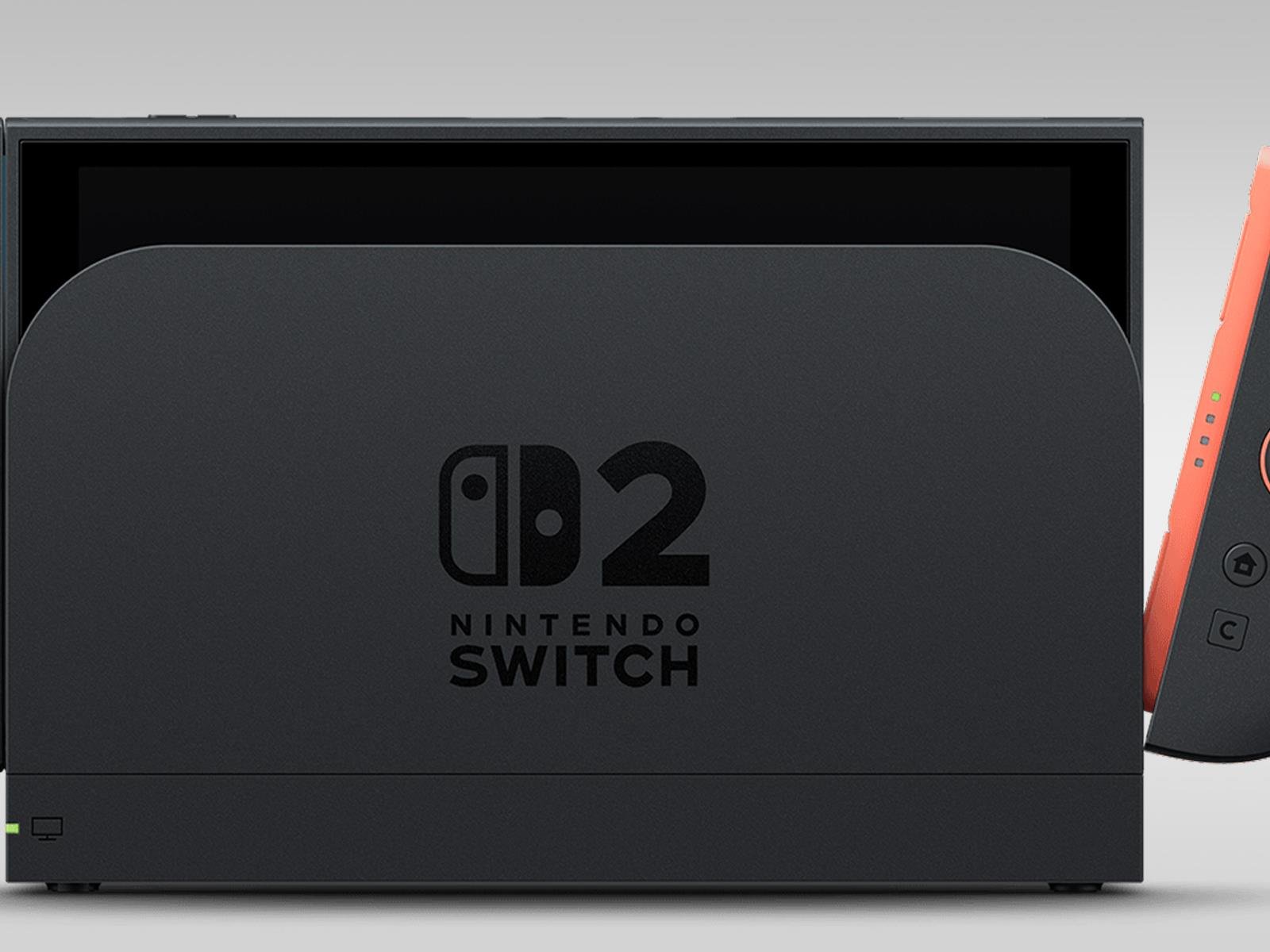
Trump’s tariffs go well beyond the auto industry, and we’re only seeing the beginning of how the US’ trading partners will respond. The president announced a 10 percent baseline tariff on “all countries” this week, and some will face even higher “reciprocal” tariffs. Among the immediate effects, Nintendo has delayed pre-orders of the new Switch 2 in the US.

This article originally appeared on Engadget at https://www.engadget.com/transportation/jaguar-land-rover-pauses-us-shipments-while-it-figures-out-a-plan-for-trumps-tariffs-172512506.html?src=rss

Nintendo Delays Switch 2 Preorders Due To Tariff Angst And Cost Impact

Nintendo Delays Switch 2 Preorders Due To Tariff Angst And Cost Impact
Wouldn’t you know it, just days after Nintendo revealed more details about its Switch 2 console and hot on the heels of us posting a preorder guide to give you a leg up over scalpers and bots, Nintendo and its retail partners are putting the word out that the preorder date in the United States has been delayed indefinitely. The reason? Uncertainty

Scientists Warn Indonesia’s Rice Megaproject Faces Failure

Indonesian President Prabowo Subianto’s ambitious plan to create 1 million hectares of new rice farms in eastern Merauke Regency faces strong criticism from scientists who have warned it will fail due to unsuitable soils and climate. Military “food brigades” are currently guarding bulldozers clearing swampy forests in Indonesian New Guinea for the project, which aims to boost food self-sufficiency for the nation’s 281 million people.

Soil scientists warn that Merauke’s conditions could lead to acidic soils unable to support economically viable rice farming, potentially resulting in abandoned fields vulnerable to wildfires. “Farmers will get no profit at all,” said Dwi Andreas, a soil scientist at Bogor Agricultural University who tested 12 rice varieties in similar soils with poor results.

The initiative mirrors past failed megaprojects, including a 1990s attempt to convert 1 million hectares of Borneo peatlands to rice paddies and a 2020 onion and potato farming expansion in North Sumatra that saw 90% of fields abandoned. A previous 2010 attempt to expand rice farming in Merauke also failed, destroying forests that Indigenous Papuans relied on and increasing childhood malnutrition, according to anthropologist Laksmi Adriani.


Read more of this story at Slashdot.

With new contracts, SpaceX will become the US military’s top launch provider

The US Space Force announced Friday it selected SpaceX, United Launch Alliance, and Blue Origin for $13.7 billion in contracts to deliver the Pentagon’s most critical military to orbit into the early 2030s.

These missions will launch the government’s heaviest national security satellites, like the National Reconnaissance Office’s large bus-sized spy platforms, and deploy them into bespoke orbits. These types of launches often demand heavy-lift rockets with long-duration upper stages that can cruise through space for six or more hours.

The contracts awarded Friday are part of the next phase of the military’s space launch program once dominated by United Launch Alliance, the 50-50 joint venture between legacy defense contractors Boeing and Lockheed Martin.

Read full article

Comments

Two Teenagers Built ‘Cal AI’, a Photo Calorie App With Over a Million Users

An anonymous reader quotes a report from TechCrunch: In a world filled with “vibe coding,” Zach Yadegari, teen founder of Cal AI, stands in ironic, old-fashioned contrast. Ironic because Yadegari and his co-founder, Henry Langmack, are both just 18 years old and still in high school. Yet their story, so far, is a classic. Launched in May, Cal AI has generated over 5 million downloads in eight months, Yadegari says. Better still, he tells TechCrunch that the customer retention rate is over 30% and that the app generated over $2 million in revenue last month. […]

The concept is simple: Take a picture of the food you are about to consume, and let the app log calories and macros for you. It’s not a unique idea. For instance, the big dog in calorie counting, MyFitnessPal, has its Meal Scan feature. Then there are apps like SnapCalorie, which was released in 2023 and created by the founder of Google Lens. Cal AI’s advantage, perhaps, is that it was built wholly in the age of large image models. It uses models from Anthropic and OpenAI and RAG to improve accuracy and is trained on open source food calorie and image databases from sites like GitHub.

“We have found that different models are better with different foods,” Yadegari tells TechCrunch. Along the way, the founders coded through technical problems like recognizing ingredients from food packages or in jumbled bowls. The result is an app that the creators say is 90% accurate, which appears to be good enough for many dieters. The report says Yadegari began mastering Python and C# in middle school and went on to build his first business in ninth grade — a website called Totally Science that gave students access to unblocked games (cleverly named to evade school filters). He sold the company at age 16 to FreezeNova for $100,000.
Following the sale, Yadegari immersed himself in the startup scene, watching Y Combinator videos and networking on X, where he met co-founder Blake Anderson, known for creating ChatGPT-powered apps like RizzGPT. Together, they launched Cal AI and moved to a hacker house in San Francisco to develop their prototype.


Read more of this story at Slashdot.

Wikimedia Drowning in AI Bot Traffic as Crawlers Consume 65% of Resources

Web crawlers collecting training data for AI models are overwhelming Wikipedia’s infrastructure, with bot traffic growing exponentially since early 2024, according to the Wikimedia Foundation. According to data released April 1, bandwidth for multimedia content has surged 50% since January, primarily from automated programs scraping Wikimedia Commons’ 144 million openly licensed media files.

This unprecedented traffic is causing operational challenges for the non-profit. When Jimmy Carter died in December 2024, his Wikipedia page received 2.8 million views in a day, while a 1.5-hour video of his 1980 presidential debate caused network traffic to double, resulting in slow page loads for some users.

Analysis shows 65% of the foundation’s most resource-intensive traffic comes from bots, despite bots accounting for only 35% of total pageviews. The foundation’s Site Reliability team now routinely blocks overwhelming crawler traffic to prevent service disruptions. “Our content is free, our infrastructure is not,” the foundation said, announcing plans to establish sustainable boundaries for automated content consumption.


Read more of this story at Slashdot.

An Interactive-Speed Linux Computer Made of Only 3 8-Pin Chips

Software engineer and longtime Slashdot reader, Dmitry Grinberg (dmitrygr), shares a recent project they’ve been working on: “an interactive-speed Linux on a tiny board you can easily build with only 3 8-pin chips”: There was a time when one could order a kit and assemble a computer at home. It would do just about what a contemporary store-bought computer could do. That time is long gone. Modern computers are made of hundreds of huge complex chips with no public datasheets and many hundreds of watts of power supplied to them over complex power delivery topologies. It does not help that modern operating systems require gigabytes of RAM, terabytes of storage, and always-on internet connectivity to properly spy on you. But what if one tried to fit a modern computer into a kit that could be easily assembled at home? What if the kit only had three chips, each with only 8 pins? Can it be done? Yes. The system runs a custom MIPS emulator written in ARMv6 assembly and includes a custom bootloader that supports firmware updates via FAT16-formatted SD cards. Clever pin-sharing hacks allow all components (RAM, SD, serial I/O) to work despite the 6 usable I/O pins. Overclocked to up to 150MHz, the board boots into a full Linux shell in about a minute and performs at ~1.65MHz MIPS-equivalent speed.

It’s not fast, writes Dmitry, but it’s fully functional — you can edit files, compile code, and even install Debian packages. A kit may be made available if a partner is found.


Read more of this story at Slashdot.

AT&T Email-To-Text Gateway Service Ending

Longtime Slashdot reader CyberSlugGump shares a support article from AT&T, writing: On June 17th, AT&T will stop supporting email-to-text messages. That means you won’t be able to send a text message to an AT&T customer from an email address. You can still get in touch with AT&T customers using SMS (text), MMS, and standard email services.


Read more of this story at Slashdot.

Midjourney Releases V7, Its First New AI Image Model In Nearly a Year

Midjourney’s new V7 image model features a revamped architecture with smarter text prompt handling, higher image quality, and default personalization based on user-rated images. While some features like upscaling aren’t yet available, it does come with a faster, cheaper Draft Mode. TechCrunch reports: To use it, you’ll first have to rate around 200 images to build a Midjourney “personalization” profile, if you haven’t already. This profile tunes the model to your individual visual preferences; V7 is Midjourney’s first model to have personalization switched on by default. Once you’ve done that, you’ll be able to turn V7 on or off on Midjourney’s website and, if you’re a member of Midjourney’s Discord server, on its Discord chatbot. In the web app, you can quickly select the model from the drop-down menu next to the “Version” label.

Midjourney CEO David Holz described V7 as a “totally different architecture” in a post on X. “V7 is … much smarter with text prompts,” Holz continued in an announcement on Discord. “[I]mage prompts look fantastic, image quality is noticeably higher with beautiful textures, and bodies, hands, and objects of all kinds have significantly better coherence on all details.” V7 is available in two flavors, Turbo (costlier to run) and Relax, and powers a new tool called Draft Mode that renders images at 10x the speed and half the cost of the standard mode. Draft images are of lower quality than standard-mode images, but they can be enhanced and re-rendered with a click.

A number of standard Midjourney features aren’t available yet for V7, according to Holz, including image upscaling and retexturing. Those will arrive in the near future, he said, possibly within two months. “This is an entirely new model with unique strengths and probably a few weaknesses” Holz wrote on Discord. “[W]e want to learn from you what it’s good and bad at, but definitely keep in mind it may require different styles of prompting. So play around a bit.”


Read more of this story at Slashdot.

Midjourney introduces first new image generation model in over a year

AI image generator Midjourney released its first new model in quite some time today; dubbed V7, it’s a ground-up rework that is available in alpha to users now.

There are two areas of improvement in V7: the first is better images, and the second is new tools and workflows.

Starting with the image improvements, V7 promises much higher coherence and consistency for hands, fingers, body parts, and “objects of all kinds.” It also offers much more detailed and realistic textures and materials, like skin wrinkles or the subtleties of a ceramic pot.

Read full article

Comments

NSA Warns ‘Fast Flux’ Threatens National Security

An anonymous reader quotes a report from Ars Technica: A technique that hostile nation-states and financially motivated ransomware groups are using to hide their operations poses a threat to critical infrastructure and national security, the National Security Agency has warned. The technique is known as fast flux. It allows decentralized networks operated by threat actors to hide their infrastructure and survive takedown attempts that would otherwise succeed. Fast flux works by cycling through a range of IP addresses and domain names that these botnets use to connect to the Internet. In some cases, IPs and domain names change every day or two; in other cases, they change almost hourly. The constant flux complicates the task of isolating the true origin of the infrastructure. It also provides redundancy. By the time defenders block one address or domain, new ones have already been assigned.

“This technique poses a significant threat to national security, enabling malicious cyber actors to consistently evade detection,” the NSA, FBI, and their counterparts from Canada, Australia, and New Zealand warned Thursday. “Malicious cyber actors, including cybercriminals and nation-state actors, use fast flux to obfuscate the locations of malicious servers by rapidly changing Domain Name System (DNS) records. Additionally, they can create resilient, highly available command and control (C2) infrastructure, concealing their subsequent malicious operations.” There are two variations of fast flux described in the advisory: single flux and double flux. Single flux involves mapping a single domain to a rotating pool of IP addresses using DNS A (IPv4) or AAAA (IPv6) records. This constant cycling makes it difficult for defenders to track or block the associated malicious servers since the addresses change frequently, yet the domain name remains consistent.

Double flux takes this a step further by also rotating the DNS name servers themselves. In addition to changing the IP addresses of the domain, it cycles through the name servers using NS (Name Server) and CNAME (Canonical Name) records. This adds an additional layer of obfuscation and resilience, complicating takedown efforts.

“A key means for achieving this is the use of Wildcard DNS records,” notes Ars. “These records define zones within the Domain Name System, which map domains to IP addresses. The wildcards cause DNS lookups for subdomains that do not exist, specifically by tying MX (mail exchange) records used to designate mail servers. The result is the assignment of an attacker IP to a subdomain such as malicious.example.com, even though it doesn’t exist.” Both methods typically rely on large botnets of compromised devices acting as proxies, making it challenging for defenders to trace or disrupt the malicious activity.


Read more of this story at Slashdot.

Google Launches Sec-Gemini v1 AI Model To Improve Cybersecurity Defense

Google has introduced Sec-Gemini v1, an experimental AI model built on its Gemini platform and tailored for cybersecurity. BetaNews reports: Sec-Gemini v1 is built on top of Gemini, but it’s not just some repackaged chatbot. Actually, it has been tailored with security in mind, pulling in fresh data from sources like Google Threat Intelligence, the OSV vulnerability database, and Mandiant’s threat reports. This gives it the ability to help with root cause analysis, threat identification, and vulnerability triage.

Google says the model performs better than others on two well-known benchmarks. On CTI-MCQ, which measures how well models understand threat intelligence, it scores at least 11 percent higher than competitors. On CTI-Root Cause Mapping, it edges out rivals by at least 10.5 percent. Benchmarks only tell part of the story, but those numbers suggest it’s doing something right. Access is currently limited to select researchers and professionals for early testing. If you meet that criteria, you can request access here.


Read more of this story at Slashdot.

I Tested Five Egg Replacements for Cake, and There Was a Clear Winner

There’s the egg price problem for sure, but whether you’re trying to save grocery money or you have an aversion to eggs for dietary or health restrictions—you too deserve cake. Cake for a birthday or cake on a whim, there should be nothing holding you back from achieving your sugary dreams of the moment, least of all a lack of eggless cake recipes. I tested out five common and accessible egg replacement options to see which one produced the best eggless cake.

The batter

I decided to test a basic yellow cake recipe I’ve used before. It uses a combination of butter and oil, sugar, milk, flour, baking powder, salt, vanilla extract, and usually eggs. It’s a good layering cake since when it’s prepared as-written (with eggs), it produces a sturdy, level (not domed), vanilla scented cake. In the interest of time, making multiple batches, and reducing mess, I spooned the batter out into cupcake papers rather than into larger cake pans. The first round of cake was prepared with egg as a control. 

The replacements

Four types of cupcakes on a wire rack.
Cupcakes from left to right: egg (control), banana, applesauce, yogurt.
Credit: Allie Chanthorn Reinmann

There are almost too many options for substituting eggs in cake batter, so I focused on the ones I’ve heard about the most often: mashed banana, Greek yogurt, applesauce, aquafaba, and a tapioca flour and baking powder mixture.

Eggs are essential to cake batter and other baked goods, because they’re a binder, can be a leavener, and they’re an emulsifier (they can help keep fats and liquids stable and homogenized). They also add structure and moisture to the finished product. Truly, they’re incredible. We’re looking for a single ingredient to do as much of that as possible, but it’s important to keep our expectations realistic—few other ingredients can accomplish all of that without sacrificing something.

The results

Let’s get to the good stuff—the results. Here are the best egg replacements for cake, and the worst performers.

A creamy mixture of butter, sugar, and aquafaba mixed together in a bowl.

Credit: Allie Chanthorn Reinmann

1. Aquafaba. It’s easy to dismiss aquafaba (the liquid from a can of chickpeas or other beans) until you actually use it. This cake was perfectly delicious, spongy, moist, and with no off-flavors. It was the most similar in structure and flavor to a cake prepared with whole eggs. It’s also the easiest substitution. As long as you saved some aquafaba from last night’s dinner (or do what I do and keep it handy in your freezer), you simply add three tablespoons of the bean liquid per single whole egg the recipe calls for.

I mixed it in during the same stage I would have for the egg, right after the butter and sugar got mixed together. Note that if your beans weren’t low-sodium then you may want to reduce the salt in the recipe by a quarter teaspoon.

Two types of cupcakes on a wire rack.
Left: Aquafaba cupcake. Right: Tapioca and baking powder cupcake.
Credit: Allie Chanthorn Reinmann

2. Tapioca flour and baking powder. This easy to make mixture produced a good quality final product as well. Points were taken off for the mixture being an extra step, and for tapioca flour being possibly harder to source depending on where you live. The cake had more loft and was more tender than the aquafaba replacement, making it more delicate to handle if you’re stacking layers for a big cake. 

Mix one tablespoon of tapioca flour with one tablespoon of cold water. Stir in a quarter-teaspoon of baking powder, and this replaces one whole egg in your cake recipe. The mixture will be very liquidy.

Tapioca flour in water in a silver bowl.
The tapioca flour, baking powder, and water mixture.
Credit: Allie Chanthorn Reinmann

Alternatively, you can simply add the extra baking powder measurement to the dry ingredients. Add the tapioca and water mixture to the bowl after creaming the butter and sugar, and proceed with the recipe. You can usually find tapioca flour in the baking aisle of large supermarkets. 

3. Banana. Bananas are a great helper in batters because they actually can mimic some of what eggs do: they can bind, add moisture, and their fibers provide structure and can help keep fats and liquids suspended like eggs. Plus, they’re pretty easy to access in every region and in most grocery stores. The finished product is sturdy and moist, making it a good cake for handling and decorating. That said, bananas make your cake taste like bananas. If you don’t like that, then this totally stinks.

To use banana as an egg replacement, mash up enough banana to make a quarter-cup of banana glop per egg needed.  

4. Greek yogurt. I love when yogurt or sour cream is added to cake batters because the cake is always moist, flavorful, and tender. However, it’s not a very good egg replacement. While the flavor of the cake was delicious, the yogurt added no structure and completely caved in while cooling. For context, I used a quarter-cup of Greek yogurt to replace one whole egg. The only reason I ranked it above applesauce is because the flavor was delicious—but this would never work for a cake that I’d serve in public. Imagine if I had used an eight or nine-inch cake pan. The cake would look like a bowl. 

Cupcakes on a wire cooling rack.
The applesauce and yogurt cupcakes (two on the right side) both fell after cooling.
Credit: Allie Chanthorn Reinmann

5. Applesauce. Applesauce produced similar emulsifying results to bananas but without the benefit of firm structure. You can see in the picture above that after the cake cooled, it dipped in the center. Not as dramatically as the yogurt one, but still, not great. Applesauce adds moisture but since it has less structure, the batter falls while cooling and then you end up with a stodgy center. Furthermore, I found applesauce cake to be slightly nauseating in flavor, and it overly sweetened my cake even though I used the natural kind with no added sugar. If you must use it, use a quarter-cup to replace one egg.

If you’re looking to seamlessly make cakes and cupcakes without extra steps or special ingredients, use aquafaba for the best results. It’s vegan, has good structure and moisture, and doesn’t negatively alter the flavor of your cake. It doesn’t need to be whipped for recipes where the eggs aren’t whipped, but—as an added benefit—this is the only ingredient where you can whip it to replace whipped eggs in a recipe. Aquafaba is a versatile cooking helper to keep around, and it’s essentially free if you’ve been draining it from your beans all these years.

Judge calls out OpenAI’s “straw man” argument in New York Times copyright suit

After The New York Times sued OpenAI in December 2023—alleging that ChatGPT outputs violate copyrights by regurgitating news articles—the ChatGPT maker tried and failed to argue that the claims were time-barred.

According to OpenAI, the NYT should have known that ChatGPT was being trained on its articles and raised its lawsuit in 2020, partly because of the newspaper’s own reporting. To support this, OpenAI pointed to a single November 2020 article, where the NYT reported that OpenAI was analyzing a trillion words on the Internet. But on Friday, US district judge Sidney Stein disagreed, denying OpenAI’s motion to dismiss the NYT’s copyright claims partly based on one NYT journalist’s reporting.

In his opinion, Stein confirmed that it’s OpenAI’s burden to prove that the NYT knew that ChatGPT would potentially violate its copyrights two years prior to its release in November 2022. And so far, OpenAI has not met that burden.

Read full article

Comments

The creator of Binding of Isaac will release a new game, Mewgenics, this year

Mewgenics, the cat-breeding RPG that was originally announced as a follow-up to Super Meat Boy, is coming out in 2025, based on a new trailer shared by IGN and the game’s updated Steam page.

A blend of a turned-based RPG and twisted cat simulator, Mewgenics started as the next project from Team Meat, the development duo made up of Edmund McMillen and Tommy Refenes. Team Meat teased Mewgenics throughout 2013, but ultimately put the game on hold in 2014 to focus on finishing Super Meat Boy Forever, a mobile sequel to Super Meat Boy.

When McMillen ultimately left Team Meat in 2018 to focus on supporting The Binding of Isaac, Mewgenics came with him, and the game has been slowly making its way to release since then. If the trailer is any indication, repeatable, turn-based battles have become a big part of Mewgenics, but McMillen’s trademark gross-out animation style remains intact (as does all of the cat furniture).

If you’re looking for more information about how the game has changed since it was announced over a decade ago, McMillen and co-developer Tyler Glaiel have kept up a relatively regular cadence of blog posts on Steam covering different aspects of the development process. We should also see a lot more of the game soon: In their latest update, Mewgenics‘ developers shared that IGN is publishing hands-on coverage of the game in May.

This article originally appeared on Engadget at https://www.engadget.com/gaming/pc/the-creator-of-binding-of-isaac-will-release-a-new-game-mewgenics-this-year-211049653.html?src=rss

Trump Extends TikTok Deadline For the Second Time

For the second time, President Trump has extended the deadline for ByteDance to divest TikTok’s U.S. operations by 75 days. The TikTok deal “requires more work to ensure all necessary approvals are signed,” said Trump in a post on his Truth Social platform. The extension will “keep TikTok up and running for an additional 75 days.”

“We hope to continue working in Good Faith with China, who I understand are not very happy about our Reciprocal Tariffs (Necessary for Fair and Balanced Trade between China and the U.S.A.!),” Trump added. CNBC reports: ByteDance has been in discussion with the U.S. government, the company told CNBC, adding that any agreement will be subject to approval under Chinese law. “An agreement has not been executed,” a spokesperson for ByteDance said in a statement. “There are key matters to be resolved.” Before Trump’s decision, ByteDance faced an April 5 deadline to carry out a “qualified divestiture” of TikTok’s U.S. business as required by a national security law signed by former President Joe Biden in April 2024.

ByteDance’s original deadline to sell TikTok was on Jan. 19, but Trump signed an executive order when he took office the next day that gave the company 75 more days to make a deal. Although the law would penalize internet service providers and app store owners like Apple and Google for hosting and providing services to TikTok in the U.S., Trump’s executive order instructed the attorney general to not enforce it. “This proves that Tariffs are the most powerful Economic tool, and very important to our National Security!,” Trump said in the Truth Social post. “We do not want TikTok to ‘go dark.’ We look forward to working with TikTok and China to close the Deal. Thank you for your attention to this matter!”


Read more of this story at Slashdot.