Abstract of a paper on NBER: There is much disagreement about the extent to which financial incentives motivate study participants. We elicit preferences for being paid for completing a survey, including a one-in-twenty chance of winning a $100 electronic gift card, a guaranteed electronic gift card with the same expected value, and an option to refuse payment. More than twice as many participants chose the lottery as chose the guaranteed payment. Given that most people are risk averse, this pattern suggests that factors beyond risk preferences — such as hassle costs — influenced their decision-making. Almost 20 percent of participants actively refused payment, demonstrating low monetary motivation. We find both systematic and unobserved heterogeneity in the characteristics of who turned down payment. The propensity to refuse payment is more than four times as large among individuals 50 and older compared to younger individuals, suggesting a tradeoff between financially motivating participants and obtaining a representative sample. Overall, our results suggest that modest electronic gift card payments violate key requirements of Vernon Smith’s induced value theory.
Apple’s new Passwords app (introduced with iOS 18, iPadOS 18, and macOS Sequoia) is a big leap forward in making password management simple and user-friendly for Apple users, even if it’s not as robust as other password managers. If you’ve ever fumbled through Safari settings to find a saved login or toggled through iCloud Keychain menus to edit credentials, the Passwords app is for you. It’s designed to give you a dedicated home for all your saved login credentials, passkeys, Wi-Fi passwords and two-factor authentication codes, all in one secure, easy-to-navigate interface.
What is the Apple Passwords app?
The Passwords app is Apple’s standalone password manager. While Apple users have long been able to save passwords using iCloud Keychain, the actual management experience was buried within Settings or Safari. With the Passwords app, Apple has turned what was once a tucked-away feature into a full-fledged application that works across iPhone, iPad and Mac.
The app holds all your saved login credentials, plus passkeys, verification codes and Wi-Fi passwords. Everything is securely stored, synced via iCloud and protected by Face ID, Touch ID or your device passcode. With it, you can more easily search for logins, get security recommendations, share credentials with family members and store two-factor authentication codes all in one place.
Rob Webb for Engadget
How to access the Passwords app on iPhone
To access the Passwords app on your iPhone:
Make sure your device is updated to iOS 18 or later.
Find the Passwords app using Spotlight Search, the App Library or your Home Screen.
Tap the app icon and authenticate using Face ID, Touch ID or your device passcode.
Once you’ve opened the app, you’ll see your saved accounts organized alphabetically. A search bar at the top makes it easy to find what you’re looking for. Logins are grouped by category, including:
Passkeys (passwordless login credentials)
Codes (verification codes for methods like two-factor authentication)
Wi-Fi
Security (compromised or reused passwords)
Tapping any item shows detailed information, including login URLs, usernames, passwords and any associated notes.
How to add and edit passwords manually
Most passwords are saved automatically when you use Safari to log in to websites, but you can also add entries manually, including verification codes and passkeys. To manually add a login:
Open the Passwords app.
Tap the + icon in the bottom-right corner.
Choose New Password.
Enter the site or service name, username and password.
Add any optional notes using the Notes field.
Tap Save to finish.
To edit a saved password:
Open the relevant entry.
Tap Edit.
Update any details as needed.
Select Set up code (if required), where you will be prompted to enter a setup key or scan a QR code with the camera.
Tap Save to save your changes.
How to enable and use Autofill with the Passwords app
Autofill makes logging in fast and seamless. Instead of typing out usernames and passwords, your iPhone can automatically suggest saved credentials when you visit a login page.
To enable Autofill:
Go to Settings > Apps > Passwords.
View Autofill Settings.
Make sure Autofill Passwords and Passkeys are turned on.
Choose Passwords as your default autofill provider.
Once Autofill is enabled, Safari and many third-party apps will offer login suggestions from the Passwords app when you tap into a username or password field. If there are multiple logins for a site, you’ll be prompted to select the right one.
When creating a new login in Safari, you’ll also be asked to save the new password to the Passwords app. This ensures it’s available across all your Apple devices.
How to sync passwords to your devices with iCloud Keychain
The Passwords app uses iCloud Keychain to sync your saved credentials across your Apple devices. If you use multiple devices like an iPhone, iPad and Mac, enabling Keychain ensures your logins stay consistent everywhere. To enable iCloud Keychain:
Open Settings.
Tap your Apple ID at the top of the screen.
Tap iCloud > Passwords and Keychain.
Turn on Sync this iPhone (or iPad).
You may be prompted to authenticate or confirm your identity with a verification code. Once it’s set up, all your saved credentials will be securely synced via iCloud. This also allows the Passwords app to work in harmony with macOS and iPadOS, meaning you can view and edit your saved data from any of your Apple devices.
Rob Webb for Engadget
How to use passkeys and verification codes
The Passwords app supports two newer authentication features that improve both security and convenience: passkeys and verification codes.
Passkeys
Passkeys are a new way to sign in without using a traditional password. Instead, they use Face ID, Touch ID or a device passcode to confirm your identity. They are intended to be more phishing-resistant since they can’t be reused or copied across services.
If a website or app supports passkeys, Safari will prompt you to create one when signing in or registering. Once saved, the passkey is stored in the Passwords app.
To view and manage passkeys:
Open the Passwords app.
Tap Passkeys.
You’ll see a Passkey section if one has been saved.
Passkeys work across Apple devices and can even be used on non-Apple platforms by scanning a QR code when prompted.
Verification codes
Verification codes are used in two-factor authentication (2FA) systems. The Passwords app can now generate these codes automatically.
To set up a verification code:
Open the Passwords app.
Tap the login entry you want to edit.
Tap Edit > Set Up Code.
Scan a QR code provided by the website, or enter the code manually.
The app will generate a six-digit code that refreshes every 30 seconds. The code will also autofill when you log into a compatible website or app, saving you the hassle of switching to a separate authenticator app.
How to share passwords securely
You can share saved credentials with others using iMessage. This is helpful for families or teams who need access to shared accounts. The passwords are sent via end-to-end encrypted messages, ensuring privacy and security. To share a password:
Open the Passwords app.
Tap the entry you want to share.
Tap the Share button (a square with an arrow).
Choose a recipient in Messages.
How to check for weak or compromised passwords
Apple includes built-in security checks for your saved credentials.
To view security recommendations:
Open the Passwords app.
Tap Security.
You’ll see a list of passwords that are:
Reused across multiple accounts
Easily guessable
Involved in known data breaches
You can tap any entry to update the password directly. This feature helps improve your overall security hygiene with minimal effort.
How secure is the Passwords app?
Apple uses end-to-end encryption for everything in the Passwords app. That means your data is encrypted on your device and can only be decrypted by your device. Even Apple doesn’t have access to your credentials.
Accessing the app requires authentication via Face ID, Touch ID or your passcode. And if someone steals your device, your saved passwords remain locked behind biometric security.
Additionally, Apple participates in the FIDO Alliance, promoting secure, passwordless logins and helping drive adoption of technologies like passkeys.
Using the Passwords app on iPad and Mac
The Passwords app is also available on:
iPad tablets running iPadOS 18 or later
Mac laptops and desktops running macOS Sequoia or later
On iPad, the app works the same way as on iPhone, offering full management of your saved credentials. On Mac, you can find Passwords in System Settings or by using Spotlight Search.
Syncing is handled automatically through iCloud Keychain. If you’re logged into the same Apple ID on all your devices, your passwords will stay in sync.
This article originally appeared on Engadget at https://www.engadget.com/apps/how-to-use-the-apple-passwords-app-120026715.html?src=rss
Facebook Marketplace has emerged as the dominant feature within the social media platform, amassing 1.2 billion monthly active buyers by 2023 and overtaking eBay as a peer-to-peer selling platform. According to recent data, approximately 16 percent of Facebook’s monthly active users now access the site exclusively to participate in Marketplace.
The feature’s growth accelerated following the pandemic’s supply chain disruptions and subsequent inflation, which increased demand for used goods. Facebook reports that Marketplace is attracting younger demographics who have otherwise abandoned the platform’s social features.
This shift represents a fundamental transformation of Facebook’s core function from “digital connector” to “digital bazaar,” with the platform increasingly hosting transactions rather than social connections.
Some books slip quietly onto the shelves without much noise. No flashing lights, no fanfare. Yet years later they sit proudly on bestseller lists as if they were always meant to be there. This isn’t rare. It’s often the result of timing word of mouth or a shift in the public mood. The right story sometimes needs the right moment to be noticed.
E-libraries have changed the game but not always in predictable ways. While Project Gutenberg and Anna’s Archive lean on archives, Z lib pushes browsing to the front which means forgotten or overlooked titles often catch a second wind. A book that gathered dust for years can now float to the surface again in a curious reader’s feed.
Timing Is a Crafty Player
Cultural winds blow in odd directions. A novel written twenty years ago might not have clicked with readers back then because its themes felt out of step. But fast-forward to a time when those same themes hit closer to home and suddenly the story feels urgent. The author hasn’t changed a word but the world has moved into alignment.
This can be seen in titles like “The Master and Margarita” or “Stoner”. Neither drew much attention when they first appeared but both were rediscovered by new generations. Trends in politics, pop culture or education often spark renewed interest. A novel on solitude might resonate more after a global lockdown. A tale of rebellion might echo louder during times of unrest. It all depends on what people are ready to hear.
Behind the Curtain of Discovery
Word of mouth remains the most mysterious engine in publishing. A single voice can light a fire. One well-placed mention from a celebrity or inclusion in a school curriculum can turn the tide. Often these books simmer in the background waiting for someone to bring them into the spotlight. Discovery is rarely about marketing alone.
Physical bookstores used to have tables for staff picks or themed displays but now algorithms offer that same service in quieter ways. When a user saves a title or gives it a strong rating that can nudge others toward it. This slow snowball effect can carry a book into bestseller territory years after its release.
Here’s what helps a long-silent book step into the limelight:
A Change in Context
Books often echo different meanings depending on the times. What once felt strange or irrelevant can later feel like prophecy. When the world catches up to an idea the pages that hold it become gold. Historical fiction for example might suddenly surge in popularity if a related event hits the news. The same goes for social commentary disguised in story.
Academic Recognition
When universities or literary critics latch onto a text it tends to gain weight. Classroom inclusion can introduce a title to thousands of students across different regions and backgrounds. From there the ripple spreads. A once-forgotten book becomes a reference point for essays, discussions and reviews. Slowly the sales rise, driven by readers who would have never discovered it on their own.
The Author’s Later Success
Sometimes it’s not the book that changes but the person who wrote it. If an author becomes well-known for a different work, readers often go back to see what came before. Early novels get dusted off and reissued with shiny new covers. The context of success changes how people see older works. What was once ignored might now seem ahead of its time or oddly fresh.
These factors often mix together like ingredients in a slow-cooked stew. A pinch of luck, a dash of relevance and a spoonful of visibility can shift everything. Often the right combination just takes a while to boil.
When Patience Becomes a Virtue
Books that take years to catch fire often hold something deeper. They may not fit neatly into trends. They may not shout. But when the world quiets down and starts listening these books finally get their chance to speak. Patience becomes their greatest strength.
This slow burn can be a gift. It means the book wasn’t built on hype. It earned its place by enduring. And once it’s found its audience that connection is often stronger and more lasting. Some stories simply grow with time. Their roots dig deeper and when they bloom it’s not a flash in the pan but a season in full swing.
Adobe has deleted all its posts on Twitter-alternative Bluesky after a disastrous April 8 debut that drew over 1,600 angry comments from digital creators. The software giant’s innocuous first post asking “What’s fueling your creativity right now?” triggered immediate criticism targeting Adobe’s controversial subscription model, continual price increases, and AI implementation.
“Y’all keep raising your prices for a product that keeps getting worse,” wrote one user, while another referenced Adobe’s “subscription model” with “I assume you’ll be charging us monthly to read your posts.” Recent price hikes have been substantial, with one commenter reporting a 53.88% increase from CDN$14.68 to CDN$22.59 monthly.
An anonymous reader shares a report: The number of European travellers visiting the US has fallen sharply as political and economic tension and fears of a hostile border under President Donald Trump threaten the world’s most lucrative air routes.
Visitors from western Europe who stayed at least one night in the US fell by 17 per cent in March from a year ago, according to the International Trade Administration. Travel from some countries — including Ireland, Norway and Germany — fell by more than 20 per cent, an FT analysis of ITA data showed.
The trend poses a threat to the US tourism industry, which accounts for 2.5 per cent of the country’s GDP. Some airlines and hotel groups have warned of waning demand for transatlantic travel and a “bad buzz” about visiting the US. The total number of overseas visitors travelling to the US dropped by 12 per cent year-on-year in March, the steepest decline since March 2021 when the travel sector was reeling from pandemic restrictions, according to the ITA data.
A group of ex-OpenAI employees on Friday filed a proposed amicus brief in support of Elon Musk in his lawsuit against OpenAI, opposing OpenAI’s planned conversion from a nonprofit to a for-profit corporation. From a report: The brief, filed by Harvard law professor and Creative Commons founder Lawrence Lessig, names 12 former OpenAI employees: Steven Adler, Rosemary Campbell, Neil Chowdhury, Jacob Hilton, Daniel Kokotajlo, Gretchen Krueger, Todor Markov, Richard Ngo, Girish Sastry, William Saunders, Carrol Wainwright, and Jeffrey Wu. It makes the case that, if OpenAI’s non-profit ceded control of the organization’s business operations, it would “fundamentally violate its mission.”
Several of the ex-staffers have spoken out against OpenAI’s practices publicly before. Krueger has called on the company to improve its accountability and transparency, while Kokotajlo and Saunders previously warned that OpenAI is in a “reckless” race for AI dominance. Wainwright has said that OpenAI “should not [be trusted] when it promises to do the right thing later.”
Ubisoft has triggered fresh debate over digital ownership by claiming in court that customers who purchased The Crew never truly owned the game. The legal battle began when California plaintiffs sued after Ubisoft deactivated servers for the 2014 racing title, rendering it unplayable beyond a restricted demo version.
Unlike most delisted games where previously purchased copies remain accessible, Ubisoft completely removed The Crew from customers’ libraries. The plaintiffs, who bought physical copies years ago, contend that Ubisoft misled consumers and point to competitors who provided offline modes for end-of-life titles.
Ubisoft counters that packaging clearly stated purchases only granted temporary licenses. The case has expanded to include claims about in-game currency qualifying as gift certificates under California law and activation codes promised to work until 2099.
France is to tighten its ban on the use of mobile phones in middle schools, making pupils at the ages of 11 to 15 shut away their devices in a locker or pouch at the start of the day and access them again only as they are leaving. A report adds: The education minister told the senate she wanted children to be fully separated from their phones throughout the school day in all French middle schools from September. Elisabeth Borne said: “At a time when the use of screens is being widely questioned because of its many harmful effects, this measure is essential for our children’s wellbeing and success at school.”
In 2018, France banned children from using mobile phones in all middle schools — known as colleges. Phones must remain switched off in schoolbags and cannot be used anywhere in the school grounds, including at break-time. Schools have reported a positive effect, with more social interaction, more physical exercise, less bullying and better concentration. But some did report a few children would sneak into the toilets to watch videos on phones at break.
An anonymous reader shares a report: China’s Anker, one of Amazon’s largest sellers offering products from power banks to phone cases, has raised prices on a fifth of its products on the U.S. platform since Thursday, in a sign that tariffs on Chinese goods are being passed on to U.S. shoppers.
Some 127 Anker products have seen an average increase of 18% since Thursday last week, with the majority of those occurring after Monday, April 7, when U.S. President Donald Trump added an extra 50% import duty on Chinese goods, according to data from e-commerce services provider SmartScout. U.S. import tariffs on Chinese products now stand at 145%. Beijing on Friday raised its tariff on U.S. goods to 125%, as a trade war between the world’s top two economies intensifies.
Director James Cameron argues that blockbuster filmmaking can only survive if the industry finds ways to “cut the cost of [VFX] in half,” with AI potentially offering solutions that don’t eliminate jobs.
“If we want to continue to see the kinds of movies that I’ve always loved and that I like to make — ‘Dune,’ ‘Dune: Part Two,’ or one of my films or big effects-heavy, CG-heavy films — we’ve got to figure out how to cut the cost of that in half,” Cameron said.
Rather than staff reductions, Cameron envisions AI accelerating VFX workflows: “That’s about doubling their speed to completion on a given shot, so your cadence is faster and your throughput cycle is faster, and artists get to move on and do other cool things.”
Almost 200 pesticides have been found by a study examining dust in homes around Europe, as scientists say regulators need to take “toxic cocktails” of chemicals into account when banning or restricting the use of pesticides. From a report: Scientists say their research supports the idea that regulators should assess the risks posed by pesticides when they react with other chemicals, as well as individually. They say this should apply to substances already in use, as well as those yet to be approved.
In preliminary findings from the largest study of its kind, scientists examining household dust from homes in 10 European countries in 2021 detected 197 pesticides in total. More than 40% of the pesticides found in the dust have been linked to highly toxic effects, including cancer and disruption of the hormonal system in humans.
The number of pesticides in each home ranged between 25 and 121, and levels of pesticides tended to be higher in the homes of farmers. Prof Paul Scheepers, of the Radboud Institute for Biological and Environmental Sciences, said: “We have many epidemiological studies showing that diseases are associated with mixtures of pesticides.”
European tourists who toted home bottles of water from a holy well in Ethiopia were likely hoping for blessings and spiritual cleansing—but instead carried an infectious curse and got an intestinal power cleanse.
Three people in Germany and four in the UK fell ill with cholera after directly drinking or splashing their faces with the holy water. Two required intensive care. Luckily, they all eventually recovered, according to a report in the journal Eurosurveillance.
The infections occurred in February after some of the patients reported taking independent trips to Ethiopia in January. Two of the German patients and three of the UK patients reported travel to the country, and several reported visiting a holy well called Bermel Giorgis (also spelled ‘Georgis’) in the Quara district. The German travelers and at least one of the UK travelers brought water home with them and shared it.
Security and privacy advocates are girding themselves for another uphill battle against Recall, the AI tool rolling out in Windows 11 that will screenshot, index, and store everything a user does every three seconds.
When Recall was first introduced in May 2024, security practitioners roundly castigated it for creating a gold mine for malicious insiders, criminals, or nation-state spies if they managed to gain even brief administrative access to a Windows device. Privacy advocates warned that Recall was ripe for abuse in intimate partner violence settings. They also noted that there was nothing stopping Recall from preserving sensitive disappearing content sent through privacy-protecting messengers such as Signal.
Enshittification at a new scale
Following months of backlash, Microsoft later suspended Recall. On Thursday, the company said it was reintroducing Recall. It currently is available only to insiders with access to the Windows 11 Build 26100.3902 preview version. Over time, the feature will be rolled out more broadly. Microsoft officials wrote:
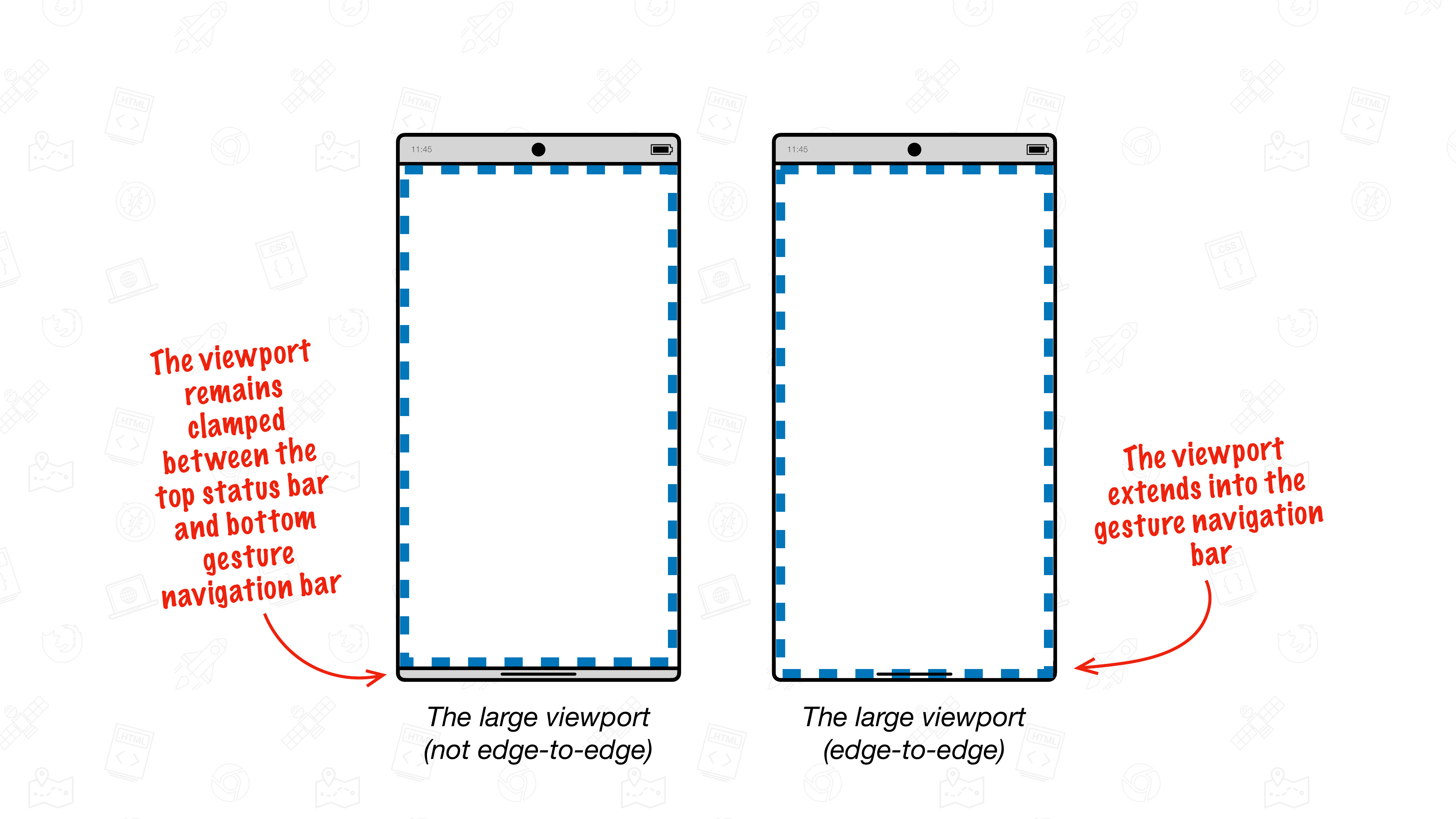
The Internet might look a bit different on Android soon. Last month, Google announced its intent to make Chrome for Android a more immersive experience by hiding the navigation bar background. The promised edge-to-edge update is now rolling out to devices on Chrome version 135, giving you a touch more screen real estate. However, some websites may also be a bit harder to use.
Moving from button to gesture navigation reduced the amount of screen real estate devoted to the system UI, which leaves more room for apps. Google’s move to a “dynamic bottom bar” in Chrome creates even more space for web content. When this feature shows up, the pages you visit will be able to draw all the way to the bottom of the screen instead of stopping at the navigation area, which Google calls the “chin.”
Radio signal broadcasts have their usefulness, but they eventually end (except, perhaps, for SETI). Every so often, we mark the public end of a once-essential wavelength, such as 3G cellular, analog television, or the Canadian time check. One of the most weirdly useful signals will soon end in the United Kingdom, with notable consequences if its transition is not properly handled.
Beginning in the early 1980s, UK homes could have electrical meters installed with a radio teleswitch attached. These switches listened for a 198 kHz signal from the BBC’s Radio 4 Long Wave service, primarily broadcast from the powerful Droitwich Transmitting Station. These switches listened to 30 messages per minute, waiting for a certain 50-bit data packet to arrive that signaled that electricity was now at cheaper, off-peak rates (“tariffs” in the UK).
With this over-the-air notice, homes that bought into Economy 7 or Economy 10 (7 or 10 hours of reduced-price power) could make use of ceramic-stuffed storage heaters that stayed warm into the day, prepare hot water heaters, and otherwise make use of off-peak power. How the electrical companies, BBC, and meters worked together is fascinating in its own right and documented in a recent video by Ringway Manchester (which we first saw at Hackaday).
The never-ending Trump tariff saga continues. Tesla has halted Model S and X sales in China, according to reporting by Bloomberg. These particular vehicles are imported to the country from the US so they are impacted by a 125 percent tariff on goods flowing into China. This was enacted by China in response to President Trump placing a 145 percent tariff on imported goods from the country.
This isn’t a huge deal for Tesla, as the high-end Model S and Model X are some of the company’s least-popular vehicles in the region. It’s still selling off pre-existing inventory, but the models will be unavailable after that. The more affordable Model 3 and Model Y vehicles are actually made at Tesla’s Shanghai Gigafactory, so they aren’t impacted by the tariffs.
Trump’s tariffs on China and the ones the country has put on the US in response could seriously harm the EV industry here in the states. The European Union has been thinking about opening up its doors to more Chinese electric vehicles, which would likely ding American automakers. Many Chinese-made EVs are significantly more budget-friendly than their American-made counterparts.
For instance, the BYD Seagull hatchback would cost just $9,600 in US dollars. Chinese EV manufacturers are also making strides in the world of autonomous driving.
As for the tariffs, who knows what the future will bring. Maybe they’ll go away tomorrow or maybe President Trump will whip out his poison pen and increase them tenfold on a whim. What a nice predictable world we live in.
This article originally appeared on Engadget at https://www.engadget.com/transportation/evs/tesla-halts-model-s-and-x-sales-in-china-due-to-tariffs-185752814.html?src=rss
Ireland’s data privacy regulator is investigating Elon Musk’s X. The country’s Data Protection Commission (DPC) said on Friday (viaReuters) that it’s opening an inquiry into the social platform’s use of European users’ public posts to train its Grok AI chatbot. In this case, Ireland handles EU regulation enforcement because X’s European headquarters are in Dublin.
The DPC said it will probe “the processing of personal data comprised in publicly-accessible posts posted on the ‘X’ social media platform by EU/EEA users.” Under Europe’s General Data Protection Regulation (GDPR) rules, Ireland has the legal muscle to fine X up to four percent of its global revenue.
“The purpose of this inquiry is to determine whether this personal data was lawfully processed in order to train the Grok LLMs,” Ireland’s DPC said.
If this sounds familiar, the DPC took X to court in 2024, seeking an order to stop it from training Grok on EU user data without consent. That followed a platform policy change in July that let the social site use public posts to train its AI chatbot. However, Ireland’s data regulator ended the legal proceedings weeks later, saying the company had agreed to permanently limit its use of EU users’ personal data in Grok. The DPC hasn’t specified why it now believes the company may be violating GDPR rules.
The DPC’s last fine against the company (then known as Twitter) was a €450,000 penalty in 2020 for failing to notify the regulator about a data breach within the 72-hour window.
This article originally appeared on Engadget at https://www.engadget.com/big-tech/irelands-privacy-regulator-is-investigating-xs-use-of-public-data-to-train-grok-182010855.html?src=rss
Another major data breach has compromised the sensitive health records of more than 1.6 million patients—including minors under 18—who received care at Planned Parenthood in more than 30 states. Laboratory Services Cooperative (LSC), which provides lab testing services to reproductive health clinics across the U.S., is notifying individuals who may have been affected by a security incident that took place in October 2024.
Planned Parenthood itself has been the target of cyberattacks in 2021 and 2024.
What happened with LSC?
According to LSC’s filing with the Maine attorney general’s office, hackers accessed its systems on Oct. 27, 2024—the breach was identified the same day—and stole the data of 1.6 million individuals. The information compromised varies from patient to patient but may include the following:
Personal information: Name, address, email, phone number
Medical information: Date(s) of service, diagnoses, treatment, medical record and patient numbers, lab results, provider name, treatment location
Insurance information: Plan name and type, insurance company, member/group ID numbers
Identifiers: Social Security number, driver’s license or ID number, passport number, date of birth, demographic data, student ID number
LSC employee data may also have been leaked, including details about dependents and beneficiaries.
What patients can do if their information was compromised
If you (or someone whose medical bills you pay) have received care at a Planned Parenthood center, you can check to see if clinics in your state are partnered with LSC for lab testing. LSC has a list on its FAQ site, and you can call the company’s service center at 855-549-2662 to verify specific clinic locations.
While you can’t undo the potential damage of a data breach, you can take steps to secure your information and accounts, like keeping an eye out for suspicious activity and reviewing your credit report regularly (you can request a free copy every week from each of the three major credit bureaus). Freeze your credit, place a fraud alert, and lock down your Social Security number to protect against identity theft. LSC’s website about the breach has information about reporting identity theft to federal and state agencies.
LSC is also offering 12–24 months of credit monitoring to affected individuals via CyEx Medical Shield Complete. To register, call the customer support number listed above between 9 a.m. and 9 p.m. ET Monday to Friday to request an activation code, which you’ll need to enroll online. Affected minors and those without an SSN or credit history are eligible for a separate service called Minor Defense, which has a similar enrollment process. The deadline to sign up is July 14, 2025.
With the recent confirmation of Mark Meador as Federal Trade Commissioner, the Republicans now have a 3-0 majority at the FTC, giving President Donald Trump broad control over what was once an aggressive business regulator under former FTC chair Lina Khan.
The vote fell along party lines, with all Senate Democrats voting against confirming Meador. Under normal circumstances three Republican members at the FTC is expected. Whichever party the president represents typically holds three seats, while the other party holds two. What makes the new Republican majority unusual is that Trump fired the Democrat Commissioners Alvaro Bedoya and Rebecca Kelly Slaughter in March, something that’s not supposed to happen without “good cause.”
The FTC, like the Federal Communications Commission (FCC), is technically part of the executive branch, but exists independently of the rest of the government, with the current president adding new members as terms end or in the rare case there’s good cause to remove a commissioner, like if they’re found guilty of malfeasance or neglecting their duties.
An executive order Trump signed in February 2025 sought to exert more control over these independent organizations in the name of “accountability.” That was the primary justification for removing Bedoya and Slaughter, both of which are fighting their termination in court.
Given the actions Biden’s FTC took against corporate America, like suing John Deere over unfair practices and leading antitrust investigations into Meta, Amazon, Google and Apple, it makes sense business-friendly Republicans would prefer less pushback from Democrats. That doesn’t make anything that’s happening legal, though.
This article originally appeared on Engadget at https://www.engadget.com/big-tech/trump-now-has-full-control-of-the-ftc-180816016.html?src=rss