Toothpaste Widely Contaminated With Lead and Other Metals, US Research Finds

Bruce66423 shares a report: Toothpaste can be widely contaminated with lead and other dangerous heavy metals, new research shows.

Most of 51 brands of toothpaste tested for lead contained the dangerous heavy metal, including those for children or those marketed as green. The testing, conducted by Lead Safe Mama, also found concerning levels of highly toxic arsenic, mercury and cadmium in many brands.

About 90% of toothpastes contained lead, 65% contained arsenic, just under half contained mercury, and one-third had cadmium. Many brands contain a number of the toxins. The highest levels detected violated the state of Washington’s limits, but not federal limits. The thresholds have been roundly criticized by public health advocates for not being protective — no level of exposure to lead is safe, the federal government has found. Bruce66423 asks: “As ever the question that should be asked is: ‘What level is worth worrying about and why?'”


Read more of this story at Slashdot.

Regrets: Actors who sold AI avatars stuck in Black Mirror-esque dystopia

In a Black Mirror-esque turn, some cash-strapped actors who didn’t fully understand the consequences are regretting selling their likenesses to be used in AI videos that they consider embarrassing, damaging, or harmful, AFP reported.

Among them is a 29-year-old New York-based actor, Adam Coy, who licensed rights to his face and voice to a company called MCM for one year for $1,000 without thinking, “am I crossing a line by doing this?” His partner’s mother later found videos where he appeared as a doomsayer predicting disasters, he told the AFP.

South Korean actor Simon Lee’s AI likeness was similarly used to spook naïve Internet users but in a potentially more harmful way. He told the AFP that he was “stunned” to find his AI avatar promoting “questionable health cures on TikTok and Instagram,” feeling ashamed to have his face linked to obvious scams.

Read full article

Comments

Anti-Spying Phone Pouches Offered To EU Lawmakers For Trip To Hungary

An anonymous reader shares a report: Members of the European Parliament were offered special pouches to protect digital devices from espionage and tampering for a visit to Hungary this week, a sign of rising spying fears within Europe.

Five lawmakers from the Parliament’s civil liberties committee traveled to Hungary on Monday for a three-day visit to inspect the EU member country’s progress on democracy, the rule of law and fundamental rights.

One lawmaker on the trip confirmed to POLITICO that the Parliament officials joining the delegation were offered Faraday bags — special metal-lined pouches that block electromagnetic signals — by the Parliament’s services and were also advised to be cautious about using public Wi-Fi networks or charging facilities.


Read more of this story at Slashdot.

Five Ways to Keep Your Neighbors From Looking Down Into Your Yard

We may earn a commission from links on this page.

We like to think that our home is also our fortress of privacy: Once you walk through your front door, you’re free from prying eyes (or lenses) and can relax. There are a ton of ways to ensure your privacy inside, starting with items like window films, shades, and curtains. And if you want to protect your outdoor space from neighbors peering over the fence, you have several easy options.

Most of those options, however, assume your neighbors are on the same level as you. If the neighboring homes are located above yours, you’ll need to re-think your privacy plan. This is especially true if your neighbors have outdoor areas that offer a perfect view of your backyard. If you get the sense you’re being watched every time you step outside your house, here are a few ways you can regain some privacy.

Plant trees

The simplest long-term option is to plant trees—specifically canopy trees, whose branches stretch out and form a living roof over the area below. You’ll want to consult with an arborist or other landscaping professional to identify canopy trees that will thrive in your region and climate. You’ll also want to get some advice on spacing out the trees so you eventually get the lush, thick “roof” effect that will offer the privacy you’re looking for (not to mention cool down the space and block out the sun’s damaging rays).

Note the word “eventually,” however: Trees don’t just pop up in a matter of days. Maple trees, for example, are excellent canopy trees, but can take several decades to reach their full height and size. But if you’re going to be in the house (and using the yard) for a long time to come, investing in canopy trees will solve your problem and beautify the space.

Install shade sails

A shade sail is typically a large triangular or rectangular sheet of fabric that you attach to posts or existing structures in your yard (such as a fence). They let air and rain through, but block out the sun, creating shade wherever you want it. That means they can be used for vertical privacy, too—one or more shade sails installed in your yard will block someone’s view of your yard from above.

Shade sails are relatively affordable and easily installed. You can buy a shade sail kit that comes with everything you need, but it’s easy to DIY by sinking a few posts or attaching some hooks to your fence or exterior walls. They can also be quickly removed if your circumstances change.

Add a covered patio

If you have a defined patio or deck space where you spend most of your time being observed by your neighbors (or imagining you are), you can cover it pretty easily using several options:

Build a pergola by the fence line

Speaking of pergolas, if your neighbor’s house looms over your yard, you can enhance your privacy by building a pergola near your fence line where their house is located. The angle will work in your favor; even a modest pergola can block much of your neighbor’s view if they’re not looking straight down into your yard. And if you have multiple neighbors up there, you can add a strong of pergolas along the fence line to block the angle everywhere.

You’ll have to check local regulations (or your homeowners association) before building. Some areas will require a pergola to be a set distance from a boundary fence (e.g., 16 feet), while others might have a calculation based on the size of the property and the height of your fence.

Invest in tall fencing

Finally, privacy fencing isn’t your best option for elevated neighbors, but if it is your only option for some reason, go big and install an extremely tall privacy fence. You’ll need to check local regulations to see if there are legal limits to how tall your fencing can be and then build or buy a fence at the maximum height (you can buy pre-made 12-foot and even 16-foot tall privacy fencing, though you’ll likely pay a steep price). As with pergolas near the perimeter, a tall enough fence can block your neighbors’ viewing angle. Another option is to grow a “living fence” using hedges or other plants (such as nigra arborvitae, which can reach 30 feet in height). You’ll have to wait for your plants to mature, but this can be a prettier option than a looming fence.

“Lab leak” marketing page replaces federal hub for COVID resources

After obliterating the federal office on long COVID and clawing back billions in COVID funding from state health departments, the Trump administration has now entirely erased the online hub for federal COVID-19 resources. In its place now stands a site promoting the unproven idea that the pandemic virus SARS-CoV-2 was generated in and leaked from a lab in China, sparking the global health crisis.

Navigating to COVID.gov brings up a slick site with rich content that lays out arguments and allegations supporting a lab-based origin of the pandemic and subsequent cover-up by US health officials and Democrats.

Previously, the site provided unembellished quick references to COVID-19 resources, including links to information on vaccines, testing, treatments, and long COVID. It also provided a link to resources for addressing COVID-19 vaccine misconceptions and confronting misinformation. That all appears to be gone now, though some of the same information still remains on a separate COVID-19 page hosted by the Centers for Disease Control and Prevention.

Read full article

Comments

Rover finds hints of an ancient Martian carbon cycle

Mars has not always been a seemingly lifeless red desert. We have evidence that billions of years ago it had a warm, habitable climate with liquid water in lakes and flowing rivers, which is somewhat confusing, given that Mars is much farther from the Sun than the Earth and that the Sun was much less bright back then. “In order for Mars to be warm enough to host liquid water, there must have been a lot of carbon dioxide in the atmosphere,” says Benjamin Tutolo, a researcher at the University of Calgary. “The question we’ve been asking for at least 30 years was where the record of all this carbon is.”

Tutolo led a new study of rock samples collected by the Curiosity rover that might have answered this question.

The tallest sediment stack

The mystery of Mars’ missing carbon stems from two seemingly conflicting results. On the one hand, we have already found dried riverbeds and lakes on the surface of Mars, so we know there must have been liquid water on its surface at some point. To account for the presence of this water, every Martian climate model we have run indicates that huge amounts of atmospheric carbon were needed to provide a sufficient greenhouse effect to keep the surface temperature above freezing. But the data we were getting from satellite observations of Mars found much less carbon in the Martian soil than those climate models would suggest. “So, either the models were incorrect—and there’s no good reason to believe that—or there really was lots of carbon in the Martian atmosphere,” Tutolo says.

Read full article

Comments

GoDaddy Registry Error Knocked Zoom Offline for Nearly Two Hours

A communication error between GoDaddy Registry and Markmonitor took Zoom’s services offline for almost two hours on Wednesday when GoDaddy mistakenly blocked the zoom.us domain. The outage affected all services dependent on the zoom.us domain.

GoDaddy’s block prevented top-level domain nameservers from maintaining proper DNS records for zoom.us. This created a classic domain resolution failure — when users attempted to connect to any zoom.us address, their requests couldn’t be routed to Zoom’s servers because the domain effectively disappeared from the internet’s addressing system.

Video meetings abruptly terminated mid-session with browser errors indicating the domain couldn’t be found. Zoom’s status page (status.zoom.us) went offline, hampering communication efforts. Even Zoom’s main website at zoom.com failed as the content delivery network couldn’t reach backend services hosted on zoom.us servers. Customer support capabilities collapsed when account managers using Zoom’s VoIP phones lost connectivity.

Resolution required coordinated effort between Zoom, Markmonitor, and GoDaddy to identify and remove the block. After service restoration, users needed to manually flush their DNS caches using command line instructions (including the sudo dscacheutil -flushcache; sudo killall -HUP mDNSResponder command for Mac users).


Read more of this story at Slashdot.

Women rely partly on smell when choosing friends

There are so many factors that can influence how we perceive others, which in turn can determine the people we choose as platonic friends or romantic mates. We certainly make snap judgments based on physical appearance, but scent can have a powerful influence, too. According to a new paper published in the journal Scientific Reports, two heterosexual women meeting for the first time rely partly on scent to judge whether they want to be friends with each other, deciding within minutes—practically at first whiff—whether there is friendship potential.

Social olfactory research largely stems from evolutionary psychology, specifically the work of Swiss biologist Claus Wedekind in 1995. Subtle chemical signals from pheromones are known to play a role in attraction in many species. Scientists had already found evidence in fish and mice that the major histocompatibility complex (MHC) genes, which are critical for immune system function (and useful in determining tissue compatibility for transplants, for instance)—showed a marked preference for sexual partners with different MHC genes, perhaps as a way of keeping the gene pool well-mixed and protecting against inbreeding.

Wedekind introduced the so-called “sweaty T-shirt” method to study the possible role of MHC in mate preferences in humans. Male participants wore the same T-shirt for two days, which were then placed in identical boxes. Women participants then smelled each shirt and indicated which ones they found most sexually attractive. Wedekind found that the women overwhelmingly preferred the T-shirt smells of men who had the most dissimilar MHCs to their own. The only caveat: The preference was reversed in women who were taking oral birth control.

Read full article

Comments

Tesla accused of messing with odometers to get out of repair bills

Tesla is facing a proposed class action suit over allegations that it has been speeding up odometers so its vehicles will fall out of warranty faster, according to a report by Reuters. This would make it easier for the company to get out of paying for repairs.

Nyree Hinton, the plaintiff in the case, alleges that Tesla odometer readers are designed to change with energy consumption, driver behavior and mysterious predictive algorithms, and not actual mileage driven. He said that the odometer on the 2020 Model Y he bought in December 2022 had 36,772 miles on the clock at the time of purchase.

Hinton alleges that the odometer went up by 72 miles each day, when he only drove around 20. He made comparisons to his other vehicles and concluded that the odometer ran, at the minimum, 15 percent fast. This caused his 50,000-mile basic warranty to expire ahead of schedule, which forced him to pay a $10,000 suspension repair bill out of pocket.

“By tying warranty limits and lease mileage caps to inflated ‘odometer’ readings, Tesla increases repair revenue, reduces warranty obligations, and compels consumers to purchase extended warranties prematurely,” the complaint said.

Hinton is seeking compensatory damage for himself, but also punitive damages for all Tesla drivers in California. This encompasses over one million vehicles, according to court papers. Tesla has denied all allegations in the lawsuit. EV forums and related subreddits, however, are filled with odometer complaints involving the company.

Tesla owners are seeing inflated odometer readings 20-30% higher than driving the same route with a different vehicle or compared to Google Maps trip distance.

Hey @NHTSAgov you up? pic.twitter.com/Gb2LiBfZge

— Mike Rundle (@flyosity) April 22, 2024

Of course, this isn’t the first time Tesla has been charged with fibbing about mileage data. The automaker has faced litigation that accused it of inflating vehicle driving ranges. It has also been accused of forming a secret “Diversion Team” that would cancel range-related service appointments.

This article originally appeared on Engadget at https://www.engadget.com/transportation/evs/tesla-accused-of-messing-with-odometers-to-get-out-of-repair-bills-165625372.html?src=rss

EU regulators reportedly delayed Apple and Meta penalty announcements ahead of US trade talks

The European Commission (EC) reportedly delayed regulatory penalty announcements against Apple and Meta this week as it accelerates its push for a trade deal with the US. On Friday, the Wall Street Journal said the move led to concern from European Parliament lawmakers that political factors are influencing the body’s regulatory decisions.

The EU is said to have initially planned to announce cease-and-desist orders against Apple and Meta on Tuesday and reportedly told at least one of the companies about the timing in advance. The WSJ says the decision to postpone the announcement came shortly before EU Trade Commissioner Maroš Šefčovič met with US officials in Washington on Monday, the official’s first in-person talks with the US since President Donald Trump’s 90-day tariff pause.

On Tuesday, an EC spokesperson said technical work had been completed on the cases, but no dates had been announced. “We’re currently working on the adoption of final decisions in the short term,” the spokesman reportedly said.

WASHINGTON, DC - JANUARY 20: Apple CEO Tim Cook (C) sits next to Donald Trump Jr at the inaugural luncheon on January 20, 2025 in Washington, DC. Donald Trump takes office for his second term as the 47th president of the United States. (Photo by Kevin Dietsch/Getty Images)
Kevin Dietsch via Getty Images

The European Commission’s penalties stem from the Digital Markets Act (DMA), which aims to level the playing field for smaller companies competing with Big Tech behemoths. The EC probed Meta for its scheme that lets users opt out of personalized ads, for a price. Meanwhile, Apple’s case relates to the company’s rules that limit developers’ ability to steer consumers to transactions outside the App Store. The EC opened the probes in March 2024.

Under the DMA, companies could be fined up to 10 percent of their global annual revenue. However, the WSJ reports that the financial penalties would be much lower than that, and the cease-and-desist orders would be much more impactful.

Earlier this month, EU antitrust chief Teresa Ribera told lawmakers that the EC wouldn’t meet her March deadline to issue a decision on Apple and Meta. That statement was on April 8, a day before Trump officials announced a pause on the “Liberation Day” tariffs.

The WSJ reports that the regulatory decisions are still expected to advance, but it isn’t clear how long their announcement will be delayed. The European Commission has previously claimed it would fight to defend its “regulatory autonomy” despite pressure from Trump and his Big Tech backers to neuter the bloc’s restrictions on American businesses.

This article originally appeared on Engadget at https://www.engadget.com/big-tech/eu-regulators-reportedly-delayed-apple-and-meta-penalty-announcements-ahead-of-us-trade-talks-164644661.html?src=rss

My Favorite Amazon Deal of the Day: The Samsung Galaxy Watch 7

We may earn a commission from links on this page. Deal pricing and availability subject to change after time of publication.

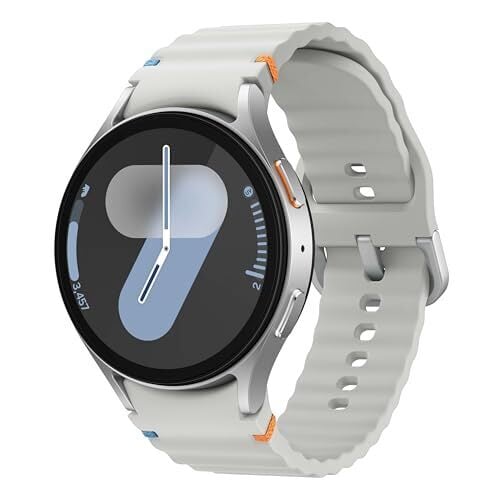
Apple users have Apple Watches, but it’s not so simple for Android users. Depending if you have a Pixel or a Samsung phone, there’s a smartwatch that will work seamlessly better with your phone. If you have a Samsung, there’s no doubt that a Samsung Galaxy Watch is the option. For most people, that watch is the Samsung Galaxy Watch 7 (and yes, it works with any Android phone). Right now, you can get it for $289.99 (originally $379.99), the lowest price it has been according to price tracking tools.

The Samsung Galaxy Watch 7 came out in 2024 to an “excellent” review from PCMag for its incredibly accurate heart rate measurement, detailed sleep monitoring data tracking, AI health insights, and overall smooth user experience.

You get a Super AMOLED screen of 44 mm or 40mm, the latter running for $259.99 (originally $349.99) right now. This LTE version means you’re not dependent on wifi to use the internet and can receive calls or listen to music without depending on your phone.

The main downside you’ll see with this smartwatch (and most Galaxy watches) is the short battery life. It lasts about 22 hours, depending on use, according to PCMag’s tests (it can last up to 28 hours if you don’t use the GPS). This means you’ll likely need to charge it overnight or during the day, making the sleep tracking hard to use. However, the watch does charge pretty quickly, reaching max battery in 88 minutes.

If you care about fitness and sleep tracking, it’s hard to beat the Wear OS, especially at its current price. You can have metrics from its Heart Rate Monitor, Blood Oxygen Monitor, Pedometer, Barometer, Temperature Sensor, Gyroscope, and others, and they’re accurate. However, if you can’t get over the short battery, consider the ONEPLUS Watch 2 for $245.34.

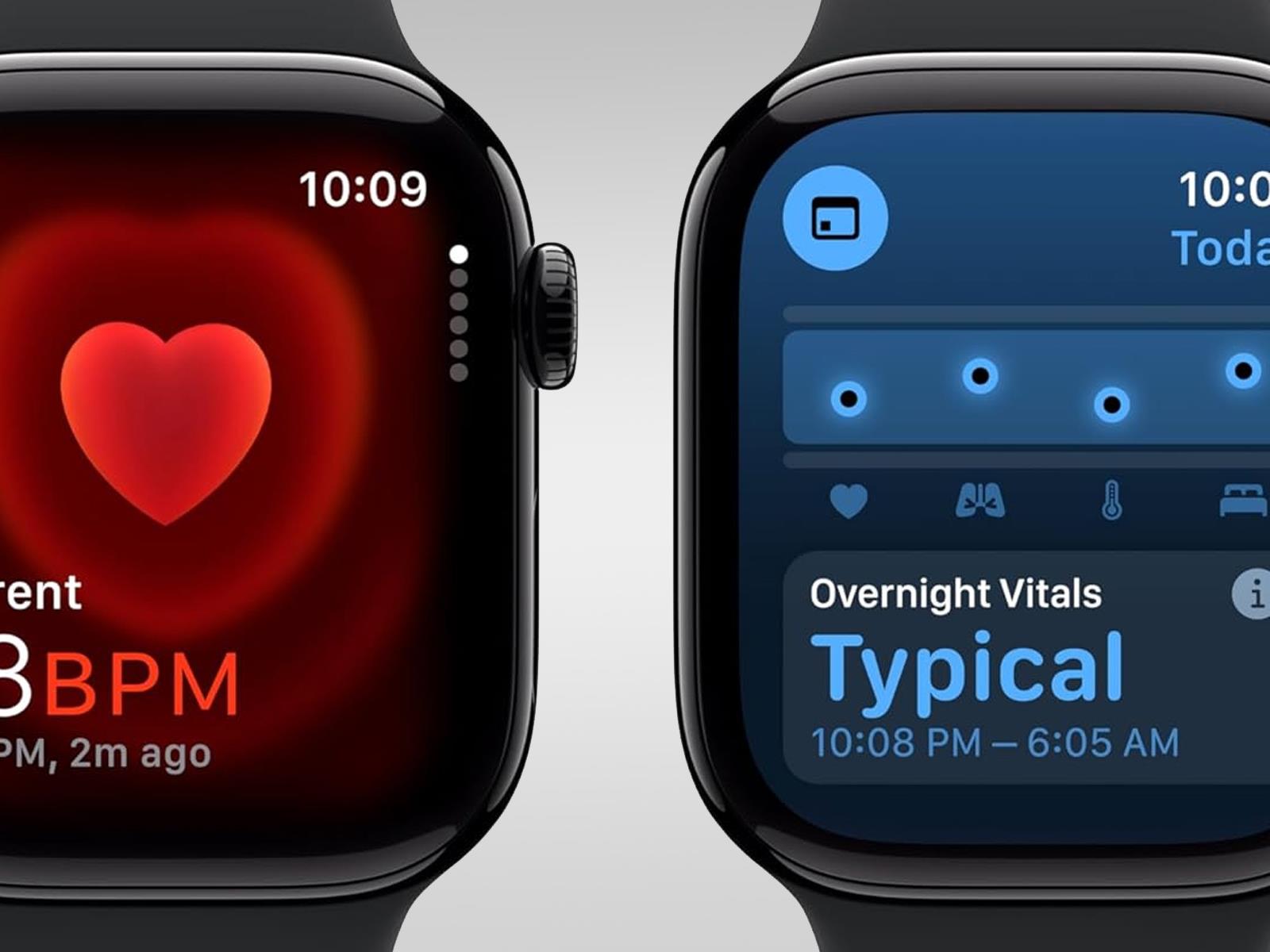
Score An Apple Watch 10 For Up To $100 Off With These Timely Deals

Score An Apple Watch 10 For Up To $100 Off With These Timely Deals
As a father, I can confirm that whenever a kid asks, ‘What time is it?’, the correct response is ‘Time to get a new watch!’. Look, I don’t make the rules, I’m just citing the “Dad Joke Manual” that is mandatory reading for dads when they have a kid. And if your kid is asking the same question, you can surprise them this Easter with not just

Hennessey Venom F5 Evolution Flexes 2031 HP Of Ripped Petrol Power

Hennessey Venom F5 Evolution Flexes 2031 HP Of Ripped Petrol Power
Texas-based specialty automaker and tuner Hennessey has just mic-dropped the competition and yelled ‘Bite me!’ to EVs with its beastly, gas-powered Venom F5 Evolution. Thanks to a 6.6-liter twin-turbo fossil-suckin’ V8 motor, the F5 Evolution produces 2,031 horses, thus making it the most powerful ICE production car in history. And don’t worry

GeForce RTX 5090 With An Old School Blower-Style Cooler Breaks Cover

GeForce RTX 5090 With An Old School Blower-Style Cooler Breaks Cover
The GeForce RTX 5090 has been rare to spot at retail (leading to things like NVIDIA’s Priority Access Program), which makes the sighting of a version with an old school blower-style cooler design even more of a rarity. If you asked any gamer if they’d like a GPU with a noisier blower-style cooler and no aesthetics, they’d probably say no.

Genetic Data Under Threat? Scientists Highlight Alarming DNA Hacking Threat

Genetic Data Under Threat? Scientists Highlight Alarming DNA Hacking Threat
In a recent study, scientists sounded the alarm on the vulnerability of DNA data, particularly those obtained through next-generation DNA sequencing (NGS), against nefarious hackers. While no known bio-data breach has occurred in the real world yet, the study set out to identify new and emerging hacking methods that can compromise personal

Nintendo Switch 2 Updated US Preorder Date And Final Pricing Revealed

Nintendo Switch 2 Updated US Preorder Date And Final Pricing Revealed
The last few weeks have been more chaotic than Nintendo might have liked after fully taking the wraps off the Switch 2. The company was forced to delay the preorder date and there were doubts it would be able to stick to the price point it initially announced thanks to the fluid situation around tariffs. Gamers can rest easy now, as Nintendo

HP Settles PC And Keyboard False Advertising Suit For A Slap On The Wrist

HP Settles PC And Keyboard False Advertising Suit For A Slap On The Wrist
When is a sale price not really a sale price? That’s the $4 million dollar question that HP doesn’t have to answer, but it did agree to pay that amount to settle a class action lawsuit accusing the firm of “false advertising” and “misleading” customers on its website (entirely separate from any printer-related lawsuits). The settlement amount

Q-CTRL Unveils Jam-Proof Positioning System That’s 50x More Accurate Than GPS

schwit1 shares a report from Interesting Engineering: Australia’s Q-CTRL developed a new system called “Ironstone Opal,” which uses quantum sensors to navigate without GPS. It’s passive (meaning it doesn’t emit signals that could be detected or jammed) and highly accurate. Instead of relying on satellites, Q-CTRL’s system can read the Earth’s magnetic field, which varies slightly depending on location (like a magnetic fingerprint or map). The system can determine where you are by measuring these variations using magnetometers. This is made possible using the company’s proprietary quantum sensors, which are incredibly sensitive and stable. The system also comes with special AI-based software, which filters out interference like vibrations or electromagnetic noise (what they call “software ruggedization”). The system is small and compact and could, in theory, be installed in drones or cars and, of course, aircraft.

Q-CTRL ran some live tests on the ground and in the air to validate the technology. As anticipated, they found that it could operate completely independently of GPS. Moreover, the company reports that its quantum GPS was 50 times more accurate than traditional GPS backup systems (like Inertial Navigation Systems or INS). The systems also delivered navigation precision on par with hitting a bullseye from 1,000 yards. Even when the equipment was mounted inside a plane, where interference is much worse, it outperformed existing systems by at least 11x. This is the first time quantum technology has been shown to outperform existing tech in a real-world commercial or military application, a milestone referred to as achieving “quantum advantage.”


Read more of this story at Slashdot.