EU Says It Will Enforce Digital Rules Irrespective of CEO and Location

The European Union is determined to enforce its full digital rule book no matter who is in charge of companies such as X, Meta, Apple and Tiktok or where they are based, Commission President Ursula von der Leyen told Politico. From a report: “That’s why we’ve opened cases against TikTok, X, Apple, Meta just to name a few. We apply the rules fairly, proportionally, and without bias. We don’t care where a company’s from and who’s running it. We care about protecting people,” Politico quoted von der Leyen as saying on Sunday. The EU’s Digital Markets Act has been strongly criticised by the administration of U.S. President Donald Trump.


Read more of this story at Slashdot.

White House plagued by Signal controversy as Pentagon in “full-blown meltdown”

It’s possible that the White House may be looking to replace Defense Secretary Pete Hegseth after critics warned that a pair of controversial Signal chats risked compromising US national security.

In March, it was revealed that Hegseth accidentally texted secret bombing plans in a Signal chat that included a reporter, raising alarms about his handling of sensitive military information. And then this weekend, The New York Times revealed that he similarly shared the attack plans, just minutes after learning of them, in a personal Signal chat that included his wife and brother.

That second revelation sparked a “full-blown meltdown” at the Pentagon, The Guardian reported, apparently prompting the Trump administration to begin “the process of looking for a new secretary of defense,” a US official granted anonymity told NPR Monday.

Read full article

Comments

Andor season 2 review: A Star Wars miracle, an ode to rebellion

We know Cassian Andor is doomed. 2016’s Rogue One makes clear he will meet an untimely death in a massive explosion. That sense of inevitable destruction lingered in the background of the first season of Andor, the prequel series that follows his journey from a low-rent criminal to a rebel spy. But his fate is even more crushing in Andor’s second (and final) season, where the cost of fighting against the seemingly all-powerful Empire chips away at his soul.

“Rebellions are built on hope,” was an iconic line from Rogue One, first uttered by Andor and then repeated triumphantly by that film’s lead, Jyn Erso. In the streaming series’ second season, we see how that idea is formed and inspires many people. Rebellions aren’t just about massive space battles, and Death Star trench runs. They don’t rely on an untrained kid hopping into a spaceship and scoring a major victory thanks to the Force and destiny. Rebellions start with small decisions by normal people, and through collective action they evolve into something powerful enough to take down empires. Read into that what you will.

Bix Caleen (Adria Arjona) in Lucasfilm's ANDOR Season 2, exclusively on Disney+. ©2025 Lucasfilm Ltd. & TM. All Rights Reserved.
Lucasfilm Ltd™

Andor always seemed like an odd series for Disney, which spent the last decade milking the Star Wars franchise for all it’s worth. Created by Tony Gilroy, the Bourne Identity screenwriter who reportedly swooped in to save Rogue One at the last minute, Andor has no lightsabers and minimal references to the Force. While it’s filling in the gaps for a storyline that leads to A New Hope, the series also feels refreshingly free of the stifling mythology that has plagued shows like The Mandalorian and Ahsoka (and Boba Fett, and Obi-Wan Kenobi). Andor takes its time, building up its characters and laying out complex ideas, instead of rushing between action set pieces. It’s Star Wars for grownups, something I never thought we’d see for a franchise so devoted to kids.

In season one, we’re introduced to Andor as he’s searching for his sister, who disappeared years ago. After being targeted by two local police officers, he ends up killing them both and is forced to hide out in his home planet of Ferrix. There he meets up with his friend Bix (Adria Arjona), who is working for Luthen Rael, a mysterious man who has devoted his life to taking down the Empire. It doesn’t take long before Luthen sees potential in Andor, and begins to court him for his rebel cause.

(L-R) Cassian Andor (Diego Luna) and K-2SO (Alan Tudyk) in Lucasfilm's ANDOR Season 2, exclusively on Disney+. Photo courtesy of Lucasfilm. ©2025 Lucasfilm Ltd. & TM. All Rights Reserved.
Lucasfilm Ltd™

Minor spoilers ahead for Andor season two.

Taking place over the course of a few years (and counting down to the Battle of Yavin, where the Death Star was destroyed in A New Hope), season two follows Andor and Bix as they delve further into the rebellion. Bix is still recovering from the events of the first season, where she was imprisoned and tortured. And Andor splits his time caring for Bix and going on spy missions to help rebels on other planets.

I won’t say too much about what happens in the season specifically, but in general it builds on everything that made Gilroy’s first stab such a refreshing Star Wars entry. We see how the heartless machinations of the Empire affect real people, and how it can push entire populations to fight against tyranny. Small moments, like a hotel bellhop revealing his true thoughts about the Empire to Andor, can lead to more profound acts of rebellion.

(Second from Left - R) Dedra Meero (Denise Gough) and Grymish (Kurt Egyiawan) in Lucasfilm's ANDOR Season 2, exclusively on Disney+. ©2025 Lucasfilm Ltd. & TM. All Rights Reserved.
Lucasfilm Ltd™

Star Wars has always been about the battle between good and evil. But Andor breaks down what that means for ordinary people, not hyper-powerful space wizards with laser swords. An average citizen could be killed on the spot if they decide to speak up against the Empire. Or, with self-preservation in mind, they could keep their heads down or even volunteer to be a cog in the fascist machine. Not everyone can be Han Solo (though Andor himself is a bit close). But when living under an authoritarian regime, there comes a time for everyone to draw a line. Resist, or lose your soul.

Andor also spends plenty of time on Senator Mon Mothma (Genevieve O’Reilly) before she eventually becomes the leader of the Rebel Alliance. We see her dealing with the difficulty of funding Luthen’s rebel activities, especially as they lead to explosive outcomes. But after the Empire massacres thousands of civilians on the planet Ghorman, an event that’s been referenced in recent Star Wars books, Mothma and other rebel leaders conclude that violent rebellion is the only way to fight back against the fascist Empire.

(L-R) Perrin Fertha (Allistair Mackenzie), Mon Mothma (Genevieve O'Reilly) and Luthen Rael (Stellan Skarsgård) in Lucasfilm's ANDOR Season 2, exclusively on Disney+. Photo courtesy of Lucasfilm. ©2025 Lucasfilm Ltd. & TM. All Rights Reserved.
Lucasfilm Ltd™

“The Empire has been choking us so slowly, we’re starting not to notice. The time has come to force their hand,” Luthen tells Senator Mothma in Andor’s first season. When she notes that people will suffer, he replies “That’s the plan. You’re not angry at me. I’m just saying out loud what you already know. There will be no rules going forward. If you’re not willing to risk your conscience, then surrender and be done with it.”

Even though this is Andor’s final season, I have a feeling this series will live on in viewer’s minds far longer than whatever the hell happened in The Book of Boba Fett. It forces you to think about how the Empire directly affects everyone, from civilians on remote planets to the bureaucratic stooges devoting their lives to fascism. In many ways, it’s practically a blueprint for rebellion. And not to put too much on a Disney TV show, but that feels like something we could use right now.

This article originally appeared on Engadget at https://www.engadget.com/entertainment/tv-movies/andor-season-2-review-a-star-wars-miracle-an-ode-to-rebellion-190057159.html?src=rss

The 15 Best Podcasts About Liars and Scammers

True crime podcasts have been in the zeitgeist for quite some time, but those focusing on scams seem to get less mainstream attention than their bloody, murder-heavy counterparts.

I’ve gathered recommendations for the best, most fascinating scam podcasts on the digital airwaves right now. Catch up, follow along, then pick your jaw off the floor as you learn the shocking ways some truly manipulative people were able to take advantage of the most vulnerable, robbing them of their money, friendship, and trust. From mysterious boys emerging from the wild to con a whole town, to an entrepreneur bilking investors out of millions of dollars for bunk science, each of these true life tales is dripping with lies and deceit.


The Con: Kaitlyn’s Baby

Key art for 'The Con: Kaitlyn's Baby'

Credit: ‘The Con: Kaitlyn’s Baby’

The Con: Kaitlyn’s Baby is a six-part true crime series looking into the case of Kaitlyn Braun, a calculating Canadian woman who pretended to have a series of traumatic events (like pregnancy loss and sexual assault) in order to trick doulas to care for her.

Host Sarah Treleaven tells us the story, focusing on the emotional impact it had on Kaitlyn’s victims to be taken advantage of for supporting others, something that requires such physical and emotional connection and vulnerability. Your eyes will widen, your heart rate will quicken—I even got a little terrified. The story of Kaitlyn’s schemes can start to feel like a horror movie.  


Sea of Lies

'Sea of Lies' podcast art

Credit: ‘Sea of Lies’

From the same host of Wild Boys (one of my favorite shows on this list!) comes Sea of Lies, a show about the prolific swindler Albert Walker, whose list of swindles includes stealing identities, defrauding people of millions of dollars, and murder. It starts with a huge splash (more specifically, a dead body in an ocean) and ends with Walker getting caught thanks to a Rolex watch, taking you on this zig-zagging path that will keep you guessing the whole time. The storytelling is excellent; you won’t be able to get to the next episode fast enough. 


Believable: The Coco Berthmann Story

'Believable: The Coco Berthmann Story' podcast art

Credit: ‘Believable: The Coco Berthmann Story’

Believable: The Coco Berthmann Story introduces us to the life and crimes of Coco Berthmann, who gained internet fame by sharing her harrowing account of surviving child sex trafficking in Germany. When she was arrested for fraudulently raising funds under the guise of a false cancer diagnosis (someone got carried away!) people started wondering if they could believe her at all. This is a complex story well told with meticulous original reporting from Pulitzer Prize-winning journalist Sara Ganim and award-winning showrunner Karen Given, who map out exactly which of Coco’s stories to believe and which to distrust—and why, at the root of everything, Coco lied in the first place.


Believe In Magic

'Believe in Magic' podcast art

Credit: ‘Believe in Magic’

For Believe in Magic, Jamie Bartlett (who also hosts The Missing Cryptoqueen) tells the story of Megan Bhari, a 16-year-old who founded a charity in 2012 to grant wishes to seriously ill children. Things really blew up for Megan when the band One Direction hosted a charity ball and Louis Tomlinson donated money from his own pockets. Eventually people started to notice contradictions in her illness story and the lack of transparency in how donation money was being used. In the end it’s an emotional, fascinating, and well-balanced story about Munchausen syndrome by proxy and what drives people to scams with fake altruism. 


Scamanda

'Scamanda' podcast art

Credit: ‘Scamanda’

Amanda Riley, aka Scamanda, is a California woman who faked a long battle with Hodgkin’s lymphoma and used her blog and social media to solicit more than $100,000 in donations over almost 10 years.

Amanda claimed to undergo chemotherapy, radiation, and even a bone marrow transplant, which brought in sympathy and financial support from her church and community, who saw Amanda as a source of inspiration. It all came to a head when investigative producer Nancy Moscatiello got an anonymous tip about Amanda’s blog, prompting an eight-year investigation that ultimately led to Amanda’s five-year prison sentence. Amanda’s blog posts, read by actor Kendall Horn in the podcast, give us an idea of what she was really thinking.  


Scam Factory

'Scam Factory' podcast art

Credit: ‘Scam Factory’

Scam Factory tells the story of a network of people tangled up in a compound in Myanmar that lures people inside with promises of high salaries and then enslaves them making it nearly impossible to get out. When a guy, they call him “Max,” gets suckered in, his sister Charlie needs to do some dangerous and unethical things to try to get him out—Charlie must play the game and become part of the scam factory herself, luring strangers into the factory for the sake of her family. If you’ve ever heard a story about toxic, cult-y situations and wondered, “no really, how does this happen to someone?” this show explains it perfectly. 


The Binge Cases: Baby Broker

'The Binge Cases' podcast art

Credit: ‘The Binge Cases’

If you’re among one of the many people swept away by the viral story of Kaitlyn’s Baby, you might like the Baby Broker series of The Binge Cases, which tells the story of Tara Lee, a woman who told more than 100 couples across the country that she could help them adopt a baby but was lying the whole time. Peter McDonnell spoke with some of the couples who were impacted, which are all fascinating and often cross paths.


Wild Boys

'Wild Boys' podcast art

Credit: ‘Wild Boys’

It’s the summer of 2003 in the small Canadian town of Vernon, and two teen boys emerge from the wilderness. They claimed to have been raised in the British Columbia wilderness and grown up without exposure to society—no TV, no school, no registered IDs. Journalist Sam Mullins grew up in Vernon and can remember the impact the boys made and how the Vernon community embraced them with open arms, housing them, feeding them, and checking in on them.

But things weren’t adding up—one of the boys was extremely thin and would only eat fruit, and they both had huge gaps in their conflicting stories. Despite all the red flags, everyone was surprised to learn that nothing the wild boys said was true. Sam tells the story of the con that stunned Vernonites in Wild Boys and explores why two young kids would go to such great lengths to run away to establish an incredible identity in another country.


Maintenance Phase

'Maintenance Phase' podcast art

Credit: ‘Maintenance Phase’

Maintenance Phase doesn’t appear, at first glance, to be a show about scams. In each episode, Aubrey Gordon and Michael Hobbes (formerly of You’re Wrong About) examine fads in the wellness and weight loss industry with a fine-toothed comb, and help us splice fact from fiction. The things they cover—fat camps, the BMI, Olestra, and the Keto Diet—do usually end up, upon closer inspection, to be riddled with scams, from the unethical way products are marketed to the bunk science used to support their claims.

Aubry and Michael deliver disturbing insight into the ways we’re all being tricked, but their spark and sense of humor makes the show a total blast to listen to. They are experts at getting angry—and it feels good to get angry along with them.


The Missing Cryptoqueen

'The Missing Cryptoqueen' podcast art

Credit: ‘The Missing Cryptoqueen’

Crypto is mysterious, so it seems only natural that people have fallen prey to one crypto scam after another. The Missing Cryptoqueen tells a whopper of a crypto scam story, perhaps the biggest in the industry’s short history. In 2014, Bulgarian entrepreneur Dr. Ruja Ignatova launched a cryptocurrency that she hoped would out-do BitCoin, called OneCoin. She lured investors from 175 countries into cashing in on the order of a collective $4 billion—and vanished.

Peeling back the curtain, Jamie Bartlett and Georgia Catt of BBC Sounds discovered that OneCoin was a Ponzi scheme—there was no blockchain and no trading exchange, just a bunch of servers in Bulgaria. Ignatova disappeared in October 2017 with all of the loot, and hasn’t been seen since. On The Missing Cryptoqueen, Bartlett and Catt detail how she pulled off her con, and track the ongoing hunt to find her.


The Dream

'The Dream' podcast art

Credit: ‘The Dream’

Season one of The Dream was about multilevel marketing schemes, but season two zooms into the world of wellness and the lofty promises made by some of the industry’s shadiest purveyors. This American Life alum Jane Marie, along with producer Dann Gallucci, challenge the ethics of crystals, vitamins, supplements, and more, separating fact from fiction in each episode. Jane Marie adds a personal touch to her research by including personal stories: of how her own childhood brain injury impacted her view on the wellness industry, of an aunt who has been hypnotized by a popular essential oil company, and of a friend who is still trying to sell her Thirty-One bags.


Pretend

'Pretend' podcast art

Credit: ‘Pretend’

Have you heard the one about the woman who became entangled in a con with people who she thought were her cousins, but who all ended up being the same person—her catfishing friend? Or the one about the real-life Truman Show, which left one unsuspecting guy living a lie with a bunch of actors? What about the one about the prank caller who pretended to be a police officer and used his power to get fast food managers to strip-search female employees, forcing them to jog naked, do jumping jacks, and perform other humiliating acts?

These are the stories told on Pretend, as Javier Leiva interviews swindlers, snake oil salesmen, and cult leaders, and tells some of the most unbelievable stories that the other con podcasts aren’t talking about—often in great depth, with investigations spanning several episodes or a whole miniseries.


Sympathy Pains

'Sympathy Pains' podcast art

Credit: ‘Sympathy Pains’

Sympathy Pains is a six-part medical con story hosted by Laura Beil (Dr. Death, Bad Batch) about a woman who faked multiple illnesses—from cancer, to muscular dystrophy, to Ebola—and created a tragic backstory about being the mom to a child who had died. But none of it was true. She didn’t just want her victims’ money, she wanted their friendship and sympathy, and became a master in targeting people who she knew would drop everything for her, even when her stories started to crack. This is one of the most unusual con stories you’ll ever hear, and the best twist comes in the final episode.


The Dropout

'The Dropout' podcast art

Credit: ‘The Dropout’

By now, you’ve almost certainly heard of the scheme perpetrated by Elizabeth Holmes (or watched the Hulu docudrama about it). She’s the modern day poster child of scam artists, pulling millions of dollars from investors for her health technology company that promised to have revolutionized blood testing, but was built on faulty science with zero valuation.

You could read the book or watch the show to understand Holmes’ life and her complicated con, but The Dropout, a podcast from ABC News’ Rebecca Jarvis, fleshes out the reporter’s multi-year investigation with never-before-aired deposition testimony from Holmes and those at the center of the story, and includes exclusive interviews with former employees, investors, and patients. The story of how one alluring woman went from being called “The Next Steve Jobs” to finding herself facing criminal charges demands the kind of scrutiny this long form podcasts offers.


California City

'California City' podcast art

Credit: ‘California City’

California City is located deep in the Mojave Desert, 100 miles north of L.A., a place that once held the promise of the American dream—thousands were told that if they bought land there, they would certainly get rich one day. At least 73,000 hopeful people poured hundreds of millions of dollars into California City, only to find out too late that the land was worthless. They would spend years trying to get their money back.

In this series, Emily Guerin travels to California City with a mic and a mission to find the people responsible for the con, and winds up enmeshed in conversations with real estate developers trying to sweep the truth under the rug, as well as the people who share heartbreaking stories of giving everything they had, chasing a dream that would never be realized.

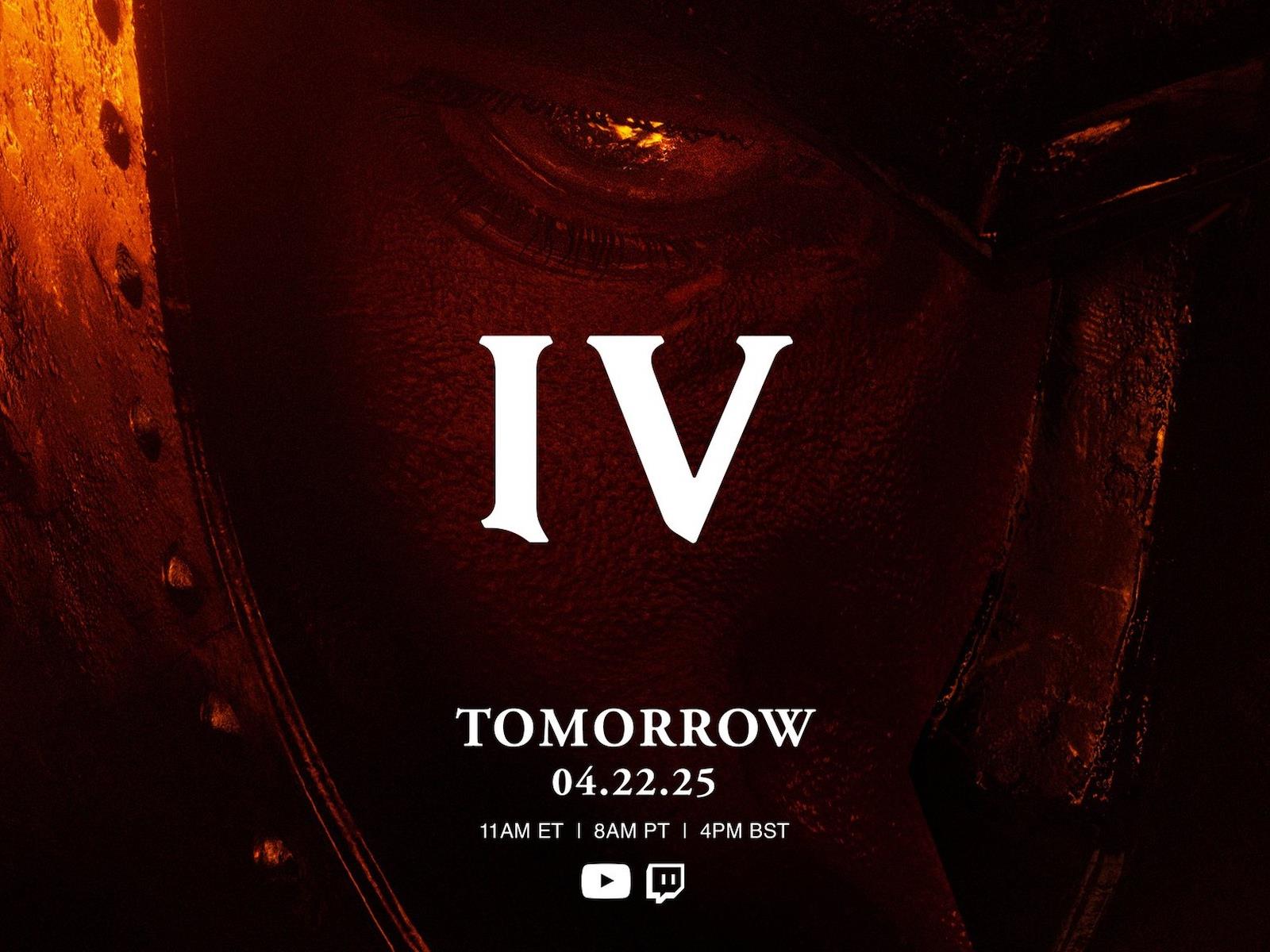
Bethesda Confirms Big Oblivion News Is Coming, Here’s What We Expect

Bethesda Confirms Big Oblivion News Is Coming, Here’s What We Expect
Whatever your feelings are on the Elder Scrolls game franchise, it’s impossible to deny that the series has had a massive lasting impact on the gaming market as a whole. The beloved franchise had been immune to the plague of reboots, remakes, and remasters afflicting the industry so far, but it turns out that was more out of the amount of

Teen coder shuts down open source Mac app Whisky, citing harm to paid apps

Whisky, a gaming-focused front-end for Wine’s Windows compatibility tools on macOS, is no longer receiving updates. As one of the most useful and well-regarded tools in a Mac gamer’s toolkit, it could be seen as a great loss, but its developer hopes you’ll move on with what he considers a better option: supporting CodeWeavers’ CrossOver product.

Also, Whisky’s creator is an 18-year-old college student, and he could use a break.

“I am 18, yes, and attending Northeastern University, so it’s always a balancing act between my school work and dev work,” Isaac Marovitz wrote to Ars. The Whisky project has “been more or less in this state for a few months, I posted the notice mostly to clarify and formally announce it,” Marovitz said, having received “a lot of questions” about the project status.

Read full article

Comments

FTC Sues Uber Over Deceptive Subscription Billing Practices

The Federal Trade Commission filed suit against Uber on Monday, alleging the transportation giant violated federal consumer protection laws through deceptive billing and cancellation practices for its Uber One subscription service. According to the complaint, Uber violated both the FTC Act and the Restore Online Shoppers’ Confidence Act by misleading consumers about subscription terms, charging users without consent, and implementing deliberately complicated cancellation processes.

“Americans are tired of getting signed up for unwanted subscriptions that seem impossible to cancel,” FTC Chair Andrew Ferguson said in announcing the action. The $9.99 monthly service, launched in 2021, offers benefits including fee-free delivery and discounted rides.


Read more of this story at Slashdot.

Space Investor Sees Opportunities in Defense-Related Startups and AI-Driven Systems

Chad Anderson is the founder/managing partner of the early-stage VC Space Capital (and an investor in SpaceX, along with dozens of other space companies). Space Capital produces quarterly reports on the space economy, and he says today, unlike 2021, “the froth is gone. But so is the hype. What’s left is a more grounded — and investable — space economy.”

On Yahoo Finance he shares several of the report’s insights — including the emergence of “investable opportunities across defense-oriented startups in space domain awareness, AI-driven command systems, and hardened infrastructure.”

The same geopolitical instability that’s undermining public markets is driving national urgency around space resilience. China’s simulated space “dogfights” prompted the US Department of Defense to double down on orbital supremacy, with the proposed “Golden Dome” missile shield potentially unleashing a new wave of federal spending…

Defense tech is on fire, but commercial location-based services and logistics are freezing over. Companies like Shield AI and Saronic raised monster rounds, while others are relying on bridge financings to stay afloat…

Q1 also saw a breakout quarter for geospatial artificial intelligence (GeoAI). Software developer Niantic launched a spatial computing platform. SkyWatch partnered with GIS software supplier Esri. Planet Labs collaborated with Anthropic. And Xona Space Systems inked a deal with Trimble to boost precision GPS. This is the next leg of the space economy, where massive volumes of satellite data is finally made useful through machine learning, semantic indexing, and real-time analytics.

Distribution-layer companies are doing more with less. They remain underfunded relative to infrastructure and applications but are quietly powering the most critical systems, such as resilient communications, battlefield networks, and edge-based geospatial analysis. Don’t let the low round count fool you; innovation here is quietly outpacing capital.

The article includes several predictions, insights, and possible trends (going beyond the fact that defense spending “will carry the sector…”)

“AI’s integration into space (across geospatial intelligence, satellite communications, and sensor fusion) is not a novelty. It’s a competitive necessity.”
“Focusing solely on rockets and orbital assets misses where much of the innovation and disruption is occurring: the software-defined layers that sit atop the physical backbone…”

“For years, SpaceX faced little serious competition, but that’s starting to change.” [He cites Blue Origin’s progress toward approval for launching U.S. military satellites, and how Rocket Lab and Stoke Space “have also joined the competition for lucrative government launch contracts.” Even Relativity Space may make a comeback, with former GOogle CEO Eric Schmidt acquiring a controlling stake.]

“An infrastructure reset is coming. The imminent ramp-up of SpaceX’s Starship could collapse the cost structure for the infrastructure layer. When that happens, legacy providers with fixed-cost-heavy business models will be at risk. Conversely, capital-light innovators in station design, logistics, and in-orbit servicing could suddenly be massively undervalued.”


Read more of this story at Slashdot.

Pope Francis Has Died

Pope Francis has died at the age of 88, the Vatican said Monday. The pontiff, who was Bishop of Rome and head of the Catholic Church, became pope in 2013 after his predecessor Benedict XVI resigned. On February 14, the Pope was admitted to hospital for bronchitis treatment. From a report: Born in 1936, Francis was the first pope from South America. His papacy was marked by his championing of those escaping war and hunger, as well as those in poverty, earning him the moniker the “People’s Pope.” In 2016, he washed the feet of refugees from different religions at an asylum centre outside Rome in a “gesture of humility and service.”

He also made his views known on a wide range of issues, from climate change to wealth inequality and the role of women in the Catholic Church.


Read more of this story at Slashdot.

Return-to-Office Policies Are Impacting Neurodivergent Workers

With more companies requiring workers to return to an office five days a week, “Anxiety is rising for some of the millions of people who identify as neurodivergent,” writes the Washington Post.

They raise the possibility that “strict office mandates have the potential to deter neurodivergent people who may approach problems differently,” the article notes — affecting peoiple “whose brains function differently, such as with ADHD, autism or dyslexia.”

While many neurodivergent people excel in an office, others struggle with sensory issues, an inability to focus and exhaustion, workers say… About a fifth of U.S. adults self-identify as neurodivergent, with a majority saying they always or usually feel that their brain works differently, according to a recent survey by research and analytics firm YouGov. They cite issues such as starting tasks before finishing others, being overwhelmed by social situations and struggling to focus…

Some neurodivergent workers discovered success working remotely during the pandemic and don’t feel comfortable disclosing their diagnoses due to fear of and prior instances of discrimination. Sometimes being one of the few remote workers makes it easier to be forgotten…. Neurodivergent workers who spoke about their office struggles say even part-time remote work can be a game changer. They also wish leaders would seek input from them and trust them to get their work done.


Read more of this story at Slashdot.

Should College Application Essays Be Banned?

While college applicants are often required to write a personal essay for their applications, political scientist/author/academic Yascha Mounk argues that’s “a deeply unfair way to select students for top colleges, one that is much more biased against the poor than standardized tests.”

The college essay wrongly encourages students to cast themselves as victims, to exaggerate the adversity they’ve faced, and to turn genuinely upsetting experiences into the focal point of their self-understanding. The college essay, dear reader, should be banned and banished and burned to the ground.

There are many tangible, “objective” reasons to oppose making personal statements a key part of the admissions process. Perhaps the most obvious is that they have always been the easiest part of the system to game. While rich parents can hire SAT tutors they can’t sit the standardized test in the stead of their offspring; they can, however, easily write the admissions essay for their kid or hire a “college consultant” who “works with” the applicant to “improve” that essay. Even if rich parents don’t cheat in those ways, their class position gives rich kids a huge advantage in the exercise… [W]riting a good admissions essay is to a large extent an exercise in demonstrating one’s good taste — and the ability to do so has always depended on being fluent in the unspoken norms of an elite community…

Many on the left oppose standardized tests on the grounds that they have a class bias, and that hiring a tutor can make you perform better at them. But studies on the subject consistently suggest that the class bias of personal essays is far stronger than the class bias of standardized tests…. But the thing I truly hate about the college essay is not that it is part of a system that keeps deserving kids out of top colleges while rewarding privileged kids who (to add insult to injury) get to flatter themselves that they have been selected for showcasing such superior personality in their 750-word statements composed by their college consultant or ghostwritten by ChatGPT… [W]hat I truly hate about the college essay is the way in which it shapes the lives of high school students and encourages the whole elite stratum of society — including some of its most affluent, privileged and sheltered members — to conceive of themselves in terms of the hardships they have supposedly suffered…

[I]t is the bizarre spectacle of those kids from comparatively privileged backgrounds being effectively coerced by the admissions system to self-exoticize as products of great hardship which I find to be truly unseemly… And this is why I suspect that the seemingly innocuous institution of the college essay is more deeply damaging — to the high school experience, to the self-conception of millions of Americans, and even to the country’s ability to sustain a trusted elite — than it appears… [I]t drains the souls of teenagers and encourages a deeply pernicious brand of fakery and breeds widespread mistrust in social elites.

The college essay is absurd and unfair and — ironically — unforgivably cringe. It’s time to put an end to its strange hold over American society, and liberate us all from its tyranny.


Read more of this story at Slashdot.

The Last of Us season two ‘Through the Valley’ recap: Well, that happened

Spoilers follow for The Last of Us season two, episodes one and two

HBO’s The Last of Us showed viewers in season one that it would lean heavily on the source video games for major plot points and general direction of the season while expanding on the universe, and season two has followed that to the most extreme end possible. Episode two sees Tommy and Maria lead the town of Jackson Hole against a massive wave of Infected, the likes of which we haven’t seen in the show (or video games) yet. This was a complete invention for the show, one that gives the episode Game of Thrones vibes, or calls to mind a battle like the siege of Helm’s Deep in Lord of the Rings: The Two Towers. It’s epic in scale, with the overmatched defenders showing their skill and bravery against overwhelming odds; there is loss and pain but the good guys eventually triumph.

That mass-scale battle is paired with the most intimate and brutal violence we’ve seen in the entire series so far, as Joel’s actions finally catch up with him. His death at the hands of Abby and her crew of ex-Fireflies from Seattle is truly upsetting, even if you know it is coming — and that in the twisted world that Joel and Abby inhabit, it was a form of “justice.”

Of course, it was pretty obvious after the first five minutes of episode one that this is where Abby’s journey would take her, but it sure happened fast. You could say the same thing about when Joel dies in the video game, but ever since the HBO series was announced I’ve been wondering about just how Craig Mazin would choose to tackle the events of the second game and Joel’s death. Part of me wondered if we wouldn’t know for sure Joel was dead until near the end of the season, or if we might not find out Abby’s motivations until much later. But after two episodes, we know that Abby’s dad was the doctor Joel killed at the end of season one to save Ellie, a fact that makes her disturbing lust for vengeance more understandable to the television audience. In the game, on the other hand, players didn’t find that out until much later — a move that cast Abby in the role of “villain” that made Ellie’s own desire for revenge more relatable for the player

The Last of Us Season 2
Photograph by Liane Hentscher/HBO

But what works in a game doesn’t necessarily work in a more passive adaptation. I do think there was a way for the writers to save the full reveal for Abby’s motivations for later, but I didn’t really bump on how things played out here. Similarly, I wasn’t really bothered by the introduction to Abby’s crew and her desire to find Joel that happened at the beginning of the season premiere. But I do know a number of people who played the game feel like this has robbed the show of some mystery and changed the momentum in a way that didn’t work for them, and I can appreciate that argument.

For anyone who hasn’t played the games, though, I’m sure that seeing the co-lead character killed off in the second episode of the season was a bit of a shock, no matter how much it was hinted at — particularly after Joel went out of his way to save Abby from certain death. In another world, you could imagine that blunting her need for revenge, or at least having her forgo the extended torture of a helpless Joel. But she’s clearly captivated by the opportunity in a way that even her friends are a bit horrified by. Ellie being there to find Dina unconscious and then forced to watch Abby deliver the final blow is the cherry on the disaster sundae that is this episode. It’s even harder to swallow when you consider their last interaction was Ellie’s extreme rebuff of Joel at the dance the night before.

Bella Ramsey and Isabela Merced in HBO's The Last of Us
Photograph by Liane Hentscher/HBO

It’s truly a wild choice for such a high-profile show, even though there was nowhere else for it to go. Pedro Pascal has been everywhere the last few years, and The Last of Us could have been his signature role. Joel’s death doesn’t fully diminish that, but obviously even if we see him in flashbacks in this season and the next, it won’t be the same as him leading an episode. To let such a marketable and popular star go must have been a tough pill for HBO to swallow, though chances are that the network knew from the beginning of negotiations that would have to happen. Regardless, it’s a move up there with the death of Sean Bean’s Ned Stark in terms of subverting audience expectations about who is going to lead the show going forward. That’ll fall to Bella Ramsey for the rest of the season.

I will say that Mazin and director Mark Mylod did a great job of balancing the many stories and cast members in this episode. Kaitlyn Dever gets her first extended amount of screen time and captures Abby’s barely-contained ferocity in a way that feels like a great tribute to the game source material, despite the fact that she is not nearly as physically ripped as Abby is in the game. Her scenes with Joel and Dina are absolutely chilling, even before she has Joel on the ropes; big credit to Pascal and Isabela Merced, again, for showing a major range of emotions as they help Abby escape from the Infected only to be betrayed.

Kaitlyn Dever in HBO's The Last of Us
Kaitlyn Dever in HBO’s The Last of Us
Photograph by Liane Hentscher/HBO

Ramsey, meanwhile, shares a lot of time with Young Mazino’s Jesse as they go on patrol and frantically search for Joel; back in Jackson, Gabriella Luna and Rutina Wesley as Tommy and Maria keep Jackson from falling to the Infected. It’s a lot of threads to tie together, and the fact that this episode includes the biggest battle we’ve ever seen as well as Joel’s capture and death without feeling overstuffed is a testament to the writers, directors and cast.

Speaking of that Infected battle, I wasn’t fully sold on it when I saw teases in the trailers for this season, but it was a thrilling delight. I loved seeing the preparations Jackson put into place, like the oil barrels coming down from the walls and the flamethrower brigade surrounded by snipers up on the buildings. Of course, all the best-planned defenses fail once the Infected get through the wall and all hell breaks loose, and the show successfully had me questioning whether the town would make it even though the idea of it fully falling seemed like a deviation too far from the game. It definitely felt like a response to the criticisms of a relative lack of Infected action in season one, but it worked, and the juxtaposition of the disaster befalling Jackson at large as well as the smaller-scale loss of one of its most important citizens added another layer to the grief.

Infected Score: 11/10

The showrunners say season two will have more Infected than season one — let’s see if they’re sticking to their word.

Tommy taking down a Bloater with a flamethrower in front of a Mailboxes Etc. store? Barrels of oil lighting a field of Infected on fire? The extremely creepy reveal of the “live” Infected buried and laying in wait under a field of frozen ones that emerged and chased Abby right into the path of Joel? Jackson’s guard dogs coming to the rescue to keep the horde from overtaking the town? This was the most epic action we’ve seen out of the show yet, on a scale that we didn’t get in the games. It’ll be hard to top this battle.

This article originally appeared on Engadget at https://www.engadget.com/entertainment/tv-movies/the-last-of-us-season-two-through-the-valley-recap-well-that-happened-020017596.html?src=rss

Can You Run the Llama 2 LLM on DOS?

Slashdot reader yeokm1 is the Singapore-based embedded security researcher whose side projects include installing Linux on a 1993 PC and building a ChatGPT client for MS-DOS.

He’s now sharing his latest project — installing Llama 2 on DOS:

Conventional wisdom states that running LLMs locally will require computers with high performance specifications especially GPUs with lots of VRAM. But is this actually true?
Thanks to an open-source llama2.c project [original created by Andrej Karpathy], I ported it to work so vintage machines running DOS can actually inference with Llama 2 LLM models. Of course there are severe limitations but the results will surprise you.

“Everything is open sourced with the executable available here,” according to the blog post. (They even addressed an early “gotcha” with DOS filenames being limited to eight characters.)

“As expected, the more modern the system, the faster the inference speed…” it adds. “Still, I’m amazed what can still be accomplished with vintage systems.”


Read more of this story at Slashdot.

Airbus Promised a ‘Green’ Hydrogen Aircraft. That Bet Is Now Unraveling

An anonymous reader shared this report from the Wall Street Journal:

Five years ago, Airbus made a bold bet: The plane maker would launch a zero-emissions, hydrogen-powered aircraft within 15 years that, if successful, would mark the biggest revolution in aviation technology since the jet engine. Now, Airbus is pulling the brakes. The company has cut the project’s budget by a quarter, reallocated staff and sent remaining engineers back to the drawing board, delaying its plans by as much as a decade…

Airbus has spent more than $1.7 billion on the project, according to people familiar with the matter, but over the past year concluded that technical challenges and a slow uptake of hydrogen in the wider economy meant the jet wouldn’t be ready by 2035… Airbus says the past five years of work and money haven’t been wasted. The company has established that hydrogen is technically feasible and delaying the project will give it more time to fine-tune the technology, executives said…

Airbus shifted focus to hydrogen-fuel cells, which use a chemical reaction to generate energy for an electric motor. It would produce only water vapor, but would require a more radical redesign of the airframe and propulsion system. The plane would carry only 100 passengers about 1,000 nautical miles. Over time, even that proved challenging because of the extra weight of the fuel cells and their limited electricity generation. Instead of a short-haul narrow-body — the workhorse of the aviation industry — at best the aircraft would be more akin to a less appealing regional turboprop.
Airbus received a multi-billion Covid-era support package from the French government that “required Airbus to spend a portion of the money on bringing green aircraft to market by the 2030s,” according to the article.
“The hydrogen project helped Airbus access additional government funding, as well as private green financing… Airbus ultimately assigned the project an annual budget of about €400 million, primarily funded through its own coffers, according to people familiar with its financing arrangements.”


Read more of this story at Slashdot.

The Bees Are Disappearing Again

“Honeybee colonies are under siege across much of North America…” reported the New York Times last week. [Alternate URL here.] Last winter beekeepers across America “began reporting massive beehive collapses. More than half of the roughly 2.8 million colonies collapsed, costing the industry about $600 million in economic losses…”

America’s Department of Agriculture says “sublethal exposure” to pesticides remains one of the biggest factors threatening honeybees, according to the article — but it’s one of several threats. “Parasites, loss of habitat, climate change and pesticides threaten to wipe out as much as 70% or more of the nation’s honeybee colonies this year, potentially the most devastating loss that the nation has ever seen.”

Some years are worse than others, but there has been a steady decline over time. Scientists have named the phenomenon colony collapse disorder: Bees simply disappear after they fly out to forage for pollen and nectar. Illness disables their radar, preventing them from finding their way home. The queen and her brood, if they survive, remain defenseless.

The precise causes remain unknown.
Bee colonies have become even more vulnerable because of the increase in extreme weather conditions, including droughts, heat waves, monster hurricanes, explosive wildfires and floods that have damaged or destroyed the bees and the vegetation they pollinate. If that isn’t bad enough, parasites — and other creatures researchers refer to as “biotic” threats that prey on bees — proliferate when there is damage to ecosystems.

All that means that the U.S. beekeeping industry has contracted by about 2.9% over the past five years, according to data collected by IBISWorld, a research firm. Annual loss rates have been increasing among all beekeepers over the past decade with the most significant colony collapses in commercial operations happening during the past five years.

The article notes that “compounding the troubles for the bee industry are recent federal cuts” proposed by DOGE to America’s Department of Agriculture, “where researchers were studying ways to protect the nation’s honeybees.” And while federal policies like tariffs could make farming more expensive, “Beekeepers also often depend on immigrants to manage their hives and to help produce commercial honey…”


Read more of this story at Slashdot.

Nintendo shares a vintage SNES commercial starring Paul Rudd as he reprises the role for Switch 2

Nintendo surprised us with a little blast from the past this weekend, uploading a 34-year-old Super Nintendo commercial featuring Paul Rudd to its YouTube channel — and it’s released a sequel for the Nintendo Switch 2. Rudd appears in the Switch 2 promo wearing the same outfit he wore back in 1991, but this time he’s playing Mario Kart World with some celebrity friends over the new GameChat social feature. It’s a charming callback to the original SNES ad, which itself is deliciously ‘90s and a real treat to revisit in 2025. Commercials today just don’t hit the same.

Nintendo has steadily been drumming up the hype for the Switch 2’s arrival since the release details were announced at the beginning of April. The company recently held a livestream to share a more in-depth look at Mario Kart World, which launches on the same day as the new console, revealing some of the new courses, items and assistive features like Smart Steering. We’ve still got some time to wait before it’s all here, though. Pre-orders for the Switch 2 open on April 24, and the console will be available starting June 5.

This article originally appeared on Engadget at https://www.engadget.com/gaming/nintendo/nintendo-shares-a-vintage-snes-commercial-starring-paul-rudd-as-he-reprises-the-role-for-switch-2-171316112.html?src=rss

Astronomers Confirm First ‘Lone’ Black Hole Discovery – and It’s in the Milky Way

For the first time, astronomers have confirmed the existence of a lone black hole,” reports Science News — “one with no star orbiting it.”

It’s “the only one so far,” says Kailash Sahu, an astronomer at the Space Telescope Science Institute in Baltimore. In 2022, Sahu and his colleagues discovered the dark object coursing through the constellation Sagittarius. A second team disputed the claim, saying the body might instead be a neutron star. New observations from the Hubble Space Telescope now confirm that the object’s mass is so large that it must be a black hole, Sahu’s team reports in the April 20 Astrophysical Journal…. [And that second team has revised its assessment and now agrees: the object is a black hole.]

While solitary black holes should be common, they are hard to find. The one in Sagittarius revealed itself when it passed in front of a dim background star, magnifying the star’s light and slowly shifting its position due to the black hole’s gravity. This passage occurred in July 2011, but the star’s position is still changing. “It takes a long time to do the observations,” Sahu says. “Everything is improved if you have a longer baseline and more observations.” The original discovery relied on precise Hubble measurements of star positions from 2011 to 2017. The new work incorporates Hubble observations from 2021 and 2022 as well as data from the Gaia spacecraft.

The upshot: The black hole is about seven times as massive as the sun, give or take 0.8 solar masses…. Located 5,000 light-years from Earth, this black hole is much closer than the supermassive one at the Milky Way’s center, which also lies in Sagittarius but about 27,000 light-years from us. The star-rich region around the galactic center provides an ideal hunting ground for solitary black holes passing in front of stars. Sahu hopes to find additional lone black holes by using the Nancy Grace Roman Space Telescope, slated for launch in 2027.


Read more of this story at Slashdot.

Conservations Say ‘De-Extinction’ Not the Answer to Saving Extinct Species

There was excitement when biotech company Collosal announced genetically modified grey wolves (first hailed as a “de-extinction” of the Dire wolf species after several millennia). “But bioethicists and conservationists are expressing unease with the kind of scientific research,” writes the Chicago Tribune. [Alternate URL here.]

“Unfortunately, as clever as this science is … it’s can-do science and not should-do science,” said Lindsay Marshall, director of science in animal research at Humane World for Animals, formerly the Humane Society of the U.S…. Ed Heist, a professor at Southern Illinois University and a conservation geneticist, said the news bothered him. “This is not conservation, but people conflate it,” he said. “The point is entertainment….”

Naomi Louchouarn [program director of wildlife partnerships at Humane World for Animals], has dedicated her studies and research to the relationship between humans and animals, specifically carnivores like gray wolves. “The reason our current endangered species are becoming extinct is because we don’t know how to coexist with them,” she said. “And this doesn’t solve that problem at all.” Humans can treat the symptoms of wildlife conflict with “big, flashy silver bullets” and “in this case, advanced, inefficient science,” she said, but the real solution is behavioral change. “Assuming that we could actually bring back a full population of animals,” Louchouarn said, “which is so difficult and so crazy — that’s a big if — I don’t understand the point of trying to bring back a woolly mammoth when we already can’t coexist with elephants.”

The article notes that even Colossal’s chief science officer says their technology is at best one of several tools for fighting biodiversity loss, calling it a battle which humans are ‘not close to winning’… We as a global community need to continue to invest in traditional approaches to conservation and habitat preservation, as well as in the protection of living endangered species.”
But the article adds that the Trump administration “is citing the case of the dire wolf as it moves to reduce federal protections under the Endangered Species Act of 1973.” (Wednesday U.S. interior secretary Doug Burgum has even posted on X “The concept of ‘de-extinction’ can serve as a bedrock for modern species conservation.”)

And the article adds that “During a livestreamed town hall with Interior Department employees on April 9, Burgum said: “If we’re going to be in anguish about losing a species, now we have an opportunity to bring them back. Pick your favorite species and call up Colossal.

Ken Angielczyk, curator of mammal fossils at the Field Museum who researches extinct species that lived 200 to 300 million years ago, said it’s a misguided approach. “If that’s the basis … for changing regulations related to the endangered species list, that is very, very premature,” he said. “Because we can’t resurrect things…. If the purpose is to restore the damage to the shared ecosystem, we have that opportunity right now,” she said. “And that’s the necessity immediately….”

“This whole idea that extinction is reversible is so dangerous,” Marshall said, “because then it stops us caring.”

Thanks to long-time Slashdot reader walterbyrd for sharing the news.


Read more of this story at Slashdot.

Conservationists Say ‘De-Extinction’ Not the Answer to Saving Extinct Species

There was excitement when biotech company Collosal announced genetically modified grey wolves (first hailed as a “de-extinction” of the Dire wolf species after several millennia). “But bioethicists and conservationists are expressing unease with the kind of scientific research,” writes the Chicago Tribune. [Alternate URL here.]

“Unfortunately, as clever as this science is … it’s can-do science and not should-do science,” said Lindsay Marshall, director of science in animal research at Humane World for Animals, formerly the Humane Society of the U.S…. Ed Heist, a professor at Southern Illinois University and a conservation geneticist, said the news bothered him. “This is not conservation, but people conflate it,” he said. “The point is entertainment….”

Naomi Louchouarn [program director of wildlife partnerships at Humane World for Animals], has dedicated her studies and research to the relationship between humans and animals, specifically carnivores like gray wolves. “The reason our current endangered species are becoming extinct is because we don’t know how to coexist with them,” she said. “And this doesn’t solve that problem at all.” Humans can treat the symptoms of wildlife conflict with “big, flashy silver bullets” and “in this case, advanced, inefficient science,” she said, but the real solution is behavioral change. “Assuming that we could actually bring back a full population of animals,” Louchouarn said, “which is so difficult and so crazy — that’s a big if — I don’t understand the point of trying to bring back a woolly mammoth when we already can’t coexist with elephants.”

The article notes that even Colossal’s chief science officer says their technology is at best one of several tools for fighting biodiversity loss, calling it a battle which humans are ‘not close to winning’… We as a global community need to continue to invest in traditional approaches to conservation and habitat preservation, as well as in the protection of living endangered species.”
But the article adds that the Trump administration “is citing the case of the dire wolf as it moves to reduce federal protections under the Endangered Species Act of 1973.” (Wednesday U.S. interior secretary Doug Burgum has even posted on X “The concept of ‘de-extinction’ can serve as a bedrock for modern species conservation.”)

And the article adds that “During a livestreamed town hall with Interior Department employees on April 9, Burgum said: “If we’re going to be in anguish about losing a species, now we have an opportunity to bring them back. Pick your favorite species and call up Colossal.

Ken Angielczyk, curator of mammal fossils at the Field Museum who researches extinct species that lived 200 to 300 million years ago, said it’s a misguided approach. “If that’s the basis … for changing regulations related to the endangered species list, that is very, very premature,” he said. “Because we can’t resurrect things…. If the purpose is to restore the damage to the shared ecosystem, we have that opportunity right now,” she said. “And that’s the necessity immediately….”

“This whole idea that extinction is reversible is so dangerous,” Marshall said, “because then it stops us caring.”

Thanks to long-time Slashdot reader walterbyrd for sharing the news.


Read more of this story at Slashdot.

The next Star Wars Celebration will be held in LA in 2027 for the 50th anniversary of the first film

Star Wars Celebration is heading back to Los Angeles for the first time since 2006 to mark the franchise’s 50th anniversary in 2027. Star Wars: Episode IV – A New Hope, then simply called Star Wars, first hit theaters in 1977 and the rest is history. The location was announced during the closing ceremony of this year’s event, which took place in Japan. Star Wars Celebration 2027 will be held at the Los Angeles Convention Center from April 1 to April 4, 2027.

This year’s Star Wars Celebration brought a ton of announcements and previews into upcoming developments for the franchise. We finally got a real look at Star Wars Zero Company, a single-player turn-based tactics game expected to be released in 2026. ILM also revealed a bit more about its Meta Quest mixed-reality experience (which it’s calling a “playset”), Star Wars: Beyond Victory, and it was confirmed that Ryan Gosling will star in a film called Star Wars: Starfighter, per The Hollywood Reporter. And of course, there will be a Fortnite collaboration. With the Galactic Battle season beginning May 2, Darth Jar Jar is coming to Fortnite.

This article originally appeared on Engadget at https://www.engadget.com/entertainment/the-next-star-wars-celebration-will-be-held-in-la-in-2027-for-the-50th-anniversary-of-the-first-film-194628408.html?src=rss