Google Messages starts rolling out sensitive content warnings for nude images

Google Messages has started rolling out sensitive content warnings for nudity after first unveiling the feature late last year. The new feature will perform two key actions if the AI-based system detects message containing a nude image: it will blur any of those photo and trigger a warning if your child tries to open, send or forward them. Finally, it will provide resources for you and your child to get help. All detection happens on the device to ensure images and data remain private. 

Sensitive content warnings are enabled by default for supervised users and signed-in unsupervised teens, the company notes. Parents control the feature for supervised users via the Family Link app, but unsupervised teens aged 13 to 17 can turn it off in Google Messages settings. The feature is off by default for everyone else. 

With sensitive content warnings enabled, images are blurred and a “speed bump” prompt opens allowing the user to block the sender, while offering a link to a resource page detailing why nudes can be harmful. Next, it asks the user if they still want to open the message with “No, don’t view,” and “Yes, view” options. If an attempt is made to send an image, it provides similar options. So, it doesn’t completely block children from sending nudes, but merely provides a warning. 

The feature is powered by Google’s SafetyCore system which allows AI-powered on-device content classification without sending “identifiable data or any of the classified content or results to Google servers,” according to the company. It only just started arriving on Android devices and is not yet widely available, 9to5Google wrote. 

This article originally appeared on Engadget at https://www.engadget.com/apps/google-messages-starts-rolling-out-sensitive-content-warnings-for-nude-images-130525437.html?src=rss

2025 Chevrolet Blazer EV SS first drive: A big ride and handling upgrade

CHARLOTTE, North Carolina — Before letting us loose on the freshly laid tarmac of Ten Tenths Motor Club, Chevrolet was at pains to tell us that the new Blazer SS “is not a track car.” Sure, there’s a “competitive mode” to the suite of electronic settings and the fastest 0–60 mph time of any SS-badged Chevy to date. The upgrades have been focused on making the Blazer EV “stop, go, and turn” better, and you don’t need to be driving hard to appreciate the benefits.

The Blazer EV had a rocky start. When we first drove it at the end of 2023, it felt a little unfinished, and a few days later unreliable software stranded another journalist and led to a nationwide stop-sale on the then-new EV. By last March, the software was fixed and the Blazer EV was back on sale, now cheaper than before.

Watts new?

While other Blazer EVs are available with front- or rear-wheel powertrains or with a smaller battery pack, the SS only comes with all-wheel drive and the larger 102 kWh battery pack. Nominal power output is 515 hp (384 kW) and 450 lb-ft (610 Nm), which jumps to 615 hp (458 kW) and 650 lb-ft (880 Nm) if you engage the “Wide Open Watts” mode.

Read full article

Comments

Logitech Quietly Raises Prices By Up To 25%

Logitech has quietly increased prices on several flagship products by as much as 25%, according to findings (video) by YouTuber Cameron Dougherty. The MX Master 3S mouse now costs $120, up 20% from its previous $100 price point, while the MX Keys S keyboard has jumped 18% to $130. The K400 Plus Wireless Touch keyboard saw the most dramatic percentage increase, rising from $28 to $35.

These price adjustments, implemented without formal announcement, come amid ongoing tariff pressures from the Trump administration affecting PC hardware manufacturers. Chinese electronics maker Anker also recently implemented similar increases, suggesting a broader industry trend.


Read more of this story at Slashdot.

How to Use ‘Live Translate’ on Your Pixel

There are now useful language translation features everywhere you look, whether they’re built into your web browser or available through your AI assistant of choice. If you own a recent Google Pixel phone (the Pixel 6 or later), you’ve also got access to a suite of features known as Live Translate, which work across calls, texts, and media.

This functionality works separately from Google Translate, and is actually built right into Android on Pixel devices. It means you can understand conversations you’re having or videos you’re watching in a foreign language without any additional apps, and it’s straightforward to set up and use.

Live Translate works quickly, too, leveraging the processing power of Google’s Tensor chips (which is why you need a Pixel phone to make use of these features). Similar features have appeared on other Android phones: If you have a Samsung Galaxy handset, you can make use of Galaxy AI for live translations.

Note that only a limited number of languages are supported at the time of writing, when it comes to on-board, local conversions without any data being sent to the cloud for processing. For audio translations, for example, you only have access to French, German, Italian, Spanish, and Japanese.

Configuring Live Translate

Pixel Live Translate language download
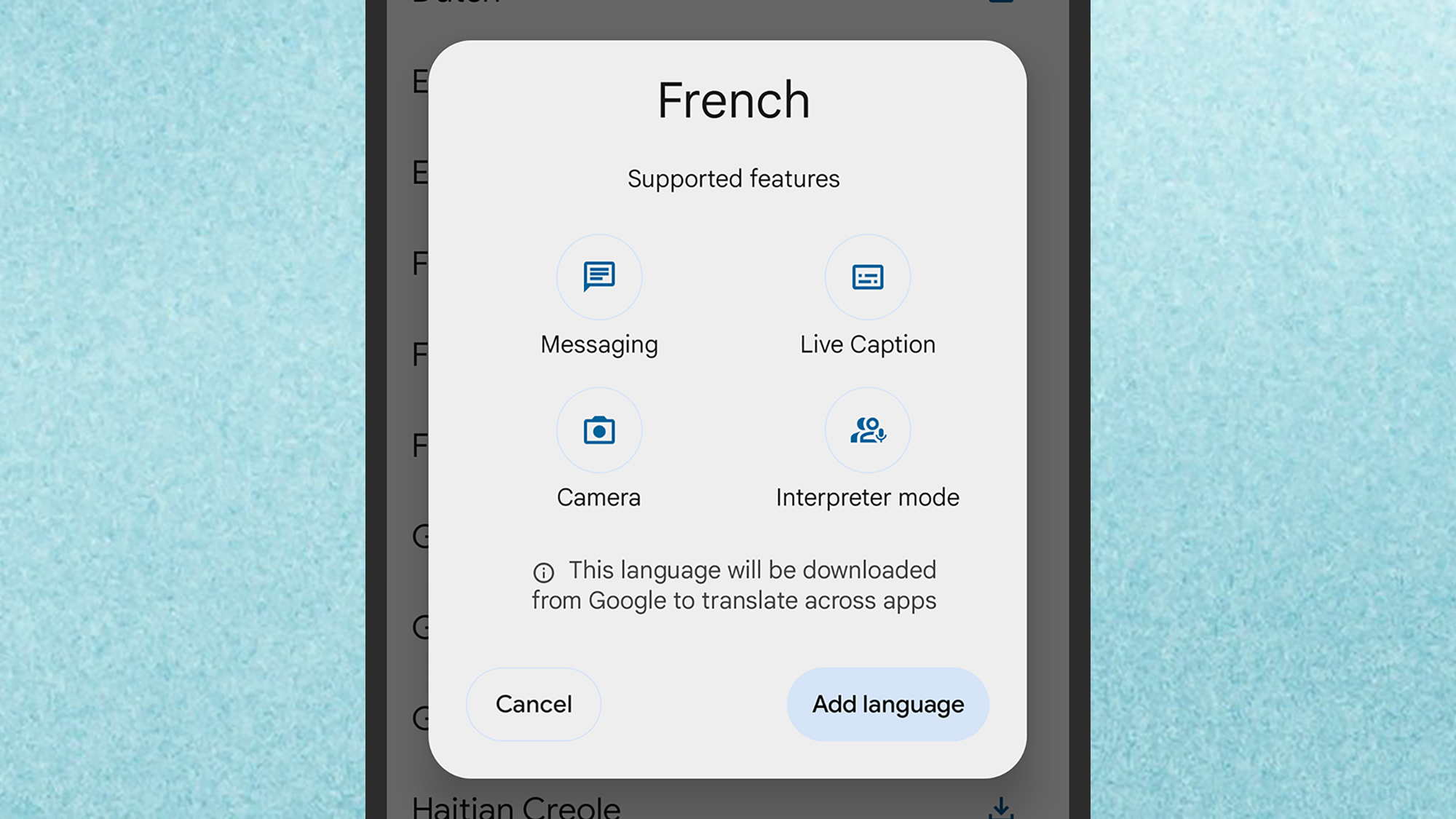
Languages need to be downloaded to your device.
Credit: Lifehacker

Live Translate should actually be on by default on your Android phone. You can check this is the case and configure the features by opening Settings, then tapping System and Live Translate. There’s a toggle switch here for turning Live Translate on or off, and a toggle switch for restricting language downloads to times when you’re on wifi.

Part of what makes Live Translate so straightforward to use is that it’ll automatically detect languages you come across as you use your phone, and prompt you to download the necessary data files. Unlike Google Translate, you must have languages downloaded locally for the feature to work.

If a language isn’t downloaded automatically for whatever reason, or you want to make sure it’s prepared in advance, tap Add a language and make your choice. This Live Translate settings screen is where you can access your downloaded languages: Use the toggle switches to enable and disable them, or tap a language and then choose Remove language to delete it.

Using Live Translate for messages

Pixel Live Translate in Messages
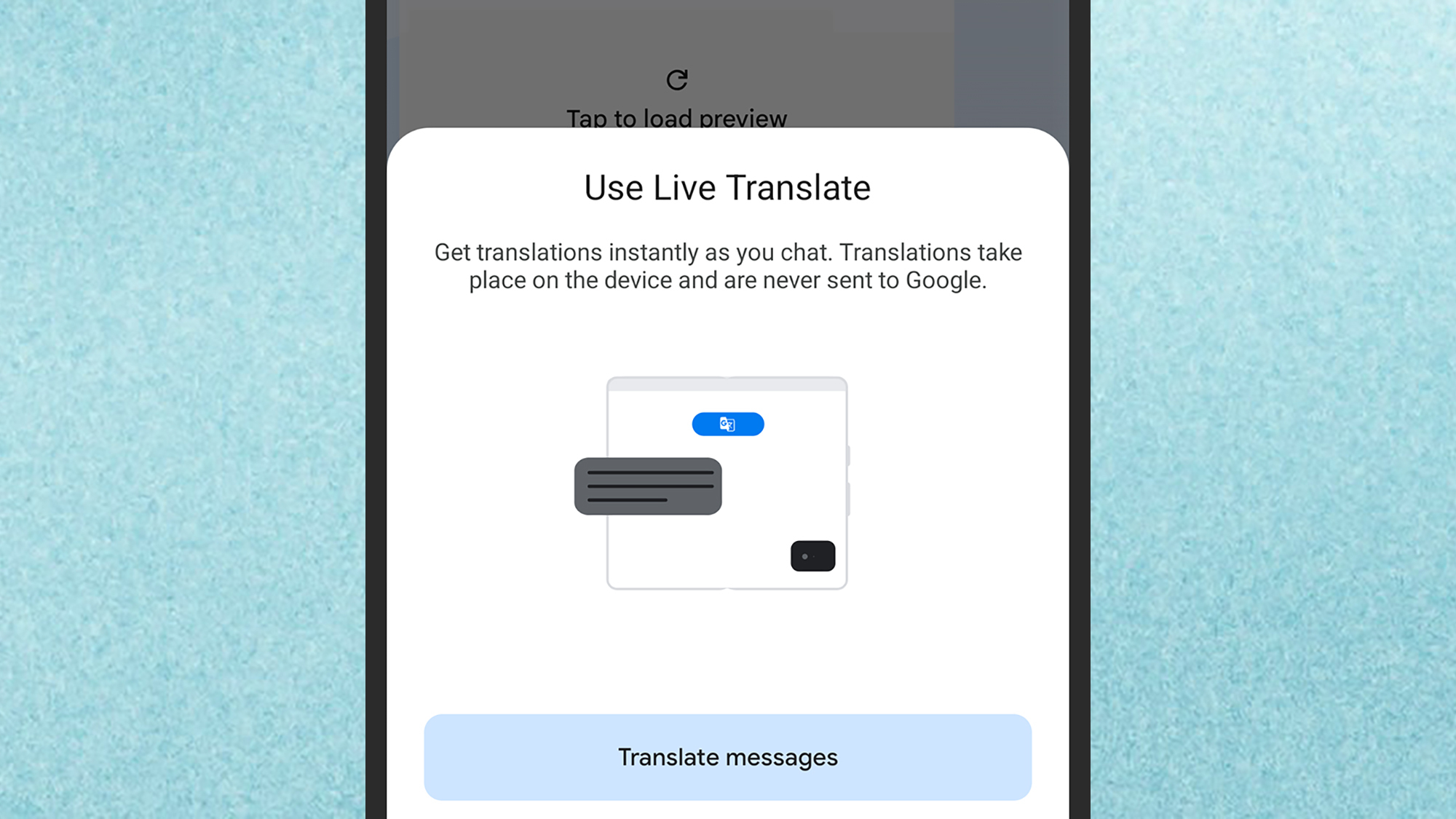
Enabling Live Translate in Google Messages.
Credit: Lifehacker

One of the apps Live Translate will work in is Google Messages. If the app detects that someone is messaging you in a different language, you should see a pop-up inviting you to use Live Translate. If it doesn’t appear, try tapping and holding on a message, then selecting the copy button at the top (the two rectangles)—you should then see a prompt to turn on translation.

With Live Translate enabled, incoming messages will show up as English (if that’s your default language)—exactly as if you were messaging with a native English speaker. You’ll also be prompted to translate your English texts into whatever the relevant language is, before you send them, so you can be understood.

You’ll get a persistent toolbar at the top of a chat when Live Translate is running, and you can tap on this for further options—including the option to translate all the messages in a conversation. If you want to switch off the feature permanently for a chat, choose Don’t translate ; to temporarily disable it, choose Hide translations for now (you can enable translations again using the copy trick above).

Using Live Translate for audio

Pixel Live Translate on calls
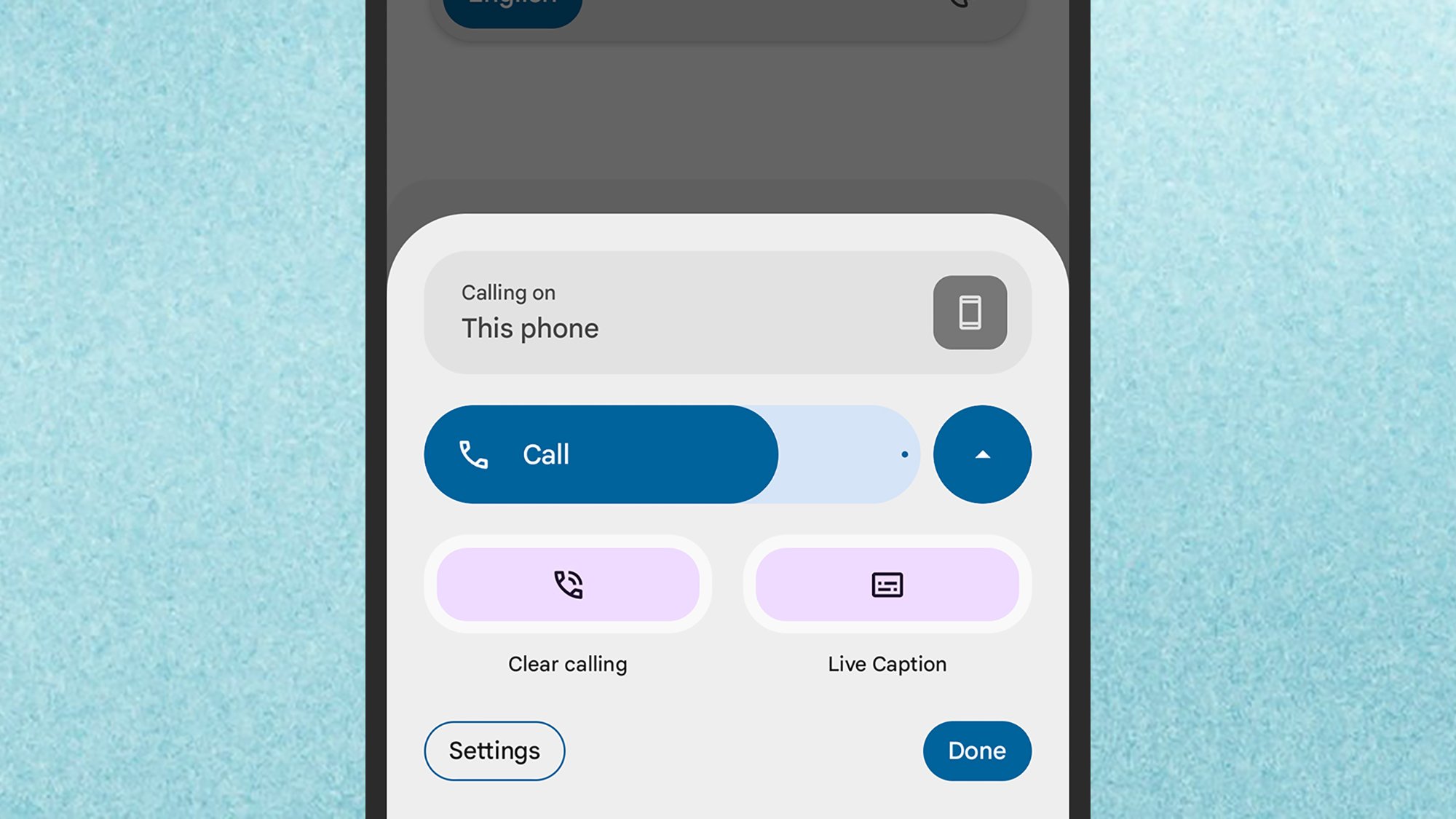
The Live Caption button during a phone call.
Credit: Lifehacker

You can also get Live Translate working for any audio—phone calls, video dialog, podcasts, and so on. This overlaps with the Live Captions feature in Android that you can configure separately—the difference being that the Pixel Tensor chips can do translation work quickly, on your device, without needing the cloud.

When you’re in a phone call or listening to audio, tap either of the volume buttons to bring up the volume slider on screen, then tap the three dots underneath it. You should then see a Live Caption button you can tap. Once the captions are on screen, and a foreign language is detected, you get a prompt to translate the text to English (or the default language for your device).

To get further options, tap the text on screen—here you can force a translation to English if it isn’t happening automatically, or turn translations off again. You will also see an icon that looks similar to a painter’s palette, and if you tap on this you can configure how the captions appear in terms of size and color.

Other uses of Live Translate

Pixel Live Translate in Google Lens
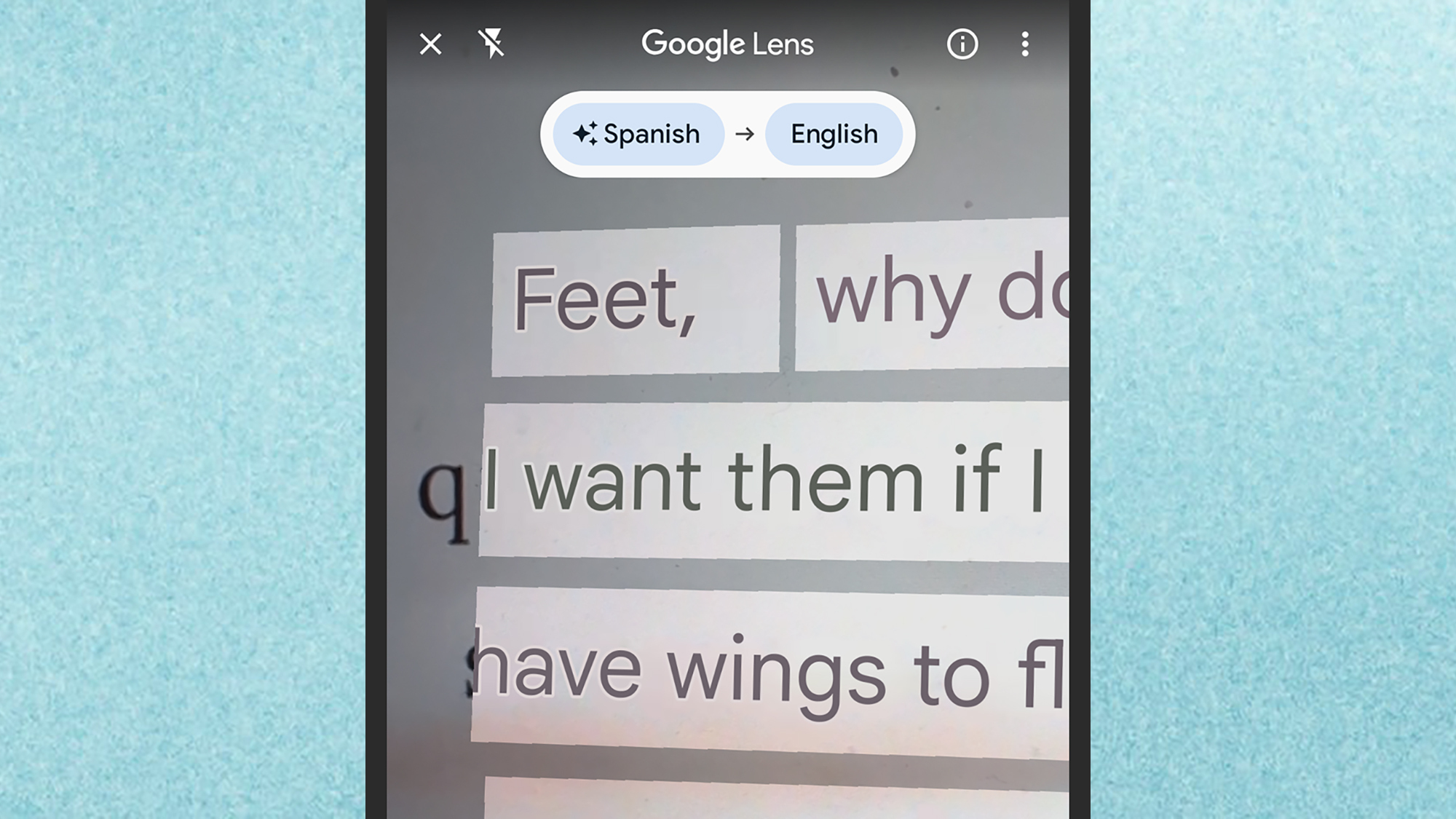
Live Translate through the camera, via Google Lens.
Credit: Lifehacker

You’re also able to use Live Translate through your camera, though this isn’t much different to using Google Lens on any Android device: The only advantage you have with Live Translate is the local processing, which may come in handy if you’re abroad and have limited access to cell networks or wifi.

Tap the Google Lens button in the Google search bar on your Pixel home screen—it’s the one that looks like a colorful camera—then point your camera at something like a sign or a menu written in a foreign language. If you then switch to the Translate mode on screen, the text should be translated almost instantly on your phone display.

In addition, Google has previously advertised an interpreter mode, where live conversations are translated in real time. However, this originally worked via Google Assistant, and given the switch to Google Gemini that’s now happening, it now seems to have been disabled (it’s not functioning for me, at least). You can use the Conversation mode built into Google Translate for this instead: Just tap Conversation inside the app.

Intel Gifts Gamers Core Ultra 200S Boost Overclocking With A Warranty

Intel Gifts Gamers Core Ultra 200S Boost Overclocking With A Warranty
If you’re the proud owner of an Intel Core Ultra 200-series CPU, rejoice, as there may be good gaming gains to be gotten from a brand new BIOS feature. Intel’s engineers christened it the 200S Boost overclocking profile, and it promises to boost gaming performance without voiding your warranty.

This news is welcome to Core Ultra gamers

NVIDIA’s New GPU Hotfix Driver Fixes Game Crashes, Temp Sensing Issue And More

NVIDIA's New GPU Hotfix Driver Fixes Game Crashes, Temp Sensing Issue And More
Just days after NVIDIA began rolling out its ‘Game Ready’ 576.02 WHQL driver package that’s packed to the brim with bug fixes, it’s made available an out-of-band hotfix to iron out even more wrinkles related to its GeForce GPUs. The incremental release—hotfix driver version 576.15—is based on the same 576.02 driver release, but with over half

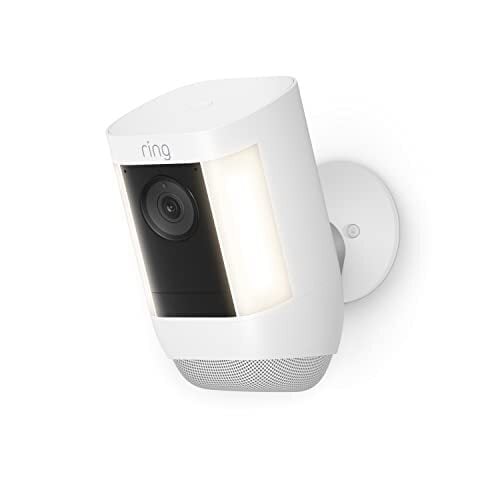
The Ring Spotlight Cam Pro Is at Its Lowest Price Ever Right Now

We may earn a commission from links on this page. Deal pricing and availability subject to change after time of publication.

If you’ve been thinking about adding a security camera to your setup but want something a little more refined than the entry-level options, the Ring Spotlight Cam Pro might hit that middle ground. Normally priced at $229.99, it’s now down to $159.99 on Amazon, which price trackers confirm is its lowest ever.

That’s a rare drop for a Ring Pro series camera, which typically stays at the premium end of Amazon’s home security lineup. This model came out in 2022, and while the 1080p resolution doesn’t exactly feel cutting-edge anymore, the overall package still holds up well.

This camera is battery-powered, meaning wireless setup and easy installation. Plus, it offers a wide 140-degree field of view, quick notifications when motion is detected, and two-way audio that’s unusually clear. According to this ZDNet review, you can carry on a full conversation with someone 40 feet from the camera without any lag or distortion. That said, the spotlight feature isn’t quite as strong—it maxes out at 375 lumens, which is enough for basic visibility in a small yard or porch, but not something you’d want for full floodlight coverage. Still, it’s equipped with color night vision and an adjustable alarm, which adds another layer of deterrence.

You’ll need a Ring Home subscription to actually record and store your videos, which starts at $4.99/month for a single camera—but live view and alerts work without one. And while it plays well with Alexa and IFTTT, it skips out on Google Assistant and HomeKit support. As for battery life, depending on your activity zones and lighting preferences, it can last anywhere from six months to a year, notes this PCMag review.

Duolingo will soon start offering chess lessons

Duolingo will soon add chess to its list of non-language courses, alongside music and math. The company has revealed that it will add chess lessons to its app, which will initially be available in beta in its iOS app. Senior product manager Edwin Bodge told Cnet that Duolingo is catering to “more of a beginner, medium [player]” in an effort to make the game more accessible. The app will start by asking you how much you know about chess and then tailoring lessons based on your level — it will even teach you how each piece moves if you’re a total newbie. 

If you already know how each piece moves, then you’ll play against Duolingo’s character Oscar in mini-puzzles, wherein you’ll have to capture certain pieces using a specified piece, like a rook. The puzzles are meant to get you used to how each piece moves, especially since you’ll get hints for each lesson. If you move a piece where it can’t go several times, Duolingo will put a big arrow on where a piece could go. But since there are many ways to move a piece around the chessboard, the app won’t tell you if you made the wrong choice. It can only tell you in a banner how it wasn’t the best move out of all the available options. 

In addition to the mini-puzzles, you’ll be able to play full games against Oscar that scale up in difficulty based on your level, but you can’t play against other learners just yet. Cnet says Duolingo is still looking into adding that feature, though it won’t be part of the beta version that will be available sometime in mid-May. The company also said that it’s working to make chess lessons available on Android and in languages other than English in the coming months. 

This article originally appeared on Engadget at https://www.engadget.com/apps/duolingo-will-soon-start-offering-chess-lessons-121545964.html?src=rss

Tuesday Telescope: A rare glimpse of one of the smallest known moons

I’ll bet you don’t spend a ton of time thinking about Deimos, the smaller of the two Martian moons, which is named after the Ancient Greek god that personified dread.

And who could blame you? Of the two Martian moons, Phobos gets more attention, including as a possible waystation for human missions to Mars. Phobos is larger than Deimos, with a radius of 11 km, and closer to the Martian surface, a little more than 9,000 km away.

By contrast, Deimos is tiny, with a radius of 6 km, and quite a bit further out, more than 23,000 km from the surface. It is so small that, on the surface of Mars, Deimos would only appear about as bright in the night sky as Venus does from Earth.

Read full article

Comments

10 Very Good Podcasts About Very Bad People

From infamous tyrants to modern media monsters, these podcasts explore the most messy, menacing, and sometimes misunderstood figures throughout history. Whether you’re into true crime, pop culture, philosophy, or political intrigue, here are 10 standout podcasts that dive deep into the dark side.


Behind the Bastards

'Behind the Bastards' podcast art

Credit: ‘Behind the Bastards’

Hosted by Robert Evans (not the film guy, the journalist and former war correspondent,) Behind the Bastards is a deep dive into some of the worst people in history, from brutal dictators to modern-day grifters and cult leaders. Episodes are long and go extremely in depth. Evans will often take several episodes to cover a single subject. (Like his Vince McMahon series, which is incredible and a good place to start.) With every episode, he and a guest blend sharp historical research with biting humor and a little righteous rage. It’s dark, funny, and educational.


Behind the Insurrections

'Behind the Insurrections' podcast art

Credit: ‘Behind the Insurrections’

A spin-off of Behind the Bastards (and also hosted by Robert Evans), Behind the Insurrections is a limited series that looks at the history of attempted (and successful) insurrections around the world. (There’s a fun sprinkling about history’s antifascists, too.) Along with his friend and co-host Propaganda (from Hood Politics), Evans uses his signature wit and insight to draw chilling parallels between past uprisings and modern-day threats to democracy that feel both clarifying and terrifying. It’s shocking how familiar it all sounds. Start at the very beginning with “Mussolini’s March on Rome: The First Fascist Insurrection.”


Weird Little Guys

'Weird Little Guys' podcast art

Credit: ‘Weird Little Guys’

On Weird Little Guys, Molly Conger leans into her niche expertise: terrible people who, deep down inside, are actually just messed up weirdos. In each episode, she profiles questionable characters from history, media, and myth whom you may or may not have heard of. I love that even if the subject matter is heavy or depressing, listening to this show feels like getting gossip from your smart, well-read friend. If you can’t do anything about skinheads, the least you can do is figure out how they got to be such huge losers. It’s cathartic. 


This Guy Sucked

'This Guy Sucked' podcast art

Credit: ‘This Guy Sucked’

Historian Claire Aubin is the host of This Guy Sucked, an academic takedown of awful men throughout history, culture, and current events, from Voltaire to mid-century liberals. Claire ups the ante with historians and professors for conversations that are equal parts funny and smart. This a history podcast with a great host who is doing more than just reading Wikipedia entries—she’s sparking engaging conversations and teaching you about some of the stuff you learned wrong the first time around. 


Bad Gays

'Bad Gays' podcast art

Credit: ‘Bad Gays’

Bad Gays, hosted by Huw Lemmey and Ben Miller, shines a light on villainous figures, but only the queer ones. Each episode is full of great storytelling, lots of jokes, and academic rigor. It challenges simplistic narratives and asks important questions about power, identity, and complicity, something that anyone on the gender spectrum can fall prey to. Start with “J. Edgar Hoover,” an episode about an iconic bad gay, dissected with nuance and wit.


Real Dictators

'Real Dictators' podcast art

Credit: ‘Real Dictators’

Real Dictators is a gripping narrative history podcast that dives into the lives of some of the world’s most infamous authoritarian rulers. Hosted by Paul McGann (with a dramatic, cinematic tone), the show blends historical facts with the kind of immersive storytelling, dramatic narration, beautiful sound design, and compelling pacing that will make you feel like you’re at the movies. Each season or multi-part episode focuses on a different dictator—think Stalin, Mao, Saddam Hussein—tracing their rise to power, ideologies, and brutal regimes.


The Villain Was Right

'The Villain Was Right' podcast art

Credit: ‘The Villain Was Right’

The Villain Was Right is a hilarious rewatch podcast that defends famous movie villains and asks, “Were they really that wrong?” Comedians Craig Fay and Rebecca Reeds bring episodes that are clever, irreverent, and surprisingly persuasive. You’ll never look at The Devil Wears Prada the same way again. We’re not talking about Stalin and Hitler, we’re talking about The Wet Bandits in Home Alone. (In fact, that’s a fun place to start.) 


Disgraceland

'Disgraceland' podcast art

Credit: ‘Disgraceland’

On Disgraceland, Jake Brennan combines true crime stories and the music world, to tell the stories of musicians who have gotten away with murder, if not literally then figuratively. The production level is high, Jake has an unforgettable voice that brings drama to every story, and the show is endlessly bingeable. Think Behind the Music behind bars.


Evil Genius with Russell Kane

'Evil Genius' podcast art

Credit: ‘Evil Genius’

You’ll love the debates on Evil Genius, where host and comedian Russell Kane (and his guests) argue whether controversial historical figures were truly evil—or just complicated. It’s both history and game! Russell is a comedian, so this is for people who like their history with a dash of comedy. Episodes are fast-paced and dig into moral gray areas without getting preachy. Start with Walt Disney, a guy we all love but who also really needs a few minutes under the microscope. 


Very Bad Wizards

'Very Bad Wizards' podcast art

Credit: ‘Very Bad Wizards’

On Very Bad Wizards, a philosopher (Tamler Sommers) and a psychologist (David Pizarro) talk about the morality of bad behavior in pop culture, film, and real life. It’s both entertaining and will send you down philosophical rabbit holes. You’ll love it because it’s both academic and insightful while still being casual and fun. Sommers brings the fiery, contrarian philosopher energy and Pizarro offers thoughtful, data-informed perspectives. They have great chemistry, and they’re not afraid to roast each other.

Teens are becoming more worried about the effects of social media

As lawmakers, regulators call for social media companies to do more to protect the mental health of their youngest users, teens’ perception of social media also seems to be changing. A growing number of teens say that social media is harmful and takes up too much of their time, according to a new report from Pew Research.

The report, which was based on a survey of 1,391 teens and parents in the United States, sheds light on how teens’ perspective on social media has changed amid increasing calls to hold online platforms accountable for the alleged harms they’ve done to their youngest users.

According to the report, 48 percent of teens now view social media as a “mostly negative” influence on other people their age. That’s a significant jump from the last time Pew polled teens on the question in 2022, when just under a third of teens said the same. The number of teens who view social media as “mostly positive” also decreased, from 24 percent in 2022 to 11 percent in the latest poll. “Teens’ views of the impact of social media on their peers has grown increasingly negative,” Pew’s researchers note.

Interestingly, teens are significantly less likely to report that social media is harmful to themselves specifically. Only 14 percent of teens polled by Pew reported that social media “negatively affects them personally.” Pew’s researchers don’t speculate on the reason for that disparity, though the report notes that there have been growing conversations about the effect social media has on teen mental health, including a warning last year from the US Surgeon General.

Pew’s report also suggests that teens are becoming increasingly aware of how much time they spend on social media platforms. Forty-five percent of teens said they “spend too much time” on social media, up from 27 percent who said the same in 2023. A similar proportion of teens said that social media negatively affects their sleep (45 percent) and productivity (40 percent). And 44 percent of teens report that they’ve “cut back” their smartphone and social media use overall.

While this report is unlikely to settle the long-running debate about whether social media is more helpful or harmful to young people, the fact that teens’ views are shifting is telling. At a time when some lawmakers have proposed banning younger kids from social media altogether, Pew’s report suggests that adults aren’t the only ones worried about the issue.

This article originally appeared on Engadget at https://www.engadget.com/social-media/teens-are-becoming-more-worried-about-the-effects-of-social-media-113027657.html?src=rss

A Chinese-born crypto tycoon—of all people—changed the way I think of space

For a quarter-century, dating back to my time as a budding space enthusiast, I’ve watched with a keen eye each time people have ventured into space.

That’s 162 human spaceflight missions since the beginning of 2000, ranging from Space Shuttle flights to Russian Soyuz missions, Chinese astronauts’ first forays into orbit, and commercial expeditions on SpaceX’s Dragon capsule. Yes, I’m also counting privately funded suborbital hops launched by Blue Origin and Virgin Galactic.

Last week, Jeff Bezos’ Blue Origin captured headlines—though not purely positive—with the launch of six women, including pop star Katy Perry, to an altitude of 66 miles (106 kilometers). The capsule returned to the ground 10 minutes and 21 seconds later. It was the first all-female flight to space since Russian cosmonaut Valentina Tereshkova’s solo mission in 1963.

Read full article

Comments

The Morning After: Nintendo Switch 2 US pre-orders (finally) open Thursday

After that whole tariff tango, Nintendo is readying its North American pre-order system for the Switch 2. The original Switch 2 price will remain the same, $450, as will the original $500 for the Nintendo Switch 2 + Mario Kart World bundle. However, some Switch 2 accessories will receive price adjustments due to “market conditions.”

(As a non-North American, I may have splurged on the Piranha Plant Switch 2 camera — I have no regrets.)

Take a picture. It'll last longer.
Take a picture. It’ll last longer.
Hori

There are some fine-print details attached to pre-ordering directly from Nintendo. You must be 18 years or older, sign in with your Nintendo account and register your interest in pre-ordering. Then, you’ll get an invitation email when it’s time to play your pre-order, and the invitation will be valid for 72 hours. And for extra jeopardy: “Invitation emails will be prioritized on a first-come, first-served basis for registrants who have purchased a Nintendo Switch Online membership with a minimum of 12 months of paid membership and a minimum of 50 total gameplay hours, as of April 2, 2025.”

If you don’t meet those criteria of die-hard/flush with cash Nintendo fan, there are other options: Best Buy, GameStop, Walmart and Target have confirmed they’ll open pre-orders on April 24.

— Mat Smith

Get Engadget’s newsletter delivered direct to your inbox. Subscribe right here!

All the stories you might have missed


Bluesky is getting an official verification system

And blue checkmarks.

Bluesky is adopting an official verification system, after all. The company said it plans to grant blue checkmarks to “authentic and notable” accounts. It will also allow some trusted organizations to verify users.

The platform previously resisted centralized verification, relying instead on a domain-based verification system, which allows users to change their handles to match domains they’re associated with.

It’s a bit of a mess. For example, when Barack Obama joined Bluesky recently, his handle did not use a custom domain. Individual Bluesky employees ended up publicly vouching for the former president.

The company will now proactively verify certain accounts and add a prominent blue checkmark to their profile. It’s still not clear what criteria Bluesky will use to verify its users.

Continue reading.


Nintendo is going after the person behind last year’s massive Pokémon leak

It wants Discord to give up the user’s identity.

TMA
Nintendo

Nintendo is going after the leaker behind last year’s massive Pokémon data breach. It wants Discord to reveal the identity of the person behind the leak, who goes by the name GameFreakOUT on the platform. Nintendo said in a subpoena the person uploaded “confidential materials not released to the public” to a Discord server called FreakLeak. After that, the leaked materials spread to every corner of the internet.

It included early character designs, source codes and even an upcoming Pokémon MMO.

Continue reading.


Using generative AI will ‘neither help nor harm the chances’ of Oscar nominations

Both The Brutalist and Emilia Pérez came under fire for using AI.

The Academy of Motion Picture Arts and Sciences has decided AI is fine. The issue of award-nominated films using AI was first raised in 2024 when the productions behind Best Picture nominees The Brutalist and Emilia Pérez both admitted to using the tech to alter performances. “With regard to Generative Artificial Intelligence and other digital tools used in the making of the film, the tools neither help nor harm the chances of achieving a nomination,” AMPAS writes.

Continue reading.

This article originally appeared on Engadget at https://www.engadget.com/general/the-morning-after-engadget-newsletter-112038131.html?src=rss

Uber Shuttle is launching at the Atlanta airport

Uber Shuttle is expanding to Atlanta. This is the company’s bus service that takes people to airports. Shuttle operations will launch in the region next month, delivering folks to and from Hartsfield-Jackson Atlanta International Airport.

There will be numerous routes for residents to choose from. Uber says it’ll be picking people up from various locations throughout downtown and midtown, with service scheduled for every 30 minutes from 6AM to 10PM every day of the week. As previously mentioned, these shuttles will also take folks from the airport to the same locations.

We don’t know the exact location of the stops yet. Uber says it’ll share that information closer to launch in May. We do know that riders will be able to book up to five seats at a time from up to one week before the departure. As usual, customers will be able to track the real-time location of their Uber Shuttle via the app.

The fare will also be displayed on the app and the company promises it won’t use surge pricing. Early users will pay just ten bucks to use the service, but the cost will eventually go up. Uber says prices will, however, max out at $18.50 per ride. Uber Shuttle has been operating in NYC for a while now, with service to both LaGuardia and JFK.

An ad for the partnership.
Uber

Uber also released a bit of news regarding a partnership with Delta. This allows folks to rack up Delta SkyMiles by using Uber. The partnership even extends to Uber Eats.

This article originally appeared on Engadget at https://www.engadget.com/apps/uber-shuttle-is-launching-at-the-atlanta-airport-110018400.html?src=rss

The Quest To Build Islands With Ocean Currents In the Maldives

An anonymous reader quotes a report from MIT Technology Review: Arete Glacier Initiative has raised $5 million to improve forecasts of sea-level rise and explore the possibility of refreezing glaciers in place.
Off one atoll, just south of the Maldives’ capital, Male, researchers are testing one way to capture sand in strategic locations — to grow islands, rebuild beaches, and protect coastal communities from sea-level rise. Swim 10 minutes out into the En’boodhoofinolhu Lagoon and you’ll find the Ramp Ring, an unusual structure made up of six tough-skinned geotextile bladders. These submerged bags, part of a recent effort called the Growing Islands project, form a pair of parentheses separated by 90meters (around 300 feet). The bags, each about two meters tall, were deployed in December 2024, and by February, underwater images showed that sand had climbed about a meter and a half up the surface of each one, demonstrating how passive structures can quickly replenish beaches and, in time, build a solid foundation for new land. “There’s just a ton of sand in there. It’s really looking good,” says Skylar Tibbits, an architect and founder of the MIT Self-Assembly Lab, which is developing the project in partnership with the Male-based climate tech company Invena.

The Self-Assembly Lab designs material technologies that can be programmed to transform or “self-assemble” in the air or underwater, exploiting natural forces like gravity, wind, waves, and sunlight. Its creations include sheets of wood fiber that form into three-dimensional structures when splashed with water, which the researchers hope could be used for tool-free flat-pack furniture.Growing Islands is their largest-scale undertaking yet. Since 2017, the project has deployed 10 experiments in the Maldives, testing different materials, locations, and strategies, including inflatable structures and mesh nets. The Ramp Ring is many times larger than previous deployments and aims to overcome their biggest limitation.

In the Maldives, the direction of the currents changes with the seasons. Past experiments have been able to capture only one seasonal flow, meaning they lie dormant for months of the year. By contrast, the Ramp Ring is “omnidirectional,” capturing sand year-round. “It’s basically a big ring, a big loop, and no matter which monsoon season and which wave direction, it accumulates sand in the same area,” Tibbits says. The approach points to a more sustainable way to protect the archipelago, whose growing population is supported by an economy that caters to 2 million annual tourists drawn by its white beaches and teeming coral reefs. Most of the country’s 187 inhabited islands have already had some form of human intervention to reclaim land or defend against erosion, such as concrete blocks, jetties, and breakwaters.


Read more of this story at Slashdot.

AI Hallucinations Lead To a New Cyber Threat: Slopsquatting

Researchers have uncovered a new supply chain attack called Slopsquatting, where threat actors exploit hallucinated, non-existent package names generated by AI coding tools like GPT-4 and CodeLlama. These believable yet fake packages, representing almost 20% of the samples tested, can be registered by attackers to distribute malicious code. CSO Online reports: Slopsquatting, as researchers are calling it, is a term first coined by Seth Larson, a security developer-in-residence at Python Software Foundation (PSF), for its resemblance to the typosquatting technique. Instead of relying on a user’s mistake, as in typosquats, threat actors rely on an AI model’s mistake. A significant number of packages, amounting to 19.7% (205,000 packages), recommended in test samples were found to be fakes. Open-source models — like DeepSeek and WizardCoder — hallucinated more frequently, at 21.7% on average, compared to the commercial ones (5.2%) like GPT 4. Researchers found CodeLlama ( hallucinating over a third of the outputs) to be the worst offender, and GPT-4 Turbo ( just 3.59% hallucinations) to be the best performer.

These package hallucinations are particularly dangerous as they were found to be persistent, repetitive, and believable. When researchers reran 500 prompts that had previously produced hallucinated packages, 43% of hallucinations reappeared every time in 10 successive re-runs, with 58% of them appearing in more than one run. The study concluded that this persistence indicates “that the majority of hallucinations are not just random noise, but repeatable artifacts of how the models respond to certain prompts.” This increases their value to attackers, it added. Additionally, these hallucinated package names were observed to be “semantically convincing.” Thirty-eight percent of them had moderate string similarity to real packages, suggesting a similar naming structure. “Only 13% of hallucinations were simple off-by-one typos,” Socket added. The research can found be in a paper on arXiv.org (PDF).


Read more of this story at Slashdot.

Airbnb Now Shows the Full Price of Your Stay By Default

Airbnb is rolling out a global update that displays the total cost of a stay upfront in search results. The only fee that won’t be included are taxes. The Verge reports: The company first started showing the full price of its listings in some locations in 2019 after facing scrutiny from the European Union over how it displays its fees. It later launched a toggle in the US and hundreds of other countries that shows the total cost of a stay across Airbnb’s search results, individual listings pages, and other areas of the platform.

Airbnb says nearly 17 million people have used the toggle since its launch in 2022, and now, you won’t have to worry about turning the option on when making a search. Instead, you’ll now see a banner at the very top of your search results that says, “Prices include all fees.”


Read more of this story at Slashdot.

Microsoft Implements Stricter Performance Management System With Two-Year Rehire Ban

Microsoft is intensifying performance scrutiny through new policies that target underperforming employees, according to an internal email from Chief People Officer Amy Coleman. The company has introduced a formalized Performance Improvement Plan (PIP) system that gives struggling employees two options: accept improvement targets or exit the company with a Global Voluntary Separation Agreement.

The policy establishes a two-year rehire blackout period for employees who leave with low performance ratings (zero to 60% in Microsoft’s 0-200 scale) or during a PIP process. These employees are also barred from internal transfers while still at the company.

Coming months after Microsoft terminated 2,000 underperformers without severance, the company is also developing AI-supported tools to help managers “prepare for constructive or challenging conversations” through interactive practice environments. “Our focus remains on enabling high performance to achieve our priorities spanning security, quality, and leading AI,” Coleman wrote, emphasizing that these changes aim to create “a globally consistent and transparent experience” while fostering “accountability and growth.”


Read more of this story at Slashdot.

China’s CATL Says It Has Overtaken BYD On 5-Minute EV Charging Time

CATL has unveiled a second-generation Shenxing battery capable of delivering a 520km range in just five minutes of charging, surpassing BYD’s recent breakthrough and positioning both Chinese firms ahead of Western rivals in EV battery tech. The battery manufacturer also introduced a sodium-ion battery called Naxtra, offering up to 500km range for EVs and potential to diversify global energy resources. The Financial Times reports: The claims by the Chinese battery groups would put them ahead of major western rivals. At present, Tesla vehicles can be charged up to 200 miles (321km) in added range in 15 minutes, while Germany’s Mercedes-Benz recently launched its all-electric CLA compact sedan, which can be charged for up to 325km within 10 minutes using a fast-charging station. […] The second generation of the Shenxing battery, which boasts a range of 800km on one charge, can achieve a peak charging speed of 2.5km per second, the company said at a media event ahead of this week’s Shanghai auto show.

“We look forward to collaborating with more industry leaders to push the limits of supercharging through true innovation,” said CATL’s chief technology officer Gao Huan, adding that he wanted the new batteries to become “the standard for electric vehicles.” Analysts at Bernstein said the latest progress meant that charging speeds had more than doubled in the past year and “increased tenfold over the past 3-4 years.” Huan said the new Shenxing battery would be installed in more than 67 EV models this year. He later told reporters that energy density would not be sacrificed as a trade-off for fast charging.

During its tech day, CATL also unveiled its new sodium-ion battery, which it said would go into mass production in December. The battery brand called Naxtra is able to give a range of about 200km for a hybrid vehicle and 500km for an electric vehicle, according to Huan. […] At the event, Huan claimed the new sodium-ion battery would enable the industry’s shift from “single resource dependence” to “energy freedom” and reshape the global energy landscape. He added that he was in discussions with several companies about using sodium-ion batteries in their vehicles.


Read more of this story at Slashdot.

Controversial doc gets measles while treating unvaccinated kids—keeps working

A controversial doctor providing unproven measles treatments to unvaccinated children in West Texas recently contracted the highly infectious virus himself amid the mushrooming outbreak—and he continued treating patients while visibly ill with the virus.

The doctor’s infection was revealed in a video posted online by Children’s Health Defense (CHD), the rabid anti-vaccine advocacy organization founded and previously run by Robert F. Kennedy Jr., a long-time anti-vaccine advocate who is now the US secretary of health. Kennedy headed CHD until January, when he stepped down in anticipation of his Senate confirmation.

In the video, the doctor, Ben Edwards, can be seen with mild spots on his face. Someone asks him if he caught measles himself, and he responds, “Yeah,” saying he was “pretty achy yesterday.” He went on to say that he had developed the rash the day before but woke up that day feeling “pretty good.” The video was posted by CHD on March 31, and the Associated Press was the first to report it.

Read full article

Comments