Google has been paying Samsung tons of cash every month to pre-install the AI app Gemini on its smartphones, according to a report by Bloomberg. This information comes to us as part of a pre-existing antitrust case against Google.
Peter Fitzgerald, Google’s VP of platforms and device partnerships, testified in federal court that it began paying Samsung for this service back in January. The pair of companies have a contract that’s set to run at least two years.
Fitzgerald told Judge Amit Metha, who is overseeing the case, that Google provides Samsung with both fixed monthly payments and a percentage of revenue earned from advertisers within the Gemini app. The monetary figures are unknown, but DOJ lawyer David Dahlquist called it an “enormous sum of money in a fixed monthly payment.”
This antitrust case started with an accusation that Google had been illegally abusing a monopoly over the search engine industry. Part of the testimony surrounding that case involved Google paying Apple, Samsung and other companies to ensure it was the default search engine on its devices.
Judge Mehta agreed and found that this practice constitutes a violation of antitrust law. He’s currently hearing additional testimony to decide what measures Google must take to remedy the illegal behavior, which is where this Gemini reveal comes from.
Testimony from another case involving Epic Games indicated that Google handed over $8 billion from 2020 to 2023 to ensure that Google Search, the Play Store and Google Assistant were used by default on Samsung mobile devices. A California federal judge later ruled that the company must lift restrictions that prevent rival marketplaces and billing systems. Google is in the process of appealing that ruling.
As an aside, if Google is hellbent on handing out Scrooge McDuck-sized bags of money to increase adoption rates of its generative AI app, why not give the regular people who have to actually use the bloatware some of that cash? Just saying.
This article originally appeared on Engadget at https://www.engadget.com/ai/google-pays-samsung-an-enormous-amount-of-money-to-pre-install-gemini-on-phones-153439068.html?src=rss
Featuring a unique take on an open-frame ATX case, the Gamemax Blade Concept will definitely ellicit plenty of oohs and ahhs. Combined with the attractive lion-claw inspired slats (lined with RGB lighting), the case relies on passive airflow (plus the CPU and GPU fans) for ventilation, while supporting vertical GPU mounting plus a rear-mounted
Films made with the help of AI will be able to win top awards at the Oscars, according to its organisers. From a report: The Academy of Motion Picture Arts and Sciences issued new rules on Monday which said the use of AI and other digital tools would “neither help nor harm the chances of achieving a nomination.”
[…] The Academy said it would still consider human involvement when selecting its winners. The Academy said its new language around eligibility for films made using generative AI tools was recommended by its Science and Technology Council. Under further rule changes announced on Monday, Academy members must now watch all nominated films in each category in order to be able to take part in the final round of voting, which decides upon winners.
Google has argued in court that the U.S. Department of Justice’s proposal to break up its Chrome and Android businesses would weaken national security and harm the country’s position in the global AI race, particularly against China. CNBC reports: The remedies trial in Washington, D.C., follows a judge’s ruling in August that Google has held a monopoly in its core market of internet search, the most-significant antitrust ruling in the tech industry since the case against Microsoft more than 20 years ago. The Justice Department has called for Google to divest its Chrome browser unit and open its search data to rivals.
Google said in a blog post on Monday that such a move is not in the best interest of the country as the global battle for supremacy in artificial intelligence rapidly intensifies. In the first paragraph of the post, Google named China’s DeepSeek as an emerging AI competitor. The DOJ’s proposal would “hamstring how we develop AI, and have a government-appointed committee regulate the design and development of our products,” Lee-Anne Mulholland, Google’s vice president of regulatory affairs, wrote in the post. “That would hold back American innovation at a critical juncture. We’re in a fiercely competitive global race with China for the next generation of technology leadership, and Google is at the forefront of American companies making scientific and technological breakthroughs.”
NASA’s oldest active astronaut, Don Pettit, celebrated his 70th birthday by returning to Earth after a seven-month mission aboard the ISS. The Guardian reports: A Soyuz capsule carrying the American and two Russian cosmonauts landed in Kazakhstan on Sunday, Pettit’s birthday. “Today at 0420 Moscow time (0120 GMT), the Soyuz MS-26 landing craft with Alexei Ovchinin, Ivan Vagner and Donald (Don) Pettit aboard landed near the Kazakh town of Zhezkazgan,” Russia’s space agency Roscosmos said.
Spending 220 days in space, Pettit, Ovchinin and Vagner orbited the Earth 3,520 times and completed a journey of 93.3m miles over the course of their mission. It was the fourth spaceflight for Pettit, who has logged more than 18 months in orbit during his 29-year career. Nasa said in a statement that Pettit was “doing well and in the range of what is expected for him following return to Earth.” A recording of the touchdown can be viewed here.
Earlier this year, Pettit managed to take one of the best photos ever captured from space. “When I first saw it, I was dazzled by its beauty,” wrote Ars Technica’s Eric Berger. “But when I looked further into the image, there were just so many amazing details to be found.”
“In this image, one can see the core of the Milky Way galaxy, zodiacal light (sunlight diffused by interplanetary dust), streaks of SpaceX Starlink satellites, individual stars, an edge-on view of the atmosphere that appears in burnt umber due to hydroxide emissions, a near-sunrise just over the horizon, and nighttime cities appearing as streaks.”
While gamers are eagerly anticipating the upcoming Nintendo Switch 2, there’s something in the past to look forward to as well. Nintendo Switch Online is offering up an old classic, Fire Emblem: The Sacred Stones. This beloved title from two decades ago originally appeared on the Game Boy Advance, and is making its way to the popular Nintendo
Amazon is currently having a fire sale of sorts on its Ring Doorbell models and Ring security cameras with some deeply discounted limited time deals. They’re timely, too, as bees and wasps are not the only pests that come out of hiding in the Spring. So do opportune porch pirates looking to score an illicit payday, with consumers letting their
If you’ve been waiting to pick up Apple’s latest MacBook Air M4 then your patience has paid off. Right now, the 13-inch model is down to $939 from $999 — a six percent discount. It’s an all-time low price for the 13-inch MacBook Air M4, dropping to $10 less than it cost during Amazon’s Spring Sale. The deal is available for the laptop in Starlight, Midnight and Sky Blue, so just not Silver.
Apple only released the MacBook Air M4 in Mid-March and it’s already our pick for 2025’s best MacBook overall. We gave it in a 92 in our review thanks to features like its 13.6-inch liquid retina display and slim build — it weighs 2.7 pounds and is 0.44 inches thick. But, it’s the M4 chip that really gives this MacBook Air a boost. The 13-inch model has a 10-core CPU, 8-core GPU and 16-core Neural Engine. Plus, it lasted over 18 hours while playing HD video.
If you’re looking for something a little bigger and with more RAM, then it might be worth getting the 15-inch MacBook Air M4. It’s currently down to $1,499 from $1,599 and offers 24GB of RAM, compared to the 13-inch’s 16GB. The only catch: This deal is just for the Starlight model (though the Midnight version is only $20 more at $1,519).
Check out our coverage of the best Apple deals for more discounts, and follow @EngadgetDeals on X for the latest tech deals and buying advice.
This article originally appeared on Engadget at https://www.engadget.com/deals/apples-m4-macbook-air-is-cheaper-than-ever-right-now-144625495.html?src=rss
US scientists are fleeing abroad in record numbers as the Trump administration slashes research funding, according to exclusive data analysis by Nature. Applications from American researchers for international positions surged 32% between January and March 2025 compared to the same period last year, while US-based users browsing overseas jobs jumped 35%.
The exodus accelerated in March as the administration intensified science cuts, with job views spiking 68% year-over-year. Applications to Canadian institutions increased 41%, while interest from Canadians in US positions plummeted 13%.
Recent months have seen more than 200 federal HIV/AIDS research grants abruptly terminated, cuts to NIH COVID-19 funding revealed, and a $400 million reduction in research grants at Columbia University.
“To see this big drop in views and applications to the US — and the similar rise in those looking to leave — is unprecedented,” said James Richards, who leads Global Talent Solutions at Springer Nature.
European institutions are capitalizing on the talent migration. Aix-Marseille University launched its “Safe Place for Science” initiative with $17.2 million to sponsor researchers, while Germany’s Max Planck Society created a Transatlantic Program offering positions to scientists “no longer able to work in the United States.” The trend extends beyond Europe, with US-based views of Chinese science positions increasing 30% in the first quarter of 2025.
Looking to pick up an iPad for carrying out basic tasks like watching shows, catching up on reading and handling some email? The latest base model might be the way to go, especially if you’re a budget-conscious buyer. The A16 iPad is now on sale at a record-low price. It has dropped by $29 to $320.
The discount is available for most colorways. The deal is for the entry-level configuration with 128GB of storage, 6GB of RAM and Wi-Fi 6 connectivity.
The A16 iPad, which Apple released earlier this year, is our pick for the best budget iPad. It’s not as sleek or powerful as the iPad Air, but as things stand it’ll run you $234 less than that tablet. It’s a good device in its own right, as we gave it a score of 84 in our review.
Apple didn’t increase the price of the latest base iPad compared with the previous model, but it added 2GB of RAM, doubled the storage and slotted in a more powerful chipset that’s fast enough for most common tasks, including casual gaming and light photo editing. However, the iPad doesn’t support Apple Intelligence — which is either a positive or negative, depending on your perspective or feelings about generative AI.
The build quality is still solid, while the 11-inch tablet runs for around 10 hours on a single charge, depending on the taks you carry out with it. On the downside, the accessory situation isn’t ideal. The Apple Pencil doesn’t charge wirelessly when you attach it magnetically to the iPad — you’ll need a USB-C cable and a USB-C to Lightning adapter to juice up the original Pencil’s battery from the tablet. The Magic Keyboard support isn’t great either, as the model that works with the base iPad is tough to stabilize on your lap.
Still, if the accessory fussiness doesn’t bother you, this might be the right iPad for your needs. Sure, the iPad Air and Pro lineups have models with more powerful chipsets, but if all you’re looking for is an iPad to watch some movies on while you’re flying or to read the news on without breaking the bank, this could be the way to go.
Check out our coverage of the best Apple deals for more discounts, and follow @EngadgetDeals on X for the latest tech deals and buying advice.
This article originally appeared on Engadget at https://www.engadget.com/deals/apples-latest-ipad-drops-to-a-record-low-price-143619542.html?src=rss
Uber is in hot water yet again, this time for supposedly enrolling customers into its Uber One subscription service without their knowledge and/or with misguided promises of savings. The Federal Trade Commission (FTC) is taking the company to court over ambiguous billing practices plus making the cancellation process exceedingly challenging.
We may earn a commission from links on this page. Deal pricing and availability subject to change after time of publication.
If you’re trying to avoid Microsoft 365’s monthly fees but still want the full suite of tools for work or school, this one-time purchase of Office Professional Plus 2019 might be worth a look. It’s currently on sale for $29.97 on StackSocial, which is a fraction of what you’d usually pay. Just to be clear—this isn’t a trial or a cloud-based subscription. It’s a lifetime license for one Windows PC, and you get full offline access to Word, Excel, PowerPoint, Outlook, OneNote, Publisher, and Access.
There are some limitations you’ll want to keep in mind. This deal is strictly for the 2019 version, not 2021, and doesn’t include Microsoft Teams. It also won’t tie to your Microsoft account, which might throw off those used to syncing documents between devices. But for a lot of people, that’s not a dealbreaker. It runs on Windows 10 or 11—so no luck if you’re still using an older machine—and you’ll need at least 1GB of RAM and 4GB of disk space. Installation is straightforward and instant. You get your license key and download link right after purchase, and that’s it. No hoops, no waiting.
In terms of actual features, you’re getting a robust productivity suite. Excel has improved data analysis tools, PowerPoint brings in new transitions and a zoom feature for dynamic slides, and Outlook makes email and calendar management a bit more efficient. Word is Word—it just works, and it works well. You can’t collaborate in real-time like in Office 365, but if you mostly work solo or on one device, this version gets the job done. All that said, $30 for a fully licensed, download-now Office suite isn’t a bad move—especially if you just need a stable toolkit that works.
In an effort to highlight the advances in Chinese robotics, over 20 humanoid robots competed in the recent Beijing Half Marathon (13.1-miles) to see how they stack up against humans. Many didn’t finish, but several did, with the fastest, a robot named Tiangong Ultra, finishing with a time of 2 hours 40 minutes (including scheduled pit stops for battery changes and maintenance). For reference, the human half marathon record is 56 minutes and 42 seconds. Now that might make you think that robots are nothing to fear, but there’s no doubt in my mind they could run down at least 80% of the US population before even needing a battery swap.
The Washington Post is partnering with OpenAI to bring its reporting to ChatGPT. The two organizations did not disclose the financial terms of the agreement, but the deal will see ChatGPT display summaries, quotes and links to articles from The Post when users prompt the chatbot to search the web.
“We’re all in on meeting our audiences where they are,” said Peter Elkins-Williams, head of global partnerships at The Post. “Ensuring ChatGPT users have our impactful reporting at their fingertips builds on our commitment to provide access where, how and when our audiences want it.”
The Post is no stranger to generative AI. In November, the publisher began using the technology to offer article summaries. Since the start of February, ChatGPT Search has been available to everyone, with no account or sign-in necessary.
Later that same month, Jeff Bezos, the owner of The Washington Post, announced a “significant shift” in the publisher’s editorial strategy. As part of the overhaul, the paper has been publishing daily opinion stories “in defense of two pillars,” personal liberties and free markets. Given that focus and Amazon’s own investments in artificial intelligence, it’s not surprising to see The Washington Post and OpenAI sign a strategic partnership.
More broadly, today’s announcement sees yet another publisher partnering with OpenAI, following an early but brief period of resistance from some players in the news media industry — most notably The New York Times. According to OpenAI, it has signed similar agreements with more than 20 news publishers globally.
This article originally appeared on Engadget at https://www.engadget.com/ai/the-washington-post-partners-with-openai-to-bring-its-content-to-chatgpt-141215314.html?src=rss
There’s a new star in the firmament of fake new: White House Press Secretary Karoline Leavitt. Known for her combative press conferences, Leavitt is at the center of a tornado of misinformation that is being spread on both sides of the political spectrum.
To set the record straight on two of the most viral fake Leavitt stories: She did not say people will love tariffs if they “avoid woke things like math.” And she did not appear on the Stephen Colbert Show. So if you believed either of these things, you’re wrong, Before you feel too bad for the lies being told about Leavitt, she is okay with spreading fake news of her own, so it’s a huge mess.
The above image has been shared and re-shared on Instagram, BlueSky, Reddit, and probably Friendster, so basically everyone has seen it. The X post above has been viewed over 2.6 million times alone. But Leavitt never said math is woke. This is a doctored version of an actual screenshot from Fox News, so it’s fake. It’s actually a joke, but judging from comments like these…
…a lot of people didn’t see the humor in it. It’s not just people on the left who missed the mark; presumed defenders of Leavitt felt the need to refute the picture with political “whataboutism” like this:
While the creator of the image is unknown, it was created as satire—but political parody is nearly impossible to pull off these days. This is a perfect example of Poe’s Law in action. Poe’s law states, basically, “any parodic expression of extreme views can be mistaken by some readers for a sincere expression of those views.” That tracks.
Karoline Leavitt did not debate Stephen Colbert
The fake news from the other side of the aisle can’t hide behind “It’s just a joke.” The above YouTube video isn’t meant to be funny. It looks and sounds like a straight-forward news story recounting Karoline Leavitt appearing on The Late Show With Stephen Colbert and completely owning the late night host in a debate.
“I know what Americans want more than some ivory tower news outlets or millionaire hosts like you,” Leavitt supposedly said, “Trump’s working for the people, not for you guys.”
Except Leavitt has never been on The Late Show. Everything about this clip was generated by AI, from the video footage of Leavitt, to the voice-over, to the content. It’s a crude fake—as far as I know, the real Karoline Leavitt only has five fingers on her hands, and news anchors don’t pronounce “asterisk” aloud when it appears in their scripts unless they’re Ron Burgundy—but it’s been viewed over 60,000 times. In the comment section, opinions are divided as to its reality, despite a disclaimer reading “Sound or visuals were significantly edited or digitally generated.”
The video was posted by a channel called “Phantom Stories,” which, until very recently, only posted AI-generated videos about cars and trucks, dozens of them, like this one. Eleven days ago, something changed at Phantom Stories, and the accursed algorithm that chooses its content went all in on Karoline Leavitt. According to Phantom Stories, Leavitt has:
Was fined in court for wearing a cross necklace. She then started an advocacy group that ended up inspiring a bi-partisan bill allowing religious expression. According to the video, in the future, Leavitt will tell her daughter about this.
Google pays Samsung an “enormous sum of money” every month to preinstall Google generative AI app, Gemini, on its phones and devices, according to court testimony, even though the company’s practice of paying for installations has twice been found to violate the law. From a report: The company began paying Samsung for Gemini in January, according to Peter Fitzgerald, Google’s vice president of platforms and device partnerships, who testified Monday in Washington federal court as part of the Justice Department’s antitrust case. The contract, set to run at least two years, provides fixed monthly payments for each device that preinstalls Gemini and pays Samsung a percentage of the revenue Google earns from advertisements within the app, Fitzgerald told Judge Amit Mehta, who is overseeing the case.
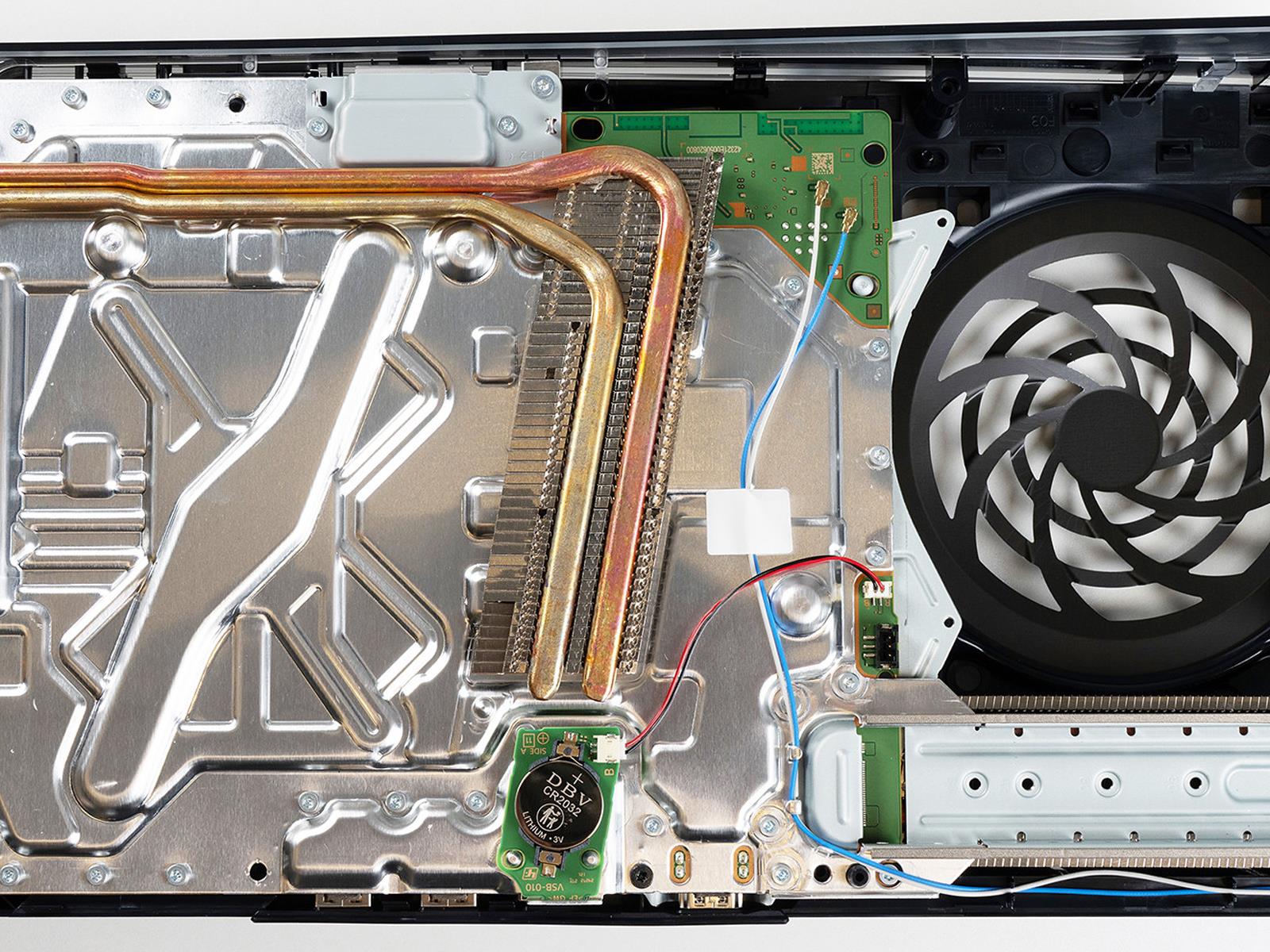
To showcase some of the improvements implemented in the PlayStation 5 Pro, Sony has posted an official teardown of the upgraded console. Performed by engineers Shinya Tsuchida, PS5 Pro Mechanical Design Lead, and Shinya Hiromitsu, PS5 Por Electrical Design Lead, the teardown offers a “deep dive into the console’s innovative technology and
It’s the old days of Twitter all over again: Bluesky is launching an official verification process for awarding the blue check mark to “notable” user accounts, adding to the platform’s existing option to self-verify using an owned domain.
Since 2023, Bluesky has allowed individuals and organizations to “verify” their own accounts by setting their domain as their user name—NPR is @npr.org, for example, and NPR journalists are on the subdomain @name.npr.org—in a decentralized approach to signaling authenticity and building trust.
Because connecting a domain required users to own or have access to that domain, this was one way of proving identity. However, Bluesky still saw a rash of fake and impersonator accounts, as self-verification required users to know (or investigate) which domains were real and trustworthy. Bluesky will soon launch a more centralized verification process that requires accounts to be reviewed and approved by platform moderators.
Verification exists in various forms across other social platforms, ranging from pay-to-play on X (replacing the legacy verification process for notable and authentic accounts) to Instagram’s applications for accounts representing a “well-known, highly searched-for person, brand or entity” that has been featured in multiple news sources.
How Bluesky verification works
According to a blog post announcing the change, Bluesky’s moderation team will “proactively verify authentic and notable accounts,” which will then have a blue check mark displayed next to their names.
In addition, select organizations will have the power to issue blue check marks directly through the Trusted Verifiers feature—for example, The New York Times will be able verify its individual journalists. Bluesky’s moderators will still review each verification, and other users will be able to see which organization granted it by tapping on the blue check.
For now, individuals and organizations cannot apply to be verified, though Bluesky expects to open requests for verification and Trusted Verifier status at some point in the future “as this feature stabilizes.” Users can still self-verify using domain names.
If you prefer, you can hide verification in the Bluesky app under Settings > Moderation > Verification Settings.
The Insta360 X5 ($550) is the company’s latest 8K 360 action camera and, while it remains a different proposition to traditional action cams, it is more powerful, more reliable and easier to use.
The X5 has a larger 1/1.28-inch sensor compared to the X4‘s 1/2-inch sensor, ensuring more detail and a notable boost to low-light performance. The issue with wide-angle camera capture is that detail gets lost, especially in low-lit settings. The specification upgrades this time around reduce that substantially, including up to 13.5 stops of dynamic range.
Over the years, I’ve tried to incorporate 360-degree cameras into my workflow, using them both on vacation or at events. However, a lot of the content I capture is either during the evening or in a dark venue, literally the main weakness of these kinds of cameras. In a bid to address those shooting conditions, Insta360 introduced a new PureVideo mode that with AI noise reduction and dynamic range optimization for clearer, brighter footage in low-light conditions. It’s not perfect, but it moves dim video from unusable to decent, if not outright good. With a 5nm AI chip and two imaging chips, the X5 can also now capture Active HDR on footage at up to 5.7K 60 fps.
Image by Mat Smith for Engadget
This chip array also reduces processing time. Insta360 doesn’t specify how much faster, but anecdotally, on-device processing and file transfers to my smartphone were noticeably faster. Videos are saved almost instantly onto the camera, while saving several short clips to my phone took around 30 seconds, compared to minutes on previous devices.
While the X5 doesn’t offer higher resolution video than its predecessor, it packs in even more shooting options, like InstaFrame, which is fast becoming my go-to shooting mode. InstaFrame can record a typical “flat” video and a 360-degree video at the same time. The notion is that this gives an “instantly shareable” flat video, with no reframing or heavy editing needed.
But when you do have to, Insta360’s companion smartphone app has been further improved, with some incredibly useful editing tools. You can re-edit 360-degree video to focus on the user, or force a single view. It’s all quite intuitive too, which is a trait that shouldn’t be ignored.
Image by Mat Smith for Engadget
The X5 an incredibly versatile tool, and there’s something to be said for a camera that can capture everything. However, in less favorable conditions (or when you’re not the camera person), you might prefer the simpler settings and shooting methods of a traditional action camera.
The X5 does perform better in lower light, but it doesn’t quite match the improvements we’ve seen in low-light smartphone photography in recent years. Despite my cautiously walking around in the late evening to capture low-light footage, there was a vibration after-effect as the camera struggled to stabilize the footage. This can be reduced by staying still, but even with PureVideo (which can also be a little too aggressive addressing noise), it’s not quite there yet. I will continue to test the camera and provide further impressions. Insta360 pushed a firmware update to the X5 hours before I published this story, adding 4K60fps recording in single-lens mode, and several resolution bumps across other recording modes.
Design-wise, you have to get up real close to tell the difference between the X5 and the X4. They’re largely the same size, although Insta360 has switched to a polygon effect on the front, with a panel for the mic (and a new mesh wind guard).
The battery compartment and microSD slot are secured with a double latch where the microSD slot lives, and are protected by solid covers with sliding locks. Both sides of the camera have a grippy texture, with record and mode buttons nestled under the screen.
With the same threaded mount, Insta360’s existing selfie sticks will work with its latest camera, although fast-chargers and cases won’t, due to hardware changes. The most important thing: Insta360’s bullet time effect is still here – if you have the right peripheral.
Most of the settings adjustments, like its predecessors, are found in pull-down menus from, well, pretty much every side of the screen. Swiping right will take you to the gallery, while manual camera options are a left swipe away. Toggles and lock settings are located in the dropdown menu. There’s a lot, but if you’ve used a smartphone, you should find the basic navigation familiar.
Image by Mat Smith for Engadget
There’s a whole list of smaller notable hardware improvements on the X5 compared to the predecessor, too:
Scratch-resistant glass lenses —- which are replaceable
Larger capacity battery that lasts up to 180 minutes
Faster-charging battery (0 to 80 percent in 20 minutes)
New built-in steel mesh wind guard
IP68 waterproofing up to 49 feet
Magnetic mounting system
‘Twist to shoot’ record feature, to initiate recording by twisting a connected selfie stick
The Insta360 X5 is now on sale, priced at $550, with an Essentials Bundle also available for $660. The bundle includes an extra battery, fast-charge case, “invisible” selfie stick, lens guards and a carry case. That’s $50 more than the Insta360 X4 was at launch. The improvements to both low-light performance and new shooting modes may be worth the price increase, but don’t expect crisp 4K (or 8K) video if light is an issue.
Competition in this category remains relatively limited. Ricoh continues its Theta series, with a similar camera form factor, but seems to focus on stills more than video, while GoPro’s Max 360 camera lacks features like traditional 4K video capture, let alone 8K recording. The best alternatives are arguably Insta360’s other 360 cameras, like last year’s X4.
While there are less major spec and design changes compared to last year, the Insta360 X5 is another step forward for this type of camera, both in terms of imaging and in simplifying how you share what you capture.
This article originally appeared on Engadget at https://www.engadget.com/cameras/insta360-x5-launch-date-price-hands-on-132439941.html?src=rss
The US Federal Trade Commission has sued ride-hailing app Uber, saying it made “false or misleading” claims about its subscription service, in the latest sign that Donald Trump’s administration is embracing an aggressive stance against Big Tech groups.
The regulator alleged the company’s Uber One service failed to deliver promised savings and proved difficult to “cancel anytime” as promised, according to a complaint filed in a California court on Monday.
“Americans are tired of getting signed up for unwanted subscriptions that seem impossible to cancel,” said FTC chair Andrew Ferguson. “Uber not only deceived consumers about their subscriptions, but also made it unreasonably difficult for customers to cancel.”