I Use My Stand Mixer for Fluffier Mashed Potatoes

Whatever happened to chunky mashed potatoes? There’s a lot of hype for the silky, nearly pudding-like variety of mash—which seem to be the only kind served at restaurants these days—but for me, nothing beats a heaping pile of fluffy smashed potatoes studded with knobbly bits of soft, uncrushed tuber.

And if you too are a supporter of chunky mashed potatoes, you can use your stand mixer to get the best consistency.

Stand mixer versus hand-mashed potatoes

There is nothing wrong with hand-mashing potatoes, but I’d like to bring stand mixer mashing to your attention simply because after I tried it, I couldn’t help but appreciate the difference in consistency. I hadn’t even expected to feel the difference on my palate—I was only testing out the method to see if it served a practical purpose. 

Surprisingly, just by scooping a dollop into a bowl, I could feel that the texture was lighter than when I hand-mash potatoes in a pot. (And I didn’t even use a whisk attachment.) I then ate said bowl of spuds, and experienced an airiness that didn’t fade even after it cooled down. Whenever I mash by hand, the potatoes are soft but still dense, and they sit heavily. Not these—this batch was almost whipped, with more consistently sized bits of unmashed potato. (Maybe this is a me-thing, but if I hand mash potatoes for their chunkiness, I usually wind up with a few embarrassingly large pieces that somehow make it through my masher.)

As far as those practical purposes are concerned, mashing with a stand mixer is great if you need to multitask with multiple dishes, quickly free up the stove after boiling, or if you have limited strength or mobility.

Regardless of your reasons, here’s how I do it.

How to make mashed potatoes with a stand mixer

1. Boil or steam your spuds

When making mashed, I prefer to steam my potato pieces because it’s faster, but you can stick to boiling if you like. (Steaming only takes about 15 minutes because you only need to boil a half-inch of water rather than a gallon.) The type of potato is also up to you, but I use russets for their high starch content, which can yield a more fluffy mash.

2. Toss in the hot taters and flavoring ingredients

Cubed potatoes with butter and dry chives in a silver bowl.

Credit: Allie Chanthorn Reinmann

Once your potatoes are fork-tender, carefully (don’t burn yourself) toss them into the bowl of the stand mixer. Don’t wait for them to cool down; they should still be piping hot. As America’s Test Kitchen explains in their baked potato post, breaking open the potato (in our case, the potato hunks) while hot allows more steam to escape, leading to a fluffier, lighter texture. Add in your favorite ingredients, a few knobs of butter, some salt, pepper, and chives if you’re into that. Don’t add your liquid ingredient yet.

3. Mash

A stand mixer bowl with mashed potatoes inside.

Credit: Allie Chanthorn Reinmann

Attach a paddle attachment to the stand mixer and turn the machine on the lowest speed. Allow the mixer to do the work for about three to five minutes. You’re looking for a uniform texture, and for the butter to be fully incorporated. Stop the machine if you have to so you can get a better look at how the potatoes are breaking down.

4. Add the liquid

During those three minutes, pour your measurement of liquid (whether it’s milk, cream, or a combination of the two) into a microwave-safe measuring cup. Heat it until steaming. Keeping the mixer on the lowest speed, slowly pour the liquid into the mashed potatoes. Once the liquid has been incorporated, bump the speed up one or two notches and let it mash for another 20 seconds or until you like the texture. Taste, and adjust the seasoning if necessary.

Top your taters with a swirl of gravy and enjoy the fluffiest chunky mashed potatoes you’ve ever experienced.

House Votes To Block California’s Ban On New Gas-Powered Vehicles In 2035

An anonymous reader quotes a report from CBS News: The House of Representatives on Thursday voted to block California from implementing plans to block new sales of gas-powered vehicles in a decade. In a 246-164 vote, members approved House Joint Resolution 88, which seeks to withdraw a waiver granted by the Environmental Protection Agency to California during the Biden administration to implement the ban. Thirty-five Democrats joined 211 Republicans in backing the measure. […] The House also approved two other measures which withdraw waivers on the state’s plans to increase sales of zero-emissions trucks in a 231-191 vote, along with the state’s latest nitrogen oxide emission standards for engines in a 225-196 vote.

Following Thursday’s vote, Newsom’s office issued a statement saying the House illegally used the Congressional Review Act (CRA) to repeal the state’s Clean Air Act waivers. The governor’s office also said the move contradicts the Government Accountability Office and Senate Parliamentarian who have ruled the CRA does not apply to the state’s waivers. “Trump Republicans are hellbent on making California smoggy again. Clean air didn’t used to be political. In fact, we can thank Ronald Reagan and Richard Nixon for our decades-old authority to clean our air,” Newsom said. “The only thing that’s changed is that big polluters and the right-wing propaganda machine have succeeded in buying off the Republican Party — and now the House is using a tactic that the Senate’s own parliamentarian has said is lawless. Our vehicles program helps clean the air for all Californians, and we’ll continue defending it.” Sen. Alex Padilla (D-California) said in a statement: “House Republicans’ misguided and cynical attempts to gut the Clean Air Act and undercut California’s climate leadership ignores the reality of California’s strength as the fourth largest economy in the world…

… If Senate Republicans take up these measures under the Congressional Review Act, they will be going nuclear by overruling the Parliamentarian, all to baselessly attack California.”


Read more of this story at Slashdot.

Don’t watermark your legal PDFs with purple dragons in suits

Being a model citizen and a person of taste, you probably don’t need this reminder, but some others do: Federal judges do not like it when lawyers electronically watermark every page of their legal PDFs with a gigantic image—purchased for $20 online—of a purple dragon wearing a suit and tie. Not even if your firm’s name is “Dragon Lawyers.”

Federal Magistrate Judge Ray Kent of the Western District of Michigan was unamused by a recent complaint (PDF) that prominently featured the aubergine wyrm.

“Each page of plaintiff’s complaint appears on an e-filing which is dominated by a large multi-colored cartoon dragon dressed in a suit,” he wrote on April 28 (PDF). “Use of this dragon cartoon logo is not only distracting, it is juvenile and impertinent. The Court is not a cartoon.”

Read full article

Comments

New material may help us build Predator-style thermal vision specs

Military-grade infrared vision goggles use detectors made of mercury cadmium telluride, a semiconducting material that’s particularly sensitive to infrared radiation. Unfortunately, you need to keep detectors that use this material extremely cool—roughly at liquid nitrogen temperatures—for them to work. “Their cooling systems are very bulky and very heavy,” says Xinyuan Zhang, an MIT researcher and the lead author of a new study that looked for alternative IR-sensitive materials.

Added weight was a sacrifice the manufacturers of high-end night-vision systems were mostly willing to make because cooling-free alternatives offered much worse performance. To fix this, the MIT researchers developed a new ultra-thin material that can sense infrared radiation without any cooling and outperforms cooled detectors at the same time. And they want to use it to turn thermal vision goggles into thermal vision spectacles.

Staying cool

Cooling-free infrared detectors have been around since before World War II and mostly relied on pyroelectric materials like tourmaline that change their temperature upon absorbing infrared radiation. This temperature change, in turn, generates an electric current that can be measured to get a readout from the detector. Although these materials worked, they had their issues. Operating at room temperature caused a lot of random atomic motion in the pyroelectric material, which introduced electrical noise that made it difficult to detect faint infrared signals.

Read full article

Comments

Sen. Susan Collins blasts Trump for cuts to scientific research

This article originally appeared on Inside Climate News, a nonprofit, non-partisan news organization that covers climate, energy, and the environment. Sign up for their newsletter here.

Sen. Susan Collins (R-Maine) kicked off a Wednesday hearing criticizing ​​the Trump administration for cutting science funding, firing federal scientists, and triggering policy uncertainties that she said threaten to undermine the foundation for America’s global leadership.

Collins, chair of the Senate Appropriations Committee, said the administration’s abrupt cancellation of grants and laying off scientists has little or no justification. “These actions put our leadership in biomedical innovation at real risk and must be reversed,” she said.

Read full article

Comments

The 2025 Aston Martin Vantage: Achingly beautiful and thrilling to drive

I’m not sure I can remember another car that took as long to get comfortable with as the 2025 Aston Martin Vantage. It’s an achingly beautiful machine, from the outside at least. And by the week’s end, I had my first glimpses into how it can deliver driver engagement with the best of them. By then I’d also gotten over my disappointment with the interior and, sadly yet again, had the “British cars with crap electronics” stereotype confirmed once more.

Painted the same striking shade of Podium Green as one of Formula 1’s safety cars, the Vantage is one of the most eye-catching cars we’ve tested in a while. In person, that giant front grille dominates things, but all around the car you see the influence of the aerodynamicists and engineers who want to bend the airflow to their needs; cutting drag here, adding downforce there, feeding a cooling duct or venting waste heat. The way the wheel arches stretch out from the doors reminds me of the One-77 supercar from a few years ago, but it’s all a thoroughly modern shape here.

That sculpted and vented hood contains the Vantage’s 4.0 L twin-turbo V8. With 656 hp (490 kW) and 590 lb-ft (800 Nm), it’s the most powerful Vantage to date, eclipsing the time the company bolted some Eaton superchargers to a 2-ton Chesterfield sofa on wheels. ZF’s excellent 8HP automatic transmission sends that power and torque to the rear wheels, which arrived wearing Vantage-specific versions of Michelin’s latest Pilot Sport 5 tires.

Read full article

Comments

How (and Why) to Use Your Steam Deck’s ‘Desktop’ Mode

We may earn a commission from links on this page.

The Steam Deck makes your PC games feel like they were built for handheld gaming, but it’s kind of like a fancy illusion. Under the hood, the Steam Deck is essentially a Linux PC that employs a user interface made for a controller. What that means is that you, the user, can easily dive under that hood with Steam’s Desktop interface and start modding and tweaking your games, just like you would on a regular gaming PC.

When you’re in Desktop mode, you’ll find a full Linux desktop environment (specifically, KDE Plasma) complete with Firefox for browsing the web, a file manager, and the full desktop Steam interface. While it works a little differently than something like Windows, if you’re used to tweaking settings or modifying your game files in Steam, this mode will seem familiar.

This is also the mode you’ll need to access if you want to install third-party launchers, mod your games, or run emulators. There’s so much power waiting for you behind a simple change in interface. Here’s how to get started.

How to access Desktop mode

Valve has made it remarkably easy to swap to Desktop mode, and it shouldn’t be intimidating to anyone. Here are the steps:

  1. Press the Steam button (underneath the left touchpad).

  2. Select Power.

  3. Select Switch to Desktop.

That’s it. Easy, right? Keep in mind, this is technically restarting your console, so if you’re in the middle of a game, save any progress you have. After a brief black screen, you’ll see a desktop UI with a few desktop shortcuts and a toolbar along the bottom.

How to navigate the desktop on a Steam Deck

While you can technically connect a mouse and keyboard to use this as a desktop, you don’t have to. There are a few basic controls you’ll need to learn, but once you do, you’ll be able to navigate just like it was any other PC.

  • The touchscreen. First and foremost, since this is a touchscreen, you can tap directly on anything on the screen. It’s not the most precise method, but it should be mentioned up front.

  • The right trackpad is your mouse. Just like the touchpad on your computer, you can use the right trackpad to control the desktop cursor.

  • The left trackpad is your scroll wheel. It can be a little wonky, but swipe up and down on the left trackpad and you can scroll through websites or menus that have focus. 

  • Click and right-click with the right and left triggers, respectively. To click on something, press the right trigger. To right-click on something, press the left trigger. Yes, it sounds counterintuitive when you describe it, but once you’re doing it, it feels a lot more natural.

  • Press Steam + X to pull up the on-screen keyboard. This is the least intuitive part of the interface, but if you need to enter text, press Steam + X. This shortcut will invoke the virtual keyboard. You can then dismiss it when you’re done by pressing the keyboard icon on the bottom right.

These basic controls will let you navigate the vast majority of the desktop interface. It might feel a little cumbersome at first, but you get the hang of it quickly. With that in mind, you can start messing around in your Steam Deck’s files.

Install non-Steam game launchers

Steam might be the default official game store for the Steam Deck, but you can technically install others. In the past, this was a bit of a hassle, but long-suffering volunteers have made tools to make it easier than ever. You can install launchers like GOG Galaxy and even Epic Games Store with a little effort.

Keep in mind that none of these are officially supported, and you should research install methods specifically for the Steam Deck to get them working. The Steam Deck runs on a Linux build, and it’s only able to run Windows applications through the frankly magic Proton compatibility layer. You’re venturing into buggier territory with this path, but you can find access to a ton of games you couldn’t have otherwise played with the default Steam Deck setup.

Start modding your games

Modding is one of the best ways to breathe new life into your favorite games, and Steam is usually super friendly to it. While there’s not an easy way to do it from the default Steam Deck, its desktop mode opens that world right up. You can use Firefox to browse popular mod sites like NexusMods and the Dolphin file browser to dig through your game files.

Since you can also access the desktop version of Steam, it’s easier to go through your game files. Right-click (that is, left trigger) on any game in your Library, select Properties > Installed Files, then click on Browse to pull up the folder where that game’s files are located.

In some (rare) cases, it can be even easier. NexusMods is currently developing a Steam Deck version of its mod manager app that currently officially supports Stardew Valley, with more games planned for future support.

Connect peripherals for the full PC experience

With the Steam Deck’s USB-C port, you can connect a wide range of peripherals that let you effectively turn your Deck into a whole PC. Valve even has an official docking station (though you can also find cheaper ones from companies like Anker). It also supports Bluetooth connections for wireless keyboards and mice. With this you can connect:

  • External monitors. The Steam Deck has a 1280×800 panel (either IPS or OLED, depending on your model), which is great for its size, but it’s hardly high res. If you’d rather play your games on something bigger and more detailed, you can connect an external monitor to play on.

  • Keyboards and mice. Obviously, Steam and its games were designed with a PC interface in mind. While the Steam Deck has done a great job of making games feel at home on a handheld, you can always connect a mouse and keyboard as a fallback. This also makes navigating desktop mode easier.

  • External hard drives. One of the biggest downsides of the Steam Deck is its limited storage capacity. Rather than constantly redownloading your games, you can plug in an external drive and swap out your games from there, via desktop mode. You’ll save a ton of time (and bandwidth) over deleting and redownloading.

  • Ethernet adapters. The Steam Deck is at its best when you’re playing single-player games, in my opinion. However, if you’d like to occasionally use it for online play, you might get better latency over an Ethernet connection. Docking stations can add this functionality while docked without having to invest in a whole laptop.

If you only ever use a Steam Deck in handheld mode, you’ll probably have a great time. The experience is so refined at this point that you’d be forgiven for thinking every game on Steam was designed with the handheld in mind first. However, if you’re willing to brave less conventional waters, the Steam Deck’s desktop mode is a gateway to the kind of tinkering power normally reserved for the full-fledged PC crowd.

The Garmin Forerunner 265 Is $100 Off Right Now

We may earn a commission from links on this page. Deal pricing and availability subject to change after time of publication.

Garmin is well-known among fitness smartwatch enthusiasts, and if you’re a runner, the Forerunner 265 is the best option in the Garmin lineup. The Forerunner 265 is without question the best fitness watch for runners, according to Senior Health Editor Beth Skwarecki’s review. While it’s typically a costly smartwatch at $449.99, it’s currently on sale for $349.99, which is the lowest price it has ever been, according to price tracking tools. (Both the 46 mm model and the smaller 42 mm model are on sale for the same price.)

The Forerunner 265 comes with a bright and colorful AMOLED screen that makes it easily visible out in the sun. There are also physical buttons, which are much easier to hit without needing to look down mid-run. The GPS is surprisingly accurate, as is the heart rate tracking feature.

The watch also calculates your VO2max and uses that data to predict your race times for a 5K, 10K, half-marathon, and full marathon. These predictions are pretty accurate, but usually a bit on the optimistic side, according to Beth’s review. As you can with most Garmin watches, they are very customizable, from screen watches to workouts. The data you see or don’t see can be easily edited in the companion Connect app.

Beth got about 14 days of battery life from the smaller 265S watch. They are mostly the same watch with very subtle differences. The main thing you should worry about is getting the right size for your wrists so it fits well and generates accurate readings.

Microsoft just increased all Xbox prices: Grab one before the hikes go into effect

Microsoft just increased all Xbox prices: Grab one before the hikes go into effect
Microsoft

Gaming is about to get a lot more expensive — at least for Xbox fans. Effective today, May 1, Microsoft is increasing the price of Xbox consoles and controllers, and not by an insignificant amount: 

  • The Xbox Series S 512GB, is now $380, more than a 25 percent increase from $300. 

  • The Xbox Series X 1TB Digital is now $550, a 22 percent increase from $450. 

  • The Xbox Series S 1TB is now $430, a 22 percent increase from $350).

  • The Xbox Series X 1TB with Blu-ray is now $600, a 20 percent increase from $500.

  • The Xbox Series X 2TB Galaxy Black Special Edition is now $730, a 22 percent increase from $600.

The news doesn’t end there. Controllers and headsets now start at $65 and top out at $200 for the “Full” Xbox Elite Wireless Controller Series 2. Games will also increase in price, though not right away: “Some of our new, first-party games will launch at $79.99 beginning this holiday season,” Microsoft explains. That last one seems more about leaning in to Nintendo’s ambitious Switch 2 game pricing, and less about any possible tariff impact (though it’s worth noting Xbox prices are going up worldwide, not just in the US.)

But not all is negative, as if you’re in the market for a new console, prices at online retailers have yet to catch up. Before you whip out your credit card, remember some key caveats here. The current Xbox platform is effectively five years old, with the leaked mid-gen “Brooklin” refresh seemingly canceled. An all-new Xbox generation is also expected to arrive in the next few years, perhaps 2028, with leaks suggesting it may be a “cloud hybrid” machine. And more and more previous Xbox exclusives are beginning to pop up on the PS5, too. That said, if you’ve been waiting to buy an Xbox, now is the time, as these legacy prices could disappear any minute. 

Best Xbox deals

This article originally appeared on Engadget at https://www.engadget.com/deals/microsoft-just-increased-all-xbox-prices-grab-one-before-the-hikes-go-into-effect-192628921.html?src=rss

Lyft Silver wants to keep your aging parents off the road

Lyft is rolling out a new service called Lyft Silver that’s specifically designed to give aging and elderly people a way to get around when driving isn’t an option.

The basic pitch is that while getting rides from friends and family is great, it can limit the sense of independence an elderly person has. According to Audrey Liu, Lyft’s head of Rider and Community Safety, the goal “wasn’t just to build a service, but to remove everything that makes getting around a challenge.” Lyft Silver will ideally help people “stay connected with their communities.” 

Public transportation is already doing that for plenty of elderly people, but not everyone has access and Lyft is promising an extra level of security and support. Besides featuring a simpler interface, the new service adds access to live human support whenever you need it. Lyft Silver will also prioritize matching riders with cars that are easier to get in and out of, and make it easier to share ride details with loved ones.

Lyft has offered features in the past that acknowledge elderly riders, but hasn’t addressed them directly. The company’s Concierge service lets a doctor’s office order a ride for an elderly patient, for example. Lyft has also partnered with healthcare providers to offer paid rides to appointments. Lyft Silver just simplifies things even further by repackaging the basic ride-hailing experience for an older audience.

Lyft says Lyft Silver will launch in early access “nationwide” on May 5. You’ll be able to use the service directly from the normal Lyft app, and the company says families will be able to pay for their loved ones rides with Lyft Cash, the company’s in-app payment method.

This article originally appeared on Engadget at https://www.engadget.com/transportation/lyft-silver-wants-to-keep-your-aging-parents-off-the-road-192617078.html?src=rss

NIH To Suspend Funds For Research Abroad As It Overhauls Policy, Report Says

Nature: A forthcoming policy from the US National Institutes of Health (NIH) will target – and at least temporarily stop — funding to laboratories and hospitals outside the United States, threatening thousands of global-health projects and international collaborations on topics such as emerging infectious diseases and cancer.

The NIH, the world’s largest funder of biomedical research, plans to release the policy in the next week. Some agency staff members have already been instructed to hold funds for foreign institutions that are part of both new research grants and grants coming up for renewal, according to multiple agency employees who spoke to Nature under the condition of anonymity because they are not authorized to speak to the press.


Read more of this story at Slashdot.

Epic Games takes aim at Apple and Steam with zero-commission policy for developers

Epic Games just announced some changes to its store that should please budding developers. The company will not charge a commission of any kind for the first $1,000,000 in revenue from an app per year. Once a piece of software goes past that threshold, Epic will begin taking its standard rate of 12 percent. The policy goes into effect in June.

This sounds like a real boon for smaller devs, especially when you consider that Steam takes 30 percent of sales as commission. Apple isn’t a direct competitor here, but the App Store takes 15 percent on the first million in revenue. This increases to 30 percent once that metric is met.

Epic Games Store will take 0% on the first $1,000,000 of payments we process per game per year (vs 15% for Apple), and 12% after that (vs 30% for Apple).

Next month, we launch EGS Webshops for out-of-app purchases, as an alternative to in-app purchases.https://t.co/yTufyZbiqR

— Tim Sweeney (@TimSweeneyEpic) May 1, 2025

Epic also announced something called webshops, which sounds like a way for developers to avoid Apple’s App Store fees. These shops are powered by the Epic Games Store and offer customers “out-of-app purchases, as a more cost-effective alternative to in-app purchases.” These stores will be available next month “on any platform that allows it,” though that now includes iOS devices in both the EU and the US.

The company will begin offering a bonus of five percent in Epic Rewards to lure customers to these webshops. This will be applicable to all purchases, though the company hasn’t said if it’s a limited time offer.

Epic is able to do this whole webshop thing because it just won a case against long-time foe Apple. A California court just ordered Apple to stop collecting fees for purchases made outside of the App Store.

August 2020: Fortnite leaves the iOS App Store.

May 2025: Epic announces Fortnite will return to US iOS App Store.

More at @thegamebusiness:https://t.co/7Z8EyzhokQ

— Geoff Keighley (@geoffkeighley) May 1, 2025

The ruling also means that Fortnite is coming back to Apple devices in the US next week. Epic CEO Tim Sweeney has stated that the company would return the game to the App Store worldwide, so long as Apple extends the court’s ruling across all countries. The company will also drop all pending litigation on the topic. He’s calling it a “peace plan,” but Apple has yet to respond.

This article originally appeared on Engadget at https://www.engadget.com/gaming/epic-games-takes-aim-at-apple-and-steam-with-zero-commission-policy-for-developers-183956940.html?src=rss

How Apple’s Loss in Court May Benefit You, Even if You Don’t Play ‘Fortnite’

Fortnite is coming back to the iPhone next week, according to Epic Games CEO Tim Sweeney. That may not sound like huge news to those of you that have never played Fortnite, but the game’s return follows a court ruling that has implications for many other apps you likely use every day.

The ruling, from judge Yvonne Gonzalez Rogers, states definitively that Apple is no longer allowed to stop developers from linking to purchases outside the App Store or limit them from explaining where such purchases can be made.

What does this mean practically? Well, have you ever tried to subscribe to Netflix, upgrade Spotify, or buy a Kindle book on your iPhone? These things can’t be done right now, at least not through the iPhone apps. You also won’t find any language explaining this inside those apps. Instead, you’ll have to go onto a web browser, make the purchases there, then go back to your phone to access the movie or book, etc. This odd situation is the result of a tangle of policies between the big tech companies—one that’s hostile to users.

Currently, Apple demands that all commercial transactions inside apps go through the App Store itself. The company claims this is for security and ease of use, but Apple also happens to take a sizable cut of all App Store transactions. This means, should Netflix allow users to subscribe inside the app, it would have to pay Apple a large percentage—between 15 and 30 percent—to Apple every month. Until recently, Apple also forbade companies from linking to external websites where transactions can be made or even referencing that such alternative places to pay exist.

Different companies have responded to this in different ways. Epic Games, which owns Fortnite, pulled its apps from the App Store entirely. Some companies, including Netflix, don’t offer any signup options in the app at all, and hope that users will figure out they need to sign up elsewhere. Some companies just charge more to App Store customers: YouTube Premium, for example, costs $18.99 per month in the App Store but only $13.99 if you sign up in your browser. Some companies, like Patreon, use a different tactic: If you sign up to support someone on Patreon using your iPhone, 30 percent of your monthly contribution goes straight to Apple instead of to the creator you wanted to support.

The ruling will have implications for all such companies, allowing them to explain these things inside the app while also linking to alternative places to subscribe. Spotify told The Verge that it will soon add a link to its web-based subscription inside its iPhone app. Apple, for its part, intends to appeal the ruling, meaning the situation could change. For now, though, companies are a bit more free to link to and talk about alternative ways to make purchases.

China Advances Abandoned US Nuclear Technology

Chinese scientists have achieved a significant nuclear breakthrough by successfully refueling a thorium-based reactor while it remains operational, according to reports from Chinese state media.

The experimental 2-megawatt thermal reactor, which came online in June 2024, represents the revival of technology originally developed and abandoned by the United States in the mid-20th century. The milestone was revealed during a closed meeting at the Chinese Academy of Sciences, where project leaders shared results demonstrating the reactor’s ability to be refueled without shutdown — a capability conventional uranium reactors lack.

Though small compared to MIT’s 6-megawatt research reactor, this achievement shows China’s accelerating nuclear ambitions. The country has surpassed France in nuclear generation and recently approved 10 new reactors worth over $27 billion in investment. This thorium reactor joins other revived nuclear concepts, including molten-salt cooling systems and high-temperature gas reactors, as developers look to the past for solutions to advance nuclear energy’s future.


Read more of this story at Slashdot.

The 18 Coolest Vampire Movies for Fans of ‘Sinners’

We may earn a commission from links on this page.

Though the marketing was a bit cagey, it’s clear by this point that Ryan Coogler’s latest, the critical and box office powerhouse Sinners, unashamedly throws vampires into its genre-busting mix. Set largely in 1932, the movie follows a couple of twin brothers (both played by Michael B. Jordan) returning to their backwater hometown of Clarksdale, Mississippi to set up what they hope will be a lucrative juke joint—but not before navigating through old relationships and dealing with the Klan leader who owns the sawmill the two are looking to buy. By the midway point, all the more grounded elements feed into a larger narrative that blends magical realism, action, and horror. It’s a thoroughly distinctive vision, it has already made a great deal of money, and it’s an early Oscar favorite—so look for studios to learn the wrong lessons and unleash a stream of generic vampire movies.

So watch a non-generic one. None of the 18 movies collected here is particularly like Sinners, other than the vampire angle—but just as Ryan Coogler’s movie uses vampires as a starting point, these movies all twist undead lore into wildly different shapes to form wildly different, consistently cool, stories.

Ganja & Hess (1973)

A meditative, sultry, and entirely experimental horror film, writer/director Bill Gunn’s Ganja stars Duane Jones (Night of the Living Dead) as Dr. Hess Green, who is attacked by his assistant with a knife belonging to a fictional ancient African tribe. He’s subsequently compelled to drink the blood of his assailant, an act that completes his vampiric transformation. Shortly thereafter, the assistant’s wife shows up looking for her husband and, even once she realizes what happened, begins a love affair with the doctor. Stylish and deliberately paced (a lot of vibes; a little plot), the movie has some smart, and very barbed, points to make about assimilation and religious hypocrisy. Spike Lee remade it in 2014 as Da Sweet Blood of Jesus but, with respect to Lee, you’re much better off with the original. You can stream Ganja & Hess on Tubi and Kanopy or rent it from Prime Video.


A Girl Walks Home Alone at Night (2014)

Iranian-American writer/director Ana Lily Amirpour’s A Girl Walks Home Alone at Night would make a list of cool vampire movies on its gorgeous black-and-white style alone: Gliding down the streets of an Iranian town in her chador, The Girl (Sheila Vand) cuts an iconic figure, even when we learn that her eerie way of movement has to do with a concealed skateboard. But Amirpour has a lot of fun with the idea that a girl traveling a deserted street in the dark might be a threat far more than a potential victim, and that a chador might be less a symbol of oppression than a means of staying concealed until the moment comes to strike. You can stream A Girl Walks Home Alone at Night on Kanopy or rent it from Apple TV+.


Dracula’s Daughter (1936)

Like father, like daughter in this direct sequel to the Bela Lugosi film, with Countess Marya Zaleska (Gloria Holden, in full Garbo mode) running afoul of Edward Van Sloan’s Van Helsing from the original. The two vampires share in common not just an archnemesis, but an eye for the ladies, as well, with Countess Zaleska seducing first despondent Lili and then kidnapping Janet. What it lacks in style (not being nearly a match for Todd Browning’s film in that regard) it makes up for in sheer horniness. Producers and censors were nervous about the lesbian of it all in the lead-up to the film’s release, but also chose to hype it up in the marketing, especially with the very on-the-nose tagline: “Save the women of London from Dracula’s Daughter!” You can rent Dracula’s Daughter from Prime Video.


Bit (2019)

Nicole Maines (Supergirl) stars here as Laurel, a trans teenage girl who’s off to sunny LA following her transition. She’s looking for a fresh start, and it’s all going great until a club afterparty leads to lots of making out—and then some blood drinking. It’s not long before Laurel is offered the chance to join an all-female group of vampires dedicated to taking care of the many predatory men walking the city’s streets. You can stream Bit on Prime Video.


What We Do in the Shadows (2014)

Starring, written, and directed by Jemaine Clement and Taika Waititi, Shadows precedes the equally great show of the same name with a similar premise: A houseful of old-world vampires (with old-school vampire trappings) looks desperately uncool when faced with the modern world. Many vampire narratives derive pathos from the idea of people trapped in a state of dull, unchanging immortality. Shadows takes that notion and mines it for solid laughs. You can rent What We Do in the Shadows from Prime Video.


Daughters of Darkness (1971)

Erotic bisexual vampire movies, believe it or not, had a moment in the 1970s; few (if any) were more successful, and more genuinely sexy, than Daughters of Darkness. The movie has a look and feel that borders on arthouse, with a grand and elegant style, as well as a willingness to go deeper with themes (western decadence, gendered power dynamics, etc.) that have been discussed in many an academic context in the decades since. If all that makes it sound like a bore, I’ll repeat that it’s still very much an erotic bisexual vampire movie. Delphine Seyrig plays Countess Elizabeth Báthory, who happens upon a newlywed couple honeymooning in a remote region, and immediately sets about seducing the wife away from human sexual and moral conformity. You can stream Daughters of Darkness on Tubi and Shudder or rent it from Prime Video.


The Lost Boys (1987)

It might not be the gayest vampire movie (there’s a lot of competition), but it may well be the sweatiest. Directed by out gay director Joel Schumacher (several years before he made the gayest superhero movie, Batman & Robin), The Lost Boys finds brothers Sam (Corey Haim) and Michael (Jason Patric) Emerson moving with their family to sunny, schvitzy Santa Carla, California—just in time for Michael to be seduced into joining a sexy vampire gang by its blonde leader David, played by Kiefer Sutherland. The vamps bait Michael with Star (Jamie Gertz), but his desire for the girl gives way to a fascination with David that leads him down a very bloody path. You can rent The Lost Boys from Prime Video.


Cronos (1992)

Guillermo del Toro begins in this deeply unconventional vampire movie, the writer/director’s debut. In the 16th century, an alchemist invents the titular device: a steampunk-ish scarab that conceals a creature inside. When it’s rediscovered in the present by Jesús Gris (played by del Toro favorite Federico Luppi), it injects the man with an elixir that makes him (a bit) younger, and gives him a vampire’s thirst for blood. Complicating matters, a dying oligarch who’d been on the trail of the Cronos isn’t very happy that someone else gets the use of its powers, so he sends his relentless thug of a nephew (Ron Perlman) to hunt it down. The imagery is weird and endlessly inventive and, what’s more, del Toro injects enough dark comedy around the edges so that the proceedings never bog down in self-seriousness. You can stream Cronos on Max and The Criterion Channel or rent it from Prime Video.


Blade II (2002)

A decade on from Cronos, Guillermo del Toro directed this rather brilliant action spectacle—a blood-soaked good time that blends its disparate elements into a propulsive thrill ride that knows exactly what kind of movie it is. Wesley Snipes is at his sassy best as the title’s vampire/vampire hunter, while every set piece is bright and colorful, and the vampires are thoroughly monstrous. Practical effects and an artist’s eye turn a comic-book action movie into an essential. You can rent Blade II on Prime Video.


Nadja (1994)

A fascinating novelty from director Michael Almereyda, Nadja is based (roughly) on André Breton’s French surrealist manifesto of the same name; when financing for such an adaptation fell through (a near-instantaneous process), David Lynch (who also appears) stepped in and paid for the whole thing. To save money and achieve a particular look, Almereyda filmed vampire point-of-view shots on a Fisher-Price camera. All of which is to say that this is unlike other vampire movie. Two plot points kick off the film: First, the death of Count Dracula at the hands of his old nemesis, Van Helsing (Peter Fonda)—traumatizing his daughter (Elina Löwensohn); then, that same Nadja seeking out the daughter of Van Helsing to have sex with so that she can make her a thrall and carry out her goal of getting revenge on the Van Helsing family. It’s an arty take on blood, gore, and horny lesbian vampires. You can stream Nadja on Prime Video.


Thirst (2009)

“What if we took Emile Zola’s non-supernatural 1868 novel Thérèse Raquin and made it into a vampire horror film?” said writer/director Park Chan-wook (Oldboy), apparently. The novel is about an orphan forced into a miserable marriage with a droopy hypochondriac who begins a torrid, ill-fated affair. Here, the orphan is Tae-ju (Kim Ok-vin), and the dashing man with whom she’s having an affair is Sang-hyun (Song Kang-ho), a one-time Catholic priest who developed vampiric hungers following an experiment gone wrong. Wildly stylish, and fascinating in being surprisingly faithful to a book that has nothing at all to do with vampires. You can rent Thirst from Prime Video.


Only Lovers Left Alive (2013)

Is Only Lovers Left Alive a horror movie? A Gothic romance? A stoner-ish comedy? Um…yes? Indie writer/director Jim Jarmusch, who’d already put his distinctive stamp on other genres (like the idiosyncratic western Dead Man), turned his camera to horror. The movie follows a vampire couple, both alive for centuries but now living a world apart: Adam (Tom Hiddleston) is a sullen and moody musician living in a trashy Detroit apartment, while Eve (Tilda Swinton) lives a cheerier life in Tangier. She brings Adam along with her to give him a change of scenery and get him out of his gloomy rut, where she encourages him to get out to live a little, or whatever the undead equivalent is. You can rent Only Lovers Left Alive from Prime Video.


Interview With the Vampire (1994)

It’s great that the modern TV-series adaptation dispenses with the subtext and gets real as to the relationship between Lestat and Louis, but this 1994 adaptation walks impressively close to that edge. Vampires Lestat (Tom Cruise) and Louis (Brad Pitt) set up housekeeping in moody New Orleans, “adopting” daughter Claudia (Kirsten Dunst) and generally making a glorious mockery of the all-American family unit. You can rent Interview with the Vampire from Prime Video.


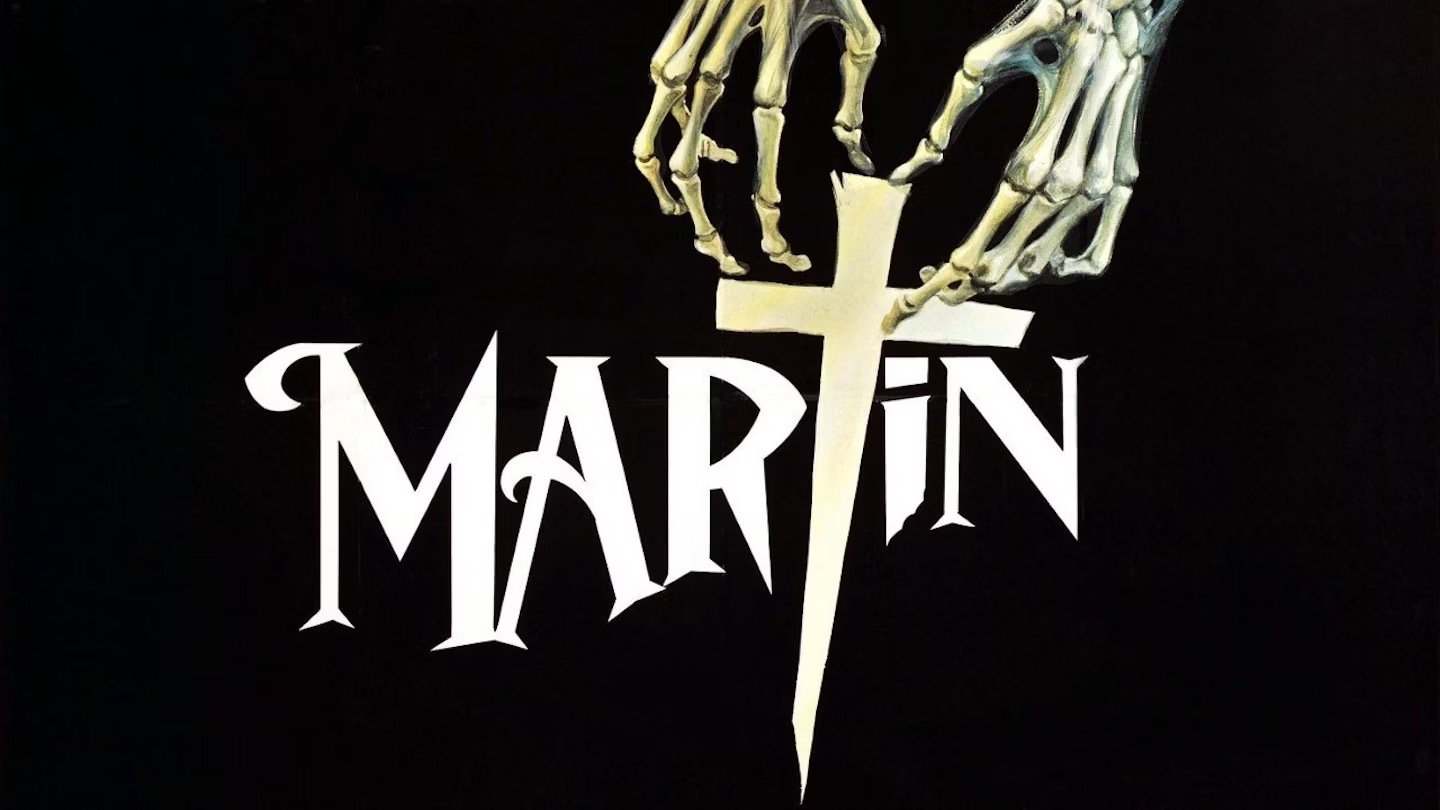
Martin (1977)

George Romero manages to pack an extensive exploration of vampire lore into a film that may or may not even involve a vampire—it’s not much a spoiler to offer that we’re never entirely clear whether the vampirism of Martin (John Amplas) should be taken literally. From a family steeped in Eastern European folklore and myth, Martin develops a driving need to drink blood, a need that leads him to drug his victims and then slice into their veins with a razor. As usual, Romero has a lot to say, but here he’s expertly playing on notions of vampires as sexual stand-ins (the impotent Martin role-plays the highly sexualized vampire attacks of earlier movies), and Romero also invites us to question our fascination with Martin even as he’s engaged in repulsive acts. You can stream Martin on Tubi.


Let the Right One In (2008)

One of the finest vampire movies, certainly of this century, is unexpectedly poignant, even as it doesn’t skimp on the brutality. Bullied Oskar (Kåre Hedebrant) meets and befriends Eli (Lina Leandersson), a girl who appears to be about his age, but who is (you won’t be surprised to learn) a vampire. Though very different, the two bond over their shared status as outsiders in the gloomy Swedish suburb of Blackeberg. You can stream Let the Right One In on Kanopy or rent it from Prime Video.


Stake Land (2010)

Stake Land‘s vampires are neither sexy nor subtle. They’re fully animal creatures that stalk an apocalyptic wasteland—cutting to the chase as to what a world with vampires might quickly come to look like. As a thriller, it’s gory and effective, but a movie just about humans on the run from scary vampires would be less interesting than what we get here: As is so often the case, it’s the humans who remain the scariest threats. Religious fanatics calling themselves The Brotherhood are convinced that vampire are God’s will, a punishment for sins and, as a result, they’re perfectly happy to help the hungry beasts feed. You can stream Stake Land on Tubi, Kanopy, Peacock, and Prime Video.


Blood Relatives (2022)

We’re talking about cool vampires here, but this comedy from director Noah Segan is about a terminally uncool vampire (played by Segan), who discovers that he’s the father of a grown young woman (played by a great Victoria Moroles) who inherited his vampirism, in part, and wants to connect with her dad following the death of her mom. Mostly, she just has nowhere else to go. In and among the snappy dialogue and sharp characterizations, Segan has fun puncturing vampire lore in the story of a guy who initially has no interest in connecting with his daughter, but then has a change of heart. You can stream Blood Relatives on Shudder or rent it from Prime Video.


Dracula (1931)

If it’s hard to imagine a time when horror wasn’t a powerhouse movie genre, that’s because it’s been that way since 1931, the year that Béla Lugosi’s Count Dracula sashayed onto the screen. Tod Browning’s film was a prestige adaptation of a classic novel, before it occurred to anyone to treat horror as B-level entertainment, so there’s no corner-cutting in Dracula’s impeccable style. Though it gets a bit stagey in its second half, the movie gives us some of horror’s most indelible imagery—scenes and shots we’re still referencing nearly a century later. Béla Lugosi’s Dracula has been endlessly parodied and imitated, but all of that’s only possible because he made one hell of an impression. You can rent Dracula from Prime Video.

Neanderthals invented their own bone weapon technology by 80,000 years ago

Archaeologists recently unearthed a bone projectile point someone dropped on a cave floor between 70,000 and 80,000 years ago—which, based on its location, means that said someone must have been a Neanderthal.

The point (or in paleoarchaeologist Liubov V. Golovanova and colleagues’ super-technical archaeological terms, “a unique pointy bone artifact”) is the oldest bone tip from a hunting weapon ever found in Europe. It’s also evidence that Neanderthals figured out how to shape bone into smooth, aerodynamic projectiles on their own, without needing to copy those upstart Homo sapiens. Along with the bone tools, jewelry, and even rope that archaeologists have found at other Neanderthal sites, the projectile is one more clue pointing to the fact that Neanderthals were actually pretty sharp.

Getting to the point

Archaeologists found the bone point in Mezmaiskaya Cave, high in the Caucasus Mountains (Mezmaiskaya is also home to the remains of three Neanderthals who lived around 90,000 years ago; anthropologists sequenced samples of their DNA in earlier studies). Herbivore teeth from the same layer of sediment dated to around 70,000 years old, and the bone point’s position near the bottom of that layer probably makes it closer to 80,000 or 70,000 years old. That makes it the oldest bone projectile point ever found in Europe (so far).

Read full article

Comments

Google is quietly testing ads in AI chatbots

Google has built an enormously successful business around the idea of putting ads in search results. Its most recent quarterly results showed the company made more than $50 billion from search ads, but what happens if AI becomes the dominant form of finding information? Google is preparing for that possibility by testing chatbot ads, but you won’t see them in Google’s Gemini AI—at least not yet.

A report from Bloomberg describes how Google began working on a plan in 2024 to adapt AdSense ads to a chatbot experience. Usually, AdSense ads appear in search results and are scattered around websites. Google ran a small test of chatbot ads late last year, partnering with select AI startups, including AI search apps iAsk and Liner.

The testing must have gone well because Google is now allowing more chatbot makers to sign up for AdSense. “AdSense for Search is available for websites that want to show relevant ads in their conversational AI experiences,” said a Google spokesperson.

Read full article

Comments

Gaming news site Polygon gutted by massive layoffs amid sale to Valnet

Vox Media has sold video game specialist website Polygon to Internet brand aggregator Valnet, the publisher of content-churning sites including Game Rant, OpenCritic, Android Police, and Comic Book Resources. The move comes alongside significant layoffs for veteran journalists at the 13-year-old outlet, including co-founder and editor-in-chief Chris Plante and Senior Writer Michael McWhertor.

The sudden job cuts appear to have been completely unexpected for those affected. Polygon Senior Reporter Nicole Carpenter, for instance, published a story about the Epic vs. Apple case at 10 am Eastern time this morning before sharing news of her layoff less than two hours later on Bluesky.

“Along with just about everyone else at Polygon, I am now out of a job, ending over a decade at Vox Media for me,” Curation Editor Pete Volk wrote on Bluesky. “Working at Polygon was a wonderful experience, and I’m proud of the work we did there.”

Read full article

Comments

Meet the winners of the 2025 Dance Your PhD contest

Sulo Roukka is this year’s overall winner of the Dance Your PhD contest, plus the winner of the chemistry category.

It’s time again to honor the winners of the annual Dance Your PhD contest, where eager young scientists attempt to convey the concepts of their doctoral theses through dance. This year’s overall winner is the University of Helsinki’s Sulo Roukka, who researches chemesthesis, specifically how people experience different sensory food compounds like capsaicin (hot) or menthol (cool).

As we’ve reported previously, the Dance Your PhD contest was established in 2008 by science journalist John Bohannon, who is now a data scientist at South Park Commons. Bohannon told Slate in 2011 that he came up with the idea while trying to figure out how to get a group of stressed-out PhD students, who were in the middle of defending their theses, to let off a little steam. So he put together a dance party at Austria’s Institute of Molecular Biotechnology, including a contest for whichever candidate could best explain their thesis topics through interpretive dance.

The contest was such a hit that Bohannon started getting emails asking when the next one would be—and Dance Your PhD has continued ever since. It’s now in its 17th year. There are four broad categories: physics, chemistry, biology, and social science, with a fairly liberal interpretation of what topics fall under each. All category winners receive $750. Roukka won the chemistry category and, as the overall champion, will receive an additional $2,750.

Read full article

Comments

Tesla denies trying to replace Elon Musk as CEO

Tesla today denied a report that its board contacted executive search firms to find a replacement for CEO Elon Musk. The Wall Street Journal reported last night that about a month ago, “Tesla’s board got serious about looking for Musk’s successor” and that board “members reached out to several executive search firms to work on a formal process for finding Tesla’s next chief executive.”

Tesla’s official X account then posted a statement attributed to board chairperson Robyn Denholm saying that “there was a media report erroneously claiming that the Tesla Board had contacted recruitment firms to initiate a CEO search at the company.”

“This is absolutely false (and this was communicated to the media before the report was published). The CEO of Tesla is Elon Musk and the Board is highly confident in his ability to continue executing on the exciting growth plan ahead,” Denholm’s statement said.

Read full article

Comments