Microsoft is Cutting 3% of All Workers

Microsoft is laying off 3% of employees across all levels and geographies, the company said Tuesday. “We continue to implement organizational changes necessary to best position the company for success in a dynamic marketplace,” a spokesperson told CNBC. Microsoft had 228,000 employees worldwide at the end of June, meaning that the move will affect thousands of employees.


Read more of this story at Slashdot.

Amazon renews Fallout months before season 2’s premiere

The second season of the Fallout TV series doesn’t even have a concrete release date in December yet, but Amazon has already renewed the show for a third season. Amazon has announced that it has greenlit the new season at its annual presentation in New York City. The company said Fallout has had more than 100 million viewers since it dropped on Prime Video in April 2024 and remains one of its top-three most watched titles ever. 

If you’ll recall, the live adaptation was so well-received, Fallout 4 enjoyed a resurgence in sales nearly a decade after its release. Amazon also renewed the series for a second season just a few days after the first season debuted on its streaming service. Based on the video game franchise of the same name, Fallout is set 200 years into the future after an apocalyptic event. In the story, the humans who survived the apocalypse hid in luxury fallout shelters where their descendants remained for hundreds of years. The show follows Lucy as she leaves her shelter after an attack by outsiders to find her father who’d been kidnapped. Along the way, she meets more characters, including a squire from the Brotherhood of Steel and a ghoul bounty hunter.

Amazon has yet to reveal season 3’s story, which doesn’t come as a surprise, seeing as the second season has yet to drop. But season 2 will pick up from where the first one had left off and will take viewers from the Mojave wastelands to New Vegas.

This article originally appeared on Engadget at https://www.engadget.com/entertainment/streaming/amazon-renews-fallout-months-before-season-2s-premiere-143028657.html?src=rss

The Switch 2 Has Two Great New Features for Battery Health and Security

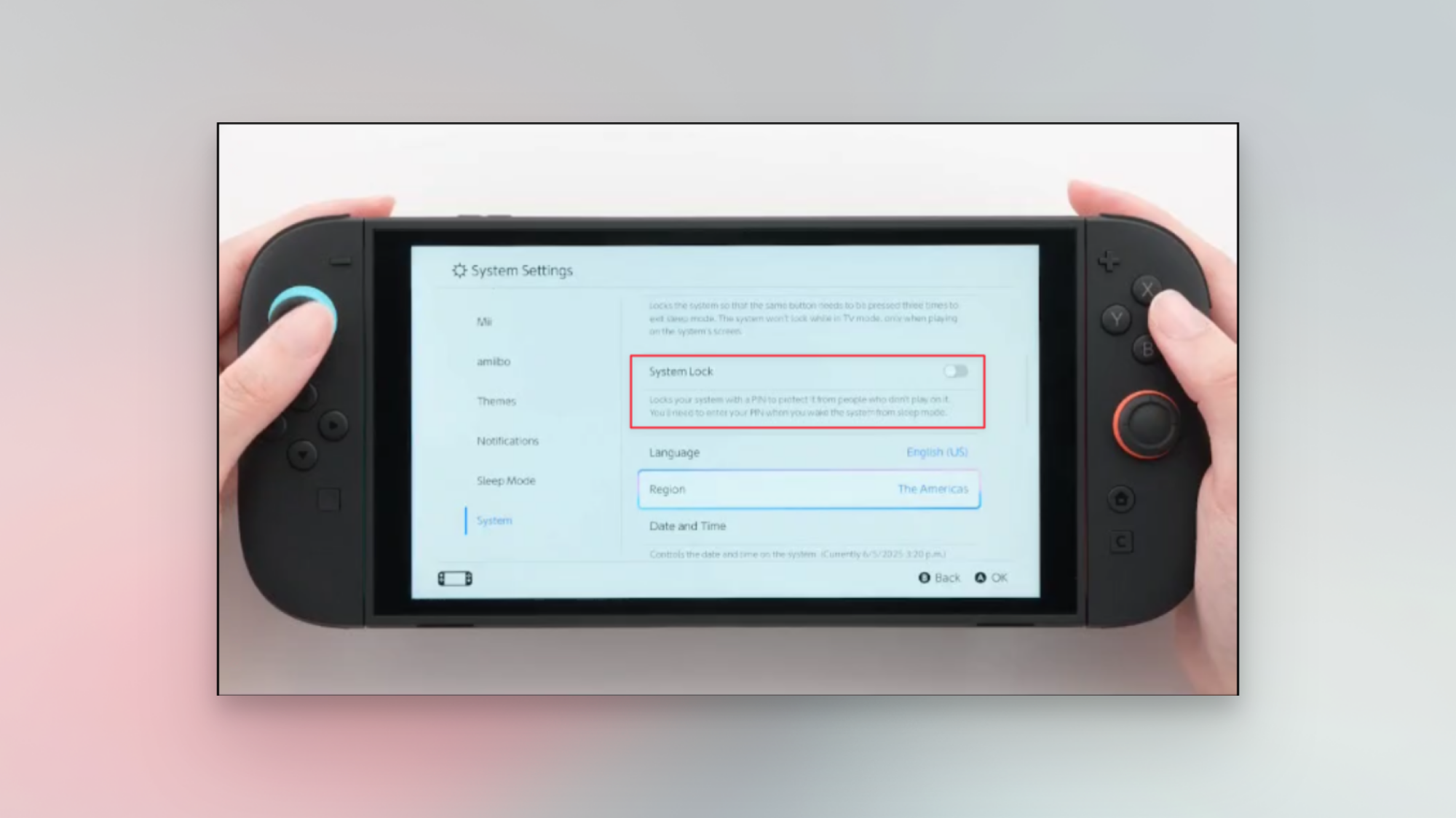
Following its initial reveal early last month, Nintendo has been drip-feeding announcements about the Switch 2, and two announcements recently posted to the Nintendo Today app are especially exciting. The company revealed that your Switch 2 will have a feature that can limit charging speeds once it hits around 90%, in order to reduce battery degradation. But perhaps more exciting, especially for parents or kids with nosy siblings, is that you’ll be able to use a PIN to lock your Nintendo Switch 2.

Set charging limits on Nintendo Switch 2

The System Lock setting in Nintendo Switch 2.

Credit: Nintendo

In a feature similar to the 80% charge limit on iPhones, Nintendo Switch 2 will optionally let you stop charging the device once the battery reaches around a 90% charge. This could help reduce battery degradation on your Switch 2, which could stave off repairs in the future. That said, the settings page mentions that your Switch 2 may still occasionally charge to 100% to ensure accurate display of the console’s battery level.

Once you have your Switch 2, you can enable this feature by going to Settings > System > Stop Charging Around 90%. This is a great feature when you consider that many people will near permanently leave their Switch 2 in docked mode.

Lock your Switch 2 with a PIN

The Charging Limit setting in Nintendo Switch 2.

Credit: Nintendo

Got someone in your house that you don’t trust with your console? The good old PIN lock is finally coming to the Nintendo Switch 2. The default screen lock on the original Nintendo Switch would require you to press a button thrice to unlock the console, which wasn’t great for security. With the Switch 2, you can lock the console with a PIN, which is better for those who want to stop people from using their console without permission. 

To enable a screen lock on your Switch 2, go to Settings > System > System Lock and enable the feature. This means that you’ll have to enter a PIN every single time you wake the Switch 2 from sleep mode. Such is the price of improved security. Personally, the slight inconvenience is worth it for me, and I’m sure any parents with kids who are always trying to sneak in extra screen time would agree.

Speedrunning Cat In Hallway Boss Battle

This is a video of a man attempting a speedrun past his cat Gulliver in the hallway, which requires a boss battle in order to proceed. Things get pretty hairy for a couple of the splits, but he manages to set a new world record thanks to great times in both claw sequences. The internet, am I right? “What about it?” This is as high as it goes, we should all return to the wilderness now.

SteelSeries Intros Gaming Headsets & Peripherals In Pristine White To Brighten Your Battlestation

SteelSeries Intros Gaming Headsets & Peripherals In Pristine White To Brighten Your Battlestation
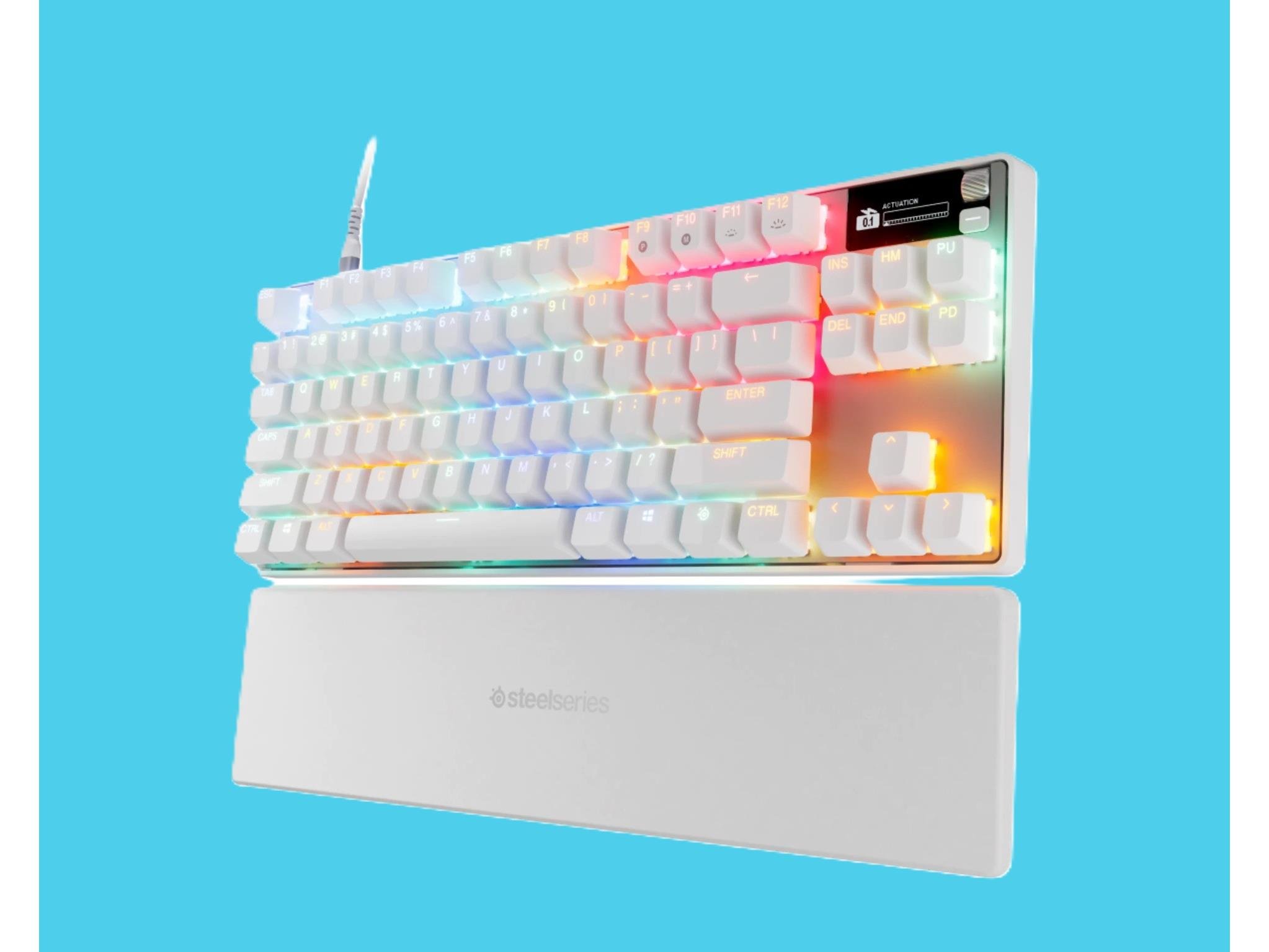
For the first time, SteelSeries has curated a selection of premium all-white gaming peripherals simply called the SteelSeries White Collection. Making up the set are three headphones (Arctis Nova 5, 7, and Pro Wireless), the Arctis GameBuds earbuds, Aerox 3 mouse, and Apex Pro TKL Gen 3 keyboard. Don’t be mistaken: these aren’t just ideal

Ana de Armas is caught in Wick’s crosshairs in final Ballerina trailer

One last trailer for From the World of John Wick: Ballerina.

We’re about three weeks out from the theatrical release of From the World of John Wick: Ballerina, starring Ana de Armas. So naturally Lionsgate has released one final trailer to whet audience appetites for what promises to be a fiery, action-packed addition to the hugely successful franchise.

(Some spoilers for 2019’s John Wick Chapter 3: Parabellum.)

Chronologically, Ballerina takes place during the events of John Wick Chapter 3: Parabellum. As previously reported, Parabellum found Wick declared excommunicado from the High Table for killing crime lord Santino D’Antonio on the grounds of the Continental. On the run with a bounty on his head, he makes his way to the headquarters of the Ruska Roma crime syndicate, led by the Director (Anjelica Huston). The Director also trains young girls to be ballerina-assassins, and one young ballerina (played by Unity Phelan) is shown rehearsing in the scene. That dancer, Eve Macarro, is the main character in Ballerina, now played by de Armas.

Read full article

Comments

Panasonic’s S1 II is its most powerful creator camera yet

After dropping a rare photography-oriented camera recently with the S1R II, Panasonic is going back to its creator roots. The company just unveiled the S1 II, a 24-megapixel full-frame mirrorless camera with a partially-stacked sensor (like the Nikon Z6 III) that can capture 6K ProRes RAW video internally with minimal rolling shutter wobble. At the same time, Panasonic is pitching it as a relative value next to full stacked sensor cameras.

With the same body as the S1R II, the S1 II is considerably smaller and lighter than the original S1 while still offering a large grip and full complement of manual controls. It also comes with a display that both tilts and flips out, a high-resolution 5.76 million-dot electronic viewfinder, CFexpress Type B and SD UHS-II card slots and optional support for Panasonic’s 32-bit float audio. 

Panasonic's S1 II camera arrives with a partially stacked sensor and 6K RAW video
Steve Dent for Engadget

Photographers get up to 70 fps burst shooting speeds in electronic shutter mode and 10 fps with the mechanical shutter (along with 1.5s pre-burst capture). They can also take 96MP high resolution shots (with no tripod needed), along with live view composites, multiple exposures and timelapse animations. Autofocus is via Panasonic’s latest AI Phase Hybrid AF with Eye/Face AF, AF tracking and detection of animals, vehicles and a new category, “urban sports” (ie breakdancing). 

On paper, though, this is more of a video-oriented camera camera. You can shoot ProRes and ProRes RAW video at up to 5.8K and 3:2 “open-gate” video at 5,952 x 3,968 resolution, along with 4K at 120 fps. It supports V-Log / V-Gamut capture with dual native ISO at 640/5000 and up to 15 stops of dynamic range. In addition, you get anamorphic video modes plus external RAW HDMI recording in either ProRes or Blackmagic formats. 

Panasonic boosted in-body stabilization to 8.0 stops via it’s Dual I.S.2 system, while also offering the cropless IBS mode introduced on the S1R II. Optical smoothing can can be enhanced with electronic stabilization when more aggressive smoothing is required for walking or quick camera movements. 

Panasonic's S1 II camera arrives with a partially stacked sensor and 6K RAW video
Panasonic

Other key features include video monitoring tools like false color and exposure review, live streaming, wired webcam supports via USB-UVC/UAC (a first for Panasonic) and support for the Lumix Flow app that lets you do things like creator storyboards and shot lists for quicker editing. And as with other recent models, the S1 II supports real time LUTs and the Lumix Lab app, letting you download creator designed film looks that can be baked in to your video or added later in post. Panasonic will also introduce ARRI LogC3 so that the S1 II, S1R II and S1 IIE can be used in conjunction with ARRI digital cinema cameras. 

The Panasonic S1 II is now available for pre-order at $3,199 (body only) with shipping set to start on June 16th. That price is high next to its main competition, the Nikon Z6 III, which retails for $2,497 and is often on sale. 

Panasonic's S1 II camera arrives with a partially stacked sensor and 6K RAW video
Panasonic

Panasonic does have an answer to that: the $2,499 S1 IIE that has the body and features of the S1 II but lacks the stacked sensor and high-speed photo bursts. Panasonic also introduced an interesting lens, the Lumix S 24-60mm f/2.8. It offers the features and most of the range of its $2,000 Lumix S 24-70mm f/2.8 lens but in a smaller and lighter size and at a lower $1,200 price tag. I’ve had the S1 II for a short time now and have been impressed so far with its speed and capabilities, so stay tuned for a full review with final firmware.

This article originally appeared on Engadget at https://www.engadget.com/cameras/panasonics-s1-ii-is-its-most-powerful-creator-camera-yet-140039445.html?src=rss

GM’s LMR battery breakthrough means more range at a lower cost

WARREN, Mich.—If you’ve been following General Motors’ development of electric vehicles on its Ultium platform, you’d be forgiven for thinking that it hasn’t gone entirely smoothly. While plagued by some initial hiccups, GM has worked through those issues and now has a total of 12 EVs on the road. By my count, that’s nine more than Ford, the crosstown rival that had a significant lead in this generation of EVs.

Furthering GM’s advancement is the development of new battery technologies. Kurt Kelty, the company’s newest head of batteries (after spending 12 years at Tesla), told me that new technology is a way to get to mass adoption of EVs.

“There needs to be price parity between gasoline and electric,” he told me. “Without the tax credit.”

Read full article

Comments

What People Are Getting Wrong This Week: Fake Jasmine Crockett Videos

A few weeks ago, I posted a story about the proliferation of AI-created fake news videos about Press Secretary Karoline Leavitt. Because I am fair (and balanced!), this week I’m looking at the AI distortion of a hero from the left: Dallas-based congressperson Jasmine Crockett.

The real Crockett is sharp, confrontational, and isn’t afraid to curse people out. AI-Jasmine Crockett is a folk hero who spends her life STUNNING, DESTROYING, and OBLITERATING various talk show hosts, actors, and political opponents. She took on Bill Maher, humiliated Seth Meyers, made Ellen DeGeneres regret insulting her, and still had time to have a judge arrested. On YouTube.

The real Jasmine Crockett is a political figure, but I don’t think these fakes are propaganda exactly. They aren’t political misinformation in the way we usually understand it. No one is trying to convince anyone to vote a certain way or write a letter to Congress. It’s stranger than that. It’s a flood of algorithm-driven cultural wish fulfillment in which computers make videos to satisfy some deeply rooted, tribal emotional need. I’d like to think most people recognize that these videos are fake (they’re not faked very well) but there wouldn’t be so many of them if they didn’t work.

Jasmine Crockett STUNS Jimmy Kimmell—and Bill Maher, Seth Meyer, Ellen Degeneres, and everyone else

The video below describes an imaginary confrontation between talk show host Jimmy Kimmel and Jasmine Crockett.

For comparison, here’s what really happened when Crockett was a guest on Kimmel’s show:

As you can see, at no point was Kimmell STUNNED or HUMILIATED, and Crockett did not refer to the host as a “f*cking weasel” even once. (“F*cking weasel” is the go-to thumbnail insult on these videos, for some reason.)

The real video has been viewed 3.1 million times in 10 months. The fake has a view count of more than 600k in three weeks, but that’s not a fair number, because there are dozens, maybe hundreds, of AI-created videos entitled “Jasmine Crockett Stuns Jimmy Kimmel on Live TV with a Savage Comeback—Audience Left in Shock!” on YouTube and other video sites. Some have 100k views, some have less than a thousand views, so there may be as many people watching the fake appearance as the real one.

If the idea was to influence American politics, to “own conservatives,” or something, Jimmy Kimmel is a strange choice for Crockett’s opposition. He’s not a conservative. But the politics only function as bait to be clicked, and Jimmy and Jasmine are emotional buzzers, not people. Viewers have strong feelings about them, so a video with Crockett and Kimmel in conflict hits recommendation pay dirt.

Developing videos titles for this breed of AI slop is like political Mad Libs, but it’s an easy-to-understand formula: The subject is a controversial media figure, the predicate is a verb that could describe both physical violence or rhetoric, and the object is a media figure. Close it off with a button and you got a YouTube AI political video.

The result are titles like these (that I made up):

  • Matt Gaetz CRUSHES Rachel Maddow Live on MSNBC—She’s Going Off the Air!

  • AOC BALL-KICKS Tucker Carlson onto his fainting couch—That’s gotta HURT!

  • RFK Jr. MELANCHOLIES Brian Kilmeade With a Haunting Stare—Audience SHOCKED!

  • Angela Davis FLAME THROWS Dick Cavett’s Sitting Room Liberalism Into an Afro-Futurist Death Spiral: “YOU GOT DIALECTICALLY DESTROYED!”

(That last one probably wouldn’t get many hits, but the thumbnail would look like this):

AI thumbnail from the 1970s

Credit: Stephen Johnson/Sora

The point is: AI slop-makers will have anyone fight anyone, regardless of political affiliation. Crockett has STUNNED Seth Meyer, Stephen Colbert, Tucker Carlson, Bill Maher, and Jon Stewart. But so, roughly, has Caroline Leavitt. For some reason, so has Denzel Washington.

You might be wondering who would be DESTROYED if the queens of AI slop, Karoline Leavitt and Jasmine Crockett, were to face off, maybe to debate why they both have two Ts at the end of their name when so many names go without any Ts at all. The answer: Karoline Leavitt would ERUPT, but Jasmine Crockett would be STUNNED.

The videos themselves are secondary to their titles, and they’re all terrible. They’re uniformly slow-paced (longer videos lead to longer engagement time, a key YouTube metric) and the content is strangely tame, given the titles. Just a droning AI voice telling a boring story for half an hour over a single still frame of the video’s subjects. It’s only interesting when the AI screws up and gives someone extra fingers or mistakes Bill Maher for Chuck Schumer.

Regardless of the low quality, sometimes one of these AI-developed videos hits the the YouTube recommendation sweet spot and gets some traffic. There’s no honor among thieves on social media, so many, many channels that produce this shit (Valorium Story, Gentry Stories, Battle Arena, etc., etc.) swarm like flies to rip off any mildly “sticky” title, and post roughly the same content, generally with diminishing returns in terms of views. It’s ridiculously easy and inexpensive to set up an automated content farm. Whether you’d make back the $100 a month or so in software subscriptions you’d need to create these videos is an open question, but I guess people have to hope.

What are viewers getting out of these videos?

Although these videos almost always have a quick disclaimer screen explaining that they’re fake or “parody,” judging by the comments, people are taking them seriously. “This young lady’s education as a lawyer was not in vain!!! She’s amazing!!!” one reads. “Those who voted for Ms. Crockett did so with unwavering confidence in her, and she delivers making us proud that she will challenge injustice without pause!” reads another.

But are the comments fake, too? Is this just AI commenting on videos made by AI, the Dead Internet Theory coming true in real time? Man, I don’t even know. It’s easier to make fake comments on YouTube than it is to fake a whole video, but I still assume that, at the end of the conveyor belt, there are actual viewers slumped over their phones, thinking (or doing whatever passes for “thinking” these days) about Jasmine Crockett. Something is shaping this narrative, and it feels depressingly human.

You can’t blame computers for videos like “Jasmine Crockett LOSES IT As Elon Musk Confronts Her to Her FACE!” That’s on us, baby. We want to watch endless videos of our perceived tribal enemies being HUMILIATED, DESTROYED, STUNNED, and FORCE-CHOKED, maybe because we like carnage, or maybe because we want to feel like we belong to something, that somewhere, Justice is jumping off the top rope, ready to SUPLEX, STUN, and OBLITERATE the people who annoy us. And if we can’t find enough of the real thing to get that little jolt of spite-flavored dopamine, we’ll make computers fake it for us.

Carmack: World Could Run on Older Hardware if Software Optimization Was Priority

Gaming pioneer John Carmack believes we’re not nearly as dependent on cutting-edge silicon as most assume — we just lack the economic incentive to prove it. Responding to a “CPU apocalypse” thought experiment on X, the id Software founder and former Oculus CTO suggested that software inefficiency, not hardware limitations, is our greatest vulnerability. “More of the world than many might imagine could run on outdated hardware if software optimization was truly a priority,” Carmack wrote, arguing that market pressures would drive dramatic efficiency improvements if new chips stopped arriving.

His solution? “Rebuild all the interpreted microservice based products into monolithic native codebases!” — essentially abandoning modern development patterns for the more efficient approaches of earlier computing eras. The veteran programmer noted that such changes would come with significant tradeoffs: “Innovative new products would get much rarer without super cheap and scalable compute.”


Read more of this story at Slashdot.

Notion AI can transcribe conversations and write reports, but it’ll cost you

Notion is coming for Otter.ai. On Tuesday, the company announced an update for Notion AI, the suite of generative AI features available through its popular note-taking app. Among the new tools included in the package is AI Meeting Notes, a feature that can transcribe and summarize any conversation directly within Notion. No need to turn to dedicated software like the aforementioned Otter.ai.

If you use Notion Calendar, your meeting notifications will include the option to start an AI Meeting Note page. Alternatively, you can write “/meeting” to add a transcription block to an existing note. Any conversation Notion AI transcribes for you is searchable through the app, and you can add what you get to any of your projects.

Notion model select
Notion

Speaking of search, you can now use Notion AI to comb through a number of different productivity apps, including Slack, Google Workspace and Github. As long as you’ve connected those platforms to Notion, the app can resolve natural language queries, like, “What’s the latest on our upcoming brand campaign?” and sort results by source.

Separately, Notion is adding a Research Mode. Similar to Deep Research modes from Google and OpenAI, you can ask Notion’s built-in AI to write reports for you. The difference here being that Notion AI will pull information from your projects, in addition to what it finds online. The company is pitching this as a real time-saver. “Create project updates, research reports, and internal best practices in minutes with one prompt,” Notion says. “We’ve already seen this save days worth of time.”

Last but not least, if you would rather prompt with GPT-4.1 or Claude 3.7 than Notion’s own chatbot, you can now do that directly within the app courtesy of a new model picker. OpenAI and Anthropic’s models won’t have access to your workspace data, but they’re there for users who prefer their responses for general questions and in case you want to turn to a reasoning system in the form of Claude 3.7 Sonnet.

As part of today’s announcement, Notion is changing how it bills for its AI features. Instead of a separate $10 per month plan, unlimited access to Notion AI is now part of the company’s Business plan, which is increasing from $15 per month and per member to $20 per month and per member. Notion’s justification for the increase is that it’s giving users access to several different tools, including GPT-4.1 and Claude 3.7, for the price of an all-in-one package. Of course, it’s not quite a one-to-one comparison. For example, if you decide to skip out on ChatGPT Plus, you miss out on expanded limits on Advanced Voice mode and Deep Research. Still, for Notion users that might be a tradeoff well worth making. 

If you’re a current Notion AI subscriber, you’ll keep access to all the AI features you had before today’s announcement. For Free and Plus users, you get limited trial access to all the new features.   

Update 9:54AM ET: Notion initially said the price of its Business plan was going up to $30, but it actually going up to $20 per month and per member.  

This article originally appeared on Engadget at https://www.engadget.com/ai/notion-ai-can-transcribe-conversations-and-write-reports-but-itll-cost-you-130018464.html?src=rss

SanDisk’s Blistering WD_Black SN8100 SSDs Nearly Saturate The PCIe 5 x4 Bus

SanDisk's Blistering WD_Black SN8100 SSDs Nearly Saturate The PCIe 5 x4 Bus
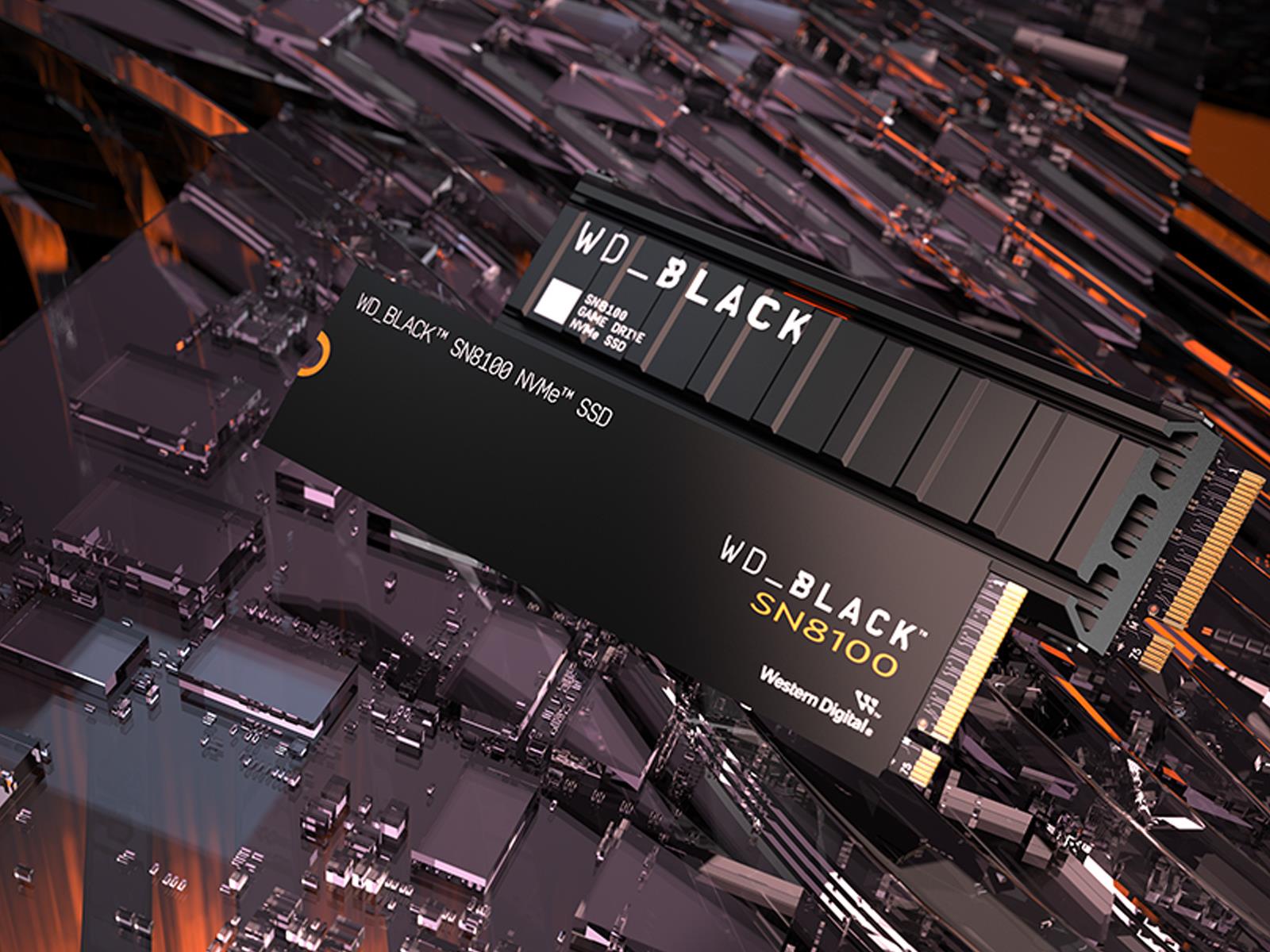
SanDisk is laying claim to the fastest PCIe Gen 5.0 solid state drives on the planet (in the consumer realm, presumably) with its new WD_Black SN8100 series, the same one that made an early appearance on Amazon ahead of the official launch. The announcement comes hot on the heels of Kingston unveiling its ferociously fast Fury Renegade G5

Sony’s new Xperia 1 VII borrows Hi-Fi sound tech from its Walkman

Sony’s smartphones probably haven’t made much money in a long time, but they do provide a showcase for the company’s latest camera and AV tech. A case in point is the new Xperia 1 VII flagship, a model that borrows Sony’s Alpha camera and Bravia TV tricks and now features Walkman audio technology for the first time as well. 

On the camera side, Sony introduced a new 48-megapixel ultrawide camera (16mm full-frame equivalent) with a good-sized 1/1.56-inch sensor, significantly improving the specs of the Xperia 1 VI’s ultrawide. That’s on top of the main 48MP 1/1.35-inch 24mm camera and 12MP 85-170mm telephoto zoom. 

Another new camera feature is AI-powered Auto Framing. It lets you capture an entire scene with a wide angle, while automatically creating a closeup crop (vertical or horizontal) of a subject within the frame. That matches technology already available on Sony’s Alpha camera lineup. Other key camera features include an improved Bokeh mode, real-time tracking and real-time eye autofocus, “telemacro” photography via the 120mm equivalent lens (with focus as close as 4cm), pro controls, a dedicated shutter button, live streaming and “low-light capability in line with full-frame cameras,” Sony claims. 

As for audio, Sony has upgraded the Xperia 1 VII considerably from the previous model. It now uses the high-end Walkman components in key areas like sound resistors. Unlike other smartphone makers, Sony has kept its headphone jack and improved wired sound via a premium-grade integrated circuit, while also improving its LDAC wireless audio quality. Plus, the Xperia 1 VII supports Sony’s DSEE Ultimate AI sound upscaling technology, along with 360 Reality audio or Dolby Atmos formats. 

The Xperia 1 VII is also taking a cue from Sony’s Bravia displays with a new adaptive brightness feature for the 6.5-inch OLED display. It now has light sensors both front and back to better gauge environmental light levels and adjust brightness, contrast and color accordingly. 

Other key features include a Snapdragon 8 Elite processor with 12GB of RAM and 256GB of storage (expandable to 2TB with microSD), WiFi 7, FPS gaming optimizer, two days of battery life via the new 5,000mAh battery, a vapour chamber cooler and Gorilla Glass Victus 2 for environmental protection. Sony is even throwing in a free set of its top-end WH-1000XM5 headphones worth around $300.

Unfortunately there’s no sign that the Xperia 1 VII is coming to the United States. It’s now available to order in Europe and the UK for €1,499 and £1,399 respectively, or around $1,700. 

This article originally appeared on Engadget at https://www.engadget.com/mobile/smartphones/sonys-new-xperia-1-vii-borrows-hi-fi-sound-tech-from-its-walkman-133017552.html?src=rss

The Samsung Galaxy Buds 3 Pro Are $50 Off Right Now

We may earn a commission from links on this page. Deal pricing and availability subject to change after time of publication.

The Samsung Galaxy Buds 3 Pro are now going for $199.99 (down from $249.99), which is helpful, because they’re not exactly a budget pick.

Available in either white or silver, they’ve got a bold new look with angular stems and built-in LEDs that you can customize to blink, fade, or stay lit—more than just a style choice, they double as status indicators. Inside, they house a 10.5mm dynamic driver and a 6.1mm planar driver, which work together to deliver full-bodied audio from bass to treble across a wide frequency range (20Hz to 40kHz). That said, reviewers like PCMag have noted that enabling active noise cancellation can slightly muffle the higher-end clarity, so you may want to play with the EQ if you’re picky about audio sharpness.

They support Bluetooth 5.4 and handle the usual AAC and SBC codecs, but the real bonus—for Samsung users at least—is support for the brand’s proprietary Seamless Codec, which allows for 24-bit/96kHz playback. That’s not something you’ll get if you’re using a non-Samsung device, though, since that codec doesn’t work outside the ecosystem. And with no LDAC support in sight, high-res fans using other Android phones might feel a little boxed in. Still, the IP57 rating is solid for daily use—it’ll hold up against dust, sweat, and the occasional dunk in water.

If you’re using a Galaxy phone, they’ll pair instantly through the Galaxy Wear app when you open the case. That unlocks all the smart features—noise control modes like ANC, Ambient, and Adaptive Sound, plus a nine-band EQ and even an Adaptive Equalizer that tweaks sound based on ear fit. The app also gives you access to Interpreter mode and Listening mode, which use AI for real-time translation. Non-Samsung Android users still get the Wear app via Google Play, though with fewer perks. iPhone users, on the other hand, don’t get access to any of these app features at all. Without the app, these basically turn into standard Bluetooth buds.

Welcome to the age of paranoia as deepfakes and scams abound

These days, when Nicole Yelland receives a meeting request from someone she doesn’t already know, she conducts a multistep background check before deciding whether to accept. Yelland, who works in public relations for a Detroit-based nonprofit, says she’ll run the person’s information through Spokeo, a personal data aggregator that she pays a monthly subscription fee to use. If the contact claims to speak Spanish, Yelland says, she will casually test their ability to understand and translate trickier phrases. If something doesn’t quite seem right, she’ll ask the person to join a Microsoft Teams call—with their camera on.

If Yelland sounds paranoid, that’s because she is. In January, before she started her current nonprofit role, Yelland says, she got roped into an elaborate scam targeting job seekers. “Now, I do the whole verification rigamarole any time someone reaches out to me,” she tells WIRED.

Digital imposter scams aren’t new; messaging platforms, social media sites, and dating apps have long been rife with fakery. In a time when remote work and distributed teams have become commonplace, professional communications channels are no longer safe, either. The same artificial intelligence tools that tech companies promise will boost worker productivity are also making it easier for criminals and fraudsters to construct fake personas in seconds.

Read full article

Comments

Samsung Galaxy S25 Edge hands-on: Less smartphone, more compromises

After teasing us for months, Samsung has formally revealed the Galaxy S25 Edge. At just 5.8 millimeters (0.22 inches) thick, it’s the slimmest member of the S25 family — and its slimmest smartphone ever. It’s available to preorder now and launches on 30 May, starting at $1,100.

Samsung said that S25 Edge “unlocks a new era of growth for the mobile industry” — and it’s easy (too easy!) to cynically see this as a way of hawking another Samsung phone into a thinner — and yet similar — slice of hardware, with familiar cameras, technical specs and AI software. This isn’t an Ultra, nor is it a new foldable. However, it could be a new direction for Samsung’s flagship S series.

What’s the difference between the S25 and S25 Edge?

Samsung Galaxy S25 Edge hands-on
Image by Mat Smith for Engadget

Surprise! The Edge is thinner. While the S25 Edge measures in at less than the base S25, which is 6.4mm (0.25 inches) thin, it weighs almost the same. In fact, there’s only a gram’s difference between the two, despite the S25 Edge packing a much bigger 6.7-inch screen than the S25’s 6.2-inch one.

And boy, can you tell the difference. The most contemporary comparison I can make is when Apple switched to a titanium frame for the iPhone 15 Pro. Spec sheets and numbers be damned: I could sense how much lighter the device was. Despite having a much bigger screen than my iPhone 16 Pro, the thinner S25 Edge felt light yet premium. I easily slipped it in and out of my pants pockets, because, well, how else am I going to assess the biggest selling point for Samsung’s latest phone?

Samsung Galaxy S25 Edge hands-on
Image by Mat Smith for Engadget

The thing is: Device thickness isn’t an issue I have with flagship smartphones — it’s the screen size. The base Galaxy S25 (or the Pixel 9 Pro) hit the sweet spot for my hands. While this new S25 Edge may be easier to hold than similar-sized phones, a 6.7-inch screen isn’t for everyone.

Like most phones (the Pixel 9a is a curious outlier), the S25 Edge still has a substantial camera unit derailing otherwise clean hardware lines. The dual-camera setup protrudes a good 4.5mm (0.17 inches), although it features the same 200-megapixel sensor packed into the pricier S25 Ultra.

Samsung says it re-engineered the camera unit to ensure it could fit on the Edge, but it still sticks out — a lot. Before I got to handle the phone, I thought this would lead to the new phone being oddly unbalanced and top-heavy. But whatever Samsung has done to arrange the component furniture inside the S25 Edge, it worked. The phone doesn’t feel lopsided or fragile at all, but like any other premium flagship smartphone.

The Galaxy S25 Edge’s cameras

Samsung Galaxy S25 Edge hands-on
Image by Mat Smith for Engadget

Alongside the primary 200MP sensor, Samsung included a 12MP ultrawide camera with autofocus and macro photography support. And… that’s it. There’s no dedicated telephoto system, which typically takes up more space however you position the camera. The two lenses are stacked in a vertical arrangement, which I think looks cleaner than the camera cornucopias found on other devices — but many folks are going to miss the versatility of a true telephoto. Sure, you can digitally zoom by cropping in on that huge 200MP sensor, but it’s not the same.

The S25 Edge can also capture up to 8K video and packs all the other photography tricks you’d expect in an S-Series phone, like night photography and lossless zoom. Of cours,e it also handles post-capture AI tools like generative editing (removing photobombers and unwanted objects from your photos) and Audio Eraser for cleaning up video in loud environments.

And when it comes to AI — or Galaxy AI — you’re getting the same array of features that we saw in the base S25 and S25 Ultra, powered by a custom Snapdragon 8 Elite chip and 12GB of RAM. Those AI tools include the Now Brief and Now Bar which takes contextual clues from your apps and smartphone to lay out a plan for your day, remind you of the weather and more. Samsung’s integration of Google’s Gemini now includes Gemini Live, so you can tap into your camera feed to ask questions about your photos and things in your surroundings.

It’ll likely pick up any future Gemini and Android upgrades, too: The Galaxy S25 Edge will receive seven generations of OS updates and seven years of security updates.

Samsung Galaxy S25 Edge hands-on
Image by Mat Smith for Engadget

At a media briefing, Samsung also outlined how it’s trying to ensure the S25 Edge runs cool despite all the packed-in hardware, using a new Thermal Interface Material (TIM) for better heat dissipation within that limited space. I didn’t really get the time to push the device to its limits during the briefing, so we’ll wait for a review to assess whether it works well enough.

The company did have to make compromises to fit all the S25 Edge’s features into this svelte profile. It has a 3,900mAh battery, which is small for a phone with a 6.7-inch display that costs more than $1,000. In comparison, the base S25 has a 4,000mAh cell — that’s a bigger battery on a cheaper phone with a smaller screen. Then, there’s the S25+, which has a 4,900mAh battery with the same screen size as the S25 Edge.

In its defence, Samsung has made considerable progress on the battery life of its devices (particularly with this year’s crop of Galaxy S phones). The company claims the S25 Edge can run video for up to 24 hours. However, with a bigger screen inside a thinner device, battery life may be the biggest compromise—and it’s something we will have to test when we review the Edge properly.

The Galaxy S25 Edge is priced at $1,100 (£1,100) with 256GB of storage. It will launch on May 30 in three colors: Silver, Jet Black and Icy Blue. It’s hard to draw any concrete conclusions on whether the S25 Edge’s compromises for a smaller device footprint are worth it, but expect our review in the next few weeks.

This article originally appeared on Engadget at https://www.engadget.com/mobile/smartphones/samsung-galaxy-s25-edge-hands-on-release-date-price-000022902.html?src=rss

Philips Fixables will let you 3D print replacement parts for your electric razors and trimmers

Philips is launching a new program called Fixables, where it will make plans available so that customers can 3D print replacement parts for the company’s personal care products. The video introducing the initiative touts it as a simpler and easier way to extend the lifetimes of functional items rather than throwing them out because a single part or attachment is broken. Philips has partnered with Prusa Research and LePub on this endeavor, and Printables is hosting the plans.

There are some caveats and limitations to this concept. The quality of the replacement part will depend on the materials used to create it, and not every customer has a 3D printer at home. (Although some public library systems, universities and local maker communities may have equipment that can be used or rented on site.)

It’s also still a project in its early stages. Fixables is initially launching in the Czech Republic. On the website for the Fixables program (which is in Czech), Philips explains that it’s starting with the home country for Prusa Research and it is reaching out to the 3D printing company’s existing maker community for this project. Another sign that the initiative is still in the early stages is that there’s only one part plan available: a comb attachment for the OneBlade trimmer. But per Google Translate, two more plans are labeled as “We are working on it” and there are three different icons with no descriptions that point to additional plans. The Fixables website also has an option for customers to submit a request for parts they want to be able to 3D print.

So while Fixables is a long way from making a real dent in waste from personal care products, it’s exciting to see a major brand making a serious effort to explore the potential of 3D printing for better sustainability.

This article originally appeared on Engadget at https://www.engadget.com/home/philips-fixables-will-let-you-3d-print-replacement-parts-for-your-electric-razors-and-trimmers-233025245.html?src=rss

Jamie Lee Curtis publicly shamed Mark Zuckerberg to remove a deepfaked ad

Jamie Lee Curtis is the latest celebrity to call attention to scam ads on Facebook and Instagram that use AI-manipulated video to hawk sketchy products. Curtis also appears to have encountered another issue familiar to many Facebook users: struggling to get the company’s attention.

In posts on Facebook and Instagram, the actress asked Mark Zuckerberg to intervene to stop the spread of a “totally AI fake commercial” of her. “My name is Jamie Lee Curtis and I have gone through every proper channel to ask you and your team to take down this totally AI fake commercial for some bullshit that I didn’t authorize, agree to or endorse,” she wrote. The post also included screenshots of the Meta CEO’s Instagram — Zuckerberg apparently doesn’t follow Curtis — and a screenshot from the scam ad.

“If I have a brand besides being an actor and author it is that I am known for telling the truth and saying it like it is and for having integrity and this use of my images … with new, fake words put in my mouth, diminishes my opportunities to actually speak my truth,” she wrote. “I’ve been told that if I ask you directly, maybe you will encourage your team to police it and remove it.”

It’s not clear what the video, which seemed to rely on manipulated footage from an interview Curtis did with MSNBC, was intended to promote. Curtis shared a screen grab with text that said “I’d want everyone suffering from.” But Curtis is far from the first celebrity to get caught up in such a scam.

Earlier this year, Engadget reported that dozens of Facebook pages were using AI tech to manipulate videos of Elon Musk and other celebrities in order to promote fake cures for diabetes. Many of those clips used similar phrasing, such as “If I were to die tomorrow, I’d want every diabetic, including you, to know this.”

The rise of cheap and readily available AI tools have made it relatively easy for scammers to impersonate celebrities to sell sketchy products or promote other schemes. Last year, Tom Hanks warned his followers about ads “promoting miracle cures and wonder drugs” using his name and voice. He said the ads were made “fraudulently” with the help of AI.

Johnny Depp also warned his fans about AI-enabled impersonators. “Today, AI can create the illusion of my face and voice,” he wrote. “Scammers may look and sound just like the real me.”

A spokesperson for Meta said the company was removing the video flagged by Curtis for violating its policies but declined to comment further. The company said last year it was cracking down on “celeb bait” scams, but hasn’t disclosed how many celebrities or public figures are participating in the program which relies on facial recognition technology.

In a comment on her Instagram post, Curtis confirmed that she did eventually get Meta’s attention. “IT WORKED! YAY INTERNET! SHAME HAS IT’S VALUE! THANKS ALL WHO CHIMED IN AND HELPED RECTIFY!”

This article originally appeared on Engadget at https://www.engadget.com/social-media/jamie-lee-curtis-publicly-shamed-mark-zuckerberg-to-remove-a-deepfaked-ad-225448916.html?src=rss

G is for gradient: Google has redesigned its app logo

Over the past few days, eagle-eyed Google users may have noticed that in some instances, the capital G logo for the company now sports a gradient softening the transitions between the four solid-color sections. The branding has been changed for the Google app on both Android and iOS devices as of this writing. However, there are still several places that continue to sport the classic color block look, including browser favicons. It’s also not included in Google’s official collection of images for press; the classic version is still being used as the entry for the Google app logo. 

None of the logos for other Google smartphone apps appear to have adopted a new gradient look. But perhaps notably, the branding for Google’s Gemini AI assistant does have a slight gradient on its star symbol. Maybe AI is leading the way for aesthetics as well as for technical choices at Google? Or maybe this is a trial run to gauge reactions before rolling out a full brand redesign? 

Whatever the reason, the biggest surprise isn’t that Google may be rolling out a logo refresh, but that the change seems to be happening with zero fanfare. When the company last redesigned its branding in 2015, there was a whole campaign explaining every last detail of the new look. Branding is a big deal for a corporation as big as Google. Even changes that seem minor would go through many iterations and committees and vetting before they go live. And any marketing exec knows that consistency is key, so it’s especially strange that, if this is a permanent change, it’s happening in a piecemeal approach. 

We’ve reached out to the company for more information about whether gradients will be the hot style trend for all Google products in 2025.

This article originally appeared on Engadget at https://www.engadget.com/big-tech/g-is-for-gradient-google-has-redesigned-its-app-logo-220437771.html?src=rss