FBI: US Officials Targeted In Voice Deepfake Attacks Since April

The FBI has issued a warning that cybercriminals have started using AI-generated voice deepfakes in phishing attacks impersonating senior U.S. officials. These attacks, involving smishing and vishing tactics, aim to compromise personal accounts and contacts for further social engineering and financial fraud. BleepingComputer reports: “Since April 2025, malicious actors have impersonated senior U.S. officials to target individuals, many of whom are current or former senior U.S. federal or state government officials and their contacts. If you receive a message claiming to be from a senior U.S. official, do not assume it is authentic,” the FBI warned. “The malicious actors have sent text messages and AI-generated voice messages — techniques known as smishing and vishing, respectively — that claim to come from a senior U.S. official in an effort to establish rapport before gaining access to personal accounts.”

The attackers can gain access to the accounts of U.S. officials by sending malicious links disguised as links designed to move the discussion to another messaging platform. By compromising their accounts, the threat actors can gain access to other government officials’ contact information. Next, they can use social engineering to impersonate the compromised U.S. officials to steal further sensitive information and trick targeted contacts into transferring funds. Today’s PSA follows a March 2021 FBI Private Industry Notification (PIN) [PDF] warning that deepfakes (including AI-generated or manipulated audio, text, images, or video) would likely be widely employed in “cyber and foreign influence operations” after becoming increasingly sophisticated.


Read more of this story at Slashdot.

Microsoft May Have Killed the Surface Laptop Studio

Microsoft has stopped production of the Surface Laptop Studio 2 and will mark it as end-of-life in June, with no successor currently planned. Tom’s Hardware reports: The Surface Laptop Studio 2 is being put out to pasture quietly, much like other devices that the company has sunset. The Surface Studio, a desktop PC that folded down into a creative studio for drawing, was formally discontinued in December without a successor. Microsoft’s audio products, the Surface Headphones 2 and Surface Earbuds, have also quietly disappeared.

The Surface Laptop Studio’s discontinuance comes at a hazy time for the Surface brand. On the one hand, two new devices — the Surface Pro 12-inch and Surface Laptop 13-inch — were just announced and are set to release next week. On the other hand, the lineup lost its champion, former chief Panos Panay, who left Microsoft for Amazon in 2023, reportedly over budget issues and product cancellations. Panay was succeeded by Pavan Davuluri.

Since Panay’s departure, the lineup has been cut down to just the Surface Laptop, Surface Pro, and the Surface Go 4, the latter of which is only sold to business customers at the moment. Without the Surface Laptop Studio, Microsoft has removed systems with discrete GPUs from its hardware lineup, potentially alienating creatives and gamers. Prior to the Surface Laptop Studio, Microsoft’s powerhouse system was the Surface Book, which combined a tablet with a base featuring a discrete GPU.


Read more of this story at Slashdot.

TikTok will try to force teens to meditate after 10PM

TikTok recently began experimenting with an in-app meditation feature that encouraged teens to “wind down” after 10PM. Now, the company is making the feature official for all users and turning it on by default for all teens under the age of 18.

With the change, teens will hit a full-screen “guided meditation exercise” when attempting to scroll after 10PM. The prompt is apparently something you can opt to ignore, but teens who do will encounter a second “harder to dismiss” prompt. TikTok’s adult users will also be able to access the in-app meditations via the app’s screen time controls (the feature will not be on by default for adults).

The company notes that its initial tests of “Sleep Hours” were successful, with 98 percent of teens opting to keep the late-night meditation settings on. Previous attempts by TikTok to limit screen time have a somewhat different track record. Documents that surfaced as part of a lawsuit against the company showed that teens were spending about 107 minutes a day in the app even when screen time was set to a 60-minute limit.

Since then, TikTok has beefed up some of its safety features, including its parental controls, amid increasing scrutiny of the company. TikTok’s fate in the US is still, officially, in limbo as President Donald Trump signed off on another extension of a deadline to ban the app last month. Terms of a final deal that will allow it to remain in the country permanently have yet to be announced, though there are a number of interested buyers.

This article originally appeared on Engadget at https://www.engadget.com/social-media/tiktok-will-try-to-force-teens-to-meditate-after-10pm-231118942.html?src=rss

Fractal Design Meshify 3 Is A Stunner Of A Case With The Wind At Its Heels

Fractal Design Meshify 3 Is A Stunner Of A Case With The Wind At Its Heels
Case aficionados everywhere should pay attention to the latest entrant in Fractal Design’s lineup. The scandinavian maker’s Meshify series has always been popular, and the new Meshify 3 raises the bar in terms of style, ventilation, and customizability for your builds.

The newcomer’s proverbial clothing is rather fetching, if we do say

New Mars Discovery: NASA Witnesses Stunning Auroras For The First Time

New Mars Discovery: NASA Witnesses Stunning Auroras For The First Time
While Jupiter’s Aurora is the brightest in our solar system due to its size and gas-rich atmosphere, our neighboring red planet also exhibits breathtaking, visible-light auroras. While on its mission to discover signs of microbial life on Mars, the Perseverance rover has also discovered a visible-light aurora phenomenon in the Martian atmosphere.

The

X is once again selling checkmarks to US sanctioned groups, report says

X has once again been accepting payments from people associated with terrorist groups and other entities subject to US sanctions, according to a new report from the Tech Transparency Project (TTP). According to the report, X has not only accepted payments in exchange for its premium service, but in some cases has provided an “ID verified” badge.

The report once again questions whether X is complying with US sanctions that restrict companies’ ability to do business with individuals and entities that have been deemed a security threat. Last year, the TTP published a similar report that identified more than two dozen verified accounts that were affiliated with sanctioned groups, including leaders of Hezbollah and accounts associated with Houthis in Yemen. Many of those checkmarks were subsequently revoked, with X promising to “maintain a safe, secure and compliant platform.”

But some of those accounts simply “resubscribed” to X’s premium service or created fresh accounts, according to the report, which is based on research between November 2024 and April 2025. “TTP’s new investigation found an array of blue checkmark accounts for U.S.-sanctioned individuals and organizations, including several that appeared to simply re-subscribe to premium service or create new accounts after their old ones were restricted or removed by X,” the report says. “Moreover, some of the accounts were ‘ID verified,’ meaning X conducted an additional review to confirm their identity.”

The report once again highlights verified accounts associated with members of Hezbollah, including one of its founders, as well as Houthi officials who “are making heavy use of X for messaging and propaganda.” The son of Libyan dictator Muammar Gadhafi, whose account was previously suspended, also currently has a blue check, as does Raghad Saddam Hussein al-Tikriti, one of Saddam Hussein’s daughters. Both have been under sanctions for more than a decade.

X didn’t respond to a request for comment on the report. In response to last year’s report, the company said it would “take action if necessary.” However, it’s unclear if the company changed any of its practices regarding who can pay for premium subscriptions.

“If a small team can use X’s public facing search tools to identify these accounts, it’s unclear why a multi-billion-dollar company cannot do the same,” Michelle Kuppersmith, the executive director for Campaign for Accountability, the watchdog group that runs TTP said in a statement. “It’s one thing to allow terrorists to have a voice on the platform; it’s another entirely to allow them to pay for a more effective megaphone.”

This article originally appeared on Engadget at https://www.engadget.com/social-media/x-is-once-again-selling-checkmarks-to-us-sanctioned-groups-report-says-194352896.html?src=rss

Here’s how the Sony WH-1000XM6 compare to the WH-1000XM5 and AirPods Max

It’s been over two years since Sony had a new pair of headphones in its 1000X lineup, but the newly announced WH-1000XM6 seem worth the wait. From the outside, the new ANC headphones look similar to the streamlined WH-1000XM5 from 2022, with the only major change being the return of ear cups that rotate and fold flat. Inside, though, Sony’s packed in improvements that put the WH-1000XM6 ahead of the competition in terms of both sound quality and active noise cancellation.

That’s mostly thanks to the new QN3 processor on the inside, the addition of four new built-in microphones (from eight on the 1000XM5 to 12 on the 1000XM6) and an updated system for adapting ANC performance around fit and pressure. All three combine for noticeably better ANC. Those changes haven’t led to shorter battery life either — you’ll get the same 30 hours with ANC activated on the WH-1000XM6 that you were able to get on the WH-1000XM5.

The WH-1000XM6 is not only able to play spatial audio tracks like the WH-100XM5 and AirPods Max can, the headphones can also convert any stereo track you throw at it into 360-degree audio. For most people, though, the more immediately useful new feature will be the ability to keep using the headphones while you charge them, something oddly missing from previous models.

At $450, the WH-100XM6 are a good $50 more expensive than WH-1000XM5 and tiptoeing closer to the exorbitantly priced AirPods Max. The best way to know if Sony’s new headphones are right for you is to read Engadget’s review and ideally, try them for yourself. Until then, we’ve put together an overview of how the WH-1000XM6 compare to the WH-1000XM5 and the AirPods Max.

WH-1000MX6

WH-1000MX5

AirPods Max

Pricing (MSRP)

$450

$400

$549

Active noise cancellation

Yes

Yes

Yes

Transparency mode

Yes

Yes

Yes

Adaptive audio

Yes

Yes

Yes

Multipoint connectivity

Yes

Can switch between 2 Bluetooth connections

Fast Pair with Android devices 

Swift Pair with Windows 11 and Windows 10 devices

Yes

Can switch between 2 Bluetooth connections

Fast Pair with Android devices

Swift Pair with Windows 11 and Windows 10 devices

No

Automatic device switching between Apple devices only

Battery life (rated)

Up to 30 hours with ANC on

Up to 40 hours with ANC off

Up to 30 hours with ANC on

Up to 40 hours with ANC off

Up to 20 hours with ANC on

Up to 20 hours with ANC and Spatial Audio on

Up to 20 hours of talk time

Wired charging

USB-C

USB-C

USB-C

Water & dust resistance

No

No

No

Size & weight

8.96 oz

8.82 oz

13.6 oz

Chip(s)

Sony QN3

Sony QN1 + V1

Apple H1

Bluetooth

Bluetooth 5.3

Bluetooth 5.2

Bluetooth 5.0

Bluetooth codecs

SBC, AAC, LDAC, LC3

SBC, AAC, LDAC

AAC, SBC

Spatial audio

Yes

360 Audio

360 Spatial Sound Upmix for converting stereo audio

Yes

360 Audio

Yes

Control type

Touch controls for playback and volume

NC/AMB button for ANC

Touch controls for playback and volume

NC/AMB button

Digital Crown dial for playback and volume

Noise control button for ANC

Mics & sensors

12 microphones total: six microphones for calls

Touch sensors

Accelerometer

Gyroscope

Eight microphones total: four microphones for calls

Touch sensors

Accelerometer

Gyroscope

Nine microphones total: eight ANC mics, three mics for voice pickup (two shared for ANC)

Optical sensor

Position sensor

Case-detect sensor

Accelerometer

Gyroscope

This article originally appeared on Engadget at https://www.engadget.com/audio/headphones/heres-how-the-sony-wh-1000xm6-compare-to-the-wh-1000xm5-and-airpods-max-193706730.html?src=rss

AMD Radeon RX 9060 XT Teased Ahead Of Expected Computex Reveal

AMD Radeon RX 9060 XT Teased Ahead Of Expected Computex Reveal
AMD’s “AMD Gaming” account just dropped a spicy little teaser on Xwitter reminding everyone about its May 20th Computex conference—and in the process, all but confirming the Radeon RX 9060 XT. The post features a sleek, compact dual-fan GPU render with a single 8-pin power connector. There’s a disclaimer saying it’s “not available for purchase,”

Uber Expects More Drivers Amid Robotaxi Push

Uber’s autonomous vehicle chief Andrew Macdonald predicted this week that the company will employ more human drivers in a decade despite aggressively expanding robotaxi operations. Speaking at the Financial Times’ Future of the Car conference, Macdonald outlined a “hybrid marketplace” where autonomous vehicles dominate city centers while human drivers serve areas beyond robotaxi coverage, handle airport runs, and respond during extreme weather events.

“I am almost certain that there will be more Uber drivers in 10 years, not less, because I think the world will move from individual car ownership to mobility as a service,” Macdonald said. The ride-hailing giant has struck partnerships with Waymo, Volkswagen, Wayve, WeRide, and Pony AI. Robotaxis are already operational in Austin and Phoenix, with CEO Dara Khosrowshahi claiming Waymo vehicles in Austin are busier than “99%” of human drivers.


Read more of this story at Slashdot.

18 Must-Watch Anime Series on Netflix

Netflix didn’t used to have the best reputation when it came to anime. The service would buy up the rights to distribute shows, only to air them on a significant delay from when they came out in Japan. That’s to say nothing of its selection, which was hit or miss.

Well, this anime fan is pleased to say that’s no longer the case.

In the last few years, Netflix has gone all-in on distributing anime in a timely fashion, sometimes even funding shows itself. A good number of modern hits are now Netflix exclusives. Even outside of what’s exclusive to the platform, you can currently find a number of all-time classics on the service. I used to recommend subscribing to other platforms if anime was your thing, but now, whether you prefer shōnen (think Naruto), shōjo (think Sailor Moon), mysteries, comedies, dramas, or romances, Netflix can be your one-stop shop—look no further than these 18 series for an example of the breadth of material on offer.


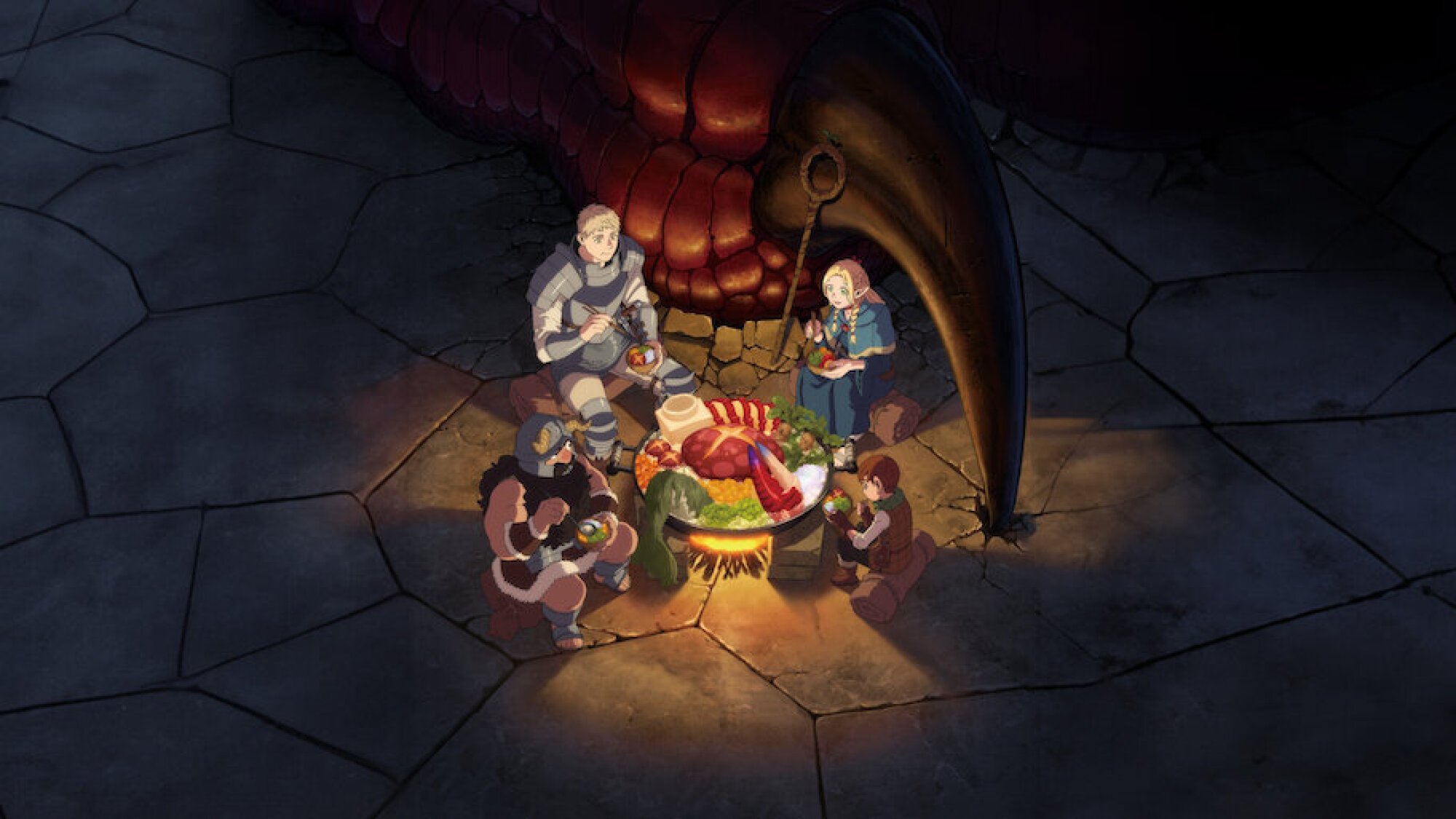
Delicious in Dungeon

Delicious in Dungeon

Credit: Netflix

If I could only recommend one anime on this list, it would be Delicious in Dungeon. Distributed exclusively by Netflix in the U.S., this adaptation of Ryoko Kui’s hit manga lovingly brings the author’s clear adoration for old-school RPGs and tantalizing feasts to life. Following broke monster fanatic Laios and his party as they venture deeper and deeper into the eponymous dungeon, it starts out seeming like your typical D&D fare before quickly veering into Food Network or even National Geographic territory: Because they can’t afford supplies, Laios and his crew must instead turn to cooking up the dungeon’s monsters to keep their journey going, giving the audience a fascinating look at the ecosystems that prop up the Moria-like locale around them. The result is hilarious and heartfelt, while still giving viewers enough action and drama to keep coming back for more adventures. And the animation, provided by the deft hands at Studio Trigger (famous for shows like Little Witch Academia and Kill La Kill), is a great match: equally warm and ferocious, depending on the scene.

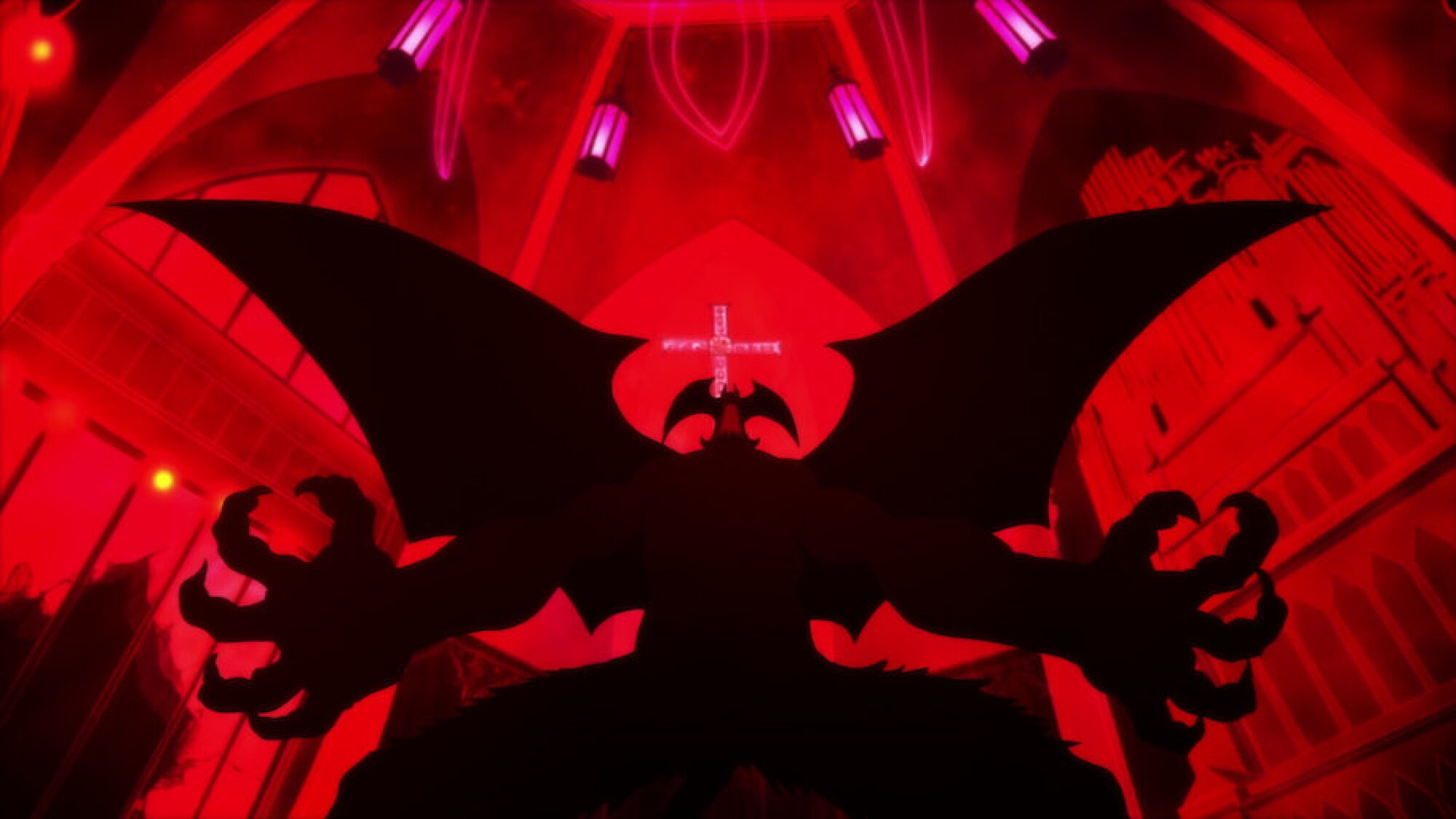
Devilman Crybaby

Devilman Crybaby

Credit: Netflix

One of Netflix’s earlier successes with distributing anime, Devilman Crybaby is still just as impressive today. An adaptation of Go Nagai’s classic manga, this streamlined ten-episode epic is a great introduction to the characters and themes that inspired much of the modern shōnen and tokusatsu (think Power Rangers) landscape.

That said, don’t go in expecting something kid-friendly. Under the direction of industry legend Masaaki Yuasa, studio Science Saru lovingly dedicates itself to depicting gritty sex and violence in almost every other scene, and yet it all feels tasteful within the tight runtime—more HBO prestige than exploitation. A hellish treatise on human nature, love, and cycles of pain, this story ends in some truly biblical places, and the ride there is well worth it.

JoJo’s Bizarre Adventure

Jojo's Bizarre Adventure

Credit: Netflix

Netflix picked up the distribution rights for new JoJo’s Bizarre Adventure episodes ahead of the anime’s most recent part, Stone Ocean, and with the next part, Steel Ball Run, now officially announced, it’s a great time to get caught up. Originally starting in the late ‘80s as a supernatural spin on the tropes set by classic manga and anime Fist of the North Star, the series has since morphed into its own beast, drawing inspiration from high fashion, classic rock, the author’s own travels, and more. It’s known for its exaggerated physical proportions and audacious high concepts (one episode sees our protagonist pick a fight with a sentient plate of spaghetti). To be honest, I’d recommend it to both battle anime and Drag Race fans alike. And yet as bizarre as it gets, it’s always got a sense of earnestness that truly helps you stay attached to the Joestar family amid its generations-long conflicts with vampires, serial killers, and mob bosses alike.

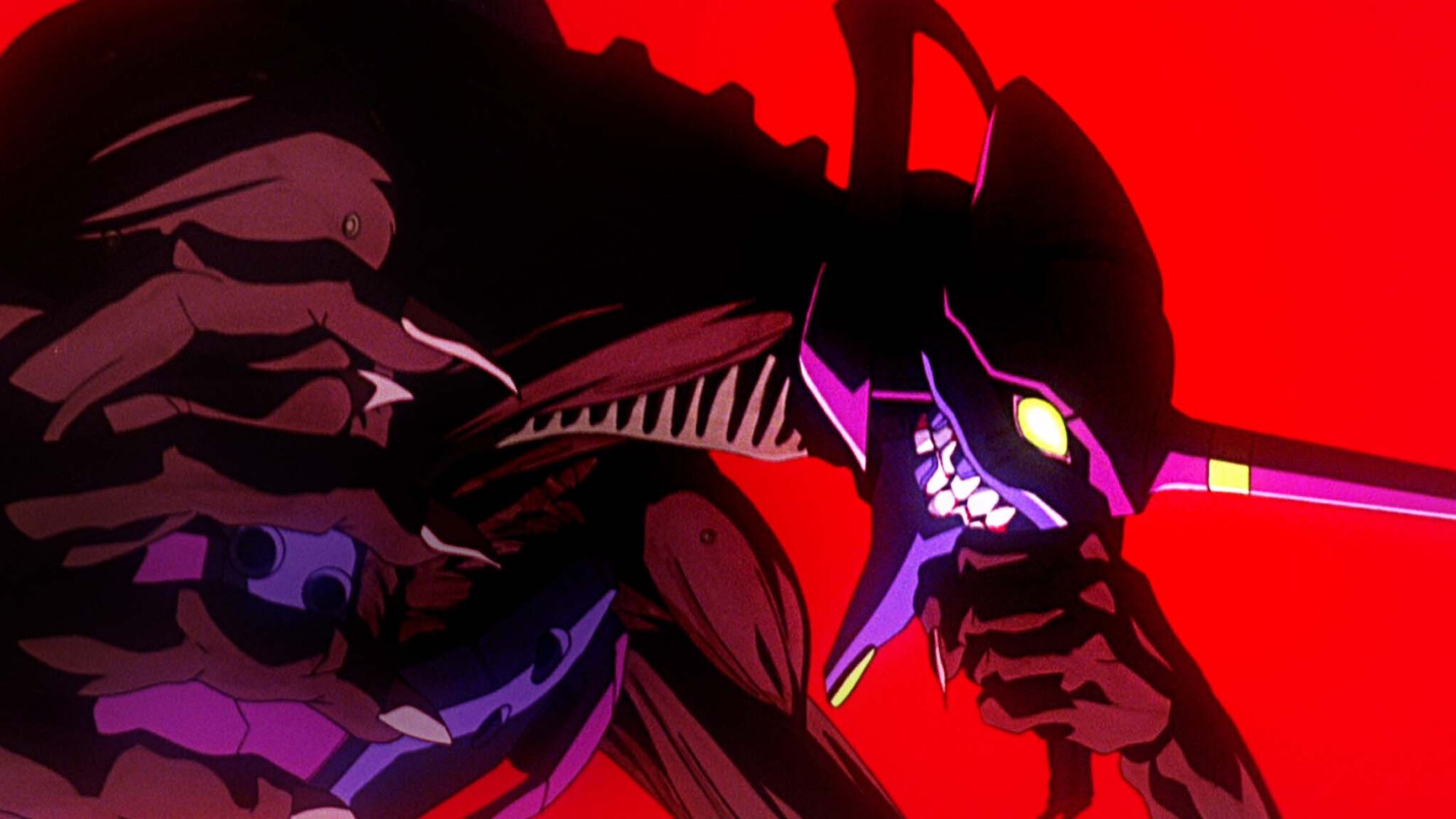
Neon Genesis Evangelion

Neon Genesis Evangelion

Credit: Netflix

When Netflix financed a new dub of Neon Genesis Evangelion in 2019, there was a good deal of uproar online. It makes sense: The metatextual mecha anime, originally released in 1995, was a formative text for many American fans. And yet regardless of how you watch it (personally, I really like the new cast), Neon Genesis Evangelion remains well worth your time.

Set after the apocalyptic “Second Impact,” the series follows teenager Shinji Ikari as he gets swept into the machinations of shadowy government organization NERV, led by his aloof and distant father Gendo Ikari. Because of his rare aptitude piloting one of NERV’s few Evangelion (think giant robot, but not quite) units, Shinji must do battle with kaiju-like “angels” as they attack NERV and the city its HQ is located in one-by-one, each trying to trigger the apocalyptic Third Impact.

If that setup sounds familiar, that’s intentional. Series creator Hideaki Anno grew up watching plenty of mecha shows about young boys bonding with or piloting robots for secret societies dedicated to protecting the Earth, and Evangelion feels both like a loving tribute to and harsh deconstruction of that premise. Sort of like Watchmen did for superheroes, the show asks “how would children really react in this situation?” Guided by Anno’s knowledgeable hand, the result is a complex and avant garde breakdown of pop culture obsession, real world mythology, and perhaps most importantly, teenage anxiety.

A bunch of Gundam

Char's Counterattack

Credit: Netflix

A personal favorite of mine, and often held up as the prototypical mecha anime, Mobile Suit Gundam is at its heart just as transgressive as Neon Genesis Evangelion. The series has been around in some form since 1976, and while Netflix doesn’t have every Gundam under the sun, it does have enough to get you started.

You can start with the movie trilogy, which expertly condenses and recaps the first Gundam show into a few afternoons’ worth of content, telling the story of a military ship staffed by war orphans as it navigates a devastating conflict between Earth and its economically distressed space colonies. If you like Evangelion, you’ll see a lot of the same themes on display here, as supernaturally talented teenage pilot Amuro Ray is forced into battle after battle for a distant government that only sees him as a tool for war. If that sounds depressing, don’t worry. The angst is balanced out by a disco-tastic score and the devilishly charming machinations of Amuro’s rival, a magnificent bastard by the name of Char Aznable.

When you’re done with that, you can see how that relationship pays off in the movie Char’s Counterattack, which itself has its own follow-up on Netflix called Hathaway’s Flash. Ah, generational trauma. (Unfortunately, you’ll have to turn to other services to see what comes in between these entries).

If all of that sounds more intense than you expected, I don’t blame you. While often compared to Transformers overseas, Gundam is credited in Japan for kicking off the “real robot” genre, which reimagined the already thriving but frequently more toyetic mecha genre into a more grounded, Game of Thrones style political drama. It’s been around long enough that it’s now got a little something for everyone, and the selections on Netflix are a perfect entry point into the long-running series.

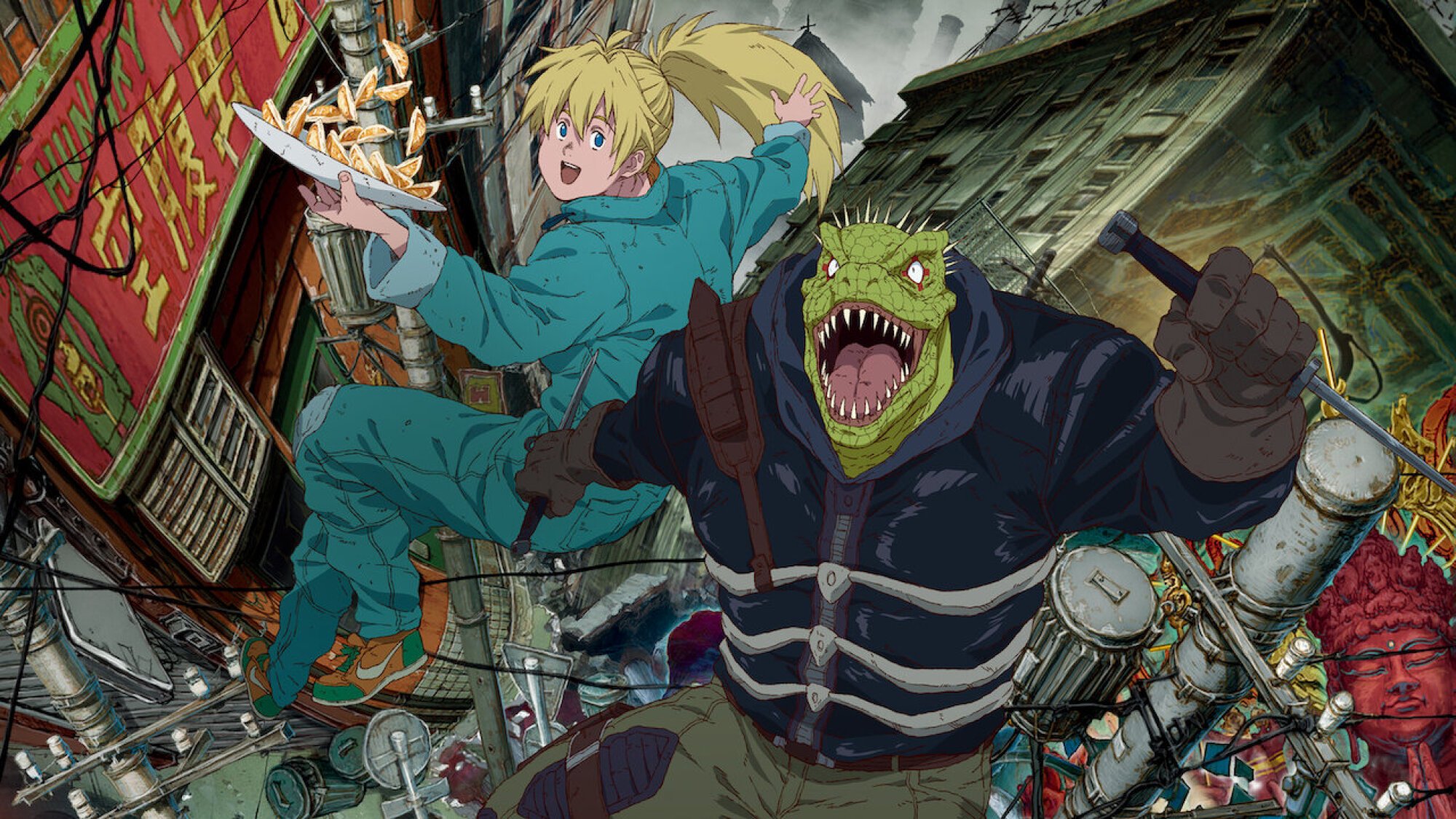
Dorohedoro

Dorohedoro anime

Credit: Netflix

Another series exclusively distributed by Netflix, this is the entry on this list most likely to get you to say “hell yeah.” Like JoJo’s Bizarre Adventure, Dorohedoro is an unapologetically weird show, following the exploits of a man with the head of a lizard as he and his favorite restauranteur navigate the seedy, magical underworld of the Hole, the slum where they live. As it turns out, the Hole is used as a testing ground for a society of sorcerers, who teleport into it from their much more affluent but distinctly mafia-flavored world to conduct their experiments. 

The resulting adventure gets a lot more dramatic than you might expect, as you quickly get attached to both sides of the situation, meeting lovable Hole residents like Nikaido and equally likeable sorcerers like Noi and Shin. It’s heartbreaking to see these two sides clash, but even so, Dorohedoro never forgets its outlandish premise and still packs in plenty of comedy. Class conflict is all over this show, regardless of which side you’re watching, but a good plate of gyoza is never too far out of reach.

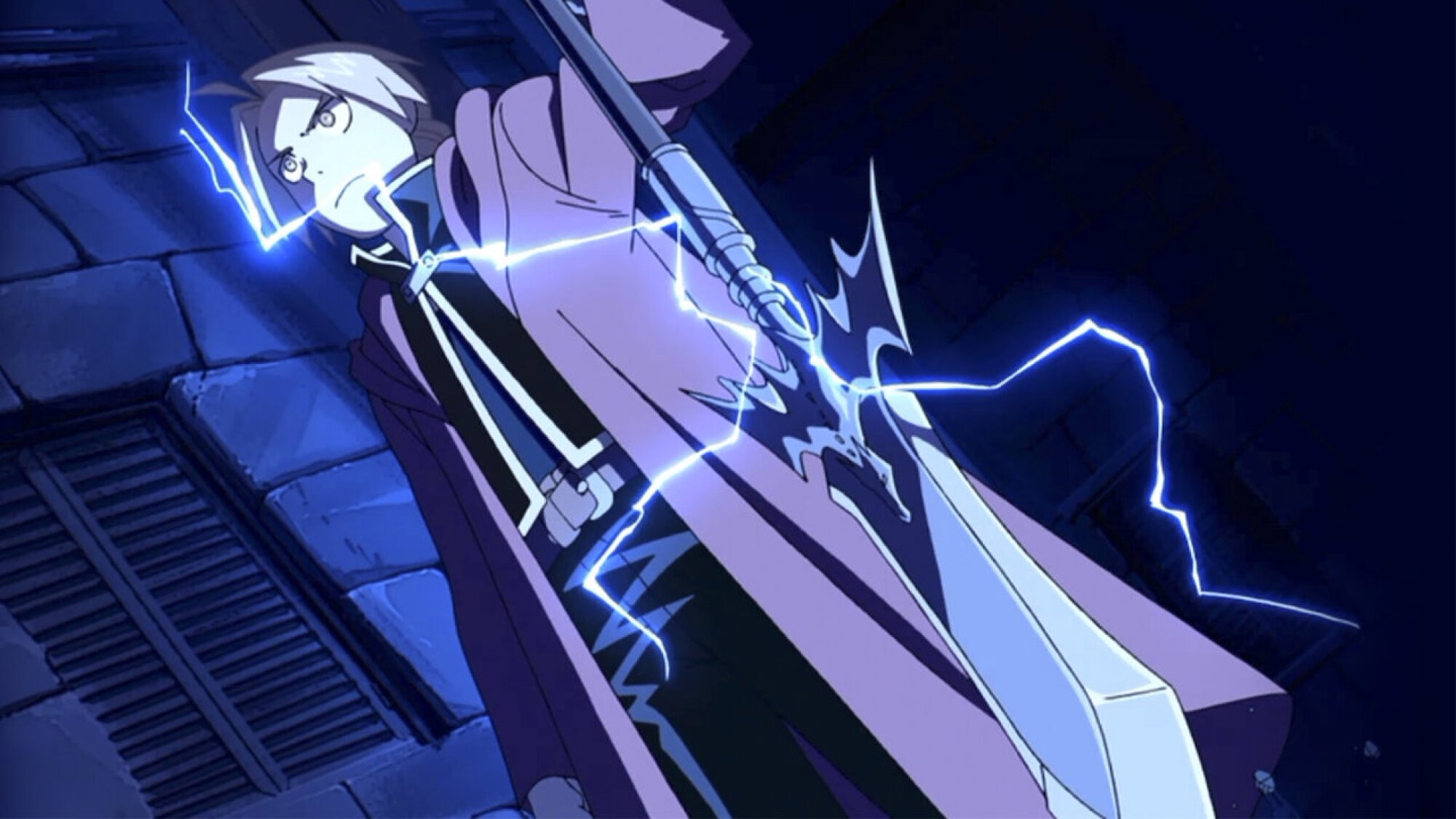
Fullmetal Alchemist Brotherhood

Fullmetal Alchemist Brotherhood

Credit: Netflix

A remake of the Fullmetal Alchemist anime from 2004, which was produced before the manga by Hiromu Arakawa had finished its run, Fullmetal Alchemist Brotherhood has replaced its predecessor in the eyes of many fans. Personally, I think both are worth watching, but with more characters and a more fleshed out finale, there’s certainly a lot that gives this more faithful adaptation the edge.

Following two brothers, Edward and Alphonse Elric, in an industrial era world where alchemists are able to use special sigils called transmutation circles to instantly reform compatible ingredients into whatever shape or form they wish, the show is a darkly comic treatise on war, the value of a human life, and what we’re willing to trade for our desires. It also has a guy who can summon explosions with a snap and a ghost-kid who’s stuck possessing a suit of armor. It holds up for all ages, but it also stands out as one of the more thoughtful shounen out there, and is a great choice for teenagers who feel like they want a bit more to chew on alongside their over-the-top anime battles.

Hunter X Hunter

Hunter X Hunter

Credit: Netflix

Another shōnen classic, Hunter x Hunter adapts the still running manga from Yoshihiro Togashi, author of my personal favorite series in the genre, Yu Yu Hakusho (the live action adaptation of that is on Netflix, but the anime recently left the service). Generally, though, I’m a bit of an outlier there: YYH is beloved in its own right, but HxH is generally seen as Togashi’s magnum opus.

The story follows a 12-year-old boy named Gon Freecs as he seeks to follow in the footsteps of his absentee father Ging to become what his world calls a “hunter.” Rather than focusing on big game, though, a hunter in this world is better described as anyone who is at the top of their field. You could be a treasure hunter, sure, but if you’re an expert chef, you could also be a “gourmet hunter.” And given the world Gon lives in, being at the top of your field is an especially impressive feat.

Hunters require a license to be officially recognized, and getting one is a perilous task that unlocks a bunch of new possibilities for the license holder. It’s a fascinating bit of worldbuilding, and as you’ll quickly learn, getting a hunter’s license is just the first step in a true hunter’s journey. The resulting adventure is one of the most emotionally gripping you’ll find in the genre, as Gon quickly realizes there’s a lot more he cares about in life than copying his dad. A standout is his relationship with fellow hunter Killua, who has his own family issues to work through. It’s one of the best bromances of all time, folks.

Technically, the story is unfinished, as the manga it’s based on still hasn’t wrapped up, but the anime picks a strong spot to end, and the manga releases infrequently enough that it’s unclear how much more of it we’ll actually get. That shouldn’t deter you from checking out what we have—as Gon learns, sometimes it’s more about the journey than the destination.

The Apothecary Diaries

Apothecary Diaries

Credit: Netflix

Anime isn’t all about fighting. Sometimes, you’re looking for a good mystery. Set in a fictional country heavily inspired by Imperial China, The Apothecary Diaries follows Maomao, a young girl who grew up in the royal capital’s red-light district after she gets kidnapped and sold into the Imperial court. Starting off as an ordinary servant girl, her skills with medicine—honed under her adoptive father, a former court physician—quickly get her noticed by the court’s higher-ups, and she eventually becomes a go-to problem solver for a mysterious court official named Jinshi.

With a sometimes distant but always just attitude and an unwavering dedication to her special interest, Maomao becomes indispensable in solving poisonings, urban legends, and other courtly political drama, all while growing reluctantly closer to the more jovial Jinshi. The romance is spicy and the episodic mysteries have shades of Columbo to them, but as it turns out, there’s also bigger secrets at play—both Maomao and Jinshi have more to their pasts than you might think at first blush, and the slow burn reveals about who they really are are a fascinating reason to come back week after week.

Ranma ½

Ranma 1/2

Credit: Netflix

Half martial arts punch-em-up, half romcom, Ranma ½ has a little something for everybody. Inspired by Rumiko Takahashi’s classic manga, the version on Netflix is actually a remake, and not the well-remembered original anime from the late ‘80s. Don’t let that stop you, though. While the original was deeply influential in its day, the remake features gorgeously redone animation courtesy of Attack on Titan’s Studio MAPPA, plus tightened up pacing that’s more faithful to the original manga. The show follows a boy who turns into a girl whenever he gets splashed with cold water—a premise that’s still as great a set up for gags as it ever was—but there’s also a good bit of drama to be pulled from Ranma’s double-life. The remake also has the potential to do something the original never did—actually finish the story.

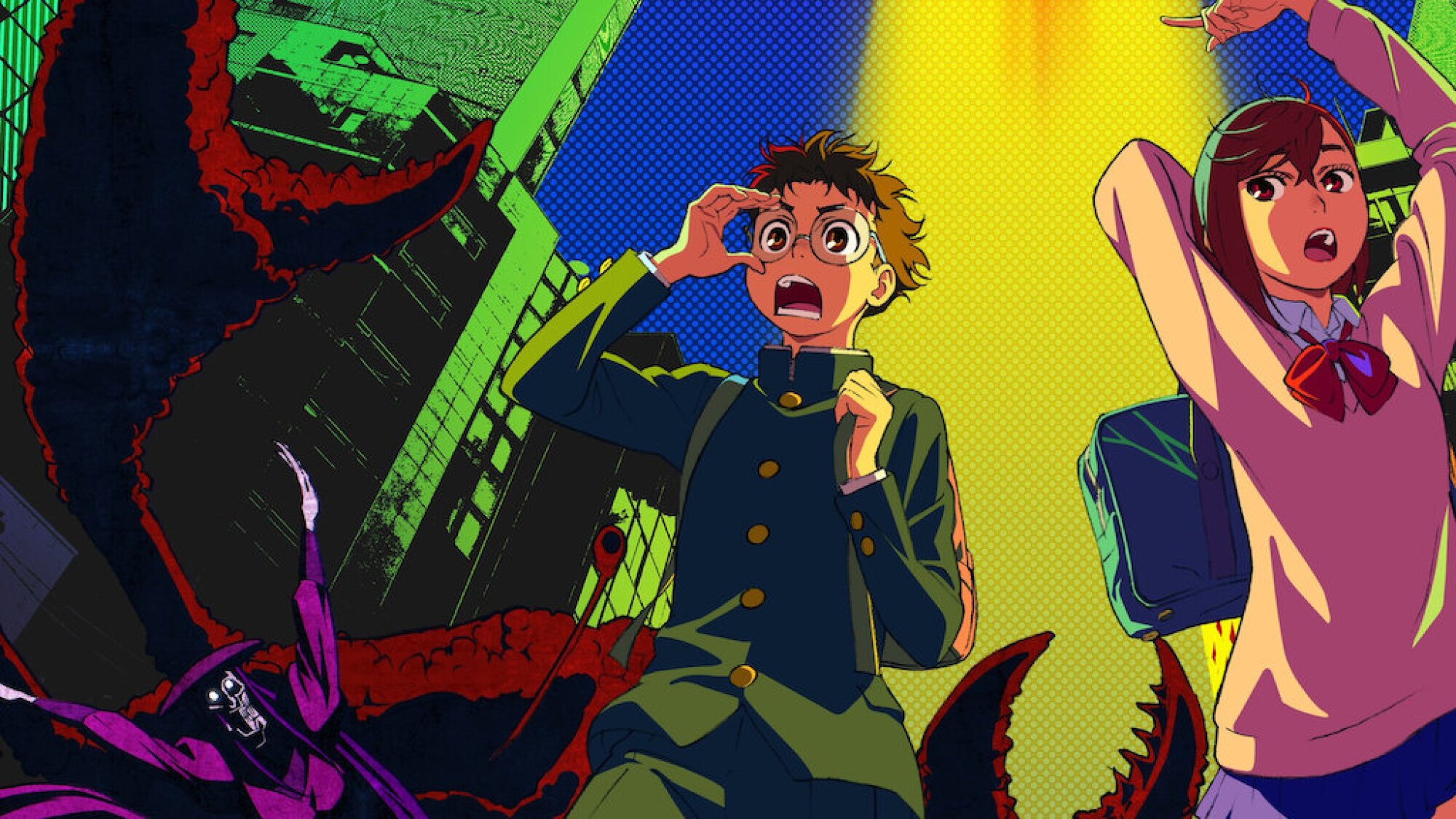
Dan Da Dan

Dan Da Dan

Credit: Netflix

A critical darling from last year, right up there with Delicious in Dungeon, Dan Da Dan is another Science Saru joint, and like Devilman Crybaby, is similarly unafraid of breaking taboos. Following a young, nerdy UFO conspiracy theorist as he gets involved with a delinquent girl who has a history in the occult, the show asks the question: what if they’re both right? What follows is an off-the-wall odyssey that is, on the surface, about fighting aliens, cryptids, and ghosts, but is mostly really about puberty. Sex and violence are on full display here, but like in Devilman, it all feels more tasteful than shock jock-y. The characters are deeply lovable, and underneath all the high concept flash, the story is one of the most relatable and vulnerable depictions of teenage awkwardness I’ve seen in a while.

Frieren

Frieren anime

Credit: Netflix

In an unusual premise for a fantasy anime, Frieren, subtitled “Beyond Journey’s End,” asks the question “what happens after you save the world?” Where other shows would roll credits, Frieren begins its journey, following a nigh-immortal elf years after her adventuring party has defeated the Demon King. While she’s still relatively young, her human companions have all either hit old age or even passed away, and the show follows her as she learns the true value of what she took for granted all those years ago. It’s a melancholic look at legacy, regret, living in the moment, and being there for younger generations, and while those of us in the real world may not live for thousands of years, it’s sure to be relatable to anyone who sometimes looks back at their past and thinks “if only.”

Vinland Saga

Vinland Saga

Credit: Netflix

Set in the 11th century and following a fictionalized version of real-life historical figure Thorfinn Karlsefni, Vinland Saga is a brutal historical epic that follows our protagonist as he grows from a violent, vengeful teenager into an explorer in search of peace in the faraway land of Vinland (an island off the coast of Canada). His story is contrasted against that of Danish prince Canute, whose ambitions encroach on Thorfinn’s homeland.

Based on historical accounts including the Flateyjarbók and the Saga of Erik the Red, the story is nonetheless also influenced by modern conflicts, and provides a nuanced depiction of the trauma of war and the limits of revenge. 

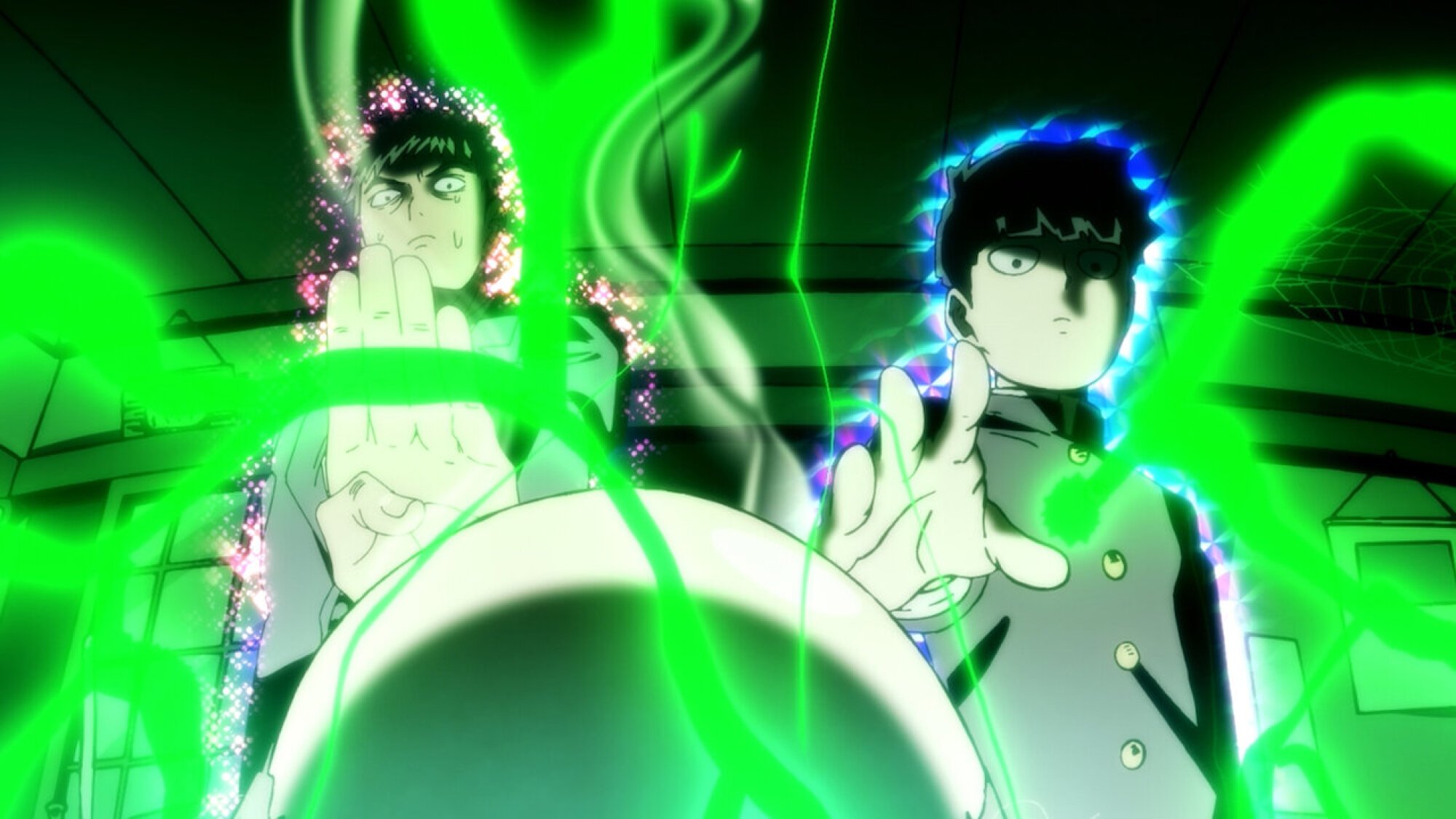
Mob Psycho 100

Mob Psycho 100

Credit: Netflix

Written by the same author behind One Punch Man, Mob Psycho 100 explores a lot of similar themes, following a young psychic who has, but is not particularly interested in having, immense power. Instead of training to be the strongest around, like many of his shōnen contemporaries, Mob instead is more interested in living a normal life, spending his time working for conman Arataka Reigen and working out with his school’s Body Improvement Club. Nonetheless, trouble comes looking for him, and forces Mob to reluctantly use his power to stop it. 

With fluid and often psychedelic animation by Studio Bones, Mob Psycho 100 will scratch your battle anime itch, while also making you laugh, cry, and never forget about the little guy.

One Piece

One Piece

Credit: Netflix

You could watch every other anime on this list and still have seen fewer overall episodes than are in One Piece. At over 1,100 episodes and counting, this long-running pirate epic has been airing since 1999. Ostensibly about a young boy named Luffy as he navigates an unusually dangerous ocean called the Grand Line in search of a treasure called the One Piece, it’s also been around long enough that it’s covered everything from class conflict to shadowy world governments. I’m told the beauty of the show is seeing elements get set up early on only to get unexpectedly paid off years later, really making use of the long-form story telling and rewarding viewers for their dedication. In truth, I’m still only in the Arabasta Saga, so I’ve barely scratched the surface. Please forgive me; I only have so much free time.

Still, even early on, there’s plenty of standout moments, from Buggy the Clown’s ridiculous powerset to Nami’s heartfelt cry for help during the Arlong Park arc. This is the top-selling manga in Japan for a reason, and if you’ve got the dedication, now is as good a time to jump onboard as ever (or you could wait for the eventual remake by Studio Wit, The One Piece, which promises to tighten up the pacing).

Aggretsuko

Aggretsuko anime

Credit: Netflix

An office comedy that my husband stopped watching because it was “too real,” Aggretsuko is a shockingly relatable show, considering it’s about anthropomorphic animals living in Sanrio’s Hello Kitty world. Following an adorable red panda named Retsuko, the gimmick is that while she’s mild-mannered and put-upon during the day, she heads to the karaoke booth at night to let out her frustrations by belting out death metal.

Slowly, over the course of the show, these two parts of her life start to collide, as her coworkers get to know, and much to her surprise, like the real her. While Retsuko definitely faces a lot of stressors in her life, this show is also just as much a fantasy about the power of sticking up for yourself. If you’ve ever felt the urge to yell at your boss, this is the anime for you.

Oh, there are also boys. So. Many. Boys.

The Disastrous Life of Saiki K.

Saiki K

Credit: Netflix

Stop me if you’ve heard this one before: A young boy with immense psychic power whose only goal is to live a normal life keeps getting pulled into supernatural shenanigans against his will. Yes, on the surface, The Disastrous Life of Saiki K. seems a lot like Mob Psycho 100, but while Mob isn’t unfunny, it really isn’t fair to Saiki to compare the two. The former is a serialized mix of action, comedy, and coming-of-age, while the latter is a pure gag show.

And it’s hilarious. Have you ever seen that viral meme pitching an anime about a character who notices they have colored hair and are destined to be the protagonist, but all they want to do is stay home and play video games? Saiki is that. The character is essentially omnipotent, and will do everything in his power to keep typical anime plots from popping up around him, from battle to romance. His utter dedication to being boring is surprisingly fascinating to watch, as are his begrudging friendships with his colorful cast of sidekicks, who can’t help but get drawn in by his pure main character energy. There’s also a short sequel series, The Disastrous Life of Saiki K.: Reawakened, that picks up where the original leaves off.

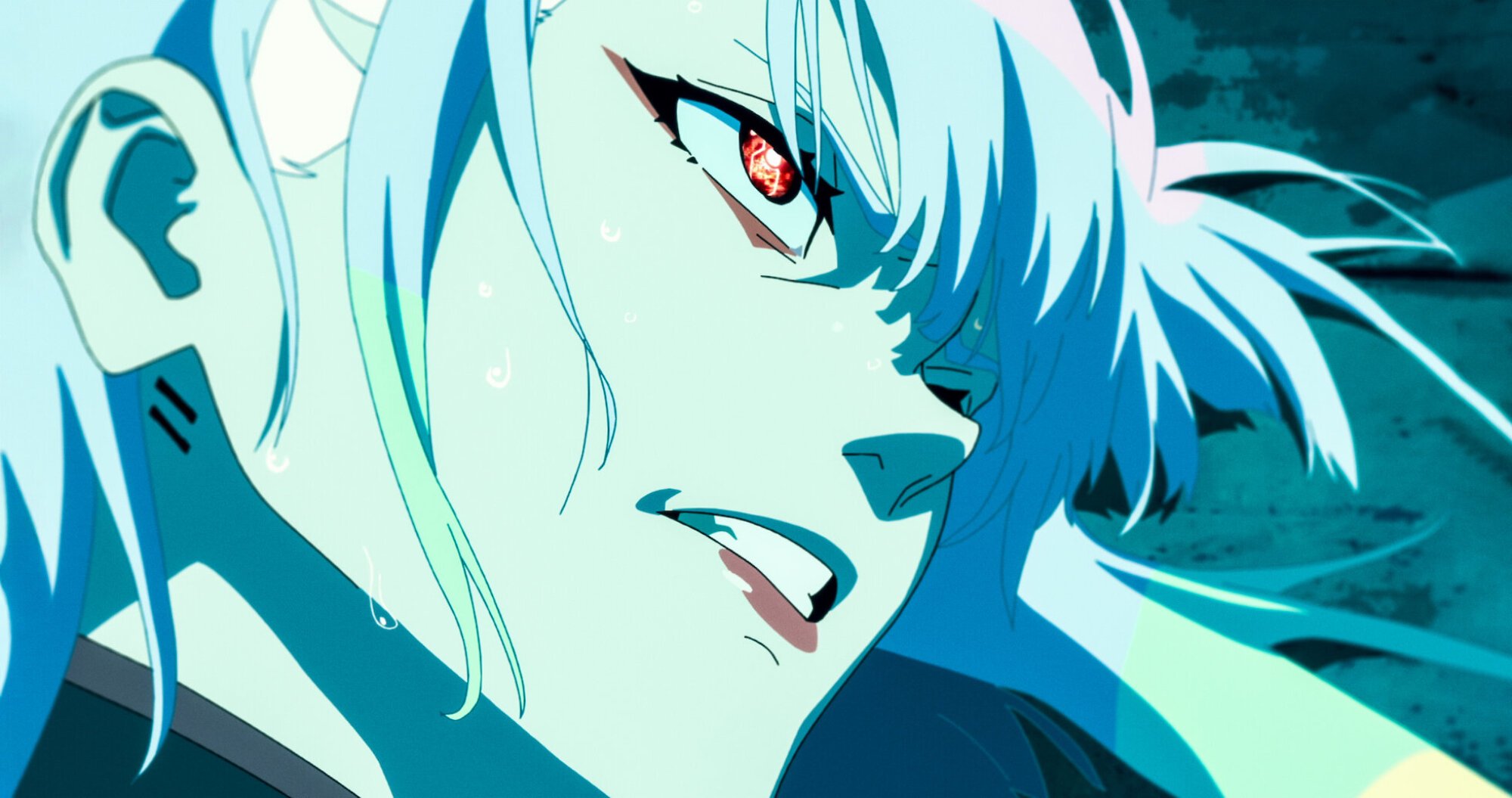
Cyberpunk: Edgerunners

Cyberpunk Edgerunners

Credit: Netflix

From Castlavana to Arcane, Netflix is kind of known for video game adaptations that are way better than they have any right to be, and Cyberpunk is an especially interesting example of that. Coming out two years after the game’s initial, disastrous launch, Edgerunners was one of the earlier wins in CD Projekt Red’s efforts to rehabilitate its game’s reputation, well before the critically acclaimed Phantom Liberty DLC would change most minds in 2023. It’s also one of the few “Netflix Original” anime actually funded by the platform, as opposed to simply distributed on it.

The story, animated by the same studio behind Delicious in Dungeon, follows broke but talented kid David Martinez as sudden tragedy brings him into contact with a group of edgerunners, which you can think of as sci-fi mercenaries, fixers, dealers, etc. His new ties quickly bring him far more agency and power than he’s ever had before, but also put him on the wrong side of the law and frequently push him to the edge of death. He’s forced to augment himself more and more just to survive, and the series does a great job examining how the edgerunner lifestyle affects him, both positively and negatively, over the course of his life. Themes of addiction, longing, and class inequality are strong here, definitely putting the “punk” in Cyberpunk.

Stellar Blade heads to PC on June 11

The well-reviewed Stellar Blade will be available for PC players on June 11, after launching for PS5 in April of last year. This release coincides with a system update that brings new outfits and “exciting additional content.” The update will be available for both PC and PS5.

The PC version of the game includes some graphical upgrades. It supports NVIDIA DLSS 4 resolution scaling and frame generation, NVIDIA DLAA image enhancement and NVIDIA Reflex latency reduction. It also supports AMD FSR 3 and offers the ability to unlock the frame rate to better suit the needs of a particular PC. It can handle both 21:9 and 32:9 ultrawide resolutions.

Stellar Blade was formerly a PS5 exclusive, so the PC version works with the iconic the DualSense controller. This allows for haptic feedback and adaptive trigger features. For everyone else, the game offers customization options for gamepads, keyboards and mice.

As for specs, Sony recommends at least 16GB of RAM, an Intel Core i5 processor and a GeForce GTX 1060. However, that’s for playing on the lowest setting.

We now live in a post-exclusive world. Sony has been releasing tons of its first-party games for PC. These include Marvel’s Spider-Man and the sequel, God of War Ragnarök and Horizon Zero Dawn, to name a few.

This article originally appeared on Engadget at https://www.engadget.com/gaming/pc/stellar-blade-heads-to-pc-on-june-11-185536164.html?src=rss

Tesla changes lease policy, didn’t use old cars as robotaxis

Tesla has raised the ire of some of its customers, who are accusing the carmaker of misleading them. Until recently, it would not allow customers who leased its EVs to purchase them at the end of the lease. Instead, the leases stated that it “plan[s] to use those vehicles in the Tesla ride-hailing network.”

Tesla instituted that policy for Model 3 leases starting in 2019 and later expanded it to the Model Y until changing the policy last November. But Tesla is not currently sitting on a fleet of several hundred thousand ex-lease autonomous Models 3 and Y, and as of today there exists no actual Tesla ride-hailing network.

Instead, it has been spiffing up the ex-lease cars with software updates and then selling them to new customers, according to Reuters. And that has made some former leasers a little unhappy that their old EVs weren’t pressed into service making money for Tesla on an ongoing basis but rather just as a one-time transaction.

Read full article

Comments

Kingdom Hearts IV Screenshots Hint At Mickey Mouse Being Playable, Fans Are Stoked

Kingdom Hearts IV Screenshots Hint At Mickey Mouse Being Playable, Fans Are Stoked
Fans of the Kingdom Hearts franchise have been on a bit of rollercoaster ride these last few days. Square Enix announced the cancellation of the mobile game Kingdom Hearts: Missing Link, but it immediately followed it up by dropping some new screenshots of the highly anticipated Kingdom Hearts IV. The screenshots hold some clues about what’s

American Schools Were Deeply Unprepared for ChatGPT, Public Records Show

School districts across the United States were woefully unprepared for ChatGPT’s impact on education, according to thousands of pages of public records obtained by 404 Media. Documents from early 2023, the publication reports, show a “total crapshoot” in responses, with some state education departments admitting they hadn’t considered ChatGPT’s implications while others hired pro-AI consultants to train educators.

In California, when principals sought guidance, state officials responded that “unfortunately, the topic of ChatGPT has not come up in our circles.” One California official admitted, “I have never heard of ChatGPT prior to your email.” Meanwhile, Louisiana’s education department circulated presentations suggesting AI “is like giving a computer a brain” and warning that “going back to writing essays – only in class – can hurt struggling learners.”

Some administrators accepted the technology enthusiastically, with one Idaho curriculum head calling ChatGPT “AMAZING” and comparing resistance to early reactions against spell-check.


Read more of this story at Slashdot.

EU tech chiefs believe TikTok is breaking ad transparency rules

TikTok may have run afoul of European regulators over advertising transparency, in the latest bout between EU regulators and big tech companies. The European Commission has formally warned TikTok that its advertising transparency tools don’t go far enough, falling short of EU rules requiring online platforms to maintain a publicly available repository of all paid ads being shown to users.

Regulators are taking issue with the data, or lack thereof, being provided in the repository that TikTok has curated. They claim that TikTok has failed to provide information on who paid for ads, what audiences they are targeting and the precise product or service those ads are promoting.

This information is all used by regulators and researchers to help weed out harmful content like scams, disinformation or coordinated influence campaigns. These rules fall under the Digital Services Act (DSA), an EU regulation adopted in 2022 that governs illegal content, transparent advertising and disinformation. Enforcement for Very Large Online Platforms (VLOPs) like TikTok began in the summer of 2023, and the Commission opened formal proceedings to assess whether TikTok had violated the DSA in February of 2024.

In a statement, European Commission Tech VP Henna Virkkunen said, “Transparency in online advertising — who pays and how audiences are targeted — is essential to safeguarding the public interest.Whether we are defending the integrity of our democratic elections, protecting public health or protecting consumers from scam ads, citizens have a right to know who is behind the messages they see.”

In a statement to the press, a TikTok spokesperson disagreed with the findings, saying “While we support the goals of the regulation and continue to improve our ad transparency tools, we disagree with some of the Commission’s interpretations and note that guidance is being delivered via preliminary findings rather than clear, public guidelines.” This isn’t the first time that TikTok has found itself in hot water with internet safety regulators in Europe.

Under the rules of the DSA, TikTok parent company ByteDance could be fined as much as 6 percent of its total worldwide revenue and be subjected to an enhanced supervision period where regulators ensure that any required changes are being made.

This article originally appeared on Engadget at https://www.engadget.com/big-tech/eu-tech-chiefs-believe-tiktok-is-breaking-ad-transparency-rules-181706441.html?src=rss

Telegram bans $35B black markets used to sell stolen data, launder crypto

On Thursday, Telegram announced it had removed two huge black markets estimated to have generated more than $35 billion since 2021 by serving cybercriminals and scammers.

Blockchain research firm Elliptic told Reuters that the Chinese-language markets Xinbi Guarantee and Huione Guarantee together were far more lucrative than Silk Road, an illegal drug marketplace that the FBI notoriously seized in 2013, which was valued at about $3.4 billion.

Both markets were forced offline on Tuesday, Elliptic reported, and already, Huione Guarantee has confirmed that its market will cease to operate entirely due to the Telegram removal.

Read full article

Comments

With US out, WHO director says it’s running on budget of a local hospital

With the abrupt withdrawal of the US, the World Health Organization is grappling with a brutal funding shortfall, leaving the United Nations health agency to slash top leadership and run global programs on a budget similar to that of a local hospital system.

In remarks at a budget committee meeting Wednesday, WHO Director-General Tedros Adhanom Ghebreyesus laid out the daunting budget numbers and announced a slimmed structure, cutting senior management from 14 to seven and the number of departments from 76 to 34.

“The loss of US funding, combined with reductions in official development assistance by some other countries, mean we are facing a salary gap for the next biennium of more than US$ 500 million,” Tedros said.

Read full article

Comments

UK Parliament opts not to hold AI companies accountable over copyright material

Ministers in the UK House of Commons have blocked an amendment to a data bill that would require AI companies to disclose their use of copyrighted materials, according to The Guardian. This transparency amendment was stripped out of the text by invoking something called financial privilege, an arcane parliamentary procedure that suggests that any new regulations would require a new budget.

The official site of the UK parliament says this procedure “may be used by the Commons as grounds for overruling any House of Lords proposal that has cost implications.” It looks like that’s exactly what happened here, with those in favor of removing the amendment bringing up the cost of a potential regulatory body. There were 297 MPs who voted in favor of removing the amendment, with 168 opposing.

Chris Bryant, data protection minister, said that he recognized that this could feel like an “apocalyptic moment” for the creative industries, but that he thinks the transparency amendment requires changes “in the round and not just piecemeal.”

The amendment was passed in the House of Lords earlier this week. Baroness Beeban Kidron of the Lords responded to today’s move by saying that “the government failed to answer its own backbenchers who repeatedly asked ‘if not now then when?’” She also said it was “astonishing that a Labour government would abandon the labor force of an entire section,” referring to the plight of creative workers whose jobs have been or at risk of being replaced by AI. Lady Kidron went on to accuse the government of allowing “theft at scale” and cozying up “to those who are thieving.”

“Across the creative and business community, across parliament, people are gobsmacked that the government is playing parliamentary chess with their livelihoods,” she concluded.

As expected, Kidron will introduce a rephrased amendment before the bill’s return to the Lords next week. This sets up yet another showdown when the bill returns to the Commons for another pass.

Owen Meredith, the chief executive of the News Media Association, told The Guardian that it’s “extremely disappointing that the government has failed to listen to the deep concerns of the creative industries, including news publishers who are so fundamental to uploading our democratic values.” He accused the government of using parliamentary procedure to “dismiss industry concerns, rather than taking this timely opportunity to introduce the transparency that will drive a dynamic licensing market for the UK’s immensely valuable creative content.”

The government’s preferred plan includes the reliance on an opt-out clause. This would give AI companies free rein over any and all content, except in the cases when a creator has explicitly opted out.

Yesterday, the Lords asked the government to think again on the #DataBill, voting through changes on processing personal data, AI models, and the collection of sex data.

⬇️ Find out more https://t.co/5T0A3BvCe6

— House of Lords (@UKHouseofLords) May 13, 2025

Last week, hundreds of artists and organizations banded together to urge the government not to “give our work away at the behest of a handful of powerful overseas tech companies.” The artists involved in this campaign included Paul McCartney, Elton John and Dua Lipa, among others.

America is set to host its own version of the “give everything to AI companies” game show. Republicans have snuck in a provision to the budget bill that would ban regulation on the AI industry for ten years. That’ll end well.

This article originally appeared on Engadget at https://www.engadget.com/big-tech/uk-parliament-opts-not-to-hold-ai-companies-accountable-over-copyright-material-180234550.html?src=rss

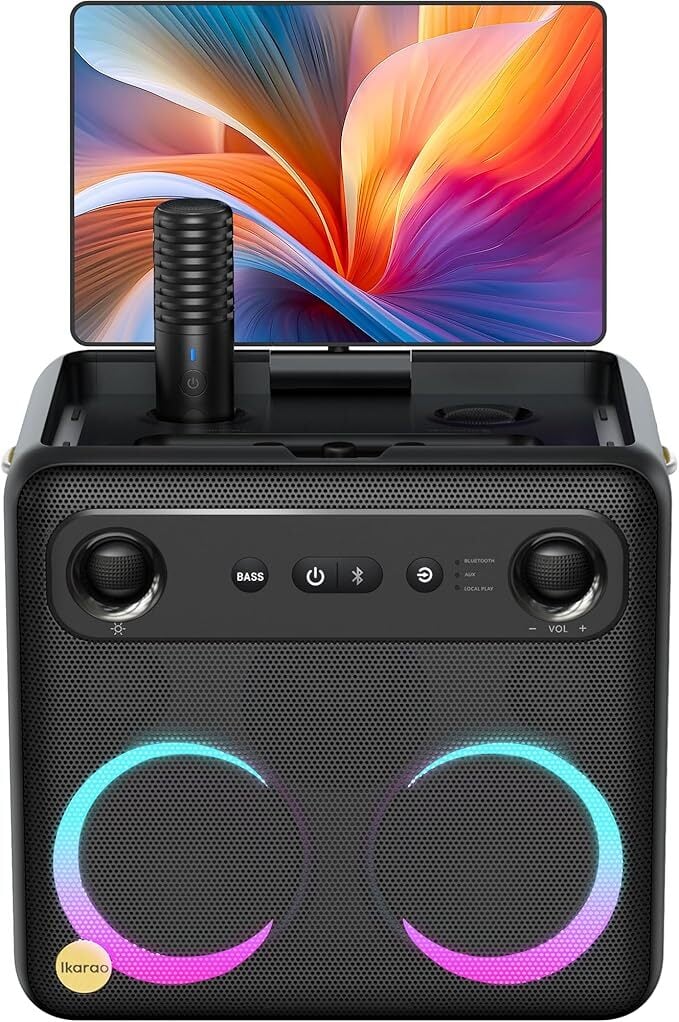
This Ikarao Portable Karaoke Machine Is More Than $100 Off

We may earn a commission from links on this page. Deal pricing and availability subject to change after time of publication.

We’re living in the best time in history for bringing karaoke to your home. I’ve had the pleasure of using the new Soundcore Rave 3S karaoke speaker, which turns any song into a karaoke track with the push of a button, and Ikarao’s ultra-portable Shell S1 karaoke speaker to host many house parties. But if you’re looking for a great deal on a more powerful speaker that is still compact and portable, consider the Break X2, also from Ikarao, currently $349.98 (originally $469.99), the lowest price it has been, according to price-tracking tools. You can read about it in more detail in Lifehacker staff writer Stephen Johnson’s review.

The Break X2 is the most powerful out of the three karaoke speakers I’ve mentioned in terms of watts, which means it’ll sound the best at max volumes with the least distortion. It’s perfect for those looking to have a stand-alone karaoke machine in their living room. It comes with two wireless Bluetooth microphones that store inside and automatically charge. The microphones are of good quality and sound much better than Soundcore’s Rave 3S’s.

The screen is a 10-inch Android touchscreen display that has some apps pre-installed, although you’d likely mainly use the YouTube widget. (You can find virtually any song in karaoke for free on YouTube.) But if you’re looking for a more premium experience, the speaker comes with six months of Karafun, a karaoke app that is incredibly fun (read more about it in my Shell S1 review).

The battery will give you about eight hours of juice, but you can always plug it in. You can also hook up an HDMI cable so you can see the lyrics on your TV to really make it a party.

Extortionists bribed Coinbase employees to give them customer data

Coinbase has been betrayed from within. The cryptocurrency exchange said that cyber criminals bribed some of its support agents to share personal information about Coinbase customers. Attackers acquired data such as names, addresses, emails, phone numbers, images of government IDs, masked bank account numbers and masked sections of social security numbers. The perpetrators tricked some Coinbase users into sending them money and also demanded $20 million from the company to not publicly disclose the ill-gotten information.

Coinbase has not paid the ransom and is cooperating with law enforcement to press charges. In the blog post, the company said it would offer a $20 million reward for information that could lead to arresting and convicting the remaining attackers. It also said that users’ login credentials, two-factor authentication codes and private keys are still secure. It will reimburse customers who sent funds to the extortionists and will place additional safeguards on vulnerable accounts. According to an SEC filing, the incident is projected to cost Coinbase $180 million to $400 million.

This article originally appeared on Engadget at https://www.engadget.com/cybersecurity/extortionists-bribed-coinbase-employees-to-give-them-customer-data-174713732.html?src=rss