Google Launches NotebookLM App For Android and iOS

Google has launched the NotebookLM app for Android and iOS, offering a native mobile experience with offline support, audio overviews, and integration into the system share sheet for adding sources like PDFs and YouTube videos. 9to5Google reports: This native experience starts on a homepage of your notebooks with filters at the top for Recent, Shared, Title, and Downloaded. The app features a light and dark mode based on your device’s system theme with no manual toggle. Each colorful card features the notebook name, emoji, number of sources, and date, as well as a play button for Audio Overviews. There’s background playback and offline support for the podcast-style experience (the fullscreen player has a nice glow), while you can “Join” the AI hosts (in beta) to ask follow-up questions.

You get a “Create new” button at the bottom of the list to add PDFs, websites, YouTube videos, and text. Notably, the NotebookLM app will appear in the Android and iOS share sheet to quickly add sources. When you open a notebook, there’s a bottom bar for the list of Sources, Chat Q&A, and Studio. It’s similar to the current mobile website, with the native client letting users ditch the Progressive Web App. Out of the gate, there are phone and (straightforward) tablet interfaces. You can download the app for iOS and Android using their respective links.


Read more of this story at Slashdot.

Regeneron Pharmaceuticals To Buy 23andMe and Its Data For $256 Million

Regeneron Pharmaceuticals is acquiring most of 23andMe’s assets for $256 million. The sale includes 23andMe’s Personal Genome Service, Total Health and Research Services business lines. What’s not included is 23andMe’s telehealth unit, Lemonaid Health, which the company acquired for around $400 million in 2021. It’ll be shut down, but all staffers will remain employed. CNBC reports: The deal is still subject to approval by the U.S. Bankruptcy Court for the Eastern District of Missouri. Pending approval, it’s expected to close in the third quarter of this year, according to the release. In its bankruptcy proceedings, 23andMe required all bidders to comply with its privacy policies, and a court-appointed, independent “Consumer Privacy Ombudsman” will assess the deal, the companies said.

Several lawmakers and officials, including the Federal Trade Commission, had expressed concerns about the safety of consumers’ genetic data through 23andMe’s sale process. The privacy ombudsman will present a report on the acquisition to the court by June 10. “We are pleased to have reached a transaction that maximizes the value of the business and enables the mission of 23andMe to live on, while maintaining critical protections around customer privacy, choice and consent with respect to their genetic data,” Mark Jensen, 23andMe’s board chair, said in a statement. “At its peak, 23andMe was valued at around $6 billion,” notes the report.


Read more of this story at Slashdot.

Biotech company Regeneron to buy bankrupt 23andMe for $256M

Biotechnology company Regeneron will acquire 23andMe out of bankruptcy for $256 million, with a plan to keep the DNA-testing company running without interruption and uphold its privacy protection promises.

In its announcement of the acquisition, Regeneron assured 23andMe’s 15 million customers that their data—including genetic and health information, genealogy, and other sensitive personal information—would be safe and in good hands. Regeneron aims to use the large trove of genetic data to further its own work using genetics to develop medical advances—something 23andMe tried and failed to do.

“As a world leader in human genetics, Regeneron Genetics Center is committed to and has a proven track record of safeguarding the genetic data of people across the globe, and, with their consent, using this data to pursue discoveries that benefit science and society,” Aris Baras, senior vice president and head of the Regeneron Genetics Center, said in a statement. “We assure 23andMe customers that we are committed to protecting the 23andMe dataset with our high standards of data privacy, security, and ethical oversight and will advance its full potential to improve human health.”

Read full article

Comments

Motorola has mysteriously delayed its new Razr phones, but only for some carriers

The latest generation of Motorola Razr smartphones was slated to go on sale last week beginning May 15, but availability has been delayed for purchases through select carriers. 9to5Google reported that the launch was delayed to May 22 for Verizon, Straight Talk, Total Wireless and Visible. We’ve reached out to Motorola for additional comment on the situation.

When a potential customer asked on X about availability after the phones were not seen at the expected May 15 date, a Verizon rep replied that the launch was “placed on hold.” The Verizon blog post announcing the plans and pricing for the Razr models has been updated to show a May 22 release date.

Razr phones are still listed as available to buy at other mobile carriers. However some customers have taken to Reddit, sharing that their orders have been delayed and speculating as to why. Most of them did not specify which channels or carriers they used for the purchases, so it’s possible that all of the issues are centered on the four carriers mentioned in Motorola’s statement, although there are posts claiming their phones’ new ship date will be May 28.

This article originally appeared on Engadget at https://www.engadget.com/mobile/smartphones/motorola-has-mysteriously-delayed-its-new-razr-phones-but-only-for-some-carriers-211654192.html?src=rss

Space Force official: Commercial satellites can do a lot more than we thought

A generation ago, when former NASA administrator Dan Goldin promoted the mantra of a “faster, better, cheaper” approach to the agency’s science missions, critics often joked that NASA could only pick two.

That’s no longer the case. NASA is finding success in its partnerships with commercial space companies, especially SpaceX, with lower costs, quicker results, and improved performance.

The Space Force and the National Reconnaissance Office, the US government’s spy satellite agency, are also capitalizing on new products and services from commercial industry. In many cases, these new capabilities come from venture-backed startups already developing and operating satellites for commercial use.

Read full article

Comments

What’s up With TikTok’s ‘Invisible Phone?’

Earlier this week, TikTok user CatGPT posted a video of a woman in line at a store seemingly scrolling on a completely transparent phone. The caption reads “I’m sorry, WTF IS THAT???” Check it out:

The video quickly took off, with over 52 million people having viewed it on TikTok in only four days.

So WTF is it? A techie casually breaking an NDA by openly rocking a prototype transparent phone? The new “Plex from Nokia” (as the top comment suggests)? A casual time-traveler caught in the act?

The real story behind the “transparent phone”

Sorry, it’s none of the above. It’s exactly what it looks like: a transparent piece of acrylic shaped like a phone. Specifically, it’s a “Methaphone.” The idea is that people who are dependent upon their devices might be placated by a phone-like slab.

“If we’re all so addicted to our phones,” CatGPT says in a follow-up video, “then could you potentially curb somebody’s addiction by replacing the feeling of having a phone in your pocket with something that feels exactly the same?”

If you’re thinking, “well, no,” you’re not alone. The general consensus is “this is dumb,” and CatGPT herself confirms in her video: “Have I used my phone less in the entire week I’ve been carrying this around? Probably not.”

She goes on to say it’s empowering anyway, and that the device is currently sold out. If you want your own Methaphone for some reason, here’s the link,

Will we ever have real transparent phones?

Although CatGPT categorizes the views on her video as evidence that people feel alienated by their devices, I think the real reason it went viral is that people think a transparent phone would be pretty cool. It would have some interesting uses too, particularly in terms of augmented reality, but clear phones seem unlikely to be a thing any time soon.

You can buy a transparent television already. The last CES featured more than one transparent display screen. Transparent batteries exist. Samsung has been registering patents related to transparent phones for at least the last decade. But bringing a transparent phone to market would mean making all the components transparent, which is probably impossible, and if it isn’t, it would be very expensive: That glass TV is $60,000.

Also, you’d lose it the first day and never find it again.

How to replace your cellphone without paying $25

If you’re intrigued by the idea of replacing your handset with something that’s like a handset, here are a few suggestions that are better than a Methaphone:

  1. An old cellphone: I’m sure you have some older handsets in your house that are permanently dark. Just carry that with you.

  2. A battery: Many charging batteries are roughly the size of a phone, and you can use them to charge your phone when you’re done pretending you don’t care about your phone.

  3. A notebook: When paired with a pen, a small notebook can be used for writing and drawing.

  4. A deck of cards: Unlike a Methaphone, cards have games built-in, both solo and multiplayer, and even have a built-in photo on the front.

Labor dispute erupts over AI-voiced Darth Vader in Fortnite

On Monday, SAG-AFTRA filed an unfair labor practice charge with the National Labor Relations Board against Epic subsidiary Llama Productions for implementing an AI-generated Darth Vader voice in Fortnite on Friday without first notifying or bargaining with the union, as their contract requires.

Llama Productions is the official signatory to SAG-AFTRA’s collective bargaining agreement for Fortnite, making it legally responsible for adhering to the union’s terms regarding the employment of voice actors and other performers.

“We celebrate the right of our members and their estates to control the use of their digital replicas and welcome the use of new technologies,” SAG-AFTRA stated in a news release. “However, we must protect our right to bargain terms and conditions around uses of voice that replace the work of our members, including those who previously did the work of matching Darth Vader’s iconic rhythm and tone in video games.”

Read full article

Comments

xAI’s Grok 3 Comes To Microsoft Azure

An anonymous reader quotes a report from TechCrunch: Microsoft on Monday became one of the first hyperscalers to provide managed access to Grok, the AI model developed by billionaire Elon Musk’s AI startup, xAI. Available through Microsoft’s Azure AI Foundry platform, Grok — specifically Grok 3 and Grok 3 mini — will “have all the service-level agreements Azure customers expect from any Microsoft product,” says Microsoft. They’ll also be billed directly by Microsoft, as is the case with the other models hosted in Azure AI Foundry. […] The Grok 3 and Grok 3 mini models in Azure AI Foundry are decidedly more locked down than the Grok models on X. They also come with additional data integration, customization, and governance capabilities not necessarily offered by xAI through its API.


Read more of this story at Slashdot.

New portal calls out AI content with Google’s watermark

Last year, Google open-sourced its SynthID AI watermarking system, allowing other developers access to a toolkit for imperceptibly marking content as AI-generated. Now, Google is rolling out a web-based portal to let people easily test if a piece of media has been watermarked with SynthID.

After uploading a piece of media to the SynthID Detector, users will get back results that “highlight which parts of the content are more likely to have been watermarked,” Google said. That watermarked, AI-generated content should remain detectable by the portal “even when the content is shared or undergoes a range of transformations,” the company said.

The detector will be available to beta testers starting today, and Google says journalists, media professionals, and researchers can apply for a waitlist to get access themselves. To start, users will be able to upload images and audio to the portal for verification, but Google says video and text detection will be added in the coming weeks.

Read full article

Comments

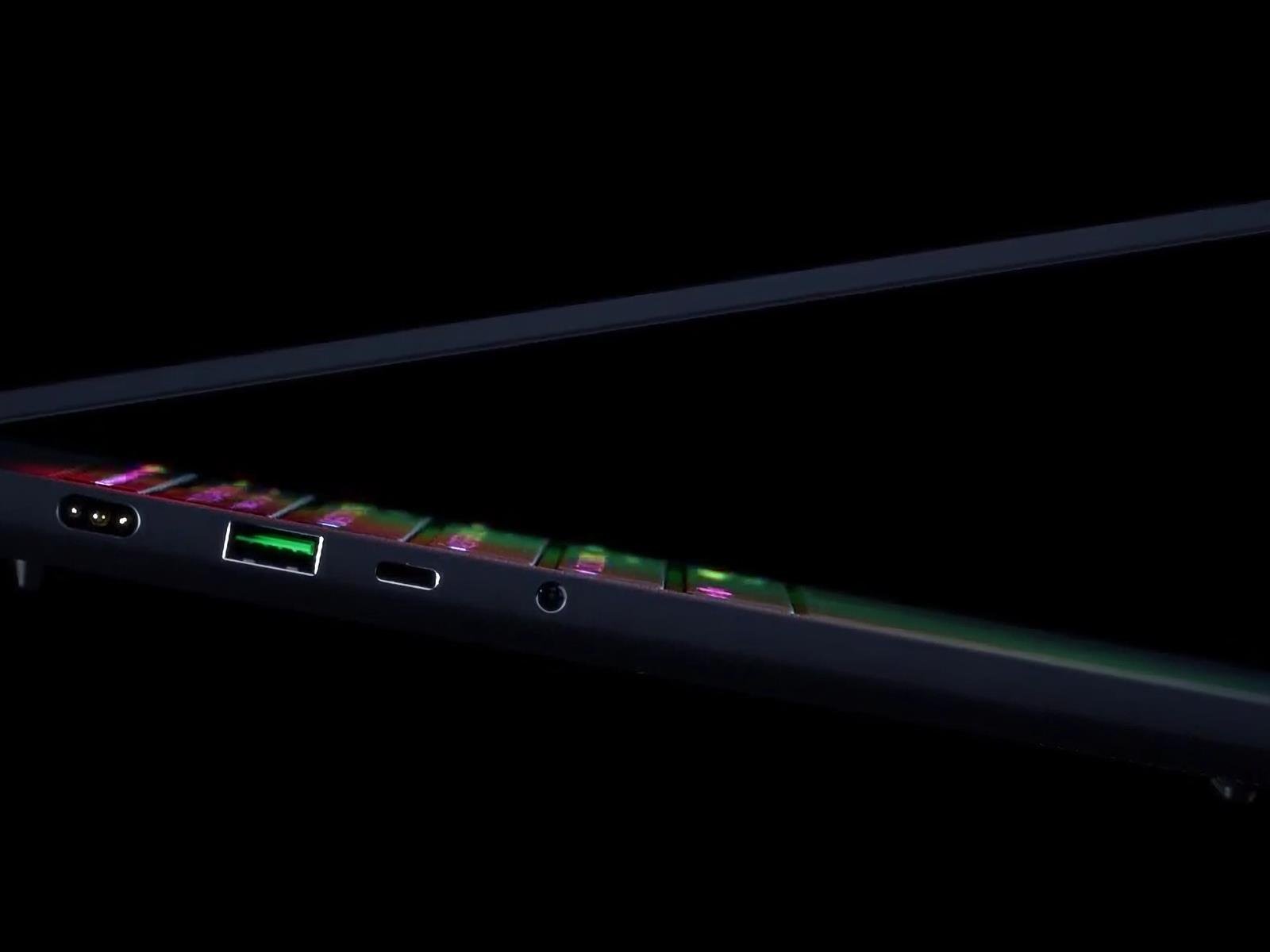
Razer Blade 14 OLED Laptop Hones Its Edge In A Thinner Profile, Up To An RTX 5070

Razer Blade 14 OLED Laptop Hones Its Edge In A Thinner Profile, Up To An RTX 5070
Boy, it sure seems like it’s the early 2010s again, with “thin” being all the rage. Along with the Samsung Galaxy S25 Edge and the iPhone 17 Air, the war for thinness has been reignited. The redesigned Razer Blade 14 laptop is the latest entrant to this proverbial fight, packing GeForce RTX 50-series GPUs and top-tier specs and build acumen

Scammers Are Using AI to Impersonate Government Officials

If you get a text or voice message from someone claiming to be a U.S. government official, they probably aren’t who they say they are. The FBI is warning the public about an ongoing campaign in which scammers are using AI-generated voice messages to impersonate senior government staff in an attempt to gain access to personal accounts and, by extension, sensitive information or money.

Many of those targeted have been other current and former government officials—both federal and state—and their contacts, but that doesn’t mean this scam or something like it won’t land in your inbox or on your phone sooner or later. Here’s how these AI-powered attacks work, and how to avoid falling victim.

How the AI impersonation scam works

The current scam can take the form of smishing, which targets individuals via SMS or MMS, or vishing, which uses voice memos. Either way, bad actors are sending AI-generated voice messages and/or texts that appear to be from senior U.S. government officials. The goal is to build trust before directing targets to a separate messaging platform via a malicious link, which ultimately ends with you entering login credentials or downloading malware to your device. Scammers may also use the information gathered to target additional contacts, perpetuating the campaign.

These scams are believable on some level thanks to voice cloning and generative AI tools that allow anyone to easily impersonate public figures. Bad actors can also spoof phone numbers so that messages in smishing schemes appear to be from family, friends, or trusted contacts.

How to spot fake vishing messages

While AI-generated speech can be convincing, there are ways to identify these messages as fake. Listen for pronunciation and pacing that sound off as well as the presence (or lack) of emotion and variation in the speaker’s voice—for example, AI tends to sound slightly flatter and have less inflection than a real human, and you may detect odd pauses.

Of course, you should be wary of any communication—voice or otherwise—from anyone claiming to represent an organization, including a government agency, especially if they send unsolicited links, request money or personal information, or promote a sense of urgency.

If you do receive a message that sounds convincing, verify the caller’s identity by searching for official contact information and calling back, or hang up and reach out directly if it’s someone you know. You should always independently confirm any request to send money or provide information, and never click links or download attachments sent via email or text. The FBI also suggests selecting a secret word or phrase with your close contacts that you can use to verify their identities from AI.

SAG-AFTRA says Fortnite’s AI Darth Vader voice violates fair labor practices

SAG-AFTRA, the labor union representing performers in film, television and interactive media, has submitted an Unfair Labor Practice (ULP) filing against Epic Games for using an AI-generated version of Darth Vader’s voice in the current season of Fortnite. Disney and Epic first announced on May 16 that Fortnite would feature a take on the character using an AI-generated version of James Earl Jones’ voice. 

The issue in SAG-AFTRA’s eyes is that the union is currently on strike while it negotiates a new contract with video game companies, and using an AI-generated voice represents Epic refusing to “bargain in good faith.” The AI-powered version of Darth Vader is interactive, but that doesn’t change the fact that the video game version of Darth Vader has frequently been played by actors other than Jones.

Disney got permission from Jones and his family to use AI to replicate his voice for film and TV in 2022, so there is precedent for an AI performance of this kind. After Jones’ death in September 2024, the AI route technically became the only way to use Darth Vader’s “original voice,” other than reusing clips of past performances. Unless of course Epic or Disney wanted to pay another actor to play Darth Vader, which would require coming to an agreement on a new contract for video game performers.

ULP filings are reviewed by the National Labor Review Board and can lead to hearings and injunctive relief (a court ordering Epic to remove Darth Vader from the game until a settlement is reached, for example). They are also often used as a way for unions to provoke companies to come back to the bargaining table or respond with a more realistic offer. SAG-AFTRA’s Interactive Media Strike has been ongoing since July 26, 2024. SAG-AFTRA members originally voted in favor of a strike in September 2023 for better wages and AI protections. 

Engadget has reached out to both Disney and Epic for comment on SAG-AFTRA’s ULP filing. We’ll update this article if we hear back.

This article originally appeared on Engadget at https://www.engadget.com/gaming/sag-aftra-says-fortnites-ai-darth-vader-voice-violates-fair-labor-practices-202009163.html?src=rss

AI is More Persuasive Than People in Online Debates

Chatbots are more persuasive in online debates than people — especially when they are able to personalize their arguments using information about their opponent. From a report: The finding, published in Nature Human Behaviour on 19 May, highlights how large language models (LLMs) could be used to influence people’s opinions, for example in political campaigns or targeted advertising.

“Obviously as soon as people see that you can persuade people more with LLMs, they’re going to start using them,” says study co-author Francesco Salvi, a computational scientist at the Swiss Federal Technology Institute of Lausanne (EPFL). “I find it both fascinating and terrifying.” Research has already shown that artificial intelligence (AI) chatbots can make people change their minds, even about conspiracy theories, but it hasn’t been clear how persuasive they are in comparison to humans. GPT-4 was 64.4% more persuasive than humans in one-to-one debates, the study found.


Read more of this story at Slashdot.

VR bop Thrasher is heading to PC and Steam Deck

Thrasher is coming to flat screens, with a launch on Steam and Steam Deck scheduled for later in 2025. The new platform releases follow the VR game’s debut last summer on the Meta Quest and Apple Vision Pro. Devs Brian Gibson and Mike Mandel, collaborating under the moniker Puddle, announced the new hardware additions in a fittingly surreal trailer today.

Both Gibson and Mandel have a history making music- and audio-driven interactive experiences. Mandel worked on Fuser, Rock Band VR and Fantasia: Music Evolved. Gibson’s previous project was the VR title Thumper, which bills itself with the tagline “a rhythm violence game.” (Imagine Tetris Effect if it was filled with aggression rather than transcendent joy. But in a really, really good way.)

Thrasher follows their existing legacy of immersive and unsettling games with its strange concept of a cosmic eel doing battle against a space baby, all set to a throbbing soundtrack. The addition of a non-virtual reality option is an exciting development for fans of the title, and it should be interesting to see how well the pair adapts their VR control scheme to gamepads and mouse/keyboard setups.

This article originally appeared on Engadget at https://www.engadget.com/gaming/pc/vr-bop-thrasher-is-heading-to-pc-and-steam-deck-200753057.html?src=rss

This Phone-Sized E-Reader Helped Me Smash My 2025 Reading Goal

We may earn a commission from links on this page.

I used to regularly read more than 125 books a year, each meticulously logged on my Goodreads profile. I read during my commute and to wind down at night. I always had a paperback in my bag or an audiobook in my ears.

Then I got a smartphone. Then I got on Twitter. Then the 2016 presidential election happened. Then there was a pandemic, and for a while I stopped commuting altogether.

With every year, it seemed like there were more things to spiral about online, and less hours in the day to relax with a novel or read some stimulating non-fiction. Suddenly I found it hard to meet my much more modest reading goals, which dropped to 75, then 50, then 30 books a year. In 2023 and 2024, I set my sights on finishing just 20 books (including graphic novels and stuff I read aloud to my kids). I still had to cram at the end of the year to manage even that comparatively sluggish pace.

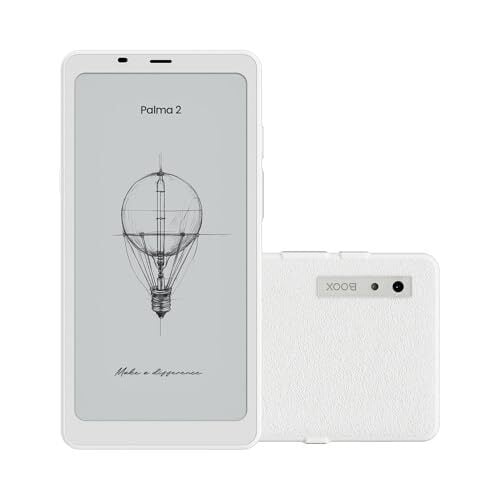
But things are different in 2025. It’s May, and I’ve already met my 20-book reading goal (which I’ll soon be increasing), and I owe it all to my Boox Palma 2, a phone-shaped e-reader I can easily carry with m3 wherever I go.

A device so good it has a cult following

As I noted in my review of the Boox Palma—the now discontinued, nearly identical predecessor to the Palma 2—it’s one of the most lovable electronic devices I have ever owned. It’s a near perfect marriage of form (the easy-on-the-eyes e-ink screen popularized by Amazon’s Kindle, a compact size) and function—with an open Android operating system and access to the Google Play store, you can use it to run reading apps from a variety of retailers, listen to audiobooks with Bluetooth headphones, or get a little work done on productivity apps like Gmail and Google Docs.

At a time when increasing numbers of people are opting to make the switch to a “dumb phone” to escape the pull of their screen addictions, the Palma occupies a rather unique spot in the market: While it can do a great deal more than your standard Kindle, it still feels clunky and slow in comparison to your smartphone, but in the best way. It doesn’t have a cellular connection, so if you aren’t on wifi, you’ll be unable to use the internet or update your social feeds. The black and white display means using it is soothing instead of stimulating, while still scratching that “gotta pull out my device” itch. Its quirky qualities have garnered it a cult following of sorts (ironically, adherents gather to discuss the device on Reddit and TikTok, two places to avoid if you want to get any reading done).

The perfect form factor

Leaving aside all the things social media and app developers do to make their products addictive, I struggle with regulating my phone use for the sole reason that my phone is always with me. It’s how I keep in touch with my spouse and kids and it has effectively replaced my wallet, therefore it must be in my pocket at all times and hey, I might as well pull it out at every idle moment to check my notifications. Yes, I could carry a book or a standard-sized e-reader to look at instead, but that requires carrying a bag of some kind (or large pockets), and it’s hard to beat the convenience of something you can shove into any pair of jeans.

Well, the Palma 2 can be shoved into any pair of jeans. It has basically the identical form factor to a most smartphones, and can even occupy the same pocket as my iPhone 14. This means that when I’m standing in line at the post office, or waiting for the train, or trying to maintain my balance on the train, I can effortlessly pull out my e-reader instead of my phone, and absorb a few pages rather than frantically trying to refresh my Bluesky feed at subway stops.

Slow and kinda clunky (in a good way)

If the Palma 2 can access the Google Play store, what’s to keep you from loading it up with all of the apps that already make your smartphone so addictive? Nothing! Go for it—stick Bluesky on there. Add Facebook and Instagram if you’ve yet to flee Meta’s ecosystem. You can even load up video-based apps like YouTube and Netflix and time-wasting games like Subway Surfers.

If you do, though, you’ll quickly find that none of them are that enjoyable to use. Though Boox readers’ e-ink displays employ variable refresh rate tech that makes them infinitely faster than early generation Kindles (where you could pause for a heartbeat between pressing a key on the virtual keyboard and actually seeing the text appear on the screen), even in the fastest modes they are only a fraction as responsive as a phone or tablet’s LED screen.

So while you certainly can use your Palma 2 to scroll social media or watch a few TikToks, you won’t particularly want to, because it’s kind of bad at them, but in a way I love: The device is optimized for reading text or comics (particularly black and white manga), and it presents that material so well, and so conveniently, that I want to carry it around with me everywhere so I can read on it all the time.

So far, it’s going well: As I said, I’ve already hit my 20-book reading goal for the year. In the meantime, if you’re looking for a series you can binge to get you out of a doomscrolling funk, I recommend the Dungeon Crawler Carl series by Matt Dinniman. After picking up the first one in February, I blew through its seven thus released books (ranging in length from 400 to 800 pages) in about six week. And yes, I read every word of them on my Palma 2.

A Brazilian Hillbilly Cover Of Rage Against The Machine’s ‘Killing In The Name Of’

This is a clip of Brazilian hillbilly band (that’s a thing — I was surprised, but I know I shouldn’t have been) Tião e os Bravos covering Rage Against The Machine’s 1992 ‘Killing In The Name Of’ atop a dirty mattress stage. Admittedly, not the worst stage I’ve ever seen. Would I pay to see Tião e os Bravos in concert? Absolutely, AND bring my own homebrew moonshine. “Why is it black?” Oh I use shoe polish to give it some color.

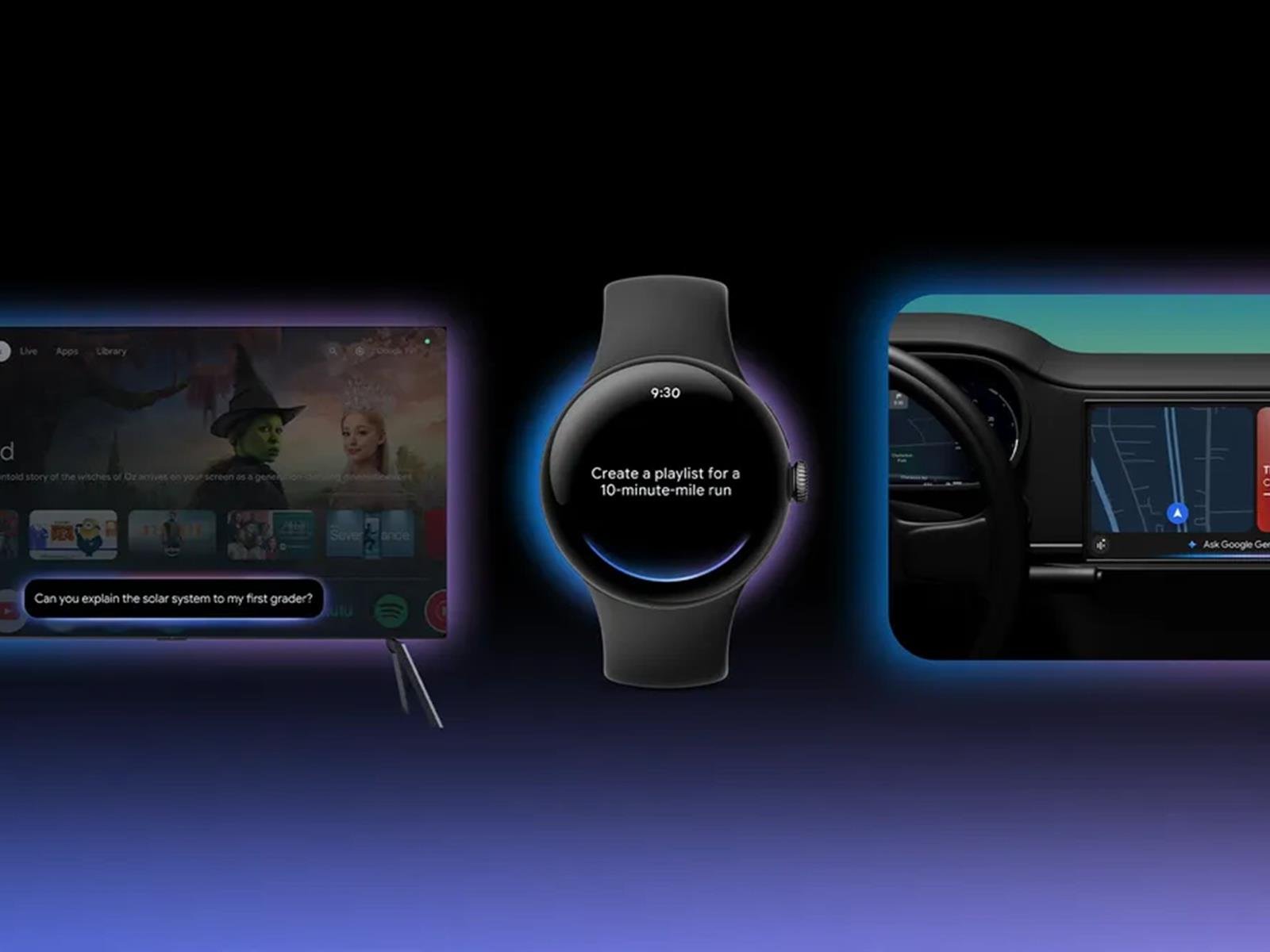
Android Devices Are Getting Big Gemini Upgrades That Leave Siri In The Dust

Android Devices Are Getting Big Gemini Upgrades That Leave Siri In The Dust
Google has recently announced that it is bringing Gemini to smartwatches, cars, TVs, and, in collaboration with Samsung, headsets and glasses too.

A fascinating part of this upgrade is that Gemini will be able to understand natural conversations. With Gemini in cars (“Android Auto and cars with Google Built-in”), users can converse naturally

I Love These Sony ANC Headphones, and They Just Dropped in Price by $150

We may earn a commission from links on this page. Deal pricing and availability subject to change after time of publication.

Audio enthusiasts need no introduction to Sony’s 1000X series. They’ve been around since 2016, improving on the previous iteration to eventually land on the latest Sony WH-1000XM6, the best over-ear headphones for ANC your money can buy in 2025. As you can imagine, that means the still excellent 1000XM5 is dropping in price. If you’re willing to splurge, it’s a good time to do so during Amazon’s Memorial Day Sale. The WH-1000XM5 are currently $298 (originally $399.99), matching Black Friday and Christmas prices, according to price-tracking tools.

I have been a loyal customer of the 1000X line for many years as my go-to headphones for most activities. The WH-1000XM5 came out in May of 2022 to an “outstanding” review from PCMag for their top-notch audio quality, but also for their exceptional audio when using its best-in-class active-noise cancelling (ANC) (most headphones lose their audio quality when using ANC). The headphones are also well-designed to be comfortable for long sessions.

The ear controls use tapping and swiping, which aren’t my favorite, but it’s what all the modern headphones are moving toward. There’s an app that comes with the headphones that lets you adjust your EQ settings to your liking, including what the swiping and tapping functions do on your headphones.

A great touch on these headphones that is often neglected is a Stereo 3.5mm connection, perfect for those who want to use a wired cable without worrying about battery life. Speaking of battery life, Sony says you can expect about 30 hours, but it will vary depending on your usage of ANC. They are compatible with AAC, LDAC and SBC codecs and have multipoint connection (you can pair them with more than one device at the same time).

If you’re looking for excellent ANC headphones with great audio quality at a good price, the WH-1000XM5 are a great deal right now.

European ‘Green’ Investments Hold Billions in Fossil Fuel Majors

An anonymous reader shares a report: European “green” funds holding more than $33 billion of investments in major oil and gas companies have been revealed by an investigation, despite fossil fuels being the root cause of the climate crisis. Some of these investment funds used branding such as Sustainable Global Stars and Europe Climate Pathway.

Over $18 billion was invested in the five biggest polluters: TotalEnergies, Shell, ExxonMobil, Chevron and BP. These topped a 2023 Carbon Majors ranking for oil and gas production among shareholder-owned firms. Other investments by funds following EU sustainable finance disclosure regulations (SFDR) included those in US fracking company Devon Energy and Canadian tar sands company Suncor, the investigation by Voxeurop and the Guardian found.

Investors claim that holding a stake in a company allows them to influence the firm’s pursuit of climate goals. However, no major oil and gas producer has plans consistent with international climate targets and many companies have weakened their plans in the last year, according to a report from Carbon Tracker in April. The investment firms with the biggest stakes in fossil companies in their green funds were JP Morgan, BlackRock and DWS in Germany.


Read more of this story at Slashdot.

Why We’re Not Getting That AI-Powered Siri Anytime Soon

If you were under the assumption that Siri was soon going to be supercharged with AI, you wouldn’t be alone. In fact, Apple has advertised as much since last WWDC, showing off its ChatGPT-like assistant in commercials and promotional materials.

It’s been nearly a year since WWDC 2024, and that new Siri is still not here. The thing is, it likely won’t be for a long time. How long is anyone’s guess (I’ve been tracking the delays here), but one thing seems for certain: Apple is not showing off AI Siri at next month’s WWDC 2025.

Apple’s AI program is a mess

In Mark Gurman’s latest piece for Bloomberg, he describes a chaotic situation regrading Apple’s AI department. The piece is a fascinating and in-depth look at Apple’s AI woes, and I won’t give a detailed summary of the entire article. However, I will briefly discuss what’s going on, and how it related to AI Siri:

Executive leadership at Apple, including senior vice president of Software Engineering Craig Federighi, didn’t believe AI was worth the investment, and didn’t want to allocate resources away from Apple’s core software components in order to develop the technology. But once Federighi used ChatGPT following its late 2022 launch, he did a 180. He and other Apple executives began meeting with the big AI companies to learn everything they could, and pushed for iOS 18 to have “as many AI-powered features as possible.”

While Apple’s AI department already existed before this scramble (the company had poached Google’s artificial intelligence chief John Giannandrea), the engineers simply couldn’t match the quality or accuracy of the tools provided by other companies like OpenAI, Anthropic, or Google, who had a huge head start on generative AI. That lag manifested in two ways: First, many of the AI features that Apple did bring to market were half-baked. Apple Intelligence’s notification summaries feature, for example, infamously made some major mistakes, such as “summarizing” a BBC news alert to say that United Healthcare shooting suspect Luigi Mangione had shot himself. (Apple later disabled the feature for news alerts.)

Second, because Apple couldn’t rely on its own tech to carry Apple Intelligence, they outsourced some tech to another AI company. While there was much debate about which company they should work with (Giannandrea wanted to work with Google and bring Gemini to iOS), Apple eventually settled for ChatGPT—which is why OpenAI’s bot is built into your iPhone today.

Apple’s lack of AI focus meant they missed the rush to acquire GPUs—the main processing unit used for training and running AI models. They also have strict privacy policies when it comes to user data, which severely limits what data they can use to train their models. (Some might say that’s actually a good thing, and take a pause to think about the companies that do have a plethora of data to train with.)

Siri

While Apple was able to get some AI features working “well” enough to ship, Siri was never among them. In order to bring AI to Siri, the company had to split Siri’s “brain” in two—one featuring the existing code, used for traditional Siri tasks like setting timers and making calls, and the other for AI. While the AI-side in a vacuum can work, integrating it with the other half of Siri’s brain is problematic, and is the cause of much of the delay.

But rather than wait until Apple figured out how to get AI Siri working to actually show off its new features, the company went ahead and marketed them heavily. During WWDC 2024, we saw prerecorded demos of Siri taking complex requests, and generating helpful answers by accessing both a knowledge base about the user in question, as well as an awareness of what was happening on-screen. A prime example was an Apple employee asking Siri about their mom’s travel itinerary: Siri dove through the employee’s messages with their mom to draw up the plans.

Apple even hired Bella Ramsey of The Last of Us to promote AI Siri features: In the commercial, Ramsey sees someone at a party they recognize but don’t remember the name of. Ramsey then asks Siri “What’s the name of the guy I had a meeting with a couple of months ago at Cafe Granel?” Siri immediately responds with the acquaintance’s name, pulling from a calendar entry. Ramsey doesn’t need to say the exact date or where to pull the information from, since AI Siri is presumably contextually aware, and can understand vague responses. (Apple has since deleted the ad from its YouTube account

Since then, AI features have trickled in on various iOS 18 updates, but not AI Siri. We’ve been following reports (mostly from Gurman) that Apple’s engineers were having trouble getting it to work, and each delay pushed AI Siri’s release to the next major iOS 18 update. At one point, we thought it could come with iOS 18.4: As Gurman reports in this latest piece, that was the plan, but Federighi himself was surprised to see that the AI Siri features didn’t work on a beta for 18.4.

Siri’s big AI upgrade was delayed again, and now “indefinitely.” There are no plans to announce Siri’s new features alongside iOS 19 next month. While the goal is to get AI Siri out for iOS 19 at some point, the situation is dire—Siri’s features reportedly don’t work a third of the time, and every time you fix one of Siri’s major bugs, “three more crop up.”

Gurman’s sources say Apple has an AI department in Zurich working on a new LLM-based Siri that scraps the two-sided brain of the current assistant. Siri also has a new leader, Mike Rockwell, who replaced Giannandrea this spring. Some sources even say that Apple’s internal chatbot is now rivaling ChatGPT, which could prove useful if integrated with Siri.

There are reasons to be mildly optimistic about Siri’s long-term future, but there’s no denying the last year has been a disaster. If you’re excited for Siri’s next big development, lower your expectations for the short-term.