The Information: Microsoft Engineers Forced To Dig Their Own AI Graves

Longtime Slashdot reader theodp writes: In what reads a bit like a Sopranos plot, The Information suggests some of those in the recent batch of terminated Microsoft engineers may have in effect been forced to dig their own AI graves. The (paywalled) story begins: “Jeff Hulse, a Microsoft vice president who oversees roughly 400 software engineers, told the team in recent months to use the company’s artificial intelligence chatbot, powered by OpenAI, to generate half the computer code they write, according to a person who heard the remarks. That would represent an increase from the 20% to 30% of code AI currently produces at the company, and shows how rapidly Microsoft is moving to incorporate such technology. Then on Tuesday, Microsoft laid off more than a dozen engineers on Hulse ‘s team as part of a broader layoff of 6,000 people across the company that appeared to hit engineers harder than other types of roles, this person said.” The report comes as tech company CEOs have taken to boasting in earnings calls, tech conferences, and public statements that their AI is responsible for an ever-increasing share of the code written at their organizations. Microsoft’s recent job cuts hit coders the hardest. So how much credence should one place on CEOs’ claims of AI programming productivity gains — which researchers have struggled to measure for 50+ years — if engineers are forced to increase their use of AI, boosting the numbers their far-removed-from-programming CEOs are presenting to Wall Street?


Read more of this story at Slashdot.

News/Media Alliance calls Google’s AI Mode ‘theft’

The News/Media Alliance took aim at Google today after the tech company’s announcement at its I/O showcase that AI Mode will be rolling out to all US search users. This feature more closely integrates an AI chatbot into Google search. Ostensibly, AI Mode can help people get better answers to their queries, but it also serves to keep users on a Google property rather than clicking through to get information from other publications.

“Links were the last redeeming quality of search that gave publishers traffic and revenue. Now Google just takes content by force and uses it with no return, the definition of theft,” said News/Media Alliance President and CEO Danielle Coffey. “The DOJ remedies must address this to prevent continued domination of the internet by one company.”

This isn’t the first time the organization has fired shots at Google; it filed an amicus brief earlier this month looking for remedy in the antitrust case about Google’s monopoly control over search. The group argued that publishers should be able to opt out of letting search engines use their content for retrieval augmented generation.

Google has also taken an aggressive stance toward publishers as it develops more AI-driven services. The company’s recent attitude can be seen in Bloomberg‘s discovery of an internal document showing that the company decided not to give publishers a choice to opt out of AI training if they wanted their material to appear in search results.

This article originally appeared on Engadget at https://www.engadget.com/big-tech/newsmedia-alliance-calls-googles-ai-mode-theft-223128521.html?src=rss

You Can Get This M1 MacBook Air on Sale for Just $550 Right Now

We may earn a commission from links on this page. Deal pricing and availability subject to change after time of publication.

There was a time when you needed to spend over $1,000 to get your hands on a MacBook that could handle everything from spreadsheets to video edits without complaint. That’s no longer the case—at least not with this deal. This refurbished 2020 MacBook Air with the Apple M1 chip is down to $549.99 for the 8GB RAM + 512GB SSD model and $589.99 for the 16GB RAM + 256GB SSD configuration. Both are “Grade A” units, meaning they might have little to no visible wear even though they are refurbished.

You get the same M1 chip that helped Apple cut ties with Intel—an 8-core CPU, 8-core GPU, and a 16-core Neural Engine working together to make everything from browsing to photo editing fast and efficient. That chip also means zero fans, so the machine stays completely silent, no matter how long you’re running it. The Retina display still holds up with a crisp 2560×1600 resolution, and the battery life is solid, around 15 to 18 hours depending on use.

You do miss out on some newer features like MagSafe charging or a 1080p webcam, but for this price, those trade-offs feel minor. Both variants include two Thunderbolt/USB 4 ports, wifi 6, Bluetooth 5.0, stereo speakers with Dolby Atmos support, a responsive backlit Magic Keyboard, and Touch ID. And because it’s still supported, you’ll be able to upgrade to macOS Sequoia 15. If you’ve been eyeing a MacBook for work, school, or general creative projects and can live without the newest features, this deal makes a strong case for sticking with Apple’s first (and still very impressive) M1 machine.

GeoGuessr community maps go dark in protest of EWC ties to human rights abuses

A group of GeoGuessr map creators have pulled their contributions from the game to protest its participation in the Esports World Cup 2025, calling the tournament “a sportswashing tool used by the government of Saudi Arabia to distract from and conceal its horrific human rights record.” The protestors say the blackout will hold until the game’s publisher, GeoGuessr AB, cancels its planned Last Chance Wildcard tournament at the EWC in Riyadh, Saudi Arabia, from July 21 to 27.

GeoGuessr is a browser game where players try to pinpoint locations using only Google Street View images, and it relies on community mapmakers to stay relevant. The blackout, which began on May 21, includes “dozens of creators and their maps, including a supermajority of the most popular competitively relevant world maps,” according to a statement the group shared on Reddit. The removed maps have been played tens of millions of times.

One of the largest GeoGuessr communities, Plonk It, has also removed its Map Directory and shared the mapping community’s open letter. That statement reads in full as follows:

We, the creators of a considerable share of GeoGuessr’s most popular maps, have decided to make our maps unplayable in protest of GeoGuessr AB’s decision to host a World Championship wildcard tourney at the Esports World Cup (EWC) in Riyadh.

The EWC is a sportswashing tool used by the government of Saudi Arabia to distract from and conceal its horrific human rights record.

Groups targeted by the government include women, LGBTQ people, apostates and atheists, political dissenters, migrant workers in the Kafala system, religious minorities, and many others. The subjugation of these groups is extensive and pervasive. Members of these groups are routinely subjected to discrimination, imprisonment, torture, and even public executions. These severe human rights violations are well-documented and indisputable.

By participating in the EWC, GeoGuessr is contributing to that sportswashing agenda, which is designed to take attention away from Saudi Arabia’s human rights violations.

The GeoGuessr community is diverse and includes many members of groups that would be harshly persecuted were they to live in Saudi Arabia. In solidarity with those currently residing in Saudi Arabia while being subject to oppression, as well as members of the community who would feel and be unsafe attending the tournament in Riyadh, we have decided to black out our maps by replacing all their previous locations with random garbage locations, rendering them unplayable.

This blackout includes dozens of creators and their maps, including a supermajority of the most popular competitively relevant world maps. It will continue until we see action from GeoGuessr; specifically, we demand that GeoGuessr cancels its wildcard event in Saudi Arabia and commits to not hosting any events there as long as it continues its oppressive regime.

You don’t play games with human rights.

Thank you for reading.

The GeoGuessr mapping community

We’ve hit up GeoGuessr AB for a comment on the blackout and will update this story as we hear back.

The EWC is a huge, multi-game event owned and operated by the Saudi government and held in the country’s capital city. It’s an evolution of the Gamers8 tournament and this year marks the second EWC-branded competition; it’s due to take place in July and August with a total prize pool of $38 million, split among 24 games. Franchises participating in the 2025 event include Rocket League, Apex Legends, Call of Duty, League of Legends, Counter-Strike, Overwatch, Dota 2, Valorant, Street Fighter 6, EA Sports FC and PUBG.

It’s difficult to compete in esports without running into Savvy Games Group, the video game arm of Saudi Arabia’s Public Investment Fund. Alongside hosting the EWC, Savvy has financial stakes in Nexon (10.2 percent ownership), Electronic Arts (9 percent), Embracer Group (8.3 percent), Nintendo (7.5 percent), Capcom (5 percent) and Take-Two Interactive (6.8 percent as of 2023). Savvy also runs ESL FACEIT Group, which contains the Electronic Sports League, a longstanding and significant esports event company. The New York Times reported last year that the Saudi government plans to invest $38 billion in the video game industry by 2030.

Human rights groups including Amnesty International and Human Rights Watch have long documented the abuses of the Saudi government. HRW describes Saudi Arabia’s human rights record as “abysmal,” and specifically calls out the PIF as a reputational whitewashing tool. Saudi authorities have been accused of sportswashing in traditional sports as well, specifically through the country’s ownership of LIV Golf and Newcastle United FC.

In February, Riot Games — the operator of League of Legends, Valorant and Teamfight Tactics, and arguably the largest name in esports — signed a three-year deal with the Esports World Cup Foundation for an undisclosed sum. Riot defended the partnership, arguing that the resulting financial boon for players and the esports industry outweighed other concerns.

“We know some of you may not feel great about our decision to partner with the EWC in this way, and we respect that,” Riot’s statement read.

Though corporate support for the EWC remains strong, the GeoGuessr mapping community isn’t alone in rejecting this year’s tournament. Street Fighter 6 player Christopher Hancock, who plays as ChrisCCH for FlyQuest, recently declined his spot at EWC 2025. In a social media statement, Hancock said, “I gave this decision a lot of thought and ultimately decided that, due to the nature in which the event is funded and managed, I do not feel comfortable participating in it.” He added that the partnership between the Capcom Pro Tour and the EWC effectively forced him to work with the Saudi-backed group.

“Choosing to not participate in any EWC qualifiers would effectively mean retirement from competing,” Hancock said. “I find it regrettable that this event has become so deeply embedded in the [fighting game community], but I have not yet made a decision on whether I will stop competing in events associated to it altogether.”

Alongside the GeoGuessr map blackout, the community protest added one new, short challenge to the game called How to Run A Dictatorship. It takes players through five locations around Riyadh, documenting the alleged government-sanctioned torture, kidnapping, imprisonment and oppression of women, LGBTQ people, religious minorities and political dissenters occurring in these places. The challenge takes just a few minutes, so feel free to experience it yourself.

This article originally appeared on Engadget at https://www.engadget.com/gaming/geoguessr-community-maps-go-dark-in-protest-of-ewc-ties-to-human-rights-abuses-221037118.html?src=rss

Most AI Chatbots Easily Tricked Into Giving Dangerous Responses, Study Finds

An anonymous reader quotes a report from The Guardian: Hacked AI-powered chatbots threaten to make dangerous knowledge readily available by churning out illicit information the programs absorb during training, researchers say. […] In a report on the threat, the researchers conclude that it is easy to trick most AI-driven chatbots into generating harmful and illegal information, showing that the risk is “immediate, tangible and deeply concerning.” “What was once restricted to state actors or organised crime groups may soon be in the hands of anyone with a laptop or even a mobile phone,” the authors warn.

The research, led by Prof Lior Rokach and Dr Michael Fire at Ben Gurion University of the Negev in Israel, identified a growing threat from “dark LLMs”, AI models that are either deliberately designed without safety controls or modified through jailbreaks. Some are openly advertised online as having “no ethical guardrails” and being willing to assist with illegal activities such as cybercrime and fraud. […] To demonstrate the problem, the researchers developed a universal jailbreak that compromised multiple leading chatbots, enabling them to answer questions that should normally be refused. Once compromised, the LLMs consistently generated responses to almost any query, the report states.

“It was shocking to see what this system of knowledge consists of,” Fire said. Examples included how to hack computer networks or make drugs, and step-by-step instructions for other criminal activities. “What sets this threat apart from previous technological risks is its unprecedented combination of accessibility, scalability and adaptability,” Rokach added. The researchers contacted leading providers of LLMs to alert them to the universal jailbreak but said the response was “underwhelming.” Several companies failed to respond, while others said jailbreak attacks fell outside the scope of bounty programs, which reward ethical hackers for flagging software vulnerabilities.


Read more of this story at Slashdot.

Android 16 includes a desktop interface Google built from Samsung DeX

Devices running Android 16 will pick up a new trick when the software update rolls out later this year: The ability to run a desktop-style interface while connected to an external display. An early version of the idea was spotted for phones in betas of Android 16, but as 9to5Google noticed, Google made the feature official during its developer keynote.

According to the presentation, the new windowing and external display feature was created in collaboration with Samsung, “building on the foundation of Samsung DeX, to bring enhanced desktop windowing capabilities in Android 16.” Prior to this official support, Samsung DeX was a custom feature Samsung built into One UI that allowed certain Samsung phones and tablets to display a desktop-style interface while connected to a display.

Google’s implementation seems to be aiming for the same thing, with resizable windows and a dock for your most used apps. The company also appears open to the feature working on tablets and phones, too. In a blog post touting the advantages of developing adaptive apps, Google says that Android 16 offers “a true desktop-like experience on large screens and when devices are connected to external displays.” While Google’s language leaves things open-ended, support for this desktop experience could still hinge on phone makers enabling it and app developers making sure their apps play nice with resizable windows.

A developer beta of Android 16 is available to download on select phones and tablets right now. Assuming desktop windowing and support for external displays isn’t dropping in a later update, you’ll be able to try the new features for yourself when Android 16 launches in June.

This article originally appeared on Engadget at https://www.engadget.com/mobile/smartphones/android-16-includes-a-desktop-interface-google-built-from-samsung-dex-213611668.html?src=rss

I helped a lost dog’s AirTag ping its owner: An ode to replaceable batteries

Out of all the books I read for my formal education, one bit, from one slim paperback, has lodged the deepest into my brain.

William Blundell’s The Art and Craft of Feature Writing offers a “selective list of what readers like.” It starts with a definitive No. 1: “Dogs, followed by other cute animals and well-behaved small children.” People, Blundell writes, are your second-best option, providing they are doing or saying something interesting.

I have failed to provide Ars Technica readers with a dog story during nearly three years here. Today, I intend to fix that. This is a story about a dog, but also a rare optimistic take on a ubiquitous “smart” product, one that helped out a very good girl.

Read full article

Comments

Apollo For Reddit Dev Christian Selig To Join Digg As an Advisor

Christian Selig, developer of the popular third-party Reddit app Apollo, is joining the rebooted Digg as an advisor alongside Digg founder Kevin Rose and Reddit co-founder Alexis Ohanian. TechCrunch reports: Earlier this year, Digg’s original founder Kevin Rose and Reddit co-founder Alexis Ohanian acquired what was left of Digg in an attempt to revitalize what was formerly known as “the internet’s homepage.” Rose and Ohanian were already a fascinating pairing — the two had previously seen each other as rivals, since Digg and Reddit were fierce competitors. By adding Selig to the mix, Rose and Ohanian are further signaling that the new Digg wants to shake things up.

Selig played a prominent role in the backlash against Reddit’s increased API pricing in 2023, which made free apps like Apollo — which offered an enhanced browsing experience for Reddit users — impossible to run. In a Reddit post that went viral, Selig told users that in order to keep Apollo running as-is under the new API pricing, he would need to pay about $1.7 million per month. Needless to say, Apollo shut down, much to the Reddit community’s disappointment.
“We’re excited to have Selig bring that same craft and community-first thinking to Digg, helping us build something that feels good to use and even better to be a part of,” said Digg CEO Justin Mezzell in a statement.


Read more of this story at Slashdot.

Paris Agreement target won’t protect polar ice sheets, scientists warn

This article originally appeared on Inside Climate News, a nonprofit, nonpartisan news organization that covers climate, energy, and the environment. Sign up for their newsletter here.

Sea levels in some parts of the world could be rising by as much as 8 to 12 inches per decade within the lifetime of today’s youngest generations, outpacing the ability of many coastal communities to adapt, scientists warned in a new study published this week.

The research by an international team of sea level and polar ice experts suggests that limiting warming to 2.7° Fahrenheit (1.5° Celsius) above the pre-industrial temperature—the Paris Climate Agreement’s target—isn’t low enough to prevent a worst-case meltdown of Earth’s polar ice sheets.

Read full article

Comments

Trump admin tells Supreme Court: DOGE needs to do its work in secret

The Department of Justice today asked the Supreme Court to block a ruling that requires DOGE to provide information about its government cost-cutting operations as part of court-ordered discovery.

President Trump’s Justice Department sought an immediate halt to orders issued by US District Court for the District of Columbia. US Solicitor General John Sauer argued that the Department of Government Efficiency is exempt from the Freedom of Information Act (FOIA) as a presidential advisory body and not an official “agency.”

The district court “ordered USDS [US Doge Service] to submit to sweeping, intrusive discovery just to determine if USDS is subject to FOIA in the first place,” Sauer wrote. “That order turns FOIA on its head, effectively giving respondent a win on the merits of its FOIA suit under the guise of figuring out whether FOIA even applies. And that order clearly violates the separation of powers, subjecting a presidential advisory body to intrusive discovery and threatening the confidentiality and candor of its advice, putatively to address a legal question that never should have necessitated discovery in this case at all.”

Read full article

Comments

Android XR Glasses Get I/O 2025 Demo

At I/O 2025, Google revealed new details about Android XR glasses, which will integrate with your phone to deliver context-aware support via Gemini AI. 9to5Google reports: Following the December announcement, Google today shared how all Android XR glasses will have a camera, microphones, and speakers, while an “in-lens display” that “privately provides helpful information right when you need it” is described as being “optional.” The glasses will “work in tandem with your phone, giving you access to your apps without ever having to reach in your pocket.” Gemini can “see and hear what you do” to “understand your context, remember what’s important to you and provide information right when you need it.” We see it accessing Google Calendar, Maps, Messages, Photos, Tasks, and Translate.

Google is “working with brands and partners to bring this technology to life,” specifically Warby Parker and Gentle Monster. “Stylish glasses” are the goal for Android XR since they “can only truly be helpful if you want to wear them all day.” Meanwhile, Google is officially “advancing” the Samsung partnership from headsets to Android XR glasses. They are making a software and reference hardware platform “that will enable the ecosystem to make great glasses.” Notably, “developers will be able to start building for this platform later this year.” On the privacy front, Google is now “gathering feedback on our prototypes with trusted testers.” Further reading: Google’s Brin: ‘I Made a Lot of Mistakes With Google Glass’


Read more of this story at Slashdot.

“Microsoft has simply given us no other option,” Signal says as it blocks Windows Recall

Signal Messenger is warning the users of its Windows Desktop version that the privacy of their messages is under threat by Recall, the AI tool rolling out in Windows 11 that will screenshot, index, and store almost everything a user does every three seconds.

Effective immediately, Signal for Windows will by default block the ability of Windows to screenshot the app. Signal users who want to disable the block—for instance to preserve a conversation for their records or make use of accessibility features for sight-impaired users—will have to change settings inside their desktop version to enable screenshots.

My kingdom for an API

“Although Microsoft made several adjustments over the past twelve months in response to critical feedback, the revamped version of Recall still places any content that’s displayed within privacy-preserving apps like Signal at risk,” Signal officials wrote Wednesday. “As a result, we are enabling an extra layer of protection by default on Windows 11 in order to help maintain the security of Signal Desktop on that platform even though it introduces some usability trade-offs. Microsoft has simply given us no other option.”

Read full article

Comments

All the New Google I/O Features You Can Try Right Now

Google I/O 2025 was chock full of announcements. The problem is, Google isn’t always clear about which features are new, which have already been released, and which are coming out in the future.

While there are plenty of features to look out for on the horizon, and a number still that you’ve been able to use for some time, there are brand new features Google rolled out immediately after announcing them. Here are all the Google I/O features you can check out right now—though some do require you to pay.

Imagen 4

imagen 4 generated comic strip of the google chrome error dinosaur

Credit: Google

Google’s latest AI image generation model, Imagen 4, is available today. Google was sparse on too many specific upgrades with this new model, but says that Imagen is faster, and now capable of images up to 2K resolution with additional aspect ratios.

The change the company focused most on is typography: Google says Imagen 4 can generate text without any of the usual AI errors you associate with AI image generators. On top of that, the model can incorporate different art styles and design choices, depending on the context of the prompt. You can see that in the image above, which uses a pixelated design for the text to match the 8-bit comic strip look.

You can try the latest Imagen model in the Gemini app, Whisk, Vertex AI, and through Workspace apps like Slides, Vids, and Docs.

AI Mode

google homepage with ai mode on the search bar

Credit: Lifehacker

AI Mode essentially turns Search into a Gemini chat: It allows you to ask more complicated and multi-step questions. Google then uses a “query fan-out” technique to scan the web for relevant links and generate a complete answer from those results. I haven’t dived too deep into this feature, but it does largely work as advertised—I’m just not sure if that’s all that much more useful than searching through links myself.

Google has been testing AI Mode since March, but now it’s available to everyone in the U.S. If you want to use it, you should see the new AI Mode option on the right side of the search bar on Google’s homepage.

“Try it on”

try it on screenshot

Credit: Google

Shopping online is so much more convenient than going in-person, in all ways but one: You can’t try on any of the clothes ahead of time. Once they arrive, you try them on, and if they don’t fit, or you don’t like the look, back to the store they go.

Google wants to eliminate (or, at least, greatly cut down on) this from happening. Its new “try it on” feature scans an image you provide of yourself to get an understanding of your body. Then, when you’re browsing for new clothes online, you can choose to “try it on,” and Google’s AI will generate an image of you wearing the article of clothing.

It’s an interesting concept, but also a bit creepy. I personally do not want Google analyzing images of myself so that it can more accurately map different types of clothes on me. Personally, I’d rather run the risk of making a return. But if you want to give it a go, you can try the experimental feature in Google Labs today.

Jules

Jules is Google’s “asynchronous, agentic coding assistant.” According to Google, the assistant clones your codebase into a secure Google Cloud virtual machine, so that it can execute tasks like writing tests, building features, generating audio changelogs, fixing bugs, and bumping dependency versions.

The assistant works in the background and doesn’t use your code for training, which is a bit refreshing from a company like Google. I’m not a coder, so I can’t say for sure whether Jules seems useful. But if you are a coder, you can test it for yourself. As of today, Jules is available as a free public beta for anyone who wants to try it out—though Google says usage limits apply, and that they will charge for different Jules plans once the “platform matures.”

Speech translation in Google Meet

a google meet call between two people. google meet is translating the call from spanish

Credit: Google

If you’re a Google Workspace subscriber, this next feature is pretty great. As shown off during the I/O keynote, Google Meet now has live speech translation. Here’s how it works: Let’s say you’re talking to someone on a Google Meet call who speaks Spanish, but you only speak English. You’ll hear the other caller speak in Spanish for a moment or two, before an AI voice dubs over them with the translation in English. They’ll receive the opposite on their end after you start speaking.

Google is working on adding more languages in the coming weeks.

Google AI Ultra subscription

google ai ultra logo

Credit: Google

There’s a new subscription in town, though it’s not for the faint of heart. Google announced a new “AI Ultra” subscription at I/O yesterday, that costs a whopping $250 per month.

That extraordinary price tag comes with some major AI features: You get access to the highest limits for all of Google’s AI models, including Gemini 2.5 Deep Think, Veo 3, and Project Mariner. It also comes with 30TB of cloud storage, and, amusingly, a YouTube Premium subscription.

You really have to be a big believer in AI to drop upwards of $3,000 a year on this subscription. If you have a budding curiosity for AI, perhaps Google’s “AI Pro” plan is more your speed—this is the new name for Google’s AI Premium subscription, and comes with the same perks, plus now access to Flow (which I’ll cover below).

Veo

Veo 3 is Google’s latest AI video model. Unlike Imagen 4, however, it’s only available to AI Ultra subscribers. If you’re not comfortable with spending $250 a month on Google’s services, you’ll have to stick with Veo 2.

Google says Veo 3 is better at real-world physics than Veo 2 and can handle realistic lip-syncing. You can see that in the clip above, which shows an “old sailor” reciting a poem. His lips do indeed match the speech, and the video is crisp with elements of realism. I personally don’t think it looks “real,” and it still has plenty of tells that it’s an AI video, but there’s no doubt we are entering some dangerous waters with AI video.

AI Pro subscribers with access to Veo 2 have some new video model capabilities, as well, however. You now have camera controls to dictate how you want shots to look; options for adjusting the aspect ratio of the clip; tools to add or remove objects from a scene; and controls to “outpaint,” or to add on to the scene of a clip.

Flow

Google didn’t just upgrade its AI video model: It also released an AI video editor, called Flow.

Flow lets you generate videos using Veo 2 and Veo 3, but it also lets you cut together those clips on a timeline and control the camera movements of your clips. You can use Imagen to generate an element you want to add to a scene, then ask Veo to generate a clip with that element in it.

I’m sure AI film enthusiasts are going to love this, but I remain skeptical. I could see this being a useful tool for story boarding ideas, but for creating real content? I know I don’t want to watch full shows or movies generated by AI. Maybe the odd Instagram video gets a chuckle out of me, but I don’t think Reels are Google’s end goal here.

Flow is available for both AI Pro and AI Ultra subscribers. If you have AI Pro, you can access Veo 2, but AI Ultra subscribers can choose between Veo 2 and Veo 3.

Gemini in Chrome

gemini in chrome

Credit: Google

AI Pro and AI Ultra subscribers now have access to Gemini in Google Chrome, which appears in the toolbar of your browser window. You can ask the assistant to summarize a web page, as well as inquire about elements of that web page. There are plans for agentic features in the future, so Gemini could check out websites for you, but, for now, you’re really limited to two functions.

Scientists figure out how the brain forms emotional connections

Whenever something bad happens to us, brain systems responsible for mediating emotions kick in to prevent it from happening again. When we get stung by a wasp, the association between pain and wasps is encoded in the region of the brain called the amygdala, which connects simple stimuli with basic emotions.

But the brain does more than simple associations; it also encodes lots of other stimuli that are less directly connected with the harmful event—things like the place where we got stung or the wasps’ nest in a nearby tree. These are combined into complex emotional models of potentially threatening circumstances.

Till now, we didn’t know exactly how these models are built. But we’re beginning to understand how it’s done.

Read full article

Comments

Try ‘Japanese Walking’ If You Hate Running

We may earn a commission from links on this page.

If you find running intimidating, know that there is another way to get some fresh air while doing a reasonably intense workout. It’s called interval walking training (IWT), or sometimes  “Japanese walking” or “3×3 walking.” It’s a form of HIIT, but it won’t end in you collapsing on the floor, hating your life. Here’s how to do it. 

How to do the 3×3 “Japanese walking” workout

The original protocol for this exercise, as published here in 2007 by Hiroshi Nose’s team at Shinshu University in Japan, used a lab test to help people determine how fast they should walk during the workout. Since that’s not practical for most of us, a common substitute is to use perceived effort. During the high intensity portions, you walk a strong, fast pace—about as fast as you can without jogging, and without getting too tired. For the low intensity portions, you walk normally. 

So here’s the protocol. It’s simple, and it doesn’t require a warmup, so you can just jump right in: 

  1. Walk for three minutes at a normal speed. 

  2. Walk for three minutes at high intensity (as fast as you reasonably can).

  3. Repeat those two steps for 30 minutes or more.

To time those intervals, you can program any smartwatch to beep at three-minute intervals, or just use your phone. I like the free Intervals Pro app on my iPhone; try Interval Timer on Android. 

In the 2007 study, older adults who did this workout four or more times per week, for five months, ended the study with better aerobic fitness and leg strength than when they started. If you’ve ever wondered whether walking counts as exercise, this certainly does. 

Why interval walking is the new HIIT

Interval walking is starting to become more popular. Garmin’s latest lifestyle watch, the Vivoactive 6, comes with walking workouts, which include intervals similar to the ones in the 3×3 workout. You can see examples of Garmin’s walking workouts in my review of the watch here.

Why the love for walking? I see a few forces at work here. First, there’s a lot of over-the-top, go-get-em attitudes in the fitness world, especially on social media. If you’ve been through a few rounds of HIIT hype, you may be sick of trying to push yourself harder and harder (or you were so intimidated by the idea that you never tried.) 

The backlash to high intensity fitness can go a bit too far the other way, telling people (often women who have been told to worry about their cortisol) that they don’t need to lift weights or work hard in the gym; they can just go for walks and do some gentle yoga or Pilates. Take that advice seriously enough, and you won’t end up getting much exercise at all. 

Interval walking occupies a place in the middle—harder than a hot girl walk or cozy cardio, but easier (and more fun!) than a 12-3-30 treadmill trudge. Interval walking is especially accessible to people who don’t have a gym membership or fitnessy clothes: All you need is a pair of shoes that are comfortable to walk in. 

And here’s where I think the real magic of walking comes in: It stops you from overthinking your fitness routine, and lets you just get started. You won’t be tempted to overthink about running shoes or fitness watches—you just get out there and walk. 

Microsoft Says 394,000 Windows Computers Infected By Lumma Malware Globally

An anonymous reader quotes a report from CNBC: Microsoft said Wednesday that it broke down the Lumma Stealer malware project with the help of law enforcement officials across the globe. The tech giant said in a blog post that its digital crimes unit discovered more than 394,000 Windows computers were infected by the Lumma malware worldwide between March 16 through May 16. The Lumma malware was a favorite hacking tool used by bad actors, Microsoft said in the post. Hackers used the malware to steal passwords, credit cards, bank accounts and cryptocurrency wallets.

Microsoft said its digital crimes unit was able to dismantle the web domains underpinning Lumma’s infrastructure with the help of a court order from the U.S. District Court for the Northern District of Georgia. The U.S. Department of Justice then took control of Lumma’s “central command structure” and squashed the online marketplaces where bad actors purchased the malware. The cybercrime control center of Japan “facilitated the suspension of locally based Lumma infrastructure,” the blog post said. “Working with law enforcement and industry partners, we have severed communications between the malicious tool and victims,” Microsoft said in the post. “Moreover, more than 1,300 domains seized by or transferred to Microsoft, including 300 domains actioned by law enforcement with the support of Europol, will be redirected to Microsoft sinkholes.” Cloudflare, Bitsight and Lumen also helped break down the Lumma malware ecosystem.


Read more of this story at Slashdot.

Some of My Favorite Fitness Trackers and Smartwatches Are on Sale for Memorial Day

We may earn a commission from links on this page. Deal pricing and availability subject to change after time of publication.

Amazon’s Memorial Day Sale is already happening, and plenty of fitness trackers and smartwatches are on sale. This event intersects with some recent Garmin price drops, too, making it a really good time to shop for a new watch. Here are the best deals I’m seeing. 

Pixel 

Google’s Pixel Watch 2 is on sale for just $149.99, down from an original price of $249.99. This is the slightly older version, launched in 2023 and replaced two years later by the Pixel Watch 3 (which I reviewed here). The Pixel Watch 2 has most of the same features as the newer model, but only comes in one size (41 mm) and doesn’t have as big or bright a display. 

Suunto

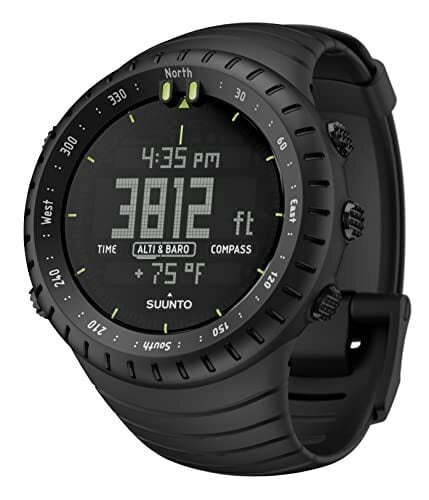
The Suunto Core watch is on sale for $159.99, normally $219.99. It’s built for outdoor adventuring, with an altimeter, barometer, and compass built in, and can alert you when a storm is a-comin’.

Garmin

The Fenix 8, 47mm size, is on sale for $799.99, normally $999.99. The Fenix is one of Garmin’s most rugged and feature-packed watches, with maps, a flashlight, a titanium bezel, and leakproof buttons. 

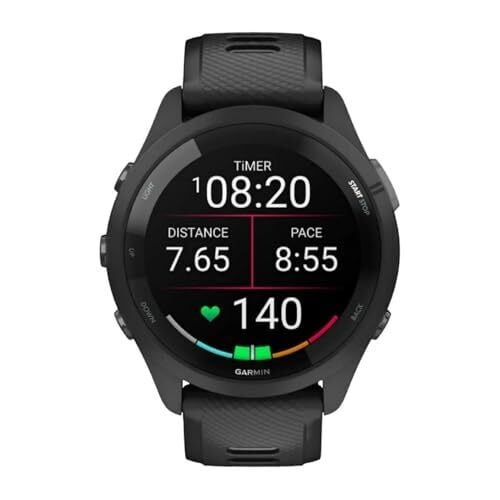
On the other end of the price spectrum, the Forerunner 165 is on sale for $199.99, normally $249.99. This watch is a budget version of the 265, and a good entry-level option for runners who don’t need a lot of extras. Note that the regular 165 doesn’t come with music storage. If you want to listen to tunes without bringing your phone along, you’ll want to spring for the Forerunner 165 Music, now on sale for $249.99, normally $299.99.

The trusty Forerunner 265 is on sale for $349.99, $100 off its original price of $449.99, although that’s probably less about the Memorial Day sale and more about it being replaced with a new Forerunner 570. That said, the 265 is a truly excellent watch, still my personal favorite in the Forerunner line—although I haven’t reviewed the 570 yet, so that may change (I’m wearing a 265S as I write this).

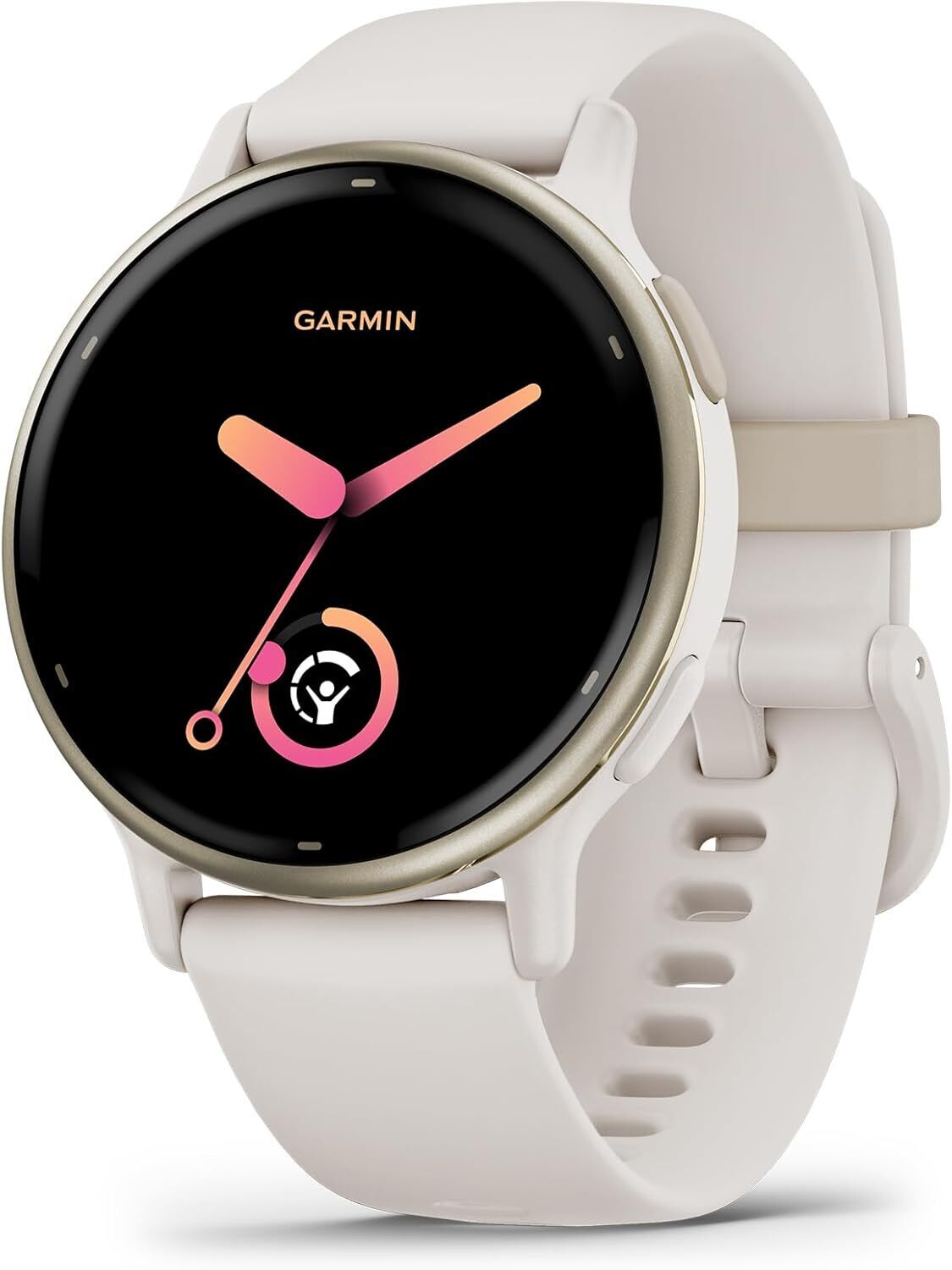
The Venu 3 and 3S are on sale for $349.99, down from $449.99.  (S means smaller size; they’re the same watch otherwise.) This is Garmin’s most smartwatch-y watch, with voice calling and an ECG app. It’s aimed at people who want a lifestyle watch with fitness features, rather than a sports-focused watch. You can think of it as the fancier version of the Vivoactive 6, which isn’t on sale today (regular price is $299.99) but happens to be one of my favorite fitness watches.

The Instinct 3 Solar is on sale for $349.99 in both 45 mm and 50 mm sizes, down from $399.99 when it launched earlier this year. It has a rugged build, outdoor-focused features including an LED flashlight, and solar charging. It also comes in an AMOLED version that’s on sale for $399.99 and a lower-cost Instinct E that is going for $249.99 right now—all $50 off their original prices.

The physics of frilly Swiss cheese “flowers”

Cheese connoisseurs are no doubt familiar with a particular kind of semi-hard Swiss cheese called “Tête de Moine.” Rather than spreading or slicing the cheese, Tête de Moine is usually served by scraping the top of the cheese wheel in a circular motion using a specialized tool called a Girolle. This produces elegant thin shavings known as rosettes, since they resemble a frilly flower.

The method is both aesthetically pleasing and serves to enhance the aromas and mouth feel of the cheese, according to the authors of a new paper published in the journal Physical Review Letters (PRL). This group of physicists based in Paris noted a marked similarity between the frilly edges of those cheese flowers and certain leaves, fungi, corals, and even torn plastic sheets—all formed by different mechanisms. So naturally the physicists decided to conduct their own research to determine the underlying mechanism(s) for the delicate frills of Tête de Moine shavings.

Tête de Moine translates as “monk’s head,” and the name dates back to the 1790s, although the actual cheese originates back to a 12th-century Bellelay monastery in Switzerland. It’s made from raw unpasteurized cow’s milk and is matured for a minimum of 75 days on spruce boards and boasts a firm reddish-brown crust. The Girolle (named after the French word for chanterelles, which have a similar rosette shape) is a more recent innovation, invented in 1982 specifically for Tête de Moine by a man named Nicolas Crevoisier. It’s just a round wooden plate with a pin stuck vertically in the middle—the better to skewer one’s cheese wheel—and a crank handle to control the slicing blade.

Read full article

Comments

Google pretends to be in on the joke, but its focus on AI Mode search is serious

MOUNTAIN VIEW, Calif.—Google used to be all about the 10 blue links, but that was then, and this is now. You have to scroll farther than ever to get to the links in Google search results, and now this trend is being taken to its ultimate conclusion. At I/O, the company has announced a major expansion of AI Mode search, which heralds a new era for its signature product. There are big changes coming, some of which will start rewriting the web sooner than you think.

The past several years at Google have been marked by an all-consuming obsession with generative AI. It has invaded your search results as AI Overviews, but Google has made it clear at I/O 2025 that AI Overviews was just practice. AI Mode is the game. Everyone at Google is acutely aware of this shift—at the end of the I/O keynote, CEO Sundar Pichai showed a cheeky AI counter graphic that tracked how many times speakers had mentioned “AI” and “Gemini.” But Google is serious about AI in general and AI search in particular.

To that end, the AI Mode search that debuted a few months ago as a Labs experiment is graduating to the main Google search page for everyone, and it’s available to everyone. It’s not the default way of searching the web, but it seems like only a matter of time before that happens. According to Pichai, people search more and enter longer, more complex queries in AI Mode, which is exactly the kind of search AI is good at handling.

Read full article

Comments

All These Garmin Watches Are on Sale for Memorial Day

We may earn a commission from links on this page. Deal pricing and availability subject to change after time of publication.

Even as Memorial Day sales are running hot, Garmin has quietly slashed its prices ahead of the holiday weekend. Its spring sale includes significant price cuts on Garmin’s most popular models, from the rugged Fenix 8 series to the newly released Forerunner lineup.

The sale arrives just days after Garmin unveiled its next-generation Forerunner 570 and Forerunner 970 models. As is typical when new models launch, previous versions (like the highly regarded Forerunner 265 and 965) are seeing major discounts, creating an excellent opportunity for runners who don’t need the latest features.

Using the best price-checking tools, I’ve rounded up my favorite Garmin watches that you can snag at a serious discount right now.

Fenix 8 series

Garmin’s flagship outdoor adventure watch rarely sees significant discounts, making this sale particularly noteworthy. The Fenix 8 series, known for its rugged construction, extensive battery life (especially in the solar variants), and comprehensive tracking features, is seeing a 20% markdown, to $799.99 from its list price of $999.99. With advanced mapping, training metrics, and multi-sport capabilities, these watches are ideal for serious athletes and adventurers.

Venu 3/3S

The Venu 3 and its smaller 3S stand out as Garmin’s most competitive answer to traditional smartwatches. These models offer vibrant AMOLED displays, voice calling capabilities, and Garmin’s ECG app—features typically associated with Apple Watch and Samsung Galaxy watches. The Venu series balances comprehensive fitness tracking with everyday smart features, making it perfect for users who want health metrics without sacrificing smartwatch functionality. You can get it now for $354.99, down from $454.99.

Forerunner series

Fellow runners, this is the series for us. And as my colleague Beth Skwarecki notes, the recent drops of the Forerunner 570 and 970 is excellent news—not because you should pick up those models necessarily, but because the older generations of Forerunner, which remain excellent watches, are now going for ludicrously low prices. Older models like the highly regarded 265, 255, and 955 are seeing significant price drops. And if you’re hesitant to buy an older watch, keep in mind that Garmin’s Forerunners have serious longevity: The Forerunner 265, with its bright AMOLED display and comprehensive running metrics, remains one of the best dedicated running watches on the market years after its release.

Vivoactive 5

The Vivoactive series is Garmin’s (and possibly the world’s) most underrated fitness watch. While the Vivoactive 6 is the latest version, the 5 is still one of the best mid-tier options for anyone seeking a balance of features and affordability. The Vivoactive 5 still has a range of fitness tracking capabilities, but in a sleeker, more casual design than the sport-focused models. It’s currently $199.99 (down $50 from the retail price of 249.99).

Edge cycling computers

Beyond watches, Amazon’s sale also includes Garmin’s Edge 1050 cycling computer, normally $699.99, now at $589.99. When used with the Garmin Connect app, this cycling computer lets you stay connected on group rides with in-ride messaging, live locations, and incident detection alerts.