Newark Liberty International Airport has suffered six radar and radio outages in nine months, with the most recent occurring May 9th when controllers told pilots “our scopes just went black again” before handing off flights to other facilities. The outages have forced flight cancellations, diversions, and delays lasting over a week as airlines repositioned aircraft and crews.
The Federal Aviation Administration created the problem by relocating Newark’s air traffic control operations from the understaffed N90 facility on Long Island to Philadelphia in 2024. Only 17 of 33 controllers accepted the move despite $100,000 relocation bonuses, leaving operations short-staffed. Rather than build new STARS servers in Philadelphia, the FAA opted to send radar data over 130 miles of commercial copper telephone lines.
The remote feeds have experienced approximately 10 minutes of downtime over 10 months — exceeding the agency’s reliability standards and occurring 200 times more frequently than the FAA’s internal analysis predicted. The agency simultaneously laid off over 100 maintenance technicians and telecommunications specialists in February, further straining an air traffic control system that suffers around 700 outages weekly nationwide while managing 16.8 million annual flights with 1990s-era technology.
If you’ve ever played with an original 8-bit computer—a Commodore, an Atari 400/800, or anything else of that vintage—you already know that getting clean video output can be a terrific struggle. These systems were primarily built to output a video signal using radio frequency (RF) output, not unlike a regular TV antenna, and require mods to
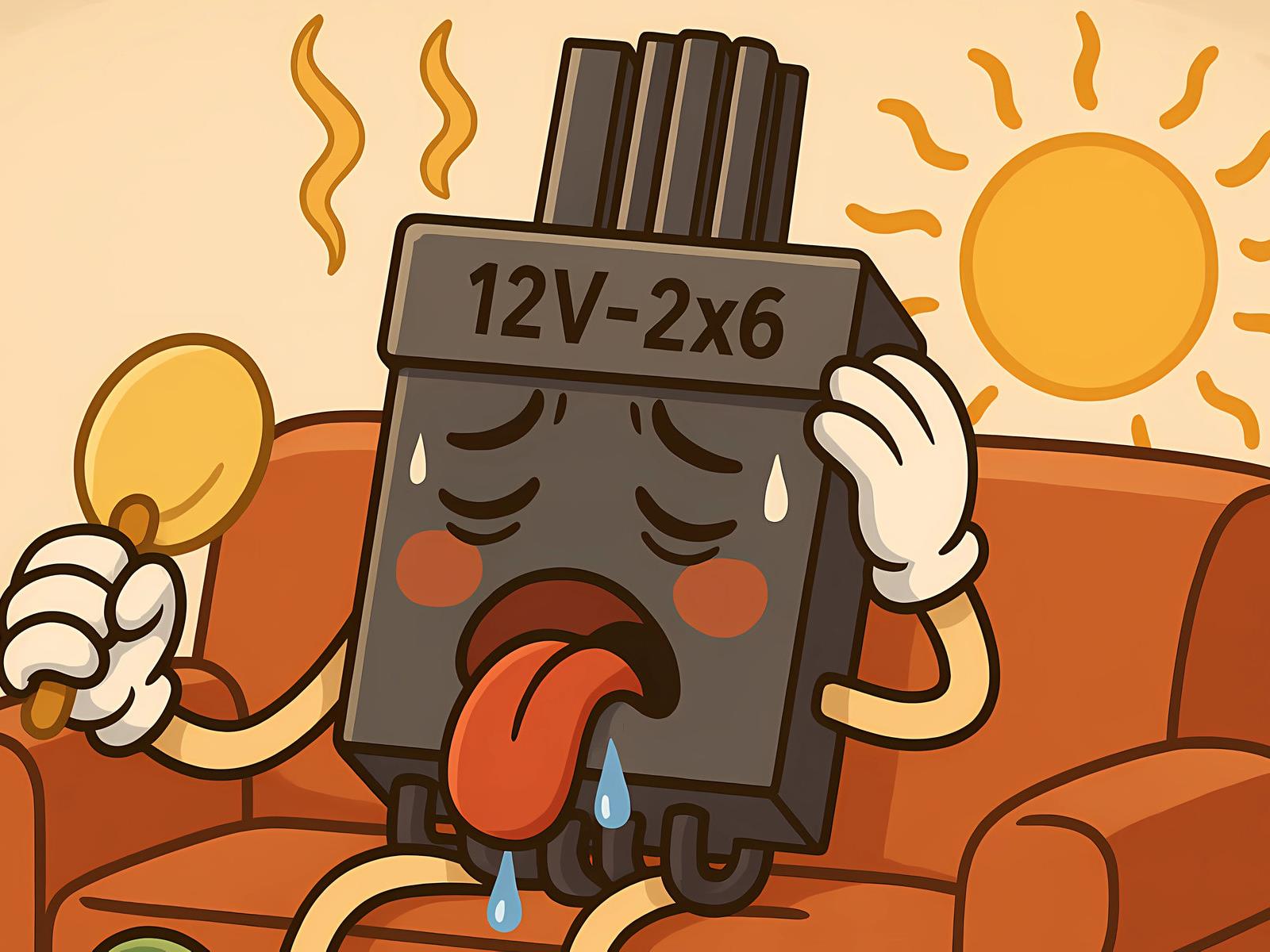
In the words of Queen, Another One Bites The Dust. There’s a user report of one more GeForce RTX 5090 power cable suffering a nasty case of heatstroke, this time around an MSI yelllow-tipped connector.
The original report came from Reddit user VersauteGurke, who’s running a chonky MSI GeForce RTX 5090 in his machine, powered by a Corsair
An anonymous reader shares a report: Russian President Vladimir Putin said on Monday that foreign service providers like Microsoft and Zoom that act against Russian interests should be “throttled.” Putin said it was important for Russia to develop domestic software solutions.
Pakistan will allocate 2,000 megawatts (MW) of electricity in the first phase of a national initiative to power bitcoin mining and AI data centres, its finance ministry said on Sunday. The allocation is part of Islamabad’s plans to use its surplus electricity to bitcoin mining and AI data centres.
Apple‘s AirPods 4 with active noise cancellation (ANC) just became an even more enticing proposition for those who have been on the fence about picking up a pair. They have dropped to $149, which is $30 off the regular price. That’s only about $10 more than the record low and the lowest price we’ve seen for the AirPods 4 with ANC so far this year.
If ANC isn’t such a big deal for you (perhaps, like me, you tend to only wear one earbud at a time), you can snap up a set of AirPods 4 without ANC instead. Those will currently run you $119, a discount of $10.
We gave the AirPods 4 with ANC a score of 86 in our review. Apple improved the audio quality compared with the previous version, and the earbuds have a better fit than the AirPods 3. We felt that the ANC was pretty effective too. However, the lack of onboard volume controls remains a disappointment.
The AirPods 4 use the same H2 chip as the AirPods Pro 2, meaning they share some features with the higher-end model. They support Voice Isolation, Personalized Spatial Audio with dynamic head tracking, Personalized Volume and Adaptive EQ. The ANC-enabled model also has Conversation Awareness, Adaptive Audio and Transparency mode. In addition, the charging case that comes with the ANC version has Qi-compatible wireless charging, as well as a built-in speaker for Find My. However, the AirPods Pro 2’s advanced hearing health features aren’t present here.
Check out our coverage of the best Apple deals for more discounts, and follow @EngadgetDeals on X for the latest tech deals and buying advice.
This article originally appeared on Engadget at https://www.engadget.com/deals/apples-airpods-4-with-anc-drop-to-149-for-memorial-day-161120128.html?src=rss
Amazon software engineers are reporting that AI tools are transforming their jobs into something resembling the company’s warehouse work, with managers pushing faster output and tighter deadlines while teams shrink in size, according to the New York Times.
Three Amazon engineers told the New York Times that the company has raised productivity goals over the past year and expects developers to use AI assistants that suggest code snippets or generate entire program sections. One engineer said his team was cut roughly in half but still expected to produce the same amount of code by relying on AI tools.
The shift mirrors historical workplace changes during industrialization, the Times argues, where technology didn’t eliminate jobs but made them more routine and fast-paced. Engineers describe feeling like “bystanders in their own jobs” as they spend more time reviewing AI-generated code rather than writing it themselves. Tasks that once took weeks now must be completed in days, with less time for meetings and collaborative problem-solving, according to the engineers.
Egg drop competitions are a staple of high school and college physics classes. The goal is for students to build a device using bubble wrap, straws, or various other materials designed to hold an egg and keep it intact after being dropped from a substantial height—say, ten meters (nearly 33 feet). There’s even a “naked egg” version in which a raw egg is dropped into a container below. The competition is intended to teach students about structural mechanics and impact physics, and it is not an easy feat; most of the dropped eggs break.
MIT engineering professor Tal Cohen decided to investigate why the failure rate was so high and reported her team’s findings in a paper published in the journal Communications Physics. “The universal convention is that the egg should be in a vertical orientation when it hits the ground,” Cohen told Physics Magazine. But their results from controlled trials simulating the egg drop challenge in the lab calls this conventional wisdom into question.
It is not an unreasonable assumption to make. Another popular physics party trick is to walk on several cartons of eggs without breaking them. Typically it only takes about five and a half pounds of force to crack a single eggshell, much less than the average adult human. As I wrote for Slate back in 2012, “The key is to align the eggs so that the narrow pole is pointing upward, and step in such a way to distribute your weight over the entire surface area, to avoid overloading any one eggshell.” (Being barefoot also helps.)
An anonymous reader shares a report: [Last] week, it was announced that Docomo’s emoji designs will no longer appear on any of the Japanese mobile network’s devices. This marks the end of an emoji era that first began in 1999, even though the set hasn’t been updated since 2013.
[…] Unlike these earlier systems, Docomo’s emoji set in 1999 was explicitly tied to mobile internet use and would become the template for emoji standardization in the 2000s and 2010s, alongside emoji design sets implemented by Softbank and KDDI on their own versions of i-mode (J-Sky and EZweb, respectively). Docomo’s set would receive several updates between 1999 and 2013, introducing color support and additional concepts to the keyboard. But now, as per this week’s announcement, it will finally be discontinued. Spanning 26 years, it’s undeniable that Docomo’s emoji set played a foundational role in emoji history, even if its last incarnation remained unchanged for almost 12 of those 26 years.
We don’t know if there’s something in the water that display makers are drinking, but whatever the case, we like what they’re doing lately. What are they doing, exactly? They’re giving away free secondary products when you purchase the main one. The latest to adopt this trend is Sony, which is dangling a free 55-inch or 50-inch TV when you
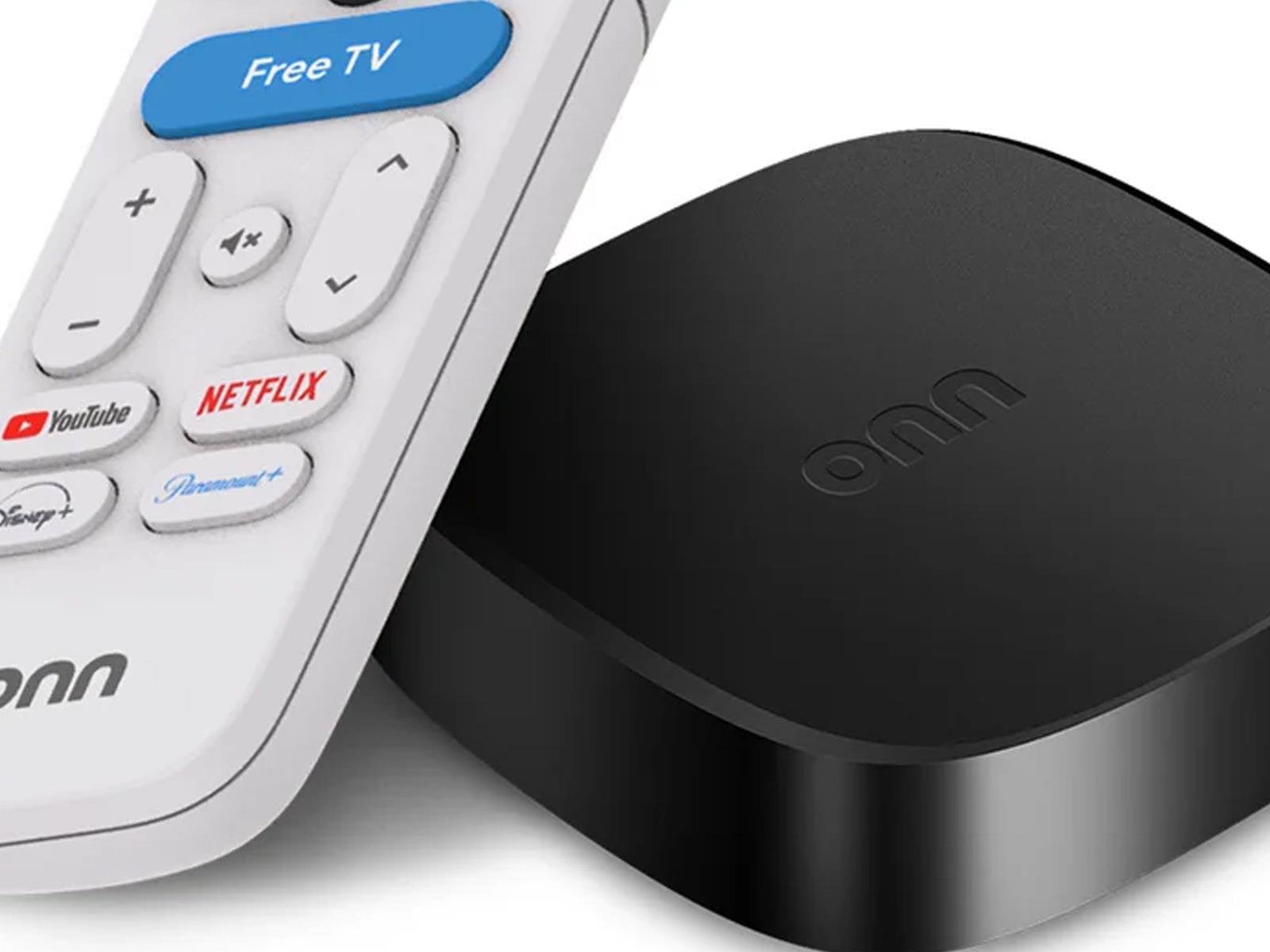
Walmart recently made a splash in the streaming segment with the surprisingly quiet launch of its Onn 4K Plus streaming device, which costs less than $30 while offering an impressive assortment of specifications and features. Just how powerful is it, though? Powerful enough to hang with the competition, according to a fresh set of benchmarks
Venture capitalists are inverting their traditional investment approach by acquiring mature businesses and retrofitting them with AI. Firms including General Catalyst, Thrive Capital, Khosla Ventures and solo investor Elad Gil are employing this private equity-style strategy to buy established companies like call centers and accounting firms, then optimizing them with AI automation.
Launch day for the Nintendo Switch 2 is rapidly approaching with less than two weeks to go. Unfortunately, many fans have been left out in the cold after a disastrous preorder window. If that happens to be you, and FOMO is starting to kick in hard, then we’ve got some advice to give you the best chance at scoring a Switch 2 on day one.
Skullcandy isn’t a name that usually comes to mind when you think of premium headphones. The Utah-based company has primarily made its name in the budget space, selling more on low prices and loud, sports-heavy marketing than the promise of excellent sound quality.
With the new Method 360 ANC, the audio maker is trying to change that by latching onto another brand entirely. Skullcandy proudly boasts that its latest wireless earbuds feature “sound by Bose,” which is to say that Bose has supplied the acoustic tuning, ear tips and overall shape of the device. In fact, the new buds look quite similar to Bose’s QuietComfort Ultra Earbuds from afar. But that upscale pair retails for $299 and the Method 360 ANC only costs $130 (or as low as $100 at third-party stores of this writing). So has Skullcandy managed to capture the best of Bose at a more affordable price? Kind of.
Design and features
The Method 360 ANC is indeed roughly as comfortable as the QuietComfort Ultra. Each earpiece is slightly heavier and more plastic-y — and Bose’s pair was already on the bulky side — but the soft ear gels and stability fins help them fit snug without creating too much pressure. I had no issues with them coming loose over several weeks of testing. The earbuds have an IPX4 water-resistance rating — not the best, but enough to survive most people’s workouts. The larger frame creates more space for the side touch panels, and all the controls do work reliably, which isn’t a given in the $100 range.
These earbuds also come with most of the features you’d want from a modern pair. There are active noise cancellation (ANC) and ambient sound modes. Battery life is fine at eight to 11-ish hours, depending on ANC usage. They can dependably connect to two devices simultaneously, and they work with Google’s Fast Pair tech on Android devices. They support wear detection, too, and there are three different sets of ear gels and fins in the box. Any settings tweaks I’ve made in Skullcandy’s Skull-iQ app have taken effect quickly, and in general the software is easy to navigate. The only major omissions here are the lack of wireless charging and a short one-year warranty.
The Method 360 ANC is almost identical to Bose’s QuietComfort Ultra Earbuds in terms of design. For this review, we mainly compared the new Skullcandy buds against the QC Ultras and Anker’s Soundcore Space A40, the top pick in our budget earbuds buying guide.
Jeff Dunn for Engadget
Sound quality
Once you start listening to the Method 360 ANC, though, you start to see why it’s priced under $150. The default sound signature is extremely V-shaped: The bass is massive, the treble is bright and everything in between is recessed. Bass lovers should appreciate this with hip-hop, dance music and many pop songs. A track like Kendrick Lamar’s “DNA” becomes particularly easy to rock to: The low-end is deep and impactful, while a giant spike around the upper midrange keeps the vocals clear throughout. In general, the Method 360 ANC is a step up from the Anker Soundcore Space A40, the longtime top pick in our guide to the best earbuds under $100. That pair is far more muffled in the treble, whereas the Skullcandy pair’s crisper, more extended highs tend to make songs feel less closed-off.
That said, it’s very easy to see how this kind of signature could get fatiguing over time. It’s consistently intense, and the recessed mids cause it to lose details in moderately intricate compositions. An indie rock track like Hop Along’s “The Knock” is a bit of a mess, as the bassline and crunchy rhythm guitar overwhelm the lead guitar riffs and rob the raspy vocals of air. With America’s “Ventura Highway,” the folksy acoustic guitar comes through clearly, but the overemphasized treble makes “ess” sounds a touch too sharp.
The QuietComfort Ultra doesn’t exactly sound neutral, but it always comes off as more balanced by comparison. Skullcandy has also omitted support for higher-quality Bluetooth codecs, so it only supports the basic SBC and AAC. All of this is still better-than-average for bassheads shopping in this price range — just don’t expect it to compete very far beyond that. Thankfully, you can rein in some of the default profile’s excesses with a custom EQ in Skullcandy’s app.
The charging case is on the larger side, to put it mildly, and uses a sliding mechanism to open and close.
Jeff Dunn for Engadget
ANC, ambient sound, call quality and one funky case
Skullcandy’s ANC is perfectly respectable for $130, and it’s great you can customize the intensity of the noise-canceling effect via the app. But it’s not on the level of the QuietComfort Ultra Earbuds or even the step-down QuietComfort Earbuds. It cuts out a fair chunk of the bassy rumble of an NYC subway train, but higher-pitched screeches and stop announcements are very much audible with music playing at moderate volumes.
The “Stay Aware” (ambient sound) mode, meanwhile, is passable but nothing more; it’s one of those deals where you need to keep the volume somewhat low to ensure you can hear yourself clearly. Call quality isn’t great, either: The mic does well to limit background noise, but it struggles with wind and makes your voice sound noticeably thin and processed. My testing partner said it made me sound like I was in an elevator.
My biggest complaint, however, is with the ginormous tube of a case. It’s comically large next to pairs like the QuietComfort Ultra or Space A40, so much so that I have to question just how spacious Skullcandy thinks most people’s pockets are. There is a built-in clip that lets you hook the case to a bag or belt loop, but as a resident of New York City, I will never be comfortable sauntering around with anything of value dangling on my person. Actually snapping the earbuds back into the case is cumbersome as well: You have to slide the case open, then flip the earpieces upside down and insert them on opposite sides. I can understand wanting to make something unique, but this is an instance where boring would’ve been better.
The Method 360 ANC’s case has a built-in clip for attaching to bags or belt loops.
Jeff Dunn for Engadget
Wrap-up
The Method 360 ANC has its problems, but most of them aren’t too surprising for a relatively affordable pair of wireless earbuds (oversized case aside). Don’t be fooled into thinking the Bose branding means you’re getting a Bose-level product — the real-deal QuietComfort Earbuds are better if you’re willing to pay more. But this is still a tier above most budget pairs we’ve tested. It has nearly all the features we’re looking for (unlike, say, the Beats Solo Buds), it’s comfortable and the sound signature will hit right if you’re hungry for bass. At its normal $130, it’s well worth considering for bassheads who can go one rung above the bargain bin. For $100 or less, it’s a great value. Just make room for that case.
This article originally appeared on Engadget at https://www.engadget.com/audio/headphones/skullcandy-method-360-anc-review-a-cheaper-version-of-boses-best-earbuds-with-a-few-key-sacrifices-130047025.html?src=rss
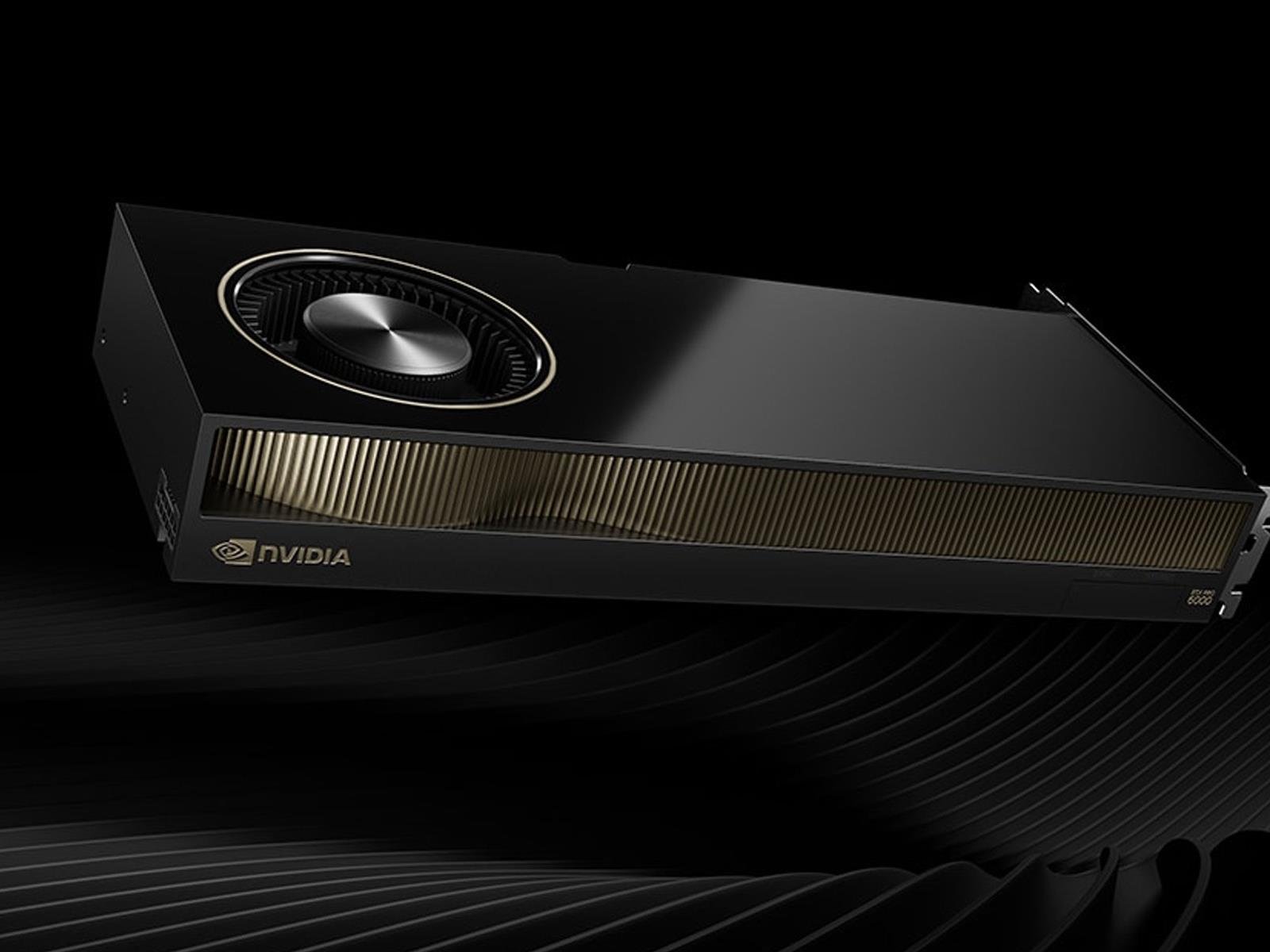
NVIDIA is planning to ship a cut-down version of its RTX Pro 6000 server-class graphics card with key specification downgrades to China, in order to sidestep U.S.-imposed artificial intelligence (AI) chip export restrictions, according to multiple sources who spoke with Reuters on the matter. It’s essentially the same strategy NVIDIA has taken
“For decades, Hollywood directors including Stanley Kubrick, James Cameron and Alex Garland have cast AI as a villain that can turn into a killing machine,” writes the Los Angeles Times. “Even Steven Spielberg’s relatively hopeful A.I.: Artificial Intelligence had a pessimistic edge to its vision of the future.”
But now “Google — a leading developer in AI technology — wants to move the cultural conversations away from the technology as seen in The Terminator, 2001: A Space Odyssey and Ex Machina.”. So they’re funding short films “that portray the technology in a less nightmarish light,” produced by Range Media Partners (which represents many writers and actors)
So far, two short films have been greenlit through the project: One, titled “Sweetwater,” tells the story of a man who visits his childhood home and discovers a hologram of his dead celebrity mother. Michael Keaton will direct and appear in the film, which was written by his son, Sean Douglas. It is the first project they are working on together. The other, “Lucid,” examines a couple who want to escape their suffocating reality and risk everything on a device that allows them to share the same dream….
Google has much riding on convincing consumers that AI can be a force for good, or at least not evil. The hot space is increasingly crowded with startups and established players such as OpenAI, Anthropic, Apple and Facebook parent company Meta. The Google-funded shorts, which are 15 to 20 minutes long, aren’t commercials for AI, per se. Rather, Google is looking to fund films that explore the intersection of humanity and technology, said Mira Lane, vice president of technology and society at Google. Google is not pushing their products in the movies, and the films are not made with AI, she added… The company said it wants to fund many more movies, but it does not have a target number. Some of the shorts could eventually become full-length features, Google said….
Negative public perceptions about AI could put tech companies at a disadvantage when such cases go before juries of laypeople. That’s one reason why firms are motivated to makeover AI’s reputation. “There’s an incredible amount of skepticism in the public world about what AI is and what AI will do in the future,” said Sean Pak, an intellectual property lawyer at Quinn Emanuel, on a conference panel. “We, as an industry, have to do a better job of communicating the public benefits and explaining in simple, clear language what it is that we’re doing and what it is that we’re not doing.”
Eric Ingebretsen, chief commercial officer at SK TES, an IT asset disposition provider, tells me this early on during a tour of a 128,000-square-foot facility in Fredericksburg, Virginia. He will restate this a few times.
A big part of this site’s pitch to its clients, including the “hyperscale” customers with gigantic data centers nearby, is that each device is labeled, tracked, and inventoried for its drives—both obvious and hidden—and is either securely wiped or destroyed. The process, commonly called ITAD, is used by larger businesses, especially when they upgrade fleets of servers or workers’ devices. ITAD providers ensure all the old gear is wiped clean, then resold, repurposed, recycled, or destroyed.
31 years ago FreeBSD was first released. But here in 2025, searches for the Unix-like FreeBSD OS keep increasing on Google, notes the official FreeBSD blog — and it’s at least a two-year trend. Yet after talking to some businesses using (or interested in using) FreeBSD, they sometimes found that because FreeBSD isn’t talked about as much, “people think it’s dying. This is a clear example of the availability heuristic.
The availability heuristic is a fascinating mental shortcut. It’s how product names become verbs and household names. To ‘Google’ [search], to ‘Hoover’ [vacuum], to ‘Zoom’
. They reached a certain tipping point that there was no need to do any more thinking. One just googles , or zooms .
These days, building internet services doesn’t require much thought about the underlying systems. With containers and cloud platforms, development has moved far from the hardware. Operating systems aren’t top of mind — so people default to what’s familiar. And when they do think about the OS, it’s usually Linux. But sitting there, quietly powering masses of the internet, without saying boo to a goose, is FreeBSD. And the companies using it? They’re not talking about it. Why? Because they don’t have to. The simple fact that dawned on me is FreeBSD’s gift to us all, yet Achilles heel to itself, is its license.
Unlike the GPL, which requires you to share derivative works, the BSD license doesn’t. You can take FreeBSD code, build on it, and never give anything back. This makes it a great foundation for products — but it also means there’s little reason for companies to return their contributions… [W]e’d like to appeal to companies using FreeBSD. Talk to us about your use case… We, the FreeBSD Foundation, can be the glue between industry and software and hardware vendors alike.
In the meantime, stay tuned to this blog and the YouTube channel. We have some fantastic content coming up, featuring solutions built on top of FreeBSD and showcasing modern laptops for daily use.
It’s America’s biggest box office for a Memorial Day weekend ever, reports Variety.
And it’s been more than a decade since this many Americans went to see a movie during a three-day weekend…
Families turned out in force for Disney’s live-action “Lilo & Stitch” remake, which collected a blockbuster $145.5 million in its opening weekend and an estimated $183 million through Monday… Meanwhile, older audiences showed up to watch Paramount and Skydance’s “Mission: Impossible — The Final Reckoning,” which earned a series-best $63 million over the weekend and an estimated $77 million through Monday’s holiday. This eighth installment just narrowly beat 2018’s “Mission: Impossible — Fallout” ($61 million) to score the top debut of the 29-year-old franchise…
Thanks to effective counterprogramming — and a huge assist by holdovers like “Final Destination Bloodlines,” “Thunderbolts*” and “Sinners” — this weekend delivered the best collective Memorial Day weekend haul with $322 million… Cinema operators are rejoicing because Memorial Day is the official launch to summer movie season, which is the most profitable stretch for the movie business. (Historically, the four-month period has accounted for $4 billion, or around 40% of the annual box office.)
It’s a huge improvement from last year, which started with a whimper rather than a bang as “Furiosa: A Mad Max Saga” and “Garfield” led the holiday’s worst showing in three decades with $132 million collectively. “Every film on the release calendar for the rest of the summer is going to benefit from the momentum created over this monumental record-breaking Memorial weekend in theaters,” says senior Comscore analyst Paul Dergarabedian.
But the top-earning movie of the year so far is A Minecraft Movie, which has apparently brought in over $940 million.
Meanwhile, Mission Impossible: The Final Reckoning is one of the most expensive films of all time, according to the article, costing $400 million as Tom Cruise and the movie’s director “worked through a pandemic and two strikes, all while grappling with inflation.” Though the film received a high “A-” grade on CinemaScore, a movie industry analyst tells Variety that the unexpectedly high production costs means the movie “will be lucky to break-even.”
Fun fact: A quarter of a century ago, CmdrTaco reviewed a new movie called Mission: Impossible 2, calling it “a fun movie,” but “no Gladiator” and sort of a “James Bond for Dummies” movie.
“The ‘Plot’ is really just an excuse to show us lots of explosions, car/motorcycle/helicoptor chases…”
Earlier this month app developer Guilherme Rambo had a warning for iPhone users:
If you try to send an audio message using the Messages app to someone who’s also using the Messages app, and that message happens to include the name “Dave and Buster’s”, the message will never be received.
In case you’re wondering, “Dave and Buster’s” is the name of a sports bar and restaurant in the United States… [T]he recipient will only see the “dot dot dot” animation for several seconds, and it will then eventually disappear. They will never get the audio message.
“The issue was first spotted on the podcast Search Engine…” according to an article in Fortune:
Rambo’s explanation of the curiosity goes like this.
“When you send an audio message using the Messages app, the message includes a transcription of the audio. If you happen to pronounce the name ‘Dave and Buster’s’ as someone would normally pronounce it, almost like it’s a single word, the transcription engine on iOS will recognize the brand name and correctly write it as ‘Dave & Buster’s’ (with an ampersand),” he begins. So far, so good.” [But ampersands have special meaning in HTML/XHTML…] And, as MacRumors puts it: “The parsing error triggers Apple’s BlastDoor Messages feature that protects users from malicious messages that might rely on problematic parsing, so ultimately, the audio message fails to send.”
To solve the mystery, Rambo “plugged the recipient device into my Mac and captured the logs right after the device received the problematic message.” Their final thoughts…
Since BlastDoor was designed to thwart hacking attempts, which frequently rely on faulty data parsing, it immediately stops what it’s doing and just fails. That’s what causes the message to get stuck in the “dot dot dot” state, which eventually times out, and the message just disappears. On the surface, this does sound like it could be used to “hack” someone’s iPhone via a bad audio message transcription, but in reality what this bug demonstrates is that Apple’s BlastDoor mechanism is working as designed.
Many bad parsers would probably accept the incorrectly-formatted XHTML, but that sort of leniency when parsing data formats is often what ends up causing security issues. By being pedantic about the formatting, BlastDoor is protecting the recipient from an exploit that would abuse that type of issue.