We may earn a commission from links on this page. Deal pricing and availability subject to change after time of publication.
Samsung’s new Galaxy S26 Ultra launches with the usual Ultra series promise: the biggest screen, the most capable cameras, and the most features in the company’s lineup. It also launches with prices that reflects that ambition ($1,299.99 to $1,799.99). That said, Samsung is running an early promotion from March 16 through April 20 that can soften the blow. Buyers can save up to $720 with an eligible instant trade-in credit, or get $150 in credit without a trade-in to use toward other eligible Samsung devices. The deal applies directly through Samsung’s store, where the phone is also available with configuration options for storage and color.
The S26 Ultra builds on the formula Samsung has refined over the past few years. The phone keeps the large Ultra-style display, now using Samsung’s newest OLED panel with a high refresh rate and a peak brightness designed to stay readable in direct sunlight. Samsung also introduced a new privacy display feature that limits viewing angles so people nearby cannot easily see what’s on your screen. That feature was introduced alongside the phone during the company’s 2026 Unpacked event, and it is aimed at commuters or frequent travelers who often use their phone in public places. Samsung is also leaning heavily on the camera system this year. As we covered in our earlier look at the S26 cameras, the company appears confident about improvements to image processing and zoom performance.
The Ultra line still targets people who treat their phone as their primary camera, and the hardware reflects that focus. Samsung built the S26 Ultra around a large multi-sensor camera system paired with its latest computational photography tools, aimed at users who regularly shoot photos, video, or social media content from their phone. But the device remains big and expensive even with discounts. Samsung raised prices across the S26 lineup this year, which we covered in our breakdown of the price increase. That makes the launch promotion more relevant for anyone already planning to upgrade from an older Galaxy device.
We may earn a commission from links on this page. Deal pricing and availability subject to change after time of publication.
Sony’s WH-1000XM5 headphones are no longer the newest model in the company’s lineup, but they remain one of the easiest recommendations if you want strong noise canceling without paying flagship prices. Right now, a refurbished pair is $209.99 on Amazon, compared with $278 for a new set (and the $399.99 launch price in 2022). These are sold as Amazon Certified Refurbished units, meaning they’ve been tested and certified by the manufacturer to work like new. They also come with the original accessories and a 90-day limited hardware warranty.
PCMag named them the best headphones of 2022 and gave them an “outstanding” review, largely for how well Sony balanced sound quality with noise cancellation. The XM5 uses 30mm carbon-fiber drivers paired with Sony’s Integrated Processor V1, and the combination still holds up in 2025. Music sounds full without becoming muddy. Bass-heavy tracks have weight, but vocals remain clear, and instruments don’t disappear into the background. The active noise cancellation is also effective at blocking out low-frequency sounds like airplane engines, traffic, or the general rumble of public spaces. Audio quality remains consistent with ANC enabled, unlike many cheaper headphones. For wireless listening, Bluetooth 5.2 supports AAC, SBC, and LDAC codecs, and multipoint pairing makes it easy to switch between devices, such as a laptop and a phone, without reconnecting each time.
The XM5 has a lightweight frame and soft synthetic-leather earcups that stay comfortable during long listening sessions. That makes them practical for commuting, long flights, or simply wearing through a full workday. Controls are handled through touch gestures on the earcups—swipe up or down for volume and tap to pause or play. It takes a little time to get used to the gestures, but they work reliably once you learn them. Sony’s Sound Connect app adds more control, letting you tweak the EQ, adjust noise-canceling levels, and change a few listening settings depending on your environment. Battery life is rated at about 30 hours with noise canceling enabled, which is enough for several days of regular use before needing to recharge.
Scientists have discovered that male fireflies in a South Carolina swamp follow local interaction rules to synchronize their flashing mating displays. The research is being presented at a meeting of the American Physical Society in Denver. (A preprint is also available on the biorxiv.) Such work could one day lead to insights into how the body’s cells sync to its internal circadian rhythm, or how neurons fire together in the brain, as well as the design of drone swarms communicating through synchronized flashes.
As previously reported, research into swarming and flocking was largely relegated to observational biologists for decades. But in the 1980s, a computer graphics specialist named Craig Reynolds developed the so-called “boids” program, an agent-based computational model that has dominated collective behavior studies ever since. In such a model, each individual unit in a swarm is a dot moving in a straight line at a constant speed. By introducing a few simple rules regarding interactions between dots, a flocking pattern will emerge once the dots get dense enough. Another set of rules will produce a swarming pattern, and so forth.
Fire ants provide a textbook example of this kind of collective behavior. A few ants spaced well apart behave like individual ants. But pack enough of them closely together, and they behave more like a single unit, exhibiting both solid and liquid properties. You can pour them from a teapot like ants, or they can link together to build towers or floating rafts—a handy survival skill when, say, a hurricane floods Houston. They also excel at regulating their own traffic flow. You almost never see an ant traffic jam.
Firefly aired for just one season in 2002 before Fox canceled it. In the 24 years since, the sci-fi show has skyrocketed in popularity and now fans are finally getting more. Nathan Fillion has announced that an animated Firefly series is currently in advanced development, Deadline first reported.
Fillion shared the news at AwesomeCon during a live taping of his podcast Once We Were Spacemen with his Firefly co-stars Gina Torres, Morena Baccarin, Summer Glau, Sean Maher, Jewel Staite and Alan Tudyk. Tudyk co-hosts the podcast, in which the duo look back at their careers and interview past coworkers. Each of the actors present at AwesomeCon are expected to voice the animated versions of their characters.
This isn’t one of those maybe one day it will happen announcements, with many steps already being taken. The animated reboot is under the direction of showrunners Tara Butters (Agent Carter, Reaper) and Marc Guggenheim (DC’s Legends of Tomorrow, Arrow) — original creator Joss Whedon is not involved, but has given his blessing. It has early concept art from ShadowMachine, an Oscar- and Emmy-winning animation studio. Fillion is producing the show through Collision33, his production company, and with 20th Television Animation. There’s even already a script in place.
According to Fillion, the one thing left is a home for the series. He and his co-stars took to Once We Were Spacemen‘s Instagram to provide more details and implore FireFly fans to show demand for the reboot.
Firefly took place in 2517, centuries after a universal civil war. It followed a group of people living aboard a transport ship, Serenity, flying through the galaxy. In 2005, the show got a sequel in the form of a movie, Serenity.
This article originally appeared on Engadget at https://www.engadget.com/entertainment/tv-movies/firefly-is-getting-rebooted-as-an-animated-series-120604649.html?src=rss
This generation of MacBook Pro might just be the last gasp of the 2021 remodel. It’s still an incredibly powerful machine that’s been honed to near-perfection, but if you’re looking for something that feels truly new, it may be worth waiting several months.
It’s not too surprising to see the M5 Pro and Max MacBook Pros be relatively low-key efforts. Apple launched the M5 14-inch MacBook last fall with a mere press release. But at least that model delivered a noticeable leap in graphics performance. The new M5 Pro and Max chips are a bit faster than before, but they don’t really have any major features to call out. (Unless you’re super excited about Neural Accelerators for AI work.)
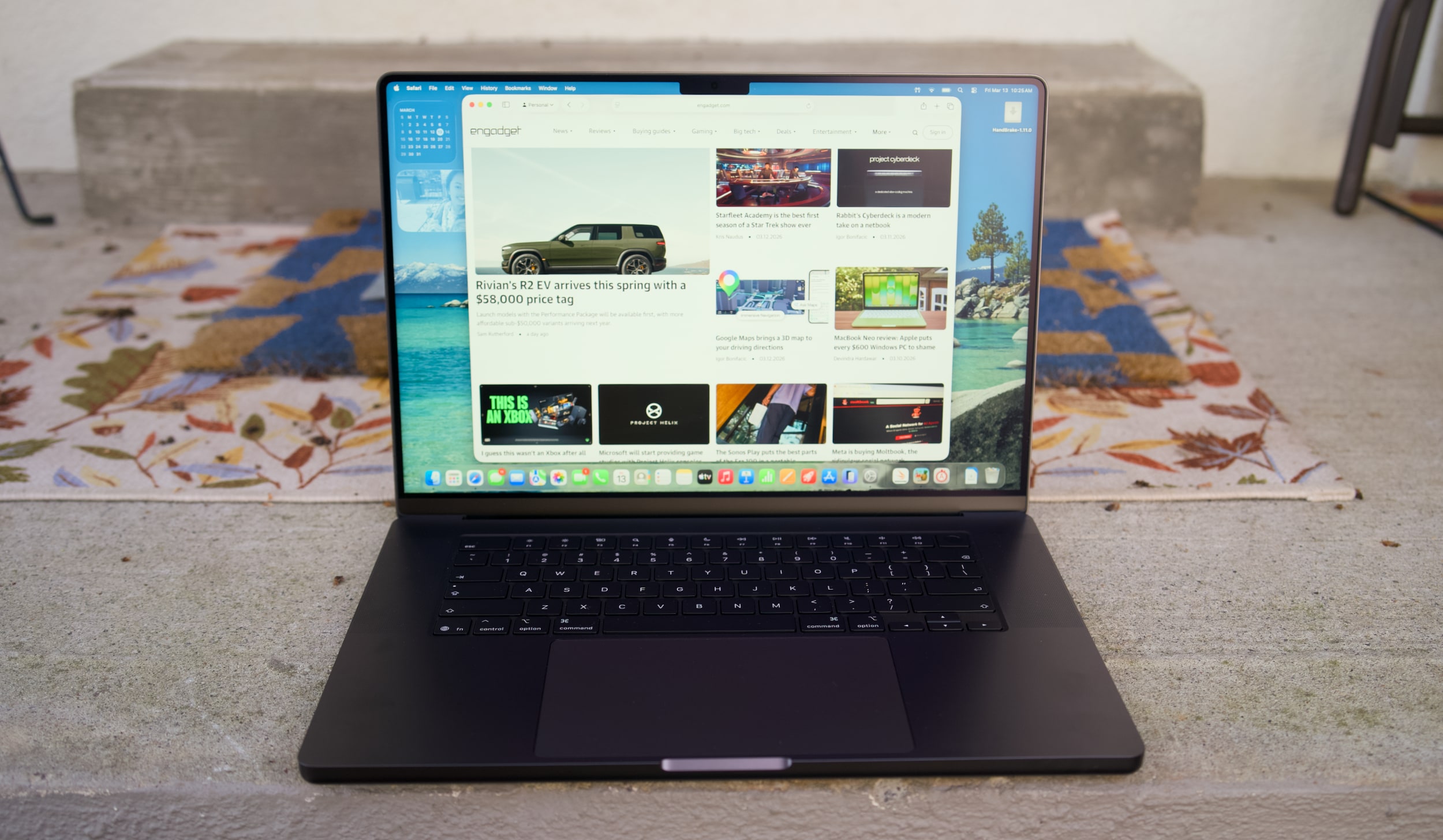
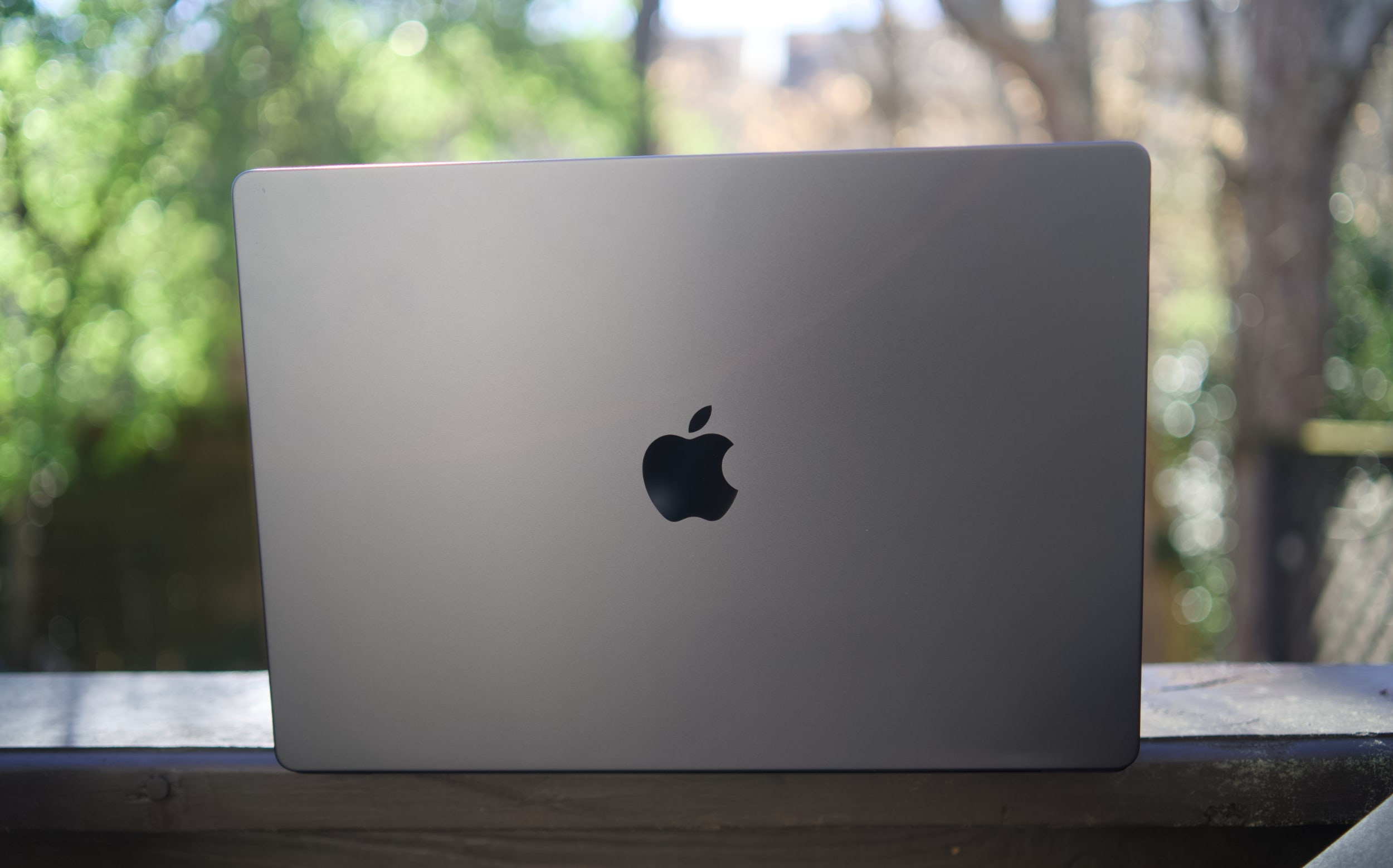
I don’t want to sound like I’m complaining too much, though. The 16-inch M5 Max MacBook Pro I’m reviewing is still a gorgeous laptop, with an overall design that most premium Windows PC makers are still trying to copy. Apple’s unibody metal frame design still feels rock solid. There’s a generous amount of ports, including three Thunderbolt 5 USB-C connections, HDMI, a headphone jack and a SD card reader. Its 16-inch Liquid RetinaXDR screen also looks incredible, thanks to its bright Mini LED backlighting, and there’s once again a nano-texture option to reduce glare.
What else could you want in a laptop? I suppose there’s the lingering feeling that an OLED screen would look better, with sharper contrast and pure black levels. But you’d be hard pressed to find much else to complain about with the MacBook Pro’s screen. I’m also intrigued to see how Apple implements a touchscreen interface alongside macOS in upcoming MacBook Pros, but I’ll admit, I haven’t really been compelled to touch this laptop’s display much.
Touchscreens always seemed like a quixotic effort for laptops — they’re nice to have, but Microsoft has been trying to shove them into PCs for 15 years now. The addition of touchscreens really didn’t improve the overall Windows experience much. So I wasn’t surprised to see Apple take its time bringing the technology to macOS — if you really want to swipe around screens, just get an iPad.
MacBook Pro 16-inch (2026, M5 Max) keyboard and trackpad
Devindra Hardawar for Engadget
But back to this MacBook Pro: I still love everything about Apple’s current design. Sure, the keyboard could have a bit more depth, but it withstood my furious typing like a champ. (Unlike Dell’s XPS 14, which tried so hard to be a MacBook Pro-killer.) And the MacBook Pro’s glass touchpad is still one of the best I’ve ever seen in a laptop.
Our review unit was also equipped with 32GB of RAM, a 4TB SSD, a 40-core GPU and Apple’s $150 nano-texture display upgrade, bringing the total for this M5 Max system to a whopping $6,149. That may seem excessive to most consumers, but for creative professionals who actually need the power of the M5 Max chip, it’s not that unusual. You can also save over $1,000 by opting for the M5 Pro chip instead.
So what does the M5 Max bring to the party? Obviously, it’s speedier than the M4 Max. Our review unit was 30 percent faster than the M4 Max-equipped MacBook Studio in the Geekbench 6 multi-threaded CPU benchmark. It’s only 10 percent faster in Geekbench’s single-threaded test, but that still gives Apple room to claim that it has the fastest chip core around. If you’ve got an M4 Max machine, you certainly don’t need to dump it for this lineup. But if you’ve been hammering on an M1 Max or M2 Max system for years, you’ll see some meaningful benefits from upgrading now.
Computer
Geekbench 6
Geekbench 6 GPU
Cinebench 2024
Apple MacBook Pro 16-inch (M5 Max, 2026)
4,338/ 29,261
145,309
192/2,150 | GPU: 22,374
Apple MacBook Pro 14-inch (M5, 2025)
4,310/18,003
48,840
197/1,034 | GPU: 6,143
Apple MacBook Pro 16-inch (M4 Pro, 2026)
3,925/22,456
70,197
178/1,689 GPU 9,295
Apple MacBook Pro 16-inch (M3 Max, 2024)
3,202/21,312
92,344
143/1,686 GPU 13,182
Apple says this new line of MacBook Pros also feature its latest SSD technology, which is up to twice as fast as before. Our review unit reached 13.8 GB/s write speeds and 13 GB/s read speeds in the ATTO disk speed test, whereas previous MacBook Pros hovered around 6 GB/s for read/write speeds. If you’re working with huge data files every day, you’ll likely notice the difference. Another benefit to the new hardware? Apple is now equipping every MacBook Pro with 1TB of storage by default.
All of the M5 chips feature faster GPUs than before, but that’s less noticeable on the M5 Max. I’ve never had trouble running a high-end game like Lies of P on the M2, M3 or M4 Max hardware, and once again it still runs incredibly well with the M5 Max in its native resolution, and with all of the graphics settings cranked up. All I’m looking for is a smooth 60 fps frame rate, and the MacBook Pros have delivered on that for years. macOS isn’t the sort of platform where you’ll be playing many high fps games, but the MacBook Pro’s 120Hz refresh rate is equipped to handle them.
MacBook Pro 16-inch (2026, M5 Max) on a doorstep.
Devindra Hardawar for Engadget
Beyond raw performance, the MacBook Pro continues to be a joy to use. Its screen is gloriously bright, and its smooth refresh rate makes scrolling through documents and websites easy on the eyes. Its six-speaker setup remains the best audio experience I’ve ever heard on a laptop, allowing for crisp, detailed and surprisingly dynamic bass. When I’m too lazy to cast music to my Sonos speakers, I can still have a decent jam session on the MacBook Pro’s built-in setup.
It’s hard to improve much on the 30 hours and 16 minutes of battery life we saw on last year’s 16-inch MacBook Pro, but the M5 Max model managed to beat that by 30 minutes. Realistically, it means you can likely use the MacBook Pro for a few days without needing to recharge, assuming you’re not doing heavy-duty work the entire time.
MacBook Pro 16-inch (2026, M5 Max)
Devindra Hardawar for Engadget
You don’t need me to sell you on the MacBook Pro; all you need to know is that the M5 Max actually delivers. Given how well the standard M5 14-inch MacBook Pro performed, I’d also expect a decent speed bump from the M5 Pro model. The only downside to the M5 systems is that they’ll feel out of date quickly if the rumored OLED and touchscreen models arrive later this year. But if you need the best performance now, it’s hard to go wrong with any MacBook Pro.
This article originally appeared on Engadget at https://www.engadget.com/computing/laptops/macbook-pro-m5-max-16-inch-review-still-the-pinnacle-120000325.html?src=rss
“A new type of battery storage is about to be deployed on the Midwestern grid for the first time,” reports Electrek:
Sodium-ion battery storage manufacturer Peak Energy and global energy company RWE Americas will pilot a passively cooled sodium-ion battery system in eastern Wisconsin on the Midcontinent Independent System Operator network — the first sodium-ion deployment on that grid. Peak Energy says its technology is specifically designed for grid-scale storage and leverages sodium-ion chemistry’s inherent stability. Unlike many lithium-ion systems, sodium-ion batteries don’t require active cooling and can operate over a wide temperature range without losing performance.
That simpler design could make a meaningful dent in the cost of storing electricity. According to Peak Energy, its system cuts the lifetime cost of stored energy by an average of $70 per kilowatt-hour. That’s roughly half the total cost of a typical battery system today. The company says it achieves those savings by removing energy-hungry cooling systems, eliminating routine maintenance requirements, and reducing the need to overbuild storage capacity to account for battery degradation over time…
If the Wisconsin pilot proves successful, it could open the door to wider adoption of sodium-ion batteries for large-scale energy storage across the US.
Robert Goddard, a Massachusetts-born physicist, launched the world’s first liquid-fueled rocket on this date 100 years ago.
It was not an overly impressive flight. The rocket, fueled by gasoline and liquid oxygen, rose just 41 feet into the air, and the flight lasted 2.5 seconds before it struck ice and snow.
Nevertheless, this rocket, named “Nell,” represented a historic achievement that would help launch the modern age of spaceflight. Three decades later, the first objects would begin to ride liquid-fueled rockets into space, followed shortly by humans. A little more than 40 years would pass before humans walked on the Moon.
Ahead of its acquisition by Paramount Skydance, Warner Bros. dominated the 2026 Oscars with 11 wins primarily for Ryan Coogler’s Sinners and Paul Thomas Anderson’s One Battle After Another. Netflix also put in a strong showing with seven Academy Awards, including two for KPop Demon Hunters and three for Guillermo Del Toro’s Frankenstein.
All told, dedicated streaming services chalked up eight awards, but were shut out of the major prizes. Frankenstein took the trophies for for Best Production Design, Best Costume Design and Best Makeup and Hairstyling, while KPop Demon Hunters took Best Animated Feature and Best original Song. Netflix also took prizes for All The Empty Rooms (Best Documentary Short Film) and The Singers (Best Live Action Short Film). Apple TV garnered the other streaming service Oscar for F1 (Best Sound).
Warner Bros. dominated the more prestigious awards. The studio took its first Oscar for Best Picture (One Battle After Another) since Argo won in 2012, while also winning Anderson the prizes for Best Director and Best Adapted Screenplay, and giving Sean Penn the Best Supporting Actor Oscar. Sinners, meanwhile, won for Best Cinematography, giving Autumn Durald Arkapaw the first ever win for a woman and woman of color in that category. Michael B. Jordan took the Best Actor prize for that film, while Director Ryan Coogler won for Best Original Screenplay.
Other notable acting prizes were won by Jessie Buckley (Best Actress, Hamnet) and Amy Madigan (Best Support Actress, Weapons).
Host Conan O’Brien joked that it was the “first time in a theater” for Netflix CEO Ted Sarandos. It remains to be seen, however, whether Netflix losing out to Paramount Skydance on the Warner Bros. acquisition will be to the film industry’s benefit or detriment. One clear loser of late is broadcast television as the 2026 Oscars will be the third-to-last aired by Walt Disney’s ABC, with YouTube set to stream the ceremony exclusively starting in 2029.
This article originally appeared on Engadget at https://www.engadget.com/entertainment/warner-bros-dominates-oscars-with-11-wins-ahead-of-its-acquisition-by-paramount-093916527.html?src=rss
Starting in September, even Android developers not in Google’s Play Store will still be required to register with Google to distribute their apps in Brazil, Singapore, Indonesia, and Thailand, with Google continuing “to roll out these requirements globally” four months later. Even developers distributing Android apps on the web for sideloading will be required to register, pay Google a $25 fee, and provide a government ID.
But there’s a new theory on what’s secretly been motivating Google from an unnamed source in the “Keep Android Open” movement, writes long-time Slashdot reader destinyland:
“You can’t separate this really from their ongoing interactions with Epic and the settlement that they came to,” they argue. Twelve days ago Epic Games and Google announced a new proposal for settling their long-running dispute over the legality of alternative app stores on Android phones. (Rather than agreeing to let third-party app stores into their Play Store, Google wants them to continue being sideloaded, promising in a blog post last week that they’ll even offer a “more streamlined” and “simplified” sideloading alternative for rival app stores. “This Registered App Store program will begin outside of the US first, and we intend to bring it to the US as well, subject to court approval.”)
So “developer verification” could be Google’s fallback plan if U.S. courts fail to approve this. “If the Google Play Store has to allow any third-party repository app store, Google essentially has given up all control of the apps. But if they’re able to claw back that control by requiring that all developers, no matter how they distribute their apps, have to register with Google — have to agree to their Terms & Conditions, pay them money, provide identification — then they have a large degree of indirect control over any app that can be developed for the entire platform.”
But that plan threatens millions of people using the alternative F/OSS app distributor F-Droid, since Google also wants to have only one signature attached to Android apps. Marc Prud’hommeaux, a member of F-Droid’s board of directors, says that “all of a sudden breaks all those versions of the application distributed through F-Droid or any other app store!”
Prud’hommeaux says they’ve told Google’s Android team “You know perfectly well that you’re killing F-Droid!” creating an “existential” threat to an app distributor “that has existed happily for over 10 years.” But good things started happening when he created the website Keep Android Open:
There’s now a “huge backlog” of signers for an Open Letter that already includes EFF, the Software Freedom Conservancy, and the Free Software Foundation. He believes Android’s existing Play Protect security “is completely sufficient to handle the particular scenarios they claim that developer verification is meant to address”…
The Keep Android Open site urges developers not to sign up for Android’s early access program when it launches next week. (Instead, they’re asking developers to respond to invites with an email about their concerns — and to spread the word to other developers and organizations in forums and social media posts.) There’s also a petition at Change.org currently signed by 64,000 developers — adding 20,000 new signatures in the last 10 days. And “If you have an Android device, try installing F-Droid!” he adds. Google tracks how many people install these alternative app repositories, and a larger user base means greater consequences from any Android policy changes.
Plus, installing F-Droid “might be refreshing!” Prud’hommeaux says. “You don’t see all the advertisements and promotions and scam and crapware stuff that you see in the commercial app stores!”
In 2024 Anthropic was sued over claims it infringed copyrights when training LLMs.
But as they try to settle, they may have a problem. The Free Software Foundation announced Friday that Anthropic’s training data apparently even included the book “Free as in Freedom: Richard Stallman’s Crusade for Free Software” — for which the Free Software Foundation holds a copyright.
It was published by O’Reilly and by the FSF under the GNU Free Documentation License (GNU FDL). This is a free license allowing use of the work for any purpose without payment.
Obviously, the right thing to do is protect computing freedom: share complete training inputs with every user of the LLM, together with the complete model, training configuration settings, and the accompanying software source code. Therefore, we urge Anthropic and other LLM developers that train models using huge datasets downloaded from the Internet to provide these LLMs to their users in freedom.
We are a small organization with limited resources and we have to pick our battles, but if the FSF were to participate in a lawsuit such as Bartz v. Anthropic and find our copyright and license violated, we would certainly request user freedom as compensation.
“The FSF doesn’t usually sue for copyright infringement,” reads the headline on the FSF’s announcement, “but when we do, we settle for freedom.”
The UK’s science minister is announcing details of a five-year, £2.5 billion investment in nuclear fusion, reports the Times of London, “including building one of the world’s first prototype fusion power plants in Nottinghamshire and developing a UK sector projected to employ 10,000 people by 2030.”
Despite the potentially transformative impact of fusion, which in theory could provide limitless clean energy and create a £12 trillion global market, no country has managed to use this fledgling technology to generate useable electricity… [T]he UK is backing a spherical tokamak design… investing an initial £1.3 billion into a prototype fusion power plant called Step (Spherical Tokamak for Energy Production) on the site of a decommissioned coal-fired power station at West Burton in Nottinghamshire. Paul Methven, chief executive of the government-owned UK Industrial Fusion Solutions, which is delivering the Step project, said the aim is to get the reactor operating early in the 2040s. “It’s quite an aggressive programme,” he said. “We need to show that we can achieve genuine ‘wall socket’ energy — which has not been done before.”
On Monday, [science minister] Vallance will also announce £180 million for a facility in Culham, Oxfordshire, to manufacture tritium fuel and £50 million for training 2,000 scientists and engineers in fusion-related disciplines. The government is also buying a £45 million fusion-dedicated AI supercomputer called Sunrise to model plasma physics. Scientists at the UK Atomic Energy Authority last year developed an AI model that can rapidly simulate how the ultra-hot fuel in a fusion power plant will behave, cutting calculations that previously took days down to seconds…
Vallance will also announce new support and collaboration for the many fusion, robotics, engineering and AI start-ups working in Britain, to develop a strong supply chain for a new fusion sector. One of those companies, Tokamak Energy, which spun out from the UK Atomic Energy Authority in 2009, has already built a smaller reactor that has informed the Step design. In March 2022, it became the first private organisation in the world to surpass 100 million degrees Celsius in its reactor.
Europe’s EV sales for January and February spiked 21% from last year, according to new data from Benchmark Mineral Intelligence. Electrek reports that just in those two months over 600,000 EVs were sold in Europe.
And figures for “rest of world” (which excludes Europe, North America, and China) are up a whopping 84% — with 370,000 EVs sold in January and February. (EVs now represent more than 30% of the vehicles sold in South Korea.)
But for the same period China’s sales are down 26% from last year, with 1.1 million vehicles sold. And North America showed an even larger drop of 36% from the January/February figures in 2025, now selling just 170,000 electric vehicles, while Canada’s EV sales were down 23%. EV sales seem heavily influenced by government incentives, with Germany and France leading Europe’s growth:
EV sales in Germany are up 26% so far this year, following the country’s introduction of a new subsidy program at the start of 2026. France’s market is up 30%, supported by its existing incentive program.
Italy is also seeing rapid growth. EV sales there jumped 23% month-over-month in February, making it the country’s strongest month ever for EV sales. The Italian market is now up 98% year to date. That surge follows the Italian government’s October 2025 launch of a new subsidy program, funded by the EU’s Recovery and Resilience Facility, to increase EV adoption. Households can receive up to €11,000 ($12,700) in incentives, while smaller businesses can get up to €20,000 ($23,200)…
[T]he global EV transition isn’t slowing, but it’s becoming much more uneven depending on policy, incentives, and trade rules.
Slashdot reader SysEngineer does embedded/IoT work, but “I want to pick a single system-on-a-chip architecture family and commit to it across multiple product lines — sensor nodes up through edge gateways… I’ve been on one platform for years and want to know what embedded engineers are actually running in production before I commit!”
And “the family needs to scale — cheap and small at the low end, capable of running Linux on the bigger variants!”
Their requirements?
WiFi + BLE required
LoRaWAN a nice-to-have.
Low power modes that actually work in the field, not just on the datasheet.
Full peripheral set — SPI, I2C, UART, ADC, timers, CAN.
A toolchain and runtime support, support multi threads…
Slashdot reader Gravis Zero is skeptical all the requirements can be met. “If you want embedded, you get embedded. If you want to run a big OS, you get one that will run a big OS.”
But Slashdot reader SysEngineer believes “The obvious architecture candidates are ARM, STM, and RISC-V” — and specifically they want to hear your experiences with the RISC-V choices. “What would you standardize on today if you were starting fresh? And how does real-world toolchain and community support hold up compared to the marketing?”
Share your own thoughts and experiences in the comments.
What’s the best all-purpose RISC-V system on a chip family?
Linux gaming “has gotten to the point where some people claim that Linux runs their games better than Windows does,” according to the Android site XDA Developers. And there’s a new surprise on ProtonDB, an “unofficial” community website with crowdsourced data about videogame compatability with the Linux software/gaming compatability layer Proton:
On ProtonDB, one operating system had reigned supreme since 2021: Arch Linux. And I say ‘had,’ because its streak has just been ended by [Arch-based] CachyOS in an upset that has slowly grown over the past two years. As reported on Boiling Steam, the number of reports coming from CachyOS has topped that of Arch Linux, which held the crown for the most number of reports since 2021…
[T]his isn’t really a statement that CachyOS is the best gaming distro out there; however, it’s seemingly attracting the largest number of gamers who are invested in testing games on Proton and reporting their performance, which is a pretty big milestone if you ask me.
NBC News investigates North Korea’s “wide-ranging effort to place remote workers at U.S. companies in order to funnel money back to its coffers and, in some cases, steal sensitive information.”
And working with the FBI, one corporate security/investigations company decided to knowingly hire one of North Korea’s remote workers — then “ship him a laptop and gain as much information as possible” about this “sprawling international employment scheme that is estimated to include hundreds of American companies, thousands of people and hundreds of millions of dollars per year.”
It worked…. Over a roughly three-month investigation, Nisos uncovered an apparent network of at least 20 North Korean operatives including “Jo” who had collectively applied to at least 160,000 roles. During that time, workers in the network — which some evidence showed were based in China — were employed by five U.S.-based companies and allegedly helped by an American citizen operating out of two nondescript suburban homes in Florida…
Nisos estimated that in about a year, “Jo”, who was likely a newer member of the team, applied to about 5,000 jobs… “They attended interviews all day every day, and then once they secured a job, they would collect paychecks until they were terminated,” [according to Jared Hudson, Nisos’ chief technology officer]… With the ability to see which other U.S. companies Jo and his team were working for — all remote technology roles — Nisos’ CEO, Ryan LaSalle, began making calls to their security teams to alert them of the fraud. “Most of the companies weren’t aware of it, even if they had pretty robust security teams,” LaSalle said. “It wasn’t really high on the radar.”
NBC News describes North Korea’s 10-year effort — and its educational pipeline that steers promising students into “computer science and hacking training before being placed into cyberunits under military and state agencies, according to a recent report by DTEX, a risk-adaptive security and behavioral intelligence firm that tracks North Korea’s cybercrime.”
In one case, a North Korean worker stole sensitive information related to U.S. military technology, according to the Justice Department. In another, an American accomplice obtained an ID that enabled access to government facilities, networks and systems. At least three organizations have been extorted and suffered hundreds of thousands of dollars in damages after proprietary information was posted online by IT workers… Analysts warn that North Korean IT workers are targeting larger organizations, increasing extortion attempts and seeking out employers that pay salaries in cryptocurrency. More recently, security researchers have uncovered fake job application platforms impersonating major U.S. cryptocurrency and AI firms, including Anthropic, designed to infect legitimate applicants’ networks with malware to be utilized once hired. The global cybersecurity company CrowdStrike identified a 220% rise in 2025 in instances of North Koreans gaining fraudulent employment at Western companies to work remotely as developers…
The payoff flowing back to Pyongyang from these schemes is enormous. Some North Korean IT workers earn more than $300,000 per year, far more than they’d be able to earn domestically, with as much as 90% of their wages directed back to the regime, according to congressional testimony from Bruce Klinger, a former CIA deputy division chief for Korea. The United Nations estimates the schemes, which proliferated after the pandemic when more companies’ workforces went remote, generate as much as $600 million annually, while a U.S. State Department-led sanctions monitoring assessment placed earnings for 2024 as high as $800 million… So far, at least 10 alleged U.S.-based facilitators have been federally charged, including one active-duty member of the U.S. Army, for their alleged roles in hosting laptop farms, laundering payments and moving proceeds through shell companies. At least six other alleged U.S. facilitators have been identified in court documents but not named…
“We believe there are many more hundreds of people out there who are participating in these schemes,” said Rozhavsky, the FBI assistant director. “They could never pull this off if they didn’t have willing facilitators in the U.S. helping them….” The scheme itself is also becoming more complex. North Korean IT teams are now subcontracting work to developers in Pakistan, Nigeria and India, expanding into fields like customer service, financial processing, insurance and translation services — roles far less scrutinized than software development.
In an unexpected twist, humans have taken some jobs back from AI. Embark Studios’ CEO Patrick Söderlund recently told GamesIndustry.biz that the studio “re-recorded” some of the AI-generated voice lines in Arc Raiders with human voices, only after its successful launch in October.
“There is a quality difference,” Söderlund told GamesIndustry.biz. “A real professional actor is better than AI; that’s just how it is.”
With Arc Raiders’ player count peaking at nearly half a million users on Steam, the game’s breakout success was still marred by its use of text-to-speech AI. While there was no generative AI used for the visuals of the extraction shooter, Embark Studios paid its actors for approval to license their voices for text-to-speech AI, according to Söderlund. Even though Söderlund said that the text-to-speech AI was reserved for lines “that aren’t as essential to the immersion of the experience,” many players weren’t happy with this creative decision.
Responding to the criticism, Embark Studios is seemingly reversing course and relying more on its voice actors. Söderlund said that the studio pays its voice actors for their time in the recording booth and will “continue to bring many of them back as we carry on updating the game.” However, it’s important to note that Söderlund told GamesIndustry.biz that “some” of the AI-generated lines were replaced by voice actors, which could indicate that the studio isn’t looking to completely ditch its text-to-speech AI anytime soon.
This article originally appeared on Engadget at https://www.engadget.com/gaming/arc-raiders-replaced-some-of-its-ai-generated-voice-lines-with-professional-actors-184915627.html?src=rss
A man named Paul Conyngham successfully developing “a custom mRNA cancer vaccine” with the help of ChatGPT that shrunk a tennis ball-sized tumor in his dog’s hock by 50%. Martin Smith, an associate professor of computational biology and director of the Ramaciotti Centre for Genomics at the University of NSW then thought, “If we can do this
Uber co-founder Travis Kalanick launched a new venture that “will focus on creating ‘gainfully employed robots’ for the food, mining and transport industries,” Bloomberg reports.
“I left Uber in 2017 heartbroken,” writes Kalanick on the new company’s web site. Kalanick resigned under pressure in 2017, and complains he was “torn away from an idea and a movement that I had poured my life into… I bled, but I did not perish. I got back up and fought my way back into the arena, back to my calling. Back to building. Digitizing the Physical World is my life’s work… ”
Kalanick is remaking his real estate company, City Storage Systems, which owns ghost-kitchen operator CloudKitchens, and renaming it Atoms, according to a manifesto posted on the new company’s website. [Bloomberg notes that the company’s food robotics division “makes a food assembly machine called Bowl Builder, according to its website.”] In addition to its work on food, Los Angeles-based Atoms is expanding into robotics technology for mining and automotive transport. Kalanick said on the livestreamed tech talk show TBPN Friday that Atoms has effectively been in stealth for eight years and has “thousands” of employees….
Kalanick wrote on the Atoms website that the company will make “specialized robots with productive jobs that bring abundance to their owners and society at large.” That will include “infrastructure for better food,” he wrote, as well as “more productive mines to power Earth’s industries” in addition to “wheelbase for robots” in transportation. “The industrial thing is probably our main jam,” he said on TBPN. “Once you crack movement in the physical world, there are lots of people who want access to that…” Kalanick also said he was the biggest investor in Pronto, a self-driving trucking startup that currently focuses on closed sites like mines.
To capitalize on Claude’s recent spike in popularity, Anthropic is offering a limited-time promotion that doubles usage limits for anyone using its AI chatbot during off-peak hours. From March 13 to March 27, users on Free, Pro, Max, and Team plans will get double the usage limits in a five-hour window when using Claude outside weekday hours between 8 AM and 2 PM ET. According to Anthropic, the promotion is automatic, and users don’t have to enable anything to get the benefits.
A small thank you to everyone using Claude: We’re doubling usage outside our peak hours for the next two weeks. pic.twitter.com/W7TEBPditq
Anthropic said that this promotion applies to anyone using Claude on web, desktop or mobile, but also with Cowork, Claude Code, Claude for Excel and Claude for PowerPoint. Previously, Anthropic offered a similar event from December 25 to December 31, doubling usage limits for Pro, Max 5x or Max 20x subscribers. However, Anthropic is targeting an even wider audience with its latest promotion since only Enterprise users are excluded this time around.
Anthropic is marketing the promotion as a “small thank you to everyone using Claude,” but it’s likely tied to its ongoing battle with the Department of Defense. After refusing to remove certain AI safeguards for the Department of Defense, Anthropic was listed as a supply chain risk and lost its contract with the federal agency. In turn, OpenAI signed a deal with the Department of Defense, leading to many users deciding to boycott ChatGPT in favor of Claude and other AI chatbot options.
This article originally appeared on Engadget at https://www.engadget.com/ai/anthropic-is-doubling-claudes-usage-limits-during-off-peak-hours-for-the-next-two-weeks-163645928.html?src=rss
He’s “the most famous anonymous man in the world,” suggests Reuters. But investigating Banksy’s artworks in a bombed Ukrainian village (and other clues in the U.K. and Manhattan) have led them to “a hand-written confession by the artist to a long-ago misdemeanor charge of disorderly conduct — a document that revealed, beyond dispute, Banksy’s true identity.”
But Banksy’s long-time lawyer “urged us not to publish this report, saying doing so would violate the artist’s privacy, interfere with his art and put him in danger” and “would harm the public, too.”
Working “anonymously or under a pseudonym serves vital societal interests,” he wrote. “It protects freedom of expression by allowing creators to speak truth to power without fear of retaliation, censorship or persecution — particularly when addressing sensitive issues such as politics, religion or social justice.”
Reuters took into account Banksy’s privacy claims — and the fact that many of his fans wish for him to remain anonymous. Yet we concluded that the public has a deep interest in understanding the identity and career of a figure with his profound and enduring influence on culture, the art industry and international political discourse… As for the risk he might face of retaliation or censorship, Britain’s legal and political establishments seem comfortable with Banksy’s messages and how he delivers them…
His mastery of disguise began as a way of shaking the police, says former manager [Steve] Lazarides. In an interview, Lazarides said anonymity served a practical purpose in Bristol, where authorities enforced “draconian” policies against graffiti… Eventually, keeping the secret became a burden. By the end of their partnership, Lazarides estimates he spent half or more of his time managing and maintaining the artist’s mystique. “I think it became a good gag, and then, if you want my honest, honest opinion, I think it then became a disease,” he said.
Lazarides wrote a two-volume book about managing Banksy from the late 1990s to 2008, including a story about Banksy’s arrest in 2000 for this defacing of a billboard. Reuters geolocated that building, then found police documents and a court file including the hand-written confession. This investigation spawned a 7,000-word article with everything from a comic strip Banksy drew when he was 11 to his connections with Robert Del Naja of the trip hop band Massive Attack — and a 2017 podcast interview where a music producer apparently revealed Banksy’s real first name.
But the article also reveals how protective the art community is of Banksy’s secret. Reuters investigated that Banksy auctioned in 2018 for $1.4 million — and then immediately started shredding itself with a device Banksy embedded in its frame:
That piece, renamed “Love is in the Bin,” sold three years later for about $25 million. Art dealer [Robert] Casterline was at the auction and remembers when the shredder began to beep. He pulled out his phone to take pictures. “Unfortunately, there was one person standing in front of me,” blocking the view, he said. It was an eccentric-looking man with a broad neck scarf and thick eyewear. Oddly, the man wasn’t watching the painting get shredded. He was looking in the other direction, observing the crowd’s reaction. Only later, reviewing what he shot, did Casterline notice that the man’s glasses appeared to have a small camera built into the bridge. (Banksy later posted a video of the stunt, including shots of the astonished audience.)
Having seen a photo of the man suspected of being Banksy, Casterline confirmed to Reuters that he was “pretty sure” it was the same man.
But “I don’t want to be the guy who exposes Banksy.”