Modder Gets AMD’s FSR 4 To Work On Radeon RX 7900 XTX And Runs Benchmarks

Modder Gets AMD's FSR 4 To Work On Radeon RX 7900 XTX And Runs Benchmarks
AMD’s RDNA 4-based Radeon RX 9000 series graphics cards are a major step up from the RDNA 3-based Radeon RX 7000 series across multiple key metrics, but arguably the most notable is the added support for the company’s FSR4 upscaling. FidelityFX Super Resolution 4 represents a paradigm shift in AMD’s image upscaling methodology; rather than

Gearbox CEO Praises Borderlands 4 Price And Teases A Ton Of DLC

Gearbox CEO Praises Borderlands 4 Price And Teases A Ton Of DLC
Gamers are still coming to grips with the increasing costs of the latest games. Microsoft has raised the price of its consoles, while Nintendo is pricing certain games, such as Mario Kart World, at $79.99. These developments have led fans of the Borderlands series to worry that the next entry in the series would be the most expensive one yet.

Fueling

Microsoft Planning Thousands More Job Cuts Aimed at Salespeople

Microsoft is planning to ax thousands of jobs, particularly in sales, as part of the company’s latest move to trim its workforce amid heavy spending on AI. From a report: The cuts are expected to be announced early next month [non-paywalled source], following the end of Microsoft’s fiscal year, according to people familiar with the matter. The reductions won’t exclusively affect sales teams, and the timing could still change, said the people, who requested anonymity to discuss a private matter. The terminations would follow a previous round of layoffs in May that hit 6,000 people and fell hardest on product and engineering positions, largely sparing customer-facing roles like sales and marketing.


Read more of this story at Slashdot.

Adobe Firefly Mobile Brings Powerful AI Image And Video Generation To iOS And Android

Adobe Firefly Mobile Brings Powerful AI Image And Video Generation To iOS And Android
Adobe just launched its Firefly mobile app for Android and iOS, a move that will provide users more tools to create AI images and videos directly on smartphones. The new Firefly app will enable smartphone users to access the AI models available on the web app, alongside models from partners such as Ideogram, Runaway, Pika, and Luma AI.

Some

Waymo will start testing its autonomous cars in New York again

Waymo’s autonomous cars are heading back to New York City in July, the company announced today. Cars will be manually driven for now, not unlike the mapping tests Waymo ran in 2021, but the company says it ultimately wants to bring the same autonomous ride-hailing service it offers in San Francisco, Phoenix and Los Angeles to NYC.

New York state law currently doesn’t allow for the operation of a vehicle without a human driver, an obvious obstacle for a company like Waymo. As a bridge to offering its full service, Waymo says it’s applied for a permit with the New York Department of Transportation to operate vehicles autonomously with a trained specialist behind the wheel. If NYC DOT approves the permit, the company says this will be the first “testing deployment” of autonomous vehicles in New York City.

New York, we’re coming back to the Big Apple next month! ��We want to serve New Yorkers in the future, and we’re working towards that goal. Here’s how:� pic.twitter.com/wOLEIhYilz

— Waymo (@Waymo) June 18, 2025

Waymo’s previous excursion in New York was focused on navigating city traffic and dealing with icy and snowy weather. Each city the company enters presents a new challenge, but the places Waymo currently operates are primarily in drier, warmer climates. For now, getting the state and city onboard with autonomous vehicles seems like the larger issue.

Outside of New York, Waymo continues to grow. The company recently expanded its service area around San Francisco and Los Angeles, came to Austin with the help of Uber in March and plans to either offer paid rides or test its self-driving system in several other cities over the next year.

This article originally appeared on Engadget at https://www.engadget.com/transportation/waymo-will-start-testing-its-autonomous-cars-in-new-york-again-190530022.html?src=rss

This Ring Home Security Bundle Is More Than Half Off for Prime Members

We may earn a commission from links on this page. Deal pricing and availability subject to change after time of publication.

If you’ve been dragging your feet on setting up home security, Amazon’s current Prime members-only deal on this Ring bundle might make things a little easier for you. It all includes the basics—a keypad, motion sensor, contact sensor, range extender, and base station—plus the newer Ring Indoor Cam.

That’s enough to secure one entry and a main room or hallway, which is usually where most people start, and the whole setup is currently going for $121.99 on Amazon, but only for Prime members. That’s a substantial 53% discount from the regular price of $259.98—and much lower even than the previous low of $244.99, according to price tracking tools.

This Ring Alarm kit is a good choice if you don’t want to mess with wiring anything, as it’s all battery powered. PCMag describes it as a simple DIY solution, and the setup mostly lives up to that: The app walks you through connecting everything via Z-Wave, and once it’s going, you can arm or disarm using the app, a voice assistant, or the included keypad. The sensors will send alerts straight to your phone if anything sets them off. You don’t need a subscription to use the alarm basics, but if you want extras like cloud recordings or assisted monitoring, you’ll need to subscribe to a Ring Home plan—$4.99 a month for one camera or $9.99 to cover all Ring devices in your home.

The second-gen Ring Indoor Cam adds a bit more control, with privacy-first updates like a physical cover for the lens and a button to disable the mic, notes this PCMag review. It’s not battery-powered, so you’ll need to position it near an outlet, but its footage is sharp, the audio is clear, and it plays nicely with Alexa (though it lacks Apple HomeKit, Google Assistant, or IFTTT support). And since it’s small, it doesn’t scream “security camera” when sitting on a shelf.

On its own, this setup won’t secure a big house. If you’ve got multiple doors or large spaces to cover, you’ll probably need to add more sensors and cameras. But as a low-commitment, high-impact starting point, it’s a solid choice—especially at the current price.

Boeing 787’s Emergency-Power System Likely Active Before Air India Crash

Investigators believe Air India Flight 171 had an emergency-power generator operating when it crashed last week, raising questions about whether the plane’s engines functioned properly during takeoff. WSJ: The preliminary finding [non-paywalled source], according to people familiar with the probe, gives investigators a new line of inquiry as they study a crash that killed all but one of the plane’s passengers. In all, at least 270 people died following the crash, including some on the ground in the western Indian city of Ahmedabad.

The emergency system is known as a ram air turbine. It is a small propeller that drops from the bottom of the 787 Dreamliner’s fuselage to serve as a backup generator. Engines normally produce electricity for an aircraft and help run its flight-control systems. The power generated by the RAT can enable crucial aircraft components to function. The system can deploy automatically in flight if both engines have failed or if all three hydraulic system pressures are low, according to an airline’s Boeing 787 manual reviewed by The Wall Street Journal.

It can also deploy if cockpit instruments lose power or problems emerge with the aircraft’s electric motor pumps. Pilots can manually deploy the RAT if needed. The most common occurrence is when a pilot thinks that both engines failed, according to Anthony Brickhouse, a U.S.-based aerospace safety consultant. Engine failures can result from a variety of causes, including bird strikes or problems with fuel.


Read more of this story at Slashdot.

xAI faces legal threat over alleged Colossus data center pollution in Memphis

After thermal imaging appeared to show that xAI lied about suspected pollution at its Colossus supercomputer data center located near predominantly Black communities in Memphis, Tennessee, the NAACP has threatened a lawsuit accusing xAI of violating the Clean Air Act.

In a letter sent to xAI on Tuesday, lawyers from the Southern Environmental Law Center (SELC) notified xAI of the NAACP’s intent to sue in 60 days if xAI refuses to meet to discuss the groups’ concerns that xAI is not using the requisite best available pollution controls. To ensure there’s time for what the NAACP considers urgently needed negotiations ahead of filing the lawsuit, lawyers asked xAI to come to the table within the next 20 days.

xAI did not respond to Ars’ request to comment on the legal threat or accusations that it has become a major source of pollutants in Memphis.

Read full article

Comments

Major Linux Distros Are Exposed To A Root-Level Security Threat, Update ASAP

Major Linux Distros Are Exposed To A Root-Level Security Threat, Update ASAP
Linux server administrators, it’s time to get your patching going. The boffins at Qualys, a security outfit well known for its excellent SSL configuration tester, found a pair of security vulnerabilities that combined can grant any unprivileged user instant root (administrator) access.

The first vulnerability in the story is the least impactful,

Six Ways to Protect Yourself Against a Terrible Landlord

Landlords have been with us for a very long time—people have been renting homes from others for thousands of years. There are about 10 million individual landlords in the U.S., and if you’re a renter, you know that the experience can vary greatly. There are terrific landlords who hop on repairs quickly, try to keep rents reasonable, and understand that their tenants are human beings. But there are also terrible landlords who treat their tenants terribly, which can make everyday life stressful and unpleasant.

If you focused on the property instead of the person and missed the signs of a bad landlord, you might feel powerless. After all, they can raise your rent, evict you, allow the unit to become uncomfortable (or unlivable), or simply be rude and unpleasant in every interaction. But you can fight back and protect yourself by taking some necessary steps.

Know your rights

Most states have some form of a “tenant’s bill of rights” that outlines your rights as a tenant. Your first step when dealing with a bad landlord is to know what those rights are—and who is responsible for enforcing them. Many states have an explicit housing authority that handles landlord disputes and complaints, but in some cases, you’ll have to go through the state attorney general’s office or some other entity.

In fact, it’s good to know this information before you sign the lease in the first place. Knowing what your rights are and the procedure for filing a complaint ahead of time will give you a sense of empowerment and save time if you discover that your landlord’s a bad person when it’s too late to back out.

Set boundaries

Landlord harassment often includes accessing your home without your knowledge or permission. Many landlords either mistakenly believe that since they own the place they’re allowed to enter whenever they wish—or they know better and don’t care. In either case, you have an expectation of privacy and the right to enjoy your home. The landlord’s access is typically defined by state law and the rental agreement you signed, so reviewing both of those will give you the specifics. But, in general, landlords have to give you notice when they’re going to enter the property unless it’s an emergency situation.

If your landlord keeps entering your private space, or consistently harasses you in the common areas of the property, start by setting clear boundaries. A written notice outlining the access and notice policy and directing the landlord to communicate with you only via email or in writing is a good place to start. Cite the specific language of the lease or applicable state laws in there for good measure.

Keep records

Of course, simply telling your landlord that you expect them to respect your privacy and communication preferences is no guarantee that they will abide by those wishes. The next important thing to do when dealing with a bad landlord is to start keeping records: Keep copies of all written communications, and start noting the date and time of all interactions, regardless of their tone or outcome. If the time comes when you have to take more formal action, those kinds of details and facts will come in very handy. For example, if you need to prove the landlord is violating state law regarding accessing the unit, having a documented timeline of their inappropriate entries will bolster your case.

Since battling a bad landlord involves someone who can cut off your access to your home, it’s a good idea to keep these records (along with important documents, like your lease agreement) in a separate place—or at least copies of them. If you are inappropriately locked out of your apartment (during an illegal eviction attempt, for example) you’ll still be able to access everything you need to fight back.

Set up security

If you suspect your landlord is violating your personal space but they deny it, setting up some home security cameras is a great way to compile documentary proof of their bad behavior. A doorbell camera with audio will not only capture incidents when your landlord enters your home without notice or permission, aiding your record-keeping, but can also capture interactions where your landlord is abusive or aggressive with you. Cameras set up inside the apartment can also document unreasonable access and capture any other bad behaviors they might get up to while in your home.

One thing to keep in mind is the laws in your state regarding recording people without their knowledge. Some states are “one party” states that allow this, some require that both parties be aware that they are being recorded. While recording something inside your home is almost certainly legal, recording audio on doorbell cameras can get a little tricky, so be sure to do a little research before you set that up.

Talk to your neighbors

If your landlord is rude, aggressive, or invasive with you, chances are very good they behave similarly to other tenants in your building. Talking to your neighbors about your experience can offer a wealth of corroborating data around the landlord’s behavior that can augment your own records or support a complaint. Approaching your landlord as a group can also be a lot more effective than confronting them individually.

If your landlord isn’t impressed when every one of their tenants complains, you could even consider forming a tenant’s association. This would allow coordinated, group action against an unreasonable landlord, including the possibility of (perfectly legal) rent strikes and other collective actions designed to force your landlord to follow the law and behave themselves.

File a complaint

If nothing else works, your final recourse is some form of legal action:

  • File a complaint. If you’ve raised your concerns with the landlord and nothing’s changed, consider filing a formal complaint with your state’s housing authority or attorney general. It’s usually best to write your landlord directly and copy the housing authority on the letter—this gives your landlord a chance to respond formally while letting them know that you are aware of your rights, and you know who to contact about them.

    The letter should be straightforward—describe the problem clearly, include specific examples with dates and times, and explain the result you want. Lay out a timeline for a response—e.g., “If I do not hear from you within 14 days, I will take further action.” You can find many examples of these kinds of letters through a web search if you need a little guidance.

  • File a lawsuit. If your landlord doesn’t respond, or responds with even worse behavior, you might have to consider a lawsuit. Since you’re probably not suing for monetary damages, something like small claims court probably won’t work for you. You’ll be best served by contacting an attorney who specializes in landlord-tenant cases (you can find one here). They can advise you as to whether your landlord’s behavior is actionable in the court system and help you navigate the process.

Meta is finally adding passkey support for Facebook and Messenger

Meta is finally adding passkey support for Facebook and Messenger on mobile devices. This should make for more seamless logins, as a passkey lets people sign in by using the same data they already use to verify their identities on a smartphone. This includes stuff like a PIN code, a fingerprint or a quick face scan.

This is not only convenient, but more secure than traditional passwords. Passkeys are resistant to many types of malicious attacks, as they can’t be easily guessed or stolen. This will vary depending on the type of passkey you use, as a four-digit PIN is easier to fake than a full face scan or a fingerprint.

Meta says this feature will be rolling out soon for Facebook on iOS and Android devices, but Messenger users will have to wait a bit longer. The company says that’s headed our way “in the coming months.” However, the same passkey will work with both Facebook and Messenger. 

The tool in action.
Meta

Facebook has been slow to adopt this login method. Google has offered this feature for years, and X jumped on board last year. Microsoft uses passkeys, as does Amazon, eBay, PayPal and many others. Even Meta’s other chat platform Whatsapp has started allowing passkey logins. Instagram is still a holdout.

This article originally appeared on Engadget at https://www.engadget.com/apps/meta-is-finally-adding-passkey-support-for-facebook-and-messenger-182549616.html?src=rss

Wyze adds major security update to its security cameras after numerous security lapses

Wyze, the Seattle-based tech company that specializes in smart home products and wireless cameras, has released a major security update that it hopes will rebuild some lost trust. The company has been plagued by numerous security failures over the past few years, most notably when an AWS outage led to thousands of users gaining access to recorded videos from other people’s homes. That incident, paired with the company’s history of lackluster responses to security flaws, even led The New York Times to explicitly stop recommending Wyze products more than a year ago.

Now, in a YouTube video announcement that cheekily mentions the AWS outage, Wyze is introducing a new layer of security that the company is calling Wyze VerifiedView. The added layer of security works by embedding a unique user ID into the firmware of a Wyze camera upon setup. The camera in turn stamps that ID onto every photo, video and livestream. Before any device can access that footage, the Wyze software will check that the embedded ID matches the one for the user before it allows the footage or images to be seen.

Wyze is adamant that this new layer is simply building upon its already robust security structure, which the company somewhat meaninglessly says is akin to “barbed wire fencing, booby traps, security guards, acid sharks, laser scanners, and AI robot guard dogs.” While it’s not mentioned in the press release, the announcement video clarified that VerifiedView may never come to older models like the Wyze Cam Pan V1 and V2 due to hardware limitations.

Wyze says it has been pushing this update to its most popular models since the beginning of April, and that users of those models just need to update their firmware and app to receive the update. Which models exactly remains unclear, as Wyze also mentioned that some other models will receive the updates over the coming weeks and months, but again did not specify which models they were referring to.

This article originally appeared on Engadget at https://www.engadget.com/home/smart-home/wyze-adds-major-security-update-to-its-security-cameras-after-numerous-security-lapses-181735619.html?src=rss

NFC Release 15 Extends Tap-to-Pay Range From 0.5cm To 2cm

The NFC Forum has released NFC Release 15 (that’s what it’s calling it), extending the operating range of Near Field Communication connections from 0.5 centimeters to 2 centimeters — a fourfold increase that reduces the precision required for device alignment.

The global standards body, whose board includes representatives from Apple, Google, Huawei, Infineon, NXP, Sony, and ST Microelectronics, designed the enhancement to accelerate transaction speeds and improve reliability across NFC-enabled devices. The expanded range addresses technical challenges in smaller form-factor devices like wearables and smartphones while maintaining compatibility with existing ISO/IEC 14443 standards.

The standard also incorporates support for NFC Digital Product Passport specifications, allowing single NFC tags embedded in products to store and transmit sustainability data throughout their lifecycle.


Read more of this story at Slashdot.

Facebook Now Supports Passkeys, and You Should Probably Use Them

If you’ve had a Facebook for long enough, you probably know people who have had their accounts “hacked.” Maybe this happened to your own account—one minute, you’re minding your own business, the next, your friends and family send you texts asking, “Why did you send me this?” and “Were you hacked?”

See, your Facebook wasn’t “hacked,” so much as it was “accessed.” Someone figured out your password, either by guessing it, tricking you into sending it, or through a data breach, and logged in on your behalf. If you had two-factor authentication (2FA) set up, the chances of this happening would have been much lower, but not impossible. That’s where passkeys come in.

Facebook and passkeys

Good news: Facebook now supports passkeys. Meta announced the news in a blog post on Wednesday, saying the authentication method will roll out to iOS and Android devices “soon,” while Messenger will get the feature “in the coming months.” For what it’s worth, I see the option to create passkeys now on the iOS Facebook app.

Meta seems pretty excited about the news—and not just because the company happens to be a member of the FIDO Alliance, the organization that developed passkeys. Aside from logging into your Facebook account, Meta says you’ll be able to use passkeys to autofill your payment info when buying things with Meta Pay. You’ll also be able to use the same passkey between both Facebook and Messenger, and your passkey will act as a key to lock out your encrypted Messenger chats.

Typically, Meta is near the bottom of my list when it comes to companies that care about user privacy and security. But passkey adoption is a good thing for Facebook accounts everywhere. In fact, when you have the chance, you should probably set one up.

Why use a passkey

Passkeys combine the convenience of a password with the security of 2FA. Unlike passwords, you don’t choose a series of words, characters, or numbers to enter each time you want to log into your account. Instead, you set up a passkey with your device itself, like your smartphone. When you need to authenticate yourself, you do so on your device, through a face scan, fingerprint scan, or PIN. Your device then confirms your identity with the account holder in question, which then lets you into your account.

Since there’s no password or phrase, passkeys are effectively phishing-proof: Hackers can’t trick you into sharing your password with them, since there’s nothing to share, and you won’t need to worry about Meta losing your passkeys in a data breach. 2FA can also prevent bad actors from breaking into your account if they know your password, but even 2FA is susceptible to phishing. Since most 2FA uses a numeric code, hackers may convince you to send the code to them. Without the device tied to the passkey, however, hackers are out of luck.

Once properly set up, logging into your accounts is as easy as a face scan or a quick PIN entry on your phone—simple, yet secure.

Meta (specifically Facebook in this case) is far from the only platform to offer passkeys. Companies including Apple, Google, Microsoft, and even X have been adopting the security measure over the past couple years. In fact, Microsoft now makes passkeys the default authentication option when setting up a new account.

How to set up a passkey for Facebook

Once support for passkeys rolls out to your Facebook app, you’ll find your settings in Account Center. You can pull this up in the Menu tab, by tapping the down arrow next to your name and choosing “Go to Accounts Center.”

In Account Center, choose “Password and security,” then tap “Passkey.” From here, tap “Create passkey.” Tap “Create passkey” on the pop-up, then enter your current Facebook password. Your device will invite you to confirm passkey creation (on iPhone, for example, you can use Face ID to finish setting up the passkey).

All that said, creating a passkey won’t delete your Facebook password. It still exists, as Meta relies on it for signing into Facebook on other devices. (Some companies have alternative methods to ensure that you can sign in without needing the original device that created the passkey.) As such, make sure that your Facebook password is strong and unique (do not use the same password for Facebook as any of your other accounts), and set up 2FA for the times you ever do use a password. (Avoid SMS-based 2FA if you can.)

Via the False Claims Act, NIH puts universities on edge

Earlier this year, a biomedical researcher at the University of Michigan received an update from the National Institutes of Health. The federal agency, which funds a large swath of the country’s medical science, had given the green light to begin releasing funding for the upcoming year on the researcher’s multi-year grant.

Not long after, the researcher learned that the university had placed the grant on hold. The school’s lawyers, it turned out, were wrestling with a difficult question: whether to accept new terms in the Notice of Award, a legal document that outlines the grant’s terms and conditions.

Other researchers at the university were having the same experience. Indeed, Undark’s reporting suggests that the University of Michigan—among the top three university recipients of NIH funding in 2024, with more than $750 million in grants—had quietly frozen some, perhaps all, of its incoming NIH funding dating back to at least the second half of April.

Read full article

Comments

Xbox President: We’re Working To Ensure Windows Is the Number One Platform For Gaming

Microsoft is positioning Windows as the primary gaming platform for Xbox, according to Xbox president Sarah Bond. “We’re working closely with the Windows team to ensure that Windows is the number one platform for gaming,” Bond said in a video announcing a partnership with AMD for next-generation Xbox hardware spanning consoles and handhelds.

The statement, PCWorld points out, aligns with Microsoft’s recent “This is an Xbox” marketing campaign, which promotes phones, PCs, televisions, and traditional consoles as Xbox devices. The company’s newly announced Xbox Ally X handheld runs Windows beneath its Xbox interface, allowing access to multiple game stores unlike Valve’s Steam Deck.

Microsoft has shifted strategy following weak Xbox console sales compared to PlayStation, spending billions to acquire publishers including Bethesda and Activision Blizzard while expanding Xbox Cloud Gaming services across multiple device types.


Read more of this story at Slashdot.

Spanish blackout report: Power plants meant to stabilize voltage didn’t

The blackout that took down the Iberian grid serving Spain and Portugal in April was the result of a number of smaller interacting problems, according to an investigation by the Spanish government. The report concludes that several steps meant to address a small instability made matters worse, eventually leading to a self-reinforcing cascade where high voltages caused power plants to drop off the grid, thereby increasing the voltage further. Critically, the report suggests that the Spanish grid operator had an unusually low number of plants on call to stabilize matters, and some of the ones it did have responded poorly.

The full report will be available later today; however, the government released a summary ahead of its release. The document includes a timeline of the events that triggered the blackout, as well as an analysis of why grid management failed to keep it in check. It also notes that a parallel investigation checked for indications of a cyberattack and found none.

Oscillations and a cascade

The document notes that for several days prior to the blackout, the Iberian grid had been experiencing voltage fluctuations—products of a mismatch between supply and demand—that had been managed without incident. These continued through the morning of April 28 until shortly after noon, when an unusual frequency oscillation occurred. This oscillation has been traced back to a single facility on the grid, but the report doesn’t identify it or even indicate its type, simply referring to it as an “instalación.”

Read full article

Comments

My Four Favorite Steaks for Grilling (and How to Cook Them Perfectly)

I’ll never say no to barbecue chicken or a snappy dog right off the grill, but grilled steak always feels like a special treat. Which steak, you ask? If you haven’t noticed, there are seemingly endless cuts of beef in the grocery store and at the butcher, and in my honest opinion, you can’t really go wrong. But no one likes that answer, so I’ll go over a few of my steak grilling tips, plus top four favorite steak cuts for grilling (in no order because my mood changes every day).

The basics of grilling a steak

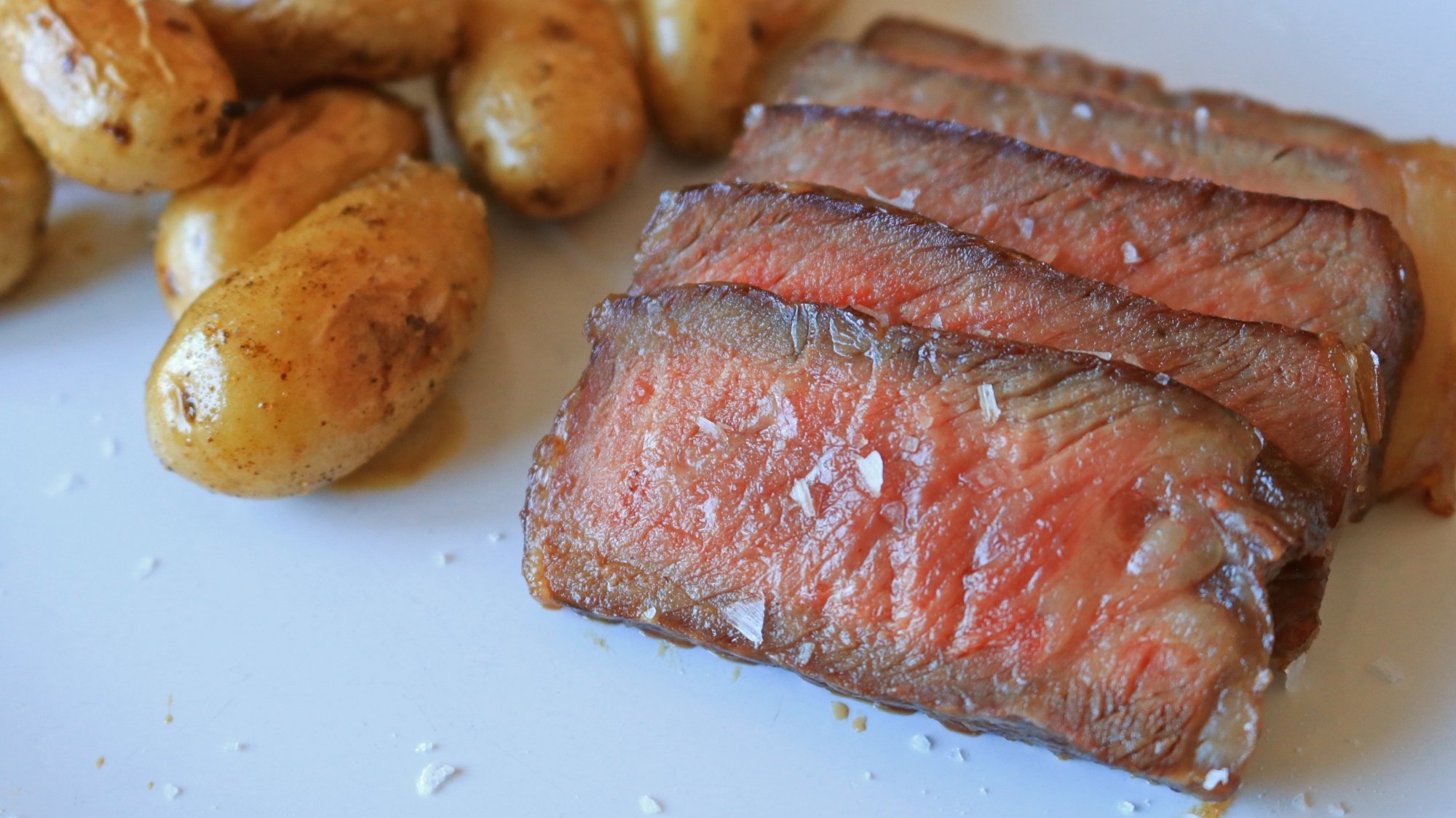
Steak sliced on a plate with small gold potatoes.

Credit: Allie Chanthorn Reinmann

Grilling steak can be intimidating at first, but stick with it and you too will become a grill boss. The pressure might feel high, but even if you overcook the meat, a grilled steak is never ruined and can easily be used for a number of other dishes. I like the following cuts best for grilling because they’re versatile (can be sliced and served in a number of dishes), they have great beefy flavor, or because you get a lot of bang for your buck—and that means more steak nights this summer.

All steaks, unless you’re slow smoking some brisket, should be grilled fast (around three to six minutes per side depending on its thickness) and over the hottest area of your grill. Be sure to let it rest for about 10 minutes off the heat before slicing. There’s no real reason to slowly cook steak unless you’re trying to do a reverse sear. Personally, I’ve never done reverse searing on a grill because it’s less predictable than doing it in an oven or in the air fryer. Additionally, my primary reason for reverse searing is to reduce smoke indoors. When I’m cooking outside, the smoke doesn’t bother me. The stinging eyes and smoky laundry is all part of the experience.

Flank steak

A more affordable cut of meat, the flank steak is taken from the underside of the cow, in front of its hind legs. Essentially, it’s the cow’s six pack. And like mine, the cow’s abs are tough with less fat marbling. Less fat means more muscle grain and those will tighten up more and more as it cooks through. Additionally, flank steaks aren’t thick, so this is a quick sear. I like to throw it on the hottest part of the grill for maybe three minutes per side. It’s enough time to get some beautiful color and loads of flavor on the outside but just warm up the inside. 

Since flank steak can be tougher, always slice your flank against, or perpendicular to, the muscle grain. Cutting across the “lines” will shorten the protein strands so it’s easier for you to chew, and that’s a much nicer eating experience. Read here for a step-by-step guide on grilling a flank steak. And when you have leftovers, try this recipe for cold flank steak with chimichurri sauce.

Skirt steak

Another somewhat cheaper cut compared to other parts of the cow, the skirt steak comes from the area right above the flank steak, below the ribs. Skirt steak has similarities to flank—thinner cut and strong beefy flavor—but it usually includes more fat marbling. Think of the fat ribbons as breaking points in the strong chains of protein. That makes a piece of meat easier to chew because it readily separates at those points. This reads as tender to our palate, and that’s always nice. 

Just like flank steak, skirt steak does well with a short and hot sear on the grill, and slicing it against the grain. I really love it thinly sliced with an herb-forward board sauce drizzled over the top, and it’s a great affordable replacement for ribeye when you’re making a cheesesteak—the bold flavor easily stands out against the bread.

Porterhouse

Surprise! Who would have thought the porterhouse steak would be at home anywhere else but in a fancy mahogany and marble embellished steakhouse. I wouldn’t consider this a cheap cut of steak, but it is one of my favorites for tossing on the grill. I don’t do this for every weekend backyard grill session, but I visited my dad for his birthday last year and we took him steak shopping for lunch. I didn’t expect him to choose a porterhouse, but I was quietly impressed by his decision to let me buy him a $35 steak. How could I be grumpy when I knew I would be sneaking some slices off his plate?

We tossed that inch-and-a-half-thick cut on the grill for longer than the skirt steaks we bought, about five minutes per side, and carved it up for the table. Besides having great flavor and fat content, the porterhouse is actually composed of two different cuts: strip steak (my other favorite grilling steak) and tenderloin. The tenderloin. As in, the filet mignon section that everyone goes bonkers for. Filet mignon doesn’t have as much flavor on its own, but when paired up with the strip steak and the bone in the center of the porterhouse, you get a well rounded experience of flavor and a delicate bite. 

Strip steak

The strip steak is my go-to steak for most cooking styles, not just grilling. It’s a great compromise between cost, flavor, and fat content. With a usual thickness of an inch or inch and a half, I also find that it’s more forgiving than skirt or flank steak when it comes to accidentally leaving it on the grill for an extra minute or so. You’re much less likely to ruin it, and the fat marbling can help keep it tender.  

The strip steak comes from the short loin of the cow and it’s not a heavily used body part which makes it a more tender cut. I find it also works well with my budget but still feels like a treat. As I mentioned, strip steaks have a decent amount of fat marbling, so you get a thick, tender steak with plenty of flavor for roughly $12 to $16 a pound. When it’s not porterhouse week, you might find that a strip steak fits the bill. I usually toss a strip steak on the hottest, or near the hottest, section of the grill and give it about five minutes per side depending on the thickness. 

What if you don’t have one of these steaks?

Bummed because you bought a chuck steak or a flat iron steak? Don’t be. As long as you keep in mind timing, heat, and slicing against the grain, you’ll be in good shape. Thinner cuts of steak (less than an inch) need two or three minutes per side over the hottest heat, and thicker steaks need two to three more minutes per side (also on high heat). All you need now is a scoop of potato salad. And maybe some charbroiled oysters. Oh, and maybe three other dishes from this list. 

Why Microsoft’s next Xbox should just run Windows already

Yesterday, Microsoft confirmed that it’s not abandoning the home console market just yet. In a short video teaser, Xbox President Sarah Bond highlighted a “strategic multi-year partnership with AMD” that will include “our next-generation Xbox consoles in your living room and in your hands.” But while we know that the “in your hands” part will include devices like the Windows-powered ROG Xbox Ally, there are still few specifics about what exactly Microsoft has planned for its future living room consoles (aside from what Bond calls “the next generation of graphics innovation”).

Reading between the lines a bit, though, we wouldn’t be surprised if Microsoft was getting ready to finally tear down the thinning wall separating gaming PCs and gaming consoles. A Windows-based, living room-focused Xbox capable of running generic Windows games could accentuate Microsoft’s strengths in PC gaming while papering over many of the company’s recent struggles in the home console market.

WindowsBox

The once-bright line separating PC gaming and TV-based console gaming has been deteriorating for years. On the hardware side, bespoke console chips and development environments long ago gave way to PC-like architectures that are simpler and easier for developers to work with. And on the PC interface side, efforts like Steam’s Big Picture mode and SteamOS as a whole have strived to make playing on a PC with a handheld controller into a more console-like experience.

Read full article

Comments