iPhone Air vs. iPhone 17 Pro: Which one is right for you?

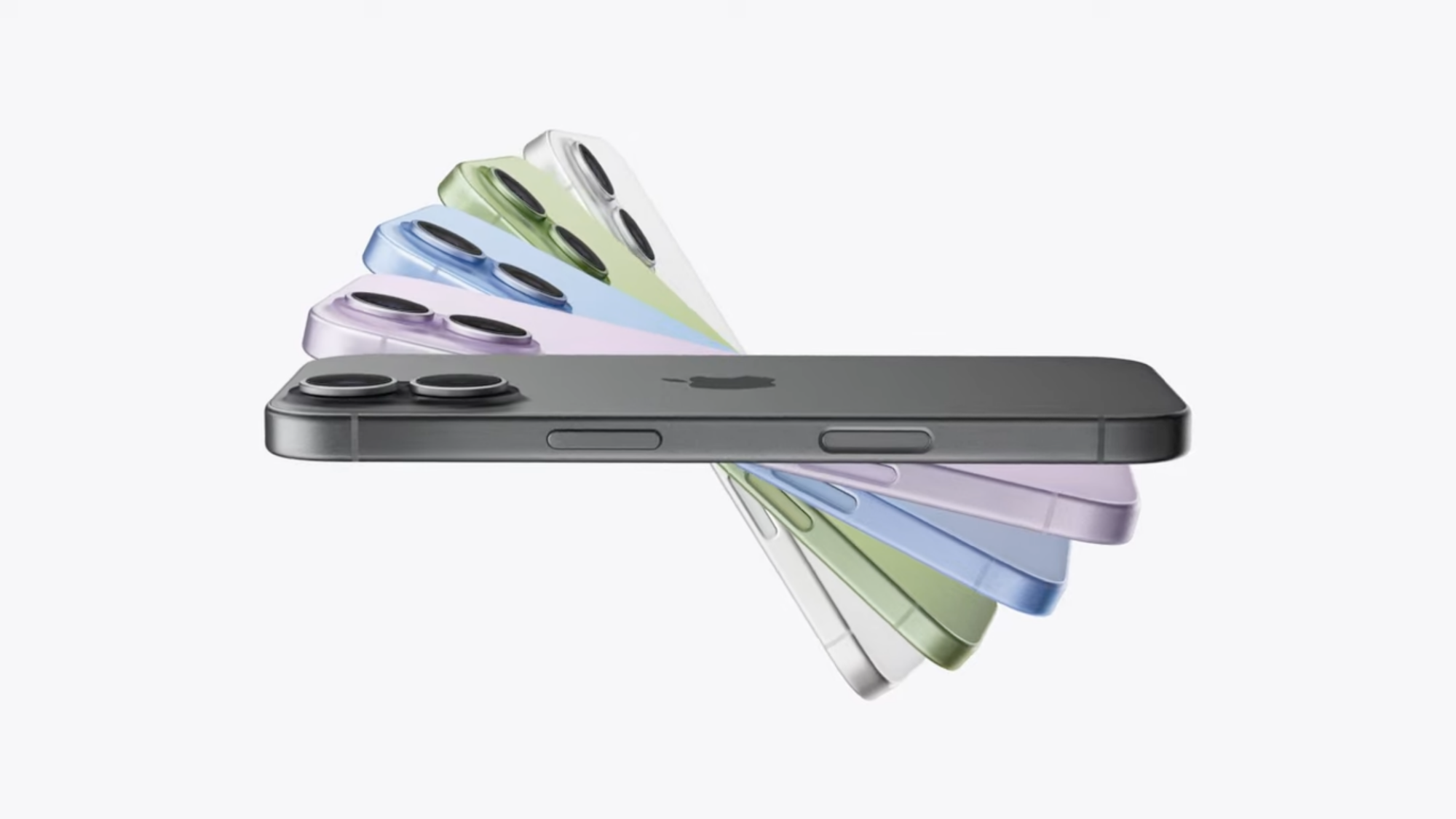
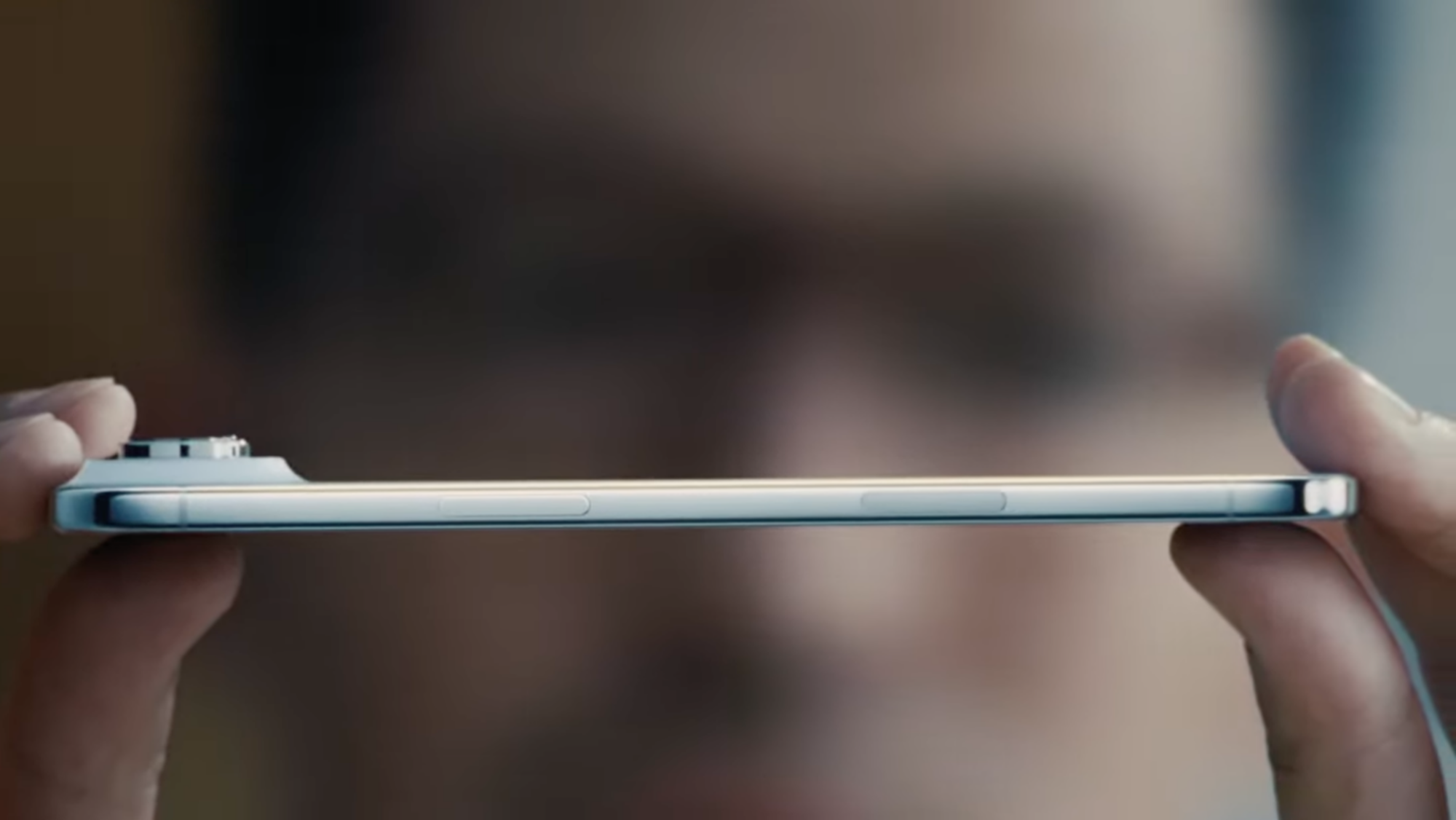
iPhone Air is much thinner compared to the iPhone 17 Pro. (Apple)

Now that we’ve seen the actual iPhone Air and iPhone 17 Pro models — they were revealed at the Apple iPhone event today — it’s time to decide if you’re ready to upgrade to one of the newer devices. If you watched Apple’s keynote or pored through Engadget’s liveblog, you probably noticed the Air and 17 Pro share quite a few similarities — many of the specs are identical, or nearly so. 

For starters, both run the new A19 Pro chip, giving each of them a performance edge over the non-Pro A19 in the baseline iPhone 17. And their screens, bodies and basic feature sets — high-refresh ProMotion screens, Apple Intelligence, scratch-resistant Ceramic Shield front and back, Camera Control button, MagSafe wireless charging — are all largely aligned, too. And there’s only a $100 delta in their price tags, with the iPhone Air starting at $999 and the iPhone 17 Pro at $1,099. 

But these two phones have two very different audiences. The Pro, as usual, is designed to be the no-compromise iPhone, while the Air is much more of a fashion statement. It’s the thinnest iPhone ever, and that comes with some notable compromises. 

To that end, let’s take a deep dive on the key areas where the newly introduced iPhone Air and iPhone 17 Pro diverge. (For more of today’s Apple releases, check out our hands-on with the new AirPods Pro 3 and the Apple Watch Series 11.)

Size and weight

The iPhone Air is Apple’s thinnest phone yet, at just 5.6mm thick. In comparison, the iPhone 17 Pro is 8.75mm thick — that’s more than 3mm thicker than the Air! I’m almost certain the Air would get lost between my couch cushions on day one. 

When it comes to the screen size, the iPhone Air has a 6.5-inch display, which is larger than the 17 Pro’s 6.3-inch screen. (If you want larger still, the iPhone 17 Pro Max is a whopping 6.9 inches diagonally). But the screen tech uses the identical Super Retina XDR technology with all the same bells and whistles — ProMotion high refresh rate, P3 color gamut, True Tone. They should look pretty much identical. 

As for weight, the Air with its titanium casing tips the scales at just 5.82 ounces (165 grams), while the iPhone 17 Pro weighs 7.27 ounces (206 grams) with an aluminum chassis. That’s a tad more than the iPhone 16 Pro’s weight of 7.03 ounces (199 grams), probably due to the newer model’s larger battery.

If you decide to upgrade to the 17 Pro Max instead, it has a larger 6.9-inch display and weighs a whopping 8.22 ounces (233 grams).

But long story short, the Air’s superthin design and wispier weight is pretty much the reason you’re buying this phone.

Four iPhone Airs. (Apple)
The Air is pretty light and thin in comparison to all other iPhones. (Apple)

Cameras

Here’s where the biggest differences lie: the cameras. While the iPhone 17 Pro has three rear 48MP cameras, the iPhone Air has just one (also 48MP, though it serves as two cameras in one). Here’s what they include:

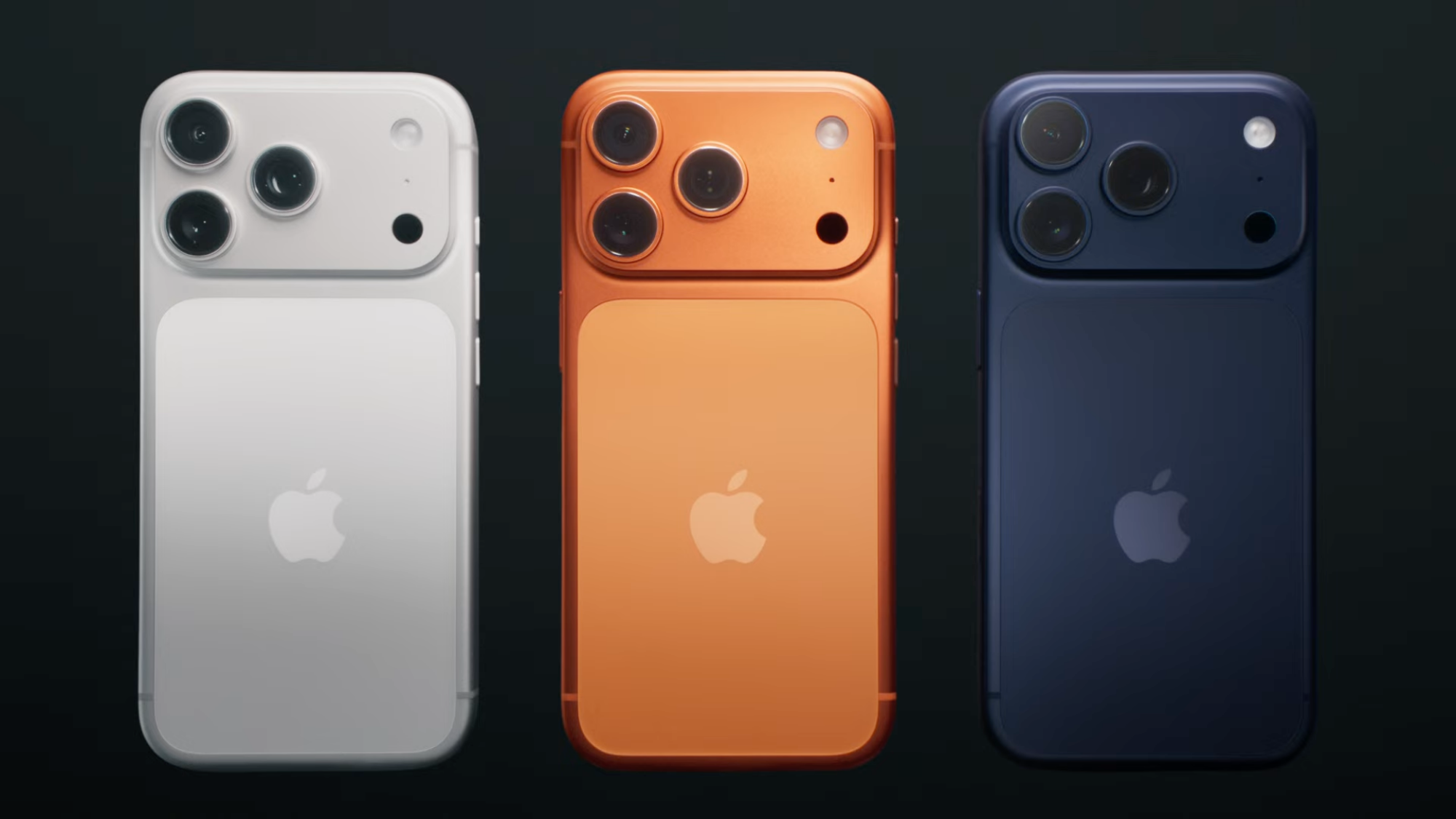
iPhone 17 Pro rear cameras: The Pro boasts a triple array “Pro Fusion camera system,” where the three 48MP cameras combine to offer .5x, 1x, 2x, 4x and 8x optical zoom options. The Pro also offers macro photography, spatial photos and can shoot in ProRAW image mode. Video offerings are also full-tilt, with 4K Dolby Vision video recording up to 120fps, along with a litany of sophisticated options that will appeal to more serious video shooters (ProRES Raw, Genlock support, cinematic mode and more).

iPhone Air rear camera: By comparison, the Air has a single 48MP Fusion camera system that delivers only 2x optical zoom in addition to standard. That also means it lacks even the ultrawide (.5x) mode found in the baseline iPhone. Video recording is similarly limited to just half the Pro’s framerate, albeit still in 4K Dolby Vision.

Both phones have the new Center Stage 18MP front-facing “selfie” camera, which eliminates the need to rotate your phone to take a landscape photo. You instead just tap to expand the field of view. And when others join the photo, the camera automatically expands the view. And when you’re on a video call, the camera uses artificial intelligence to adjust the frame. They also both offer Dual Capture, so you can shoot from the front and back cameras simultaneously. 

Three iPhone 17 Pro phones.
The iPhone 17 Pro has three rear-facing cameras. (Apple)

Still, the camera compromises are arguably the Air’s biggest shortfall. Don’t get this phone if you like long zooms, ultrawide shots or top-notch video quality.

Battery life

Battery life ratings should always be taken with a grain of salt. That said, Apple claims the Air will deliver up to 27 hours of video playback and can get up to a 50% charge in 30 minutes. The good news is that basically matches the battery claims of last year’s iPhone 16 Pro. The bad news is that it falls well short of the new and improved battery specs on this year’s 17 Pro. That model is rated up to 33 hours of video playback and up to a 50% charge in just 20 minutes with a 40-watt charger. 

The Air MagSafe Battery gives you more juice, but adds bulk and weight.
Apple

Now, unlike the cameras, there’s a workaround for the Air’s shorter battery life. Apple offers an add-on iPhone Air MagSafe battery which snaps on to the Air’s backside and gets you up to 40 hours of video playback. But it costs $99 and fattens up your superthin phone — doesn’t that kinda get you back to square one?

Price

The iPhone Air starts at $999, which matches the price at the 256GB tier of the iPhone Plus model it’s replacing (which just so happens to be my favorite). So that’s $100 more than the starting price of last year’s 128GB Plus, but with the storage doubled, I guess I can’t complain too much.

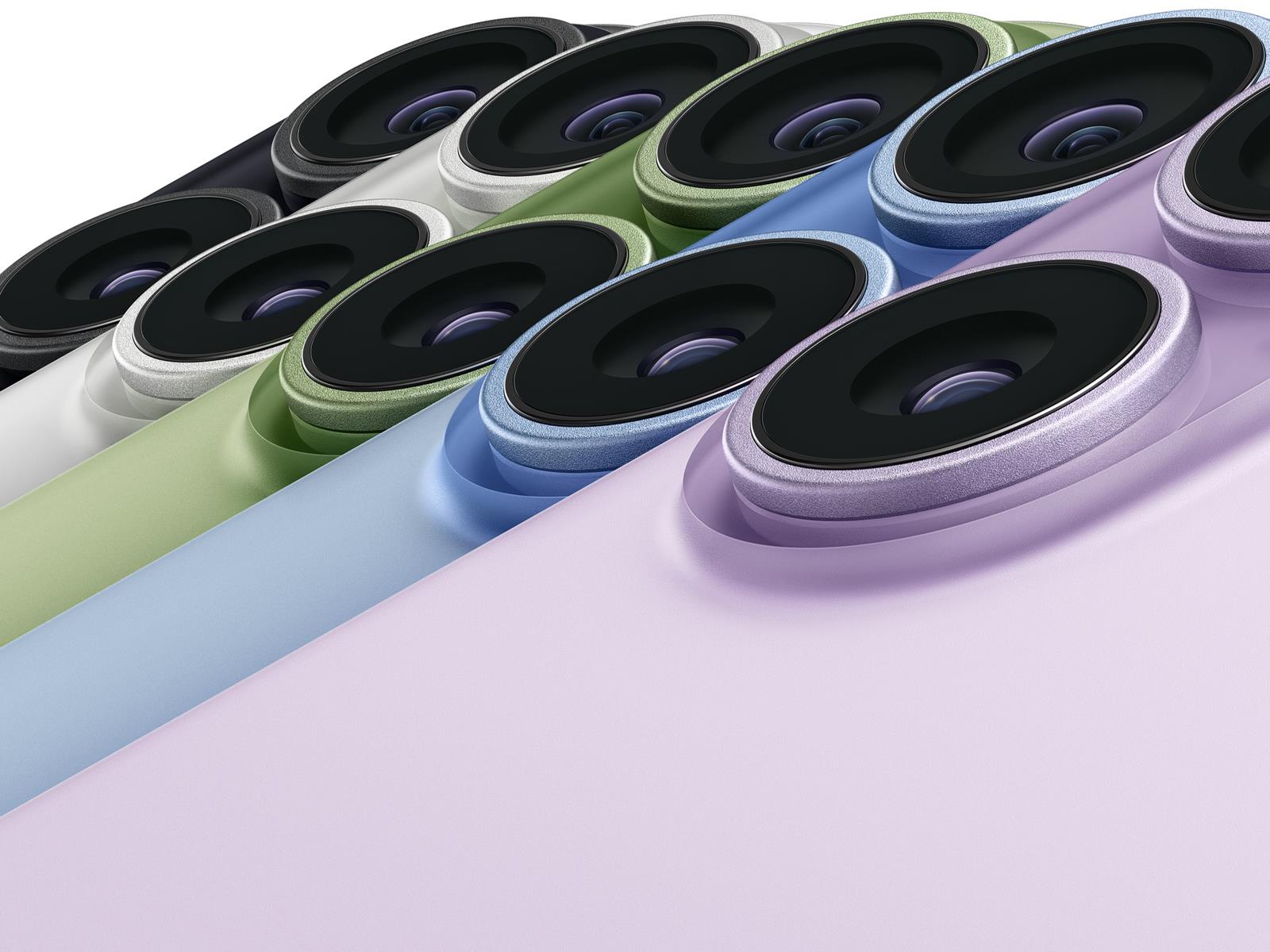
For 512GB, it’ll cost you $1,199; and if you splurge on 1TB, you’ll be paying $1,399. And the Air is available in four lighter color palettes.

On the other hand, the iPhone 17 Pro starts at $1,099 with 256GB, which is just $100 more. You can also choose 512GB for $1,299 or 1TB for $1,499. (The iPhone 17 Pro Max starts at $1,199 for 256GB and goes up to $1,999 for 2TB.) The Pro comes in only three colors, though the Cosmic Orange is unusually bold for the iPhone Pro line.

iPhone Air vs. iPhone 17 Pro: How to choose

As I suggested above, the iPhone Air is certainly eye-catching, but you really need to make sure you’re ready to accept those camera and battery compromises. The iPhone 17 Pro is much more of a “no compromise” choice, albeit one that’s less of a looker (depending on how you feel about that new “camera plateau” at the top). That said, remember you can always default to the baseline iPhone 17, which is arguably better than ever — and has some nice feature one-ups on the Air, to boot.

If I were choosing between the Air and the Pro, I know which one would be the clear winner for me — but I’ll leave that decision up to you because I’m holding out (and hopeful) for a foldable iPhone in 2026. In the meantime, you can check out Engadget’s initial hands-on impressions of the iPhone Air, iPhone 17 Pro and baseline iPhone 17, as well as our full reviews of those models coming in the near future. 

iPhone Air and iPhone 17 Pro
$100 more for a Pro model really isn’t that bad. (Apple)

Full specs comparison

iPhone Air

iPhone 17 Pro

Starting price

$999

$1,099

Dimensions

6.15 x 2.94 x 0.22 inch

5.91 x 2.83 x 0.34 inch

Weight

5.82 ounces (165 grams)

7.27 ounces (206 grams)

Processor

A19 Pro chip

A19 Pro chip

Display

6.5-inch Super Retina XDR display

6.3-inch Super Retina XDR display

Storage

256GB / 512GB / 1TB

256GB / 512GB / 1TB

Battery

Up to 27 hours

Up to 33 hours

Camera

Main: 48MP Fusion camera system / 48MP Fusion Main
Front: Center Stage 18MP

Main: 48MP Pro Fusion camera system / 48MP Fusion Main /48MP Fusion Ultra Wide / 48MP Fusion Telephoto
Front: Center Stage 18MP

Colors

Sky Blue, Light Gold, Cloud White, Space Black

Silver, Cosmic Orange, Deep Blue

This article originally appeared on Engadget at https://www.engadget.com/mobile/smartphones/iphone-air-vs-iphone-17-pro-which-one-is-right-for-you-001538431.html?src=rss

HHS Asks All Employees To Start Using ChatGPT

An anonymous reader quotes a report from 404 Media: Employees at Robert F Kennedy Jr.’s Department of Health and Human Services received an email Tuesday morning with the subject line “AI Deployment,” which told them that ChatGPT would be rolled out for all employees at the agency. The deployment is being overseen by Clark Minor, a former Palantir employee who’s now Chief Information Officer at HHS. “Artificial intelligence is beginning to improve health care, business, and government,” the email, sent by deputy secretary Jim O’Neill and seen by 404 Media, begins. “Our department is committed to supporting and encouraging this transformation. In many offices around the world, the growing administrative burden of extensive emails and meetings can distract even highly motivated people from getting things done. We should all be vigilant against barriers that could slow our progress toward making America healthy again.”

“I’m excited to move us forward by making ChatGPT available to everyone in the Department effective immediately,” it adds. “Some operating divisions, such as FDA and ACF [Administration for Children and Families], have already benefitted from specific deployments of large language models to enhance their work, and now the rest of us can join them. This tool can help us promote rigorous science, radical transparency, and robust good health. As Secretary Kennedy said, ‘The AI revolution has arrived.'” […] The email says that the rollout was being led by Minor, who worked at the surveillance company Palantir from 2013 through 2024. It states Minor has “taken precautions to ensure that your work with AI is carried out in a high-security environment,” and that “you can input most internal data, including procurement sensitive data and routine non-sensitive personally identifiable information, with confidence.”

It then goes on to say that “ChatGPT is currently not approved for disclosure of sensitive personally identifiable information (such as SSNs and bank account numbers), classified information, export-controlled data, or confidential commercial information subject to the Trade Secrets Act.” The email does not distinguish what “non-sensitive personally identifiable information” is. HHS did not immediately respond to a request for comment from 404 Media. […] The agency has also said it plans to roll out AI through HHS’s Centers for Medicare and Medicaid Services that will determine whether patients are eligible to receive certain treatments. These types of systems have been shown to be biased when they’ve been tried, and result in fewer patients getting the care they need.


Read more of this story at Slashdot.

Humanoid Robot Autonomously Does The Dishes

Previously seen folding laundry, this is a video of a humanoid robot demonstrating its dexterity by autonomously loading a dishwasher. That’s cool, but I don’t really mind loading and unloading the dishwasher. The dishwasher really does all the heavy lifting as far as washing dishes is concerned. What I really want is a humanoid robot that goes to work and does my job and doesn’t complain and gets promotions and gives me all the money it earns while I happy hour all day. I’d join the waitlist for that robot.

How Google Is Already Monetizing Its AI Services To Generate Revenue

Google Cloud CEO Thomas Kurian revealed the company has already made billions from AI by monetizing through consumption-based pricing, subscriptions, and upselling. “Our backlog is now at $106 billion — it is growing faster than our revenue,” said Kurian, speaking at the Goldman Sachs Communacopia and Technology Conference in San Francisco. “More than 50% of it will convert to revenue over the next two years.” CNBC reports: Kurian said some people pay Google by consumption, giving the example of AI infrastructure purchased by enterprise customers. “Whether it’s a GPU, TPU or a model, you pay by token — meaning you pay by what you use,” he said. Tokens represent chunks of text that a AI models process when they generate or interpret language. Some people use customer service systems, paying for it by what Kurian called “deflection rates.” Such rates are priced based on the business value customers get — things like uptime, scalability, AI features and security. Google Cloud also provides tools like a “deflection dashboard,” that customers can use to track and manage agent interactions. Last month, Google won a $10 billion cloud contract from Meta spanning six years. Meta had largely been reliant on Amazon Web Services for cloud infrastructure, though it also uses Microsoft Azure.

Some customers pay for cloud services by way of subscriptions. “You pay per user per monthly fee — for example, agents or Workspace,” said Kurian, referring to the company’s Gemini products, which has its own subscription tiers with various storage options, and the Google Workspace productivity suite, which also has several subscription tiers. Google One, a popular personal cloud storage subscription, offers a basic monthly service to users for $1.99 a month. Earlier this year, the company offered a new subscription tier called “Google AI Ultra,” which offers exclusive access to the company’s most “cutting edge” AI products with 30 terabytes of storage for $249.99 per month. Kurian gave an example of Google Cloud’s cybersecurity subscription tiers, saying “we’ve seen huge growth in that.”

Kurian said that upselling is another key aspect of Google Cloud’s strategy. “We also upsell people as they use more of it from one version to another because we have higher quality models and higher-priced tiers,” Kurian said. He said that once customers use Google’s AI services, they wind up using more of the company’s products. “That leads customers who sign a commitment or contract to spend more than they contacted for, which drives more revenue growth,” he added. Kurian says it is capturing new customers more quickly too. “We’ve seen 28% sequential quarter-over-quarter growth in new customer wins in the first half of the year,” said Kurian, adding that nearly two-thirds of customers already use Google Cloud’s AI tools in a meaningful way. “Selling to existing customers is always easier than selling to new customers, so it helps us improve the cost of sales,” Kurian said.


Read more of this story at Slashdot.

New iPhones use Apple N1 wireless chip—and we’ll probably start seeing it everywhere

Apple’s most famous chips are the A- and M-series processors that power its iPhones, iPads, and Macs, but this year, its effort to build its own wireless chips is starting to bear fruit. Earlier this spring, the iPhone 16e included Apple’s C1 modem, furthering Apple’s ambitions to shed its dependence on Qualcomm, and today’s iPhone Air brought a faster Apple C1X variant, plus something new: the Apple N1, a chip that provides Wi-Fi 7, Bluetooth 6, and Thread support for all of today’s new iPhones.

Apple didn’t dive deep into the capabilities of the N1, or why it had switched from using third-party suppliers (historically, Apple has mostly leaned on Broadcom for Wi-Fi and Bluetooth). However, the company’s press releases say that it should make Continuity features like Personal Hotspot and AirDrop more reliable—these features use Bluetooth for initial communication and then Wi-Fi to establish a high-speed local link between two devices. Other features that use a similar combination of wireless technologies, like using an iPad as an extended Mac display, should also benefit.

These aren’t Apple’s first chips to integrate Wi-Fi or Bluetooth technology. The Apple Watches rely on W-series chips to provide their Bluetooth and Wi-Fi connectivity; the Apple H1 and H2 chips also provide Bluetooth connectivity for many of Apple’s wireless headphones. But this is the first time that Apple has switched to its own Wi-Fi and Bluetooth chip in one of its iPhones, suggesting that the chips have matured enough to provide higher connectivity speeds for more demanding devices.

Read full article

Comments

US High School Students Lose Ground In Math and Reading, Continuing Yearslong Decline

The latest National Assessment of Educational Progress shows U.S. high school seniors’ math and reading scores at their lowest in decades, with nearly half failing to reach basic proficiency in math and one-third below basic in reading. The Associated Press reports: A decade-long slide in high schoolers’ reading and math performance persisted during the COVID-19 pandemic, with 12th graders’ scores dropping to their lowest level in more than 20 years, according to results released Tuesday from an exam known as the nation’s report card. Eighth-grade students also lost significant ground in science skills, according to the results from the National Assessment of Education Progress.

The assessments were the first since the pandemic for eighth graders in science and 12th graders in reading and math. They reflect a downward drift across grade levels and subject areas in previous releases from NAEP, which is considered one of the best gauges of the academic progress of U.S. schools. “Scores for our lowest-performing students are at historic lows,” said Matthew Soldner, the acting commissioner of the National Center for Education Statistics. “These results should galvanize all of us to take concerted and focused action to accelerate student learning.” […]

In reading, the average score in 2024 was the lowest score in the history of the assessment, which began in 1992. Thirty-two percent of high school seniors scored below “basic,” meaning they were not able to find details in a text to help them understand its meaning. In math, the average score in 2024 was the lowest since 2005, when the assessment framework changed significantly. On the test, 45% of high school seniors scored below “basic” achievement, the highest percentage since 2005. Only 33% of high school seniors were considered academically prepared for college-level math courses, a decline from 37% in 2019.


Read more of this story at Slashdot.

Reddit bug caused lesbian subreddit to be labeled as a place for “straight” women

Reddit has addressed a problem where the description of subreddits originally written by moderators appeared differently—and, often, inaccurately—on Reddit’s Android app. For weeks, the problem was largely suspected to be caused by Reddit clumsily using generative AI to create new subreddit descriptions. However, Reddit says that the changes were the fault of a bug tied to its AI-powered translation technology.

Reports of subreddits suddenly having inaccurate summaries when viewed on Reddit’s Android app started surfacing on Reddit a couple of weeks ago. On August 29, a moderator reported on the r/ModSupport subreddit for moderators that the r/ThronesAndDominions subreddit’s description changed from “The wayward adventures of Dylan Carlson and the band Earth” to “The crazy adventures of Dylan Carlson and the band Earth.” The problem got more attention when r/actuallesbians’ Android app description described the community as “a place for straight and transgender lesbians …” instead of “a place for cis and trans lesbians …”

Other complaints followed, including from r/autisticparents, a subreddit for parents with autism whose description was changed to say that it is a group for “parents of autistic children.” A moderator who asked to be referred to by their Reddit username, Paige_Railstone, described the confusion that the changes brought to their subreddit:

Read full article

Comments

Some iPhone Users Are Getting Another Year of Free Satellite Features

You may have missed it during the high-profile launch of the iPhone 17, but Apple has extended the free trial of its satellite services for the iPhone 14 and 15. The satellite features include Emergency SOS via satellite, which lets you connect to emergency services when you have no mobile or wifi coverage. This feature can also automatically contact emergency services in case your Apple Watch detects a hard fall or a vehicle crash.

Initially launched with the iPhone 14, this feature is offered for free for up to two years with a new iPhone. During the September 2025 iPhone event, Apple announced that it’s extending satellite features for one more year for people who have iPhone 14 and iPhone 15. The announcement only excludes the iPhone 16 because it’s only been one year since its launch, and the service is available for free for at least two years.

As long as you activated your iPhone 14 or 15 in a country that supports Apple’s satellite features before 12 a.m. PT on September 9, 2025, you can use those features for free for another year. At the moment, satellite features for iPhones are available in the following regions:

  • United States

  • Canada

  • France

  • Germany

  • Ireland

  • United Kingdom

  • Australia

  • Austria

  • Belgium

  • Italy

  • Luxembourg

  • Netherlands

  • New Zealand

  • Portugal

  • Spain

  • Switzerland

  • Japan 

At the time of writing, Apple hasn’t revealed any pricing details for satellite features after this free trial expires. If your iPhone was purchased outside the regions mentioned above, you may still be able to use satellite features if you visit any of the countries where they are available. However, iPhones purchased in Armenia, Belarus, China mainland, Hong Kong, Macao, Kazakhstan, Kyrgyzstan, and Russia do not have satellite connectivity features at all. 

While the focus of satellite messaging largely remains on contacting emergency services, you can also use these features to text anyone when you have no cell service. If you’re wondering how to use your iPhone’s satellite features, you can check out Lifehacker’s guide to using Emergency SOS via satellite.

All of the new iPhones start with 256GB of storage. Finally.

There’s a lot to like about the new iPhone lineup: new selfie cameras, a new unibody frame and a even a super-thin iPhone, if that’s your thing. All of the new phones share one important upgrade you might have missed during Apple’s 72-minute livestream, though: they all start at 256GB of storage.

For the first time in four years, Apple raised the base-level storage on its entire iPhone lineup. Since the iPhone 13, Apple’s phones have started at 128GB for the cheapest configuration. Now, the iPhone 17, 17 Pro and iPhone Air will start with double that capacity.

It’s about time.

While 128GB may sound like a decent amount of storage, it hasn’t made sense as a base amount of storage for some time, particularly for Pro-level phones, which have much more powerful cameras. Apple has seemingly understood this for a while: for the last two years (when the iPhone 15 lineup launched), the Pro Max versions have started at 256GB. But there’s absolutely no reason that only people buying the most expensive iPhone should get a storage bump.

Because I write about tech, my friends and family often ask me for help “fixing” various problems with their phones. (I spend most of my time reporting on the social media industry, so usually this involves me just Googling their specific issue and muddling through.) I’ve lost track of the times friends have asked me for help fixing things that boil down to the fact that they simply don’t have enough storage left on their phone. And, almost every time, they only have the minimum 128GB of storage that’s come standard since the iPhone 12 Pro and iPhone 13 line.

But no one wants to hear: “you don’t have enough storage, you need to delete stuff.” One of my friends recently vowed to never buy the cheapest iPhone again, after I explained that paying for extra iCloud wouldn’t address her issues around local storage.

But if you can afford it, paying for a storage upgrade is still worth it. Yes, paying the $200 extra for 512GB for $400 more for 1TB on the Pro series (which now maxes out at $1999 for 2TB) stings. It makes an already-expensive phone feel like an even bigger investment. But as someone who shelled out for a 512GB iPhone 14 Pro three years ago, I have no regrets about paying that extra premium.

I’m currently using about 295GB of my allotted storage and have never once had to think about whether I need to clear out my downloaded media or if I have enough storage to shoot photos of my nephew in ProRAW Max or record cinematic videos on vacation. I plan on keeping this phone at least another year and I expect I’ll still have plenty of storage left by the time I do decide to upgrade (extra storage also helps a bit with resale or trade-in value). 

But, if you just can’t bring yourself to pay extra for more capacity — and I get it, I really do — jumping from 128GB to 256GB will still be a meaningful bump. You might not notice it right away, but it should give most people a lot of extra time before they start seeing those dreaded “storage almost full” pop-ups.

This article originally appeared on Engadget at https://www.engadget.com/mobile/smartphones/all-of-the-new-iphones-start-with-256gb-of-storage-finally-222415353.html?src=rss

Apple acquiesced to my Apple Watch SE 3 demands (mostly)

Earlier this year, I typed up an open letter to Apple, giving the company my unsolicited (but completely free of charge!) suggestions on what it could do to improve its entry-level smartwatch, the Apple Watch SE. Now that the iPhone event has concluded I wanted to see if anyone over in Cupertino took my advice. 

I asked for a bigger screen, a faster processor and faster charging. I said flashier materials weren’t necessary, nor was an always-on display. I also didn’t think the watch needed to have every last health sensor. But on-board Siri would be nice. The Apple Watch SE 3 has some of what I asked for, but not everything. Still, at the same $250, this is looking like a pretty tempting budget smartwatch.

The screen is still small but the processor is top of the line

I compared the display on the SE Gen 2 to my old Apple Watch Series 4 and they were about the same size. It’s usable, but after wearing the Series 10, or even the Series 9 for a while, the screen feels dinky. Down to the pixel, the size on the SE 3 is the exact same on the Apple Watch SE gen 2, with a 759 square millimeter display area. Sigh. 

The Apple Watch SE, second generation in 2025 on a persons arm near a window showing the Modular watch face.
The Apple Watch SE second generation
Amy Skorheim for Engadget

But! The same S10 chip that’s going into the new Series 11 will ship inside the Apple Watch SE 3, too. That means the budget smartwatch will be able to handle watchOS 26 features like Workout Buddy and Live Translation, just like its pricier siblings (an Apple Intelligence-enabled iPhone still needs to be nearby, as it does with the other wearables). 

That new chip will also enable the useful double tap gesture as well as the new wrist flick move that dismisses notifications — something I find surprisingly useful as an inveterate notification-clearer. You also get on-board processing of Siri requests. No more excessive tapping just to start a timer. Both the gesture and Siri support are things I’d hoped a new SE would have. So, yay!

The Apple Watch SE 3 can give you a sleep score, just like its pricier siblings
Apple

AOD isn’t critical, but faster charging is

In my experience with smartwatches, an always-on-display is a nice to have, but not crucial if the screen lights up quickly enough when I lift my wrist. But Apple went ahead and added the feature. So that’s a bonus. 

I also said we could do without a brighter screen, and Apple agreed. Like the SE Gen 2, the SE 3 has a maximum brightness of 1000 nits — that’s plenty. I can easily read the time and other pertinent info in bright sunlight on such a screen, and feel no need for the extra blaze of the Series 11’s 2000 nits. 

The most critical ask was faster charging. The SE Gen 2 charged… so… slowly… It took over two hours to juice up. Which, for me, made it completely unusable as a sleep tracker, since I couldn’t recharge it while I got ready for the day (something I could do with every other recent smartwatch I’ve tested). Thankfully, Apple fixed the problem. The SE 3 can go for 8 hours after just 15 minutes on the charger. Hallelujah. 

The Apple Watch SE, second generation in 2025 on a table showing the Palette watch face
The Apple Watch SE second generation charged too slowly.
Amy Skorheim for Engadget

Sensors, case materials and the rest

The big news for the flagship Series 11 watch was a feature that can detect hypertension. The Apple Watch SE 3 can’t do that. Nor does it have the sensors for the ECG app. As I said in my letter, it’s OK if my watch isn’t a doctor’s office. The SE 3 can track your heart rate during workouts and can deliver the new sleep score if you wear it to bed. Plus Apple added temperature sensors that can help with ovulation predictions and the like. That’s more than enough health data gathering for a budget smartwatch. 

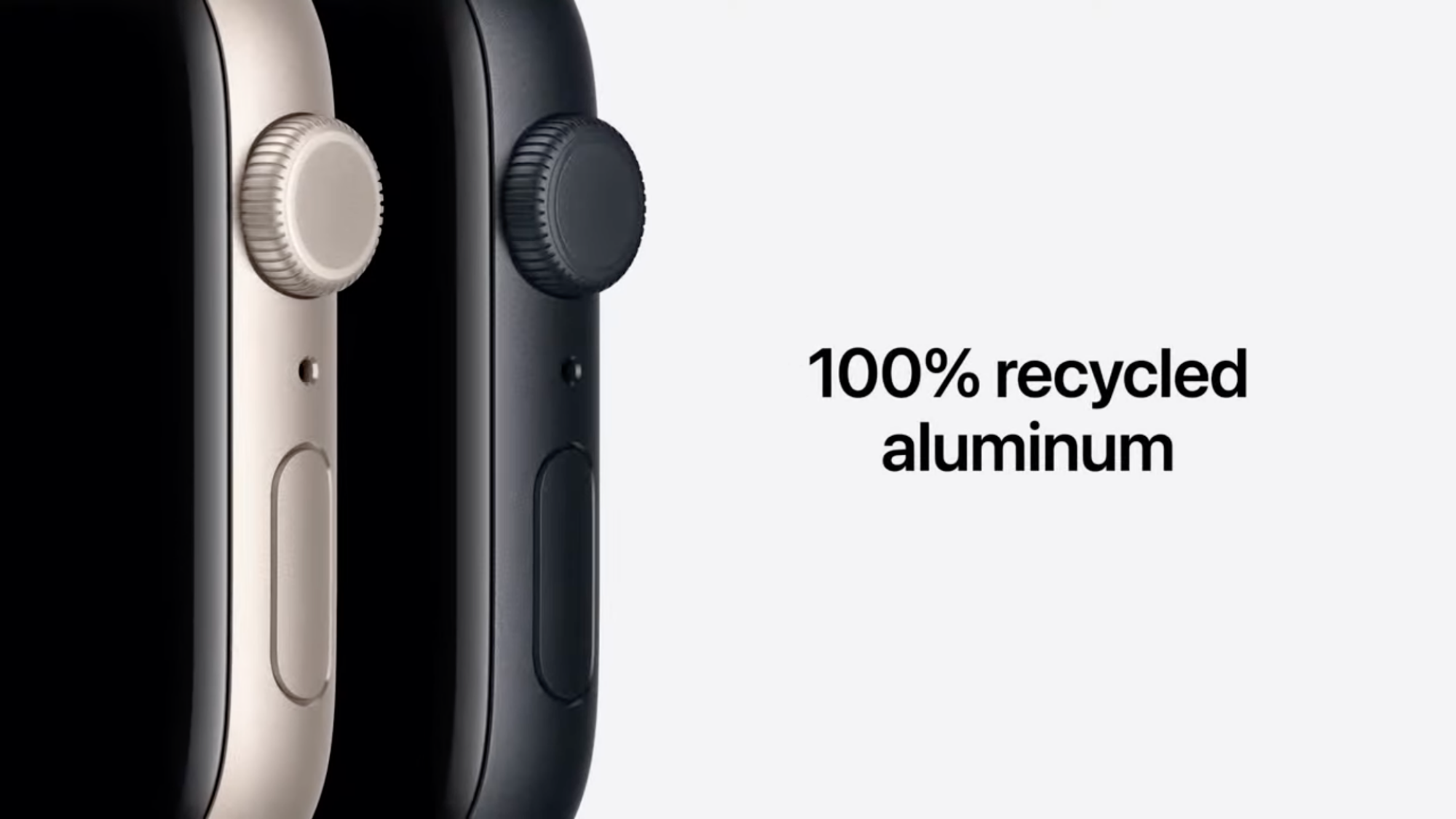
While there was talk of a plastic version of the SE, that didn’t happen. Instead, the SE 3 is made from an aluminum alloy, just like the base model Series 11 — similar durability is a nice consideration for any budget model. 

And it’s still just $250! When the Apple Watch SE Gen 2 came out back in 2022, Engadget’s Cherlynn Low called it “the best smartwatch $250 can buy.” With all the improvements Apple has added, that praise may now be an understatement. 

So maybe the Apple folk didn’t read my letter. But enough good stuff came to be that I’ll pretend they did. It’s always nice to feel heard.  

This article originally appeared on Engadget at https://www.engadget.com/wearables/apple-acquiesced-to-my-apple-watch-se-3-demands-mostly-220726287.html?src=rss

The Base Model iPhone 17 Pro Costs More Than Ever

Did you know you can customize Google to filter out garbage? Take these steps for better search results, including adding my work at Lifehacker as a preferred source.


It probably won’t come as a surprise to many Apple fans to learn that Apple announced two new Pro iPhones at its “Awe Dropping” event today. Like previous iPhone series, the iPhone 17 Pro and 17 Pro Max offer the best specs and the most features you can get in an Apple phone right now, including the new pro camera system. But there’s something new about this year’s Pro series that isn’t a perk. In fact, for many, it’s going to be a bit of a bummer: It’ll likely cost you more to buy a Pro iPhone this year.

Ever since Apple launched the iPhone X in 2017, the company has priced its premium smartphone starting at $999. The iPhone XS, the iPhone 11 Pro, and so on have all started at a grand. No longer. The iPhone 17 Pro now starts at $1,099, while the iPhone 17 Pro Max starts at a whopping $1,199. It seems the new iPhone Air, Apple’s thinnest iPhone ever, now takes that $999 price point.

Here’s the full pricing breakdown for the Pros, determined by storage size:

  • iPhone 17 Pro (256GB): $1,099

  • iPhone 17 Pro (512GB): $1,299

  • iPhone 17 Pro (1TB): $1,499

  • iPhone 17 Pro Max (256GB): $1,199

  • iPhone 17 Pro Max (512GB): $1,399

  • iPhone 17 Pro Max (1TB): $1,599

  • iPhone 17 Pro Max: (2TB): $1,999

Let’s put aside the fact that Apple will sell you an iPhone for $2,000, if you want one. $1,100 itself is a lot for a smartphone, especially when there are so many options on the market that are far less expensive. Apple knows this, of course. During the event, the company made a point to highlight the entire current iPhone lineup, which now starts with the iPhone 16e at $599. If all you want is an iPhone that does the things you expect an iPhone to do—take photos, send iMessages, place FaceTime calls—you might consider looking there. If you want the Pro perks, though, it’s going to cost you at least nearly double that, and more than you might have expected last year.

Raising prices by taking away choice

However, looks are a bit deceiving here. It’s not that Apple is raising prices on the iPhones themselves. If you wanted an iPhone 16 Pro with 256GB yesterday, that would have cost you $1,099, too. The same logic goes for the pricing on the 512GB version, or the 256GB model of the iPhone 16 Pro Max. These prices, with respect to storage, match between iPhone 16 Pro and iPhone 17 Pro lines. Only two things are new here: The iPhone 17 Pro Max has a 2TB option, and the 128GB variants are now missing.

That’s really the issue at hand: Apple is bumping up the base storage of its iPhones this year, without adjusting the prices. It’s not a decision without reason: 128GB doesn’t last long, especially on a Pro iPhone with three 48MP cameras. But now, that $999 option is gone. It might not cost any more to get a 256GB Pro iPhone this year than it cost last year, but it does cost more to pick up a Pro iPhone overall. $100 more, to be exact.

When I first saw the news that the iPhone 17 Pro now starts at $1,099, I assumed the Trump administration’s tariffs were to blame. After all, the tariffs have already caused companies to raise prices to compensate for the increased import duties. It really seemed like only a matter of time before Apple decided to make its products more expensive. This pricing decision could still very well be a result of those tariffs, as Apple could have made the 256GB iPhone 17 Pro $999 if it wanted to. But price increases could certainly be worse. In addition to leaving the cost of storage sizes the same, the company did not adjust the pricing of other products, including AirPods Pro 3 ($249), Apple Watch Series 11 ($399), Apple Watch SE ($249), Apple Watch Ultra 3 ($799), and iPhone 17 ($799).

If you’re someone who always buys additional iPhone storage, these prices won’t phase you. But for the customers who stick with the base models of Apple’s Pro phones, the iPhone 17 Pro is going to be more expensive than ever.

Intel Ousts CEO of Products, Ending 30-Year Career

An anonymous reader quotes a report from Tom’s Hardware: Intel has removed its chief executive officer of products, Michelle Johnston Holthaus, as part of a major shake-up of the executive branch of the embattled chip firm, according to Reuters. This is part of new CEO Lip-Bu Tan’s plan to reshape the company under his leadership, flattening the leadership structure so he makes more of the important decisions about day-to-day operation. […] Holthaus is the latest high-profile figure at Intel to get the axe, ending a 30-year career at Intel, but a mere 10 months in her CEO of products role, and a temporary position as co-CEO after the previous CEO, Pat Gelsinger, suddenly left in 2024. “Throughout her incredible career, Michelle has transformed major businesses, built high-performing teams and worked to delight our customers,” Tan said in a statement. “She has made a lasting impact on our company and inspired so many of us with her leadership. We are grateful for all Michelle has given Intel and wish her the best.”

Intel has said Holthaus will remain with the company in an advisory role, but her position will not be filled by anyone else. What Intel is doing, though, is bringing in executives from elsewhere, including one who worked at Tan’s previous endeavour, Cadence. Srinivasan Iyengar joined the company in June and will take on the role of head of a new central engineering division. This group will focus on developing a new custom silicon business for external customers. Although Intel’s fabrication business has been one of its worst-performing in recent years, and there are still talks of it selling large portions of it, it’s found a new lease of life following U.S. government investment and Bu Tan’s leadership. With Iyengar’s new role, though, it’s possible we’ll see Intel designing chips for customers, rather than merely producing them. That could see it compete against the likes of Broadcom and Marvell. With Tan pushing for a faster, leaner business overall, Iyengar will report directly to him in his new role. Intel also announced that it had acquired the services of former executive vice president of solutions engineering at Arm, Kevork Kechichian. He’ll begin heading Intel’s datacenter group, and brings years of experience at ARM, NXP Semiconductor, and Qualcomm.


Read more of this story at Slashdot.

Apple Basically Ignored AI at Today’s iPhone Event

Apple’s “Awe Dropping” iPhone event today went big on hardware, debuting new AirPods Pro and Apple Watch models, as well as the entire iPhone 17 line. But despite a few token mentions while discussing chips, the event hardly touched on AI.

That’s a big change of pace after last year’s iPhone 16 reveal, which focused heavily on the launch of Apple Intelligence. Does this mean that Apple’s still lagging behind on AI, or is Apple actually ahead of the curve by downplaying the tech industry’s latest trend?

Just a touch of AI

With one specific exception, Apple didn’t announce any new Apple Intelligence features during today’s event. Given the company continues to lag behind on bringing general AI to Siri—something it promised an entire phone generation ago, but still hasn’t made good on—that might not actually be all that surprising.

Instead, AI was largely kept to the periphery of today’s event. There was some discussion of using Siri to look up information about Apple products (functionality that is already available), and Workout Buddy, an AI-powered health helper that’s already been announced and is set to launch with watchOS 26. Otherwise, AI was largely used only to puff up the new A19 and A19 Pro chips, which do have improved neural engines, supposedly for use with a finalized Apple Intelligence. 

As for when we’ll actually see anything of the sort, it’s still unclear. The biggest nod to AI during today’s conference came early on, when Apple noted that you’ll be able to use its live translation features to have a multilingual discussion using the AirPods Pro 3. But even this feature seems to be built on top of Apple’s existing translation AI, even if the AirPods Pro 3 version does come with a unique translation activation gesture, and seems to be a bit more seamless. 

Mum’s the word on the everyday Apple Intelligence integration everyone’s still waiting for, however, including that more contextually aware voice assistant. Yes, the company’s new hardware seems powerful enough for AI, but on the software side of things, you’d be excused for assuming Apple has left the race.

Has Apple given up on Apple Intelligence?

Despite making a big deal of AI during the iPhone 16 launch, most of Apple’s AI features to date have been fairly low key, letting you use its models to generate new emoji or, embarrassingly, forward questions to ChatGPT. There’s little in the way of integrating AI into everyday use, as Google has done with Gemini on Android. And the features that are present haven’t always been glowingly received—the company actually had to kill its AI notification summaries for news apps after they continually misrepresented headlines.

Today’s event presented an opportunity to give Apple users some confidence in the company’s AI efforts, especially with competitors already introducing seemingly impressive features like real-time phone call translation, complete with voice cloning. Leaving AI largely unmentioned makes it feel like Apple would rather we all forget about what it said the iPhone 16 would do, even as it tries to sell us on its successor.

Is the company still working on actually utilizing those impressive new neural engines, or is it just quietly hoping to put that whole Apple Intelligence thing behind it?

What’s going on behind the scenes?

Supposedly, Apple Intelligence is still in active development, but timelines for actually shipping any software are still unclear, which probably goes a long way toward explaining its absence during today’s event. According to a report this summer from Bloomberg’s Mark Gurman, the company was late to the ball with investing in AI, not believing it was ready for market until ChatGPT’s launch in 2022. Since then, it’s tried to catch up, but things don’t seem to be going well.

Basically, while Siri makes the most sense as the chief way you’d access Apple’s AI, the truth is that it already handles a number of more basic tasks, like reminders and alarms. According to Gurman, Siri’s AI actually works decently well on its own, but the company is having trouble integrating it with the more bread-and-butter classic Siri. And (rightly so, in this reporter’s opinion), it’s hesitant to release an AI-powered version if that means breaking existing features.

That didn’t stop the company’s marketing arm from going forward with advertisements last year, though, which has left it in a bit of an awkward position. Gurman says Siri’s AI upgrade has now been delayed “indefinitely.”

Does that mean Apple really has given up on Apple Intelligence (or at least for all but the most minor features)? Well, it’s still building AI hardware into its phones, so the company’s certainly doing some future-proofing. But the truth is, it’s probably a lot less sure about what’s to come than it used to be.

The limits of AI

If you can’t beat it, kill it: Shortly after Gurman’s report this June, Apple’s own researchers published a study criticizing its AI competition. The paper accused advanced “large reasoning models” from companies like OpenAI and Anthropic, which attempt to take on complex problems by breaking them down into more manageable steps, of suffering from “complete accuracy collapse” when presented with sufficiently difficult problems. 

On the surface, that sounds understandable: We can’t expect perfection from AI just yet. But the idea proposed a limit on what AI could do. The paper argued that less powerful, more traditional large language models performed better on low complexity tasks, which raises the question: if the most advanced AI models right now can’t handle the difficult stuff, and are worse on the simple stuff, what use are they at all?

In other words, it’s possible that the tech industry as a whole doesn’t know where to take AI right now, since its current best efforts don’t seem to be capable of reliably accomplishing what they’ve been built to do.

Apple’s study followed a similar one that also questioned those less-advanced models, saying they simply rely on “sophisticated pattern matching.” So while they might be better than the reasoning models on simple tasks, the limits of their uses remain unclear.

With this in mind, it would make sense if Apple decided to back off on Apple Intelligence for now. While other companies are certainly ahead of Apple in the AI race as it currently exists, if the iPhone maker is right, the likes of Google and Samsung might soon find themselves running into diminishing returns. It’s hardly the first time someone has warned of the potential collapse of the AI bubble.

Which leads into what’s probably the biggest reason Apple avoided AI during its presentation: It didn’t need it.

Do people even want AI in their devices?

Apple’s iPhone 17 event stands in stark contrast to Google’s Made by Google event from late August. Where Apple’s keynote went deep into hardware specs, Google’s glossed over those details. And where Apple largely ignored AI, Google’s put it center stage.

There’s no doubt about it: The Pixel 10 line’s AI is certainly more advanced than the iPhone 17’s. It can use AI to touch up a photo that’s been zoomed in over 100 times, and there’s that voice cloning translation I brought up earlier. But there are caveats to consider.

Frankly, when I actually got my hands on the Pixel 10 and Pixel 10 Pro, the AI, while more fleshed-out than Apple Intelligence, still felt like a novelty. The 100x zoom warps your photos and gives you scenes that look like they’re from an alternate universe, and the voice translation during phone calls requires the person you’re calling to be on the same model of phone as you, which highly limits its usefulness. I ended up caring more about the same old, same old when it comes to phones: battery life, the thickness of the device, how hot it gets under a heavy load, and how good the cameras are.

I’d wager I’m not alone. And as such, it was actually refreshing to see Apple focus more on the bread-and-butter specs of their devices, rather than flashy AI features I’m likely to only use once or twice. The competition is better at Apple than AI right now, yes, but if the company’s research is anything to go on, it seems like Cupertino might be betting on the fact that AI may have run its course, both in how much even the best the tech can do, and in how much people care about it.

The future of Apple Intelligence

So, is Apple Intelligence cancelled? It probably depends on how consumers respond to the iPhone 17 versus its more AI-centric competition. If Apple can continue to sell its phones just as well without pouring millions into developing AI features it’s already behind on, then yes, I could see it quietly letting most of its AI programs die, while hoping we all forget about what it said the iPhone 16 would be able to do. It wouldn’t be the first time the company has announced a product only to abandon it shortly thereafter.

But the truth probably lies somewhere in the middle. Right now, Apple does rely on ChatGPT integration to help make up for its AI-deprived Siri. In continuing to build its phones with powerful neural engines, it’s enabling them to keep working with third-party tools as they continue to develop. Your iPhone will probably still have AI functionality in the future, but I wouldn’t bet on it getting significant new Apple-driven AI support anytime soon. Apple Intelligence will likely soldier on, but don’t be surprised if it’s a lot more modest and integrated with tech from other companies going forward.

Hands-on with Apple’s new iPhones: Beauty and the beast and the regular-looking one

CUPERTINO, Calif.—We’re a long way from the days when a new iPhone launch just meant one new phone. It shifted to “basically the same phone in two sizes” a decade or so ago, and then to a version of “one lineup of regular phones and one lineup of Pro phones” in 2017 when the iPhone 8 was introduced next to the iPhone X.

But thanks to Apple’s newly introduced iPhone Air, the iPhone 17 lineup gives new phone buyers more choices and trade-offs than they’ve ever had before. Apple’s phones are now available in a spectrum of sizes, weights, speeds, costs, and camera configurations. And while options are great to have, it also means you need to know more about which one to pick.

We’ve gone hands-on with all four of Apple’s new phones, and while more extensive tire-kicking will be required, we can at least try to nail down exactly what kind of person each of these phones is for.

Read full article

Comments

The AirPods Pro 3 Will Be More Forgiving for the Tiny-Eared

We may earn a commission from links on this page.

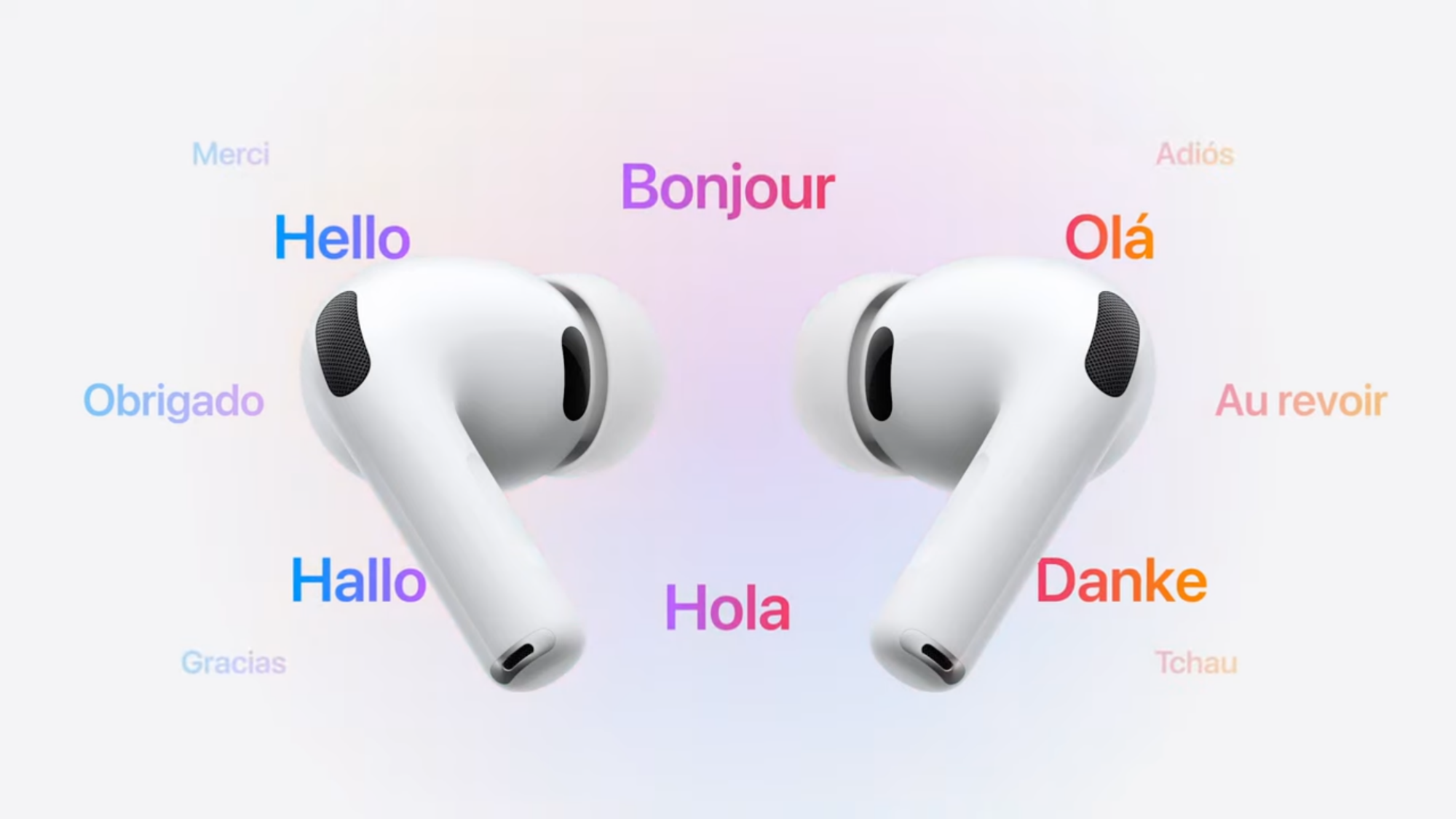
At its “Awe Dropping” iPhone event today, Apple unveiled the AirPods Pro 3, which come with a number of improvements to audio, health tracking, and fit.

With the AirPods Pro 3, Apple has made improvements to its earbud design, and they now feature a new multi-port acoustic architecture. This architecture controls the airflow, which helps sound travel into the ear more accurately, while also improving spatial audio.

The AirPods Pro 3 also have a next-generation Adaptive EQ, which uses the new architecture to help improve the bass and widen the soundstage, so users can hear details in songs more clearly.

Active Noise Cancellation on the AirPods Pro 3 has also been improved, with the ANC supposedly being two times more effective than on the AirPods Pro 2, and four times better than on the original AirPods Pro. To do this, the AirPods Pro 3 uses ultra-low noise microphones, Apple’s own advanced computational audio, and new foam eartips, which help deliver better passive noise isolation. Apple will also be offering a new XXS size eartip with the AirPods Pro 3.

Additionally, the new AirPods Pro 3 now offer a promised eight hours of music playback with ANC on, which is a 33% increase over the previous model, which offered up to six hours with ANC.

For those who work out with their AirPods, the AirPods Pro 3 come with an IP57 sweat and water resistance rating, which is up from an IPX7 rating on the outgoing model. The earbuds also have a custom-built heart rate sensor, so you can track your heart rate during workouts.

And it wouldn’t be a tech product in 2025 if it didn’t have some kind of AI feature. With the AirPods Pro 3, Apple is adding Live Translation, which is powered by Apple Intelligence and computational audio. When speaking to someone in one of the supported languages, the AirPods will play the translation back in your ear. You’ll also be able to show the Live Translation transcription on your iPhone.

Supported languages include English, French, German, Portuguese, and Spanish, with support for Italian, Japanese, Korean, and Chinese (simplified) coming by the end of the year.

Live Translation with AirPods isn’t exclusive to AirPods Pro 3; it’ll work on AirPods 4 with Active Noise Cancellation and AirPods Pro 2 and later with the latest firmware and paired to an Apple Intelligence-enabled iPhone running iOS 26 and later.

The AirPods Pro 3 are available for pre-order today for $249 and will start shipping and be available in stores on September 19th.

Pfizer says this season’s COVID shot boosts immune responses fourfold

Pfizer and BioNTech report that their updated mRNA COVID-19 vaccine for the 2025–2026 season produced strong immune responses, boosting neutralizing antibody levels by at least fourfold in older people and those with underlying medical conditions.

The positive results come as Americans face a confusing, state-by-state patchwork of access to the shots under the health secretary Robert F. Kennedy Jr., an ardent anti-vaccine activist who has unilaterally restricted access. Prior to the second Trump administration, all Americans ages 6 months and older had access to the vaccines. But under Kennedy, the Food and Drug Administration limited COVID-19 vaccine approvals to people 65 and older, and people under 64 years only if they have an underlying medical condition.

In Pfizer and BioNTech’s latest trial, the companies limited enrollment to these groups. The phase 3 trial included 100 people total, 50 people aged 65 or older and 50 people aged 18 to 64 with an underlying condition. Those conditions included asthma, diabetes, heart conditions, HIV, mental health conditions, Parkinson’s disease, obesity, or smoking. All participants had gotten last season’s COVID shot at least six months prior to the trial and had not gotten any other COVID-19 vaccines or a COVID-19 infection since then.

Read full article

Comments

Everything Apple Announced During Its ‘Awe Dropping’ Event

Did you know you can customize Google to filter out garbage? Take these steps for better search results, including adding my work at Lifehacker as a preferred source.


Apple’s “Awe Dropping” event might not have been the company’s most groundbreaking keynote, but it sure did pack a lot of announcements into roughly 75 minutes. The company revealed new products in its lineup across a number of categories, including updated AirPods, Apple Watches, and iPhones. And it might not come as much of a surprise to say that the biggest announcement of the day was an iPhone—but not the iPhone 17.

AirPods Pro 3

airpods pro 3

Credit: Apple

Apple kicked off its keynote by introducing the AirPods Pro 3, the first new AirPods Pro in three years. The updated earbuds have a new “multi-port acoustic architecture,” which Apple said improves the air flow that sends sounds into your ears. They also come with new foam-infused tips the company promises will help the earbuds deliver two times better active noise cancelling (ANC) than AirPods Pro 2, and four times better ANC than the original AirPods Pro.

There are two huge features new to AirPods Pro 3 this year. The first is live translation, which can translate conversations you have with other people in real time. You hear the translations in your ears, while the other person can see the translation of what you say on your iPhone’s display. This isn’t a unique feature, as Google’s earbuds can do the same thing, but it is a fantastic addition nonetheless.

The other big feature is a heart rate sensor that gives your AirPods Pro some of the functionality of an Apple Watch, letting you track up to 50 different workout types. You may also notice that Apple has slightly redesigned these buds: They’re now a bit smaller, and include five sizes for the new foam tips. The AirPods Pro 3 are IP57 rated for water and sweat resistance. Apple also says the earbuds will offer have eight hours of ANC and 10 hours of Transparency before you’ll need to stick them back in the charging case.

What hasn’t changed is the price of the buds: They still start at $249, and are available for preorder today. They’ll start shipping Sept. 19.

Apple Watch

There were few surprises when it came to the Apple Watch this year. As the rumors suggested, Applelaunched three new watch models, each receiving some substantial upgrades over previous devices. While none may tempt you to upgrade if your watch is relatively new, there are some great additions here, especially on the more affordable SE.

Here’s what’s new:

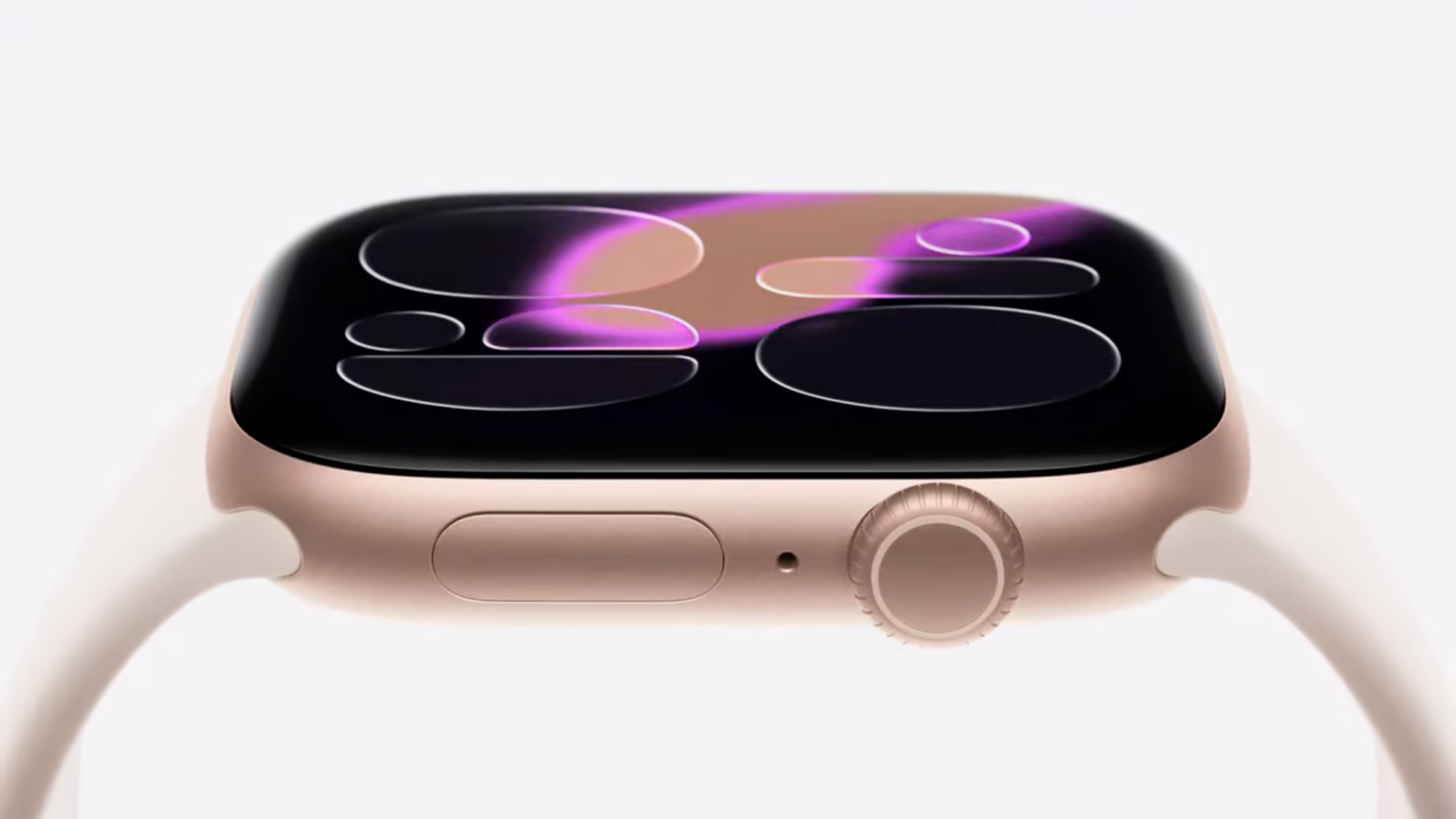
Apple Watch Series 11

apple watch series 11

Credit: Apple

Apple launched the Apple Watch segment of the event with the Series 11. The watch looks just about the same as the Series 10 before it, though it now comes with support for 5G. If your carrier supports it—which Apple says most do—you’ll be able to access faster speeds if you pick up a cellular Series 11.

The Series 11 also introduces a blood pressure monitoring system for the first time on an Apple Watch. While the feature cannot detect all hypertension, it will analyze your blood stream and send you an alert if it thinks you experiencing chronic high blood pressure. The company expects FDA clearance to come soon.

The Series 11 also comes with a sleep score for the first time on Apple Watch. Other smartwatches and fitness trackers have this feature, but Apple says the Series 11 can analyze your sleep cycles and time asleep to determine an overall sleep score, and help advise you on better ways to sleep.

Series 11 has 24 hours of battery life. The watch comes in Jet Black, Silver, Rose Gold, and Space Gray in aluminum, and Natural, Gold, and Slate in polished cases.

The Series 11 starts at $399, and is available to preorder today. The watch will be available starting Sept. 19.

Apple Watch SE 3

apple watch se 3

Credit: Apple

The Apple Watch SE is Apple’s “affordable” Apple Watch line. If all you want is an essential Apple Watch experience without needing to paying $399 or more, the SE tends to be the best pick.

This year, however, the SE 3 seems like a great deal. It comes with the S10 chip, the same one found in last year’s Series 10. It also has an Always-On display and support gesture controls, two firsts for the SE line. Apple is also adding a wrist temperature sensor to this watch, sleep apnea detection, and the new sleep score from the Series 11. Speaking of the Series 11, the SE 3 also supports 5G.

It even has a built-in speaker, something usually reserved for Apple’s more expensive watches. The SE 3 has 18 hours of battery life, and supports fast charging: 15 minutes of charging gets you eight hours of use.

It comes in Starlight and Midnight. The SE 3 starts at $249, and will be available Sept. 19. You can preorder it today.

Apple Watch Ultra 3

apple watch ultra3

Credit: Apple

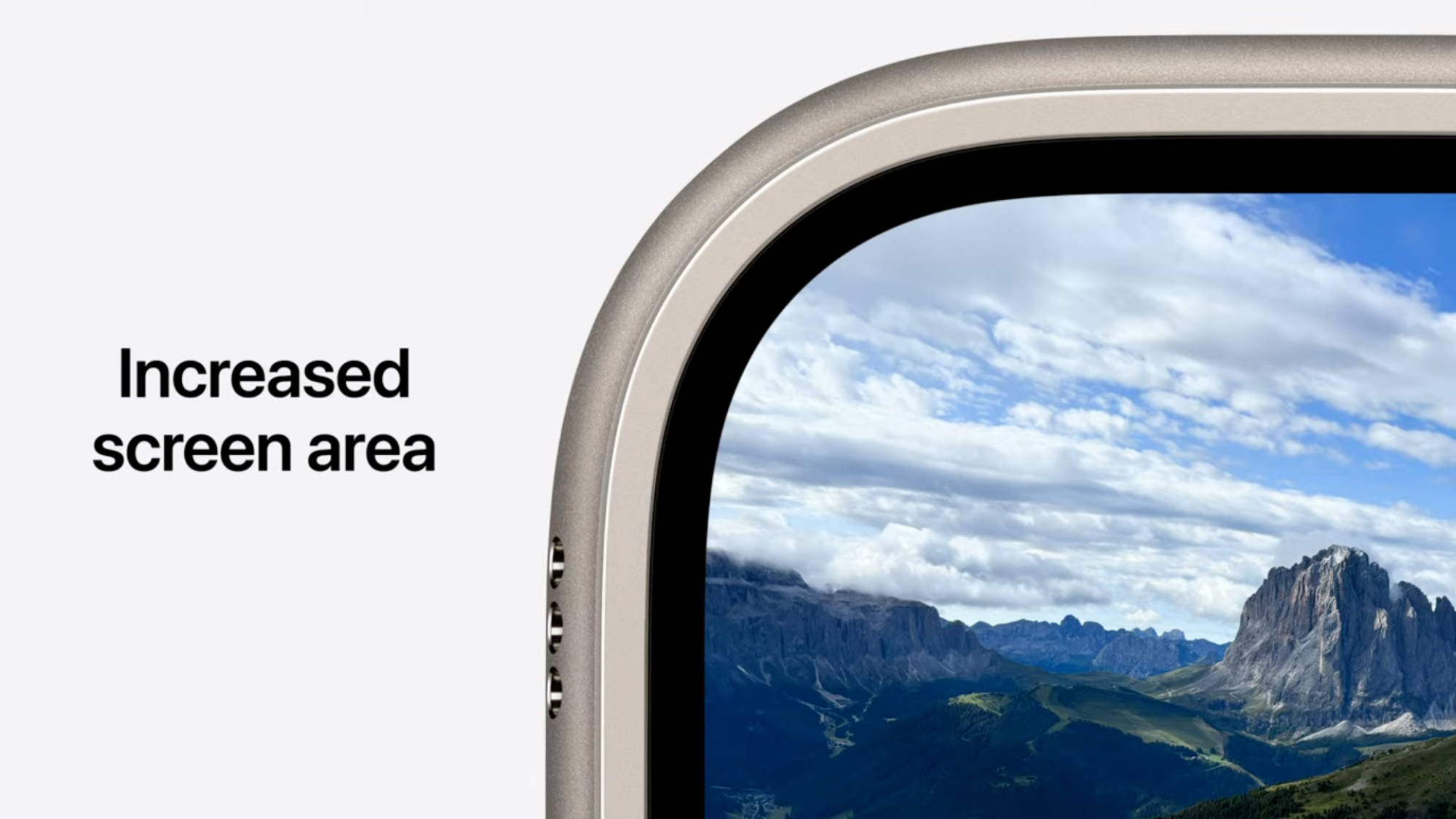
Finally, there’s the Apple Watch Ultra 3. This new Ultra is playing a catch-up a bit, as the Ultra 2 is missing features release on the Series 10. As such, the Ultra 3 now has a wide-angle OLED display with LTPO 3. That enables the Always-On display to refresh faster, so you can actually see the second hand changing. The screen is also a bit larger this year, without Apple having to adjust the size of the watch itself. Win-win.

The Ultra 3 also supports satellite connectivity for the first ever in a smartphone. Like certain iPhones, the watch can now message via satellite whenever a cellular connection isn’t available. To enable this feature, Apple says the Ultra 3’s radio is now double the signal strength of the Ultra 2.

The Ultra 3 can now run up to 42 hours on a charge. It also comes with 5G support, hypertension notifications, sleep score, and gesture controls. Apple doesn’t necessarily market the Ultra as its “pro” or “best” Apple Watch, but since it’s the most expensive model by far, you’d expect it to have all of the latest and greatest features.

The Ultra 3 starts at $799, and is available to preorder today. It’ll be available in stores Sept. 19.

iPhone

Finally, we have Apple’s iPhone segment. Tim Cook really amped up this part of the show, saying that one of these models was, “unlike anything we’ve ever created.” The presentation kicked off with the simplest iPhone in the lineup:

iPhone 17

iphone 17

Credit: Apple

The iPhone 17 looks about what you’d expect from an entry-level iPhone. It has a 6.3-inch display, with some major upgrades: It now supports 120Hz, which was previously only available on Pro iPhones—despite many Android phones having offered high refresh rate displays on cheaper models. Said display uses the new Ceramic Shield 2, which Apple says has three times better scratch resistance. It also can reach 3,000 nits of brightness, so you shouldn’t have trouble using it outside.

The iPhone 17 is powered by the new A19 chip, which has an upgraded display engine to power that new screen. It also has an improved neural engine, six-core CPU, and five-core GPU. Apple says the phone has “all-day battery life,” which apparently means eight more hours of video playback compared to the iPhone 16. With the right power adapter, you can charge up to 50% in 20 minutes, while 10 minutes of charging will get you eight hours of video playback.

Let’s turn to those cameras. The bottom camera is a “Fusion” camera; that means you get a 48MP main camera with a 26mm focal length, and a 12MP 2x Telephoto lens with 52mm focal length out of one camera. The ultra-wide angle is also a Fusion lens, offering a 48MP ultra-wide at 13mm, and 12MP 1x macro lens at 26mm.

The selfie camera also gets some huge upgrades this year. Apple is calling the new lens the Center Stage front camera. It has a wide field of view and a large, square sensor. It can take selfies up to 18MP with stabilization, More importantly, the shape of the sensor means you can take selfies in a variety of different orientations, and you can take landscape selfies in portrait mode—no more turning your iPhone sideways to fit more people in the frame. Video calls will be more stabilized as well.

iPhone 17 starts at 256GB for $799, and is now available to preorder Sept. 12. Apple will start selling it Sept. 19.

iPhone Air

iphone air

Credit: Apple

The biggest announcement of the day was the iPhone Air. This is Apple’s thinnest iPhone ever, but you don’t need to read the tech specs to know that. Just from the photos and videos, you can tell, this is thin.

Like the iPhone 17, the Air comes with Ceramic Shield 2, but this time, it’s on both side of the phone. It also comes with a 6.5-inch, high-refresh rate display with up to 3,000 nits of brightness. It’s also made of titanium.

Apple put the new A19 Pro in the Air, with a six-core CPU and five-core GPU. Apple put “Neural Accelerators” in each GPU core, saying it enables “MacBook Pro levels of compute in an iPhone.” There are also new connectivity components here too, including N1, which enables Wi-Fi 7, Bluetooth 6, and Thread, and the new C1X modem, which improves upon Apple’s first custom modem. Apple says its up to two times faster than C1.

You may notice that iPhone Air only has one camera, even though it seems positioned to be more advanced than the iPhone 17. Apple says that single camera is a 48MP Fusion camera system, and works like “multiple advanced cameras in one.” Like the iPhone 17, that Fusion camera can shoot 2x telephoto shots at 12MP. Because of the size of the sensor, you can choose between 26mm, 28mm, 35mm, and 52mm lenses for different crop sizes.

Like the iPhone 17, the Air comes with the new Center Stage selfie camera. But the Air can capture video from both the front and rear cameras at once. All iPhone Airs come with eSIM, even in countries that still use physical SIMs. The company says the iPhone Air has all-day battery life, but it hasn’t published true stats yet. That said, the company says with the new MagSafe battery pack, you can get up to 40 hours of video playback. That tells me without that battery pack, the Air struggles a bit with battery.

Apple is rolling out new accessories for the Air, including a bumper case that matches the iPhone Air’s colors: Space Black, Cloud White, Light Gold, and Sky Blue. There’s even a lanyard that connects to the phone that lets you wear it on your body.

The iPhone Air starts at $999 for 256GB, and is available for preorder Sept. 12. You can buy one Sept. 19.

iPhone 17 Pro and 17 Pro Max

iphone 17 pro

Credit: Apple

The last announcement of the day was the iPhone 17 Pro, and, true to its name, this is the iPhone with the most “new” features. First off, this is Apple’s first iPhone with a unibody design, similar to its MacBooks. You’ll immediately notice the new pro camera system, which is now shaped like a bar on the back of the phone. Don’t call it that, though: Apple calls this the plateau. (It does the same for the iPhone Air’s.)

One interesting “pro” feature is the new thermal cooling system: Apple places water inside the vapor chamber, and laser-welds in into place. This system helps dissipate heat generated by the A19 Pro chip, which comes with six CPU cores and six GPU cores. There’s less glass on the back of this iPhone than usual, but the glass you see is actually Ceramic Shield 2. The eSIM models, which you’ll find in the US, have larger batteries compared to physical SIM models, and can play video for up to 39 hours.

As you might expect both the 17 Pro and 17 Pro Max come with the new Center Stage camera. This year, all three rear cameras are 48MP Fusion cameras. That means the telephoto lens gets you the longest optical zoom of any iPhone: 4x zoom at 100mm, and 8x zoom at 200mm.

Apple spent some time talking about the new pros’ video recording capabilities, as well. In fact, the entire event was shot on iPhone 17 Pros—though Apple is undoubtedly using some expensive equipment to facilitate that. The 17 Pro supports ProRes RAW capture, a standard that lets you edit image data directly from the camera sensor. The phones support Final Cut Camera, Blackmagic Camera, and Genlock, which supports multi-camera setups for effects like time splicing and bullet time.

Apple also announced new accessories here: There are clear and silicone cases, as well the new TechWoven case, which stitches together multiple yarn colors. The Pros also have their own lanyard you can use, like the Air.

The Pros come in Silver, Deep Blue, and Cosmic Orange. The iPhone 17 Pro starts at $1,099 for 256GB, while the iPhone 17 Pro Max starts at $1,199 for 256GB. You can preorder them starting Sept. 12, and pick them up Sept. 19.

Claude’s new AI file creation feature ships with deep security risks built in

On Tuesday, Anthropic launched a new file creation feature for its Claude AI assistant that enables users to generate Excel spreadsheets, PowerPoint presentations, and other documents directly within conversations on the web interface and in the Claude desktop app. While the feature may be handy for Claude users, the company’s support documentation also warns that it “may put your data at risk” and details how the AI assistant can be manipulated to transmit user data to external servers.

The feature, awkwardly named “Upgraded file creation and analysis,” is basically Anthropic’s version of ChatGPT’s Code Interpreter and an upgraded version of Anthropic’s “analysis” tool. It’s currently available as a preview for Max, Team, and Enterprise plan users, with Pro users scheduled to receive access “in the coming weeks,” according to the announcement.

The security issue comes from the fact that the new feature gives Claude access to a sandbox computing environment, which enables it to download packages and run code to create files. “This feature gives Claude Internet access to create and analyze files, which may put your data at risk,” Anthropic writes in its blog announcement. “Monitor chats closely when using this feature.”

Read full article

Comments

Apple iPhone 17 Lineup Brings Upgraded Cameras, All-New Chassis, And The Ultra-Thin Air

Apple iPhone 17 Lineup Brings Upgraded Cameras, All-New Chassis, And The Ultra-Thin Air
After months of leaks that revealed most everything about the Apple iPhone 17 lineup, apart from battery life and details about the SoC, Captain Cook’s mothership has made the official announcement.

While most flagship phone upgrades are incremental at best across many vendors, this time around Apple actually effected some meaningful changes,

AirPods Pro 3 Arrive With Heart-Rate Sensing, Live Translation Using Apple Intelligence

Apple has unveiled the AirPods Pro 3 with heart-rate sensing, improved noise cancellation, a more compact case, and upcoming live translation features powered by Apple Intelligence. They’ll be available for preorder today at a price of $249. TechCrunch reports: One of the standout features of the AirPods Pro 3 is its heart-rate sensing capability, a first for the AirPods line. This addition will operate similarly to the Powerbeats Pro 2, using LED sensors to provide precise measurements. The collected data will sync with Apple’s Fitness app. The active noise cancellation, which reduces external noise, has been significantly improved. Apple says it removes twice the noise compared to Pro 2.

A noteworthy upcoming feature is a live translation capability, thanks to Apple’s iOS 26 software update. This lets you have conversations in different languages, using your iPhone to translate while the phone plays one language and the AirPods handle the other. Other notable updates include smaller, more comfortable earbuds. Apple now offers foam ear tips in five different sizes, and the company claims it’s “the best-fitting AirPods.”


Read more of this story at Slashdot.