BMW Says Europe’s Gas Engine Ban ‘Can Kill an Industry’

An anonymous reader quotes a report from Motor1: BMW watched from the sidelines as Audi, Porsche, Mercedes, Volvo, and others announced lofty EV goals a few years ago, only to backtrack in recent months. Munich never vowed to go fully electric within a set timeframe, instead preferring to give customers the freedom of choice. It projects demand will be evenly split between gas and electric cars by 2030, but Bavaria hasn’t committed to a combustion-free future. The company maintains its desire to give people what they want rather than artificially restricting powertrains to EVs, as the European Union plans for 2035. In an interview with Australian magazine CarExpert, Chief Technology Officer Joachim Post argued it should ultimately come down to buyers, not the EU: “Finally, the customer decides.”

Provided the ban takes effect in a little over nine years, the board member fears it could have massive repercussions: “If the European Commission is going to say they have a plan to cut the combustion engine in 2035, they’re not asking the customers and how [EV charging] infrastructure is coming up, how the energy prices are and all the things there. It’s stupid to do that in that way. And you can kill an industry doing it that way.”

His concerns are echoed by Mercedes CEO Ola Kallenius, who recently warned the European car industry is “heading at full speed against a wall” and could even “collapse” if the EU doesn’t reconsider. The statement came shortly after Stuttgart’s boss admitted the company had to make a “course correction” to keep combustion engines longer than initially planned. Mercedes continues to invest in conventional powertrains, and there’s even a completely new V-8 from AMG on the way. The report notes that BMW continues to generate strong profits from its combustion engines, ranging from three-, four-, six-, and eight-cyclinder engines to a Rolls-Royce V-12 — even supplying rivals like Toyota and possibly soon Mercedes.

In fact, the “M” in BMW stands for “Motoren” (German for “engine”).


Read more of this story at Slashdot.

The Evolution Of The World’s Fastest Cars From 1898 – Present

This is a 3D visualization created by Youtube channel RED SIDE featuring the evolution of the fastest wheeled vehicles from 1898 to present. It’s pretty wild to think there was an electric car that could do 39MPH in 1898, and one that could go 65MPH by 1899. Then electric vehicles fell off due to the advancements in gas engine technology, mass production, and the proliferation of gas stations. Now they’re back! Further proof that all technology is cyclical. Page me later?

White House Asks FDA To Review Pharma Advertising On TV

President Trump on Tuesday issued a memorandum directing the FDA and HHS to crack down on misleading direct-to-consumer prescription drug ads, requiring clearer disclosure of risks and ensuring that promotions don’t overstate benefits or push costly drugs over generics. Longtime Slashdot reader sinij shares an excerpt from the memorandum: The Secretary of Health and Human Services shall therefore take appropriate action to ensure transparency and accuracy in direct-to-consumer prescription drug advertising, including by increasing the amount of information regarding any risks associated with the use of any such prescription drug required to be provided in prescription drug advertisements, to the extent permitted by applicable law. The Commissioner of Food and Drugs shall take appropriate action to enforce the Federal Food, Drug, and Cosmetic Act’s prescription drug advertising provisions, and otherwise ensure truthful and non-misleading information in direct-to-consumer prescription drug advertisements. “Advertising dollars is a major avenue for pharmaceutical companies to influence news and attempt to shape public opinion,” comments sinij. “Advertising was a major contributor to painkiller addiction, where networks were hesitant to cover early reports of addictiveness. It is likely directly contributing today to lack of critical coverage of Ozempic. It is just too big of a conflict of interest to allow to stand.”


Read more of this story at Slashdot.

Amazon is reportedly developing separate AR glasses for customers and its drivers

Amazon may be muscling into the field of augmented reality glasses. According to a report by The Information, sources claimed that the company is working on AR glasses for consumers, allegedly with plans to release the product in late 2026 or early 2027.

Insiders told the publication that the project, internally dubbed Jayhawk, would equip AR glasses with microphones, speakers, a camera and a full-color display in one eye. Amazon is reportedly using Chinese company Meta-Bounds for the AR tech.

Amazon is also working on a separate model of AR glasses specifically for its delivery drivers under the codename Amelia. This productivity-focused option, which would reportedly shave seconds off drivers’ times, could be ready by the second quarter of 2026, according to The Information‘s sources.

If Amazon does release these AR sets, it will primarily be in competition with Meta, which already sells simpler smart glasses with Ray-Ban. The social media company is expected to launch a new product currently dubbed Hypernova at its Connect conference next week, a set that pushes more into a true augmented reality experience with a similar one-eye AR concept.

This article originally appeared on Engadget at https://www.engadget.com/ar-vr/amazon-is-reportedly-developing-separate-ar-glasses-for-customers-and-its-drivers-230826640.html?src=rss

KFC Flavored Jellybeans: Finger Lickin’ Good?

No, probably not. I can’t remember the last time any jellybean was finger lickin’ good, and I love jellybeans. Even the licorice ones. “You have a sweet tooth?” I have sweet TEETH — all of them. What’s left of them anyways. KFC and Frankford Candy LLC have teamed up to produce KFC jellybeans in fried chicken, sweet corn, and gravy flavors. The beans should be available before Easter next year. Yay? Eat a handful and you’ve got yourself a traditional KFC dinner! Just, you know, without any of the– “Nutrition.” I was going to say grease.

Oracle’s Best Day Since 1992 Puts Ellison on Top of the World’s Richest List

Oracle shares had their best day since 1992, skyrocketing 36% and adding $244 billion in market value as surging AI-driven cloud demand pushed the company toward a $1 trillion valuation. The surge boosted founder Larry Ellison’s fortune by $100 billion, making him the new world’s wealthiest person. CNBC reports: The company said Tuesday after the bell that it has $455 billion in remaining performance obligations, up 359% from a year earlier. “This is a very historic kind of print right here from Oracle with this backlog,” Ben Reitzes, technology research head at Melius Research, told CNBC’s “Closing Bell: Overtime” on Tuesday. “The Street was looking for about $180 billion in RPO and they’re talking about a number that is a multiple of that. That is astounding.”

Oracle now sees $18 billion in cloud infrastructure revenue in fiscal 2026, with the company calling for the annual sum to reach $32 billion, $73 billion, $114 billion and $144 billion over the subsequent four years. Other analysts were left “blown away” and “in shock.” D.A. Davidson’s Gil Luria called it “absolutely staggering on CNBC’s “Fast Money.” Wells Fargo analysts said it was a “momentous confirmation” of the AI trade.

Oracle’s cloud revenue projections overshadowed an otherwise lackluster fiscal first-quarter report in which the company missed expectations on the top and bottom lines. The company had earnings of an adjusted $1.47 per share for the quarter, just below the $1.48 per share expected by analysts polled by LSEG. Revenue for the first quarter came in at $14.93 billion, missing the $15.04 billion expected.


Read more of this story at Slashdot.

As Apple pursues AI, spare a thought for the poor HomePod

When the video kicking off Apple’s “Awe dropping” event began yesterday, I was pleased to see a HomePod in the opening shot. I hadn’t given any thought to Apple’s beleaguered smart home speaker in ages, so I was all set for Tim Cook and crew to deliver an actual surprise and reveal new stuff for HomePod. When the entire presentation then passed without another peep about the product, I was disappointed, but resigned.

HomePod has always been behind the curve. When smart speakers first came on the scene, the sector was quickly dominated by Amazon and Google, with Sonos as the boutique third-party option. Apple announced the HomePod in June 2017, almost three years after Amazon unveiled its original Echo speaker. 

The HomePod arrived too slow and cost too much, and (in an echo of the company’s current woes) Siri was too unhelpful, for the smart speaker to really claw back much market share from its rivals. The Mini iteration came out in late 2020, and the second-generation HomePod in February 2023 added support for Thread smart home standard. Not exactly pushing the boundaries of smart speaker innovation.

And things got worse for the poor HomePod as voice-controlled AI assistants have transitioned away from being centered around dedicated speakers. AI is now being integrated ever-more tightly into our smartphones and computers, with less need for a separate intermediary device. Which brings us to the ongoing issue of Apple’s shaky foothold in the AI race.

Apple has been promising a big overhaul to Siri for awhile, with the new and improved version currently not due until spring 2026. To show off that new AI assistant, Apple is reportedly working on an interactive smart home hub that is expected to have HomePod-like audio capabilities baked in, but won’t be ready for launch until at least 2027. What’s a company to do in the interim?

It makes sense for Apple to hold back on any big developments to its existing Siri-centric smart home speaker. I get it. But I could have been hyped to see a stripped down HomePod that focused more on being a speaker than on being smart. I have a Sonos that I love, and part of me assumed that I would eventually upgrade to an Apple offering. The AirPods are such a great element in the Apple ecosystem, and I use mine almost daily. Having a powerful, high-quality home speaker that delivers the easy interconnectivity that’s such a big part of Apple’s value proposition might have helped bridge the time gap, keeping Apple in people’s minds as a player in home tech while the company works on its next, more innovative move. Take one step back to take three steps forward.

In practice, though, it feels like the window for the HomePod to become a star in Apple’s lineup has shrunk to almost nothing. As I now look at the recent trends in AI and home tech, I don’t see an obvious space for a smart speaker. That’s not limited to Apple; it’s also pretty telling that both Amazon and Google haven’t been giving much love to their smart speakers either. In fact, a majority of Engadget’s favorite smart speakers this year are from specialist Sonos as the big tech names have put their focus on AI instead of audio. We’ll still have smart speakers, but they’ll be folded into multi-purpose gadgets and pitched as general smart-home aids. 

To be clear, there’s been no indication that Apple will sunset the HomePod. But my personal prediction is that HomePod will stay on the sidelines for now and get pushed even farther away from the spotlight when the new smart home products are unveiled, receiving only occasional attention until Apple officially and quietly pulls the plug for good. And so will end the life of a star-crossed product that never got the chance to shine at its full potential. Here’s hoping I’m wrong.

This article originally appeared on Engadget at https://www.engadget.com/home/smart-home/as-apple-pursues-ai-spare-a-thought-for-the-poor-homepod-223250670.html?src=rss

ATM Fees Are at a Record High, a New Survey Finds

An anonymous reader shares a report: Getting cash from an ATM is growing increasingly expensive as fees reach record highs. Americans are now paying an average of $4.86 for out-of-network ATM withdrawals, up 1.9% from $4.77 last year, according to a new survey from Bankrate.com. That’s the highest on record, according to the personal finance website, which starting tracking ATM fees 27 years ago.

“ATM fees are just one of those avenues that the bank can very freely continue to charge fees,” Bankrate financial analyst Stephen Kates told CBS MoneyWatch. Those costs include charges from both ATM owners and banks. According to the survey, the average fee from cash machine providers is $3.22. Banks charge $1.64 on average, up 3.8% from 2024 — the highest since 2018. As a result, Americans in certain metro areas could see average combined fees of more than $5.


Read more of this story at Slashdot.

Court rejects Verizon claim that selling location data without consent is legal

Verizon lost an attempt to overturn a $46.9 million fine for selling customer location data without its users’ consent. The US Court of Appeals for the 2nd Circuit rejected Verizon’s challenge in a ruling issued today.

The Federal Communications Commission fined the three major carriers last year for violations revealed in 2018. The companies sued the FCC in three different courts, with varying results.

AT&T beat the FCC in the reliably conservative US Court of Appeals for the 5th Circuit, while T-Mobile lost in the District of Columbia Circuit. Although FCC Chairman Brendan Carr voted against the fine last year, when the commission had a Democratic majority, his FCC urged the courts to uphold the Biden-era decisions.

Read full article

Comments

After Ukrainian testing, drone detection radar doubles range with simple software patch

As part of its unprovoked invasion, Russia has been firing massed waves of drones and missiles into Ukraine for years, though the tempo has been raised dramatically in recent months. Barrages of 700-plus drones now regularly attack Ukraine during overnight raids. Russia also appears to have upped the ante dramatically by sending at least 19 drones into Poland last night, some of which were shot down by NATO forces.

Many of these drones are Shahed/Geran types built with technology imported from Iran, and they have recently gained the ability to fly higher, making shootdowns more difficult. Given the low cost of the drones (estimates suggest they cost a few tens of thousands of dollars apiece, and many are simply decoys without warheads), hitting them with multimillion-dollar missiles from traditional air defense batteries makes little sense and would quickly exhaust missile stocks.

So Ukraine has adopted widespread electronic warfare to disrupt control systems and navigation. Drones not forced off their path are fought with mobile anti-aircraft guns, aircraft, and interceptor drones, many launched from mobile fire teams patrolling Ukraine during the night.

Read full article

Comments

The PS Plus Game Catalog additions include Persona 5 Tactica and WWE 2K25

On Wednesday, Sony rolled out its September Game Catalog additions for PS Plus subscribers. This month’s entries run the gamut from turn-based tactics to survival horror and pro wrestling.

Persona 5 Tactica (PS5/ PS4) may be the most critically acclaimed title in the batch. The 2023 Persona spinoff takes the mainline games’ battles and shifts them into grid-based tactics. Think XCOM with Phantom Thieves.

The Invincible (PS5) is an adaptation of the 1963 sci-fi novel by Stanisław Lem. As its inspiration may suggest, this isn’t an action-heavy combat-fest. Instead, the narrative adventure invites you to explore the planet Regis III, searching for lost crew members. Your decisions will shape the story, so tread carefully.

The Rock walking in the video game WWE 2K25.
2K / Sony

If exploring lost worlds as an astrobiologist isn’t your thing, then maybe pile drivers and elbow drops are. (No judgment!) WWE 2K25 (PS5 / PS4) is also on this month’s list, letting you step into the ring as a steroid-infused behemoth. You can take satisfaction in knowing your video game match’s outcomes are less pre-determined than the scripted matches you see on TV.

Other games in this month’s entries include the action RPG title Fate / Samurai Remnant, the survival horror game Crow Country and the first-person survival sim Green Hell. You can check out the PlayStation Blog’s announcement for all the details.

This article originally appeared on Engadget at https://www.engadget.com/gaming/playstation/the-ps-plus-game-catalog-additions-include-persona-5-tactica-and-wwe-2k25-211006881.html?src=rss

HBO Max is “way underpriced,” Warner Bros. Discovery CEO says

Someone might want to tell David Zaslav to read the room. Despite people’s ongoing frustration with the rising prices of streaming services—and just about everything else—the CEO of Warner Bros. Discovery (WBD) thinks that there is reason for HBO Max to charge more.

Zaslav shared his sentiments while speaking at the Goldman Sachs Cornucopia + Technology conference today in San Francisco. The Hollywood Reporter quoted Zaslav as saying:

The fact that this is quality—and that’s true across our company, motion picture, TV production [and] streaming quality—we all … think that gives us a chance to raise price. We think we’re way underpriced.

Today, HBO Max starts at $10 per month with ads, $17/month for no ads, and $21/month for no ads and premium features (4K streaming, Dolby Atmos, and the ability to stream from more devices simultaneously and perform more downloads). The streaming platform has raised prices twice since launching (as Max) in May 2023. In June 2024, the Standard, ad-free plan went from $16/month to $17/month, and annual subscription fees went up by $20 or $10, depending on the plan. Subscription fees also increased in January 2023.

Read full article

Comments

Wyden Says Microsoft Flaws Led to Hack of US Hospital System

US Senator Ron Wyden says glaring cybersecurity flaws by Microsoft enabled a ransomware attack on a US hospital system and has called on the Federal Trade Commission to investigate. Bloomberg: In a letter sent Wednesday to FTC Chairman Andrew Ferguson, the Oregon Democrat accused Microsoft of “gross cybersecurity negligence,” which he said had resulted in ransomware attacks against US critical infrastructure.

The senator cited the case of the 2024 breach at Ascension, one of the nation’s largest nonprofit health systems. The intrusion shut down computers at many of Ascension’s hospitals, leading to suspended surgeries and the theft of sensitive data on more than 5 million patients. Wyden said an investigation by his office found that the Ascension hack began after a contractor carried out a search using Microsoft’s Bing search engine and was served a malicious link, which led to the contractor inadvertently downloading malware. That allowed hackers access to Ascension’s computer networks.

According to Wyden, the attackers then gained access to privileged accounts by exploiting an insecure encryption technology called RC4, which is supported by default on Windows computers. The hacking method is called Kerberoasting, which the company described as a type of cyberattack in which intruders aim to gather passwords by targeting an authentication protocol called Kerberos.


Read more of this story at Slashdot.

Ousted CDC director to testify before Senate after RFK Jr. called her a liar

Susan Monarez, the former director of the Centers for Disease Control and Prevention who was ousted last month after mere weeks in the role, is set to testify before the Senate next week about what was behind her dramatic downfall, as well as the ongoing chaos at the public health agency under health secretary and anti-vaccine activist Robert F. Kennedy Jr.

In a hearing last Thursday before the Senate Finance Committee, a combative Kennedy repeatedly called Monarez a liar and made the incredible claim that he fired her after he asked her directly if she was a trustworthy person and she responded “no.” While Senators clearly struggled to believe that explanation, Sen. Thom Tillis (R-N.C.) wryly noted that Kennedy should have asked her the question before having the Senate confirm her for the role.

In an op-ed published in The Wall Street Journal the same day as Kennedy’s testimony, Monarez gave a different account of her firing—one corroborated by independent reporting—saying that she was ousted after she refused Kennedy’s directives to fire senior CDC staff and pre-approve vaccine recommendations from an advisory committee he has stacked with fellow anti-vaccine advocates.

Read full article

Comments

Apple is slowly morphing AirPods into an always-on wearable

The AirPods Pro 3 Apple introduced at the iPhone 17 event yesterday have better active noise cancellation and foam-filled ear tips, but their most important new feature is a subtle one: Apple came up with even more reasons for you to never take them out.

Wearing headphones while you’re talking to someone or interacting in public was at one point a social faux pas, but the ubiquity of AirPods and new features Apple has added have started to change that. The AirPods Pro’s Conversation Awareness feature, which can automatically duck audio while you’re talking to someone, is the simplest expression of this idea, but the vast majority of the improvements the company has made to its wireless earbuds have also created reasons to keep them in.

Take the hearing health features Apple debuted in 2024. Not only do they let your AirPods Pro act as a tool for checking your ear health, they can also act as a hearing aid and even hearing protection in a loud environment. With the AirPods Pro 3, you can add heart rate monitoring and live translation to the growing list of reasons to constantly wear AirPods. The Pro 3’s new heart rate sensor means you can use them to track some workouts and display your health metrics on your TV during an Apple Fitness+ class, a feature usually exclusive to the Apple Watch. The Live Translation feature, meanwhile, lets your AirPods translate the world around you, and can even beam your translated voice into another pair of AirPods Pro 3. The fact the feature will also be available on AirPods 4 and AirPods Pro 2 should make keeping your headphones in even more common, too.

It’s hard to say how useful these new AirPods Pro 3 features will be without trying them, but they do highlight how much Apple seems to view its headphones as more than just an add-on purchase to every iPhone. Not many people are going to buy the $249 AirPods Pro 3 as a replacement for the $249 Apple Watch SE 3, but the fact the headphones can fill in for the smartwatch could be attractive to some. More importantly for Apple, it could make it easier to convince someone to subscribe to Fitness+ or buy an Apple Watch if they like the company’s approach to tracking workouts.

Apple has reportedly investigated going further down the path of making the AirPods Pro even more of a standalone device. Bloomberg reported last year that the company has explored adding cameras to AirPods so they can be used for Apple Intelligence features and visually understand the world around you. Whether or not that ever happens, the more immediate explanation for all this feature-creep is that making AirPods an always-on wearable is good for the company’s bottom line. The relationship between the AirPods and the Apple Watch could become similar to the iPad and the Mac in time. New features get added, and functionality continues to overlap, but the devices are always distinct and useful enough that many people are compelled to buy both.

Maybe there’s a future where your AirPods feel as essential to daily life as a smartphone does, and we’re wearing them all the time. For now though, Apple seems to have decided that tiptoeing towards that wearable future is a pretty good way to sell new wireless earbuds in the present, and maybe several of its other products in the process.

This article originally appeared on Engadget at https://www.engadget.com/audio/headphones/apple-is-slowly-morphing-airpods-into-an-always-on-wearable-203511552.html?src=rss

We Already Know How Much Faster the iPhone 17 Is

Did you know you can customize Google to filter out garbage? Take these steps for better search results, including adding my work at Lifehacker as a preferred source.


The iPhone 17 series has left the realm of mere rumor. Apple announced its four new iPhones at yesterday’s “Awe Dropping” event—the iPhone 17, iPhone Air, iPhone 17 Pro, and iPhone 17 Pro Max.

All four use the company’s new A19 chip, though different models come equipped with different versions of it: The iPhone 17 uses the base model A19, while the iPhone 17 Pro and 17 Pro Max use the A19 Pro. The iPhone Air has an A19 Pro, but it’s a “binned” chip. There’s a lengthy explanation of what that means, but in short, the Air uses a weaker version of the A19 Pro, so it isn’t quite as powerful as the version you’ll find on the Pros.

While Apple frequently touts how powerful its newest iPhones are, they’re never all that specific about it, especially during their big keynote announcements. The company likes to compare the new iPhones to random older iPhones, like saying the iPhone 17’s A19 chip is 1.5 times faster than the A15 Bionic in the iPhone 13. But Apple doesn’t usually put up the raw numbers to compare performance directly. For that, we turn to benchmarking.

Benchmarking tests offer a standardized way of testing a chips’ CPU (central processing unit) and GPU (graphics processing unit), and comparing their performance against other chips. Geekbench is a popular option for benchmarking, and tests a few different things: the performance of tasks that require one core of the CPU; performance of tasks that require multi-cores; and the “Metal” test, that benchmarks GPU performance.

When you run a benchmark through Geekbench, your results are posted to the site’s database. That means whenever a new device is announced, it’s only a matter of time before benchmarking data appears there for those devices. As GSMArena reports, it seems some A19 and A19 Pro tests have already been run. These tests give us an early look at the performance of the new chips, and an idea of how much Apple has improved them over previous generations—at least on paper.

As the phones, and iOS 26 itself, are not officially out yet, take these numbers with a grain of salt. With that said, here are the preliminary results.

iPhone 17

The A19, again found in the iPhone 17, scored a 3,608 in the single-core test, and 8,810 in the multi-core test. That represents an 8% jump over the iPhone 16’s single-core score of 3,317, and a 7% jump over its multi-core score of 8,198. The A19’s GPU scored a 37,014 on the Metal test, a more than 33% increase when compared to the iPhone 16’s score of 27,702. The test results show that the iPhone 17 has 8GB of RAM.

iPhone Air

The iPhone Air runs an A19 with a six-core CPU and a five-core GPU—one less than the iPhone 17 Pro, as this is a binned chip. GSMArena reports that it scored a 3,674 in the single-core test and 8,824 in multi-core. That’s not much higher than the standard A19, though the results show Apple included four extra gigabytes of RAM in the Air over the iPhone 17.

Turning to the GPU, the Air scored a 37,743 on the Metal test. That represents an improvement of just under 2% over the A19. While you’ll likely notice some gains if you’re coming from the iPhone 16, or even the 16 Pro (more on that below) the Air isn’t going to outperform the 17 much—even with its binned A19 Pro.

iPhone 17 Pro

While the iPhone Air’s binned A19 Pro chip seems barely improved over the iPhone 17’s A19 chip, the 17 Pro starts to show some advantage—at least in GPU. The A19 Pro in the iPhone 17 Pro scored 3,523 in single-score and 9,028 in multi-core. That’s a lower single-core score, and only a slightly higher multi-core score, which is certainly interesting. In theory, the lower-performing A19 and A19 Pro chips could yield slightly faster results in single-core tasks, while the Pro could beat the bunch a bit in multi-core tasks.

However, things get more interesting when it comes to the A19 Pro’s GPU—The chip achieved a Metal score of 44,342, 17% over the iPhone Air, and nearly 20% better than the iPhone 17. That’s not all that surprising, seeing as the Pro has six GPU cores compared to the Air’s five. Compare all that to the iPhone 16 Pro’s scores of 3,447 in single-core, 8,576 in multi-core, and 32,673 in Metal. It’s only a 2% bump in single-core and 5% in multi-core, but more than 35% in Metal. Not a bad gain.

iPhone 17 Pro Max

If you want the best possible performance in an iPhone, the Pro Max is usually the model to get. It seems the 17 Pro Max is no exception: According to these initial Geekbench results, the 17 Pro Max’s A19 Pro chip received a 3,781 single-core score, 9,679 multi-core score, and 45,657 Metal score. Those, of course, are the highest scores of any of the iPhone 17 series. The single-core score is not dramatically higher than the other phones, and the multi-core score isn’t a huge jump: The most dramatic difference there is between the iPhone 17 and the 17 Pro Max at just under 9%.

That said, the Metal score is pretty impressive. It’s less than 3% better than the 17 Pro, but it’s nearly 21% higher than the Air, and over 23% higher than the iPhone 17. We can see improvements from the iPhone 16 Pro Max’s 3,430 single core, 8,502 multi-core, and 32,665 Metal scores. That’s 10% improvement in single-core, nearly 14% in multi-core, and nearly 40% in Metal. There’s no denying the 17 Pro Max is the phone to beat when it comes to graphics processing potential.

You can look up any iPhone model you want on Geekbench’s database and compare its scores to the iPhone 17 series’ early scores listed here. Obviously, the older you go, the better the gains are going to be. For what it’s worth, comparing the iPhone 17 to the iPhone 13 shows a 71% gain in single-core and 79% gain in multi-core—not quite the 150% improvement Apple advertises. Perhaps there’s something missing from the early scores here, or maybe Apple is using a different internal metric. We’ll just have to see when testers benchmark the released iPhones running the public build of iOS 26.

Meta tests letting anyone rate Community Notes

As part of a new test, Meta will let anyone rate a Community Note or request one for a post, Meta’s Chief Information Security Officer Guy Rosen shared on X. After testing the feature in March, the company formally introduced Community Notes as a replacement for its fact-checking program in April of this year.

You have to apply to actually write Community Notes, but Meta’s new test means that anyone who sees one can rate it to signal whether it’s helpful or not. They’ll also be able to request a note if a post is incorrect or needs additional context. Based on the screenshot Rosen shared, Meta’s rating system is a simple thumbs up or down, but the fact the company is opening the system up to more input at all is one sign of its continued expansion.

We’re testing new Community Notes features at Meta:
Anyone can now request a note or rate if a note is helpful
– Users get notified when posts they’ve interacted with receive a Community Note
– 70,000+ contributors have written 15,000+ notes (6% published).
Learn more or join:… pic.twitter.com/WCQC3CMnbe

— Guy Rosen (@guyro) September 10, 2025

The test also includes a new system for notifying users if they interact with a post that receives a Community Note. Meta did something similar with posts that were fact-checked in the past, so this seems like a good way to let people know if they’ve read something misleading. Don’t expect to be receiving those notifications too often just yet, though. Rosen says that while there are over 70,000 people writing Community Notes and over 15,000 notes have actually been written, only six percent have been published. Meta is still very early in this whole process.

Community Notes are just one component of a larger right-wing turn Meta has taken in the wake of Trump’s reelection. While the system has been styled as pro-free speech, it doesn’t necessarily offer the same ability to counter misinformation that fact-checking does. For example, multiple reports found that X’s Community Notes program did little to address the platform’s misinformation problem.

This article originally appeared on Engadget at https://www.engadget.com/social-media/meta-tests-letting-anyone-rate-community-notes-201208279.html?src=rss

iPhone 17 Air Drops Physical SIM Slot Globally, Pushing eSIM-Only Future

Apple’s newly launched iPhone Air will ship globally without physical SIM card slots. The move follows the company previously eliminating SIM trays in US models starting in 2022.

Global consultancy firm Roland Berger forecasts eSIM connections will reach 75% of smartphone connections by 2030, rising from 10% in 2023. CCS Insight predicts eSIM-capable handsets will increase from 1.3 billion to 3 billion by 2030. Google offers eSIM-only Pixel 10 models in the US.


Read more of this story at Slashdot.

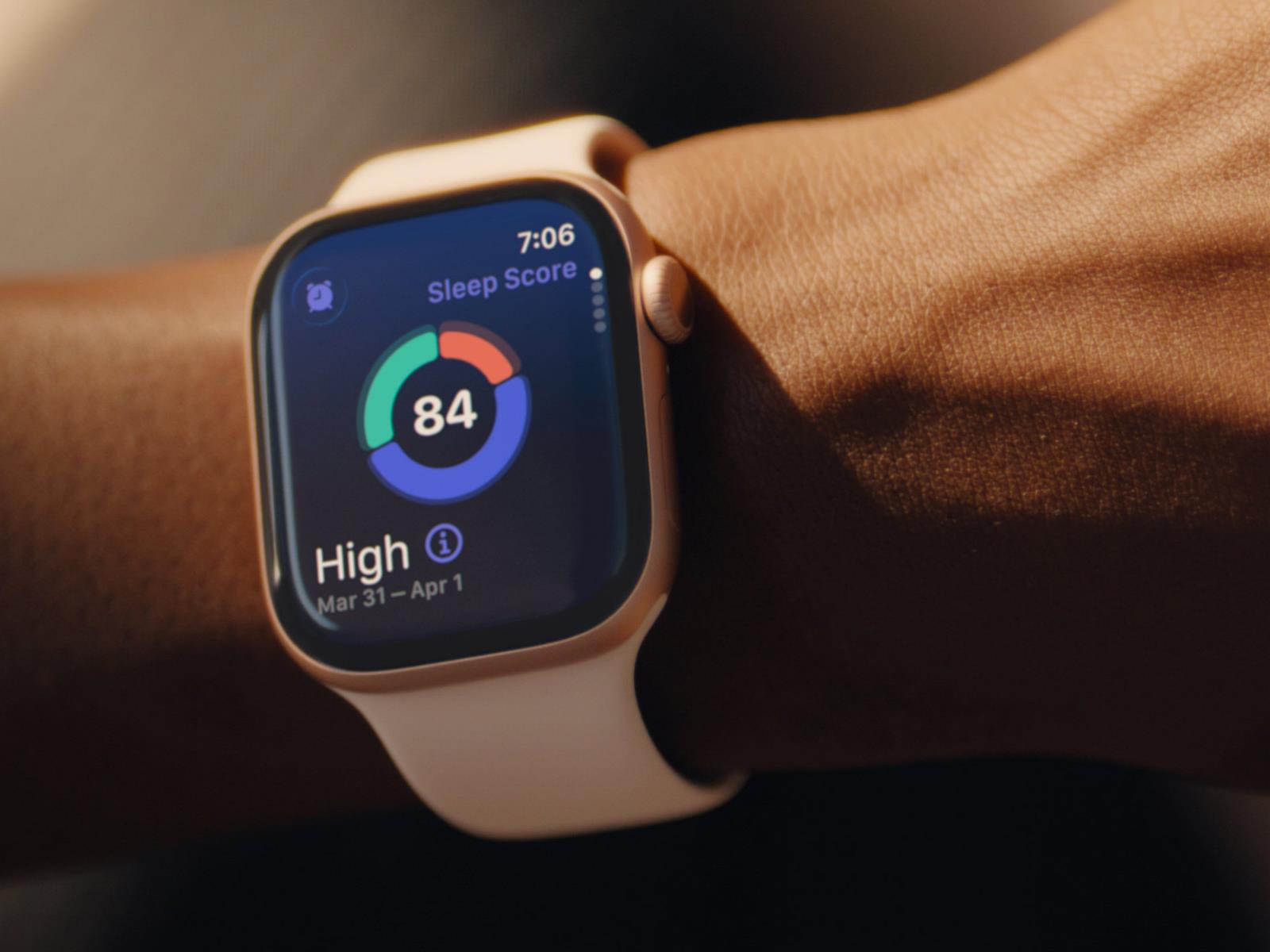
Apple Unveils Refreshed Watch Lineup, AirPods Pro 3 With Live Translation & 2X Better ANC

Apple Unveils Refreshed Watch Lineup, AirPods Pro 3 With Live Translation & 2X Better ANC
Yesterday Apple let loose the iPhone 17 lineup upon the world, with the svelte Air and the magnificent cameras on the Pro line, but that wasn’t all that came out of the announcements. The Cupertino tech giant also revamped its Apple Watch lineup and its AirPods Pro 3 earbuds. Let’s dig in.

The freshly minted AirPods Pro 3 appear to be a

Sony is rolling out a PlayStation parental controls mobile app

Sony is finally catching up to something Nintendo and Microsoft have had for years. The new PlayStation Family app mainly serves as a mobile extension of on-console parental controls. However, parents also get a few extra perks in the mobile version.

The app includes a “thoughtfully guided” onboarding process. (I imagine many people will prefer their phone or tablet over the console for that.) Once things are set up, parents can do everything they already could on the console. This includes setting playtime limits, viewing activity reports (daily and weekly), managing spending and creating content filters. Parents can also use the app to configure privacy settings for social features.

One of the mobile app’s nicer perks is real-time notifications of what the child is playing. Parents can also approve or deny requests from their children for extra playtime or access to restricted games from within the app. That feature will likely get a lot of use.

Although it’s a welcome rollout, Sony is quite late to the party. The Xbox Family Settings app launched over five years ago. Nintendo’s parental controls came even earlier, alongside the original Switch’s arrival.

The app starts rolling out globally starting today. If you don’t see it yet, you can try the storefront links for iOS or Android.

This article originally appeared on Engadget at https://www.engadget.com/gaming/playstation/sony-is-rolling-out-a-playstation-parental-controls-mobile-app-195002596.html?src=rss