An anonymous reader quotes a report from Gizmodo: [D]espite the AI industry’s attempts to make itself seem omnipresent, a new report this week shows that adoption at large U.S. companies has declined. The report comes from the Census Bureau and shows that the rate of AI adoption by large companies — that is, firms with over 250 employees — has been declining slightly in recent weeks. The report is based on a biweekly survey, dubbed Business Trends and Outlook (or BTOS), of some 1.2 million U.S. firms. The survey, which asks businesses about their use of AI tools, such as machine learning and agents, found that — between June and now — the rate of adoption had declined from 14 to 12 percent. Futurism notes that this is the largest drop-off in the adoption rate since the survey first began in 2023, although the survey also showed a slight increase in AI use among smaller companies.
The moderate drop off comes after the rate of adoption had climbed precipitously over the last few years. When the survey first began, in September of 2023, the AI adoption rate hovered around 3.7 percent (PDF), while the adoption rate in December 2024 was around 5.7 percent. In the second quarter of this year, the rate also rose significantly, climbing from 7.4 percent to 9.2. The new drop-off in reported usage comes not long after another study, this one published by MIT, found that a vast majority of corporate AI pilot programs had failed to produce any material benefit to the companies involved.
Microsoft has eliminated the one-time fee for publishing apps on its Windows Store. According to The Verge, “Individual developers in nearly 200 countries can now sign up to publish apps on the Microsoft Store with just a personal Microsoft account, and no more one-time fees.” From the report: Microsoft started cutting its $19 one-time fee to publish apps to its Windows store in June in certain markets, and it’s now essentially removing this fee for all developers worldwide. Apple still charges an annual $99 fee to developers, and Google charges a one-time registration fee of $25.
“Developers will no longer need a credit card to get started, removing a key point of friction that has affected many creators around the world,” explains Chetna Das, senior product manager at Microsoft. “By eliminating these one-time fees, Microsoft is creating a more inclusive and accessible platform that empowers more developers to innovate, share and thrive on the Windows ecosystem.” […]
The Microsoft Store is now used by more than 250 million monthly active users, according to Microsoft. Microsoft is now encouraging more developers to make use of the store, where they can publish a variety of Win32, UWP, PWA, .NET, MAUI, or Electron apps. Developers can even use their own in-app commerce system to keep 100 percent of their revenues on non-gaming apps.
“President Trump’s One Big Beautiful Bill Act may have quietly changed the economics of the creator economy,” reports the Hollywood Reporter. The Treasury Department has ruled this past week that digital creators, including podcasters, influencers, and streamers, qualify for the U.S. “no tax on tips” policy, allowing them to deduct tipped income up to $25,000. From the report: The change could cause digital creators to rethink how they seek income. Platforms like TikTok, YouTube, Twitch and Snapchat all offer a variety of ways for creators to generate income, be it a share of advertising revenue or creator funding programs, or options to launch subscription tiers for their channels or profiles. But they also give creators the option to turn on tips or gifts. If revenue from user tips or gifts is eligible, while recurring subscription revenue is not, it could shift how streamers, podcasters or influencers ask their followers to support them.
To be sure, there are limitations: The tax deduction is capped at $25,000 per year, and it begins to phase out at $150,000 in income for single filers and $300,000 for married joint filers. The act also provides that tips do not qualify for the deduction if they are received “in the course of certain specified trades or businesses — including the fields of health, performing arts, and athletics,” Treasury says, further limiting the deduction opportunity for some in entertainment-adjacent lines of work.
But by making influencers, Twitch streamers and podcasters eligible, the administration has nonetheless changed the incentive structure for digital creators, and the ramifications could be felt across the creator economy in the name of tax efficiency (Don’t be surprised if users are asked to like, subscribe, and tip). Platforms may also develop more ways to more prominently feature tips and gifts, pushing creators to add more opportunities for that income. But the inclusion of digital creators is also a recognition of how the power dynamics have shifted in media.
Amid yesterday’s news of Oracle’s soaring stock, which propelled founder Larry Ellison to the top of the world’s richest list, the Wall Street Journal reported that the cloud giant and OpenAI have struck one of the largest cloud contracts ever signed. Under the deal, OpenAI will purchase $300 billion worth of compute power from Oracle over roughly five years, with purchases beginning in 2027.
“This move away from Microsoft was timed with OpenAI’s involvement with the Stargate Project, in which OpenAI, SoftBank, and Oracle have committed to invest $500 billion into domestic data center projects over the next four years,” notes TechCrunch.
OpenAI also recently signed a cloud deal with Google. “The deal … underscores the fact that the two are willing to overlook heavy competition between them to meet the massive computing demands,” wrote analyst in Reuter’s report.
By 2028, Gartner research VP Julia Palmer predicts that VMware will lose 35% of its current workloads as Broadcom’s licensing changes and rising costs push customers toward competitors like Nutanix and public clouds. The Register reports: On Wednesday at the analyst firm’s Symposium event in Australia, Palmer pointed out that the Broadcom business unit recently tweaked its licensing program so that hyperscalers can no longer sell VMware subscriptions to users of their hosted VMware services. Customers must instead buy direct from Broadcom and use license portability entitlements for any VMware infrastructure they host in hyperscale clouds. Palmer said that decision shows VMware does not consider hyperscalers strategic partners, and she thinks the feeling is mutual. Hyperscalers nevertheless welcome customers who use them to run VMware workloads “because they know over time they will convert you to ‘proper cloud’.”
Which is one reason she expects VMware will lose so many workloads: Hyperscalers will use their engagements with VMware customers to extol the virtue of public clouds. Palmer thinks VMware customers should heed that pitch. “We are all addicted to hypervisors, and that needs to change,” Palmer said, not least because Broadcom’s acquisition of VMware shows how lock-in to a virtualization platform can be costly. But she counseled against planning to move all workloads off VMware, as no rival vendor offers a superior platform and a full migration will take three or more years. Palmer instead advised assessing which applications are ripe for modernization and re-platforming, and shifting those — a job that can take up to a year.
Welcome to Video Games Weekly on Engadget. Expect a new story every Monday or Tuesday (Or, I dunno, Thursday), broken into two parts. The first is a space for short essays and ramblings about video game trends and related topics from me, Jess Conditt, a reporter who’s covered the industry for more than 13 years. The second contains the video game stories from the past week that you need to know about, including some headlines from outside of Engadget.
Please enjoy — and I’ll see you next week.
Earlier this week, FlyQuest top laner Bwipo (Gabriël Rau) was suspended for one series of the League of Legends LTA playoffs after saying some wild stuff during a livestream about women and their ability to play esports. Here’s a sampling of what he said:
“I think there’s just not enough support for female pro players… women’s anatomy and their monthly cycles are just extremely different from males, and there’s no proper support system for women to go through what they’re going through.”
“Even men just tilt out of their fucking minds when they’re playing League of Legends. So, when a woman is on the wrong part of the month and playing competitively, there is a time of the month where you should not be fucking playing competitive games as a woman, in my opinion.”
OK, Bwipo. His comments received an appropriate amount of ridicule from fellow players, casters and fans, and FlyQuest benched him during a pivotal moment in the race to Worlds. He has apologized and pledged to “reflect, listen, and do better.”
So, here we are yet again. It’s 2025 and it must be stated: Men are not biologically better at video games than women. Women, femmes and nonbinary people are not physiologically less interested in or skilled at competitive gaming than a player who lives as a dude. Gender on its own has no bearing on how quickly a person can click a mouse, scan a screen or strategize in high-intensity situations, and lines of code react the same no matter how an individual player identifies.
That said, I find myself agreeing with Bwipo’s initial statement, “There’s just not enough support for female pro players.” I understand, in a backward kind of way, the logical leaps he then tried to make in order to explain a situation that doesn’t make any sense — namely, the absence of non-guy players in mainstream, professional esports. His conclusion may have been laughably misguided, but the core conundrum still stands.
The professional esports scene is segregated by gender and dominated by men. There are no hard and fast rules barring women or gender nonconforming people from competing at a professional level in any major league, but there are vanishingly few women, femmes or non-male-presenting players participating in mainstream esports tournaments, and this tends to be the baseline. There are separate leagues and competitions established specifically for women and gender nonconforming players, and while I find these events to be extremely exciting, they’re siloed and receive far less financial, marketing and back-end support than mainstream tournaments. Women’s esports leagues exist in a bubble that, for some strange reason, seems to be modeled on the gender segregation practices of traditional sports, with matching gaps in pay, respect and opportunity.
A handful of women players have broken through on the main stage over the years, including Potter (Christine Chi, CS:GO), Karma (Jaime Bickford, Rocket League), Hafu (Rumay Wang, WoW, Hearthstone) and Scarlett (Sasha Hostyn, StarCraft II). Still, the earnings gap between men and women in esports is cavernous: According to Esports Earnings, the top male player on record is N0tail (Johan Sundstein, Dota 2), with $7,184,163 in prize money to his name. The top female player on that list is Scarlett, with $472,111 in total earnings. There are 619 male players ahead of her, and the totals don’t factor in the lucrative sponsorship deals available to elite gamers.
I have to say it again. Esports, an industry built around people playing video games really well, is segregated by gender. Isn’t that insane?
The natural question is, why? It’s not because only men are good at video games, since we’ve established that’s a steaming pile of horseshit. Nor is it because, as Bwipo suggested, some women menstruate. But the actual reason is just as clear.
It’s sexism. The gender makeup of the mainstream esports scene is the result of everyday, bog standard, garden variety, run of the mill misogyny. In the world of esports, it’s sponsored by Red Bull, drenched in LEDs and proudly hosted by your favorite streamer. At our current stage, when a veteran LoL player is openly trying to bring back the hysteria diagnosis rather than looking at the realities of a system that provides him privilege, I think we have to say it plainly. Put the pivotal issue on the table so we can look at how ugly, regressive and nasty it is. Only then can we start to change it.
There is a dearth of women, femmes and nonbinary people in mainstream esports because of the sexism that permeates society at large.
I understand why someone like Bwipo — or other players, coaches, presenters, managers, team owners, league organizers or game makers at the highest levels of esports — wouldn’t want to acknowledge this fact or how much power it holds over the entire scene. I get that some would rather twist themselves into knots trying to blame women for their own exclusion, instead of tackling an uncomfortable social issue that runs far deeper than just the gaming industry. I understand it, but I think it’s cowardly. Ostrich behavior.
So, let’s look at it. If misogyny in esports is the problem, I think a solution has to lie in the talent pipeline. During the scouting stages, when school-age players of all genders are streaming and climbing ranks from their bedrooms, boys naturally receive things from the community that girls don’t, like enthusiastic support, a welcoming attitude, respect, and, eventually, enough belief in their skills to risk investment. I’m not suggesting toxicity isn’t a thing for everyone, but these positive aspects are also built into the experience for many young men playing games. Young women have to earn these responses, generally by overperforming compared to their peers, and while being belittled, sexualized, threatened with violence, hyperanalyzed and othered, for years on end. It’s exhausting. It silently pushes some women out of video games and esports.
It’s also malleable. Sexism spawns from an embarrassing and irrational way of thinking, but people change their minds all the time. A simple but widespread shift in perception — oh right, it’s weird that esports is segregated by gender — can make an enormous impact especially on these early stages of esports play. How we think alters how we behave, how we speak and what we allow in social spaces. It really can be that simple, at least as a starting point.
I think about this each time I turn on a pro match, which is currently every day with LoL Worlds qualification tournaments in full swing (hi, FlyQuest). The esports gender disparity is face-smackingly obvious, especially in concert with the godlike presentation that existing players tend to receive: hype trailers with uber-masculine motifs, walk-out rituals, emotional behind-the-scenes documentaries and epic promotional spots depicting teams as otherwordly superheroes. Of course, most esports players are literal teenagers, which tends to make these macho presentations more adorable than anything — but the fact remains that male esports pros, even teenage ones, are taken extremely seriously as athletes (athletes!) and can find support for their goals at every level. I’d love to see this encouragement, faith and excitement extended to young women and nonbinary players as well.
The mental shift is the first step. As demonstrated by Bwipo’s offhand comments, it seems plenty of people in the esports scene are still in the early stages of critical thinking when it comes to gender and opportunity, so we’re starting with the basics. Remind yourself that men are not inherently skilled at playing video games and women aren’t naturally bad, and think about how ridiculous those suggestions sound in the first place. Remember that sexism is an artificial barrier limiting opportunities for everyone in esports. Next time you see an ad with a bunch of dude esports players surrounded by ladies in cosplay, take a second to notice how odd that is. Hear how many times the casters say “gentlemen,” “sir,” “boys” and other gendered terms during games, and recognize how daunting this space is for players who don’t fit those descriptions. Get comfortable with the idea that some humans can play video games really, really, really well, and this fact is completely divorced from how they look or identify. It’s easy to do because it’s true.
IO Interactive’s James Bond game, 007 First Light, is heading to PlayStation 5, Xbox Series X/S, Switch 2, Steam and the Epic Games Store on March 27, starting at $70. Engadget UK Bureau Chief Mat Smith got his hands on the preview at Gamescom earlier this month and he found it to be spectacular in the very literal sense.
What a lovely little surprise. Stardew Valley creator ConcernedApe (Eric Barone) announced another numbered update is on its way, adding significant bits of new content to the game more than nine years after its Steam debut. Update 1.7 will hit Stardew Valley at an unspecified time in the near future and Barone clarified that it won’t impact the release timeline for his next game, Haunted Chocolatier. Barone had the following to say about the whole thing:
“Haunted Chocolatier will be released at some point. And sure, the reality of my life is that I have a very popular 1st game that I still want to take care of, which means that my 2nd game might take a little longer. It is what it is. I didn’t have to make a 1.7 update for Stardew Valley, but the game is still so popular (in fact, still growing), that it’s hard to just stop improving it when there are still things that can be improved. But I hope the approach I am taking for Stardew Valley 1.7 will help keep Haunted Chocolatier on track.
“About the Stardew Valley team: they are awesome, all very talented, hard-working, and contribute unique things to the development process. We are a very small group, and I like it that way. Also, I am still working completely solo on Haunted Chocolatier without any plans to change that for the time being.”
Playtonic’s bright and shiny remaster of Yooka-Laylee will come to PS5, PC, Switch 2 and Xbox Series X/S on October 9. For the Switch 2 version, Playtonic has opted to release the full game on an actual cartridge, rather than relying on game-key card downloads, which is a heartwarming throwback to the way things were. Digital versions of the game cost $30, while the physical edition is $50.
More than 450 developers with Blizzard Entertainment’s Diablo team have voted to form a union with the backing of the Communications Workers of America. The CWA is also overseeing the ZeniMax QA union, and is backing recent organization efforts by the Overwatch 2 crew and Blizzard’s Story and Franchise Development group. (Am I the only person who wants that to be Story and Song development? Probably.) The CWA says more than 3,500 Microsoft employees have organized under its banner.
Diablo producer Kelly Yeo is an organizing committee member of the latest Blizzard union and she said in a statement that multiple rounds of sweeping layoffs at Microsoft prompted the organization efforts.
“With every subsequent round of mass layoffs, I’ve witnessed the dread in my coworkers grow stronger because it feels like no amount of hard work is enough to protect us,” Yeo said. “This is just the first step for us joining a movement spreading across an industry that is tired of living in fear.”
It feels like nowadays, for every unionization story, there are at least two tales of layoffs. This was sadly true in recent weeks, with news of mass firings at Tomb Raider studio Crystal Dynamics and Civilization team Firaxis. An unknown number of people were fired from Crystal Dynamics and it’s unclear if the cuts were tied to the recent cancellation of The Initiative, which Crystal Dynamics was helping reboot. The Initiative was canceled as part of Microsoft’s huge cuts to its gaming segment in July (which followed similarly large losses the year before, and so on). Crystal Dynamics is still owned by Embracer Group and is working on a new Tomb Raider installment.
After unleashing Civilization VII on the masses in February, Firaxis has also laid off an undisclosed number of developers in the name of studio restructuring. Firaxis is owned by 2K, which recently canceled a remake of the original BioShock and sent Cloud Chamber’s new BioShock title back to an even-deeper circle of development hell. Meanwhile, Take-Two Interactive, the company that controls all of this, is reporting healthy financials and expectations to grow in the second half of 2025. Grand Theft Auto VI is on its way, after all.
I swear, if the release trailer for Ghost Story Games’ Judas doesn’t include the Lady Gaga song, I will riot by myself.
Following all of that weird BioShock news out of 2K, Ken Levine decided to remind everyone that his game Judas is still in development and even has key art. His post on the PlayStation Blog outlines some of the relationship mechanics in Judas, relating them partly to the Nemesis system from Middle Earth: Shadow of Mordor, which has me all kinds of excited. And, yeah, the new picture looks cool, too.
Ghost Story Games
The Silksong corner
The day of its release, Hollow Knight: Silksongsinglehandedly crashed multiple game storefronts including Steam, the Nintendo eShop and the Xbox Store. The marketplaces recovered, but players haven’t — the bulk of the post-launchdiscourse has focused on whether the game is too hard, a suggestion that I find baffling as someone who does not enjoy punishing metroidvanias like Silksong. With this brand of game, I was under the impression that if it’s beatable, it’s not too hard. It’s mechanically precise, tricky, twitchy and super-duper challenging — isn’t that exactly what you masochists want?
Then again, Team Cherry’s first update for the game includes a “slight difficulty reduction in early game bosses” including Moorwing and Sister Splinter, so what do I know?
The Flame Fatales speedrunning event, which features women and femmes playing a bunch of awesome games very quickly, is underway and runs through Sunday, September 14. Check it out here!
Have a tip for Jessica? You can reach her by email, Bluesky or send a message to @jesscon.96 to chat confidentially on Signal.
This article originally appeared on Engadget at https://www.engadget.com/gaming/video-games-weekly-its-weird-that-esports-is-segregated-by-gender-223518454.html?src=rss
On Thursday, OpenAI and Microsoft announced they have signed a non-binding agreement to revise their partnership, marking the latest development in a relationship that has grown increasingly complex as both companies compete for customers in the AI market and seek new partnerships for growing infrastructure needs.
“Microsoft and OpenAI have signed a non-binding memorandum of understanding (MOU) for the next phase of our partnership,” the companies wrote in a joint statement. “We are actively working to finalize contractual terms in a definitive agreement. Together, we remain focused on delivering the best AI tools for everyone, grounded in our shared commitment to safety.”
The announcement comes as OpenAI seeks to restructure from a nonprofit to a for-profit entity, a transition that requires Microsoft’s approval, as the company is OpenAI’s largest investor with more than $13 billion committed since 2019.
Scammers are extorting small businesses worldwide by threatening to flood their Google Maps profiles with fake one-star reviews or demanding payment to remove reviews already posted, according to The New York Times. Fraudsters target service businesses dependent on online ratings — movers, roofers, contractors — demanding hundreds of dollars per incident. The Times story documents many cases, including of one Los Angeles contractor Natalia Piper, who paid $250 to multiple scammers after her rating plummeted from 5.0 to 3.6 stars.
Industry watchdog Fake Review Watch documented over 150 affected businesses globally. The scammers typically operate from Pakistan and Bangladesh using WhatsApp to contact victims. Google removes most fraudulent content but offers no direct support channel for targeted businesses.
Specifically, the child died of subacute sclerosing panencephalitis (SSPE), a rare, but always fatal complication that strikes years after an initial measles infection. The health department’s announcement offered few details about the child, including the child’s age, but said that the child had contracted the virus before they were old enough to be vaccinated against measles. The first of two recommended doses of measles, mumps, and rubella (MMR) vaccine is given between 12 and 15 months.
“This case is a painful reminder of how dangerous measles can be, especially for our most vulnerable community members,” Muntu Davis, a Los Angeles County health officer, said in a statement. “Infants too young to be vaccinated rely on all of us to help protect them through community immunity. Vaccination is not just about protecting yourself—it’s about protecting your family, your neighbors, and especially children who are too young to be vaccinated.”
Merriam-Webster and its parent company Encyclopedia Britannica are the latest to take on AI in court. The plaintiffs have sued Perplexity, claiming that AI company’s “answer engine” product unlawfully copies their copyrighted materials. They are also alleging copyright infringement for instances where Perplexity’s AI creates false or inaccurate hallucinations that it then wrongly attributes to Britannica or Merriam-Webster. The complaint, filed in New York federal court, is seeking unspecified monetary damages and an order that blocks Perplexity from misusing their content.
“Perplexity’s so-called “answer engine” eliminates users’ clicks on Plaintiffs’ and other web publishers’ websites—and, in turn, starves web publishers of revenue—by generating responses to users’ queries that substitute the content from other information websites,” the filing reads. “To build its substitute product, Perplexity engages in massive copying of Plaintiffs’ and other web publishers’ protected content without authorization or remuneration.”
This isn’t Perplexity’s first time facing allegations that it has unlawfully taken another website’s content. Last year, the AI company was accused of copyright infringement by the Wall Street Journal and the New York Post. Just last month a pair of Japanese media companies, Nikkei and the Asahi Shimbun, sued it on similar claims.
This article originally appeared on Engadget at https://www.engadget.com/ai/perplexitys-definition-of-copyright-gets-it-sued-by-the-dictionary-213408625.html?src=rss
NASA’s interim administrator Sean Duffy was fired up on Wednesday when he joined a teleconference to talk about new scientific findings that concerned the potential for life to have once existed on Mars.
“This is exciting news,” said Duffy about an arrow-shaped rock on Mars found by NASA’s Perseverance rover. The rock contained chemical signatures and structures that could have been formed by ancient microbial life. The findings were intriguing, but not conclusive. Further study of the rocks in an advanced lab on Earth might prove more definitive.
Duffy was ready, he said, to discuss the scientific results along with NASA experts on the call with reporters. However, the very first question—and for any space reporter, the obvious one—concerned NASA’s on-again, off-again plan to return rocks from the surface of Mars for study on Earth. This mission, called Mars Sample Return, has been on hold for nearly two years after an independent analysis found that NASA’s bloated plan would cost at least $8 billion to $11 billion. President Trump has sought to cancel it outright.
Google Maps appears to be going through an outage. At least in some regions, the mobile version of Google Maps is unable to fully load its map or provide directions. Over 4,000 reports have been filed for the service on Downdetector, and as of 2:12PM ET, Google’s Status Dashboard noted that the company was investigating an issue with the Maps SDK for Android and iOS, along with the Navigation SDK.
On both the Android and iOS versions of Google Maps, the service was unable to fully load its map, display listings or provide directions. In at least one case, the app showed an error message saying that Google Maps “Cannot reach server.”
Ian Carlos Campbell for Engadget
Google’s last major outage occurred in June, though it was primarily concentrated in the company’s Google Cloud service. Given the number of clients who use Google Cloud, the outage impacted everything from Spotify to Snapchat for multiple hours.
Developing…
This article originally appeared on Engadget at https://www.engadget.com/apps/google-maps-isnt-loading-in-some-regions-due-to-an-apparent-outage-204458737.html?src=rss
Perplexity AI is the latest AI startup to be hit with a lawsuit by copyright holders, accused by Encyclopedia Britannica and Merriam-Webster of misusing their content in its “answer engine” for internet searches. From a report: The reference companies alleged in New York federal court on Wednesday that Perplexity unlawfully copied their material and diminished their revenue by redirecting their web traffic to its AI-generated summaries.
Sega allegedly orchestrated a police raid to recover Nintendo development kits it had accidentally disposed of during an office relocation from Brentford to Chiswick Business Park. An anonymous UK reseller purchased the items — including Game Boy Advance, DSi, 3DS, Wii, and Wii U development consoles plus prototype games like Sonic Chronicles and Mario & Sonic at the Winter Olympic Games — for roughly $13,575 from a removals worker handling Sega’s office clearance.
City of London Police arrested the seller July 14, 2025, on money laundering charges, deploying approximately ten officers to seize the hardware. The seller claims the search warrant was defective and authorized Sega representatives to participate in the raid. Nintendo development kits remain the hardware manufacturer’s property regardless of possession, outlet Time Extension writes. Police requested the seller relinquish ownership two days after releasing him from eight hours in custody, which he refused. Sega has not responded to multiple legal letters or six separate pre-action protocol claims from the seller.
The US Department of Justice sued Uber on Thursday over disability discrimination… again. The lawsuit claims the company and its drivers “routinely refuse to serve individuals with disabilities.” It specifically calls out its handling of passengers with service animals or stowable wheelchairs. The suit was filed in federal court in Northern California.
“Despite the importance of its services to people with disabilities, Uber denies people with disabilities full and equal enjoyment of its services in several critical ways,” the lawsuit reads. It also accuses Uber’s drivers of insulting and demeaning people with disabilities and asking them inappropriate questions.
In a statement sent to Engadget, Uber contested the government’s claims. “Riders who use guide dogs or other assistive devices deserve a safe, respectful, and welcoming experience on Uber — full stop,” the company wrote. “We have a clear zero-tolerance policy for confirmed service denials, and we fundamentally disagree with the DOJ’s allegations.”
Uber said all drivers must acknowledge and agree to its service animal policy before they can begin driving. “When we confirm a violation, we take decisive action, including permanent account deactivation,” the company wrote. Uber noted that its community guidelines prohibit discrimination. It also added that it sent a service animal education video to all US drivers last year, explaining their vital role.
Uber
Earlier this year, Uber added a feature that lets passengers alert drivers that they’ll be traveling with service animals. The DOJ’s complaint says the company introduced the feature only after being notified of the investigation. “But Uber has continued to discriminate against riders who use service animals notwithstanding the feature,” the filing reads.
The DOJ is seeking a jury trial, injunctive relief and monetary damages. It also wants to charge Uber a civil fine for violations of the Americans with Disabilities Act.
This article originally appeared on Engadget at https://www.engadget.com/transportation/the-doj-sues-uber-again-for-allegedly-discriminating-against-people-with-disabilities-195442362.html?src=rss
Paramount Skydance, apparently now in a state of permanent merger, plans to make a bid to acquire Warner Bros. Discovery, The Wall Street Journal reports. The company was recently formed following Skydance’s acquisition of Paramount for $8 billion. Newly anointed Paramount Skydance CEO David Ellison was able to afford the acquisition thanks to the backing of his billionaire father, Larry Ellison.
Despite Warner Bros. Discovery’s public plans to split back into Warner Bros. and Discovery Global, “the bid will be for the entire company, including its cable networks and movie studio,” the report says. A successful acquisition of the company will likely be very pricey. According to The Wall Street Journal, “Warner Bros.’s nearly $33 billion market cap is more than double that of Paramount Skydance.”
Further consolidation in the entertainment industry will likely lead to less varied and interesting film and television, but a merger between Paramount Skydance and Warner Bros. Discovery could also concentrate even more power in the hands of the federal government.
Prior to the deal going through, CBS paid $16 billion to settle a lawsuit with Trump, which may have affected the President’s stance towards the acquisition. Skydance’s commitment to abandon DEI programs at CBS and make the television network “embody a diversity of viewpoints across the political and ideological spectrum” was also cited as justification for the FCC approving the acquisition. Following the deal, Paramount appointed Kenneth Weinstein as an Ombudsman to “review editorial questions and concerns from outside entities and employees.” Weinstein previously served as an advisor to the Trump administration, Variety reports.
Fusing two giant Hollywood studios obviously impacts competition. The question now is how the FCC will respond to this possible acquisition, with even more money and power on the line.
This article originally appeared on Engadget at https://www.engadget.com/entertainment/paramount-reportedly-wants-to-acquire-warner-bros-discovery-antitrust-law-be-damned-193306141.html?src=rss
An anonymous reader shares a report: Everyone’s favorite CEO, Warner Bros. Discovery head David Zaslav, thinks HBO Max is ripe for a price hike. Speaking at the Goldman Sachs Communacopia and Technology Conference (doesn’t that sound like a fun time?) Zaslav argued that his company’s premium output can command a premium price.
“The fact that this is quality — and that’s true across our company, motion picture, TV production and and streaming quality — we all we think that gives us a chance to raise price,” he said, according to The Hollywood Reporter. “We think we’re way underpriced.” The recently re-re-branded HBO Max currently starts at $9.99 per month, including ads, peaking at $20.99 per month for its premium plan, roughly in line with its rivals.
The iPhone 17 is the most affordable of the four iPhones Apple launched at its September 2025 “Awe Dropping” event, and that automatically makes the most interesting to me. It may appear to be the most “boring” at first glance, but as I pointed out when I compared it with the iPhone Air, the iPhone 17 is probably the best new iPhone for most people. It’s priced well, is packed with nice new features including a 120Hz ProMotion display, and it gets most of the features usually reserved for more expensive iPhones. Here’s everything you need to know about the iPhone 17, and why you might want to upgrade to it.
iPhone 17 body, display, and weight
Credit: Apple
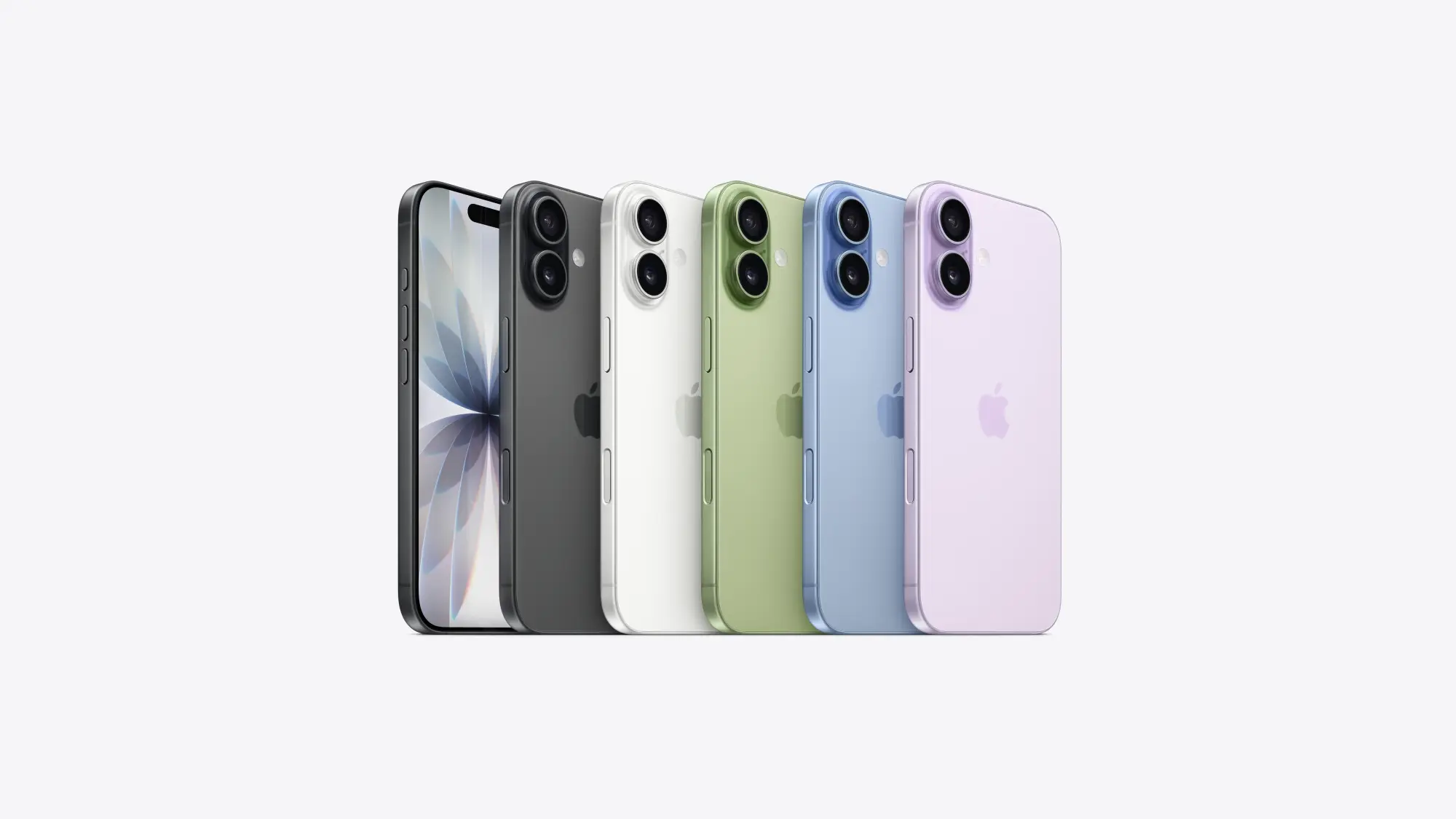
The iPhone 17 is the most colorful option among the four iPhones being launched in September 2025. You can choose from five different finishes, including Lavender, Sage (a green hue), Mist Blue, White and Black.
You get the 120Hz ProMotion display on this phone, which will make navigation and animations look smoother and was reserved for the Pro models until now. You’ll also be able to use it when you’re playing games or watching videos, and the phone can still drop the refresh rate to 1Hz when you’re not using it to conserve battery.
The iPhone 17 also has a slightly larger, 6.3-inch Super Retina XDR display with Ceramic Shield 2 for improved scratch protection. Thanks to that 1Hz support, the phone also works with Apple’s Always-On Display, which means that you can quickly check the time on it without switching on the screen.
Apple says the iPhone 17 is water resistant up to a depth of 6 meters for up to 30 minutes, too. This means that if you drop your phone in water, it should be safe as long as it’s within those limits.
Apple has still managed to keep this phone fairly light, at 6.24 ounces (177 grams). That makes it heavier than the iPhone Air (5.82 ounces or 165 grams), but it should still be reasonably easy to handle.
iPhone 17 processor
Credit: Apple
The iPhone 17 ships with Apple’s new A19 chip, and it’s the only one of the four new iPhones to use that. All other phones launched in Apple’s September 2025 event use the A19 Pro chip. The A19 has a 6-core CPU and a 5-core GPU with Neural Accelerators. At the time of writing, early Geekbench scores give us a fair idea of the A19’s performance. It appears to score around 7 to 8 percent more than the iPhone 16’s A18 chip. According to the same report, the iPhone 17 has 8GB of RAM. Apple doesn’t make RAM specs public, but benchmarking tools are a reliable indicator for this metric.
This phone supports 2 eSIMs and doesn’t have any physical SIM slots in the US. In some regions, such as India, the iPhone 17 has one physical SIM slot and one eSIM. In China, the iPhone 17 doesn’t support eSIMs at all and ships with two physical SIM slots instead.
iPhone 17 cameras
Credit: Apple
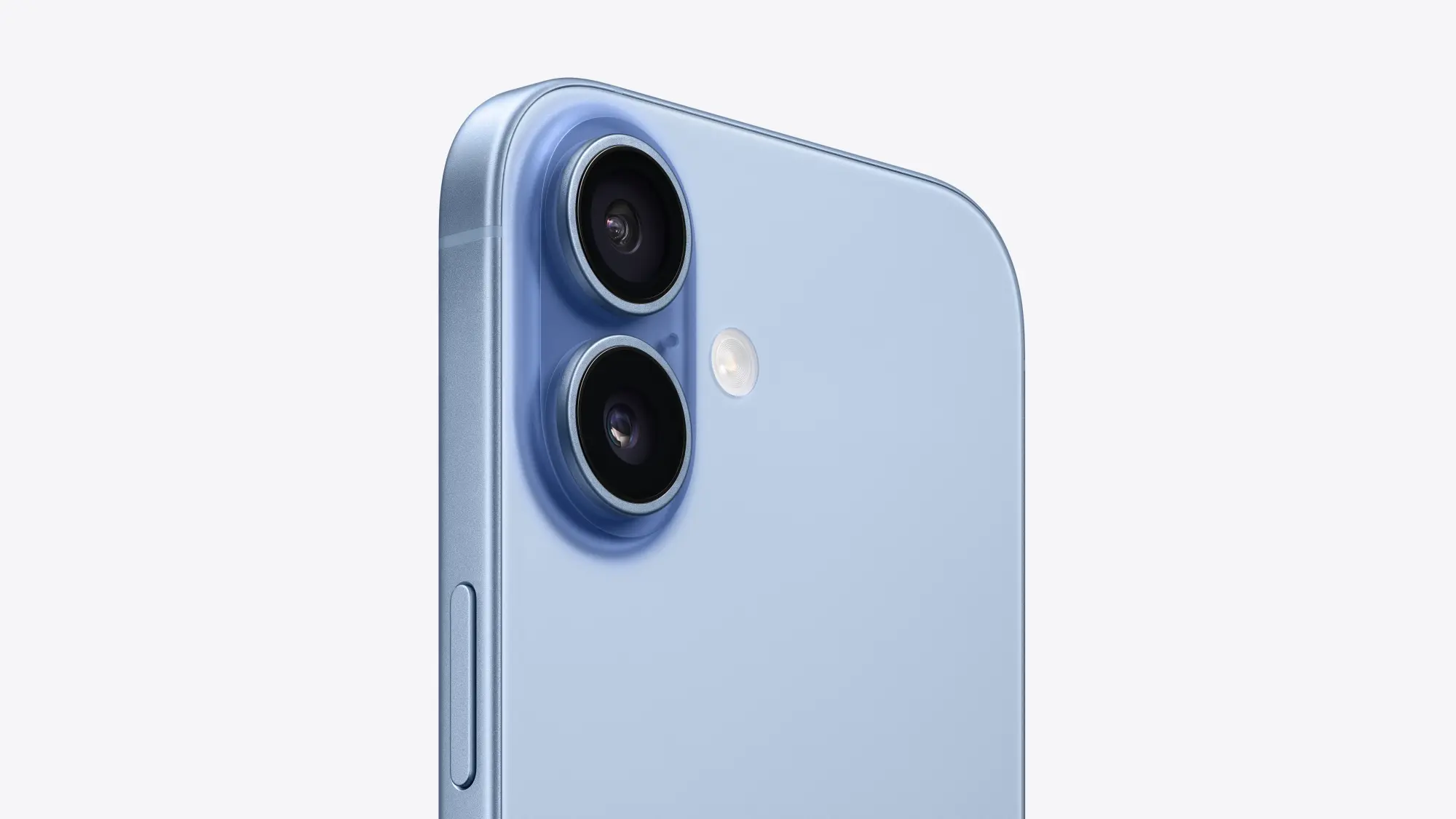
Apple has included two rear cameras on the iPhone 17, alongside the Center Stage front camera. The big news is that you don’t have to rotate your iPhone for landscape selfies any more. The Center Stage camera, which has an 18-megapixel sensor, uses AI to automatically adjust your frame to include more people in the shot if needed. It can take portrait and landscape selfies.
The rear camera setup has a 48-megapixel main sensor, and a 48-megapixel ultrawide lens. This means that you can take photos in 0.5x, 1x, and 2x shooting modes. The iPhone 17 supports Dual Capture, too, which allows you to record videos with the front and rear cameras at the same time. The rear cameras support macro photography and they can record videos in Dolby Vision up to 4K at 60fps.
iPhone 17 battery life
Credit: Apple
You can expect your iPhone 17 to easily last a full day on a single charge with moderate use. Apple says the device lasts for up to 30 hours with continuous video playback, which is higher than the iPhone Air (27 hours) or even the iPhone 16 Plus (also 27 hours). The iPhone 17 supports Apple’s MagSafe and Qi2 wireless charging. You can charge it from 0 to 50 percent in 30 minutes using a 30W or higher adapter paired with a MagSafe charger. If you buy Apple’s 40W charging adapter, your iPhone 17 will go from 0 to 50 percent within 20 minutes.
The smartphone has a USB-C port, but it only supports USB 2, which means that transfer speeds aren’t going to be as fast as that on the iPhone 17 Pro (which supports USB 3 with speeds up to 10Gb/s).
A good upgrade and a great price
Credit: Apple
The iPhone 17 overall looks like a solid upgrade with a better display, better battery life, and better cameras. It’s not a revolutionary product, but it won’t disappoint anyone who’s upgrading from an older phone. If your iPhone 16 series device is working fine, then you can probably continue using it for another year at least, but if you have an iPhone 12 Pro Max like I do, or an iPhone 15 or older device, then the 17 could be a great upgrade.
As someone looking to upgrade, at $799 for the 256GB variant, the iPhone 17’s price is particularly appealing to me considering all the features it has. The 512GB iPhone 17 is priced at $999 if you need more space, and that should be enough storage to handle everything you can throw at it.
Mustafa Suleyman, Microsoft AI CEO, is arguing against the possibility of giving AI right and claims it might also be risky.
In a personal blog post, Suleyman expressed concerns that many people are being deceived into thinking that AIs are sentient entities and, as a result, should be given rights, welfare, and even citizenship. He emphasized,
Windows 11 customization utilities are a dime a dozen these days, and more enthusiasts are customizing their installs every day, in a bid to remove unnecessary cruft and save on disk space. NTDEV’s Tiny11 is one of the most popular utilities out there for this purpose, but the madlad (or madlady) went even further and released Nano11, a Windows