Synthetic Magnetic Fields Steer Light On a Chip For Faster Communications

Researchers in China have created synthetic magnetic fields within silicon photonic crystals, allowing them to steer and control light on a chip with unprecedented precision. “Beyond immediate applications, the work opens new avenues for studying quantum-inspired phenomena with light,” reports Phys.org. “The ability to impose artificial gauge fields in photonic systems could enable devices for optical computing, quantum information, and advanced communication technologies.” Slashdot reader alternative_right shares an excerpt from the report: The team achieved this by systematically altering the symmetry of tiny repeating units in silicon photonic crystals. Adjusting the degree of local asymmetry at each point allowed them to ‘design’ pseudomagnetic fields with tailored spatial patterns, without breaking fundamental time-reversal symmetry. Both theoretical analysis and experiments confirmed that these engineered fields can guide and manipulate light in versatile ways. To demonstrate practical applications, the researchers built two devices commonly used in integrated optics. One was a compact S-shaped waveguide bend that transmitted light with less than 1.83 decibels of signal loss. The other was a power splitter that divided light into two equal paths with low excess loss and minimal imbalance. In a final test, the devices successfully transmitted a high-speed data stream at 140 gigabits per second using a standard telecommunications modulation format, showing that the technique is compatible with existing optical communication systems. The research has been published in Advanced Photonics.


Read more of this story at Slashdot.

Proton Mail Suspended Journalist Accounts At Request of Cybersecurity Agency

An anonymous reader quotes a report from The Intercept: The company behind the Proton Mail email service, Proton, describes itself as a “neutral and safe haven for your personal data, committed to defending your freedom.” But last month, Proton disabled email accounts belonging to journalists reporting on security breaches of various South Korean government computer systems following a complaint by an unspecified cybersecurity agency. After a public outcry, and multiple weeks, the journalists’ accounts were eventually reinstated — but the reporters and editors involved still want answers on how and why Proton decided to shut down the accounts in the first place.

Martin Shelton, deputy director of digital security at the Freedom of the Press Foundation, highlighted that numerous newsrooms use Proton’s services as alternatives to something like Gmail “specifically to avoid situations like this,” pointing out that “While it’s good to see that Proton is reconsidering account suspensions, journalists are among the users who need these and similar tools most.” Newsrooms like The Intercept, the Boston Globe, and the Tampa Bay Times all rely on Proton Mail for emailed tip submissions. Shelton noted that perhaps Proton should “prioritize responding to journalists about account suspensions privately, rather than when they go viral.” On Reddit, Proton’s official account stated that “Proton did not knowingly block journalists’ email accounts” and that the “situation has unfortunately been blown out of proportion.”

The two journalists whose accounts were disabled were working on an article published in the August issue of the long-running hacker zine Phrack. The story described how a sophisticated hacking operation — what’s known in cybersecurity parlance as an APT, or advanced persistent threat — had wormed its way into a number of South Korean computer networks, including those of the Ministry of Foreign Affairs and the military Defense Counterintelligence Command, or DCC. The journalists, who published their story under the names Saber and cyb0rg, describe the hack as being consistent with the work of Kimsuky, a notorious North Korean state-backed APT sanctioned by the U.S. Treasury Department in 2023. As they pieced the story together, emails viewed by The Intercept show that the authors followed cybersecurity best practices and conducted what’s known as responsible disclosure: notifying affected parties that a vulnerability has been discovered in their systems prior to publicizing the incident. Phrack said the account suspensions created a “real impact to the author. The author was unable to answer media requests about the article.” Phrack noted that the co-authors were already working with affected South Korean organizations on responsible disclosure and system fixes. “All this was denied and ruined by Proton,” Phrack stated.

Phrack editors said that the incident leaves them “concerned what this means to other whistleblowers or journalists. The community needs assurance that Proton does not disable accounts unless Proton has a court order or the crime (or ToS violation) is apparent.”


Read more of this story at Slashdot.

US EV Sales Smash Records In August

US EV sales hit a record 146,332 in August, grabbing nearly 10% of all new car sales, according to Kelley Blue Book. That’s the highest yet and up from 9.1% in July. Electrek reports: With the federal EV tax credit set to expire on September 30, analysts say Q3 2025 is shaping up to be the strongest quarter for EV sales in US history. The current record holder is Q4 2024, when 365,824 EVs were sold.

Prices ticked higher, too. The average transaction price (ATP) for an EV in August was $57,245, 3.1% more than July’s revised lower ATP of $55,562. Year-over-year, though, EV prices were basically flat, down just 0.1%. The wave of EV sales also helped push up the overall market’s ATP.

Incentives, while not as high as July’s record, remained hefty. EV buyers received discounts averaging over $9,000 in August, equal to 16% of ATP. That’s more than double the incentive rate in the overall auto market and up from 13.6% a year ago. A separate report from Rho Motion found that global EV sales surged 25% in 2025, led by strong growth in Europe and China. “That amounts to 12.5 million EVs, although the data combines both battery EVs and plug-in hybrid EVs for the total,” reports Ars Technica.

As for North America? “EV sales are still growing but barely — up just 6 percent between January and August 2025 compared to the same time period in 2024.”


Read more of this story at Slashdot.

Newfoundland’s 10-Year Education Report Calling For Ethical AI Use Contains Over 15 Fake Sources

Newfoundland and Labrador’s 10-year Education Accord report (PDF) intended to guide school reform has been found to contain at least 15 fabricated citations, including references to non-existent films and journals. Academics suggest the fake sources may have been generated by AI. “There are sources in this report that I cannot find in the MUN Library, in the other libraries I subscribe to, in Google searches. Whether that’s AI, I don’t know, but fabricating sources is a telltale sign of artificial intelligence,” said Aaron Tucker, an assistant professor at Memorial whose current research focuses on the history of AI in Canada. “The fabrication of sources at least begs the question: did this come from generative AI?” CBC News reports: In one case, the report references a 2008 movie from the National Film Board called Schoolyard Games. The film doesn’t exist, according to a spokesperson for the board. But the exact citation used in the report can be found in a University of Victoria style guide — a document that clearly lists fake references designed as templates for researchers writing a bibliography. “Many citations in this guide are fictitious,” reads the first page of the document.

“Errors happen. Made-up citations are a totally different thing where you essentially demolish the trustworthiness of the material,” said Josh Lepawsky, the former president of the Memorial University Faculty Association who resigned from the report’s advisory board last January, citing a “deeply flawed process” leading to “top-down” recommendations. The 418-page Education Accord NL report took 18 months to complete and was unveiled Aug. 28 by its co-chairs Anne Burke and Karen Goodnough, both professors at Memorial’s Faculty of Education. The pair released the report alongside Education Minister Bernard Davis. “We are investigating and checking references, so I cannot respond to this at the moment,” wrote Goodnough in an email declining an interview Thursday.
In a statement, the Department of Education and Early Childhood Development said it was aware of a “small number of potential errors in citations” in the report. “We understand that these issues are being addressed, and that the online report will be updated in the coming days to rectify any errors.”


Read more of this story at Slashdot.

Lampshades Made From Giant Colored Pencil Shavings

Carefully crafted by artist Nanako Kume, ‘Sharpener’ is a series of lampshades made from the shavings of massive colored pencils cut with a giant pencil sharpener. The colored pencils aren’t actually functional colored pencils (there’s no colored pigment in the middle), just hexagonal logs with a painted exterior. Per Nanako, “From a young age, I was fascinated by the shape and fragility of the shavings that are created when I sharpen a pencil.” The result is just the right amount of whimsical. And you know how I feel about whimsy. “You’d marry it if you could.” I don’t know about that, but at least go steady for a bit before a horrible breakup.

Employee Who Leaked ‘Spider-Man’ Blu-ray Sentenced to Nearly 5 Years Prison

A former Memphis disc manufacturing employee has been sentenced to nearly five years in prison after stealing pre-release Blu-rays from his employer and leaking them online. While he received 21 months for copyright infringement, a concurrent firearm charge extended his total prison term to 57 months. TorrentFreak reports: In February, the U.S. Department of Justice indicted 37-year-old Steven Hale from Tennessee, a former employee of a disc manufacturing and distribution company in Memphis. While working at the unnamed company between 2021 and 2022, Hale allegedly stole numerous “pre-release” DVD and Blu-ray discs from his employer. These stolen discs contained many high-profile movie titles including “Spider-Man: No Way Home.” In addition to the copyright infringement charge, Hale was also indicted for a firearm offense. When raiding his premises, law enforcement found a gun in a car that was registered in his name, which, for a felon, is a separate criminal offense.

Hale was sentenced at a federal court in Memphis yesterday, where Chief Judge Sheryl H. Lipman handed down a 57-month prison term, exactly in line with the U.S. government’s recommendation. Two separate sentences will be served concurrently. Hale received 21 months for the theft and distribution of hundreds of pre-release movie discs. A longer sentence of 57 months was handed down for the firearm charge, which ultimately defines the total prison term. Judge Lipman also granted several requests by the defense. The court recommended that Hale be housed in a facility as close to Memphis as possible so he can be near his family. In addition, the defendant will be allowed to remain on bond and self-surrender to prison at a later date.

The 21-month sentence for the copyright infringement charge is substantially lower than the maximum of 60 months. This is in part the result of a guilty plea the defendant signed in May. After accepting responsibility, the prosecution agreed to drop other charges and recommend a sentence at the low end of the guideline range. Hale entered his guilty plea to Count Two of the indictment. The charge relates to his distribution of ten or more copies of copyrighted works, including pre-release movies, for commercial advantage and private financial gain. This includes the pre-release ‘Spider-Man: No Way Home’ disc, which is likely the source of the public leak.


Read more of this story at Slashdot.

From Discord To Bitchat, Tech At the Heart of Nepal Protests

An anonymous reader quotes a report from France24: Fueled in part by anger over flashy lifestyles flaunted by elites, young anti-corruption demonstrators mainly in their 20s rallied on Monday. The loose grouping, largely viewed as members of “Gen Z”, flooded the capital Kathmandu to demand an end to a ban on Facebook, YouTube and other popular sites. The rallies ended in chaos and tragedy, with at least 19 protesters killed in a police crackdown on Monday. The apps were restored, but protests widened in anger.

On Tuesday, other Nepalis joined the crowds. Parliament was set ablaze, KP Sharma Oli resigned as prime minister, and the army took charge of the streets. Now, many activists are taking to the US group-chat app Discord to talk over their next steps. One server with more than 145,000 members has hosted feverish debate about who could be an interim leader, with many pushing 73-year-old former chief justice Sushila Karki. It is just one example of how social media has driven demands for change. […]

More than half of Nepal’s 30 million people are online, according to the World Bank. Days before the protests, many had rushed to VPN services — or virtual private networks — to evade blocks on platforms. Fears of a wider internet shutdown also drove a surge in downloads for Bluetooth messaging app Bitchat, created by tech billionaire Jack Dorsey. “Tech played… an almost decisive role,” journalist Pranaya Rana told AFP. “The whole thing started with young people posting on social media about corruption, and the lavish lives that the children of political leaders were leading.”

Hashtags such as #NepoKids, short for nepotism, compared the designer clothing and luxury holidays shown off in their Instagram posts to the difficulties faced by ordinary Nepalis. One post liked 13,000 times accused politicians’ children of “living like millionaires,” asking: “Where is the tax money going?” “NepoKids was trending all the time,” including in rural areas where Facebook is popular, said rights activist Sanjib Chaudhary. “This fuelled the fire” of anger that “has been growing for a long time,” he said. […] Chaudhary said the government “seriously underestimated the power of social media.” Nepal’s first female prime minister was sworn in Friday as interim leader after protesters held an informal vote on Discord. “Former chief justice Sushila Karki, 73, was the unlikely choice of the ‘Gen Z’ protesters behind the movement that started out as a social media demonstration against the lavish lifestyles of ‘Nepo Kids’ but spilled out onto the streets and into the deadliest social unrest Nepal has seen in years,” reports CNN World.

“Karki has spent much of her career within the very establishment the youth are protesting against, yet her reputation as a fearless and incorruptible jurist has appealed to many young people in the country of 30 million.”


Read more of this story at Slashdot.

Scientists: It’s do or die time for America’s primacy exploring the Solar System

Federal funding is about to run out for 19 active space missions studying Earth’s climate, exploring the Solar System, and probing mysteries of the Universe.

This year’s budget expires at the end of this month, and Congress must act before October 1 to avert a government shutdown. If Congress passes a budget before then, it will most likely be in the form of a continuing resolution, an extension of this year’s funding levels into the first few weeks or months of fiscal year 2026.

The White House’s budget request for fiscal year 2026 calls for a 25 percent cut to NASA’s overall budget, and a nearly 50 percent reduction in funding for the agency’s Science Mission Directorate. These cuts would cut off money for at least 41 missions, including 19 already in space and many more far along in development.

Read full article

Comments

Intel Talent Bleed Continues

Intel’s long-time Xeon chief architect Ronak Singhal is leaving the company after nearly 30 years, marking yet another high-profile departure amid Intel’s leadership churn and intensifying competition from AMD and Arm-based cloud CPUs. The Register reports: The Carnegie Mellon alum holds degrees in electrical and computer engineering, along with at least 30 patents involving CPUs. Singhal joined Intel in 1997 after spending the previous summer as an intern at Cyrix. After a year in Intel’s Rotation Engineers Program, he spent the remainder of his tenure helping to develop some of the chipmaker’s most consequential and, at times, controversial processors. Most notably, Singhal oversaw the core development of Intel’s 22nm Haswell and 14nm Broadwell processor architectures. His innovations aren’t limited to the datacenter either, with his architectural contributions playing a significant role in the success of Intel’s Core and Atom processor families as well. […]

Singhal is only the latest Xeon lead to jump ship since the start of the year. In January, Sailesh Kottapalli, another senior fellow, left for Qualcomm barely a month after former CEO Pat Gelsinger’s unceremonious “retirement.” Even before Gelsinger’s eviction, Intel’s datacenter group has been something of a revolving door. Last summer Singhal’s long-time colleague Lisa Spelman departed the company, eventually landing a spot as CEO of HPC interconnect vendor Cornelis Networks. Her replacement, Ryan Tabrah, lasted seven months in the role, about half as long as Intel datacenter boss Justin Hotard, who defected for the forests of Finland to lead Nokia as its new President and CEO back in April.

In fact, the churn now extends all the way to the top. On Monday, Intel announced its CEO of Products, Michelle Johnston Holthaus, would be leaving the business. The move is part of a broader executive shakeup that will see former Arm engineer Kevork Kechichian take over as head of Intel’s datacenter engineering group. Jim Johnson, meanwhile, will take over as head of the chipmaker’s client computing group while Srinivasan (Srini) Iyengar will head up a new central engineering division.


Read more of this story at Slashdot.

Microsoft, OpenAI Reach Non-Binding Deal To Allow OpenAI To Restructure

Microsoft and OpenAI have signed a non-binding deal to restructure their partnership, paving the way for OpenAI to shift into a conventional for-profit model and potentially go public. Reuters reports: Details on the new commercial arrangements were not disclosed, but the companies said they were working to finalize terms of a definitive agreement. […] Microsoft invested $1 billion in OpenAI in 2019 and another $10 billion at the beginning of 2023. Under their previous agreement, Microsoft had exclusive rights to sell OpenAI’s software tools through its Azure cloud computing platform and had preferred access to the startup’s technology.

Microsoft was once designated as OpenAI’s sole compute provider, though it lessened its grip this year to allow OpenAI to pursue its own data center project, Stargate, including signing $300 billion worth of long-term contracts with Oracle, as well as another cloud deal with Google. As OpenAI’s revenue grows into the billions, it is seeking a more conventional corporate structure and partnerships with additional cloud providers to expand sales and secure the computing capacity needed to meet demand. Microsoft, meanwhile, wants continued access to OpenAI’s technology even if OpenAI declares its models have reached humanlike intelligence – a milestone that would end the current partnership under existing terms.

OpenAI said under current terms, its nonprofit arm will receive more than $100 billion — about 20% of the $500 billion valuation it is seeking in private markets — making it one of the most well-funded nonprofits, according to a memo from Bret Taylor, chairman of OpenAI’s current nonprofit board. The companies did not disclose how much of OpenAI Microsoft will own, nor whether Microsoft will retain exclusive access to OpenAI’s latest models and technology. Regulatory hurdles remain for OpenAI, as attorneys general in California and Delaware need to approve OpenAI’s new structure. The company hopes to complete the conversion by year’s end, or risk losing billions in funding tied to that timeline.


Read more of this story at Slashdot.

RFK Jr.‘s CDC may limit COVID shots to 75 and up, claim they killed kids

Under ardent anti-vaccine activist Robert F. Kennedy Jr, federal health officials are working to link COVID-19 mRNA vaccines to the deaths of 25 children, and may further restrict access to the shots, possibly recommending them for people aged 75 and up, instead of 65 and up, according to The Washington Post.

Four unnamed sources close to the situation told the Post that Trump administration health officials appear to be using information from the Vaccine Adverse Event Reporting System (VAERS) to make the claim that COVID-19 vaccines have killed children. VAERS is a system in which anyone can report anything they think is an adverse event related to a vaccination. The reports are completely unverified upon submission, and the Centers for Disease Control and Prevention staff follow up on serious reports to try to substantiate claims and assess if they were actually caused by a vaccine. They rarely are.

Vaccine safety

Federal health experts continuously monitor VAERS and other safety surveillance systems, exhaustively assessing the safety of vaccines. After billions of COVID-19 doses have been administered worldwide, they—like other governments, health organizations, and academic researchers around the world—have found the shots to be remarkably safe. While they have been linked to a risk of myocarditis and pericarditis (inflammation of the heart and surrounding tissue, respectively), that risk is low and the cases are generally mild. During the 2023–2024 COVID-19 season, the incidence rate of heart conditions was 27 cases per million doses for males aged 12 to 24, who have the highest risk of any group. The shots have not been linked to deaths or heart transplants, according to data presented by staff experts at the CDC.

Read full article

Comments

Modder injects AI dialogue into 2002’s Animal Crossing using memory hack

When software engineer Joshua Fonseca recently connected the GameCube simulation classic Animal Crossing to a modern AI language model like the kind that powers ChatGPT, he decided to shake things up. By programming the AI to roleplay as villagers growing aware of their debt situation, and giving them a shared memory to track conversations, Fonseca orchestrated a scenario where the residents began to organize against their raccoon landlord.

In Animal Crossing, Tom Nook runs the town shop and provides home loans (paid out in bells, the in-game currency) that keep players perpetually in debt, which is a core mechanic of the game.

“Predictably, it escalated into an anti-Tom Nook movement,” Fonseca wrote in a detailed post documenting his hack that bridges a 2002 game to cloud-based AI without modifying any game code. While Fonseca frames the uprising as a type of emergent phenomenon in his post and a YouTube video, examination of the source code by AI researcher Simon Willison shows that Fonseca specifically instructed the villagers to behave this way and even escalate the unrest over time.

Read full article

Comments

Meta Might Unveil a Smart Watch to Control Its Next-Gen AI Glasses

We may earn a commission from links on this page.

Did you know you can customize Google to filter out garbage? Take these steps for better search results, including adding my work at Lifehacker as a preferred source.


The rumor mill is working overtime about news that might drop at next week’s Meta Connect 2025. Two new pieces of gossip: Meta may announce that its rumored AR smart glasses are powered by a smart watch, and the company may reveal Meta-powered Prada frames during the event.

Both a potential Prada Meta release and a Meta watch-controller for its expected AR glasses require a little “internet rumor math” and conclusion-jumping, so take it with a grain a salt, but here’s the breakdown:

Meta’s rumored smart watch

The “Meta smart watch” speculation comes from a late July post on Digitimes suggesting Meta will roll out its own smart watch at Meta Connect 2025. Since Meta’s next-gen smart glasses are expected to need a wrist controller, it makes sense that Meta would make it a watch. Almost everyone would prefer wearing a smart watch to a dedicated tech bracelet, right?

If Meta’s wrist controller/watch actually exists, we have no idea what other “watch-like” features it might include (beyond telling time, of course) but if Meta is planning to release a functional smart watch and a linked pair of display-enabled smart glasses, while charging only $800 (the rumored price) for the bundle, I predict a lot of interest.

The rumor about a Prada-Meta collab

What if Meta’s new glasses look really cool too? Like, something Prada puts out? Prada’s boxy, thick frames seem tailor-made for tech, and Meta already partners with its parent company, EssilorLuxotica, which also owns Ray-Ban and Oakley. Plus, rumors of Prada Meta glasses date back to June, and EssilorLuxotica also makes watches, so all the dots seem to connect and suggest that Meta could either add Prada to its lines of glasses with AI and cameras, or launch new display glasses under the Prada name.

Or not. This is all speculation. It’s not baseless speculation, but it could all turn out to be wrong. Maybe Meta thinks the public wants a wrist device that controls our glasses but doesn’t tell time. Maybe Meta Prada frames will be announced at some later date. Maybe the gigantic corporations involved have decided the two brands don’t fit together well enough to elicit consumer interest. Only time, as they say, will tell.

If you’re keeping score at home, though, below are five things that could be announced at Meta Connect 2025, in order of my own, personal excitement:

Meta display smart glasses

There is so much smoke around the idea that Meta plans to announce smart glasses with a built in display in one of the lenses, there has to be fire, right? Actually, no. But the rumor says that Meta’s next smart glasses will feature a dedicated display on one lens for alerts and mini-apps, as well as all the AI, audio, and camera/video features of the current generation of Meta Ray-Bans and Meta Oakley smart glasses. All of this will theoretically be facilitated via a wireless wristband or a smart watch(!).

Next-generation Ray-Ban Meta and Oakley Meta smart glasses

Meta announcing a better version of its two already successful audio-and-AI focused smart glasses seems extremely likely. I’d put money on “third generation” Meta smart glasses having a better camera, longer-lasting battery, and vastly improved AI, but that’s not going very far out on a limb. I’m a huge fan of my Ray-Ban Metas, and I’d love an upgrade.

Prada Meta smart glasses

Just on vibes, Prada-Meta glasses make so much sense: there’s a kind of person who wears Ray-Bans, and a different kind of person who wears Oakleys, but neither of them are the kind of person who wears Prada. Personally, I expect the Prada glasses to be added to the audio and AI line of Meta smart glasses, as opposed to being rolled out as the flagship frames for Meta’s rumored AI style smart glasses.

Third-party apps for Ray-Ban Meta and Oakley Meta glasses

Meta opening its smart glasses infrastructure to third-party developers isn’t likely to drive many headlines, but it could low-key change the game for Meta users. Having a suite of apps for different uses would be amazing.

Improvements to Meta Horizon OS

Smart glasses may be hogging all the attention, but Meta is expected to announce some improvements to the Horizon operating system that powers its VR headgear too. Specifically, expect better graphics in Horizon Worlds and your virtual home, and easier connectivity too.

If you want check out the event as it happens, Meta Connect 2025 will begin with a keynote from CEO Mark Zuckerberg on September 17 at 8 p.m. ET and continue through September 18. You can stream the keynote and developers conferences on Facebook or the official Meta Connect site.

Why the Pixel 9a Is Still the Best Google Phone for Most People

We may earn a commission from links on this page.

Late last month, Google launched the Pixel 10 and the Pixel 10 Pro. They’re the latest big releases in the Android world, which might carry more weight given the muted response to the iPhone 17 from some corners of the internet. But even if you are thinking of making the move to a new operating system, I wouldn’t recommend either flavor of Pixel 10 as your first port of call.

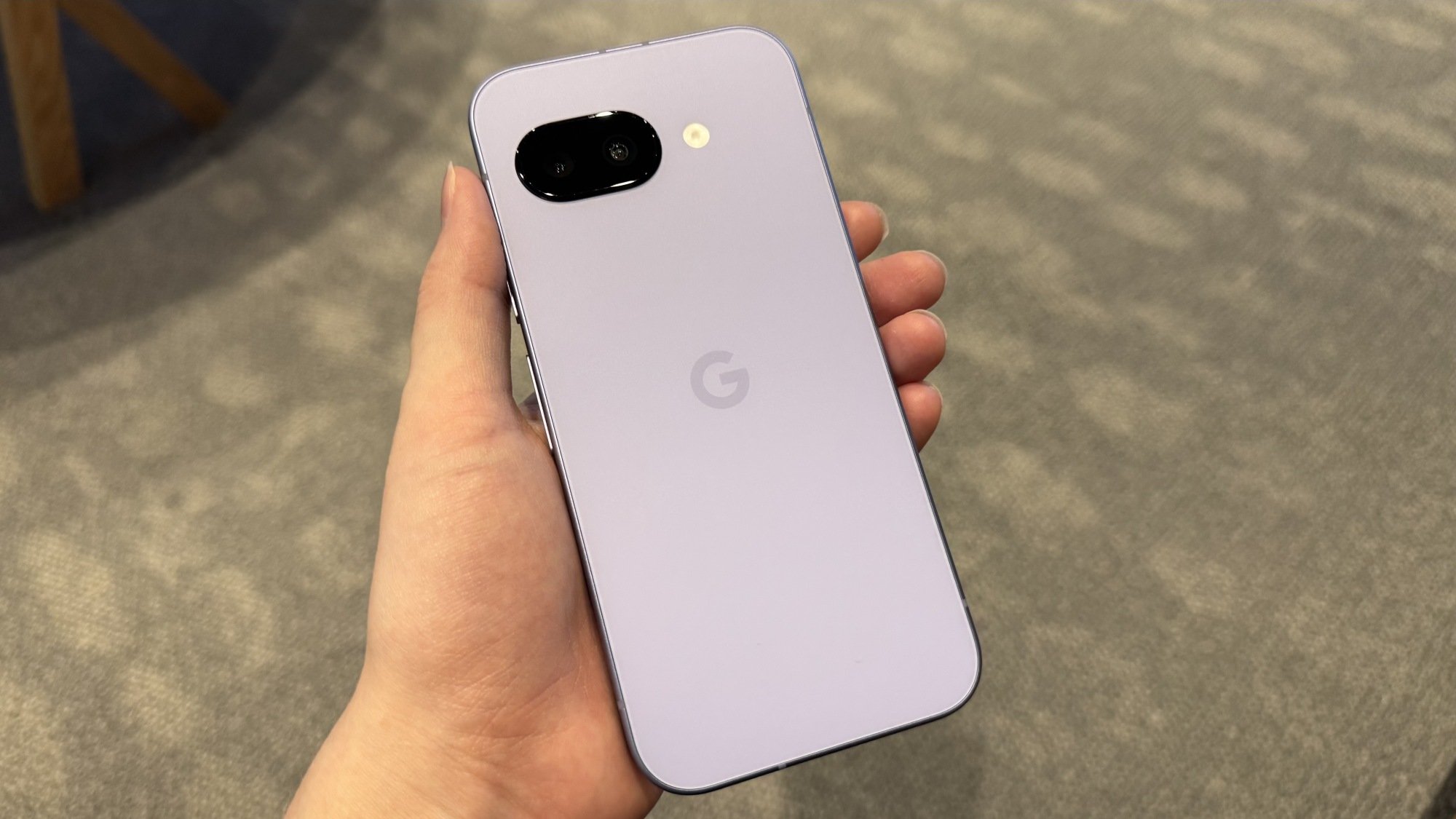
Instead, I think the Pixel 9a is easily Google’s best phone for almost everyone. It’s technically got the Pixel 9 name, but it’s also Google’s most recent budget variant, so it’s as current-generation as anything else. And while it does make some concessions to bring the price down, they’re fairly minor—and the device actually offers a few unique benefits of its own.

You don’t need the Pixel 10’s AI

“But what about all the fancy new Pixel 10 AI features?” you might ask. I’ve tried both the base Pixel 10 and the Pixel 10 Pro, and here’s the truth: You don’t need them.

Google’s announcement for the Pixel 10 series went hard on AI, and it’s true that the search giant is ahead of Apple and other smartphone makers on this front. But even with its head start, it’s clearly starting to run into diminishing returns. Existing AI features like the Gemini assistant and the Screenshots app are available on the Pixel 9, but most of the Pixel 10 exclusives focus on the camera app, and I don’t see most people sticking with any of them for long.

Case in point: 100x zoom. This Pixel 10 Pro exclusive feature sounds handy on the surface, supposedly letting you zoom in by 100x while still getting hi-res photos in return. But in truth, it just uses the same blurry digital zoom as other phones, then runs your shots through an AI to try to fix them up. It’s not really a reason to buy the Pixel 10 Pro—you can now get a similar result by just posting a photo to Gemini’s free, browser-based AI image generator as a prompt—and it frequently served me up photos with dreamy, unreal imagery that I wouldn’t feel comfortable posting. Just look what it did to my beloved Chrysler Building, and ask yourself if you would want to take a photo of a famous landmark only to get back a half-melted bizarro version instead. If you ask me, it’s firmly in the realm of novelty, at best.

Chrysler building using Pixel 10 Pro 100x zoom

Credit: Michelle Ehrhardt

I had a similar reaction to the other big camera AI developments this year, like using Gemini to edit photos or getting an AI to coach you while trying to frame a shot. Gemini image editing, which lets you use natural language to alter your photos, is handy, but also wrests control from you, and doesn’t tell you when it’s doing a simple job like a crop versus a more hallucination-prone one like generative fill. You can check the metadata of your new photo to know for sure, but frankly, the results aren’t good enough to be worth the time for me.

AI Photo edits made with the Pixel 10
Photos taken on the Pixel 10 (left) vs. those same photos edited by Gemini (right)
Credit: Michelle Ehrhardt

The same is true of Camera Coach, which uses AI to help you take shots. This has the benefit of not actively putting AI imagery into your photo, but the advice it gave me was rarely more complex than, “make sure the subject is in frame” and “follow the grid lines the previous generation Pixels could already put on your phone for you anyway.” It’s mostly unobtrusive—even when you’re using Camera Coach, you can take your final shot whenever—but it’s so inconsequential that I doubt most people will even take the extra time needed to boot it up.

To Google’s credit, there are a few AI additions unrelated to the camera that sound a bit more handy, like Magic Cue and Voice Translate. But you’re unlikely to run into these often. Magic Cue will use AI to pull information from Google apps like your Gmail to display when it might be relevant in other Google apps, like a phone call. For instance, it could display a boarding pass from an upcoming flight while you’re calling to check on it. But it doesn’t work with third-party apps, and since that’s how I use my phone most of the time, I actually didn’t see it pop up while I was testing either the Pixel 10 or Pixel 10 Pro.

I also didn’t get Voice Translate to work during my testing. This uses AI to translate both your voice and the person you’re calling’s voice if you’re speaking to each other in different languages, using what sounded like some pretty impressive voice cloning during its Made by Google demo. But it also needs both callers to have a Pixel 10, and since you can’t count on having a lot of multilingual friends that all use the same phone, that means it won’t be much more than a tech demo for most people.

Basically, Google’s new AI makes big claims, but the features are either so niche or so unreliable that they aren’t a major selling point save for a very specific type of user. It could be fun to toy with, but is it $300 to $500 worth of fun?

The Camera is thinner and not much weaker

But even if the Pixel 10 and 10 Pro aren’t worth it on their AI alone, the hardware still gets a bump, right? Well, in the case of the base Pixel 10, it actually got a little worse in one specific way, putting it in range of the Pixel 9a.

One of the things I dislike most about Google’s Pixel phones is the camera bar, which is the long horizontal bump across the entire top width of the device. This houses the camera sensor, but personally, I’d much prefer a weaker camera that’s flush with the device instead.

The Pixel 9a from the rear

Credit: Michelle Ehrhardt

With the Pixel 9a, Google granted my wish. This phone is the first Pixel in a long time to omit the camera bar, instead putting a single and much thinner pill in one corner of the device and leaving it at that. With the camera bar returning on both the Pixel 10 and Pixel 10 Pro, that alone makes the Pixel 9a worth considering as an alternative to me.

And the best part? The smaller camera on the Pixel 9a isn’t actually any weaker than the camera on the base Pixel 10. It’s just missing a lens.

Yep, while Google added a new telephoto lens to the Pixel 10 that allows it an up to 5x optical zoom, it also downgraded that phone’s ultrawide lens down from 48MP to 13MP, which is the same as on the Pixel 9a. And because both phones also have the same main lens, that means for everything but zoomed shots, you don’t lose anything by going with Google’s budget phone.

A close up photo taken on the Pixel 9a
Credit: Michelle Ehrhardt

To be fair, the Pixel 10 Pro is stronger than both phones on all fronts, but I’d argue that’s overkill for most users. If you never or rarely touch the zoom lens on your camera, whether to zoom in or out, you’ll actually get a similar experience across all three devices. So why pay more? Especially when the Pixel 9a’s camera is so much sleeker. If you’re a casual photographer, it could give you the same results, while taking up less space. A hidden upgrade.

Better battery life and a smooth OLED display

If the Pixel 9a’s camera is arguably on par with the more expensive Pixel 10 phones, then its battery life just straight up surpasses them. Packing a 5,100 mAh capacity, it puts both the Pixel 10 and Pixel 10 Pro to shame. To put that into more everyday terms, Google promises 30 hours of battery life on the 9a, but only 24 hours of battery life on either Pixel 10 model.

That held up in my testing. While the Pixel 10 died after about 18 hours of watching a video at 50% brightness (my standard test), the Pixel 9a was only a little under 50% capacity at the same time. And it was actually closer to half capacity when the Pixel 10 Pro died, which was after 16 hours of viewing. I actually haven’t had a full day to dedicate to draining this thing yet, but I assume that’s what it would take based on my tests, which easily puts the other Pixels to shame.

Granted, 50% brightness on the Pixel 9a isn’t quite as bright as on the other phones, since it only hits 2,700 nits of peak brightness as opposed to 3,000 nits on the Pixel 10 and 3,300 nits on the Pixel 10 Pro. But 2,700 nits is still plenty bright—the iPhone 16 maxes out at 2,000 nits. And on all other fronts, the display doesn’t compromise: The Pixel 9a has the exact same size (6.3-inches) and resolution (1,080 x 2,424) as the Pixel 10, and also works with Smooth Display for a responsive 120Hz refresh rate. It’s even an OLED, so you’re not making any compromises by going cheaper here.

Half the cost of a Pixel 10 Pro

Perhaps the biggest reason to opt for a Pixel 9a over a Pixel 10 is the same reason it was worth it compared to the other Pixel 9s—it’s just cheaper.

While the Pixel 10 starts at $799 and the Pixel 10 Pro starts at $999, the Pixel 9a is a mere $500. Given how closely it compared to even Google’s current-generation flagships, that’s a heck of a deal. And that doesn’t even come with any cuts to storage space, since both the Pixel 9a and all models of the Pixel 10 Pro begin with 128GB of storage. The cost to upgrade storage is also the same here—a simple $100 markup—although the Pixel 10 Pro does uniquely offer capacities over 256GB.

I’ll miss Pixelsnap, but the Pixel 10a is probably months away

I’ve been pretty high on the Pixel 9a so far, but I will make one concession—it doesn’t have PixelSnap, and I will miss that.

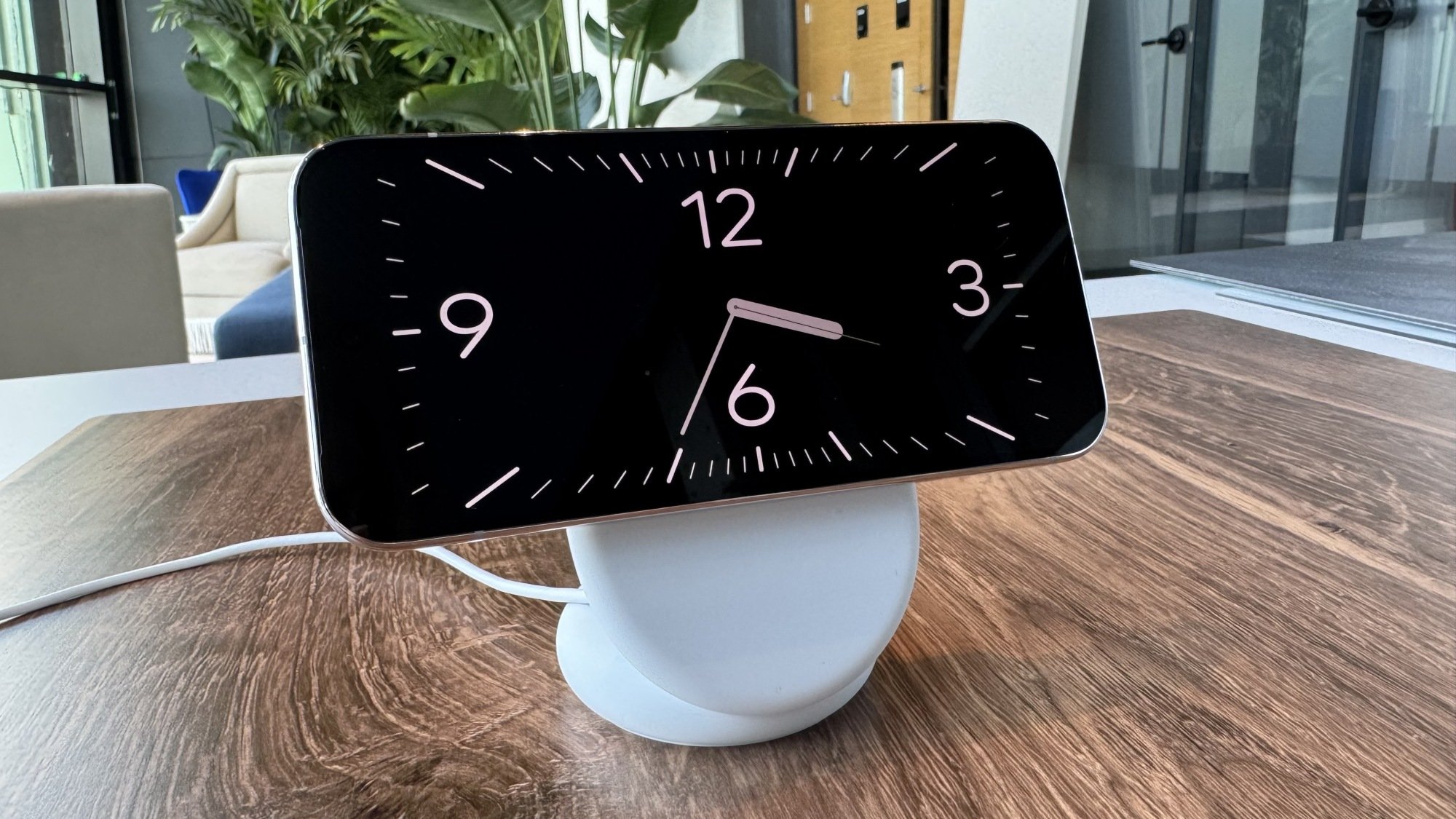
While the iPhone has had MagSafe since the iPhone 12, it took until this year for the Pixel to get its own version. Called Pixelsnap, it allows you to magnetically connect your phone right to compatible accessories and chargers on their own, with no need for cables or adhesive metal circles.

The Pixel 10 resting on a Pixelsnap Carger with Stand
Credit: Michelle Ehrhardt

I won’t lie, it’s convenient. It works with Qi2 charging for faster wireless top-offs, and while Google has its own official Pixelsnap accessories, it also worked fine with my Belkin iPhone charger, as well as a third-party MagSafe wallet I bought for my iPhone.

I’d miss that convenience by opting for the Pixel 9a instead of the Pixel 10, but I don’t know if I’d miss it enough to spend another $300 to $500. If there’s one reason to get a Pixel 10 model phone instead of a Pixel 9a, I think this would be it.

But what about the Pixel 10a?

As it did with the 9a, Google is sure to release a budget version of the Pixel 10 series down the line, and at that point, this article will probably become irrelevant. Granted, it’s not guaranteed to have Pixelsnap, but given how close the 9a already is to the 10, I bet it will—it’ll be an easy way to set the 10a apart from its predecessor.

However, the 9a didn’t come out until this April, and you can bet the 10a will follow a similar pattern. That means waiting over half a year from now, and frankly, I don’t like to prognosticate quite that much. Better tech is always on the horizon, but when making purchasing decisions, we have to live in the here and now. And right now, the Pixel 9a is still the best Google phone for most people.

EU Countries Delay Deal on New Climate Goal, Diplomats Say

An anonymous reader shares a report: European Union countries have shelved plans to approve a new climate change target next week, after pushback from governments including France and Germany over plans to quickly land a deal, three EU diplomats told Reuters on Friday. Countries are discussing a legally-binding target to cut net EU greenhouse gas emissions by 90% by 2040, from 1990 levels – with a share of this covered by buying foreign carbon credits.

The European Commission has said this would offer investors certainty and keep Europe on track for net zero emissions by 2050. Climate change has made Europe the world’s fastest-warming continent, unleashing deadly heatwaves and record-breaking wildfires. But EU governments are divided over how ambitious to be in tackling global warming, as governments also try to increase defence spending and support struggling industries.


Read more of this story at Slashdot.

How to Spot Malicious Two-Factor Authentication Prompts

With hackers looking for any way they can to gain access to your personal information via every form of phishing scheme, it’s critical to take every precaution to protect your data. Multi-factor (MFA) authentication is one way to boost account security, but it has to be employed correctly, and even then, you should be on the lookout for malicious prompts that give bad actors the codes they need to log in easily.

Two-factor authentication can be compromised

First, a reminder that two-factor and multi-factor authentication are not necessarily made equal. 2FA uses exactly two factors to verify a user’s login, and both can be something the user knows, such as their password plus a PIN or SMS code. MFA, meanwhile, requires at least two independent factors, like a password (a knowledge factor) plus a biometric ID (an identity factor) or a time-based, one-time password (a possession factor) from an authenticator app.

Knowledge factors (and some possession factors) can be phished relatively easily, which is why 2FA codes sent via SMS are the worst option for authentication, especially if you have alternatives. Bad actors may also try to trick you into engaging with fake 2FA prompts.

How to identify malicious 2FA prompts

One way hackers get past 2FA is by wearing you down with repeated authentication requests, a tactic known as prompt bombing. You may get dozens, even hundreds of push notifications to your phone in a short amount of time or late at night when you’re less likely to be thinking clearly. Threat actors are counting on the fact that if you get annoyed enough, you’ll eventually approve one of them. Don’t. If you get a 2FA prompt when you’re not trying to log into one of your accounts, that’s an instant red flag.

Another sign of a malicious prompt is that the attempted login is coming from an unfamiliar device or region—for example, a Google notification for a Windows machine when you’re a Mac user or a location in an entirely different country. You should also be wary of prompts with pop-ups that request permissions unrelated to the app or service itself, like the ability to access all of the contacts on your device.

Hackers may also contact you by phone, text, or email to request your 2FA SMS codes. It is easy to spoof phone numbers and email addresses, so you shouldn’t trust caller ID or a sender even if it looks legitimate. Companies won’t call unsolicited to demand your password or authentication code, so hang up or ignore these messages.

Bottom line: If you receive suspicious 2FA requests via push notification, text, or other method, ignore them, and change the password on the related account by going directly to the website or app, never via the prompt itself, as this may lead you to a phishing site that could further compromise your information. If you do accidentally interact with malicious prompts, look for signs of a scam, such as sneaky or lookalike characters in web addresses and poor spelling or grammar.

Colleges Are About to See a Big Decline in Applicants

US colleges face a prolonged enrollment decline beginning this fall as high school graduating classes shrink for the first time since the Great Recession. The incoming freshman class marks the start of a 13% drop in high school graduates through 2041, falling from 3.9 million to 3.4 million students. The decline stems from reduced birth rates during the 2008 financial crisis and subsequent years.

Regional four-year institutions in the Northeast and Midwest states face potential applicant pool contractions of 15% or more. Small liberal arts colleges, comprising 40% of the higher education market, are particularly vulnerable. 40% of private colleges posted financial losses in 2023. Top-ranked schools in the US News top 50 are expected to experience minimal impact due to sustained national demand for limited seats.


Read more of this story at Slashdot.

Gigabyte’s New Motherboards For Ryzen Tap AI For A 25% FPS Boost And 9500+ MT/s RAM

Gigabyte's New Motherboards For Ryzen Tap AI For A 25% FPS Boost And 9500+ MT/s RAM
Speeds for DDR5 memory have been increasing to dizzying heights, especially after the introduction of CU-DIMMs. Desktop motherboard makers are always trying to outdo each other, and one particular battle of inches is about memory speeds. Gigabyte recently posted some very bold claims, saying its Aorus X870E boards can deliver a gaming performance

Wild GeForce RTX 4090 Mod Upgrades VRAM To 48GB, Requires Nerves Of Steel

Wild GeForce RTX 4090 Mod Upgrades VRAM To 48GB, Requires Nerves Of Steel
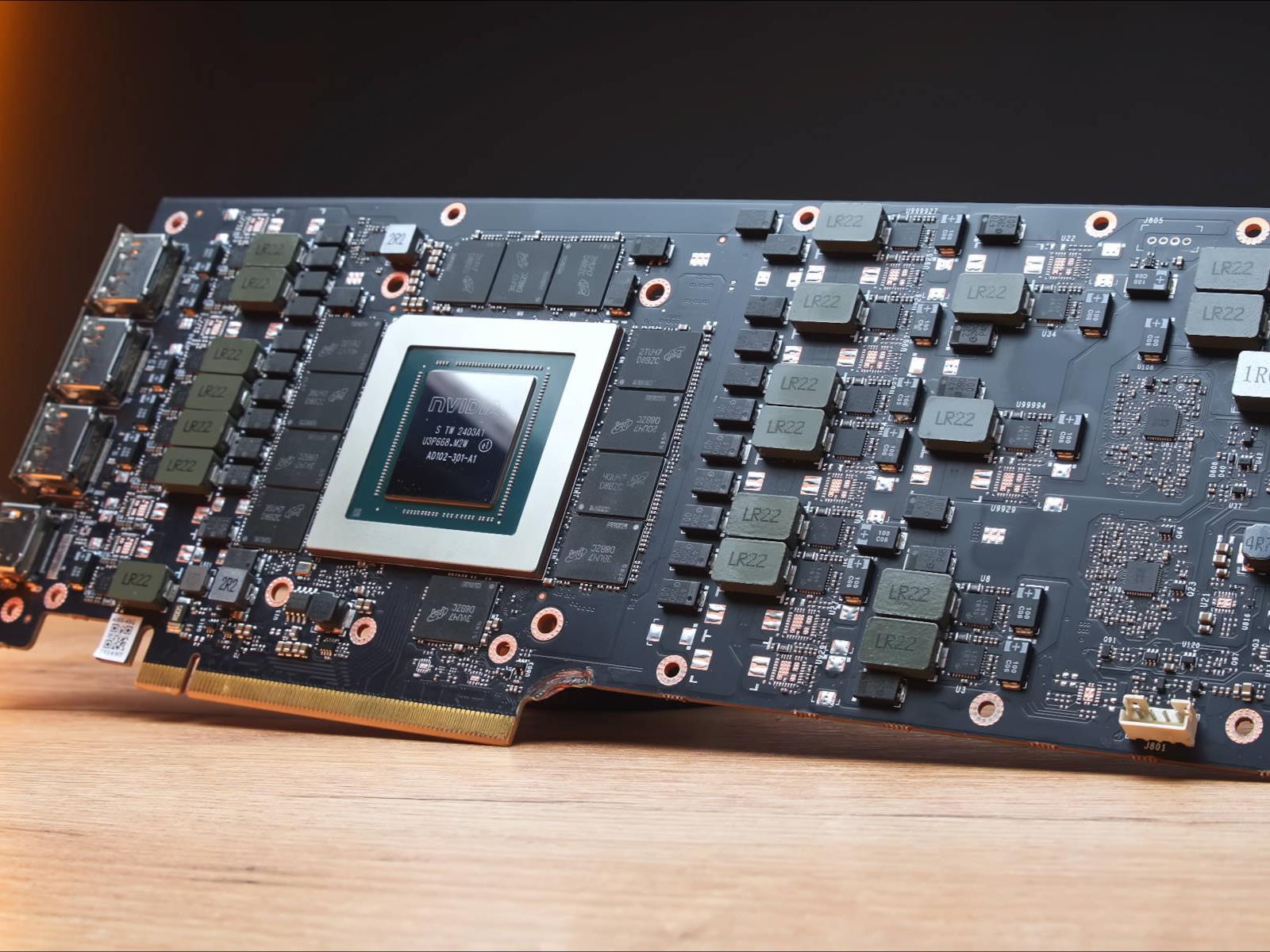
Russian YouTuber VIK-on recently released a video showcasing his modded NVIDIA RTX 4090, doubling its VRAM to 48GB from its already-beefy base 24GB. To pull it off, VIK-on needed to source a couple of 4090s, a standard model and a modified one from Chinese modders on Avito. The modified board was pre-flashed with firmware to support 48GB of

Coffee Prices Post Largest Annual Jump Since 1997

US retail coffee prices surged 21% year-over-year in August, the largest annual increase since October 1997, according to Thursday’s Consumer Price Index. The monthly 4% jump marks the steepest rise in 14 years. Trump administration tariffs on major coffee exporters — 50% on Brazil, 20% on Vietnam, and 10% on Colombia — are driving costs higher as 99% of US coffee consumption relies on imports.

J.M. Smucker plans its third price increase this winter for Folgers and Cafe Bustelo brands after raising prices in May and August. New Orleans chain French Truck Coffee has implemented a 4% tariff surcharge. Starbucks expects peak cost impacts in 2026 due to its advance purchasing practices. KPMG chief economist Diane Swonk predicts prices will exceed historical records as Brazilian tariff effects reach retail shelves.


Read more of this story at Slashdot.