The Samsung HW-Q800F soundbar is down to $597.99 on Woot right now, which is a good chunk less than its $797.99 Amazon price tag, and even lower than the lowest price it’s ever gone for before ($697.99), according to price-trackers. This offer is valid for the next two weeks or until it sells out, with free shipping for Prime members and a $6 fee for others. Plus, it comes with a 90-day Woot limited warranty, but the real appeal here is the performance: It’s a 5.1.2-channel system with Dolby Atmos support, meaning you get immersive audio, even without extra satellite speakers.
When it comes to performance, the Q800F feels most at home with TV and movies. The subwoofer has plenty of rumble for action-heavy scenes, while the dedicated center channel makes dialogue stand out even when everything else gets loud. That’s something a lot of cheaper soundbars miss, and it makes a big difference if you don’t want to ride the volume button during every show. Additionally, it plays nice with just about any device you throw at it—HDMI passthrough for 4K at 60Hz with HDR and Dolby Vision, plus Bluetooth, wifi, AirPlay, and Spotify Connect. If you’ve got a recent Samsung TV, you can even skip the HDMI cable altogether and stream Atmos wirelessly. Voice control is built in through Alexa; however, reportedly, connecting it to Google Assistant requires a little extra effort using Samsung’s app.
There are some trade-offs, though. The Q800F doesn’t offer HDMI 2.1 support or features like VRR, which limits its appeal if you’re chasing cutting-edge gaming specs. And Atmos performance, while present, doesn’t match that of the more expensive Q990F with dedicated satellites (the surround effect feels wider than a basic stereo bar, but not always fully convincing). Also, the bass can skew a little boomy, and there’s a dip in the mids that can thin out certain dialogue. Still, for a clean setup with powerful sound and strong format support, the Q800F offers a lot of the premium experience at mid-range price.
There must be something in the water at Spotify HQ. Less than a week after delivering long-promised lossless audio, the company has another treat. Free listeners can finally listen to any track they want. After enhancing Premium, perhaps Spotify figured it could add a free perk without shedding subscribers.
Spotify accounts on the free plan can now choose any track and immediately listen to it. Previously, that was paywalled for Premium subscribers. Non-paying ones had to shuffle through an album or playlist until the song they wanted to hear came up. And the free tier’s limited skips meant you might have to wait a while to get to it.
Now you can choose any track you want by searching, selecting it in an album or playlist or tapping a shared one. The feature rolls out globally beginning today. However, the free plan’s other limits haven’t changed, so you’ll need to listen to ads and choose your limited skips wisely.
Pre-existing features of Spotify’s free tier include personalized recommendations, AI playlist covers and “daylists.” If you can live without hi-fi audio, offline playback or ad-free listening, the view from the cheap seats is better than ever.
This article originally appeared on Engadget at https://www.engadget.com/entertainment/streaming/free-spotify-users-can-finally-listen-to-any-track-immediately-130013081.html?src=rss
Snap is upgrading the software that powers its augmented reality glasses as it gets ready for the first non-developer version of its “Specs” next year. The latest update to Snap OS includes an improved web browser, as well as the ability to browse Spotlight videos in AR.
The company has long said that one of its goals for AR glasses is to enable people to spend less time staring at their phones. Snap hasn’t quite accomplished that yet, but Snap OS is starting to get more features that could help the company get there.
The company has redesigned the browser in Snap OS to make it easier to switch between sites and resize windows to different aspect ratios. It’s also faster and more power efficient, with the ability to watch around 40 minutes of continuous video playback. (The current version of Spectacles tops out at around 45 minutes of battery life.) Speaking of video, Spectacles is also getting a dedicated lens for browsing Spotlight, Snapchat’s short-form video platform. There’s also a new gallery lens that allows you to preview photos you’ve snapped with the glasses’ onboard camera and quickly scroll through them with hand gestures.
The update arrives one year after the company first showed off its somewhat goofy-looking AR glasses. Since then, hundreds of developers have been experimenting with the device and creating their own AR lenses for the platform. But those experiences have so far had a very limited reach as the company has only made its AR Spectacles available to developers willing to pay a pricey subscription. That’s set to change sometime in 2026, though, when Snap says it will start selling a smaller, lighter and more capable pair of glasses.
The company has yet to divulge details about the redesigned form factor or what powers “Specs” will have. But the new version of Snap OS shows the company is trying to make its AR platform more useful.
Jim Lanzone, the CEO of Engadget’s parent company Yahoo, joined the board of directors at Snap on September 12, 2024. No one outside of Engadget’s editorial team has any say in our coverage of the company.
This article originally appeared on Engadget at https://www.engadget.com/ar-vr/snaps-ar-glasses-are-getting-a-better-browser-and-support-for-spotlight-video-130009244.html?src=rss
What do Big Foot, the Loch Ness Monster, and an AMD Radeon RX 9070 XT priced at MSRP all have in common? Nobody has ever supplied definitive proof that any of them actually exist. That may change, however, with the Radeon RX 9070 XT inching closer to its $599 recommended pricing in the wild, with a PowerColor model selling for $50 over MSRP.
If you want a powerful phone charger in the smallest size possible, Apple has the answer — but there is a tradeoff. The company’s new 40W Dynamic Power Adapter is the first charger to support the USB PD 3.2 AVS (adjustable voltage supply) protocol so it can hit up to 60W, but only for a limited time. It was designed to work the company’s new iPhone 17 models with faster charging speeds than previous iPhones.
Lugging heavy chargers is a particularly bugbear of mine so the Dynamic Power Adapter stands out with a footprint not much bigger than the smallest 40W chargers. With AVS, it can provide a specific power level that’s ideal for what a given device needs at specific times in its charge cycle. To that end, it can hit up 60W but only for a limited time period of around 18 minutes, according to one tester.
“With Dynamic Power, you get many of the same benefits of higher-wattage chargers in a compact, pocket-size form factor,” the Apple explains in the product description. “For faster charging, pair [it] with iPhone 17 models (50 percent battery in around 20 minutes) or iPhone Air (50 percent battery in around 30 minutes).”
With its fold down prongs it’ll easily slide into a pocket and not weigh you down like regular 60W chargers. For instance, Anker’s popular Nano II 65W GaN charger is one of the smaller options available but is still about twice the size of Apple’s new model. However, due to the limited time at higher wattages, it won’t be suitable for charging laptops like some third-party models. The other rub is the price: The 40W Dynamic Power Adapter costs $40, almost twice as much as Anker’s 65W charger.
This article originally appeared on Engadget at https://www.engadget.com/mobile/smartphones/apples-new-iphone-charger-dynamically-switches-between-40-and-60w-123053563.html?src=rss
Back in your day, slang made sense, trends were harmless, and young people didn’t go around painting their faces green and peeing on stuff. But those days are dead (and they never existed in the first place). Today’s kids and teens have a language, a culture, and a set of rituals that makes no sense, but only to you and I, because we’re old and washed-up. This column won’t bring back your youth, but it might help you be less offended if someone tells you to “start digging in your butt, twin.”
What do “sendy” and “let’s get sendy” mean?
The hottest piece of generation alpha slang this week is “sendy.” It’s an adjective that describes a person who does bold and/or exciting things. The phrase “let’s get sendy” means something like “let’s do something big/crazy.”
Or it doesn’t mean anything. Gen Alpha slang is brain-rot, so saying “let’s get sendy” especially when said in a sing-songy way, could be just a way to make your friends laugh/annoy everyone over 15.
“Sendy” originally came from the phrase “send it,” slang that (probably) originated in the rock climbing community of the 1980s or 1990s, as a shortening of “ascend it.” When faced with a particularly difficult section, one climber might yell, “send it!” to encourage their bro/broettes to go for it, or you might say “send it” to announce that you are about to do something sketchy yourself. “Send it” went on to be used in the same way in other action sports like mountain biking, skateboarding, and snowboarding.
“Sendy” as an adjective seems to have originated with The Nelk Boys, who have been posting mainly prank videos on their YouTube channel for over a decade. The Nelk Boys said/say “send it” a lot, and in this videos from 2023, one of them said, “let’s get sendy”:
This probably isn’t the first time anyone ever said “sendy” (it seems fairly obvious if you say “send it” a lot) but it might be the first time anyone ever said, “let’s get sendy.” If it is, it’s documented proof of the exact moment a piece of slang came into being—catnip for etymologists. Anyway, it took a couple years for “let’s get sendy” to make it from a podcast into every middle school in the country/world, but here we are in 2025, getting sendy.
What does SDIYBT (“start digging in your butt, twin”) mean
This acronym and phrase is growing very popular among the kids in Generation Alpha. SDIYBT stands for “start digging in your butt, twin.”
What “start digging in your butt, twin” actually means is debatable. Some have suggested it means something like “dig deep,” or focus and access your inner strength, but it’s more likely that the phrase doesn’t mean anything, because words meaning things is becoming passé.
The origin of SDIYBT as a slang phrase is a meme someone made of SpongeBob Squarepants saying “start digging in yo butt, twin.” (SpongeBob doesn’t say SDIYBT in the original cartoon; that was added by the memer):
Before long, people started lip-syncing the video:
Let us leave the world of annoyingly vague Generation Alpha slang to take a look at Generation Z, many of whom who have outgrown brain-rot and are trying to become better people. “The great lock-in” or “The September lock-in” is a collective, online self-improvement initiative where young people are vowing to devote September through December to achieving one’s personal goals, like eating healthily, exercising regularly, and otherwise building better habits. Think of it as a post-summer reset for bad habits.
It can’t be a thing online (particularly a thing that mainly women are doing) without people getting judgy, of course. Some are concerned that the trend could be an unhealthy part of a “major reversal of body positivity,” or evidence of a collapsing society, but I don’t see it. Having spent some time poking around popular videos in the great lock-in hashtag, all I’ve seen are people listing their own goals, offering tips on how to successfully stick to a plan, or just generally trying to motivate. None are focused on, say, starving yourself. As for this being evidence of society collapsing, I’m not seeing that either. Self-improvement/self-help trends in America date back to at least the 1800s, and there are a lot clearer indications that society is collapsing than this.
Hottest college trend: public urination
Gen Z isn’t only about wholesome self-improvement. There are also college students peeing on things in public. College students have always peed on things in public of course, but social media is making it into a trend. TikTok accounts like @brockport.pisser, @thesunycantonpisser, and @buff_state_pisser are getting thousands of views on videos of them letting loose near various landmarks at the schools they presumably attend. A pee-boy at The University of West Florida marked the UWF Welcome sign, and that sign reportedly cost the school over $2 million. Southern Illinois University, Edwardsville, and the University of Maine have all been victims of anonymous urinators, and there’s even been an arrest. Nicholls State University cops recently busted a dude who goes by “Nicholls Pisser” for violating an unnamed state law and city ordinance. Given how these videos are shot—a stream of liquid emanating from a source off camera—it seems like a tough case to prove. These videos could easily have been made with a water bottle, a fact that at least one “pisser” points out.
Viral video of the week: TikToker paints face green
It’s a pretty safe assumption that all of the peeing-on-stuff accounts above are operated by dudes. Dudes are cool and all, but they can be a bit much. That’s the story behind today’s viral video.
Whatever demon is in charge of TikTok’s recommend algorithm decided to spread the video, and nearly a million people watched it—but they were the wrong people. According to Bailey, that one video changed the demographics of her viewerships from primarily female to primarily male, and the change was not good. “Now my inbox and comments are littered with disgusting messages,” Bailey reports. But she came up with a unique solution for getting rid of all those creeps/men, as you can see in the below video:
Did Bailey painting her face green work? Sure seems like it. Her comment section is packed with women reporting in, and Bailey’s taken the idea further with a cool red face job too:
If you’re not already wearing a pair of AirPods all day, Apple’s latest suite of features may convince you to do so. The company’s latest model, the AirPods Pro 3 ($249), is Apple’s most comprehensive update to its best set of earbuds. Flashy new features like Live Translation and heart-rate sensing will garner the bulk of the attention, but upgrades to active noise cancellation (ANC) and a significant boost in sound quality shouldn’t be overlooked. And with a notable improvement in battery life, the company now provides enough power for you to use these AirPods for an entire work day. Importantly, Apple managed to do all this without raising the price.
The AirPods Pro 3 also carry many of the same features that made the AirPods Pro 2 such a compelling option for iPhone users. Those include the robust hearing health tools, hands-free access to Siri, gesture-based notification interactions, audio sharing with another set of AirPods, simplified setup and more.
Since I’ve gone over all of these at length before, and because there’s a long list of updates on the AirPods Pro 3, I’ve chosen to focus primarily on the new tools in this review. But you shouldn’t overlook the exhaustive set of features that the AirPods Pro have amassed over the years, especially when you consider how Apple continues to find new ways to deploy its H2 chip.
Design changes on the AirPods Pro 3
With a cursory glance, you likely won’t notice the design changes on the AirPods Pro 3. The company altered the shape of these smaller earbuds to align with the geometry of the ear canal for a more comfortable and secure fit. Of course, you’ll also notice the newly installed heart-rate sensor upon closer inspection, covering a previously blank surface of the AirPods Pro 2. Once you remove the new foam-infused ear tips from the latest model though, you’ll see the most obvious variation between the second- and third-generation versions.
On the AirPods Pro 2, the grille protecting the driver sat flush with the surface of the main housing. Now, it’s extended out from the rest of the earbud, with a nozzle-like component similar to what much of the competition uses. Apple also revised the angle of the drivers, so sound beams more directly into your ears rather than bouncing as much off of the sides. As such, a side-by-side comparison of the AirPods Pro 3 and AirPods Pro 2 will show you that the ear tips are pointing in slightly different directions.
There are also some visual differences on the AirPods Pro 3’s charging case. Like it did for the AirPods 4 last year, Apple has removed the Bluetooth pairing button entirely. You’ll now double tap on the front of the case near the LED to activate that function while the AirPods Pro are in their case. Additionally, just like AirPods 4, the LED is now hidden, so you don’t see the dot when it’s not illuminated. It’s a small thing, but as I noticed on last year’s models, it makes the surface of the case look cleaner.
A quick word about fit
Billy Steele for Engadget
Thanks to the AirPods Pro 3’s revised curves and foam-filled ear tips, Apple is calling this model the “best-fitting AirPods ever.” While I do think that’s true, I also believe that the new fit will take some getting used to — especially if you’ve worn the AirPods Pro 2 before.
First, the new tips feel very different and seal off your ear canal in a more complete way than the Pro 2’s silicone-only tips. If you’ve used foam ear tips before, you know they provide better passive noise isolation than their silicone counterparts, and that remains true here. In fact, you may need to go down a size to find the most comfortable fit with the AirPods Pro 3. For example, I typically wear medium ear tips, but those felt too tight here. After swapping them out for the small ones, I began to understand why Apple won’t stop bragging about the updated fit.
Upgraded ANC and its impact on other features
Across the first two generations of the AirPods Pro, Apple had already made big strides in active noise cancellation. But with the AirPods Pro 3, the company ramped up its efforts several notches. Ultra-low-noise microphones combine with advanced computational audio to silence even more background noise. The new foam-infused ear tips play a major role here too, since they offer increased passive noise isolation. This trio of improvements allowed Apple to cover more of the noise spectrum, including higher frequencies like human voices.
In the last week, there have been several times when I had the AirPods Pro 3 in and I couldn’t hear someone talking right next to me. In fact, Apple says the latest model cancels twice as much noise as the AirPods Pro 2 and four times more than the original AirPods Pro. Obviously, I don’t have a way to quantify that, but I can tell you the ANC performance on this new model was noticeably stronger than before.
The improved seal the AirPods Pro 3’s ear tips offer helps make Apple’s ANC setup more precise. This allows the active noise cancellation system to be the foundation for several of the company’s other features like the Hearing Test, Live Translation and more. For the Hearing Test, you can now be in slightly louder environments without Siri asking you to relocate to a quieter place. And with Live Translation, ANC will lower the voice of the person you’re speaking to so you can focus on Siri playing the role of interpreter.
Live Translation on the AirPods Pro 3
Billy Steele for Engadget
At WWDC, Apple announced that Live Translation would be coming to Phone, FaceTime and Messages in iOS 26. There was no mention then that it would come to AirPods. Skip ahead to the iPhone 17 event and Live Translation was easily one of the most exciting new features announced for the AirPods Pro 3, because it will allow the wearer to translate in-person conversations with Apple’s earbuds.
Google has been offering real-time translation on Pixel Buds for years, so Apple is very late to the game here. However, the AirPods Pro 3 uses its H2 chip in different ways, and now combines Voice Isolation, ANC and the beamforming mics to enable Live Translation. What’s more, you can activate it on the earbuds themselves (press and hold on both stems), ask Siri to start it or set the iPhone’s Action Button to carry out the task.
When Live Translation begins, ANC kicks in to muffle environmental noise and to reduce the volume of the person you’re speaking to. Both are done so you can clearly hear Siri’s translation through your AirPods. Siri will warn you when ambient sound levels are too high, asking you to move to a quieter spot so that it can hear the speaker better.
Live Translation worked well, at least for my Spanish-to-English and French-to-English tests. Plus, a real-time transcription is visible in the Translate app so you can show it to the person you’re chatting with — an element that’ll be useful for international travel. Just know that if you’re looking at your phone too, you’ll see the translation there before the audio comes through your AirPods. This isn’t surprising since the processing is being done by the connected iPhone, but seeing the English version right before I heard it was slightly confusing.
You will need to enable Apple Intelligence on a compatible iPhone for Live Translation to work. The tool leverages Apple’s AI to translate the meanings of phrases so that sentences have the proper context. The feature will also be available on any AirPods that have the H2 chip inside, which includes the AirPods Pro 2 and AirPods 4 with ANC. You’ll have to download the different language models before you get started, too. Apple explains that the downloads would be required for offline use, but Siri prompted me to do so to use Live Translation even when I was was connected. Lastly, only five languages are supported at launch: English, French, German, Portuguese and Spanish. Apple says Italian, Japanese, Korean and Chinese (simplified) are coming later this year.
Heart-rate tracking finally arrives
Billy Steele for Engadget
After initially debuting heart-rate sensing capabilities on the Powerbeats Pro 2, Apple is now bringing it to the AirPods Pro 3. Like with the Powerbeats model, heart rate data from the AirPods can be accessed by Apple’s own Fitness app in addition to other workout apps like Nike Run Club, Runna, Ladder and Peloton. Basically, if an app works with the Powerbeats Pro 2, it should work with the AirPods Pro 3, and it should do so by the time those earbuds ship. As always, I expect even more integrations will be announced in the future, so don’t panic if your go-to app has worked with Apple gear in the past but doesn’t yet support the AirPods Pro 3.
I exclusively tested the new heart-rate sensing tech on the AirPods Pro 3 with Apple’s Fitness app. I’m an Apple Watch owner and that’s where the bulk of my stats already reside. Speaking of the Watch, you don’t have to worry about conflicting streams of heart rate info if you’re using it as well as the AirPods Pro 3 during a workout. Apple explained that its devices will work together to provide multiple streams of data for better coverage of your activity. What’s more, if you don’t wear your Apple Watch during a session, the Fitness app will use data gathered from the AirPods Pro 3 to still log your stats for your Move, Exercise and Stand rings.
During this review, I used the AirPods Pro 3 to monitor my heart rate primarily during outdoor walks. The earbuds actually support 50 different workouts in the Fitness app though, with HIIT, yoga and paddling among the available options. You can even track a session at the archery range.
You’ll see live heart rate metrics on the workout screen alongside stats like time and distance, and your average heart rate will be displayed in the workout summary when you’re done. Heart rate info is also displayed with Live Activities on the lock screen and is a tap away on the icon in the Dynamic Island. So far, I haven’t encountered any issues leaving my Watch at home and relying solely on the AirPods Pro 3. The earbuds provided a constant stream of data to the Fitness app.
The AirPods Pro 3’s sound quality
The AirPods Pro 3 (left) vs. the AirPods Pro 2 (right).
Billy Steele for Engadget
The improvement to sound quality on the AirPods Pro 3 isn’t exclusively due to its new drivers/transducers. Although those components were revised this generation, Apple’s biggest strides in the audio department are also thanks to increased air flow inside the earbuds. The company developed a new multiport acoustic architecture for better control of the air that delivers sounds into the ear. This allowed Apple to significantly improve bass response while providing a wider soundstage and increased vocal clarity.
With all of that air to move around, Apple had to tweak its drivers for the task, but also make sure its tuning covered all the needed frequencies adequately. But those transducers remain the same size as the AirPods Pro 2. As I mentioned, Apple also reconfigured their angle so they now beam sound more directly into the ear canal. You might recall that an angular adjustment was also part of the company’s strategy for improving audio quality on the AirPods 4.
The improvement you hear first will depend on the style of music you choose. Pick something with big, bombastic drums like Deftones’ “my mind is a mountain” and you’ll immediately notice the warmer, boomier bass. Opt for a track like Hayley Williams’ “True Believer” and your initial impression will likely be the enhanced vocal quality. And if you go for a song like Sleep Token’s “Dangerous” that’s more atmospheric, you’ll get a great sense of the expanded soundstage.
Oftentimes audio companies make claims about sound quality improvements that don’t translate to what I actually hear. With the AirPods Pro 3, all of Apple’s proclamations not only hold true but are obvious, observable improvements.
Call quality and voice performance
Apple’s best-in-class transparency mode has been one of my favorite things about AirPods for years. No other company manages to handle ambient sound in a way that’s so clear it’s almost as if you aren’t wearing earbuds at all. With the AirPods Pro 3, Apple says it took things even further, making your voice and the voices of those around you sound “more natural and vibrant.” The company points specifically to Hearing Aid and Live Translation as areas where this fine-tuned transparency mode will help, but it will also be a boost to voice and video calls, too.
Since Apple does such a good job of feeding your voice back through the AirPods Pro 3 and other transparency-enabled AirPods models, you never feel the need to talk louder to hear yourself on calls. It lets you relax and speak normally, and makes a day’s worth of Zoom calls much less exhausting.
The AirPods Pro 3 support Apple’s newly introduced studio-quality voice recording as well. Arriving with iOS 26, the feature allows you to capture higher-quality vocal clips in apps like Camera, Voice Memos, Messages, FaceTime and any CallKit-enabled software. And when you’re recording video with an iPhone, you can now quickly select AirPods as the main audio source. The earbuds can act as a lavalier microphone with voice pickup that’s closer to your mouth.
The AirPods Pro 3’s battery life
Billy Steele for Engadget
Even with all of the new features, Apple still managed to extend the AirPods Pro’s battery life. With ANC enabled, you can now expect up to eight hours of use on a charge — two hours longer than the AirPods Pro 2. This means you could be able to wear the new model for a full day of work without having to charge them. Additionally, Apple says that if you’re using transparency mode with the Hearing Aid feature, AirPods Pro 3 will last up to 10 hours.
So far, I have no reason to think Apple has overstated battery life on the AirPods Pro 3. I haven’t conducted a straight battery rundown test yet as I’ve been focused on trying all of the new features at various times over the last few days. I will update this review later this week with the results of my battery test though.
If you find the promised eight hours still isn’t enough, a five-minute rest in the case will be enough to give you an hour of use. That’s long enough to get you through a quick workout or a call when you need to keep things hands-free. There is an important caveat with the case though. Despite the extended use time on the earbuds themselves, the total battery life including the case is reduced to 24 hours from the previous 30. There’s also a new ultra wideband chip (U2) in the charging case that Apple says has increased the distance for Precision Find My by one and a half times compared to the previous version.
The competition
Since the “regular” AirPods now offer ANC, Apple’s primary competition for the AirPods Pro 3 comes from within its own product lineup. The AirPods 4 with ANC offer an open-type fit even though they have impressive noise-blocking abilities, so they may be more comfortable for those who don’t like buds sticking into their ear canals. You’ll get Live Translation there too, but you won’t be able to access heart-rate tracking and Apple’s suite of hearing health tools. That might not matter to those who want to save some money though, as the AirPods 4 with ANC are $179 versus $249 for the AirPods Pro 3.
All AirPods are really a conduit for Apple’s ecosystem, so if you don’t mind missing some iPhone integrations and special features, there are worthwhile alternatives. Sony’s WF-1000XM5 remains a jack of all trades, offering a set of features that perhaps only Apple can rival. The difference being that Sony’s tools will work with both iOS and Android, of course. The second-gen Bose QuietComfort Ultra Earbuds are your best bet for pure noise-canceling abilities, and if you demand pristine sound, consider Noble Audio’s FoKus Rex5.
Wrap-up
The AirPods Pro 3 is the biggest update to Apple’s earbuds lineup in years. The sum of the company’s upgrades here are more significant than the choice to finally bring ANC to the “regular” AirPods last year. The combination of more precise ANC, improved sound quality, heart-rate tracking, Live Translation and longer battery life is a lot to explore. And that’s not even counting the redesign and new ear tips that offer a more secure fit, two items that directly address one of the main criticisms of previous AirPods models.
If recent history is any indication, the company will continue to add new features to this third-generation version. I highly doubt that Apple is finished exploiting the power of the H2 chip, so it’s just getting started with what the AirPods Pro 3 can do.
This article originally appeared on Engadget at https://www.engadget.com/audio/headphones/airpods-pro-3-review-a-significant-update-to-apples-best-earbuds-120028170.html?src=rss
It’s normal to want the latest and greatest device, especially when Apple is behind it. But if you’re like me, you really don’t need a new iPhone. To be honest, had it not meant an accidental untimely end, I’d still be rocking with my pacific blue iPhone 12 Pro Max (RIP). My 15 Pro Max is alive and well, however, though it is looking a bit vintage against Apple’s fresh slate of devices.
Rather than shell out a significant amount of money on an iPhone 17 and unnecessarily retire a perfectly working device, I suggest many of us try to breathe some life back into our aging iPhones.
Replace the battery
If your phone is a few years old, you’re likely not getting the same power-on time as you did when you first bought it. A new battery usually costs a fraction the price of even a mid-range phone, but it can do more than just extend your time away from the charger.
Some phones—especially iPhones—slow themselves down automatically when the battery gets too old. (Apple got in some hot water years ago for not disclosing this practice.) The operating system system does this to prevent your phone from shutting down unexpectedly, and while you can turn this feature off, you probably won’t see nearly the same performance you would with a new battery. Even if it did, you run the risk of your iPhone crashing at a moment’s notice. A fresh battery can change all that.
To see whether your battery might be due for an upgrade, open Settings > Battery > Battery Health. Here, check your “Maximum Capacity,” which is the amount of charge the battery can hold relative to when it was new. When this number reaches 80% or below, it’s likely a good idea to replace the battery. Take note of any warnings that your battery has degraded. These are also excellent clues that you probably need a replacement.
Clear up some storage space
Storage management isn’t fun, but it’s essential no matter your device. If you have apps, photos, videos, and more filling your phone to the brim, it’s going to cause problems. That’s because all computers need some extra storage space to function properly. If your phone keeps screaming at you that’s it’s nearly full, believe it.
The good news is, if it’s time to clear some storage, you don’t need to clear a whole lot—just at least 5–10% of your total memory. These days, iOS makes it easy to see what’s taking up the most storage on your device. Head to Settings > General > iPhone Storage. Here, iOS will offer tips for deleting large files to free up room. For example, when I head to this page, I see suggestions to “Review Large Attachments” in Messages, which would save me up to 40.55 GB, apparently; and “Offload Unused Apps,” which would clear out 16.31 GB. Whittle things down until you see that you have at least a small chunk of free space available.
Clean out your charging port
If you find that charging your phone is impossible, or that it charges slowly or inconsistently, you don’t necessarily need to buy a whole new device. Instead, try cleaning out the charging port. You wouldn’t believe how clogged these things get; lint and debris from your pockets can get trapped and packed down into the port, blocking the charger’s ability to properly connect.
To clean it, use a thin piece of wire (like a SIM tool or an untwisted paperclip) to carefully scoop any obstructions out of the port. The key word here is carefully; this port is fragile, and if you scrape the connections too hard, you could damage them irrevocably.
If your port still won’t charge after a good cleaning, all hope isn’t lost. If your iPhone supports wireless charging, consider using one of these chargers instead of a wired connection. Even better, use MagSafe, if your iPhone supports it, so you can hold your iPhone while its charging.
Swap out your wallpaper
Every time you look at your phone, you’re probably looking at the same Lock Screen wallpaper. If you’ve gotten bored of it, that sameness could be influencing your desire to upgrade.
It’s a small change, but see if you feel different after replacing the wallpaper, preferably to something totally different from what you had before. Pick something with an opposite color scheme, subject, art style, etc. If you haven’t changed your wallpaper in a while, you might be surprised by the amount of customization Apple allows for now. You can choose to match your Home Screen’s wallpaper to your Lock Screen, or have a different option altogether.
Change up your app and widget arrangements
Your Home Screen layout is likely getting stale as well. As with the new wallpaper options, Apple has made some significant changes to the way you can customize your Home Screen in recent years. Try adding new widgets that you haven’t used before and mix up the order of the apps you use on a daily basis. You can even put them anywhere you want now, a la Android.
Get a new case
Part of the appeal of a new phone is the new look; instead of buying a new device just for a new color or because your old one is dinged up, trying slapping a new case on your existing phone instead. You’d be surprised how transformative this can be. A leather case can make your device feel a bit more premium, while a colorful silicone one can brighten up its appearance. You can even find one that will replace your wallet.
Or, if you’re feeling daring, try going caseless for a bit. You’ll put your iPhone at risk of damage, sure, but it’s nice to be reminded of how these devices really look and feel from time to time.
Replace your screen or screen protector
Stop living with that beat-up screen protector. A good one can be a bit pricey, but a cracked and scratched piece of plastic or glass is likely taking its toll on your perception of your phone. Similarly, if your phone’s display has taken a beating, think about getting it fixed, too. Depending on the phone, that can get really expensive (for newer devices, Apple charges up to $379 for the favor), but if it’s between that or a $1,000 iPhone 17 Pro, there’s a clear winner for your wallet. (It’s also worth noting that you typically can’t trade in a phone with a broken screen.)
Upgrade to iOS 26
iOS 26 is just about to drop, and it marks arguably the biggest design change for iPhones since iOS 7. That’s in large part due to the new Liquid Glass design, and while it may not be for everyone, I think a lot of people are going to find it refreshing. You can even choose to see your apps and widgets in clear mode, going back to Home Screen customization.
The thing about iOS 26 is, it doesn’t require a new iPhone to run. In fact, it works with iPhones as old as the iPhone 11, which dropped back in 2019. While you need an iPhone 15 Pro or newer to run Apple Intelligence features, I’d wager most of us don’t need these. Instead, the visual refresh of iOS 26, coupled with the new features that everyone gets, should make even an iPhone 11 feel a bit newer.
It has been just over a month since 8Bitdo released its Pro 3 controller. While the new model is a great option, its predecessor shouldn’t be kicked to the wayside — especially when it’s on sale.
Right now, Prime members can get the 8Bitdo Pro 2 wireless Bluetooth controller and a travel case for $40, down from $60. The 34 percent discount solves our biggest gripe about the device: that it’s too big to carry around sans case. Plus, it gives you a cheaper option that’s also compatible with the new Nintendo Switch 2. However, this Amazon deal is strictly available for Prime members.
Despite launching in 2021, the Pro 2 was still our choice for best PlayStation-style mobile gaming controller this year. It works well with Android and iOS systems and has extensive customization options when you use your phone. Plus, the design is comfortable to hold and available in multiple colors.
If you’re interested in upgrading to the Bitdo Pro 3 instead, now is a good time. Amazon is offering a 10 percent discount at checkout for the $70 wireless Bluetooth controller, bringing it down to $63.
This article originally appeared on Engadget at https://www.engadget.com/deals/8bitdos-pro-2-controller-with-travel-case-is-on-sale-for-40-for-prime-members-115247180.html?src=rss
Long-time Slashdot reader schwit1 shared this article from IEEE Spectrum:
The world’s largest airplane, when it’s built, will stretch more than a football field from tip to tail. Sixty percent longer than the biggest existing aircraft, with 12 times as much cargo space as a 747, the behemoth will look like an oil tanker that’s sprouted wings — aeronautical engineering at a preposterous scale.
Called WindRunner, and expected by 2030, it’ll haul just one thing: massive wind-turbine blades. In most parts of the world, onshore wind-turbine blades can be built to a length of 70 meters, max. This size constraint comes not from the limits of blade engineering or physics; it’s transportation. Any larger and the blades couldn’t be moved over land, since they wouldn’t fit through tunnels or overpasses, or be able to accommodate some of the sharper curves of roads and rails.
So the WindRunner’s developer, Radia of Boulder, Colorado, has staked its business model on the idea that the only way to get extralarge blades to wind farms is to fly them there… Radia’s plane will be able to hold two 95-meter blades or one 105-meter blade, and land on makeshift dirt runways adjacent to wind farms. This may sound audacious — an act of hubris undertaken for its own sake. But Radia’s supporters argue that WindRunner is simply the right tool for the job — the only way to make onshore wind turbines bigger. Bigger turbines, after all, can generate more energy at a lower cost per megawatt. But the question is: Will supersizing airplanes be worth the trouble…?
Having fewer total turbines means a wind farm could space them farther apart, avoiding airflow interference. The turbines would be nearly twice as tall, so they’ll reach a higher, gustier part of the atmosphere. And big turbines don’t need to spin as quickly, so they would make economic sense in places with average wind speeds around 5 meters per second compared with the roughly 7 m/s needed to sustain smaller units. “The result…is more than a doubling of the acres in the world where wind is viable,” says Mark Lundstrom [Radia’s founder and CEO].
The executive director at America’s National Renewable Energy Laboratory Foundation points out that one day blades could just be 3D-printed on-site — negating the need for the airplane altogether. But 3D printing for turbines is still in its earliest stages.
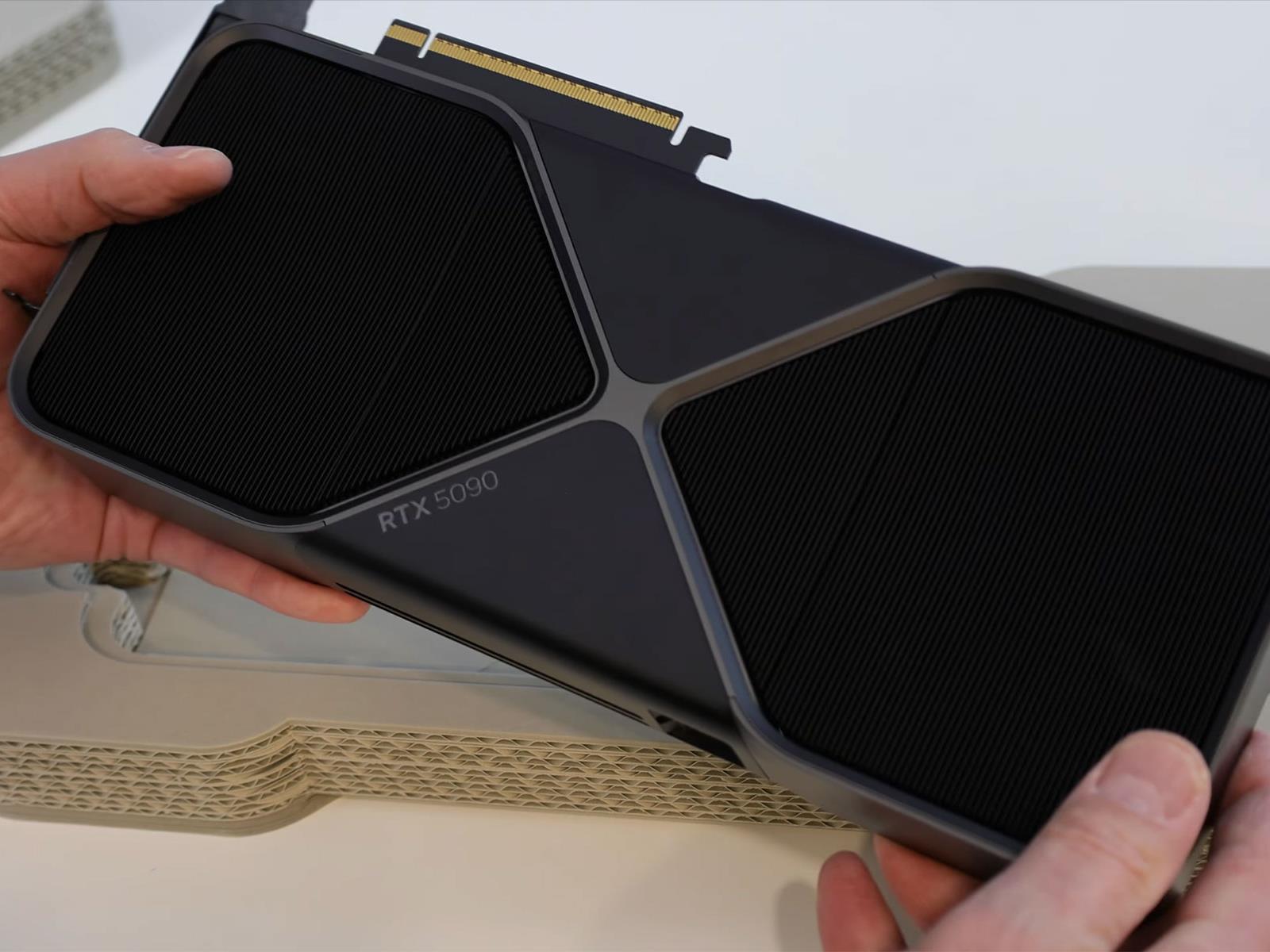
Over the weekend, it came to attention that Founders Edition models of the GeForce RTX 5090 and GeForce RTX 5080 had disappeared from NVIDIA’s website in several regions, including the United States and United Kingdom. This led to speculation that NVIDIA may have discontinued the FE models to make room for an anticipated Super refresh, but
Streaming platforms once again dominated the 2025 Primetime Emmy awards (77th edition), while network TV was shut out of the the major filmed categories. Apple TV+ came out on top with seven total wins including four for The Studio: Outstanding Comedy Series, Outstanding Lead Actor (Seth Rogen), Outstanding Directing (Rogen and Evan Goldberg) and Outstanding Writing. “I’ve never won anything in my life,” Rogen said during his off-the-cuff acceptance speech. “When I was a kid I bought a used bowling trophy.”
Apple+ also garnered two acting awards for Severance, including Britt Lower (Outstanding Lead Actress in a Drama Series) and Tramell Tillman (Outstanding Supporting Actor in a Drama Series). However, HBO Max’s medical drama The Pitt surprisingly pipped Severance for the Best Outstanding Drama Series, while also earning Noah Wyle and Katherine LaNasa drama series awards for Outstanding Lead Actor and Outstanding Supporting Actress, respectively. HBO Max also scooped awards for its comedy series Hacks with Jean Smart taking the Outstanding Lead Actress trophy and Hannah Einbinder winning for Outstanding Supporting Actress.
Netflix took the prize for Outstanding Limited or Anthology Series with critical darling Adolescence, with that same show earning Stephen Graham, Owen Cooper and Erin Doherty Emmys for lead actor and supporting actor and actress, respectively (at 15, Cooper is the youngest-ever male winner of a Primetime acting Emmy). That show also won Emmys for outstanding directing and writing for a limited or anthology series or movie.
The Emmys showed again how prestige and money continue to shift from networks to streamers. CBS’s only Emmy was for The Late Show with Stephen Colbert, a show it canceled in August. NBC won for the Saturday Night Live 50th Anniversary Special, while cabler HBO took prizes for Last Week Tonight with John Oliver (Outstanding Scripted Variety Series and Outstanding Writing) along with The Penguin (Cristin Milioti for Outstanding Lead Actress) and Somebody Somewhere (Jeff Hiller for Outstanding Supporting Actor in a Comedy Series).
This article originally appeared on Engadget at https://www.engadget.com/entertainment/streaming/apple-tv-won-big-at-the-primetime-emmys-with-severance-and-the-studio-093051329.html?src=rss
India’s IT services industry saw entry-level hiring collapse by 70% between fiscal years 2023 and 2024, as the country’s four largest IT exporters reduced fresh graduate recruitment from 225,000 to 60,000. Tata Consultancy Services and Infosys shed a combined 38,000 employees in fiscal 2024, marking the sector’s first workforce contraction in decades.
Studies indicate generative AI could automate 30-40% of junior developer and tester tasks. The proportion of employees under 30 at Infosys declined from 81% in 2010 to a projected 53% by fiscal 2025. India adds 8-9 million people to its workforce annually while the IT sector projects just 50,000 net new jobs per year from fiscal 2026-28. The graduate unemployment rate exceeds 13%, nearly triple the national average.
“These are the last days of social media as we know it,” argues a humanities lecturer from University College Cork exploring where technology and culture intersect, warning they could be come lingering derelicts “haunted by bots and the echo of once-human chatter…”
“Whatever remains of genuine, human content is increasingly sidelined by algorithmic prioritization, receiving fewer interactions than the engineered content and AI slop optimized solely for clicks… ”
In recent years, Facebook and other platforms that facilitate billions of daily interactions have slowly morphed into the internet’s largest repositories of AI-generated spam. Research has found what users plainly see: tens of thousands of machine-written posts now flood public groups — pushing scams, chasing clicks — with clickbait headlines, half-coherent listicles and hazy lifestyle images stitched together in AI tools like Midjourney… While content proliferates, engagement is evaporating. Average interaction rates across major platforms are declining fast: Facebook and X posts now scrape an average 0.15% engagement, while Instagram has dropped 24% year-on-year. Even TikTok has begun to plateau. People aren’t connecting or conversing on social media like they used to; they’re just wading through slop, that is, low-effort, low-quality content produced at scale, often with AI, for engagement.
And much of it is slop: Less than half of American adults now rate the information they see on social media as “mostly reliable” — down from roughly two-thirds in the mid-2010s… Platforms have little incentive to stem the tide. Synthetic accounts are cheap, tireless and lucrative because they never demand wages or unionize. Systems designed to surface peer-to-peer engagement are now systematically filtering out such activity, because what counts as engagement has changed. Engagement is now about raw user attention — time spent, impressions, scroll velocity — and the net effect is an online world in which you are constantly being addressed but never truly spoken to.
“These are the last days of social media, not because we lack content,” the article suggests, “but because the attention economy has neared its outer limit — we have exhausted the capacity to care…” Social media giants have stopped growing exponentially, while a significant proportion of 18- to 34-year-olds even took deliberate mental health breaks from social media in 2024, according to an American Psychiatric Association poll.) And “Some creators are quitting, too. Competing with synthetic performers who never sleep, they find the visibility race not merely tiring but absurd.”
Yet his 5,000-word essay predicts social media’s death rattle “will not be a bang but a shrug,” since “the model is splintering, and users are drifting toward smaller, slower, more private spaces, like group chats, Discord servers and federated microblogs — a billion little gardens.”
Intentional, opt-in micro-communities are rising in their place — like Patreon collectives and Substack newsletters — where creators chase depth over scale, retention over virality. A writer with 10,000 devoted subscribers can potentially earn more and burn out less than one with a million passive followers on Instagram… Even the big platforms sense the turning tide. Instagram has begun emphasizing DMs, X is pushing subscriber-only circles and TikTok is experimenting with private communities. Behind these developments is an implicit acknowledgement that the infinite scroll, stuffed with bots and synthetic sludge, is approaching the limit of what humans will tolerate….
The most radical redesign of social media might be the most familiar: What if we treated these platforms as public utilities rather than private casinos…? Imagine social media platforms with transparent algorithms subject to public audit, user representation on governance boards, revenue models based on public funding or member dues rather than surveillance advertising, mandates to serve democratic discourse rather than maximize engagement, and regular impact assessments that measure not just usage but societal effects… This could take multiple forms, like municipal platforms for local civic engagement, professionally focused networks run by trade associations, and educational spaces managed by public library systems… We need to “rewild the internet,” as Maria Farrell and Robin Berjon mentioned in a Noema essay.
We need governance scaffolding, shared institutions that make decentralization viable at scale… [R]eal change will come when platforms are rewarded for serving the public interest. This could mean tying tax breaks or public procurement eligibility to the implementation of transparent, user-controllable algorithms. It could mean funding research into alternative recommender systems and making those tools open-source and interoperable. Most radically, it could involve certifying platforms based on civic impact, rewarding those that prioritize user autonomy and trust over sheer engagement.
“Social media as we know it is dying, but we’re not condemned to its ruins. We are capable of building better — smaller, slower, more intentional, more accountable — spaces for digital interaction, spaces…”
“The last days of social media might be the first days of something more human: a web that remembers why we came online in the first place — not to be harvested but to be heard, not to go viral but to find our people, not to scroll but to connect. We built these systems, and we can certainly build better ones.”
“Engineers from Ohio State University are developing a new way to power rocket engines,” reports Gizmodo, “using liquid uranium for a faster, more efficient form of nuclear propulsion that could deliver round trips to Mars within a single year…”
Nuclear propulsion uses a nuclear reactor to heat a liquid propellant to extremely high temperatures, turning it into a gas that’s expelled through a nozzle and used to generate thrust. The newly developed engine concept, called the centrifugal nuclear thermal rocket (CNTR), uses liquid uranium to heat rocket propellant directly. In doing so, the engine promises more efficiency than traditional chemical rockets, as well as other nuclear propulsion engines, according to new research published in Acta Astronautica…
Traditional chemical engines produce about 450 seconds of thrust from a given amount of propellant, a measure known as specific impulse. Nuclear propulsion engines can reach around 900 seconds, with the CNTR possibly pushing that number even higher. “You could have a safe one-way trip to Mars in six months, for example, as opposed to doing the same mission in a year,” Spencer Christian, a PhD student at Ohio State and leader of CNTR’s prototype construction, said in a statement.
CNTR promises faster routes, but it could also use different types of propellant, like ammonia, methane, hydrazine, or propane, that can be found in asteroids or other objects in space.
“Some potential hurdles include ensuring that the methods used for startup, operation and shutdown avoid instabilities,” according to the researchers’ announcement, as well as “envisioning ways to minimize the loss of uranium fuel and accommodate potential engine failures.”
But “This team’s CNTR concept is expected to reach design readiness within the next five years…”
The UK’s data-protecting Information Commissioner’s Office has issued a warning about what it calls a worrying trend, reports the BBC: “students hacking their own school and college IT systems for fun or as part of dares.”
Since 2022, the the Information Commissioner’s Office (ICO) has investigated 215 hacks and breaches originating from inside education settings and says 57% were carried out by children. Other breaches are thought to come from staff, third party IT suppliers and other organisations with access. According to the new data, almost a third of the breaches involved students illegally logging into staff computer systems by guessing passwords or stealing details from teachers.
In one incident, a seven-year-old was involved in a data breach and subsequently referred to the National Crime Agency’s Cyber Choices programme to help them understand the seriousness of their actions… In another incident three Year 11 students aged 15 or 16 unlawfully accessed school databases containing the personal information of more than 1,400 students. The pupils used hacking tools downloaded from the internet to break passwords and security protocols. When questioned, they said they were interested in cyber security and wanted to test their skills and knowledge. Another example the ICO gave is of a student illegally logging into their college’s databases with a teachers’ details to change or delete personal information belonging to more than 9,000 staff, students and applicants. The system stored personal information such as name and home address, school records, health data, safeguarding and pastoral logs and emergency contacts.
Schools are facing an increasing number of cyber attacks, with 44% of schools reporting an attack or breach in the last year according the government’s most recent Cyber Security Breaches Survey.
“Youth cyber crime culture is a growing threat linked to English-speaking teen gangs,” the article argues, noting breaches at major companies to suggest it’s a kind of “gateway” crime.
The ICO’s principal cyber specialist tells the BBC that “What starts out as a dare, a challenge, a bit of fun in a school setting can ultimately lead to children taking part in damaging attacks on organisations or critical infrastructure.”
RestOfWorld.org reports on “a global crisis nobody anticipated when governments started subsidizing electric vehicles…”
“EVs can lose almost half their driving distance when temperatures drop, and the billions spent on improving technology have failed to fix this fundamental limitation.”
In January, Seattle-based Recurrent, a company that tests and analyzes EVs, found an average range loss of 20% in extreme cold… Lithium-ion batteries rely on chemical reactions that slow dramatically in cold weather. When temperatures plunge, the electrolyte thickens, ions move sluggishly, and charging becomes not just inefficient but potentially dangerous. Charging in cold weather has been identified as a primary cause of thermal acceleration, which can lead to fires…
The failure pattern repeats globally wherever cold weather meets inadequate infrastructure. Manufacturers, too, have acknowledged the problem. Chinese EV maker BYD’s user manual, for instance, advises drivers to charge indoors, with the heating on. That advice is useless for farmers parking in open courtyards.
In fact, research across 293 Chinese cities “found that many drivers in colder regions buy EVs only as supplementary vehicles,” according to the article, “while still relying on gasoline-powered cars during winter.”
The article also tells the story of an apple grower chilly Kashmir, India who discovered that his Chinese three-wheeler lost 60% of its 10-hour charge overnight. This made it impossible to begin the 56-kilometer (35-mile) trip on a route with no charging stations — and prevented him from selling his produce while it was fresh (to earn the highest prices). And the problem affects the entire region:
Desperate drivers have formed WhatsApp groups, such as “EV Apple Transporters” and “Battery Help Kashmir,” sharing increasingly absurd workarounds. Some have wrapped batteries in quilts; others have hauled power packs weighing 90 kilograms (over 200 pounds) into their homes for the night. One driver parked his battery in the living room. “The blankets caused overheating on the road; water bottles leaked into the circuits,” [orchard owner] Sajad Ahmad said. “We became mechanics, engineers, and fools all at once.” EVs are also not considered cost-efficient. “Diesel vans are expensive, but they can do four or five trips a day,” Mohammad Yaseen, a driver based in Shopian, told Rest of World. “With EVs, one half-trip and you’re stuck.”
Norway, where winter temperatures average minus 7 degrees Celsius (19 degrees Fahrenheit), achieved 89% EV market share with its comprehensive infrastructure. It offers more than 200 models for year-round usage. “The ability to preheat batteries upon fast charging in winter is by far the most important improvement we have seen in the past five years,” Christina Bu, secretary-general of the Norwegian EV Association, told Rest of World.
“These features are standard in Norway’s mature market, but remain absent from basic models exported to developing countries.”
Last year Amazon’s robotaxi service Zoox held a training session for 20 Las Vegas firefighters, police officers, and other first responders, reports the Washington Post, calling it “a new ritual for emergency workers across the country, as autonomous vehicles begin to spread beyond the handful of cities that served as initial testing grounds…”
Questions that came up included: What can first responders do if the nearly 6,000-pound vehicle is blocking a roadway? (Better to pull, not push.) What happens if the vehicle loses its connectivity? (It’s designed to pull over.) And can first responders manually shut off the vehicle? (Not yet, but Zoox is working on it….) The vehicles’ operators claim they drive more safely than humans, but anything can happen on public roads, and first responders need to know how to intervene if a robotaxi is caught in a collision that traps passengers, catches fire or gets caught doing something that demands a traffic stop…
Alphabet’s Waymo, which has more than 2,000 vehicles completing hundreds of thousands of paid trips each week across San Francisco and Silicon Valley, Los Angeles, Phoenix, Austin and Atlanta, has trained more than 20,000 first responders in how to interact with its vehicles, the company said. Tesla didn’t respond to a request for comment on how many first responders the company has trained, but a representative from the Austin Police Department confirmed that fire, police and transit workers were trained on the company’s Robotaxi before the company launched commercial service in June. Tesla, Waymo and Zoox say their vehicles can detect the lights and sirens of emergency vehicles and automatically attempt to pull over. Waymo says its vehicles can interpret first responders’ hand signals….
The first responders appeared excited about the potential of the company’s artificial intelligence technology to ferry visitors up and down the Vegas Strip without concern that a driver might be inebriated. They were also wary of problems that might unfold: Autonomous vehicles are electric, and when electric vehicles catch fire, they’re difficult to extinguish, the firefighters said. The first responders also worried that a secondary air bag deployment could injure an emergency responder, a common concern with conventional vehicles. And if a police officer wanted to view the footage a Zoox vehicle captured on the road, would the company be willing to share it?
Turning over footage would require a subpoena, a Zoox official responded.
But “those who’ve been through the trainings and have seen large-scale commercial rollouts say it’s difficult to anticipate all the potential issues in a specific market,” the article points out.
Darius Luttropp, former deputy chief of operations for the San Francisco Fire Department, told the Post last year that Waymo vehicles had blocked city firefighters from leaving and entering firehouses, and also crashed into their equipment.
Lt. William White of the Austin Police Department told the Post that more than once Waymo vehicles failed to recognize an officer on a motorcycle with their police lights activated.
“There has never been a successful, widespread malware attack against iPhone,” notes Apple’s security blog, pointing out that “The only system-level iOS attacks we observe in the wild come from mercenary spyware… historically associated with state actors and [using] exploit chains that cost millions of dollars…”
But they’re doing something about it — this week announcing a new always-on memory-safety protection in the iPhone 17 lineup and iPhone Air (including the kernel and over 70 userland processes)…
Known mercenary spyware chains used against iOS share a common denominator with those targeting Windows and Android: they exploit memory safety vulnerabilities, which are interchangeable, powerful, and exist throughout the industry… For Apple, improving memory safety is a broad effort that includes developing with safe languages and deploying mitigations at scale…
Our analysis found that, when employed as a real-time defensive measure, the original Arm Memory Tagging Extension (MTE) release exhibited weaknesses that were unacceptable to us, and we worked with Arm to address these shortcomings in the new Enhanced Memory Tagging Extension (EMTE) specification, released in 2022. More importantly, our analysis showed that while EMTE had great potential as specified, a rigorous implementation with deep hardware and operating system support could be a breakthrough that produces an extraordinary new security mechanism…. Ultimately, we determined that to deliver truly best-in-class memory safety, we would carry out a massive engineering effort spanning all of Apple — including updates to Apple silicon, our operating systems, and our software frameworks. This effort, together with our highly successful secure memory allocator work, would transform MTE from a helpful debugging tool into a groundbreaking new security feature.
Today we’re introducing the culmination of this effort: Memory Integrity Enforcement (MIE), our comprehensive memory safety defense for Apple platforms. Memory Integrity Enforcement is built on the robust foundation provided by our secure memory allocators, coupled with Enhanced Memory Tagging Extension (EMTE) in synchronous mode, and supported by extensive Tag Confidentiality Enforcement policies. MIE is built right into Apple hardware and software in all models of iPhone 17 and iPhone Air and offers unparalleled, always-on memory safety protection for our key attack surfaces including the kernel, while maintaining the power and performance that users expect. In addition, we’re making EMTE available to all Apple developers in Xcode as part of the new Enhanced Security feature that we released earlier this year during WWDC…
Based on our evaluations pitting Memory Integrity Enforcement against exceptionally sophisticated mercenary spyware attacks from the last three years, we believe MIE will make exploit chains significantly more expensive and difficult to develop and maintain, disrupt many of the most effective exploitation techniques from the last 25 years, and completely redefine the landscape of memory safety for Apple products. Because of how dramatically it reduces an attacker’s ability to exploit memory corruption vulnerabilities on our devices, we believe Memory Integrity Enforcement represents the most significant upgrade to memory safety in the history of consumer operating systems.
Another day, another adorable game that I’ve become completely obsessed with. I came across Roly-Pony this weekend during a particularly soul-sucking bout of doomscrolling, and it’s turned out to be the perfect little temporary respite from the horrors. (Shoutout to Alice Ruppert of The Mane Quest for always keeping us informed about the latest in horse games).
Roly-Pony is a Suika-style game, meaning it involves dropping and stacking round objects in order to create matching pairs that combine to become different, bigger objects. That’ll also clear up space on the board in the process, which is important because, similar to Tetris, you can’t allow the objects to pile too high. In this case, you start with horse treats and keep building on them until you’ve unlocked a bunch of different horses. It’s very simple and very cute, with peaceful music going in the background and a lot of little details that people who love horses will really appreciate.
The game is free and playable on both the web and mobile, with a leaderboard so you can see how you rank. I naively thought I would just quickly check this game out (because, horses) and move on after a few minutes, but have instead spent hours this weekend trying to crack the top 10. I’ve now got it bookmarked on both my laptop and my phone, so at this point there’s no end in sight. Roly-Pony is free, but there’s an option to send a few dollars the developers’ way on itch.io if you want to support their work.
This article originally appeared on Engadget at https://www.engadget.com/gaming/this-horse-themed-browser-puzzle-game-is-an-absolute-delight-and-i-cant-stop-playing-it-214313395.html?src=rss