One of the best Ninja air fryers for small kitchens is $60 off right now

If you’re in the market for an air fryer, first of all, welcome to the club. A world of perfectly- cooked fries awaits you. But which model to get? Well, you can save some cash right now if you pick Ninja’s Foodi DZ090C 5-in-1 air fryer, which is down to $120 from its regular price of $180 when purchased directly from the brand. That’s a sizable saving of $60.

A smaller version of the air fryer we featured as the best dual-zone option in our 2025 air fryer buyers guide, the two-basket DZ090C lets you cook up two totally different foods in separate baskets simultaneously. And while its six-quart capacity isn’t hugely spacious, you should have more than enough space for small or solo meals. And if you have a small kitchen, it’s probably a more sensible pick than the DZ401 we highlight in our guide.

If you’re thinking about what to have for dessert, you might also be interested in Ninja’s Creami, a 7-in-1 ice cream maker that also excels at smoothies, sorbets and milkshakes. We gave it a score of 90 in our review, praising its ease of use and versatility, which landed it a spot in our best tech of 2024 awards. At $200, it’s currently $30 off.

There are also a range of discounts to be found on SharkNinja’s entire product lineup at the moment. Shoppers can save 10 percent on $150+, 15 percent on $250+, or 20 percent on $350+ on Ninja products, and 10 percent on $200+, 15 percent on $250+, or 20 percent on $300+ when shopping directly from Shark.

Follow @EngadgetDeals on X for the latest tech deals and buying advice.

This article originally appeared on Engadget at https://www.engadget.com/deals/one-of-the-best-ninja-air-fryers-for-small-kitchens-is-60-off-right-now-170505340.html?src=rss

Gemini AI solves coding problem that stumped 139 human teams at ICPC World Finals

Like the rest of its Big Tech cadre, Google has spent lavishly on developing generative AI models. Google’s AI can clean up your text messages and summarize the web, but the company is constantly looking to prove that its generative AI has true intelligence. The International Collegiate Programming Contest (ICPC) helps make the point. Google says Gemini 2.5 participated in the 2025 ICPC World Finals, turning in a gold medal performance. According to Google this marks “a significant step on our path toward artificial general intelligence.”

Every year, thousands of college-level coders participate in the ICPC event, facing a dozen deviously complex coding and algorithmic puzzles over five grueling hours. This is the largest and longest-running competition of its type. To compete in the ICPC, Google connected Gemini 2.5 Deep Think to a remote online environment approved by the ICPC. The human competitors were given a head start of 10 minutes before Gemini began “thinking.”

According to Google, it did not create a freshly trained model for the ICPC like it did for the similar International Mathematical Olympiad (IMO) earlier this year. The Gemini 2.5 AI that participated in the ICPC is the same general model that we see in other Gemini applications. However, it was “enhanced” to churn through thinking tokens for the five-hour duration of the competition in search of solutions.

Read full article

Comments

My Favorite Amazon Deal of the Day: The 13-Inch M4 MacBook Air

We may earn a commission from links on this page. Deal pricing and availability subject to change after time of publication.

Did you know you can customize Google to filter out garbage? Take these steps for better search results, including adding my work at Lifehacker as a preferred source.


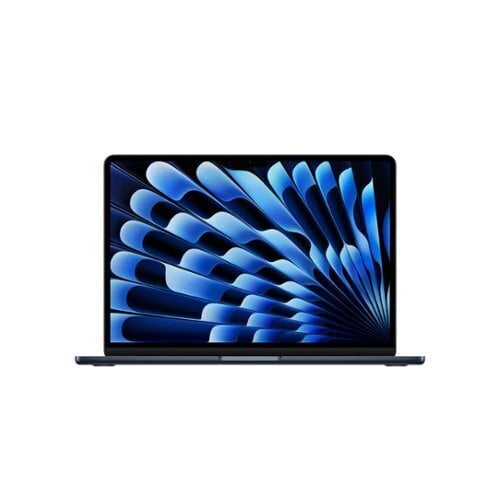
Every model in the 2025 lineup of M4 MacBook Air laptops is currently marked down by $200 on Amazon, taking them to record-low prices. Of these, the 13-inch M4 MacBook Air with 16GB unified memory and 256GB SSD storage is arguably the best MacBook Air for most people, and a great buy at $799 (originally $999).

Although this is ostensibly the entry-level MacBook Air, it is well-equipped to last you for many years. It comes with 16GB of RAM standard, twice what the previous generation’s basic model included. The 13.6-inch “Liquid Retina” display has a resolution of 2,560 by 1,664, a P3 wide color gamut, and a maximum brightness of 500 nits. You’ll also get an excellent backlit keyboard with Touch ID, Wi-Fi 6E support, and great speakers and microphones. Apple even decided to bring back MagSafe charging with this laptop.

The 12MP camera comes with the Center Stage, which follows your face as you move around the frame during video calls. The two USB-C ports are Thunderbolt 4 means you can extend to up to two 6K external monitors.

For a “basic” laptop, the 13-inch M4 MacBook Air offers incredible capabilities and features for the price, and is arguably a much better value than the Pro, according to Lifehacker Senior Tech Editor Jake Peterson. If you take into account the current discount, it really is the best all-around MacBook you can buy.


Our Best Editor-Vetted Tech Deals Right Now

Deals are selected by our commerce team

Corals Won’t Survive a Warmer Planet, a New Study Finds

If global temperatures continue rising, virtually all the corals in the Atlantic Ocean will stop growing and could succumb to erosion by the end of the century, a new study finds. From a report: The analysis of over 400 existing coral reefs across the Atlantic Ocean estimates that more than 70 percent of the region’s reefs will begin dying by 2040 even under optimistic climate warming scenarios. And if the planet exceeds 2 degrees Celsius of warming above preindustrial temperatures by the end of the century, 99 percent of corals in the region would meet this fate. Today, the planet has warmed about 1.3 degrees Celsius over preindustrial temperatures.

The implications are grave. Corals act as the fundamental building blocks of reefs, providing habitat for thousands of species of fish and other marine life. They are also bulwarks that break up waves and help protect shorelines from rising sea levels. A quarter of all ocean life depends on coral reefs and over a billion people worldwide benefit from them, according to the National Oceanic and Atmospheric Administration.


Read more of this story at Slashdot.

After child’s trauma, chatbot maker allegedly forced mom to arbitration for $100 payout

Deeply troubled parents spoke to senators Tuesday, sounding alarms about chatbot harms after kids became addicted to companion bots that encouraged self-harm, suicide, and violence.

While the hearing was focused on documenting the most urgent child-safety concerns with chatbots, parents’ testimony serves as perhaps the most thorough guidance yet on warning signs for other families, as many popular companion bots targeted in lawsuits, including ChatGPT, remain accessible to kids.

Mom details warning signs of chatbot manipulations

At the Senate Judiciary Committee’s Subcommittee on Crime and Counterterrorism hearing, one mom, identified as “Jane Doe,” shared her son’s story for the first time publicly after suing Character.AI.

Read full article

Comments

Trailer for Anaconda meta-reboot leans into the laughs

Sony Pictures has dropped a trailer for its upcoming horror comedy, Anaconda, a meta-reboot of the 1997 campy cult classic—and frankly, it looks like a lot of fun. Starring Paul Rudd and Jack Black, the film will arrive in theaters on Christmas Day.

(Spoilers for the 1997 film below.)

The original Anaconda was your basic B-movie creature feature, only with an all-star cast and better production values. The plot revolved around a documentary film crew (Jennifer Lopez, Ice Cube, Eric Stoltz, Jonathan Hyde, and Owen Wilson) who travel to the Amazon in search of a long-lost Indigenous tribe. They take on a stranded Paraguayan snake hunter named Serone (Jon Voight, affecting a hilariously bad foreign accent), who strong-arms them into helping him hunt down a 25-foot green anaconda. He wants to capture the animal alive, thinking he can sell it for over $1 million.

Read full article

Comments

After Years of Resistance, Apple Might Finally Release a Touchscreen MacBook Pro

An anonymous reader shares a report: After years of dismissing the idea of putting a touchscreen on a MacBook, it seems Apple may have finally caved. Its MacBook Pro overhaul in 2026 is now expected to be the first-ever MacBook to feature a touchscreen display, according to a report from supply chain analyst Ming-Chi Kuo on X.

The change will reportedly affect Apple’s next-generation MacBook Pro, which could feature an OLED display and “incorporate a touch panel using on-cell touch technology.” The OLED MacBook Pro isn’t expected to enter production until late 2026, and before then, Apple is expected to launch the M5 MacBook Pro in early 2026.


Read more of this story at Slashdot.

Five iOS 26 Features That Changed How I Use My iPhone

Did you know you can customize Google to filter out garbage? Take these steps for better search results, including adding Lifehacker as a preferred source for tech news.


iOS 26 has been out for a few days now, and with it, a bunch of convenient little tweaks to how you use your phone. Not everything’s a keeper, and I’ve already written about how to disable the new Liquid Glass transparency effects or fix Dark Mode icons that appear tilted. Still, there are things to like about this update, even if you have to go out of your way to turn some of them on.

After spending a couple nights tweaking iOS 26 to my preferences, here are my favorite new features in Apple’s latest operating system.

Resize the clock

This one works well with my iPhone 15 Pro’s always-on display. As a millennial, I don’t always have old-school clocks conveniently placed around my apartment. Instead, I’ll just carry my phone around with me and plop it down somewhere in my peripheral vision where I can quickly glance at the always-on display to check the time. The problem was, until now, the clock was tiny.

With iOS 26, though, you can now resize the lock screen clock (and by extension, the always-on display clock). That makes for less wasted space on my screen, and makes it easier to see at a glance or from a distance. 

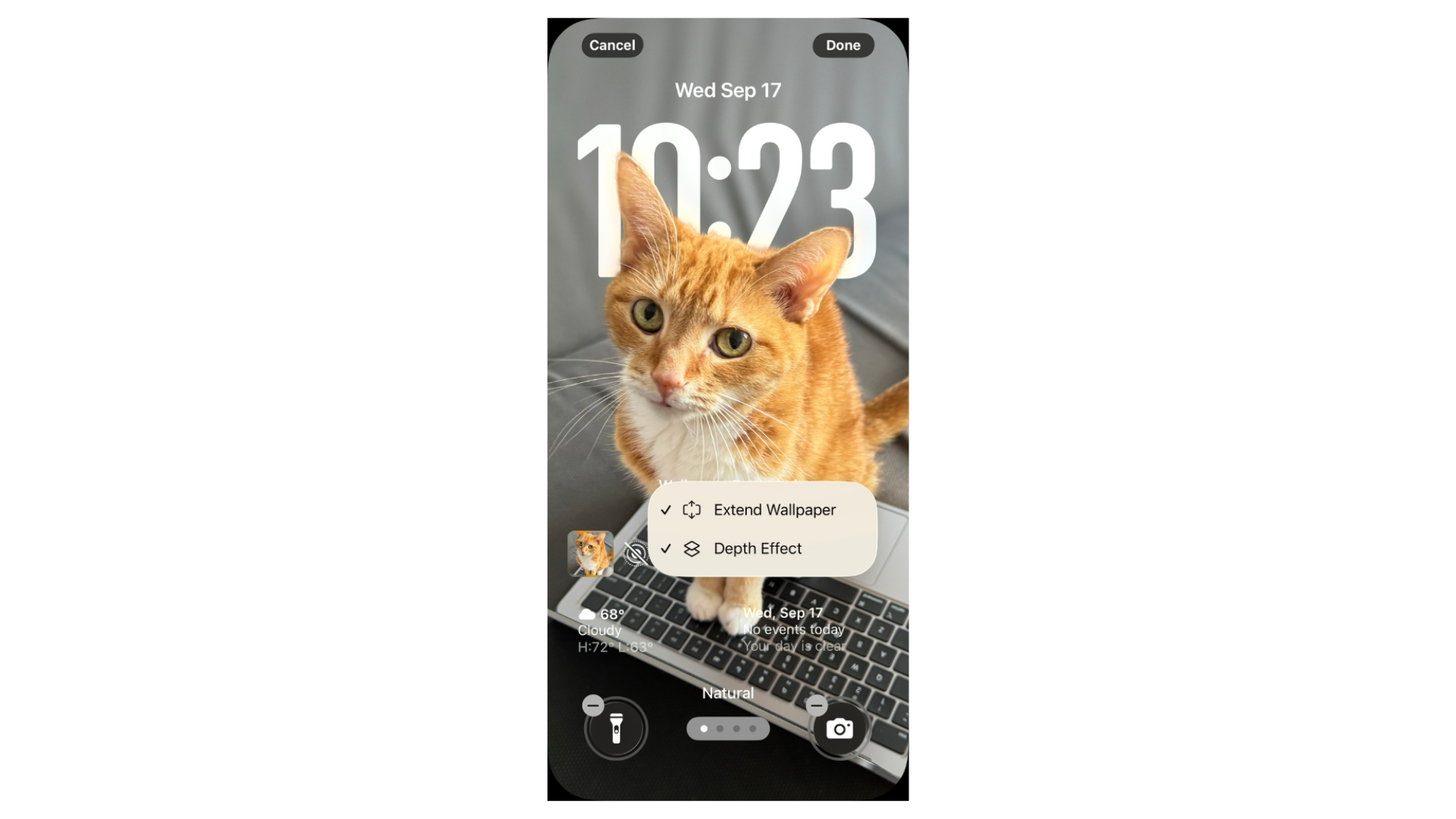
It’s a small change, but it’s probably made the biggest difference in how I actually use my phone. To resize your lock screen clock in iOS 26, simply navigate to your iPhone’s lock screen, then long press. Hit the customize button, and then drag the lower right corner of the clock widget until you’re satisfied with the clock’s size.

Note that the resized clock will only work with the first available font. If you don’t see a selection frame around the clock widget’s lower right corner, you’ll first need to tap into it and change the font before you can resize it.

Author's iPhone lock screen

Credit: Michelle Ehrhardt

Also, as a bonus, depending on your wallpaper, you can trigger a depth effect by clicking the three-dots icon in the lower right corner. This will allow you to place some photo elements in front of the clock, which could hurt legibility but might be worth it to see more of your background, depending on your tastes. For instance, here are my cat’s ears appearing over my lock screen clock. The clock still appears unobstructed on my black always-on display (on the iPhone 14 Pro and up, you can change how your always-on display looks under Settings > Display & Brightness > Always On Display).

Call screening

I pretty much never pick up phone calls anymore. As my grandparents used to say “if it’s important, they’ll call back.”

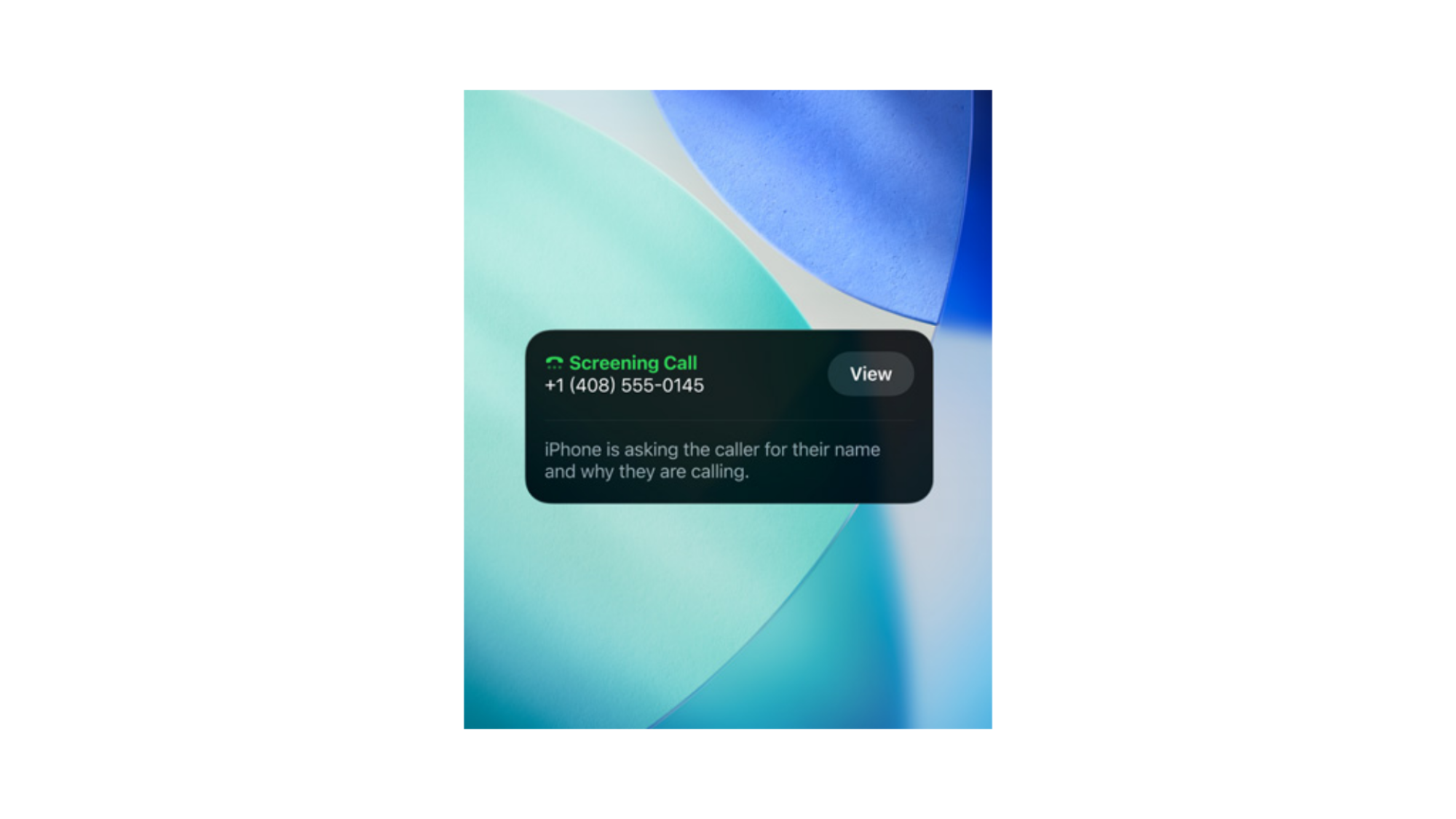
That said, sometimes I do worry about missing a chat I really needed to have, or just coming across as rude. That’s where iOS 26’s new Call Screening feature comes in.

Call screening

Credit: Apple

When enabled, under Settings > Apps > Phone > Screen Unknown Callers > Ask Reason for Calling, this will have your iPhone pick up calls from numbers you don’t know for you, then ask the caller their reason for calling. As they answer, a transcript of what they’re saying will appear on screen, and you’ll be able to pick up the phone if it seems important. I actually haven’t gotten a spam call since turning it on, so I haven’t personally tested it yet, but it seems like a great way to avoid spam while not worrying about missing something important along the way.

And if you want to go nuclear, you could instead toggle on Silence instead of Ask Reason for Calling, which will simply send all calls from unknown numbers straight to voicemail.

Note that Call Screening does not work for contacts, so you’ll still have to decide whether it’s worth picking up your long-winded uncle’s calls for yourself.

The improved fitness app

Until now, the iPhone’s Fitness app has been useful for getting a summary of your fitness data, or for accessing Apple Fitness+ workout videos, but not for actually tracking workouts while you’re on a run or in the gym. Now, though, that’s changed.

iOS 26 Fitness App update

Credit: Michelle Ehrhardt

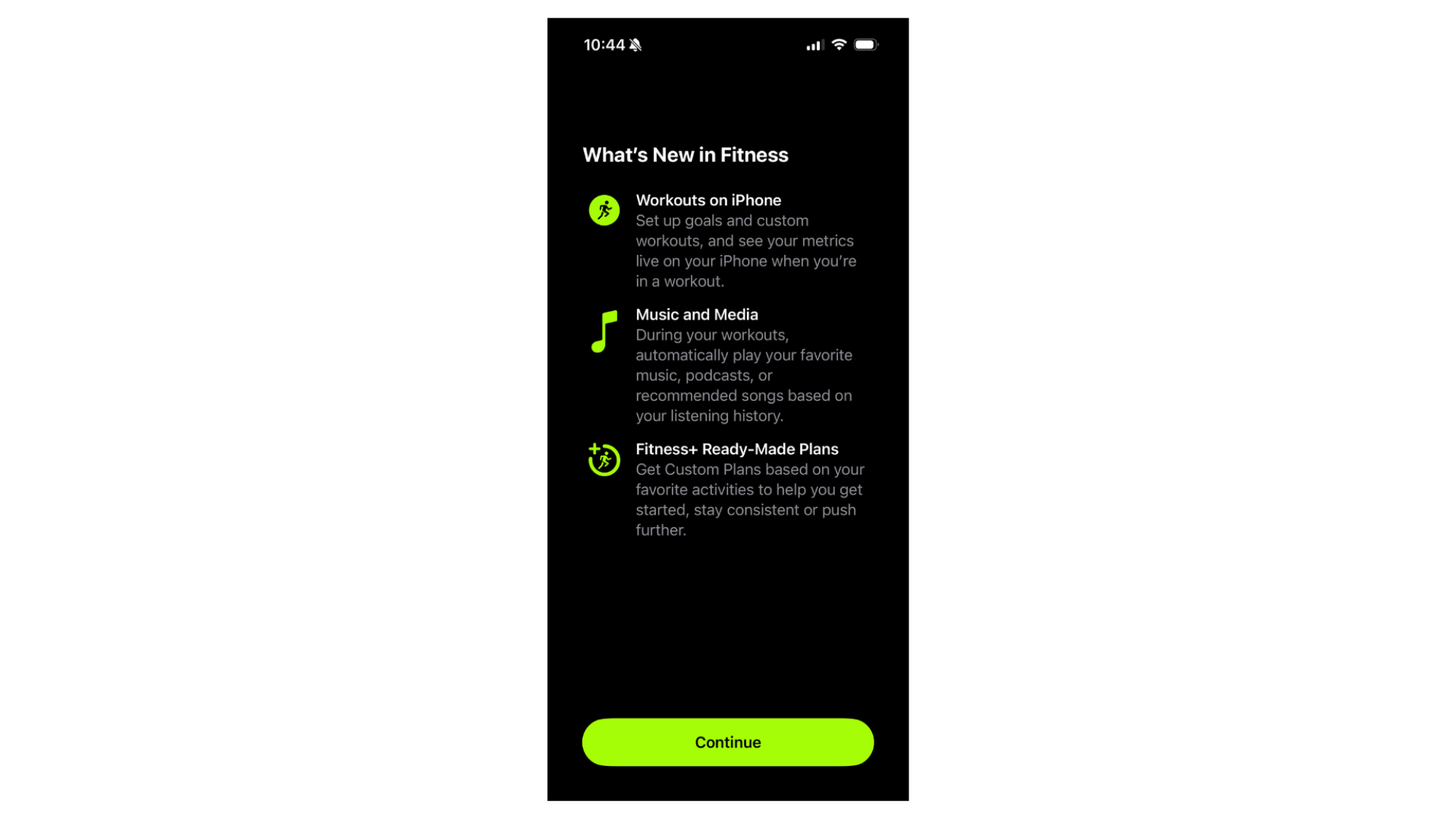
Once you’ve updated your phone to iOS 26, open the Fitness app. You’ll see a new Workout tab in the navigation bar towards the bottom. Tap it, and you’ll see a number of workouts that you can start right from your phone.

These are all for outdoor exercises, like walking, running, cycling, and hiking. The idea is that, even if you don’t have a health tracker, your phone can use GPS data to estimate metrics for you (tapping on any of these will bring up a screen where your phone asks for location tracking permissions).

But that’s not all you can do. If you pair your phone with a heart rate tracker, like the one built into the Apple Watch (although you’re not limited to Apple’s own peripherals for this), you’ll also get access to other workout types, like Indoor Run, Yoga, and High Intensity Interval Training. You’ll just need to wear your tracker while exercising.

It doesn’t only work in the background, too. Start any workout, and you’ll see your metrics live on your phone while you’re exercising—no more peeking down at your smartwatch’s tiny screen to see your stats. This will also work for workouts started from your Apple Watch, as they’ll simply mirror to both the Fitness app and a Live Activity on your iPhone’s lock screen. Nice.

Hold assist

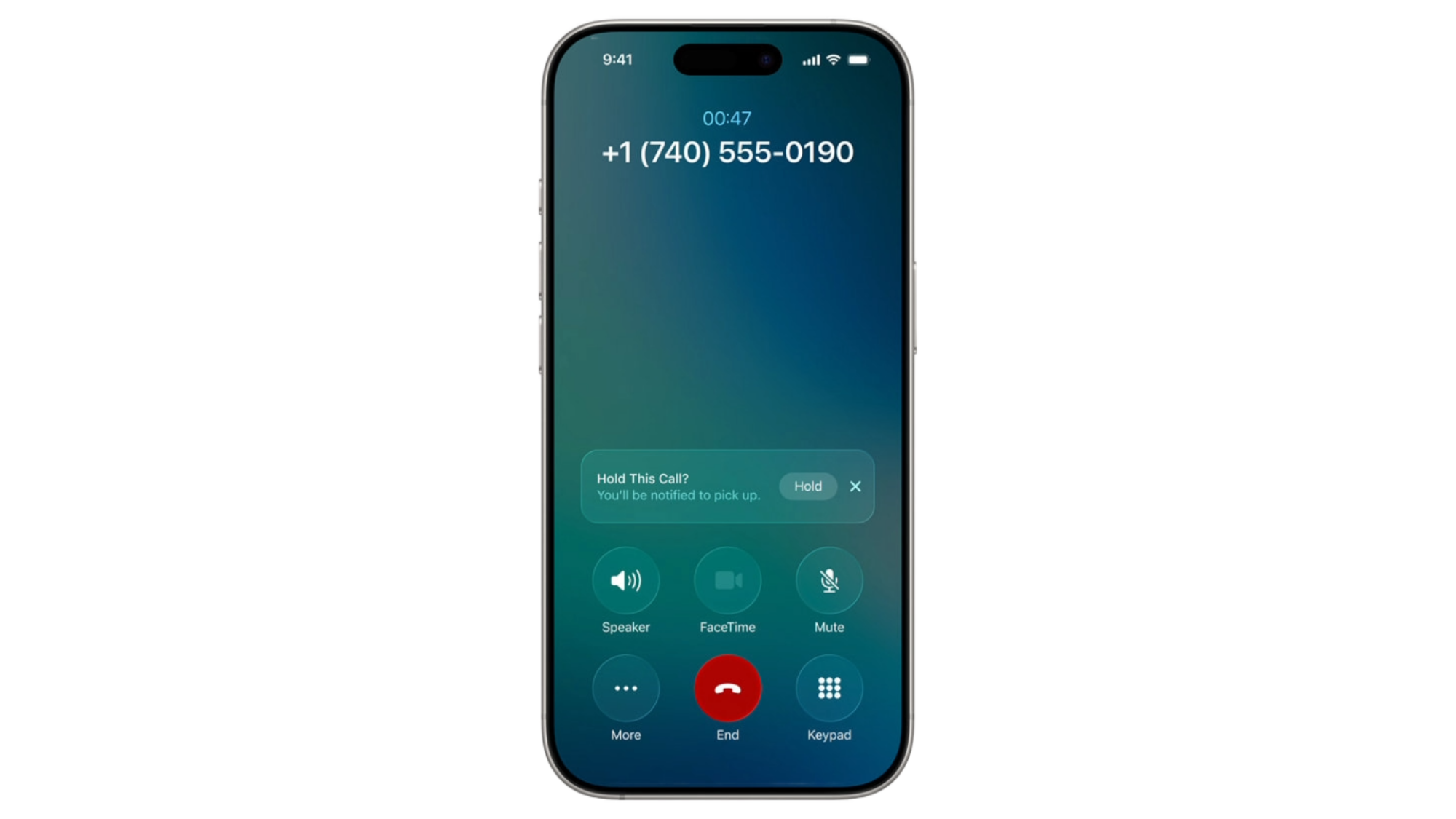
I have a trip coming up next week, and I need to call my pharmacy to get some prescription refills before I head out of town. Unfortunately, they love to leave me on hold for way too long. That’s where Apple’s new Hold Assist feature comes in.

Hold Assist iPhone

Credit: Apple

With this, your iPhone will detect when you’ve been put on hold (by listening for cues like hold music), and will offer to hold the call for you so you can step away. Press the “Hold This Call?” button that pops up, and your call will shrink to a small pill towards the top of your screen. Audio will be muted, and you’ll be able to walk away or use your iPhone as usual. When the other line takes you off hold, they’ll get a short message saying Hold Assist is active, and you’ll get a notification along with a ring and/or vibration to let you know you can pick up the call again. You’ll also see a transcription of what the other person said while they waited for you to pick up.

Hold Assist should be active for you by default after installing iOS 26, but to double check, simply navigate to Settings > Apps > Phone > Hold Assist Detection and ensure the toggle is enabled.

A spam folder for the Messages app

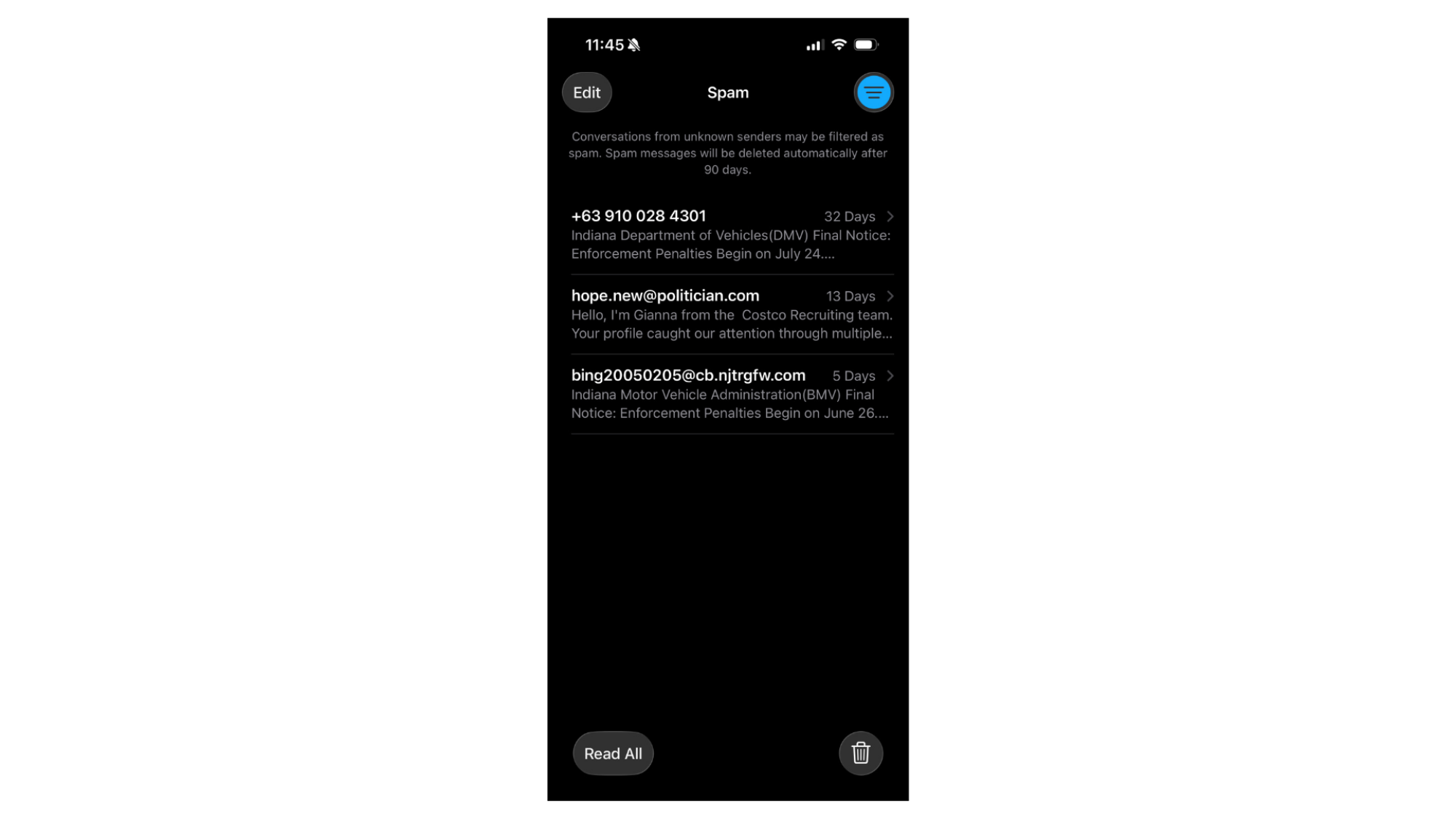
Finally, your iPhone will automatically sort away spam messages for you. I don’t know about you, but I’ve been getting so many scam texts as of late, like for unpaid traffic tickets (I don’t drive). Already, the new Spam folder in Messages has done a good job of keeping me from seeing these.

Essentially, it works just like the Spam folder in Gmail. Simply open your Messages app, and you’ll probably notice fewer scam texts or solicitations in there. To see where they’ve all gone, click the three-lines icon in the top right corner, then the Spam folder.

Spam Folder in iOS 26

Credit: Michelle Ehrhardt

You’ll see any texts your iPhone has decided to mark as spam, as well as buttons to mark them all as read or simply delete them. Of course, be careful when looking at these messages—you probably don’t want to click any links in them.

And that’s it. Note that, just like in Gmail, there is a chance for false positives, so you might want to check this folder if you’re expecting an important text and aren’t seeing it. If you leave a message in the Spam folder for more than 90 days, it will be deleted, but you can click Recover under a message you want to keep to send it back to the main text folder.

Like with Hold Assist, spam filtering should be enabled for you by default, but to double check, head over to Settings > Apps > Messages > Unknown Senders and ensure the Filter Spam toggle is on.

Lamborghini’s Fighter Jet-Inspired Pregunta Concept With V12 Engine Is Up For Auction

Lamborghini's Fighter Jet-Inspired Pregunta Concept With V12 Engine Is Up For Auction
When the covers for the Lamborghini Pregunta concept car were pulled back in 1998, people were blown away by its futuristic aircraft-inspired design and engineering. Even if it was the last of the pre-Volkwagen-owned Raging Bulls, the one-off supercar has remained inspirational and futuristic more than two decades later. For the second time

Garmin’s new smartwatch for kids costs more than the Apple Watch SE

Garmin just announced a refresh of its Bounce smartwatch for kids and the big headline is the exorbitant price. It costs $300, which is twice the cost of the previous generation and $50 more than an Apple Watch SE.

The Bounce 2 still offers tracking and communication features, both powered by an LTE connection. The exterior has been completely redesigned, with a rounded 1.2-inch AMOLED display. The original model was square-ish, resembling an Apple Watch.

Communication is better here, which is good as this is a smartwatch intended for parents to keep track of kids. Voice messages sent to the watch will be transcribed and can be read or listened to. It also allows for actual phone calls, which the original did not. The Bounce 2 offers GPS tracking and the battery lasts two full days between charges.

It can play music, but only with an Amazon Music subscription. Also, all communication features require a subscription to one of Garmin’s in-house smartwatch plans. These cost $10 per month or $100 annually. The Bounce 2 is available to order right now and comes in three colors.

This article originally appeared on Engadget at https://www.engadget.com/wearables/garmins-new-smartwatch-for-kids-costs-more-than-the-apple-watch-se-153134955.html?src=rss

Business Insider Reportedly Tells Journalists They Can Use AI To Draft Stories

An anonymous reader shares a report: Business Insider has told journalists they can use AI to create first drafts of stories and suggested it won’t notify readers that AI was used, according to Status, a newsletter covering the media industry. The policy makes the outlet one of the first to formally allow such extensive use of the technology.

The AI guidelines were reportedly circulated in an internal memo from editor-in-chief Jamie Heller on Thursday. The policy authorized journalists to deploy AI “like any other tool” for tasks like research and image editing, Status reported.


Read more of this story at Slashdot.

Tesla Under Investigation After Electronic Door Handles Trap Child Riders Inside

Tesla Under Investigation After Electronic Door Handles Trap Child Riders Inside
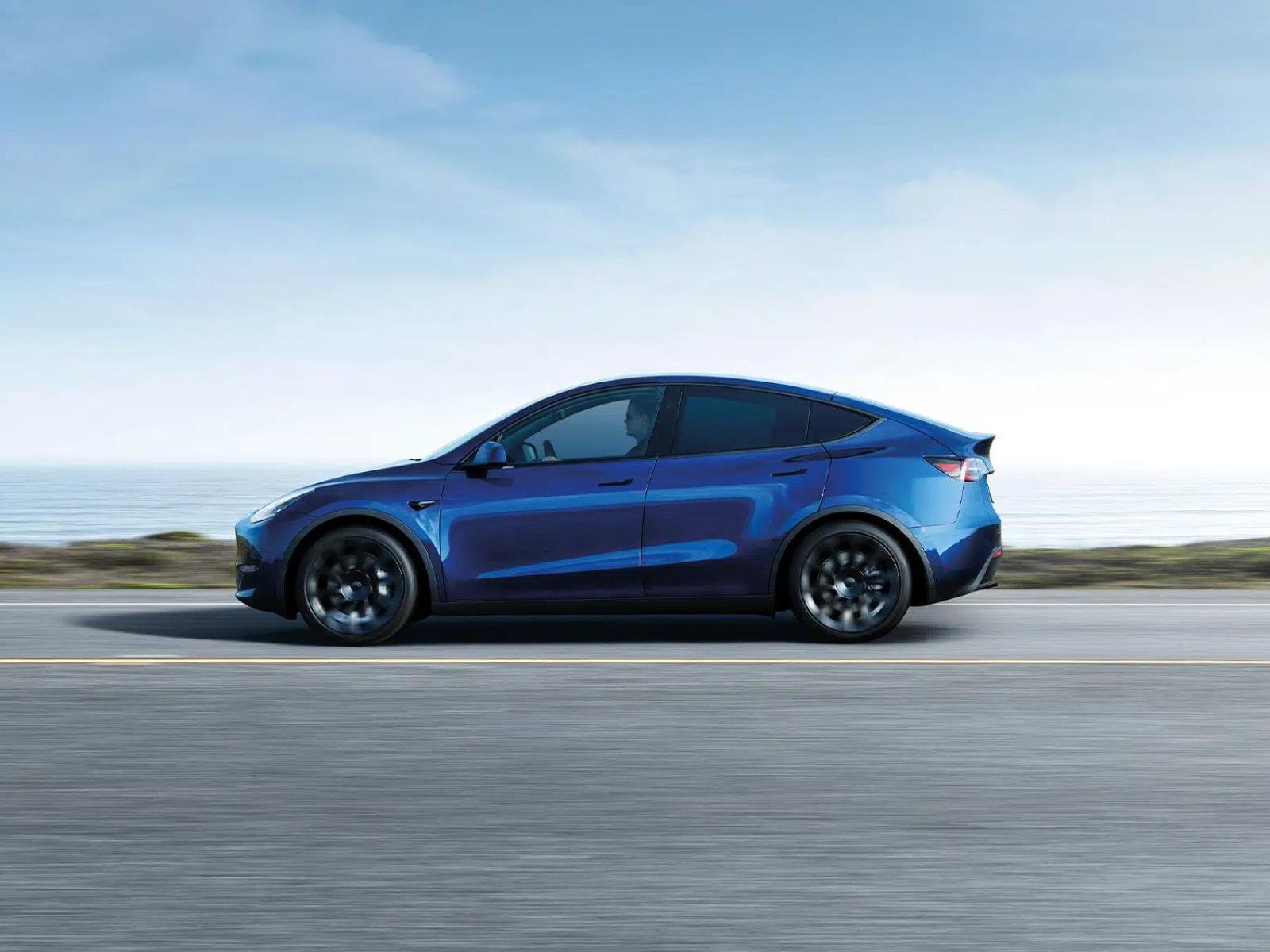
Once again, the National Highway Traffic Safety Administration has launched a preliminary investigation into Tesla, this time focusing on the Model Y’s electronic door handles following multiple complaints from owners, including reports of children being trapped inside vehicles. NHTSA’s probe is centered on an estimated 174,290 Model Y SUVs

Inside the Apple audio lab where AirPods are tested and tuned

When you enter the building that houses Apple’s audio lab, venture just beyond reception and you’ll encounter a massive vintage stereo setup. The deck and accompanying speakers were a gift from Steve Jobs to the team of engineers who work in this office. The group sees the old-school tech as a source of inspiration, but also as a reminder of Jobs’ obsession with both music and sound.

More than inspiration, though, the stereo is a reminder to the experts in software, acoustics and sound design how important sound is to everything Apple builds.

Inside, I was led into a maze of nondescript halls, weaving from room to room with a trio of Apple engineers as my guides. I was in for a rare peek into the company’s product development facilities — a step further behind the curtain than what’s typically allowed during Apple events.

Validating the AirPods hearing test

Apple has audio metric booths where it verifies its hearing health features.
Billy Steele for Engadget

As Apple’s audio team works to correct and calibrate the AirPods’ fit for natural variations in ear geometry, they use a collection of audio metric booths to check their work. These rooms look like small, windowless offices. The walls are covered in sound-dampening panels and there’s a single workstation with a Mac and various tools for hearing analysis. If you’ll recall, one of the company’s major ambitions with AirPods has been the end-to-end hearing health experience that it debuted last year. In order to validate its claims of a “clinical grade hearing test,” engineers use devices you might see in an audiologist’s office, like audiometers. These spaces aren’t unlike the small booths you’ve probably sat in for a professionally-administered hearing test.

In one booth alone, the team ran thousands of tests on the feature to ensure that the hearing screening in your pocket was as accurate as what you could get from a doctor. Not only does this allow AirPods users to set up a hearing aid at home (if needed), but it also creates an accurate hearing profile so that you can hear music the way it was intended.

Another important step in the product design process was making sure there was a tuning baseline for every person that listens to music with AirPods. Everyone hears various frequencies differently, so there needs to be an adjustment to achieve the desired consistency. With the hearing test and accompanying audio profile, Apple then has a starting point to make both technical and artistic decisions. It’s here that the technology and liberal arts expertise among the audio lab team starts to mix.

When your office is a tuning studio

Apple's tuning studios are equal parts recording studio, music creation space and listening room.
Billy Steele for Engadget

The media tuning lab works on any product Apple makes that can reproduce recorded audio, including the iPhone, Mac and iPad. In order to bridge the gap between the art and science of that pursuit, this team comes from a variety of backgrounds — from live concert sound, to Broadway sound design and even traditional acoustic engineering. The various tuning studios in this area are set up like music creation rooms: complete mini studios with various instruments scattered around, a prime seat for listening in the back and a desk replacing the recording engineer’s sound board. As a nice touch, they’re all named after famous recording studios (like Abbey Road).

The main idea there is that the tuning team needs to reference what the recorded content sounded like at the time it was created. That, in turn, provides a better picture of the artist’s intention that can then be applied to products like the AirPods Pro 3. Due to the combination of the ear tips’ seal and the computational audio inside Apple’s latest earbuds model, the tuning engineers believe these AirPods provide the most authentic sound thus far in the company’s lineup because the team has been able to reduce so much of the variation across users and fits.

To create a sound profile that’s exciting for customers and still maintains all of that authenticity, the media tuning team listens to thousands of hours of music, movies, podcasts and YouTube videos in mono, stereo and Dolby Atmos. There’s also a lot of vinyl lining the shelves of these tuning studios. During the development process, the team will test multiple versions of hardware with tons of tuning variations using computational audio. The goal is for all of the tuning decisions to translate better to all users, with a desire that everyone hears the same sound from Apple’s products.

In addition to listening to music through speakers and headphones, microphones are also important to the tuning work. In order to create features like the studio-quality audio recording on AirPods Pro, the team captured clips from the earbuds in the studio and out in the real world before comparing them with benchmarks from high-end recording mics. That analysis allows the engineers to translate pro-grade audio features for consumer products like AirPods. Studio-quality audio, for example, replaces a lavalier with your earbuds for iPhone videos. It won’t ever replace a studio microphone, obviously, but it does put more capable audio tools in your pocket.

The completely silent room

A setup for testing spatial audio inside the anechoic chamber.
Billy Steele for Engadget

An important part of testing Apple’s audio products, and features like spatial audio, is to use them in a completely silent room. Known as an anechoic chamber, it’s a room within a room that’s physically separated from the rest of the building. This is essential because things like footsteps in the hall or cars driving by outside can create vibrational noise that would otherwise be transmitted into the chamber.

Inside, foam wedges on the walls, floor and ceiling absorb all sound that’s emitted in the space. There’s no echo (hence the name “anechoic”), so voices and claps just die. In fact, you have to walk on a suspended grid that looks like wire fencing, because the true “floor” of the room is more foam wedges meant to absorb sonic reflections from below. It’s an off-putting space to spend time in, since it looks like something out of a sci-fi movie — not to mention the lack of reverb.

Over the decades that Apple has been designing and manufacturing electronics, the company has learned a lot about all of the unwanted noise that its devices make. The anechoic chamber allows a dedicated team of acoustic engineers to listen very carefully to products like AirPods to determine if any sounds are unintended. They collaborate with other engineering teams to make sure the product isn’t doing anything the company doesn’t intend for it to do.

The anechoic chamber is also a vital part of spatial audio development. In its current configuration, there’s a chair in the room with a ring of tiny speakers around it. Engineers study the variable physiology of test subjects, like the way sound bounces off the body and around the inside of their ears. To then create the perception of sound coming from a particular direction, the team uses computational audio and signal processing to create the ideal angle for a person’s hearing signature. This sort of analysis was directly responsible for Personalized Spatial Audio, which takes a scan from an iPhone camera and analyzes it with various models and algorithms to tailor the sound to each person.

Fantasia Lab: Verifying ANC, transparency mode and spatial audio

The last stop on my tour was the most visually and sonically appealing. This room is called the Fantasia Lab, named for the first film that used surround sound. The name also speaks to the Apple engineers’ ability to generate (or simulate) any sound they can think of with the room’s spherical speaker setup. The audio lab team used this room to verify features on the AirPods Pro 3, including transparency mode, active noise cancellation (ANC) and spatial audio.

The array of dozens of loudspeakers enable the engineers to assess whether environmental sounds in transparency mode are as accurate and natural as possible. The team will have someone sit inside the sphere and have them indicate which direction the audio is coming from to eliminate any issues with the feature. To gauge ANC performance, different types of sounds at various volumes are piped in. This gives the engineers insight into the workings of the adaptation and oversight algorithms, the bits of software employed to make sure the ANC is steadily and effectively blocking as much noise as possible. And for spatial audio, the team will play sounds at different locations and angles from real speakers before trying to recreate the perception that sound is coming from the same place inside of the AirPods.

I was able to take a seat for a few seconds to get a sense of what the Fantasia Lab is capable of. One of the engineers played a live recording of a concert in spatial audio. With speakers all around me, sound was coming from all directions — including the roar of the crowd singing along. I closed my eyes and I was there, vibing to Omar Apollo with tens of thousands of people. Except, of course, I wasn’t. I was surrounded by speakers in a small room with four other people, through a maze of corridors, tucked into one of Apple’s myriad buildings around Cupertino.

Imagine my disappointment when I opened my eyes.

This article originally appeared on Engadget at https://www.engadget.com/audio/inside-the-apple-audio-lab-where-airpods-are-tested-and-tuned-150025891.html?src=rss

Tesla Model Y door handles now under federal safety scrutiny

When Elon Musk’s Department of Government Efficiency began wielding its ax at the National Highway Traffic Safety Administration earlier this year, many believed this was done to weaken the agency’s oversight over Tesla. But despite the Tesla CEO’s sometimes-close relationship with the Trump administration, it appears there is still some independence left within NHTSA: earlier this week, the agency opened a new safety investigation into the door handles of the Tesla Model Y.

The timing may not be coincidental; last week, the safety hazard posed by badly designed retractable door handles entered the spotlight thanks to a comprehensive report by Bloomberg’s Dana Hull. As Hull detailed, Tesla’s door handles rely on the car’s 12 V battery to work. Should this fail, there is no way to open the doors from the outside, something that has cost lives as first responders have been unable to free occupants from burning Teslas.

While front seat passengers have easily accessible interior emergency door releases, some Teslas lack any way of opening the rear doors from the inside after a crash. Other, more recent Models 3 and Y have manual releases located under a panel underneath the rear seat.

Read full article

Comments

Is TV’s Golden Age (Officially) Over? A Statistical Analysis

Scripted TV production peaked in 2022 at 599 shows and has declined since, according to FX’s research division tracking. New prestige series have dropped sharply while streaming platforms prioritize returning shows over new development. Netflix has shifted majority output to unscripted content including docuseries and reality programming since 2018.

YouTube leads streaming viewership ahead of Netflix, Paramount+, and Hulu. Free ad-supported platforms YouTube, Tubi and Roku Channel continue gaining market share. Subscription prices across major streaming services have increased while scripted content volume decreased. Second season of Severance cost $200 million. Fourth season of Stranger Things reached $270 million in production expenses.


Read more of this story at Slashdot.

Quantum Computing’s Next Frontier Is Mining For Helium-3 On The Moon

Quantum Computing's Next Frontier Is Mining For Helium-3 On The Moon
Finnish cryocooler manufacturer Bluefors has signed an agreement to secure a long-term supply of helium-3 harvested from the Moon. Yes, you heard right. No one has set up shop to mine on the moon and yet companies are snapping up lunar resources like kids at a candy store. This particular contract (with U.S.-based space resources company Interlune)

Report: Apple inches closer to releasing an OLED touchscreen MacBook Pro

At multiple points over many years, Apple executives have taken great pains to point out that they think touchscreen Macs are a silly idea. But it remains one of those persistent Mac rumors that crops up over and over again every couple of years, from sources that are reliable enough that they shouldn’t be dismissed out of hand.

Today’s contribution comes from supply chain analyst Ming Chi-Kuo, who usually has some insight into what Apple is testing and manufacturing. Kuo says that touchscreen MacBook Pros are “expected to enter mass production by late 2026,” and that the devices will also shift to using OLED display panels instead of the Mini LED panels on current-generation MacBook Pros.

Kuo says that Apple’s interest in touchscreen Macs comes from “long-term observation of iPad user behavior.” Apple’s tablet hardware launches in the last few years have also included keyboard and touchpad accessories, and this year’s iPadOS 26 update in particular has helped to blur the line between the touch-first iPad and the keyboard-and-pointer-first Mac. In other words, Apple has already acknowledged that both kinds of input can be useful when combined in the same device; taking that same jump on the Mac feels like a natural continuation of work Apple is already doing.

Read full article

Comments

The new 14-inch Wacom One ups the display size, but not the price

Wacom has announced its latest beginner-friendly graphics tablet, the Wacom One 14. The obvious upgrade from its 2023 predecessor is a larger 14-inch IPS display, which gives digital artists a bit of extra space for their sketching. The bezels have been trimmed down to accommodate the bigger canvas, while keeping the design thin and compact enough to easily throw the Wacom One in a backpack.

The 1920 x 1080 HD display’s textured surface is supposed to replicate the feeling of drawing on paper, with an anti-glare coating that with an anti-glare coating that theoretically allow you to use it outdoors with minimal frustration. It’ll resist fingerprints too, but unlike other tablets in Wacom’s lineup, this one lacks multitouch tech. It’s designed to be used strictly with the included battery-free pen, which has a 16ms response time and clips to the top of the tablet for easy access. It’s pressure-sensitive and has two customizable buttons.

Given it’s marketed at amateurs just getting started on their artistic journey, you get a selection of bundled software that includes Skillshare lessons and a trial for Clip Studio Paint Pro. You can also use Foxit to edit and annotate PDF files, making the Wacom One a good pick for teachers who don’t need the additional functionality of an iPad.

You connect the Wacom One 14 to a Mac or PC by either using the provided USB-C cable, or via a Wacom converter to which you connect separate cables if your device isn’t equipped with Thunderbolt or DisplayPort Alt Mode. You can pick one up now for $300.

This article originally appeared on Engadget at https://www.engadget.com/mobile/tablets/the-new-14-inch-wacom-one-ups-the-display-size-but-not-the-price-142322193.html?src=rss

PS5 Update Just Made It Way Easier To Game On PC & Console With DualSense Controllers

PS5 Update Just Made It Way Easier To Game On PC & Console With DualSense Controllers
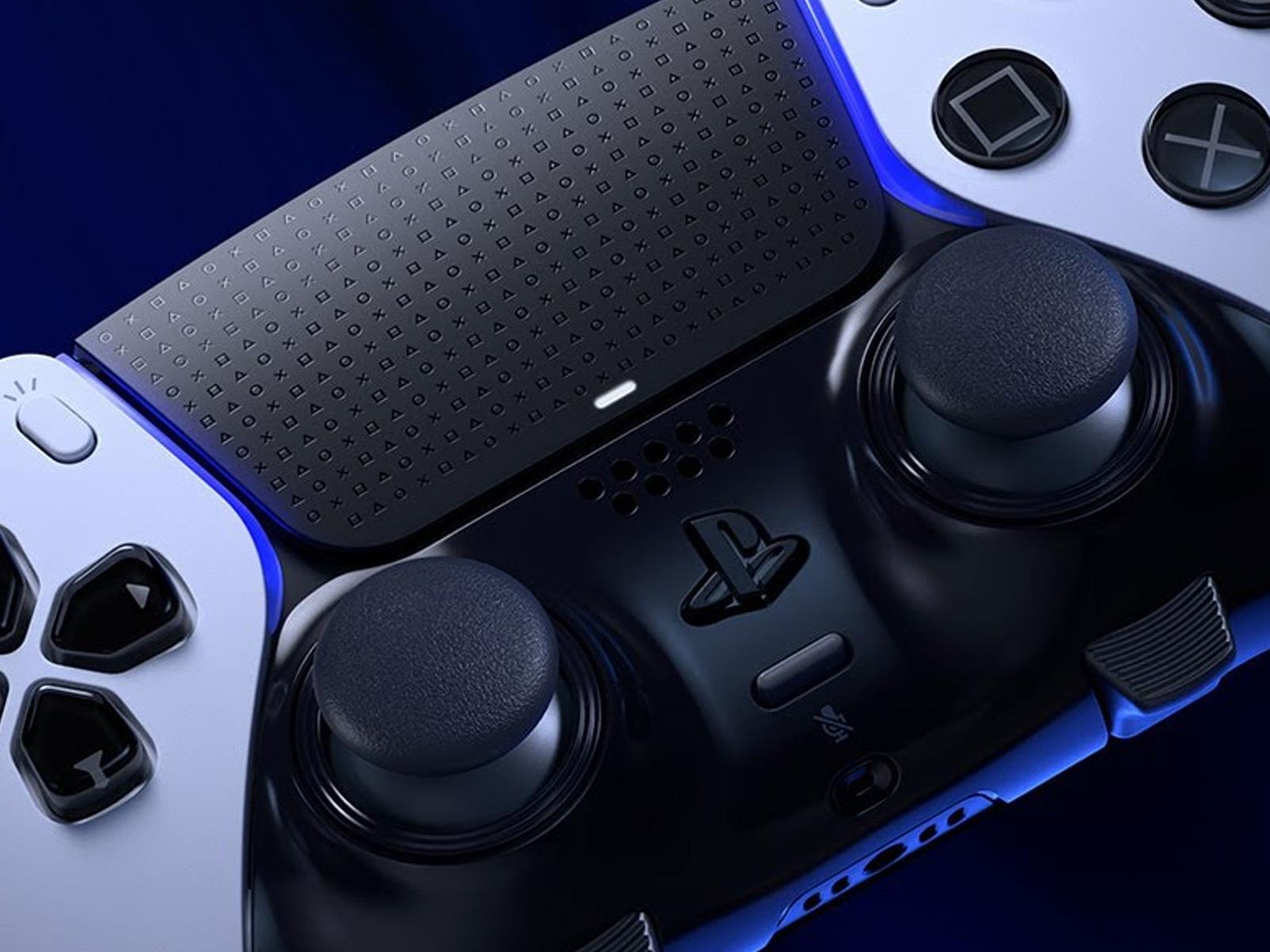
Sony’s DualSense controller is one of the best gamepads around and courtesy of a new PlayStation 5 system update, it just became a heck of a lot more convenient to use it on multiple platforms and systems. The days of having to pair and re-pair DualSense controllers on separate systems are officially over. Instead, you can register up to four

Waymo is headed to Nashville in 2026

Waymo is plotting a route for Tennessee, as it plans to bring its robotaxis to Nashville. The company expects to start autonomous driving operations in the city in the coming months before opening up to the public in 2026.

At the outset, folks in the area will be able to hail a ride via the Waymo app. Down the line, Lyft will be able to match users with Waymo rides in Nashville.

Waymo is currently up and running in five US cities: San Francisco (and other parts of the Bay Area), Los Angeles, Phoenix, Austin and Atlanta. Along with Nashville, Waymo is planning to soon move into Denver and Seattle, where it started testing its vehicles this month, as well as Miami and Washington DC.

The company also received permission from New York City in August to start test rides there, albeit with a human driver behind the wheel. In addition, testing is underway in Tokyo — Waymo’s first international location — though human drivers are manually operating the vehicles at the outset.

This article originally appeared on Engadget at https://www.engadget.com/transportation/evs/waymo-is-headed-to-nashville-in-2026-140807997.html?src=rss