US wholesale electricity prices have nearly doubled since 2020, rising faster than consumer rates across most regional grid operators. Analysis of location marginal pricing data from 17 trading hubs shows average wholesale costs increased from baseline 2020 levels to peaks 2-4 times higher by 2022, before partially recovering. Consumer electricity prices rose 35% during the same period.
Transmission congestion spreads are widening in most Independent System Operators and Regional Transmission Organizations, particularly in PJM, SPP, and NYISO, where bottlenecks increasingly prevent access to cheaper generation. California’s CAISO stands alone among major grid operators as wholesale prices remain flat or decline in 2025 despite natural gas volatility. The cheapest wholesale electricity continues to trade in SPP’s Oklahoma-Kansas region at $16-17 per megawatt-hour.
If you own a 2025 Volvo EX90, here’s some good news: you’re getting a car computer upgrade. Even better news? It’s free.
The Swedish automaker says that owners of model year 2025 EX90s—like the one we tested earlier this summer—are eligible for an upgrade to the electric vehicle’s core computer. Specifically, the cars will get a new dual Nvidia DRIVE AGX Orin setup, which Volvo says will improve performance and reduce battery drainage, as well as enabling some features that have been TBD so far.
That will presumably be welcome news—the EX90 is a shining example of how the “minimal viable product” idea has infiltrated the auto industry from the tech sphere. That’s because Volvo has had a heck of time with the EX90 development, having to delay the EV not once but twice in order to get a handle on the car’s software.
Right now, you can get one year of Starz streaming service for just $24 when you prepay for the entire year. That’s $46 less than the usual annual cost. There’s also a month-to-month option, which is offering the first three months for $4 per month instead of the usual $11; that’s a 64 percent discount.
Starz may not be one of the most prominent streamers, but it still makes our list of best streaming deals when it’s offered at such a great value. The service offers a deep catalog of recognizable titles as well as original series like Outlander, Spartacus and Ash vs. Evil Dead. The TV shows are almost exclusively Starz originals, with some old western shows mixed in.
A Starz subscription supports streaming on up to three devices simultaneously and offers a live stream of its cable channels for subscribers via the website. The Starz app and streaming service do not offer a 4K streaming option.
This article originally appeared on Engadget at https://www.engadget.com/entertainment/streaming/one-year-of-starz-is-on-sale-for-just-24-151553382.html?src=rss
An anonymous reader shares a report: SoftBank Group will lay off nearly 20% of its Vision Fund team globally as it shifts resources to founder Masayoshi Son’s large-scale AI bets in the United States, according to a memo seen by Reuters and a source familiar with the plan. The cuts mark the third round of layoffs at the Japanese investment conglomerate’s flagship fund since 2022. Vision Fund currently has over 300 employees globally. Unlike previous rounds, when the group was saddled with major losses, the latest reductions come after the fund last month reported its strongest quarterly performance since June 2021, driven by gains in public holdings such as Nvidia and South Korean e-commerce firm Coupang. The move signals a pivot away from a broad portfolio of startup investments. While the fund will continue to make new bets, remaining staff will dedicate more resources to Son’s ambitious AI initiatives, such as the proposed $500 billion Stargate project — an initiative to build a vast network of U.S. data centers in partnership with OpenAI, the source added.
Security researcher Dirk-jan Mollema discovered two vulnerabilities in Microsoft’s Entra ID identity platform that could have granted attackers administrative access to virtually all Azure customer accounts worldwide. The flaws involved legacy authentication systems — Actor Tokens issued by Azure’s Access Control Service and a validation failure in the retiring Azure Active Directory Graph API.
Mollema reported the vulnerabilities to Microsoft on July 14. Microsoft released a global fix three days later and found no evidence of exploitation. The vulnerabilities would have allowed attackers to impersonate any user across any Azure tenant and access all Microsoft services using Entra ID authentication. Microsoft confirmed the fixes were fully implemented by July 23 and added additional security measures in August as part of its Secure Future Initiative. The company issued a CVE on September 4.
An anonymous reader shares a report: Microsoft is adding a whole load of AI agents to Teams today, promising Copilot assistants for every channel, meeting, and community. The new agents will also work across SharePoint and Viva Engage, and are rolling out for Microsoft 365 Copilot users.
Facilitator agents will now sit in on Teams meetings, creating agendas, taking notes, and answering questions. Agents can also suggest time allotments for different meeting topics — letting participants know if they’re running over — and create documents and tasks. A mobile version is designed to be activated “with a single tap” so you can make sure the agent doesn’t miss out on “a quick hallway chat or a spontaneous in-person sync.” Channel agents are designed to answer questions based on a channel’s previous conversations and meetings and can also generate status reports for a project the same way.
alternative_right writes: Austria’s armed forces have switched from Microsoft’s Office programs to the open-source LibreOffice package. The reason for this is not to save on software license fees for around 16,000 workstations. “It was very important for us to show that we are doing this primarily (…) to strengthen our digital sovereignty, to maintain our independence in terms of ICT infrastructure and (…) to ensure that data is only processed in-house,” emphasizes Michael Hillebrand from the Austrian Armed Forces’ Directorate 6 ICT and Cyber.
This is because processing data in external clouds is out of the question for the Austrian Armed Forces, as Hillebrand explained on ORF radio station O1. It was already apparent five years ago that Microsoft Office would move to the cloud. Back then, in 2020, the decision-making process for the switch began and was completed in 2021.
The upcoming Football Manager 26 will include the officially licensed Barclays Women’s Super League and National Women’s Soccer League, among other women’s competitions, marking the first time that women’s soccer has featured in the long-running management sim. This means you’ll be able to select a women’s team to manage, complete with accurate player imagery, club logos and kits.
The debut of women’s soccer was actually announced way back in 2021, and was supposed to feature in Football Manager 2025. That game was eventually cancelled, with developer Sports Interactive shifting its attention to Football Manager 26, which arrives on November 4.
When the developer first discussed the prospect of adding the women’s game to its various game modes, it said it would only do so once it was able to offer the same level of depth and authenticity as it does for men’s soccer. Since making that initial statement, the popularity of women’s soccer has grown enormously, and Sports Interactive says in FM26 it has created a “single ecosystem” in which you’re not limited to exclusively managing a men’s or women’s team on a single save. To ensure its virtual recreation of women’s soccer is as realistic as it can be, the studio consulted real-life players, managers, clubs and organizations.
At launch, the latest entry will feature 14 playable leagues that span 11 nations and three continents, with leagues in Germany, France, Japan, Australia and more represented alongside England and the US. The FM26 database currently consists of more than 36,000 players, and the studio now has a 40-strong team of researchers working exclusively on building it out further, with additional playable competitions planned.
The off-the-field differences between the men’s and women’s game are also reflected, taking into account the typically shorter contracts in women’s soccer, and fewer release clauses that can be activated in the transfer market. Sports Interactive also used real-world data to inform the average recovery rates for various injuries where they might differ between men and women.
For a full rundown of all the new additions, click here. Football Manager 26 launches November 4 on Xbox and PS5, with a mobile version via Netflix arriving on the same day, and FM26 Touch for Nintendo Switch releasing digitally a month later.
This article originally appeared on Engadget at https://www.engadget.com/gaming/football-manager-26-will-feature-womens-soccer-for-the-first-time-145658807.html?src=rss
The second day of a two-day meeting of the Advisory Committee on Immunization Practices—a panel currently made up of federal vaccine advisors hand-selected by anti-vaccine activist Robert F. Kennedy, Jr.—is off to a dramatic start, with the advisors seemingly realizing they have no idea what they’re doing.
The inexperienced, questionably qualified group that has espoused anti-vaccine rhetoric started its second day of deliberations by reversing a vote taken the previous day on federal coverage for the measles, mumps, rubella, and varicella (MMRV) vaccine. Yesterday, the group voted to restrict access to MMRV, stripping recommendations for its use in children under age 4. While that decision was based on no new data, it passed with majority support of 8–3 (with one abstention). (For an explanation of that, see our coverage of yesterday’s part of the meeting here).
But puzzlingly, they then voted to uphold access and coverage of MMRV vaccines for children under age 4 if they receive free vaccines through the federal Vaccines For Children program, which covers about half of American children, mostly low-income. The discrepancy projected the idea that the alleged safety concerns that led the panel to rescind the recommendation for MMRV generally, somehow did not apply to low-income, vulnerable children. The vote also created significant confusion for VFC coverage, which typically aligns with recommendations made by the panel.
Tired of high ticket prices with exorbitant fees adding to the cost? So is the Federal Trade Commission (FTC), which alleges in a lawsuit filed with seven states that Ticketmaster and its parent firm Live Nation essentially colluded with brokers by turning a blind eye to illegal harvesting of hordes of tickets, which were then resold at a
The right headphones or earbuds can make or break a run. Whether you’re grinding through mile 20 of a marathon or just trying to make it through a Tuesday morning one-miler, your earbuds need to be up to the task.
My all-time favorite running earbuds were the Plantronics BackBeat Fit 2100. Comfortable, secure, sweat-resistant, and with just the right amount of ambient sound awareness. Tragically, they’ve been discontinued, leaving runners like me searching for worthy successors.
Of course, the best running earbuds depend on your specific needs, running style, and preferences. After extensive testing (and more than a few mid-run equipment failures), here’s my breakdown of the top options across different categories.
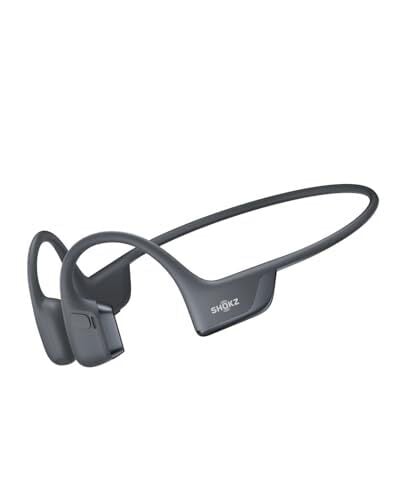
My absolute favorite: Shokz OpenRun Pro 2
When I’m running around Brooklyn, Manhattan, and Queens, I rely on bone conduction technology to keep my ears completely open to traffic, other runners, and deranged cyclists. As my colleague Daniel Oropeza reviews in-depth here, the Shokz OpenRun Pro 2 are best for anyone who wants to still hear their surroundings without sacrificing too much on audio quality.
I’ve experienced little-to-no ear fatigue, even during 18+ mile runs. Their IP55 rating has proven true for me, having worn these headphones during humid summer runs, not to mention unexpected downpours. Most important for me, their battery life holds up, lasting even my longest training runs. Plus, even if I forget to charge the night before a run, a quick five-minute charge gives you around 1.5 hours of listening time.
While they’ll never match the bass response of traditional in-ear monitors, they provide clear, detailed audio that’s perfect for podcasts, audiobooks, and music during my training runs.
For a budget alternative, consider Shokz OpenMove for just $79.95. They’re great for runners new to bone conduction who want to test the waters. And speaking of waters—might I recommend this pair of bone conduction headphones that actually work underwater?
My favorite wireless earbuds
I usually prefer the secure fit of headphones over disconnected earbuds. Similarly, Lifehacker’s senior health editor Beth Skwarecki prefers ear hooks (even if she knows an earbud is secure, she will worry), and Shokz is her go-to choice as well. She recommends using this measuring guide from Shokz to find the perfect fit for you.
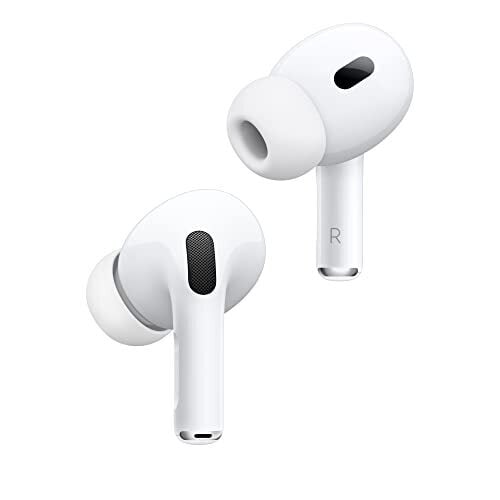
If you prefer earbuds, or you’re in a pinch, you can’t go wrong with Apple AirPods Pro 2. AirPods are ubiquitous for a reason, and if you like the pair you have, there’s no reason you need to buy a new set of earbuds just for running. They’ve got excellent active noise cancellation, with transparency mode for safety.
For the best fit all-around, the Powerbeats Pro 2 are pretty unbeatable. I’m talking active noise cancellation, earhooks with flexible grip, and even heart rate monitoring.
Another set of wireless earbuds I used to love: the Bose QuietComfort. The only reason I say “used to” is because I tragically left my pair on a plane years ago. They’re small but mighty, not mention surprisingly secure given just how little they are. I especially appreciate a pair of earbuds with customizable tap control buttons, so you can easily skip a song that isn’t matching the vibe of your run.
Over-ear and on-ear options
Audiophiles may spring for fancier options, but my philosophy here is if you know you’re going to sweat in a pair of soundproof headphones, you should use a budget pair for the task.
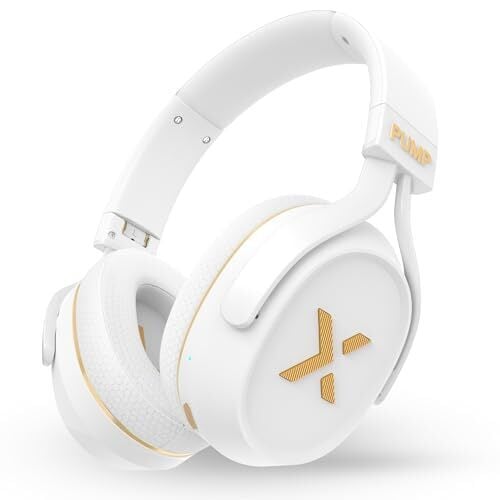
My under-the-radar budget recommendation for you is the BlueAnt Pump X Headphones. They deliver on the two things I need during an intense workout: sweat resistance and impressive sound quality. If I’m on a treadmill, I need true over-the-ear bass pumping through my skull. The Pump X headphones have an “X-mode” bass boost that feels like it was designed specifically for the moment when you’re struggling through that final mile.
My honorable mention in this category is the Soundcore Life Q30 by Anker. They’re comfortable, have a solid battery life, and since they cost less than $100, I never feel guilty for sweating profusely in them. Their noise cancellation and sound quality have never disappointed me in the gym.
Consider a wired option
While I’m not huge on wired headphones myself, they’re worth considering. Think about it: no battery anxiety. No Bluetooth glitches. Perfect for races where you want zero tech failures. If you’re looking for a backup pair that you know you won’t lose, the JBL Endurance Run 2 are just $19.95.
What to look for in running earbuds
Through years of trial and error, I’ve identified these non-negotiables in running earbuds and headphones.
Security is everything: If they fall out during mile 15, they’re useless. Look for multiple ear tip sizes, ear hooks, or bone conduction designs.
Sweat resistance matters: IPX4 minimum, but IPX7 or IP55+ ratings provide peace of mind during intense training.
Battery life should exceed your longest run: Nothing kills motivation like dead earbuds halfway through a long run.
Sound awareness equals safety: Whether through bone conduction, transparency modes, or single-ear wearing, you need to hear your environment.
Comfort for hours: What feels fine for 30 minutes might become torture after two hours.
The bottom line
While I mourn the loss of my beloved Plantronics BackBeat Fit 2100, the Shokz OpenRun Pro 2 are treating me well. Their combination of safety, comfort, and performance makes them ideal for serious runners—especially those wanting to stay safe in city streets, like me.
That said, the best running earbuds are the ones that match your specific needs. Trail runners might prioritize different features than track athletes. Marathon trainers have different requirements than casual joggers (cough cough, battery life). The key is finding the pair that disappears during your run—earbuds that let you focus on your pace, your breathing, and the rhythm of your feet on the pavement.
Hubble has captured a dense, burned-out star in the act of consuming a Pluto-like object. Happening some 260 light years from Earth, the new observation, published in the Monthly Notices of the Royal Astronomical Society, revealed a white dwarf, the stellar corpse of a Sun-like star, feasting on a planetary fragment torn from its own system’s
An anonymous reader shares a report: JM Video, one of only two remaining DVD rental stores in Paris, is a focal point for film lovers and visited by actors like Brad Pitt when they are in the city, but the ever-growing competition of streaming platforms means this Paris institution is fighting for survival. Choice is not the problem: JM Video has a library of more than 50,000 films, more than some 5,000 on offer at any time on Netflix and more than the catalogues of all the major streaming actors combined. “It’s one of the few places in Paris with a real film collection, you can find things here that you cannot find anywhere else,” said movie buff Virginie Breton, who rents DVDs several times a week. But not enough to keep JM Video afloat.
Sky-high Paris property rents and a dwindling customer base, combined with the arrival of ever-more streaming services like Amazon Prime, Disney+, HBO Max, Paramount+ and Apple TV+ are squeezing the life out of the cave-like shop, where DVDs spill out from floor-to-ceiling racks. Founded in 1982, JM Video was one of around 5,000 video rental shops in France at the end of last century, well before Netflix switched from being a DVD rental outfit to a streaming pioneer around 2010. Now, France has only about 10 DVD rental shops, two of which are in Paris.
We’re still in iPhone mode this week, as all of our reviews of Apple’s new hardware are rolling out. In this episode, Senior Writer Sam Rutherford joins us to chat about his experience with the iPhone Air and our final thoughts on the rest of the iPhone 17 lineup. Also, we dive into all of the news from Meta Connect 2025, including the Ray-Ban Display smart glasses. Is Meta actually on to something with these smart glasses? Or is Zuck just desperate to get people away from phones?
iPhone 17 Air review: Thinness with a purpose – 1:21
What’s the iPhone 17 Air’s battery life like? – 14:47
iPhone 17 Pro: a more substantive update than meets the eye – 24:54
The base iPhone 17 is a great phone for pretty much everyone – 35:26
Mark Zuckerberg announces Meta Ray-Ban Display smart glasses during his Connect keynote – 39:35
Other News: The ‘framework’ of a TikTok deal is in place, U.S. may license ByteDance’s original algorithm – 1:09:08
New rumors about a touchscreen MacBook Pro – 1:10:41
Working on – 1:14:32
Pop culture picks – 1:15:02
Livestream
Credits
Hosts: Devindra Hardawar and Sam Rutherford Producer: Ben Ellman Music: Dale North and Terrence O’Brien
This article originally appeared on Engadget at https://www.engadget.com/mobile/smartphones/engadget-podcast-iphone-air-and-17-reviews-meta-throws-a-screen-on-smart-glasses-140036926.html?src=rss
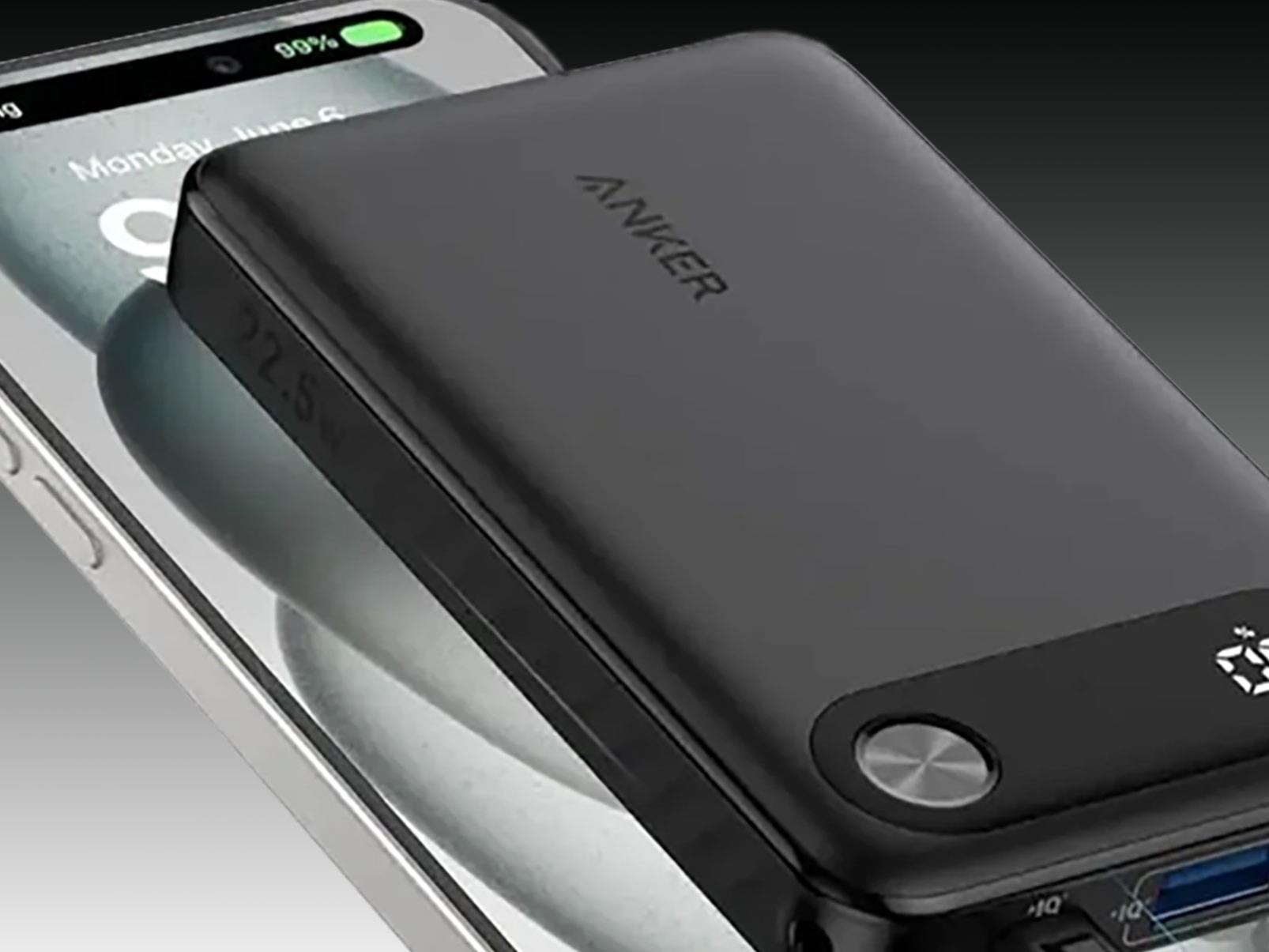
Anker is issuing another recall over potentially defective power banks following dozens of reports of incidents involving fires and explosions. Unlike the last recall, which affected around 1.1 million Anker PowerCore 1000 power banks, this new one includes multiple different models. It’s a familiar story, in that the culprit is the lithium-ion
Artificial intelligence tools used by doctors risk leading to worse health outcomes for women and ethnic minorities, as a growing body of research shows that many large language models downplay the symptoms of these patients.
A series of recent studies have found that the uptake of AI models across the healthcare sector could lead to biased medical decisions, reinforcing patterns of under treatment that already exist across different groups in western societies.
The findings by researchers at leading US and UK universities suggest that medical AI tools powered by LLMs have a tendency to not reflect the severity of symptoms among female patients, while also displaying less “empathy” towards Black and Asian ones.
Getting your hands on Nintendo’s latest console just got easier, as Amazon is now listing the Nintendo Switch 2 for sale outright, no invitation needed. It’s been three months since the release of the Nintendo Switch 2, and the launch day frenzy is just starting to taper off. The handhelds have been selling at a blistering pace, with just under 6 million units sold in the first four weeks.
Online inventories in those initial weeks sold out in a flash, and sparse restocks were gone just as quickly. Amazon was left out of the initial pre-order process and didn’t list the console at all until over a month after its release. This conspicuous absence may have been due to Nintendo’s frustration with third-party sellers undercutting the company’s own pricing for games on the site.
We really loved the Nintendo Switch 2 in our hands-on review, and thought it was a great follow-up to the 2017 console that launched a handheld renaissance. We gave the Switch 2 a score of 93 out of 100, and were particularly impressed with its larger 7-9-inch LCD screen, the magnetic Joy-Cons, better base storage and, of course, significantly improved performance over the original. The pricing is a bit steep, the battery life could be better and the dock could more USB-C ports, but aside from those details the Switch 2 is almost perfect.
If you’ve been waiting to pick up a Nintendo Switch 2 without having to go on a scavenger hunt, then the Amazon listing should be a welcome option. The months since release have also seen a great selection of Switch 2 ports and exclusive games hit the market. Amazon’s listing offers the standalone console for $449 or the Mario Kart World bundle for $499. Sales are limited to one unit per customer.
This article originally appeared on Engadget at https://www.engadget.com/gaming/nintendo/the-nintendo-switch-2-is-for-sale-on-amazon-no-invite-required-132503609.html?src=rss
Once upon a time, noise-canceling headphones primarily existed for one purpose: air travel. Bose and Sennheiser were among the first on the scene commercially, blocking unwanted sounds for pilots long before wireless headphones were even a thing. Today, active noise cancellation (ANC) is not just commonplace, it’s practically expected for any consumer headphone.
During the development of its four sets of AirPods with ANC, Apple has harnessed the power of its noise-blocking system to create a natural-sounding transparency mode, develop the automatic Adaptive Audio feature and create accessibility tools like Conversation Awareness. ANC is the basis for a litany of handy AirPods features, and with the AirPods Pro 3, Apple has honed this set of offerings even further.
As director of home and audio product marketing Eric Treski told Engadget. “With ANC, it was really about extending that capability to other use cases.”
The overall redesign of AirPods Pro 3
Billy Steele for Engadget
Before I get into the upgrades to the ANC system and the other tools that those unlock, I’d be remiss not to discuss how the overall redesign of the AirPods Pro 3 factors in. First, Apple adjusted the direction of the sound coming out of the earbuds so it’s going more directly into the ear canal. Next, the updates to the AirPods Pro 3’s fit — including the new foam-filled ear tips — create a better seal that helps make the ANC setup more efficient.
“The better fit allows us to diagnose what’s happening inside the ear canal,” Matthew Costello, vice president of audio and hardware engineering, explained. “We can actually make ANC more precise, compensate for leak and also better understand the geometry of the individual ear canals.”
Costello said that the product design team spent a lot of time on the new ear tips, arriving at a silicone-coated, foam-infused version for the AirPods Pro 3. He noted that these tips provide the best seal of any AirPods so far, which I can confirm, and that the passive noise isolation they provide is one aspect of the new-and-improved ANC performance.
A more precise ANC system
In order to improve the ANC tech, the engineers employed something called headroom control so that Apple could get more feedback from the microphones in the noise-cancelling system. Those internal mics monitor any unwanted noise that sneaks into the ear canal and prompts the ANC setup to make the necessary changes. The team was then able to optimize performance using a combination of software, geometry and acoustics.
An inherent trait of foam ear tips is that they’re better at blocking higher-frequency sounds, which Costello describes as “more challenging,” so I asked how much of the improvement in overall ANC performance was simply due to this new component. Costello was quick to clarify it’s one part of a much wider system.
“It’s a significant contributor, but it’s part of the overall system performance,” he continued. “The understanding of what’s actually happening in the ear canal helps us diagnose when you need more ANC, but the better seal makes the whole experience more reliable.”
The acoustics engineers, which include a dedicated ANC team, also redesigned and repositioned the noise floor microphones. These are the components that detect any unwanted sounds from either the earbuds themselves or your environment. Since there’s now a more direct path into the ear canal, there’s less room for interference or distortion. A new self-tuning algorithm then takes the data from those mics and identifies exactly what’s going on inside of the ear. Again, it’s all in the name of precision.
“It’s essentially a cleaner signal that’s more predictable,” Treski explained.
ANC’s role in other audio features
Billy Steele for Engadget
The evolving ANC setup became the foundation for many of Apple’s features on the AirPods and AirPods Pro. As the noise cancellation system improves, transparency mode does too. Now that the system can account for more frequencies, Costello said that this ambient sound tool is more customized to your hearing.
“We’ve actually been able to personalize transparency, because the pass-through information is much better,” he noted.
Because the AirPods Pro 3’s ANC can now cover a wider frequency range, Adaptive Audio is also more adept at picking up loud, high-pitched sounds. This increased the effectiveness of Apple’s hearing protection tools, which reduce your exposure to dangerously loud noises when, say, walking past a construction site, being bombarded by an ambulance’s siren or attending a concert. The re-tuned audio EQ profile helps the company better understand when you need more ANC in loud environments, and to better balance the mix of noise cancellation and transparency in those situations.
The same changes also support improvements in Apple’s hearing test. Thanks to these tweaks, you can now take the test in slightly louder environments than before without the feature asking you to move to a quieter spot. The hearing aid feature has been expanded as well, as Costello said the team added more gain so that the tool can correct higher levels of hearing loss.
“Because of the improvements to ANC, the [hearing aid] benefits actually extend deeper into mild and moderate hearing loss, to help even more people that have challenges with hearing,” Treski continued. All of the hearing health functionality on AirPods was developed in audio labs and in collaboration with audiologists. Apple tests the features with microphones in people’s ears, for both validation and safety, under the guidance of those clinical professionals. This confirmation lets the product development team know when these types of features may be ready for real-world use.
Billy Steele for Engadget
The most impressive part of Apple’s new Live Translation feature on the AirPods 4 with ANC, AirPods Pro 2 and AirPods Pro 3 isn’t the language conversion. For me, it’s the way active noise cancellation kicks in to ensure you can hear Siri speaking. When you begin a Live Translation session on a compatible set of AirPods, ANC lowers the volume of the person you’re speaking to and reduces environmental noise so that you don’t miss a word from Siri.
“We really wanted to ensure that you were able to hear Siri and have an understanding of the conversation in the best way possible,” Treski explained. “So, the idea is being able to really focus on that voice and not be distracted from other surrounding sounds.” Costello added that real-world testing, with careful attention to hide the unannounced products in public, is inherent to the development process.
“What started out as something that was really only used in an airplane is now doing things to help you translate language, preserve your [hearing] health if you’re at a concert, listen to lower levels of music or even take a hearing test,” Treski said.
Apple has taken the seemingly straightforward ability to block noise and applied it to so many of the features that have become synonymous with AirPods. The company probably still has more plans for its H2 chip, so there are likely even more ANC-powered features to come.
This article originally appeared on Engadget at https://www.engadget.com/audio/headphones/how-apple-used-anc-to-build-its-best-airpods-features-130037859.html?src=rss
Shares of AMD slid following the announcement that Intel and NVIDIA are teaming up to co-develop several generations of datacenter and PC products. The arrangement, which also includes a $5 billion investment by NVIDIA into Intel common stock, prompted speculation and worry (by some) over AMD’s future, and that undoubtedly led to its stock
When Mark Zuckerberg announced Meta’s latest smart glasses at the company’s Connect 2025 keynote, he encountered two glitches that prevented him from properly demonstrating some of the devices’ features. Now, Meta’s Chief Technology Officer, Andrew Bosworth, said in an AMA on Instagram that they were demo failures and not actual product failures. The first glitch took place in the middle of a live demo with a cooking content creator, who asked Live AI for instructions on how to make a Korean-inspired steak sauce on his Meta glasses. Instead of giving him detailed instructions, his glasses’ AI skipped ahead by several steps and continued glitching. The chef told Zuckerberg that the “WiFi might be messed up” in the venue.
Bosworth said, however, that it was not the case. Apparently, when the chef said “Hey Meta, start Live AI,” it fired up every single Meta Ray-Ban’s Live AI in the building. And since the event was all about the company’s smart glasses, there were a lot of them in the venue at the time. The company had also routed Live AI’s traffic to its dev server to isolate it, but it ended up routing the Live AI traffic of everyone’s glasses in the building to its server. “We DDoS’d ourselves, basically,” he said. He continued that it didn’t happen at rehearsal, because there weren’t as many people wearing the glasses when they tested it out.
Zuckerberg also ran into an issue when he tried demonstrating taking WhatsApp video calls on the Meta Ray-Ban Display. The audience could see him getting calls on the glasses’ HUD, but he couldn’t answer them to start the call. Bosworth said that it was caused by a “never-before-seen bug” that had put the display to sleep at the very instant that the notifications came in that someone was calling. Even after Zuckerberg woke up the display, there was no option to answer the call. The CTO said Meta had never come across that bug before the demo and that it has since been fixed. “You guys know we can do video calling… we got WhatsApp, we know how to do video calling,” he said, but admitted that it was a missed opportunity to be able to show on stage that the feature actually works.
This article originally appeared on Engadget at https://www.engadget.com/wearables/meta-cto-explains-the-cause-of-its-embarrassing-smart-glasses-demo-failures-123011790.html?src=rss