Some iPhone 17 models are reportedly prone to very visible scratches

Early shoppers are taking to the web to warn about the potentially scratch-prone nature of specific iPhone 17 model and color combos. According to a Bloomberg report, those demoing the latest iPhone in-store noticed that the iPhone 17 Pro in Deep Blue and the iPhone Air in Space Black models already had very noticeable scratches and scuffs. The report is backed up by social media posts following the release, where users recorded display models with residual marks from being used with a MagSafe charger and showed off photos of the back camera housing with chipped edges.

In a video by JerryRigEverything, the YouTuber puts the iPhone 17 models to the test with razor blades, coins and keys. The video highlights the edges of the iPhone 17 Pro’s back camera housing as particularly prone to scuffing since the colored aluminum oxide layer from the anodization process tends not to stick to sharp corners. However, the YouTuber also purposely marked up the iPhone 17 Pro blue model’s camera plateau itself and the phone’s back, which showed clear scratches that were easily wiped off.

The visibility of the scratches could be attributed to Apple’s decision to switch back from the iPhone 16 Pro‘s titanium chassis to aluminum, which is known to be susceptible to marking. However, all of these scratches are cosmetic and won’t affect how these latest iPhones function. Many iPhone buyers may not even run into this issue at all, considering a majority of owners use a case.

This article originally appeared on Engadget at https://www.engadget.com/mobile/smartphones/some-iphone-17-models-are-reportedly-prone-to-very-visible-scratches-191147266.html?src=rss

America’s Space Force is Preparing for a New Kind of War

A July combat training exercise involved a satellite dish-style antenna that “could fire enough electromagnetic energy to fry the satellite 22,000 miles away,” reports the Washington Post. But “Instead, the salvo would be more covert — millisecond pulses of energy that would subtly disrupt the satellite’s signals, which U.S. military forces were using to communicate in the Pacific Ocean.”

The goal was to disguise the strike as a garbled connection that could be easily remedied by securing a loose cable or a simple reboot, leaving U.S. service members frustrated without raising their suspicions. [And using less power “would make it harder for the Blue Team to track where the interference was coming from.”] This is how the next war could start: invisible shots fired in space on the electromagnetic spectrum that could render U.S. fighter jets and aircraft carriers deaf and blind, unable to communicate. In this case, the “aggressors” targeting the U.S. satellite were not from China or Russia, but rather an elite squadron of U.S. Space Force Guardians mimicking how potential adversaries would act in a conflict that begins in orbit… Involving more than 700 service members and spanning 50 million square miles and six time zones, the training exercise, called Resolute Space, was observed firsthand exclusively by The Washington Post.
The article describes leadership at the U.S. Space Force “still honing their mission while jousting with adversaries, such as China, that are moving quickly and conducting combat-like operations in orbit… While the Space Force continues to evolve, many defense analysts and some members of Congress fear the United States has already ceded its dominance in space to China and others.”
With a budget of just $40 billion, the relatively tiny Space Force makes up just about 4 percent of the Defense Department’s budget and less than 1 percent of its personnel. It has more than 15,000 Guardians, which also includes several thousand civilians. By comparison, the Army has nearly 1 million soldiers. The Space Force has been squeezed under the department of the Air Force and struggled to distinguish itself from the other branches…

China, Russia and others have demonstrated that they can take out or interfere with the satellites operated by the Pentagon and intelligence agencies that provide the nation’s missile warning and tracking, reconnaissance and communications. China in particular has moved rapidly to build an arsenal of space-based weapons… [R]ecently, several of China’s satellites have engaged in what Space Force officials have called “dogfighting,” jousting with U.S. satellites at high speeds and close ranges.


Read more of this story at Slashdot.

BYD’s all-electric hypercar, the YangWang U9 Extreme, hits a record-breaking 308mph

A new hypercar has dethroned Bugatti’s record for the fastest production car, and unsurprisingly, it’s an electric vehicle. During a livestream at the Automotive Testing Papenburg testing site in Germany, the YangWang U9 Extreme hit a facemelting top speed of 496.22 kmph, or around 308.33 mph. That metric edges out the previous record from the Bugatti Chiron Super Sport 300+, which achieved 304.77 mph in 2019.

Officially, the fastest production car record is factored from the average of runs in both directions, whereas the U9 Extreme only reached its 308 mph top speed one way. That’s not to minimize this achievement, whose pivotal moment from the livestream was highlighted by CarNewsChina, since Bugatti’s record was also a one-way run. Although it’s not surprising that the U9 Extreme was able to push these limits since it’s packed with four motors that produce just under 3,000 horsepower. The electric hypercar also runs on one of the world’s first 1,200V platforms, which offers better performance and efficiency, along with some weight reduction.

Like the Chiron Super Sport 300+, the U9 Extreme is going to be extremely limited with production capping at 30 units. There’s no price yet, but looking at those specs, this EV will likely have a high cost to match. However, with this latest achievement, the YangWang U9 Extreme shouldn’t have any trouble selling out quickly.

This article originally appeared on Engadget at https://www.engadget.com/transportation/evs/byds-all-electric-hypercar-the-yangwang-u9-extreme-hits-a-record-breaking-308mph-180727354.html?src=rss

Hundreds of Google AI Workers Were Fired Amid Fight Over Working Conditions

Last week the Guardian reported on “thousands of AI workers contracted for Google through Japanese conglomerate Hitachi’s GlobalLogic to rate and moderate the output of Google’s AI products, including its flagship chatbot Gemini… and its summaries of search results, AI Overviews.”
“AI isn’t magic; it’s a pyramid scheme of human labor,” said Adio Dinika, a researcher at the Distributed AI Research Institute based in Bremen, Germany. “These raters are the middle rung: invisible, essential and expendable….” Ten of Google’s AI trainers the Guardian spoke to said they have grown disillusioned with their jobs because they work in siloes, face tighter and tighter deadlines, and feel they are putting out a product that’s not safe for users… In May 2023, a contract worker for Appen submitted a letter to the US Congress that the pace imposed on him and others would make Google Bard, Gemini’s predecessor, a “faulty” and “dangerous” product
This week Google laid off 200 of those moderating contractors, reports Wired. “These workers, who often are hired because of their specialist knowledge, had to have either a master’s or a PhD to join the super rater program, and typically include writers, teachers, and people from creative fields.”

Workers still at the company claim they are increasingly concerned that they are being set up to replace themselves. According to internal documents viewed by WIRED, GlobalLogic seems to be using these human raters to train the Google AI system that could automatically rate the responses, with the aim of replacing them with AI. At the same time, the company is also finding ways to get rid of current employees as it continues to hire new workers. In July, GlobalLogic made it mandatory for its workers in Austin, Texas, to return to office, according to a notice seen by WIRED…
Some contractors attempted to unionize earlier this year but claim those efforts were quashed. Now they allege that the company has retaliated against them. Two workers have filed a complaint with the National Labor Relations Board, alleging they were unfairly fired, one due to bringing up wage transparency issues, and the other for advocating for himself and his coworkers. “These individuals are employees of GlobalLogic or their subcontractors, not Alphabet,” Courtenay Mencini, a Google spokesperson, said in a statement…

“Globally, other AI contract workers are fighting back and organizing for better treatment and pay,” the article points out, noting that content moderators from around the world facing similar issues formed the Global Trade Union Alliance of Content Moderators which includes workers from Kenya, Turkey, and Colombia.

Thanks to long-time Slashdot reader mspohr for sharing the news.


Read more of this story at Slashdot.

iFixit’s teardown shows the iPhone Air doesn’t sacrifice repairability for thinness

Apple manages to hold onto its recent repairability record with the latest iPhone Air, which maintains a provisional 7 out of 10 in iFixit’s teardown. As seen in the teardown, the iPhone Air can easily swap batteries, has a modular USB-C port and offers day-one repair guides. Even though the iPhone Air represents Apple’s thinnest iPhone ever at 5.6mm, iFixit said the slim design makes repairs “more approachable, not less.”

Apple kept the same battery design that was introduced with the iPhone 16 lineup, which switched to an electrically released battery adhesive for more consistent replacements. Similarly, you don’t have to ever risk damaging the OLED display when swapping an iPhone Air battery, since there’s still that dual-entry access allowing you to access it from the back glass.

Being a smartphone that emphasizes thinness, Apple had to sacrifice some battery life with the iPhone Air. However, in our review, we found that the iPhone Air was comparable to other models in the iPhone 17 lineup and lasted nearly an entire day in real-world testing. iFixit also discovered that the battery is the same exact one found in the accompanying MagSafe Battery accessory that goes for $99, which iFixit likened to a “spare tire.” On top of that, the included battery is encased in metal, making it easier to replace and offering some protection against bending.

This article originally appeared on Engadget at https://www.engadget.com/mobile/smartphones/ifixits-teardown-shows-the-iphone-air-doesnt-sacrifice-repairability-for-thinness-161641244.html?src=rss

Secure Software Supply Chains, Urges Former Go Lead Russ Cox

Writing in Communications of the ACM, former Go tech lead Russ Cox warns we need to keep improving defenses of software supply chains, highlighting “promising approaches that should be more widely used” and “areas where more work is needed.”
There are important steps we can take today, such as adopting software signatures in some form, making sure to scan for known vulnerabilities regularly, and being ready to update and redeploy software when critical new vulnerabilities are found. More development should be shifted to safer languages that make vulnerabilities and attacks less likely. We also need to find ways to fund open source development to make it less susceptible to takeover by the mere offer of free help. Relatively small investments in OpenSSL and XZ development could have prevented both the Heartbleed vulnerability and the XZ attack.

Some highlights from the 5,000-word article:

Make Builds Reproducible. “The Reproducible Builds project aims to raise awareness of reproducible builds generally, as well as building tools to help progress toward complete reproducibility for all Linux software. The Go project recently arranged for Go itself to be completely reproducible given only the source code… A build for a given target produces the same distribution bits whether you build on Linux or Windows or Mac, whether the build host is X86 or ARM, and so on. Strong reproducibility makes it possible for others to easily verify that the binaries posted for download match the source code…”
Prevent Vulnerabilities. “The most secure software dependencies are the ones not used in the first place: Every dependency adds risk… Another good way to prevent vulnerabilities is to use safer programming languages that remove error-prone language features or make them needed less often…”
Authenticate Software. (“Cryptographic signatures make it impossible to nefariously alter code between signing and verifying. The only problem left is key distribution…”) “The Go checksum database is a real-world example of this approach that protects millions of Go developers. The database holds the SHA256 checksum of every version of every public Go module…”
Fund Open Source. [Cox first cites the XKCD cartoon “Dependencies,” calling it “a disturbingly accurate assessment of the situation…”] “The XZ attack is the clearest possible demonstration that the problem is not fixed. It was enabled as much by underfunding of open source as by any technical detail.”
The article also emphasized the importance of finding and fixing vulnerabilities quickly, arguing that software attacks must be made more difficult and expensive.
“We use source code downloaded from strangers on the Internet in our most critical applications; almost no one is checking the code…. We all have more work to do.”


Read more of this story at Slashdot.

Tech Boomtown Seattle Grapples with Fewer Tech Jobs

Near Microsoft’s headquarters in Redmond, the Five Stones coffee shop advertised for a barista a few months ago — and started getting resumes from “people who listed Microsoft and other tech companies,” writes the Wall Street Journal:

The applicants typically had master’s degrees and experience in graphic design or marketing roles, Andrews said — sometimes senior ones. They were applying to jobs at Five Stones that would pay Redmond’s minimum wage, $16.66 an hour. Five Stones hasn’t yet hired such candidates because the coffee shop gives priority to more traditional entry-level baristas, like high-schoolers…

[Microsoft and Amazon] have laid off more than 46,000 employees since 2023, according to Layoffs.fyi, which tracks workforce reductions. That represents 85% of layoffs by Seattle-area tech companies… As Amazon and Microsoft have made cuts — and other local tech firms including Expedia and Redfin have followed suit — the effects have rippled through Seattle’s other business sectors. Weakness in payroll and sales tax contributed to a projected $146 million shortfall in revenue over the next two years. Restaurant and retail spending is down in the business and shopping districts surrounding Amazon’s and Microsoft’s campuses, with total transactions falling by as much as 7% in some popular areas in the past year, according to data from Square. In the first half of 2025, around 450 restaurants closed in Seattle, or about 16% of its total. “At the halfway point of the year, we’ve already seen as many closures as we’d usually see in a full year,” said Anthony Anton, chief executive officer of the Washington Hospitality Association.

Uber driver Juan Prado made six figures in 2021, often shuttling passengers in town for job interviews and doing frequent drop-offs near downtown tech offices. Now, he said, demand is much lower. “There are moments where you can be online, and in certain areas, it shows nothing….” Seattle tech firms are asking for significantly fewer job placements than years ago, said Noelle McDonald, senior vice president at recruiting company Aquent, which counts Amazon and Microsoft as clients. Hiring windows have lengthened and open roles receive around 10 times as many applications.
And of course, “Commercial real-estate vacancies stand at a record high as offices built to accommodate a boom sit empty… ”
While some laid-off employees launched their own startups, “the outlook for many tech workers is dour as companies invest in software tools they can use to streamline teams,” the article points out. Microsoft CEO Satya Nadella “has said the company is increasingly looking to AI to perform coding and other tasks once done by people,” while in June, Amazon “said its workforce would shrink going forward.”


Read more of this story at Slashdot.

Radeon RX 9070 Flashed With XT BIOS Scores A 25% Performance Boost

Radeon RX 9070 Flashed With XT BIOS Scores A 25% Performance Boost
A Radeon subreddit user revealed that their PowerColor Reaper Radeon RX 9070 had been flashed with the RX 9070 XT vBIOS, which boosted performance by up to 25% in some synthetic benchmarks. In Cyberpunk 2077 with “a mix of ray-tracing-settings enabled”, gains were limited to just 8-12% over the stock RX 9070. These gains are still quite impressive,

How to combine PDF files

PDFs remain a common way to share documents because they preserve formatting across devices and platforms. Sometimes, however, you end up with several separate PDFs that would be easier to handle as a single file. Perhaps you’re sending a client multiple contracts or keeping all your scanned bills in one place. Whatever the reason, combining PDFs is simple once you know which tools to use. Adobe Acrobat offers the most direct approach, but there are plenty of free alternatives to consider as well.

How to combine PDFs with Adobe Acrobat

Adobe Acrobat has long been the default solution for editing and managing PDFs. If you already use the desktop app, you can merge files without relying on any third-party tools. Start by opening Acrobat and selecting the Tools tab. From there, choose Combine Files. You’ll see an option to add your documents. Usefully, this doesn’t limit you to just PDFs either. Word files, Excel sheets and image formats are all supported, too. 

Once the files appear in the workspace, you can rearrange them by dragging them into the order you want. If there are pages you don’t need, they can be removed before finalizing. Acrobat also gives you the option to turn off automatic bookmarks if you prefer a cleaner output. When everything looks correct, click Combine and the program will generate a single PDF that you can save anywhere on your device.

If you don’t have the desktop version, Adobe also provides a free online tool. The web-based version works in any modern browser. You simply go to Adobe’s merge tool page and drag your PDFs into the upload window. The interface lets you change the order before confirming. Once you click Merge, the combined document is processed and offered as a download. 

The service supports up to 100 individual files or 1,500 total pages, which is more than enough for most everyday needs.

Consider free alternatives online

If you prefer not to use Adobe or are working with smaller projects, several free services handle PDF merging in a browser. I Love PDF is one of the more popular choices. Using I Love PDF is nice and simple too: you upload your documents, arrange them as needed and download the finished file. 

However, there are limits to keep in mind: I Love PDF’s free tier allows up to 25 files or 100 MB per merge, but it remains a quick option when you don’t want to install extra software.

Sejda is another widely recommended tool. It works similarly, but places an emphasis on security and deletes files after processing. You can upload multiple PDFs, make changes such as reordering or removing pages and then merge them into one file. The free version of Sejda comes with task limits, but for occasional use, it covers the basics well.

Foxit also offers its own online merge service that requires little more than adding files, clicking merge and downloading the result. These web-based solutions are fast and convenient, though they are best suited to smaller, non-sensitive projects, given the need to upload documents to a server.

Desktop programs beyond Adobe

For those who prefer keeping documents offline, open source and freeware options are available. PDFsam Basic is a long-standing desktop application that runs on Windows, macOS and Linux. Unlike online tools, everything happens locally, which is good if you have concerns about privacy. 

After installing the program, you open the Merge module, select your files and choose whether to include features such as bookmarks or a table of contents. Once you’re satisfied with the settings, the program merges the documents into a single file stored directly on your computer.

Windows users can also turn to PDF24 Creator. It adds a virtual printer and a toolbox with options for editing. Within the toolbox, you select Merge Files and then arrange them in the preview window. After confirming, the program saves the combined PDF to your system.

Both PDFsam and PDF24 are free, lightweight and reliable, making them strong alternatives if you need an offline solution without subscribing to Adobe Acrobat.

How to combine PDF files on macOS using Preview

If you’re on a Mac, be aware that you don’t necessarily need third-party software. Apple’s Preview app, which comes pre-installed on macOS, has a built-in way to combine PDFs.

Open one of your files in Preview, then enable the thumbnail sidebar from the View menu. With the sidebar visible, you can drag another PDF directly into it, dropping the new document either before or after the existing pages. Once the arrangement looks correct, choose Export as PDF from the File menu to create the combined version. It’s a simple solution that requires no downloads and works well for basic needs.

Choosing the right method

The best option depends on how often you work with PDFs and whether privacy is a concern. Adobe Acrobat provides the most features and the smoothest workflow, but it requires a subscription for desktop use. The free online version is fine for occasional merging, especially if you want something quick and easy.

Services like I Love PDF, Sejda and Foxit offer comparable convenience, though file size limits may restrict larger projects. Desktop tools such as PDFsam Basic and PDF24 Creator are better suited for anyone who wants to keep files local and avoid upload restrictions. Mac users benefit from the built-in Preview app, which covers the basics without requiring extra software.

This article originally appeared on Engadget at https://www.engadget.com/computing/how-to-combine-pdf-files-120046452.html?src=rss

Engadget review recap: iPhone 17 lineup, AirPods Pro 3, Apple Watch Series 11 and more

Last week’s Apple event meant we were in for a barrage of reviews this week. We spent lots of time putting the iPhone 17 family, including the new iPhone Air, through its paces. We also tested the AirPods Pro 3 and Apple Watch Series 11 that were unveiled just over a week ago. In non-Apple reviews, there’s in-depth analysis of a premium Chromebook and the latest Tamagotchi device. Read on to catch up on everything you might’ve missed over the last few weeks. 

Apple iPhone Air

Apple replaced the iPhone 16 Plus with the ultra-thin iPhone Air, but the new phone is more than just a gimmick. As senior reviews writer Sam Rutherford observed, the company opted for sleekness with a purpose, and it did so without sacrificing too much battery life. “While Apple might not want to say so just yet, I’m willing to bet that this device will also be the template for an upcoming foldable iPhone,” he concluded. 

Apple iPhone 17

We’ve become bored with Apple’s tickle-down scheme for the regular iPhone over the years. The company has repeatedly opted to bring features from the Pro line down to these devices. This time, it finally gave the iPhone 17 a 120Hz display, and you won’t have to wait for the best camera updates. “Even if you’re coming from the iPhone 16, you’ll reap the benefits of the overhauled display and improved cameras,” I wrote. “I don’t say any of that lightly as I’m not a person who recommends getting a new phone every year.”

Apple iPhone 17 Pro and Pro Max

The Pro and Pro Max versions of the iPhone have always held a camera advantage over the regular model, and that’s still true. But the main differences now also include better thermal management, an aluminum unibody case and an optional 6.9-inch display. “This year’s iPhone lineup is forcing me to re-think the idea of a Pro phone,” managing editor Cherlynn Low said. “Is it one that looks and feels expensive or is it one that’s slightly more durable and maybe doesn’t appear as stylish?”

Apple AirPods Pro 3

If Apple had only improved both the active noise cancellation (ANC) and sound performance of the AirPods Pro 3, it would’ve been a decent upgrade. However, the company went well beyond that with the additions of Live Translation and heart-rate tracking. But the best part about this model is the strong possibility that the company isn’t done with it yet. “If recent history is any indication, the company will continue to add new features to this third-generation version,” I said. “I highly doubt that Apple is finished exploiting the power of the H2 chip, so it’s just getting started with what the AirPods Pro 3 can do.”

Apple Watch Series 11

The best smartwatch for iPhone owners keeps getting better. With upgrades to design, battery life, health monitoring and more, the Series 11 is a big refresh for the wearable device. However, it might not be the best option for most people. “With the Watch SE 3, you’ll still be able to access a wide range of health and fitness features like wrist temperature monitoring, sleep score, emergency SOS, fall and crash detection and more,” Cherlynn concluded. “It’s a compelling option at an appealing price.”

Acer Chromebook Plus Spin 514

There’s some wide variance in performance among Chromebooks, but Acer’s Chromebook Plus Spin 514 offers power, longevity and utility. The main downside is you’ll have to pay a premium for it. “At $700, we’re pushing the top of what anyone should spend on a Chromebook,” deputy editor Nathan Ingraham wrote. “While the more powerful chip and long battery life will be worth it for some people, Acer itself is providing some strong competition with its standard Chromebook Plus 514 which came out this summer.”

Tamagotchi Paradise

If taking care of a virtual pet is more your speed these days, weekend editor Cheyenne McDonald spent some time tending to her digital flock. “All in all, Tamagotchi Paradise feels fuller than 2023’s Uni, especially as the latter existed at its launch before all the downloadable content started coming in,” she said. “There’s a lot of fun to be had with this one, so long as you’re open to a little (okay, a lot of) change.”

This article originally appeared on Engadget at https://www.engadget.com/engadget-review-recap-iphone-17-lineup-airpods-pro-3-apple-watch-series-11-and-more-120014319.html?src=rss

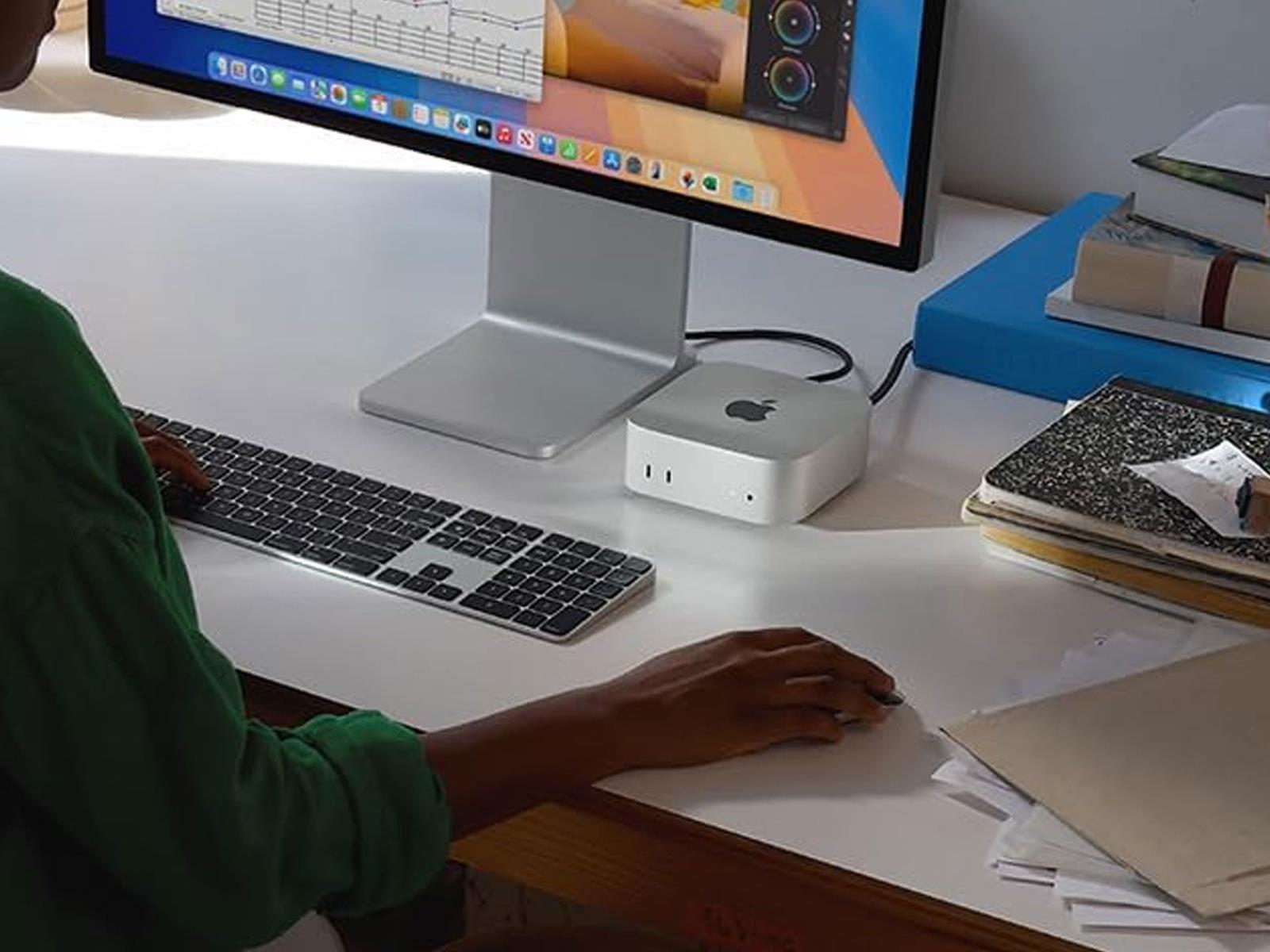
M4 Mac Mini And MacBook Air Blowout, Great Prices And More Apple Deals

M4 Mac Mini And MacBook Air Blowout, Great Prices And More Apple Deals
Apple’s transition to its own in-house designed silicon based on Arm is bearing fruit (excuse the pun) these days. Now several years into the pivot away from using Intel’s x86 chips, Apple’s latest generation Mac mini and MacBook systems are impressive pieces of hardware. They’re also frequently on sale, as is the case right now as we head

Disney Sued by Law Firm Wanting to Use ‘Steamboat Willie’ in Its Ads

Mickey Mouse’s first movie Steamboat Willie entered the public domain in 2024.
Now one of America’s largest personal injury firms is suing Disney, reports the Associated Press, “in an effort to get a ruling that would allow it to use Steamboat Willie in advertisements…”
[The law firm said] it had reached out to Disney to make sure the entertainment company wouldn’t sue them if they used images from the animated film for their TV and online ads. Disney’s lawyers responded by saying they didn’t offer legal advice to third parties, according to the lawsuit. Morgan & Morgan said it was filing the lawsuit to get a decision because it otherwise feared being sued by Disney for trademark infringement if it used Steamboat Willie.
“Without waiver of any of its rights, Disney will not provide such advice in response to your letter,” Disney’s attorneys wrote in their letter (adding “Very truly yours…”). A local newscast showed a glimpse of the letter, along with a few seconds of the ad (which ends with Minnie Mouse pulling out a cellphone to call for a lawyer…)

Attorney John Morgan tells the newscast that Disney’s legal team “is playing cute, and so we’re just trying to get a yes or no answer.. They wrote us back a bunch of mumbo-jumbo that made no sense, didn’t answer the question. We tried it again, they didn’t answer the question…” (The newscast adds that the case isn’t expected to go to court for at least a year.)


Read more of this story at Slashdot.

Glitches Humiliated Zuck in Smart Glasses Launch. Meta CTO Explains What Happened

When Meta finally unveiled its newest smart glasses, CEO Mark Zuckerberg “drew more snickers than applause,” wrote the New York Times. (Mashable points out a video call failing onstage followed by an unsuccessful recipe demonstration.)

Meta chief technology officer Andrew Bosworth later explained the funny reason their demo didn’t work, reports TechCrunch, while answering questions on Instagram:

“When the chef said, ‘Hey, Meta, start Live AI,’ it started every single Ray-Ban Meta’s Live AI in the building. And there were a lot of people in that building,” Bosworth explained. “That obviously didn’t happen in rehearsal; we didn’t have as many things,” he said, referring to the number of glasses that were triggered… The second part of the failure had to do with how Meta had chosen to route the Live AI traffic to its development server to isolate it during the demo. But when it did so, it did this for everyone in the building on the access points, which included all the headsets. “So we DDoS’d ourselves, basically, with that demo,” Bosworth added… Meta’s dev server wasn’t set up to handle the flood of traffic from the other glasses in the building — Meta was only planning for it to handle the demos alone.

The issue with the failed WhatsApp call, on the other hand, was the result of a new bug. The smart glasses’ display had gone to sleep at the exact moment the call came in, Bosworth said. When Zuckerberg woke the display back up, it didn’t show the answer notification to him. The CTO said this was a “race condition” bug… “We’ve never run into that bug before,” Bosworth noted. “That’s the first time we’d ever seen it. It’s fixed now, and that’s a terrible, terrible place for that bug to show up.” He stressed that, of course, Meta knows how to handle video calls, and the company was “bummed” about the bug showing up here… “It really was just a demo fail and not, like, a product failure,” he said.

Thanks to Slashdot reader fjo3 for sharing the news.


Read more of this story at Slashdot.

PIRG, Other Groups Criticize Microsoft’s Plan to Discontinue Support for Windows 11

The consumer advocacy nonprofit PIRG (Public Interest Research Group) is now petitioning Microsoft to reconsider pulling support for Windows 10 in 2025, since “as many as 400 million perfectly good computers that can’t upgrade to Windows 11 will be thrown out.” In a petition addressed to Microsoft CEO Satya Nadella, the group warned the October 14 end of free support could cause “the single biggest jump in junked computers ever, and make it impossible for Microsoft to hit their sustainability goals.”

About 40% of PCs currently in use can’t upgrade to Windows 11, even if users want to… Less than a quarter of electronic waste is recycled, so most of those computers will end up in landfills.

Consumer Reports recently also urged Microsoft to not to “strand millions of customers.”. And now more groups are also pushing back, according to a post from the blog Windows: Central

The Restart Project co-developed the “End of 10” toolkit, which is designed to support Windows 10 users who can’t upgrade to Windows 11 after the operating system hits its end-of-support date.

They also note that a Paris-based company called Back Market plans to sell Windows 10 laptops refurbished with Ubuntu Linux or ChromeOS Flex. (“We refuse to watch hundreds of millions of perfectly good computers end up in the trash as e-waste,” explains their web site.) Back Market’s ad promises an “up-to-date, secure operating system — so instead of paying for a new computer you don’t need, you can help us give this one a brand new life.”

Right now Windows 10 holds 71.9% of Microsoft’s market share, with Windows 11 at 22.95%, according to figures from StatCounter cited by the blog Windows Central. And HP and Dell “recently indicated that half of the global PCs are still running Windows 10,” according to another Windows Central post…


Read more of this story at Slashdot.

PIRG, Other Groups Criticize Microsoft’s Plan to Discontinue Support for Windows 10

The consumer advocacy nonprofit PIRG (Public Interest Research Group) is now petitioning Microsoft to reconsider pulling support for Windows 10 in 2025, since “as many as 400 million perfectly good computers that can’t upgrade to Windows 11 will be thrown out.” In a petition addressed to Microsoft CEO Satya Nadella, the group warned the October 14 end of free support could cause “the single biggest jump in junked computers ever, and make it impossible for Microsoft to hit their sustainability goals.”

About 40% of PCs currently in use can’t upgrade to Windows 11, even if users want to… Less than a quarter of electronic waste is recycled, so most of those computers will end up in landfills.

Consumer Reports recently also urged Microsoft to not to “strand millions of customers.”. And now more groups are also pushing back, according to a post from the blog Windows: Central

The Restart Project co-developed the “End of 10” toolkit, which is designed to support Windows 10 users who can’t upgrade to Windows 11 after the operating system hits its end-of-support date.

They also note that a Paris-based company called Back Market plans to sell Windows 10 laptops refurbished with Ubuntu Linux or ChromeOS Flex. (“We refuse to watch hundreds of millions of perfectly good computers end up in the trash as e-waste,” explains their web site.) Back Market’s ad promises an “up-to-date, secure operating system — so instead of paying for a new computer you don’t need, you can help us give this one a brand new life.”

Right now Windows 10 holds 71.9% of Microsoft’s market share, with Windows 11 at 22.95%, according to figures from StatCounter cited by the blog Windows Central. And HP and Dell “recently indicated that half of the global PCs are still running Windows 10,” according to another Windows Central post…


Read more of this story at Slashdot.

Google Temporarily Pauses AI-Powered ‘Homework Helper’ Button in Chrome Over Cheating Concerns

An anonymous reader shared this article from the Washington Post:

A student taking an online quiz sees a button appear in their Chrome browser: “homework help.” Soon, Google’s artificial intelligence has read the question on-screen and suggests “choice B” as the answer. The temptation to cheat was suddenly just two clicks away Sept. 2, when Google quietly added a “homework help” button to Chrome, the world’s most popular web browser. The button has been appearing automatically on the kinds of course websites used by the majority of American college students and many high-schoolers, too. Pressing it launches Google Lens, a service that reads what’s on the page and can provide an “AI Overview” answer to questions — including during tests.

Educators I’ve spoken with are alarmed. Schools including Emory University, the University of Alabama, the University of California at Los Angeles and the University of California at Berkeley have alerted faculty how the button appears in the URL box of course sites and their limited ability to control it.

Chrome’s cheating tool exemplifies Big Tech’s continuing gold rush approach to AI: launch first, consider consequences later and let society clean up the mess. “Google is undermining academic integrity by shoving AI in students’ faces during exams,” says Ian Linkletter, a librarian at the British Columbia Institute of Technology who first flagged the issue to me. “Google is trying to make instructors give up on regulating AI in their classroom, and it might work. Google Chrome has the market share to change student behavior, and it appears this is the goal.”
Several days after I contacted Google about the issue, the company told me it had temporarily paused the homework help button — but also didn’t commit to keeping it off. “Students have told us they value tools that help them learn and understand things visually, so we’re running tests offering an easier way to access Lens while browsing,” Google spokesman Craig Ewer said in a statement.


Read more of this story at Slashdot.

Interlune Signs $300M Deal to Harvest Helium-3 for Quantum Computing from the Moon

An anonymous reader shared this report from the Washington Post:

Finnish tech firm Bluefors, a maker of ultracold refrigerator systems critical for quantum computing, has purchased tens of thousands of liters of Helium-3 from the moon — spending “above $300 million” — through a commercial space company called Interlune. The agreement, which has not been previously reported, marks the largest purchase of a natural resource from space.
Interlune, a company founded by former executives from Blue Origin and an Apollo astronaut, has faced skepticism about its mission to become the first entity to mine the moon (which is legal thanks to a 2015 law that grants U.S. space companies the rights to mine on celestial bodies). But advances in its harvesting technology and the materialization of commercial agreements are gradually making this undertaking sound less like science fiction. Bluefors is the third customer to sign up, with an order of up to 10,000 liters of Helium-3 annually for delivery between 2028 and 2037…

Helium-3 is lighter than the Helium-4 gas featured at birthday parties. It’s also much rarer on Earth. But moon rock samples from the Apollo days hint at its abundance there. Interlune has placed the market value at $20 million per kilogram (about 7,500 liters). “It’s the only resource in the universe that’s priced high enough to warrant going out to space today and bringing it back to Earth,” said Rob Meyerson [CEO of Interlune and former president of Blue Origin]…

[H]eat, even in small doses, can cause qubits to produce errors. That’s where Helium-3 comes in. Bluefors makes the cooling technology that allows the computer to operate — producing chandelier-type structures known as dilution refrigerators. Their fridges, used by quantum computer leader IBM, contain a mixture of Helium-3 and Helium-4 that pushes temperatures below 10 millikelvins (or minus-460 degrees Fahrenheit)… Existing quantum computers have been built with more than a thousand qubits, he said, but a commercial system or data center would need a million or more. That could require perhaps thousands of liters of Helium-3 per quantum computer. “They will need more Helium-3 than is available on planet Earth,” said Gary Lai [a co-founder and chief technology officer of Interlune, who was previously the chief architect at Blue Origin]. Most Helium-3 on Earth, he said, comes from the decay of tritium (an isotope of hydrogen) in nuclear weapons stockpiles, but between 22,000 and 30,000 liters are made each year…
“We estimate there’s more than a million metric tons of Helium-3 on the moon,” Meyerson said. “And it’s been accumulating there for 4 billion years.” Now, they just need to get it.
Interlune CEO Meyerson tells the post “It’s really all about establishing a resilient supply chain for this critical material” — adding that in the long-term he could also see Helium-3 being used for other purposes including fusion energy.


Read more of this story at Slashdot.

6,000 Evacuated During Defusing of American WWII Bomb Found Buried in Hong Kong

A large U.S.-made bomb left over from World War II was discovered at a construction site, reports the Associated Press:

Police said the bomb was 1.5 meters (nearly 5 feet) in length and weighed about 1,000 pounds (450 kilograms). It was discovered by construction workers in Quarry Bay, a bustling residential and business district on the west side of Hong Kong island… [A police official] said that because of “the exceptionally high risks associated with its disposal,” approximately 1,900 households involving 6,000 individuals were “urged to evacuate swiftly.” The operation to deactivate the bomb began late Friday and lasted until around 11:30 a.m. Saturday. No one was injured in the operation.

Bombs left over from World War II are discovered from time to time in Hong Kong. The city was occupied by Japanese forces during the war, when it became a base for the Japanese military and shipping. The United States, along with other Allied forces, targeted Hong Kong in air raids to disrupt Japanese supply lines and infrastructure.

“Bombs from the war have triggered evacuations and emergency measures around the globe in recent months,” reports CBS News:

Earlier this month, a 500-pound bomb was discovered in Slovakia’s capital during construction work, prompting evacuations. In August, large parts of Dresden, Germany, were evacuated so experts could defuse an unexploded World War II bomb found during clearance work for a collapsed bridge. In June, over 20,000 people were evacuated from Cologne after three unexploded U.S. bombs from the war were found… In March, a World War II bomb was found near the tracks of Paris’ Gare du Nord station. In February, more than 170 bombs were found near a children’s playground in northern England. And in October 2024, a World War II bomb exploded at a Japanese airport.


Read more of this story at Slashdot.

Apple’s new AirPods Pro 3 are already on sale

It’s barely been two weeks since Apple announced the AirPods Pro 3, but you can already find them at a slight discount. The new earbuds are currently listed as $239 on Amazon, which is $10 cheaper than their normal price. The AirPods Pro 3 were introduced at Apple’s “Awe Dropping” iPhone event, boasting Live Translation, heart-rate tracking and significant improvements to sound quality and active noise cancellation (ANC). But, if you’re not looking to shell out that much, the AirPods Pro 2 are on sale right now too for $199.

The AirPods Pro 3 are no small upgrade from the previous generation. ANC is twice as effective as that of the AirPods Pro 2, thanks to a combination of ultra-low noise microphones, computational audio and new foam-infused ear tips, which make for both a better fit and improved noise isolation, according to Engadget’s Billy Steele, who spent some hands-on time with the earbuds. The Live Translation feature fared well when tested on Spanish-to-English and French-to-English translations, making the earbuds a potentially handy tool to have for travel. (You’ll need an iPhone with Apple Intelligence in order to use Live Translation, though).

The earbuds earned a score of 90 in Engadget’s review, which notes noticeable improvements in sound quality and battery life. Apple says you’ll get up to eight hours on a charge with ANC enabled. With the addition of heart-rate monitoring and support for 50 workouts using Apple’s Fitness app, the AirPods Pro 3 allow you to get heart rate metrics during exercise without wearing an Apple Watch.

There’s a lot to like about the latest version of the AirPods Pro, so discount or not, you can’t go wrong if you’ve been holding out for a meaningful upgrade. Per our review, “The AirPods Pro 3 is the biggest update to Apple’s earbuds lineup in years.”

Check out our coverage of the best Apple deals for more discounts, and follow @EngadgetDeals on X for the latest tech deals and buying advice.

This article originally appeared on Engadget at https://www.engadget.com/deals/apples-new-airpods-pro-3-are-already-on-sale-220017794.html?src=rss

Cyberattack Delays Flights at Several of Europe’s Major Airports

“A cyberattack targeting check-in and boarding systems disrupted air traffic and caused delays at several of Europe’s major airports on Saturday,” reports the Associated Press.

“While the impact on travelers appeared to be limited, experts said the intrusion exposed vulnerabilities in security systems.”

The disruptions to electronic systems initially reported at Brussels, Berlin’s Brandenburg and London’s Heathrow airports meant that only manual check-in and boarding was possible. Many other European airports said their operations were unaffected… Airports said the issue centered around a provider of check-in and boarding systems — not airlines or the airports themselves. Collins Aerospace, whose systems help passengers check themselves in, print boarding passes and bag tags and dispatch their luggage from a kiosk, cited a “cyber-related disruption” to its MUSE (Multi-User System Environment) software at “select airports.”
Brussels Airport initially reported a “large impact” on flight schedules,” according to the article, with a spokesperson telling broadcaster VTM that by mid-morning nine flights had been canceled, with four more redirected to another airport and 15 delayed an hour or more. The airport later told Reuters there were “delays on most of the departing flights.”

Reuters notes it’s “the latest in a string of hacks targeting governments and companies across the world, hitting sectors from healthcare and defence to retail and autos.:

A recent breach at luxury carmaker Jaguar Land Rover brought its production to a halt…

At Heathrow, Berlin and Brussels, 29 flight departures and arrivals had been cancelled as of 1130 GMT, aviation data provider Cirium said. In total, 651 departures were scheduled from Heathrow, 228 from Brussels and 226 from Berlin on Saturday… Brussels Airport said it had asked airlines to cancel half of their scheduled departing flights on Sunday to avoid long queues and late cancellations, signalling that the disruption would continue through the weekend.
A European Commission spokesperson said there were currently no indications of a “widespread or severe attack” and that the origin of the incident was still under investigation.


Read more of this story at Slashdot.