WhatsApp is now rolling out message translations on its iOS and Android apps. Starting today, Android users will be able to translate messages between six languages: English, Spanish, Hindi, Portuguese, Russian and Arabic. On iPhone, there’s support for translation between the following languages (i.e. all of the ones supported by Apple’s Translate app):
Arabic
Dutch
English
French
German
Hindi
Indonesian
Italian
Japanese
Korean
Mandarin Chinese
Polish
Portuguese (Brazil)
Russian
Spanish
Thai
Turkish
Ukrainian
Vietnamese
To convert a message into a different language, long press on it, select Translate, then the language you’d like to translate the message to or from. Android users will get an extra-handy bonus feature with the ability to switch on automatic translation for an entire chat.
Translations are handled on your device to help protect your privacy — WhatsApp still won’t be able to see your encrypted chats. Your device will download relevant language packs for future translations. WhatsApp says translation works in one-on-one chats, groups and Channel updates. The platform will also add support for more languages down the line.
There’s no word as yet on if or when WhatsApp will support message translations on the web or in its Windows app. “Translating messages on WhatsApp is only available on certain devices and may not be available to you yet,” a note on a support page reads. “In the meantime, we recommend keeping WhatsApp updated on your device so you can get the feature as soon as it’s available.”
This article originally appeared on Engadget at https://www.engadget.com/apps/whatsapp-starts-rolling-out-message-translations-on-ios-and-android-150132823.html?src=rss
The European Union has asked Apple, Google and Microsoft to explain how they police online financial scams, stepping up enforcement of the Digital Services Act (DSA), as first reported by the Financial Times. Formal information requests were also sent to Booking Holdings, the owner of Booking.com, regarding how the company handles fake accommodation listings. Likewise, regulators will be probing fake banking apps in Apple’s App Store and Google Play. Additionally, they will be taking a close look at fake search results in Google search and Microsoft’s Bing.
Speaking with the Financial Times,EU tech chief Henna Virkkunen said criminal activity is increasingly moving online and platforms must do more to detect and prevent illegal content. Virkkunen said that financial losses from online fraud exceed €4 billion a year (around $4.7 billion) across the EU, and that the rise of AI has made detecting these scams more difficult.
The four companies will be given the chance to respond to these information requests, but under the DSA companies can face penalties up to 6 percent of their global annual revenue for failing to adequately combat illegal content and disinformation.
Earlier this year Apple and Meta were fined around $570 million and $228 million, respectively, after the European Commission found them in violation of the Digital Markets Act (DMA), though both companies are appealing the fines. The DMA is a set of rules governing online platforms that was adopted alongside the DSA in 2022.
European fines on American companies, particularly a recent $3.5 billion fine levied on Google for antitrust violations, have drawn the attention and ire of President Donald Trump. The president has threatened a trade probe over what he views as “discriminatory actions” against American tech companies.
This article originally appeared on Engadget at https://www.engadget.com/big-tech/the-eu-wants-apple-google-and-microsoft-to-clamp-down-on-online-scams-145333226.html?src=rss
40% of U.S. employees have received “workslop” — AI-generated content that appears polished but lacks substance — in the past month, according to research from BetterUp Labs and Stanford Social Media Lab. The survey of 1,150 full-time workers found recipients spend an average of one hour and 56 minutes addressing each incident of workslop, costing organizations an estimated $186 per employee monthly. For a 10,000-person company, lost productivity totals over $9 million annually.
Professional services and technology sectors are disproportionately affected. Workers report that 15.4% of received content qualifies as workslop. The phenomenon occurs primarily between peers at 40%, though 18% flows from direct reports to managers and 16% moves down the hierarchy. Beyond financial costs, workslop damages workplace relationships — half of recipients view senders as less creative, capable, and reliable, while 42% see them as less trustworthy.
The Tokyo Game Show is taking place this week and Sony is getting in on the action with a PlayStation State of Play. The stream will start at 5PM ET on Wednesday, September 24 and run for over 35 minutes. You can watch it on YouTube (also with English subtitles or in Japanese) and Twitch. The stream will be available right here for your convenience, because we’re nice like that.
There will be a fresh look at Saros, the next game from Returnal studio Housemarque. We’ll get our first peek at gameplay from that project, which is set to hit PS5 next year. Sony also promises that the State of Play will include “new looks at anticipated third-party and indie titles, plus updates from some of our teams at PlayStation Studios.”
There have been some rumblings that Sony may be about to reveal more details about Marvel’s Wolverine(the next title from Insomniac, the developer of the Spider-Man games), so that seems like a decent bet. For what it’s worth, this Friday is The Last of Us Day, so there’s a chance we might hear something from Naughty Dog regarding that series.
This article originally appeared on Engadget at https://www.engadget.com/gaming/playstation/a-playstation-state-of-play-is-set-for-september-24-143526268.html?src=rss
Kojima Productions, the studio helmed by auteur and famed cardboard box enthusiast Hideo Kojima, has finally given us our first glimpse of gameplay for the horror game OD. Developed in collaboration with Get Out and Us director Jordan Peele, ODis being billed as a totally unique experience that Kojima expects to divide players. It’s also going to leverage Microsoft’s cloud gaming tech in ways we’re not yet aware of, with Xbox Game Studios publishing the game.
In the new just over three-minute trailer entitled “Knock”, we see first-person gameplay footage of the player character (played by a ludicrously photorealistic Sophia Lillis) anxiously lighting a series of candles, several of which have babies on them, because Kojima. In the background we hear a very ominous knocking sound, with the trailer ending as Lillis’ character is grabbed by someone (or something) who doesn’t appear to be especially friendly.
If you were fortunate enough to play P.T., the playable (and tragically no longer accessible) teaser for Kojima and Guillermo del Toro’s cancelled Silent Hill game, you’ll know that the Metal Gearcreator clearly understands how to craft terrifying horror experiences. From what we’ve seen so far, it looks like the spirit of P.T. at least lives on in OD.
It’s been a busy day for Kojima and his studio, which celebrates its 10th anniversary this year and has so far exclusively released Death Stranding games. At Kojima Productions’ “Beyond the Strand” event it was also announced that the studio is partnering with Niantic Spatial to develop what appears to be some kind of AR experience that brings Kojima’s “iconic storytelling into the real world.” Whether that means you can one day expect to encounter a virtual Norman Reedus attempting to steady his wobbling backpack on your way to the grocery store remains unclear, but Kojima Productions says the collaboration represents a “bold expansion into new forms of media beyond traditional gaming.”
And if all of that wasn’t enough, Kojima Productions is also teaming up with Mitsubishi UFJ Financial Group on a new credit card. It seemingly functions like a regular old credit card that can also be added to your phone, but you can accumulate reward points that can be spent on Kojima Productions merch and other items. Don’t get too excited unless you live in Japan, though, as it doesn’t look like the Kojima-branded credit card will be making its way to our shores when it launches next year.
This article originally appeared on Engadget at https://www.engadget.com/gaming/hideo-kojimas-od-captures-the-spirit-of-pt-in-the-first-gameplay-trailer-142623143.html?src=rss
The EU is set to scrutinize if Apple, Google and Microsoft are failing to adequately police financial fraud online, as it steps up efforts to police how Big Tech operates online.
The EU’s tech chief Henna Virkkunen told the Financial Times that on Tuesday the bloc’s regulators would send formal requests for information to the three US Big Tech groups as well as global accommodation platform Booking Holdings, under powers granted under the Digital Services Act to tackle financial scams.
“We see that more and more criminal actions are taking place online,” Virkkunen said. “We have to make sure that online platforms really take all their efforts to detect and prevent that kind of illegal content.”
Look away, cash-strapped folks (yours truly included), Bang & Olufsen has unveiled the new Beo Grace ANC earbuds with an MSRP of $1,500—yes, that’s M4 MacBook Pro money. There’s little doubt that these buds sound amazing, but for that many buckaroos, the Beo Grace caters to a specific clientele that values craftsmanship as much as cachet.
AI companies like OpenAI have been quick to unveil plans for spending hundreds of billions of dollars on data centers, but they have been slower to show how they will pull in revenue to cover all those expenses. Now, the consulting firm Bain & Co. is estimating the shortfall could be far larger than previously understood. Bloomberg: By 2030, AI companies will need $2 trillion in combined annual revenue to fund the computing power needed to meet projected demand, Bain said in its annual Global Technology Report released Tuesday. Yet their revenue is likely to fall $800 billion short of that mark as efforts to monetize services like ChatGPT trail the spending requirements for data centers and related infrastructure, Bain predicted.
The report is set to raise further questions about the AI industry’s valuations and business model. The increasing popularity of services such as OpenAI’s ChatGPT and Google’s Gemini, as well as AI efforts by companies across the planet, means demand for computing capacity and energy is rising at a rapid clip. But the savings provided by AI and companies’ ability to generate additional revenue from AI is lagging behind that pace.
Up until now, it was easier to find a yellow needle in a mile-high and mile-wide haystack then it was to score a GeForce RTX 5090 at NVIDIA’s starting MSRP. That’s not to say it was impossible, just challenging, to say the least. And now? The key to scoring one is to take advantage of the ‘GeForce Week at Walmart’ event, which has big markdowns
Meta is allowing more governments to access its suite of Llama AI models. The group includes France, Germany, Italy, Japan, and South Korea and organizations associated with the European Union and NATO, the company said in an update.
The move comes after the company took similar steps last year to bring Llama to the US government and its contractors. Meta has also made its AI models available to the UK, Canada, Australia and New Zealand for “national security use cases.”
Meta notes that governments won’t just be using the company’s off-the-shelf models. They’ll also be able to incorporate their own data and create AI applications for specific use cases. “Governments can also fine-tune Llama models using their own sensitive national security data, host them in secure environments at various levels of classification, and deploy models tailored for specific purposes on-device in the field,” the company says.
Meta says the open source nature of Llama makes it ideally suited for government use as “it can be securely downloaded and deployed without the need to transfer sensitive data through third-party AI providers.” Recently, Mark Zuckerberg has suggested that “safety concerns” could potentially prevent Meta from open-sourcing its efforts around building “real superintelligence.”
This article originally appeared on Engadget at https://www.engadget.com/ai/meta-is-making-its-llama-ai-models-available-to-more-governments-in-europe-and-asia-134621319.html?src=rss
Volvo is undergoing something of a restructuring. The automaker wants to be fully electric by 2040, but for that to happen, it needs to remain in business until then. Earlier this year, that meant layoffs, but today, Volvo announced it has big plans for its North American factory in Ridgeville, South Carolina.
Volvo has been making cars in South Carolina since 2017, starting with the S60 sedan—a decision I always found slightly curious given that US car buyers had already given up on sedans by that point in favor of crossovers and SUVs. S60 production ended last summer, and these days, the plant builds the large electric EX90 SUV and the related Polestar 3.
The company is far from fully utilizing the Ridgeville plant, though, which has an annual capacity of 150,000 vehicles. When the turnaround plan was first announced this July, Volvo revealed it would start building the next midsize XC60 in South Carolina—a wise move given the Trump tariffs and the importance of this model to Volvo’s sales figures here.
A winning bidder just added a piece of Apple history to their collection for the cool sum of $475,000, besting the pre-auction estimate for an ultra-rare Apple-1 by $175,000. The final selling price includes a 25% “buyer’s premium” fee that RR Auctions, the auction house that listed the fully functional Apple-1, adds to the hammer price.
In a break from tradition, GoPro hasn’t announced a new Hero Black camera this fall. Instead, this year’s flagship is the much-rumored Max 2 360 camera ($500). The Max 2 lands at a time when spherical video is having a mini renaissance, taking on Insta360’s X5 ($550) and DJI’s Osmo 360 ($550). Perhaps surprisingly, GoPro’s Max 2 is the most affordable of the three, suggesting that the company might be looking to gain ground on its rivals and, hopefully, make the creatively warped world of 360-degree video more accessible.
With a mix of pro features like Timecode, GP-Log (with LUTs) alongside mobile-focused editing, GoPro clearly hopes the Max 2 will appeal to demanding and casual users alike. The company has also focused heavily on improving the user experience rather than going for pure technological advances and after a week or so of testing, that feels like a sensible move.
Design and features
The Max 2 brings a decent resolution bump from its 5.6K predecessor, offering full 8K with 10-bit color. This puts it on par with the DJI Osmo 360 and Insta360 X5, but GoPro claims that Max 2 is the only one of the three with “true” 8K. That’s to say it doesn’t count unusable pixels on the sensor or those that are used in overlapping for stitching the footage from the two lenses together. GoPro goes as far to say that this results in somewhere between 16- and 23-percent higher resolution than its rivals.
You can now shoot 360 video at 8K/30 fps, 5.6K/60 fps and good ol’ 4K at 90 fps in 360 mode. When you shoot in single-lens mode (aka, non-360 mode), the max resolution available is 4K60, up from 1.4K/30 on the original Max. But pure resolution isn’t the only quality gain this time around, the Max 2 now joins its Hero siblings with 10-bit color and a top bit rate of 120Mbps, which can be increased to 300Mbps via GoPro’s experimental Labs firmware.
Other hardware updates include a gentle redesign that matches the current Hero and Hero 13 cameras with heat-sink style grooves over the front face and centrally-placed lenses (rather than in a left-right configuration as before). The physical size and shape of the Max 2 otherwise matches the OG Max. There is one new, and much appreciated change, though. With the Max 2, the lenses twist off for easy replacement. As there’s a lens on both sides, it’s always going to land “butter-side down” when dropped. The probability of scuffing or breaking one is therefore much higher, but with Max 2, replacing them is a trivial matter and a solid quality of life improvement. The Insta360 X5 has replaceable lenses too, but DJI’s Osmo 360 requires sending the camera to the company for a refresh.
As for audio, the six-mic array is directional, with sound focusing on where the action is taking place. As with the Hero 12 and 13 Black, you can also connect AirPods or a Bluetooth microphone (such as DJI’s Mic 3) to the GoPro directly for narration or extra-clear shrieks of fear. There’s no doubt this makes the Max 2 more appealing to vloggers and social creators.
There’s no onboard storage here, which is true for all GoPro cameras, but worth mentioning now as DJI’s Osmo 360 ships with 105GB of storage. Given the amount of times I’ve headed out with my camera only to find I left the memory card in my PC, I’d really love to see GoPro make it a standard addition to its cameras too.
Video and photo
James Trew for Engadget
After years of testing action cameras, I’ve learned that while some models excel in one area or terrain, they can struggle in others. I live near a huge park with a variety of colors, trees and pockets of water, which makes it a perfect testing ground. The Max 2 fares well across the board, with vibrant, natural colors and generally balanced exposure. You’ll notice transitions in the exposure as you move from direct sunlight to shadow, but that’s fairly typical.
When you review and reframe your footage, you’ll instantly be reminded you’re working with a 360 camera. The minute you drag your finger over a video to rotate it or zoom out for that drone-like “floating” footage, you’ll also introduce some warping. Sometimes it’s a bit frustrating trying to find the right balance of warp and pleasant framing, other times it actually makes for a good effect. If you zoom out fully, for example, you’ll end up with one of those “tiny planet” videos.
It’s also worth talking about stitch lines. Where the two lenses overlap, you’ll sometimes notice where the video is being stitched together, often via some slight wobbling or a break in a street markings and so on. Again, it’s a fact of life with current 360 photography, and you will notice it with the Max 2 from time to time.
Conversely, 360 video allows for extremely good stabilization, especially in single lens mode. I tried recording myself with a long selfie stick, precariously perched on my bike’s handlebars (not locked in with a mount) and despite the camera moving like a fish on land as I rode over uneven ground and potholes, the footage still came out impressively smooth. In friendlier conditions — such as walking with the camera — footage is even smoother and immediately ready for sharing.
New additions this year include 8K timewarps and a new (for Max) “HyperView” which is a 180-degree ultrawide FOV that just uses everything the sensor captures for extra immersive footage. As with HyperView on the Hero cameras, it’s a little extreme with lots of warping but it feels like you’re being sucked into the image, perfect for point of view footage.
Which brings us to the aforementioned Selfie Mode and POV mode; both are more about removing friction than adding any new creative tools. As you don’t need to have a 360 camera facing you while shooting a selfie, the video isn’t always oriented with you in frame when you open it in Quik. With Selfie/POV mode, it will load up framed correctly, so you can go right into sharing your clip.
Think of it as a hybrid between 360 and single-lens mode. You will still capture everything in 360, and can move the shot around to show different things, but if your POV or your face talking to camera are the main focus, you don’t need to do any reframing to get there. The camera also applies the optimal stabilization, reducing the amount of editing needed to get from camera to export. The first Max would always open videos from the front camera point of view regardless, leaving you to dig around for what you actually wanted to focus on.
Photography with a 360 camera is both simple and complicated at the same time. On the one hand, you don’t need to worry whether you’re in shot, as you’re going to capture everything, but likewise you’re going to want to make sure you catch the right moment or the best angle. A new Burst mode alleviates some of that concern by taking a bunch of photos for a set period of time (one to six seconds). giving you the ability to strike a few poses or make sure you catch the best shot if the subject is moving. You can then edit and reframe in Quik as with any other media.
GoPro Quik editing
James Trew for Engadget
Unlike a regular camera, with 360 video you can’t avoid at least some editing. At minimum, you’ll need to confirm framing for exporting to a flat (dewarped) video. That said, editing is where all the fun is. Being able to shoot one video and make it dynamic with panning and zooming is one of the major benefits of this type of camera. Quik is where you’ll be doing most of this, and unlike DJI, which is a relative newcomer to the category, GoPro has a few years’ headstart on the app side of things.
The result is an editing experience that’s intuitive that strikes a good balance between creative possibility and ease of use. For a simple punch out video where you set the framing and zoom amount and then export, it’s just a few button clicks before you have a video you can share. You can of course go back and re-edit and export in another aspect ratio if, say, you want an Instagram Reel in portrait alongside a regular 16:9/widescreen version for YouTube.
Quik also includes some filters that may or may not be to your taste. Much more useful are the preset effects, including a variety of spins, rolls and pans that are clearly aimed at action footage, but can be used creatively for any type of video. You can also track an object automatically via AI. It’s perfect for keeping your kid or pet in the shot while they run around with one click and an easy way to make your video dynamic. Overall, editing in Quik feels like a solid pipeline for posting to social media, but it is still a bit cumbersome for anything longer. Desktop editing options are Adobe Premier and After Effects via the GoPro Reframe plugin. The company also recently announced a beta plugin for Davinci Resolve.
Battery life
The Max 2 ships with a 1,960mAh “Enduro” battery, which is designed to last longer even in extreme cold. GoPro claims that it should last “all day” but that of course depends what you’re doing with it. When I took the camera out for a day of filming, visiting different locations and pulling the camera out when I found something interesting, the battery lasted for the whole six-hour excursion. That’s not actual recording time, obviously, and I maybe grabbed about 30 minutes of actual footage. But that’s me walking around with the camera on, or in standby, and hitting record sporadically over that period. In fact, there was still about 15-percent battery left when I went to export my footage the next day.
That’s more of a real world test with me connecting the camera to the phone and transferring files, which will yield less recording time than if you just set the camera down and press record. This is about on par with what I’ve experienced with regular GoPros that can usually record for about an hour and a half in a “set and record” scenario.
Wrap-up
James Trew for Engadget
A reasonable amount of time has passed between the Max 1 and Max 2, so if you were hoping for a top-to-bottom spec overhaul, you might be a little disappointed. But with 360 video, source resolution is the main upgrade and Max 2 can output 4K/60 video, which is by far the most important thing. That improved resolution has filtered down into all the important timelapse and video modes, and that makes the camera feel current and mostly complete.
I do think it’s about time that GoPros have onboard storage, at least as an option, as that removes a really simple pain point. The fact that DJI is doing it might well give GoPro the nudge it needs.
A lot of what sets the Max 2 apart from DJI will be in the editing experience. It’s simple and well thought out, with some useful tools and effects that make getting footage into something you want to share pretty straightforward. Although DJI’s onboard storage and higher maximum frame rate will be tempting for many. Insta360’s app is generally considered easy to use, too, so with the X5, GoPro’s advantage is the price (at least for now). What really sets these cameras apart, are the videos you end up sharing, and in that regard GoPro’s bet on “true 8K” and the app experience might just be enough.
This article originally appeared on Engadget at https://www.engadget.com/cameras/gopro-max-2-review-theres-a-new-360-camera-contender-in-town-130058942.html?src=rss
Google might have found a way Gemini could be useful while you’re playing games on your phone. The company is introducing a new software overlay today it calls the Play Games Sidekick that gives you access to Gemini Live while you play, alongside a host of other gaming-focused updates to Google Play that could make the app platform a better home for gamers.
Sidekick exists as a small, moveable tab in games downloaded from the Play Store that you can slide over to show relevant info and tools for whatever game you’re playing. By default, that’s things like easy access to a screenshot button, screen recording tools and a shortcut for going live on YouTube, but you’ll see achievements and other game stats in there, too.
Google
Google is clearly most interested in how Sidekick could serve as a delivery system for Gemini, though, so AI plays a large role in how Sidekick actually helps you while you play. That includes offering a curated selection of game tips that you can swipe through, and a big button that you can press that starts Gemini Live. Based on a demo Google ran for press, Gemini Live does seem like it could be a competent guide for navigating games. It was able to offer strategies for how to best start a game of The Battle of Polytopia and told game-specific jokes that were only funny in how awkward they were. Since Gemini can accept screen sharing as an input, it was also able to offer its guidance without a lot of context from the Google project manager running the demo. Referring to in-game items as “this” or “that” was enough to get Gemini to understand.
Gemini in Sidekick won’t really replace a detailed game guide written by a human, but for a quick answer it’s easier than Googling. It’s also similar in many ways to Microsoft’s Gaming Copilot, which also places a live AI in games with you. For now, Google is taking a restrained approach to rolling out Play Games Sidekick and its AI features. You don’t have to interact with the overlay at all if you don’t want to (you can even dismiss it to the notification shade) and Gemini-powered features will only be available “in select games over the coming months.” That includes games from “hero partners EA and NetMarble,” according to Google, like “Star Wars Galaxy of Heroes, FC Mobile and Solo Leveling Arise.”
Google
Beyond the Sidekick, Google views its updates to Google Play Games as a way to unify what’s a pretty siloed-off gaming experience on mobile. Each game has its own profile, achievements and in-game stats, and few of them connect to each other. In an attempt to fix that, Google is introducing a “platform-level gaming profile” that tracks stats and achievements across Android and PC, and even supports AI-generated profile pictures. Like other gaming platforms, you can follow your friends and see what games they’re enjoying. Google will also host forums for games available in the Play Store where you can ask questions about a game and get answers from other players.
All of these tweaks come with major caveats in that they require players to use them and developers to enable them, but they do suggest Google is trying to take games seriously after bungling more ambitious projects like Stadia. And not just on Android: As part of this rollout, the PC version of Google Play Games is coming out of beta, putting the company in even more direct competition with the Steams of the world.
This article originally appeared on Engadget at https://www.engadget.com/mobile/google-is-turning-gemini-into-a-gaming-sidekick-with-a-new-android-overlay-130052048.html?src=rss
Along with its new 360 Pro 2 Max camera, GoPro has introduced the Lit Hero — a new compact action cam that looks like its entry-level Hero with a built-in LED light. That, along with improved image quality and a price that falls between the Hero and high-end Hero 13 models, could make it a popular option for creators and vloggers.
The GoPro Lit has a similar form factor to the Hero but differs in a few key ways. The built-in light opens up creative options particularly for vloggers, as it can help illuminate your face in somber lighting or shadows. That could make it useful not only for regular vlogging, but as a “B” cam for action creators who want better lighting on their faces. In a further nod to those creators, it now has the record button up front, though the lack of a front display may make it a tough sell for some.
GoPro
Another key improvement over the Hero is with video quality. The Hero Lit can capture 4K video at up to 60 fps instead of 30 fps before, opening up a 2x slow-mo option at the highest resolution. And like the Hero (following an update) the Hero Lit can capture 4:3 video that makes it easier to create vertical video for social media while offering cropping options for regular 16:9 shots. You can also shoot social-ready 12MP 4:3 photos.
Otherwise, the Lit’s feature list lines up closely with the Hero. It’s waterproof down to 16 feet (5m) for underwater action and rugged enough for extreme sports. It uses the same Enduro battery that promises over 100 minutes of 4K 60p video on a charge, though not with the LED lights turned on I imagine. It’s now on pre-order for $270 on GoPro.com, with shipping set to start on October 21.
This article originally appeared on Engadget at https://www.engadget.com/cameras/gopros-lit-hero-is-an-entry-level-action-cam-with-a-built-in-light-130035003.html?src=rss
Google is announcing several updates to Google Play in an attempt to shift the app store from “a place to download apps” to “an experience.” Many of the changes are powered by AI, and most seem like a preemptive attempt to keep the Play Store attractive for users now that it seems increasingly possible Google will be forced to open up Android to third-party app stores.
The most visible update Google is introducing to Google Play is a new tab. It’s called the “You Tab” and it acts like a combination of a profile page and a For You tab, specifically for app store content. You can access Google’s universal game profiles from the tab — part of larger gaming-focused updates Google is bringing to Google Play — along with app recommendations and content recommendations from streaming apps available through the Play Store. The tab seems relatively easy to ignore if you just want to download apps, but Google thinks users could turn to it as a curation tool and a way to take advantage of deals.
Google.
The company is also expanding the ways you can find apps. New regional sections will collect apps and content based on specific interests or seasonal topics. Google has tried a “Cricket Hub” in India and a Comics section in Japan, and now it’s bringing an Entertainment section to Korea that will collect short-form video apps, webcomics and streaming services into a single home. Interestingly, Google is making content from these apps available to sample directly in Google Play, and not just in Korea. You’ll be able to read webcomics and watch short-form K-dramas directly in Google Play, without having to download an additional app in the US, too.
When you’re looking for something in particular, a new “Guided Search” feature will let you search for a goal (for example, “buy a house”) and receive results that are organized into specific categories by Gemini. Those Gemini-based improvements will also extend to individual app pages, where Google continues to expand the availability of its “Ask Play” feature. Ask Play lets you ask questions about an app and receive AI-generated responses, a bit like the Rufus AI chatbot Amazon includes in its store pages.
Google’s Play Store updates start rolling out this week in countries where the company’s Play Points program is available, like the US, the UK, Japan and Korea. They’ll come to “additional countries” on October 1, according to Google.
This article originally appeared on Engadget at https://www.engadget.com/mobile/google-play-is-getting-ai-sorted-search-results-a-you-tab-and-short-form-k-dramas-130005402.html?src=rss
Are you ready for The Rapture and the days of turmoil to follow? Because, if some corners of the Evangelical Christian community online are correct, it’s happening today (or maybe tomorrow) just in time for Rosh Hashanah, the Jewish feast of trumpets.
Whether true believers will meet Jesus up in the air this week remains to be seen, so I’m keeping an open mind, but I wanted to lay out what to expect, should the Rapture occur. According to the New King James translation of 1 Thessalonians 4:16-17, “The Lord Himself will descend from heaven with a shout, with the voice of an archangel, and with the trumpet of God. And the dead in Christ will rise first. Then we who are alive and remain shall be caught up together with them in the clouds to meet the Lord in the air.”
Dramatic, but it’s not the end of the world (as they say). While both living and dead believers in Christ will be gone, the unrighteous will be left behind on earth to deal with the aftermath. Nicolas Cage starred in a 2014 documentary about it.
Why do people think the Rapture is happening this week?
The basis for this wave of Rapture-mania seems to be an interview with Joshua Mhlakela, a South African man, on CENTTWINZ TV’s YouTube channel and podcast a few months ago. Mr. Joshua said he knows Jesus personally, and had a dream in 2018 where The Lord said to him, “There will be no World Cup 2026.” Later, Jesus appeared bodily in front of him, and said, “On the 23 and 24th of September, 2025, I will come to take My church.” Seven years of tribulation will follow (hence the World Cup cancellation), After this, according to Mr. Joshua, Jesus will return to Earth, presumably to deal with us heathens.
How many Christians are really preparing for the Rapture this week?
While Mr. Joshua’s interview has no doubt influenced some people, the nature of social media makes it difficult to determine how many people are preparing for The Rapture and how many are taking the piss. I’ve spent all day morning watching Rapture-themed videos, and some folks seem sincere, but a lot of people are taking satirical shots at an easy target, and there are a ton of people who illustrate Poe’s Law, because I really can’t tell.
Ultimately I don’t think that many people genuinely think the Rapture is going to happen. More people seem to be pointing and laughing than actually preparing, so everyone is somewhat wrong. Established Evangelical churches tend to dismiss claims of specific dates of The Rapture when they appear in the larger culture, and more importantly for Christians, there’s a Biblical problem with the prediction.
If you think you know the day of the Rapture, you’re wrong
If we’re going by what The Bible says (and why not, right?), either Mr. Joshua and everyone on TikTok who is predicting the date of The Rapture is wrong or the Bible itself is wrong. According to the Apostle Mark, when asked when the End Times would begin, Jesus said, “About that day or hour no one knows, not even the angels in heaven, nor the Son, but only the Father.” He didn’t carve out an exception for people on TikTok.
Mark’s fellow Apostle Matthew concurred, writing, “Watch therefore, for you do not know what hour your Lord is coming” in Matthew 24:42. “If the master of the house had known what hour the thief would come, he would have watched and not allowed his house to be broken into. Therefore you also be ready, for the Son of Man is coming at an hour you do not expect,” Matthew continues.
So if you expect the Rapture, it’s not going to happen; it’s a self-defeating prophecy. And even if you’re not willing to accept the Bible as the word of God Herself, the Rapture seems unlikely based on past predictions.
So many Raptures, so little time
Dr. Joshua and the denizens of RaptureTok aren’t the first to predict the end times, and while I can’t say for certain, they probably won’t be the last. Hippolytus of Rome predicted the end of the world in 500 AD. German monk Michael Stifel predicted October 19, 1533 would be the last day. Baptist preacher William Miller predicted the Rapture would take place on October 22, 1844, leaving between 50,000 and 100,000 Millerites extremely disillusioned on October 23. Of more recent end-time predictors, none have been as influential as Harold Camping.
Harold Camping: King of the Biblical apocalypse
Harold Camping, an engineer and broadcaster, is probably the most high-profile modern predictor of the end of the world. He founded Family Radio in 1958 and built it into a Christian media empire broadcasting to more than 150 U.S. markets across the nation. Then, in the early 1990s, Camping became convinced the Rapture would soon be upon us. Using his own brand of Biblical numerology, Camping calculated the Last Day and published it in his 1992 book, 1994?. The date: September 6, 1994.
When the world stubbornly refused to explode in the mid 1990s, Camping recalculated. The true date, he said, was May 21, 2011. “Camping was 100% sure,” says Dr. Charles Sarno, a sociology professor at Dominican University of California and lecturer at Berkeley. “He said, ‘The Bible guarantees it,’ and what better warranty could one want?”
In the months leading up to May 21, Camping launched an enormous publicity push: billboards, endless radio broadcasts, even RVs shrink-wrapped with doomsday warnings. It worked. “On May 20, the most popular Google search in English was ‘May 21st,’ ABC News and other major networks reported on it, the BBC covered it; so he got nearly global traction,” Sarno says.
May 21 came and went, leaving Camping fielding calls from confused listeners on his radio show asking why he’d gotten it wrong. Camping eventually moved the apocalypse again to October 21, 2011, but that one didn’t pan out either, and soon after, he suffered a debilitating stroke and faded from public view, leaving his underlings squabbling for control of the remains of his media empire.
Why do people believe in the end of the world?
We won’t know for sure until later in the week, but whether you use math, history, or the Bible as your guide, you probably don’t need to cancel your weekend plans. Still, the world really is coming to an end—your world, anyway—and it will probably end with you in a hospital bed instead of flying up to Heaven to meet Jesus.
If I could swallow it, maybe I’d believe in the Rapture, too. End-of-world predictions offer certainty, drama, the joy of having secret knowledge, and the possibility of heaven without dying, so I don’t begrudge TikTok’s Doomsday-stans. I feel pity for them, though, because time is going to pass, and life, inconveniently, is going to keep grinding along, leaving them to try and explain why they’re still down here with the rest of us mugs.
Unless they’re right. In which case, don’t email me; I’ll be up in clouds.
An anonymous reader quotes a report from Bloomberg: MediaTek is launching a mobile processor more capable of handling agentic AI tasks on devices, positioning to better compete with Qualcomm. The new Dimensity 9500 will provide users with better summaries of calls and meetings, improved output from AI models and superior 4K photos, the Taiwanese company said in a statement. The chip is made using an advanced 3-nanometer process by Taiwan Semiconductor Manufacturing Co., according to MediaTek, and handsets carrying the new chip will become available in the fourth quarter.
Xiaomi is set to launch its latest handset range powered by Qualcomm’s newest Snapdragon processor later this week, and the Chinese smartphone maker is aiming to benchmark its upcoming devices against Apple Inc.’s iPhone 17. MediaTek’s processor, meanwhile, is expected to give Xiaomi’s rivals including Vivo a boost in the premium segment. […] Separately, the Taiwanese company is preparing to place chip orders for automotive and more sensitive applications with TSMC’s Arizona plant as some US customers have security concerns, according to the executives.
Palworld is getting as spinoff that looks both cozy and terrifying — oh, and filled with characters that look exactly like Pokémon. In Palworld: Palfarm, you move to the Palpagos Islands and create a farm alongside Pals. These creatures help with farm work, cook and can even become friends.
According to an announcement on Steam, “Through daily conversations, working together, or giving gifts from time to time, you can gradually deepen your relationships with both the Pals and the people of the island.” Pocketpair, the developer behind both games, adds that they might even play matchmaker — a brand new trailer shows Pals officiating at a human wedding. Notably, the game also supports multiplayer.
However, the game certainly seems to have an air of darkness. For starters, there’s this note in the description: “…Is one of your Pals slacking off? Time to teach them the joy of working.” Ominous, to say the least. Then there’s “nasty Pals,” who will try to raid your farm and must be beaten in combat.
Darkest of all is a black market that sells guns, among other suspicious items. What you would need a gun for in this game is something you can choose to find out, but it certainly seems like the Palpagos Islands are a mixed bag of a place.
This article originally appeared on Engadget at https://www.engadget.com/gaming/palworld-palfarm-might-be-the-creepiest-farming-game-ever-123049220.html?src=rss
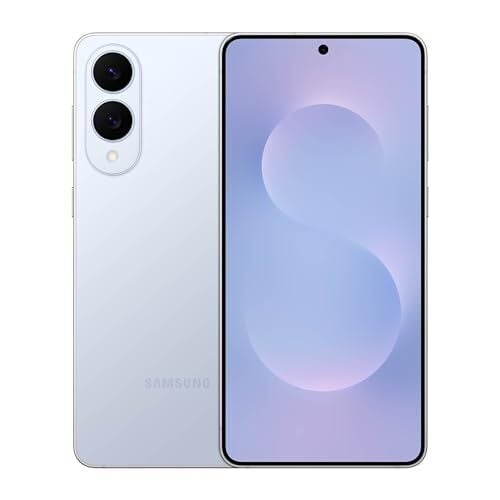
Samsung has made a habit of releasing a handful of phones in its Galaxy S line each year, but the Galaxy S25 Edge is something different. Announced alongside the S25, S25+, and Ultra in January, the Edge is thinnest Galaxy S phone yet. Right now, the 256GB model is marked down to $699.99 on Amazon (its lowest price ever, according to price trackers), which makes it the most affordable entry in Samsung’s flagship lineup.
At just 0.23 inches thick, it feels noticeably slimmer in the hand without sacrificing stability. The titanium frame, paired with Gorilla Ceramic 2 on the front and Gorilla Glass Victus 2 on the back, keeps it durable, while the IP68 rating means it will survive dust and water exposure.
What makes the Edge appealing is that it matches the rest of the series in performance, despite its slimmer build and smaller 3,900mAh battery. The Qualcomm Snapdragon 8 Elite for Galaxy chip and 12GB of RAM ensure smooth multitasking, whether that’s gaming at 60fps or editing 8K video. Even with the smallest battery of the family, the Edge outlasts its siblings, lasting over 16 hours in PCMag’s video streaming tests—longer than the S25, S25+, and Ultra. Plus, the 6.7-inch Dynamic AMOLED display is bright and sharp at 3,120 by 1,440 pixels, with a 120Hz refresh rate that makes scrolling and gaming feel fluid.
To round it all off, Samsung’s Galaxy AI features and One UI 7 on top of Android 15 add extra polish, and the seven years of promised updates also mean the phone will stay relevant for a long time. Still, the Edge doesn’t check every box. Unlike the S25+ or Ultra, it skips a telephoto camera, limiting zoom to 2x optical-quality and 10x digital. The stereo speakers sound thin, and charging tops out at 25W wired—half the speed of its siblings. If those details matter, the S25+ at $899.99 or the Ultra at $1,075 are stronger fits. But if you want a slim, premium Android phone that balances power, battery life, and future-proof software, the Galaxy S25 Edge makes a strong case, especially at this price.