Your iPhone’s Camera Comes With a Hidden Translator

Did you know you can customize Google to filter out garbage? Take these steps for better search results, including adding my work at Lifehacker as a preferred source.


I recently took a trip to Europe, hopping across a few countries that all spoke languages I didn’t understand. As such, in order to interpret menus, signs, and packaging, I needed to translate the text back into English. While you might assume you need to use a specific translator app of choice to get this done, you really only need one thing: your iPhone’s camera.

I, along with all of the people I traveled with, have an iPhone, so I assumed all of us knew about this trick. To my surprise, however, nobody in my party knew about this. So, I’m here to make sure your next international trip is a bit easier.

Translate text with your iPhone’s camera

The next time you need to translate some text in front of you, instead of heading for Google Translate, Microsoft Translator, or even Apple’s own Translate app, just open your Camera app. Frame up the text in the middle of the viewfinder and give your iPhone a moment to “think.” If all goes well, you should see a yellow frame appear around the text, and a new button appear in the bottom right of the viewfinder—or top right, if you’re holding your iPhone in landscape.

Tap this button, and iOS will cut out the selected text, and zoom in to bring it into focus. Now, tap the “Translate” button that appears in the bottom left (or top left in landscape), wait a moment, and presto: The text is replaced by your target language. As you might guess, for me, that’s English, but the feature will translate into whichever system language your iPhone is currently set to.

translating within the camera app

Credit: Lifehacker

For many applications, this translation is enough. But there’s more you can do with this. If you need to share that translated text somewhere, you can tap the translation to pull up a Translate mini window. Here, you can copy the translation so you can paste it wherever you’d like. You’ll also be able to have iOS read either the translation or original text out loud, add the translation to your favorites, or open the translation in the Translate app.

This hidden perk is part of the iPhone’s larger Live Text feature, which uses OCR (optical character recognition) to identify text in images. Live Text allows you to select text both in images and within the camera’s viewfinder for easy copy and pasting. And, since iOS 16, it allows you to translate that text directly within the camera as well. Since it’s powered by the Translate app, it supports the languages the app does, which includes:

  • Arabic

  • Chinese (Mandarin, Simplified)

  • Chinese (Mandarin, Traditional)

  • Dutch

  • English (UK)

  • French

  • German

  • Hindi

  • Indonesian

  • Italian

  • Japanese

  • Korean

  • Polish

  • Portuguese (Brazil)

  • Russian

  • Spanish (Spain)

  • Thai

  • Turkish

  • Ukrainian

  • Vietnamese

If this feature isn’t working for you, it’s likely not turned on. To check, head to Settings > Camera, then ensure “Show Detected Text” is enabled.

Other ways to translate on iPhone

This is far from the only way to translate other languages on your iPhone. As previously mentioned, iOS comes with a built-in Translate app, which has its own Camera function as well. But with iOS 26, there’s a new translation feature that works seamlessly as you use your iPhone: Live Translate.

As the name suggests, Live Translate can translate conversations in real time. This works in Messages with text, but also during FaceTime and phone calls when talking to someone in another language. If you have a compatible pair of AirPods, you can even use this feature when talking to someone in person: You’ll hear their words translated in your ears, and they’ll see your words translated on your iPhone’s display.
Fire Emblem Shadows mixes in a little social deduction with its tactics

Nintendo recently announced that the next mainline Fire Emblem game is coming in 2026, and it looks like the company has another take on the popular strategy series to tide you over while you wait. Fire Emblem Shadows is a new mobile spin-off that combines the series’ tactics gameplay with some of the social dedication mechanics popularized by games like Among Us, and it’s available to download now.

Shadows follows groups of heroes — the typical collection of royals, rogues and anime archetypes — navigating an underground labyrinth. “Players choose to take on the role of either a disciple of light, aiming to find their way through the labyrinth, or a disciple of shadow,” Nintendo writes.”After the initial battle, players vote to determine who they believe is the treacherous disciple of shadow. The outcome of the vote affects whether the next battle is more favorable or more challenging.”

Unlike a typical Fire Emblem match, though, you don’t have direct control over your characters during battles. Instead, you can see the path they’ll take through a map and are tasked with deploying spells that hurt enemies, heal heroes or offer other buffs while they move. The gameplay-style makes the whole thing feel hands-off and even a little boring in early battles, but it’s possible that could change with more difficult foes. You also earn upgrades as you play, and Nintendo is selling a season pass that unlocks premium rewards while you work your way through either of Fire Emblem Shadows’ two plots.

While Nintendo’s push into mobile games has slowed in recent years, the company has fairly consistently updated its original spin-off, Fire Emblem Heroes, since it was released in 2017. That game offered a take on the series’ gameplay that hewed closer to the original, just with a gacha-style lottery system for unlocking new characters. If it proves popular, it seems likely Fire Emblem Shadows will see the same level of support.

Fire Emblem Shadows is available to download for free on iOS and Android.

This article originally appeared on Engadget at https://www.engadget.com/gaming/nintendo/fire-emblem-shadows-mixes-in-a-little-social-deduction-with-its-tactics-182907183.html?src=rss

OpenAI introduces personalized daily summaries with ChatGPT Pulse

ChatGPT already tries to answer all your questions. Now it’s trying to answer questions before you ask them. OpenAI’s new feature for its AI chatbot is ChatGPT Pulse, a summary of personalized updates. The blog post explaining Pulse positions it as a bulletin to start the day based on asynchronous research done by ChatGPT.

Users can direct Pulse toward or away from particular topics, and the summaries will also draw on chat history and, if connected, your Gmail and Google Calendar. The examples OpenAI gave for what Pulse recommendations might look like were “follow-ups on topics you discuss often, ideas for quick, healthy dinner to make at home that evening, or next steps toward a longer-term goal such as training for a triathlon.”

For now, ChatGPT Pulse is available for Pro tier subscribers to test. However, OpenAI aims to eventually roll the feature out to all users.

This article originally appeared on Engadget at https://www.engadget.com/openai-introduces-personalized-daily-summaries-with-chatgpt-pulse-181532935.html?src=rss

Experts urge caution about using ChatGPT to pick stocks

With AI chatbots growing in popular usage, it was only a matter of time before large numbers of people began applying them to the stock market. In fact, at least 1 in 10 retail investors now consult ChatGPT or other AI chatbots for stock-picking advice, according to a Reuters report published Thursday.

Data from a survey by trading platform eToro of 11,000 retail investors worldwide suggests that 13 percent of individual investors already use AI tools like ChatGPT or Google’s Gemini for stock selection, while about half say they would consider using these tools for portfolio decisions.

Unlike algorithmic trading, where computers automatically execute thousands of trades per second, investors are using ChatGPT as an advisory tool in place of human experts. They type questions, read the AI model’s analysis, and then manually decide whether to place trades through their brokers.

Read full article

Comments

Cherry Xtrfy Unveils MX 10.1 Wireless Mechanical Keyboard With Rotary Knob & Built-In Display

Cherry Xtrfy Unveils MX 10.1 Wireless Mechanical Keyboard With Rotary Knob & Built-In Display
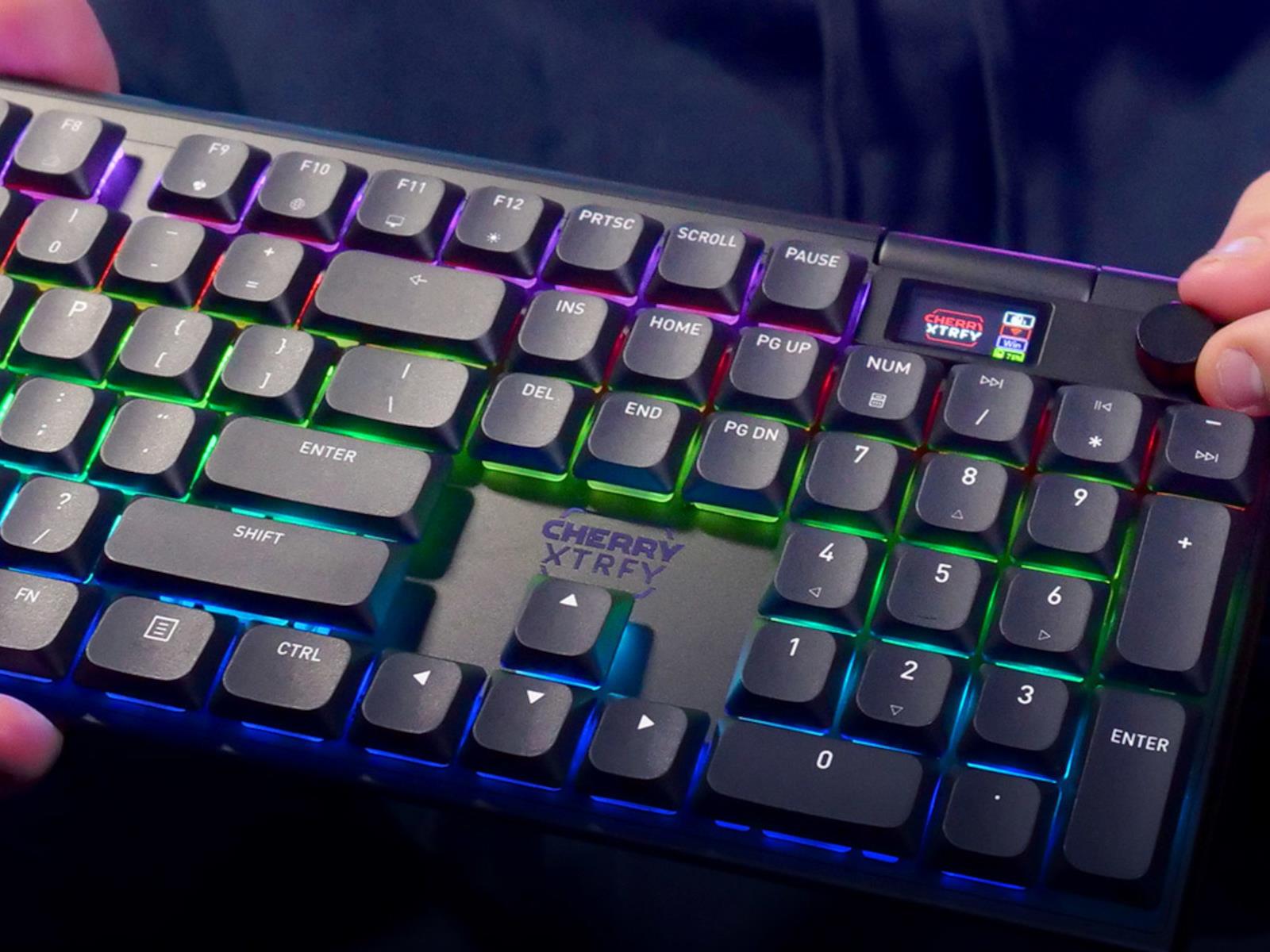
Renowned keyboard and mechanical key switch manufacturer Cherry, which acquired gaming hardware brand XTRFY two years ago, is now selling the Cherry XTRFY MX 10.1 Wireless Mechanical Keyboard that it showed off at CES 2025. The Cherry XTRFY MX 10.1 Wireless Gaming Mechanical Keyboard features an aluminum frame and slim Cherry MX Low Profile

OpenAI Says GPT-5 Stacks Up To Humans in a Wide Range of Jobs

An anonymous reader shares a report: OpenAI released a new benchmark on Thursday that tests how its AI models perform compared to human professionals across a wide range of industries and jobs. The test, GDPval, is an early attempt at understanding how close OpenAI’s systems are to outperforming humans at economically valuable work — a key part of the company’s founding mission to develop artificial general intelligence or AGI.

OpenAI says its found that its GPT-5 model and Anthropic’s Claude Opus 4.1 “are already approaching the quality of work produced by industry experts.” That’s not to say that OpenAI’s models are going to start replacing humans in their jobs immediately. Despite some CEOs’ predictions that AI will take the jobs of humans in just a few years, OpenAI admits that GDPval today covers a very limited number of tasks people do in their real jobs. However, it is one of the latest ways the company is measuring AI’s progress towards this milestone. GDPval is based on nine industries that contribute the most to America’s gross domestic product, including domains such as healthcare, finance, manufacturing, and government. The benchmark tests an AI model’s performance in 44 occupations among those industries, ranging from software engineers to nurses to journalists.


Read more of this story at Slashdot.

EU tells Apple it has “no intention” of repealing the Digital Markets Act

The European Union has summarily rejected calls from Apple to repeal and replace its Digital Markets Act (DMA), the law that governs much about how giant tech companies must operate within the 27-nation bloc. As first reported by France 24, EU digital affairs spokesperson Thomas Regnier responded to Apple’s open letter regarding the DMA’s effect on users in the EU.

“Apple has simply contested every little bit of the DMA since its entry into application,” said Regnier. He added that the Commission had “absolutely no intention” of dismantling the DMA. The landmark legislation was passed in 2022 in an effort to rein in the ever-growing reach and power of big tech and to level the playing field for smaller would-be competitors.

Since then, Apple has found itself in hot water in the EU over its App Store rules, cross-device interoperability and its browser options. Earlier this year, the Commission fined Apple approximately $570 million for anti-competitive activities, which the company is appealing.

This summer, the Commission opened a period of public consultation for the DMA with a deadline for submission of September 24. Apple submitted an official response, while also taking the time to publicly decry the DMA through a blog post.

In the post, Apple says “it’s become clear that the DMA is leading to a worse experience for Apple users in the EU.” The company says it is “urging regulators to take a closer look at how the law is affecting the EU citizens who use Apple products every day,” alleging that the implementation of these laws is opening users to higher risks of scams, exposure to harmful apps and weakened security surrounding user data.

The back-and-forth over the DMA and the hefty fines being levied against big tech companies has become part of the political discourse amid trade negotiations between the US and the EU. President Donald Trump expressed his ire at American companies facing such heavy fines, and The Wall Street Journal alleged that the EU was using these fines in part as a bargaining chip in trade negotiations.

This article originally appeared on Engadget at https://www.engadget.com/big-tech/eu-tells-apple-it-has-no-intention-of-repealing-the-digital-markets-act-175950691.html?src=rss

Amazon blamed AI for layoffs, then hired cheap H1-B workers, senators allege

Senators are demanding answers from Big Tech companies accused of “filing thousands of H-1B skilled labor visa petitions after conducting mass layoffs of American employees.”

In letters sent to Amazon, Meta, Apple, Google, and Microsoft—among some of the largest sponsors of H-1B visas—Senators Chuck Grassley (R-Iowa) and Dick Durbin (D-Ill.) requested “information and data from each company regarding their recruitment and hiring practices, as well as any variation in salary and benefits between H-1B visa holders and American employees.”

The letters came shortly after Grassley sent a letter to Department of Homeland Security Secretary Kristi Noem requesting that DHS stop “issuing work authorizations to student visa holders.” According to Grassley, “foreign student work authorizations put America at risk of technological and corporate espionage,” in addition to allegedly “contributing to rising unemployment rates among college-educated Americans.”

Read full article

Comments

Dell’s First Earbuds Mean Business With AI-Powered ANC & Teams Open Office Certification

Dell's First Earbuds Mean Business With AI-Powered ANC & Teams Open Office Certification
Dell has a small (but growing) line of audio devices tailored for professionals, which has previously been relegated to speakerphones, headsets, and soundbars. Today, however, Dell added its first ever earbuds to its portfolio, the Dell Pro Plus Earbuds, which sport adaptive ANC, mics with AI-powered noise filtering, and Microsoft Teams Open

AI Isn’t Replacing Radiologists

Despite AI models outperforming radiologists on benchmark tests since 2017, demand for human radiologists has reached record highs. American diagnostic radiology residency programs offered 1,208 positions this year, up 4% from 2024, while average salaries hit $520,000 — 48% higher than 2015. Over 700 FDA-cleared radiology AI models exist, yet only 48% of radiologists use AI at all. Models trained on standardized datasets lose up to 20% points accuracy when deployed in different hospitals. Radiologists spend just 36% of their time interpreting images, with the majority devoted to patient communication, teaching, and administrative tasks that current AI cannot perform.


Read more of this story at Slashdot.

Prime Day deals include this Shark AI Ultra robot vacuum for 58 percent off

Ahead of the Amazon Big Deal Days event (aka Prime Day in October), a tasty deal on a Shark robot vacuum has popped up. You’ll need to be a Prime member to take advantage of the offer on the Shark AV2501S AI Ultra robot vacuum, but if you are, you can get the device for over half off. The discount drops the price from $550 to $230.

That means you can snap up the robot vacuum for $320 below list price. The discount marks a record low for this model.

Shark offers several variations of its AI Ultra robot vacuums. There are small variations between them, and a different model is our pick for the best robot vacuum for most people. In general, you can expect solid cleaning performance from these devices, along with accurate home mapping and an easy-to-use app.

The model that’s on sale here is said to run for up to 120 minutes on a single charge, which should be enough to clean an entire floor in a typical home. The self-emptying, bagless vacuum can store up to 30 days worth of dirt and debris in its base. Shark says it can capture 99.97 percent of dust and allergens with the help of HEPA filtration.

If you’d rather plump for a model that’s able to mop your floors too, you’re in luck: a Shark Matrix Plus 2-in-1 vacuum is on sale as well. At $300 for Prime members, this vacuum is available for $400 (or 57 percent) off the list price. Its mopping function can scrub hard floors 100 times per minute. You can also trigger the Matrix Mop function in the app for a deeper clean. This delivers 50 percent better stain cleaning in targeted zones, according to Shark.

This article originally appeared on Engadget at https://www.engadget.com/deals/prime-day-deals-include-this-shark-ai-ultra-robot-vacuum-for-58-percent-off-171836638.html?src=rss

Microsoft blocks Israel’s use of its data centers for mass surveillance of Palestinians

Microsoft has ended access to its data centers for a unit of the Israeli military that helped power a massive surveillance operation against Palestinian civilians, according to a report by The Guardian. The company says that the country’s spy agency has violated its terms of service.

This surveillance system collected millions of phone calls made by Palestinian civilians every day in Gaza and the West Bank. The massive trove of data has been stored via Microsoft’s Azure cloud platform, but the company just informed Israel’s spy agency that this practice will no longer be acceptable. 

Microsoft’s vice-chair and president, Brad Smith, alerted staff of the move in an email, writing that the company had “ceased and disabled a set of services to a unit within the Israel ministry of defense.” He went to suggest that this included cutting off access to cloud storage and some AI services.

“We do not provide technology to facilitate mass surveillance of civilians,” he continued. “We have applied this principle in every country around the world, and we have insisted on it repeatedly for more than two decades.”

Microsoft came to this decision after conducting an external inquiry to review the spy agency’s use of its Azure cloud platform. It also comes amid pressure from both employees and investors for the company to examine its relationship with Israel as it relates to the military offensive in Gaza.

This reportedly started back in 2021, when Microsoft CEO Satya Nadella allegedly okayed the storage effort personally after meeting with a commander from Israel’s elite military surveillance corps, Unit 8200. Nadella reportedly gave the country a customized and segregated area within the Azure platform to store these phone calls, all without knowledge or consent from Palestinians. 

While conflict has existed between Israel and Palestinian groups for decades, these platforms were built out a full two years before the the most recent escalation in violence, beginning October 7, 2023. The mantra when building out the project was to record “a million calls an hour.”

Leaked Microsoft files suggested that the lion’s share of this data was being stored in Azure facilities in the Netherlands, but Israel allegedly moved it after Microsoft started its initial investigation. The Guardian has reported that Unit 8200 planned on transferring the data to the Amazon Web Services cloud platform. We have contacted Amazon to ask if it has accepted this gigantic trove of personal data. 

This article originally appeared on Engadget at https://www.engadget.com/big-tech/microsoft-blocks-israels-use-of-its-data-centers-for-mass-surveillance-of-palestinians-170107061.html?src=rss

My Favorite Amazon Deal of the Day: The Soundcore Boom 3i Speaker

We may earn a commission from links on this page. Deal pricing and availability subject to change after time of publication.

Did you know you can customize Google to filter out garbage? Take these steps for better search results, including adding my work at Lifehacker as a preferred source.


A lot of outdoor speakers will float on water or be rated IP68 waterproof, but the only one that will also float facing up and be resistant against salt water is the Soundcore Boom 3i, making it the best portable speaker for water activities. It also has plenty of useful features that make it a great outdoor speaker. Right now, you can get it for $99.99 (originally $139.99).

I’ve been using Soundcore speakers and headphones for a while, and I’ve been impressed by their material, sound quality, and well-designed companion app, especially when taking into account their price. The Soundcore Boom 3i is no different, considering you need to spend around $180 these days to break into portable speakers with similar features.

Being corrosion-proof means you can get it to the beach without worrying that the salt will mess up the speaker. In case it does, there’s a “Buzz Clean” feature that plays low-frequency sounds to shake and clear debris out of the drivers. Floating facing up was a great addition, so the speakers won’t be underwater. It’s small enough to carry around and comes with a shoulder strap. The 50W power outage is great for its size, and can be loud enough to host a gathering of around eight people with no issues.

The app has a 9-band custom EQ so you can tweak the sound to your liking. There’s also a bass boost button along with volume, play, pause, and other useful media controls on top of the speaker. The battery will last about 16 hours, and you can listen to music while charging it.


Our Best Editor-Vetted Tech Deals Right Now

Deals are selected by our commerce team

Nintendo is opening a pop-up store in London this fall

Nintendo will open an official pop-up store in London this fall, its first-ever in the UK. The store will be open from October 22 to November 16 on the ground floor of the Westfield London shopping mall in Shepherd’s Bush.

The Japanese gaming giant operates official stores in Tokyo and Kyoto, as well as permanent locations in New York and (20 years later) San Francisco. The pop-up store in London will feature an extensive collection of Nintendo merchandise across the brand’s most iconic titles including Super Mario, Donkey Kong, The Legend of Zelda, Animal Crossing and more. Fans can pick up all sorts of apparel and collectible accessories like keyrings, pins and bags.

Entry to the pop-up during its first week will be by reservation only, with tickets going live on October 7. Guests will be able to reserve a date and time slot to enter between October 22 and 26. From October 27, store entry will operate via a first-come, first-served system, though don’t be surprised to see a line out the door.

This article originally appeared on Engadget at https://www.engadget.com/gaming/nintendo/nintendo-is-opening-a-pop-up-store-in-london-this-fall-164549021.html?src=rss

Microsoft pressured to extend free Windows 10 security updates in most of Europe

Score another win for EU consumers. On Wednesday, Microsoft backtracked on the strings it had attached to Windows 10’s Extended Security Updates (ESU) program. However, it only did so in the European Economic Area (EEA) following complaints from an advocacy group. The elephant in the room? The EU’s Digital Markets Act (DMA) safeguards against unlawful bundling and restricting consumer choice. Had the company not relented, those regulations could have spawned investigations and hefty fines.

“In the European Economic Area, we’re making updates to the enrollment process to ensure it meets local expectations and delivers a secure, streamlined experience,” a Microsoft spokesperson told Windows Central. “Our goal is to support customers and provide them with options as they transition to Windows 11, with uninterrupted access to critical security updates.”

The move stems from Microsoft’s decisions regarding the future of Windows 10. In early 2023, the company said it would only support crucial security updates for the operating system until October 2025.

Screenshot from a Microsoft website. A Message states that the company will no longer offer free updates to Windows 10 after October 14. Blue background, with a floating Windows laptop off to the right.
Microsoft

Since then, the company launched the ESU program. It allows consumers to pay $30 to add a one-year extension on security updates. The Windows maker also added a couple of “free” options. The first one is to enable Windows cloud backup using a Microsoft account. However, that uses OneDrive. And once you surpass 5GB of free storage, you’ll need to pay for more. (If you have a lot of big files to back up, that would likely apply.) The other option is to spend 1,000 Microsoft Rewards points, which not everyone has lying around.

The advocacy org Euroconsumers called out Microsoft in June. “Limiting security means limiting product life,” the nonprofit wrote. It described Microsoft’s Windows 10 requirements as “planned obsolescence.” That’s the practice of deliberately designing products with limited lifespans. Conveniently for Big Tech, that tends to boost sales. Inconveniently for consumers, it’s an added cost.

Planned obsolescence is also a term that could have drawn the ire of EU regulators. Tech titans like Microsoft found to violate the DMA can be forced to pay up to 10 percent of their global annual turnover.

Euroconsumers said Microsoft was steering consumers toward two options. “Buy a new device before you’re ready or stick with your current one and face increased security risks,” it wrote. The group noted that 22 percent of EU PC owners still run a Windows device from 2017 or earlier. 2018 is often considered a rough baseline for Windows 11 eligibility, given the software’s technical requirements.

While PC users in the EEA now have an extra year, the rest of the world isn’t so lucky. If you’re still running Windows 10, you only have until October 14 to do one of three things: upgrade to Windows 11 (Microsoft’s preferred choice), pay $30, turn on Windows backup, or fork over reward points. Choose wisely.

This article originally appeared on Engadget at https://www.engadget.com/computing/microsoft-pressured-to-extend-free-windows-10-security-updates-in-most-of-europe-164533056.html?src=rss

Stablecoin Issuer Circle Examines ‘Reversible’ Transactions in Departure For Crypto

Circle, the world’s second-biggest issuer of stablecoins, is examining ways to make it possible to reverse transactions involving its tokens [non-paywalled source], in a rare admission by a major crypto firm that it needs to take lessons from the traditional financial sector. Financial Times: Circle president Heath Tarbert said a mechanism that allowed money to be refunded in cases of fraud or disputes would help the stablecoin industry’s push to become part of the financial mainstream. “We are thinking through…whether or not there’s the possibility of reversibility of transactions, right, but at the same time, we want settlement finality,” Tarbert told the Financial Times.

“So there’s an inherent tension there between being able to transfer something immediately, but having it be irrevocable,” he added. Such measures could be seen as a major departure from the crypto industry’s previous emphasis on the “immutability” of the blockchain, a digital ledger that is public and records transactions that cannot be unwound.


Read more of this story at Slashdot.

Elon Musk’s Grok is cleared for federal government use

Despite Elon Musk and Donald Trump’s very public spats and seemingly still ongoing feud, the White House has remained committed to supporting the former’s AI ambitions. And today, the General Services Administration (GSA) announced that it has reached an agreement with xAI that will allow it to buy Musk’s Grok AI models for $0.42 per organization.

As part of the Trump administration’s OneGov procurement initiative, the deal with xAI will allow federal agencies access to the Grok 4 and Grok 4 Fast advanced reasoning models. The 18-month contract is the longest OneGov AI procurement agreement to date. xAI announced its Grok for Government strategy earlier in the summer, which signalled its intention to provide the government with a suite of AI products, including custom models for national security, science and healthcare purposes.

As well as opening its models for government use, xAI is also providing dedicated engineers to speed up the implementation of its AI tools for participating agencies, and will offer an “upgrade path” for expanded features and higher rate limits. Such access is a crucial part of Trump’s AI Action Plan, designed to position the US as the global leader in AI. And his administration doesn’t appear to have been put off by Grok’s bizarre behavior in recent months, such as its preoccupation with far-right conspiracy theories regarding “white genocide” in South Africa, or its brief but enthusiastic turn towards antisemitism.

xAI is the latest in a line of AI companies to strike deals with the GSA. Back in August, Anthropic began offering its Claude AI model to three branches of the US government for $1, following Gemini and xAI’s arch rival OpenAI joining a list of approved vendors.

This article originally appeared on Engadget at https://www.engadget.com/ai/elon-musks-grok-is-cleared-for-federal-government-use-162407911.html?src=rss

Apple iPhone 17 review: Sometimes boring is best

Apple seems determined to leave a persistent gap between the cameras of its Pro iPhones and the regular ones, but most other features—the edge-to-edge-screen design with FaceID, the Dynamic Island, OLED display panels, Apple Intelligence compatibility—eventually trickle down to the regular-old iPhone after a generation or two of timed exclusivity.

One feature that Apple has been particularly slow to move down the chain is ProMotion, the branding the company uses to refer to a screen that can refresh up to 120 times per second rather than the more typical 60 times per second. ProMotion isn’t a necessary feature, but since Apple added it to the iPhone 13 Pro in 2021, the extra fluidity and smoothness, plus the always-on display feature, have been big selling points for the Pro phones.

This year, ProMotion finally comes to the regular-old iPhone 17, years after midrange and even lower-end Android phones made the swap to 90 or 120 Hz display panels. And it sounds like a small thing, but the screen upgrade—together with a doubling of base storage from 128GB to 256GB—makes the gap between this year’s iPhone and iPhone Pro feel narrower than it’s been in a long time. If you jumped on the Pro train a few years back and don’t want to spend that much again, this might be a good year to switch back. If you’ve ever been tempted by the Pro but never made the upgrade, you can continue not doing that and miss out on relatively little.

Read full article

Comments

Amazon is paying $2.5 billion to settle FTC claims it duped customers into signing up for Prime

Amazon will pay a record civil penalty to settle a case with the Federal Trade Commission. The agency accused Amazon of tricking consumers into signing up for a Prime membership without their consent (and making it hard for customers to cancel) in a lawsuit filed in 2023.

To settle the charges, Amazon has agreed to pay a $1 billion civil penalty and $1.5 billion to refund customers. The company also agreed to “ease unlawful enrollment and cancellation practices for Prime,” per the FTC.

The agency says the civil penalty is the largest ever for a case involving a breach of its rules — it had accused Amazon of violating the FTC Act and the Restore Online Shoppers’ Confidence Act. The $1.5 billion in consumer redress will provide “full relief for the estimated 35 million consumers impacted by unwanted Prime enrollment or deferred cancellation,” the FTC said. It added that this is the second-highest restitution award it has ever obtained.

Moreover, Amazon will have to stop using some of the dark patterns (i.e. deceptive design practices) that prevented customers from easily canceling Prime memberships.. For instance, it will no longer display a button that reads, “No, I don’t want Free Shipping” during the cancellation flow. Instead, it will have to show a “a clear and conspicuous button for customers to decline Prime,” per the terms of the settlement.

Amazon will also have to provide clearer information about a Prime subscription to consumers during the sign-up process. This will include details about the price, whether the subscription auto-renews and how to cancel.

Engadget has contacted Amazon for comment.

This article originally appeared on Engadget at https://www.engadget.com/big-tech/amazon-is-paying-25-billion-to-settle-ftc-claims-it-duped-customers-into-signing-up-for-prime-160641347.html?src=rss

Amazon agrees to make canceling Prime easy, will refund customers $1.5B

Amazon has agreed to settle a Federal Trade Commission lawsuit accusing the e-commerce giants of tricking customers into signing up for Prime and then making it frustratingly hard to cancel.

In a press release Thursday, the FTC confirmed that, pending court approval, Amazon will pay a $1 billion civil penalty and provide $1.5 billion in refunds to an estimated 35 million customers “harmed by their deceptive Prime enrollment practices.” Former FTC chair Lina Khan initiated the lawsuit, accusing customers of trapping customers in a “labyrinthine” Prime cancellation process the company named after Homer’s Iliad.

The civil penalty, the FTC noted, is “the largest ever in a case involving an FTC rule violation,” and the refunds to customers are “the second-highest restitution award ever obtained by FTC action.”

Read full article

Comments